Recommendations on Respiratory Syncytial Virus (RSV) Immunization Strategies for Infants and Young Children in Countries with Year-Round RSV Activity


 , and
, and
Abstract
1. Introduction
2. Epidemiology of RSV in Malaysia
2.1. RSV as a Major Respiratory Pathogen in Children
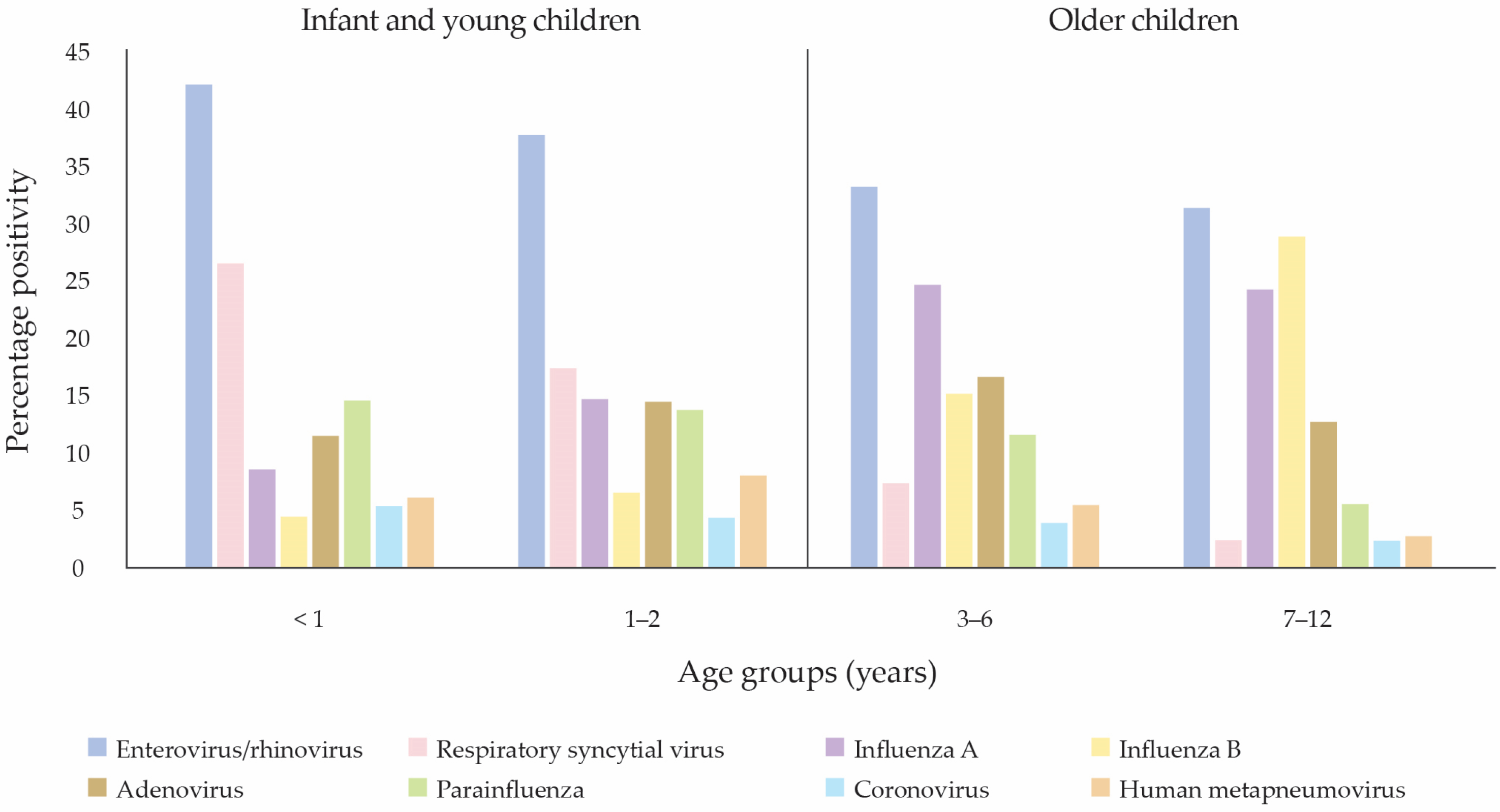
2.2. Age-Group Vulnerability
2.3. Lack of Immunity Against RSV and Disease
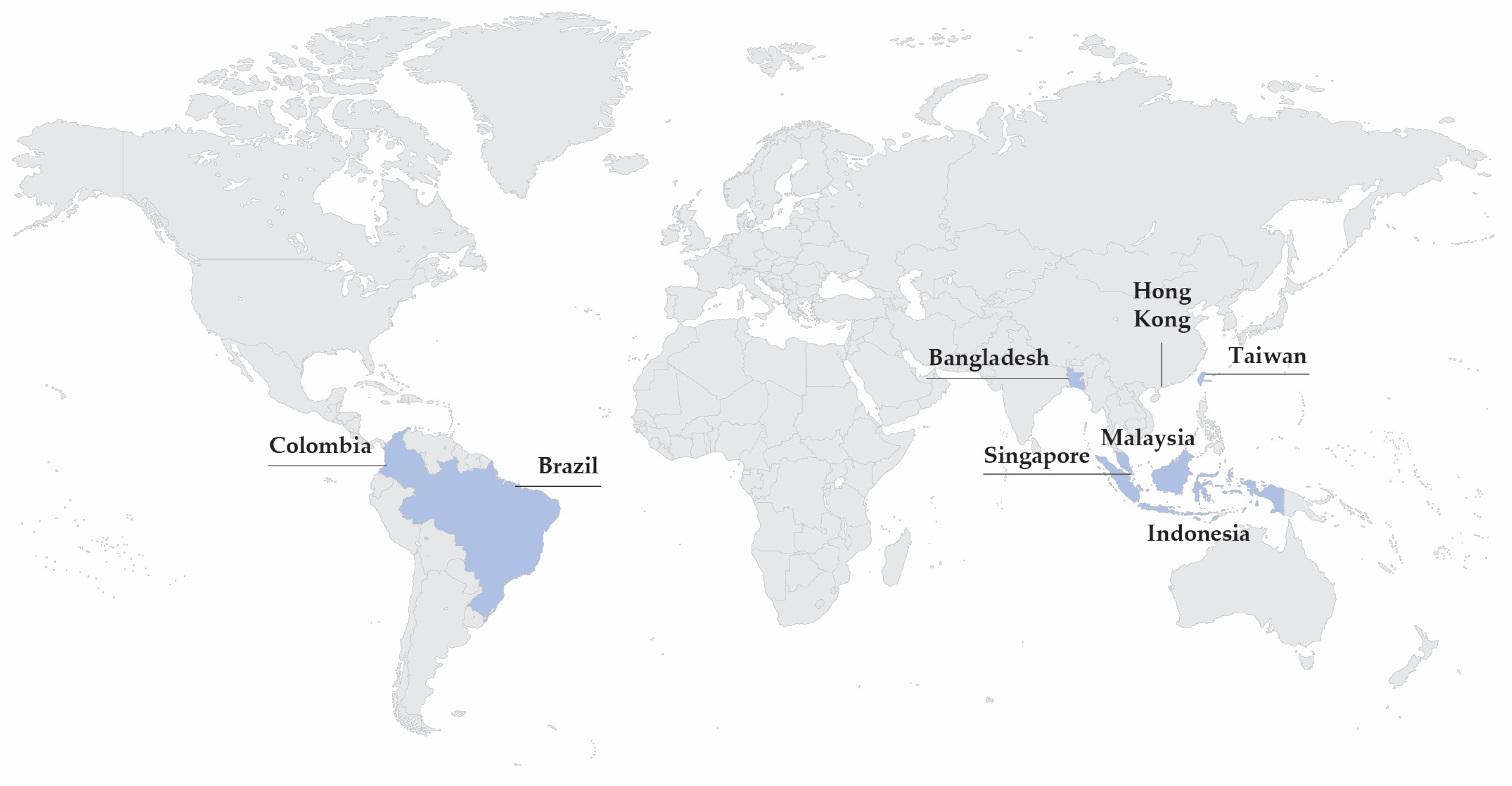
2.4. Seasonality of RSV Across Asia
3. Disease Burden of RSV
3.1. Impact on Resource Utilization
3.2. Healthcare and Societal Costs of RSV Admissions
3.3. High-Risk Populations for Severe RSV Disease
3.4. Long-Term Clinical Sequelae Following RSV Infection
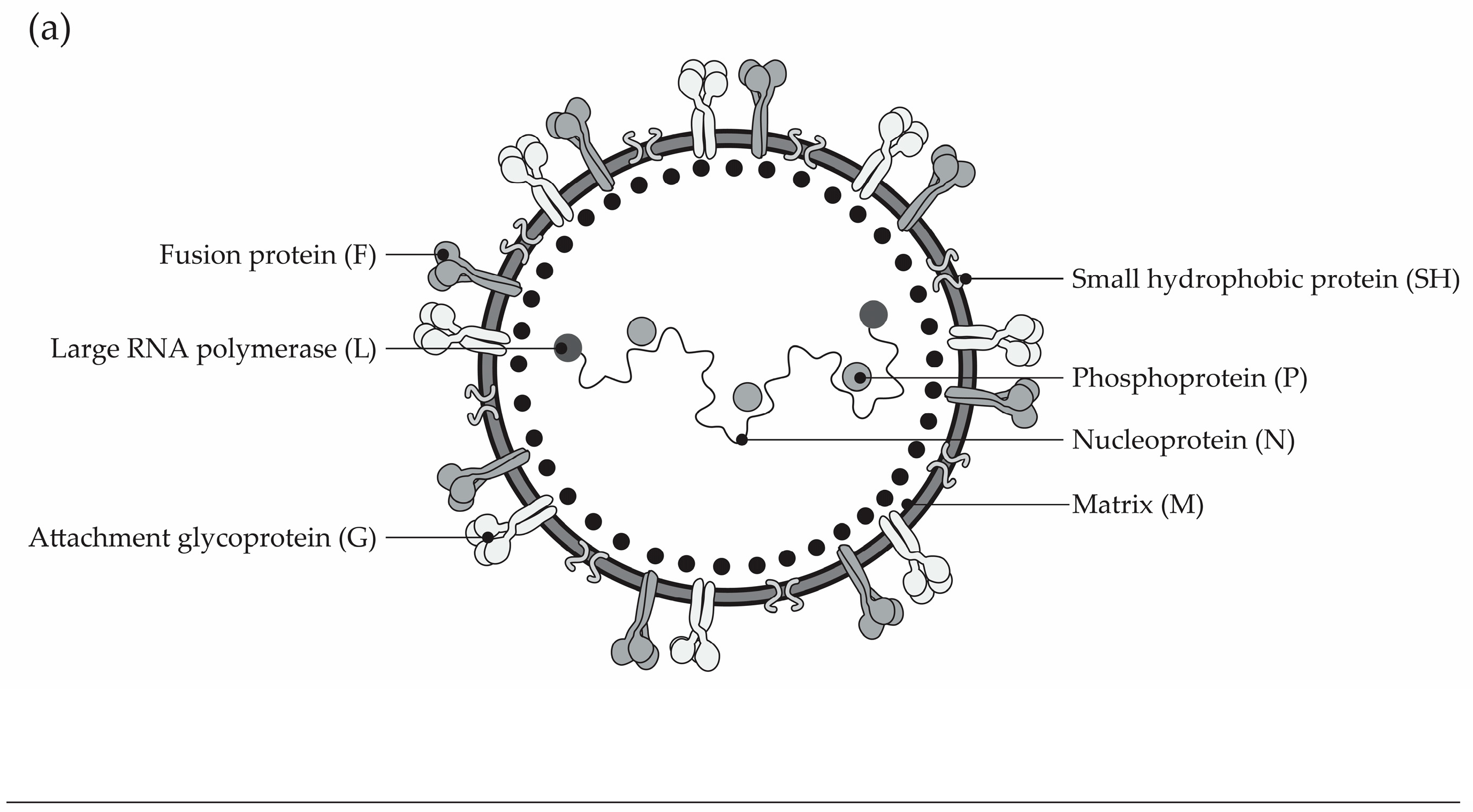
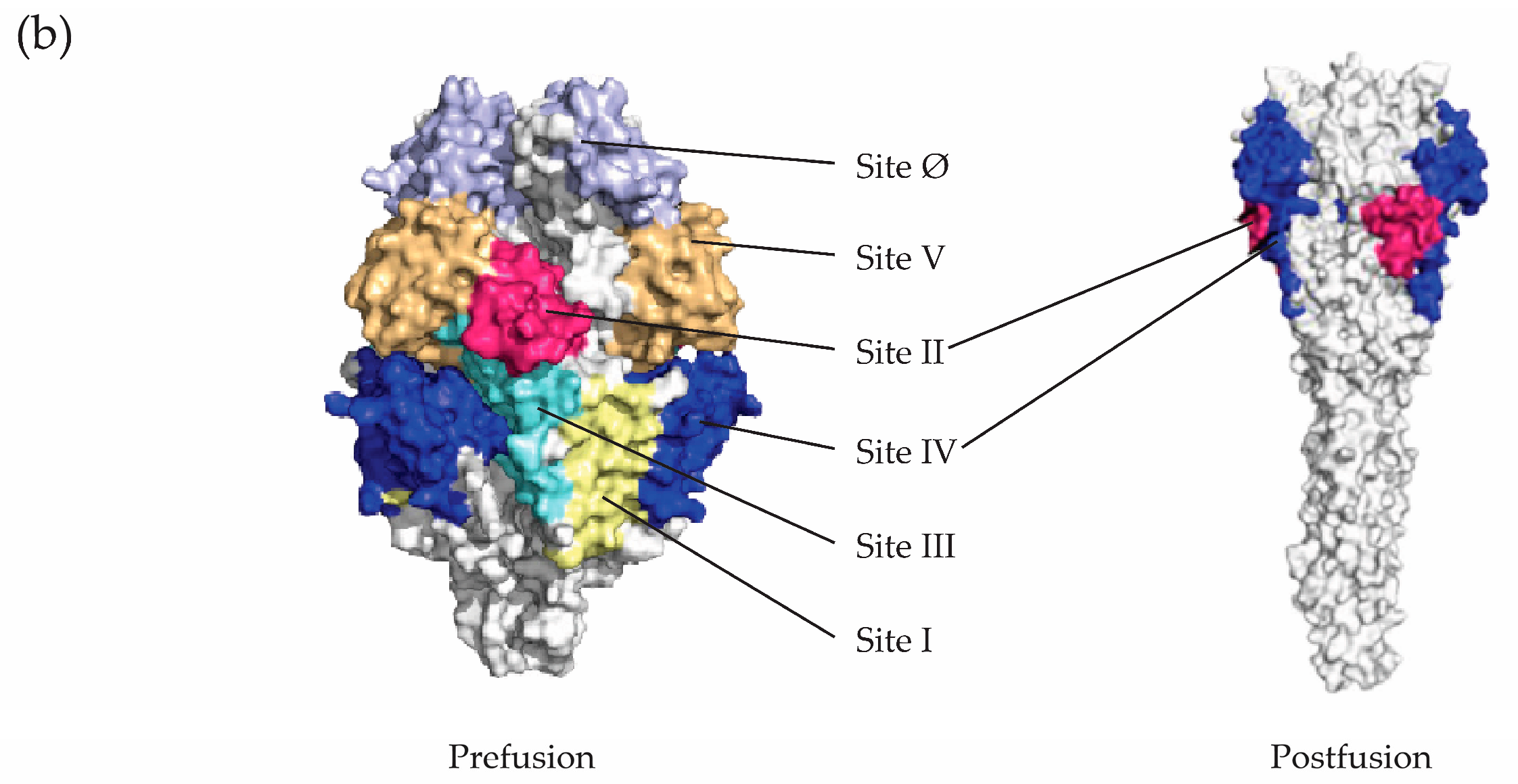
4. The Virus, Mechanism of Disease, and Immune Defenses
Protection Against RSV Disease with Vaccination
5. Current RSV Immunization Approaches
5.1. Infant Passive Immunization
5.2. Maternal Vaccination
5.3. Infant Passive Immunization vs. Maternal Vaccination
6. Cost-Effectiveness of RSV Immunization Approaches
Cost-Effectiveness for RSV Prevention in Malaysia
7. Ethics, Equity, and Feasibility of RSV Immunization
8. Final Considerations and Position Statements
9. Conclusions
Author Contributions
Funding
Institutional Review Board Statement
Informed Consent Statement
Data Availability Statement
Acknowledgments
Conflicts of Interest
Abbreviations
| CI | Confidence interval |
| DFA | Direct fluorescent antibody |
| GA | Gestational age |
| ICU | Intensive care unit |
| LRTI | Lower respiratory tract infection |
| mAb | Monoclonal antibody |
| OR | Odds ratio |
| PCR | Polymerase chain reaction |
| PICU | Pediatric intensive care unit |
| RR | Risk ratio |
| RSV | Respiratory syncytial virus |
| RSVpreF | RSV prefusion F |
Appendix A

| mAbs | Suggested Dosage and Administration |
|---|---|
| Palivizumab [77] | 15 mg per kg of body weight given monthly by IM injection prior to the commencement of RSV season, with the remaining doses administered monthly throughout the RSV season (total of up to 5 doses) |
| Nirsevimab [82,121] | Neonates and infants born during or entering their first RSV season: <5 kg: 50 mg by IM injection ≥5 kg: 100 mg by IM injection Children who remain vulnerable through their second RSV season: 200 mg (2 × 100 mg injections) |
| Clesrovimab [68,121] | 105 mg administered as a single IM injection |
| Maternal RSVpreF [109,122] | A single dose of 0.5 mL should be administered between 24 and 36 weeks’ gestation; however, the Obstetrical and Gynecological Society of Malaysia recommends its administration between 32 and 36 weeks’ gestation |
Appendix B
- Year-round nirsevimab immunization program for high-risk infants prior to hospital discharge.
- Year-round nirsevimab immunization program for high-risk infants prior to hospital discharge, with a repeated dose in Year 2.
- Year-round nirsevimab immunization program for all infants in Year 1.
- Year-round nirsevimab immunization program for all infants in Year 1, with a repeated dose only for high-risk infants in Year 2.
- Year-round RSVpreF immunization program for all pregnant mothers and complementary * nirsevimab for infants at birth.
- Year-round RSVpreF immunization program for all pregnant mothers and complementary * nirsevimab for infants at birth, with a dose of nirsevimab at 6 months for infants born to vaccinated mothers.
- Year-round RSVpreF immunization program for all pregnant mothers and complementary* nirsevimab for infants at birth, with two repeated nirsevimab doses only for high-risk infants at 6 months and 12 months.

| Items | Value | References |
|---|---|---|
| Parameters | ||
| Cohort size (infants) | 414,918 | Dept. of Statistics Malaysia [123] |
| High-risk proportion | 0.09 | Estimation [124] |
| Mass immunization coverage (term infants) | 0.95 | Assumption |
| Vaccine efficacy (palivizumab) against RSV (high-risk infants) | 0.7 | Gebretekle et al. 2024 [118] |
| Vaccine efficacy (nirsevimab) against RSV (term infants) | 0.844 | Drysdale et al. 2023 [86] |
| Vaccine efficacy (nirsevimab) against RSV (high-risk infants) | 0.783 | Drysdale et al. 2023 [86] |
| Percentage of adverse reactions due to RSV immunization | 0.02 | Drysdale et al. 2023 [86] |
| Prevalence of RSV in high-risk infants | 0.206 | Alzahrani et al. 2024 [125] |
| Prevalence of RSV in term infants | 0.159 | Low et al. 2022 [3] |
| RSV hospitalization rate in high-risk infants (without immunization) | 0.051 | Gebretekle et al. 2024 [118] |
| RSV hospitalization rate in term infants (without immunization) | 0.012 | Gebretekle et al. 2024 [118] |
| RSV death rate in high-risk infants (among hospitalized) | 0.029 | Ng et al. 2017 [9] |
| RSV death rate in term infants (among hospitalized) | 0.014 | Ng et al. 2017 [9] |
| Risk of recurrent wheezing in the first year of life following a hospitalization due to RSV | 0.31 | Li et al. 2022 [1] |
| Risk of recurrent wheezing in the second year of life following a hospitalization due to RSV | 0.27 | Li et al. 2022 [1] |
| Risk of hospitalization due to asthma following a hospitalization due to RSV infection | 0.25 | Coutts et al. 2020 [126] |
| Number of pregnant mothers (99% of the number of infants) | 410,769 | Dept. of Statistics Malaysia [123] |
| Percentage of complementary mAb for unprotected infants | 0.1 | Assumption |
| Percentage of universal infant mAb at 6 months | 0.9 | Assumption |
| Percentage of maternal immunization coverage | 0.9 | Assumption |
| Vaccine efficacy (mother) against infant RSV | 0.786 | Perez Marc et al. 2025 [105] |
| Caregiver workdays lost due to infant visit to clinic for vaccination | 0.5 | Gebretekle et al. 2024 [118] |
| Caregiver workdays lost due to infant visit to A&E | 2.5 | Fragaszy et al. 2018 [127] |
| Caregiver workdays lost due to the infant visiting the outpatient | 2.5 | Fragaszy et al. 2018 [127] |
| Caregiver workdays lost due to infant hospitalised | 7.3 | Mitchell et al. 2017 [128] |
| Caregiver income per day (using 2024 GDP per capita) | 218.21 | Dept. of Statistics Malaysia [129] |
| Life expectancy | 75.2 | Dept. of Statistics Malaysia [130] |
| Discounted QALYs lost from premature death | 28.4 | Hutton et al. 2024 [115] |
| WTP threshold (2024 GDP per capita) | 56,734 | Dept. of Statistics Malaysia [129] |
| Probability | ||
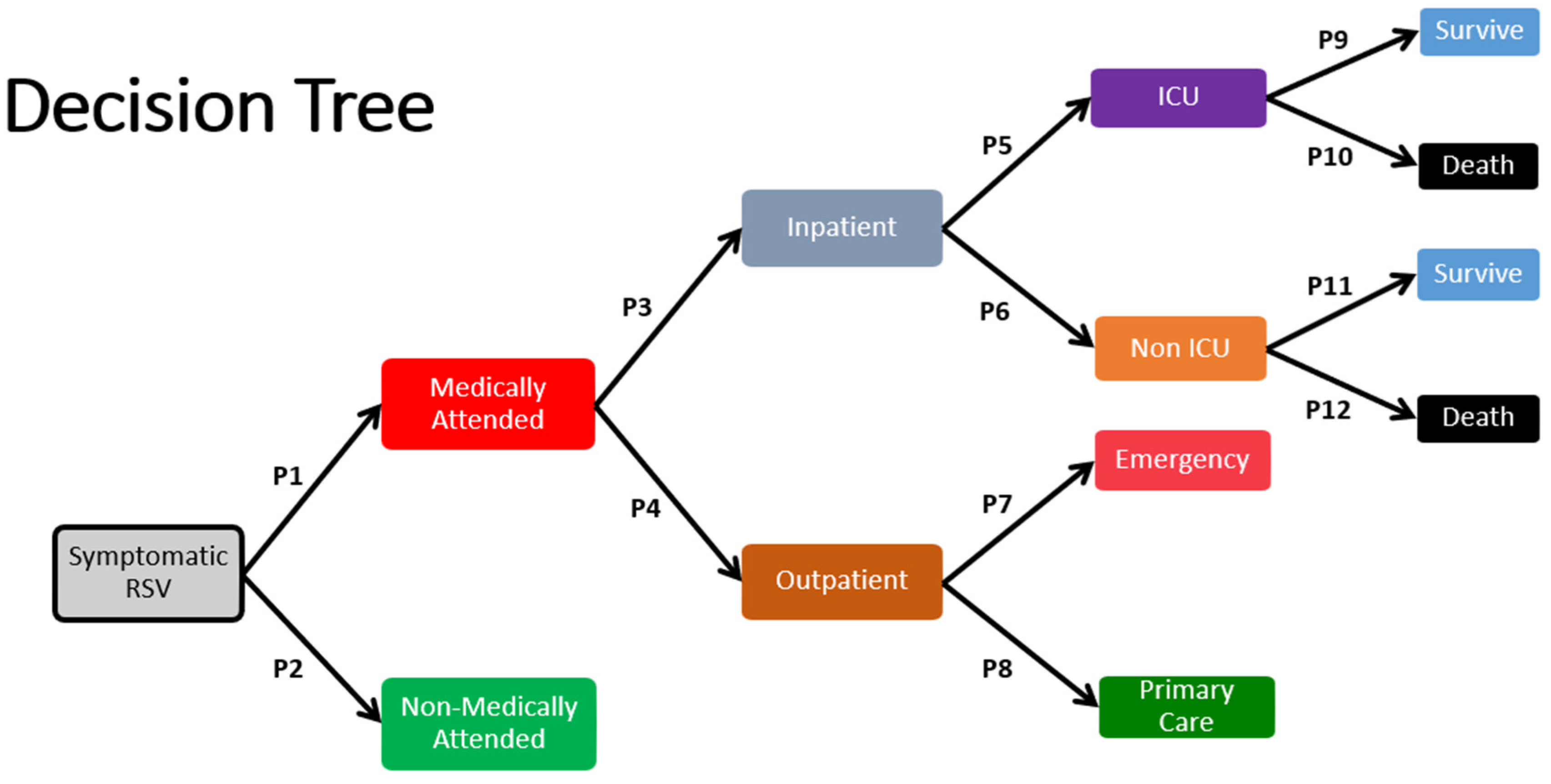
| P1 (medically attended among symptomatic RSV) | 0.123 | Wildenbeest et al. 2023 [131] |
| HR: P1 (medically attended among symptomatic RSV) | 0.160 | Wildenbeest et al. 2023 [131] |
| P2 (non-medically attended among symptomatic RSV) | 0.877 | Wildenbeest et al. 2023 [131] |
| HR: P2 (non-medically attended among symptomatic RSV) | 0.840 | Wildenbeest et al. 2023 [131] |
| P3 (inpatient among medically attended) | 0.020 | Wang et al. 2024 [37] |
| HR: P3 (inpatient among medically attended) | 0.078 | Wang et al. 2024 [37] |
| P4 (outpatient among medically attended) | 0.980 | Wang et al. 2024 [37] |
| HR: P4 (outpatient among medically attended) | 0.922 | Wang et al. 2024 [37] |
| P5 (ICU among inpatients) | 0.098 | Ng et al. 2024 [8] |
| HR: P5 (ICU among inpatients) | 0.150 | Ng et al. 2024 [8] |
| P6 (non-ICU among inpatients) | 0.902 | Ng et al. 2024 [8] |
| HR: P6 (non-ICU among inpatients) | 0.850 | Ng et al. 2024 [8] |
| P7 (emergency visit among outpatients) | 0.173 | Choi & Finelli 2023 [132] |
| HR: P7 (emergency visit among outpatients) | 0.161 | Ambrose et al. 2014 [133] |
| P8 (primary care visit among outpatients) | 0.827 | Choi & Finelli 2023 [132] |
| HR: P8 (primary care visit among outpatients) | 0.839 | Ambrose et al. 2014 [133] |
| P9 (survival among ICU patients) | 0.986 | Ng et al. 2017 [9] |
| HR: P9 (survival among ICU patients) | 0.971 | Ng et al. 2017 [9] |
| P10 (death among ICU patients) | 0.014 | Ng et al. 2017 [9] |
| HR: P10 (death among ICU patients) | 0.029 | Ng et al. 2017 [9] |
| P11 (survival among non-ICU patients) | 1.000 | Simões et al. 2021 [134] |
| P12 (death among non-ICU patients) | 0.000 | Simões et al. 2021 [134] |
| Cost | ||
| Vaccine cost per year (palivizumab)—5 doses | 17,935.00 | Pharmacy HCTM |
| Vaccine cost per year (nirsevimab)—1 dose | 1900.00 | Pharmacy HCTM |
| Vaccine cost per year (maternal RSVpreF)—1 dose | 850.00 | Pharmacy HCTM |
| Vaccine storage, transportation, and administration (injection) cost | 17.30 | Samsudin et al. 2024 [135] |
| Adverse reaction cost per year | 432.75 | Lieu et al. 2001 [136] |
| Cost of treating bronchial asthma in hospital per year | 1468.54 | Chan et al. 2002 [137] |
| Transportation, food, and beverage expenses (per visit) | 100.20 | Abdul Aziz et al. 2020 [138] |
| Medically attended | 228.85 | Sam et al. 2021 [34] |
| Non-medically attended | 58.70 | Sam et al. 2021 [34] |
| Inpatient | 4125.12 | Sam et al. 2021 [34] |
| Inpatient—high-risk | 4813.59 | Sam et al. 2021 [34] |
| Outpatient | 399.00 | Zhang et al. 2016 [139] |
| ICU (treated as RSV) | 16,765.10 | Zhang et al. 2016 [139] |
| ICU (treated as RSV)—high-risk | 21,575.21 | Chan & Abdel-Latif. 2003 [35] |
| Non-ICU | 4755.28 | Sam et al. 2021 [34] |
| Non-ICU (high-risk) | 5751.34 | Sam et al. 2021 [34] |
| Emergency visit among outpatients | 2478.05 | Choi & Finelli. 2023 [132] |
| Primary care visit among outpatients | 745.45 | Choi & Finelli. 2023 [132] |
| Survive | 0.00 | Assumption |
| Death | 0.00 | Assumption |
| QALY | ||
| Symptomatic RSV + medically attended + inpatient + ICU + survival | 0.40 | Shoukat et al. 2023 [140] |
| Symptomatic RSV + medically attended + inpatient + ICU + death | 0.00 | Shoukat et al. 2023 [140] |
| Symptomatic RSV + medically attended + inpatient + non-ICU + survival | 0.59 | Rey Aris et al. 2024 [141]; Shoukat et al. 2023 [140] |
| Symptomatic RSV + medically attended + inpatient + non-ICU + death | 0.00 | Shoukat et al. 2023 [140] |
| Symptomatic RSV + medically attended + outpatient + emergency visit | 0.84 | Rey Aris et al. 2024 [141]; Shoukat et al. 2023 [140] |
| Symptomatic RSV + medically attended + outpatient + primary care visit | 0.90 | Shoukat et al. 2023 [140] |
| Symptomatic RSV + non-medically attended | 0.96 | Shoukat et al. 2023 [140] |
| Symptomatic RSV | 0.96 | Shoukat et al. 2023 [140] |
| Healthy | 1.00 | Assumption |
| Cost | ||
| Symptomatic RSV + medically attended + inpatient + ICU + survival | 21,575.21 | |
| Symptomatic RSV + medically attended + inpatient + ICU + death | 21,575.21 | |
| Symptomatic RSV + medically attended + inpatient + non-ICU + survival | 5751.34 | |
| Symptomatic RSV + medically attended + inpatient + non-ICU + death | 5751.34 | |
| Symptomatic RSV + medically attended + outpatient + emergency visit | 2478.05 | |
| Symptomatic RSV + medically attended + outpatient + primary care visit | 745.45 | |
| Symptomatic RSV + non-medically attended | 58.70 |
| Parameter | Palivizumab, High-Risk Infants (9%) (1 Course) [Reference] | Palivizumab, High-Risk Infants (9%) (2 Courses) | Nirsevimab, High-Risk Infants (9%) (1 Dose) | Nirsevimab, High-Risk Infants (9%) (2 Doses) | Nirsevimab, All Infants (95%) | Nirsevimab, All Infants (95%) + 2nd Dose, High-Risk Infants (9%) | Maternal RSVpreF (90%) + Complementary Nirsevimab (10%) | Maternal RSVpreF (90%) + Complementary Nirsevimab (10%) + Nirsevimab (6-Month), All Infants (90%) | Maternal RSVpreF (90%) + Complementary Nirsevimab (10%) + Nirsevimab (6-Month), High-Risk Infants (9%) + Nirsevimab (12-Month), High-Risk Infants (9%) |
|---|---|---|---|---|---|---|---|---|---|
| Total cost (immunization/year) | MYR 676.8 mil | MYR 1353.5 mil | MYR 75.7 mil | MYR 151.5 mil | MYR 841.7 mil | RM 917.4 mil | MYR 486.6 mil | MYR 1284.0 mil | MYR 646.1 mil |
| Total QALY (/year) | 35,354 | 70,736 | 35,388 | 70,776 | 386,019 | 421,445 | 404,679 | 776,319 | 475,454 |
| Cost/QALY | MYR 19,142 | MYR 19,135 | MYR 2141 | MYR 2141 | MYR 2180 | MYR 2177 | MYR 1202 | MYR 1654 | MYR 1359 |
| ICER, ΔC/ΔE (MYR/QALY) | Reference | MYR 19,126 | Dominant | Dominant | MYR 470 | MYR 623 | Dominant | MYR 819 | Dominant |
| No. of hospitalizations averted | 1362 | 1682 | 1512 | 1894 | 5371 | 5693 | 5190 | 9991 | 10,007 |
| No. of deaths averted | 39 | 44 | 44 | 55 | 156 | 165 | 150 | 290 | 290 |
| Total cost (spent/year) | MYR 680.7 mil | MYR 1358.4 mil | MYR 78.6 mil | MYR 154.9 mil | MYR 849.3 mil | MYR 926.0 mil | MYR 495.6 mil | MYR 1294.2 mil | MYR 656.2 mil |
| Total cost (saved/year) | MYR 113.6 mil | MYR 129.1 | MYR 127.5 mil | MYR 159.7 mil | MYR 452.2 mil | MYR 479.4 mil | MYR 436.9 mil | MYR 841.2 mil | MYR 842.5 mil |
| Spending:saving | 1:0.17 | 1:0.10 | 1:1.62 | 1:1.03 | 1:0.53 | 1:0.52 | 1:0.88 | 1:0.65 | 1:1.28 |
References
- Li, Y.; Wang, X.; Blau, D.M.; Caballero, M.T.; Feikin, D.R.; Gill, C.J.; Madhi, S.A.; Omer, S.B.; Simões, E.A.F.; Campbell, H.; et al. Global, regional, and national disease burden estimates of acute lower respiratory infections due to respiratory syncytial virus in children younger than 5 years in 2019: A systematic analysis. Lancet 2022, 399, 2047–2064. [Google Scholar] [CrossRef]
- Khor, C.S.; Sam, I.C.; Hooi, P.S.; Quek, K.F.; Chan, Y.F. Epidemiology and seasonality of respiratory viral infections in hospitalized children in Kuala Lumpur, Malaysia: A retrospective study of 27 years. BMC Pediatr. 2012, 12, 32. [Google Scholar] [CrossRef]
- Low, Y.L.; Wong, S.Y.; Lee, E.K.H.; Muhammed, M.H. Prevalence of respiratory viruses among paediatric patients in acute respiratory illnesses in Malaysia. PLoS ONE 2022, 17, e0265288. [Google Scholar] [CrossRef] [PubMed]
- Toh, T.H.; Hii, K.C.; Fieldhouse, J.K.; Ting, J.; Berita, A.; Nguyen, T.T.; Wong, S.C.; Wong, T.M.; Lim, W.H.; Ha, S.J.; et al. High prevalence of viral infections among hospitalized pneumonia patients in equatorial Sarawak, Malaysia. Open Forum Infect. Dis. 2019, 6, ofz074. [Google Scholar] [CrossRef] [PubMed]
- Chan, C.M.; Wahab, A.A.; Ali, A. Assessing the impact of COVID-19 on epidemiological changes of severe pediatric respiratory syncytial virus infections in Malaysia. Front. Public Health 2024, 12, 1246921. [Google Scholar] [CrossRef]
- Ng, D.C. (Department of Paediatrics, Hospital Tuanku Ja’afar, Seremban 70300, Negeri Sembilan, Malaysia). Data from Hospital Tuanku Ja’afar, Seremban on RSV detection rate from hospitalized cases. Unpublished work, 2025.
- Nathan, A.M.; Rani, F.; Lee, R.J.; Zaki, R.; Westerhout, C.; Sam, I.C.; Lum, L.C.; de Bruyne, J. Clinical risk factors for life-threatening lower respiratory tract infections in children: A retrospective study in an urban city in Malaysia. PLoS ONE 2014, 9, e111162. [Google Scholar] [CrossRef]
- Ng, D.C.; Liew, C.H.; Tan, K.K.; Awang, E.H.B.; Nazri, F.; Maran, A.K.T.; Mohan, V.; Ramachandran, D.; Chok, M.; Teh, C.H.; et al. Clinical comparison of HMPV and RSV infections in hospitalised Malaysian children: A propensity score matched study. Clin. Respir. J. 2024, 18, e13747. [Google Scholar] [CrossRef] [PubMed]
- Ng, K.F.; Tan, K.K.; Sam, Z.H.; Ting, G.S.; Gan, W.Y. Epidemiology, clinical characteristics, laboratory findings and severity of respiratory syncytial virus acute lower respiratory infection in Malaysian children, 2008–2013. J. Paediatr. Child Health 2017, 53, 399–407. [Google Scholar] [CrossRef]
- Hatter, L.; Eathorne, A.; Hills, T.; Bruce, P.; Beasley, R. Respiratory syncytial virus: Paying the immunity debt with interest. Lancet Child Adolesc. Health 2021, 5, e44–e45. [Google Scholar] [CrossRef]
- Winthrop, Z.A.; Perez, J.M.; Staffa, S.J.; McManus, M.L.; Duvall, M.G. Pediatric respiratory syncytial virus hospitalizations and respiratory support after the COVID-19 pandemic. JAMA Netw. Open 2024, 7, e2416852. [Google Scholar] [CrossRef]
- Ruckwardt, T.J.; Morabito, K.M.; Graham, B.S. Determinants of early life immune responses to RSV infection. Curr. Opin. Virol. 2016, 16, 151–157. [Google Scholar] [CrossRef]
- Attaianese, F.; Guiducci, S.; Trapani, S.; Barbati, F.; Lodi, L.; Indolfi, G.; Azzari, C.; Ricci, S. Reshaping our knowledge: Advancements in understanding the immune response to human respiratory syncytial virus. Pathogens 2023, 12, 1118. [Google Scholar] [CrossRef]
- Abu-Raya, B.; Viñeta Paramo, M.; Reicherz, F.; Lavoie, P.M. Why has the epidemiology of RSV changed during the COVID-19 pandemic? eClinicalMedicine 2023, 61, 102089. [Google Scholar] [CrossRef] [PubMed]
- Barnes, M.V.C.; Openshaw, P.J.M.; Thwaites, R.S. Mucosal immune responses to respiratory syncytial virus. Cells 2022, 11, 1153. [Google Scholar] [CrossRef]
- Ponce, L.J.; Wu, T.; Sim, D.J.; Chow, J.Y.; Wee, L.E.; Chia, P.Y.; Lye, D.C.B.; Leo, Y.S.; Lim, J.T. Respiratory syncytial virus hospitalization costs, rates, and seasonality in Asia: A systematic review and meta-analysis. eClinicalMedicine 2025, 86, 103350. [Google Scholar] [CrossRef]
- Chan, P.K.; Sung, R.Y.; Fung, K.S.; Hui, M.; Chik, K.W.; Adeyemi-Doro, F.A.; Cheng, A.F. Epidemiology of respiratory syncytial virus infection among paediatric patients in Hong Kong: Seasonality and disease impact. Epidemiol. Infect. 1999, 123, 257–262. [Google Scholar] [CrossRef]
- Chan, W.-S.; Yau, S.-K.; To, M.-Y.; Leung, S.-M.; Wong, K.-P.; Lai, K.-C.; Wong, C.-Y.; Leung, C.-P.; Au, C.-H.; Wan, T.S.-K.; et al. The seasonality of respiratory viruses in a Hong Kong hospital, 2014–2023. Viruses 2023, 15, 1820. [Google Scholar] [CrossRef]
- Lee, P.-I.; Liu, C.-C.; Hu, Y.-L.; Chen, J.-M. Seasonality and risk factor analysis of respiratory syncytial virus infection in children in Taiwan—A retrospective study from 1995 to 2005. J. Med. Virol. 2023, 95, e29116. [Google Scholar] [CrossRef] [PubMed]
- Hsu, C.H.; Lin, C.Y.; Chi, H.; Chang, J.H.; Hung, H.Y.; Kao, H.A.; Peng, C.C.; Jim, W.T. Prolonged seasonality of respiratory syncytial virus infection among preterm infants in a subtropical climate. PLoS ONE 2014, 9, e110166. [Google Scholar] [CrossRef] [PubMed]
- Tan, K.W.J.; Yung, C.F.; Maiwald, M.; Saffari, S.E.; Thoon, K.C.; Chong, C.Y. Respiratory viral infections in hospitalised paediatric patients in the tropics. J. Paediatr. Child Health 2021, 57, 559–565. [Google Scholar] [CrossRef]
- Chan, C.M.; Wahab, A.A.; Ali, A. Determining the relationship of meteorological factors and severe pediatric respiratory syncytial virus (RSV) infection in Central Peninsular Malaysia. Int. J. Environ. Res. Public Health 2023, 20, 1848. [Google Scholar] [CrossRef]
- Chan, P.W.; Chew, F.T.; Tan, T.N.; Chua, K.B.; Hooi, P.S. Seasonal variation in respiratory syncytial virus chest infection in the tropics. Pediatr. Pulmonol. 2002, 34, 47–51. [Google Scholar] [CrossRef]
- Teck, K.S.; Mac Guad, R.; Van Rostenberghe, A.H.; Hua, G.S. Prevalence, risk factors and clinical characteristics of respiratory syncytial virus-associated lower respiratory tract infections in Kelantan, Malaysia. J. Med. Virol. 2019, 91, 1608–1615. [Google Scholar] [CrossRef]
- Suryadevara, M.; Domachowske, J.B. Epidemiology and seasonality of childhood respiratory syncytial virus infections in the tropics. Viruses 2021, 13, 696. [Google Scholar] [CrossRef]
- Chowdhury, F.; Shahid, A.; Ghosh, P.K.; Rahman, M.; Hassan, M.Z.; Akhtar, Z.; Muneer, S.M.; Shahrin, L.; Ahmed, T.; Chisti, M.J. Viral etiology of pneumonia among severely malnourished under-five children in an urban hospital, Bangladesh. PLoS ONE 2020, 15, e0228329. [Google Scholar] [CrossRef] [PubMed]
- Omer, S.B.; Sutanto, A.; Sarwo, H.; Linehan, M.; Djelantik, I.G.; Mercer, D.; Moniaga, V.; Moulton, L.H.; Widjaya, A.; Muljati, P.; et al. Climatic, temporal, and geographic characteristics of respiratory syncytial virus disease in a tropical island population. Epidemiol. Infect. 2008, 136, 1319–1327. [Google Scholar] [CrossRef] [PubMed]
- Bouzas, M.L.; Oliveira, J.R.; Fukutani, K.F.; Borges, I.C.; Barral, A.; Van der Gucht, W.; Wollants, E.; Van Ranst, M.; de Oliveira, C.I.; Van Weyenbergh, J.; et al. Respiratory syncytial virus a and b display different temporal patterns in a 4-year prospective cross-sectional study among children with acute respiratory infection in a tropical city. Medicine 2016, 95, e5142. [Google Scholar] [CrossRef]
- Gamba-Sanchez, N.; Rodriguez-Martinez, C.E.; Sossa-Briceño, M.P. Epidemic activity of respiratory syncytial virus is related to temperature and rainfall in equatorial tropical countries. Epidemiol. Infect. 2016, 144, 2057–2063. [Google Scholar] [CrossRef]
- Piñeros, J.G.; Baquero, H.; Bastidas, J.; García, J.; Ovalle, O.; Patiño, C.M.; Restrepo, J.C. Respiratory syncytial virus infection as a cause of hospitalization in population under 1 year in Colombia. J. Pediatr. 2013, 89, 544–548. [Google Scholar] [CrossRef] [PubMed]
- Kassim, A. (Department of Paediatrics, Hospital Tunku Azizah, Kuala Lumpur 50300, Malaysia). Bed occupancy rate and RSV admissions at the Kuala Lumpur Women’s and Children’s Hospital. Unpublished work, 2025.
- Kassim, A. (Department of Paediatrics, Hospital Tunku Azizah, Kuala Lumpur 50300, Malaysia). Clinical characteristics and outcomes among children under 5 years old admitted for respiratory syncytial virus (RSV) compared to other common respiratory virus infections. Unpublished work, 2025.
- Shaaban, F.L.; Garba, M.A.; Nguyen, A.; Pecenka, C.; Rave, N.; Bont, L.J. Estimating the economic burden of respiratory syncytial virus infection among children <2 years old seeking care in North-West Nigeria. J. Glob. Health 2025, 15, 04307. [Google Scholar] [CrossRef]
- Sam, I.C.; Ahmad Jaafar, N.; Wong, L.P.; Nathan, A.M.; de Bruyne, J.A.; Chan, Y.F. Socioeconomic costs of children <5 years hospitalised with acute respiratory infections in Kuala Lumpur, Malaysia. Vaccine 2021, 39, 2983–2988. [Google Scholar] [CrossRef] [PubMed]
- Chan, P.W.; Abdel-Latif, M.E. Cost of hospitalization for respiratory syncytial virus chest infection and implications for passive immunization strategies in a developing nation. Acta Paediatr. 2003, 92, 481–485. [Google Scholar] [CrossRef]
- Wittenauer, R.; Pecenka, C.; Baral, R. Cost of childhood RSV management and cost-effectiveness of RSV interventions: A systematic review from a low- and middle-income country perspective. BMC Med. 2023, 21, 121. [Google Scholar] [CrossRef]
- Wang, X.; Li, Y.; Shi, T.; Bont, L.J.; Chu, H.Y.; Zar, H.J.; Wahi-Singh, B.; Ma, Y.; Cong, B.; Sharland, E.; et al. Global disease burden of and risk factors for acute lower respiratory infections caused by respiratory syncytial virus in preterm infants and young children in 2019: A systematic review and meta-analysis of aggregated and individual participant data. Lancet 2024, 403, 1241–1253. [Google Scholar] [CrossRef] [PubMed]
- Kassim, A. (Department of Paediatrics, Hospital Tunku Azizah, Kuala Lumpur 50300, Malaysia). RSV admission versus total respiratory admission by gestational age. Unpublished work, 2025.
- Figueras-Aloy, J.; Carbonell-Estrany, X.; Quero-Jiménez, J.; Fernández-Colomer, B.; Guzmán-Cabañas, J.; Echaniz-Urcelay, I.; Doménech-Martínez, E. FLIP-2 Study: Risk factors linked to respiratory syncytial virus infection requiring hospitalization in premature infants born in Spain at a gestational age of 32 to 35 weeks. Pediatr. Infect. Dis. J. 2008, 27, 788–793. [Google Scholar] [CrossRef]
- Brady, M.T.; Byington, C.L.; Davies, H.D.; Edwards, K.M.; Jackson, M.A.; Maldonado, Y.A.; Murray, D.L.; Orenstein, W.A.; Rathore, M.H.; et al.; Committee on Infectious Diseases and Bronchiolitis Guidelines Committee Updated guidance for palivizumab prophylaxis among infants and young children at increased risk of hospitalization for respiratory syncytial virus infection. Pediatrics 2014, 134, 415–420. [Google Scholar] [CrossRef]
- Centers for Disease Control and Prevention. RSV Immunisation Guidance for Infants and Young Children. Available online: https://www.cdc.gov/rsv/hcp/vaccine-clinical-guidance/infants-young-children.html (accessed on 15 May 2025).
- Doering, G.; Gusenleitner, W.; Belohradsky, B.H.; Burdach, S.; Resch, B.; Liese, J.G. The risk of respiratory syncytial virus-related hospitalizations in preterm infants of 29 to 35 weeks’ gestational age. Pediatr. Infect. Dis. J. 2006, 25, 1188–1190. [Google Scholar] [CrossRef] [PubMed]
- Carbonell-Estrany, X.; Simões, E.A.F.; Bont, L.; Manzoni, P.; Zar, H.J.; Greenough, A.; Ramilo, O.; Stein, R.; Law, B.; Mejias, A.; et al. Twenty-five years of palivizumab: A global historic review of its impact on the burden of respiratory syncytial virus disease in children. Expert. Rev. Anti Infect. Ther. 2025, 23, 359–378. [Google Scholar] [CrossRef] [PubMed]
- Ministry of Health Malaysia. Paediatric Pharmacy Services Guidelines. Available online: https://pharmacy.moh.gov.my/sites/default/files/document-upload/paediatric-pharmacy-services-guideline.pdf (accessed on 3 October 2025).
- Kua, K.P.; Qureshi, N.; Kon Ken, W.; Bin, D.; Wu, D.B.C.; Lee, S.; Cheah, C. Impact of palivizumab immunization in controlling respiratory syncytial virus infections among preterm neonates after hospital discharge in the tropics. Perinatology 2019, 20, 1–9. [Google Scholar]
- Hak, S.F.; Venekamp, R.P.; Billard, M.N.; van Houten, M.A.; Pollard, A.J.; Heikkinen, T.; Cunningham, S.; Millar, M.; Martinón-Torres, F.; Dacosta-Urbieta, A.; et al. Substantial burden of nonmedically attended RSV infection in healthy-term infants: An international prospective birth cohort study. J. Infect. Dis. 2024, 229, S40–S50. [Google Scholar] [CrossRef]
- Abreo, A.; Wu, P.; Donovan, B.M.; Ding, T.; Gebretsadik, T.; Huang, X.; Stone, C.A.; Turi, K.N.; Hartert, T.V. Infant respiratory syncytial virus bronchiolitis and subsequent risk of pneumonia, otitis media, and antibiotic utilization. Clin. Infect. Dis. 2020, 71, 211–214. [Google Scholar] [CrossRef] [PubMed]
- McCready, C.; Haider, S.; Little, F.; Nicol, M.P.; Workman, L.; Gray, D.M.; Granell, R.; Stein, D.J.; Custovic, A.; Zar, H.J. Early childhood wheezing phenotypes and determinants in a South African birth cohort: Longitudinal analysis of the Drakenstein Child Health Study. Lancet Child Adolesc. Health 2023, 7, 127–135. [Google Scholar] [CrossRef]
- Zar, H.J.; Cacho, F.; Kootbodien, T.; Mejias, A.; Ortiz, J.R.; Stein, R.T.; Hartert, T.V. Early-life respiratory syncytial virus disease and long-term respiratory health. Lancet Respir. Med. 2024, 12, 810–821. [Google Scholar] [CrossRef]
- Korppi, M.; Piippo-Savolainen, E.; Korhonen, K.; Remes, S. Respiratory morbidity 20 years after RSV infection in infancy. Pediatr. Pulmonol. 2004, 38, 155–160. [Google Scholar] [CrossRef]
- Lui, C.S.; Che Daud, C.Z.; Mohammad, N.F.A.; Kamal, M.; Musa, A.; Sharibudin, N.K.; Zainuddin, H.; Mohd Hairi, F.; Gan, E.A.; Kailasam, P.D.; et al. Outcome of post-infectious bronchiolitis obliterans (PIBO) among children in Malaysia. Eur. Respir. J. 2022, 60, 1561. [Google Scholar] [CrossRef]
- Gatt, D.; Martin, I.; AlFouzan, R.; Moraes, T.J. Prevention and treatment strategies for respiratory syncytial virus (RSV). Pathogens 2023, 12, 154. [Google Scholar] [CrossRef]
- Kaler, J.; Hussain, A.; Patel, K.; Hernandez, T.; Ray, S. Respiratory syncytial virus: A comprehensive review of transmission, pathophysiology, and manifestation. Cureus 2023, 15, e36342. [Google Scholar] [CrossRef]
- Shang, Z.; Tan, S.; Ma, D. Respiratory syncytial virus: From pathogenesis to potential therapeutic strategies. Int. J. Biol. Sci. 2021, 17, 4073–4091. [Google Scholar] [CrossRef]
- Akagawa, M.; Shirai, T.; Sada, M.; Nagasawa, N.; Kondo, M.; Takeda, M.; Nagasawa, K.; Kimura, R.; Okayama, K.; Hayashi, Y.; et al. Detailed molecular interactions between respiratory syncytial virus fusion protein and the TLR4/MD-2 complex in silico. Viruses 2022, 14, 2382. [Google Scholar] [CrossRef]
- McLellan, J.S.; Ray, W.C.; Peeples, M.E. Structure and function of respiratory syncytial virus surface glycoproteins. Curr. Top. Microbiol. Immunol. 2013, 372, 83–104. [Google Scholar] [CrossRef]
- Duan, Y.; Liu, Z.; Zang, N.; Cong, B.; Shi, Y.; Xu, L.; Jiang, M.; Wang, P.; Zou, J.; Zhang, H.; et al. Landscape of respiratory syncytial virus. Chin. Med. J. 2024, 137, 2953–2978. [Google Scholar] [CrossRef]
- Madhi, S.A.; Simões, E.A.F.; Acevedo, A.; Novoa Pizarro, J.M.; Shepard, J.S.; Railkar, R.A.; Cao, X.; Maas, B.M.; Zang, X.; Krick, A.; et al. A phase 1b/2a trial of a half-life extended respiratory syncytial virus neutralizing antibody, clesrovimab, in healthy preterm and full-term infants. J. Infect. Dis. 2025, 231, e478–e487. [Google Scholar] [CrossRef] [PubMed]
- Kutsaya, A.; Teros-Jaakkola, T.; Kakkola, L.; Toivonen, L.; Peltola, V.; Waris, M.; Julkunen, I. Prospective clinical and serological follow-up in early childhood reveals a high rate of subclinical RSV infection and a relatively high reinfection rate within the first 3 years of life. Epidemiol. Infect. 2016, 144, 1622–1633. [Google Scholar] [CrossRef]
- Mejias, A.; Ramilo, O. RSV prevention within reach for older infants and toddlers: The role of active immunization. J. Pediatric Infect. Dis. Soc. 2024, 13, S125–S130. [Google Scholar] [CrossRef] [PubMed]
- US Food and Drug Administration. FDA Approves First Respiratory Syncytial Virus (RSV) Vaccine: Arexy Approved for Individuals 60 Years of Age and Older. Available online: https://www.fda.gov/news-events/press-announcements/fda-approves-first-respiratory-syncytial-virus-rsv-vaccine (accessed on 3 May 2023).
- US Food and Drug Administration. FDA Approves First Vaccine for Pregnant Individuals to Prevent RSV in Infants. Available online: https://www.fda.gov/news-events/press-announcements/fda-approves-first-vaccine-pregnant-individuals-prevent-rsv-infants (accessed on 17 December 2025).
- Simões, E.A.F.; Forleo-Neto, E.; Geba, G.P.; Kamal, M.; Yang, F.; Cicirello, H.; Houghton, M.R.; Rideman, R.; Zhao, Q.; Benvin, S.L.; et al. Suptavumab for the prevention of medically attended respiratory syncytial virus infection in preterm infants. Clin. Infect. Dis. 2021, 73, e4400–e4408. [Google Scholar] [CrossRef] [PubMed]
- Simões, E.A.F.; Bont, L.; Manzoni, P.; Fauroux, B.; Paes, B.; Figueras-Aloy, J.; Checchia, P.A.; Carbonell-Estrany, X. Past, present and future approaches to the prevention and treatment of respiratory syncytial virus infection in children. Infect. Dis. Ther. 2018, 7, 87–120. [Google Scholar] [CrossRef]
- US Food and Drug Administration. Palivizumab Product Approval Information—Licensing Action. Available online: https://web.archive.org/web/20160723194308/https:/www.fda.gov/Drugs/DevelopmentApprovalProcess/HowDrugsareDevelopedandApproved/ApprovalApplications/TherapeuticBiologicApplications/ucm093366.htm (accessed on 15 May 2025).
- AstraZeneca. AstraZeneca Discontinues Development of Motavizumab for RSV Prophylaxis Indication. Available online: https://www.astrazeneca.com/media-centre/press-releases/2010/AstraZeneca-discontinues-motavizumab-RSV-21122010.html# (accessed on 21 December 2025).
- US Food and Drug Administration. Beyfortus Biologics License Application Approval. Available online: https://www.accessdata.fda.gov/drugsatfda_docs/appletter/2023/761328Orig1s000ltr.pdf (accessed on 15 May 2025).
- US Food and Drug Administration. Enflonsia Prescribing Information. Available online: https://www.merck.com/product/usa/pi_circulars/e/enflonsia/enflonsia_pi.pdf (accessed on 19 June 2025).
- PATH. RSV Vaccine and mAb Snapshot. Available online: https://www.path.org/our-impact/resources/rsv-vaccine-and-mab-snapshot/ (accessed on 21 December 2025).
- GSK. GSK Provides Further Update on Phase III RSV Maternal Vaccine Candidate Programme. Available online: https://www.gsk.com/en-gb/media/press-releases/gsk-provides-further-update-on-phase-iii-rsv-maternal-vaccine-candidate-programme/ (accessed on 21 December 2025).
- Pfizer. U.S. FDA Approves ABRYSVO™, Pfizer’s Vaccine for the Prevention of Respiratory Syncytial Virus (RSV) in Older Adults. Available online: https://www.pfizer.com/news/press-release/press-release-detail/us-fda-approves-abrysvotm-pfizers-vaccine-prevention (accessed on 21 December 2025).
- World Health Organization. Respiratory Syncytial Virus (RSV) Immunization Products. Available online: https://www.who.int/news-room/questions-and-answers/item/respiratory-syncytial-virus-(rsv)-immunization-products (accessed on 17 December 2025).
- Plock, N.; Sachs, J.R.; Zang, X.; Lommerse, J.; Vora, K.A.; Lee, A.W.; Cheung, S.Y.A.; Maas, B.M. Efficacy of monoclonal antibodies and maternal vaccination for prophylaxis of respiratory syncytial virus disease. Commun. Med. 2025, 5, 119. [Google Scholar] [CrossRef]
- Sun, Y.; Liu, L.; Qiang, H.; Sun, H.; Jiang, Y.; Ren, L.; Jiang, Z.; Lei, S.; Chen, L.; Wang, Y.; et al. A potent broad-spectrum neutralizing antibody targeting a conserved region of the prefusion RSV F protein. Nat. Commun. 2024, 15, 10085. [Google Scholar] [CrossRef]
- Simões, E.A.F.; Center, K.J.; Tita, A.T.N.; Swanson, K.A.; Radley, D.; Houghton, J.; McGrory, S.B.; Gomme, E.; Anderson, M.; Roberts, J.P.; et al. Prefusion F protein-based respiratory syncytial virus immunization in pregnancy. N. Engl. J. Med. 2022, 386, 1615–1626. [Google Scholar] [CrossRef]
- Bullen, M.; Heriot, G.S.; Jamrozik, E. Herd immunity, vaccination and moral obligation. J. Med. Ethics 2023, 49, 636–641. [Google Scholar] [CrossRef]
- US Food and Drug Administration. Synagis Prescribing Information. Available online: https://www.accessdata.fda.gov/drugsatfda_docs/label/2017/103770s5200lbl.pdf (accessed on 15 May 2025).
- Wilkins, D.; Wählby Hamrén, U.; Chang, Y.; Clegg, L.E.; Domachowske, J.; Englund, J.A.; Muller, W.J.; Leach, A.; Kelly, E.J.; Villafana, T. RSV neutralizing antibodies following nirsevimab and palivizumab dosing. Pediatrics 2024, 154, e2024067174. [Google Scholar] [CrossRef]
- Gilca, R.; Billard, M.N.; Zafack, J.; Papenburg, J.; Boucher, F.D.; Charest, H.; Rochette, M.; De Serres, G. Effectiveness of palivizumab immunoprophylaxis to prevent respiratory syncytial virus hospitalizations in healthy full-term <6-month-old infants from the circumpolar region of Nunavik, Quebec, Canada. Prev. Med. Rep. 2020, 20, 101180. [Google Scholar] [CrossRef]
- Garegnani, L.; Styrmisdóttir, L.; Roson Rodriguez, P.; Escobar Liquitay, C.M.; Esteban, I.; Franco, J.V. Palivizumab for preventing severe respiratory syncytial virus (RSV) infection in children. Cochrane Database Syst. Rev. 2021, 11, Cd013757. [Google Scholar] [CrossRef] [PubMed]
- Vittucci, A.C.; Antilici, L.; Dotta, A.; Cutrera, R.; Villani, A. Respiratory syncytial virus infection: New prevention strategies. Glob. Pediatr. 2024, 7, 100130. [Google Scholar] [CrossRef]
- US Food and Drug Administration. Beyfortus Prescribing Information. Available online: https://www.accessdata.fda.gov/drugsatfda_docs/label/2023/761328s000lbl.pdf (accessed on 15 May 2025).
- Griffin, M.P.; Yuan, Y.; Takas, T.; Domachowske Joseph, B.; Madhi Shabir, A.; Manzoni, P.; Simões Eric, A.F.; Esser Mark, T.; Khan Anis, A.; Dubovsky, F.; et al. Single-dose nirsevimab for prevention of RSV in preterm infants. N. Engl. J. Med. 2020, 383, 415–425. [Google Scholar] [CrossRef] [PubMed]
- Hammitt Laura, L.; Dagan, R.; Yuan, Y.; Baca Cots, M.; Bosheva, M.; Madhi Shabir, A.; Muller William, J.; Zar Heather, J.; Brooks, D.; Grenham, A.; et al. Nirsevimab for prevention of RSV in healthy late-preterm and term infants. N. Engl. J. Med. 2022, 386, 837–846. [Google Scholar] [CrossRef]
- Muller, W.J.; Madhi, S.A.; Seoane Nuñez, B.; Baca Cots, M.; Bosheva, M.; Dagan, R.; Hammitt, L.L.; Llapur, C.J.; Novoa, J.M.; Saez Llorens, X.; et al. Nirsevimab for prevention of RSV in term and late-preterm infants. N. Engl. J. Med. 2023, 388, 1533–1534. [Google Scholar] [CrossRef]
- Drysdale Simon, B.; Cathie, K.; Flamein, F.; Knuf, M.; Collins Andrea, M.; Hill Helen, C.; Kaiser, F.; Cohen, R.; Pinquier, D.; Felter Christian, T.; et al. Nirsevimab for prevention of hospitalizations due to RSV in infants. N. Engl. J. Med. 2023, 389, 2425–2435. [Google Scholar] [CrossRef]
- Munro, A.P.S.; Drysdale, S.B.; Cathie, K.; Flamein, F.; Knuf, M.; Collins, A.M.; Hill, H.C.; Kaiser, F.; Cohen, R.; Pinquier, D.; et al. 180-day efficacy of nirsevimab against hospitalisation for respiratory syncytial virus lower respiratory tract infections in infants (HARMONIE): A randomised, controlled, phase 3b trial. Lancet Child Adolesc. Health 2025, 9, 404–412. [Google Scholar] [CrossRef]
- Riccò, M.; Cascio, A.; Corrado, S.; Bottazzoli, M.; Marchesi, F.; Gili, R.; Giuri, P.G.; Gori, D.; Manzoni, P. Impact of nirsevimab immunization on pediatric hospitalization rates: A systematic review and meta-analysis (2024). Vaccines 2024, 12, 640. [Google Scholar] [CrossRef]
- Domachowske, J.; Madhi, S.A.; Simões, E.A.F.; Atanasova, V.; Cabañas, F.; Furuno, K.; Garcia-Garcia, M.L.; Grantina, I.; Nguyen, K.A.; Brooks, D.; et al. Safety of nirsevimab for RSV in infants with heart or lung disease or prematurity. N. Engl. J. Med. 2022, 386, 892–894. [Google Scholar] [CrossRef] [PubMed]
- Morris, T.; Acevedo, K.; Alvarez Aldeán, J.; Fiscus, M.; Hackell, J.; Pérez Martín, J.; Sanchez Luna, M.; Weil-Olivier, C.; Tate, J. Lessons from implementing a long-acting monoclonal antibody (nirsevimab) for RSV in France, Spain and the US. Discov. Health Syst. 2025, 4, 21. [Google Scholar] [CrossRef]
- Mallah, N.; Pardo-Seco, J.; Pérez-Martínez, O.; Durán-Parrondo, C.; Martinón-Torres, F. Full 2023-24 season results of universal prophylaxis with nirsevimab in Galicia, Spain: The NIRSE-GAL study. Lancet Infect. Dis. 2025, 25, e62–e63. [Google Scholar] [CrossRef]
- Torres, J.P.; Sauré, D.; Goic, M.; Thraves, C.; Pacheco, J.; Burgos, J.; Trigo, N.; Del Solar, F.; Neira, I.; Díaz, G.; et al. Effectiveness and impact of nirsevimab in Chile during the first season of a national immunisation strategy against RSV (NIRSE-CL): A retrospective observational study. Lancet Infect. Dis. 2025, 25, 1189–1198. [Google Scholar] [CrossRef] [PubMed]
- Wadia, U.; Moore, H.C.; Richmond, P.C.; Levy, A.; Bell, L.; Pienaar, C.; Harvey, J.; Finucane, C.; van der Helder, E.; Bloomfield, L.; et al. Effectiveness of nirsevimab in preventing RSV-hospitalisation among young children in Western Australia 2024. J. Infect. 2025, 90, 106466. [Google Scholar] [CrossRef]
- Zar, H.J.; Simoes, E.; Madhi, S.; Ramilo, O.; Senders, S.; Shepard, J.S.; Laoprasopwattana, K.; Piedrahita, J.; Novoa Pizarro, J.M.; Vargas, S.L.; et al. 166. A phase 2b/3 study to evaluate the efficacy and safety of an investigational respiratory syncytial virus (RSV) antibody, clesrovimab, in healthy preterm and full-term infants. Open Forum Infect. Dis. 2025, 12, ofae631.003. [Google Scholar] [CrossRef]
- Zar, H.J.; Bont, L.J.; Manzoni, P.; Munoz, F.M.; Ramilo, O.; Chen, P.-Y.; Novoa Pizarro, J.M.; Ordonez, G.A.; Tsolia, M.; Tapiero, B.; et al. 167. Phase 3, randomized, controlled trial evaluating safety, efficacy, and pharmacokinetics (PK) of clesrovimab in infants and children at increased risk for severe respiratory syncytial virus (RSV) Disease. Open Forum Infect. Dis. 2025, 12, ofae631.004. [Google Scholar] [CrossRef]
- Zar, H.J.; Simões, E.A.F.; Madhi, S.A.; Ramilo, O.; Senders, S.D.; Shepard, J.S.; Laoprasopwattana, K.; Piedrahita, J.; Novoa, J.M.; Vargas, S.L.; et al. Clesrovimab for prevention of RSV disease in healthy infants. N. Engl. J. Med. 2025, 393, 1292–1303. [Google Scholar] [CrossRef] [PubMed]
- US Food and Drug Administration. Abrysvo Prescribing Information. Available online: https://www.fda.gov/media/168889/download?attachment (accessed on 15 May 2025).
- US Food and Drug Administration. Abrysvo Biologics License Application Approval. Available online: https://www.fda.gov/media/171492/download?attachment (accessed on 15 May 2025).
- European Medicine Agency. Abrysvo (Respiratory Syncytial Virus Vaccine (Bivalent, Recombinant)): An Overview of Abrysvo and Why It Is Authorised in the EU. Available online: https://www.ema.europa.eu/en/medicines/human/EPAR/abrysvo (accessed on 20 July 2025).
- Kampmann, B.; Madhi, S.A.; Munjal, I.; Simões, E.A.F.; Pahud, B.A.; Llapur, C.; Baker, J.; Pérez Marc, G.; Radley, D.; Shittu, E.; et al. Bivalent prefusion F vaccine in pregnancy to prevent RSV illness in infants. N. Engl. J. Med. 2023, 388, 1451–1464. [Google Scholar] [CrossRef]
- Fleming-Dutra, K.E.; Jones, J.M.; Roper, L.E.; Prill, M.M.; Ortega-Sanchez, I.R.; Moulia, D.L.; Wallace, M.; Godfrey, M.; Broder, K.R.; Tepper, N.K.; et al. Use of the Pfizer respiratory syncytial virus vaccine during pregnancy for the prevention of respiratory syncytial virus-associated lower respiratory tract disease in infants: Recommendations of the Advisory Committee on Immunization Practices—United States, 2023. MMWR Morb. Mortal. Wkly. Rep. 2023, 72, 1115–1122. [Google Scholar] [CrossRef]
- Marchand, G.J.; Massoud, A.T.; Abdelsattar, A.T.; McCullough, P.A. RSVpreF vaccination in pregnancy: A meta-analysis of maternal-fetal safety and infant efficacy. Obstet. Gynecol. Sci. 2024, 67, 511–524. [Google Scholar] [CrossRef] [PubMed]
- World Health Organization. Safety of Maternal Vaccination Against RSV. Available online: https://www.who.int/groups/global-advisory-committee-on-vaccine-safety/topics/rsv (accessed on 10 September 2025).
- Killikelly, A.; Siu, W.; Brousseau, N. Summary of the National Advisory Committee on Immunization (NACI) Statement on the prevention of respiratory syncytial virus (RSV) in infants. Can. Commun. Dis. Rep. 2025, 51, 113–118. [Google Scholar] [CrossRef] [PubMed]
- Pérez Marc, G.; Vizzotti, C.; Fell, D.B.; Di Nunzio, L.; Olszevicki, S.; Mankiewicz, S.W.; Braem, V.; Rearte, R.; Atwell, J.E.; Bianchi, A.; et al. Real-world effectiveness of RSVpreF vaccination during pregnancy against RSV-associated lower respiratory tract disease leading to hospitalisation in infants during the 2024 RSV season in Argentina (BERNI study): A multicentre, retrospective, test-negative, case-control study. Lancet Infect. Dis. 2025, 25, 1044–1054. [Google Scholar] [CrossRef]
- UK Health Security Agency. Guidance: RSV Vaccination of Pregnant Women for Infant Protection (Information for Healthcare Practitioners). Available online: https://www.gov.uk/government/publications/respiratory-syncytial-virus-rsv-programme-information-for-healthcare-professionals/rsv-vaccination-of-pregnant-women-for-infant-protection-information-for-healthcare-practitioners (accessed on 20 July 2025).
- Australian Government Department of Health Disability and Ageing. Australian Immunisation Handbook: Respiratory Synctial Virus. Available online: https://immunisationhandbook.health.gov.au/contents/vaccine-preventable-diseases/respiratory-syncytial-virus-rsv (accessed on 15 May 2025).
- Nazareno, A.L.; Newall, A.T.; Muscatello, D.J.; Hogan, A.B.; Wood, J.G. Modelling the epidemiological impact of maternal respiratory syncytial virus (RSV) vaccination in Australia. Vaccine 2024, 42, 126418. [Google Scholar] [CrossRef]
- Obstetrical; Gynaecological Society of Malaysia. Malaysian Maternal Immunisation Consensus Guidelines. Available online: https://www.ogsm.org.my/docs/Maternal-Immunisation-Guidelines.pdf (accessed on 15 May 2025).
- Malaysian Paediatric Association. Free TDAP Vaccines to be Given to Expectant Mothers in Bid to Prevent Spread of Pertussis, Says Health Ministry. Available online: https://mpaeds.my/free-tdap-vaccines-to-be-given-to-expectant-mothers/ (accessed on 22 December 2025).
- Ipsos. Malaysian Pregnant Mothers Accept Benefits of National Tdap Vaccination Programme from the Ministry of Health. Available online: https://www.ipsos.com/en-my/malaysian-pregnant-mothers-accept-benefits-national-tdap-vaccination-programme-ministry-health (accessed on 22 December 2025).
- Simões, E.A.F.; Pahud, B.A.; Madhi, S.A.; Kampmann, B.; Shittu, E.; Radley, D.; Llapur, C.; Baker, J.; Pérez Marc, G.; Barnabas, S.L.; et al. Efficacy, safety, and immunogenicity of the MATISSE (Maternal Immunization Study for Safety and Efficacy) maternal respiratory syncytial virus prefusion F protein vaccine trial. Obstet. Gynecol. 2025, 145, 157–167. [Google Scholar] [CrossRef]
- Zeevat, F.; van der Pol, S.; Kieffer, A.; Postma, M.J.; Boersma, C. Cost-effectiveness analysis of nirsevimab for preventing respiratory syncytial virus-related lower respiratory tract disease in Dutch infants: An analysis including all-infant protection. Pharmacoeconomics 2025, 43, 569–582. [Google Scholar] [CrossRef]
- Langedijk, A.C.; van den Dungen, F.; Harteveld, L.; van den Boer, J.; Smit, L.; Averin, A.; Quinn, E.; Atwood, M.; Law, A.; Mendes, D.; et al. Cost-effectiveness of immunization strategies to protect infants against respiratory syncytial virus in the Netherlands. Hum. Vaccin. Immunother. 2025, 21, 2521912. [Google Scholar] [CrossRef] [PubMed]
- Hutton, D.W.; Prosser, L.A.; Rose, A.M.; Mercon, K.; Ortega-Sanchez, I.R.; Leidner, A.J.; McMorrow, M.L.; Fleming-Dutra, K.E.; Prill, M.M.; Pike, J.; et al. Cost-effectiveness of maternal vaccination to prevent respiratory syncytial virus illness. Pediatrics 2024, 154, e2024066481. [Google Scholar] [CrossRef]
- Wang, Q.; Wu, J.; Li, L.; Guo, Z.; Zheng, B.; Zhang, S.; Xiang, C.; Li, M.; Qiao, X.; Lv, X.; et al. Cost-effectiveness analysis of nirsevimab for prevention of respiratory syncytial virus disease among infants in Shanghai, China: A modeling study. Hum. Vaccin. Immunother. 2025, 21, 2506288. [Google Scholar] [CrossRef] [PubMed]
- Noto, S.; Kieffer, A.; Soudani, S.; Arashiro, T.; Tadera, C.; Eymere, S.; Lemański, T.; Wang, X. Cost-effectiveness and public health impact of universal prophylaxis with nirsevimab against respiratory syncytial virus (RSV) infections in all infants in Japan. Infect. Dis. Ther. 2025, 14, 847–865. [Google Scholar] [CrossRef]
- Gebretekle, G.B.; Yeung, M.W.; Ximenes, R.; Cernat, A.; Simmons, A.E.; Killikelly, A.; Siu, W.; Rafferty, E.; Brousseau, N.; Tunis, M.; et al. Cost-effectiveness of RSVpreF vaccine and nirsevimab for the prevention of respiratory syncytial virus disease in Canadian infants. Vaccine 2024, 42, 126164. [Google Scholar] [CrossRef]
- Villani, A.; Vittucci, A.C.; Antilici, L.; Pisani, M.; Scutari, R.; Di Maio, V.C.; Musolino, A.M.C.; Cristaldi, S.; Cutrera, R.; Perno, C.F. Prevention of RSV bronchiolitis: An ethical issue. Pediatr. Infect. Dis. J. 2024, 43, e296–e297. [Google Scholar] [CrossRef]
- Ministry of Health Malaysia. The National Immunisation Programme. Available online: https://infosihat.moh.gov.my/penerbitan-multimedia/garis-panduan/item/the-national-immunisation-programme.html (accessed on 15 May 2025).
- Centers for Disease Control and Prevention. Healthcare Providers: RSV Immunization for Infants and Young Children. Available online: https://www.cdc.gov/vaccines/vpd/rsv/hcp/child.html (accessed on 17 November 2025).
- National Pharmaceutical Regulatory Agency Malaysia. Product information for Abrysvo powder and solvent for solution for injection. Available online: https://quest3plus.bpfk.gov.my/pmo2/detail.php?type=product&id=MAL25036136A (accessed on 18 December 2025).
- Department of Statistics Malaysia. Vital Statistics, Malaysia, 2025. Available online: http://www.statistics.gov.my/uploads/release-content/file_20251016114239.pdf (accessed on 19 November 2025).
- Martin, J.A.; Hamilton, B.E.; Ventura, S.J.; Osterman, M.J.K.; Mathews, T.J. Births: Final Data for 2011. Available online: https://stacks.cdc.gov/view/cdc/23435 (accessed on 17 November 2025).
- Alzahrani, H.Y.; Alholais, A.M.; Almoaebd, R.; Alharbi, L.B.; Almaeidi, A.A.; Alofi, F.A.; Alshammari, M.K.; Aleid, M.S.; Alruwaili, W.G.; Alqorashi, M.H.; et al. Prevalence and risk factors of respiratory syncytial virus infections amongst infants in Saudi Arabia: A cross-sectional study. J. Adv. Trends Med Res. 2024, 1, 1229–1236. [Google Scholar] [CrossRef]
- Coutts, J.; Fullarton, J.; Morris, C.; Grubb, E.; Buchan, S.; Rodgers-Gray, B.; Thwaites, R. Association between respiratory syncytial virus hospitalization in infancy and childhood asthma. Pediatr. Pulmonol. 2020, 55, 1104–1110. [Google Scholar] [CrossRef]
- Fragaszy, E.B.; Warren-Gash, C.; White, P.J.; Zambon, M.; Edmunds, W.J.; Nguyen-Van-Tam, J.S.; Hayward, A.C. Effects of seasonal and pandemic influenza on health-related quality of life, work and school absence in England: Results from the Flu Watch cohort study. Influenza Other Respir. Viruses 2018, 12, 171–182. [Google Scholar] [CrossRef] [PubMed]
- Mitchell, I.; Defoy, I.; Grubb, E. Burden of respiratory syncytial virus hospitalizations in Canada. Can. Respir. J. 2017, 2017, 4521302. [Google Scholar] [CrossRef]
- Department of Statistics Malaysia. Media Statement: Gross Domestic Product (GDP) by State, 2024. Available online: http://www.statistics.gov.my/uploads/release-content/file_20250701120035.pdf (accessed on 18 November 2025).
- Department of Statistics Malaysia. Life Expectancy. Available online: https://open.dosm.gov.my/dashboard/life-expectancy (accessed on 23 September 2025).
- Wildenbeest, J.G.; Billard, M.N.; Zuurbier, R.P.; Korsten, K.; Langedijk, A.C.; van de Ven, P.M.; Snape, M.D.; Drysdale, S.B.; Pollard, A.J.; Robinson, H.; et al. The burden of respiratory syncytial virus in healthy term-born infants in Europe: A prospective birth cohort study. Lancet Respir. Med. 2023, 11, 341–353. [Google Scholar] [CrossRef]
- Choi, Y.; Finelli, L. Cost of medically attended RSV among Medicaid beneficiaries ≤2 years of age by underlying risk condition. J. Pediatric Infect. Dis. Soc. 2023, 12, 590–593. [Google Scholar] [CrossRef] [PubMed]
- Ambrose, C.S.; Anderson, E.J.; Simões, E.A.; Wu, X.; Elhefni, H.; Park, C.L.; Sifakis, F.; Groothuis, J.R. Respiratory syncytial virus disease in preterm infants in the U.S. born at 32-35 weeks gestation not receiving immunoprophylaxis. Pediatr. Infect. Dis. J. 2014, 33, 576–582. [Google Scholar] [CrossRef] [PubMed]
- Simões, E.A.F.; Dani, V.; Potdar, V.; Crow, R.; Satav, S.; Chadha, M.S.; Hessong, D.; Carosone-Link, P.; Palaskar, S.; Satav, A. Mortality from respiratory syncytial virus in children under 2 years of age: A prospective community cohort study in rural Maharashtra, India. Clin. Infect. Dis. 2021, 73, S193–S202. [Google Scholar] [CrossRef]
- Samsudin, K.; Mahmud, A.; Ahmad, N. A cost analysis of COVID-19 vaccination: A comparison between mRNA-based and inactivated virus vaccines. Malays. J. Med. Heal. 2024, 20, 226–233. [Google Scholar] [CrossRef]
- Lieu, T.A.; Black, S.B.; Ray, G.T.; Martin, K.E.; Shinefield, H.R.; Weniger, B.G. The hidden costs of infant vaccination. Vaccine 2000, 19, 33–41. [Google Scholar] [CrossRef]
- Chan, P.W.; Hussain, S.; Ghani, N.H.; Debruyne, J.A.; Liam, C.K. The direct cost of treating bronchial asthma in a teaching hospital in Malaysia. Southeast. Asian J. Trop. Med. Public. Health 2002, 33, 600–603. [Google Scholar]
- Abdul Aziz, A.F.; Mohd Nordin, N.A.; Muhd Nur, A.; Sulong, S.; Aljunid, S.M. The integrated care pathway for managing post stroke patients (iCaPPS(©)) in public primary care Healthcentres in Malaysia: Impact on quality adjusted life years (QALYs) and cost effectiveness analysis. BMC Geriatr. 2020, 20, 70. [Google Scholar] [CrossRef] [PubMed]
- Zhang, S.; Sammon, P.M.; King, I.; Andrade, A.L.; Toscano, C.M.; Araujo, S.N.; Sinha, A.; Madhi, S.A.; Khandaker, G.; Yin, J.K.; et al. Cost of management of severe pneumonia in young children: Systematic analysis. J. Glob. Health 2016, 6, 010408. [Google Scholar] [CrossRef]
- Shoukat, A.; Abdollahi, E.; Galvani, A.P.; Halperin, S.A.; Langley, J.M.; Moghadas, S.M. Cost-effectiveness analysis of nirsevimab and maternal RSVpreF vaccine strategies for prevention of respiratory syncytial virus disease among infants in Canada: A simulation study. Lancet Reg. Health Am. 2023, 28, 100629. [Google Scholar] [CrossRef]
- Rey-Ares, L.; Averin, A.; Zuccarino, N.; Vega, C.G.; Kutrieb, E.; Quinn, E.; Atwood, M.; Weycker, D.; Law, A.W. Cost-effectiveness of bivalent respiratory syncytial virus prefusion F (RSVpreF) vaccine during pregnancy for prevention of respiratory syncytial virus among infants in Argentina. Infect. Dis. Ther. 2024, 13, 2363–2376. [Google Scholar] [CrossRef] [PubMed]


| Healthcare Resource Utilization | Costs | ||
|---|---|---|---|
| Direct (Medical) | Direct (Non-Medical) | Indirect | |
| Medically attended visits Hospital admissions Prolonged length of stay Increased hospital bed occupancy Intensive care unit care Mechanical ventilation Non-invasive ventilation | Clinical management costs Hospitalization Medications Diagnostic investigations | Transport Accommodation/lodging | Parental income loss Loss of work productivity |
| Acute Symptoms | Long-term Respiratory Sequelae |
|---|---|
| Cough Fever Feeding difficulties Rhinitis Shortness of breath Wheezing Vomiting | Recurrent wheezing Asthma Abnormal lung function Post-infection bronchiolitis obliterans |
| Trials | RSV MA-LRTI | RSV LRTI Hospitalization | Very Severe RSV MA-LRTI | Very Severe RSV LRTI Hospitalization |
|---|---|---|---|---|
| Phase 2b [83] (N = 1453; nirsevimab = 969) | 70.1% (52.3–81.2) | 78.4% (51.9–90.3) | - | - |
| MELODY, primary cohort [84] (N = 1490; nirsevimab = 994) | 74.5% (49.6–87.1) | 62.1% (−8.6–86.6) | - | - |
| MELODY, all subjects [85] (N = 3012; nirsevimab = 2009) | 76.4% (62.3–85.2) | 76.8% (49.4–89.4) | 78.6% (48.8–91) | - |
| HARMONIE, through RSV season (~3 months) [86] (N = 8058; nirsevimab = 4037) | - | 83.2% (67.8–92) | - | 75.7% (32.8–92.9) |
| HARMONIE, through 180 days [87] (N = 8058; nirsevimab = 4037) | - | 82.7% (67.8–91.5) | - | 75.3% (38.1–91.8) |
| Source | Strategy | Locality | Perspective | Price | WTP Threshold | ICER |
|---|---|---|---|---|---|---|
| Zeevat et al. (2025) [113] | Universal nirsevimab (year-round) | Netherlands | Societal | EJP: EUR 220 | EUR 50,000/QALY | EUR 122,478/QALY (vs. palivizumab) |
| Universal nirsevimab (seasonal + catch-up) | EUR 50,000/QALY (vs. palivizumab) | |||||
| Langedijk et al. (2025) [114] | Universal nirsevimab | Netherlands | Societal | RSVpreF: EUR 180 Nirsevimab: EUR 547.3 (assumed) | - | EUR 592,404/QALY (vs. no intervention) |
| Maternal RSVpreF + complementary nirsevimab | EUR 329,187/QALY (vs. no intervention) | |||||
| Hutton et al. (2024) [115] | Universal nirsevimab (seasonal + catch-up) | US | Societal | USD 445 * | - | Universal: USD 153,517/QALY (vs. no intervention) High-risk children in second season: USD 308,468/QALY (vs. no intervention) |
| Wang et al. (2025) [116] | Universal nirsevimab (seasonal) | China | Societal | USD 263.83 | USD 26,866 | USD 13,073.79 (vs. no intervention) |
| Universal nirsevimab (year-round) | USD 24,323.26 (vs. no intervention) | |||||
| Noto et al. (2025) [117] | Universal nirsevimab | Japan | Payer Societal | JPY 45,000 EJP: JPY 45,496 | JPY 5,000,000 | Payer: JPY 4,537,256/QALY (vs. palivizumab) Societal: JPY 1,695,635/QALY (vs. palivizumab) |
| Gebretekle et al. (2024) [118] | Targeted nirsevimab for at-risk infants (seasonal + catch-up) | Canada | Health system and societal | Nirsevimab: CAD 110–190 RSVpreF: CAD 60–125 | - | Infants at moderate/high-risk: CAD 27,891/QALY (vs. palivizumab) |
| Year-round maternal RSVpreF + nirsevimab for high-risk infants | CAD 50,000/QALY | CAD 204,621/QALY (vs. seasonal nirsevimab for infants at moderate/high risk) | ||||
| Universal nirsevimab (seasonal + catch-up) | CAD 512,265 (vs. year-round maternal RSVpreF + nirsevimab for high-risk infants) |
Disclaimer/Publisher’s Note: The statements, opinions and data contained in all publications are solely those of the individual author(s) and contributor(s) and not of MDPI and/or the editor(s). MDPI and/or the editor(s) disclaim responsibility for any injury to people or property resulting from any ideas, methods, instructions or products referred to in the content. |
© 2026 by the authors. Licensee MDPI, Basel, Switzerland. This article is an open access article distributed under the terms and conditions of the Creative Commons Attribution (CC BY) license.
Share and Cite
Cheah, F.C.; Khoo, E.J.; Ali, A.; Ismail, Z.; Awang, R.A.; Ng, D.C.-E.; Chan, P.W.K.; Ahmad Kamar, A.; Chua, X.Y.; Sam, J.I.-C.; et al. Recommendations on Respiratory Syncytial Virus (RSV) Immunization Strategies for Infants and Young Children in Countries with Year-Round RSV Activity. Vaccines 2026, 14, 59. https://doi.org/10.3390/vaccines14010059
Cheah FC, Khoo EJ, Ali A, Ismail Z, Awang RA, Ng DC-E, Chan PWK, Ahmad Kamar A, Chua XY, Sam JI-C, et al. Recommendations on Respiratory Syncytial Virus (RSV) Immunization Strategies for Infants and Young Children in Countries with Year-Round RSV Activity. Vaccines. 2026; 14(1):59. https://doi.org/10.3390/vaccines14010059
Chicago/Turabian StyleCheah, Fook Choe, Erwin Jiayuan Khoo, Adli Ali, Zulkifli Ismail, Rus Anida Awang, David Chun-Ern Ng, Patrick Wai Kiong Chan, Azanna Ahmad Kamar, Xin Yun Chua, Jamal I-Ching Sam, and et al. 2026. "Recommendations on Respiratory Syncytial Virus (RSV) Immunization Strategies for Infants and Young Children in Countries with Year-Round RSV Activity" Vaccines 14, no. 1: 59. https://doi.org/10.3390/vaccines14010059
APA StyleCheah, F. C., Khoo, E. J., Ali, A., Ismail, Z., Awang, R. A., Ng, D. C.-E., Chan, P. W. K., Ahmad Kamar, A., Chua, X. Y., Sam, J. I.-C., Abdul Manaf, M. R., & Kassim, A. (2026). Recommendations on Respiratory Syncytial Virus (RSV) Immunization Strategies for Infants and Young Children in Countries with Year-Round RSV Activity. Vaccines, 14(1), 59. https://doi.org/10.3390/vaccines14010059