Article

Turkish Adaptation, Reliability, and Validity Study of the Vaccine Acceptance Instrument


by
Ayça Kömürlüoğlu
1,*,
Esra Akaydın Gültürk
2 and
Sıddika Songül Yalçın
3
1
Department of Pediatrics, Faculty of Medicine, Sivas Cumhuriyet University, Sivas 58140, Türkiye
2
Department of Biostatistics, Faculty of Medicine, Sivas Cumhuriyet University, Sivas 58140, Türkiye
3
Division of Social Pediatrics, Department of Pediatrics, Faculty of Medicine, Hacettepe University, Ankara 06430, Türkiye
*
Author to whom correspondence should be addressed.
Vaccines 2024, 12(5), 480; https://doi.org/10.3390/vaccines12050480

Submission received: 22 March 2024 / Revised: 24 April 2024 / Accepted: 26 April 2024 / Published: 29 April 2024

Abstract

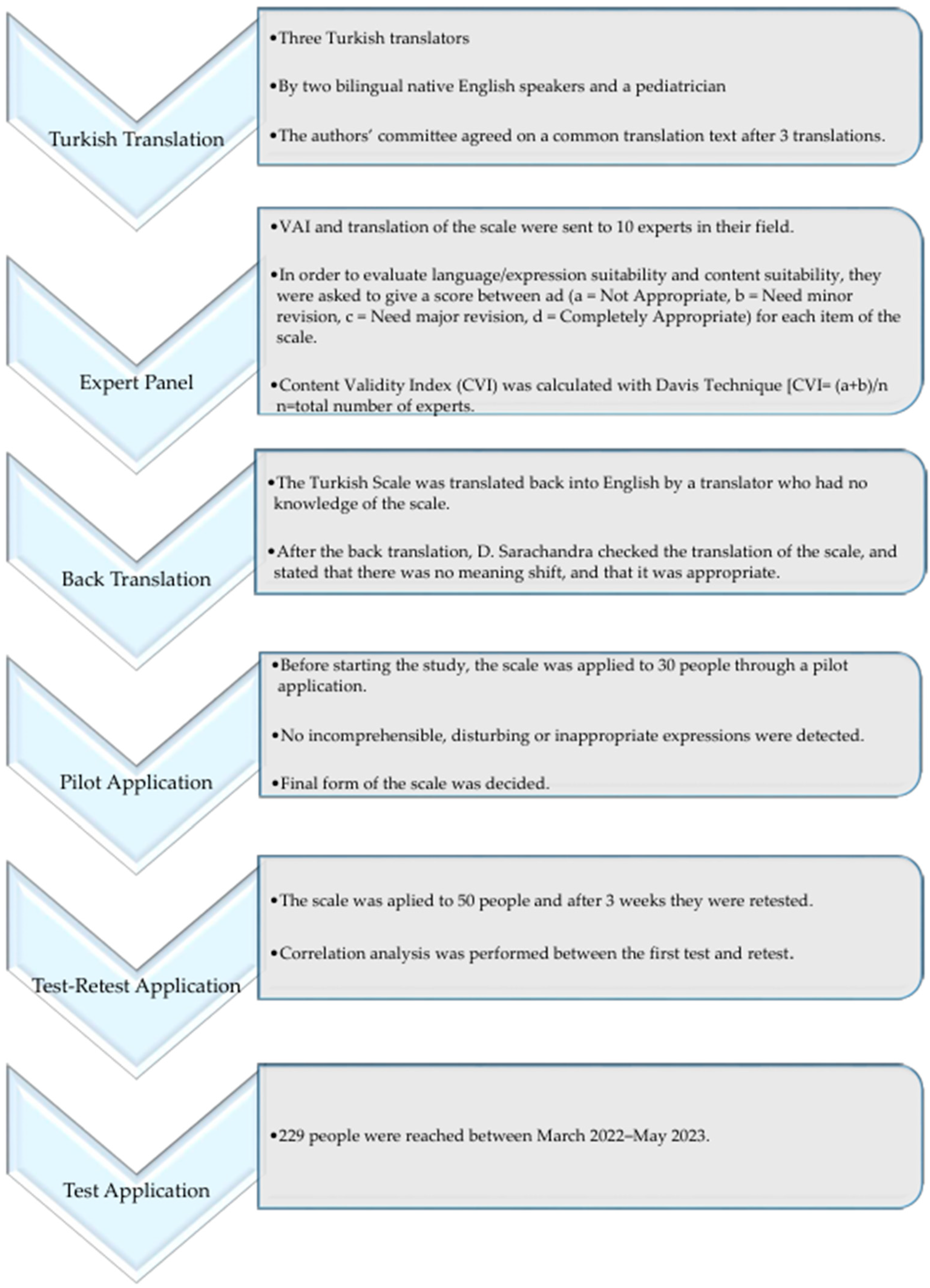
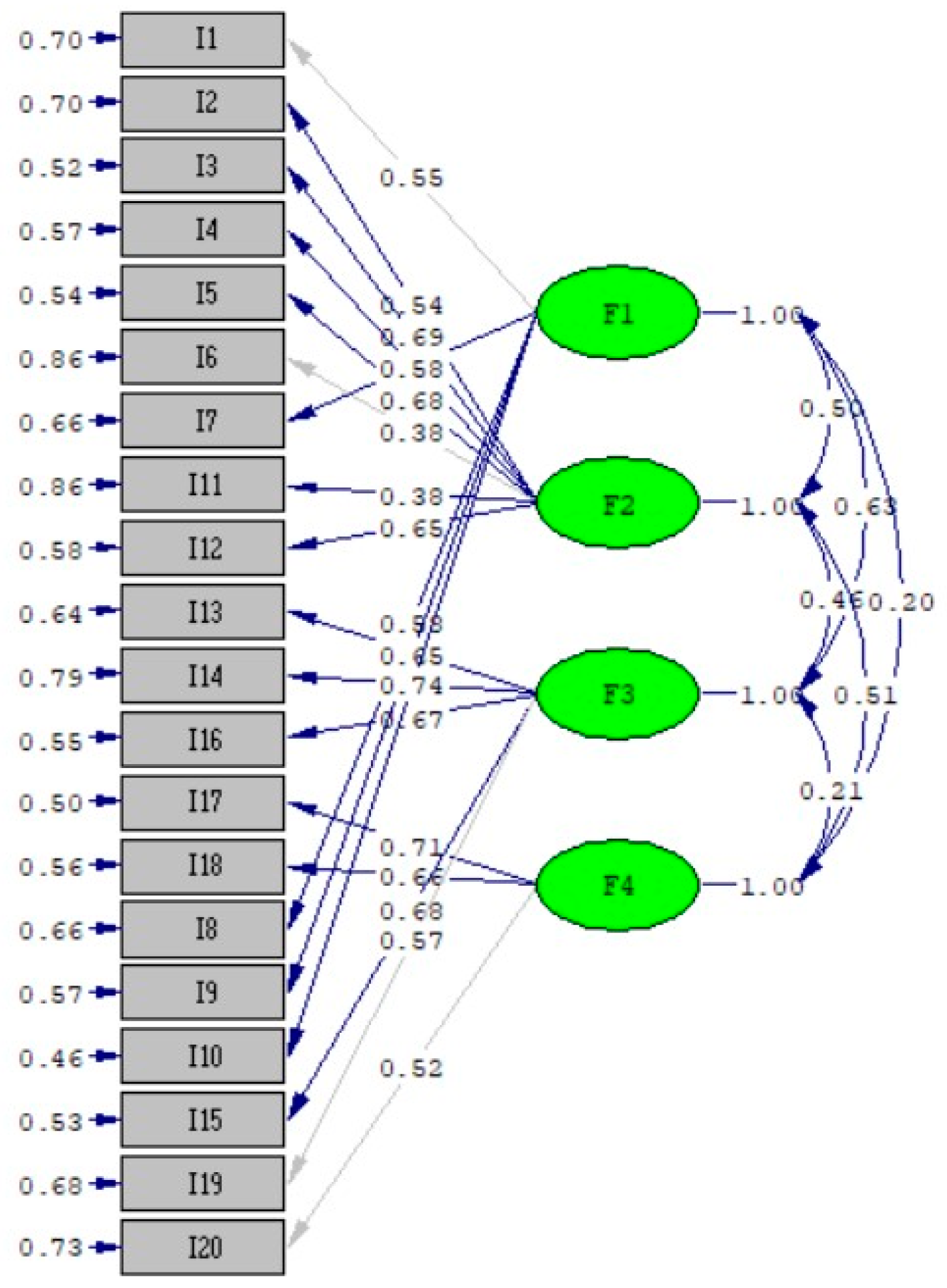
This research study aimed to assess the reliability and validity of the Turkish version of the Vaccine Acceptance Instrument (VAI). The VAI is a 20-item Likert-type scale, with responses ranging across seven points. A systematic approach was followed to translate the scale into Turkish, involving translation, expert panel evaluation, back-translation, and pilot testing. The Vaccine Acceptance Instrument and a sociodemographic data form were used for data collection. The reliability of the scale was tested by test–retest analysis, and its internal reliability was examined by Cronbach’s alpha test. The factor structure was examined using Exploratory Factor Analysis (EFA). Confirmatory Factor Analysis (CFA) was employed to assess the scale’s fit. Overall, 229 participants were included in the study. In test–retest reliability analysis, the intraclass correlation coefficient of the scale was 0.992 (95% CI: 0.987–0.996). The Cronbach’s alpha value of the scale was 0.824. A four-factor structure was determined. The model had an acceptable fit [χ2/df = 380.04/164 (2,317) p < 0.001, CFI = 0.91, GFI = 0.90, AGFI = 0.906, NFI = 0.90, RMSEA = 0.076]. The mean total VAI score was 112.71 ± 17.02. The low education level of the mother, being a housewife, and parents not having the COVID-19 vaccine were statistically significantly associated with a low scale score and low vaccine acceptance (p < 0.05). The Turkish adaptation of the VAI demonstrated satisfactory levels of validity and reliability following rigorous testing.
Keywords: vaccine hesitancy; vaccine; scale validation; reliability; vaccine acceptance vaccine hesitancy; vaccine; scale validation; reliability; vaccine acceptance