1. Introduction
Diabetes mellitus comprises a complex and heterogeneous group of metabolic disorders characterized by chronic hyperglycemia resulting from alterations in insulin secretion, insulin action, or a combination of both processes. Persistent disruption of glucose homeostasis leads to widespread disturbances in carbohydrate, lipid, and protein metabolism, which over time promote systemic oxidative stress, chronic low-grade inflammation, and progressive impairment of tissue function [
1,
2,
3]. These metabolic alterations play a central role in the development of both acute and long-term diabetic complications, including cardiovascular disease, nephropathy, neuropathy, and retinopathy. Among the different forms of the disease, type 2 diabetes mellitus (T2D) accounts for approximately 90–95% of all cases and is strongly associated with insulin resistance, excess adiposity, physical inactivity, and dietary patterns characterized by high consumption of energy-dense, highly processed foods [
4,
5].
Over the past decades, the prevalence of diabetes has increased markedly worldwide, reaching levels of major public health concern. Recent epidemiological estimates indicate that more than 589 million adults were living with diabetes globally in 2024, corresponding to roughly 11% of the adult population. Projections suggest that this figure could exceed 850 million individuals by 2050 if current trajectories continue [
6,
7]. The impact of diabetes extends well beyond its growing prevalence. The disease imposes a substantial economic burden on healthcare systems, reduces quality of life, and is associated with a marked increase in mortality risk. Complications related to diabetes remain among the leading contributors to morbidity and death globally, with cardiovascular disease representing the primary cause of mortality in affected individuals [
8]. These trends underscore the need for preventive and therapeutic strategies that address not only glycemic control but also the underlying metabolic and redox-related disturbances that drive disease progression.
Three redox concepts recur throughout the present synthesis: mitochondrial reactive oxygen species (ROS) overproduction perturbs insulin signaling in metabolically active tissues [
9,
10,
11,
12,
13]; postprandial glycaemic excursions amplify systemic oxidative load and drive endothelial dysfunction independently of fasting glycemia [
14,
15,
16]; and pancreatic β-cells are uniquely vulnerable to redox imbalance because their constitutive antioxidant buffering capacity is lower than that of comparable secretory tissues [
17,
18]. These concepts are developed in detail in
Section 3 and are revisited in
Section 4 onwards when discussing how cocoa-derived constituents intervene at each level.
Disturbances in glucose metabolism are also closely associated with postprandial glycemic excursions, reduced insulin sensitivity, and alterations in intestinal nutrient handling and hormonal signaling. Rapid digestion and absorption of refined carbohydrates can produce pronounced postprandial glucose fluctuations, generating a transient metabolic state linked to elevated oxidative stress, endothelial dysfunction, and systemic inflammatory activation [
14,
15]. These postprandial disturbances contribute not only to the pathophysiology of diabetes but also to the increased cardiovascular risk observed in individuals with impaired glucose metabolism. For this reason, nutritional strategies aimed at modulating postprandial glycemic responses and improving metabolic flexibility have emerged as key targets in the prevention and management of metabolic disease [
16].
Within this framework, growing attention has been directed toward dietary patterns and food components capable of modulating oxidative stress and glucose metabolism through redox-related mechanisms. A substantial body of epidemiological and clinical evidence indicates that diets rich in plant-derived foods are associated with improved metabolic health and a lower risk of developing T2D and cardiovascular disease [
19,
20]. These protective effects are not attributable to single compounds, but rather to the combined action of multiple bioactive constituents (including polyphenols, dietary fibers, unsaturated lipids, vitamins, and minerals) that interact with metabolic and redox signaling pathways at several biological levels. Importantly, current research suggests that the physiological actions of these compounds cannot be fully understood when evaluated in isolation. Instead, their biological activity is strongly influenced by the structural and compositional characteristics of the food matrix in which they are naturally embedded, which influence their bioavailability, metabolic interactions, and downstream physiological responses [
21,
22].
In this context, the food matrix can be defined as the complex physical and chemical organization of a food, encompassing the interactions between nutrients and non-nutrient components that influence digestion, absorption, and metabolic responses [
23]. Structural characteristics of the matrix modulate the bioavailability of bioactive compounds, regulate nutrient release during gastrointestinal digestion, and affect key metabolic pathways related to glucose homeostasis, lipid metabolism, and gut microbiota activity [
21,
22,
24].
Among plant-derived foods, cocoa represents a particularly illustrative example of a complex nutritional matrix with potential metabolic relevance. Cocoa beans and cocoa-derived products contain a diverse array of bioactive compounds, including flavanol-type polyphenols such as epicatechin and catechin, oligomeric procyanidins, dietary fibers, methylxanthines, minerals, and lipid fractions derived from cocoa butter [
25,
26,
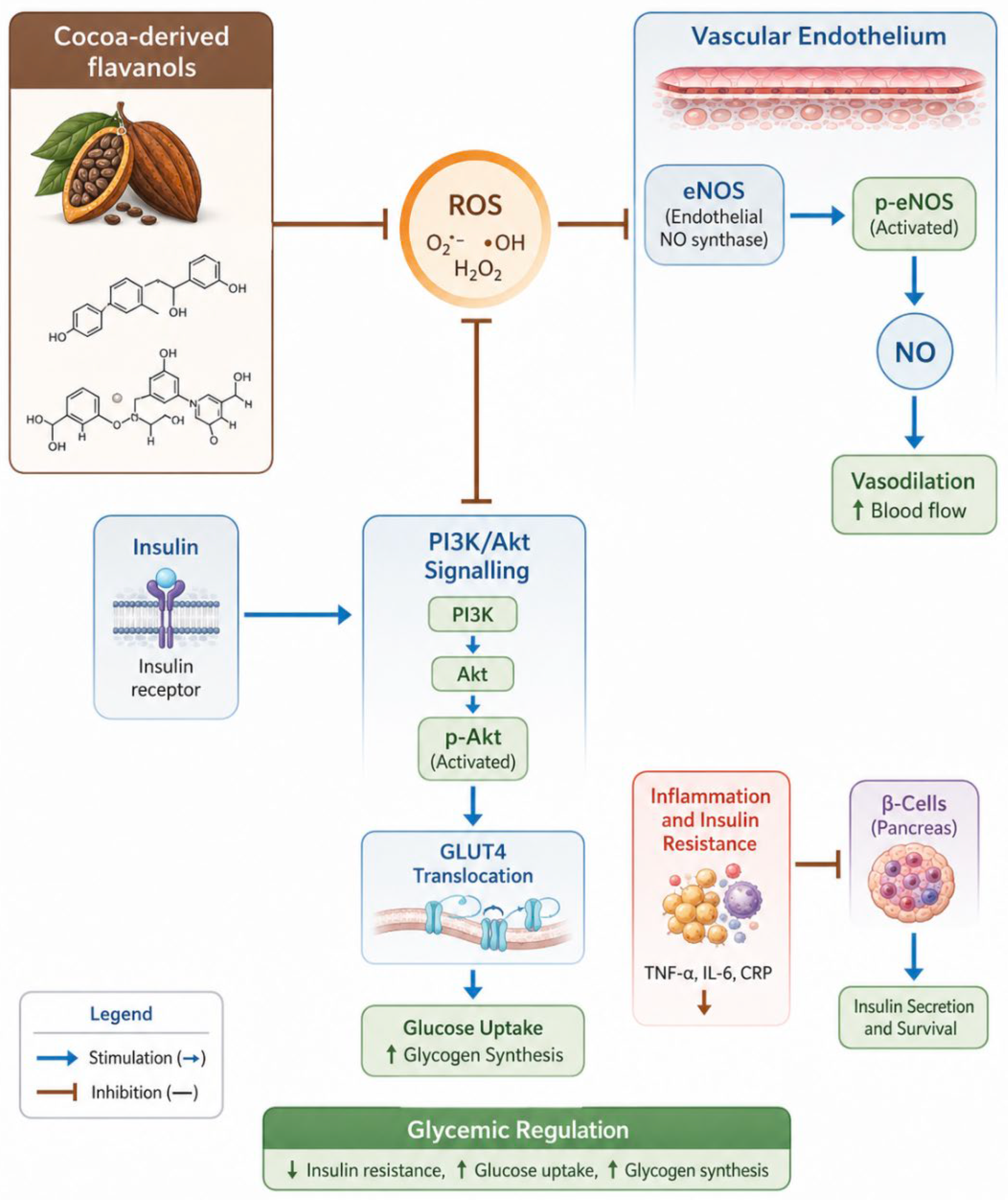
27]. Importantly, the metabolic effects of cocoa cannot be attributed to individual components alone, but rather to the integrated action of these constituents within the matrix. These components interact with redox-sensitive pathways involved in endothelial function, insulin signaling, and inflammatory regulation. Cocoa flavanols have received particular attention because of their capacity to modulate nitric oxide bioavailability, improve vascular function, and affect glucose metabolism [
28,
29,
30].
In addition to polyphenols, cocoa-based food matrices often incorporate other functional elements—including soluble fibers, alternative sweeteners, and specific lipid sources—that may further shape metabolic responses. These components can influence the kinetics of digestion, alter postprandial glycemic dynamics, and interact with gut microbiota, thereby contributing to systemic metabolic regulation. The metabolic effects associated with cocoa-containing foods therefore reflect the integrated activity of numerous constituents within the matrix rather than the isolated action of a single class of compounds [
31,
32].
Although interest in the metabolic properties of cocoa and related plant-based matrices has grown considerably, the mechanisms through which these complex food systems influence redox-related processes and glucose metabolism are not yet fully clarified. Questions remain regarding the relative contribution of individual bioactive compounds, the possible synergistic interactions between matrix components, and the extent to which mechanistic observations translate into clinically relevant metabolic outcomes. In addition, variability in cocoa processing methods, product formulation, and compositional characteristics complicates the interpretation of available evidence and highlights the need for more integrated analyses of cocoa-derived matrices within the broader context of metabolic health [
33,
34,
35].
Therefore, the present narrative review aims to examine the antidiabetic potential and underlying redox-related mechanism of cocoa-based plant matrices by integrating current knowledge from nutritional biochemistry, redox biology, and metabolic research. Particular attention is devoted to the roles of cocoa polyphenols, dietary fibers, lipid fractions, micronutrients, and non-glycemic sweeteners in modulating redox balance, insulin signaling, glucose metabolism, and gut microbiota-related pathways. Emphasis is placed on the mechanistic interactions among these components within complex plant matrices and their possible implications for metabolic regulation.
By bringing together evidence from mechanistic experiments, clinical studies, and translational nutrition research, this review provides a comprehensive perspective on how cocoa-derived functional matrices may contribute to metabolic health and glycemic control. A deeper understanding of these interactions may support the development of mechanistically informed nutritional strategies and matrix-based functional food formulations aimed at preventing or attenuating metabolic disorders such as insulin resistance, prediabetes, and T2D.
2. Materials and Methods
This narrative review was developed through a structured literature search to identify evidence on the antidiabetic potential and underlying redox-related mechanisms of cocoa-based plant matrices and their bioactive components. Primary scientific sources were considered, including original articles, clinical trials, mechanistic studies, systematic reviews, and meta-analyses. Searches were conducted in PubMed/MEDLINE, Scopus, Web of Science Core Collection, Embase, and ScienceDirect, with complementary searches in Google Scholar when needed to identify highly cited or recent studies and to complete citation tracking.
The search strategy was structured around the main conceptual domains of the review. Keywords included “cocoa”, “cocoa flavanols”, “cocoa polyphenols”, “flavan-3-ols”, “epicatechin”, “procyanidins”, “oxidative stress”, “redox signaling”, “insulin resistance”, “glucose metabolism”, “glycemic control”, “postprandial glycemia”, “endothelial function”, “metabolic syndrome”, “type 2 diabetes”, “functional foods”, “food matrix”, “plant-based matrices”, “prebiotic fibers”, “β-glucans”, “gut microbiota”, “non-glycemic sweeteners”, “oleic acid”, and “nutritional interventions”. Controlled vocabulary terms, including MeSH terms when available, were combined with free-text terms and related synonyms to improve search sensitivity and specificity.
The primary search covered articles published from 2000 to the present, as this period encompasses most of the relevant mechanistic, clinical, and translational research on cocoa bioactives, redox biology, metabolic regulation, gut microbiota interactions, and functional food matrices in metabolic disease. Earlier seminal studies were also included when necessary to support key biochemical concepts or landmark findings. Given the mechanistic and matrix-oriented framework of this review, the search was not limited to cocoa intervention studies alone. Literature on individual components frequently present in cocoa-based matrices, such as flavanols, soluble fibers, non-glycemic sweeteners, oleic-rich lipid systems, and micronutrients, was also included when directly relevant to redox-related processes, glycemic control, insulin signaling, or metabolic regulation.
Study selection was guided by predefined criteria to ensure both relevance and methodological quality. Eligible publications were peer-reviewed articles examining cocoa bioactive compounds, cocoa-derived products, or plant-based food matrices with potential implications for metabolic health. Particular emphasis was placed on studies addressing oxidative stress, redox signaling, glucose metabolism, insulin sensitivity, endothelial function, and metabolic inflammation. Human studies, especially randomized controlled trials and observational investigations, were prioritized when available, together with systematic reviews and meta-analyses on cardiometabolic outcomes. Animal and cell-based studies were also considered when they provided mechanistic insight into pathways related to redox modulation, insulin signaling, glucose transport, mitochondrial metabolism, inflammation, or gut microbiota–host interactions. Only full-text articles published in English were included.
Studies were excluded if they did not directly address metabolic, nutritional, or redox-related aspects of cocoa or plant-derived matrices. Articles focused exclusively on agronomic, technological, sensory, or industrial processing features without clear biomedical relevance were not considered. Conference abstracts, dissertations, editorials without substantial scientific synthesis, unpublished materials, and other non-peer-reviewed documents were also excluded. Publications lacking sufficient methodological quality or meaningful mechanistic relevance to the aims of the review were likewise discarded.
The final body of literature was organized according to the thematic structure of the manuscript, including redox-related mechanisms and glycemic dysregulation in metabolic disorders, cocoa polyphenols and redox signaling, non-glycemic sweeteners and postprandial glycemic control, prebiotic and soluble fibers in metabolic regulation, oleic-rich lipid matrices, micronutrients and redox balance, multi-component synergies in cocoa-based functional matrices, and their translational relevance for antidiabetic nutritional strategies. Literature screening and selection were conducted iteratively to preserve conceptual coherence, methodological rigor, and translational relevance throughout the review.
3. Oxidative Stress and Glycemic Dysregulation in Metabolic Disorders
Oxidative stress represents a central pathophysiological feature of metabolic disorders characterized by impaired glucose regulation, including insulin resistance, prediabetes, and T2D [
9,
10]. Rather than being merely a secondary consequence of chronic hyperglycemia, oxidative stress is now recognized as an active contributor to metabolic dysfunction [
9,
10,
12]. It participates in the progressive deterioration of insulin signaling, pancreatic β-cell integrity, vascular homeostasis, and overall metabolic flexibility [
9,
10]. In biological terms, oxidative stress describes a condition in which the production of ROS exceeds the buffering capacity of endogenous antioxidant systems responsible for maintaining redox balance. This imbalance may lead to oxidative damage affecting lipids, proteins, and nucleic acids, while also altering redox-sensitive intracellular signaling pathways that are tightly linked to glucose metabolism and cellular energy regulation [
9,
12].
Under physiological conditions, ROS should not be regarded exclusively as harmful molecules. When generated in low and tightly regulated amounts, they participate in redox signaling processes that support cellular adaptation, mitochondrial activity, and normal insulin action. The balance is disrupted in states of chronic nutrient excess, obesity, and persistent dysglycemia. In these contexts, ROS production becomes excessive and spatially dysregulated, shifting from controlled signaling toward cellular stress [
9,
10]. Multiple interconnected sources contribute to this increase. These include mitochondrial electron leakage during oxidative phosphorylation, activation of NADPH oxidases, enhanced formation of advanced glycation end-products, and inflammatory activation of immune cells [
9,
10]. The resulting metabolic environment is characterized by sustained redox imbalance, which gradually becomes mechanistically linked to the development of insulin resistance and tissue dysfunction.
3.1. Mitochondrial ROS Generation and Metabolic Overload
Among the major intracellular sites of oxidative stress generation in metabolic disease, mitochondria play a particularly important role. Excess availability of metabolic substrates—particularly glucose and fatty acids—increases the rate of electron delivery to the mitochondrial respiratory chain and, when electron transport capacity becomes saturated, promotes premature electron leakage at Complexes I and III. This leakage results in the monovalent reduction of molecular oxygen to superoxide (O
2˙
−), the primary mitochondrial ROS, rather than its complete four-electron reduction to water as occurs in normal oxidative phosphorylation [
10,
11]. It is important to note that it is not increased electron flow per se that elevates ROS production; rather, it is the saturation and inefficiency of electron transfer—driven by substrate overload—that redirects electrons toward superoxide formation [
10,
11]. In insulin-resistant conditions, this process is further exacerbated by reduced mitochondrial efficiency and diminished metabolic flexibility, which impair the ability of tissues to switch appropriately between carbohydrate and lipid oxidation. This metabolic inflexibility reinforces substrate overload and further amplifies mitochondrial ROS generation, establishing a self-perpetuating cycle of redox dysregulation and metabolic dysfunction.
The liver, skeletal muscle, and adipose tissue are particularly affected, as they represent major sites of nutrient handling and insulin-mediated metabolic regulation. In these tissues, mitochondrial ROS are not only indicators of overnutrition but also active mediators of redox-sensitive metabolic signaling [
10,
11]. The mitochondrial perspective is therefore critical for understanding metabolic disease. It places redox imbalance directly at the interface between nutrient overload and altered cellular physiology. Within this framework, metabolic dysfunction can be interpreted as a disturbance in cellular energy processing tightly coupled to redox dysregulation. This conceptual framework becomes particularly relevant when evaluating cocoa-based plant matrices later in the review, since any metabolic benefit should be interpreted according to its ability to influence biologically meaningful pathways rather than merely increasing overall antioxidant intake.
3.2. Oxidative Stress, Inflammation, and Insulin Resistance
The interaction between oxidative stress and insulin resistance is especially relevant when considering nutritional strategies aimed at improving glycemic regulation. Under normal physiological conditions, insulin binding to its receptor activates receptor tyrosine kinase activity, which initiates a downstream phosphorylation cascade through insulin receptor substrate (IRS) proteins, phosphoinositide 3-kinase (PI3K), phosphatidylinositol (3,4,5)-trisphosphate (PIP3), and protein kinase B (Akt/PKB). This signaling sequence culminates in the translocation of glucose transporter type 4 (GLUT4) to the plasma membrane of skeletal muscle and adipose tissue cells, enabling insulin-stimulated glucose uptake [
11,
12]. Redox imbalance disrupts this pathway at multiple levels. Elevated ROS levels activate stress-sensitive serine/threonine kinases—including c-Jun N-terminal kinase (JNK), inhibitor of κB kinase β (IKKβ), and p38 mitogen-activated protein kinase (p38 MAPK)—which promote inhibitory serine phosphorylation of IRS-1 and IRS-2 [
12,
13]. This modification blunts the propagation of the insulin signal through PI3K/Akt and thereby reduces GLUT4 translocation and glucose uptake in peripheral tissues [
12]. It should be acknowledged that the relationship between ROS and the cellular antioxidant machinery is biphasic: under low to moderate oxidative stimuli, ROS act as redox signals that promote the Keap1–Nrf2 pathway and upregulate the expression of antioxidant enzymes such as SOD, catalase, GPx, heme oxygenase-1 (HO-1), and NAD(P)H quinone oxidoreductase 1 (NQO1), constituting an adaptive (hormetic) response [
13,
17]. By contrast, sustained or excessive ROS exposure, as observed in chronic metabolic disease, may overwhelm this adaptive capacity and ultimately reduce the expression or activity of these enzymes—including SOD, catalase, and GPx—further impairing the cellular capacity to buffer the oxidative load [
12,
13]. However, it should be noted that a reduction in a specific antioxidant enzyme does not necessarily reflect a decline in total antioxidant defense, which integrates both enzymatic and non-enzymatic components such as glutathione (GSH) and vitamins C and E [
12]. At the same time, redox imbalance is closely intertwined with inflammatory signaling pathways, and this convergence further amplifies insulin resistance. Rather than acting as an isolated biochemical disturbance, redox dysregulation operates within an integrated metabolic–inflammatory network that compromises glucose disposal and systemic metabolic regulation [
10,
12].
This relationship becomes particularly evident in obesity-associated metabolic dysfunction. During states of sustained positive energy balance, adipose tissue expansion is accompanied by cellular stress, altered adipokine secretion, immune cell infiltration, and chronic low-grade inflammation. Pro-inflammatory mediators such as TNF-α and IL-6 have long been implicated in insulin resistance, and oxidative stress contributes to their expression through redox-sensitive transcriptional mechanisms, including NF-κB activation [
12,
13]. In turn, inflammatory signaling enhances ROS generation and further disrupts insulin signaling pathways. This reciprocal amplification between oxidative stress and inflammation illustrates that insulin resistance is not simply a defect in glucose transport but a systemic disturbance involving complex immune–metabolic crosstalk [
12,
13].
3.3. Pancreatic β-Cell Vulnerability and the Progression Toward Overt Diabetes
Oxidative stress also plays a decisive role in the progressive deterioration of pancreatic β-cell function. These endocrine cells exhibit a particular vulnerability to redox imbalance because they express comparatively low levels of several antioxidant enzymes, which limits their ability to neutralize excess ROS [
17]. This limitation becomes especially problematic under conditions of chronic glucotoxicity and lipotoxicity. Persistent elevations in circulating glucose and fatty acids promote redox imbalance within pancreatic islets, disrupt mitochondrial ATP production, impair glucose-stimulated insulin secretion, and promote β-cell dysfunction [
17,
18]. Over time, these disturbances contribute to the reduction in β-cell functional mass that characterizes the transition from compensated insulin resistance to overt T2D. In this context, redox dysregulation provides a mechanistic link between peripheral insulin resistance and endocrine pancreatic failure, positioning it at the center of disease progression [
17,
18].
This β-cell perspective also deepens the understanding of metabolic disease pathogenesis. Peripheral insulin resistance alone does not fully explain the development of diabetes; sustained hyperglycemia ultimately requires progressive impairment of β-cell compensatory capacity. Oxidative stress contributes simultaneously to both aspects of this process. It impairs insulin signaling in peripheral tissues while also reducing the ability of pancreatic cells to mount an adequate compensatory response. Such dual involvement reinforces its relevance as a central mechanistic target in nutritional strategies aimed at early metabolic intervention.
3.4. Hyperglycemia, Glycemic Variability, and Postprandial Oxidative Stress
Hyperglycemia itself represents a powerful driver of oxidative stress, and this relationship extends beyond chronically elevated mean glucose levels. Acute glucose excursions (particularly postprandial spikes and oscillating glycemic patterns) appear to exert pronounced effects on redox homeostasis [
14]. Experimental and clinical evidence indicates that intermittent exposure to high glucose concentrations may induce greater oxidative stress and endothelial dysfunction than stable hyperglycemia of comparable average magnitude [
15]. These observations suggest that glycemic variability represents a dynamic and clinically relevant contributor to redox-mediated metabolic stress, complementing the effects of sustained hyperglycemia.
This concept shifts the focus of metabolic dysregulation from static fasting glycemia toward the dynamic nature of postprandial metabolism. It also highlights that the structural characteristics of foods, the kinetics of carbohydrate digestion, and the composition of dietary matrices are key determinants of metabolic responses. Dysregulated postprandial glycemia can amplify oxidative stress and contribute to cumulative damage in metabolically active tissues. Consequently, dietary matrices capable of moderating these excursions may confer benefits that extend beyond simple reductions in blood glucose levels, by attenuating postprandial oxidative stress and modulating redox-sensitive pathways involved in endothelial function, inflammation and metabolic stability [
14,
15,
16].
This issue becomes particularly relevant within modern dietary environments characterized by frequent consumption of highly processed foods rich in refined, rapidly absorbable carbohydrates. Under such conditions, glycemic variability may represent a recurring oxidative stimulus that accumulates long before clinical diabetes becomes evident. Within this framework, cocoa-based plant matrices provide a relevant model linking metabolic pathophysiology with food design. It suggests that the metabolic relevance of a dietary matrix depends not only on its intrinsic bioactive composition but also on its capacity to influence digestion, absorption, and postprandial metabolic responses.
3.5. Endothelial Dysfunction and Cardiometabolic Consequences
The vascular endothelium is particularly sensitive to the combined effects of redox imbalance and metabolic dysregulation. Endothelial dysfunction is recognized as an early event in diabetes-associated vascular disease, and oxidative stress plays a central role by reducing nitric oxide bioavailability, promoting inflammatory signaling, and favoring a pro-atherogenic phenotype [
10,
14]. Because cardiovascular disease represents the leading cause of morbidity and mortality in T2D, the metabolic significance of oxidative stress must be interpreted not only in relation to glucose regulation but also with respect to vascular outcomes [
8,
10]. Within this pathophysiological context, cocoa-based matrices are of particular interest, since some of the most consistently reported biological effects of their flavanol fraction involve improvements in endothelial function, nitric oxide-dependent signaling, and vascular reactivity. These mechanisms directly target pathways implicated in cardiometabolic complications, highlighting the potential relevance of nutritional strategies aimed at modulating redox-sensitive vascular processes.
Given that oxidative stress contributes simultaneously to dysglycemia and vascular dysfunction, nutritional strategies capable of influencing both domains represent a relevant target for functional food development. Cocoa has received considerable attention in this regard because its flavanol fraction has been extensively investigated for its effects on endothelial responses, vascular tone, and nitric oxide signaling. These mechanisms are particularly important within the integrated framework of oxidative stress and glycemic dysregulation, where vascular and metabolic alterations are tightly interconnected.
3.6. Interpreting Redox Biology Beyond Simplistic Antioxidant Claims
The role of oxidative stress in metabolic disease requires careful mechanistic interpretation rather than simplistic assumptions regarding antioxidant effects. The presence of oxidative stress does not imply that indiscriminate antioxidant interventions will confer metabolic benefit, as redox biology is governed by tightly regulated signaling processes. Redox biology is intrinsically complex. Reactive oxygen species also serve important signaling functions, and their complete suppression may disrupt redox-sensitive pathways involved in cellular adaptation and metabolic regulation. Within this context, cocoa and other plant-derived matrices should not be interpreted simplistically as generic “antioxidant foods.” What matters biologically is not merely the radical scavenging capacity measured in chemical assays but the ability of dietary components to influence relevant physiological pathways, including redox-sensitive signaling, inflammatory responses, endothelial function, mitochondrial adaptation, and glycemic dynamics [
9,
10].
From both methodological and translational perspectives, this clarification is essential. Many food-derived compounds exhibit strong antioxidant activity in vitro, yet such findings do not automatically translate into measurable physiological effects in humans. The critical question for cocoa-based matrices is therefore whether their bioactive constituents can modulate redox-related mechanisms in vivo to influence metabolic health. Addressing this question requires moving beyond reductionist interpretations toward a more integrated understanding of food structure, bioavailability, and metabolic context.
3.7. Relevance for Nutritional Strategies and Transition Toward Cocoa-Based Matrices
From a translational standpoint, the mechanistic connections between oxidative stress and glycemic dysregulation support the development of functional food matrices targeting multiple interconnected metabolic pathways. An effective nutritional strategy should not be limited to reducing acute glucose excursions but should also aim to attenuate glycemic variability, lower oxidative burden, improve endothelial responses, and enhance overall metabolic resilience through coordinated effects on redox-sensitive pathways.
Plant-derived matrices are particularly interesting in this regard because they often integrate several classes of bioactive compounds, including polyphenols, dietary fibers, unsaturated lipids, and micronutrients, that interact with overlapping metabolic pathways [
19,
20,
21,
22,
23]. Their biological effects include modulation of carbohydrate digestion and absorption, reduced postprandial insulin demand, modulation of gut-derived signaling, and regulation of redox-sensitive inflammatory networks. These characteristics are directly applicable to cocoa-based matrices, whose metabolic effects arise from the integrated activity of multiple constituents rather than from a ¡ single isolated compound.
Within this framework, cocoa represents a relevant model for studying matrix-based metabolic effects. It contains flavanol-rich polyphenols that have been widely investigated for their role in redox regulation and vascular function, and it can also be incorporated into food systems that include fibers, alternative sweeteners, and lipid components capable of modulating postprandial glycemia and insulin sensitivity [
25,
26,
27,
28,
29,
30]. However, the potential benefits of cocoa-based matrices must be interpreted within the broader pathophysiological context described in this section. Metabolic disease involves intertwined disturbances in redox homeostasis, insulin signaling, β-cell vulnerability, and glycemic variability. Consequently, the relevance of cocoa-based products depends not only on their phytochemical composition but also on whether they can meaningfully influence these interconnected mechanisms in humans.
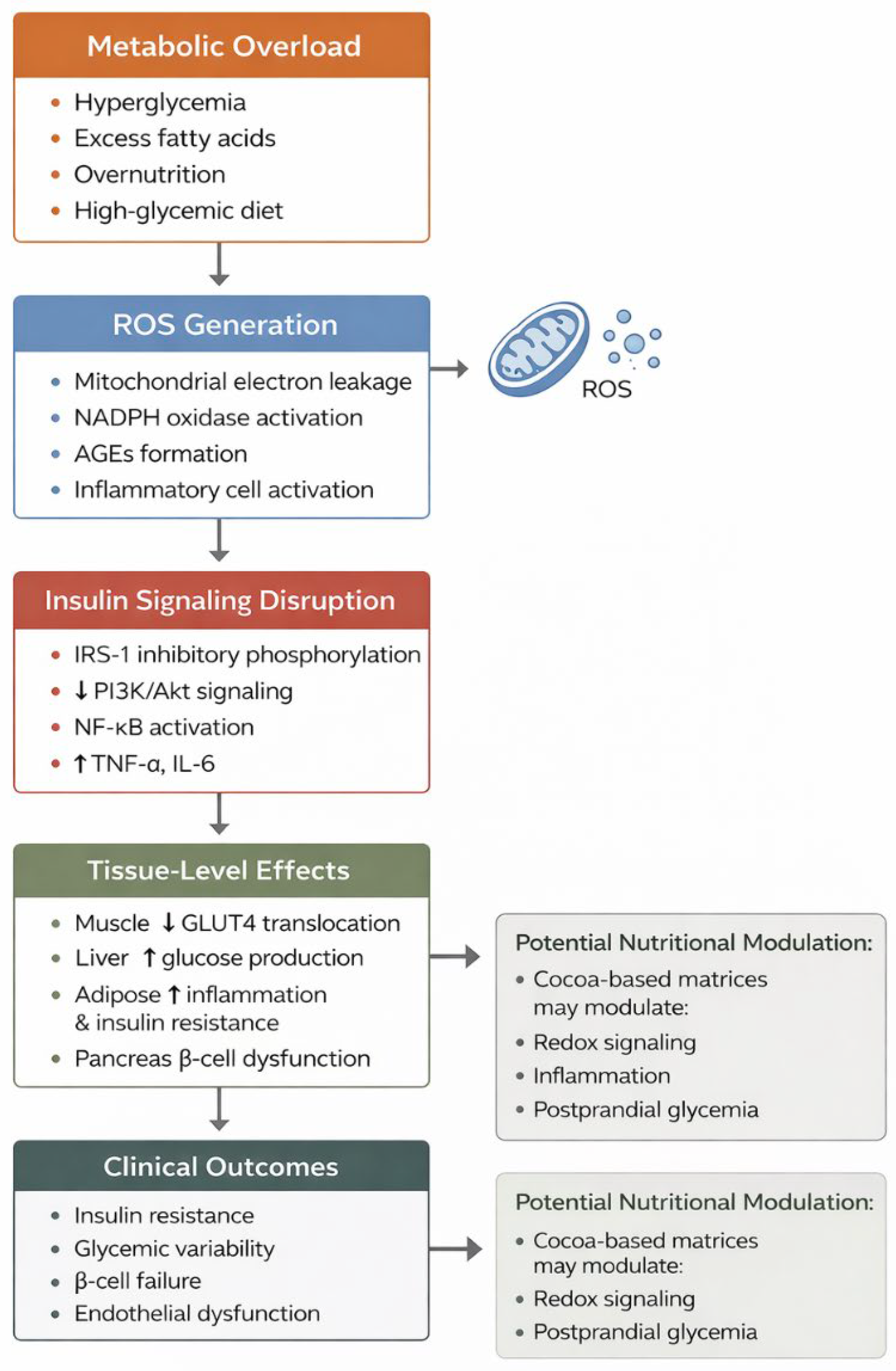
Overall, oxidative stress can be understood as a mechanistic bridge linking nutrient excess with progressive metabolic dysfunction. It contributes to insulin resistance, impairs β-cell function, amplifies inflammatory signaling, and promotes endothelial dysfunction, while also being closely associated with dysregulated postprandial glycemia and glycemic variability [
10,
11,
12,
13,
14,
15,
17,
18]. This integrated perspective provides the biological framework for evaluating the metabolic relevance of cocoa-based plant matrices, as illustrated in
Figure 1.
6. Prebiotic Fibers and Microbiota-Mediated Metabolic Effects
Dietary fiber is a major modulator of postprandial glycemia and microbiota-derived short-chain fatty acid production, with the recommended daily intake for adults of approximately 25–30 g·day
−1. In a cocoa formulation context, the absolute fiber contribution depends on serving size. Cocoa powder contains approximately 10–12 g of total fiber per 100 g, of which roughly one third is soluble, so a typical 10 g serving contributes ~1 g—small in isolation, yet biologically relevant when delivered alongside the polyphenol, lipid and protein components of the cocoa matrix [
53,
89,
90]. This quantitative anchoring frames the mechanistic and clinical evidence that follows.
The current conceptual basis for prebiotics was formalized by the International Scientific Association for Probiotics and Prebiotics, which defined a prebiotic as “a substrate that is selectively utilized by host microorganisms conferring a health benefit” [
60]. This definition is especially relevant for a matrix-based review because it emphasizes that not all dietary fibers are prebiotics and that the defining feature is not merely fermentability, but selective microbial utilization linked to a measurable benefit for the host [
60]. In metabolic disease, this benefit is increasingly interpreted through pathways involving microbial composition, short-chain fatty acid generation, modulation of gut-derived satiety and incretin hormones, reduction of endotoxemia, and attenuation of low-grade inflammation [
32,
60,
62].
Among the prebiotic substrates most consistently studied in relation to metabolic health are inulin-type fructans, including inulin and oligofructose. Hughes et al., in a systematic review of human clinical studies, concluded that inulin-type fructans reliably exert bifidogenic effects and may also improve intestinal barrier function, triglycerides, satiety, and, in some contexts, insulin sensitivity [
61]. Although the magnitude of these effects varies according to chain length, dose, duration, and host phenotype, this review remains highly relevant because it shows that the metabolic significance of these fibers cannot be reduced to bowel function alone; rather, they may influence several metabolic endpoints through microbiota-mediated mechanisms [
61].
Canfora et al. further strengthened this mechanistic framework by placing prebiotic fermentation within the broader biology of obesity, insulin resistance, NAFLD, and type 2 diabetes [
62]. Their work highlighted that indigestible carbohydrates are converted by the microbiota into metabolites such as acetate, propionate, and butyrate, which may affect host physiology via G-protein-coupled receptors, intestinal gluconeogenesis, adipose tissue signaling, and systemic inflammatory pathways [
62]. From the perspective of the present review, this is a key transition: prebiotic fibers are relevant not because they are “healthy fibers” in a generic sense, but because they generate microbial metabolites that can participate in pathways directly linked to glucose homeostasis and metabolic resilience.
6.1. Relevance for Nutritional Strategies and Transition Toward Cocoa-Based Matrices
The metabolic relevance of prebiotic fibers becomes clearer when one considers the multiple interfaces between the gut microbiota and host glucose regulation. Experimental and translational studies have repeatedly suggested that fermentable fibers can influence satiety, insulin sensitivity, endotoxemia, and gut hormone secretion. Cani et al. were among the first to translate this concept into humans, showing in a pilot study that oligofructose supplementation promoted satiety and reduced hunger-related responses in healthy subjects [
91]. Although this was not a diabetes study, it was mechanistically important because it suggested that fermentable fibers may influence host metabolic regulation through gut-derived signaling rather than simply through caloric dilution [
91].
This concept was subsequently expanded by Parnell and Reimer, who reported that 12 weeks of oligofructose supplementation in overweight and obese adults was associated with modest weight loss and modulated appetite-related hormones, including lower ghrelin and higher peptide YY concentrations [
92]. Although these effects do not demonstrate a direct antidiabetic action, they support the concept that prebiotic fibers influence metabolic risk through endocrine pathways regulating food intake and energy balance.
In populations at elevated metabolic risk, the evidence becomes more clinically relevant. Guess et al. conducted a randomized crossover trial in individuals with prediabetes and found that inulin may have unique metabolic effects in specific prediabetic phenotypes, although the overall effects on fasting glucose and insulin sensitivity were modest [
93]. This pattern highlights a recurring feature of microbiota-targeted interventions: effects are often phenotype-dependent, and improvements may be more apparent in selected metabolic subgroups than in broad heterogeneous cohorts [
93].
A similar theme emerged in the randomized controlled trial by Dehghan et al. in women with type 2 diabetes. These authors reported that oligofructose-enriched inulin improved some inflammatory markers and reduced metabolic endotoxemia, with parallel favorable changes in fasting glucose and HbA1c [
94]. These findings suggest that the metabolic effects of prebiotic fibers extend beyond glycemic control and involve interconnected pathways related to intestinal barrier function, endotoxin-related signaling, and systemic inflammation. Accordingly, their clinical relevance may not be fully captured by glucose-based endpoints alone but should be interpreted within a broader framework of microbiota-mediated metabolic regulation.
This broader interpretation is supported by the work of Chambers et al., who studied adults with overweight and obesity and found that both inulin-propionate ester and inulin improved insulin sensitivity compared with cellulose, albeit with distinct effects on the gut microbiota, plasma metabolome, and inflammatory responses [
95]. This trial is especially informative because it moves beyond generic “fiber effects” and shows that even among fermentable substrates, microbiota-targeted outcomes may differ according to the structure and metabolic destination of the fiber [
95]. The study also supports an important translational concept for the present review: when designing a functional cocoa-based matrix, the type of fermentable substrate matters, not only its quantity.
The most comprehensive synthesis of this evidence was provided by Wang et al., who conducted a GRADE-assessed systematic review and dose–response meta-analysis of 33 randomized controlled trials and concluded that inulin-type fructan supplementation significantly improved fasting glucose, HbA1c, fasting insulin, and HOMA-IR, particularly in prediabetes and type 2 diabetes [
96]. This meta-analysis is central to this section because it indicates that prebiotic fibers may exert metabolically meaningful effects in dysglycemic populations, especially when administered at sufficient dose and duration [
96]. However, it also reinforces the need for nuance: the effect size is not uniform, and the response appears to depend on population characteristics, intervention length, and the specific fructan formulation used [
96].
At the level of the cocoa matrix, these findings are highly relevant. Cocoa-based formulations can incorporate fermentable fibers directly, or they may contain fiber-rich ingredients derived from cocoa byproducts such as cocoa shell fractions. In such contexts, the role of prebiotic fibers is not limited to slowing digestion (an issue that will be addressed more specifically in
Section 6 for β-glucans and soluble fibers) but extends to shaping the downstream microbial metabolism of the matrix. This distinction is important to avoid redundancy across sections. Here, the focus is not viscosity or carbohydrate entrapment, but microbial selectivity, fermentation, and host–microbiota signaling.
Cocoa itself offers a compelling bridge between these concepts. Tzounis et al. demonstrated in a randomized, controlled, double-blind crossover trial that high cocoa flavanol consumption increased fecal bifidobacteria and lactobacilli and reduced clostridia in healthy humans, while concomitantly lowering plasma triglycerides and C-reactive protein [
89]. These findings suggest that cocoa-derived components can exert microbiota-modulating effects in vivo, even in the absence of isolated fiber supplementation [
89]. Sorrenti et al. later synthesized the bidirectional interaction between cocoa polyphenols and the microbiota, emphasizing that cocoa constituents may exert prebiotic-like effects while also being transformed into smaller metabolites with distinct biological activity [
97]. Thus, in cocoa-based matrices, polyphenols and fermentable fibers should not be conceptualized as independent domains; they may converge in the colon and generate overlapping microbiota-mediated effects [
89,
97].
The same matrix-oriented reasoning applies to cocoa fiber itself. Sarriá et al. reported that regular consumption of soluble fiber-rich cocoa products improved bowel habits in healthy adults and increased fiber intake to recommended levels [
90]. Although the study did not directly evaluate microbiota composition, it remains relevant because it supports the feasibility of using cocoa-derived fiber as a functional ingredient with physiological effects in humans [
90]. More recently, Cañas et al. showed that phenolic compounds from cocoa shell flour and cocoa shell extract underwent extensive biotransformation during in vitro colonic fermentation, generating phenyl-γ-valerolactones and related microbial metabolites [
53]. This work is mechanistically significant because it suggests that cocoa shell-derived matrices may provide not only fiber but also colon-delivered substrates that participate in microbiota-driven metabolic transformations [
53].
6.2. Human Evidence: Promise, Inconsistency, and Context Dependence
Despite the strong mechanistic rationale supporting prebiotic fibers, the human evidence remains context-dependent and should not be overstated. Mitchell et al., in a pilot randomized controlled trial in adults at elevated risk for type 2 diabetes, found that inulin supplementation increased bifidobacteria but did not improve peripheral insulin sensitivity [
98]. This dissociation highlights a key limitation: modulation of microbiota composition does not automatically translate into measurable improvements in glycemic physiology, particularly over short intervention periods. It also suggests that microbial function, metabolite production, and host metabolic context are critical determinants of clinical outcomes. Across the literature, beneficial effects of prebiotic fibers are more consistently observed for intermediate outcomes, including bifidogenicity, satiety-related hormones, and inflammatory markers, than for robust clinical endpoints such as HbA1c or long-term insulin sensitivity [
61,
93,
98]. In other words, human evidence supports promise, but not uniformity. This is particularly relevant for a narrative review that aims to remain mechanistically rigorous rather than promotional. Prebiotic fibers should not be presented as direct antidiabetic agents in the pharmaceutical sense. Rather, they should be interpreted as matrix components that may improve the metabolic milieu through microbiota-mediated routes whose magnitude depends on baseline dysbiosis, dietary pattern, dose, fermentability, and host metabolic status [
61,
62,
96].
These contextual dependencies are especially important in relation to cocoa-based matrices. A cocoa product enriched with fermentable fibers may not generate identical effects to isolated inulin supplementation, because the final response will depend on the co-presence of polyphenols, lipids, sweeteners, and the physical structure of the food. In this sense, microbiota-mediated metabolic effects are intrinsically matrix-dependent. The same fermentable substrate may produce different outcomes when delivered in a cocoa beverage, a reformulated chocolate, or a fiber-enriched cocoa snack, owing to differences in digestibility, substrate accessibility, colonic delivery, and interaction with other compounds. This reinforces one of the central arguments of the present review: the metabolic potential of cocoa-based foods emerges from the organization and interaction of components within the matrix, not from a single ingredient considered in isolation.
Taken together, the current body of evidence supports the view that prebiotic fibers are relevant to metabolic health because they influence the gut ecosystem and its signaling interface with the host [
53,
60,
61,
62,
89,
90,
91,
92,
93,
94,
95,
96,
97,
98]. Human and translational studies indicate that fermentable fibers can modulate satiety-related peptides, inflammatory tone, endotoxemia, and, in some contexts, glycemic control and insulin sensitivity [
91,
92,
93,
94,
95,
96,
98]. Cocoa-related evidence further suggests that cocoa constituents themselves may participate in microbiota modulation and colonic biotransformation, thereby reinforcing the plausibility of cocoa-based matrices as vehicles for microbiota-mediated metabolic effects [
53,
89,
90,
97]. However, the magnitude of these responses remains variable and strongly context-dependent. Prebiotic fibers should therefore not be interpreted as independent antidiabetic agents, but as components that can enhance the metabolic quality of food matrices, shifting part of the physiological response from rapid carbohydrate exposure toward slower, microbiota-mediated, and potentially more resilient metabolic signaling. This provides the conceptual bridge to the next section, in which β-glucans and soluble fibers will be examined from a complementary perspective, focusing more specifically on their physicochemical effects on glycemic and lipid regulation.
7. β-Glucans and Soluble Fibers in Glycemic and Lipid Regulation
β-Glucans are not endogenous constituents of cocoa; they are characteristic soluble polysaccharides of oat and barley endosperm cell walls and of yeast cell walls. In a cocoa-formulation context, they therefore enter the discussion as candidate co-formulation ingredients rather than as native cocoa components, with the rationale for their incorporation derived from the robust and quantitatively consistent body of evidence on viscous β-glucan-driven attenuation of postprandial glycemic and lipid responses at clinically relevant doses (≥3 g per meal, molecular weight ≥200 kDa) developed below.
Prebiotic fibers, whose metabolic relevance depends largely on selective microbial utilization and downstream fermentation products, β-glucans and other hand, are viscous soluble fibers which exert a substantial part of their physiological effect within the upper gastrointestinal tract. Their importance in metabolic regulation derives primarily from physicochemical properties such as viscosity, gel formation, delayed gastric emptying, and reduced diffusion of nutrients toward the absorptive surface of the small intestine. These effects make β-glucans and related soluble fibers particularly relevant to the present review, because they can influence both acute postprandial glycemic responses and longer-term lipid metabolism without requiring a direct pharmacological action on host cells [
99,
100,
101,
102]. In the context of cocoa-based plant matrices, this distinction is central. Whereas non-glycemic sweeteners reduce glycemic burden by replacing rapidly absorbable sugars, viscous fibers modify the kinetics of nutrient delivery and absorption, thereby reshaping the metabolic meaning of the matrix itself.
β-Glucans are non-starch polysaccharides found principally in oats and barley and are among the most extensively studied soluble fibers in cardiometabolic nutrition. Their capacity to lower postprandial glycemia and circulating LDL-cholesterol has been recognized for decades, but more recent work has clarified that these effects depend not merely on total fiber content, but on structural features such as molecular weight, extractability, and the viscosity generated within the intestinal lumen [
99,
100,
101,
102]. This is especially important for a matrix-oriented review, because the physiological behavior of β-glucans is inseparable from processing, food structure, and co-ingested nutrients. A low-viscosity or highly degraded β-glucan preparation may not produce the same metabolic effect as a structurally preserved oat or barley matrix, even if nominal fiber content is similar [
100,
102].
The acute glycemic effects of oat β-glucan have been examined in considerable detail. Zurbau et al., in a systematic review and meta-analysis, concluded that oat β-glucan significantly reduced postprandial blood glucose and insulin responses, with the magnitude of the effect depending strongly on the dose and viscosity of the β-glucan delivered [
99]. This finding is highly relevant because it confirms that β-glucans are not simply inert bulking agents; rather, they actively alter the digestive and absorptive handling of carbohydrates [
99]. Wolever et al. extended this mechanistic interpretation in a randomized placebo-controlled crossover trial in healthy adults, showing that increasing β-glucan viscosity within a breakfast meal slowed gastric emptying and reduced glycemic and insulinemic responses, even though appetite-related hormones and subsequent food intake were not significantly altered [
100]. This study is especially informative because it links a measurable physicochemical property—viscosity—to a defined metabolic outcome, thereby reinforcing the mechanistic plausibility of β-glucan-enriched matrices [
100].
Earlier human trials reached similar conclusions. Hlebowicz et al. reported that a muesli product containing 4 g of oat β-glucan lowered postprandial blood glucose compared with cornflakes in healthy subjects, although it did not significantly alter gastric emptying or subjective satiety [
101]. Panahi et al. later showed that β-glucan concentrates derived from oats differed in their glycemic effects according to the viscosity retained after processing, demonstrating that the preservation of rheological functionality is crucial for postprandial control [
102]. Taken together, these studies support a consistent interpretation: the acute glycemic benefit of β-glucans depends not only on the presence of soluble fiber per se, but on whether the matrix preserves the physicochemical conditions required for viscous behavior in vivo [
100,
101,
102].
The same principle applies to other viscous soluble fibers. Williams et al. showed that incorporation of guar gum and alginate into a cereal bar improved postprandial glycemia in humans, indicating that gel-forming soluble fibers can influence acute carbohydrate handling even when delivered in processed snack formats [
63]. In patients with type 2 diabetes, de Carvalho et al. compared breakfasts containing soluble fiber from foods with breakfasts containing guar gum supplements and found that both approaches improved postprandial plasma glucose compared with a low-fiber control, suggesting that the source and delivery format of soluble fiber may matter less than the presence of sufficient viscous soluble fiber within the meal [
64]. This concept is particularly relevant for cocoa-based products, as incorporation of soluble fibers into chocolate or cocoa-containing matrices may influence acute glycemic physiology, provided that the final structure preserves the functional properties required for viscosity.
7.1. Relevance for Nutritional Strategies and Transition Toward Cocoa-Based Matrices
From a translational standpoint, the relevance of β-glucans and viscous soluble fibers lies in their dual action on glucose and lipid metabolism. In glycemic terms, their capacity to increase intraluminal viscosity slows gastric emptying, delays starch hydrolysis, reduces glucose diffusion, and attenuates the rate of intestinal absorption [
63,
64,
99,
100,
101,
102]. In lipid terms, soluble fibers can interfere with bile acid reabsorption, increase fecal sterol loss, and promote compensatory hepatic cholesterol utilization, thereby contributing to reductions in circulating LDL-cholesterol [
68,
69,
103,
104]. This dual mechanism is particularly relevant in populations with overlapping dysglycemia and dyslipidemia, such as those with metabolic syndrome, prediabetes, or T2D.
Evidence for the glycemic effects of viscous fibers extends beyond β-glucans. Gibb et al., in a meta-analysis of psyllium supplementation, reported that psyllium improved glycemic control in proportion to the degree of pre-existing dysglycemia, with more pronounced effects in individuals with T2D than in normoglycemic participants [
65]. More recently, Gholami et al. performed a GRADE-assessed meta-analysis and found that psyllium significantly reduced fasting blood sugar, HbA1c, and HOMA-IR across randomized controlled trials [
66]. These studies are important because they indicate that soluble fibers can produce clinically relevant glycemic effects not only acutely but also over longer intervention periods, particularly in metabolically compromised populations [
65,
66]. Lu et al. further broadened this evidence base by showing, in a meta-analysis of randomized clinical trials, that viscous soluble dietary fiber supplementation improved both glucose and lipid metabolism in patients with type 2 diabetes [
67]. Thus, the metabolic relevance of soluble fibers is not restricted to oats and barley, although β-glucans remain the most standardized and best characterized compounds in this category.
The lipid-lowering evidence for β-glucans is even more established. Whitehead et al. conducted a meta-analysis of randomized controlled trials and showed that consuming at least 3 g/day of oat β-glucan significantly reduced total and LDL-cholesterol concentrations [
68]. Ho et al. later extended this observation, demonstrating that oat β-glucan reduced LDL-cholesterol, non-HDL-cholesterol, and apolipoprotein B, thereby strengthening the cardiovascular relevance of β-glucan-containing matrices [
69]. Comparable results were reported for barley β-glucan by AbuMweis et al., who found significant reductions in total and LDL-cholesterol across randomized trials [
103]. More recently, Yu et al. confirmed that oat β-glucan intake significantly decreased total and LDL-cholesterol in hypercholesterolemia adults, although effects on triglycerides and HDL-cholesterol were not consistent [
104]. These studies are particularly important for the present review because they demonstrate that β-glucans can affect not only acute glycemic handling but also chronic lipid-related risk markers, thereby increasing the translational value of formulations that incorporate them [
68,
69,
103,
104].
At the level of food design, these findings have direct implications for cocoa-based matrices. Cocoa-derived foods intended for metabolic health are often conceptualized primarily around flavanol content, but the present section shows that soluble fibers may shape the metabolic response just as decisively. A cocoa product enriched with β-glucans or other viscous soluble fibers may attenuate postprandial glycemia through slower carbohydrate delivery while simultaneously contributing to LDL-cholesterol lowering over repeated consumption. This dual action is particularly relevant in energy-dense cocoa matrices that may contain added sugars, as inclusion of functional soluble fibers can partially counterbalance these features and improve the overall metabolic profile of the product.
Importantly, the final effect will depend on the way β-glucans are delivered. Xu et al., in a meta-analysis of mildly hypercholesterolemic individuals, reported that β-glucan retained cholesterol-lowering efficacy across different delivery matrices, although some solid–liquid integrated formats appeared more effective than others [
105]. This observation is highly relevant for the present review because it reinforces the broader thesis that the metabolic effects of bioactive compounds are matrix dependent. A β-glucan-fortified cocoa beverage, a fiber-enriched chocolate bar, and a spoonable cocoa dessert will not necessarily produce identical glycemic or lipid responses, even if the nominal β-glucan dose is similar. Processing, water availability, particle structure, and co-ingredients all affect viscosity generation and intestinal behavior [
100,
102,
105].
7.2. Human Evidence: Promise, Inconsistency, and Context Dependence
Although the overall human evidence for β-glucans and soluble fibers is favorable, it is not entirely uniform. One reason is that acute postprandial effects are generally easier to detect than longer-term changes in glycemic control. In acute crossover studies, viscous fibers often show clear reductions in postprandial glucose and insulin responses [
63,
64,
99,
100,
101,
102]. However, longer-term outcomes such as HbA1c, fasting insulin, or body weight are influenced by multiple factors, including baseline metabolic status, habitual diet, fiber dose, molecular characteristics, and treatment adherence. This helps explain why some interventions report robust postprandial effects but only modest changes in chronic biomarkers.
The evidence also indicates that not all soluble fibers behave identically. β-Glucans, psyllium, guar gum, and alginate differ in fermentability, viscosity, processing stability, and sensory compatibility. Moreover, even within β-glucans, molecular weight and degradation during processing can profoundly affect physiological efficacy [
99,
100,
101,
102]. Thus, the category “soluble fiber” is mechanistically useful but nutritionally insufficient if taken as a uniform entity. For a narrative review centered on food matrices, this point is essential: one cannot assume that adding any soluble fiber to a cocoa-based formulation will automatically produce meaningful metabolic benefit. The nature of the fiber and the conditions under which it is delivered must be considered explicitly.
An additional source of variability relates to disease phenotype, as the metabolic effects of viscous soluble fibers are more pronounced in individuals with impaired glucose regulation or dyslipidemia than in metabolically healthy populations [
65,
67]. This suggests that the metabolic relevance of soluble fiber enrichment may be greatest in populations already characterized by impaired glycemic control, postprandial dysmetabolism, or dyslipidemia.
Such variability does not undermine the relevance of β-glucans and soluble fibers but helps define their role. These compounds should not be understood as independent antidiabetic agents acting through a single molecular target. Their value lies in modifying digestive physiology, improving postprandial glycemic handling, and, in some cases, lowering LDL-related lipid risk over time [
63,
64,
65,
66,
67,
68,
69,
99,
100,
101,
102,
103,
104,
105]. In cocoa-based matrices, this means that soluble fibers may serve as structural metabolic modulators that complement the redox- and endothelial-related actions of cocoa flavanols and the glycemic load reduction achieved by non-glycemic sweeteners.
Taken together, the available evidence indicates that β-glucans and other viscous soluble fibers are among the most useful matrix-level tools for improving postprandial glycemic regulation and selected lipid markers [
63,
64,
65,
66,
67,
68,
69,
99,
100,
101,
102,
103,
104,
105]. Human trials and meta-analyses consistently support acute reductions in postprandial glucose and insulin, especially when viscosity is preserved, while longer-term studies indicate favorable effects on LDL-cholesterol and, in some contexts, glycemic control [
65,
66,
67,
68,
69,
103,
104,
105]. Within cocoa-based plant matrices, these fibers may therefore enhance metabolic functionality by reducing glycemic excursion, moderating digestive kinetics, and improving lipid-related risk markers.
8. Oleic-Rich Lipid Matrices and Insulin Sensitivity
The lipid fraction of cocoa butter is dominated by saturated fatty acids—principally palmitic acid (~25–30%) and stearic acid (~33–35%)—together with monounsaturated oleic acid (~33–35%). The metabolic profile of cocoa-based foods can therefore be modulated by partial substitution of the saturated fraction with high-oleic lipid sources, and this substitution constitutes the central question that motivates the present section. The broader Mediterranean pattern and oleic acid literature is extensively synthesized elsewhere and is invoked here only where it directly informs the cocoa butter substitution argument.
Oleic-rich lipid matrices present a metabolic relevance which depends neither primarily on direct radical scavenging, as in the case of cocoa polyphenols, nor on fermentation-mediated host–microbiota interactions, as discussed for prebiotic fibers, nor on viscosity-driven modulation of nutrient delivery, as described for β-glucans and soluble fibers. Rather, their significance lies in the way they alter lipid quality within the matrix and, through this, influence membrane dynamics, intracellular lipid partitioning, postprandial lipemia, inflammatory signaling, and insulin action. This distinction is especially important in the context of cocoa-based formulations. Cocoa products are frequently judged according to sugar content or polyphenol concentration, yet the lipid architecture of the matrix can also shape the final metabolic response, particularly when oleic-rich ingredients are incorporated as part of reformulation strategies aimed at improving cardiometabolic quality [
70,
71,
72,
73].
From a physiological standpoint, the effects of dietary fat on insulin sensitivity depend not only on the total amount of fat consumed but also on fatty acid composition, food structure, and the nutrients displaced by that fat within the diet. Substituting saturated fats or rapidly absorbable carbohydrates with monounsaturated fatty acids (MUFA), particularly oleic acid, may improve insulin sensitivity and glycemic regulation under certain conditions, especially in individuals with insulin resistance, central adiposity, or features of the metabolic syndrome [
70,
71,
74]. This is relevant to the present review because oleic-rich matrices are not being considered here as isolated lipid supplements, but as structural components of functional foods that may modulate the overall metabolic meaning of the cocoa matrix.
Oleic acid is the predominant fatty acid in olive oil and is also found in significant amounts in nuts, avocado, and selected lipid blends used in food formulation. Its metabolic effects have traditionally been interpreted within the broader framework of Mediterranean dietary patterns, but a more mechanistic literature has progressively clarified that oleic-rich matrices may influence insulin sensitivity through several overlapping routes, including altered membrane fluidity, improved insulin receptor function, reduced generation of lipotoxic intermediates, attenuation of inflammatory signaling, and modulation of postprandial lipid handling [
70,
71,
72,
73,
74,
75,
76]. The metabolic relevance of oleic-rich matrices therefore lies not in their classification as “healthy fats,” but in their capacity to replace less favorable lipid or carbohydrate profiles and to reshape the overall metabolic behavior of the food matrix.
8.1. Relevance for Nutritional Strategies and Transition Toward Cocoa-Based Matrices
The strongest rationale for emphasizing oleic-rich lipid matrices in metabolic nutrition emerges from dietary intervention studies comparing monounsaturated fat-rich diets with higher-carbohydrate or higher-saturated fat dietary patterns. Among the foundational studies in this area is the KANWU trial, in which Vessby and colleagues showed that replacing saturated fat with monounsaturated fat improved insulin sensitivity in healthy subjects, particularly when total fat intake remained within a moderate range [
70]. This study remains highly relevant because it demonstrated that the quality of dietary fat, not simply the amount, can alter insulin action in humans. It also provided one of the earliest controlled demonstrations that MUFA-rich diets may preserve insulin sensitivity better than saturated fat-rich diets when energy intake is stable [
70].
Subsequent work extended this concept to populations with insulin resistance. Paniagua et al. studied insulin-resistant subjects and reported that a Mediterranean-style diet rich in monounsaturated fat improved insulin sensitivity and reduced postprandial glucose excursions compared with a high-carbohydrate diet [
71]. In a related study, Paniagua et al. reported that an isocaloric monounsaturated fat-rich Mediterranean diet prevented central fat redistribution and the postprandial decrease in peripheral adiponectin expression and insulin sensitivity induced by a carbohydrate-rich diet in insulin-resistant subjects, suggesting that monounsaturated fat may modulate insulin action not only through acute substrate handling but also through longer-term changes in adipose tissue biology and metabolic partitioning [
72]. These findings show that lipid quality can modify glycemic physiology at the level of both postprandial metabolism and whole-body insulin sensitivity.
Mechanistically, one of the most discussed explanations for these effects is the influence of oleic acid on membrane composition and cellular signaling. López et al. reviewed evidence indicating that dietary fatty acid composition can alter membrane phospholipid profiles, receptor microenvironment, and the function of proteins involved in insulin signaling [
73]. Oleic acid may favor a membrane environment that is more compatible with insulin receptor activation and downstream signaling than saturated fatty acids, while also limiting the accumulation of lipotoxic intermediates such as ceramides and diacylglycerols that interfere with insulin action [
73,
75]. Although much of this mechanistic work derives from experimental models, it provides biological plausibility for the human intervention data and helps explain why oleic-rich matrices may be metabolically advantageous beyond their caloric contribution.
This mechanistic interpretation is reinforced by studies of postprandial lipemia. Pérez-Martínez et al. showed that the type of dietary fat consumed acutely influences postprandial insulin sensitivity, endothelial function, and inflammatory responses, with monounsaturated fat-rich meals generally producing a more favorable postprandial profile than saturated fat-rich meals in subjects with metabolic syndrome [
74]. This is particularly relevant for a review centered on cocoa-based matrices, since these products are typically consumed in the postprandial context rather than as fasting interventions. If an oleic-rich lipid fraction can improve the acute vascular–metabolic response to a meal, then lipid reformulation becomes a central element of the matrix strategy rather than a secondary compositional detail.
Evidence from randomized trials and prospective analyses indicates that diets rich in monounsaturated fatty acids are associated with improvements in cardiometabolic risk factors, including beneficial effects on fasting insulin and insulin sensitivity indices in selected populations [
75]. Schwingshackl et al. later showed that higher olive oil intake was associated with lower risk of type 2 diabetes in prospective analyses and intervention-based evidence, especially as part of Mediterranean dietary patterns [
76]. Although these findings reflect complex dietary patterns rather than isolated fatty acids, they position oleic-rich lipid matrices within a clinically relevant nutritional context [
75,
76].
At the level of food formulation, this evidence has direct implications for cocoa-based products. Conventional chocolate matrices contain substantial amounts of fat, but the metabolic effect of that lipid fraction depends on its composition and on how it interacts with sugars, fibers, and polyphenols. Cocoa butter itself is unusual in that it contains a relatively high proportion of stearic acid together with oleic acid, and stearic acid is often considered less hypercholesterolemic than other saturated fatty acids [
106]. However, when cocoa-based products are reformulated using oleic-rich lipids (such as high-oleic nut pastes, olive-derived lipid systems, or oleic-enriched fillings), the resulting matrix may differ substantially in its postprandial and long-term metabolic behavior. Oleic-rich lipid design should therefore be understood not as a simple substitution of fat sources, but as a strategy to modulate the interactions between lipid quality, glycemic response, satiety, and insulin sensitivity within the food matrix.
This point becomes even more important when cocoa products are intended for individuals with impaired glucose regulation. A cocoa matrix rich in flavanols but combined with a high glycemic load and an unfavorable lipid profile may fail to deliver the expected metabolic benefit. By contrast, a matrix in which polyphenols are combined with low-glycemic sweeteners, fermentable fibers, and oleic-rich lipids may provide a more coherent metabolic profile, attenuating postprandial glucose exposure while simultaneously favoring vascular and insulin-related pathways. Thus, the role of oleic-rich lipids in the present review is not to displace the importance of cocoa polyphenols, but to show how lipid architecture can either reinforce or dilute their physiological relevance.
8.2. Human Evidence: Promise, Inconsistency, and Context Dependence
Although the mechanistic and dietary rationale for oleic-rich lipid matrices is strong, the human evidence remains context-dependent and should not be interpreted as universally conclusive. One reason for this is that the effects of oleic acid are rarely studied in isolation. In practice, oleic-rich matrices are embedded within broader dietary patterns, and their physiological impact depends on what they replace (saturated fat, refined carbohydrate, or mixed energy intake) as well as on baseline insulin resistance, total energy balance, and intervention duration [
70,
75,
76]. This means that improvements attributed to MUFA may result not only from the intrinsic biological properties of oleic acid, but also from the displacement of more deleterious macronutrient profiles.
This complexity is evident in the CORDIOPREV study and related Mediterranean diet research. In long-term dietary interventions, Mediterranean patterns rich in olive oil have been associated with improved insulin sensitivity, lower incidence of T2D, and favorable changes in metabolic syndrome traits [
76,
107]. Yet these benefits reflect the combined action of multiple dietary components, including polyphenols, fiber, lower glycemic load, and improved meal structure, not oleic acid alone [
76,
107]. However, this does not weaken the argument. On the contrary, it reinforces the matrix-based principle that oleic-rich lipids are metabolically relevant precisely because they operate within complex dietary systems rather than as isolated molecules.
Randomized feeding trials further highlight variability in response to oleic-rich diets. In some studies, oleic-rich diets improve fasting insulin sensitivity and postprandial metabolism; in others, the effects are modest or depend on subgroup characteristics. Vessby et al. showed that replacing saturated fat with monounsaturated fat improved insulin sensitivity, although this effect was not universal and disappeared when total fat intake was high. In addition, subsequent evidence from the LIPGENE study indicated that the metabolic phenotype of participants influences the response to dietary fat modification, suggesting that the benefits of increasing monounsaturated fat intake are more evident in specific insulin-resistant subgroups rather than being homogeneous across all individuals [
108]. Similarly, López-Miranda and colleagues highlighted that postprandial responses to dietary fatty acid quality show substantial interindividual variability and are influenced by physiological, genetic, and pathological factors, including adiposity and baseline cardiometabolic status [
109]. Collectively, these findings indicate that oleic acid should not be interpreted as a universally insulin-sensitizing nutrient, but as a context-dependent component whose metabolic effects are shaped by dietary composition, metabolic phenotype, and overall matrix structure.
Another relevant issue concerns the interaction between lipids and carbohydrate metabolism within mixed meals. Oleic-rich fats may improve postprandial glucose handling in part by slowing gastric emptying and altering the delivery of nutrients to the absorptive surface, but these effects are inseparable from the broader meal composition [
74,
110]. In cocoa-based products, where sugar, fiber, and particle structure all affect digestion, the impact of oleic-rich lipids cannot be assumed to replicate that observed in liquid test meals or Mediterranean diet interventions. A high-oleic cocoa spread, a nut-enriched dark chocolate, and a cocoa-based beverage stabilized with an oleic-rich emulsion are all “oleic-rich matrices”, but they are unlikely to behave identically from a glycemic standpoint. The final response depends on the interaction between lipid profile, carbohydrate displacement, food structure, and the presence of other bioactive compounds.
Insulin sensitivity represents a multifactorial outcome influenced by several overlapping mechanisms, including acute postprandial responses, long-term changes in ectopic fat accumulation, modulation of inflammatory tone, and interactions with other dietary components. For instance, olive oil-rich Mediterranean diets often improve insulin sensitivity while also reducing inflammation and improving endothelial function [
76,
107,
111]. In cocoa-based matrices, similar synergies may occur if oleic-rich lipids are combined with flavanols, which have already been discussed in relation to nitric oxide signaling and vascular responses, and with fibers that slow carbohydrate delivery. This reinforces the idea that oleic-rich lipids should not be interpreted narrowly as “fat quality variables”, but as contributors to a broader matrix design that may influence insulin sensitivity at multiple levels.
Overall, current evidence supports a context-dependent interpretation. Oleic-rich lipid matrices appear metabolically favorable primarily when they replace saturated fats or high-glycemic carbohydrate profiles and when they are embedded within dietary patterns or formulations that support insulin sensitivity and vascular health [
70,
71,
72,
73,
74,
75,
76,
106,
107,
108,
109,
110,
111]. Human intervention studies provide reasonably strong support for improved insulin-related and cardiometabolic outcomes in selected populations, especially within Mediterranean-style contexts [
71,
74,
75,
76,
107,
108]. However, the effects are not uniform, and the specific contribution of oleic acid is often difficult to separate from that of the food matrix and overall diet. This context dependence is not a limitation unique to oleic acid; rather, it is a defining feature of nutritional physiology and one of the reasons why a matrix-oriented approach is necessary.
Oleic-rich lipid matrices may contribute to insulin sensitivity not through a single dominant mechanism, but by improving the lipid quality of the formulation, reducing postprandial metabolic stress, supporting membrane and signaling physiology, and interacting favorably with other components of cocoa-based foods. Their value lies in helping to construct a matrix that is metabolically coherent, especially when paired with cocoa polyphenols, low-glycemic sweeteners, and appropriate fiber components. This formulation logic naturally leads to the next section, in which micronutrients and redox balance will be examined as additional determinants of metabolic regulation within cocoa-based plant matrices.
9. Micronutrients and Redox Balance in Metabolic Regulation
Micronutrients occupy a distinctive position within the metabolic architecture of cocoa-based plant matrices because their physiological relevance is not primarily determined by caloric contribution, but by their role as enzyme cofactors, modulators of redox homeostasis, regulators of insulin signaling, and determinants of mitochondrial and vascular function. In the context of the present review, their importance lies in the fact that oxidative stress and dysglycemia are not driven exclusively by excess substrate load or inflammatory activation, but also by the efficiency of endogenous antioxidant systems and the micronutrient-dependent pathways that sustain them. This is especially relevant for cocoa-derived foods, since cocoa naturally contains minerals such as magnesium, copper, iron, and smaller amounts of zinc, while reformulated plant matrices may also incorporate additional micronutrient-rich ingredients [
25,
26,
27,
112,
113].
From a mechanistic perspective, micronutrients can influence metabolic regulation through at least three broad routes. First, they serve as structural or catalytic cofactors for antioxidant enzymes involved in the control of reactive oxygen species, such as glutathione peroxidases, superoxide dismutase, and other redox-sensitive systems. Second, they participate in insulin secretion, insulin receptor signaling, glucose transport, and intracellular phosphorylation events relevant to carbohydrate metabolism. Third, they may shape inflammatory tone, mitochondrial performance, and endothelial responsiveness, thereby influencing the broader metabolic milieu in which insulin resistance and glycemic dysregulation develop [
112,
113]. This distinction is important because micronutrients should not be conceptualized merely as “supportive nutrients” but as biologically active determinants of whether redox stress is amplified or buffered under conditions of metabolic overload.
Among the micronutrients most consistently linked to glucose metabolism, magnesium has attracted particular attention. Magnesium is required for ATP-dependent enzymatic reactions and plays a central role in insulin receptor phosphorylation, post-receptor signaling, membrane transport, and cellular glucose utilization [
112,
113]. Barbagallo and Dominguez emphasized that magnesium deficiency is common in individuals with type 2 diabetes and may aggravate insulin resistance, impaired insulin secretion, low-grade inflammation, and oxidative stress [
112]. This relationship appears bidirectional, as insulin influences magnesium homeostasis while intracellular magnesium availability modulates insulin action [
112,
113].
Epidemiological evidence supports this association. In a meta-analysis of prospective cohort studies, Dong et al. reported that higher magnesium intake was associated with a lower risk of type 2 diabetes, suggesting that habitual magnesium consumption may have long-term metabolic relevance [
114]. Although such observational findings cannot establish causality, they are consistent with the mechanistic literature and justify the interest in magnesium-containing matrices as part of preventive nutritional strategies [
112,
113,
114]. Interventional evidence also points in the same direction. Simental-Mendía et al., in a systematic review and meta-analysis of randomized trials, concluded that magnesium supplementation improved insulin sensitivity and glycemic control, particularly in individuals with magnesium deficiency, insulin resistance, or type 2 diabetes [
115]. Likewise, Mooren et al. showed that oral magnesium supplementation improved insulin sensitivity in non-diabetic but insulin-resistant individuals, reinforcing the view that magnesium may be particularly relevant in early metabolic dysfunction rather than only in overt diabetes [
116].
This pattern is important for the present review because it illustrates a broader principle that applies to micronutrients in general: benefits are often more evident in those with existing deficiency, suboptimal status, or metabolic vulnerability. In other words, micronutrients do not act as universal pharmacological enhancers of metabolism, but as context-dependent regulators whose effects emerge more clearly when physiological reserves are impaired. For cocoa-based matrices, this means that the intrinsic mineral profile of the product may contribute to metabolic value, but the magnitude of the effect will depend on the baseline nutritional status and metabolic phenotype of the consumer.
Zinc represents another key micronutrient in metabolic regulation. Its relevance derives from its structural role in insulin storage and crystallization within pancreatic β-cells, its involvement in antioxidant defense, and its participation in signaling pathways linked to inflammation and glucose homeostasis [
117,
118]. Chausmer described zinc as a nutrient closely linked to insulin physiology, emphasizing its role in synthesis, secretion, and action [
117]. Ranasinghe et al. reported that zinc plays an important role in insulin action, β-cell function, glucose homeostasis, and the pathogenesis of diabetes and its complications, supporting its relevance at the interface between redox regulation and glucose metabolism [
118].
Human evidence on zinc remains suggestive but not fully consistent. In a systematic review and meta-analysis, Jayawardena et al. found that zinc supplementation improved glycemic control and promoted healthier lipid parameters in individuals with diabetes, although further studies were needed to clarify the exact biological mechanisms underlying these effects [
119]. Rather than acting as an isolated intervention, the relevance of zinc lies in its role within the broader redox-metabolic environment, where micronutrient sufficiency conditions the physiological response to other matrix components, including polyphenols, fibers, and lipid composition.
Selenium introduces a more complex and more controversial dimension to this section. Its biological importance is well established: selenium is an essential constituent of selenoproteins, including glutathione peroxidases and thioredoxin reductases, which are major components of the cellular antioxidant machinery [
120,
121]. In principle, this would suggest that adequate selenium status should support protection against oxidative stress-related metabolic dysfunction. However, human literature has shown that the relationship between selenium and metabolic health is not linear. Rayman reviewed the broad role of selenium in human health and emphasized that both deficiency and excess may be biologically problematic, particularly because selenium operates within a narrow physiological range [
120].
This issue became especially salient after the report by Stranges et al., who found in a randomized trial that long-term selenium supplementation was associated with a higher incidence of type 2 diabetes [
122]. This finding has been widely debated, but it is highly relevant for the present review because it illustrates the danger of assuming that strengthening antioxidant defense through micronutrient supplementation will necessarily improve metabolic outcomes. Steinbrenner later explored this paradox mechanistically, arguing that selenium and selenoproteins may interfere with insulin-regulated carbohydrate and lipid metabolism in complex ways, including effects on redox signaling that are not uniformly beneficial when selenium exposure exceeds physiological requirements [
121]. Thus, selenium serves as an important reminder that redox balance is not equivalent to indiscriminate antioxidant enhancement; metabolic regulation requires homeostasis, not maximal antioxidant input.
Chromium has also been investigated extensively in relation to glucose regulation, particularly because of its proposed role in potentiating insulin action. Although it is not typically classified as a redox-active micronutrient, chromium is often considered within metabolic nutrition because of its potential effects on insulin signaling and glucose disposal. Balk et al., in a systematic review of randomized trials, found inconsistent evidence for chromium supplementation on glucose metabolism and lipid outcomes, with some studies reporting benefit and others showing minimal or no effect [
123]. Suksomboon et al. reached similarly cautious conclusions in a later meta-analysis, observing modest improvements in some glycemic variables but substantial heterogeneity and uncertain clinical significance overall [
124]. This pattern illustrates a broader challenge in micronutrient research: physiological plausibility does not necessarily translate into consistent clinical efficacy, particularly when baseline nutritional status, dosage, and population characteristics vary across studies.
9.1. Relevance for Nutritional Strategies and Transition Toward Cocoa-Based Matrices
The nutritional relevance of these micronutrients becomes clearer when they are interpreted not as isolated supplements but as integral components of food matrices. Cocoa naturally contains appreciable amounts of magnesium and copper and, depending on origin and processing, can also contribute iron and other trace minerals [
25,
26,
27,
33,
34]. This does not mean that cocoa should be presented as a micronutrient supplement in disguise. Rather, it means that the mineral composition of cocoa-based matrices may participate in the broader metabolic context in which polyphenols, fibers, sweeteners, and lipids act. A cocoa-based food rich in flavanols but poor in micronutrient quality may not exert the same integrated physiological effect as a matrix in which redox-active minerals, low-glycemic carbohydrates, and favorable lipids are simultaneously optimized.
Copper deserves mention in this regard because of its role in redox biology. UriuAdams and Keen reviewed the relationship between copper, oxidative stress, and human health, emphasizing that copper is essential for antioxidant defense through enzymes such as Cu/Zn-superoxide dismutase, but that copper imbalance can also contribute to oxidative injury [
125]. This duality mirrors the broader theme of the section: micronutrients are beneficial when they support physiological redox control, but potentially deleterious when imbalanced. In cocoa-based matrices, the relevance of copper is therefore not simply quantitative, but functional, depending on whether the matrix contributes to balanced micronutrient exposure within an overall diet.
Iron introduces another important layer of complexity. While essential for oxygen transport, mitochondrial function, and enzymatic activity, excess iron can promote oxidative stress through Fenton chemistry and has been associated with insulin resistance and metabolic dysfunction [
54]. This highlights that micronutrient effects are not uniformly beneficial but depend on dose, bioavailability, host status, and the balance between physiological requirement and redox burden.
From a formulation perspective, these observations have practical implications. If cocoa-based foods are being designed for metabolic health, the micronutrient profile of the matrix should be considered part of the functional architecture rather than an incidental compositional feature. A matrix that provides meaningful magnesium and zinc, avoids excessive glycemic burden, preserves flavanols, and incorporates appropriate fiber and lipid components may offer a more coherent metabolic profile than one focused on a single “hero ingredient.” This is particularly important because many redox-related pathways are enzyme-dependent and therefore constrained by cofactor availability. In this sense, micronutrients may act as permissive factors that enable or sustain the beneficial effects of other bioactive compounds already discussed in the manuscript.
9.2. Micronutrients in Human Evidence: Context Dependence and Homeostatic Limitations
The human evidence on micronutrients is characterized by both promise and inconsistency. Magnesium has the strongest and most coherent signal, with observational studies, supplementation trials, and mechanistic work broadly pointing in the same direction [
112,
113,
114,
115,
116]. Even here, however, the most favorable effects are usually observed in people with low magnesium status, insulin resistance, or diabetes, rather than across all populations indiscriminately [
115,
116]. Zinc also shows potentially beneficial effects, but the evidence is less consistent and often limited by trial quality and baseline nutritional heterogeneity [
118,
119]. Selenium remains particularly controversial because its antioxidant role coexists with evidence that excess exposure may increase diabetes risk [
120,
121,
122]. Chromium continues to occupy a marginal and uncertain position because clinically meaningful benefits remain difficult to establish consistently across trials [
123,
124].
These do not indicate that micronutrients are irrelevant, but rather that their effects are constrained by physiological homeostasis and contextual factors. Their metabolic impact depends on baseline nutritional status, disease phenotype, dietary background, and mode of delivery. The physiological meaning of a micronutrient may differ substantially when it is consumed as part of a complex food, where it interacts with polyphenols, fibers, fats, and digestion kinetics, compared with when it is delivered as a high-dose isolated supplement. In cocoa-based foods, the relevant question is therefore not whether magnesium, zinc, selenium, or chromium “treat” insulin resistance in isolation, but whether their presence within the matrix contributes to a more favorable redox-metabolic environment.
Taken together, current evidence indicates that micronutrients are best understood as modulators of redox balance and metabolic competence rather than as stand-alone antidiabetic agents, as shown in
Table 5 [
54,
112,
113,
114,
115,
116,
117,
118,
119,
120,
121,
122,
123,
124,
125]. Magnesium appears most consistently relevant to insulin sensitivity and glucose control, zinc may support β-cell and antioxidant function, selenium illustrates the importance of physiological balance in redox regulation, and chromium remains mechanistically interesting but clinically uncertain [
112,
113,
114,
115,
116,
117,
118,
119,
120,
121,
122,
123,
124]. Within cocoa-based plant matrices, these micronutrients may enhance metabolic quality when they contribute to endogenous antioxidant defense, insulin signaling efficiency, and vascular-metabolic homeostasis. This interpretation also preserves coherence across the manuscript: whereas previous sections focused on carbohydrate kinetics, microbial mediation, and lipid architecture, the present section highlights the cofactor-dependent biochemical infrastructure that supports redox and metabolic regulation. This sets the stage for the next section, in which the manuscript will move from individual matrix components toward multi-component synergies and the integrated behavior of cocoa-based functional systems.
10. Multi-Component Synergies in Plant-Based Functional Matrices
Cocoa-based plant matrices contain several functional components with potential metabolic relevance, including cocoa polyphenols, non-glycemic sweeteners, prebiotic fibers, viscous soluble fibers, oleic-rich lipids, and micronutrients involved in redox regulation. Although these compounds have been widely studied individually, their physiological effects cannot be fully understood when examined in isolation. Nutritional science increasingly recognizes that the biological activity of food-derived compounds depends strongly on the structural context in which they are delivered. Within a structured food matrix, interactions among components influence digestion, bioaccessibility, postprandial metabolic kinetics, gut microbial metabolism, intracellular signaling pathways, and tissue-level metabolic responses [
21,
22,
23,
24]. As a result, the metabolic effects of cocoa-based systems may arise from additive, complementary, or synergistic interactions between matrix constituents rather than from the action of a single compound alone.
This perspective aligns with a broader shift from reductionist to matrix-oriented nutrition, in which the health effects of foods are understood as the result of coordinated interactions among multiple components. The food matrix is therefore not a passive carrier but an active determinant of nutrient release, accessibility, and physiological response [
21,
22,
23]. Within this framework, the metabolic performance of cocoa-based formulations should be interpreted as a systems property of the matrix rather than the sum of isolated ingredients.
This issue is particularly relevant in metabolic disease. Hyperglycemia, oxidative stress, endothelial dysfunction, inflammation, altered gut-derived signaling, and insulin resistance do not arise from a single defective pathway and are therefore unlikely to be optimally modulated by compounds acting through only one route [
9,
10,
11,
12,
13,
14,
15,
16,
17,
18]. Plant-based matrices may offer an advantage precisely because they can target several dimensions of metabolic dysfunction simultaneously. A formulation that lowers glycemic load, preserves polyphenol bioactivity, provides fermentable substrates, improves lipid quality, and contributes redox-relevant micronutrients may influence postprandial physiology, endothelial function, inflammatory tone, and longer-term insulin sensitivity in a more coherent manner than any isolated intervention. The challenge, therefore, is not simply to identify “beneficial ingredients”, but to understand how these ingredients interact within the matrix and whether those interactions improve or impair metabolic function.
10.1. Synergy as a Matrix-Dependent Metabolic Property
At a mechanistic level, synergy in plant-based functional matrices may arise through several distinct but overlapping routes. One is a complementary pathway targeting, whereby different matrix components act on different stages of the same physiological process. In a cocoa-based formulation, non-glycemic sweeteners may reduce the immediate glycemic stimulus of the product, viscous soluble fibers may slow gastric emptying and glucose absorption, cocoa flavanols may improve endothelial nitric oxide signaling and postprandial vascular responsiveness, and fermentable substrates may subsequently influence microbial fermentation, gut-derived metabolites, and inflammatory tone in the distal intestine [
14,
15,
16,
31,
37,
53,
60,
61,
62,
63,
64,
65,
66,
67,
68,
69,
89,
90,
91,
92,
93,
94,
95,
96,
97,
98,
99,
100,
101,
102,
103,
104,
105]. Although these actions are mechanistically distinct, their combined effects can produce a more favorable postprandial metabolic profile than any individual component alone.
A second route is bioaccessibility-dependent interaction, in which one component alters the release, stability, or intestinal availability of another. This principle is central to food matrix science. Parada and Aguilera emphasized that food microstructure affects nutrient bioavailability by determining how nutrients and phytochemicals are released during digestion and made accessible to intestinal absorption [
55]. In cocoa-based systems, lipid phase organization, particle size, hydration, emulsification, and fiber-associated viscosity can all modify the extent to which polyphenols, minerals, and carbohydrate fractions become available at different stages of digestion. Thus, the metabolic effect of cocoa flavanols cannot be fully separated from the matrix conditions that govern their accessibility and their interaction with other macronutrients.
A third route is kinetic synergy, whereby components modify the temporal pattern of metabolic exposure rather than acting on the same molecular target. This is especially relevant for glycemic regulation. A matrix containing low-glycemic sweeteners, β-glucans or other viscous fibers, and a favorable lipid phase may not dramatically alter fasting biomarkers after a single exposure, yet it may substantially reshape the kinetics of postprandial glucose appearance, insulin secretion, gastric emptying, and vascular stress. Such changes are metabolically important because, as discussed earlier, glycemic variability itself contributes to oxidative and endothelial injury [
14,
15,
16]. In this sense, synergy may be expressed not only in the absolute magnitude of an effect, but also in the redistribution of metabolic stress over time.
A fourth route involves convergence at the level of host–microbiota signaling. Cocoa polyphenols, fermentable fibers, and certain low-digestible carbohydrate fractions may all reach the colon and undergo microbial transformation, thereby influencing bacterial composition and metabolite production [
32,
89,
97]. Tzounis et al. showed that high-cocoa-flavanol intake increased fecal bifidobacteria and lactobacilli while reducing clostridia in healthy humans, together with favorable changes in circulating triglycerides and C-reactive protein [
89]. Sorrenti et al. later reviewed the bidirectional relationship between cocoa polyphenols and gut microbiota, highlighting that cocoa constituents may simultaneously modulate microbial composition and undergo microbial biotransformation into smaller metabolites with distinct biological activity [
97]. When such effects are combined with established prebiotic substrates, such as inulin-type fructans, the resulting matrix may generate a more complex and potentially more durable modulation of gut–host metabolic signaling than either component alone.
This systems-oriented interpretation is also supported by the broader “whole food” concept. Williamson argued that the physiological actions of polyphenols depend not only on their intrinsic chemistry but also on transport, metabolism, tissue exposure, and interactions with co-ingested nutrients [
39]. Similarly, the metabolic effects of β-glucans depend strongly on viscosity and matrix structure rather than nominal fiber dose alone [
63,
64,
65,
66,
67,
68,
69,
99,
100,
101,
102,
103,
104,
105]. Oleic-rich lipids appear to improve insulin sensitivity more consistently when embedded within mixed matrices or dietary patterns that displace less favorable fats or refined carbohydrates [
70,
71,
72,
73,
74,
75,
76,
106,
107,
108,
109,
110,
111]. Micronutrients, in turn, often exert context-dependent effects that become clearer when nutritional status is suboptimal or when cofactor-dependent redox systems are under stress [
54,
112,
113,
114,
115,
116,
117,
118,
119,
120,
121,
122,
123,
124,
125]. These examples converge on the same principle: the metabolic significance of a bioactive compound is inseparable from the matrix in which it is delivered.
These considerations also have direct implications for formulation logic. A metabolically coherent cocoa-based matrix may combine cocoa flavanols as redox- and endothelial-active compounds; a non-glycemic sweetener to reduce acute glycemic burden; fermentable fibers to support selective microbial utilization; β-glucans or other viscous soluble fibers to attenuate nutrient absorption kinetics; an oleic-rich lipid phase to improve fat quality; and selected micronutrients to support redox and insulin-related pathways [
36,
37,
38,
39,
40,
41,
42,
43,
44,
45,
46,
47,
48,
49,
50,
54,
60,
61,
62,
63,
64,
65,
66,
67,
68,
69,
70,
71,
72,
73,
74,
75,
76,
77,
78,
79,
80,
81,
82,
83,
84,
85,
91,
92,
93,
94,
95,
96,
99,
100,
101,
102,
103,
104,
105,
106,
107,
108,
109,
110,
111,
112,
113,
114,
115,
116,
117,
118,
119,
120,
121,
122,
123,
124,
125]. Such a design does not imply that all effects will necessarily be synergistic in the strict pharmacological sense. It does, however, support the more realistic nutritional claim that multiple components can be organized so that they act on complementary physiological targets within the same matrix. This type of coordinated formulation is more aligned with real-world food design than the isolated compound paradigm that still dominates much of the intervention literature.
10.2. Human Evidence on Multi-Component Synergy: Translational Relevance and Constraints
Although the theoretical basis for synergy in plant-based matrices is strong, direct human evidence specifically demonstrating synergistic interactions remains more limited than the mechanistic plausibility might suggest. One reason is methodology: most clinical trials are designed to test single ingredients, single supplements, or relatively simple substitutions rather than integrated multi-component matrices. As a result, much of the evidence for synergy in this field is inferential rather than experimentally isolated. Nevertheless, several lines of research support the translational relevance of matrix-level thinking.
Mediterranean dietary studies provide an important parallel. The protective effects of Mediterranean patterns cannot reasonably be attributed to a single nutrient, but rather to the combined action of polyphenol-rich plant foods, oleic-rich lipids, fermentable fibers, lower glycemic load, and micronutrient density [
19,
20,
75,
76]. In metabolic terms, this offers a useful analog for cocoa-based matrices: health effects may emerge from coordinated compositional design rather than from a single “active principle”. Although cocoa-based formulations are more product-specific than whole dietary patterns, the same principle applies. A cocoa matrix that combines preserved flavanols with reduced glycemic load, added fermentable or viscous fibers, a favorable lipid profile, and supportive micronutrient composition may plausibly reproduce, on a smaller scale, the systems logic that underlies healthier dietary structures.
Human studies on cocoa also suggest strongly matrix-dependent behavior. Grassi and colleagues showed that dark chocolate rich in polyphenols improved insulin sensitivity and vascular function more than white chocolate, indicating that not all chocolate matrices are metabolically equivalent [
36,
42]. Muniyappa et al. demonstrated that cocoa improved insulin-mediated vasodilation without clearly improving whole-body insulin resistance, suggesting that matrix effects may emerge first in vascular domains rather than in conventional glycemic endpoints [
43]. Tzounis et al. provided evidence that cocoa flavanols can modify the gut microbiota [
89], while other studies have shown that the metabolic relevance of cocoa depends heavily on processing, sugar content, and formulation [
37,
38,
40,
50]. Collectively, these findings support a critical point for the present review: even when the same botanical ingredient is used, the final physiological effect depends on the surrounding matrix.
This interpretation is particularly relevant for functional food design. A cocoa-based product formulated with sucrose and limited structural fiber may generate a substantially different metabolic response from a cocoa-based product formulated with erythritol or stevia, enriched with fermentable and viscous fibers, and embedded in an oleic-rich lipid phase. The former may deliver flavanols yet still impose a considerable postprandial glycemic burden; the latter may better align with the metabolic objectives of antioxidant and antidiabetic formulation by simultaneously lowering glycemic load, slowing nutrient absorption, supporting endothelial responsiveness, and potentially enhancing microbiota- and redox-related pathways. In this sense, synergy is not an abstract biochemical label; it is a practical design principle.
At the same time, the formulation perspective introduces important constraints. Not all theoretically favorable combinations produce acceptable foods. Viscous fibers may impair texture, high-intensity sweeteners may alter aftertaste, polyphenols may contribute bitterness or astringency, and lipid restructuring can affect mouthfeel, stability, and shelf life. This is one reason why translational nutrition must remain connected to food science. As Aguilera emphasized, the matrix determines not only nutrient delivery but also processability and sensory behavior [
23]. Therefore, the challenge in cocoa-based functional foods is not simply to maximize the concentration of beneficial compounds, but to achieve a matrix architecture that is physiologically coherent, technologically feasible, and sensorially acceptable.
Another major issue is the difficulty of distinguishing additive from truly synergistic effects in human studies. If a cocoa-based product with low-glycemic sweeteners and soluble fibers improves postprandial glucose compared with conventional chocolate, it may be difficult to determine whether the benefit arises because the sweetener lowered sugar exposure, because the fiber increased viscosity, because the lipid profile altered nutrient delivery, or because the combination created an interaction that exceeded the sum of its parts. This problem is common in functional food research and does not invalidate the matrix concept. However, it does mean that claims of synergy must be made carefully and grounded in mechanistic plausibility, comparative formulation studies, and physiological coherence rather than rhetorical appeal.
From the perspective of metabolic regulation, the strongest translational argument for multi-component synergy is that metabolic disease itself is multifactorial. Insulin resistance develops in a physiological environment shaped by glycemic variability, lipid overload, inflammation, endothelial dysfunction, microbiota-derived signaling, and redox imbalance [
9,
10,
11,
12,
13,
14,
15,
16,
17,
18]. It is therefore reasonable to hypothesize that a matrix acting on several of these processes simultaneously may have greater practical relevance than one acting on only one. This is particularly true for foods intended for habitual consumption, where modest repeated effects on digestion, glycemia, vascular function, inflammation, and microbial metabolism may accumulate over time. A cocoa-based matrix that repeatedly lowers post-prandial glycemic excursion, preserves endothelial function, improves lipid quality, and supports microbial fermentation may be more meaningful in the long term than a product that delivers high flavanol content but leaves the rest of the metabolic profile unchanged.
Taken all together, the available evidence supports the view that multi-component synergy in plant-based functional matrices is biologically plausible, nutritionally relevant, and central to the design logic of cocoa-based products [
21,
22,
23,
24,
31,
37,
39,
53,
54,
55,
60,
61,
62,
63,
64,
65,
66,
67,
68,
69,
70,
71,
72,
73,
74,
75,
76,
89,
90,
91,
92,
93,
94,
95,
96,
97,
98,
99,
100,
101,
102,
103,
104,
105,
106,
107,
108,
109,
110,
111,
112,
113,
114,
115,
116,
117,
118,
119,
120,
121,
122,
123,
124,
125]. However, this concept should be interpreted carefully: not as a vague assumption that the simple combination of several “healthy” ingredients is always beneficial, but as the coordinated interaction of components whose joint effects on digestion, signaling, microbial metabolism, and postprandial physiology may be more coherent than expected from isolated compounds alone. Within the architecture of this review, this section provides the conceptual bridge from individual matrix components toward real-world functional food design. The next section will build on that bridge by addressing research gaps and future directions for cocoa-based matrices for anti-diabetic nutritional strategies, where issues of target population, feasibility, positioning, and clinical application become even more explicit.
11. Research Gaps and Future Directions
The literature reviewed throughout this manuscript supports the biological plausibility of cocoa-based plant matrices as modulators of oxidative stress, postprandial glycemia, endothelial function, microbial signaling, and selected markers of insulin sensitivity. At the same time, the field remains characterized by substantial heterogeneity in formulation, processing, dose, study design, and clinical endpoints. As a result, one of the principal research gaps is not the absence of mechanistic hypotheses, but the insufficient integration of these hypotheses into standardized, matrix-specific, and clinically relevant experimental models. In other words, the field does not primarily need more isolated claims that cocoa polyphenols, fibers, or lipid components may be beneficial; it needs better-designed studies capable of determining under which compositional and technological conditions a cocoa-based matrix becomes metabolically meaningful in humans.
A major gap concerns the characterization of the cocoa fraction itself. One of the recurring limitations in the literature is that studies often refer to “cocoa”, “dark chocolate”, or “flavanol-rich products” without adequately standardizing or reporting the technological steps that determine flavanol retention and bioavailability. This issue is not trivial. Fermentation, drying, roasting, alkalization, and downstream industrial processing can substantially modify the concentration and profile of monomeric flavanols and procyanidins, thereby changing the biological potential of the final matrix [
27,
33,
34,
35]. Miller et al. showed that alkalization markedly reduces flavanol content and antioxidant capacity in commercial cocoa powders, illustrating how processing can weaken the physiological rationale of a cocoa-based intervention even before it reaches the consumer [
56]. Payne et al. similarly demonstrated that fermentation, roasting, and Dutch processing alter catechin and epicatechin concentrations across cocoa ingredients, making it difficult to compare intervention studies that do not adequately report manufacturing history [
51]. Kothe et al. further showed that roasting affects epimerization and degradation patterns of cocoa flavanols, reinforcing the view that processing severity is directly linked to the chemical identity of the bioactive fraction [
52]. Thus, future research should move toward matrix characterization protocols that include not only nominal cocoa content, but also flavanol profile, processing history, degree of alkalization, and, where possible, food-structure descriptors relevant to digestion and bioaccessibility.
A second major gap concerns the predominance of single-ingredient or single-domain interventions over integrated matrix studies. Much of the current evidence has been generated using isolated flavanol extracts, purified fibers, stand-alone sweeteners, or relatively simple dietary substitutions. While such designs are useful for mechanistic clarification, they do not adequately reflect the physiological behavior of real cocoa-based functional foods. Future work should therefore prioritize intervention studies comparing whole matrices that differ in coordinated ways—for example, in sweetening systems, soluble fiber architecture, lipid phase composition, and flavanol preservation—rather than continuing to infer the expected effect of real foods from isolated-ingredient studies. This is especially important because the concept of synergy discussed in the previous section remains more often assumed than directly tested. Comparative trials designed around matrix-level contrasts would make it possible to determine whether combinations of low-glycemic sweeteners, fermentable fibers, viscous fibers, oleic-rich lipids, and preserved cocoa flavanols confer advantages beyond the sum of their parts.
A third gap concerns the selection of clinical endpoints. As discussed in earlier sections, many cocoa-based or matrix-based interventions may exert their earliest and most reproducible effects on postprandial glucose handling, endothelial function, inflammatory tone, or microbial metabolites rather than on fasting glucose or HbA1c alone [
14,
15,
16,
41,
43,
44,
89,
95]. Yet many nutritional trials continue to prioritize chronic glycemic indices without capturing the acute physiological mechanisms through which these foods are most likely to act. Future studies should therefore integrate more sensitive endpoint frameworks, including continuous glucose monitoring, postprandial insulin and incretin responses, endothelial function testing, lipidomic and metabolomic profiling, oxidative stress biomarkers, and microbiota-derived metabolites. Such an approach would be more aligned with the actual physiology of cocoa-based matrices and would reduce the risk of dismissing biologically relevant interventions simply because fasting endpoints remain unchanged over short periods.
A fourth gap lies in population stratification. Literature consistently suggests that the metabolic effects of cocoa flavanols, soluble fibers, prebiotics, oleic-rich lipids, and selected micronutrients are strongly phenotype-dependent. Individuals with prediabetes, insulin resistance, dyslipidemia, adiposity-associated inflammation, or micronutrient insufficiency may respond differently from metabolically healthy individuals [
42,
65,
66,
67,
93,
94,
95,
96,
115,
116]. This implies that future research should move beyond broadly heterogeneous cohorts and toward better phenotyped populations. The personalized nutrition literature already provides a useful conceptual framework for this transition. Zee-vi et al. showed that postprandial glycemic responses vary substantially between individuals and can be predicted using integrated phenotypic and microbiome-related variables [
126]. Berry et al. later confirmed, in the PREDICT program, that postprandial glucose, lipid, and insulin responses show marked interindividual variability even under standardized meal conditions [
127]. Ordovas et al. argued that such findings support a shift toward more personalized nutritional approaches grounded in phenotype, genotype, lifestyle, and microbiome context [
128]. Within the field of cocoa-based matrices, this suggests that future antidiabetic strategies may benefit from stratifying participants by dysglycemic phenotype, postprandial response pattern, microbiota configuration, or baseline diet quality rather than assuming uniform physiological responsiveness.
A fifth research gap concerns the underdevelopment of sustainability-linked metabolic nutrition. Most studies on cocoa and metabolic health still evaluate efficacy in isolation from sourcing models, environmental impact, and food-system substitution. Yet from a translational perspective, future functional foods will likely be judged not only by their physiological effects, but also by their capacity to replace higher-impact ingredients with lower-footprint alternatives while maintaining nutritional quality. This introduces an important next-generation research question: can cocoa-based functional matrices be designed to combine metabolic benefit with lower environmental burden using ingredients derived from low-impact crops, legumes, carob, microalgae, or salt-tolerant coastal plants? Recent work on food-system sustainability suggests that this question is scientifically and strategically relevant. Clark et al. showed that foods differ markedly in their combined health and environmental impacts, reinforcing the need for integrative frameworks rather than nutrient-only evaluations [
129]. Caporgno and Mathys reviewed the incorporation of microalgae into innovative foods and emphasized their promise as sustainable ingredients with functional and nutritional potential [
130]. Ventura and Sagi highlighted the agronomic and ecological value of halophyte crops such as Salicornia and related salt-tolerant species, which may become relevant in future food systems facing freshwater and land constraints [
131]. Within the present review, these lines of work suggest that a future direction for cocoa-based matrices is not merely compositional optimization, but the development of formulations that align metabolic functionality with regenerative or lower-impact ingredient sourcing. Such a direction would be especially relevant for products designed to replace conventional high-sugar confectionery or other metabolically unfavorable snack formats.
A sixth gap concerns the absence of robust translational frameworks for formulation optimization. Nutritional science has often progressed by testing one ingredient at a time, but the future of matrix-based interventions will likely require more integrative development models capable of combining metabolic, sensory, technological, and sustainability data. This is where digital and data-driven approaches may become increasingly important. Precision nutrition research already points toward the value of multidimensional prediction models for postprandial responses and dietary personalization [
126,
127,
128]. The next methodological step may be the application of such logic to matrix design itself, using integrated datasets on glycemic impact, fiber functionality, flavanol stability, lipid composition, sensory performance, and environmental metrics to guide formulation decisions. In practice, this would mean moving from static formulation toward adaptive formulation science, where digital tools help identify ingredient combinations most likely to achieve targeted metabolic outcomes while preserving product feasibility. Although this field is still emerging, it may become especially relevant for cocoa-based systems, where small changes in sugar replacement, fiber type, or processing conditions can substantially alter both physiological and sensory behavior.
A seventh unresolved issue is the need for real-world implementation studies. Even the most mechanistically elegant cocoa-based formulation will have limited clinical significance if it is not accepted, tolerated, and habitually consumed by the target population. Future research should therefore incorporate pragmatic trials in settings that reflect real use conditions, including outpatient metabolic clinics, workplace nutrition programs, sports and wellness environments, hospital-adjacent dietary interventions, and preventive health settings. Such studies should examine not only metabolic markers, but also adherence, satiety, sensory satisfaction, product substitution patterns, and behavioral compensation. This is especially important for cocoa-based foods because they occupy a consumption space associated with pleasure and indulgence. Their translational promise lies precisely in the possibility of replacing metabolically unfavorable products with more coherent alternatives without requiring high levels of behavioral sacrifice.
Finally, there is a broader conceptual gap that affects the field as a whole: the tendency to frame matrix-based nutritional strategies either as overpromising “functional foods” or as underpowered dietary adjuncts. The literature reviewed here suggests that cocoa-based matrices should be positioned somewhere between these extremes. They are unlikely to function as stand-alone treatments for type 2 diabetes, yet they may still be physiologically relevant if they repeatedly reduce postprandial stress, improve dietary quality, and support vascular-metabolic resilience over time. Future directions should therefore focus less on attempting to convert cocoa-based foods into quasi-pharmaceutical agents and more on determining how such matrices can be integrated into realistic preventive and adjunctive nutritional strategies for dysglycemia.
Taken together, the most important future directions in this field can be summarized as follows: improved standardization of cocoa processing and flavanol preservation; more matrix-level comparative interventions; richer end-point selection emphasizing postprandial and systems biology markers; better phenotype-based stratification; integration of sustainability and ingredient-substitution logic into formulation science; use of digital and precision-nutrition approaches to optimize matrix architecture; and pragmatic implementation studies in real-world settings [
51,
52,
56,
126,
127,
128,
129,
130,
131]. These priorities do not replace the mechanistic questions addressed earlier in the review; they extend them into the translational domain where cocoa-based plant matrices may become genuinely relevant as part of antidiabetic nutritional strategy. The final section will therefore synthesize the main conclusions emerging from the review and position cocoa-based functional matrices within the broader landscape of metabolic nutrition.
11.1. Chemical and Biological Horizons
The evidence reviewed throughout this manuscript identifies not only the potential metabolic relevance of cocoa-based plant matrices but also the substantial gaps that remain before such matrices can be considered established tools for antidiabetic nutritional strategies. Rather than summarizing what has already been discussed in the Research Gaps section, this Perspectives section aims to articulate the most promising directions from two complementary standpoints: the chemical characterization and optimization of cocoa-derived bioactives, and the clinical and biological research needed to translate matrix-based mechanistic insights into meaningful human outcomes.
11.2. Chemical Perspective
From a chemistry and food science standpoint, one of the most pressing priorities is the standardization and characterization of cocoa flavanol content across the chain from bean to finished product. As discussed in
Section 10, processing steps including fermentation, drying, roasting, and alkalization substantially alter the flavanol profile and can reduce epicatechin and procyanidin concentrations by 60–90% compared to raw cacao [
51,
52,
56]. Future research should develop and validate analytical protocols capable of quantifying not only total flavanol content but also the specific distribution of monomers, oligomers, and high-molecular-weight polymers—since these fractions differ in bioavailability, intestinal metabolism, and biological activity.
SAR analysis represents an additional chemical frontier that remains underdeveloped in the cocoa literature. Emerging data suggest that the position and number of hydroxyl groups on the flavanol skeleton, the degree of polymerization, and the stereochemistry at the C-2 and C-3 positions influence antioxidant capacity, protein binding, and receptor interactions. The 3’,4’-catechol moiety characteristic of (−)-epicatechin appears particularly important for metal chelation, radical scavenging, and eNOS activation. Procyanidin oligomers with increasing chain length show differential activity at AMPK, PI3K/Akt, and GLUT4-related pathways, though their lower bioavailability compared to monomers must be carefully considered when extrapolating in vitro SAR findings to in vivo conditions. Future chemical research should therefore aim to characterize not only native flavanol structures but also the profile and biological activity of gut-derived colonic metabolites—including phenyl-γ-valerolactones, phenylpropionic acid derivatives, and simple phenolic acids—which may represent the biologically active fraction in systemic tissues after oral consumption.
At the level of food matrix engineering, future chemical perspectives include the development of encapsulation and delivery systems capable of protecting flavanols from thermal and alkaline degradation during processing, improving their bioaccessibility in the gastrointestinal tract, and enabling targeted release in the small intestine or colon depending on the desired biological effect. The design of matrix architectures that preserve viscous fiber functionality, protect polyphenol bioactivity, ensure colonic delivery of prebiotic substrates, and incorporate oleic-rich lipid phases within a technologically feasible and sensorially acceptable format represents one of the most complex but scientifically rewarding challenges for functional food chemistry applied to metabolic health.
11.3. Biological and Clinical Perspective
From a biological and clinical research standpoint, the primary need is for standardized human intervention studies specifically designed to test complete cocoa-based matrices rather than individual extracted components. The overwhelming majority of existing evidence on flavanols, fibers, and non-glycemic sweeteners comes from supplementation studies using isolated or purified ingredients. While these provide mechanistic clarity, they do not adequately reflect the physiological behavior of real cocoa-based foods. Future studies should compare matrices that differ in a coordinated and pre-specified manner—for example, simultaneously varying the sweetening system (sucrose vs. erythritol + stevia), the fiber architecture (absent vs. fermentable vs. viscous), and the lipid profile (cocoa butter vs. oleic-enriched)—while maintaining a standardized flavanol content. Such designs would allow researchers to assess whether coordinated formulation strategies produce metabolic benefits that exceed those of conventional chocolate or isolated-ingredient interventions.
The selection of clinical endpoints is equally critical. Given that the most consistent effects of cocoa flavanols are observed on endothelial function, nitric oxide-related signaling, and postprandial oxidative stress rather than on conventional glycemic indices such as fasting glucose or glycated hemoglobin (HbA1c), future trials should integrate more sensitive and mechanistically relevant outcome frameworks. These include continuous glucose monitoring (CGM) for glycemic variability assessment, flow-mediated dilation and reactive hyperemia as endothelial function markers, lipidomic and metabolomic profiling of postprandial responses, quantification of plasma and urine oxidative stress biomarkers (8-isoprostane, 8-OHdG, FRAP, protein carbonyls), assessment of gut microbiota composition and function (16S rRNA sequencing; untargeted metabolomics), and homeostatic model assessment of insulin resistance (HOMA-IR) alongside C-peptide and incretin measurements. Such multidimensional endpoint frameworks would allow cocoa-based interventions to be evaluated across the full biological spectrum relevant to their proposed mechanisms, rather than being dismissed when fasting glucose fails to change over short periods.
Population stratification represents perhaps the most transformative clinical research direction for this field. Current evidence consistently suggests that the effects of flavanols, fibers, prebiotics, and MUFA-rich lipid matrices are more pronounced in individuals with pre-existing metabolic risk, including those with prediabetes, insulin resistance, obesity-associated inflammation, dyslipidemia, or microbiota dysbiosis. Future trials should therefore stratify participants by dysglycemic phenotype, baseline microbiome diversity and composition, postprandial response profiles (using CGM or mixed-meal tests), dietary quality indices, and micronutrient status. This personalized nutrition approach, informed by precision nutrition frameworks [
126,
127,
128], would make it possible to identify the specific populations most likely to benefit from cocoa-based matrix interventions and to design products and dietary recommendations that are matched to individual metabolic contexts.
Finally, pragmatic implementation studies in real-world settings represent an underexplored but essential research direction. Even the most metabolically coherent cocoa-based formulation will have limited public health relevance if it fails to be habitually consumed, accepted, or substituted for less favorable dietary alternatives in real daily life. Studies conducted in preventive health settings, outpatient metabolic clinics, sports and wellness programs, and workplace nutrition initiatives are needed to evaluate not only metabolic biomarkers but also adherence, satiety, behavioral compensation, dietary substitution patterns, and quality of life outcomes. The translational promise of cocoa-based functional foods lies precisely in their capacity to replace metabolically unfavorable products while being perceived as pleasurable—a positioning that requires both scientific rigor and consumer-centered design.



 ,
,