
Review

Novel and Converging Ways of NOX2 and SOD3 in Trafficking and Redox Signaling in Macrophages
by
Steen Vang Petersen
1,
Nanna Bach Poulsen
2,
Cecilie Linneberg Matthiesen
1 and
Frederik Vilhardt
2,*
1
Department of Biomedicine, Aarhus University, 8000 Aarhus C, Denmark
2
Department of Cellular and Molecular Medicine, Copenhagen University, 2200 Copenhagen, Denmark
*
Author to whom correspondence should be addressed.
Antioxidants 2021, 10(2), 172; https://doi.org/10.3390/antiox10020172

Submission received: 31 December 2020 / Revised: 20 January 2021 / Accepted: 21 January 2021 / Published: 25 January 2021

Abstract

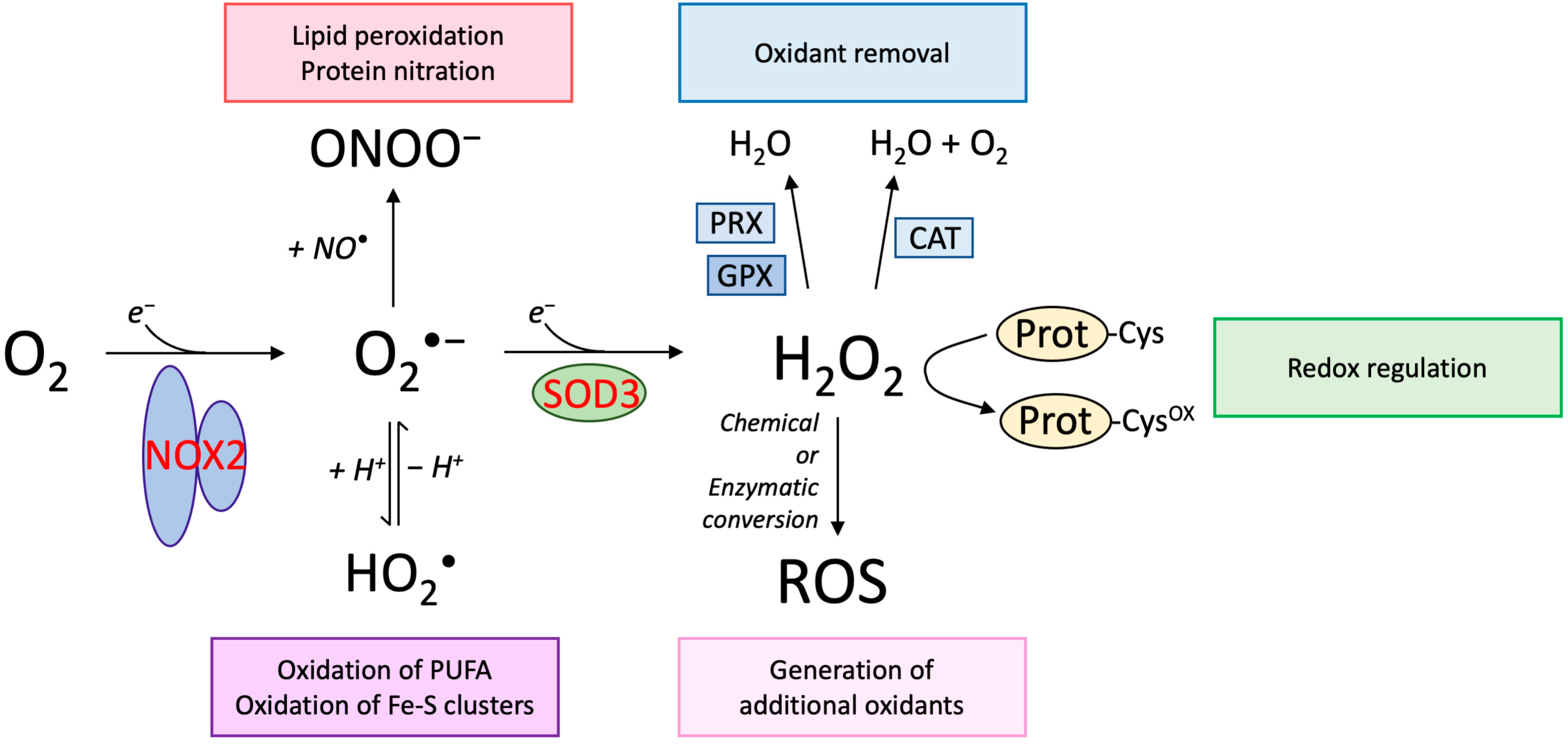
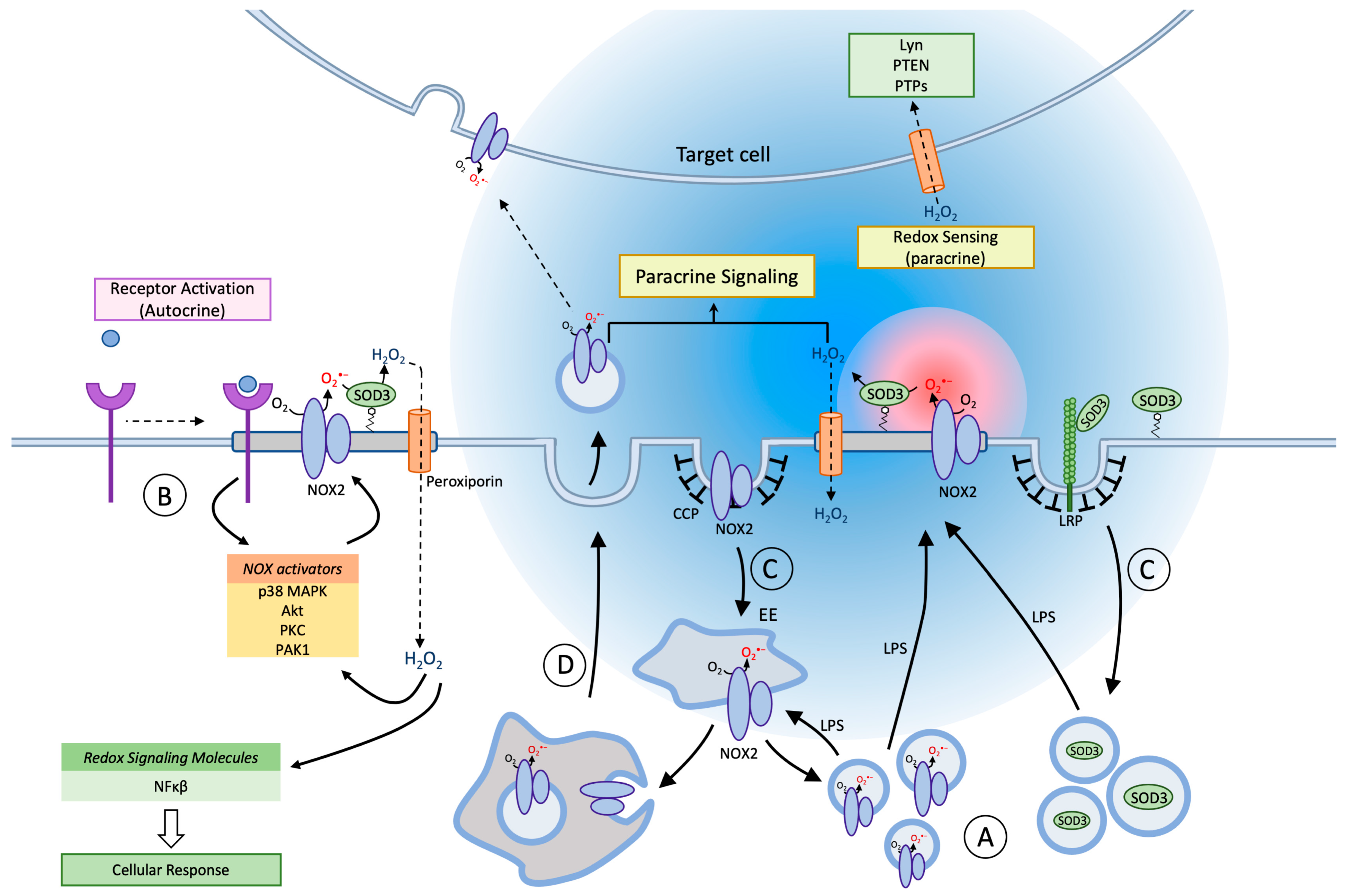
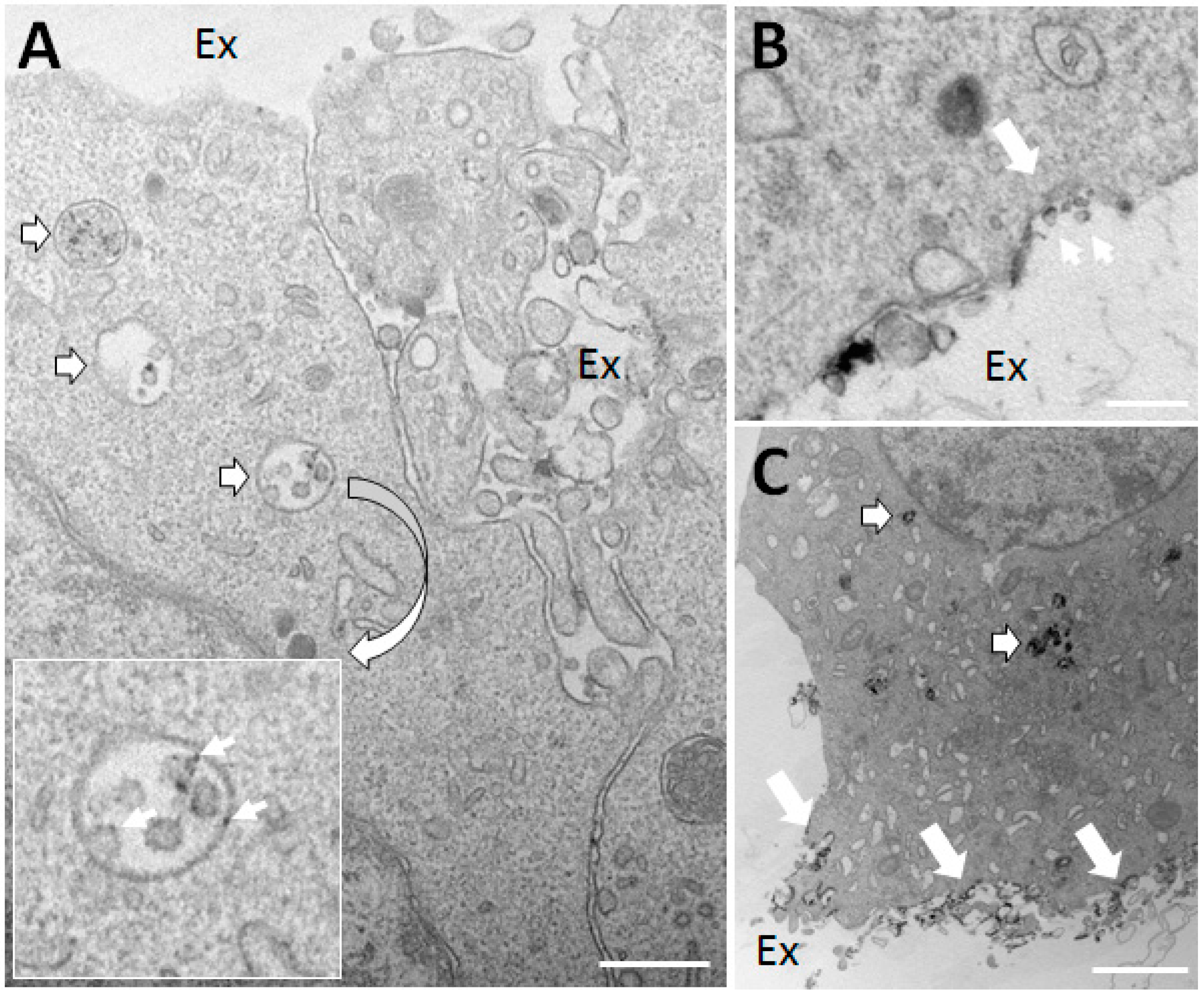
Macrophages and related tissue macrophage populations use the classical NADPH oxidase (NOX2) for the regulated production of superoxide and derived oxidants for pathogen combat and redox signaling. With an emphasis on macrophages, we discuss how sorting into secretory storage vesicles, agonist-responsive membrane trafficking, and segregation into sphingolipid and cholesterol-enriched microdomains (lipid rafts) determine the subcellular distribution and spatial organization of NOX2 and superoxide dismutase-3 (SOD3). We discuss how inflammatory activation of macrophages, in part through small GTPase Rab27A/B regulation of the secretory compartments, mediates the coalescence of these two proteins on the cell surface to deliver a focalized hydrogen peroxide output. In interplay with membrane-embedded oxidant transporters and redox sensitive target proteins, this arrangement allows for the autocrine and paracrine signaling, which govern macrophage activation states and transcriptional programs. By discussing examples of autocrine and paracrine redox signaling, we highlight why formation of spatiotemporal microenvironments where produced superoxide is rapidly converted to hydrogen peroxide and conveyed immediately to reach redox targets in proximal vicinity is required for efficient redox signaling. Finally, we discuss the recent discovery of macrophage-derived exosomes as vehicles of NOX2 holoenzyme export to other cells.
Keywords: NOX2; SOD3; Rab27; membrane trafficking; cellular sorting; redox signaling; macrophages; hydrogen peroxide; superoxide NOX2; SOD3; Rab27; membrane trafficking; cellular sorting; redox signaling; macrophages; hydrogen peroxide; superoxide