Augmentative and Alternative Communication as an Ecological Window on Neglect-Related Spatial Asymmetry After Hemorrhagic Stroke: A Longitudinal Case Report
 , , , , , ,
Highlights
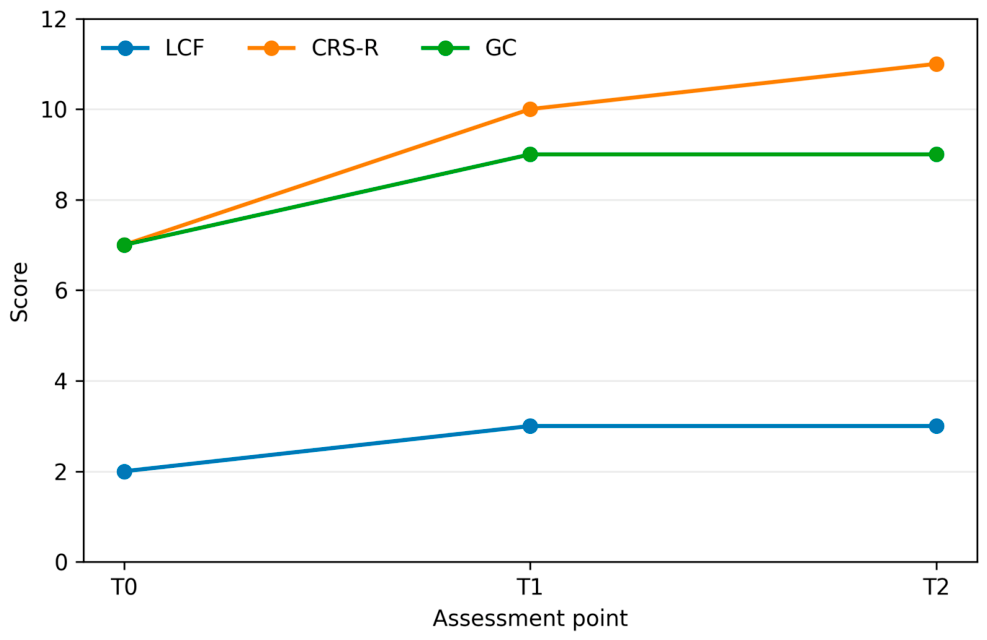
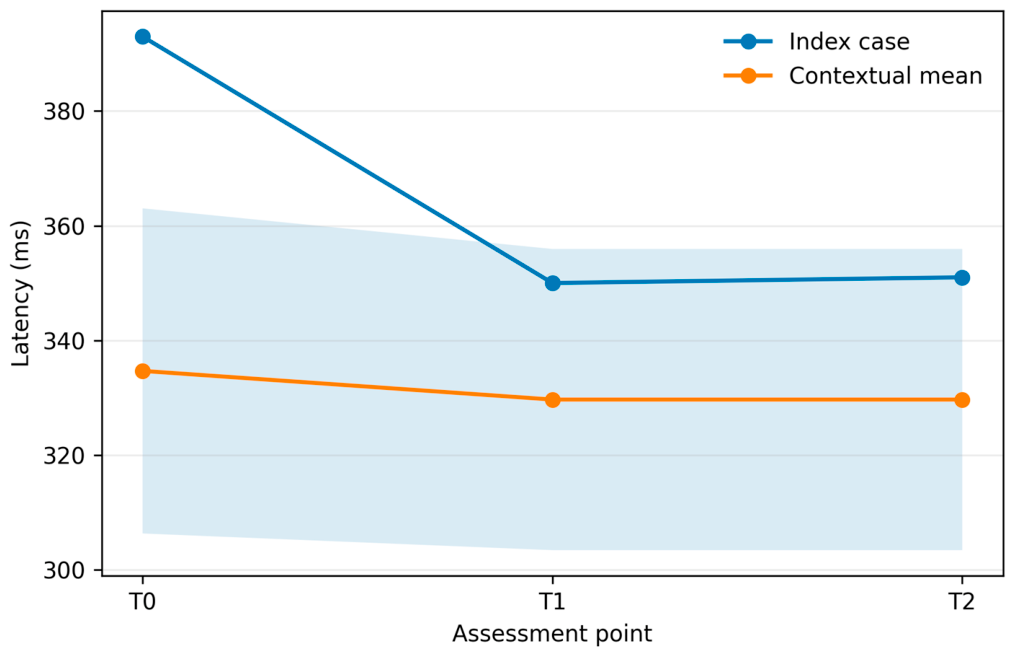
- In this index case, global quantitative measures showed modest early improvement followed by stabilization, whereas serial eye-tracking data across 21 analyzable sessions showed consistently adequate guided calibration but reduced spontaneous visuospatial exploration.
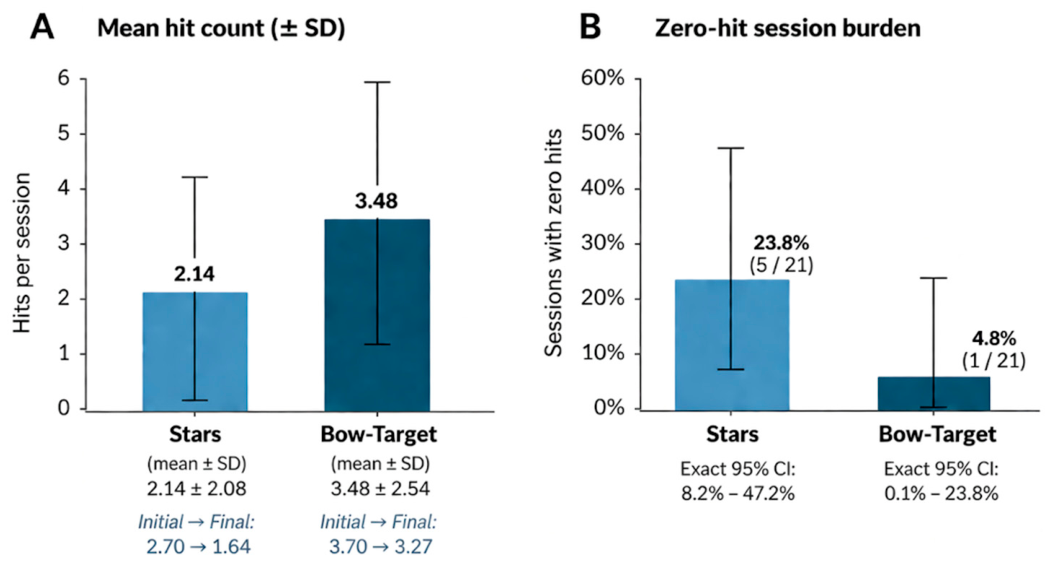
- Task-based AAC performance was lower and more unstable in the more exploratory Stars task (mean 2.14 hits; 5/21 zero-hit sessions) than in Bow-Target (mean 3.48 hits; 1/21 zero-hit session), while free-exploration heatmaps frequently showed rightward clustering and reduced left-hemifield exploration.
- Eye-gaze AAC may function as a structured ecological observational context in severely impaired patients, particularly when formal neglect assessment is limited, but this single case does not validate AAC as a stand-alone diagnostic tool.
- Standardized AAC-derived spatial metrics and direct comparison with gold-standard neglect measures remain necessary before any formal monitoring or phenotyping role can be defined.
Abstract
1. Introduction
2. Case Presentation and Methods
2.1. Case Presentation
2.2. Clinical and Communication Measures
2.3. Neurophysiological Measure
2.4. AAC Device and Eye-Tracking Procedure
2.5. Descriptive Analysis
3. Results
3.1. Longitudinal Quantitative Findings
3.2. Descriptive Contextual Benchmark
3.3. Serial AAC/Eye-Tracking Findings
4. Discussion
5. Conclusions
Supplementary Materials
Author Contributions
Funding
Institutional Review Board Statement
Informed Consent Statement
Data Availability Statement
Acknowledgments
Conflicts of Interest
Abbreviations
References
- Esposito, E.; Shekhtman, G.; Chen, P. Prevalence of spatial neglect post-stroke: A systematic review. Ann. Phys. Rehabil. Med. 2021, 64, 101459. [Google Scholar] [CrossRef]
- Bosma, M.S.; Nijboer, T.C.W.; Caljouw, M.A.A.; Achterberg, W.P. Impact of visuospatial neglect post-stroke on daily activities, participation and informal caregiver burden: A systematic review. Ann. Phys. Rehabil. Med. 2020, 63, 344–358. [Google Scholar] [CrossRef]
- Hammerbeck, U.; Gittins, M.; Vail, A.; Paley, L.; Tyson, S.F.; Bowen, A. Spatial Neglect in Stroke: Identification, Disease Process and Association with Outcome During Inpatient Rehabilitation. Brain Sci. 2019, 9, 374. [Google Scholar] [CrossRef]
- Williams, L.J.; Kernot, J.; Hillier, S.L.; Loetscher, T. Spatial Neglect Subtypes, Definitions and Assessment Tools: A Scoping Review. Front. Neurol. 2021, 12, 742365. [Google Scholar] [CrossRef]
- Williams, L.J.; Loetscher, T.; Hillier, S.; Hreha, K.; Jones, J.; Bowen, A.; Kernot, J. Identifying spatial neglect-an updated systematic review of the psychometric properties of assessment tools in adults post-stroke. Neuropsychol. Rehabil. 2025, 35, 628–667. [Google Scholar] [CrossRef] [PubMed]
- Moore, M.; Milosevich, E.; Beisteiner, R.; Bowen, A.; Checketts, M.; Demeyere, N.; Fordell, H.; Godefroy, O.; Laczó, J.; Rich, T.; et al. Rapid screening for neglect following stroke: A systematic search and European Academy of Neurology recommendations. Eur. J. Neurol. 2022, 29, 2596–2606. [Google Scholar] [CrossRef]
- Checketts, M.; Mancuso, M.; Fordell, H.; Chen, P.; Hreha, K.; Eskes, G.A.; Vuilleumier, P.; Vail, A.; Bowen, A. Current clinical practice in the screening and diagnosis of spatial neglect post-stroke: Findings from a multidisciplinary international survey. Neuropsychol. Rehabil. 2021, 31, 1495–1526, Erratum in Neuropsychol. Rehabil. 2022, 32, 794–795. https://doi.org/10.1080/09602011.2022.2092326. [Google Scholar] [CrossRef]
- Pitteri, M.; Chen, P.; Passarini, L.; Albanese, S.; Meneghello, F.; Barrett, A.M. Conventional and functional assessment of spatial neglect: Clinical practice suggestions. Neuropsychology 2018, 32, 835–842. [Google Scholar] [CrossRef] [PubMed]
- Chen, P.; Hreha, K.; Fortis, P.; Goedert, K.M.; Barrett, A.M. Functional assessment of spatial neglect: A review of the Catherine Bergego scale and an introduction of the Kessler foundation neglect assessment process. Top. Stroke Rehabil. 2012, 19, 423–435. [Google Scholar] [CrossRef]
- Chen, P.; McKenna, C.; Kutlik, A.M.; Frisina, P.G. Interdisciplinary communication in inpatient rehabilitation facility: Evidence of under-documentation of spatial neglect after stroke. Disabil. Rehabil. 2013, 35, 1033–1038. [Google Scholar] [CrossRef] [PubMed]
- Fisher, G.; Quel de Oliveira, C.; Stubbs, P.W.; Power, E.; Checketts, M.; Porter-Armstrong, A.; Kennedy, D.S. Spatial Neglect: An Exploration of Clinical Assessment Behaviour in Stroke Rehabilitation. Clin. Rehabil. 2024, 38, 688–699. [Google Scholar] [CrossRef]
- Grattan, E.S.; Hart, E.; Woodbury, M.; Nichols, M. Impact of Spatial Neglect on Activity and Participation: A Mixed-Methods Study. Occup. Ther. J. Res. 2024, 44, 88–97. [Google Scholar] [CrossRef] [PubMed]
- Cavedoni, S.; Cipresso, P.; Mancuso, V.; Bruni, F.; Pedroli, E. Virtual reality for the assessment and rehabilitation of neglect: Where are we now? A 6-year review update. Virtual Real. 2022, 26, 1663–1704. [Google Scholar] [CrossRef] [PubMed]
- Uimonen, J.; Villarreal, S.; Laari, S.; Arola, A.; Ijäs, P.; Salmi, J.; Hietanen, M. Virtual reality tasks with eye tracking for mild spatial neglect assessment: A pilot study with acute stroke patients. Front. Psychol. 2024, 15, 1319944. [Google Scholar] [CrossRef] [PubMed]
- Painter, D.R.; Norwood, M.F.; Marsh, C.H.; Hine, T.; Woodman, C.; Libera, M.; Harvie, D.; Dungey, K.; Chen, B.; Bernhardt, J.; et al. Virtual reality gameplay classification illustrates the multidimensionality of visuospatial neglect. Brain Commun. 2024, 6, fcae145. [Google Scholar] [CrossRef]
- Belger, J.; Wagner, S.; Gaebler, M.; Karnath, H.O.; Preim, B.; Saalfeld, P.; Schatz, A.; Villringer, A.; Thöne-Otto, A. Application of immersive virtual reality for assessing chronic neglect in individuals with stroke: The immersive virtual road-crossing task. J. Clin. Exp. Neuropsychol. 2024, 46, 254–271. [Google Scholar] [CrossRef]
- Stammler, B.; Lambert, M.; Schuster, T.; Flammer, K.; Karnath, H.O. Using augmented reality to assess spatial neglect: The Free Exploration Test (FET). J. Int. Neuropsychol. Soc. 2024, 30, 635–642. [Google Scholar] [CrossRef]
- Beukelman, D.R.; Fager, S.; Ball, L.; Dietz, A. AAC for adults with acquired neurological conditions: A review. Augment. Altern. Commun. 2007, 23, 230–242. [Google Scholar] [CrossRef]
- Russo, M.J.; Prodan, V.; Meda, N.N.; Carcavallo, L.; Muracioli, A.; Sabe, L.; Bonamico, L.; Allegri, R.F.; Olmos, L. High-technology augmentative communication for adults with post-stroke aphasia: A systematic review. Expert Rev. Med. Devices 2017, 14, 355–370. [Google Scholar] [CrossRef]
- Dietz, A.; Wallace, S.E.; Weissling, K. Revisiting the Role of Augmentative and Alternative Communication in Aphasia Rehabilitation. Am. J. Speech Lang. Pathol. 2020, 29, 909–913. [Google Scholar] [CrossRef]
- Togher, L.; Douglas, J.; Turkstra, L.S.; Welch-West, P.; Janzen, S.; Harnett, A.; Kennedy, M.; Kua, A.; Patsakos, E.; Ponsford, J.; et al. INCOG 2.0 Guidelines for Cognitive Rehabilitation Following Traumatic Brain Injury, Part IV: Cognitive-Communication and Social Cognition Disorders. J. Head Trauma Rehabil. 2023, 38, 65–82. [Google Scholar] [CrossRef] [PubMed]
- Fager, S.; Hux, K.; Beukelman, D.R.; Karantounis, R. Augmentative and alternative communication use and acceptance by adults with traumatic brain injury. Augment. Altern. Commun. 2006, 22, 37–47. [Google Scholar] [CrossRef] [PubMed]
- Mackey, J.; McCulloch, H.; Scheiner, G.; Barker, A.; Callaway, L. Speech pathologists’ perspectives on the use of augmentative and alternative communication devices with people with acquired brain injury and reflections from lived experience. Brain Impair. 2023, 24, 168–184. [Google Scholar] [CrossRef]
- Formica, C.; De Cola, M.C.; Corallo, F.; Lo Buono, V. Role of Alternative and Augmentative Communication in Three Cases of Severe Acquired Brain Injury: A Neurorehabilitative Approach. Brain Sci. 2024, 14, 709. [Google Scholar] [CrossRef] [PubMed]
- Giacino, J.T.; Kalmar, K.; Whyte, J. The JFK Coma Recovery Scale-Revised: Measurement characteristics and diagnostic utility. Arch. Phys. Med. Rehabil. 2004, 85, 2020–2029. [Google Scholar] [CrossRef]
- Løvstad, M.; Frøslie, K.F.; Giacino, J.T.; Skandsen, T.; Anke, A.; Schanke, A.K. Reliability and diagnostic characteristics of the JFK coma recovery scale-revised: Exploring the influence of rater’s level of experience. J. Head Trauma Rehabil. 2010, 25, 349–356. [Google Scholar] [CrossRef]
- Bodien, Y.G.; Carlowicz, C.A.; Chatelle, C.; Giacino, J.T. Sensitivity and Specificity of the Coma Recovery Scale--Revised Total Score in Detection of Conscious Awareness. Arch. Phys. Med. Rehabil. 2016, 97, 490–492.e1. [Google Scholar] [CrossRef]
- Rappaport, M.; Hall, K.M.; Hopkins, K.; Belleza, T.; Cope, D.N. Disability rating scale for severe head trauma: Coma to community. Arch. Phys. Med. Rehabil. 1982, 63, 118–123. [Google Scholar]
- Gouvier, W.D.; Blanton, P.D.; LaPorte, K.K.; Nepomuceno, C. Reliability and validity of the Disability Rating Scale and the Levels of Cognitive Functioning Scale in monitoring recovery from severe head injury. Arch. Phys. Med. Rehabil. 1987, 68, 94–97. [Google Scholar] [CrossRef]
- Flannery, J. Cognitive assessment in the acute care setting: Reliability and validity of the Levels of Cognitive Functioning Assessment Scale (LOCFAS). J. Nurs. Meas. 1995, 3, 43–58. [Google Scholar] [CrossRef]
- Rollnik, J.D. Clinical neurophysiology of neurologic rehabilitation. Handb. Clin. Neurol. 2019, 161, 187–194. [Google Scholar] [CrossRef]
- Ehlers, M.R.; López Herrero, C.; Kastrup, A.; Hildebrandt, H. The P300 in middle cerebral artery strokes or hemorrhages: Outcome predictions and source localization. Clin. Neurophysiol. 2015, 126, 1532–1538. [Google Scholar] [CrossRef]
- Egawa, S.; Ader, J.; Claassen, J. Recovery of consciousness after acute brain injury: A narrative review. J. Intensive Care 2024, 12, 37. [Google Scholar] [CrossRef]
- Dhadwal, N.; Cunningham, K.; Pino, W.; Hampton, S.; Fischer, D. Altered Mental Status at the Extreme: Behavioral Evaluation of Disorders of Consciousness. Semin. Neurol. 2024, 44, 621–633. [Google Scholar] [CrossRef]
- Gallucci, A.; Varoli, E.; Del Mauro, L.; Hassan, G.; Rovida, M.; Comanducci, A.; Casarotto, S.; Lo Re, V.; Romero Lauro, L.J. Multimodal approaches supporting the diagnosis, prognosis and investigation of neural correlates of disorders of consciousness: A systematic review. Eur. J. Neurosci. 2024, 59, 874–933. [Google Scholar] [CrossRef]
- Lo, C.C.H.; Woo, P.Y.M.; Cheung, V.C.K. Task-based EEG and fMRI paradigms in a multimodal clinical diagnostic framework for disorders of consciousness. Rev. Neurosci. 2024, 35, 775–787. [Google Scholar] [CrossRef] [PubMed]
- Kotchoubey, B.; Pavlov, Y.G. A Systematic Review and Meta-Analysis of the Relationship Between Brain Data and the Outcome in Disorders of Consciousness. Front. Neurol. 2018, 9, 315. [Google Scholar] [CrossRef]
- Chatelle, C.; Chennu, S.; Noirhomme, Q.; Cruse, D.; Owen, A.M.; Laureys, S. Brain-computer interfacing in disorders of consciousness. Brain Inj. 2012, 26, 1510–1522. [Google Scholar] [CrossRef] [PubMed]
- Annen, J.; Laureys, S.; Gosseries, O. Brain-computer interfaces for consciousness assessment and communication in severely brain-injured patients. Handb. Clin. Neurol. 2020, 168, 137–152. [Google Scholar] [CrossRef] [PubMed]
- Aubinet, C.; Cassol, H.; Bodart, O.; Sanz, L.R.D.; Wannez, S.; Martial, C.; Thibaut, A.; Martens, G.; Carrière, M.; Gosseries, O.; et al. Simplified evaluation of CONsciousness disorders (SECONDs) in individuals with severe brain injury: A validation study. Ann. Phys. Rehabil. Med. 2021, 64, 101432. [Google Scholar] [CrossRef]
- Hamilton, J.A.; Perrin, P.B.; Campbell, T.A.; Danish, S.J.; Goldstein, A.L. Predicting emergence from a disorder of consciousness using the Coma Recovery Scale-Revised. Neuropsychol. Rehabil. 2020, 30, 266–280. [Google Scholar] [CrossRef]
- Wen, Q.H.; Liu, Y.; Chen, H.D.; Wu, J.L.; Liang, L.J.; He, W.Z.; Wang, Y.; Huang, G.P. Relationship Between Depression After Hemorrhagic Stroke and Auditory Event-Related Potentials in a Chinese Patient Group. Neuropsychiatr. Dis. Treat. 2022, 18, 1917–1925. [Google Scholar] [CrossRef]
- Chen, X.; Liu, F.; Lin, S.; Yu, L.; Lin, R. Effects of Virtual Reality Rehabilitation Training on Cognitive Function and Activities of Daily Living of Patients with Poststroke Cognitive Impairment: A Systematic Review and Meta-Analysis. Arch. Phys. Med. Rehabil. 2022, 103, 1422–1435. [Google Scholar] [CrossRef] [PubMed]
- Shin, J.H.; Kim, M.; Lee, J.Y.; Kim, M.Y.; Jeon, Y.J.; Kim, K. Feasibility of hemispatial neglect rehabilitation with virtual reality-based visual exploration therapy among patients with stroke: Randomised controlled trial. Front. Neurosci. 2023, 17, 1142663. [Google Scholar] [CrossRef]
- Longley, V.; Hazelton, C.; Heal, C.; Pollock, A.; Woodward-Nutt, K.; Mitchell, C.; Pobric, G.; Vail, A.; Bowen, A. Non-pharmacological interventions for spatial neglect or inattention following stroke and other non-progressive brain injury. Cochrane Database Syst. Rev. 2021, 7, CD003586. [Google Scholar] [CrossRef]
- Székely, O.; Ten Brink, A.F.; Mitchell, A.G.; Bultitude, J.H.; McIntosh, R.D. No short-term treatment effect of prism adaptation for spatial neglect: An inclusive meta-analysis. Neuropsychologia 2023, 189, 108566, Erratum in Neuropsychologia 2024, 198, 108849. https://doi.org/10.1016/j.neuropsychologia.2024.108849. [Google Scholar] [CrossRef] [PubMed]
- Umeonwuka, C.I.; Roos, R.; Ntsiea, V. Clinical and demographic predictors of unilateral spatial neglect recovery after prism therapy among stroke survivors in the sub-acute phase of recovery. Neuropsychol. Rehabil. 2023, 33, 1624–1649. [Google Scholar] [CrossRef]
- Karataş, L.; Utkan Karasu, A.; Karataş, G.K. The effect of offline anosognosia for hemispatial neglect on neglect rehabilitation in patients with subacute and chronic right hemispheric brain injury. A retrospective cohort study. Neuropsychol. Rehabil. 2024, 34, 453–468. [Google Scholar] [CrossRef] [PubMed]
- Matys-Popielska, K.; Popielski, K.; Sibilska-Mroziewicz, A. Study of the Possibility of Using Virtual Reality Application in Rehabilitation among Elderly Post-Stroke Patients. Sensors 2024, 24, 2745. [Google Scholar] [CrossRef]
- De Luca, R.; Lo Buono, V.; Leo, A.; Russo, M.; Aragona, B.; Leonardi, S.; Buda, A.; Naro, A.; Calabrò, R.S. Use of virtual reality in improving poststroke neglect: Promising neuropsychological and neurophysiological findings from a case study. Appl. Neuropsychol. Adult 2019, 26, 96–100. [Google Scholar] [CrossRef]



| Measure | T0 | T1 | T2 | T0–T2 Change |
|---|---|---|---|---|
| LCF | 2 | 3 | 3 | +1 |
| CRS-R | 7 | 10 | 11 | +4 |
| DRS | 25 | 25 | 25 | 0 |
| GC | 7 | 9 | 9 | +2 |
| P300 latency (ms) | 393 | 350 | 351 | −42 ms |
| Measure | T0 | T1 | T2 |
|---|---|---|---|
| LCF | 1.67 ± 0.58 | 2.67 ± 0.58 | 2.67 ± 0.58 |
| CRS-R | 7.00 ± 3.46 | 9.67 ± 3.51 | 9.67 ± 3.51 |
| DRS | 25.33 ± 1.15 | 25.33 ± 1.15 | 25.33 ± 1.15 |
| GC | 8.00 ± 1.00 | 9.33 ± 1.53 | 9.67 ± 1.15 |
| P300 latency (ms) | 334.67 ± 28.36 | 329.67 ± 26.27 | 329.67 ± 26.27 |
| Component | Observed Result | Interpretive Note |
|---|---|---|
| Available serial AAC/eye-tracking data | 21 analyzable sessions; Blocks preliminary training completed in all sessions | Supports repeated clinical feasibility of the device in severe acquired brain injury |
| Calibration (coding 0 = poor, 1 = good, 2 = perfect) | Center: 19 good/2 perfect; upper-left: all good; lower-left: all good; upper-right: 8 good/13 perfect; lower-right: 19 good/2 perfect; no session scored 0 | Guided orienting and target engagement were consistently at least adequate across the visual field |
| Stars task | Mean 2.14 hits; median 1; range 0–8; zero-hit sessions 5/21 | Greater vulnerability under exploratory, self-generated search demands |
| Bow-Target task | Mean 3.48 hits; median 2; range 0–9; zero-hit sessions 1/21 | Relatively better preserved performance in a more direct, target-bound task |
| Initial vs. final phase | Stars 2.70 → 1.64; Bow-Target 3.70 → 3.27 | No stable longitudinal recovery of exploratory visuospatial efficiency was documented |
| Heatmap pattern | Non-homogeneous coverage, localized clusters, frequent rightward lateralization, reduced left-sided exploration | Consistent with reduced spontaneous visuospatial exploration under less guided conditions |
Disclaimer/Publisher’s Note: The statements, opinions and data contained in all publications are solely those of the individual author(s) and contributor(s) and not of MDPI and/or the editor(s). MDPI and/or the editor(s) disclaim responsibility for any injury to people or property resulting from any ideas, methods, instructions or products referred to in the content. |
© 2026 by the authors. Licensee MDPI, Basel, Switzerland. This article is an open access article distributed under the terms and conditions of the Creative Commons Attribution (CC BY) license.
Share and Cite
Rifici, C.; De Luca, R.; Corallo, F.; Miceli, S.; Caliri, S.; Calderone, A.; Calapai, R.; Mirabile, A.; Pagano, M.; Quartarone, A.; et al. Augmentative and Alternative Communication as an Ecological Window on Neglect-Related Spatial Asymmetry After Hemorrhagic Stroke: A Longitudinal Case Report. Brain Sci. 2026, 16, 456. https://doi.org/10.3390/brainsci16050456
Rifici C, De Luca R, Corallo F, Miceli S, Caliri S, Calderone A, Calapai R, Mirabile A, Pagano M, Quartarone A, et al. Augmentative and Alternative Communication as an Ecological Window on Neglect-Related Spatial Asymmetry After Hemorrhagic Stroke: A Longitudinal Case Report. Brain Sciences. 2026; 16(5):456. https://doi.org/10.3390/brainsci16050456
Chicago/Turabian StyleRifici, Carmela, Rosaria De Luca, Francesco Corallo, Sabrina Miceli, Santina Caliri, Andrea Calderone, Rosalia Calapai, Alessio Mirabile, Maria Pagano, Angelo Quartarone, and et al. 2026. "Augmentative and Alternative Communication as an Ecological Window on Neglect-Related Spatial Asymmetry After Hemorrhagic Stroke: A Longitudinal Case Report" Brain Sciences 16, no. 5: 456. https://doi.org/10.3390/brainsci16050456
APA StyleRifici, C., De Luca, R., Corallo, F., Miceli, S., Caliri, S., Calderone, A., Calapai, R., Mirabile, A., Pagano, M., Quartarone, A., & Calabrò, R. S. (2026). Augmentative and Alternative Communication as an Ecological Window on Neglect-Related Spatial Asymmetry After Hemorrhagic Stroke: A Longitudinal Case Report. Brain Sciences, 16(5), 456. https://doi.org/10.3390/brainsci16050456