Speed-Sensitive EEG Biomarkers in a Motion Tracking Paradigm: Implications for Dynamic Visual Acuity Research

Abstract
1. Introduction
2. Materials and Methods
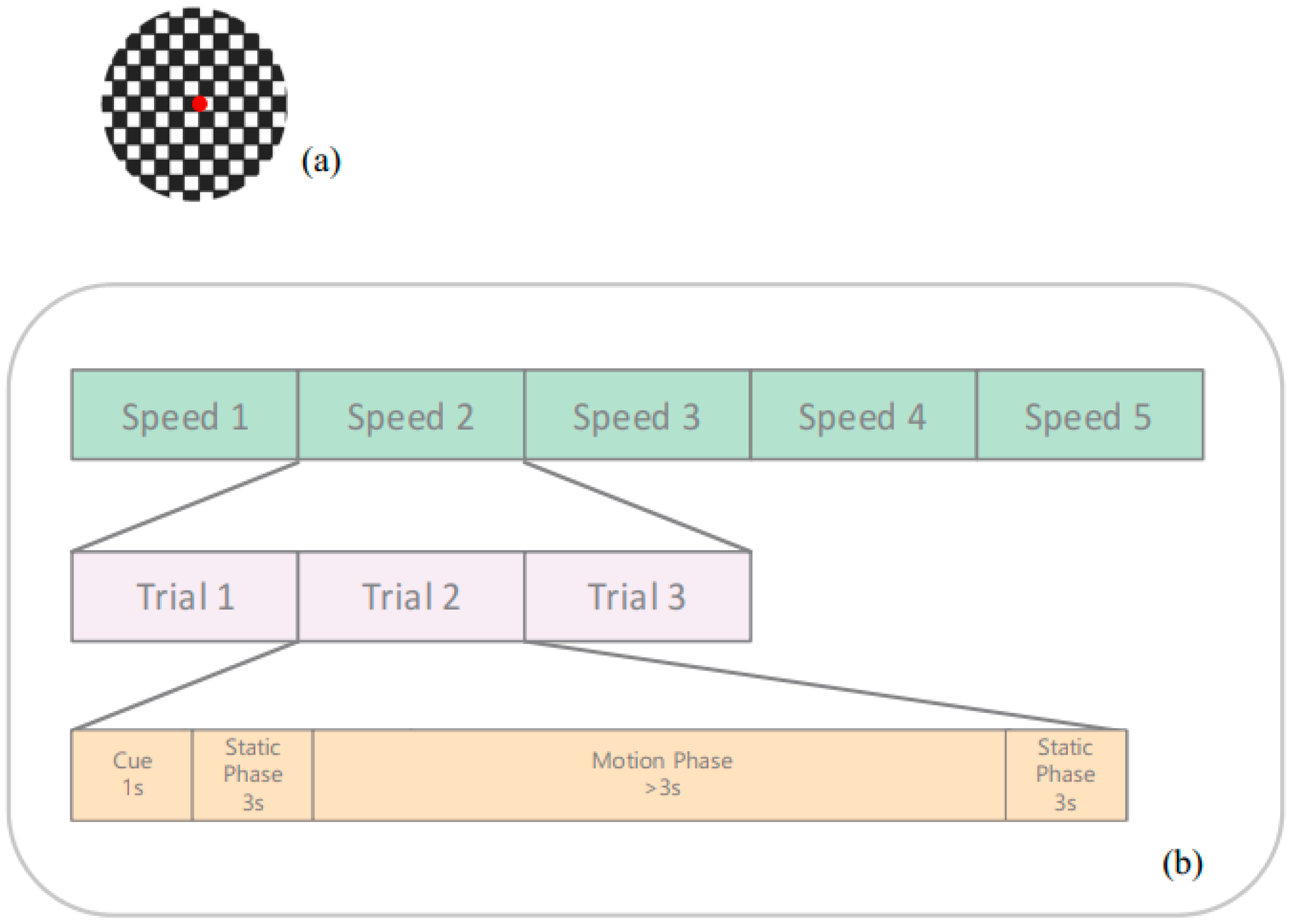
2.1. Stimulus and Trial Design
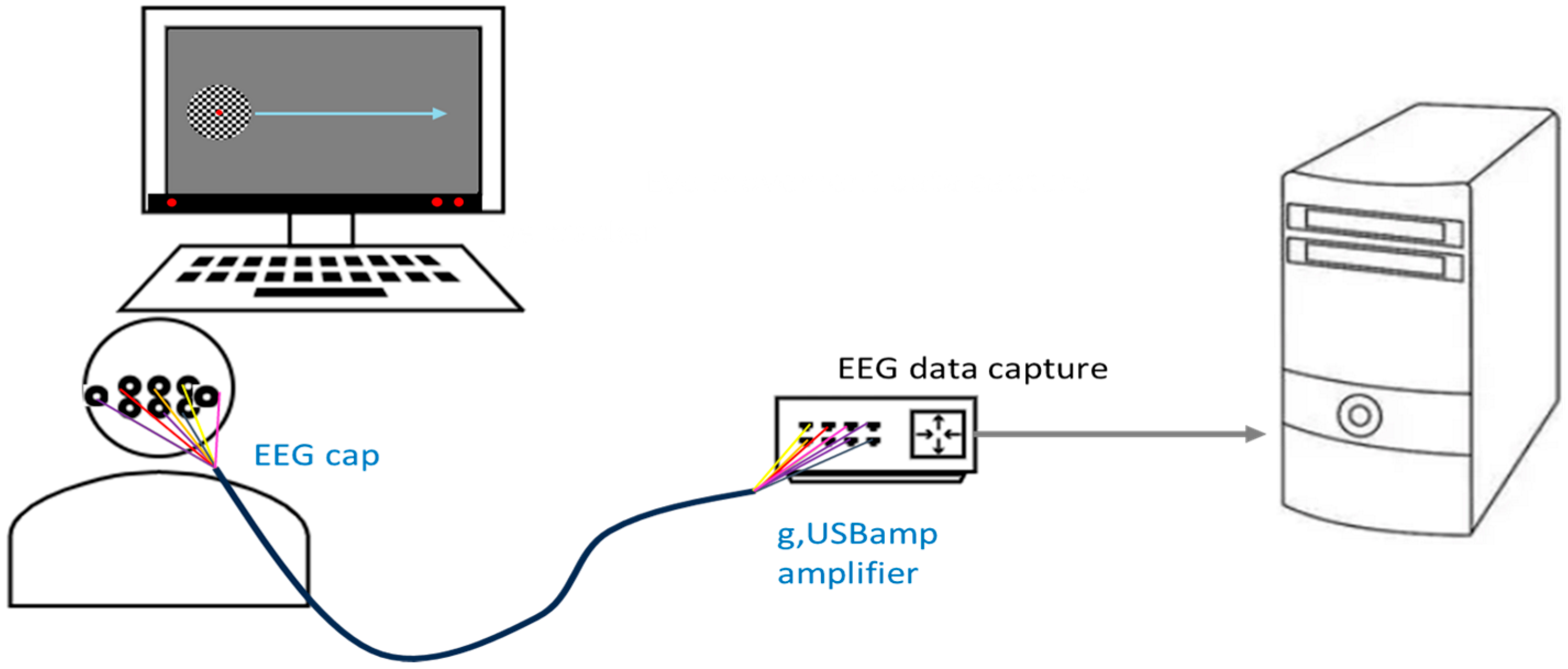
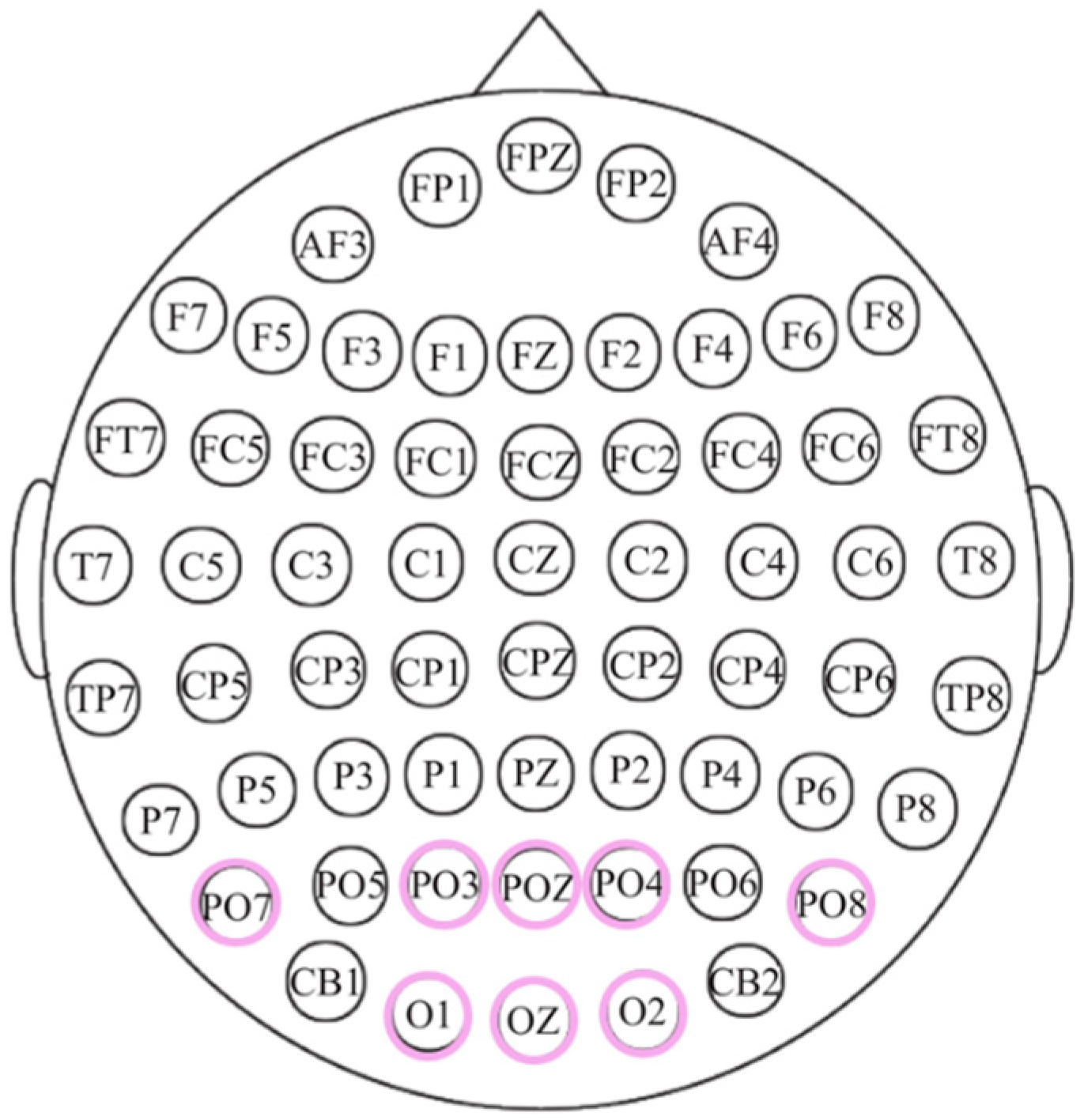
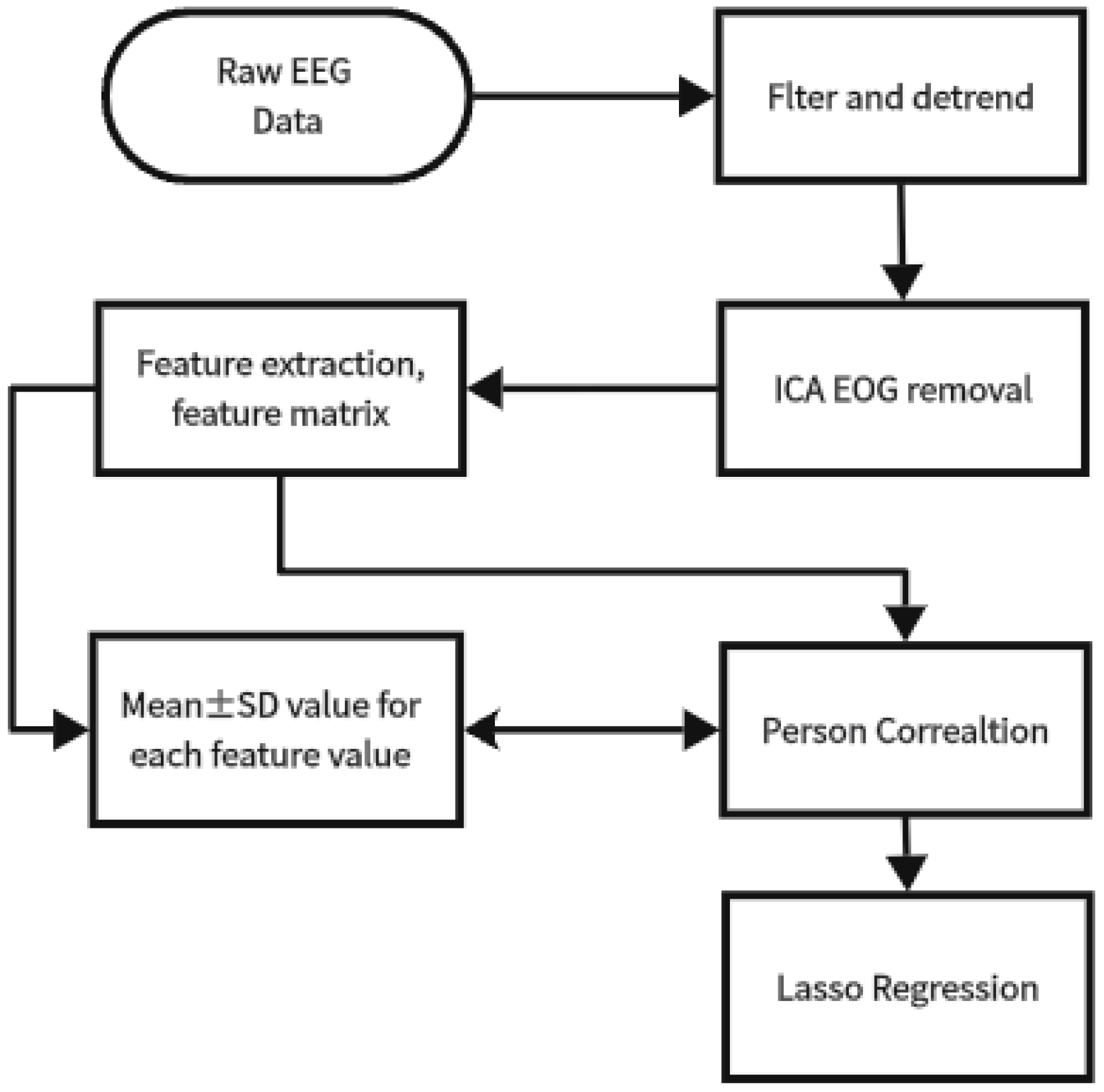
2.2. Data Collection and Preprocessing
- (1)
- A digital 4–40 Hz band-pass filter (zero-phase, FIR, 4th order) was applied to focus on visually evoked frequency bands;
- (2)
- The ‘detrend’ function was used to remove linear trends;
- (3)
- Independent component analysis (ICA) was performed using the ‘pop_runica’ function (extended Infomax algorithm) to remove ocular artifacts (blinks, saccades, etc.);
2.3. Feature Extraction and Data Analysis
2.3.1. Event-Related Potentials (ERPs, N200 and P300)
2.3.2. Hjorth Parameters
2.3.3. Mean Curve Length (MCL)
2.3.4. Tsallis Entropy
2.3.5. TRCA-w
3. Results
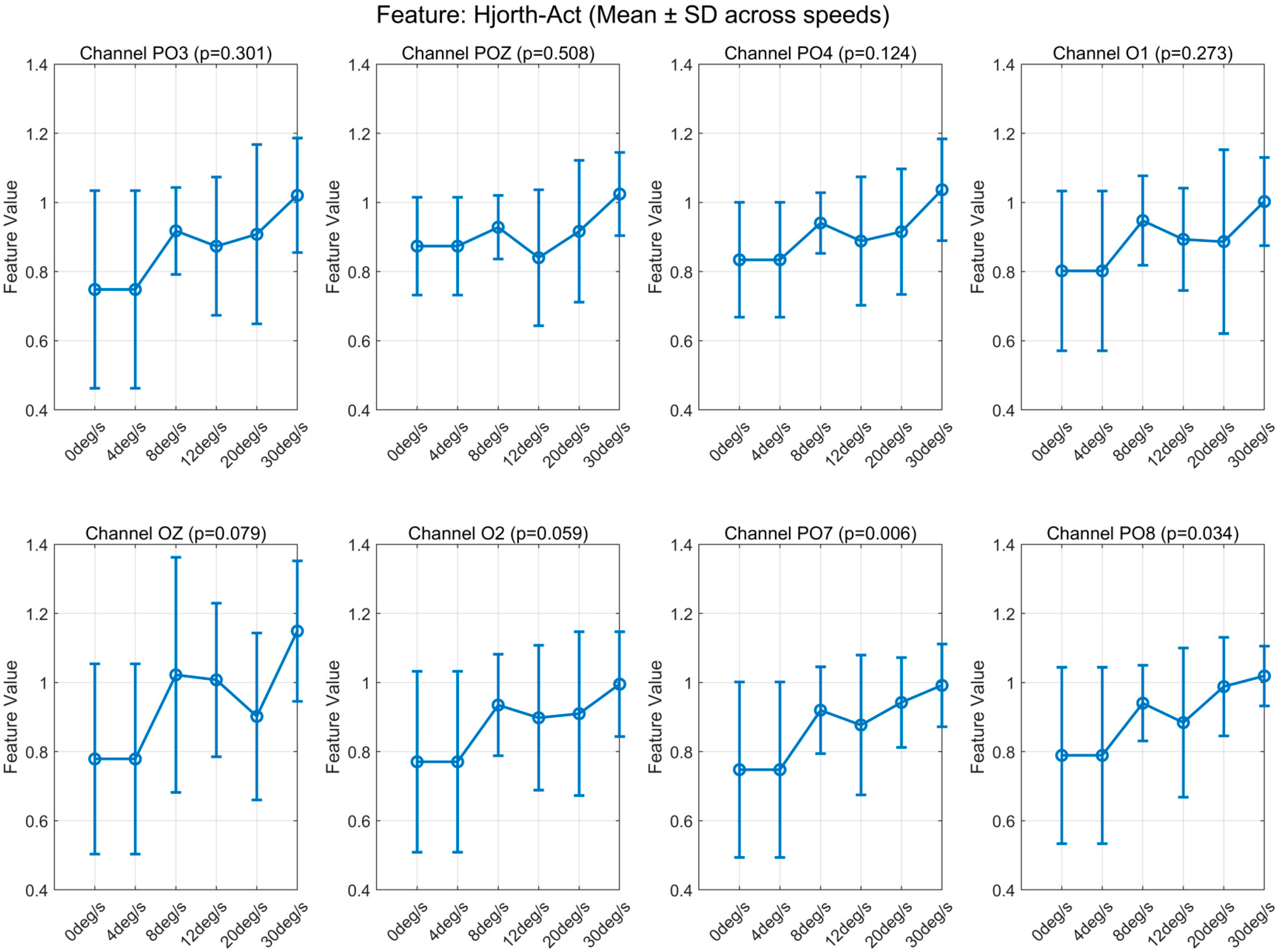
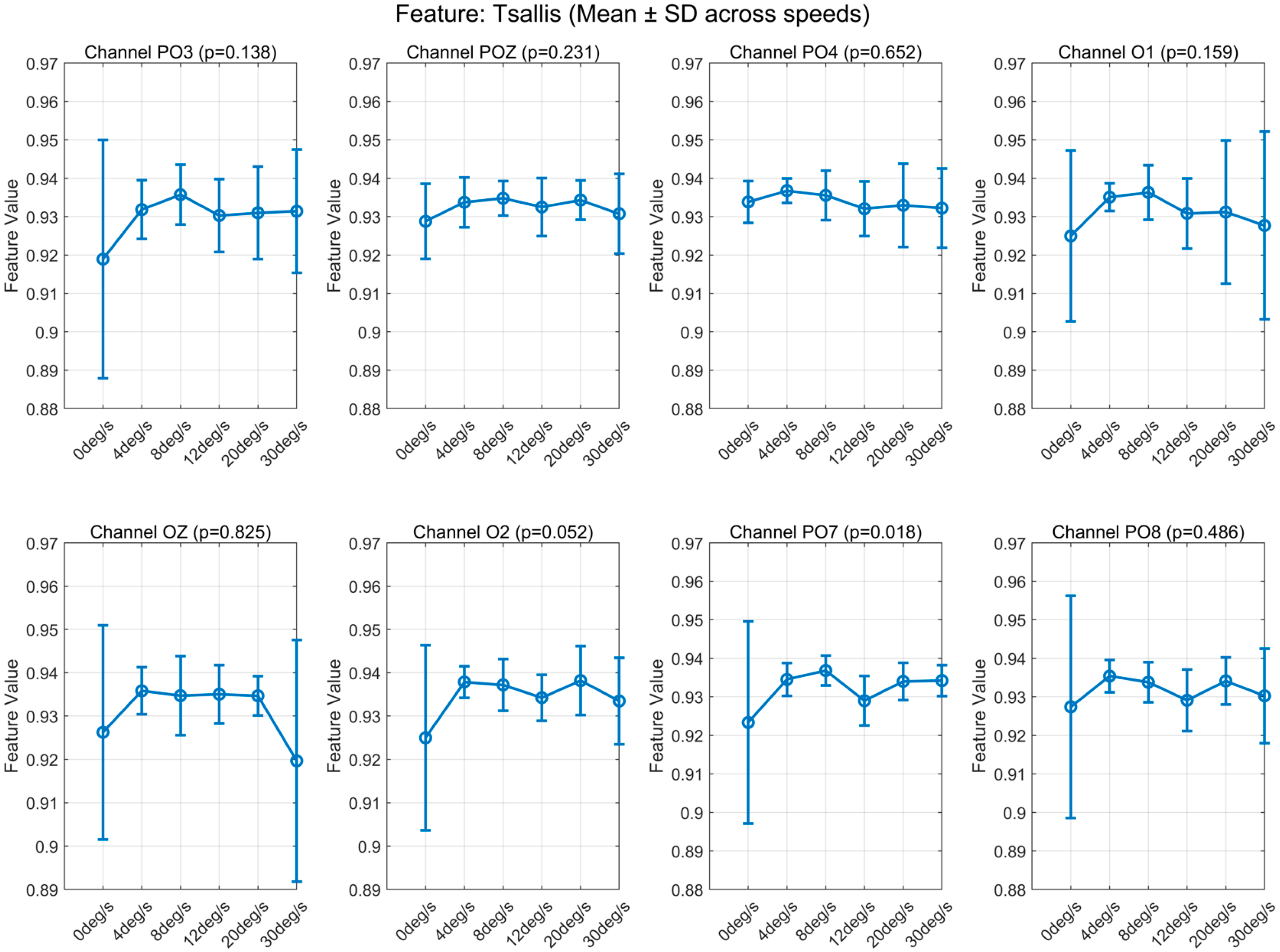
3.1. Mean and Standard Deviation for Features
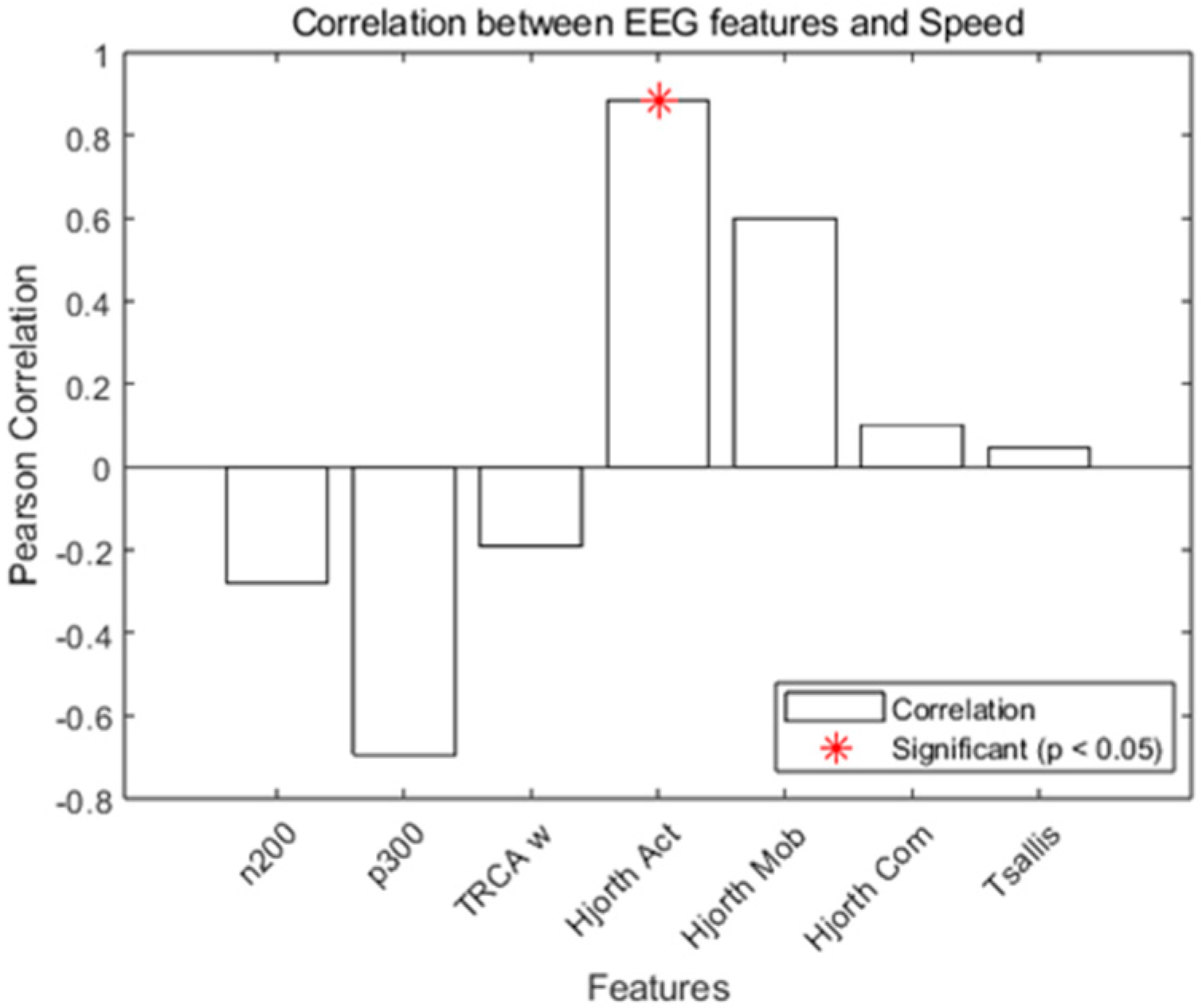
3.2. Validating the Correlation Between EEG Features and Speed
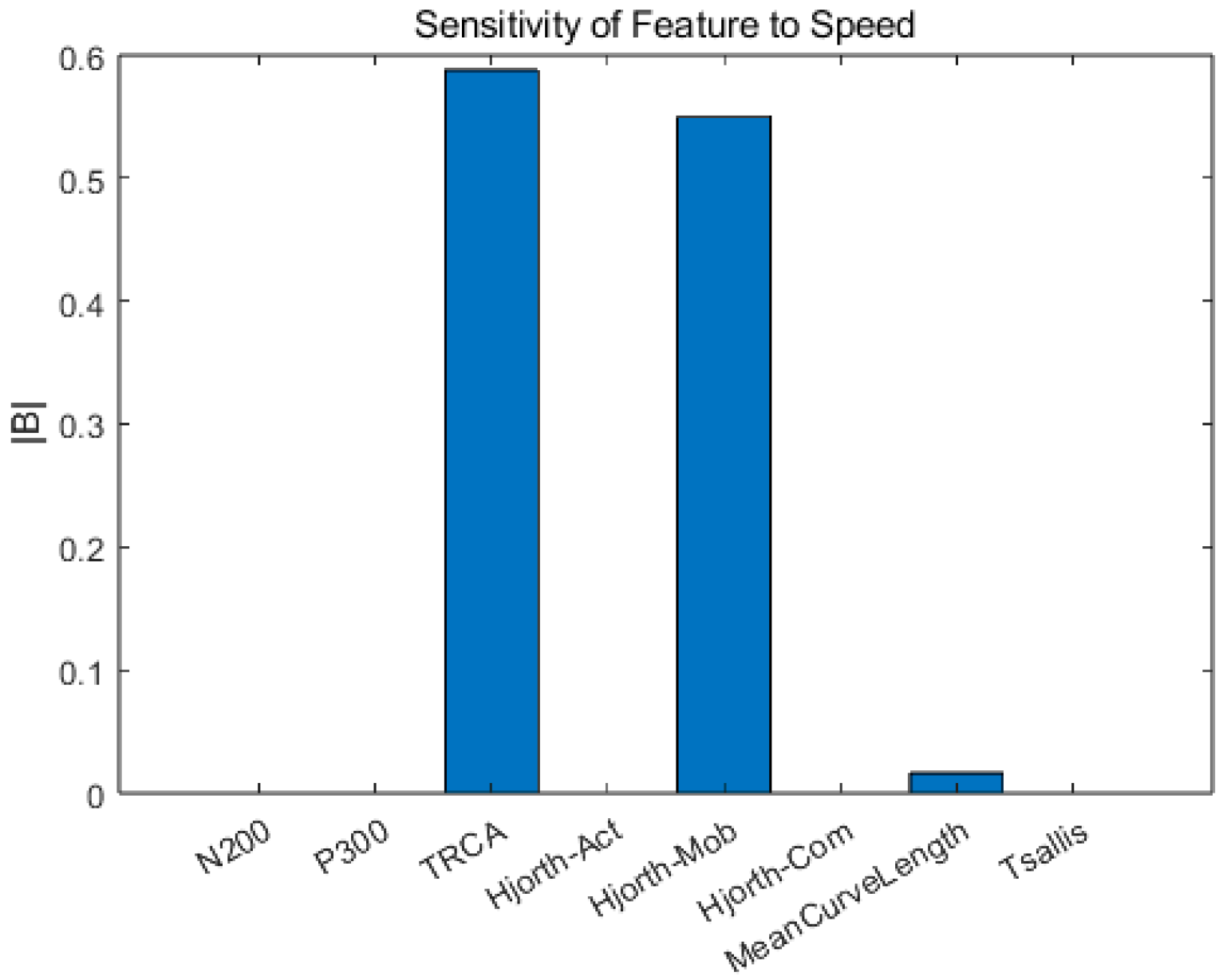
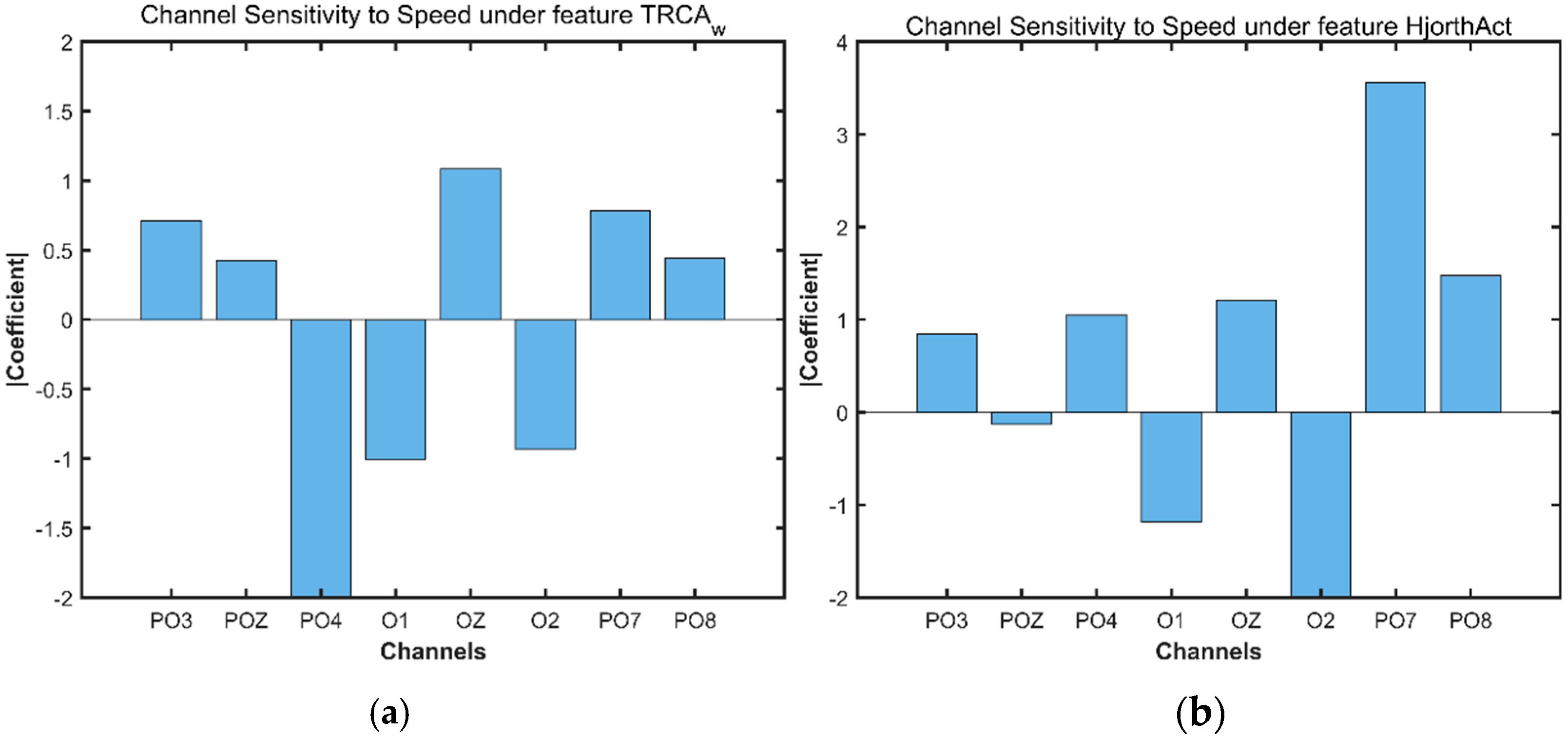
3.3. Using Lasso Regression to Verify Feature and Electrode Sensitivity
4. Discussion
5. Conclusions
Supplementary Materials
Author Contributions
Funding
Institutional Review Board Statement
Informed Consent Statement
Data Availability Statement
Conflicts of Interest
References
- Wu, T.-Y.; Wang, Y.-X.; Li, X.-M. Applications of Dynamic Visual Acuity Test in Clinical Ophthalmology. Int. J. Ophthalmol. 2021, 14, 1771–1778. [Google Scholar] [CrossRef]
- Zwierko, T.; Lesiakowski, P.; Redondo, B.; Vera, J. Examining the Ability to Track Multiple Moving Targets as a Function of Postural Stability: A Comparison between Team Sports Players and Sedentary Individuals. PeerJ 2022, 10, e13964. [Google Scholar] [CrossRef] [PubMed]
- Sharma, N.; Thakur, R. Dynamic & Static Visual Acuity Chart—Past, Present & Future: A Brief Review. Indian J. Clin. Exp. Ophthalmol. 2024, 10, 213–217. [Google Scholar] [CrossRef]
- Kabiş, B.; Gürses, E.; Işıkay, A.Ý.Ç.; Aksoy, S. Spatial Memory and Learning: Investigating the Role of Dynamic Visual Acuity. Front. Behav. Neurosci. 2024, 18, 1429069. [Google Scholar] [CrossRef]
- Amemiya, T.; Beck, B.; Walsh, V.; Gomi, H.; Haggard, P. Visual Area V5/hMT+ Contributes to Perception of Tactile Motion Direction: A TMS Study. Sci. Rep. 2017, 7, 40937. [Google Scholar] [CrossRef]
- Silson, E.H.; Baker, C.I.; Aleman, T.S.; Maguire, A.M.; Bennett, J.; Ashtari, M. Motion-Selective Areas V5/MT and MST Appear Resistant to Deterioration in Choroideremia. NeuroImage Clin. 2023, 38, 103384. [Google Scholar] [CrossRef] [PubMed]
- Zheng, X.; Xu, G.; Wang, Y.; Han, C.; Du, C.; Yan, W.; Zhang, S.; Liang, R. Objective and Quantitative Assessment of Visual Acuity and Contrast Sensitivity Based on Steady-State Motion Visual Evoked Potentials Using Concentric-Ring Paradigm. Doc. Ophthalmol. 2019, 139, 123–136. [Google Scholar] [CrossRef]
- Zheng, X.; Xu, G.; Du, C.; Yan, W.; Tian, P.; Zhang, K.; Liang, R.; Han, C.; Zhang, S. Real-Time, Precise, Rapid and Objective Visual Acuity Assessment by Self-Adaptive Step SSVEPs. J. Neural Eng. 2021, 18, 046047. [Google Scholar] [CrossRef]
- Knapp, C.M.; Proudlock, F.A.; Gottlob, I. OKN Asymmetry in Human Subjects: A Literature Review. Strabismus 2013, 21, 37–49. [Google Scholar] [CrossRef] [PubMed]
- Hillyard, S.A.; Vogel, E.K.; Luck, S.J. Sensory Gain Control (Amplification) as a Mechanism of Selective Attention: Electrophysiological and Neuroimaging Evidence. Philos. Trans. R. Soc. Lond. B Biol. Sci. 1998, 353, 1257–1270. [Google Scholar] [CrossRef]
- Oh, S.-H.; Lee, Y.-R.; Kim, H.-N. A Novel EEG Feature Extraction Method Using Hjorth Parameter. Int. J. Electron. Electr. Eng. 2014, 2, 106–110. [Google Scholar] [CrossRef]
- Yin, X.; Liang, J.; Lin, M.; Bu, L. Task-Related Component Analysis Based on Time Filter and Similarity Constraint for SSVEP-Based BCI. Measurement 2024, 235, 114959. [Google Scholar] [CrossRef]
- Capurro, A.; Diambra, L.; Lorenzo, D.; Macadar, O.; Martin, M.T.; Mostaccio, C.; Plastino, A.; Rofman, E.; Torres, M.E.; Velluti, J. Tsallis Entropy and Cortical Dynamics: The Analysis of EEG Signals. Physica A 1998, 257, 149–155. [Google Scholar] [CrossRef]
- Chen, G.; Zhang, J.; Qiao, Q.; Zhou, L.; Li, Y.; Yang, J.; Wu, J.; Huangfu, H. Advances in Dynamic Visual Acuity Test Research. Front. Neurol. 2023, 13, 1047876. [Google Scholar] [CrossRef]
- Li, Z.; Xu, G.; Du, C.; Li, H.; Yan, W. Design Comparison of Colored Stimuli for Dynamic Visual Acuity Assessment. In Proceedings of the Third International Conference on Biomedical and Intelligent Systems (IC-BIS 2024); Baloch, Z., Piccaluga, P.P., Eds.; SPIE: Bellingham, WA, USA, 2024; p. 128. [Google Scholar]
- Tarasi, L.; Alamia, A.; Romei, V. Perceptual Bias in Motion Discrimination Is Related to Asymmetric Interhemispheric Alpha Traveling Waves. Adv. Sci. 2025, 12, e14623. [Google Scholar] [CrossRef]
- Rolls, E.T.; Deco, G.; Huang, C.-C.; Feng, J. Multiple Cortical Visual Streams in Humans. Cereb. Cortex 2023, 33, 3319–3349. [Google Scholar] [CrossRef]
- Park, A.S.Y.; Schütz, A.C. Selective Postsaccadic Enhancement of Motion Perception. Vision Res. 2021, 188, 42–50. [Google Scholar] [CrossRef] [PubMed]
- Bruce, B.B.; Newman, N.J. Functional Visual Loss. Neurol. Clin. 2010, 28, 789–802. [Google Scholar] [CrossRef]
- Derhy, D.; Lithfous, S.; Speeg, C.; Gaucher, D.; Despres, O.; Dufour, A.; Bourcier, T.; Sauer, A. Driving Skills Tested on Simulator after Strabismus Surgery: A Prospective Study. Transl. Vis. Sci. Technol. 2020, 9, 36. [Google Scholar] [CrossRef] [PubMed]
- Erickson, G.B. (Ed.) Sport Vision: Vision Care for the Enhancement of Sports Performance, 2nd ed.; Elsevier: Amsterdam, The Netherlands, 2022; p. 3. ISBN 978-0-323-75543-6. [Google Scholar]
- Piyasena, P.; Olvera-Herrera, V.O.; Chan, V.F.; Clarke, M.; Wright, D.M.; MacKenzie, G.; Virgili, G.; Congdon, N. Vision Impairment and Traffic Safety Outcomes in Low-Income and Middle-Income Countries: A Systematic Review and Meta-Analysis. Lancet Glob. Health 2021, 9, e1411–e1422. [Google Scholar] [CrossRef] [PubMed]
- Colenbrander, A. Reading Acuity—An Important Parameter of Reading Performance. Int. Congr. Ser. 2005, 1282, 487–491. [Google Scholar] [CrossRef]
- Chan, D.W.; Ho, C.S.-H.; Tsang, S.; Lee, S.; Chung, K.K.H. Prevalence, Gender Ratio and Gender Differences in Reading-related Cognitive Abilities among Chinese Children with Dyslexia in Hong Kong. Educ. Stud. 2007, 33, 249–265. [Google Scholar] [CrossRef]
- Cudlenco, N.; Popescu, N.; Leordeanu, M. Reading into the Mind’s Eye: Boosting Automatic Visual Recognition with EEG Signals. Neurocomputing 2019, 386, 281–292. [Google Scholar] [CrossRef]


Disclaimer/Publisher’s Note: The statements, opinions and data contained in all publications are solely those of the individual author(s) and contributor(s) and not of MDPI and/or the editor(s). MDPI and/or the editor(s) disclaim responsibility for any injury to people or property resulting from any ideas, methods, instructions or products referred to in the content. |
© 2026 by the authors. Licensee MDPI, Basel, Switzerland. This article is an open access article distributed under the terms and conditions of the Creative Commons Attribution (CC BY) license.
Share and Cite
Li, Z.; Xu, G.; Li, H.; Du, C.; Han, C.; Guo, X.; Wang, J.; Zhang, S. Speed-Sensitive EEG Biomarkers in a Motion Tracking Paradigm: Implications for Dynamic Visual Acuity Research. Brain Sci. 2026, 16, 245. https://doi.org/10.3390/brainsci16020245
Li Z, Xu G, Li H, Du C, Han C, Guo X, Wang J, Zhang S. Speed-Sensitive EEG Biomarkers in a Motion Tracking Paradigm: Implications for Dynamic Visual Acuity Research. Brain Sciences. 2026; 16(2):245. https://doi.org/10.3390/brainsci16020245
Chicago/Turabian StyleLi, Zejin, Guanghua Xu, Hui Li, Chenghang Du, Chengcheng Han, Xiaobing Guo, Jiahuan Wang, and Sicong Zhang. 2026. "Speed-Sensitive EEG Biomarkers in a Motion Tracking Paradigm: Implications for Dynamic Visual Acuity Research" Brain Sciences 16, no. 2: 245. https://doi.org/10.3390/brainsci16020245
APA StyleLi, Z., Xu, G., Li, H., Du, C., Han, C., Guo, X., Wang, J., & Zhang, S. (2026). Speed-Sensitive EEG Biomarkers in a Motion Tracking Paradigm: Implications for Dynamic Visual Acuity Research. Brain Sciences, 16(2), 245. https://doi.org/10.3390/brainsci16020245