Impact of Amplification and Noise on Subjective Cognitive Effort and Fatigue in Older Adults with Hearing Loss
Abstract
1. Introduction
2. Methods
2.1. Study Design
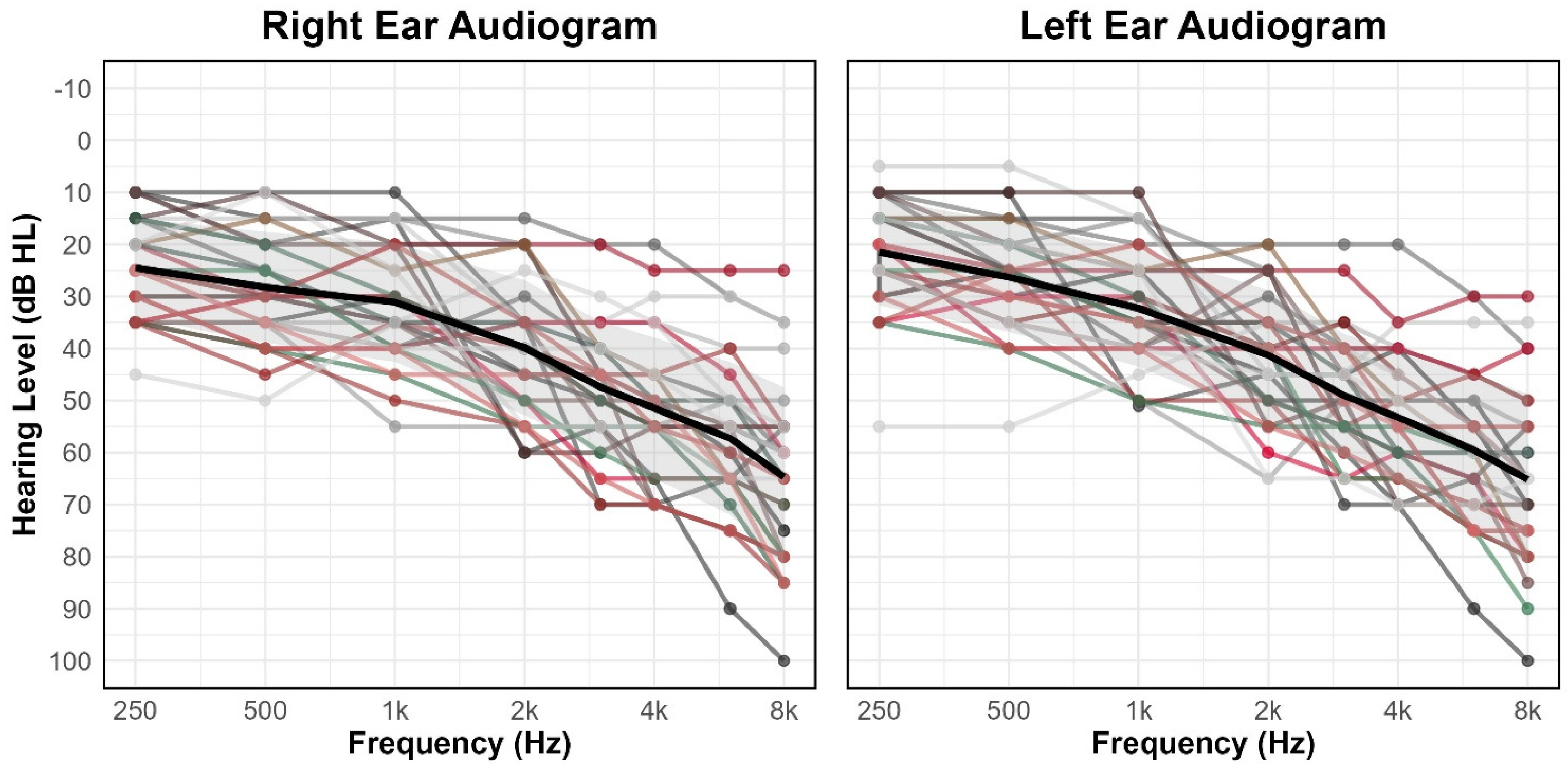
2.2. Participants and Testing Environment
2.3. Materials and Procedures
2.3.1. Subjective Effort and Fatigue
2.3.2. Cognitive Test Battery
2.3.3. Research Design and Statistical Analysis
3. Results
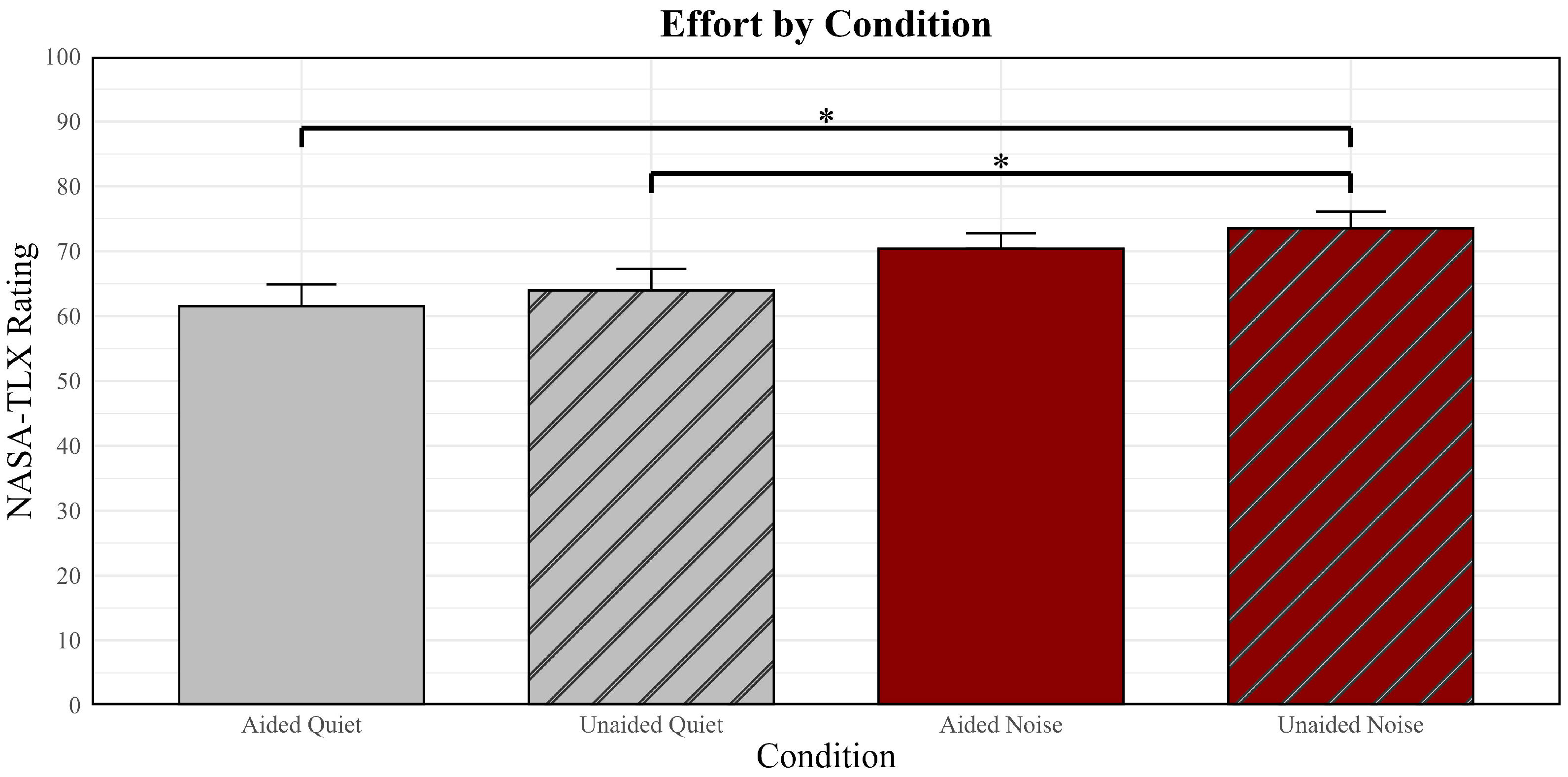
3.1. Comparing Effort and Fatigue in Quiet Versus in Noise
3.2. Correlations Between Effort and Fatigue
3.3. Correlations with Performance on Cognitive Measures
3.3.1. Effort, Fatigue, and Visual Working Memory Task Performance
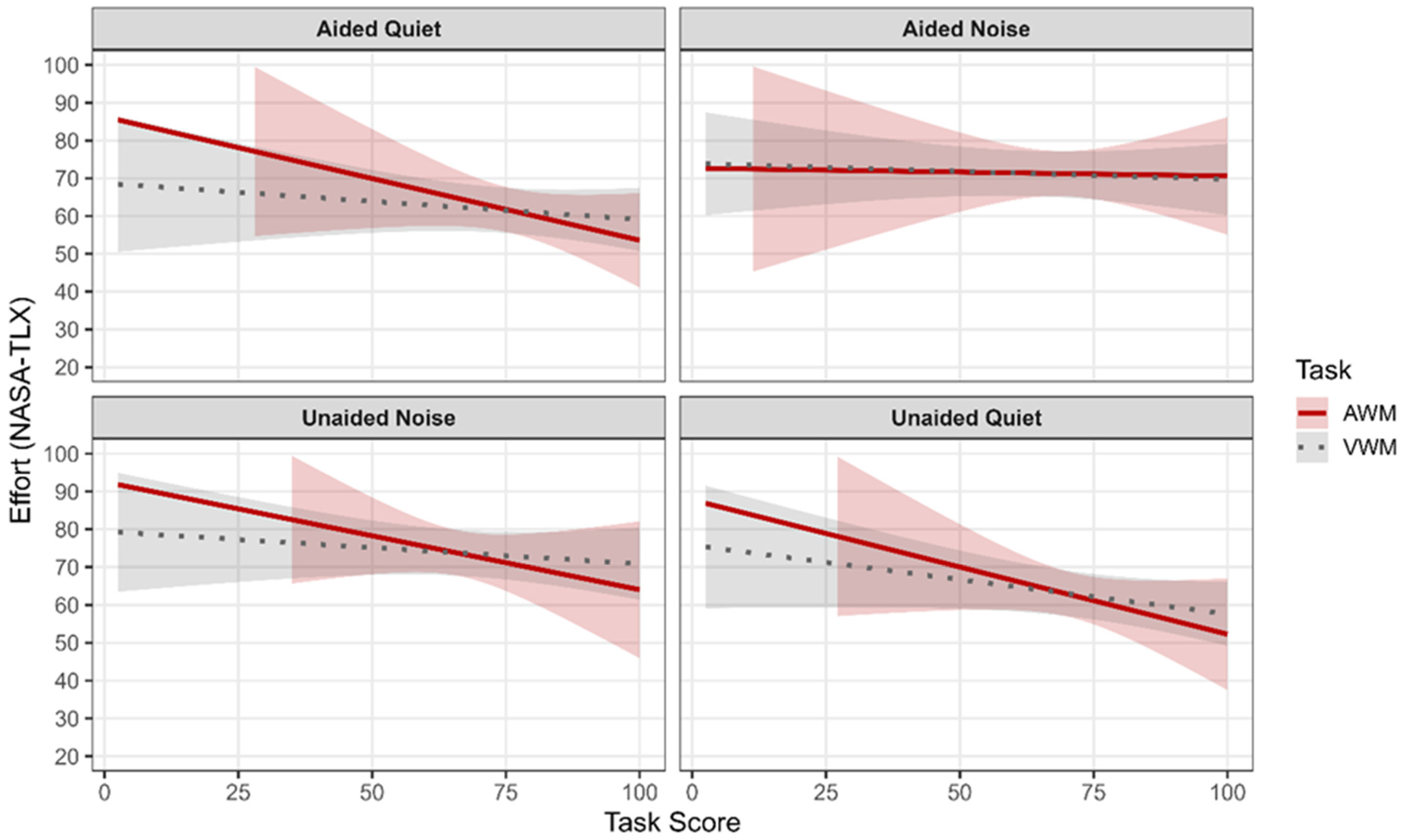
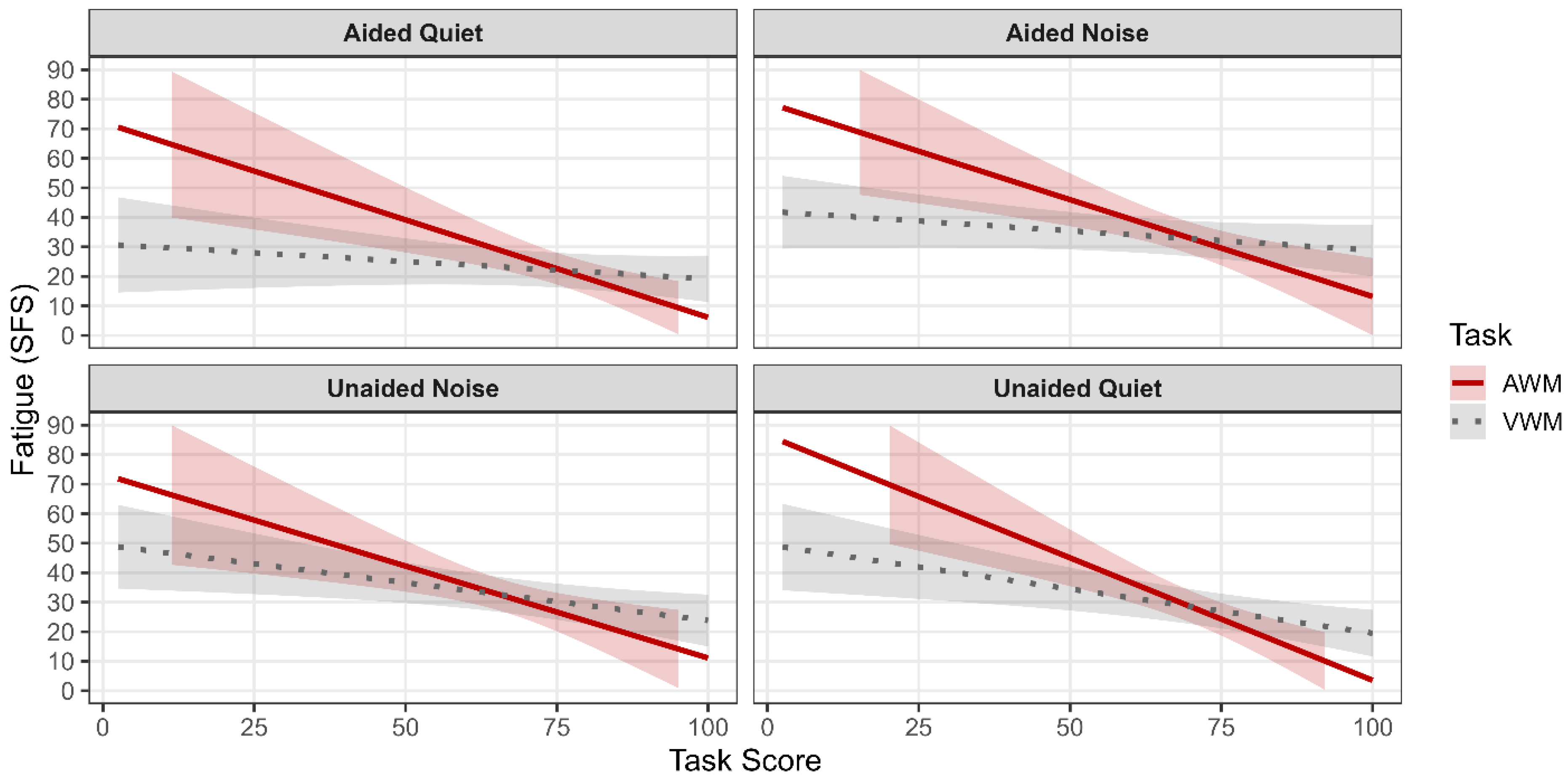
3.3.2. Effort, Fatigue, and Auditory Working Memory
4. Discussion
4.1. Effort and Fatigue in Quiet Versus Noise
4.2. The Impact of Hearing Aids on Effort and Fatigue
4.2.1. Relationships Between Effort, Fatigue, and Cognitive Performance
4.2.2. Associations with Cognitive Performance
4.2.3. Visual and Auditory Working Memory
4.3. Limitations
5. Conclusions
Supplementary Materials
Author Contributions
Funding
Institutional Review Board Statement
Informed Consent Statement
Data Availability Statement
Acknowledgments
Conflicts of Interest
Abbreviations
| FUEL | Framework of Effortful |
| NASA-TLX | NASA Task Load Index |
| VFS-A | Vanderbilt Fatigue Scale for Adults |
| PTA4 | Four Frequency Pure-tone Average |
| SFS | Situational Fatigue Scale |
| SICSPAN | Size-Comparison Test |
| WARRM | Word Auditory Recognition and Recall Measure |
References
- Kahneman, D. Attention and Effort; Prentice-Hall: Englewood Cliffs, NJ, USA, 1973. [Google Scholar] [CrossRef]
- O’Connor, P.J. Evaluation of four highly cited energy and fatigue mood measures. J. Psychosom. Res. 2004, 57, 435–441. [Google Scholar] [CrossRef]
- Hornsby, B.W.Y.; Naylor, G.; Bess, F.H. The impact of hearing loss on fatigue in adults: A systematic review. Ear Hear. 2016, 37, 1–12. [Google Scholar] [CrossRef]
- Pichora-Fuller, M.K.; Mick, P.; Reed, M. Hearing, Cognition, and Healthy Aging: Social and Public Health Implications of the Links between Age-Related Declines in Hearing and Cognition. Semin. Hear. 2015, 36, 122–139. [Google Scholar] [CrossRef]
- Rotenberg, S.; Oreper, J.S.; Bar, Y.; Davids-Brumer, N.; Arbel, I.; Dawson, D.R. Occupational disruption during the COVID-19 pandemic: The lived experience of community-dwelling older adults. Can. J. Aging 2021, 40, 521–532. [Google Scholar] [CrossRef]
- Shukla, A.; Harper, M.; Pedersen, E.; Goman, A.; Suen, J.J.; Price, C.; Applebaum, J.; Hoyer, M.; Lin, F.R.; Reed, N.S. Hearing loss, loneliness, and social isolation: A systematic review. Otolaryngol.-Head Neck Surg. 2020, 162, 622–633. [Google Scholar] [CrossRef]
- Stoykova, R.; Matharan, F.; Dartigues, J.-F.; Amieva, H. Impact of social network on cognitive performances and age-related cognitive decline across a 20-year follow-up. Int. Psychogeriatr. 2011, 23, 1405–1412. [Google Scholar] [CrossRef] [PubMed]
- Murman, D.L. The impact of age on cognition. Semin. Hear. 2015, 36, 111–121. [Google Scholar] [CrossRef] [PubMed]
- Roberts, K.L.; Allen, H.A. Perception and cognition in the ageing brain: A brief review of the short- and long-term links between perceptual and cognitive decline. Front. Aging Neurosci. 2016, 8, 39. [Google Scholar] [CrossRef] [PubMed]
- Hess, T.M.; Knight, R.C. Adult age differences in the effects of chronic mental fatigue on task-related fatigue, appraisals, and performance. Motiv. Sci. 2021, 7, 122–132. [Google Scholar] [CrossRef]
- Pichora-Fuller, M.K. The Framework for understanding effortful listening (FUEL). Ear Hear. 2016, 37, 5S–27S. [Google Scholar] [CrossRef]
- Wingfield, A. Evolution of models of working memory and cognitive resources. Ear Hear. 2016, 37, 35S–43S. [Google Scholar] [CrossRef] [PubMed]
- McGarrigle, R.; Dawes, P.; Stewart, A.J.; Kuchinsky, S.E.; Munro, K.J. Pupillometry reveals changes in physiological arousal during a sustained listening task. Psychophysiology 2017, 54, 193–203. [Google Scholar] [CrossRef]
- Ohlenforst, B.; Zekveld, A.A.; Jansma, E.P.; Wang, Y.; Naylor, G.; Lorens, A.; Lunner, T.; Kramer, S.E. Effects of hearing impairment and hearing aid amplification on listening effort: A systematic review. Ear Hear. 2017, 38, 267–281. [Google Scholar] [CrossRef]
- Monzani, D.; Nocini, R.; Presutti, M.T.; Gherpelli, C.; Di Berardino, F.; Ferrari, S.; Galeazzi, G.M.; Federici, G.; Genovese, E.; Palma, S. The effect of the use of hearing aids in elders: Perspectives. Audiol. Res. 2022, 12, 143–151. [Google Scholar] [CrossRef]
- Hart, S.G.; Staveland, L.E. Development of NASA-TLX (Task Load Index): Results of empirical and theoretical research. In Advances in Psychology; North-Holland: Amsterdam, The Netherlands, 1988; Volume 52, pp. 139–183. [Google Scholar]
- Mackersie, C.L.; Cones, H. Subjective and psychophysiological indices of listening effort in a competing-talker task. J. Am. Acad. Audiol. 2011, 22, 113–122. [Google Scholar] [CrossRef]
- Alhanbali, S.; Munro, K.J.; Dawes, P.; Carolan, P.J.; Millman, R.E. Dimensions of self-reported listening effort and fatigue on a digits-in-noise task, and association with baseline pupil size and performance accuracy. Int. J. Audiol. 2021, 60, 762–772. [Google Scholar] [CrossRef]
- Hornsby, B.W.Y.; Camarata, S.; Cho, S.-J.; Davis, H.; McGarrigle, R.; Bess, F.H. Development and validation of the vanderbilt fatigue scale for adults (VFS-A). Psychol. Assess. 2021, 33, 777–788. [Google Scholar] [CrossRef]
- ANSI S3.6-1987; American National Standard Specification for Audiometers. ANSI: Washington, DC, USA, 1987.
- ANSI S3.6-2016; American National Standard Specification for Audiometers. ANSI: Washington, DC, USA, 2016.
- ANSI S3.5-2018; Maximum Permissible Ambient Noise Levels for Audiometric Test Rooms. ANSI: Washington, DC, USA, 2018.
- Nasreddine, Z.S.; Phillips, N.A.; Bédirian, V.; Charbonneau, S.; Whitehead, V.; Collin, I.; Chertkow, H. The montreal cognitive assessment, MoCA: A brief screening tool for mild cognitive impairment. J. Am. Geriatr. Soc. 2005, 53, 695–699. [Google Scholar] [CrossRef] [PubMed]
- Carson, N.; Leach, L.; Murphy, K.J. A re-examination of montreal cognitive assessment (MoCA) cutoff scores. Int. J. Geriatr. Psychiatry 2018, 33, 379–388. [Google Scholar] [CrossRef] [PubMed]
- Hetherington, R. The Snellen Chart as a Test of Visual Acuity. Psychol. Forsch. 1954, 24, 349–357. [Google Scholar] [CrossRef]
- Barbur, J.L.; Harlow, J.; Plant, G.T. Insights into the different exploits of colour in the visual cortex. Proc. R. Soc. Lond. B 1994, 258, 327–334. [Google Scholar] [CrossRef]
- Bertoli, S.; Staehelin, K.; Zemp, E.; Schindler, C.; Bodmer, D.; Probst, R. Survey on hearing aid use and satisfaction in Switzerland and their determinants. Int. J. Audiol. 2009, 48, 183–195. [Google Scholar] [CrossRef]
- Wiley, T.L.; Cruickshanks, K.J.; Nondahl, D.M.; Tweed, T.S.; Klein, R.; Klein, B.E. Tympanometric measures in older adults. J. Am. Acad. Audiol. 1996, 7, 260–268. [Google Scholar]
- The MathWorks Inc. MATLAB, version R2022b; Computer Software; The MathWorks Inc.: Natick, MA, USA, 2022.
- Adobe Inc. Adobe Audition, version 2023; Computer Software; Adobe Inc.: San Jose, CA, USA, 2023.
- Fairbanks, G. The Rainbow Passage. In Voice and Articulation, 2nd ed.; Harper & Row: New York, NY, USA, 1960; pp. 124–139. [Google Scholar]
- Buchholz, J.M.; Weisser, A. Ambisonic Recordings of Typical Environments (ARTE) Database; Zenodo: Geneva, Switzerland, 2019. [Google Scholar] [CrossRef]
- Sommers, M.S.; Danielson, S.M. Inhibitory processes and spoken word recognition in young and older adults: The interaction of lexical competition and semantic context. Psychol. Aging 1999, 14, 458–472. [Google Scholar] [CrossRef]
- Knight, S.; Heinrich, A. Different Measures of Auditory and Visual Stroop Interference and Their Relationship to Speech Intelligibility in Noise. Front. Psychol. 2017, 8, 230. [Google Scholar] [CrossRef]
- Sörqvist, P.; Rönnberg, J. Episodic Long-Term Memory of Spoken Discourse Masked by Speech: What Is the Role for Working Memory Capacity? J. Speech Lang. Hear. Res. 2012, 55, 210–218. [Google Scholar] [CrossRef] [PubMed]
- Stroop, J.R. Studies of interference in serial verbal reactions. J. Exp. Psychol. 1935, 18, 643–662. [Google Scholar] [CrossRef]
- Ricker, J.H.; Axelrod, B.N. Analysis of an Oral Paradigm for the Trail Making Test. Assessment 1994, 1, 47–51. [Google Scholar] [CrossRef]
- Bastug, G.; Ozel-Kizil, E.T.; Sakarya, A.; Altintas, O.; Kirici, S.; Altunoz, U. Oral Trail Making Task as a Discriminative Tool for Different Levels of Cognitive Impairment and Normal Aging. Arch. Clin. Neuropsychol. 2013, 28, 411–417. [Google Scholar] [CrossRef]
- Reitan, R.M. The relation of the Trail Making Test to organic brain damage. J. Consult. Psychol. 1955, 19, 393–394. [Google Scholar] [CrossRef] [PubMed]
- Smith, S.L.; Pichora-Fuller, M.K.; Alexander, G. Development of the word auditory recognition and recall measure: A working memory test for use in rehabilitative audiology. Ear Hear. 2016, 37, e360–e376. [Google Scholar] [CrossRef]
- Lenth, R. R Package, version 1.2.4; Emmeans: Estimated Marginal Means, aka Least-Squares Means; The R Foundation for Statistical Computing: Vienna, Austria, 2017.
- Pinheiro, J.; Bates, D.; DebRoy, S.; Sarkar, D.; R Core Team. R Package, version 3.1-164; Nlme: Linear and Nonlinear Mixed Effects Models; The R Foundation for Statistical Computing: Vienna, Austria, 2023.
- IBM Corp. IBM SPSS Statistics for Windows, version 29.0.1; Computer Software; IBM Corp.: Armonk, NY, USA, 2021.
- Bates, D.; Mächler, M.; Bolker, B.; Walker, S. Fitting Linear Mixed-Effects Models Using lme4. J. Stat. Softw. 2015, 67, 1–48. [Google Scholar] [CrossRef]
- R Core Team. R: A Language and Environment for Statistical Computing, version 4.4.0; Computer Software; R Foundation for Statistical Computing: Vienna, Austria, 2024.
- Blümer, M.; Heeren, J.; Mirkovic, B.; Latzel, M.; Gordon, C.; Crowhen, D.; Meis, M.; Wagener, K.; Schulte, M. The impact of hearing aids on listening effort and listening-related fatigue—Investigations in a virtual realistic listening environment. Trends Hear. 2024, 28, 1–22. [Google Scholar] [CrossRef]
- Hornsby, B.W.Y. The effects of hearing aid use on listening effort and mental fatigue associated with sustained speech processing demands. Ear Hear. 2013, 34, 523–534. [Google Scholar] [CrossRef]
- Vaisberg, J.M.; Gilmore, S.; Qian, J.; Russo, F.A. The Benefit of hearing aids as measured by listening accuracy, subjective listening effort, and functional near-infrared spectroscopy. Trends Hear. 2024, 28, 1–19. [Google Scholar] [CrossRef]
- Grenzebach, J.; Romanus, E. Quantifying the effect of noise on cognitive processes: A review of psychophysiological correlates of workload. Noise Health 2022, 24, 199–214. [Google Scholar] [CrossRef]
- DeBroux Leduc, R.; Bier, N.; Couture, M.; Ansaldo, A.I.; Belleville, S.; Ben Gaied, N.; Chesneau, S.; Belchior, P.; Fonseca, R.; Hebblethwaite, S.; et al. Social isolation of older adults living in a neighbourhood of montreal: A qualitative descriptive study. Can. J. Aging 2023, 42, 434–445. [Google Scholar] [CrossRef]
- Reed, N.S.; Chen, J.; Huang, A.R.; Pike, J.R.; Arnold, M.; Burgard, S.; Chen, Z.; Chisolm, T.; Couper, D.; Cudjoe, T.K.; et al. Hearing intervention, social isolation, and loneliness: A secondary analysis of the achieve randomized clinical trial. JAMA Intern. Med. 2025, 185, 797–806. [Google Scholar] [CrossRef] [PubMed]
- Sanders, M.E.; Kant, E.; Smit, A.L.; Stegeman, I. The effect of hearing aids on cognitive function: A systematic review. PLoS ONE 2021, 16, e0261207. [Google Scholar] [CrossRef] [PubMed]
- Ng, E.H.N.; Rudner, M.; Lunner, T.; Pedersen, M.S.; Rönnberg, J. Effects of noise and working memory capacity on memory processing of speech for hearing-aid users. Int. J. Audiol. 2013, 52, 433–441. [Google Scholar] [CrossRef] [PubMed]
- Ng, E.H.N.; Rönnberg, J. Hearing aid experience and background noise affect the robust relationship between working memory and speech recognition in noise. Int. J. Audiol. 2020, 59, 208–218. [Google Scholar] [CrossRef]
- Souza, P.; Arehart, K.; Neher, T. Working Memory and Hearing Aid Processing: Literature Findings, Future Directions, and Clinical Applications. Front. Psychol. 2015, 6, 1894. [Google Scholar] [CrossRef] [PubMed]
- Roup, C.M.; Lander, D.; Smith, S.L. The role of auditory working memory in self-perceived hearing difficulties among older adults. Am. J. Audiol. 2025, 34, 516–527. [Google Scholar] [CrossRef] [PubMed]
- Davis, H.; Schlundt, D.; Bonnet, K.; Camarata, S.; Bess, F.H.; Hornsby, B. Understanding Listening-Related Fatigue: Perspectives of Adults with Hearing Loss. Int. J. Audiol. 2021, 60, 458–468. [Google Scholar] [CrossRef] [PubMed]





| Task | Type | Description |
|---|---|---|
| Auditory Stroop Task [33,34] | Auditory | Uses male and female voices to present the words “mother,” “father,” and “person” with speaker in the sound field. Congruent and incongruent trials are presented, and the participant must determine if the speaker is male or female. |
| Stroop Color Word Task [35,36] | Visual | A series of color words are presented on a computer screen. Congruent and incongruent trials are presented, and the participant must determine the color of the font. |
| Oral Trail Making Test [37,38] | Auditory | Included part A and B. Part A required participants to count from 1–25. Part B required participants to alternate letters and numbers in ascending order (i.e., A-1, B-2, C-3, etc.). Participants were required to auditorily monitor their responses for accuracy. When an error was made, participants were reoriented to the correct response. |
| Trail Making Test [37,38,39] | Visual | On a computer screen, participants connected letters and numbers in ascending order (i.e., A-1, B-2, C-3, etc.). Only correct responses allowed participants to move forward with the task. |
| Word Auditory Recognition and Recall Measure [40] | Auditory | A sound field speaker is used to present the target words. Participants listen, repeat, and categorize the word in either the first (A–M) or second (N–Z) half of the alphabet. Words are further organized into sets starting at two and increasing to five words. Participants complete five trials of each set size. After listening, repeating, and categorizing each word in the set, the participant is prompted to repeat all the words in the set. |
| Size Comparison Span Test [35] | Visual | The task presents comparison words (e.g., “Is an ANT smaller than a CAT?”) followed by the presentation of a to-be-remembered word. The participant must identify if the statement is true or false while also keeping track of the to-be-remembered words. For this task, set sizes began at two words and increased to six words. Each set size was presented twice. Participants were required to recall the to-be-remembered words following each set. |
| Effort | Fatigue | |||||||
|---|---|---|---|---|---|---|---|---|
| Contrasted Conditions | Estimate | SE | t | p | Estimate | SE | t | p |
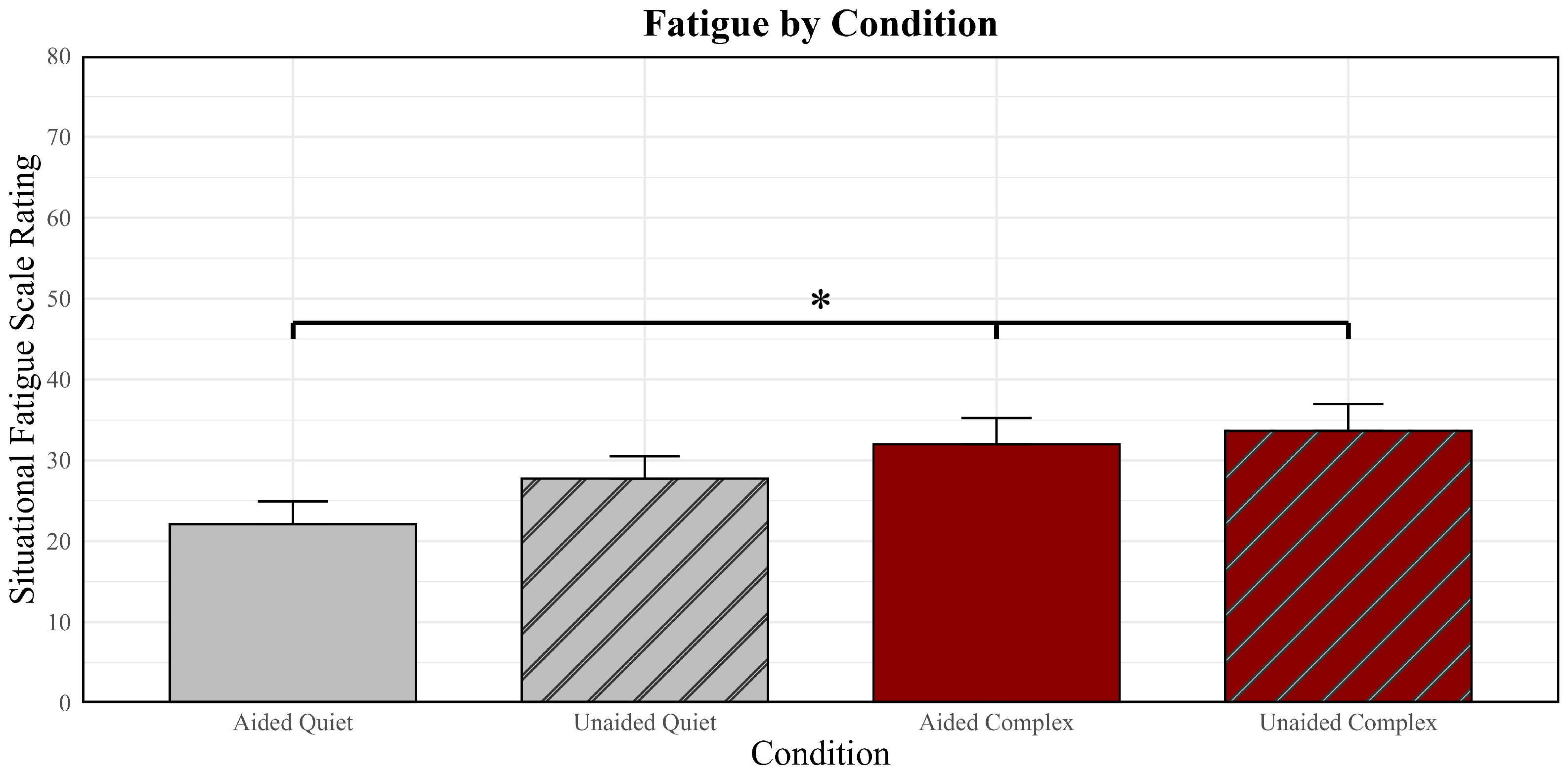
| Aided Noise–Aided Quiet | 9.74 | 3.66 | 2.66 | 0.066 | 11.68 | 2.59 | 4.50 | <0.001 ** |
| Aided Noise–Unaided Noise | −2.47 | 3.70 | −0.67 | 0.963 | 2.00 | 2.62 | 0.76 | 0.872 |
| Aided Noise–Unaided Quiet | 8.65 | 3.66 | 2.36 | 0.134 | 6.03 | 2.59 | 2.33 | 0.100 |
| Aided Quiet–Unaided Noise | −12.21 | 3.70 | −3.30 | 0.011 * | −9.68 | 2.62 | −3.69 | 0.002 ** |
| Aided Quiet–Unaided Quiet | −1.10 | 3.66 | −0.30 | 0.998 | −5.65 | 2.59 | −2.18 | 0.138 |
| Unaided Noise–Unaided Noise | 11.12 | 3.70 | 3.01 | 0.026 * | 4.04 | 2.62 | 1.54 | 0.418 |
Disclaimer/Publisher’s Note: The statements, opinions and data contained in all publications are solely those of the individual author(s) and contributor(s) and not of MDPI and/or the editor(s). MDPI and/or the editor(s) disclaim responsibility for any injury to people or property resulting from any ideas, methods, instructions or products referred to in the content. |
© 2026 by the authors. Licensee MDPI, Basel, Switzerland. This article is an open access article distributed under the terms and conditions of the Creative Commons Attribution (CC BY) license.
Share and Cite
Lander, D.M.; Roup, C.M. Impact of Amplification and Noise on Subjective Cognitive Effort and Fatigue in Older Adults with Hearing Loss. Brain Sci. 2026, 16, 182. https://doi.org/10.3390/brainsci16020182
Lander DM, Roup CM. Impact of Amplification and Noise on Subjective Cognitive Effort and Fatigue in Older Adults with Hearing Loss. Brain Sciences. 2026; 16(2):182. https://doi.org/10.3390/brainsci16020182
Chicago/Turabian StyleLander, Devan M., and Christina M. Roup. 2026. "Impact of Amplification and Noise on Subjective Cognitive Effort and Fatigue in Older Adults with Hearing Loss" Brain Sciences 16, no. 2: 182. https://doi.org/10.3390/brainsci16020182
APA StyleLander, D. M., & Roup, C. M. (2026). Impact of Amplification and Noise on Subjective Cognitive Effort and Fatigue in Older Adults with Hearing Loss. Brain Sciences, 16(2), 182. https://doi.org/10.3390/brainsci16020182