Study Protocol

Effects of Open-Skill Exercises on Cognition on Community Dwelling Older Adults: Protocol of a Randomized Controlled Trial

1
College of Physical Education, Yangzhou University, Yangzhou 225000, China
2
Institute of Sports, Exercise and Brain, Yangzhou University, Yangzhou 225000, China
3
Gdańsk Academy of Physical Education and Sport, 80-001 Gdańsk, Poland
*
Author to whom correspondence should be addressed.
Brain Sci. 2021, 11(5), 609; https://doi.org/10.3390/brainsci11050609

Submission received: 30 March 2021 / Revised: 5 May 2021 / Accepted: 7 May 2021 / Published: 10 May 2021
(This article belongs to the Special Issue Brain Function and Health, Sports, and Exercise)

Abstract

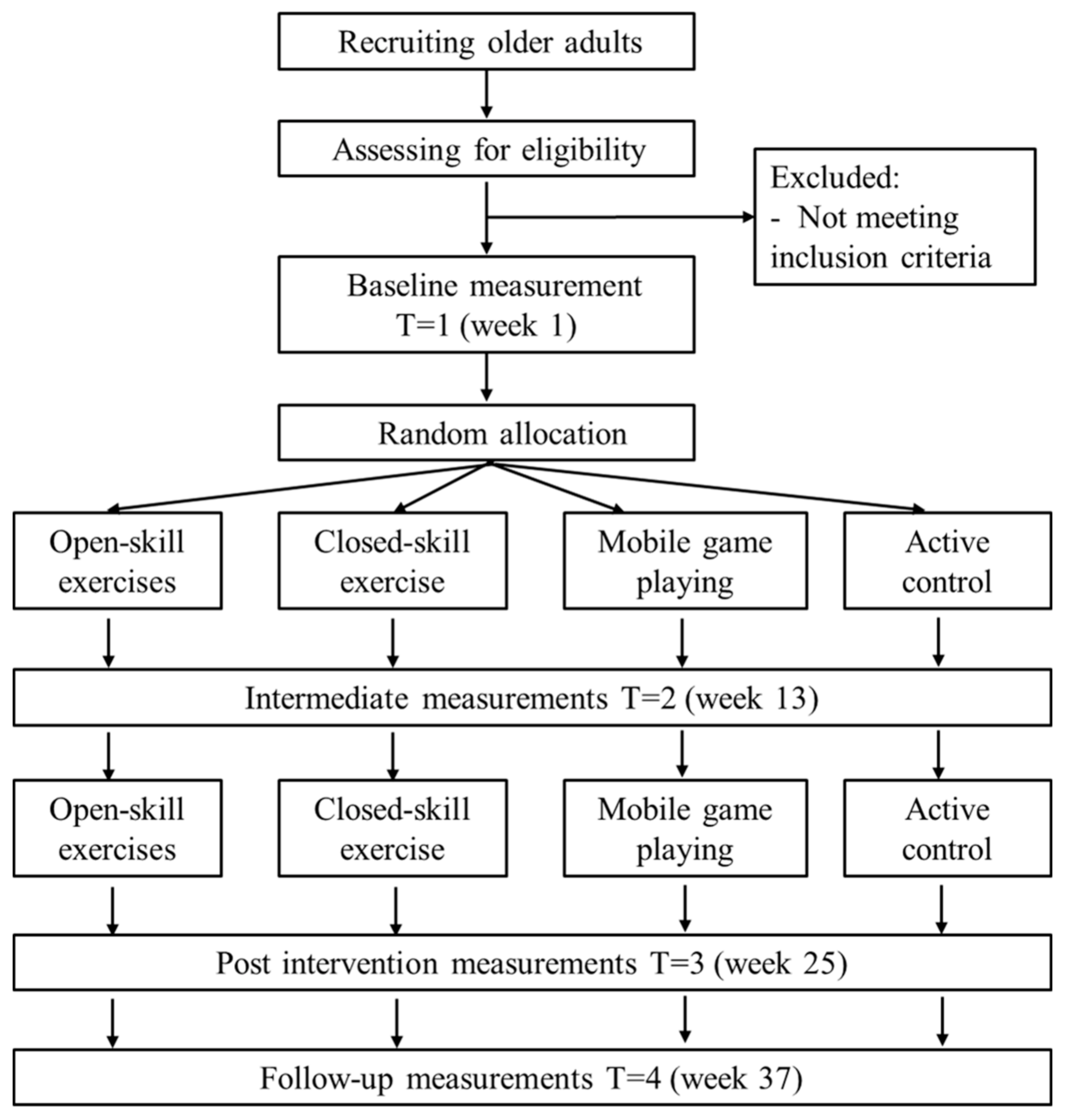
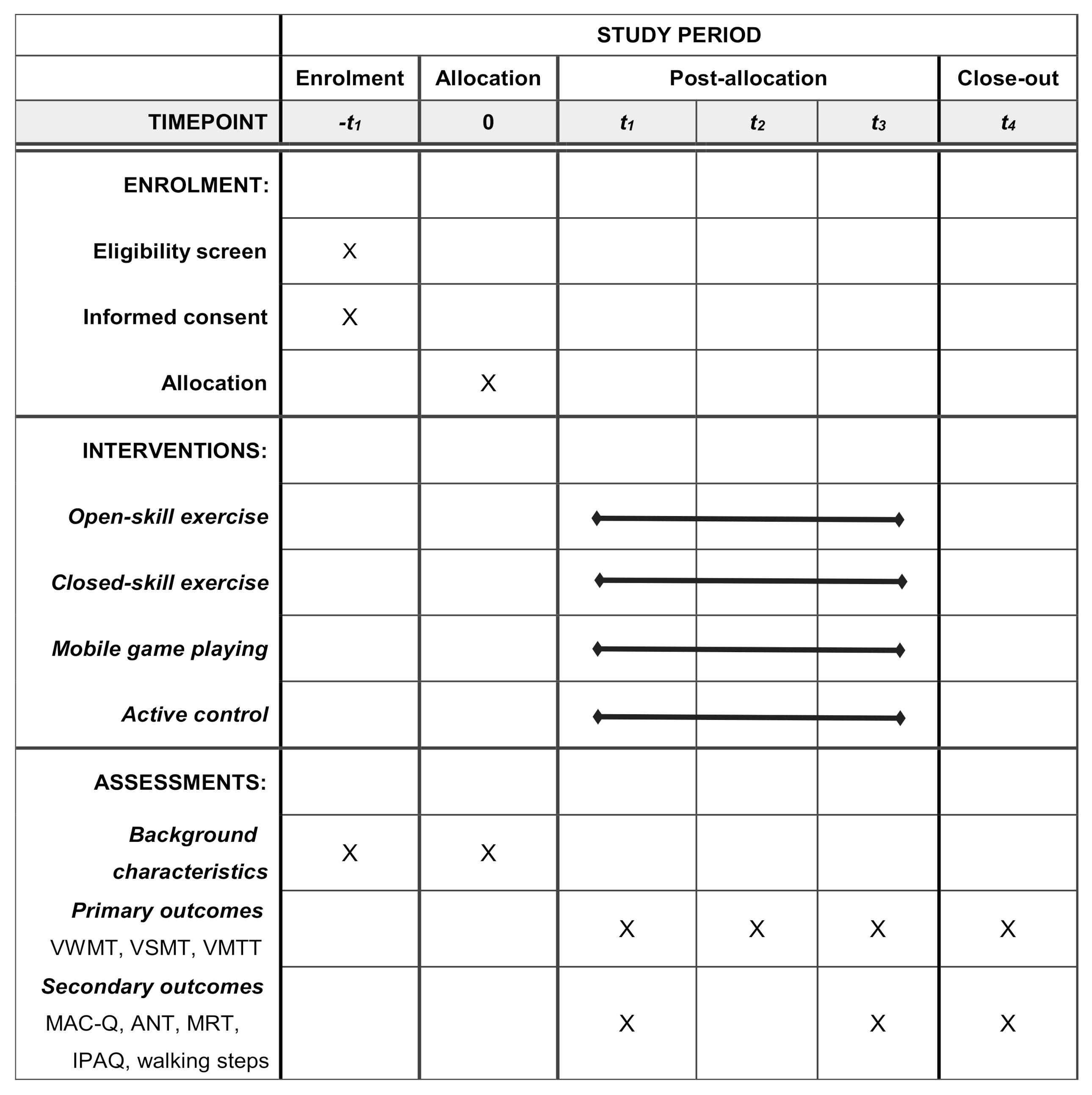
(1) Cognitive function may benefit from physical exercise in older adults. However, controversy remains over which mode of exercise is more beneficial. (2) The aim of the proposed study is to investigate the effect of open-skill exercise training on cognitive function in community dwelling older adults compared with closed-skill exercise, cognitive training, and active control. (3) One hundred and sixty participants, aged between 60 and 80 years old, will be recruited from community senior centers in Yangzhou, China and randomly assigned to one of four groups: open-skill exercise group, closed-skill exercise group, mobile game playing group, and active control group. All participants will join a 24-week program involving 50 min sessions three times a week. The primary outcome measure is visuospatial working memory. Secondary measures include subjective memory complaint, attention network, nonverbal reasoning ability, and physical activities. All participants will be measured before, mid-way, and immediately after intervention, and three months later. (4) If successful, this study is expected to provide evidence-based recommendations for older adults to select the most efficient and effective mode of exercise to improve cognitive function. Importantly, the three intervention groups provide an opportunity to separate the cognitive activity component from the physical activity component. Comparison of these components is expected to help elucidate possible mechanisms contributing to the additional cognitive benefit of open-skill exercises.
Keywords: open-skill exercises; closed-skill exercises; cognition; older adults open-skill exercises; closed-skill exercises; cognition; older adults