Article

Distinctive Frontal and Occipitotemporal Surface Features in Neglectful Parenting
by
Inmaculada León
1,2,*,
María José Rodrigo
1,2,
Ileana Quiñones
3,
Juan Andrés Hernández-Cabrera
1,2 and
Lorna García-Pentón
4
1
Instituto Universitario de Neurociencia, Universidad de La Laguna, 38200 La Laguna, Spain
2
Facultad de Psicología, Universidad de La Laguna, 38200 La Laguna, Spain
3
Basque Center on Cognition, Brain, and Language, 20009 Donostia-San Sebastián, Spain
4
MRC Cognition & Brain Sciences Unit, University of Cambridge, Cambridge CB2 7EF, UK
*
Author to whom correspondence should be addressed.
Brain Sci. 2021, 11(3), 387; https://doi.org/10.3390/brainsci11030387

Submission received: 4 February 2021 / Revised: 8 March 2021 / Accepted: 13 March 2021 / Published: 18 March 2021

Abstract

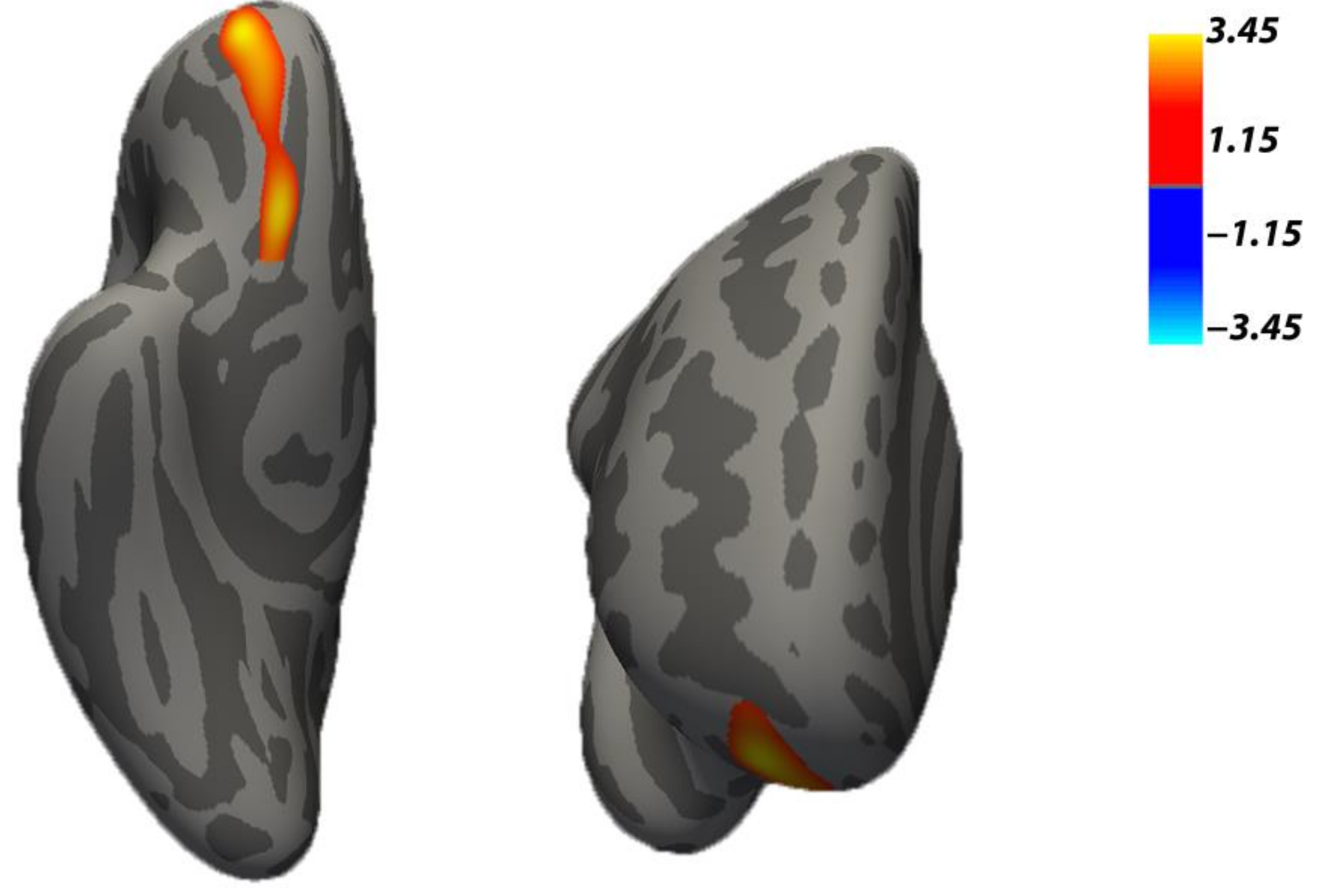
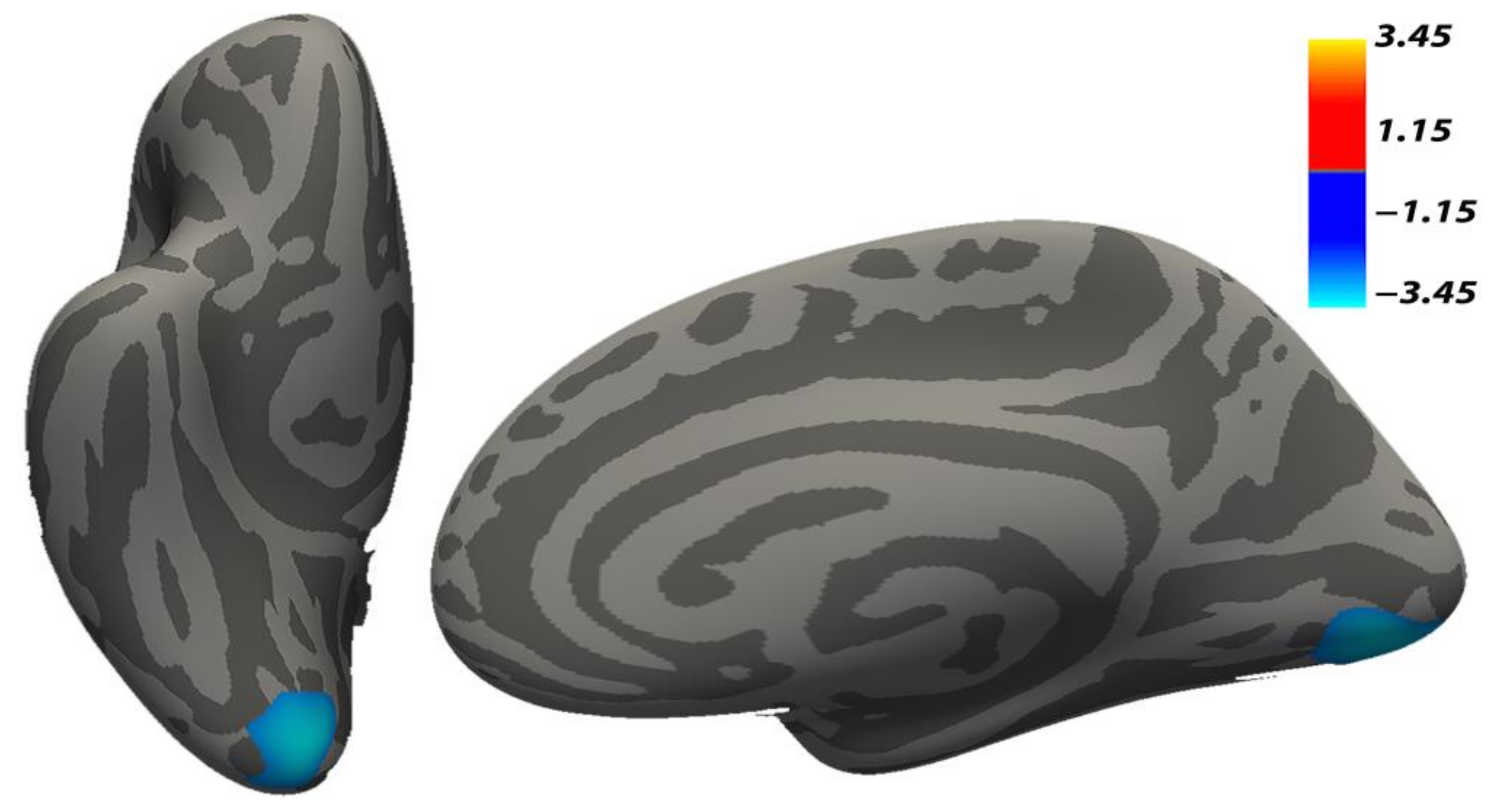
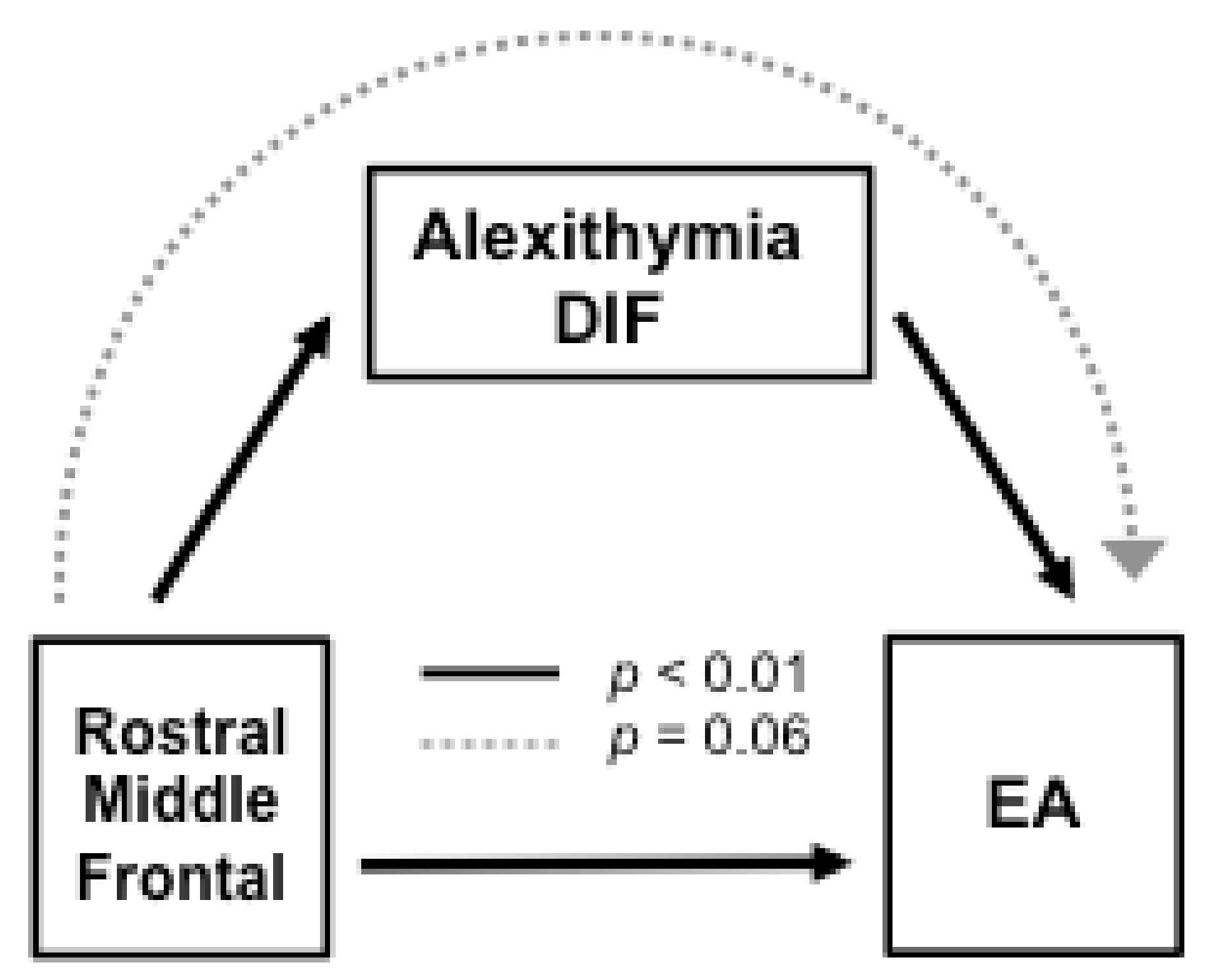
Although the brain signatures of adaptive human parenting are well documented, the cortical features associated with maladaptive caregiving are underexplored. We investigated whether cortical thickness and surface area vary in a small group of mothers who had neglected their children (24 in the neglect group, NG) compared to a control group of mothers with non-neglectful caregiving (21 in the control group, CG). We also tested whether the cortical differences were related to dyadic mother-child emotional availability (EA) in a play task with their children and whether alexithymia involving low emotional awareness that characterizes the NG could play a role in the cortical-EA associations. Whole-brain analysis of the cortical mantle identified reduced cortical thickness in the right rostral middle frontal gyrus and an increased surface area in the right lingual and lateral occipital cortices for the NG with respect to the CG. Follow-up path analysis showed direct effects of the right rostral middle frontal gyrus (RMFG) on the emotional availability (EA) and on the difficulty to identify feelings (alexithymia factor), with a marginal indirect RMFG-EA effect through this factor. These preliminary findings extend existing work by implicating differences in cortical features associated with neglectful parenting and relevant to mother-child interactive bonding.
Keywords: neglectful parenting; cortical thickness; surface area; alexithymia; mother-child interaction neglectful parenting; cortical thickness; surface area; alexithymia; mother-child interaction