Article

Effects of a Person Centered Dementia Training Program in Greek Hospital Staff—Implementation and Evaluation


by
Mara Gkioka
1,2,*,
Birgit Teichmann
1,
Despina Moraitou
3,
Sotirios Papagiannopoulos
2,4 and
Magda Tsolaki
2,5
1
Network Aging Research, Heidelberg University, Bergheimer Str. 20, 69115 Heidelberg, Germany
2
School of Medicine, Aristotle University of Thessaloniki, University Campus, 54124 Thessaloniki, Greece
3
School of Psychology, Aristotle University of Thessaloniki, University Campus, 54124 Thessaloniki, Greece
4
3rd Department of Neurology, Papanikolaou General Hospital, Exohi, 57010 Thessaloniki, Greece
5
1st Department of Νeurology, AHEPA University Hospital, University Campus, 54124 Thessaloniki, Greece
*
Author to whom correspondence should be addressed.
Brain Sci. 2020, 10(12), 976; https://doi.org/10.3390/brainsci10120976

Submission received: 7 November 2020 / Revised: 9 December 2020 / Accepted: 10 December 2020 / Published: 12 December 2020

Abstract

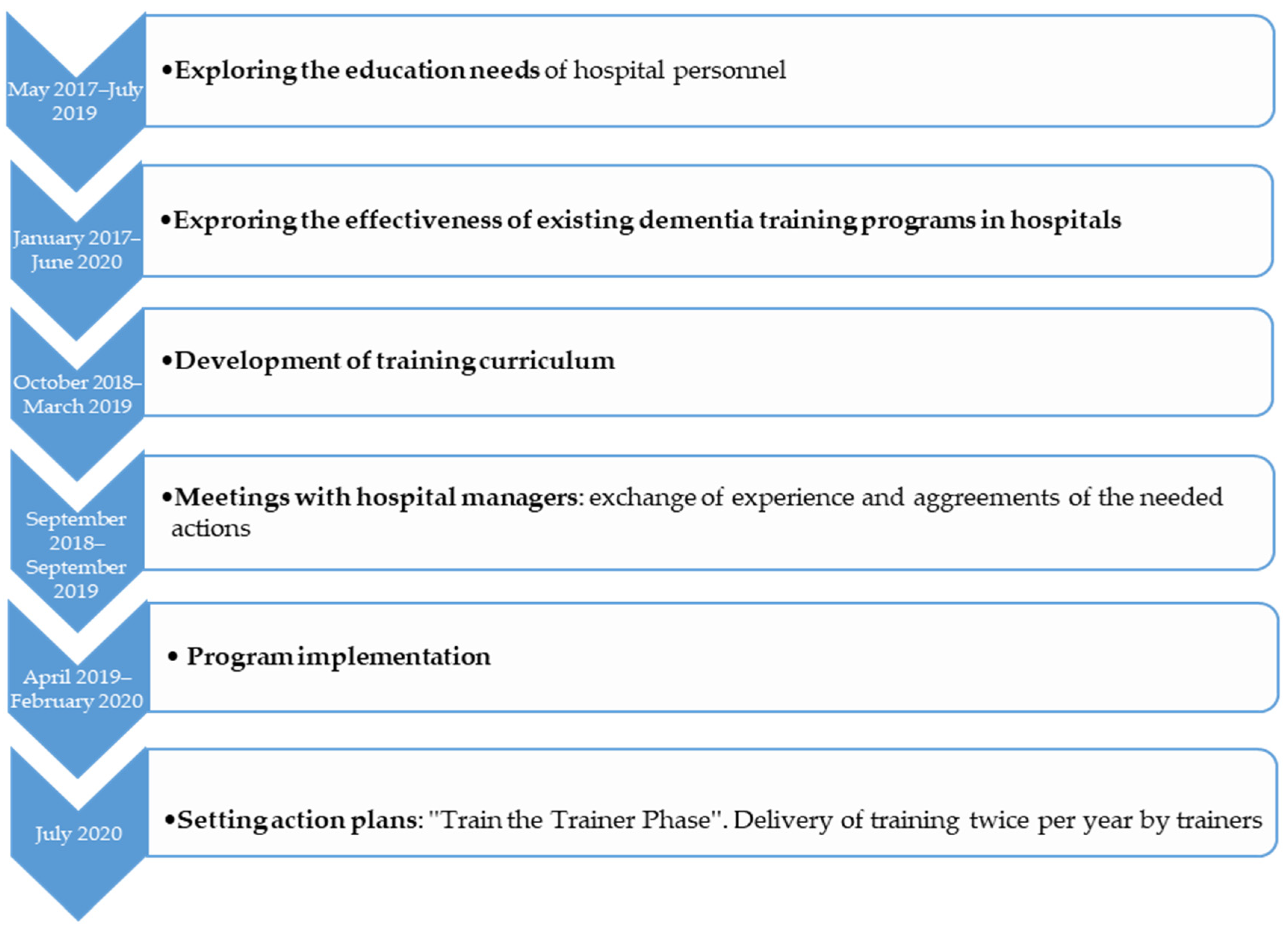
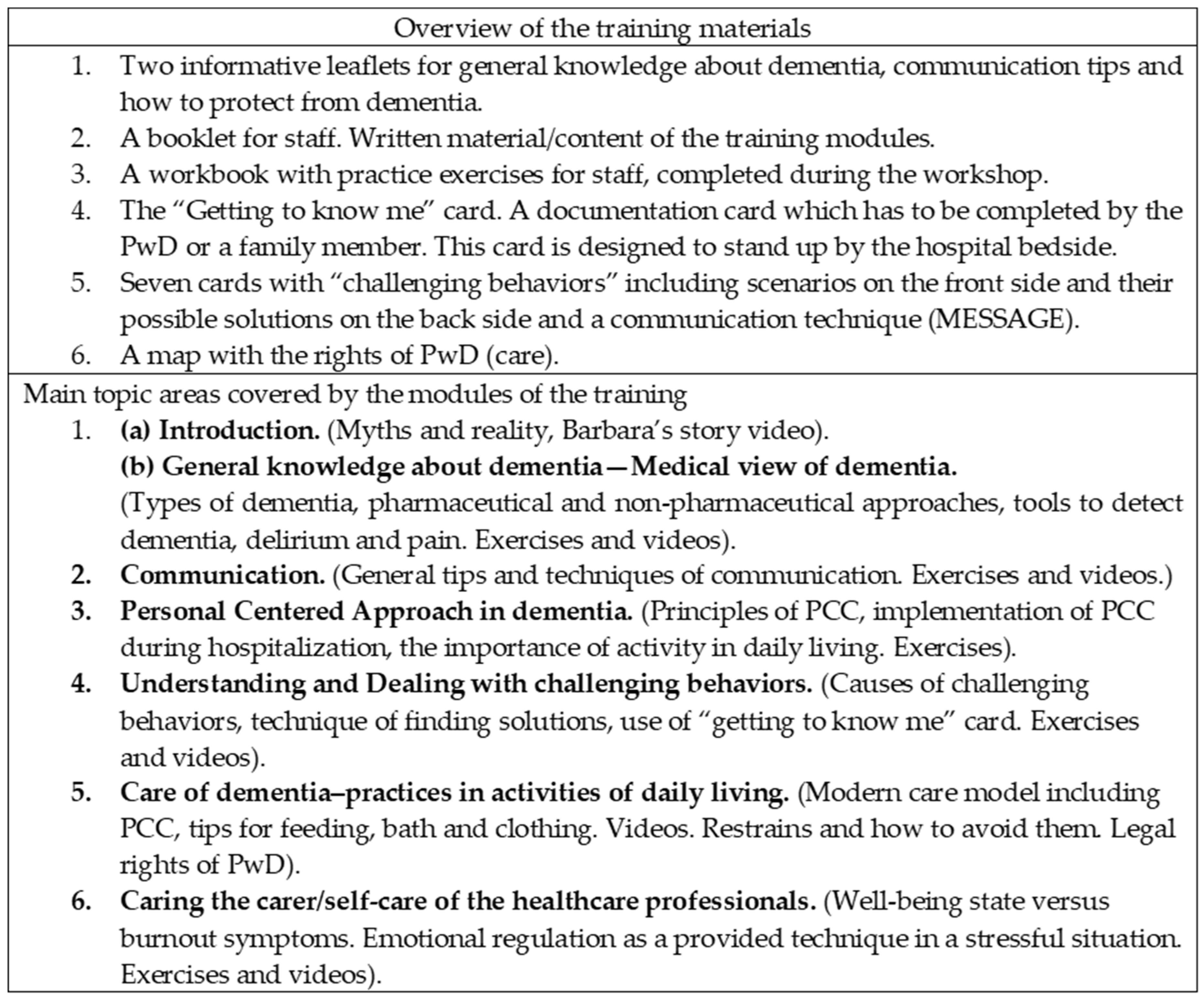
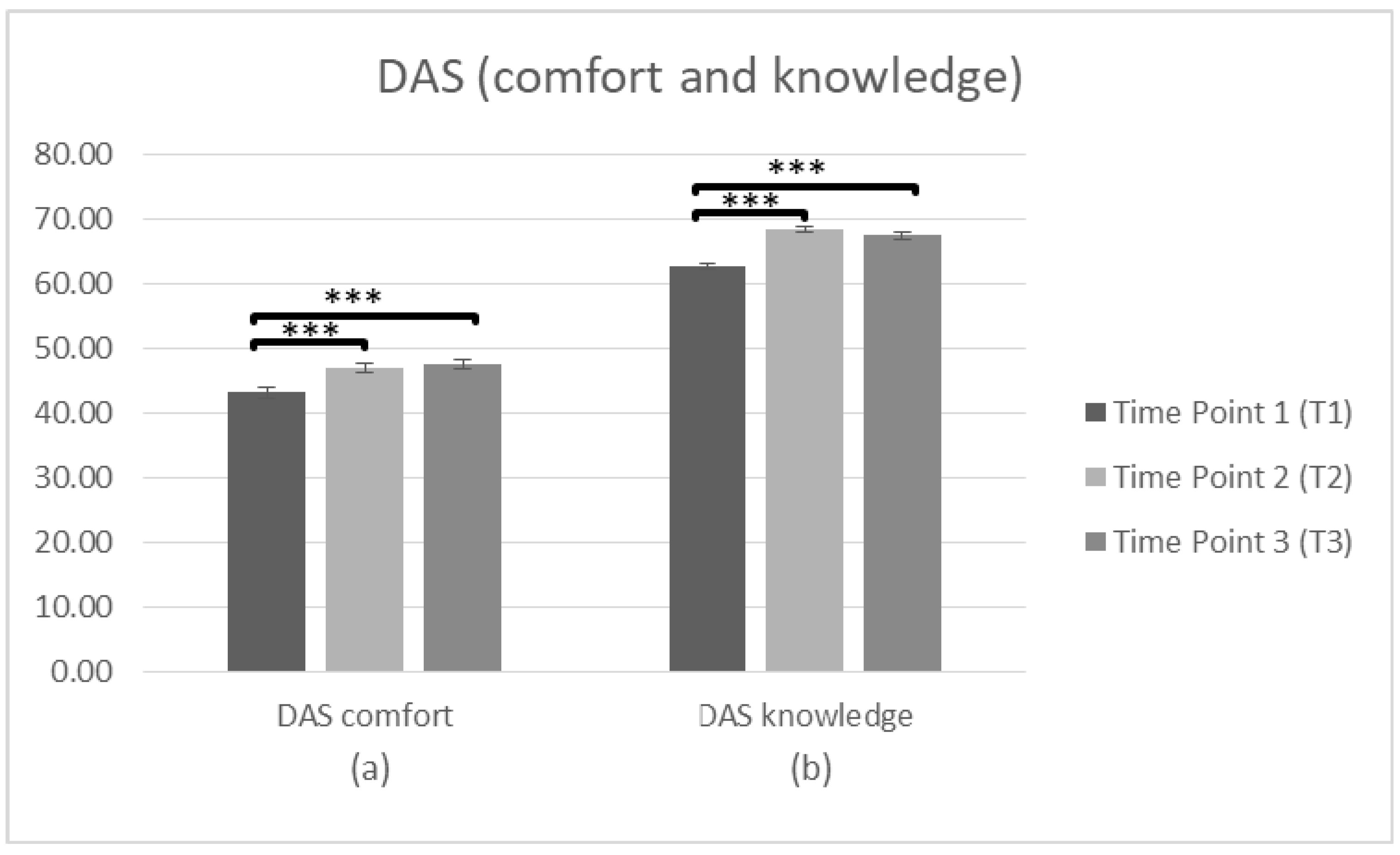
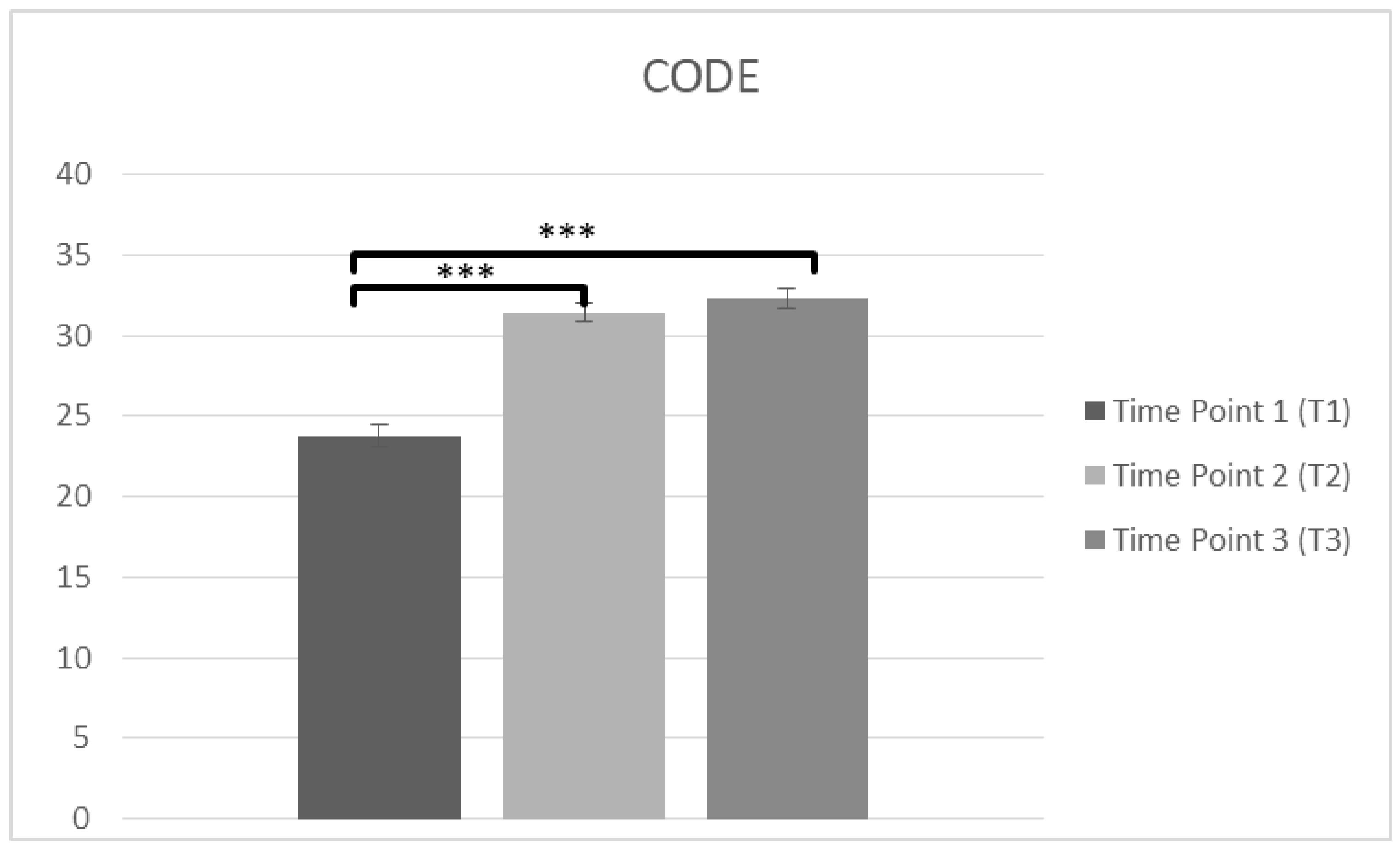
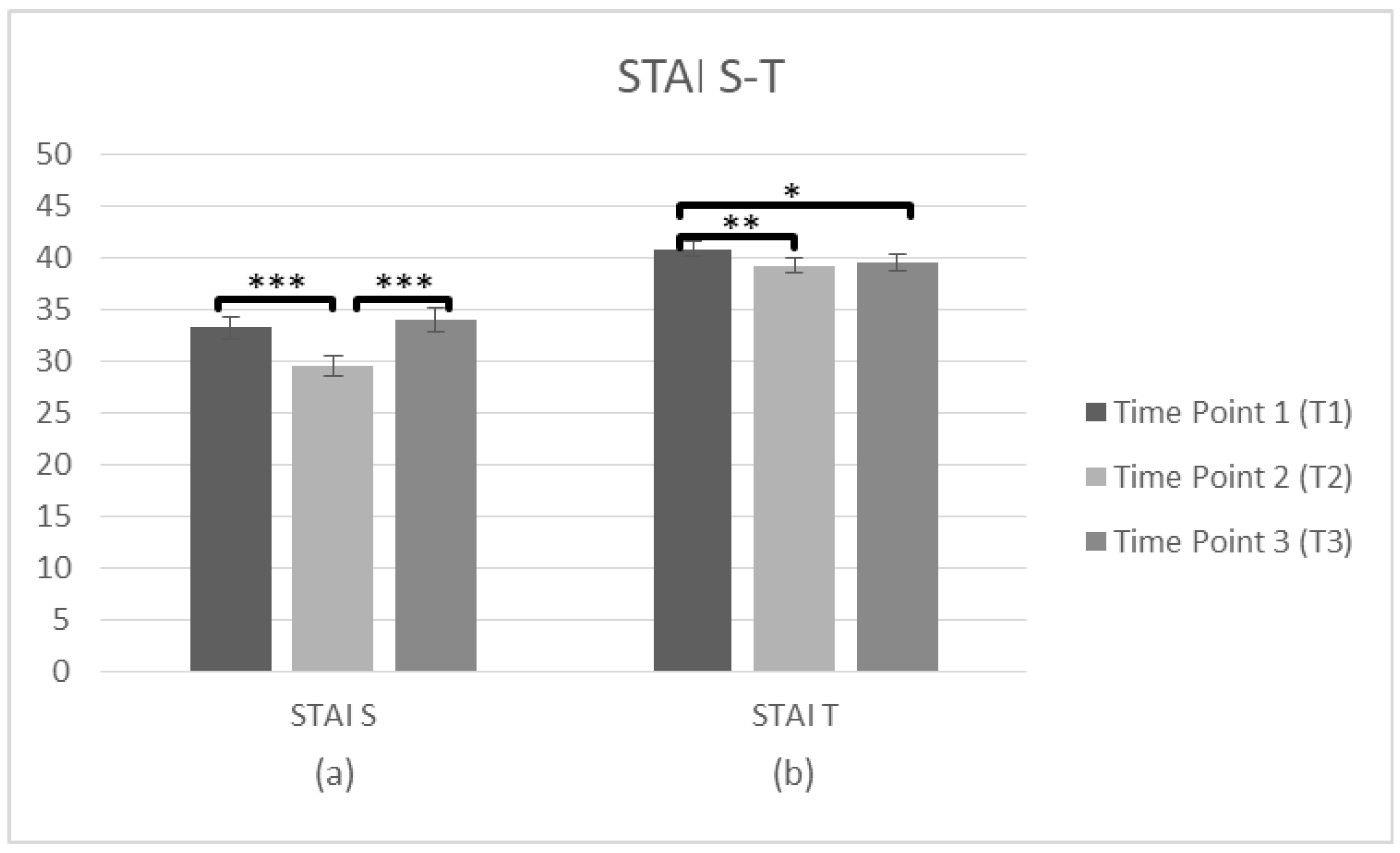
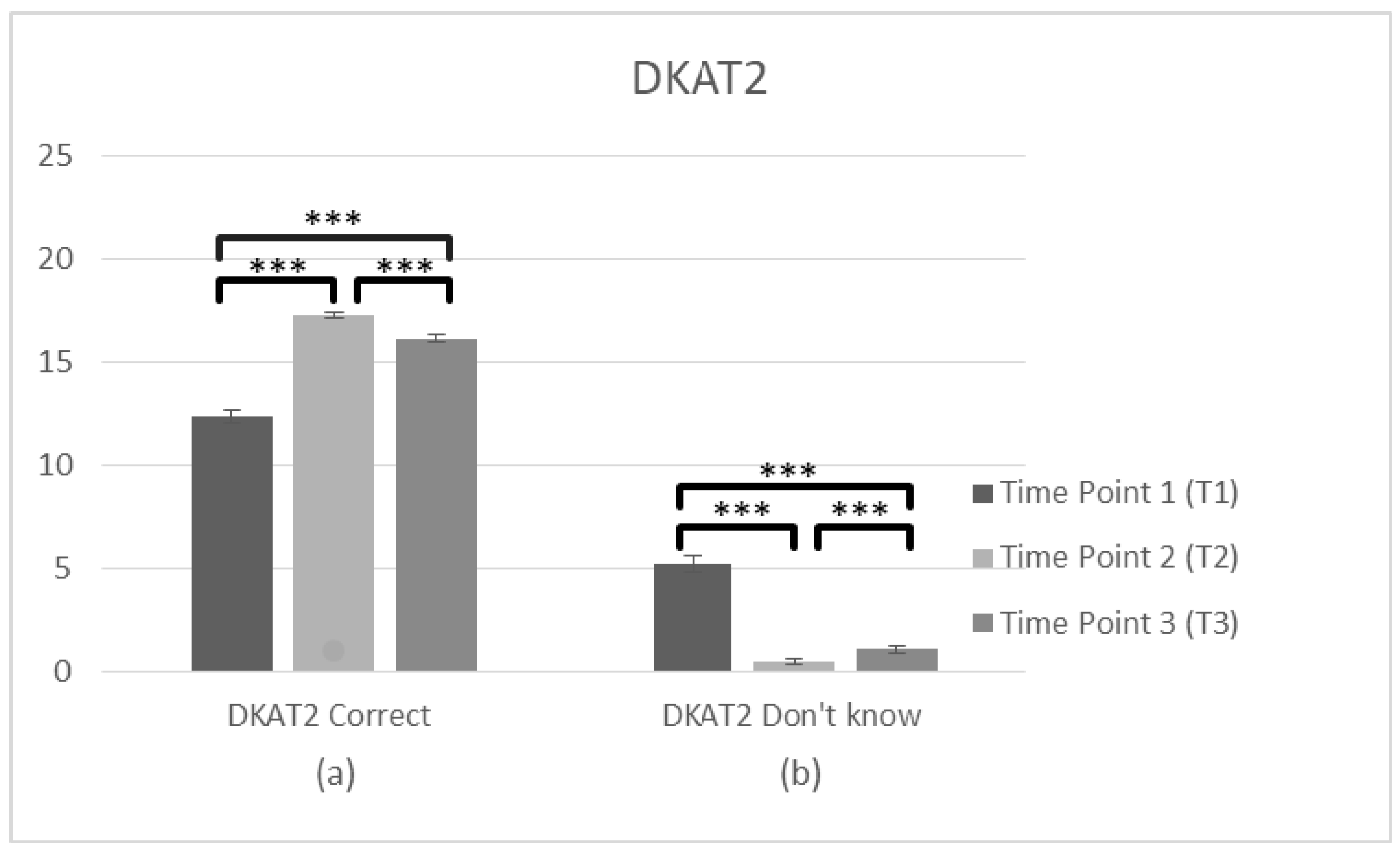
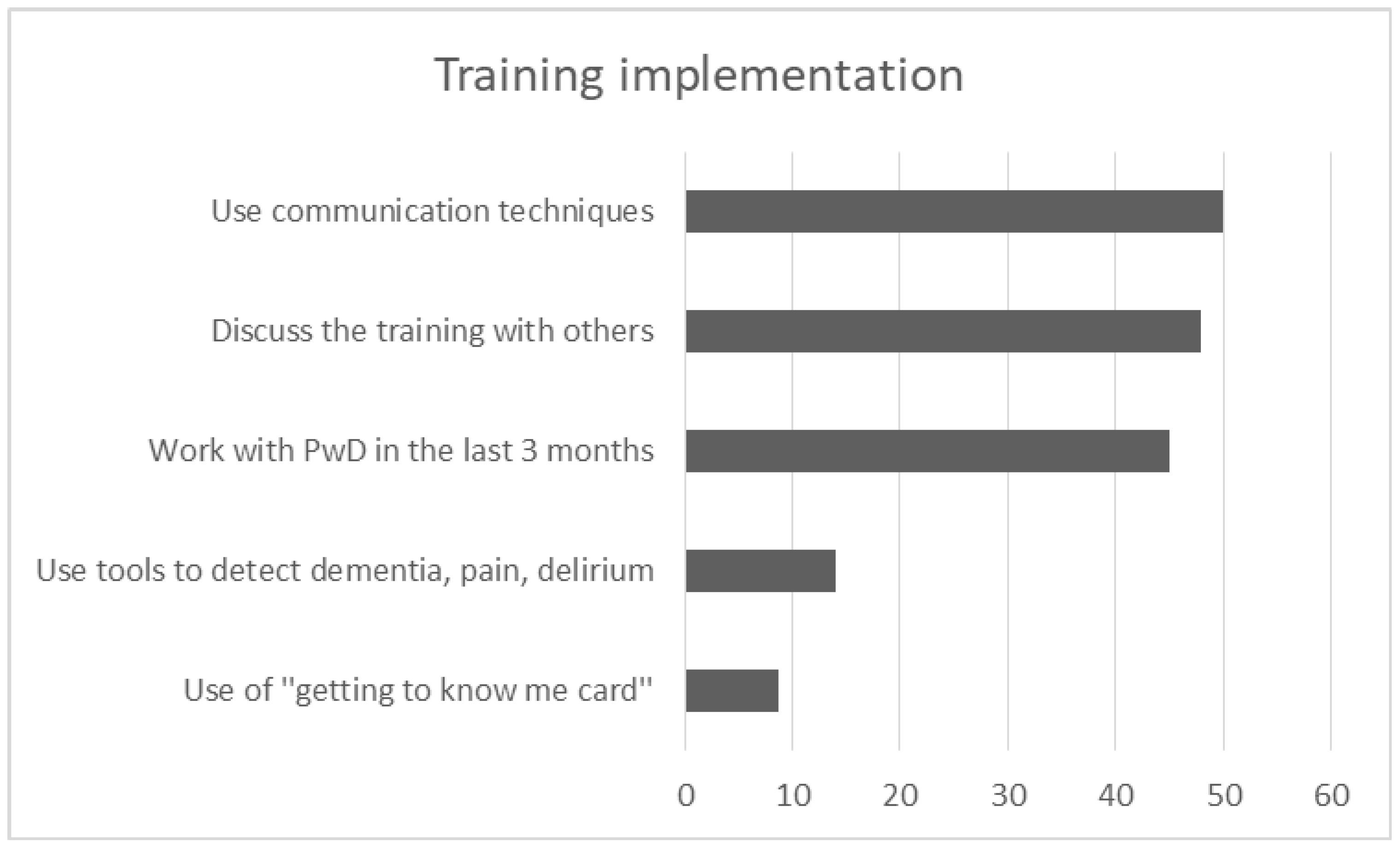
People with Dementia (PwD) are frequently admitted in general hospitals. However, health care professionals have lack of dementia knowledge, negative attitudes toward dementia, and lack of confidence in caring those patients. The aim of this study is to develop, implement and evaluate a dementia staff training program in Greek general hospitals. It was a repeated-measures research design. Fourteen (14) two-day workshops were conducted, consisting of six targeted and interactive modules. Staff members (N = 242) attended the program and were assessed according to (1) individual performance: questionnaires about attitudes towards dementia, confidence in care, knowledge about dementia and anxiety before, immediately after the training and three months later, (2) an overall training evaluation immediately after the training and (3) an evaluation of training implementation three months later. Positive attitudes towards dementia, improvement of confidence in care and decrease of feeling of anxiety as a trait, were sustained over time. Knowledge about dementia also increased after the training and sustained, with, however, a slight decrease over time. A well applied training program seems to provide the basis of a better care in PwD during hospitalization. However, changes in the organizational level and a transformation of care culture are necessary for training sustainability over time.
Keywords: education; personnel; workforce development; Alzheimer’s disease; health facilities; attitude; knowledge; confidence education; personnel; workforce development; Alzheimer’s disease; health facilities; attitude; knowledge; confidence