Communication

Reception of OAM Radio Waves Using Pseudo-Doppler Interpolation Techniques: A Frequency-Domain Approach

Canada Research Center, Huawei Technologies Canada Co. Ltd., 303 Terry Fox Drive, Kanata, ON K2K 3J1, Canada
Appl. Sci. 2019, 9(6), 1082; https://doi.org/10.3390/app9061082
Submission received: 31 January 2019 / Revised: 7 March 2019 / Accepted: 10 March 2019 / Published: 14 March 2019

Abstract

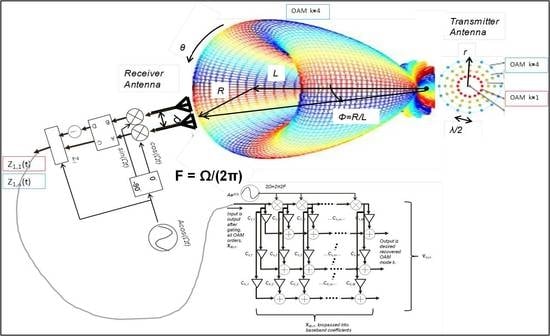
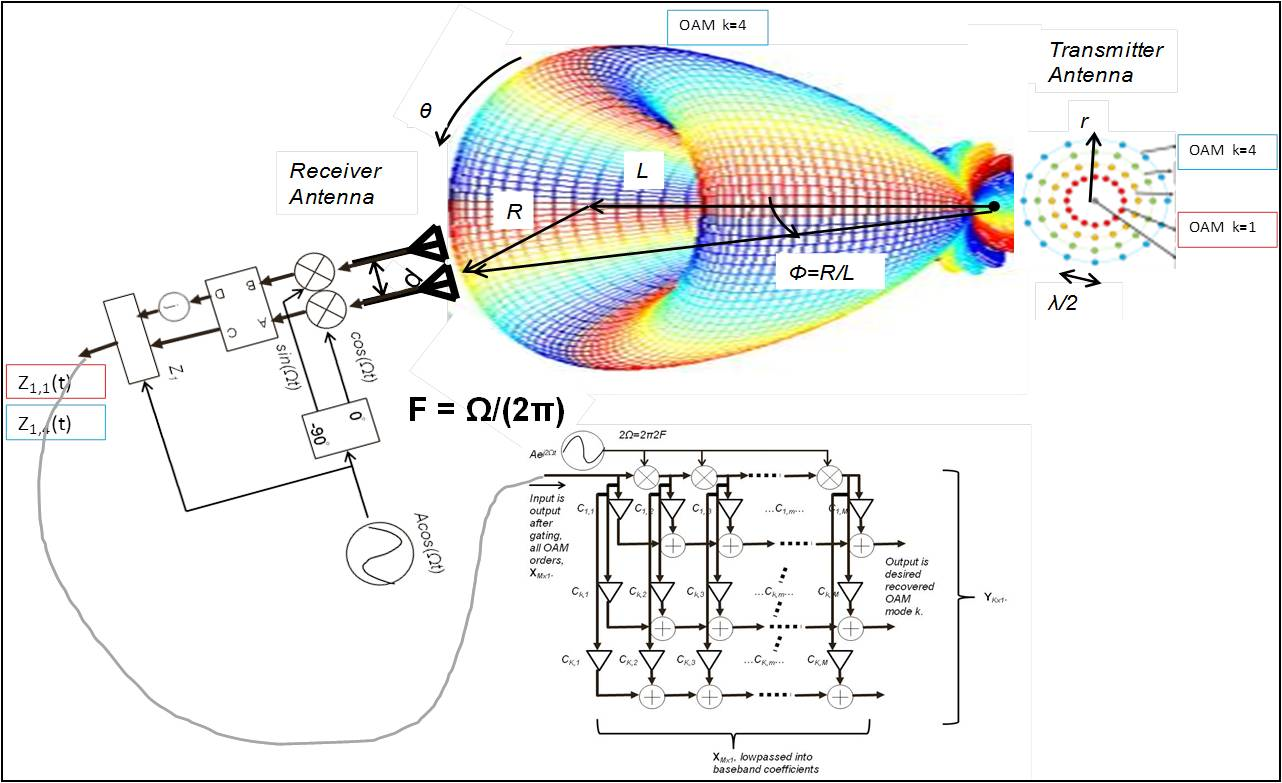
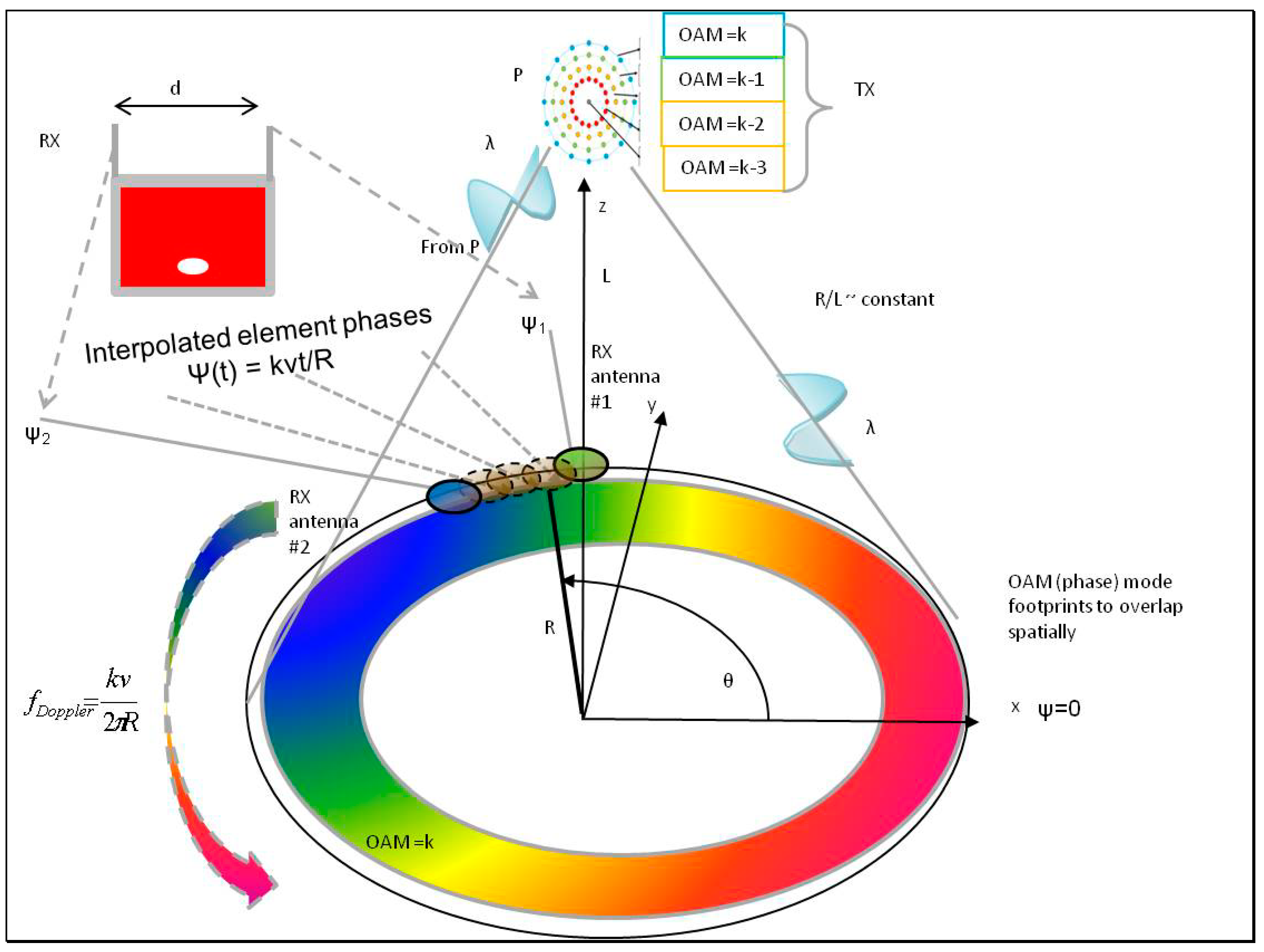
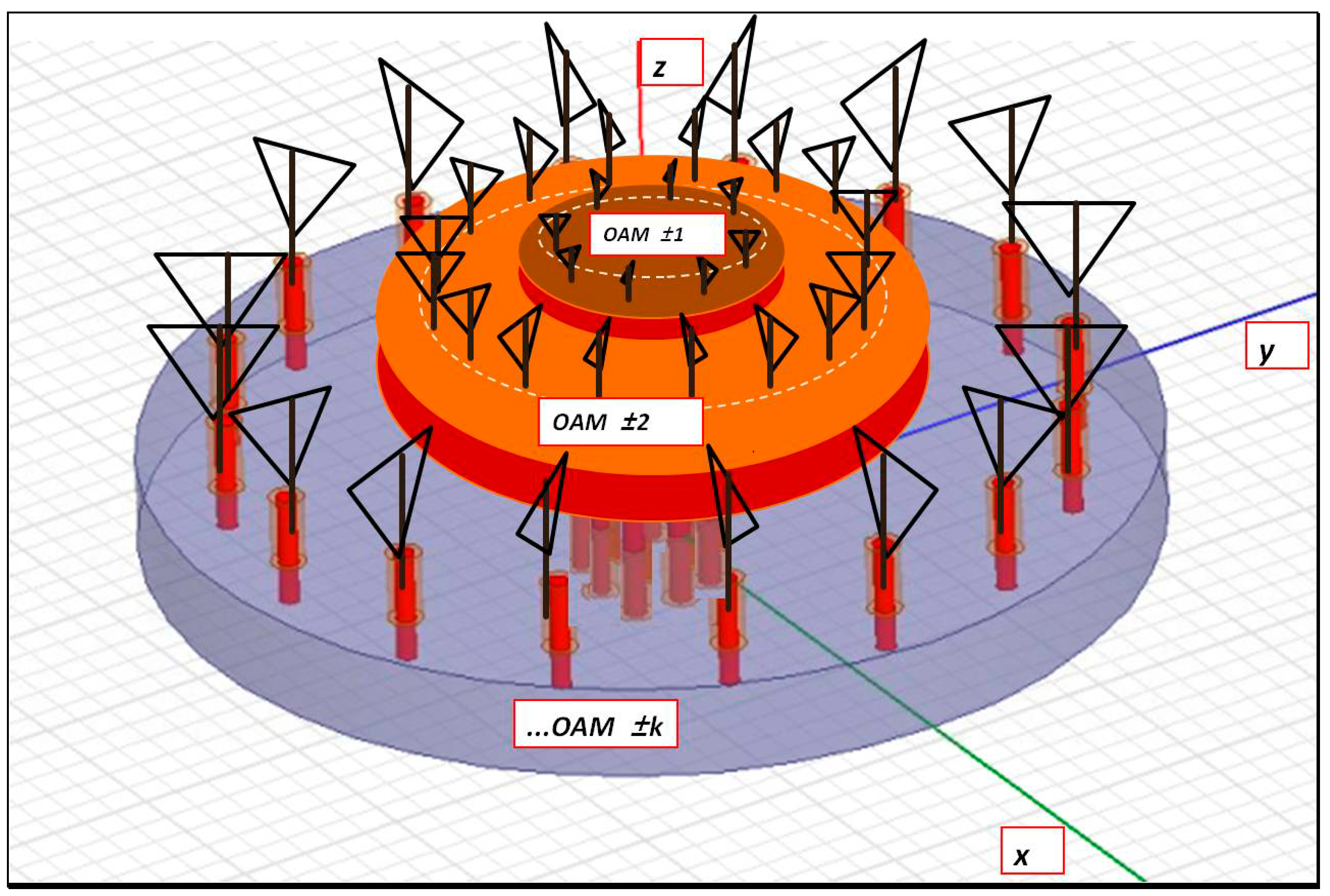
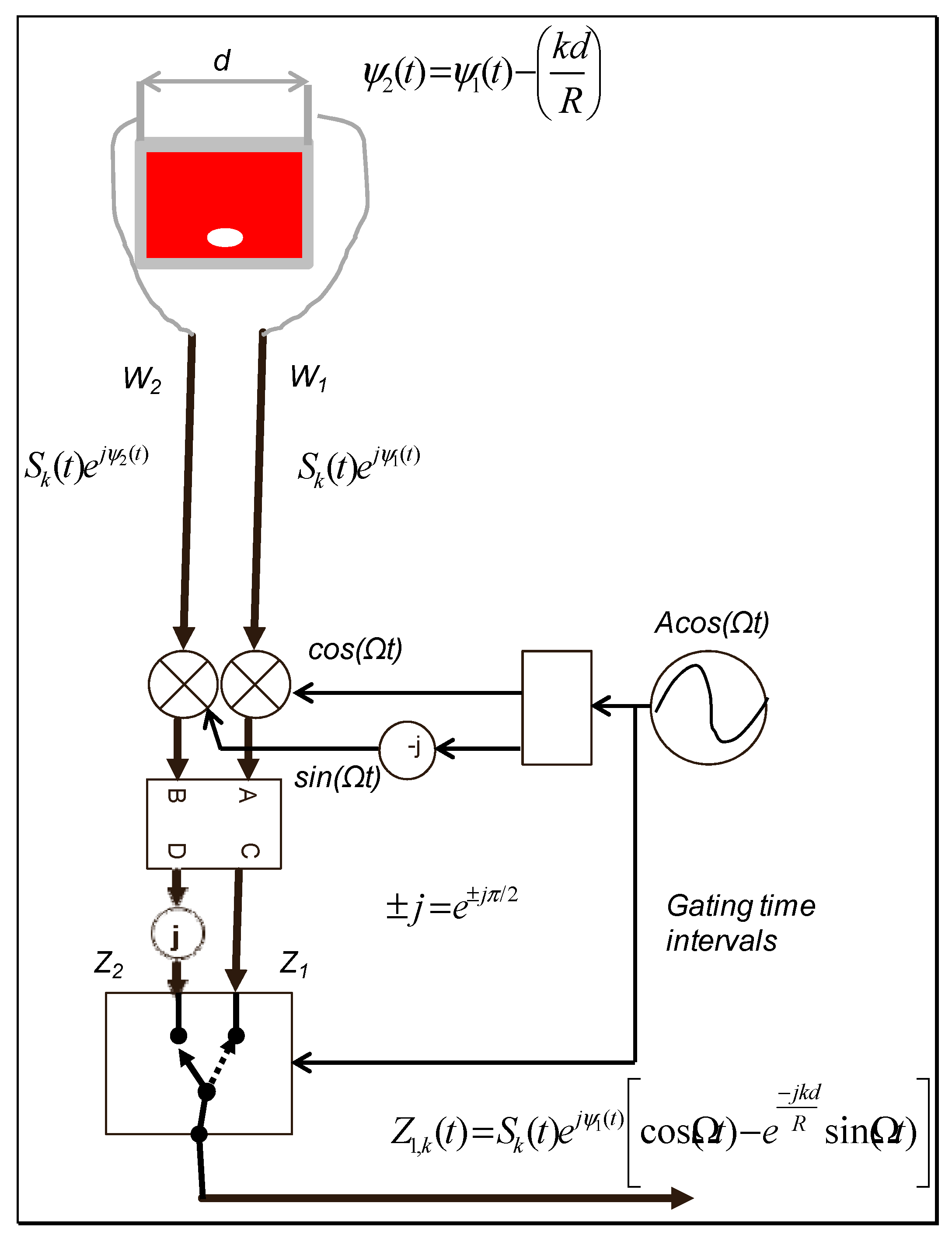
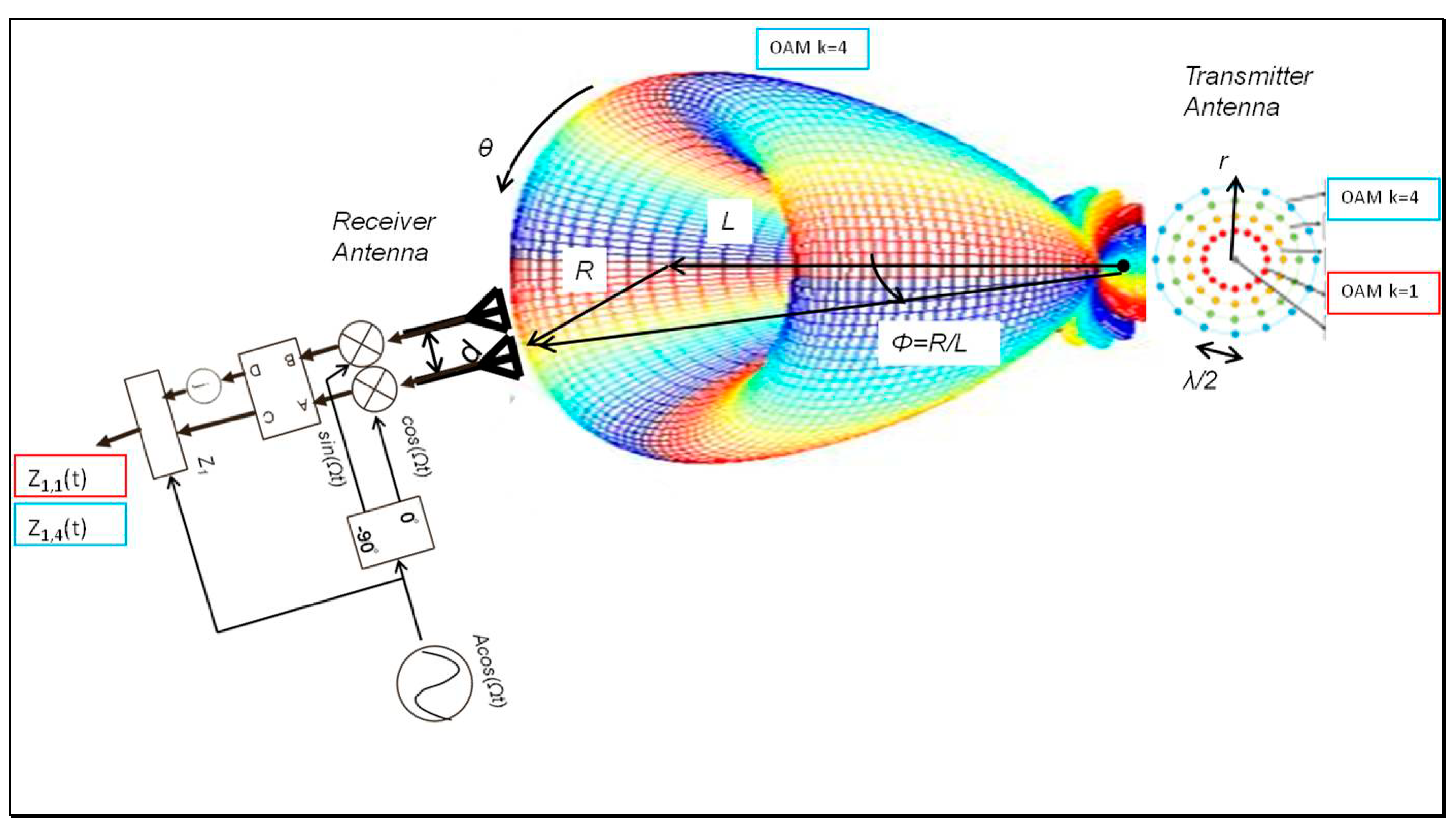
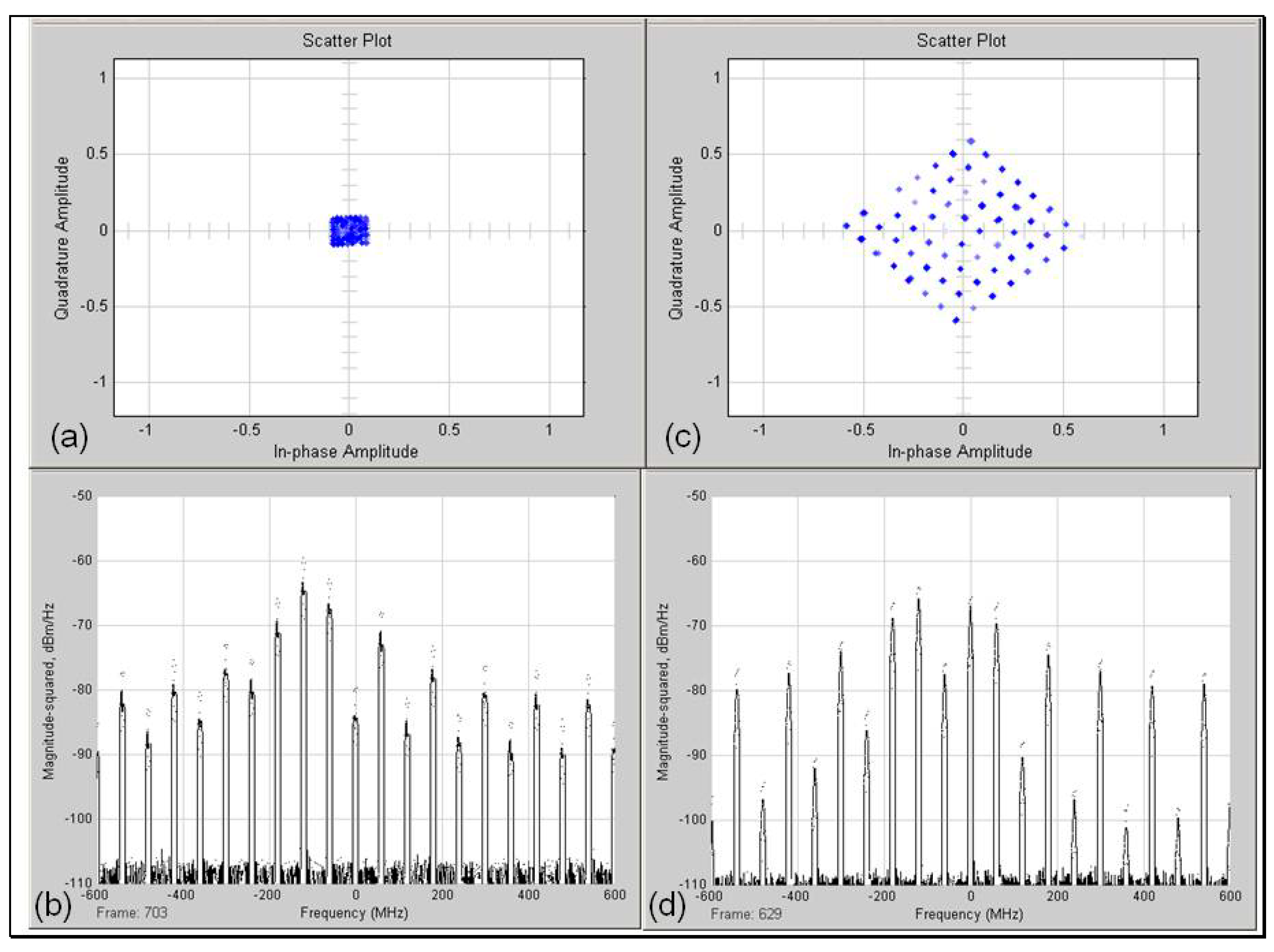
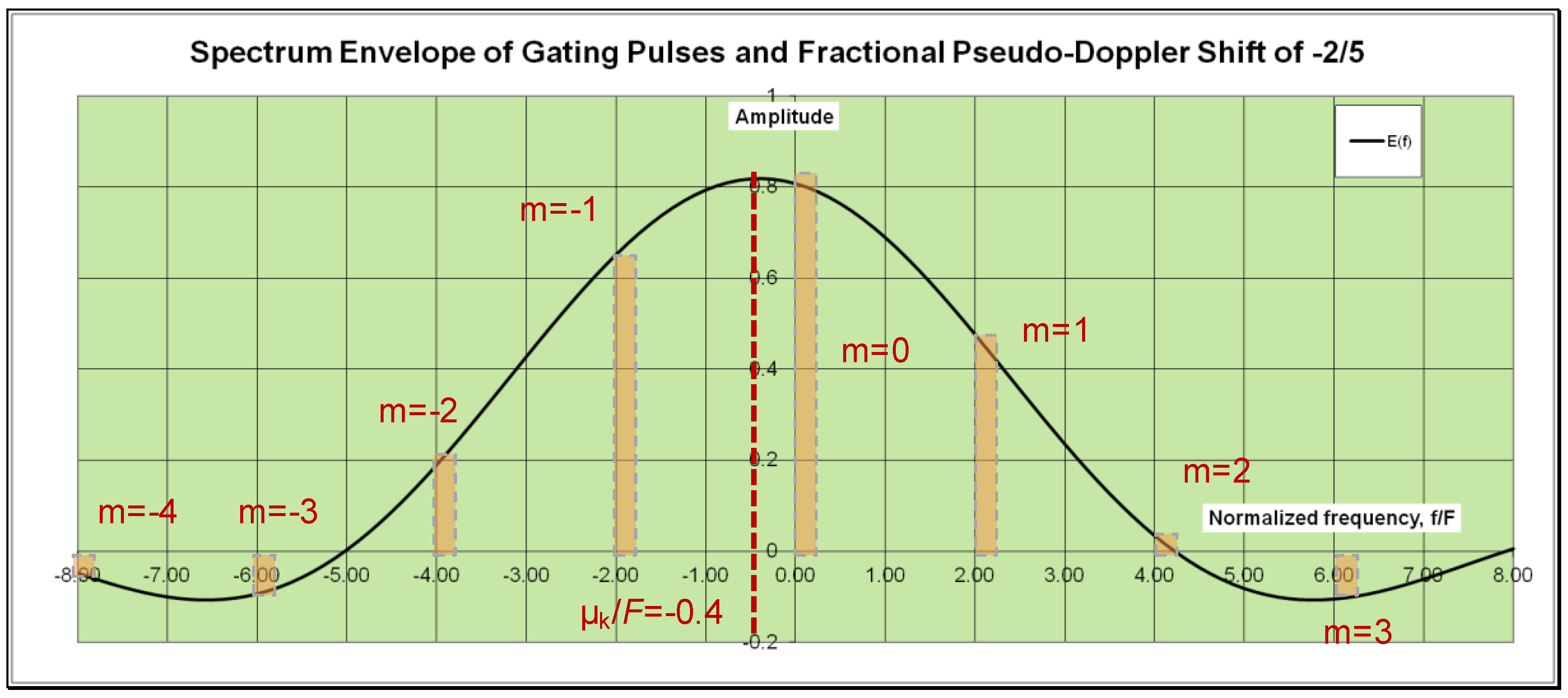
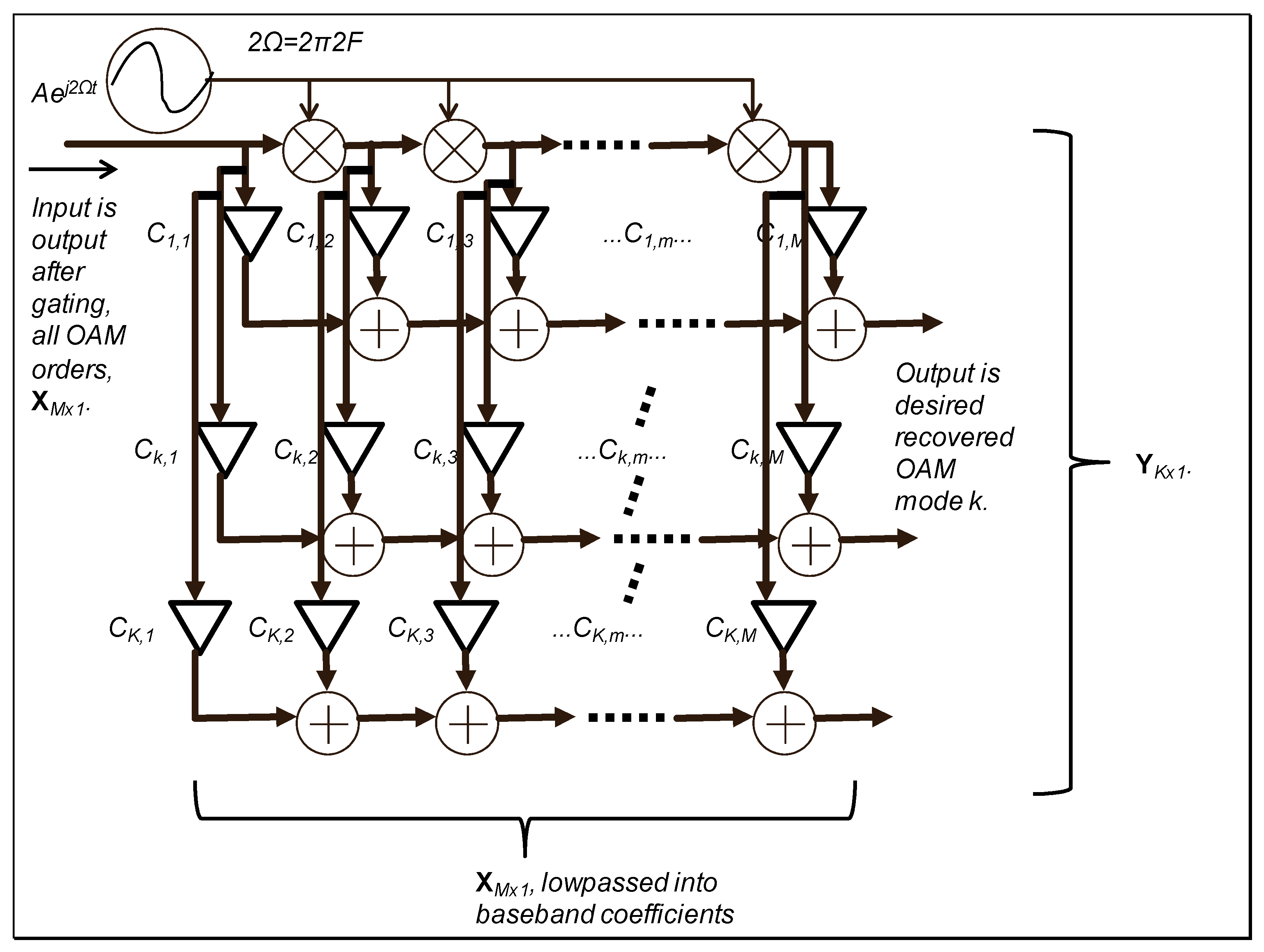
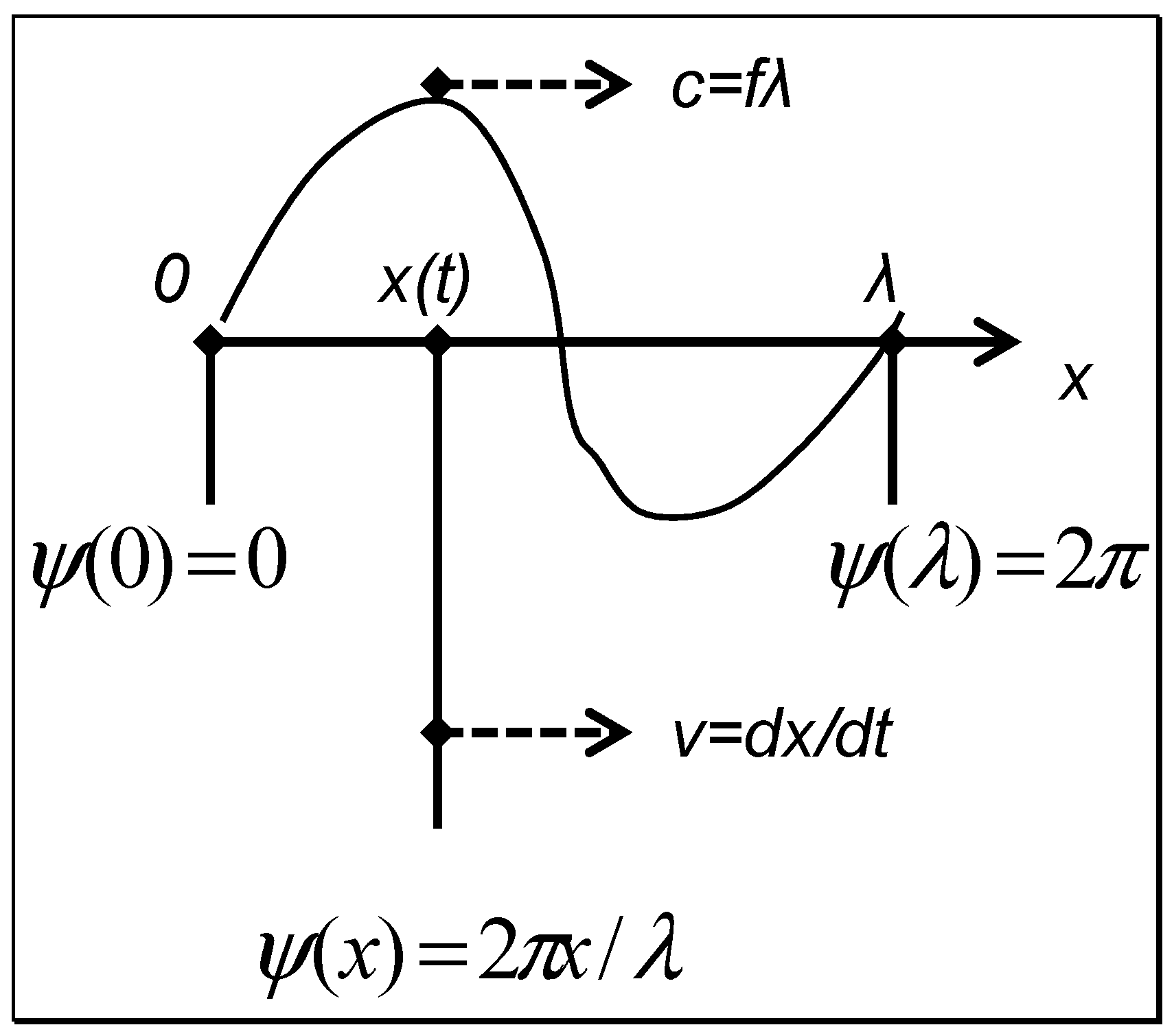
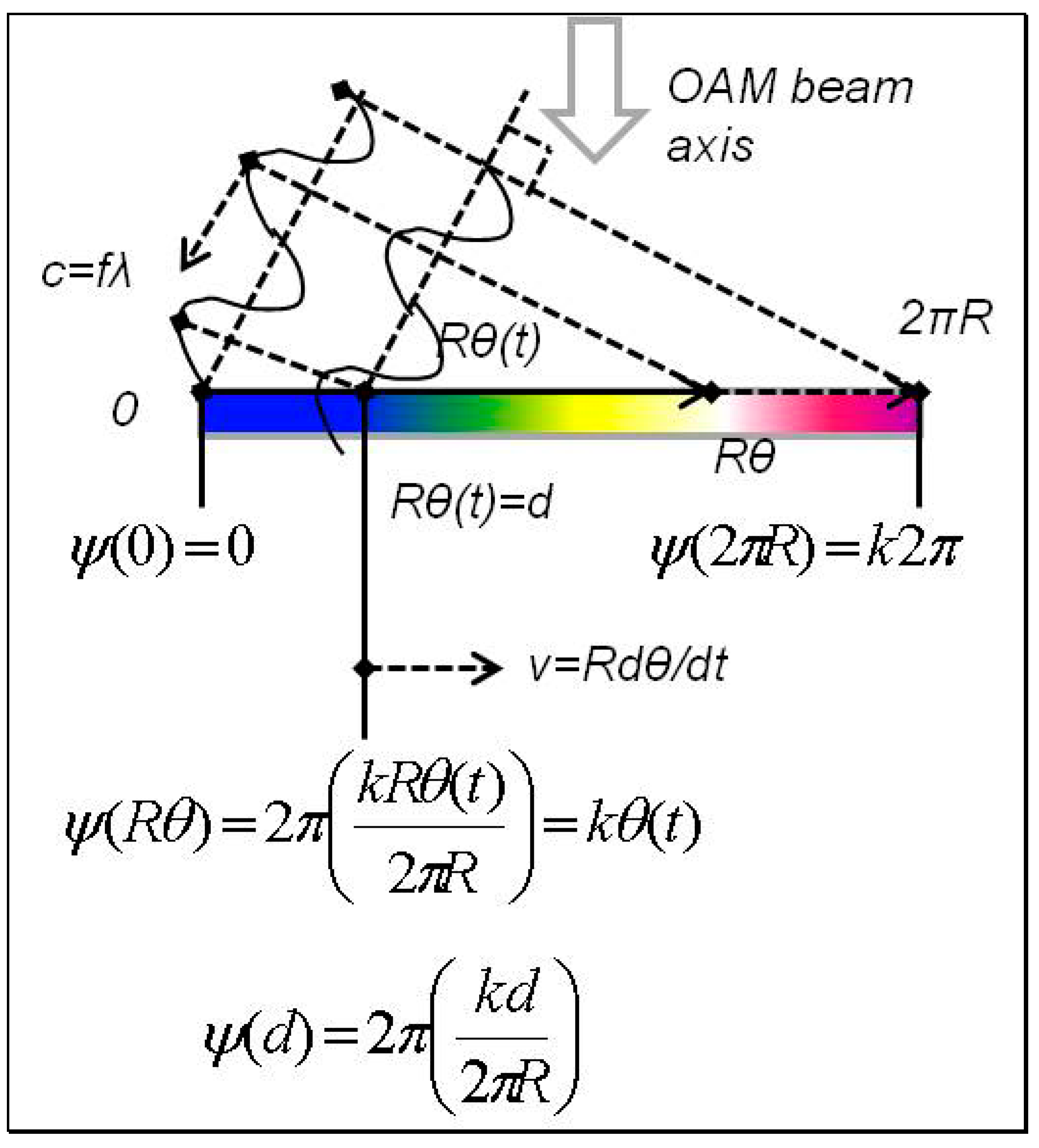
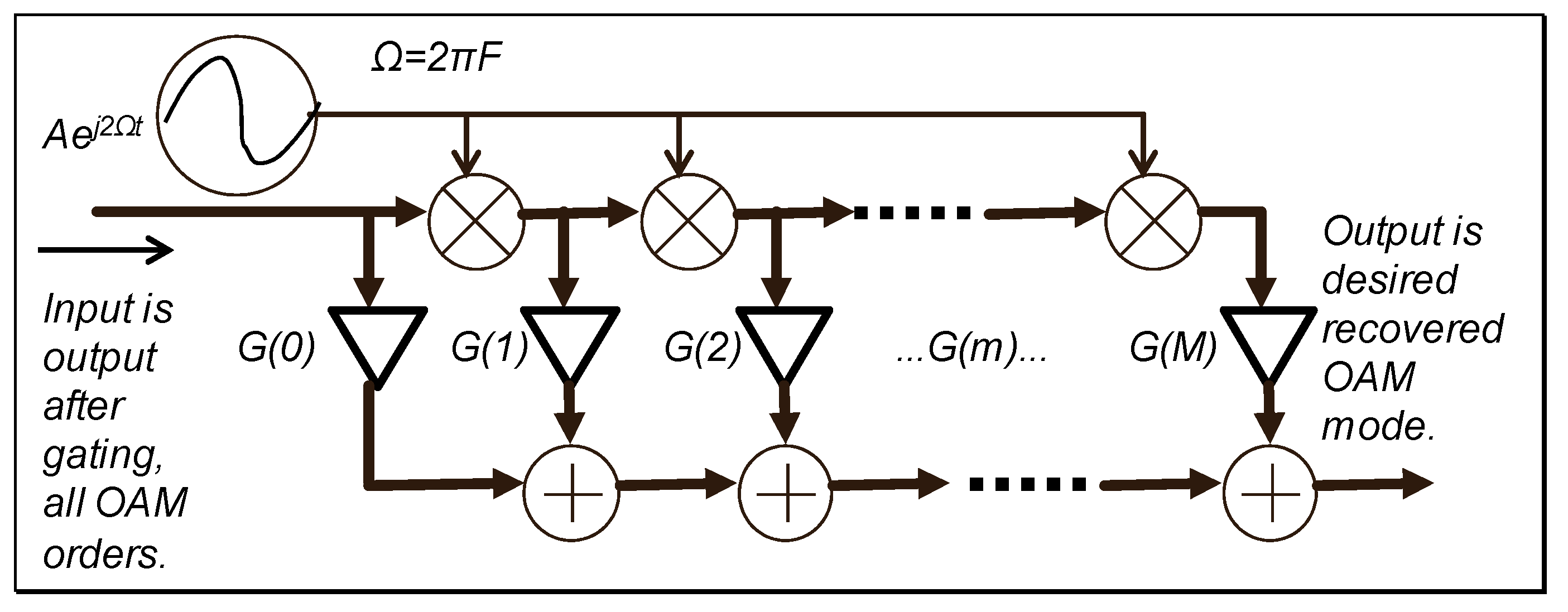
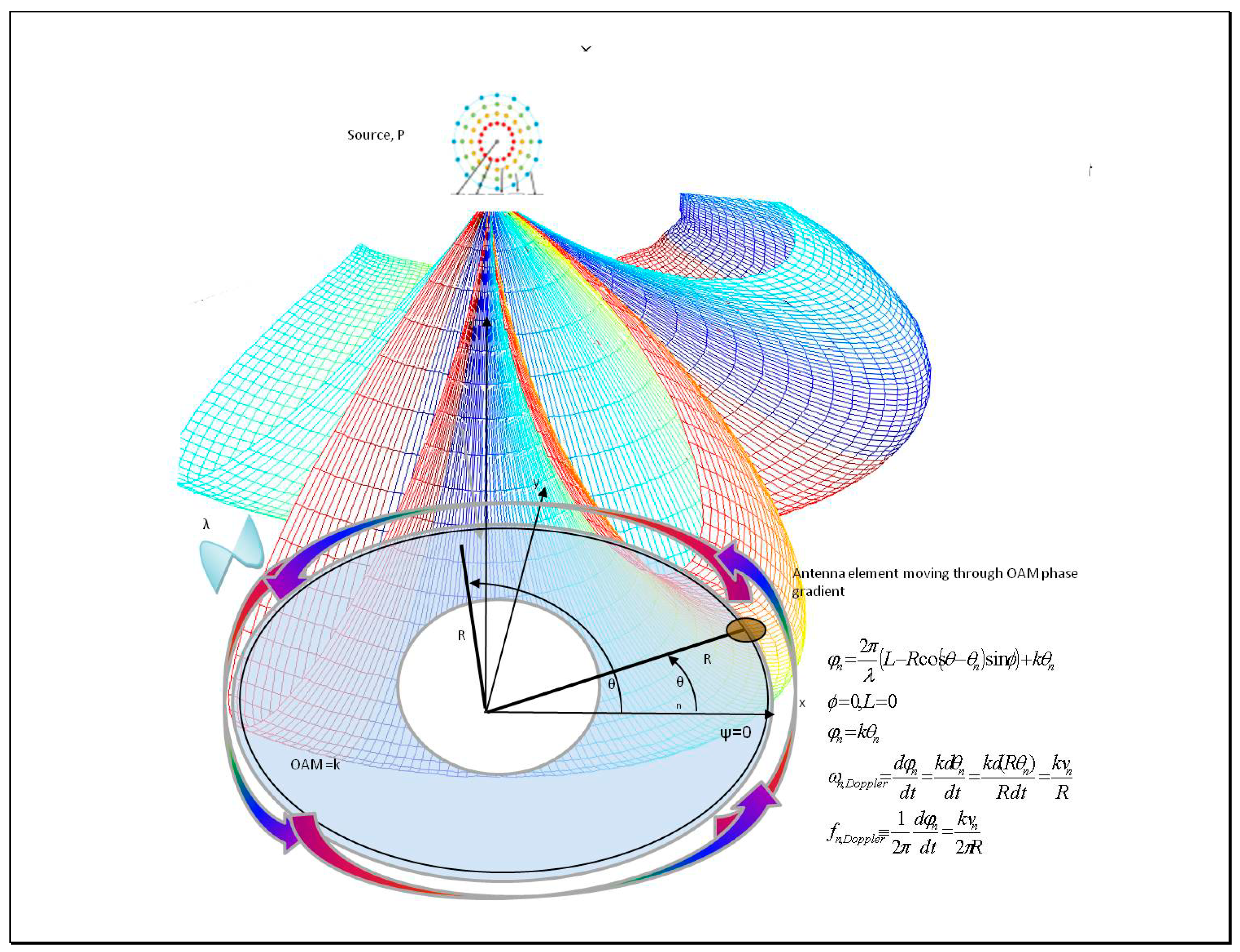
This paper presents a practical method of receiving waves having orbital angular momentum (OAM) in the far field of an antenna transmitting multiple OAM modes, each carrying a separate data stream at the same radio frequency (RF). The OAM modes are made to overlap by design of the transmitting antenna structure. They are simultaneously received at a known far-field distance using a minimum of two antennas separated by a short distance tangential to the OAM conical beams’ maxima and endowed with different pseudo-Doppler frequency shifts by a modulating arrangement that dynamically interpolates their phases between the two receiving antennas. Subsequently down-converted harmonics of the pseudo-Doppler shifted spectra are linearly combined by sets of weighting coefficients which effectively separate each OAM mode in the frequency domain, resulting in a higher signal-to-noise ratios (SNR) than possible using spatial-domain OAM reception techniques. Moreover, no more than two receiving antennas are necessary to separate any number of OAM modes in principle, unlike conventional MIMO (Multi-Input, Multi-Output) which requires at least K antennas to resolve K spatial modes.
Keywords: orbital angular momentum; phase mode; twisted waves; radio frequency; receiver; pseudo-Doppler; interpolation; multi-input multi-output; MIMO; frequency-domain; time-gated frequency-shift interpolation orbital angular momentum; phase mode; twisted waves; radio frequency; receiver; pseudo-Doppler; interpolation; multi-input multi-output; MIMO; frequency-domain; time-gated frequency-shift interpolation
Graphical Abstract