Article

Multi-Objective Optimization for Plug-In 4WD Hybrid Electric Vehicle Powertrain


1
School of Traffic & Transportation Engineering, Changsha University of Science & Technology, Changsha 410114, China
2
Jiangxi Province Key Laboratory of Precision Drive & Control, Nanchang Institute of Technology, Nanchang 330099, China
3
National Demonstrating Center for Experimental Civil Engineering Education, Hunan City University, Yiyang 410003, China
*
Author to whom correspondence should be addressed.
Appl. Sci. 2019, 9(19), 4068; https://doi.org/10.3390/app9194068
Submission received: 23 August 2019 / Revised: 22 September 2019 / Accepted: 24 September 2019 / Published: 29 September 2019
(This article belongs to the Special Issue Hybrid Vehicle Technologies for a Sustainable Future Mobility)

Abstract

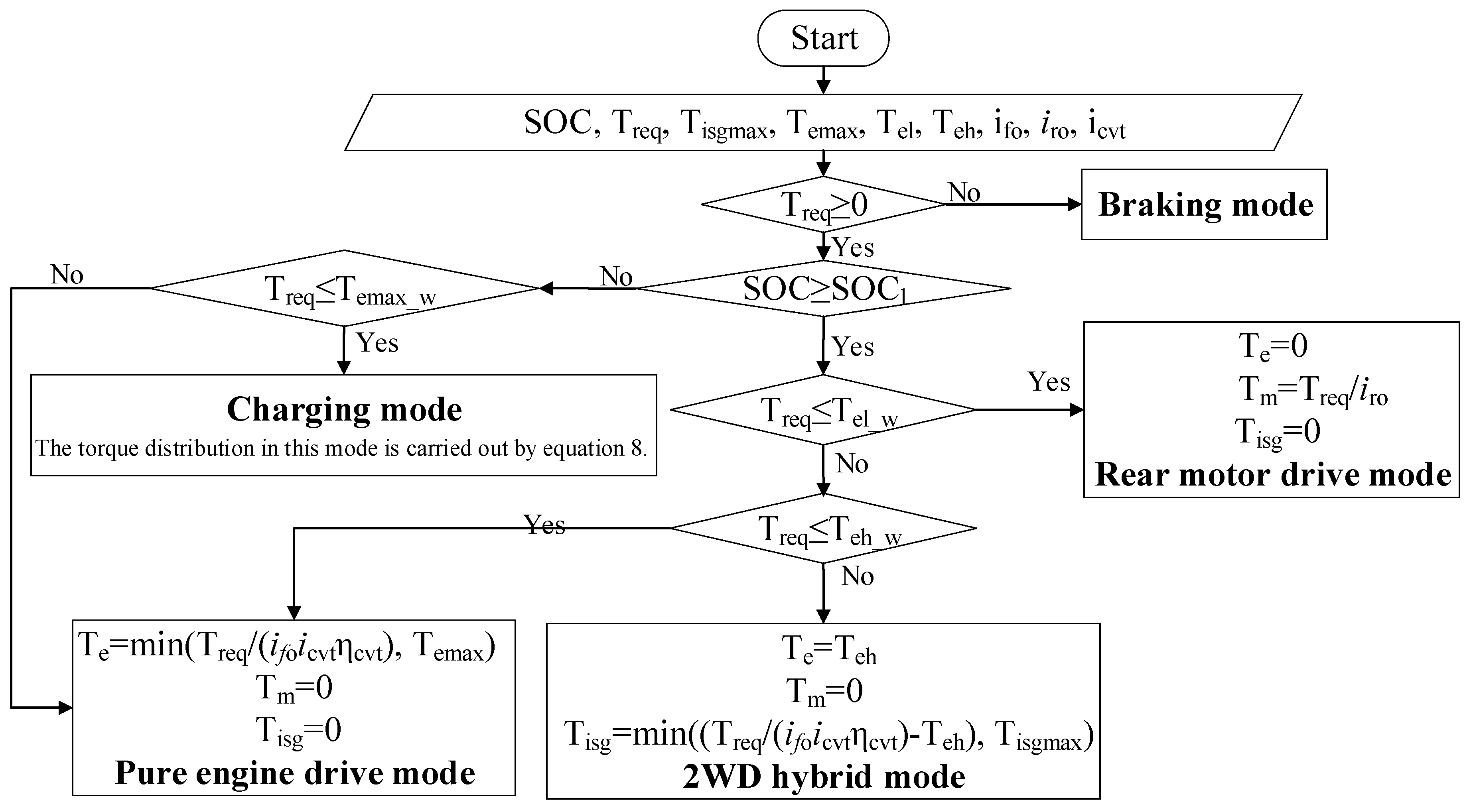
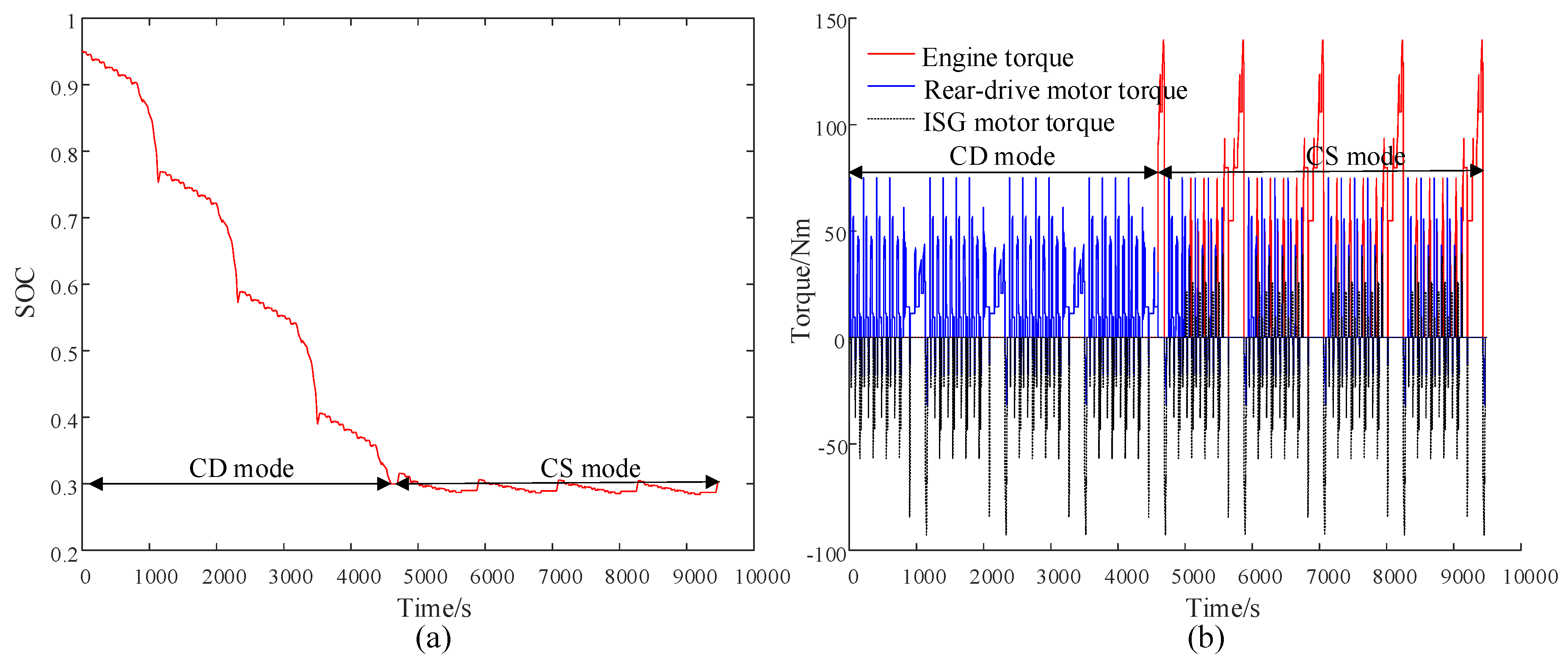
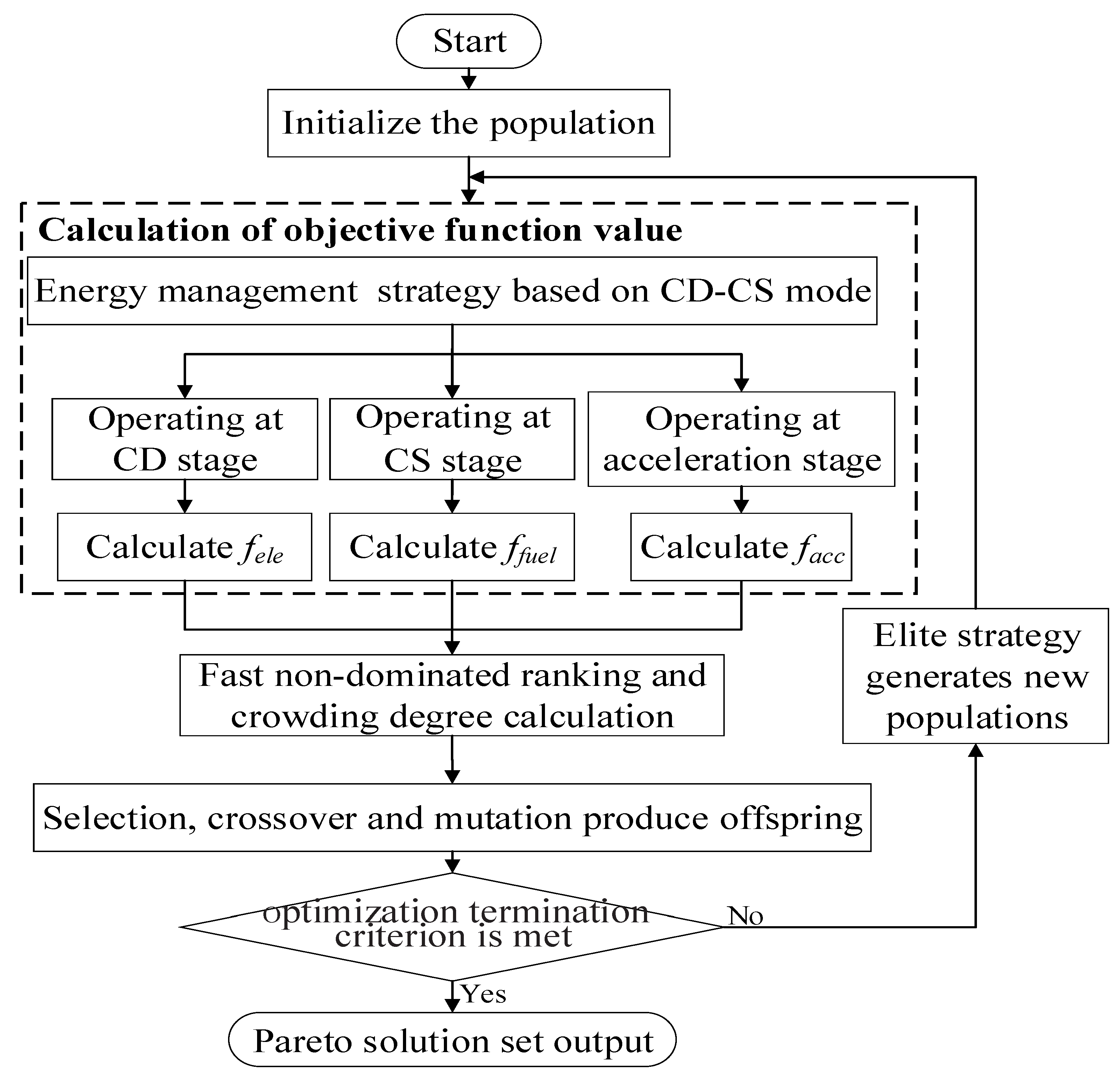
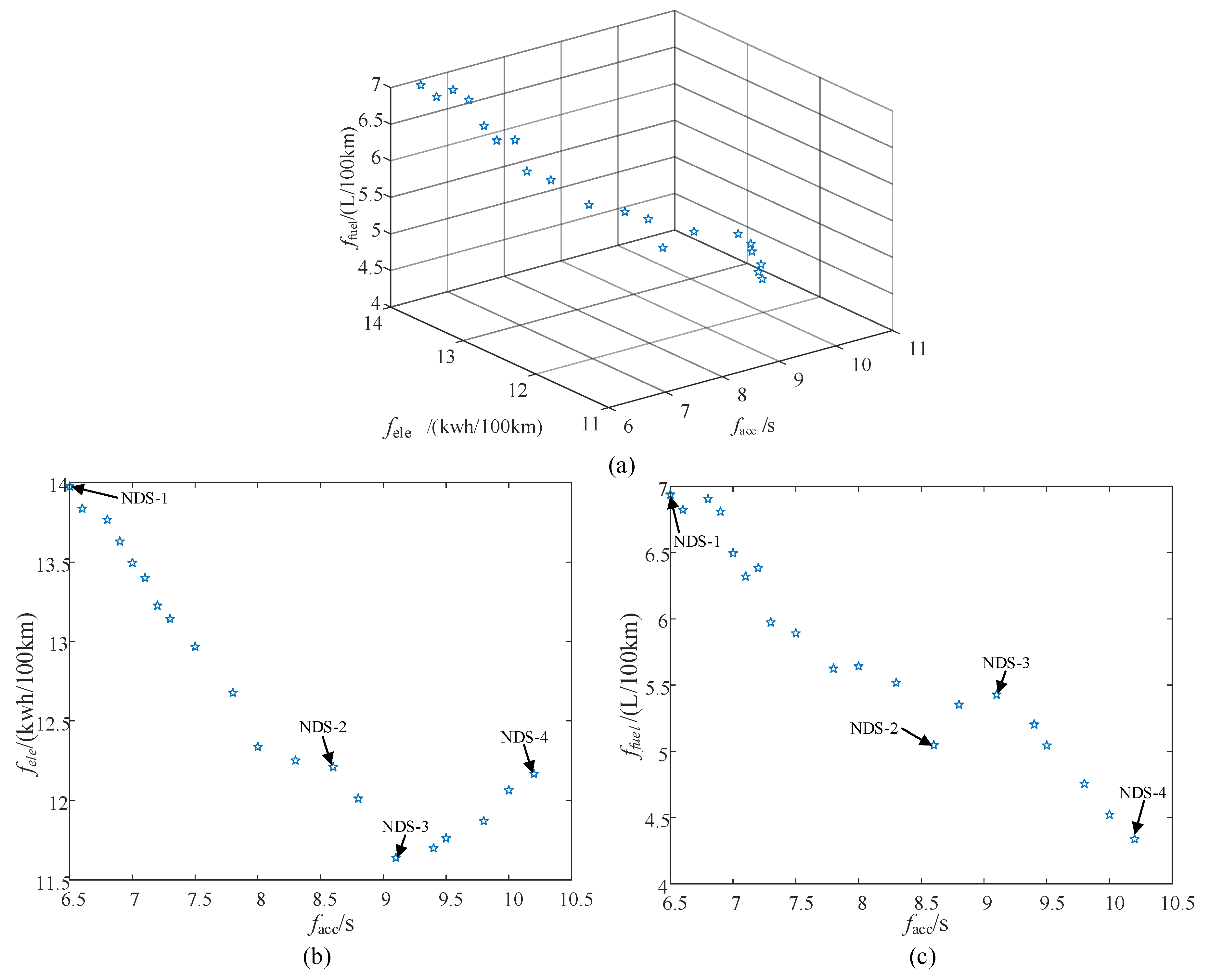
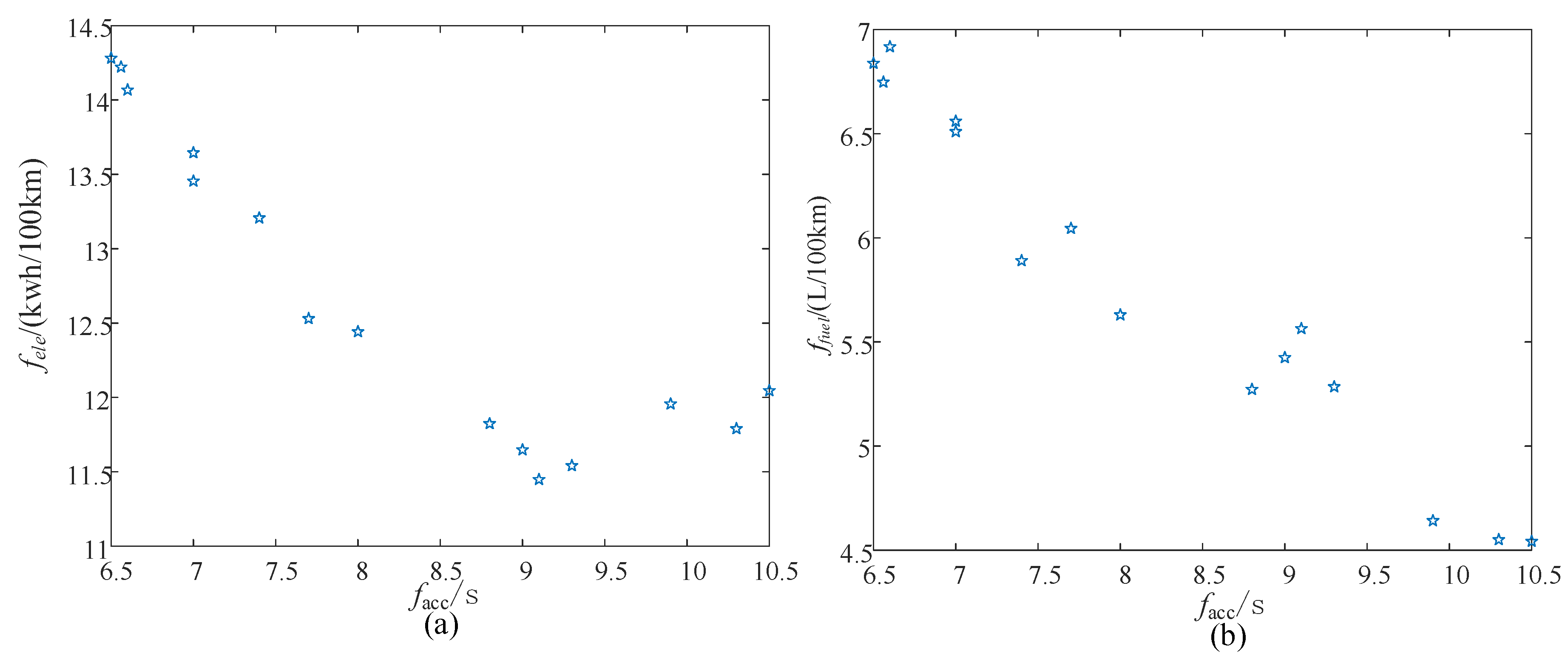
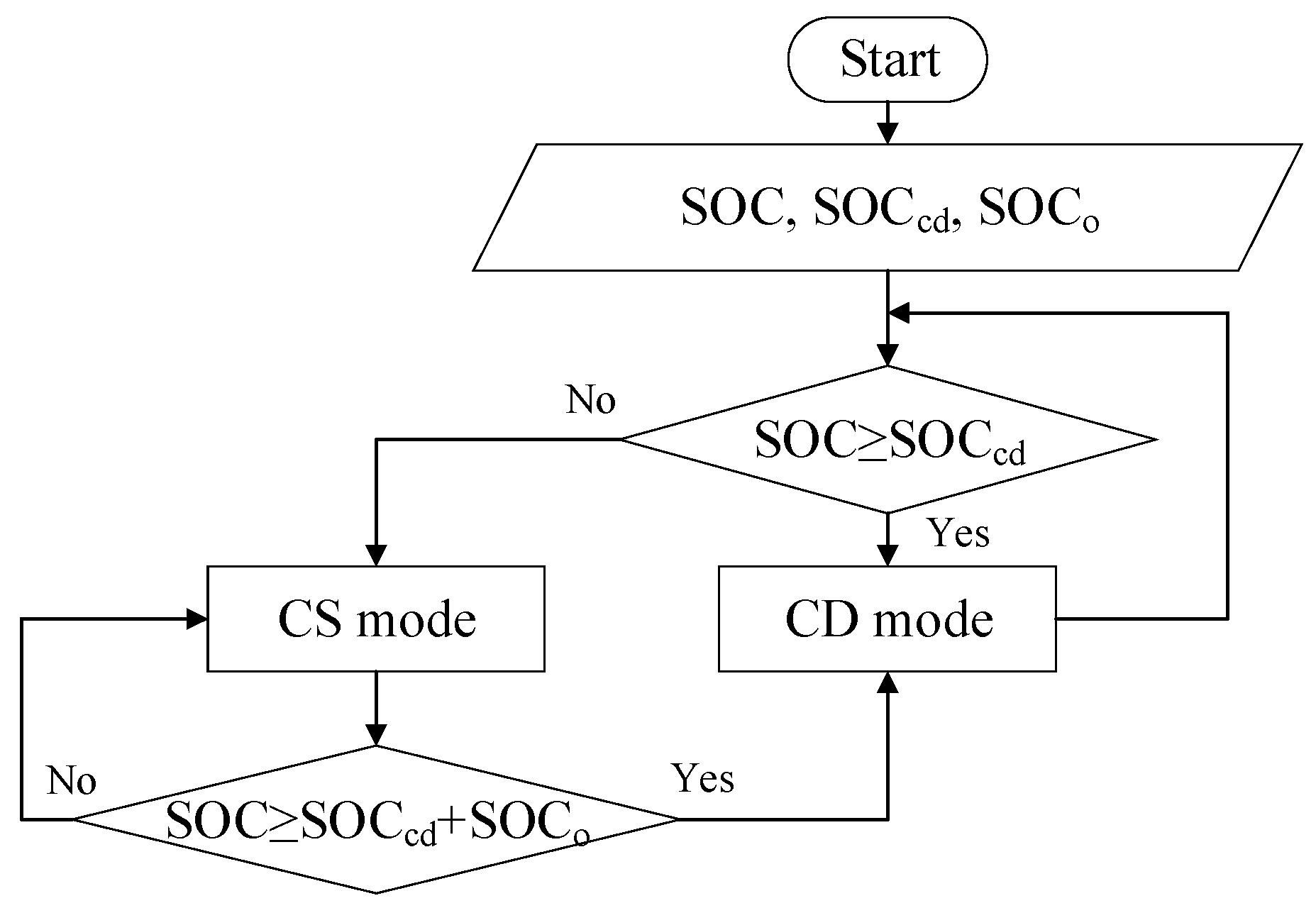
This paper focuses on the parameter optimization for the CVT (a continuously variable transmission) based plug-in 4WD (4-wheel drive) hybrid electric vehicle powertrain. First, the plug-in 4WD hybrid electric vehicle (plug-in 4WD HEV)’s energy management strategy based on the CD (charge depleting) and CS (charge sustain) mode is developed. Then, the multi-objective optimization’s mathematical model, which aims at minimizing the electric energy consumption under the CD stage, the fuel consumption under the CS stage and the acceleration time from 0–120 km/h, is established. Finally, the multi-objective parameter optimization problem is solved using an evolutionary based non-dominated sorting genetic algorithms-II (NSGA-II) approach. Some of the results are compared with the original scheme and the classical weight approach. Compared with the original scheme, the best compromise solution (i.e., electric energy consumption, fuel consumption and acceleration time) obtained using the NSGA-II approach are reduced by 1.21%, 6.18% and 5.49%, respectively. Compared with the weight approach, the Pareto optimal solutions obtained using NSGA-II approach are better distributed over the entire Pareto optimal front, as well as the best compromise solution is also better.
Keywords: plug-in 4WD hybrid electric vehicle; powertrain; electric energy consumption; fuel consumption; acceleration time; multi-objective optimization plug-in 4WD hybrid electric vehicle; powertrain; electric energy consumption; fuel consumption; acceleration time; multi-objective optimization