Article

Hyper-spectral Recovery of Cerebral and Extra-Cerebral Tissue Properties Using Continuous Wave Near-Infrared Spectroscopic Data


by
Joshua Deepak Veesa
* and
Hamid Dehghani
School of Computer Science, University of Birmingham, Birmingham B15 2TT, UK
*
Author to whom correspondence should be addressed.
Appl. Sci. 2019, 9(14), 2836; https://doi.org/10.3390/app9142836
Submission received: 12 June 2019 / Revised: 10 July 2019 / Accepted: 15 July 2019 / Published: 16 July 2019

Abstract

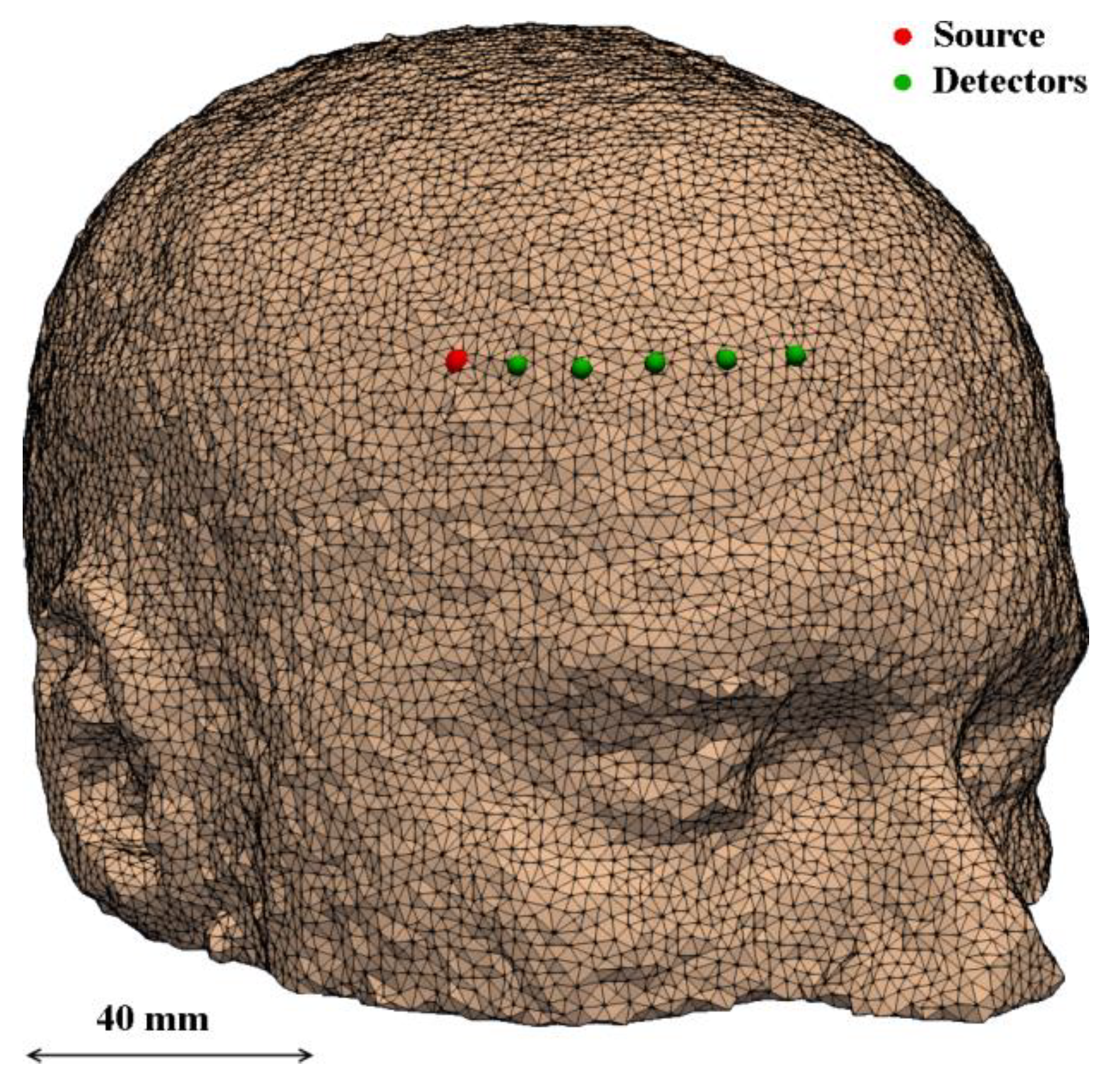
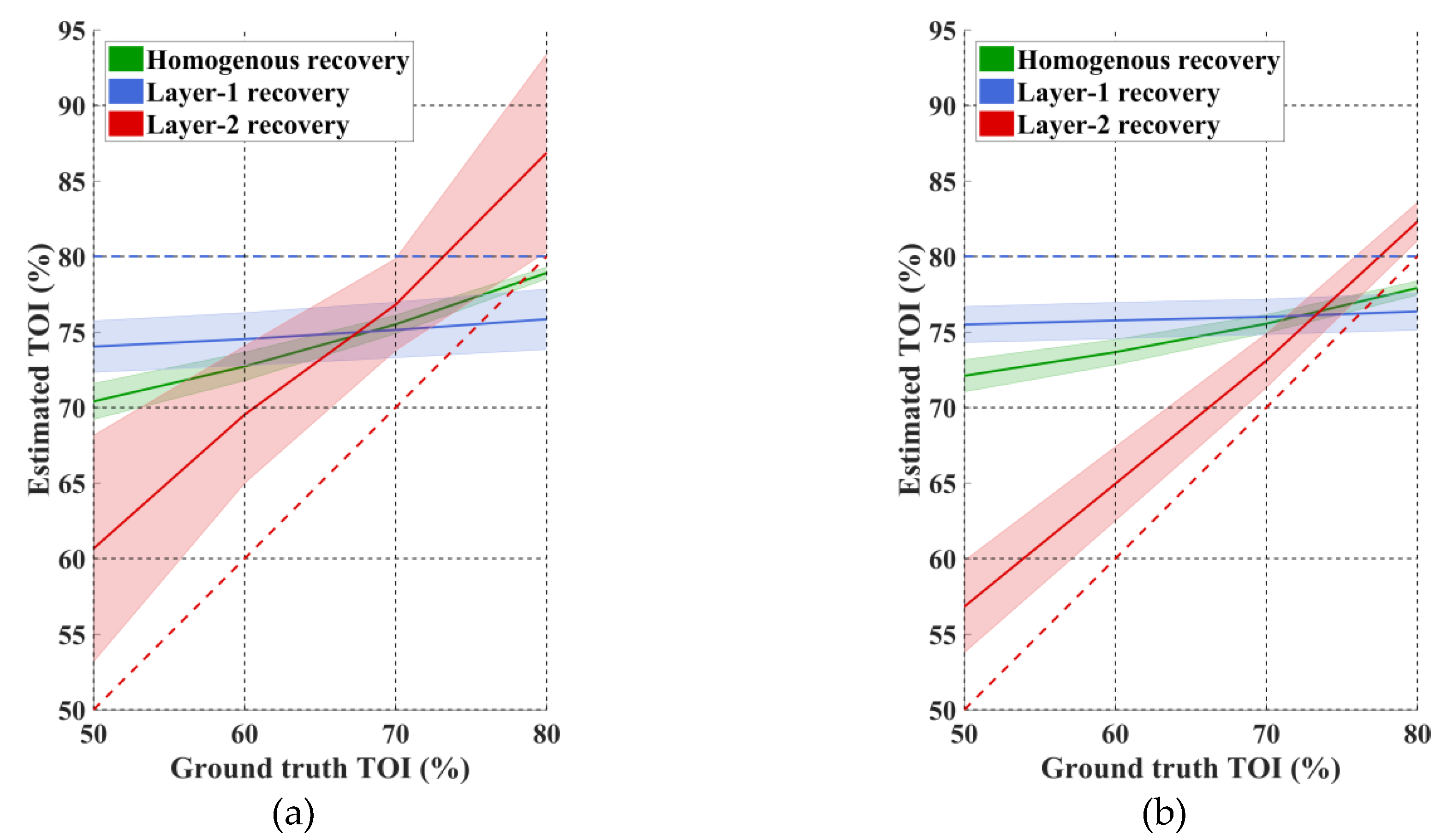
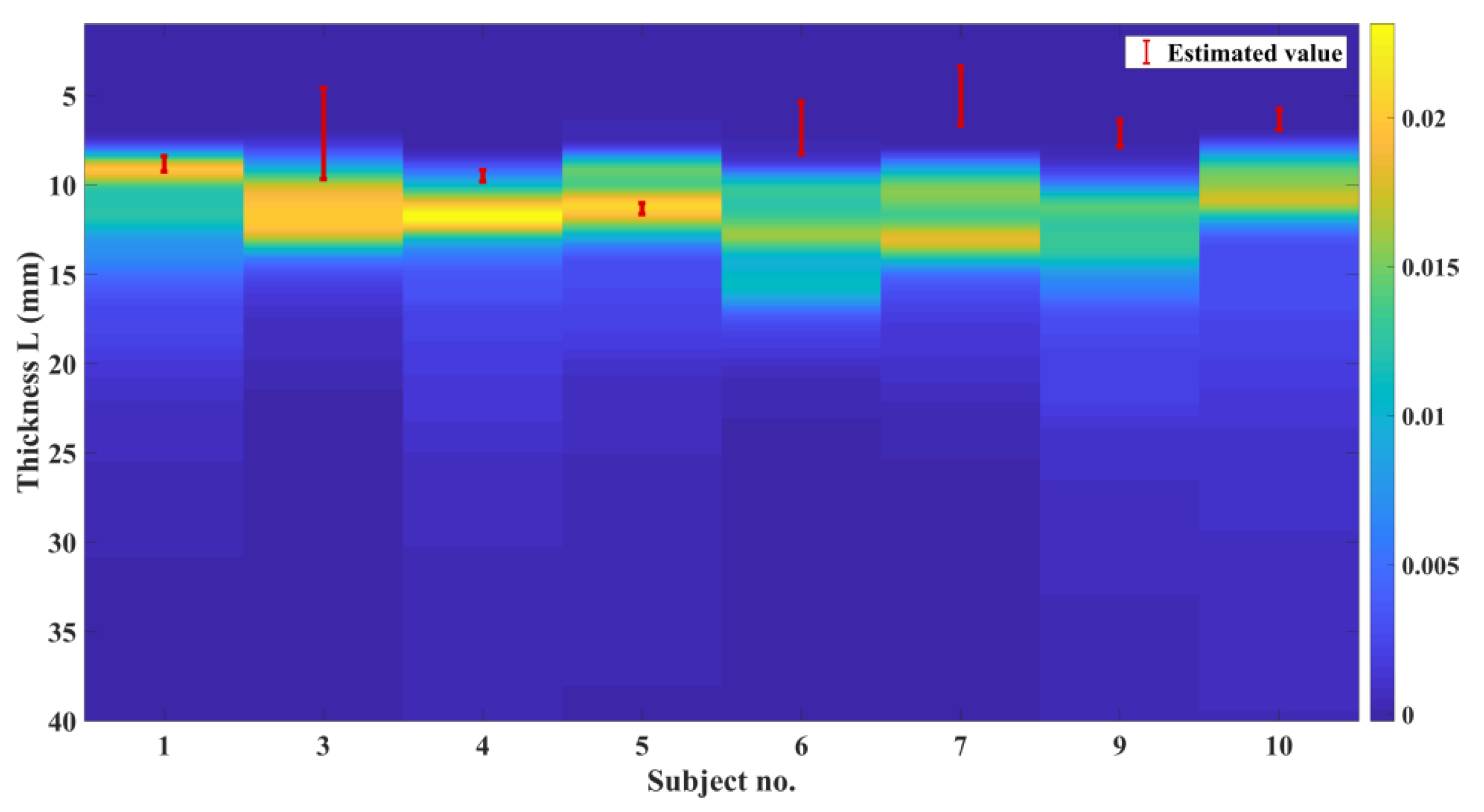
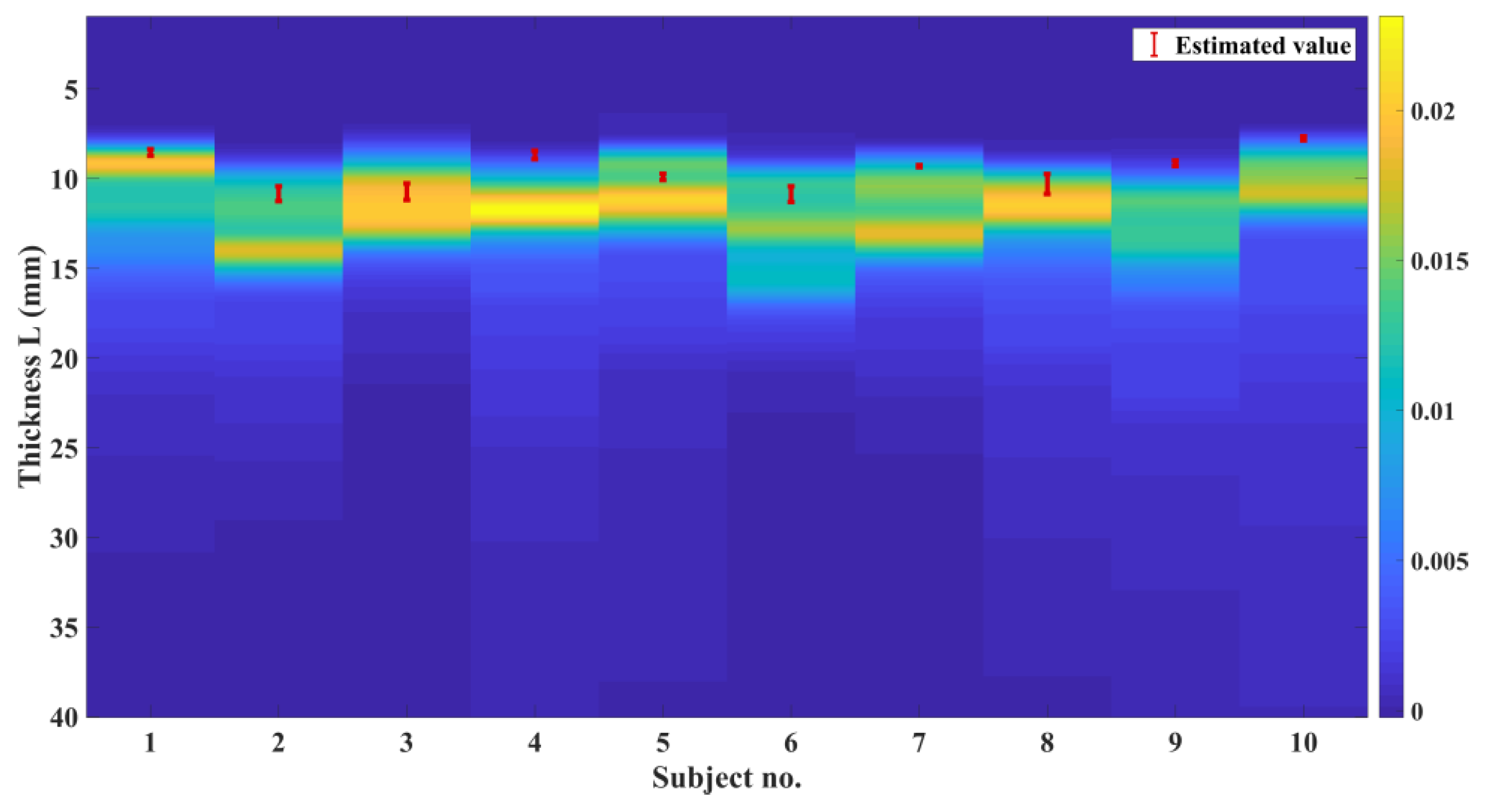
Near-infrared spectroscopy (NIRS) is widely used as a non-invasive method to monitor the hemodynamics of biological tissue. A common approach of NIRS relies on continuous wave (CW) methodology, i.e. utilizing intensity-only measurements, and, in general, assumes homogeneity in the optical properties of the biological tissue. However, in monitoring cerebral hemodynamics within humans, this assumption is not valid due to complex layered structure of the head. The NIRS signal that contains information about cerebral blood hemoglobin levels is also contaminated with extra-cerebral tissue hemodynamics, and any recovery method based on such a priori homogenous approximation would lead to erroneous results. In this work, utilization of hyper-spectral intensity only measurements (i.e., CW) at multiple distances are presented and are shown to recover two-layered tissue properties along with the thickness of top layer, using an analytical solution for a two-layered semi-infinite geometry. It is demonstrated that the recovery of tissue oxygenation index (TOI) of both layers can be achieved with an error of 4.4%, with the recovered tissue thickness of 4% error. When the data is measured on a complex tissue such as the human head, it is shown that the semi-infinite recovery model can lead to uncertain results, whereas, when using an appropriate model accounting for the tissue-boundary structure, the tissue oxygenation levels are recovered with an error of 4.2%, and the extra-cerebral tissue thickness with an error of 11.8%. The algorithm is finally used together with human subject data, demonstrating robustness in application and repeatability in the recovered parameters that adhere well to expected published parameters.
Keywords: Near-infrared spectroscopy; tissue optics; superficial layer contamination; Hyperspectral spectroscopy Near-infrared spectroscopy; tissue optics; superficial layer contamination; Hyperspectral spectroscopy