Article

A Self-Consistent Quantum Field Theory for Random Lasing


by
Andreas Lubatsch
1,2,† and
Regine Frank
1,3,*,†
1
Physikalisches Institut, Rheinische Friedrich-Wilhelms Universität Bonn, Wegelerstr. 8, 53115 Bonn, Germany
2
Georg-Simon-Ohm University of Applied Sciences, Keßlerplatz 12, 90489 Nürnberg, Germany
3
Serin Physics Laboratory, Department of Physics and Astronomy, Rutgers University, 136 Frelinghuysen Road, Piscataway, NJ 08854-8019, USA
*
Author to whom correspondence should be addressed.
These authors contributed equally to this work.
Appl. Sci. 2019, 9(12), 2477; https://doi.org/10.3390/app9122477
Submission received: 4 April 2019 / Revised: 7 June 2019 / Accepted: 8 June 2019 / Published: 18 June 2019
(This article belongs to the Special Issue Recent Advances in Statistical Optics and Plasmonics)

Abstract

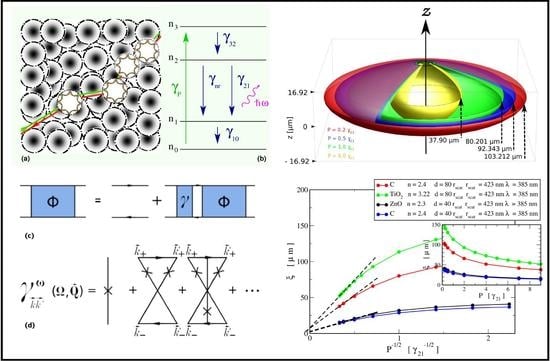
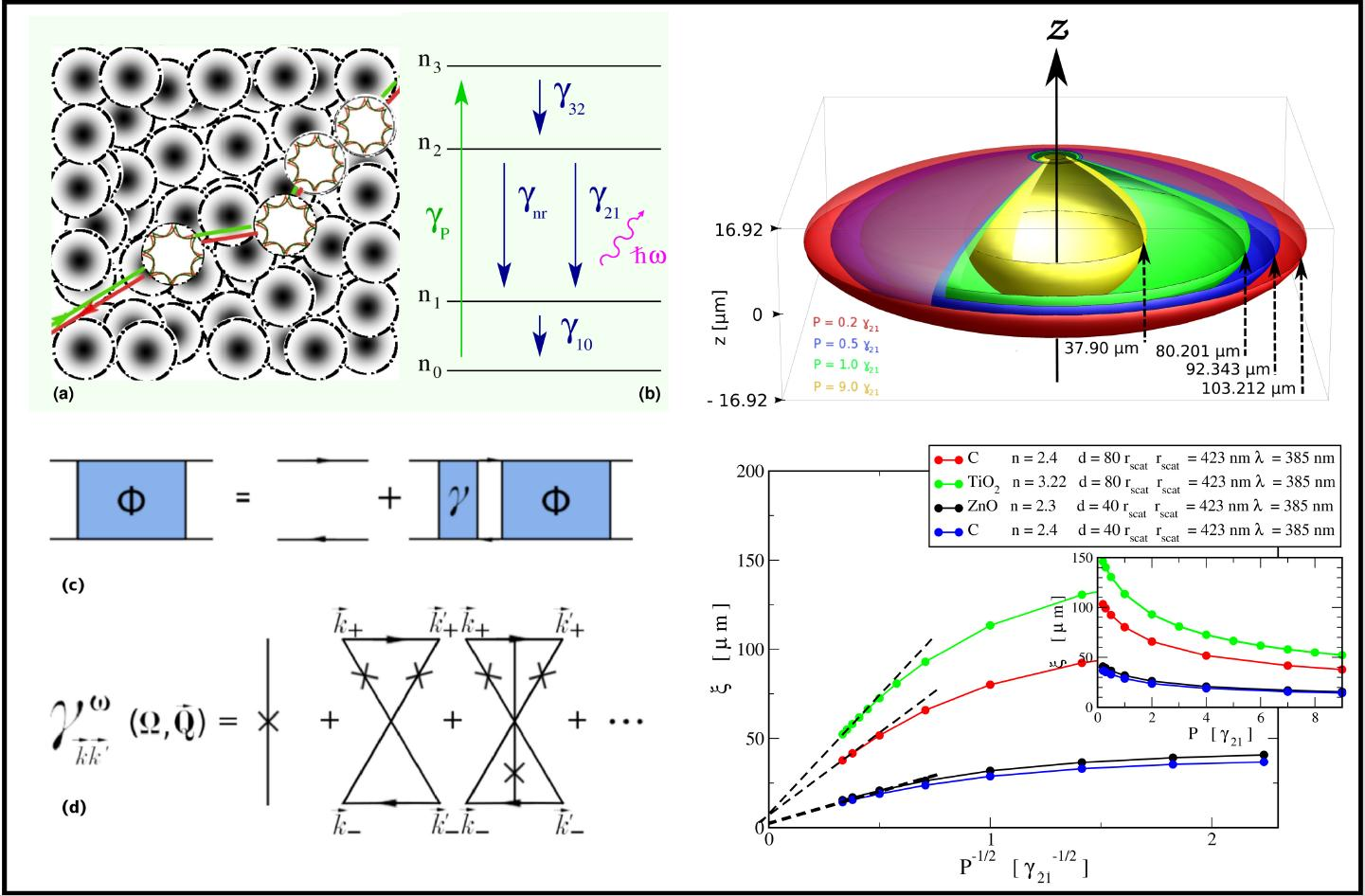
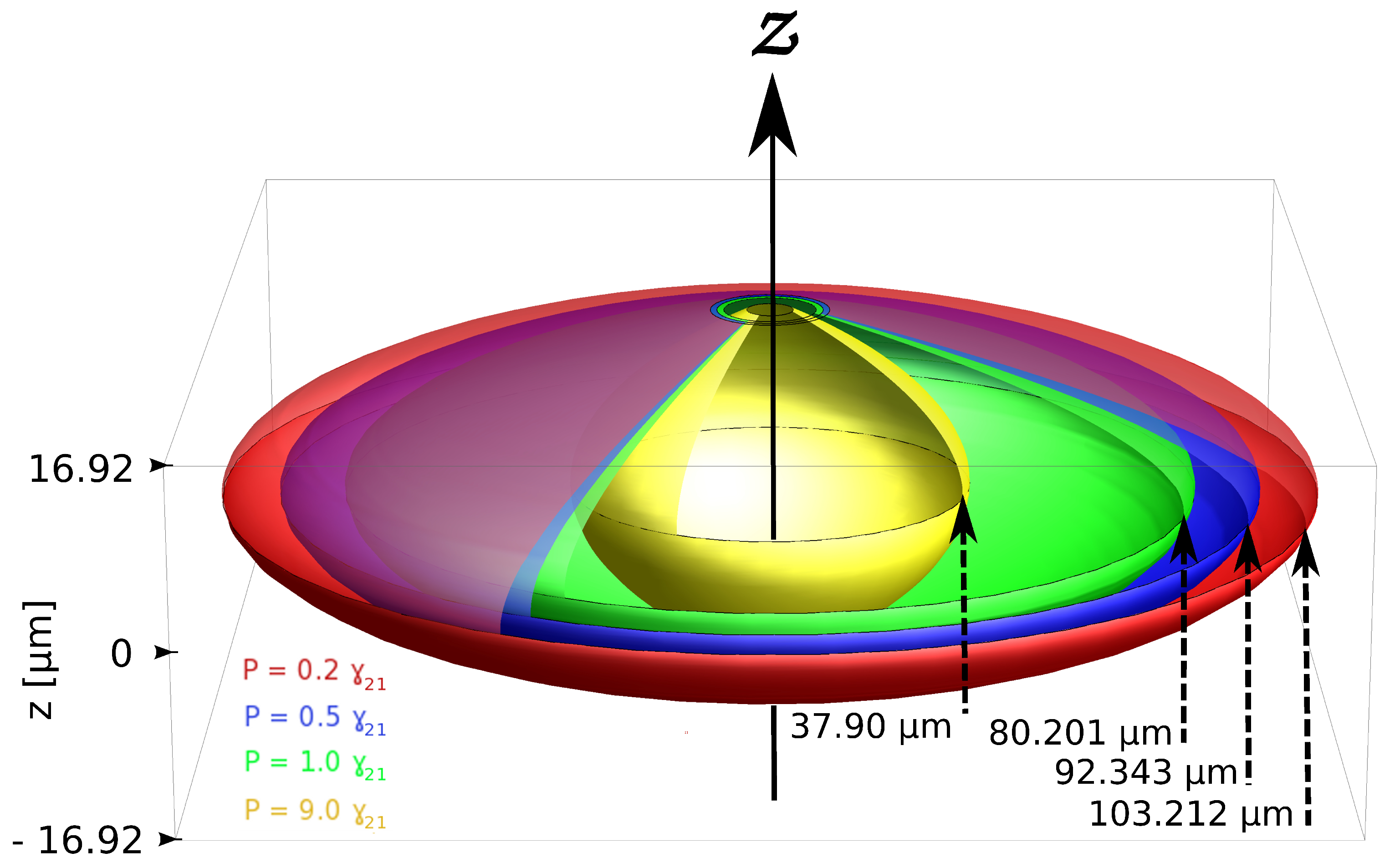
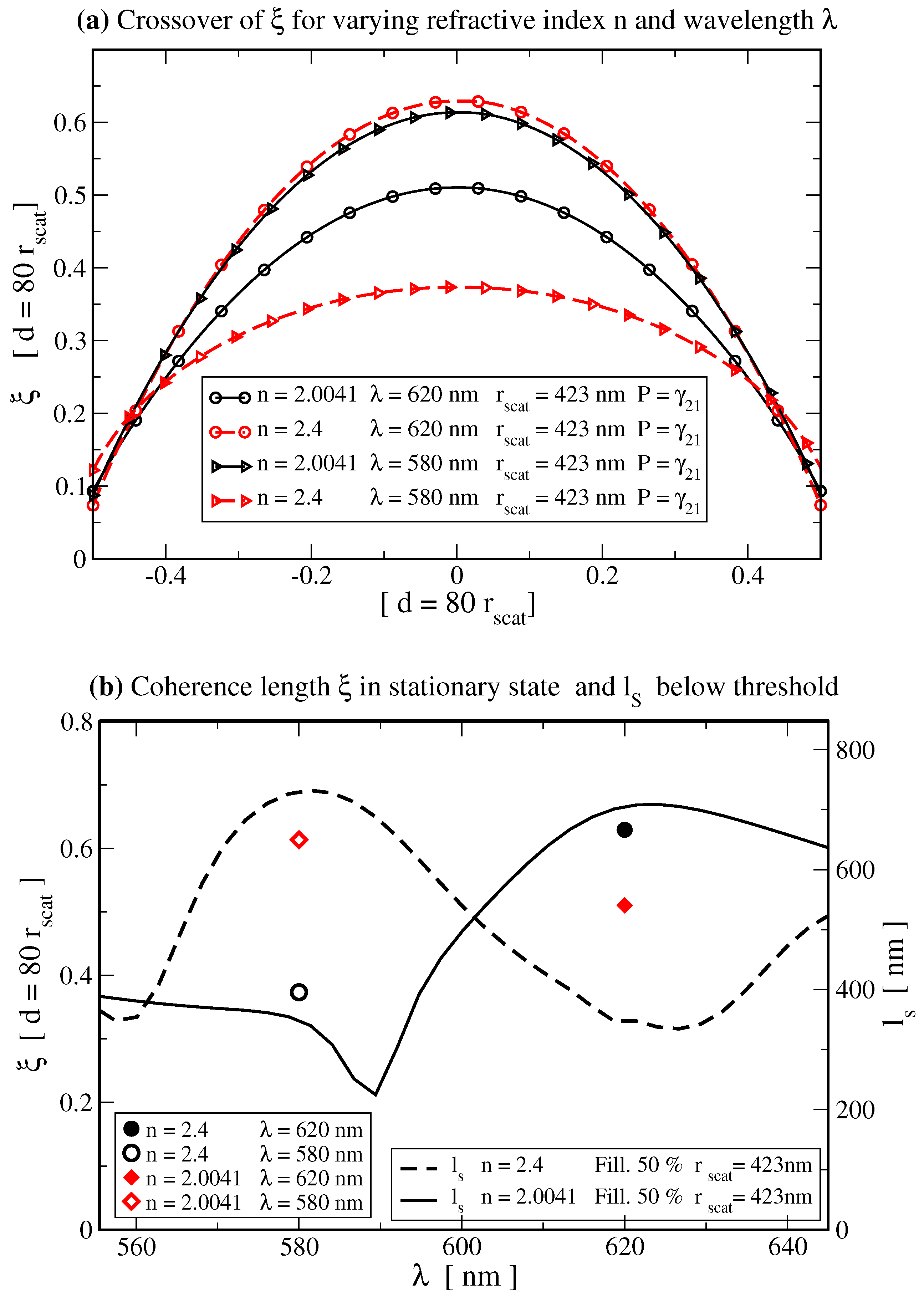
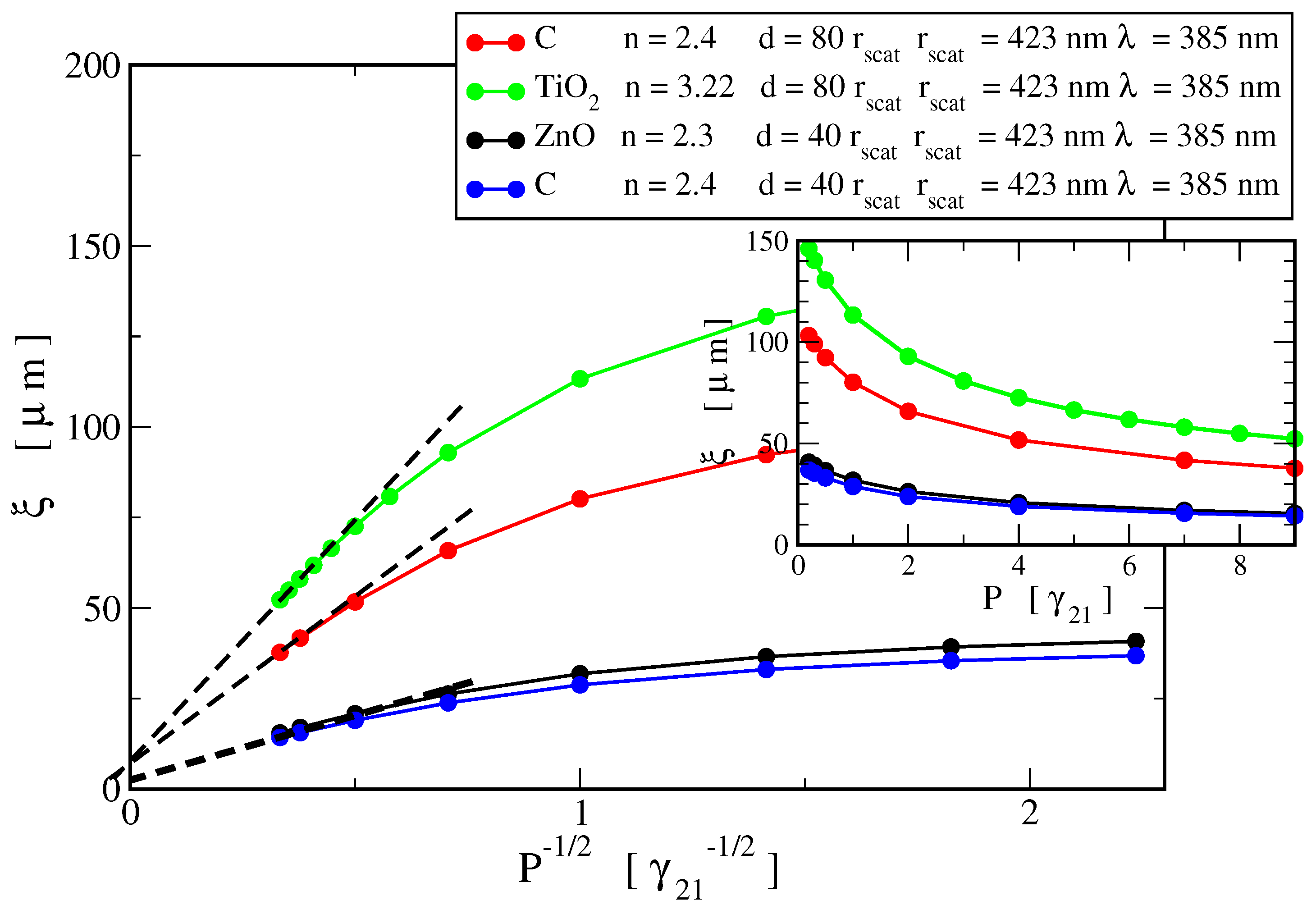
The spatial formation of coherent random laser modes in strongly scattering disordered random media is a central feature in the understanding of the physics of random lasers. We derive a quantum field theoretical method for random lasing in disordered samples of complex amplifying Mie resonators which is able to provide self-consistently and free of any fit parameter the full set of transport characteristics at and above the laser phase transition. The coherence length and the correlation volume respectively is derived as an experimentally measurable scale of the phase transition at the laser threshold. We find that the process of stimulated emission in extended disordered arrangements of active Mie resonators is ultimately connected to time-reversal symmetric multiple scattering in the sense of photonic transport while the diffusion coefficient is finite. A power law is found for the random laser mode diameters in stationary state with increasing pump intensity.
Keywords: multiple scattering; random laser; quantum field theory; Mie resonance multiple scattering; random laser; quantum field theory; Mie resonance
Graphical Abstract