Fast Path Planning for Autonomous Ships in Restricted Waters


Abstract
1. Introduction
- Fast path planning in restricted waters where both static obstacles with arbitrary shapes and dynamic TSs exist.
- The potential to acquire safe and optimal trajectories by compositing with other offline path planning methods so long as suitable waypoints are chosen in static environments.
- Constructing a simple and exact APF environment model for static obstacles with arbitrary shapes through implicit functions. The corresponding clearance to these obstacles can be easily configured by adjusting a parameter of this method according to the risk level. This achievement is an important step forward for the application of the CA algorithm in ECDIS (electronic chart display information systems).
- The PGHAPF method shows the potential to overcome the main limitations of APF methods: local minima and GNRON problem.
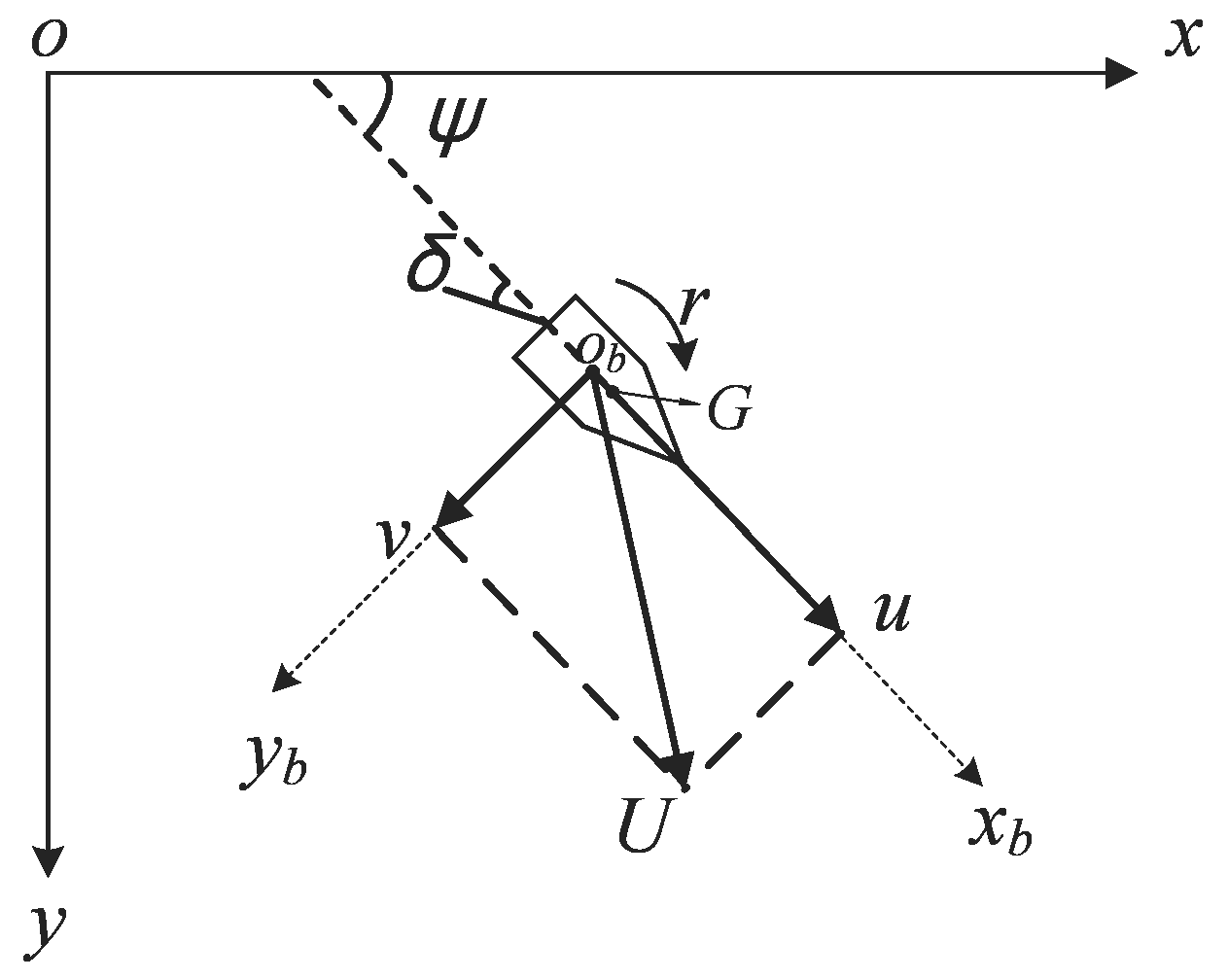
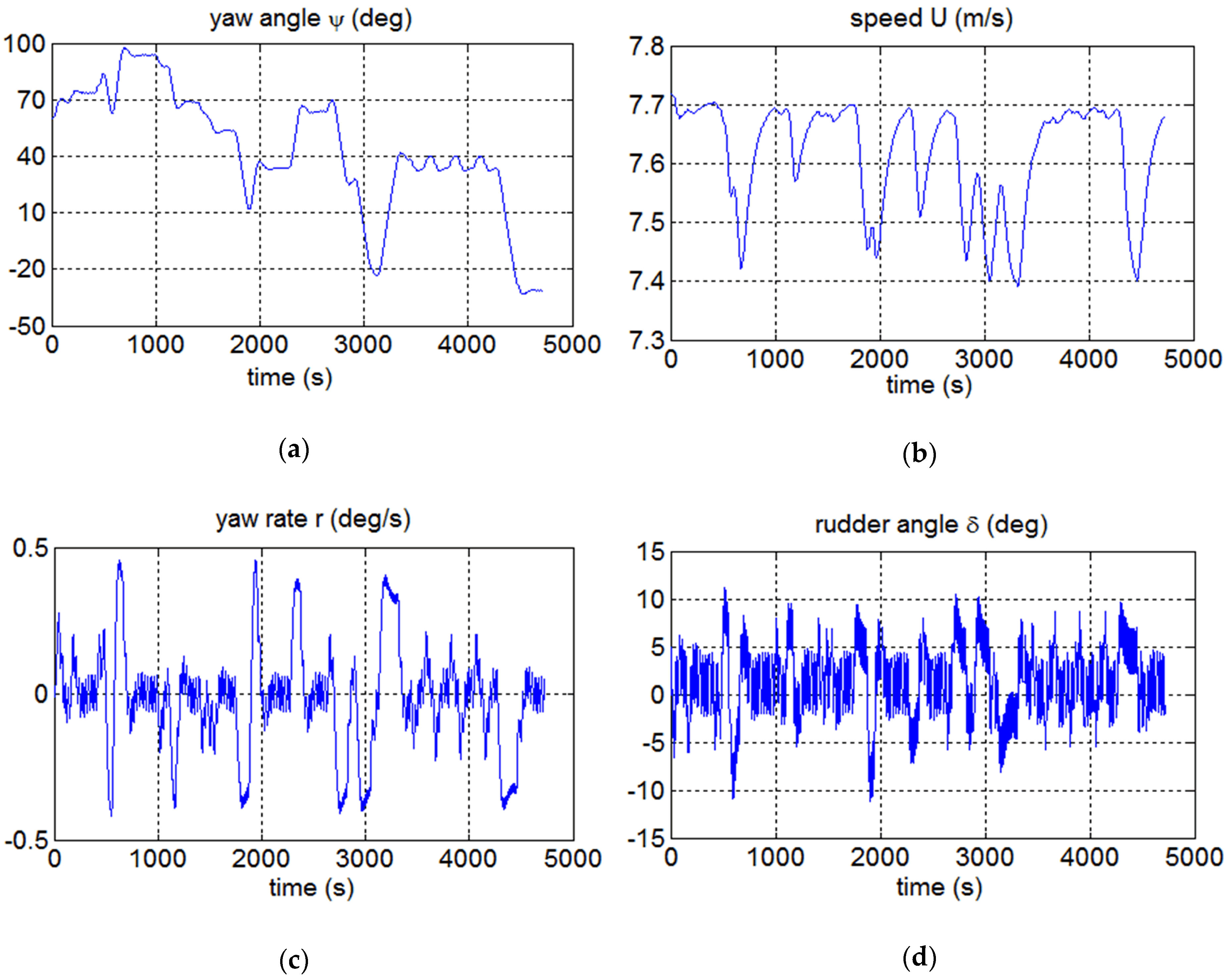
- The trajectory is calculated based on a three-degree-of-freedom Mariner class ship, which provides a more practical solution.
2. Materials and Methods
2.1. Environment Modeling
2.1.1. Static Environment Modeling
2.1.2. Ship Dynamic Properties Modeling
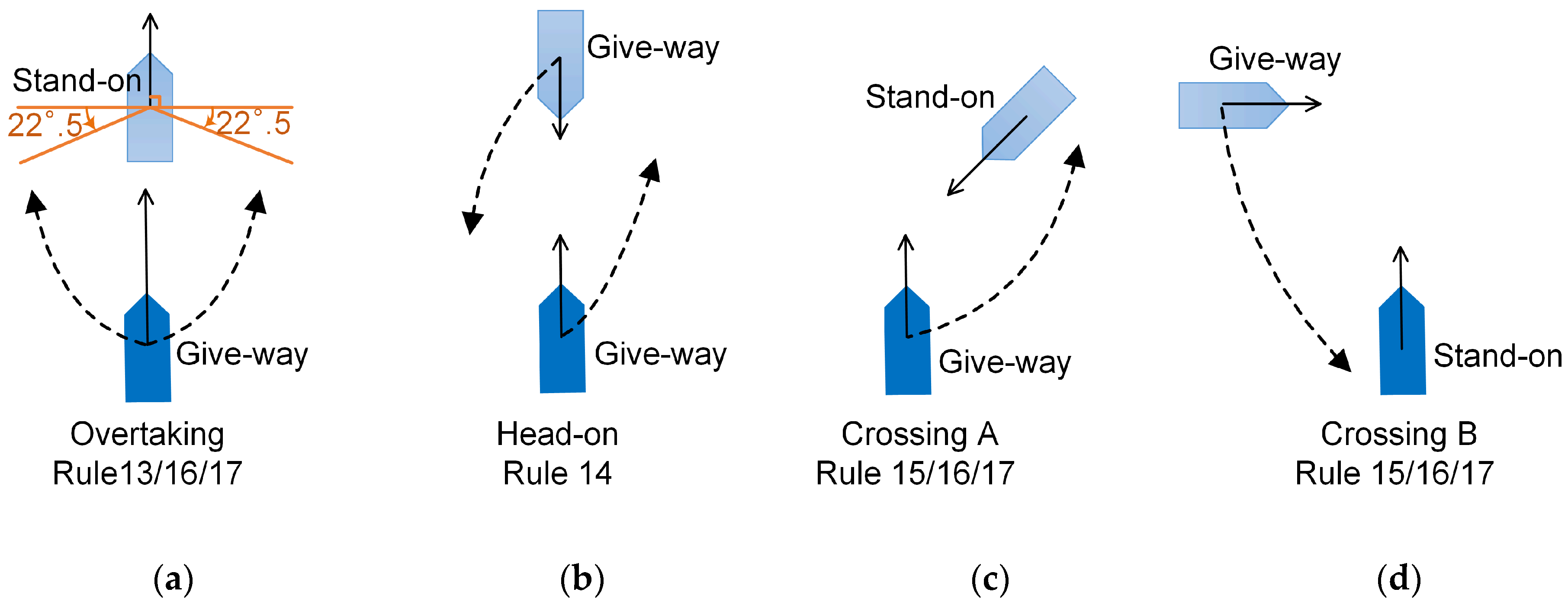
2.2. Requirements of International Regulations for Preventing Collisions at Sea (COLREGS)
2.3. Path Planning Methods
2.3.1. Offline Path Planning for Static Obstacles
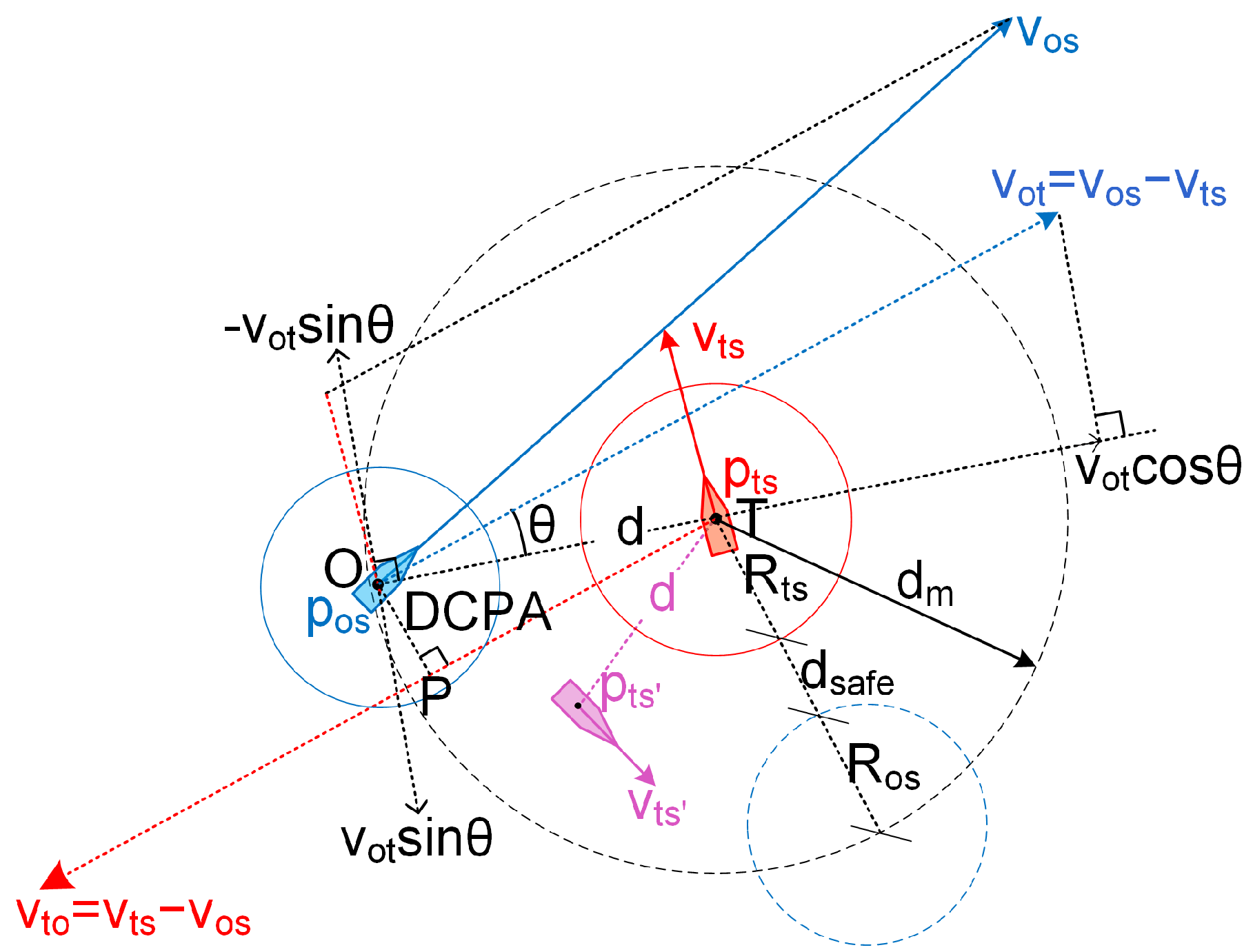
2.3.2. Online Path Planning in Dynamic Environment
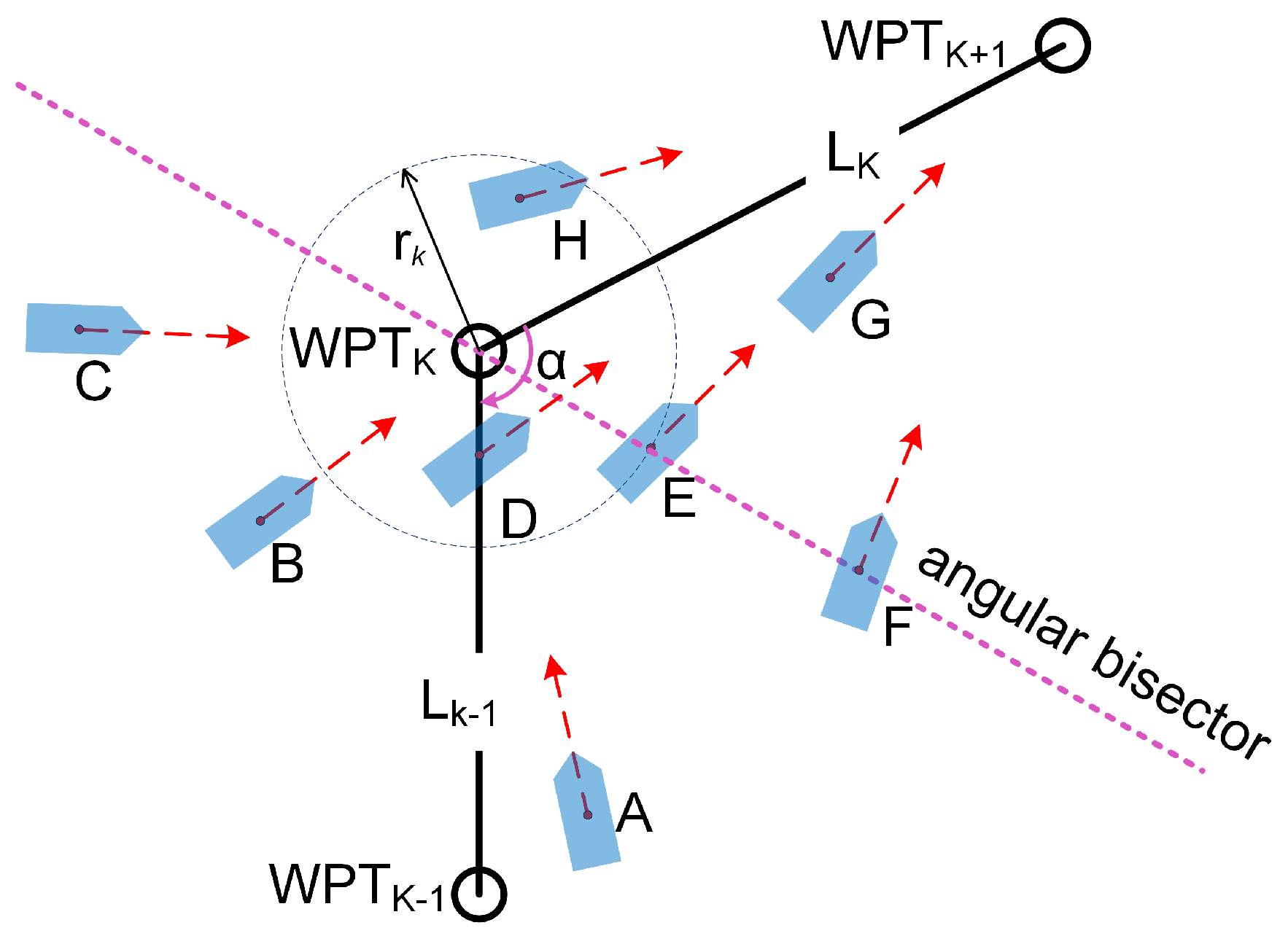
2.3.3. Path-Guided Hybrid Artificial Potential Field (PGHAPF) Method
3. Results
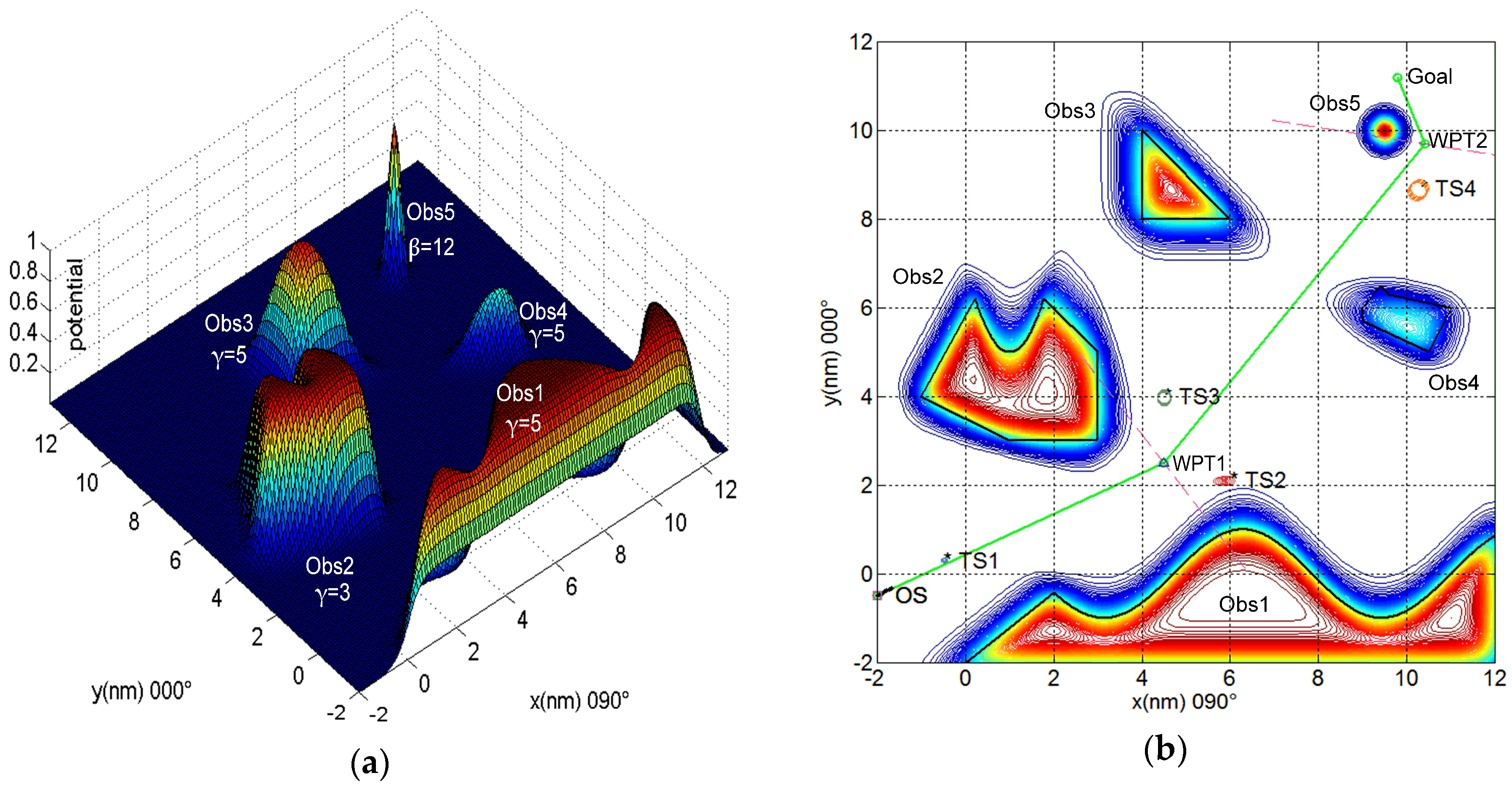
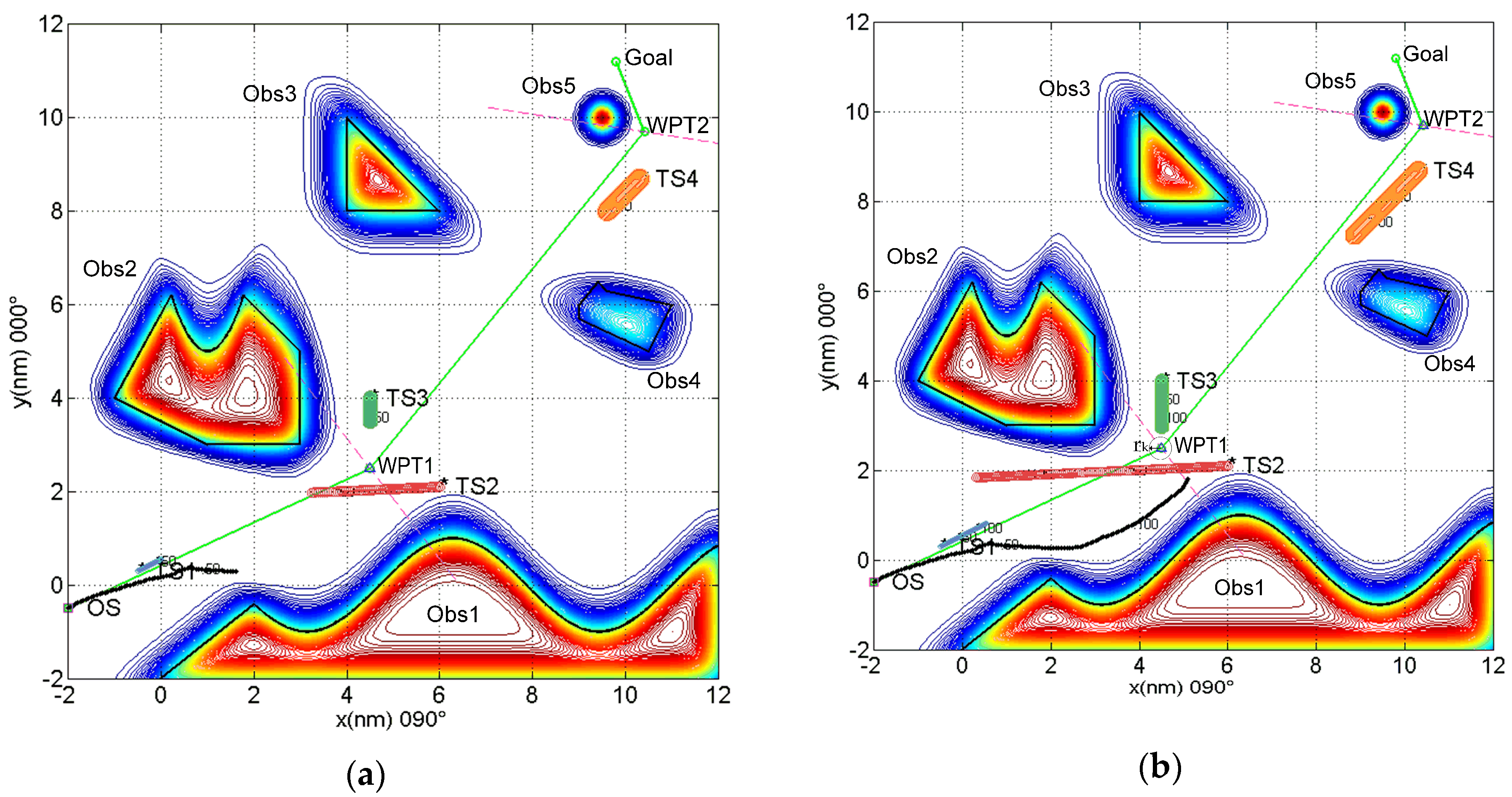
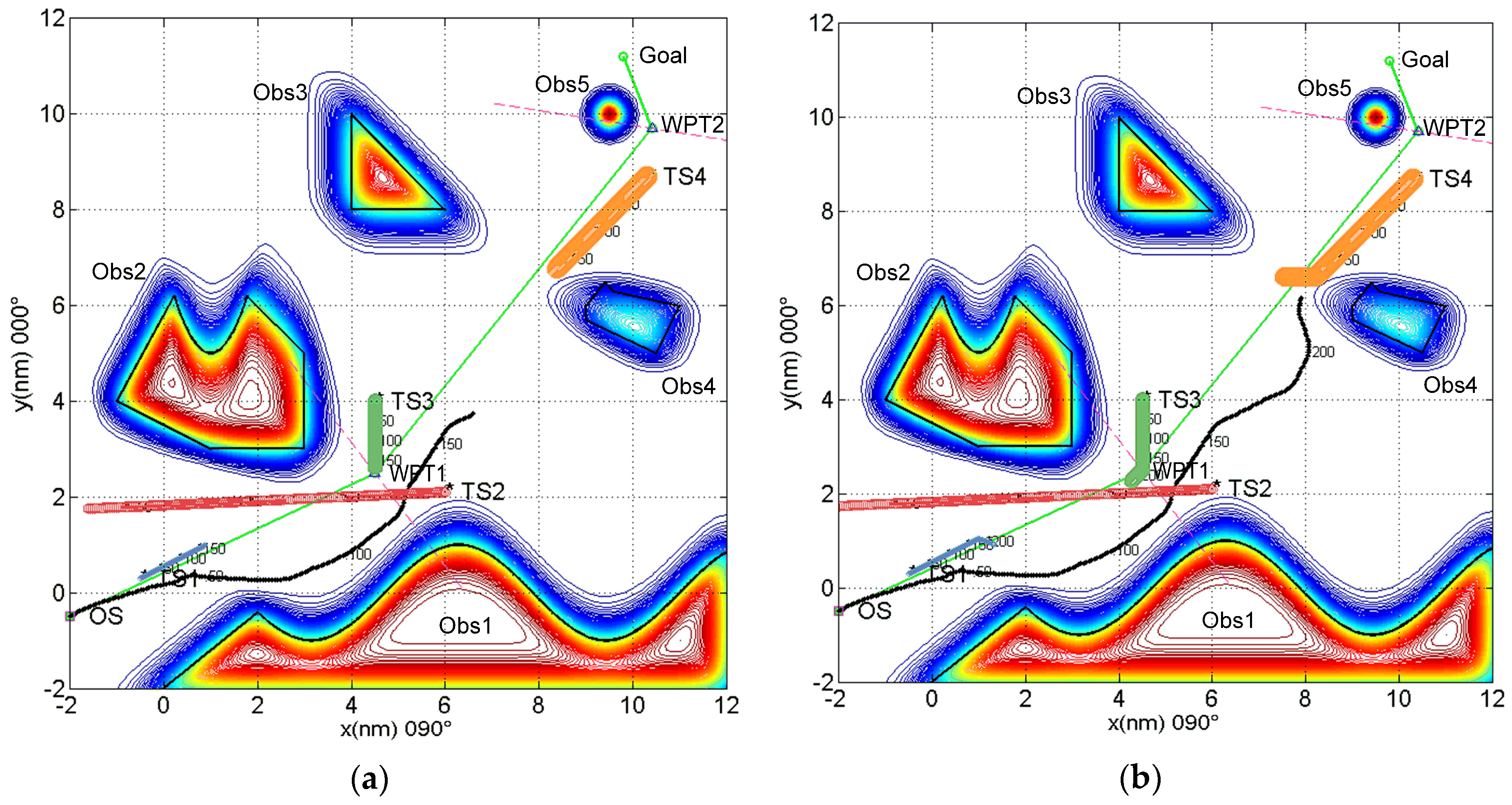
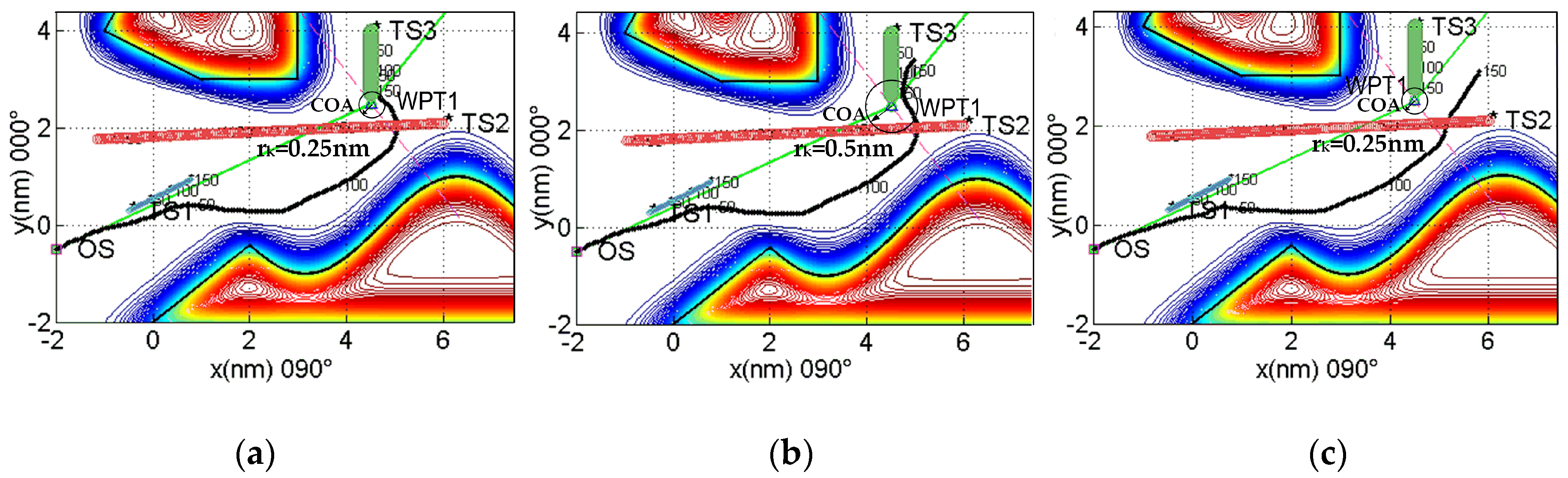
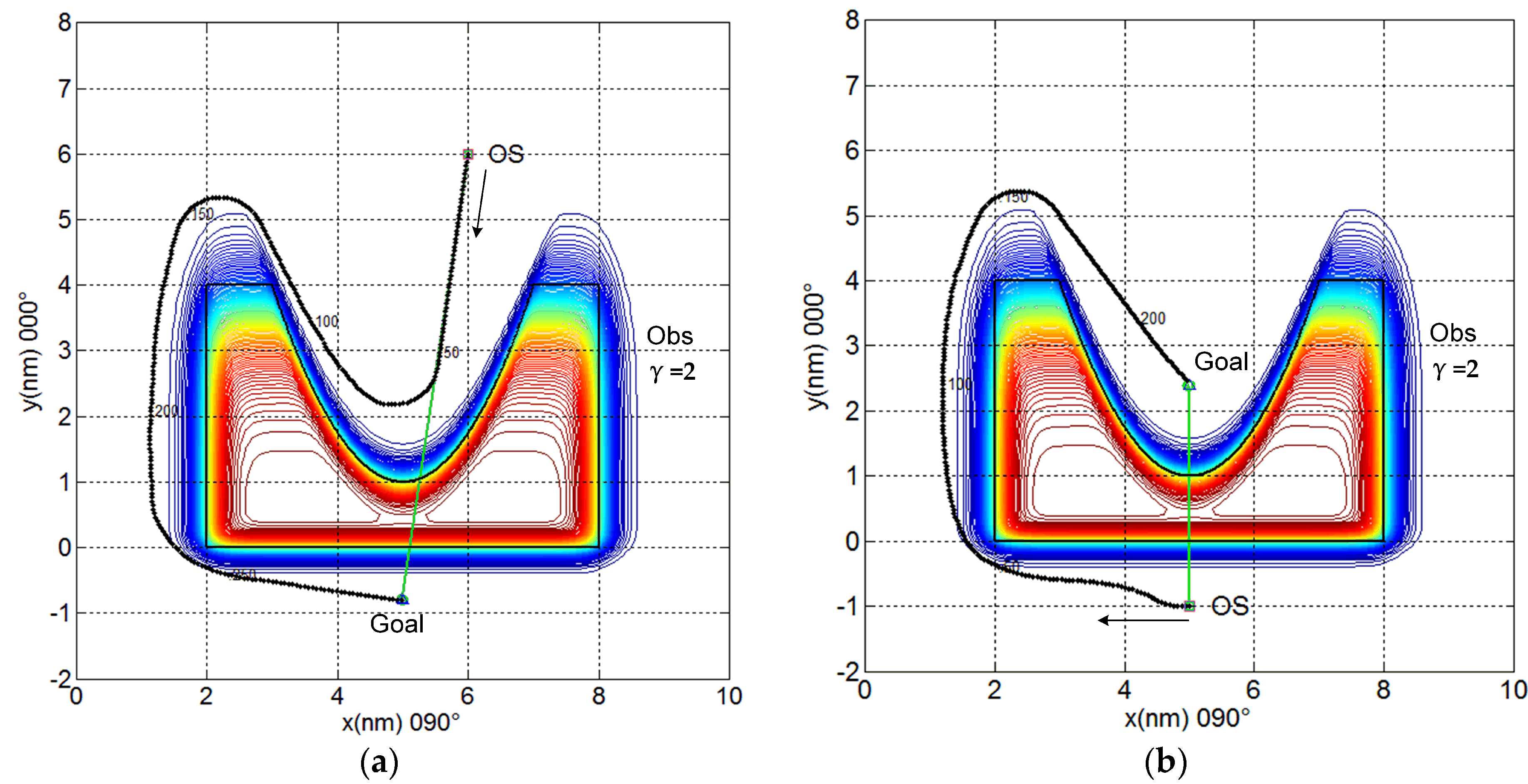
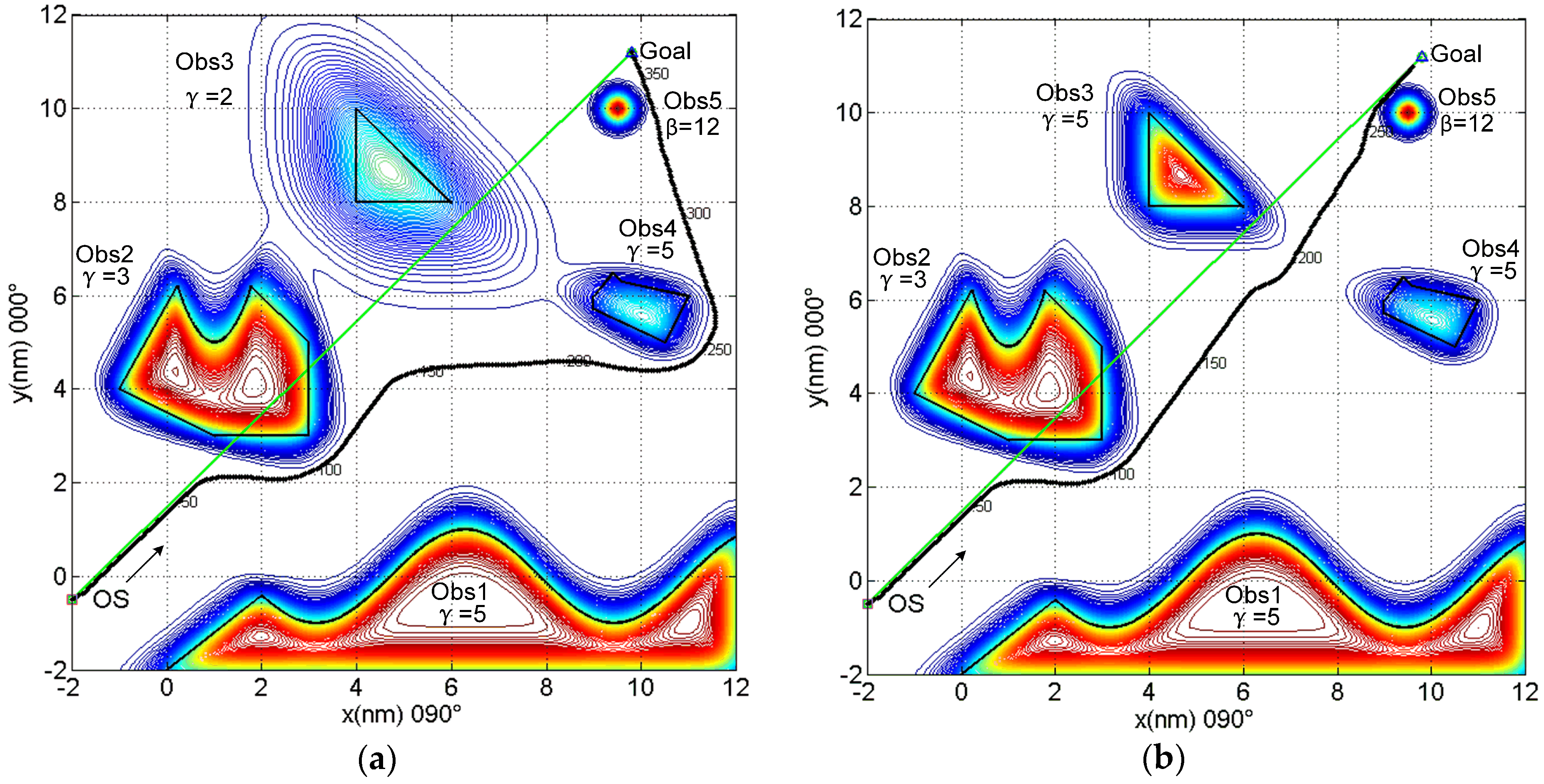
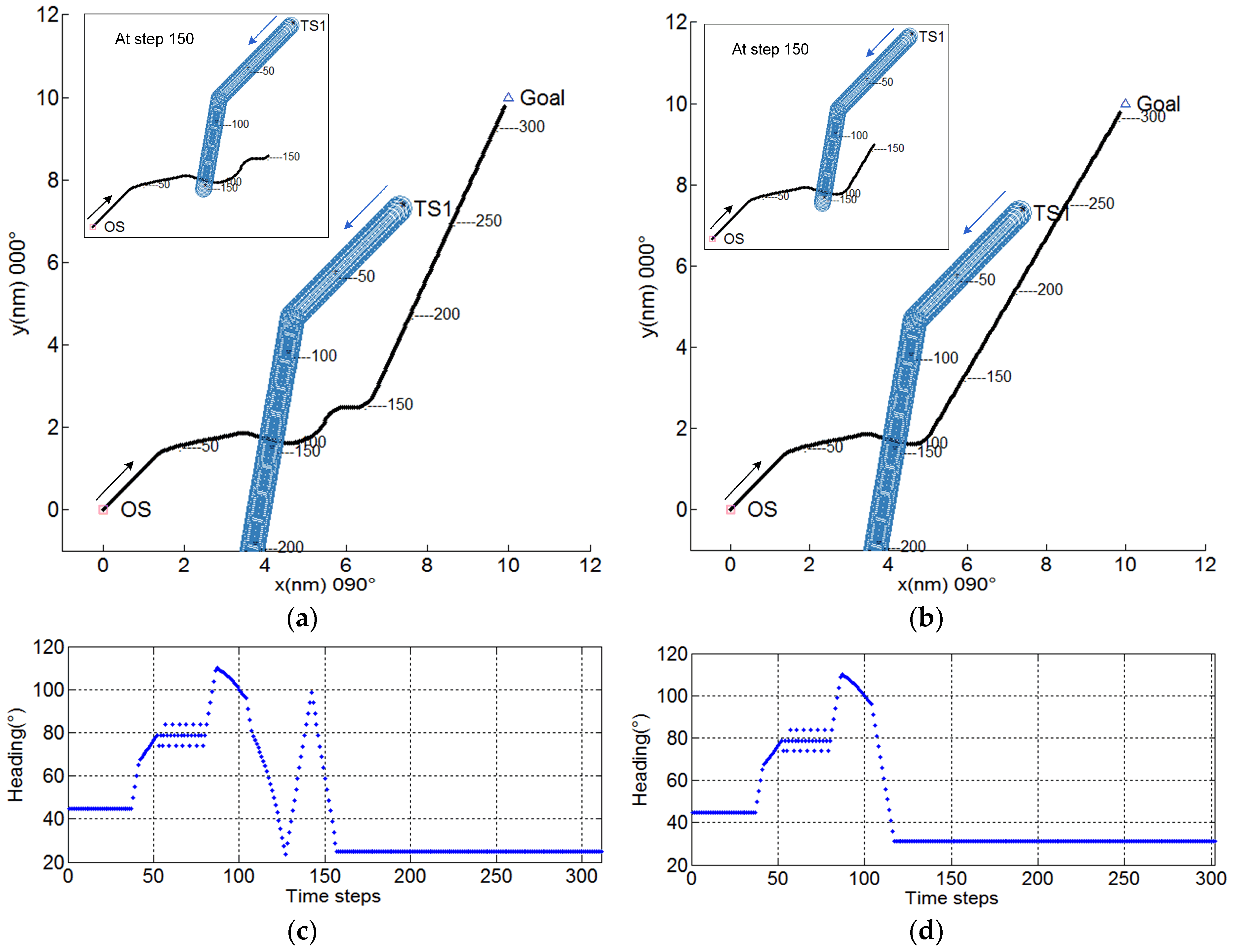
- The black dotted line with the red box as the starting point and the blue triangle as the endpoint is the resulting trajectory of the own ship, and the green line is the prior path of the own ship, which may be short but not necessarily safe.
- To illustrate the CA actions with dynamic TSs, the own ship heading at every time step is plotted with a blue dot, which makes it easy to find the course alteration points.
- The paths of multiple TSs are identified by corresponding TS numbers and different colors.
- The range (scope 0~6 nm) between the own ship and any TS at each time step is chosen to display in various colors.
- The paths of the own ship and all TSs are labeled at regular intervals of 50 time steps.
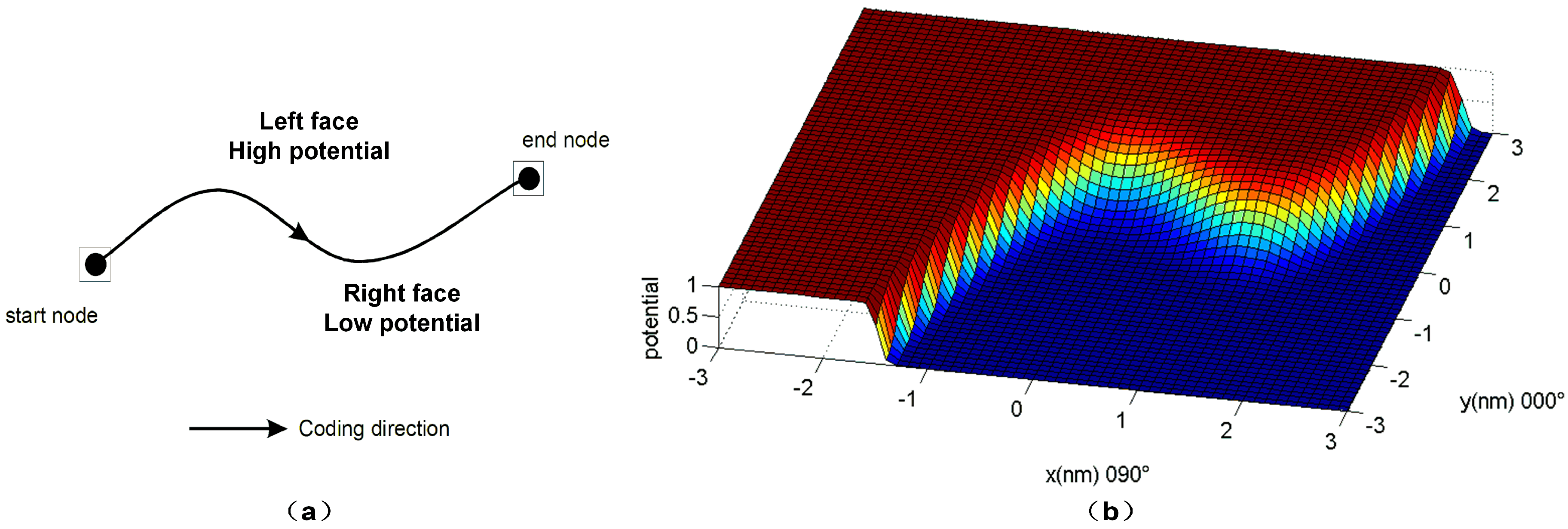
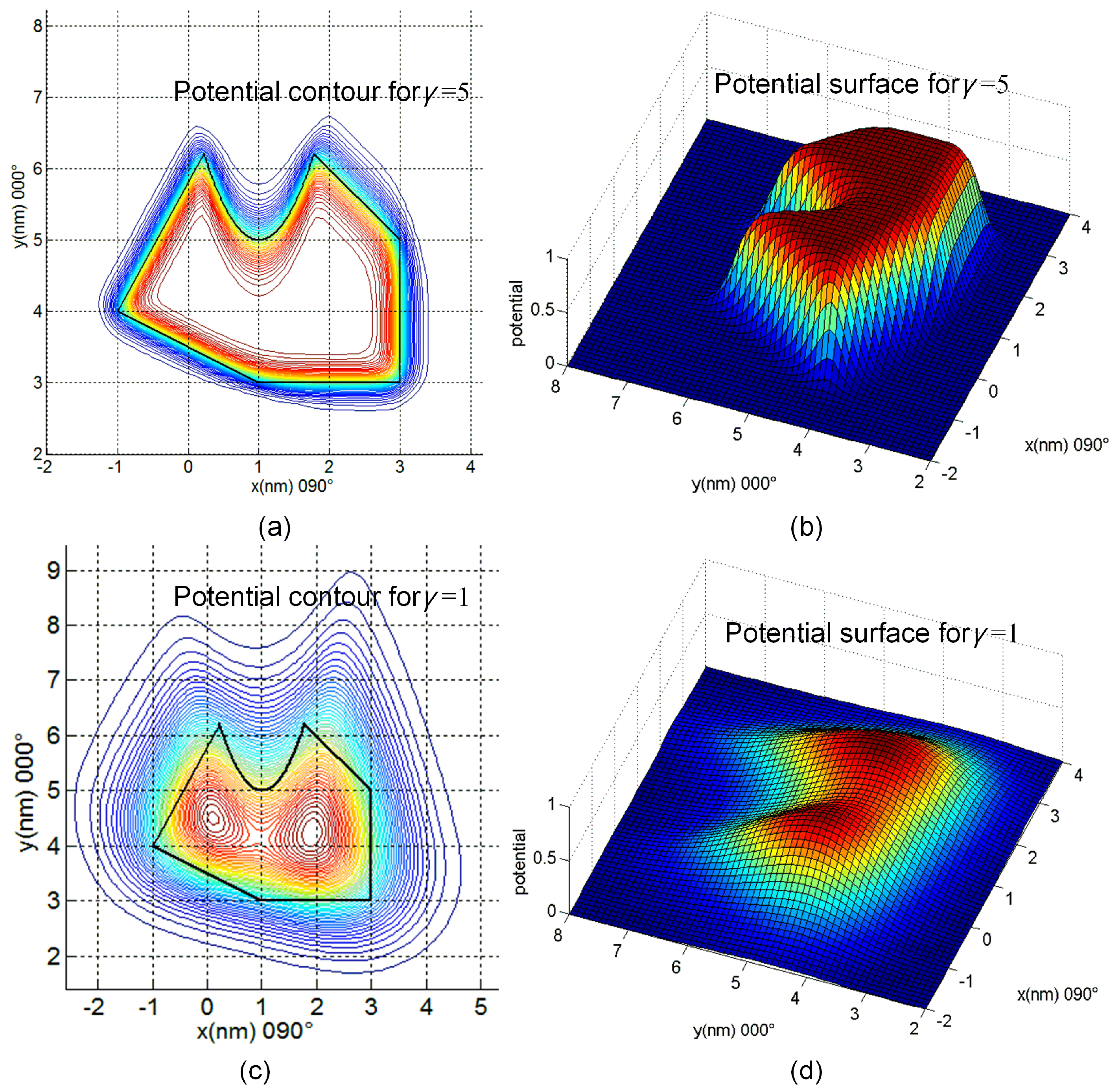
- The boundary contours of static obstacles are black solid lines, whose potential field is colored from red (high potential) to blue (low potential) and is drawn at an interval of 0.01.
3.1. Simulations for Static Obstacles
3.1.1. Trap Situations in U-shaped Obstacles and the Goals Non-Reachable with Obstacles Nearby (GNRON) Problem
3.1.2. No Passage through Closely Spaced Obstacles and Oscillations in Narrow Passages
3.2. Simulations for Emergency Scenarios with a Dynamic Target Ship (TS)
3.3. Simulations in Complex Environment
4. Discussion
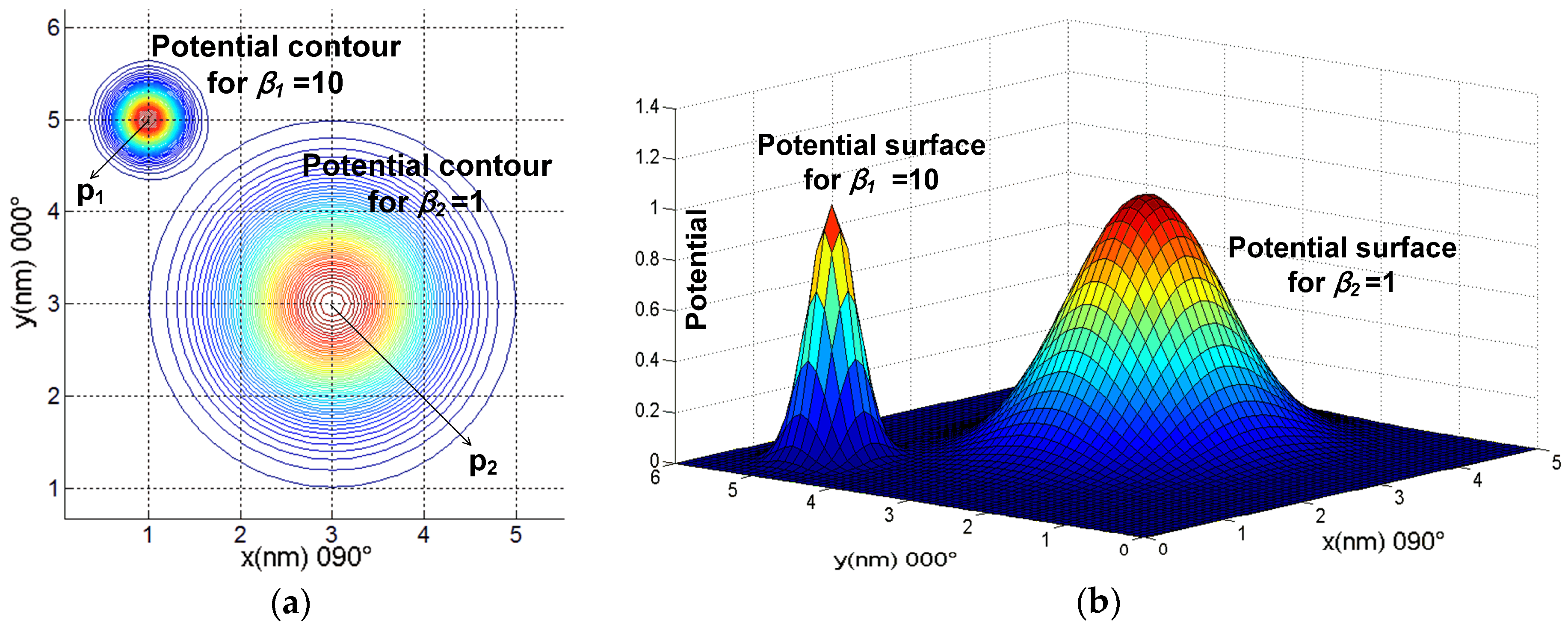
- the potential-based method to model the environment for any irregular static obstacles. Very simple parameters such as β or γ can be adjusted to change the range of the potential field of obstacles with different attributes, which is convenient for environmental modeling with ENC data in the future.
- the gradient-based method to produce the COLREGS-constrained repulsive forces for dynamic TSs and the attractive force for the goal, which is achieved in [13] and improved in this paper for the emergency CA module.
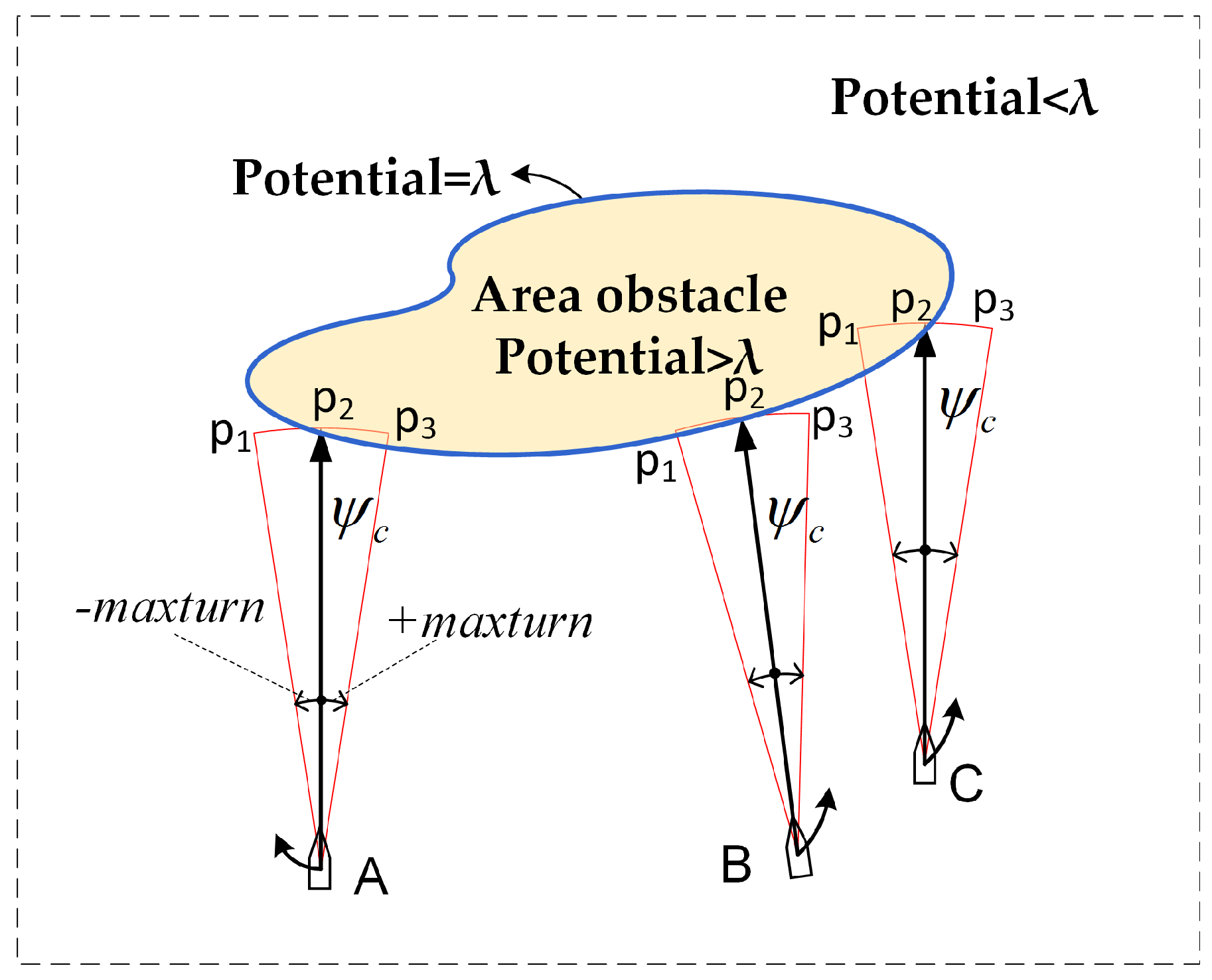
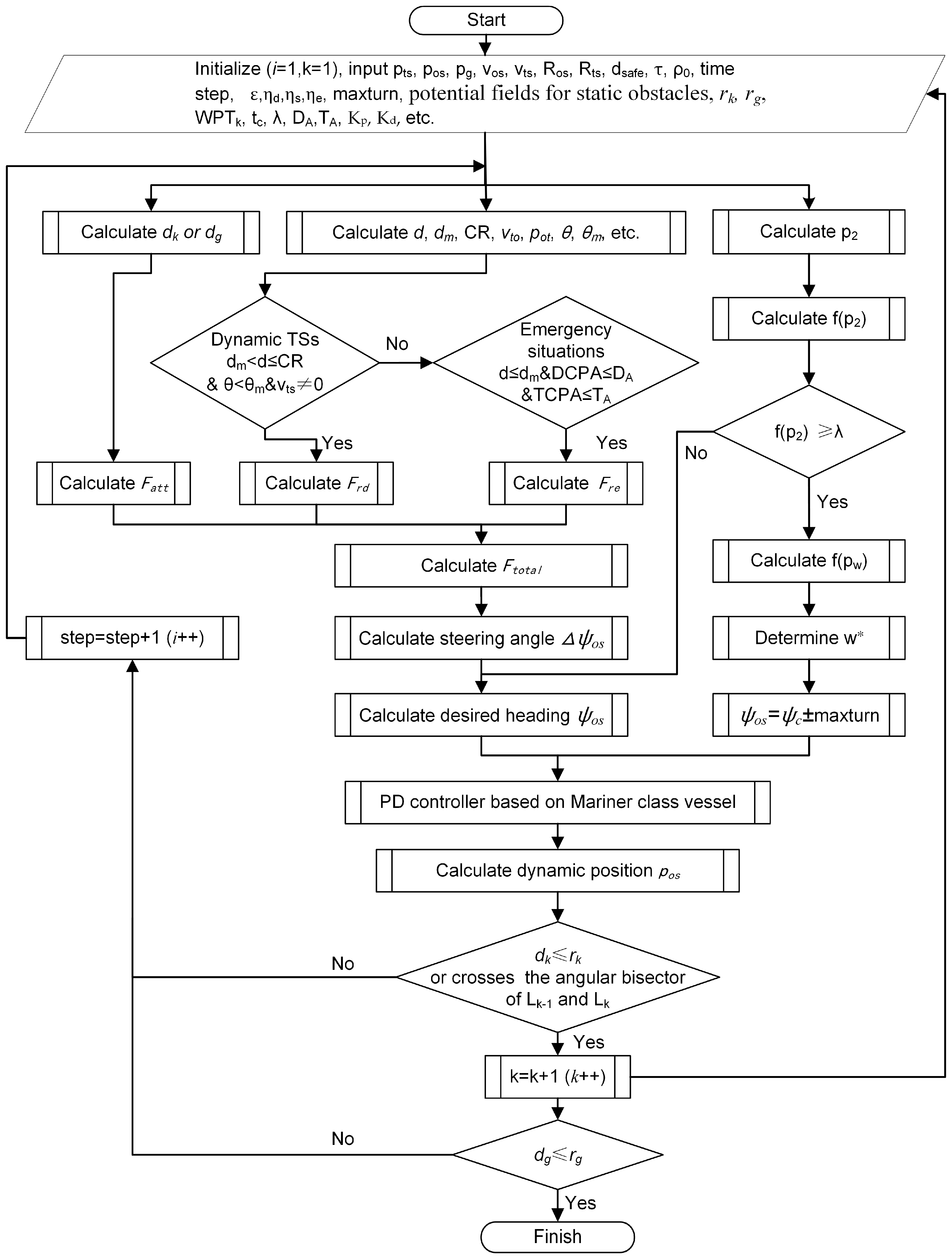
- the PGHAPF method, which is a fusion of the potential field and gradient methods (the above two) based on a prior path, is proposed first in this paper. Under the static potential field, a decision-making time in advance is selected according to the surroundings and speed of the own ship to determine whether there is danger at the predetermined position. If there is, the own ship turns right or left with maxturn angle at the current time step, which is dependent on the direction of the minimum potential location referring to the predetermined position. Otherwise, the own ship takes the actions based on the second step. This method can effectively reduce the local minima problem of the traditional APF method caused by the vector sum of attractive and repulsive forces. It can avoid concave static obstacles in advance and reach the goal with obstacles nearby, other than being trapped in U-shaped obstacles (see Figure 11 and Figure 12). It should be noted that the decision-making time should be adjusted suitably; although a larger value can make early CA actions possible, it may skip some small obstacles.
5. Conclusions
Supplementary Materials
Author Contributions
Funding
Conflicts of Interest
List of Acronyms
| AI | artificial intelligence |
| APF | artificial potential field |
| APF-SR | artificial potential field - stochastic reachable |
| AUV | autonomous underwater vehicle |
| BEA | bacterial evolutionary algorithm |
| BPF | bacterial potential field |
| CA | collision avoidance |
| COA | circle-of-acceptance |
| COLREGS | International Regulations for Preventing Collisions at Sea |
| CPP | cooperative path planning |
| CR | checking range |
| DCPA | distance to the closest point of approach |
| EA | evolutionary algorithm |
| ECDIS | electronic chart display information systems |
| ENC | electronic navigational chart |
| FL | fuzzy logic |
| FMM | fast marching method |
| GNRON | goals non-reachable with obstacles nearby |
| LOS | line-of-sight |
| MPC | model predictive control |
| PD | proportional derivative |
| PGHAPF | path-guided hybrid artificial potential field |
| RAM | random access memory |
| SOM | self-organizing map |
| SPS | scalar potential surface |
| TBA | trajectory base algorithm |
| TCPA | time to the closest point of approach |
| TS | target ship |
| USV | unmanned surface vehicle |
| WPTs | waypoints or successive subgoals |
References
- Szlapczynski, R. Evolutionary Sets of Safe Ship Trajectories a New Approach to Collision Avoidance. J. Navig. 2011, 64, 169–181. [Google Scholar] [CrossRef] [Scilit]
- Tam, C.; Bucknall, R. Cooperative path planning algorithm for marine surface vessels. Ocean Eng. 2013, 57, 25–33. [Google Scholar] [CrossRef] [Scilit]
- Lazarowska, A. A new deterministic approach in a decision support system for ship’s trajectory planning. Expert Syst. Appl. 2017, 71, 469–478. [Google Scholar] [CrossRef] [Scilit]
- Tam, C.; Bucknall, R. Path-planning algorithm for ships in close-range encounters. J. Mar. Sci. Technol. 2010, 15, 395–407. [Google Scholar] [CrossRef] [Scilit]
- Brcko, T.; Svetak, J. Fuzzy Reasoning as a Base for Collision Avoidance Decision Support System. Promet-Traffic Transp. 2013, 25, 555–564. [Google Scholar] [CrossRef] [Scilit]
- Lee, S.M.; Kwon, K.Y.; Joh, J. A fuzzy logic for autonomous navigation of marine vehicles satisfying COLREG guidelines. Int. J. Control Autom. Syst. 2004, 2, 171–181. [Google Scholar]
- Lazarowska, A. Ship’s Trajectory Planning for Collision Avoidance at Sea Based on Ant Colony Optimisation. J. Navig. 2015, 68, 291–307. [Google Scholar] [CrossRef] [Scilit]
- Szlapczynski, R. Evolutionary Planning of Safe Ship Tracks in Restricted Visibility. J. Navig. 2015, 68, 39–51. [Google Scholar] [CrossRef] [Scilit]
- Johansen, T.A.; Perez, T.; Cristofaro, A. Ship Collision Avoidance and COLREGS Compliance Using Simulation-Based Control Behavior Selection With Predictive Hazard Assessment. IEEE Trans. Intell. Transp. Syst. 2016, 17, 3407–3422. [Google Scholar] [CrossRef] [Scilit]
- Chiang, H.T.; Malone, N.; Lesser, K.; Oishi, M. Path-guided artificial potential fields with stochastic reachable sets for motion planning in highly dynamic environments. In Proceedings of the 2015 IEEE International Conference on Robotics and Automation (ICRA), Seattle, WA, USA, 26–30 May 2015; pp. 2347–2354. [Google Scholar]
- Ge, S.S.; Cui, Y.J. New potential functions for mobile robot path planning. IEEE Trans. Robot. Autom. 2000, 16, 615–620. [Google Scholar] [CrossRef] [Scilit]
- Xue, Y.; Clelland, D.; Lee, B.S.; Han, D. Automatic simulation of ship navigation. Ocean Eng. 2011, 38, 2290–2305. [Google Scholar] [CrossRef] [Scilit]
- Lyu, H.; Yin, Y. COLREGS-Constrained Real-time Path Planning for Autonomous Ships Using Modified Artificial Potential Fields. J. Navig. 2018. [Google Scholar] [CrossRef] [Scilit]
- Liu, Y.; Bucknall, R. Efficient multi-task allocation and path planning for unmanned surface vehicle in support of ocean operations. Neurocomputing 2018, 275, 1550–1566. [Google Scholar] [CrossRef] [Scilit]
- Montiel, O.; Orozco-Rosas, U.; Sepúlveda, R. Path planning for mobile robots using Bacterial Potential Field for avoiding static and dynamic obstacles. Expert Syst. Appl. 2015, 42, 5177–5191. [Google Scholar] [CrossRef] [Scilit]
- Bayat, F.; Najafi-Nia, S.; Aliyari, M. Mobile Robots Path Planning: Electrostatic Potential Field Approach. Expert Syst. Appl. 2018, 100, 68–78. [Google Scholar] [CrossRef] [Scilit]
- Pietrzykowski, Z.; Magaj, J.; Mąka, M. Safe Ship Trajectory Determination in the ENC Environment. In Proceedings of the International Conference on Transport Systems Telematics, Ustron, Poland, 22–25 October 2014; pp. 304–312. [Google Scholar]
- Ren, J.; McIsaac, K.A.; Patel, R.V.; Peters, T.M. A Potential Field Model Using Generalized Sigmoid Functions. IEEE Trans. Syst. Man Cybern. B Cybern. 2007, 37, 477–484. [Google Scholar] [CrossRef] [Scilit] [PubMed]
- Fossen, T.I. Guidance and Control of Ocean Vehicles; Wiley: Chichester, UK, 1994. [Google Scholar]
- Lin, X. Model Research on Automatic Collision Avoidance of Ships in Confined Waterways Based on Improved Improved Potential Field Method; Harbin Engineering University: Harbin, China, 2015. [Google Scholar]
- Chiang, H.T.L.; Tapia, L. COLREG-RRTT: An RRT-Based COLREGS-Compliant Motion Planner for Surface Vehicle Navigation. IEEE Robot. Autom. Lett. 2018, 3, 2024–2031. [Google Scholar] [CrossRef] [Scilit]
- Lee, G.; Surendran, S.; Kim, S.H. Algorithms to control the moving ship during harbour entry. Appl. Math. Model. 2009, 33, 2474–2490. [Google Scholar] [CrossRef] [Scilit]
- Woerner, K.; Novitzky, M. Legibility and Predictability of Protocol-Constrained Motion: Evaluating Human-Robot Ship Interactions Under COLREGS Collision Avoidance Requirements. In Proceedings of the Robotics Science and Systems, Cambridge, MA, USA, 12–16 July 2017. [Google Scholar]
- Naeem, W.; Irwin, G.W.; Yang, A. COLREGs-based collision avoidance strategies for unmanned surface vehicles. Mechatronics 2012, 22, 669–678. [Google Scholar] [CrossRef] [Scilit]
- Hilgert, H.; Baldauf, M. A common risk model for the assessment of encounter situations on board ships. Deutsche Hydrogr. Z. 1997, 49, 531–542. [Google Scholar] [CrossRef] [Scilit]
- Ge, S.S.; Cui, Y.J. Dynamic Motion Planning for Mobile Robots Using Potential Field Method. Auton. Robot. 2002, 13, 207–222. [Google Scholar] [CrossRef] [Scilit]
- Zhao, Y.; Li, W.; Shi, P. A real-time collision avoidance learning system for Unmanned Surface Vessels. Neurocomputing 2016, 182, 255–266. [Google Scholar] [CrossRef] [Scilit]
- Gia Huy Dinh, N.I. A Study on the Construction of Stage Discrimination Model and Consecutive Waypoints Generation Method for Ship’s Automatic Avoiding Action. Int. J. Fuzzy Log. Intell. Syst. 2017, 17, 294–306. [Google Scholar] [CrossRef] [Scilit]
- Tsou, M.C. Multi-target collision avoidance route planning under an ECDIS framework. Ocean Eng. 2016, 121, 268–278. [Google Scholar] [CrossRef] [Scilit]
- Benjamin, M.R.; Curcio, J.A.; Leonard, J.J.; Newman, P.M. Navigation of unmanned marine vehicles in accordance with the rules of the road. In Proceedings of the IEEE International Conference on Robotics and Automation, Orlando, FL, USA, 15–19 May 2006; pp. 3581–3587. [Google Scholar]





| Methods | Lee 2004 APF [6] | Xue 2011 APF [12] | Montiel 2015 BPF [15] | Chiang 2015 APF-SR [10] | Liu 2018 APF [14] | Bayat 2018 SPS [16] | PGHAPF This Paper |
|---|---|---|---|---|---|---|---|
| International Regulations for Preventing Collisions at Sea (COLREGS) compliance | medium | medium | N/A | N/A | N/A | N/A | high |
| Map type | grid | grid | grid | grid | image | image | grid |
| Shape of obstacles | circle | polygon 1 | circle | square | arbitrary | arbitrary | arbitrary |
| Static obstacles | 1 | multi | 2–6 | 300 | multi | multi | multi |
| Dynamic obstacles | 1 | 1–5 | 1 | 300 | no | 2 | multi |
| Dynamic properties | yes | yes | no | no | no | yes | yes |
| Emergency collision avoidance (CA) actions | no | no | yes | yes | no | yes | yes |
| Computational time | high | ? | medium | low | medium | very low | very low |
| Local minima | ? | E | O | O | O | O | O |
| Goals non-reachable with obstacles nearby (GNRON) | ? | E | O | E | ? | O | O |
| Potential (P) or gradient (G) | G | G | G | G | G | P | P&G |
| Vector Format | Represented Obstacles (Including but not Limited to) |
|---|---|
| point | isolated reefs, wrecks, navigational aids, etc. |
| curve (line) | safety contours, channel limits, etc. |
| surface (face) | boundaries of bigger obstacles, other natural and cultural areas, etc. |
| Spatial Objects | Features | Distance (nm) | Parameter |
|---|---|---|---|
| point | wrecks, reefs | >2 | β < 1 |
| aids to navigation | >0.5 | β < 10 | |
| curve | safety contours channel limits | >1 | γ < 3 |
| channel limits | >0.2 | γ < 10 | |
| surface | islands, shoals | >3 | γ < 0.5 |
| Description and Symbols | Value | Unit |
|---|---|---|
| Length overall (LOA) | 171.8 | m |
| Length between perpendiculars (LBP) | 160.93 | m |
| Maximum beam (B) | 23.17 | m |
| Design draft (T) | 8.23 | m |
| Loaded displacement (D) | 18,541 | T |
| Design speed (U) | 15 | knots |
| Max. rudder angle (δ) | 35 | degree |
| Max. rudder rate () | 5 | degree/s |
| Situation | Start | Initial Course [°] | Goal | Length of Trajectory [nm] | Time Steps | Run Time [s] |
|---|---|---|---|---|---|---|
| (a) | (6, 6) | 190 | (5, −0.8) | 18.22 | 293 | 0.490 |
| (b) | (5, −1) | 270 | (5, 2.4) | 13.49 | 219 | 0.387 |
| Situation | Obs3 | Start | Initial Course [°] | Goal | Length of Trajectory [nm] | Time Steps | Run Time [s] |
|---|---|---|---|---|---|---|---|
| (a) | γ = 2 | (−2, 0.5) | 060 | (9.8, 11.2) | 22.17 | 358 | 0.611 |
| (b) | γ = 5 | (−2, 0.5) | 060 | (9.8, 11.2) | 17.57 | 284 | 0.527 |
| Ship | Start | Speed | Initial Course [°] | Goal |
|---|---|---|---|---|
| own ship | (0.0, 0.0) | 12.0 | 045 | (10, 10) |
| TS1 | (7.3, 7.3) | 11.3 | 225 | / |
| Method | Length of Trajectory [nm] | Time Steps | Run Time [s] |
|---|---|---|---|
| Original | 15.5 | 311 | 0.11–0.12 |
| New | 15.1 | 302 | 0.10–0.12 |
| No. | pts | vts [kn] | Rts [nm] | Situation | Ranges to TS [nm] | Own Ship Alters Course to | DCPA [nm] |
|---|---|---|---|---|---|---|---|
| TS1 | (−0.5, 0.3) | (2, 1) | 0.05 | overtaken | 1.7 | starboard | 0.3 |
| TS2 | (6.0, 2.1) | (−11.0, −0.5) | 0.1 | crossing A | >4 | starboard | 1.6 |
| TS3 | (4.5, 4) | (0, −2) | 0.15 | crossing B | / | keep course | 1.0 |
| TS4 | (10.3, 8.7) | (−2.8, −2.8) | 0.2 | head-on | 4.6 | starboard | 0.6 |
| No. | Static Obstacles | Dynamic TSs | Distance [nm] | Time Steps | Total Run Time [s] | Time of Each Time Step [ms] |
|---|---|---|---|---|---|---|
| 1 | 1 | 0 | 18.22 | 293 | 0.490 | 1.7 |
| 2 | 1 | 0 | 13.49 | 219 | 0.387 | 1.8 |
| 3 | 5 | 0 | 22.17 | 358 | 0.611 | 1.7 |
| 4 | 5 | 0 | 17.57 | 284 | 0.527 | 1.9 |
| 5 | 0 | 1 | 15.5 | 311 | 0.11–0.12 | 0.4 |
| 6 | 0 | 1 | 15.1 | 302 | 0.10–0.12 | 0.4 |
| 7 | 5 | 4 | 19.38 | 315 | 0.804–0.833 | 2.6 |
© 2018 by the authors. Licensee MDPI, Basel, Switzerland. This article is an open access article distributed under the terms and conditions of the Creative Commons Attribution (CC BY) license (http://creativecommons.org/licenses/by/4.0/).
Share and Cite
Lyu, H.; Yin, Y. Fast Path Planning for Autonomous Ships in Restricted Waters. Appl. Sci. 2018, 8, 2592. https://doi.org/10.3390/app8122592
Lyu H, Yin Y. Fast Path Planning for Autonomous Ships in Restricted Waters. Applied Sciences. 2018; 8(12):2592. https://doi.org/10.3390/app8122592
Chicago/Turabian StyleLyu, Hongguang, and Yong Yin. 2018. "Fast Path Planning for Autonomous Ships in Restricted Waters" Applied Sciences 8, no. 12: 2592. https://doi.org/10.3390/app8122592
APA StyleLyu, H., & Yin, Y. (2018). Fast Path Planning for Autonomous Ships in Restricted Waters. Applied Sciences, 8(12), 2592. https://doi.org/10.3390/app8122592