Article

Investigating the Impact of Stepper Motor Control Strategy on the Level of Vibrations


by
Grzegorz Góra
,
Konrad Gac
,
Jakub Górski
* and
Joanna Iwaniec
*
Department of Robotics and Mechatronics, Faculty of Mechanical Engineering and Robotics, AGH University of Krakow, Al. Mickiewicza 30, 30-059 Krakow, Poland
*
Authors to whom correspondence should be addressed.
Appl. Sci. 2026, 16(9), 4561; https://doi.org/10.3390/app16094561
Submission received: 16 March 2026 / Revised: 20 April 2026 / Accepted: 21 April 2026 / Published: 6 May 2026
(This article belongs to the Section Electrical, Electronics and Communications Engineering)

Featured Application

The results presented in this paper are directly applicable to precision motion systems that employ stepper motors. The findings demonstrate that selecting an appropriate control mode provides an effective and readily implementable strategy for mitigating vibrations, without requiring mechanical redesign or additional damping components.

Abstract

Vibrations in stepper motors remain a critical issue, reducing positioning accuracy and overall system performance. This study investigates vibration levels in stepper motors operated in an open-loop using classical control strategies across a range of rotational speeds. The obtained results have led to the identification of vibration levels during different control configurations. The research conclusions can improve positioning stability and reduce vibration without requiring hardware modifications.

1. Introduction

Stepper motors play a crucial role in many mechatronic systems and are widely used in fields such as industrial automation and robotics. Among their advantages are precise positioning, low inertia, operation in an open-loop control system, and relatively affordable prices compared to other types of motors. However, they do come with certain drawbacks, including nonlinear behavior at high speeds, limited power compared to other motors, and susceptibility to vibrations [1]. Additionally, as speed increases, a decrease in torque and efficiency is observed.
Vibrations, in particular, pose a significant challenge for stepper motors and can negatively impact the performance and longevity of the systems they are used in. These vibrations can result from structural instability due to mechanical resonance [2], magnetic nonlinearity [3], or suboptimal control algorithms. The consequences of these vibrations can include higher failure rates, loss of positioning precision, and excessive noise.
Mechanical resonance is a critical issue in the operation of stepper motors, as it can lead to unstable motion and a reduction in usable torque within specific speed ranges. These effects are strongly associated with the nonlinear dynamics of the motor and its interaction with the load and control signals [2].
A major source of vibration is the cogging torque, which originates from the interaction between the rotor’s magnetic field and the stator geometry. This phenomenon introduces periodic disturbances that result in speed oscillations, increased noise, and positioning errors, particularly at low speeds [4].
To minimize vibrations in stepper motors, two main strategies can be employed: passive and active. Passive approaches optimize the motor’s design by adjusting the shape and size of the air gap between the stator and rotor [5,6]. These methods are typically limited to the design stage.
On the other hand, the active methods develop suitable control strategies to minimize vibrations. For instance, studies [7,8] proposed a current profile aimed at reducing the risk of step loss. Another study compared various classic control strategies and their impact on noise levels, concluding that sinusoidal-like current waveforms are preferable for winding excitation [9]. While sinusoidal control minimizes torque ripple, alternative signal profiles can improve torque margins at the cost of increased mechanical oscillations [10].
Another approach proposed an algorithm to regulate winding currents and reduce vibrations [11]. The method consists of optimizing phase current waveforms to compensate for the nonlinear torque characteristics of the stepper motor, thereby minimizing torque ripple and vibration-induced position errors.
Some researchers suggest a more advanced hybrid control technique, combining microstepping and Field-Oriented Control (FoC), though this approach requires an additional sensor to determine a shaft position [12]. Recent studies have also explored advanced control strategies, including hybrid approaches combining classical PI control with nonlinear techniques such as sliding mode control [13]. These advanced methods proved to improve robustness and dynamic response but often increase system complexity and computational requirements.
It appears that the topic of vibration reduction in stepper motors has not been fully explored, and there is a knowledge gap. In particular, the influence of classical open-loop control modes on vibration levels across different rotational speeds has not been sufficiently quantified.
Therefore, this study presents an experimental investigation of vibrations in a stepper motor system operated in an open-loop configuration using conventional control strategies. The analysis covers a wide range of operating speeds and control resolutions, enabling a comparative assessment of vibration levels. Based on the obtained results, practical insights into the selection of control modes for vibration reduction are formulated. The manuscript is structured as follows: it begins with a detailed description of the stepper motor’s operation and the control strategies applied, which is followed by considerations on stepper motor vibrations. The next section focuses on the research setup used for motor control and vibration measurement. Subsequently, the results of the experiments are presented and discussed. Finally, the manuscript concludes with a summary and a discussion of the conclusions drawn from the presented results.

2. Materials and Methods

2.1. Hybrid Stepper Motor Control Techniques

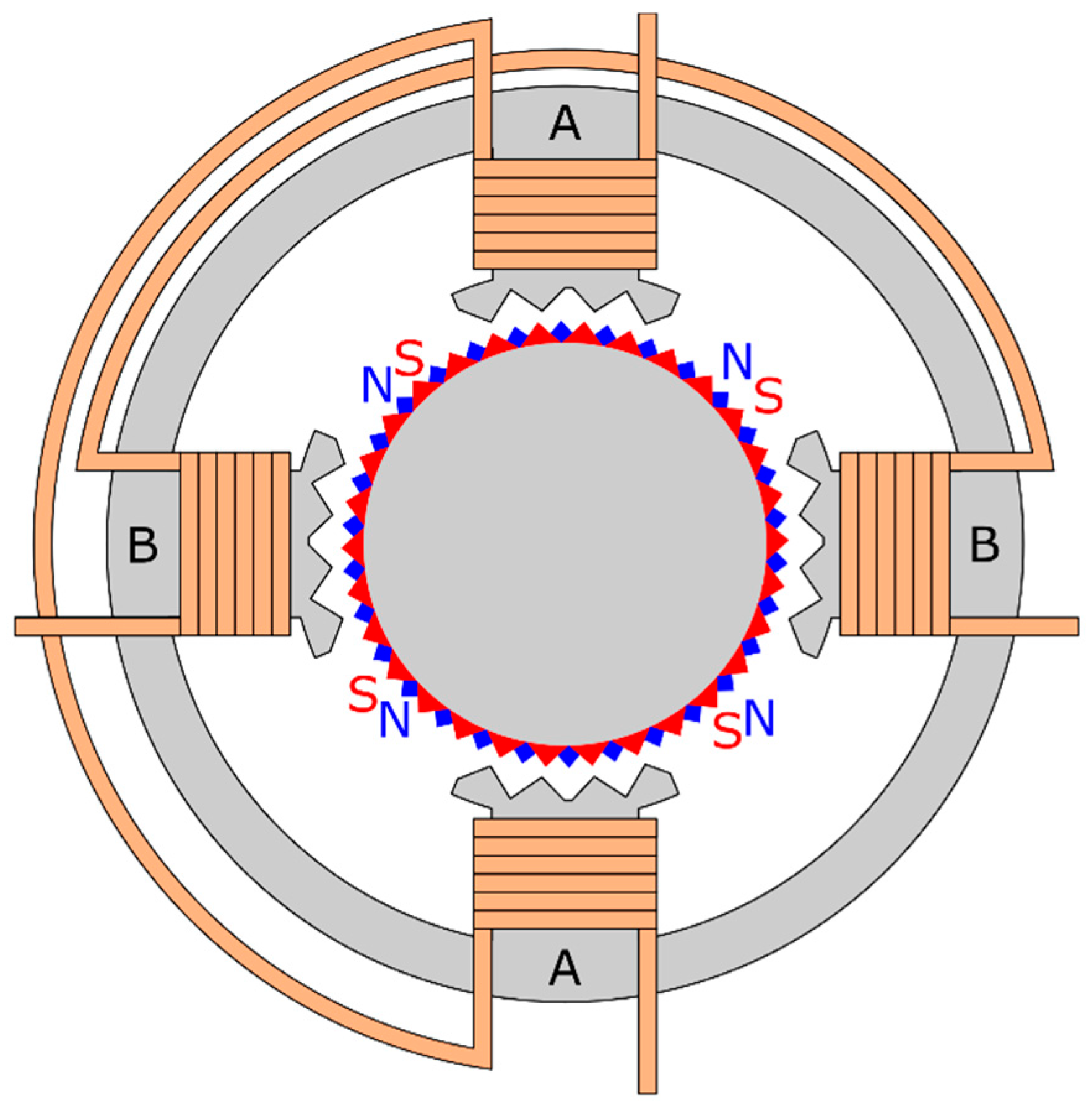
To understand the description of the control techniques, it is necessary to grasp the construction of a hybrid stepper motor. The scheme of such a motor is presented in Figure 1.
On the non-magnetic rotor shaft, there is a rotor in the form of a disk with magnetized teeth. The rotor is polarized so that adjacent teeth have opposite magnetic poles. The rotor is surrounded by a stator equipped with windings that control its motion. Similar to the rotor, each stator phase contains teeth, but their number is fewer than the rotor’s teeth. This design prevents all rotor teeth from aligning with the stator phases simultaneously.
The number of phases can vary, although most motors available on the market have two phases, labeled as A and B [14]. The process of controlling a motor with the described construction involves supplying power to the coils located on the stator in the correct sequence and polarization.
Several methods for controlling stepper motors have been described in the literature. These techniques can be categorized into open-loop and closed-loop control. Closed-loop methods require a sensor system to measure the state of the motor shaft, along with a more advanced control system. For example, work [15] presents a controller based on three PID controllers, individually regulating current, position, and damping of the rotor shaft. In paper [16], a Field-Oriented Control method is used, employing an incremental encoder to measure shaft position and estimate the angle between magnetic fields.
Another example is discussed in [17], where closed-loop control relies on measurements of the motor phase currents and uses an extended Kalman filter to estimate the shaft position during motion.
While these closed-loop techniques yield improved performance compared to open-loop control, they require additional sensors or significantly more complex control system architectures. This increases the overall cost of the stepper motor drive system. As a result, open-loop control methods remain in use for the majority of applications [18,19].
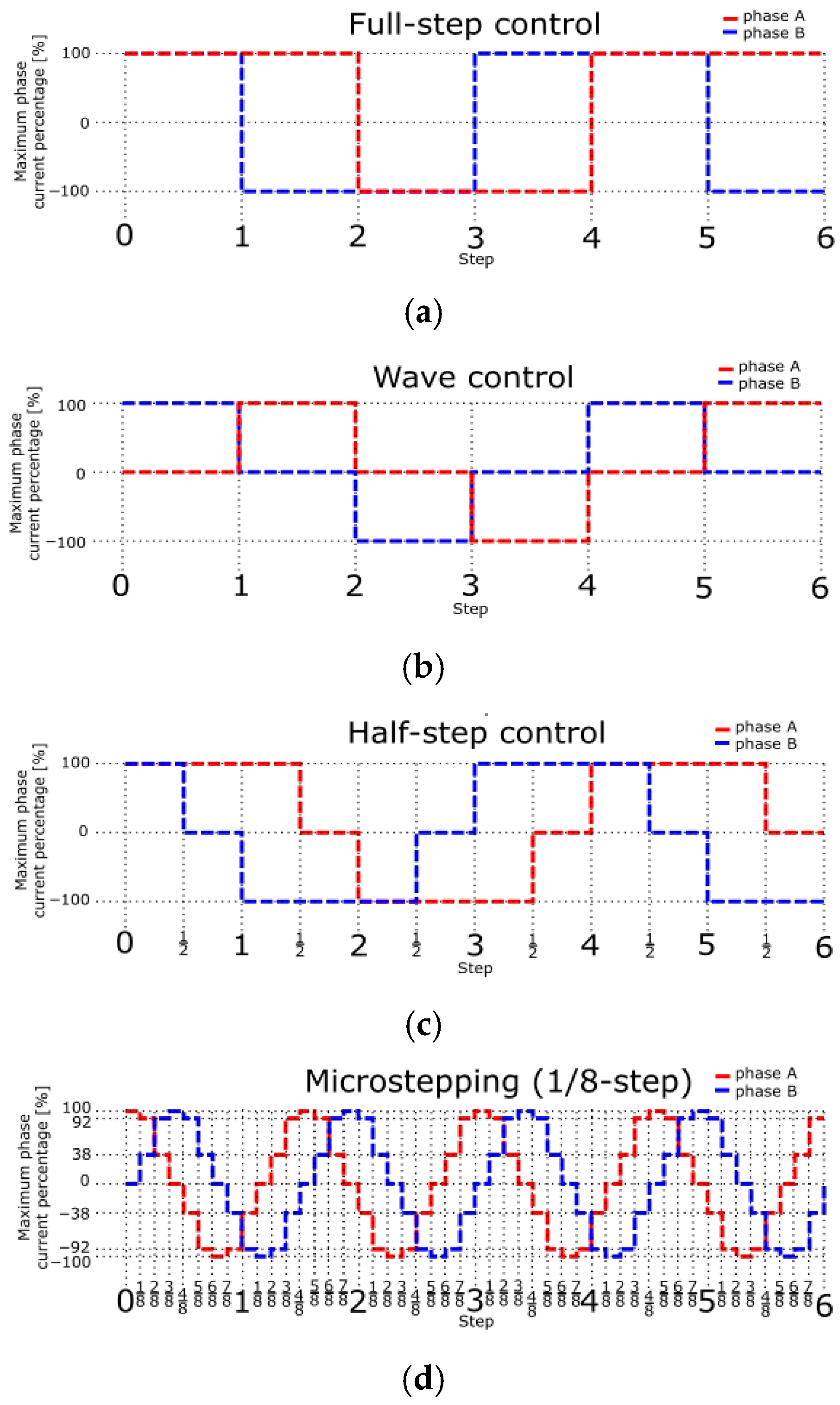
One of these methods of controlling a stepper motor is the full-step control mode (Figure 2a). In this method, phases A and B are energized simultaneously, generating a strong and stable magnetic field that pulls the rotor into alignment with the active stator poles. As a result, the rotor shaft moves in discrete steps. This approach provides maximum torque and high positional accuracy. However, it offers the lowest resolution compared to more advanced control methods. The control logic is straightforward, requiring only four control states. However, since the full-step mode is limited to the motor’s base step size, motion can appear less smooth compared to more advanced control methods.
A similar but less power-intensive method is a wave drive control (Figure 2b). In this control mode, only one coil is energized at a time, unlike in a full-step control mode, where two coils are active simultaneously. This results in a lower power consumption but also reduces both holding and running torque. One advantage of this method is its minimal hardware requirements, making it simple to implement. However, it can lead to uneven motion, making it less suitable for applications requiring high stability.
Another approach is a half-step control mode (Figure 2c), which combines the features of both full-step and wave drive control modes. In a half-step control mode, the rotor moves in eight steps per full rotation cycle, compared to the four steps in full-step control mode. Each step advances the rotor by half the normal step angle, effectively doubling the resolution of the motor. This method provides smoother motion, as the motor moves in smaller increments. Additionally, no additional hardware is required, as it can be implemented using standard stepper motor driver logic. However, torque variations occur due to alternating between single-coil and dual-coil steps. While half-step control mode improves smoothness over a full-step control mode, motion is still not as refined as in the case of microstepping.
The most advanced method of stepper motor control is microstepping (Figure 2d). Microstepping is a high-precision control technique where the current applied to the coils is varied sinusoidally, rather than simply switching on or off. The current waveform follows sinusoidal equations, which are implemented using digital control circuits that approximate the waveform with discrete values. This allows for finer step resolutions, such as 1/4-step, 1/8-step, 1/16-step, and beyond. As a result, the rotor can stop at intermediate positions between full steps, producing smoother motion with greater positioning accuracy. However, torque per micro-step is reduced, as each step generates a lower holding force. Additionally, more complex electronics are required to regulate sinusoidal current control effectively. The current waveform on the coil for microstepping is presented in [14].

2.2. Stepper Motor Vibrations

The torque generated by a stepper motor was determined by the selected control method. In all cases, this torque was produced by sequential activation of the motor phases. The electromagnetic torque was defined by the following equation [20]:
T e = K t i A sin p θ K t i B sin p θ π / 2 T d m s i n ( 2 m p θ )
where p is the number of rotor poles, m is the number of phases, Kt is the torque constant, and Tdm is the static moment. According to Newton’s third law of motion, the torque acting on the stator was expressed as:
T r = T s
This torque served as a source of mechanical vibrations, which were transmitted to other structural components through mounting elements.
For the purposes of vibration analysis, a simplified model was used, neglecting the influence of the static torque component. Thus, the torque on the stator was approximated as:
T r K t i A sin p θ + K t i B sin p θ π / 2
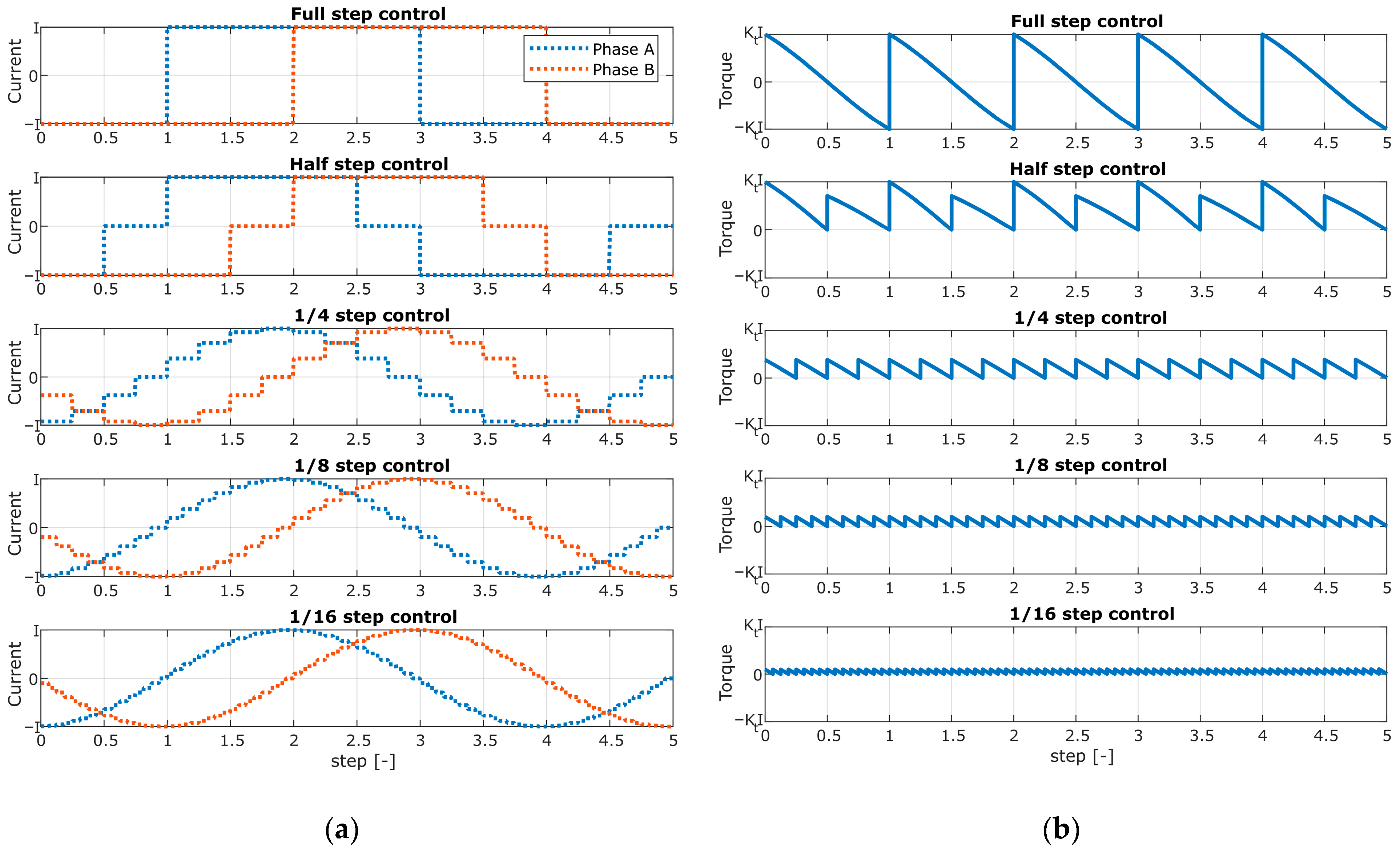
The torque waveform was analyzed for various control techniques. Figure 3a shows the current waveforms of phases A and B for full-step, half-step, and microstepping control modes with resolutions of 1/4, 1/8, and 1/16 steps, respectively, for the first six steps. It was assumed that the maximum and minimum current values remained constant, with an absolute value of I. These values were substituted into (3), resulting in torque waveforms as a function of the rotor’s angular position. The corresponding results are illustrated in Figure 3b.
From the analysis, it was observed that increasing the number of microsteps led to a decrease in the amplitude of torque ripple. Consequently, the excitation force acting on the mechanical structure was reduced, resulting in lower vibration levels.
The largest torque ripple was observed in the full-step control mode. Due to simultaneous excitation of two motor phases, the torque reached positive and negative peak values equal in absolute magnitude to Kt·I. Similar values were obtained for the half-step control mode: when a single phase was energized, the peak torque reached 0.701·Kt·I; when two phases were energized, it reached Kt·I. This alternating pattern of energizing one and two phases resulted in variable torque peaks, leading to the vibration level comparable to or slightly higher than in the case of full-step operation

2.3. Test Stand

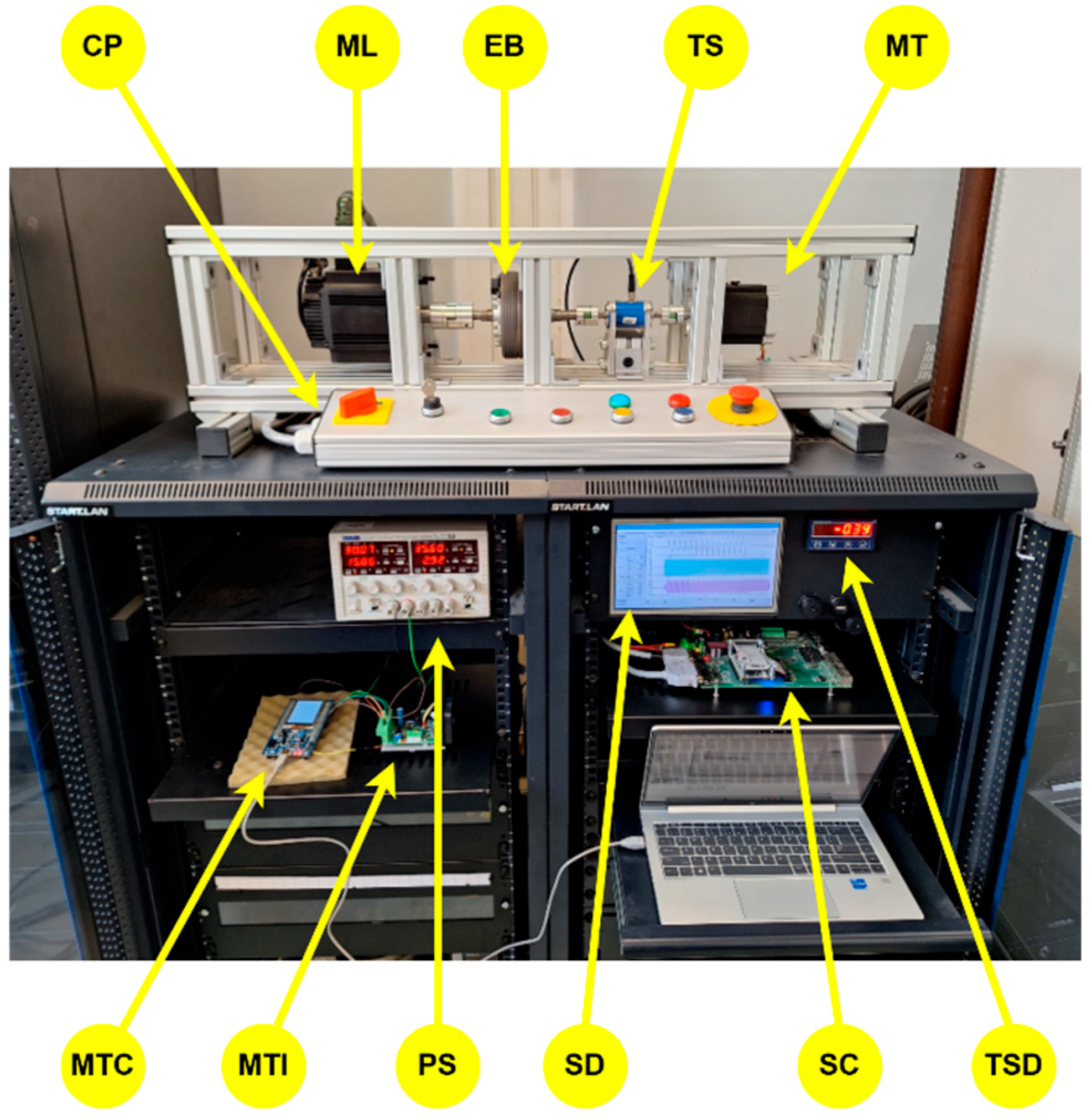
The test stand used in the research is depicted in Figure 3. It comprises two main components: a drive testing station and a 4-channel vibration measurement system.
Thanks to the modularity of the mechanical part, the test stand configuration can be easily adapted to meet the requirements of the ongoing research. The main elements are indicated in Figure 4 and labeled as follows: MT—tested motor, PS—power supply, TS—torque sensor with torque sensor display (TSD), ML—electric drive with a controller (MLD) serving as a load, EB—electric brake, CP—control panel, MTI—power stage of the tested drive with its electronic control system (MTC) implemented in the microcontroller or FPGA (Field Programmable Gate Array) chip, SD—stand display, and SC—the test stand controller. An additional element of the stand is the RLC measurement bridge (RLC).
The MTI power stage is powered by the laboratory power supply (PS), which features two independent, galvanically isolated channels. This setup allows for a DC voltage of up to 120 V or a maximum DC current limited to 840 W. Additionally, the power supply’s digital commutation interfaces (RS-232, USB, and digital inputs and outputs in TTL voltage standard) facilitate remote control, as well as the saving and reading of operational parameters.
The torque transmitted between the tested drive (MT) and the load (ML drive or the electric brake, EB) is measured with the application of the torque sensor (TS), which generates an analog signal (ranging from 0.5 V to 4.5 V) proportional to the load torque. The sensor allows for measurements within a rotational speed range of 0 to 5000 rpm and has a bandwidth of 1 kHz. According to the manufacturer, (NCTE AG, Oberhaching, Germany) the sensor’s accuracy is below 0.5%, with repeatability under 0.1% of the full measuring range. The use of an independent torque sensor enables highly accurate measurement of the torque produced by the tested motor. Depending on the maximum torque generated by the tested drive (MT), one of the torque sensors with the following ranges—±2.5 Nm, ±7.5 Nm, and ±17.5 Nm—is selected and installed.
The 1.1 kW PMSM electric motor (ML—Estun Automation, Nanjing, China), paired with its controller (MLD—Estun Automation, Nanjing, China), generates both static and dynamic torque loads for the tested drive and power stage. This motor delivers a maximum continuous torque of 4.78 Nm and a peak torque of 14.3 Nm, with a rated speed of 3000 rpm. Due to its ability to operate within control loops for torque, speed, and position, the system is highly versatile and suitable for a wide range of research and experimental applications.
To generate the load torque for the tested drive, a power electric brake (EB) integrated into the stand can be used, offering a braking torque of up to 15 Nm. The load torque is proportional to the current supplied to the brake winding, allowing for smooth adjustment. The brake is also used in static tests and experiments.
The test stand controller (SC) consists of two parts: the Terasic DE0-Nano module (Terasic Inc., Hsinchu, Taiwan) with the Intel (formerly Altera) Cyclone IV family FPGA chip and the PCB-printed circuit board, which is an interface with the peripheral systems of the station.
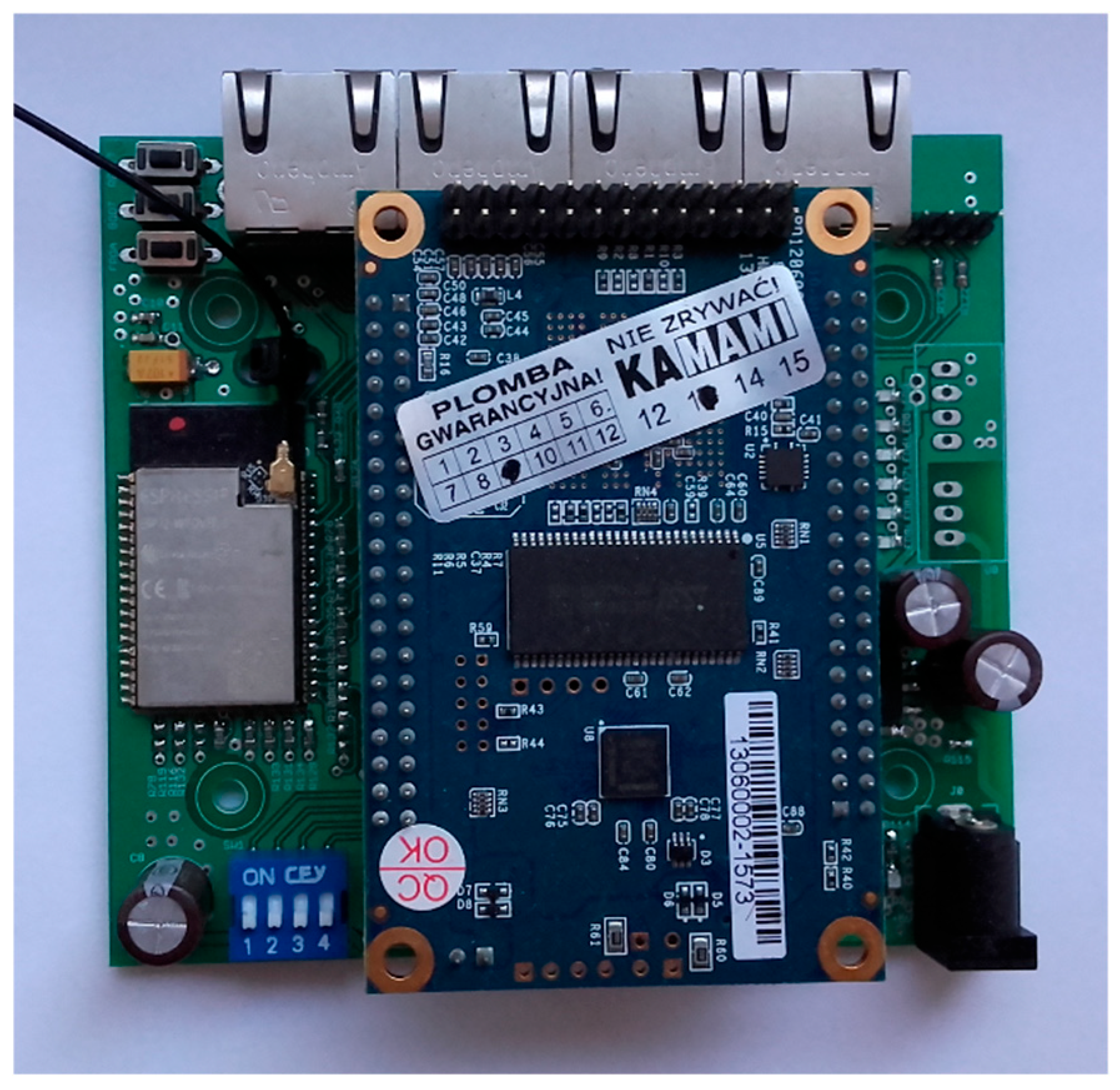
The 4-channel vibration measurement system (Figure 5) facilitates communication with the accelerometers and enables wireless data transmission via a local Wi-Fi network. This module supports the operation of four 16-bit MEMS digital accelerometers. By utilizing an FPGA system (Terasic Inc., Hsinchu, Taiwan) as its hardware platform, the module ensures a consistent high sampling frequency of 4 kHz and allows for simultaneous data acquisition from all channels. Such a solution enables differential measurement of vibrations between individual channels (sensors).
Communication with the central unit, which is a PC storing the registration results, is established through the local Wi-Fi network. When powered on, the module waits approximately 1 s for the supply voltages to stabilize before proceeding with initialization and sensor configuration. The configuration includes setting the measurement ranges, bandwidth, and resolution. Initialization and configuration also take place immediately after the sensor is connected to the module.
The module utilizes accelerometric sensors that integrate a 3-axis digital linear acceleration sensor and a 3-axis digital gyroscopic sensor. These sensors can measure acceleration within four different ranges: ±2 g, ±4 g, ±8 g, and ±16 g. Communication with the sensors is facilitated via the I2C (Inter-Integrated Circuit) interface, which operates in both standard (100 kHz) and fast (400 kHz) modes. Additionally, the microcontroller is responsible for transmitting wireless communication parameters, such as MAC address, IP address, and RSSI.
The microcontroller’s RAM is used as a circular buffer, which is responsible for buffering measurement data during temporary connection issues via the wireless network. An additional task of the microcontroller is to transmit the wireless communication parameter (including MAC, IP, and RSSI).

2.4. Vibration Level Assessment Indicators

The raw data from an accelerometer recorded during experiments (the acceleration versus time) are challenging to interpret and analyze unequivocally. Therefore, the data analysis techniques used are described by indicators and estimators to obtain better results. Raw data were recorded independently for three orthogonal axes. In the next stage of the analysis, the values from these axes were used to determine the instantaneous (time-dependent) vibration amplitude. Subsequently, the statistical indicators were calculated based on the vibration amplitude, rather than separately for each axis.
The RMS (Root Mean Square) indicator is most often used to estimate the impact of vibrations on constructions. The root-mean-square acceleration versus time gives a measure of the oscillatory content in the acceleration data. For the period of time considered, this quantity gives an indication of the time-averaged energy in the signal [14,15]. The RMS value of acceleration is defined as follows:
a R M S = 1 T 0 T a 2 t d t 1 2
where |a(t)| is the time history of the acceleration amplitude recorded as a function of time t and expressed in m/s2, and T is the duration of the measurement in seconds.
The highest vibration amplitude is generated by the drive at the moment of rotor position change [21,22]. Simultaneously, the aRMS value underestimates the effects of transient shocks (instantaneous sudden amplitude growths). The RMS indicator does not sufficiently reflect the reduction in vibration levels resulting from the change in the stepper motor control method. The reduced vibration amplitude (e.g., for 1/16 step control compared to full-step control) is compensated by more frequent switching of the motor’s phase currents, which leads to more frequent moments of vibration generation. Therefore, an index referred to as aRMQ (Root Mean Quad) has been introduced, which was defined as follows:
a R M Q = 1 T 0 T a 4 t d t 1 4
The aRMQ is a preferred measurement for exposure to jolts, shocks and intermittent vibration since it is sensitive to peaks in acceleration levels.
In vibration analysis, the RMS index measures the average energy content of the signal and is well-suited for steady-state vibrations. However, for signals containing transient shocks or impulses, RMS tends to underestimate these extreme events. The RMQ index increases the influence of short-duration, high-amplitude events, making it more sensitive to shocks and impulses [23,24]. Physically, RMQ has the same unit as RMS (m/s2), but due to the fourth-power formulation, it more strongly emphasizes peak values [25]. Standards such as BS 6841 and ISO 2631-1, used to assess vibrations affecting the human body, recommend using RMQ (or related metrics such as VDV) as they better reflect the characteristics of transient vibrations [26,27].
As emphasized in [28], when vehicle motion includes shocks or impulsive velocity changes, the traditional RMS index shows no correlation with perceived discomfort. In such cases, the RMQ index provides the highest correlation between vibration magnitude and subjective discomfort, as it reflects the total rather than average exposure to vibration over the measurement period. It is also more suitable for non-stationary signals. RMQ is therefore particularly useful in evaluating impulsive vibrations, e.g., during transient motor operation, because it ensures that peak events significantly influence the assessment, leading to more representative and reliable conclusions.

2.5. Experiments

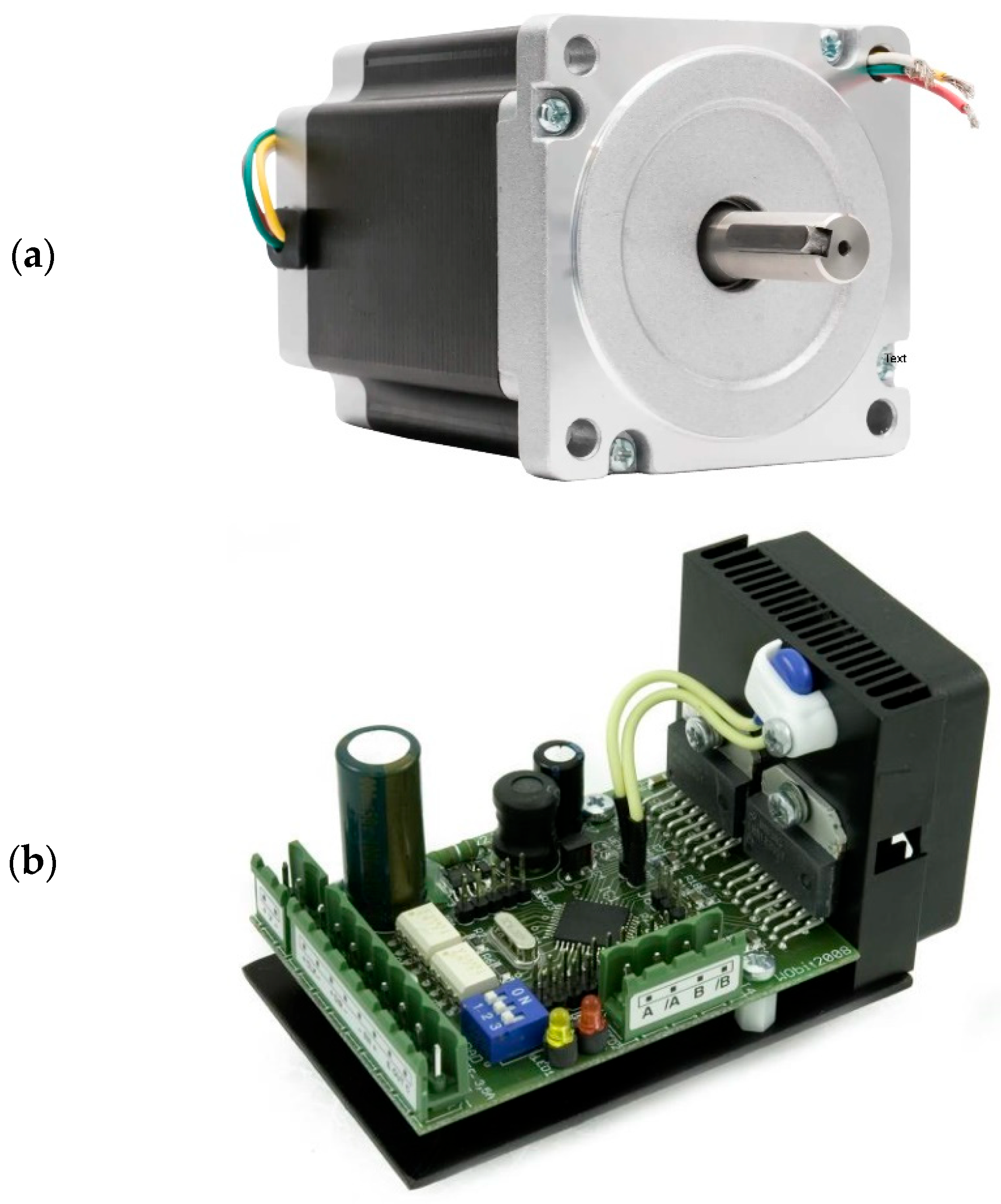
Using the test setup described in Section 3, a series of experiments was conducted to examine the effect of stepper motor control mode on the level of generated vibrations. The test drive used a SM86HT118-6004A stepper motor (Jiangsu Fulling Motor Technology Co., Ltd., Changzhou, China) with a resolution of 200 steps per revolution and a rated torque of 8.7 Nm (Figure 6a), in conjunction with the SMC64v2 (WObit Automation, Pniewy, Poland) stepper motor controller (Figure 6b). The controller was powered by a 30 V DC supply from a laboratory power source.
In each experiment, the motor was loaded with an inertia load, including components such as the drive rotor ML and couplings, resulting in a total inertia moment of approximately 15 kg·cm2. Additionally, the stepper drive was subjected to a braking torque generated by an electric brake with a value of approximately 0.5 Nm. The load type and parameters were the same in each experiment. According to the characteristics of the stepper motor used in this study, the nominal torque (8.7 Nm) is available up to a speed of approximately 75 rpm. The maximum speed indicated on the torque–speed curve is around 900 rpm, assuming a 100 VAC power supply and full-step operation. At this operating point, the torque drops to about 3 Nm, which corresponds to approximately 33% of the nominal torque value.
A constant inertial load was chosen as it does not introduce additional vibrations into the system, allowing for a controlled evaluation of the motor’s dynamic behavior. Using a variable load would require a second drive, making it difficult to isolate the source of vibrations and potentially leading to interference.
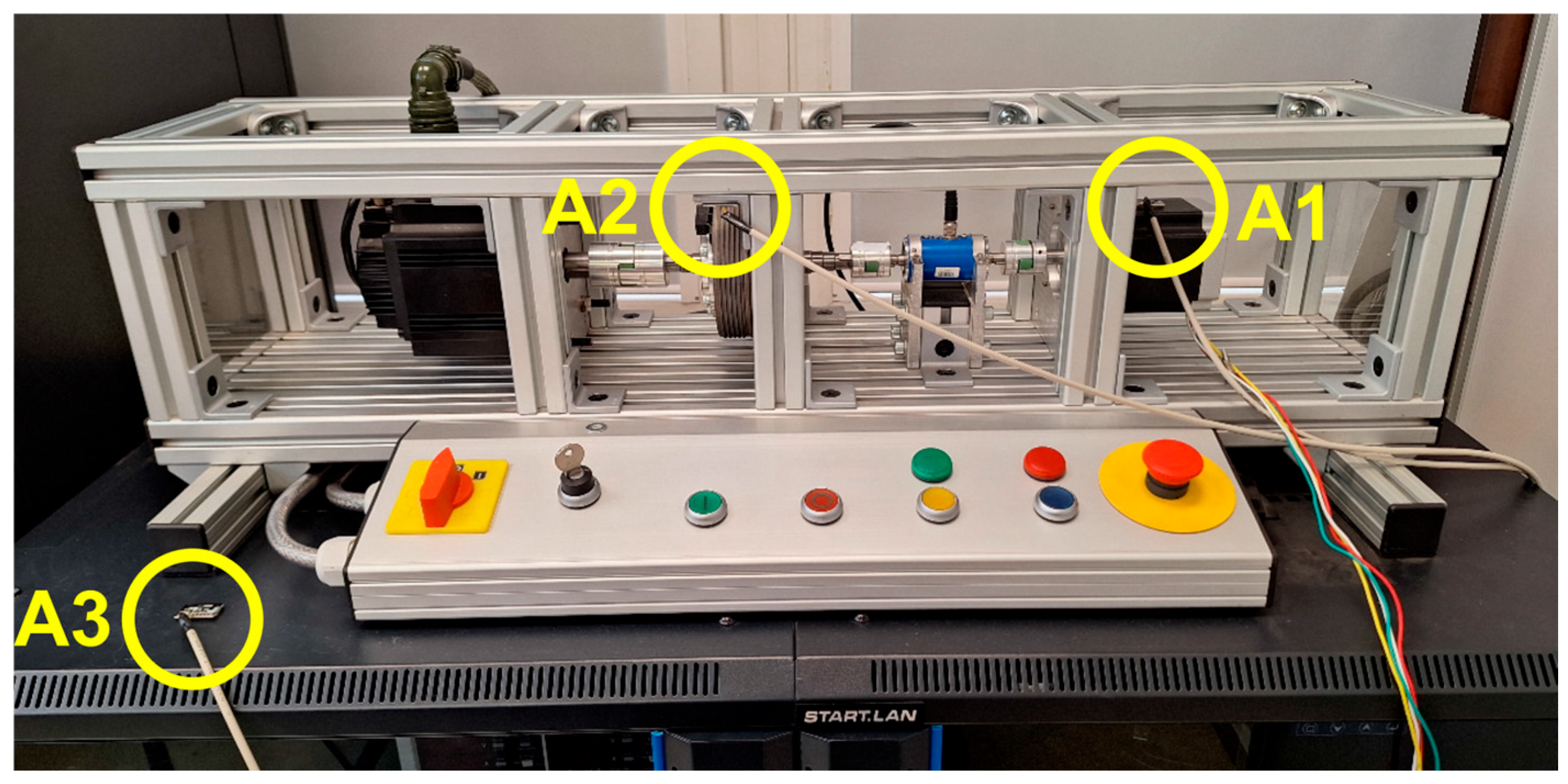
The stepper motor controller allowed for the selection of one of the operating modes: full step, half-step, 1/4 step, 1/8 step, and 1/16 step by polarizing the appropriate inputs of the controller. As the position setter (generating pulses at the appropriate frequency), the STM32F429I-DISC1 educational development board (STMicroelectronics, Kirkop, Malta) with the STM32F429ZIT6 microcontroller (STMicroelectronics, Crolles, France) was used. Vibration measurements were performed at three locations: on the stepper motor (A1), on the frame, which is a structural element of the main part of the test stand (A2), and on the surface of the cabinets forming the base of the main part of the test stand (A3). The exact positioning of the measurement sensors is shown in Figure 7. Sensor A1 was mounted directly on the motor housing to capture vibrations at the source. Sensor A2 was attached to the structural frame to which the motor was bolted, providing information on how vibrations propagate into the test stand’s supporting structure. Sensor A3 was fixed to the housing of the RACK cabinets, forming the base of the stand. The cabinets are mechanically isolated from the main structure via a rubber pad intended to provide vibration damping. Thus, A3 was used to assess the level of vibration transmitted to the isolated component.
The vibration sensors were mounted using cyanoacrylate adhesive, with the mounting surfaces carefully cleaned prior to installation to ensure proper adhesion and reliable mechanical coupling.
The recorded data consists of acceleration time histories from three orthogonal axes. Data from all 3 channels were recorded at a frequency of 4 kHz. Since each measurement involved continuous data acquisitions for 60 s at a sampling rate of 4 kHz, resulting in 240,000 samples per measurement, the RMS and RMQ indicators were calculated from the entire data window, ensuring statistically reliable results without the need for multiple short-duration trials.
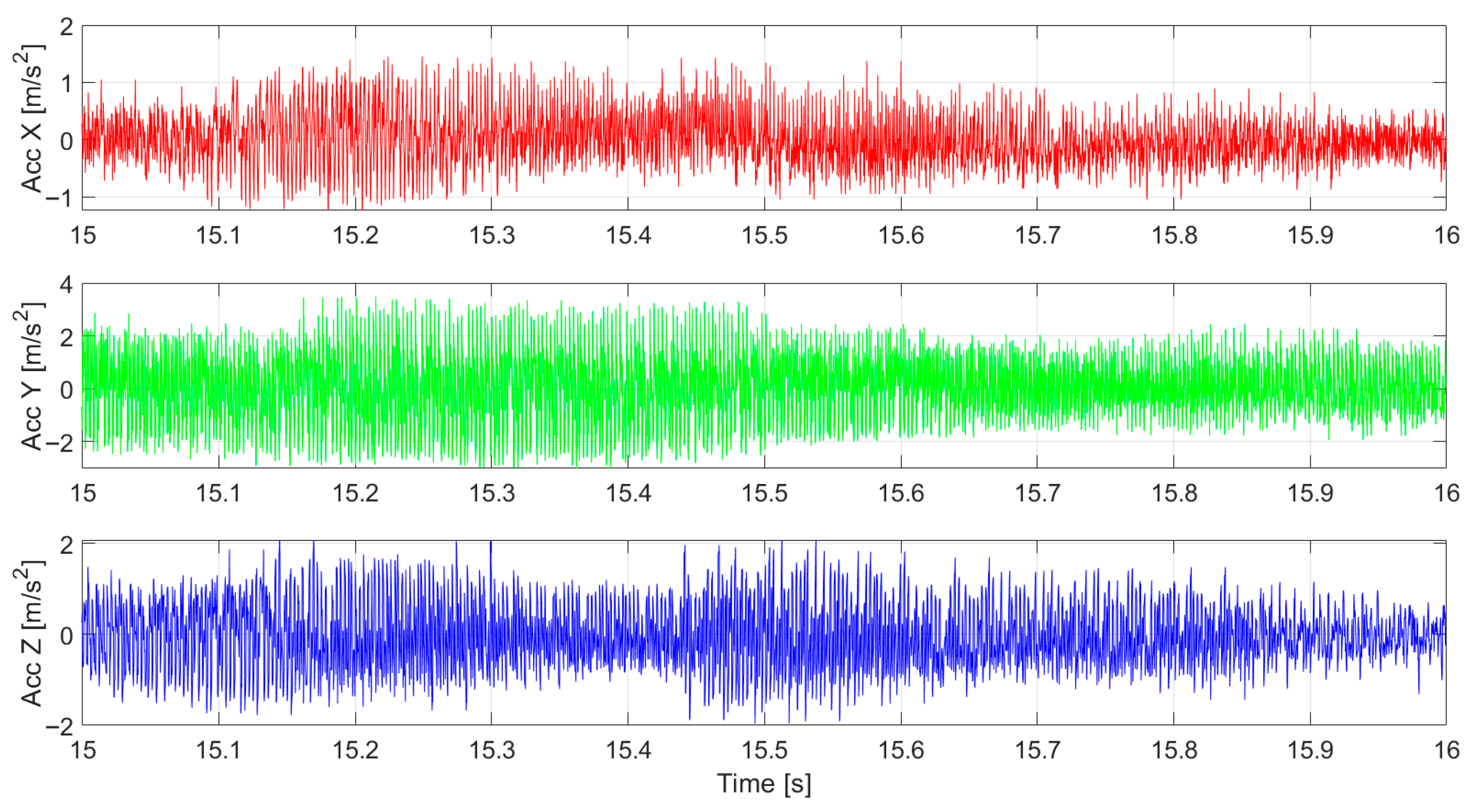
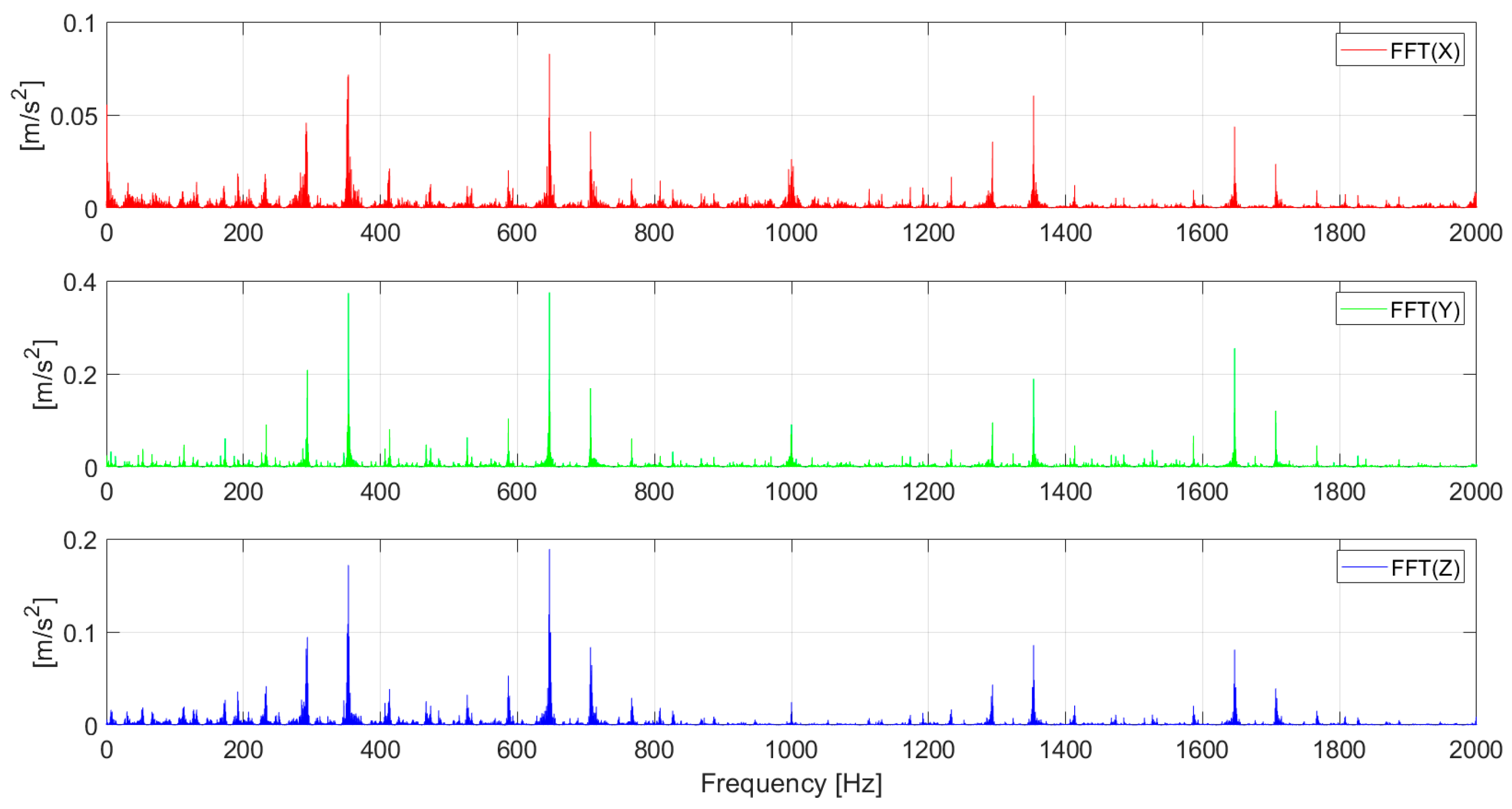
Example measurement data—vibration acceleration time histories in the OX, OY, and OZ directions recorded at a rotational speed of 50 RPM in the 1/16 step control mode —are presented in Figure 8. The FFT characteristics of the analyzed vibration acceleration time histories are shown in Figure 9.
The sensors were set to a range of 2 g and a resolution of 16 bits. The tests compared the effect of operation in full-step, half-step, 1/4 step, 1/8 step, and 1/16 step control modes at 6 different rotational speeds: 1 RPM, 2.5 RPM, 5 RPM, 10 RPM, 25 RPM, and 50 RPM. The selection of the rotational speed and load ranges was intentional and consistent with the objective of the study, which focuses on vibration behavior in the low-speed operating regime of stepper motors. At low speeds, phenomena such as torque ripple, discrete stepping, and resonance are most pronounced, making this range particularly suitable for comparing different control modes. At higher speeds, motor operation becomes more continuous, and the influence of the control strategy on vibration is reduced due to inertia and structural filtering effects.
The applied load (0.5 Nm) was chosen to ensure stable and repeatable operation across all control modes, while avoiding step loss, particularly in lower-resolution modes. This allowed for a consistent comparative analysis under controlled conditions rather than full-load performance evaluation.

3. Results

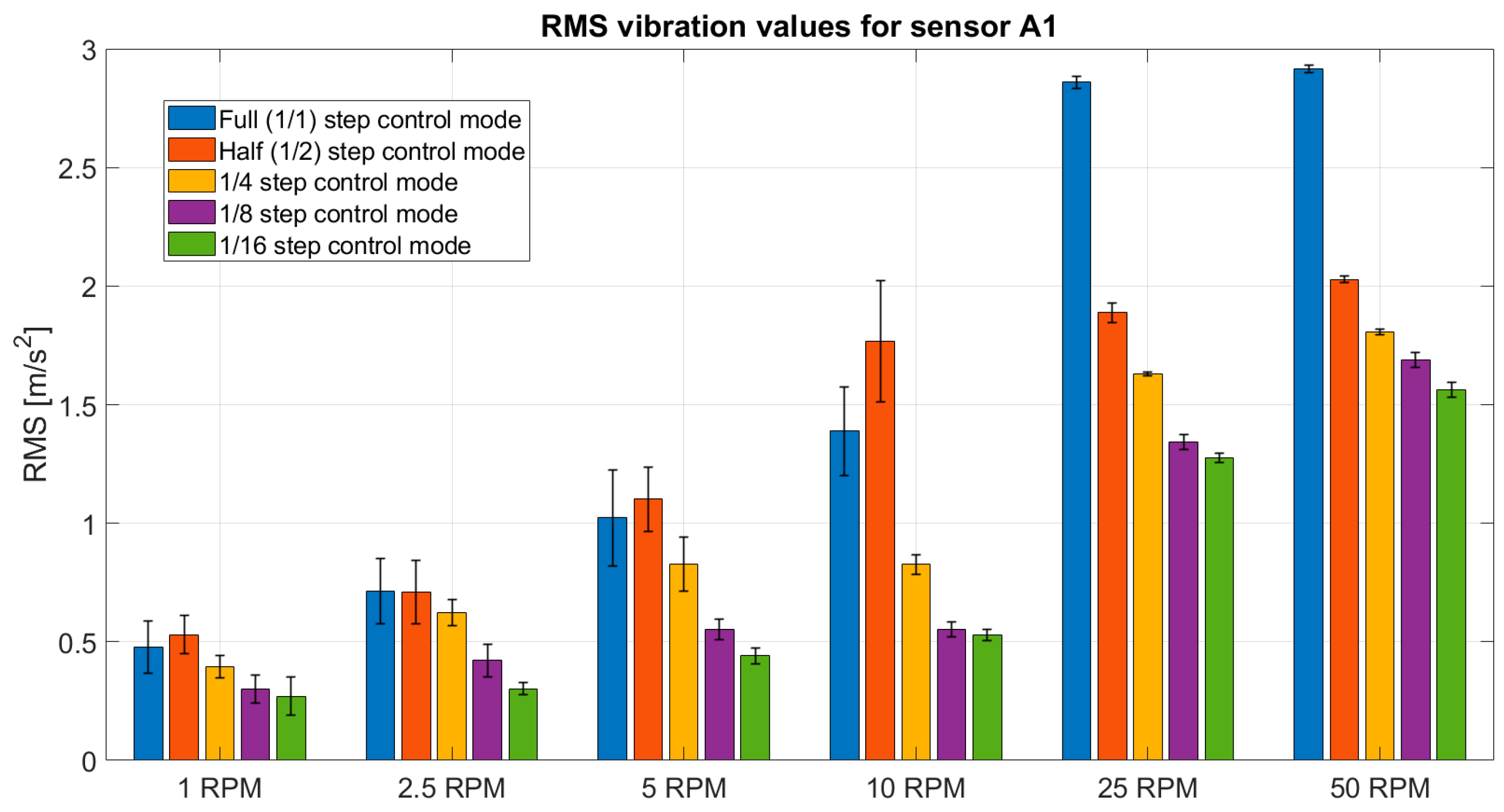
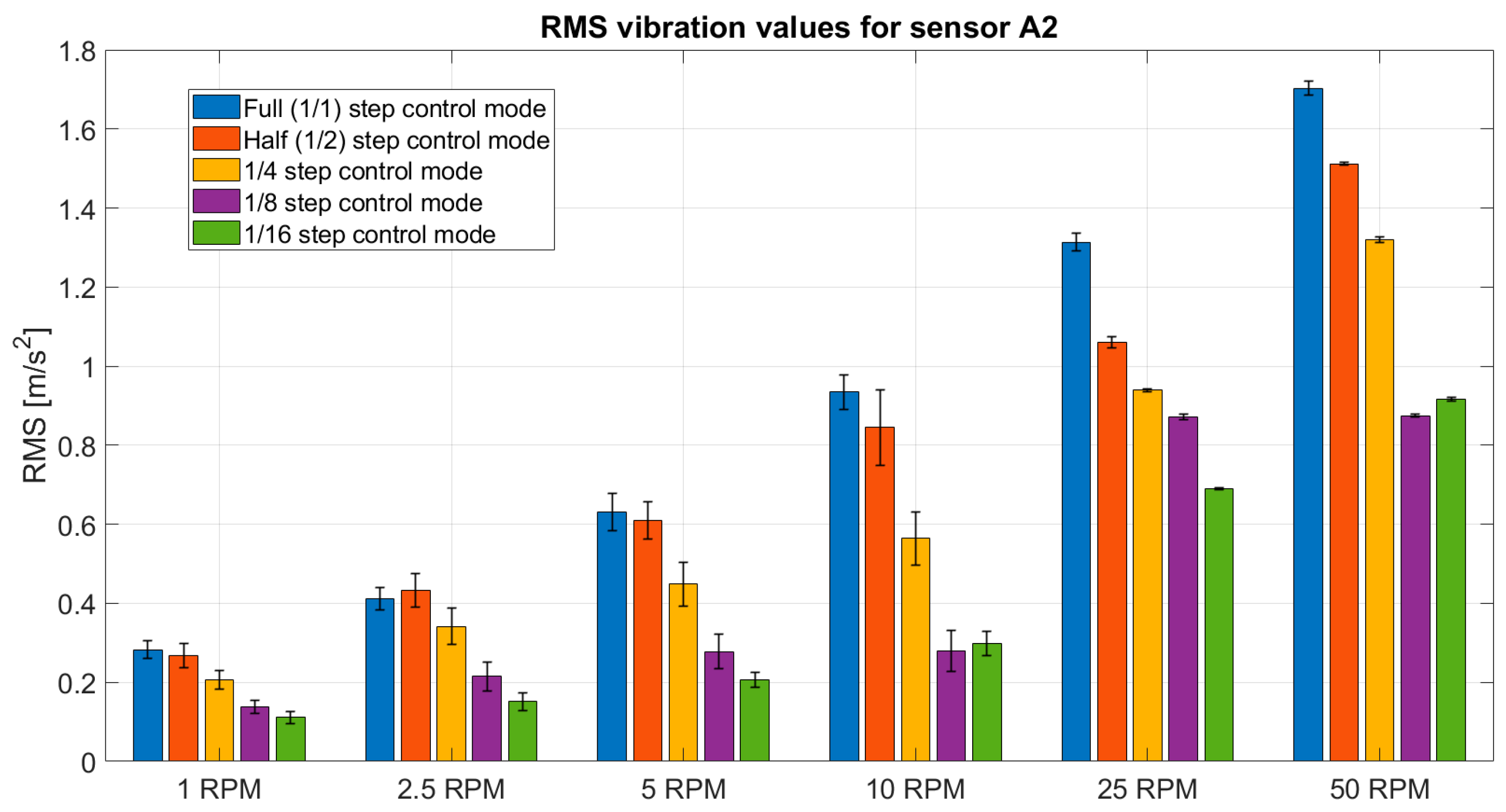
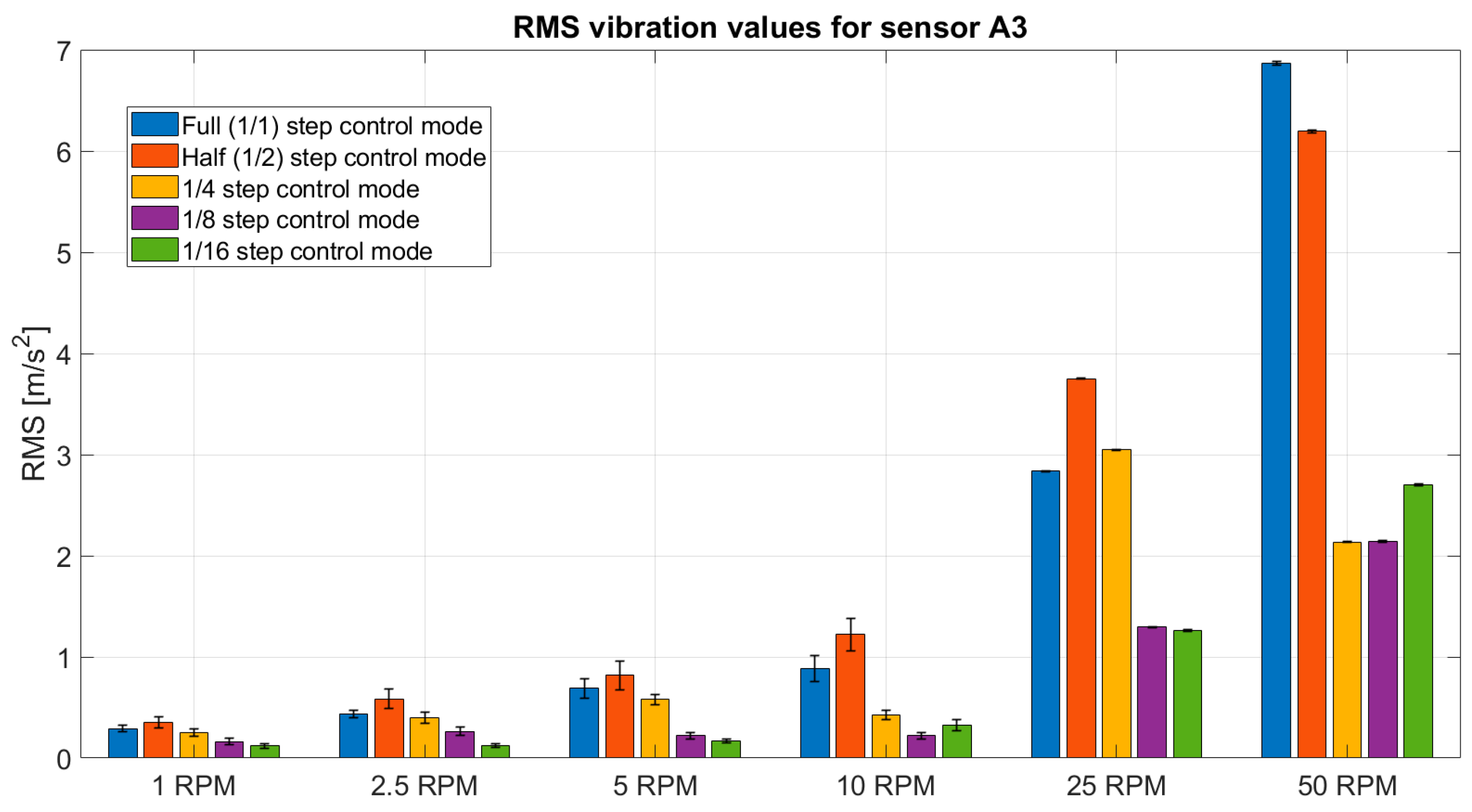
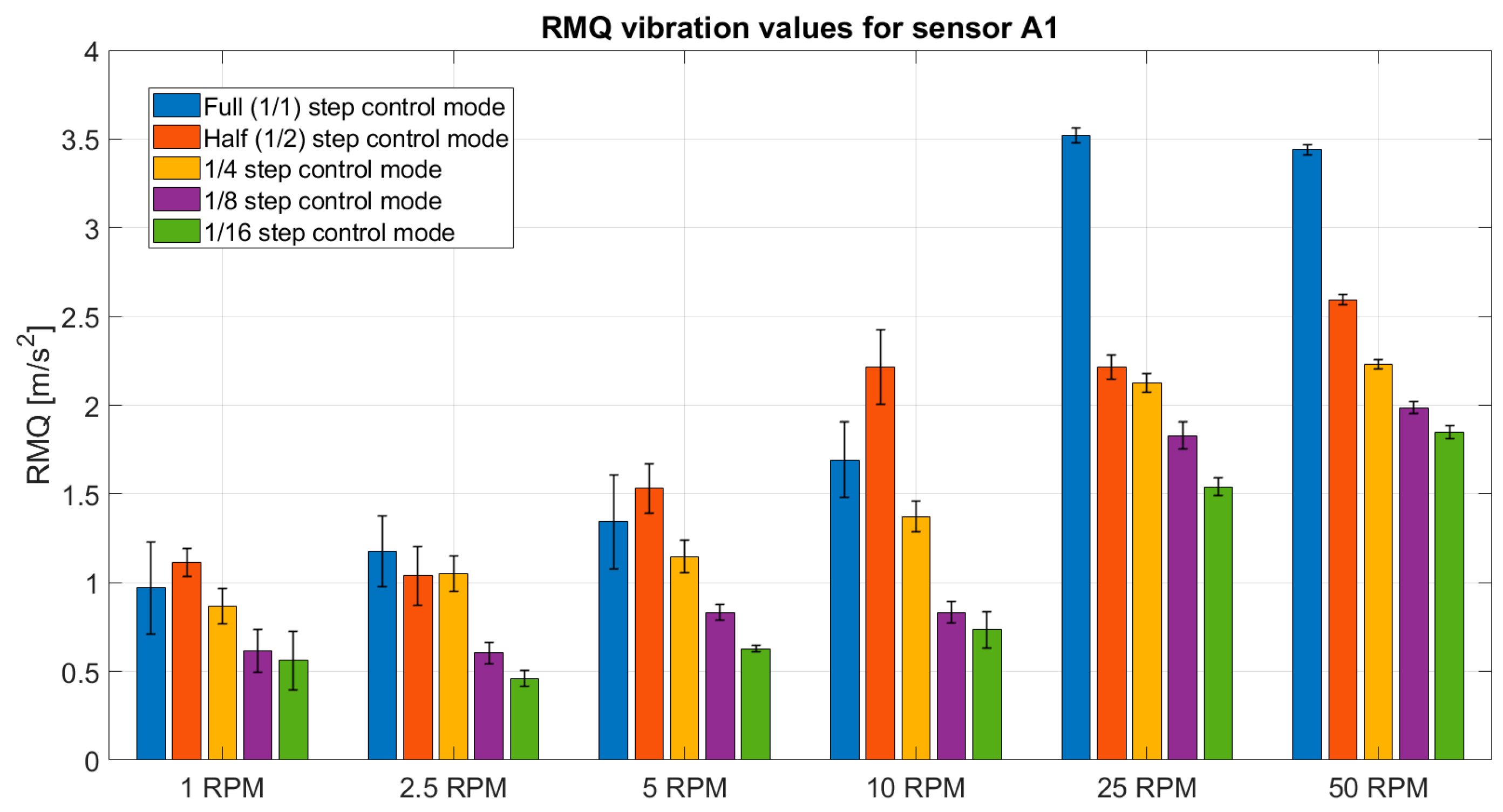
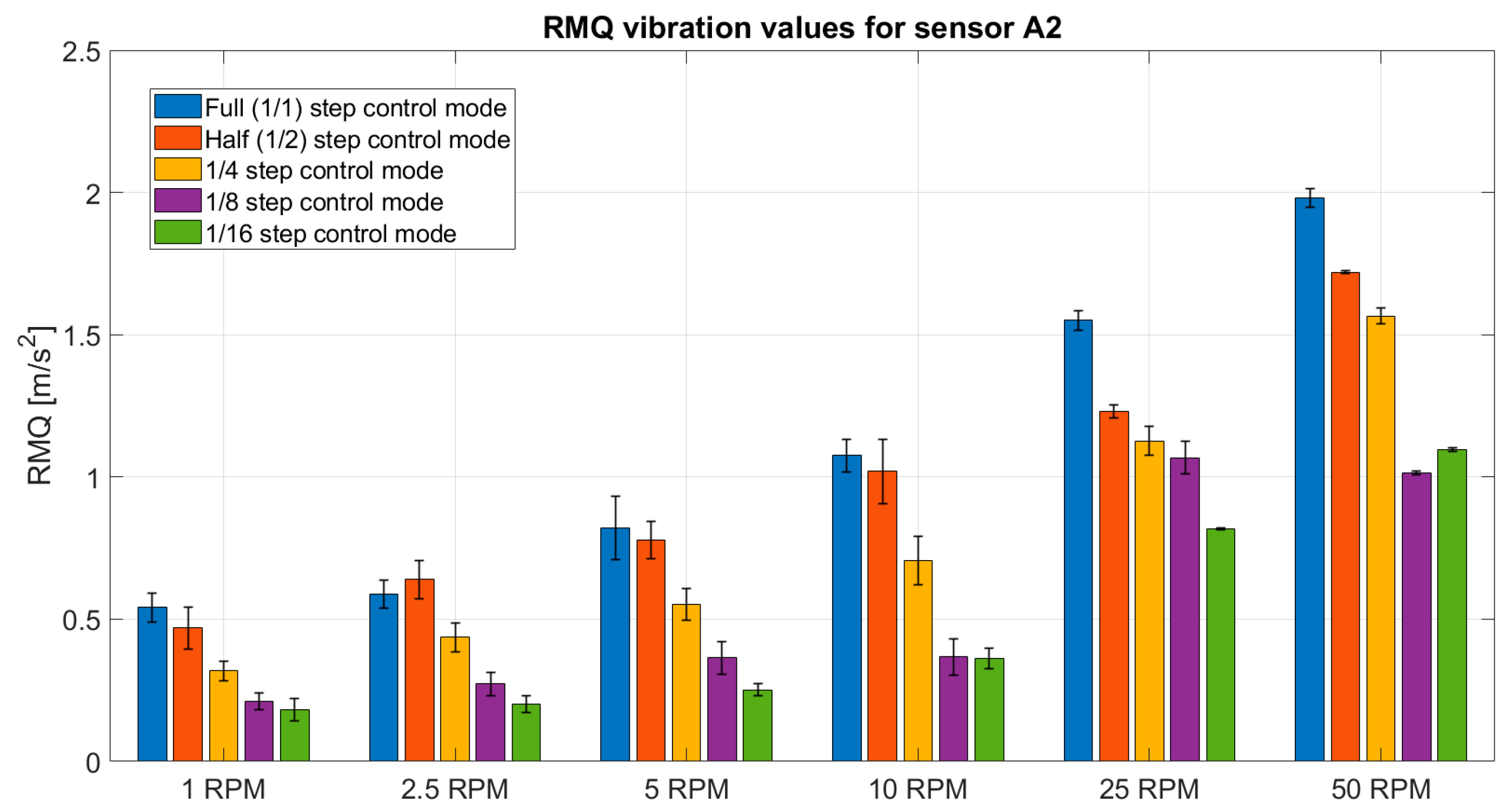
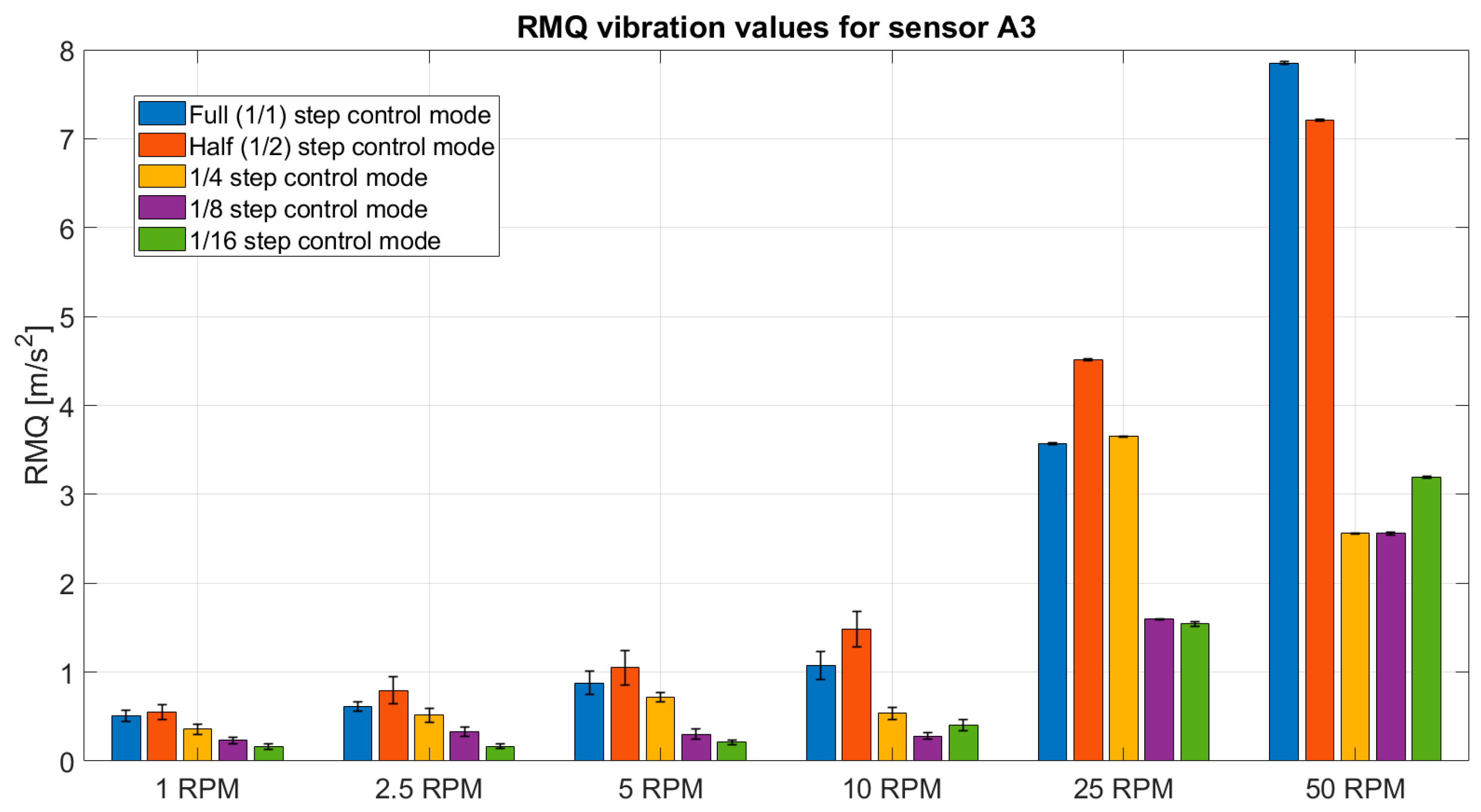
The tables in this chapter present the calculated indicator values derived from the measurements. Table 1, Table 2 and Table 3 contain RMS indicator values, while Table 4, Table 5 and Table 6 show RMQ values. Figure 10, Figure 11, Figure 12, Figure 13, Figure 14 and Figure 15 provide graphical representations of the measurement data from Table 1, Table 2, Table 3, Table 4, Table 5 and Table 6 together with the corresponding standard deviation values. The standard deviation was determined by dividing the analyzed signal into 25 segments of 2.4 s each, and then calculating the RMS and RMQ values for each segment. Based on these results, the mean values and the corresponding standard deviations were obtained.
Each table presents measured values for different speed settings for a single sensor. Specifically, Table 1 and Table 4 contain indicator values for a sensor mounted on the motor housing (A1), while Table 2 and Table 5 present data from a sensor mounted on the test stand frame (A2). Finally, Table 3 and Table 6 show data from the sensor mounted on the cabinet where the test stand is located (A3).

4. Discussion

The obtained results indicate the following system behavior: as the speed increases, the values of the calculated indicators also increase. This trend is observed for both the RMS index (Table 1, Table 2 and Table 3) and the RMQ index (Table 4, Table 5 and Table 6). This phenomenon is a consequence of the increased kinetic energy of the stepper motor shaft, which directly affects the vibration amplitudes. However, the extent of the increase largely depends on the control algorithm used. Importantly, the number of steps in the control algorithm significantly influences the system’s behavior: a higher number of steps results in smaller vibration amplitudes and, consequently, lower indicator values.
This trend is consistent with the fundamental principles of stepper motor operation reported in the literature. In low-resolution control modes, the phase currents contain significant harmonic components, which lead to electromagnetic torque ripple. This torque ripple acts as a primary excitation source for mechanical vibrations. Increasing the microstepping resolution results in a current waveform that more closely approximates a sinusoidal shape, thereby reducing harmonic content and minimizing torque ripple, which in turn leads to lower vibration levels [9].
While comparing the results for the full-step and half-step control modes, the vibration levels appear similar. Moreover, at certain rotational speeds, such as 2.5 or 5 rpm, the RMS and RMQ values are lower for the full step. This behavior may stem from the motor phase supply algorithm. In the full-step control mode, two phases are always powered simultaneously. This provides a more uniform driving force and reduces the excitation of mechanical vibrations. In contrast, in half-step control, the power alternates between one and two phases. As a result, the generated torque is not constant but periodically varies depending on the excitation state, which can consequently lead to increased vibration levels during half-step operation.
The influence of this effect is particularly significant at low rotational speeds, where the discrete nature of torque generation is not averaged by inertia. Under such conditions, torque variations can directly translate into oscillatory motion of the rotor and increased vibration amplitudes. At higher rotational speeds, the rotor’s inertia tends to smooth out torque variations; however, the interaction between excitation frequency and system dynamics may still lead to increased vibration, especially in the presence of structural resonances. Therefore, although half-step control may provide higher positioning resolution than full-step, it does not necessarily ensure lower vibration levels, particularly under conditions where torque ripple becomes a dominant excitation source.
Analysis of the data from Table 1 and Table 4 demonstrates that the lowest vibration level was achieved at the 1/16 step size, consistent across all tested speeds. At this step size, the current flowing through the motor phases closely resembles a sine wave, resulting in smoothly generated torque.
Considering the values from Table 2, Table 3, Table 5 and Table 6 for speeds up to 25 rpm, the lowest vibration level generated by the stepper motor also occurs at the 1/16 step. However, at a speed of 50 rpm, the lowest vibration level is observed for the 1/8 step. This difference may be attributed to the distinct locations of the A2 and A3 accelerometers and the influence of the test bench frame dynamics. Additionally, the rapid phasing of the stepper motor at high speeds may have some influence. At such high speeds, the switching frequency is sufficiently high that the motor shaft’s inertia causes jumps between intermediate shaft positions (1/16 of a step).
At higher speeds, the rotor and load inertia, combined with the higher frequency of the microstepping signal, may cause the mechanical inertia of the system to prevent the rotor from keeping up with the signal, leading to increased vibration amplitudes. This phenomenon has been described, among others, by Arva et al., who demonstrated the influence of inertia on the occurrence of vibrations in stepper motors operating at low and medium speeds [29]. The resonant frequency of the system, when using 1/16 microstepping at a constant rotational speed, is higher than that with 1/8 microstepping, which may cause the system to approach its natural resonant frequency, potentially leading to increased vibrations.
According to analyses by Portescap [30] and Oriental Motor [31], system resonance may result in a sudden increase in vibration amplitude within specific frequency ranges, typically from several hundred Hz to a few kHz. Phase delay and limitations of microstepping control—at higher control frequencies may lead to phase shifts and nonlinearities in the control signal, which can influence microstepping accuracy and contribute to increased system instability.
These phenomena have been discussed, for instance, in drive dynamics analyses presented in [32,33]. A detailed dynamic analysis of the system was not the primary objective of this study. The research focused on the experimental comparison of different microstepping modes in terms of their impact on stability and vibration amplitudes under conditions approximating practical applications.
This finding suggests that at higher speeds, control algorithms with fewer intermediate steps may be more suitable. However, further research work is required to confirm this hypothesis.

5. Conclusions

This paper examines stepper motor control strategies in relation to the vibration levels generated by the drive and transmitted to surrounding structural components. A brief overview of fundamental stepper motor control techniques is provided. The test stand developed for stepper motor operation and the associated vibration measurement system are described in detail. The measurement procedure is outlined, and the metrics used to quantitatively assess vibration levels are introduced. The recorded results are presented in tabular form.
The main contribution of this work is a systematic experimental comparison of commonly used open-loop control strategies in terms of their influence on vibration levels in a real electromechanical system, including the effect of structural elements and measurement location.
The conducted research leads to the following conclusions:
  • Vibrations for a half-step control mode are usually slightly higher than those for a full-step mode.
  • Increasing the control resolution reduces vibrations (as seen in all indicators: aRMS, aRMQ).
  • 1/16 step control mode results in a reduction of vibrations by (approximately) half compared to the full-step and half-step control modes. However, the results also indicate that this relationship is not universal. In selected cases, particularly at higher rotational speeds, lower microstepping resolution may lead to comparable or even lower vibration levels.
  • The highest vibrations were observed on the structural cabinets, suggesting proximity to the resonance frequency. However, even in this case, changing the control mode significantly reduced vibrations.
These findings indicate that the effectiveness of microstepping as a vibration reduction technique depends on operating conditions and system dynamics. Therefore, selecting the highest available microstepping resolution does not necessarily guarantee optimal vibration performance.
The presented results provide practical guidance for selecting control strategies in applications where vibration reduction is important. Future work may include detailed dynamic analysis of the system and investigation of adaptive approaches that account for operating conditions and resonance effects.

Author Contributions

Conceptualization, G.G., K.G., J.G. and J.I.; methodology, G.G., K.G., J.G. and J.I.; software, G.G. and K.G.; validation, J.G. and J.I.; formal analysis, G.G., K.G., J.G. and J.I.; investigation, G.G., K.G., J.G. and J.I.; resources, G.G., K.G., J.G. and J.I.; data curation, G.G., K.G., J.G. and J.I.; writing—original draft preparation, G.G., K.G. and J.G.; writing—review and editing, J.I.; visualization, G.G., K.G., J.G. and J.I.; supervision, G.G., K.G., J.G. and J.I.; project administration, J.I.; funding acquisition, J.I. All authors have read and agreed to the published version of the manuscript.

Funding

The article processing charge (APC) was funded by the National Centre for Research and Development (NCBR) for financial support of the research carried out within the framework of the INNOGLOBO/InnoIndie project: “System for monitoring the conditions of transport of sensitive materials, including food and hazardous materials” (INNOGLOBO/I/132/InnoIndie/2022).

Institutional Review Board Statement

Not applicable.

Informed Consent Statement

Not applicable.

Data Availability Statement

The raw data supporting the conclusions of this article will be made available by the authors on request.

Acknowledgments

The authors would like to thank the National Centre for Research and Development (NCBR) for financial support of the research carried out within the framework of the INNOGLOBO/InnoIndie project: “System for monitoring the conditions of transport of sensitive materials, including food and hazardous materials” (INNOGLOBO/I/132/InnoIndie/2022).

Conflicts of Interest

The authors declare no conflicts of interest.

Abbreviations

The following abbreviations are used in this manuscript:
FoCField-Oriented Control
MTTested motor
PSPower supply
TSTorque sensor
TSDTorque sensor display
MLElectric drive with a controller (MLD) serving as a load
EBElectric brake
CPControl panel
FPGAField Programmable Gate Array
SDStand display
SCTest stand controller
RLCMeasurement bridge
RMSRoot Mean Square
RMQRoot Mean Quad

References

  1. Góra, G.; Petko, M.; Gac, K.; Górski, J.; Iwaniec, J.; Mańka, M.; Zabierowski, W. The impact of computational accuracy on the quality of direct drive control. Electronics 2024, 13, 1052. [Google Scholar] [CrossRef]
  2. Zhang, X.; Li, Y.; Wang, H.; Chen, Z. Analysis on Vibration and Resonance Characteristics of a Low-Speed 3-Phase Stepper Motor. IEEE Access 2020, 8, 110123–110132. [Google Scholar] [CrossRef]
  3. Kołota, J.; Stępień, S.; Bernatt, J. Sprzężony model magneto-mechaniczny silnika krokowego o zmiennej reluktancji. Przegląd Elektrotechniczny 2009, 4, 210–213. [Google Scholar]
  4. Arias, A.; Caum, J.; Ibarra, E.; Grinó, R. Reducing the Cogging Torque Effects in Hybrid Stepper Machines by Means of Resonant Controllers. IEEE Trans. Ind. Electron. 2019, 66, 2603–2611. [Google Scholar] [CrossRef]
  5. Szewczyk, K.; Kościelniak, A.; Kot, R. Analysis of magnetic circuits for a hybrid stepper motor with cogging torque reduction. Przegląd Elektrotechniczny 2012, 5, 44–46. [Google Scholar]
  6. Peng, Z.; Bi, C.; Fang, L.; Xiao, L. Optimization of Three Phase Hybrid Stepper Motors for Noise Reduction. Sensors 2022, 22, 356. [Google Scholar] [CrossRef]
  7. You, J.; Kim, J. Design of a low-vibration micro-stepping controller for dom-camera. In Proceedings of the 2009 International Conference on Mechatronics and Automation, Changchun, China, 9–12 August 2009. [Google Scholar]
  8. Yoo, J.W.; Kim, J.H.; Kim, J.H.; Kim, E. Design of a Variable Reference Current Controller for Micro-stepping Motor Based on Vibration and Missing Step Characteristic Data. Int. J. Precis. Eng. Manuf. 2023, 24, 877–886. [Google Scholar] [CrossRef]
  9. Peng, Z.; Bi, C.; Yao, K.; Fang, L. Reducing acoustic noise of 3-phase hybrid stepper motor with drive mode. Electr. Eng. 2022, 104, 833–841. [Google Scholar] [CrossRef]
  10. Bednarski, B.; Jackiewicz, K.; Gałecki, A. Influence of Microstepping Signal Shape on Shaft Movement Precision and Torque Variation of the Stepper Motor. Energies 2021, 14, 6107. [Google Scholar] [CrossRef]
  11. Pillans, J. Reducing Position Errors by Vibration Optimization of Stepper Motor Drive Waveforms. IEEE Trans. Ind. Electron. 2021, 68, 5176–5183. [Google Scholar]
  12. Merino, J.S.; Galvex, P.S.; Butcher, M.; Di Castro, M.; Masi, A. Vibration reduction techniques for stepper motors at standstill in high precision applications. In Proceedings of the IECON 2019—45th Annual Conference of the IEEE Industrial Electronics Society, Lisbon, Portugal, 14–17 October 2019; pp. 1459–1464. [Google Scholar]
  13. Zhang, Y.; Xu, D.; Liu, J.; Wang, X. A Compound Control for Hybrid Stepper Motor Based on PI and Sliding Mode Control. Energies 2020, 13, 163536–163550. [Google Scholar]
  14. Hojati, M.; Baktash, A. Design and fabrication of a new hybrid stepper motor with significant improvements in torque density. Eng. Sci. Technol. Int. J. 2021, 24, 1116–1122. [Google Scholar] [CrossRef]
  15. Le, K.M.; Van Hoang, H.; Jeon, J.W. An Advanced Closed-Loop Control to Improve the Performance of Hybrid Stepper Motors. IEEE Trans. Power Electron. 2017, 32, 7244–7255. [Google Scholar] [CrossRef]
  16. Ricci, S.; Meacci, V. Simple Torque Control Method for Hybrid Stepper Motors Implemented in FPGA. Electronics 2018, 7, 242. [Google Scholar] [CrossRef]
  17. Bendjedia, M.; Ait-Amirat, Y.; Walther, B.; Berthon, A. Position Control of a Sensorless Stepper Motor. IEEE Trans. Power Electron. 2012, 27, 578–587. [Google Scholar] [CrossRef]
  18. Khan, T.A.; Taj, T.A.; Ijaz, I. Hybrid Stepper Motor and its Controlling Techniques a Survey. In Proceedings of the 2014 IEEE NW Russia Young Researchers in Electrical and Electronic Engineering Conference, St. Petersburg, Russia, 3–5 February 2014; pp. 79–83. [Google Scholar]
  19. Jeong, Y.W.; Lee, Y.; Chung, C.C. A survey of advanced control methods for permanent magnet stepper motors. J. Mar. Sci. Technol. 2020, 28, 2. [Google Scholar] [CrossRef]
  20. Acarnley, P. Stepping Motors—A Guide to Theory and Practice, 4th ed.; The Institution of Electrical Engineers: London, UK, 2002. [Google Scholar]
  21. Rogers, M.; Hrovat, K.; McPerson, K.; Moskowitz, M.E.; Reckart, T. Accelerometer Data Analysis and Presentation Techniques; Technical Report; NASA-TM-113173; National Aeronautics and Space Administration: Washington, DC, USA, 1997; Volume 2, pp. 2–13. [Google Scholar]
  22. Góra, G.; Iwaniec, M.; Kulinowski, P.; Gac, K. Vibration impact on people transported by mining beltconveyors. Vib. Phys. Syst. 2020, 31, 20201092019. [Google Scholar]
  23. Choi, J.H.; Jang, Y.J. Ride comfort evaluation of high-speed railway passenger car by car body floor vibration. Mech. Syst. Signal Process. 2018, 108, 304–318. [Google Scholar] [CrossRef]
  24. Mansfield, N.J. Human Response to Vibration; CRC Press: Boca Raton, FL, USA, 2005. [Google Scholar]
  25. Kowalska-Koczwara, A.; Stypuła, K. New Polish Guidelines Regarding Human Exposure to Vibrations in Buildings. Czas. Tech. 2019, 7, 97–109. [Google Scholar] [CrossRef]
  26. BS 6841:1987; Measurement and Evaluation of Human Exposure to Whole-Body Mechanical Vibration and Repeated Shock. British Standards Institution: London, UK, 1987.
  27. ISO 2631-1:1997; Mechanical Vibration and Shock—Evaluation of Human Exposure to Whole-Body Vibration—Part 1: General Requirements. International Organization for Standardization: Geneva, Switzerland, 1997.
  28. Mansfield, N.J.; Maeda, S. Evaluating automobile road vibrations using BS 6841 and ISO 2631 comfort criteria. Ind. Health 2005, 43, 495–504. [Google Scholar] [CrossRef]
  29. Arva, D.F.; Tímea, R.; Csébfalvi, A. Analysis on vibration and resonance characteristics of a low-speed 3-phase stepper motor. In Proceedings of the 10th International Conference on Electronics, Computers and Artificial Intelligence (ECAI), Iași, Romania, 28–30 June 2018. [Google Scholar] [CrossRef]
  30. Portescap. Avoiding Resonance with Stepper Motors. 2019. Available online: https://www.portescap.com/en/resources/motor-specifications-and-literature/white-papers/avoiding-resonance-with-stepper-motors (accessed on 16 April 2026).
  31. Oriental Motor. Vibration Characteristics of Stepper Motors. Technical Whitepaper. Available online: https://www.orientalmotor.com/products/pdfs/SteppingMotors/SectionBIntro_B2-B42.pdf (accessed on 31 July 2025).
  32. Automation.com. Strategies To Avoid Stepper Motor Resonance Problems. Available online: https://www.automation.com/article/strategies-avoid-stepper-motor-resonance-problems (accessed on 16 April 2026).
  33. Wang, J.; Zhang, W. Vibration suppression in microstepping control of stepper motors using feedforward compensation. Mechatronics 2016, 36, 21–28. [Google Scholar]
Figure 1. Scheme of a two-phase hybrid stepper motor.
Applsci 16 04561 g001
Figure 2. Methods of controlling a stepper motor: full-step control mode (a), wave control mode (b), half-step control mode (c), microstepping control mode (d).
Applsci 16 04561 g002
Figure 3. The waveforms of phase currents for different control techniques (a), the waveforms of the torque acting on the stator based on the phase currents (b).
Applsci 16 04561 g003
Figure 4. The test stand used in the research.
Applsci 16 04561 g004
Figure 5. The 4-channel vibration measurement module.
Applsci 16 04561 g005
Figure 6. Drive system: (a) stepper motor; (b) stepper motor controller.
Applsci 16 04561 g006
Figure 7. The positioning of sensors during the experiments.
Applsci 16 04561 g007
Figure 8. Example measurement data—vibration acceleration time histories in the OX, OY, and OZ directions recorded at a rotational speed of 50 RPM in the 1/16 step control mode.
Applsci 16 04561 g008
Figure 9. The FFT characteristics of the vibration acceleration time histories presented in Figure 8.
Applsci 16 04561 g009
Figure 10. Graphical representation of RMS vibration values for sensor A1 with the corresponding standard deviation values.
Applsci 16 04561 g010
Figure 11. Graphical representation of RMS vibration values for sensor A2 with the corresponding standard deviation values.
Applsci 16 04561 g011
Figure 12. Graphical representation of RMS vibration values for sensor A3 with the corresponding standard deviation values.
Applsci 16 04561 g012
Figure 13. Graphical representation of RMQ vibration values for sensor A1 with the corresponding standard deviation values.
Applsci 16 04561 g013
Figure 14. Graphical representation of RMQ vibration values for sensor A2 with the corresponding standard deviation values.
Applsci 16 04561 g014
Figure 15. Graphical representation of RMQ vibration values for sensor A3 with the corresponding standard deviation values.
Applsci 16 04561 g015
Table 1. Comparison of RMS vibration values for sensor A1 (placed on the stepper drive).
Velocity
[RPM]
Full (1/1)
Step Control Mode
Half (1/2)
Step Control Mode
1/4
Step Control Mode
1/8
Step Control Mode
1/16
Step Control Mode
10.4770.5300.3950.3010.271
2.50.7130.7090.6240.4210.302
51.0231.1020.8270.5520.441
101.3881.7671.0270.5520.529
252.8591.8881.6291.3421.276
502.9162.0281.8061.6891.563
Table 2. Comparison of RMS vibration values for sensor A2 (placed on the structural element of the main part of the test stand).
Velocity
[RPM]
Full (1/1)
Step Control Mode
Half (1/2)
Step Control Mode
1/4
Step Control Mode
1/8
Step Control Mode
1/16
Step Control Mode
10.2820.2680.2060.1380.111
2.50.4120.4330.3420.2150.151
50.6310.6100.4490.2780.207
100.9350.8450.5640.2800.299
251.3141.0600.9400.8720.689
501.7031.5121.3210.8750.916
Table 3. Comparison of RMS vibration values for sensor A3 (placed on the surface of the cabinets forming the base of the main part of the test stand).
Velocity
[RPM]
Full (1/1)
Step Control Mode
Half (1/2)
Step Control Mode
1/4
Step Control Mode
1/8
Step Control Mode
1/16
Step Control Mode
10.2930.3550.2530.1650.120
2.50.4390.5840.3980.2650.123
50.6910.8190.5810.2230.169
100.8851.2210.4240.2230.328
252.8383.7523.0491.2941.264
506.8686.1952.1342.1392.703
Table 4. Comparison of RMQ vibration values for sensor A1 (placed on the stepper drive).
Velocity
[RPM]
Full (1/1)
Step Control Mode
Half (1/2)
Step Control Mode
1/4
Step Control Mode
1/8
Step Control Mode
1/16
Step Control Mode
10.9701.1130.8670.6170.562
2.51.1761.0401.0510.6040.461
51.3431.5311.1470.8330.627
101.6932.2151.3720.8330.734
253.5212.2152.1281.8291.541
503.4402.5952.2291.9861.848
Table 5. Comparison of RMQ vibration values for sensor A2 (placed on the structural element of the main part of the test stand).
Velocity
[RPM]
Full (1/1)
Step Control Mode
Half (1/2)
Step Control Mode
1/4
Step Control Mode
1/8
Step Control Mode
1/16
Step Control Mode
10.5410.4690.3180.2110.183
2.50.5880.6390.4360.2720.201
50.8210.7780.5510.3640.252
101.0751.0200.7060.3680.362
251.5501.2301.1271.0680.817
501.9801.7191.5651.0141.096
Table 6. Comparison of RMQ vibration values for sensor A3 (placed on the surface of the cabinets forming the base of the main part of the test stand).
Velocity
[RPM]
Full (1/1)
Step Control Mode
Half (1/2)
Step Control Mode
1/4
Step Control Mode
1/8
Step Control Mode
1/16
Step Control Mode
10.5040.5470.3580.2310.165
2.50.6130.7960.5140.3310.165
50.8791.0500.7160.3040.212
101.0741.4830.5390.2830.406
253.5744.5133.6491.5961.545
507.8537.2092.5632.5613.193
Disclaimer/Publisher’s Note: The statements, opinions and data contained in all publications are solely those of the individual author(s) and contributor(s) and not of MDPI and/or the editor(s). MDPI and/or the editor(s) disclaim responsibility for any injury to people or property resulting from any ideas, methods, instructions or products referred to in the content.