In recent decades, the increasing societal focus on dental aesthetics has significantly influenced the development of modern dental care. Patients now emphasise the visual appeal of their smiles more than ever, prompting clinicians and researchers to prioritise conservative treatment methods. As a result, minimally invasive aesthetic procedures—especially tooth whitening—have become common alternatives to more invasive restorative options like veneers or full crowns, which are primarily performed for cosmetic reasons. Tooth discolouration may stem from various intrinsic and extrinsic factors. Common external causes include pigmented compounds found in beverages such as tea and coffee; certain medications, particularly tetracycline antibiotics; and various food colourants that can penetrate the enamel and cause long-lasting stains. Tobacco consumption also plays a significant role, as chemicals in smoke can similarly accumulate on dental surfaces. Moreover, physiological ageing processes affect tooth colour over time; progressive enamel wear and the build-up of chromogenic substances can enhance the visibility of the underlying yellow dentin.
1.1. Aim of the Study
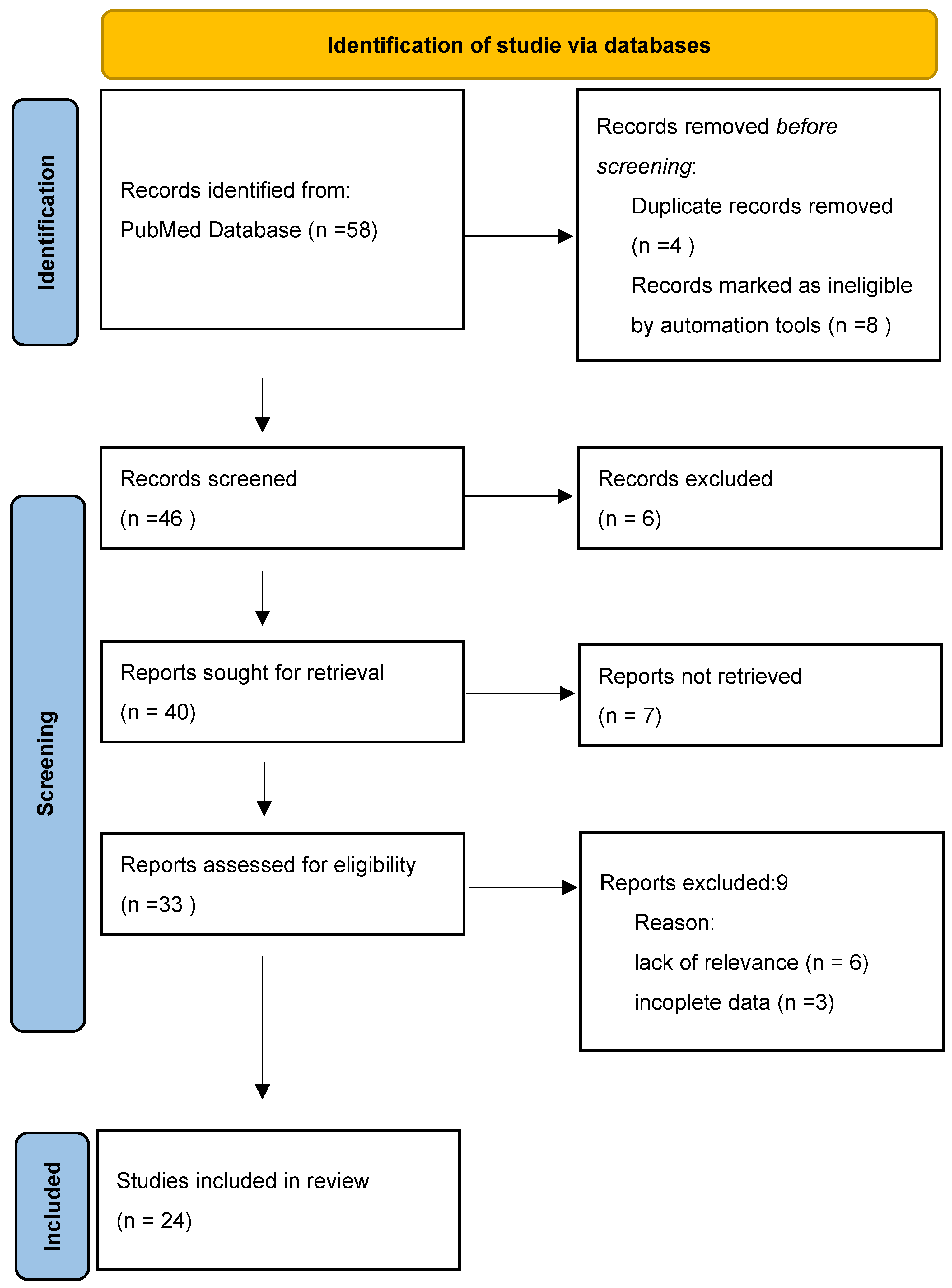
The aim of this study was to identify irradiation parameters that, when combined with bleaching agents, produce the most effective whitening outcomes while simultaneously protecting dental tissues and ocular structures. To accomplish this, a stepwise analytical approach was adopted, focusing on evaluating various bleaching protocols using previously published systematic reviews, with each section providing respective sub-conclusions. A detailed description of the search and PRISMA chart is in
Appendix A and a summary of cited articles is provided in
Table S1 in the Supplementary Materials.
1.1.1. Comparison of In-Office and At-Home Bleaching Techniques: An Umbrella Review of Efficacy and Post-Operative Sensitivity [7]
This umbrella review aimed to evaluate the effectiveness and potential side effects of various tooth-whitening methods carried out in dental clinics (IO) or at home (AH). The analysis primarily concentrated on changes in tooth colour and the incidence of tooth sensitivity following treatment.
A total of 28 systematic reviews were analysed, collectively covering 416 individual studies. All included publications were systematic reviews, with some also comprising meta-analyses of randomised controlled trials (RCTs) or quasi-randomised controlled trials.
The study population included patients undergoing external bleaching of permanent vital teeth. The interventions assessed comprised both in-office and at-home whitening methods using bleaching agents with different chemical compositions and concentrations.
The main findings of the umbrella review are summarised as follows:
Overall, the analysed systematic reviews showed no consistent difference in colour improvement between bleaching gels with higher concentrations (15–44% carbamide peroxide and 6–38% hydrogen peroxide) and those with lower concentrations (5–15% carbamide peroxide and 5.5–6% hydrogen peroxide).
Significant variability was observed in treatment duration across the included studies, with reported application times ranging from approximately 30 min to 10 h, depending on the protocol, including both daytime and overnight use.
Various activation technologies were examined, including halogen light sources, laser systems, combined LED/laser devices, violet LEDs, and metal–halide lamps. Several systematic reviews concluded that these light-based activation methods did not consistently produce significant improvements in whitening results compared with conventional bleaching procedures.
No consistent differences in whitening results have been observed between bleaching agents with higher and lower concentrations of hydrogen peroxide (HP) or carbamide peroxide (CP). Additionally, bleaching procedures that employ light activation alongside lower concentrations of bleaching agents seem to achieve outcomes similar to those of protocols using highly concentrated gels. Similarly, when assessing in-office bleaching protocols, studies have not shown significant differences between single-application methods and protocols involving multiple applications in terms of tooth colour change or sensitivity.
Sub-conclusion: Current evidence indicates that different bleaching approaches deliver comparable whitening results. Furthermore, no notable differences have been found between in-office and at-home bleaching methods regarding final colour enhancement or post-treatment sensitivity.
1.1.2. Tooth-Bleaching: A Review of the Efficacy and Adverse Effects of Various Tooth-Whitening Products [8]
This literature review concentrated on aesthetic tooth whitening. It aimed to summarise the available information on common bleaching techniques, their effectiveness, and potential adverse effects on both dental hard tissues and surrounding soft tissues.
Effectiveness of whitening agents: Bleaching products containing carbamide peroxide (CP) or hydrogen peroxide (HP) are available in various concentrations. Evidence suggests that formulations with similar peroxide levels generally achieve comparable whitening results, while the occurrence of adverse reactions remains relatively low.
Influence on restorative materials: The widespread use of peroxide-based whitening agents has raised concerns about their interactions with restorative materials. Several laboratory studies have investigated the effects of CP (10–16%) and HP (30–35%) on the surface characteristics, colour stability, and physical properties of different restorative materials.
Bleaching agents operate through oxidation reactions that break down surface pigments and amine-containing compounds. These chemical processes may modify the appearance of restorative materials. Additionally, oxidation of the polymer matrix in resin-based restorations can increase surface porosity.
Another reported effect of bleaching procedures is an increased release of mercury from amalgam restorations. Some studies have suggested that applying a protective varnish, such as Copalite, to amalgam restorations before bleaching may reduce the amount of mercury released into the surrounding environment.
Effect on bond strength: The influence of bleaching procedures on the shear and tensile bond strength of composite restorations to enamel and dentin has been extensively studied. Most research indicates that when composite restorations are bonded immediately after bleaching with HP or CP, bond strength can be significantly reduced.
1.1.3. Does Orthodontic Treatment Have a Permanent Effect on Tooth Colour? A Systematic Review and Meta-Analysis [9]
The aim of this systematic review was to assess whether orthodontic treatment with fixed appliances has a lasting effect on tooth colour.
A comprehensive search was carried out across nine scientific databases up to May 2017 to identify clinical cohort studies examining the relationship between fixed orthodontic appliances and changes in tooth colour.
The final analysis incorporated three non-randomised studies and one randomised clinical trial, involving a total of 138 participants (46% male, 54% female) with a mean age of 15.7 years. The findings indicated that tooth colour might change during or after orthodontic treatment. However, the overall quality of the available evidence was deemed very low due to methodological limitations, including non-randomised study designs, potential bias, and imprecision in the reported data.
Further analysis of the available datasets revealed clinically detectable differences in treatment-related colour changes depending on the type of adhesive used, particularly between chemically cured and light-cured systems, as well as among different groups of teeth.
Sub-conclusion:
Based on the current in vivo clinical evidence, treatment with fixed orthodontic appliances seems to be linked to statistically significant changes in tooth colour. These colour changes are not always clinically apparent, and the extent of change may differ depending on the bonding material used and the specific teeth affected. However, the available evidence remains limited and is mostly derived from studies with methodological flaws. Therefore, further well-designed research is necessary to better understand the impact of orthodontic treatment on tooth colour and to find strategies that could minimise or prevent these changes.
1.1.4. Efficacy of Products for Bleaching and Whitening Under Orthodontic Brackets [10]
The objective of this investigation was to evaluate the effectiveness of various whitening and bleaching products applied to teeth with orthodontic brackets. The products tested included the following whitening methods: WTsi—whitening toothpaste containing hydrated silica, WThp—whitening toothpaste with 2% hydrogen peroxide, OB—professional in-office bleaching using 35% hydrogen peroxide, and HB—home bleaching with 22% carbamide peroxide. Colour measurements were performed with an Easyshade spectrophotometer on two areas of the buccal tooth surface: the enamel located directly beneath the orthodontic bracket (experimental area) and the enamel surrounding the bracket (control area).
The findings showed that noticeable changes in tooth colour occurred even with metal orthodontic brackets present. Effective whitening was achieved with hydrated silica toothpaste, as well as with both professional in-office bleaching using 35% hydrogen peroxide and at-home bleaching with 22% carbamide peroxide.
Overall, the products used in groups WTsi, OB, and HB showed noticeable improvements in tooth colour despite the presence of metallic orthodontic brackets.
1.1.5. Bleaching During Orthodontic Treatment and Its Effect on Bracket Bond Strength [11]
This study investigated the effect of two different bleaching methods on both tooth colour and the bond strength of orthodontic brackets. The assessed techniques included the following:
In-office bleaching using 35% hydrogen peroxide;
Home bleaching with 22% carbamide peroxide.
The results showed a notable improvement in tooth colour following bleaching procedures. This effect was seen in both the enamel underneath the bracket base and the exposed enamel surfaces neighbouring the bracket.
However, both bleaching protocols caused a statistically significant decrease in bracket bond strength compared to the control group. A noticeable difference in tooth colour before and after bleaching was observed in the in-office bleaching group, while the control group showed no significant change between baseline and final colour measurements.
The findings suggest that bleaching during orthodontic treatment can reduce the bond strength of brackets. Although whitening also occurs beneath the bracket base, the degree of colour change is less than in uncovered enamel areas.
1.1.6. Long-Term Evaluation of Enamel Colour Change Following Orthodontic Treatment: A Randomised Clinical Trial [12]
This randomised clinical study aimed to investigate changes in enamel colour over one year after removing the fixed orthodontic appliances and to assess the effects of two different resin-cleaning techniques on enamel surface roughness.
Following the removal of orthodontic brackets, residual adhesive was cleared, and the enamel surfaces were polished using either Stainbuster burs or Sof-Lex discs. Tooth colour was measured spectrophotometrically immediately after resin removal (T0), after polishing (T1), and again one year later (T2). Surface roughness was assessed at T1 and T2 using epoxy replica techniques.
Sub-conclusion:
Differences in enamel colour and surface roughness associated with the polishing method were observed shortly after treatment (T1). However, these differences were no longer noticeable after one year (T2). Polishing with Stainbuster burs produced teeth with a brighter appearance than polishing with Sof-Lex discs. Nevertheless, after a 1-year follow-up, no statistically significant differences in enamel colour change were detected between the two polishing techniques.
Similarly, the use of Stainbuster burs resulted in smoother enamel surfaces immediately after polishing. However, after one year, the differences in surface roughness between the two groups were no longer statistically significant.
Furthermore, the analysis did not find any significant relationship between enamel surface roughness and the degree of tooth colour change.
1.1.7. Clinical Evaluation of Domestic Dental Whitening Strategies [13]
Tooth bleaching is currently regarded as one of the main clinical methods for correcting tooth discolouration. This study examined the effectiveness of four different home-based whitening approaches that rely on chemically induced bleaching. The participants were divided into four groups:
G1: control group—home bleaching with 10% carbamide peroxide (Whiteness Perfect/FGM) applied in customised trays;
G2: whitening pen containing hydrogen peroxide (Walgreens);
G3: overnight whitening gel (CVS) based on hydrogen peroxide;
G4: whitening strips containing 10% hydrogen peroxide (3D White Oral-B).
Changes in tooth colour were measured using a digital spectrophotometer (EasyShade–Vita). Additionally, the study recorded tooth sensitivity, gingival irritation, and participants’ satisfaction with treatment outcomes.
Based on the methodology and collected data, the following conclusions were drawn:
No statistically significant differences were found in the frequency of tooth sensitivity or gingival irritation among the tested methods.
Participants in groups G1 and G4 reported a higher level of satisfaction with the whitening results.
Lower satisfaction scores were observed among patients using whitening agents delivered through brush- or pen-type applicators.
1.1.8. Predictive Factors on the Efficacy and Risk/Intensity of Tooth Sensitivity of Dental Bleaching: A Multiple-Regression and Logistic Analysis [14]
The purpose of this study was to identify predictive factors linked to the success of dental bleaching, as well as the risk and severity of bleaching-induced tooth sensitivity. The analysis was based on pooled patient data gathered from 11 clinical trials conducted by the same research group.
Individual-level data from both previously published and ongoing bleaching studies were collected and analysed retrospectively. Independent variables included bleaching technique (at-home versus in-office protocols), patient sex, age, and baseline tooth colour measured in shade guide units (SGUs). The dependent variables analysed were colour changes expressed as ΔSGU and ΔE (CIEL*a*b* system), as well as the risk and intensity of tooth sensitivity (TS), evaluated using a visual analogue scale.
The results demonstrated a significant link between initial tooth colour, patient age, and the extent of whitening achieved. Younger individuals and those with darker baseline tooth shades tended to experience greater improvement after bleaching procedures. Furthermore, patients with darker teeth and those using at-home bleaching methods showed a reduced likelihood and severity of tooth sensitivity.
In summary, both the initial tooth colour and the patient’s age seem to affect the success of dental bleaching procedures and the chance of experiencing tooth sensitivity.
1.1.9. Prevention and Treatment of White Spot Lesions in Orthodontic Patients [15]
Enamel demineralisation around fixed orthodontic appliances often appears as white spot lesions (WSLs). These lesions pose a significant challenge during and after orthodontic treatment. Their development is especially concerning because the primary aim of orthodontic care is to enhance both dental alignment and overall facial and dental health aesthetics.
We offer an overview of modern methods for managing enamel demineralisation that may occur during or after orthodontic treatment. It also summarises the main risk factors for these lesions and discusses the currently recommended preventive strategies supported by recent scientific evidence.
Teeth fitted with orthodontic bands or brackets show a significantly higher incidence of white spot lesions (WSLs) compared to teeth in individuals who do not undergo orthodontic treatment. The presence of fixed appliances and adhesive materials encourages plaque accumulation and supports biofilm retention, thus contributing to enamel demineralisation.
Management of these lesions mainly begins with patient education and motivation to maintain optimal oral hygiene. Preventive strategies include using topical fluoride preparations such as high-fluoride toothpastes, fluoride mouth rinses, gels, varnishes, fluoride-releasing bonding materials, and elastic ligatures containing fluoride. Additionally, several newer preventive or therapeutic approaches have been proposed, including casein phosphopeptide–amorphous calcium phosphate compounds, antiseptic agents, probiotics, polyols, sealants, laser treatments, tooth-whitening agents, resin infiltration techniques, and microabrasion procedures.
Despite the availability of preventive measures, maintaining effective oral hygiene remains the most crucial factor in reducing the incidence of WSLs in patients treated with fixed orthodontic appliances [
15].
1.1.10. Evaluation of Temperature Increase During In-Office Bleaching [16]
The use of light sources during bleaching procedures aims to shorten treatment time and improve clinical outcomes. Nevertheless, exposure to these light sources may also increase pulp chamber exposure temperature.
This study aimed to assess the rise in intrapulpal temperature caused by various light-activated bleaching methods, with and without a bleaching gel.
In the experimental setup, a human maxillary central incisor was sectioned approximately 2 mm below the cemento-enamel junction. A K-type thermocouple probe was inserted into the pulp chamber to monitor temperature fluctuations. A bleaching gel containing 35% hydrogen peroxide was applied to the vestibular surface of the tooth. The tested light sources included a conventional halogen lamp, a hybrid system (LED and LED/laser), a high-intensity LED, and a green LED device. Temperature increases caused by these light units were then compared.
The results showed statistically significant differences in temperature rise among different light sources, as well as between the same sources used with and without bleaching gel. Applying bleaching gel led to higher intrapulpal temperatures when halogen, hybrid, or high-intensity LED light sources were used. Of all the devices tested, the conventional halogen lamp applied over the bleaching gel caused the greatest temperature increase (3.83 ± 0.41 °C). In contrast, the green LED device did not cause notable temperature changes, whether or not bleaching gel was used.
Sub-conclusion:
The conventional halogen light source caused the greatest increase in intrapulpal temperature, while the green LED system resulted in the smallest change. Although the temperature rose with all tested light sources, the recorded values stayed below the critical threshold of 5.5 °C. The presence of bleaching gel contributed to a larger rise in intrapulpal temperature.
1.1.11. Different Light-Activation Systems Associated with Dental Bleaching: A Systematic Review and Network Meta-Analysis [17]
This systematic review, combined with a network meta-analysis, aimed to address whether any specific light-activation protocol can improve the whitening effect when used with an in-office bleaching gel in adult patients.
A total of 28 studies were included in the analysis. The findings indicated that none of the evaluated light-activation systems demonstrated superior whitening performance when compared either with other activation techniques or with bleaching protocols that did not involve light activation. In general, the use of light, regardless of the device type, did not significantly enhance the effectiveness of dental bleaching.
Comparable results were reported for both high- and low-concentration in-office bleaching gels when light activation was employed. However, the number of studies assessing individual light sources remains relatively limited.
Sub-conclusion:
Current evidence indicates that light-assisted in-office bleaching does not produce better whitening results compared to traditional in-office bleaching protocols without light, regardless of whether high- or low-concentration bleaching gels are utilised.
1.1.12. Effectiveness of Whitening Treatments Employing Violet Illumination Alone or Combined with Bleaching Agents [18]
Tooth whitening has become one of the most popular aesthetic dental procedures. Due to increasing demand, many whitening options are now available, including home-use products like whitening toothpastes, films, and gels, as well as professionally applied in-office treatments that often utilise high concentrations of bleaching agents such as hydrogen peroxide or carbamide peroxide.
Although effective, bleaching procedures using peroxide agents can cause adverse effects, such as enamel demineralisation, increased surface roughness, softening of dental tissues, and potential deterioration of restorative materials. For this reason, violet light illumination has been suggested as an alternative method that might reduce tooth sensitivity while still achieving a whitening effect.
The aim of this study was to assess the effectiveness of tooth whitening achieved with violet illumination, used alone or in combination with a 35% hydrogen peroxide bleaching gel. Additionally, the potential effect of cleaning the tooth surface with mineral oil prior to treatment was examined.
The evaluation involved calculating whiteness and yellowness indices derived from measured colour variations. Experiments were conducted on 16 bovine teeth that had been artificially stained by immersion in an instant coffee solution for 24 h.
The results showed that combining violet illumination with a hydrogen peroxide bleaching gel fully restored tooth whiteness and reduced the yellowness index by 31.2% compared with the initial stained condition. Treatment with violet illumination and mineral oil increased whitening effectiveness by approximately 3.7 times compared with violet illumination alone. These findings suggest that pre-cleaning the enamel surface with mineral oil may improve the performance of whitening procedures.
Sub-conclusion:
The combination of violet illumination with peroxide gel seems particularly effective for removing coffee stains and deserves further study for other types of dental discolouration. Using violet illumination alone could be an alternative when biological safety is more important than quick results, although it offers less noticeable whitening effects. None of the tested methods fully returned the tooth colour to its original state before staining.
1.1.13. The Effect of Photobiomodulation Using Low-Level Laser Therapy on Tooth Sensitivity After Dental Bleaching: A Systematic Review [19]
This systematic review aimed to analyse the current evidence on the use of low-level laser therapy (LLLT) to reduce tooth sensitivity following dental bleaching procedures.
Initially, 1054 publications were identified. After removing 255 duplicate records and excluding 785 studies based on title and abstract screening, 14 articles remained for full-text review. Of these, eight were excluded because they did not meet the inclusion criteria, leaving six studies that were ultimately included in the review. Most of these studies were assessed as having a low risk of bias.
The analysed evidence suggests that low-level laser therapy might reduce tooth sensitivity following bleaching treatments. However, the available data are still limited, and more well-structured clinical trials are needed to determine the effectiveness of this method and to verify its role in managing post-bleaching pain.
1.1.14. Evaluation of the Effects of Conventional Versus Laser Bleaching Techniques on Enamel Microroughness [20]
Currently, in-office tooth bleaching is one of the most widely used clinical methods for addressing dental discolouration. Ongoing advances in materials and treatment techniques, coupled with the rising demand for minimally invasive aesthetic procedures, have driven the increased popularity of these treatment methods.
In this context, laser technology has also been investigated as a possible addition to conventional bleaching procedures. The aim of this study was to compare the effects of traditional in-office bleaching with laser-assisted bleaching on the roughness of the enamel surface.
Fifteen freshly extracted human molars were embedded in transparent acrylic resin blocks and polished before the experimental procedures. The samples were randomly divided into two groups: an in-office bleaching group (A) and a laser-assisted bleaching group (B). Before treatment, enamel surface microroughness was measured in all specimens using a profilometer.
Specimens assigned to group A underwent conventional in-office bleaching with Opalescence Xtra Boost gel containing 40% hydrogen peroxide. In group B, the enamel surface was coated with a laser-activated bleaching gel (JW Power Bleaching Gel, Heydent), after which a diode laser was applied in three irradiation cycles.
Following the bleaching procedures, enamel microroughness was reassessed in both groups. The results showed that both bleaching methods increased enamel surface roughness. However, the extent of these changes varied significantly between the groups. A notable increase in microroughness was seen in the conventional in-office bleaching group. Conversely, no statistically significant difference between pre-treatment and post-treatment values was found in the laser-treated group. Based on these findings, laser-assisted bleaching seems to be a safer alternative for enamel surface changes, as it caused a smaller increase in surface roughness compared to the traditional in-office bleaching method.
Sub-conclusion:
Considering the study’s limitations, it can be concluded that enamel microroughness after diode laser bleaching with Heydent gel was notably lower than after conventional bleaching with a 40% hydrogen peroxide gel. However, both treatment methods were linked to some increase in enamel surface roughness.
1.1.15. An In-Vitro Study on the Impact of Light-Emitting Diode (LED) and Laser-Activated Bleaching Techniques on the Colour Change of Artificially Stained Teeth at Varying Time Intervals [21]
Dental bleaching is commonly performed as an aesthetic treatment to enhance tooth colour. The aim of this in vitro study was to assess and compare the effectiveness of bleaching procedures using 35% hydrogen peroxide activated by light-emitting diode (LED) or laser irradiation. The focus was on colour changes over various time intervals.
Maxillary central incisors with intact crowns were selected for the experiment. To simulate staining, the teeth were immersed in an artificially prepared staining solution for 15 days. After this staining phase, the specimens were removed from the solution, rinsed thoroughly with water, and dried. Subsequently, the samples were divided into two experimental groups: one treated with LED activation and the other with laser activation, both using 35% hydrogen peroxide as the bleaching agent. Tooth colour was measured at multiple time points to assess the degree of whitening achieved.
Both activation methods resulted in substantial improvements in tooth colour in the artificially stained samples. The whitening effects observed after LED activation were comparable to those achieved with laser activation. The mean colour change values indicated that both light sources effectively enhanced bleaching and facilitated rapid whitening. Statistical analysis revealed no significant difference between the two techniques, suggesting that both activation methods offer similar clinical effectiveness in tooth-whitening procedures.
Sub-conclusion:
Within the limitations of this laboratory study, both LED-activated and laser-assisted bleaching procedures produced noticeable improvements in tooth colour with comparable effectiveness. However, the colour changes achieved were not sustained over a long period. Both LED and laser activation can therefore be regarded as effective methods for enhancing the efficacy of bleaching agents used during in-office whitening procedures. The laser group exhibited less colour relapse after 6 months than the LED-treated group.