Article

AI-Driven Traffic Control Method and Reliability Analysis for Digital City Local Narrow-Road, Dense-Network


1
Beijing Key Lab of Urban Intelligent Traffic Control Technology, North China University of Technology, Beijing 100144, China
2
College of Intelligence and Computing, Tianjin University, Tianjin 300072, China
3
China Telecom Digital City Technology Co., Ltd., Xiong’an 210019, China
*
Author to whom correspondence should be addressed.
Appl. Sci. 2026, 16(9), 4430; https://doi.org/10.3390/app16094430
Submission received: 7 April 2026 / Revised: 26 April 2026 / Accepted: 29 April 2026 / Published: 1 May 2026

Abstract

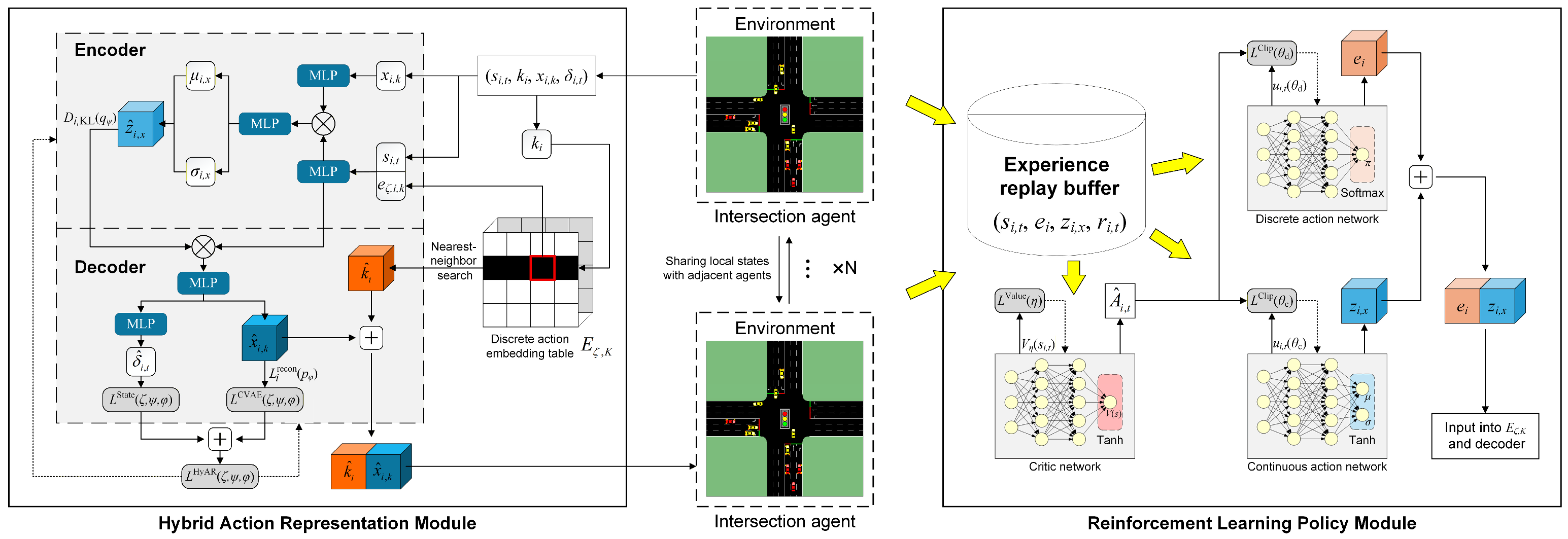
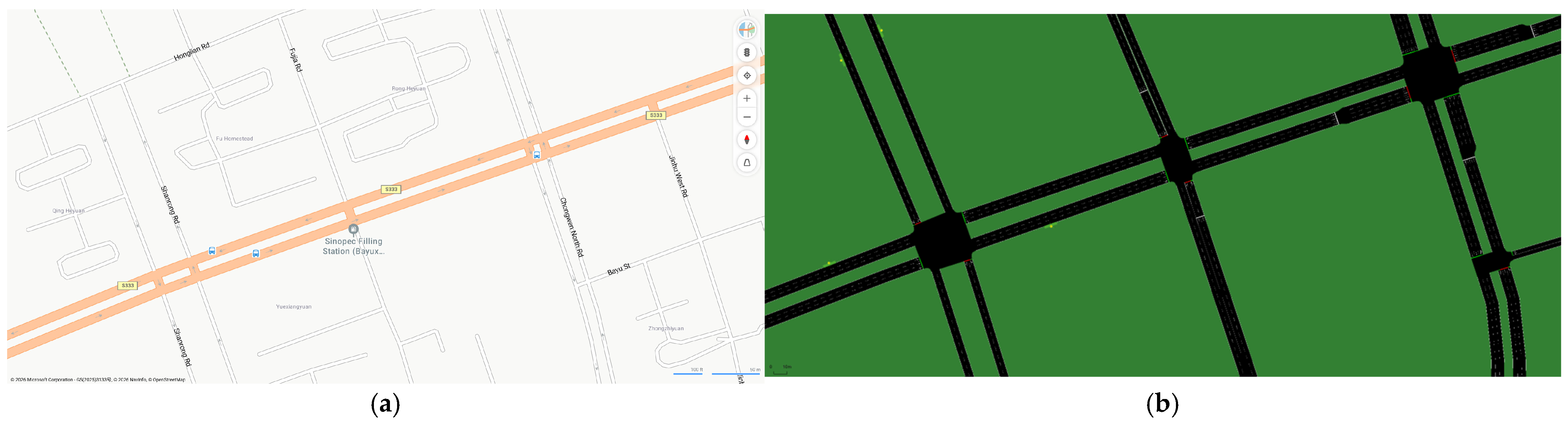
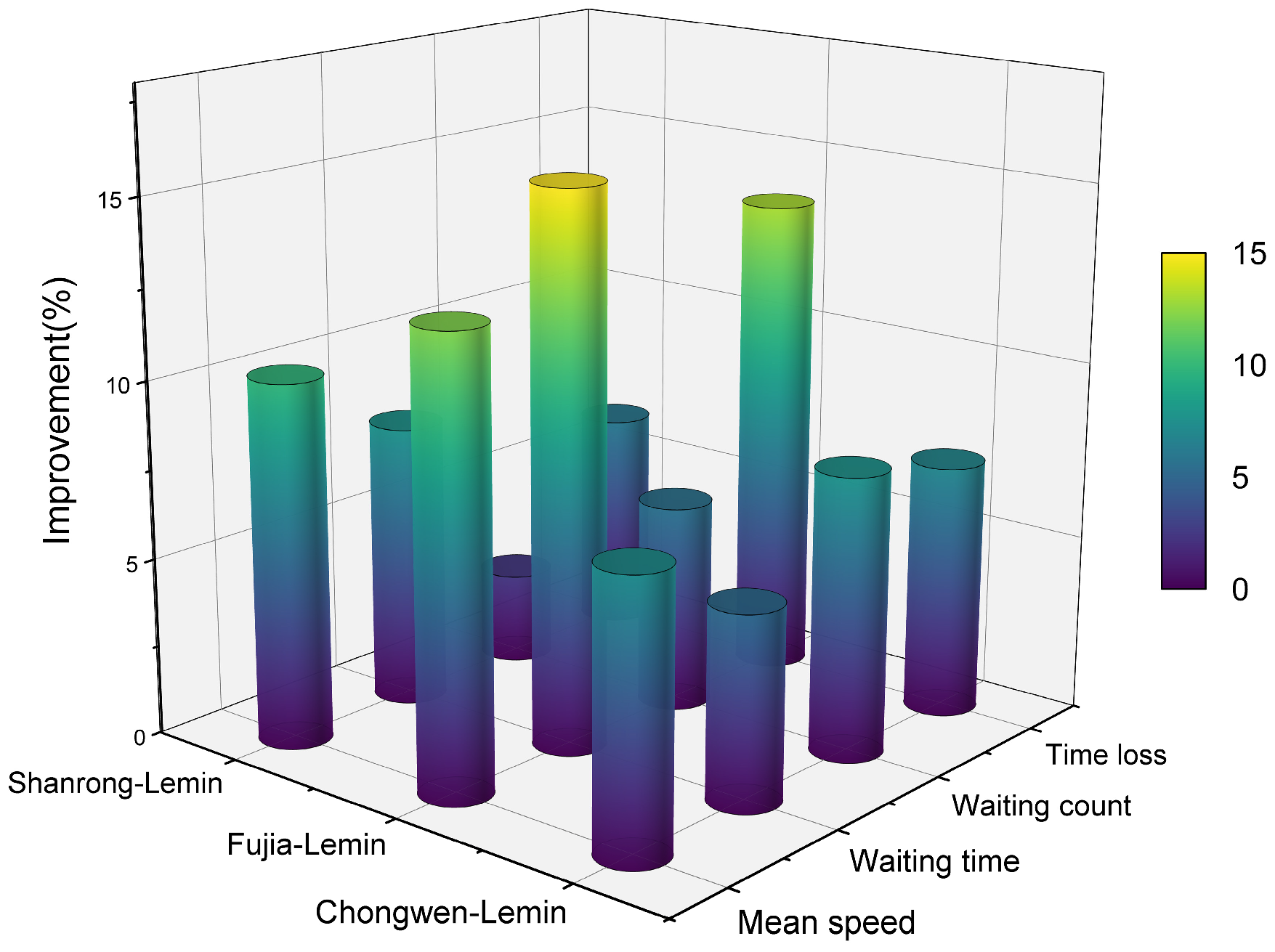
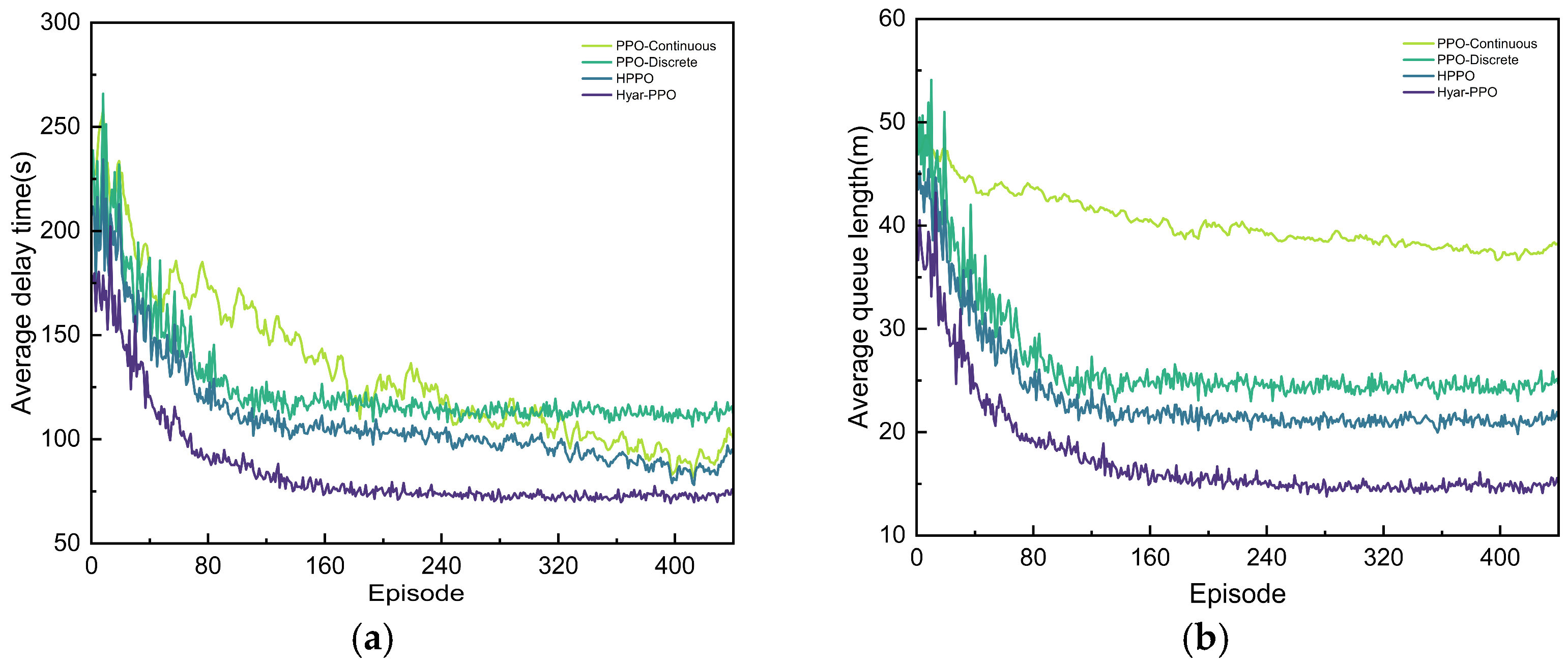
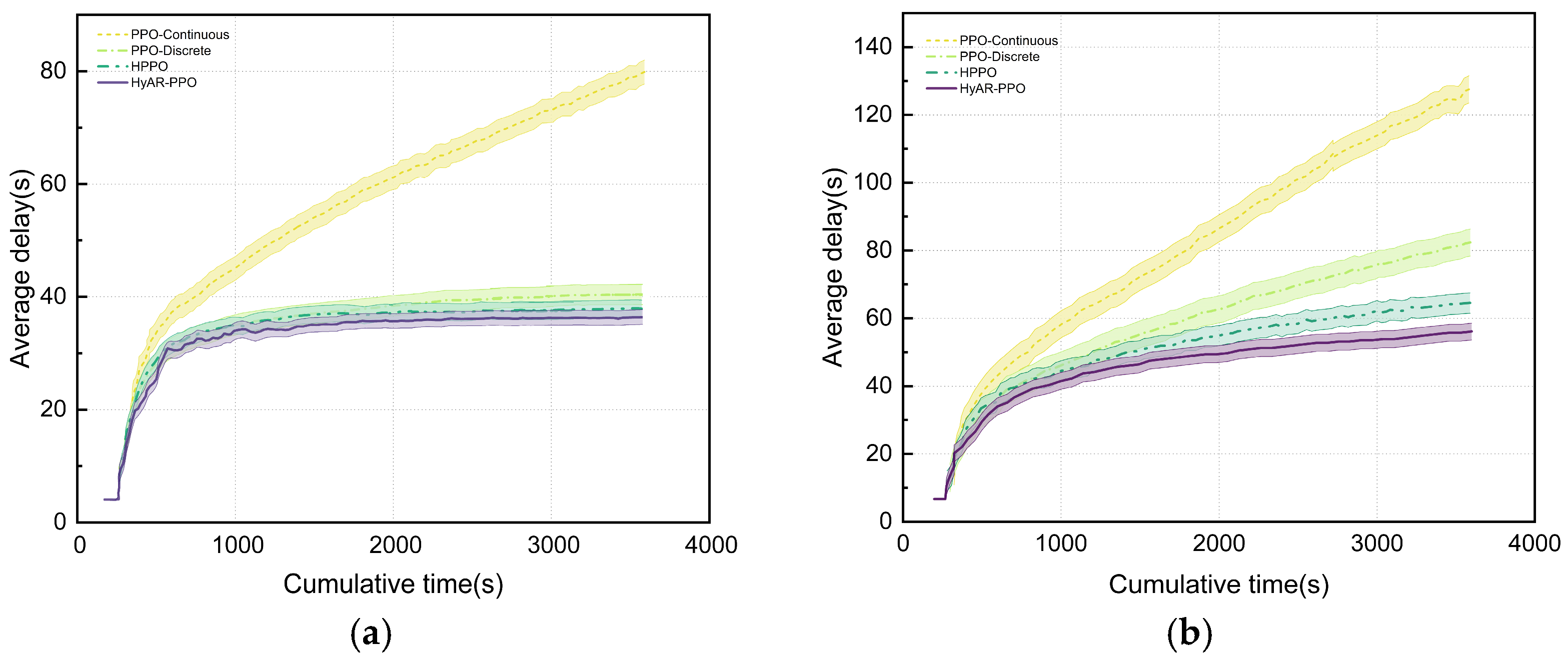
In urban environments characterized by narrow roads and dense networks with short intersection spacing and high connectivity, traffic flows exhibit strong spatiotemporal coupling and pose safety challenges. Conventional traffic signal control approaches are difficult to achieve effective regional coordination, while existing control models based on artificial intelligence (AI) lack consideration for trustworthiness and robustness. To address these challenges, an AI-driven traffic control method for digital city traffic signals is proposed. A unified and decodable latent action representation space is constructed, in which the dependency between phase selection and green time duration is captured using discrete action embedding tables and a conditional variational autoencoder (CVAE), ensuring the stability and interpretability of the AI-driven model. Building on this foundation, a globally shared latent representation is integrated with a local coordination mechanism, and the proximal policy optimization (PPO) algorithm is employed for policy training. A state residual prediction regularization loss is introduced to improve the model’s generalization capability and convergence efficiency. Experiments were conducted using a real-road network and traffic flow data from the Rongdong District of Xiongan New Area. Under spatially imbalanced peak hour traffic conditions, the model reduced average vehicle delay by 14.84% and average queue length by 9.2%; under temporally imbalanced peak hour traffic, it achieved reductions of 5.36% and 7.2% in delay and queue length, respectively. These results demonstrate that the proposed method significantly enhances both traffic efficiency and system robustness, offering scalable, reliable technical support for secure and intelligent transportation systems (ITSs).
Keywords: ITS; AI-driven model; traffic signal control; multi-agent reinforcement learning; reliability analysis ITS; AI-driven model; traffic signal control; multi-agent reinforcement learning; reliability analysis