Article

A Comparison of Polyethylene and Polyurethane Blocks on the Stability of Dental Implants: An In Vitro Study

Department of Oral and Maxillofacial Surgery, Faculty of Dentistry, Van Yüzüncü Yıl University, 65090 Van, Turkey
*
Author to whom correspondence should be addressed.
Appl. Sci. 2026, 16(9), 4303; https://doi.org/10.3390/app16094303

Submission received: 30 March 2026 / Revised: 20 April 2026 / Accepted: 25 April 2026 / Published: 28 April 2026

Abstract

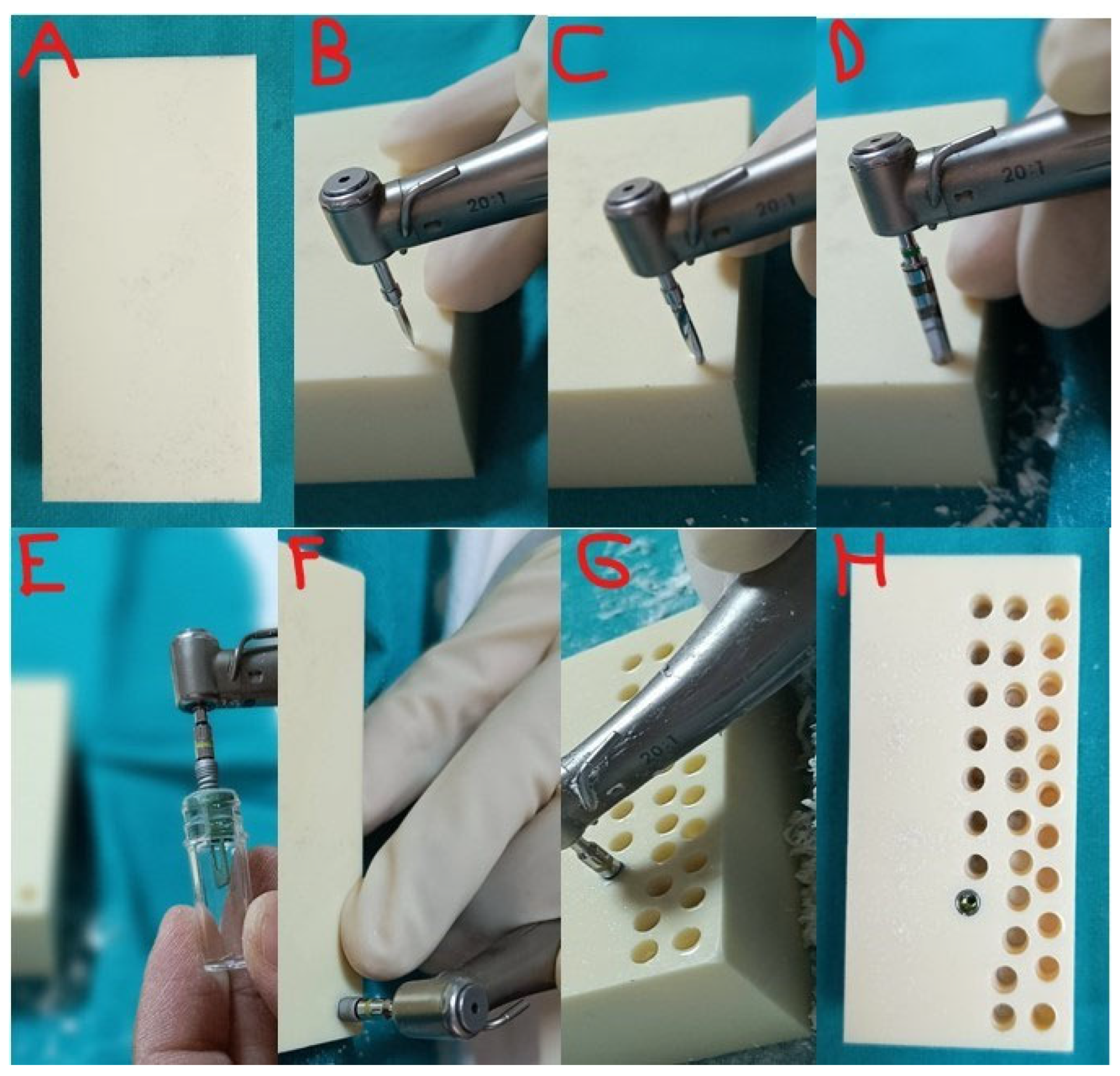
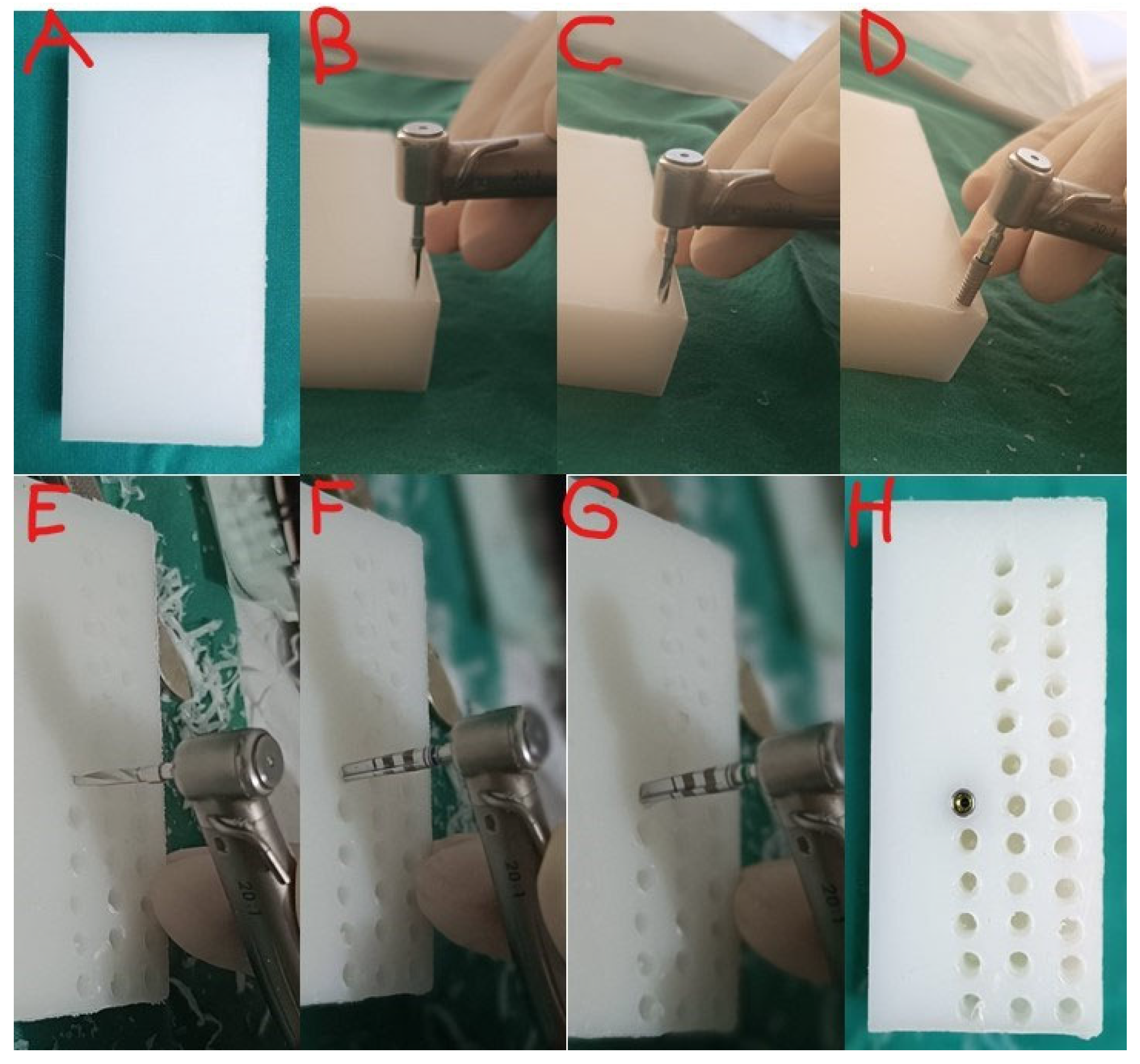
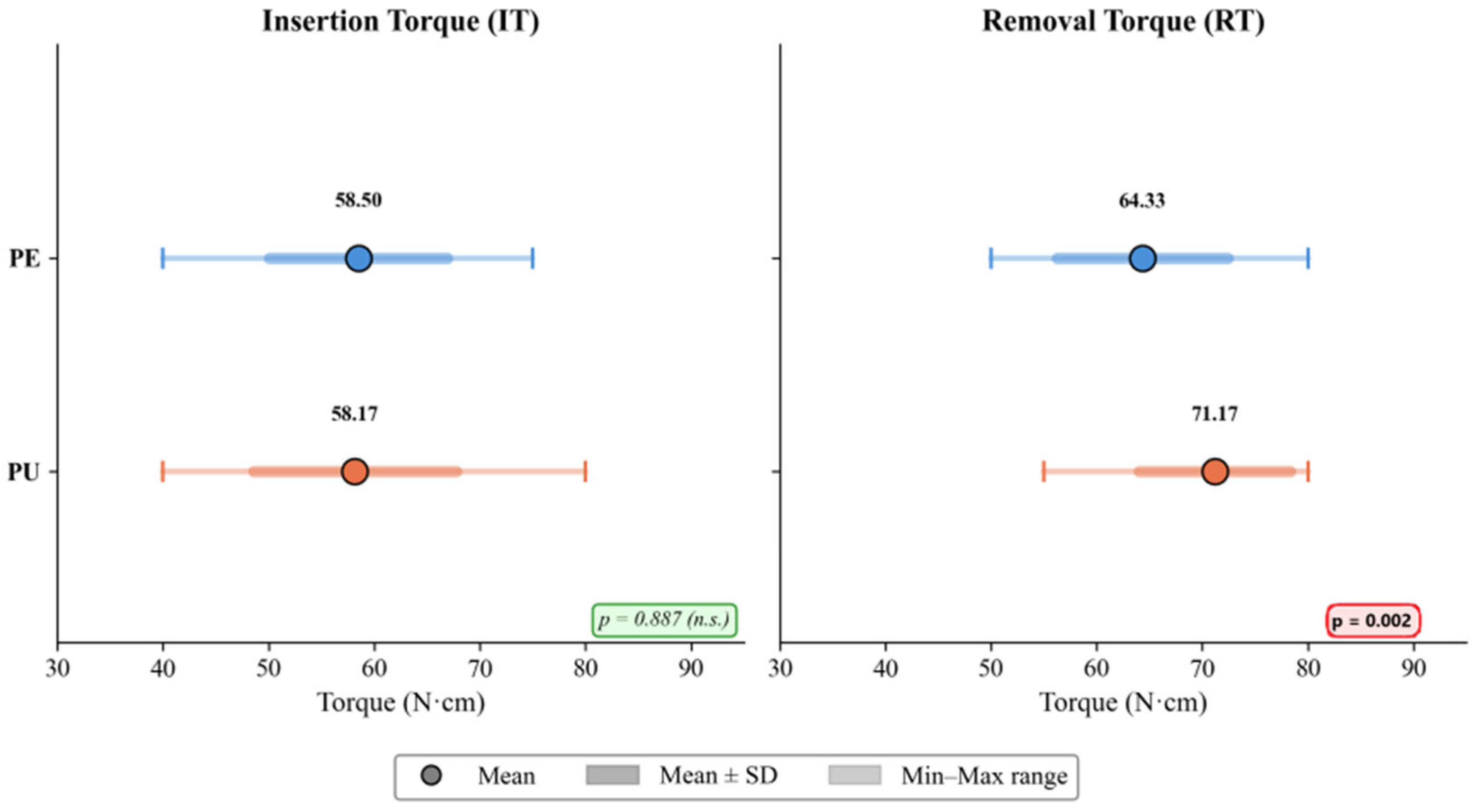
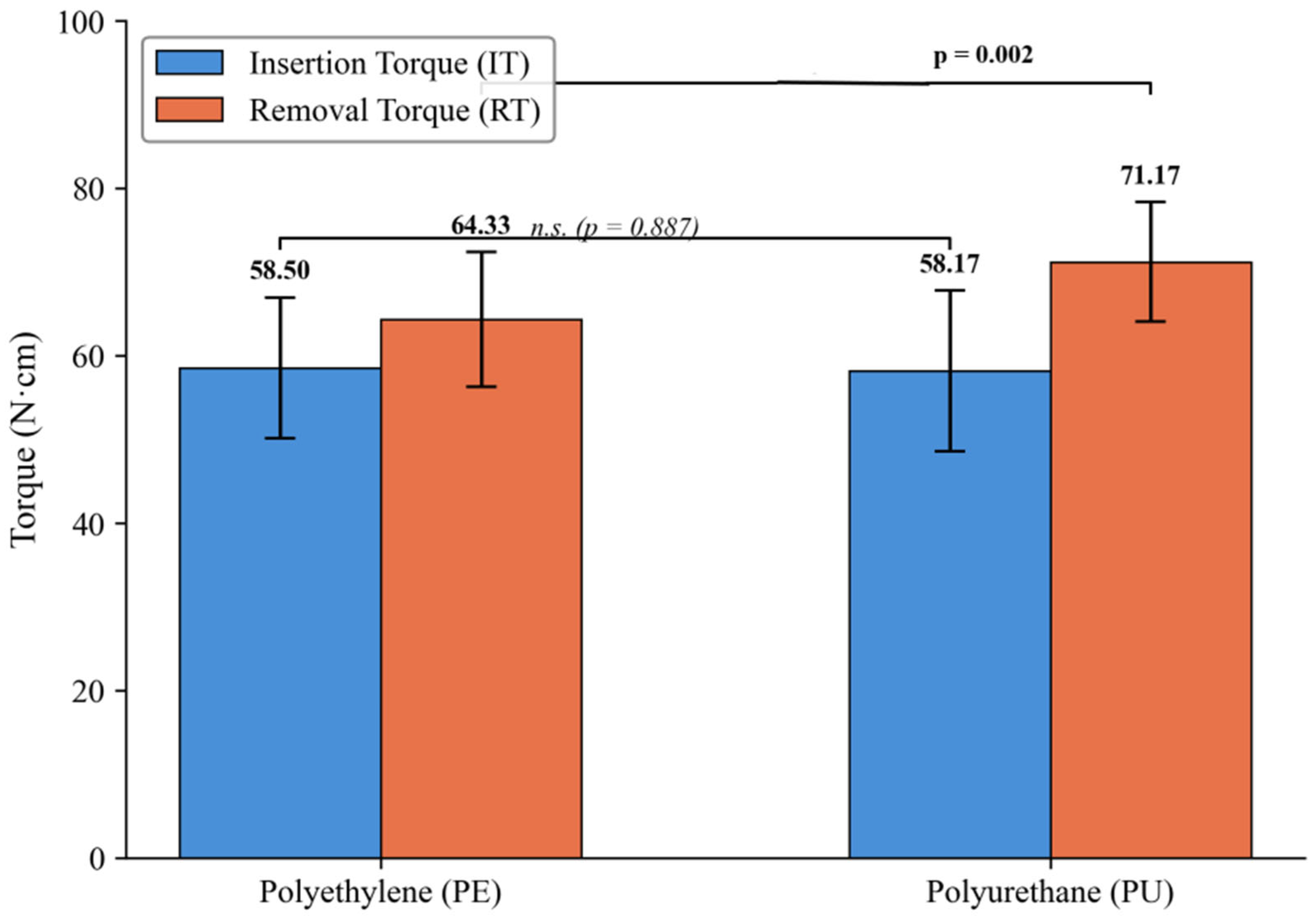
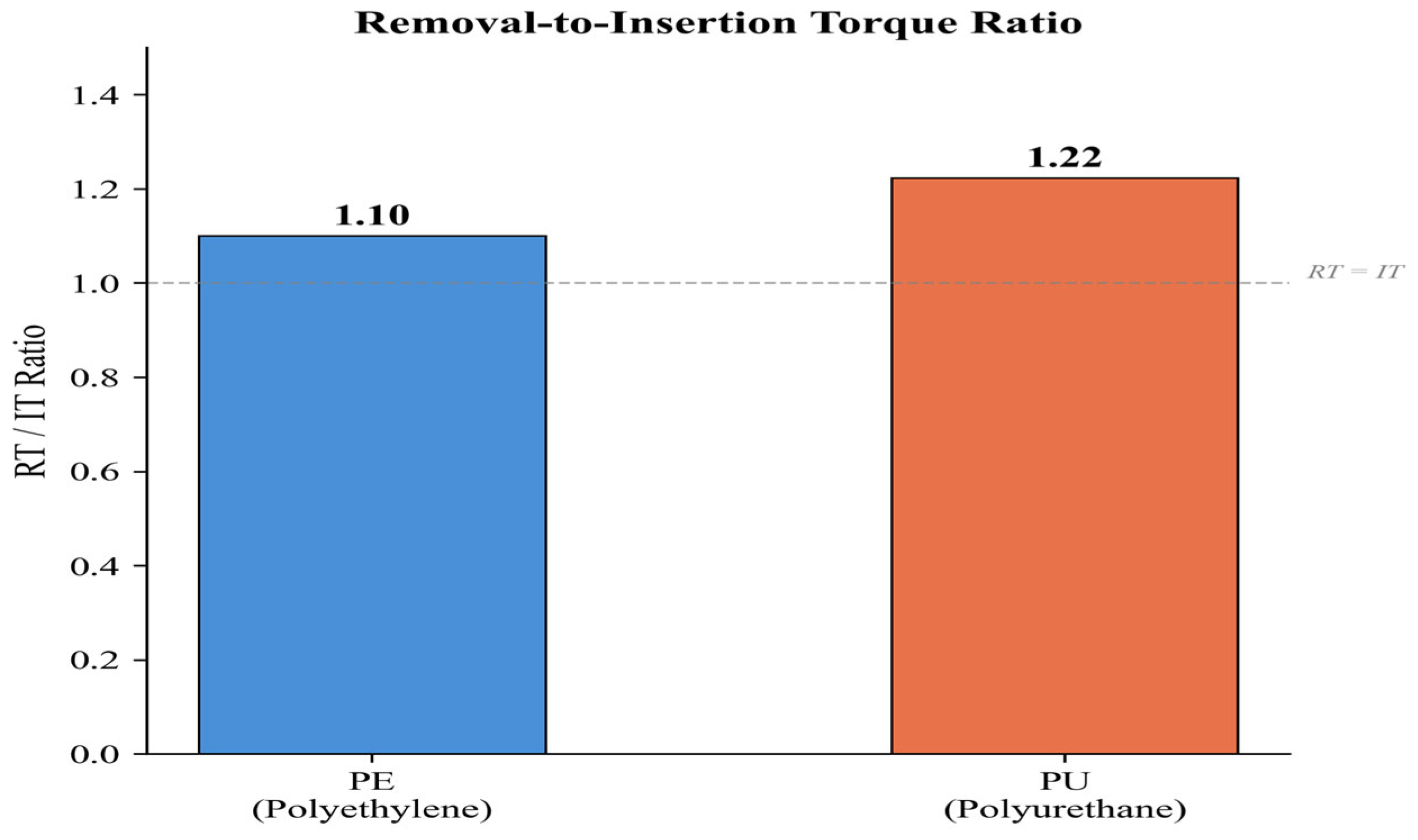
The long-term success of dental implants is significantly influenced by primary stability, which is commonly assessed through insertion torque (IT) and removal torque (RT) measurements in vitro. While polyurethane (PU) blocks are accepted by the American Society for Testing and Materials (ASTM) as the standard bone analog material for biomechanical testing, the use of polyethylene (PE) as a bone model material for dental implant research remains limited and not well established. This operator-blinded, in vitro study compared the IT and RT values of dental implants placed in PE and PU blocks of identical density (60 pounds per cubic foot [pcf]; 0.96 g/cm3). A total of 60 tapered dental implants (4.2 × 12 mm, RBM surface, platform switching) were placed into PE (n = 30) and PU (n = 30) blocks by a calibrated operator blinded to the material type. Implant sockets were prepared by an independent surgeon following the manufacturer’s drilling protocol. IT and RT values were recorded using a physiodispenser with torque measurement capability (5–80 N·cm). Statistical analysis was performed using Student’s t-test (α = 0.05), with Mann–Whitney U tests reported as a sensitivity analysis for non-normally distributed variables. No statistically significant difference was observed in IT between PE and PU groups (58.50 ± 8.42 vs. 58.17 ± 9.60 N·cm; p = 0.887; Cohen’s d = 0.04; 95% CI of mean difference: −4.33 to 5.00 N·cm). However, RT was significantly higher in the PU group compared to the PE group (71.17 ± 7.15 vs. 64.33 ± 9.17 N·cm; p = 0.002; Cohen’s d = 0.83; 95% CI: −11.08 to −2.58 N·cm; Mann–Whitney U sensitivity analysis p = 0.004). Under the specific high-density (60 pcf) conditions tested, the absence of a statistically significant IT difference does not constitute formal evidence of equivalence or non-inferiority, and the significantly higher RT in PU indicates that PE and PU are not interchangeable bone analogs. Further studies across a range of densities, implant macrogeometries, and using formal equivalence testing are required before PE can be considered for in vitro dental implant stability research.
Keywords: dental implant; insertion torque; removal torque; polyethylene; polyurethane; bone model; primary stability; in vitro dental implant; insertion torque; removal torque; polyethylene; polyurethane; bone model; primary stability; in vitro