Article

Influence of Irrigation on Polishing Protocols of Resin Composites: An In Vitro Study

by
Rui Eira
1,†,
Ana Coelho
1,2,3,4,5,6,*,†,
Luís Vilhena
5,
Inês Amaro
1,2,3,4,5,6,
Carlos Miguel Marto
2,3,4,5,6,7,8,
Anabela Paula
1,2,3,4,5,6,
Manuel Marques Ferreira
1,2,3,4,5,6,9,
Amílcar Ramalho
4 and
Eunice Carrilho
1,2,3,4,5,6
1
Faculty of Medicine, University of Coimbra, 3004-504 Coimbra, Portugal
2
Coimbra Institute for Clinical and Biomedical Research (iCBR), Area of Environment Genetics and Oncobiology (CIMAGO), Faculty of Medicine, University of Coimbra, 3000-075 Coimbra, Portugal
3
Laboratory for Evidence-Based Sciences and Precision Dentistry, University of Coimbra, 3000-075 Coimbra, Portugal
4
Clinical Academic Center of Coimbra (CACC), Hospitais da Universidade de Coimbra, 3004-561 Coimbra, Portugal
5
Centre for Mechanical Engineering, Materials and Processes (CEMMPRE), Advanced Production and Intelligent Systems (ARISE), Department of Mechanical Engineering, University of Coimbra, 3004-504 Coimbra, Portugal
6
Centre for Innovative Biomedicine and Biotechnology (CIBB), University of Coimbra, 3004-504 Coimbra, Portugal
7
Institute of Experimental Pathology, Faculty of Medicine, University of Coimbra, 3000-548 Coimbra, Portugal
8
Institute of Biophysics, Faculty of Medicine, University of Coimbra, 3000-548 Coimbra, Portugal
9
Institute of Endodontics, Faculty of Medicine, University of Coimbra, 3000-354 Coimbra, Portugal
*
Author to whom correspondence should be addressed.
These authors contributed equally to this work.
Appl. Sci. 2026, 16(9), 4264; https://doi.org/10.3390/app16094264
Submission received: 5 March 2026 / Revised: 7 April 2026 / Accepted: 22 April 2026 / Published: 27 April 2026
(This article belongs to the Collection Dental Composites and Adhesives in Dentistry)

Abstract

This in vitro study evaluated the effect of irrigation on different polishing protocols and their influence on the surface roughness, microhardness, and mass of resin composites. Three resin composites (Admira® Fusion, Filtek Supreme™ XTE, and Ceram.X Spectra™ STHV) were polished using four systems (Sof-Lex™, DIATECH® ShapeGuard, Astropol®, and Enhance™/PoGo™) under wet and dry conditions. Eight test groups were established for each resin composite (n = 10 per group). Vickers microhardness, surface roughness (Ra), and specimen mass were measured before and after polishing with one of the four systems, applied either with or without irrigation. For Admira® Fusion polished with Sof-Lex, Ra values were lower without irrigation (p = 0.048), whereas Filtek Supreme XTE and Ceram.X Spectra STHV polished with the Enhance/PoGo system showed lower Ra values when irrigation was used (p = 0.010 and p = 0.004, respectively). Sof-Lex and DIATECH® ShapeGuard produced the highest microhardness values for both Admira® Fusion and Filtek Supreme XTE. Moreover, specimens of Admira® Fusion and Ceram.X Spectra STHV polished with DIATECH® ShapeGuard exhibited higher microhardness under irrigation (p = 0.048 and p = 0.027, respectively). Overall, polishing resulted in measurable material removal, reflected by a reduction in specimen mass, and in an increase in microhardness. Wet polishing generally increased microhardness, although the effect varied depending on the polishing system and resin composite. Clinicians should therefore consider both the resin composite and the polishing system when deciding whether to use irrigation, as appropriate irrigation control may help optimize the surface smoothness and microhardness of resin composite restorations. Conference Presentation: Preliminary data from this study were previously presented as an oral communication at the 32nd Portuguese Dental Association Annual Meeting. This manuscript represents a substantially expanded and revised version, developed as a full research article.

1. Introduction

Finishing and polishing of resin composites are critical clinical procedures that can enhance the longevity of restorations. These steps remove excess material, reduce the risk of fracture, and improve smoothness, brightness, and overall aesthetics, while helping to control surface roughness [1,2]. The wear induced during these procedures should be intentional, selective, and controlled, as these factors play a key role in the long-term success of restorations [1,2,3].
Finishing is the initial stage and aims to eliminate surface irregularities, define anatomical contours, facilitate occlusal adjustment, and reduce surface roughness in preparation for polishing [2,4,5]. This step may involve the use of rotary instruments such as diamond or tungsten carbide burs, as well as flexible abrasive discs [6]. The oxygen-inhibited layer is also removed during this phase [7].
Polishing follows finishing and is intended to eliminate surface scratches and further reduce surface roughness, thereby producing a smoother and glossier surface that more closely mimics the optical properties of dental enamel [2,4,8].
From a clinical perspective, increased surface roughness may promote bacterial plaque accumulation, staining, and gingival inflammation, potentially compromising the longevity and aesthetic stability of restorations. Therefore, optimizing polishing protocols is essential not only for surface smoothness but also for long-term biological and functional performance [4,7,9,10]. Surface roughness is determined by both intrinsic factors, such as filler particle size and shape and degree of polymerization, and extrinsic factors, such as the flexibility and geometry of polishing tools, the hardness of abrasive particles, and operator technique [8,11]. A surface roughness (Ra) value of 0.2 μm is widely accepted as the threshold for plaque retention in the oral environment [7,9,12].
The microhardness of resin composites is also influenced by filler particle characteristics, resin matrix composition, and degree of polymerization. From a clinical perspective, microhardness is particularly relevant, as it is associated with wear resistance, surface integrity, and the long-term performance of resin composite restorations [12,13,14,15,16].
Given that both surface roughness and microhardness strongly influence plaque accumulation, staining susceptibility, wear resistance, and marginal integrity, optimization of finishing and polishing procedures is essential for the long-term success of resin composite restorations [4,8,17,18].
A wide variety of finishing and polishing systems is currently available, ranging from multi-step sequences using silicon carbide or aluminum oxide discs to spiral diamond-impregnated wheels and simplified one-step systems. These systems differ in flexibility, geometry, and abrasive composition, factors that directly influence contact area, heat generation, and cutting efficiency on resin matrices and filler particles. Previous studies have demonstrated that both the type of resin composite and the polishing system significantly affect final surface roughness and microhardness, highlighting the importance of understanding how different protocols perform under wet and dry conditions [2,8,16,19].
The heat generated during finishing and polishing procedures makes irrigation necessary to prevent potential damage to the dental pulp and avoid compromising adhesion [20]. Temperatures exceeding the glass transition point may soften the material, potentially affecting both surface smoothness and hardness [3,8,20]. Despite these considerations, there is no clear consensus regarding the impact of irrigation on the surface properties of resin composites, particularly when different polishing systems and resin formulations are evaluated [4,8].
To our knowledge, most previous studies have evaluated polishing protocols under either wet or dry conditions, often focusing on a single material or a limited number of systems. In contrast, the present study adopts a comprehensive approach by systematically comparing multiple polishing systems under both irrigation conditions across distinct categories of resin composites (nanoparticulate, nanohybrid, and ormocer-based), while simultaneously evaluating surface roughness, microhardness, and material loss. This combined analysis enhances the clinical relevance of the findings and provides a broader understanding of material–protocol interactions.
Therefore, this in vitro study aimed to evaluate the effect of four different polishing systems, applied under wet and dry conditions, on the surface roughness, microhardness, and mass loss of three resin composites.
The null hypotheses tested in this study were as follows:
H1. 
The use of irrigation during polishing does not affect the surface roughness of resin composites.
H2. 
The use of irrigation during polishing does not affect the microhardness of resin composites.
H3. 
The use of irrigation during polishing does not influence material removal, as assessed by specimen mass loss.
H4. 
Different polishing systems do not result in differences in surface roughness, microhardness, or mass loss.
H5. 
The type of resin composite does not influence surface roughness, microhardness, or mass loss after polishing.

2. Materials and Methods

2.1. Materials

Three commercially available resin composites and four polishing systems, differing in geometry and abrasive characteristics, were selected for this study (Table 1 and Table 2).
The selected compositions differ in terms of the resin matrix. Filtek Supreme™ XTE is mainly composed of methacrylate monomers, including Bis-GMA, UDMA and TEGDMA, together with a camphorquinone-based photoinitiator system. Admira® Fusion is an ormocer-based material containing siloxane and methacrylate monomers initiated by camphorquinone. Ceram.X Spectra™ STHV contains UDMA, Bis-GMA, and TEGDMA, along with pre-polymerized fillers and a camphorquinone-based photoinitiator system. In addition, the materials differ in filler type and particle size distribution. Taken together, these compositional and structural differences may account for the material-dependent responses to polishing procedures.

2.2. Specimen Preparation

A total of 240 resin composite specimens (12 × 5 × 2 mm) were fabricated, with 80 specimens prepared for each resin composite. Specimens were produced using a 3D-printed silicone mold placed on a glass plate lined with a Mylar strip. The resin composite was manually inserted in a single increment with slight excess and compacted by applying digital pressure through a second glass plate, also lined with a Mylar strip. Polymerization was performed using the SmartLite® Focus® curing unit (Dentsply Sirona, Charlotte, NC, USA) at an intensity of 1000 mW/cm2 ± 10% for 40 s on each side, while maintaining a constant curing distance. This standardized curing protocol was applied to all materials to ensure consistency across experimental groups. Light output was verified with a radiometer (Bluephase® meter, Ivoclar Vivadent, Schaan, Liechtenstein).
The 240 specimens were randomly numbered and allocated into 24 subgroups, according to a 4 (polishing systems) × 2 (irrigation protocols) × 3 (resin composites) factorial design. A sample size of 10 specimens per subgroup (n = 10) was selected, consistent with previous in vitro studies evaluating polishing procedures of resin composites, which commonly use similar sample sizes [3,4,5,9,12,14,21]. This number was chosen to provide consistent measurements of surface roughness, microhardness, and mass within the limitations of in vitro experimentation. Randomization was performed using a computer-generated random number sequence in Microsoft Excel (Microsoft Corp., Redmond, WA, USA).

2.3. Polishing Procedures

Polishing procedures were performed by a single operator using a speed-controlled electric micromotor connected to a straight handpiece, with specimens held using tweezers. Each polishing instrument was applied for 20 s, following the manufacturers’ recommended sequences and rotational speeds: 8500 rpm for Astropol®, 17,500 rpm for Sof-Lex™, 11,000 rpm for DIATECH® ShapeGuard, and 12,500 rpm for Enhance™/PoGo™ (Table 2).
For the Enhance™/PoGo™ system, each disc was used only once. For the remaining systems, reusable discs were employed and reused up to 10 times, in line with the manufacturers’ instructions. To minimize variability related to progressive abrasive wear, the number of reuses was standardized for all specimens. All polishing instruments were visually inspected between uses and discarded if any signs of damage, deformation, or loss of abrasive integrity were detected.

2.4. Outcome Assessment

Specimen mass was measured before and after polishing using an analytical balance. Prior to weighing, specimens were cleaned, gently air-dried, and measured at room temperature to ensure consistent conditions.
For each specimen, five measurements of surface roughness and five measurements of microhardness were recorded before and after polishing.
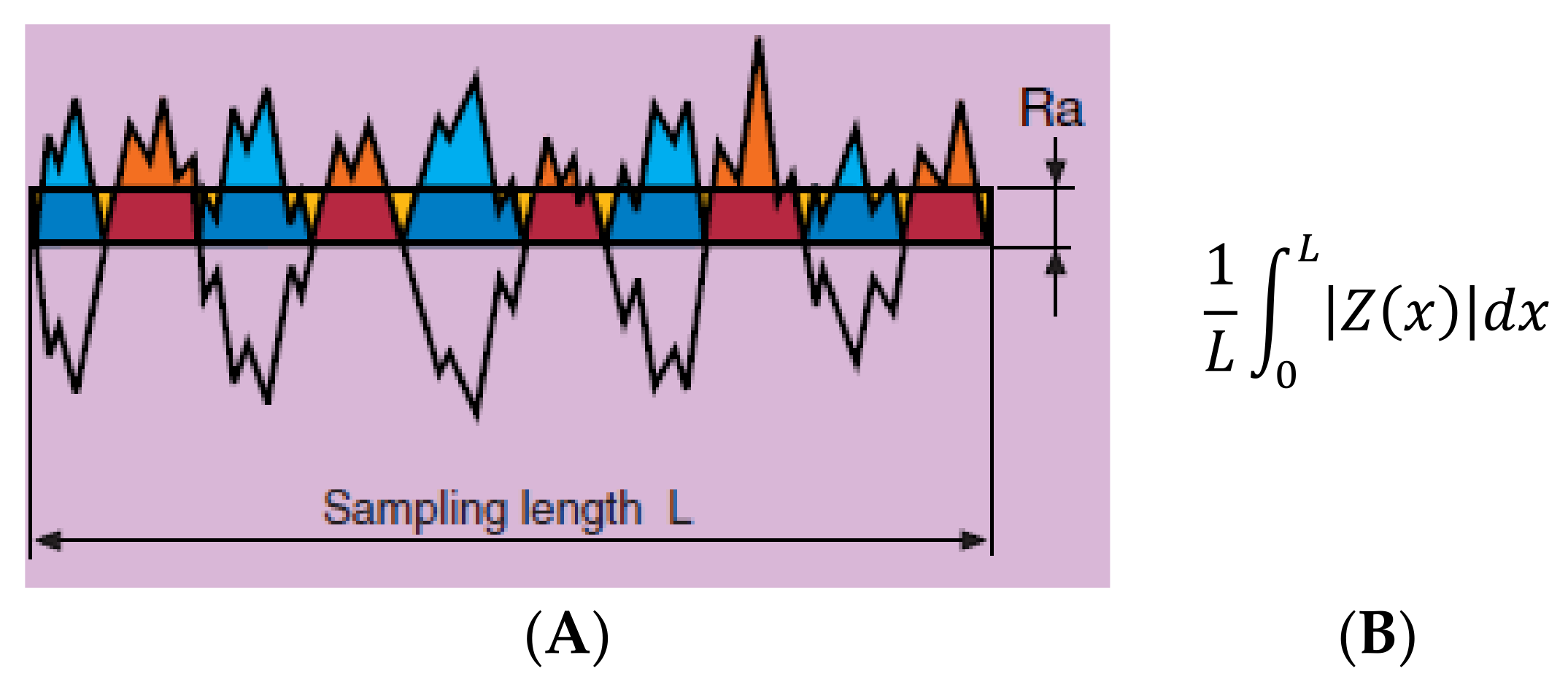
Surface roughness was assessed using a Mitutoyo Surftest SJ 500P profilometer (Mitutoyo Co., Kanagawa, Japan). Prior to each measurement session, the profilometer was calibrated using the manufacturer’s reference standard, and calibration was verified at regular intervals throughout the experiment. A diamond tip traversed the surface of each specimen under the control of Formtracepak v.6.1 software (Mitutoyo, Aurora, IL, USA). Surface roughness (Ra) was calculated in accordance with EN ISO 4287 [22]. This parameter represents the arithmetic mean of the absolute values of the deviations of the surface profile Z(x) from the mean line of the roughness profile, as illustrated in Figure 1A, and was computed using the equation shown in Figure 1B. For each specimen, five measurements were performed, and the corresponding mean and standard deviation were determined.
Microhardness was measured using a Struers Duramin Durometer (Struers, Ballerup, Denmark), in accordance with ASTM E384-10 [23]. Specimen positioning was achieved using a micrometric measuring table with two degrees of freedom. Vickers hardness (HV) values were obtained by applying a load of 200 g (1.962 N) for 20 s per indentation. Five indentations were performed on each specimen with standardized spacing and in regions distinct from those used for roughness measurements to avoid interference between microhardness indentations and profilometric readings. The microhardness of each specimen was calculated as the mean of five individual measurements.

2.5. Statistical Analysis

Statistical analysis was performed using IBM® SPSS® Statistics v.29.0 (IBM Corporation, Armonk, NY, USA). Results were expressed as mean ± standard error. The Kruskal–Wallis test, followed by pairwise comparisons using the Mann–Whitney U test with Bonferroni correction, was applied for comparisons involving more than two independent groups. Comparisons between dependent groups were conducted using the Wilcoxon signed-rank test. The level of statistical significance was set at 5%.

3. Results

At baseline, no significant differences were observed among the experimental subgroups within each resin composite for mass, surface roughness, or microhardness (p > 0.05).
The initial characterization of the three resin composites is presented in Table 3.
The results for mass, surface roughness, and microhardness after polishing of the Admira® Fusion specimens are shown in Table 4.
Polishing significantly affected the surface characteristics of Admira® Fusion.
All Admira® Fusion subgroups exhibited a significant reduction in mass after polishing (p < 0.05), indicating consistent material removal.
Astropol® produced the lowest Ra values under both wet and dry conditions, with significantly lower surface roughness compared with Sof-Lex™ (wet) (p = 0.001) and DIATECH® ShapeGuard (wet) (p = 0.023 and p = 0.015, respectively).
Under wet conditions, DIATECH® ShapeGuard yielded significantly higher microhardness values than the same system used without irrigation (p = 0.048) and showed the highest values among all polishing protocols, closely followed by Sof-Lex™ in both wet and dry conditions. Polishing resulted in a significant increase in microhardness across all subgroups (p < 0.05).
The results for mass, surface roughness, and microhardness after polishing of the Filtek Supreme™ XTE specimens are presented in Table 5.
Filtek Supreme™ XTE demonstrated consistent trends in surface roughness and microhardness across the polishing systems.
All subgroups showed a significant reduction in mass after polishing (p < 0.05).
Enhance™/PoGo™ used with irrigation resulted in significantly lower surface roughness compared with the same system used without irrigation (p = 0.010). Astropol® under wet conditions also produced low Ra values.
Sof-Lex™ and DIATECH® ShapeGuard, under both wet and dry conditions, resulted in higher microhardness values, significantly outperforming Astropol® (p < 0.05).
The results for mass, surface roughness, and microhardness after polishing of the Ceram.X Spectra™ STHV specimens are shown in Table 6.
Polishing outcomes for Ceram.X Spectra™ STHV varied according to the polishing system used.
All subgroups exhibited a significant reduction in mass after polishing (p < 0.05).
The Enhance™/PoGo™ system under dry conditions resulted in the highest surface roughness values, which were significantly higher than those obtained with the same system using irrigation (p = 0.004). Sof-Lex™ produced the smoothest surfaces under both wet and dry conditions.
Enhance™/PoGo™ under both wet and dry conditions, as well as DIATECH® ShapeGuard under wet conditions, yielded the highest microhardness values. For DIATECH® ShapeGuard, the use of irrigation significantly increased microhardness compared with dry conditions (p = 0.027).

Comparison Between Resin Composites According to Polishing System

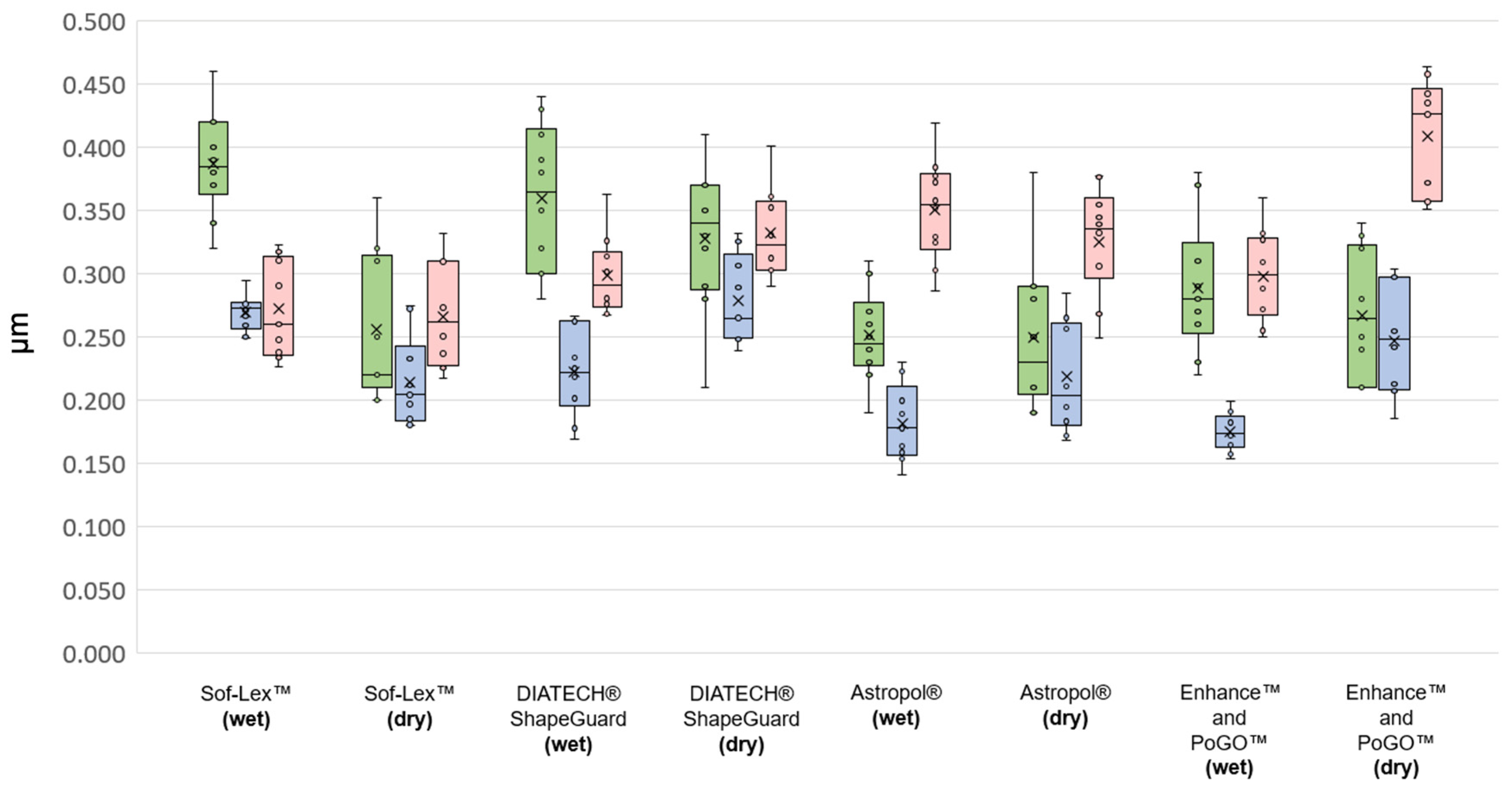
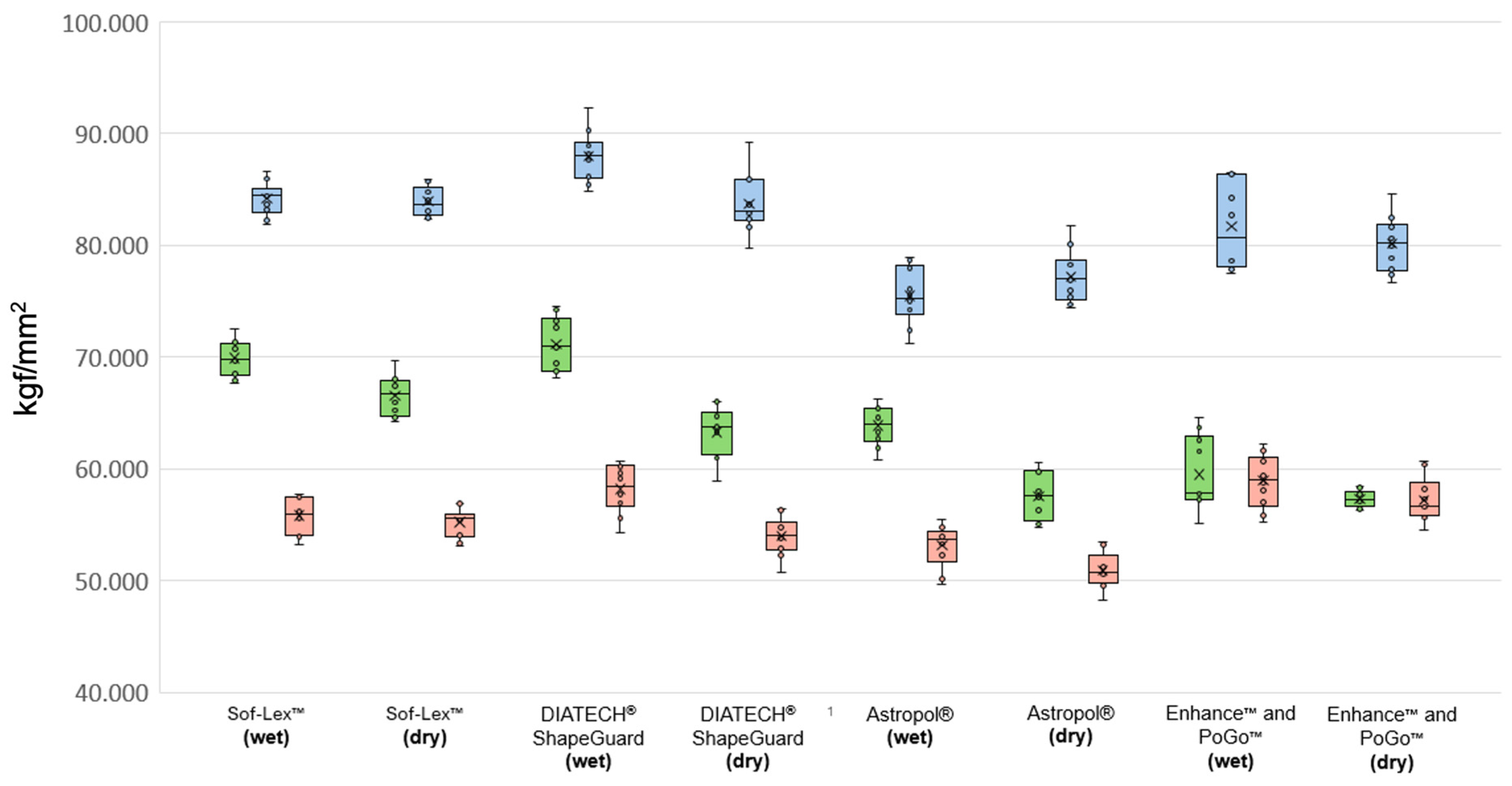
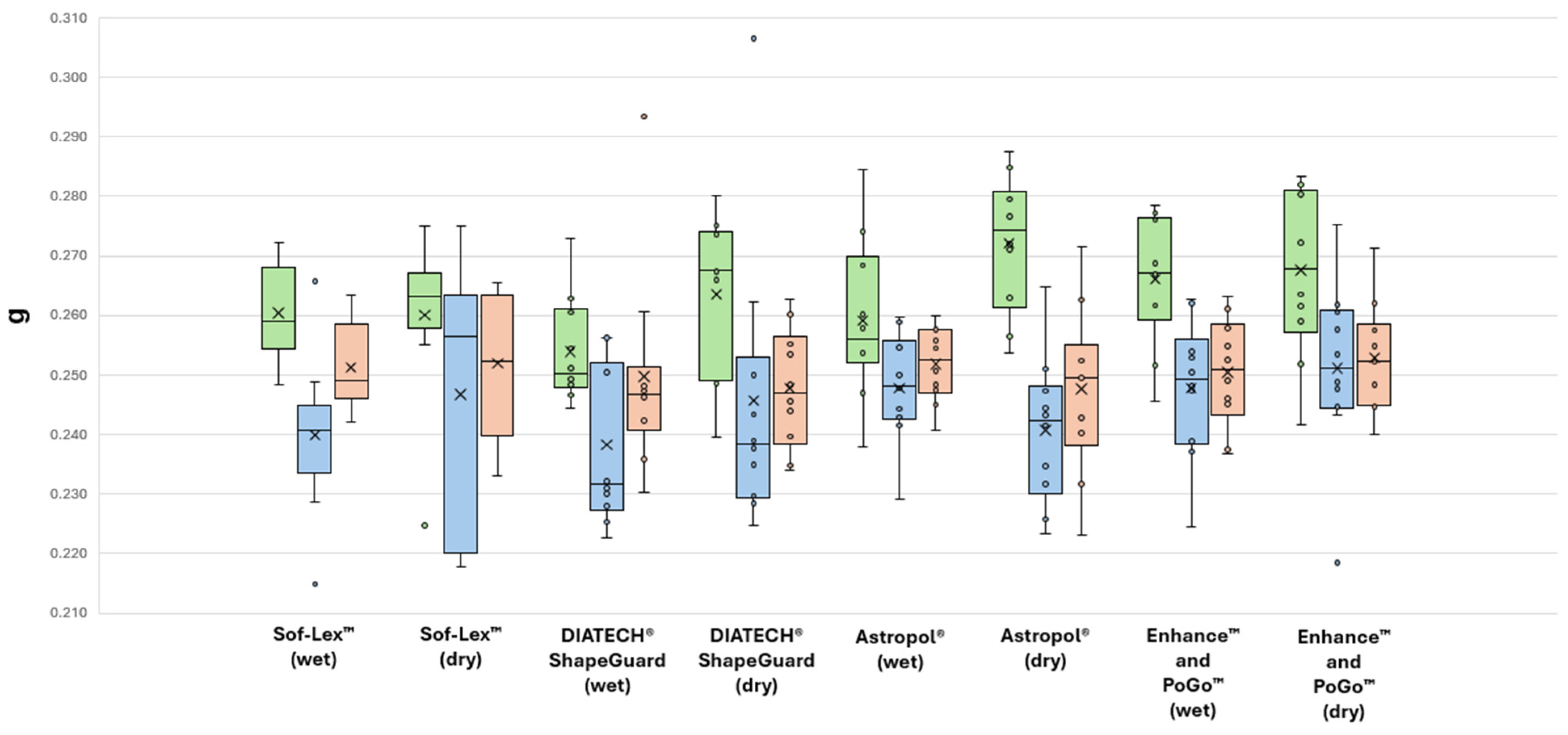
Figure 2, Figure 3 and Figure 4 present the surface roughness (Ra), microhardness (kgf/mm2), and mass (g), respectively, of the three resin composites polished with the four systems both wet and dry conditions.
Filtek Supreme™ XTE consistently exhibited lower surface roughness values across most polishing systems, whereas Ceram.X Spectra™ STHV generally showed higher surface roughness, particularly under dry polishing conditions.
Filtek Supreme™ XTE achieved smoother surfaces than both Admira® Fusion and Ceram.X Spectra™ STHV across most wet protocols. Enhance™/PoGo™ under wet conditions produced the smoothest overall surfaces for Filtek Supreme™ XTE, significantly outperforming Admira® Fusion (p = 0.001) and Ceram.X Spectra™ STHV (p < 0.001).
Filtek Supreme™ XTE also outperformed both Admira® Fusion and Ceram.X Spectra™ STHV under most dry protocols, including DIATECH® ShapeGuard (p = 0.038 and p = 0.027, respectively) and Astropol® (p < 0.001 and p = 0.047, respectively).
With respect to microhardness, Filtek Supreme™ XTE consistently exhibited higher values across most polishing systems, while Ceram.X Spectra™ STHV generally showed lower values, even under wet polishing conditions.
Under wet conditions, DIATECH® ShapeGuard resulted in the highest microhardness for Filtek Supreme™ XTE (88.004 ± 2.227 kgf/mm2), followed by Sof-Lex™ (84.184 ± 1.517 kgf/mm2). Admira® Fusion also benefited from wet polishing, with Sof-Lex™ and DIATECH® ShapeGuard yielding values of 69.918 ± 1.564 and 71.180 ± 2.400 kgf/mm2, respectively. For Ceram.X Spectra™ STHV, Enhance™/PoGo™ and DIATECH® ShapeGuard similarly increased microhardness to 58.954 ± 2.412 and 58.198 ± 2.186 kgf/mm2, respectively, although values remained lower than those observed for Filtek Supreme™ XTE.
Filtek Supreme™ XTE maintained superior microhardness under dry polishing protocols, particularly with DIATECH® ShapeGuard (83.748 ± 2.677 kgf/mm2) and Sof-Lex™ (83.952 ± 1.346 kgf/mm2), achieving values significantly higher than those of Ceram.X Spectra™ STHV and Admira® Fusion (p < 0.05). Under the same conditions, Ceram.X Spectra™ STHV exhibited the lowest microhardness values overall, particularly with Astropol® (50.936 ± 1.656 kgf/mm2).

4. Discussion

Polishing materials and protocols can operate through two main wear mechanisms: two-body wear, in which abrasive particles are fixed to the polishing instrument, and three-body wear, in which loose abrasive particles are interposed between the surface being polished and the instrument [2]. In this study, only two-body polishing systems were used, including two disc-shaped systems (Astropol®—three steps; Enhance™/PoGo™—two steps) and two spiral-shaped systems (3M™ Sof-Lex™ Diamond Spiral Polishing System—two steps; DIATECH® ShapeGuard Composite Plus—two steps). These systems were selected not only for their widespread clinical use but also for their distinct geometries, allowing for comparisons in terms of contact mode, stiffness, and anatomical adaptation.
Wet polishing frequently resulted in lower surface roughness and higher microhardness, particularly with DIATECH® ShapeGuard and Enhance™/PoGo™. Water cooling likely stabilizes the resin matrix by limiting superficial temperature rise, thereby reducing polymer chain damage, filler particle dislodgement, and surface degradation. Reduced heat generation and friction may also decrease microcrack formation and other defects while improving abrasive efficiency by preventing excessive particle loss and particle embedding into the resin [4,12,18].
The effects of irrigation were system- and material-dependent. For Admira® Fusion, dry polishing with Sof-Lex™ spirals resulted in smoother surfaces, possibly due to friction-induced matrix compaction [24]. Although the underlying mechanisms remain unclear, localized frictional heat under dry conditions may modulate the polishing response of ormocer-based materials, contributing to the smoother surfaces observed.
Although Enhance™/PoGo™’s manufacturer recommends dry polishing, wet polishing improved surface roughness for Filtek Supreme™ XTE and Ceram.X Spectra™ STHV without compromising microhardness. For Admira® Fusion, no significant differences were observed between wet and dry Enhance™/PoGo™ polishing. Irrigation may prevent excessive temperature rise, preserve surface integrity, and reduce abrasive particle embedding by continuously rinsing debris [4,12,25].
Mass loss was significant across all subgroups, confirming effective material removal. While controlled material removal is essential for surface refinement, excessive loss may negatively influence restoration durability and wear resistance. Although previous studies have not quantitatively assessed mass changes following polishing, Chung et al. [21] reported notable differences in surface morphology before and after polishing using Scanning Electron Microscopy (SEM), supporting the presence of material removal at the surface level.
Consistent with previous reports [11,12,15,16], the lowest surface roughness and microhardness values were observed before polishing, owing to the use of glass plates lined with Mylar strips during specimen fabrication.
The increase in surface roughness observed after polishing should be interpreted in the context of the specimen preparation method. The use of polyester (Mylar) strips produces an extremely smooth, resin-rich surface that does not represent the clinically relevant surface obtained after finishing procedures. Polishing removes this superficial resin-rich layer, exposing filler particles and resulting in superficial microabrasion, which explains the increase in Ra values compared to baseline. A preliminary finishing step using abrasive discs or diamond burs was intentionally omitted to avoid additional variability related to operator technique and instrument pressure, which could mask the isolated effects of the polishing systems and irrigation protocols. This methodological approach allowed for the establishment of a standardized and reproducible baseline surface, enabling a more controlled comparison of polishing performance across materials and systems [3,7,12,14,15].
The performance of polishing systems was strongly influenced by resin composite type and filler properties. Nanoparticulate composites such as Filtek SupremeTM XTE benefited from uniformly small filler particles, facilitating smoother and more consistent polishing. Hybrid composites with heterogeneous filler distributions, such as Ceram.X SpectraTM STHV, presented greater challenges, resulting in higher surface roughness. Beyond particle size alone, the higher efficiency of polishing instruments on resin composites with uniform filler dimensions may contribute to more even abrasion, whereas heterogeneous filler distributions may promote uneven material removal and increased superficial defects [26,27].
In addition to filler characteristics, differences in the organic matrix composition and degree of polymer conversion may also contribute to the observed variations in microhardness. Materials with higher cross-linking density and more efficient polymerization (e.g., Filtek Supreme™ XTE compared to Admira® Fusion and Ceram.X Spectra™ STHV) typically exhibit improved mechanical performance, consistent with our findings [28,29].
Despite achieving clinically acceptable outcomes, all polishing protocols resulted in Ra values exceeding the threshold for bacterial plaque accumulation (0.2 μm). Additional finishing steps, such as the use of diamond or aluminum oxide polishing pastes or prolonged polishing durations, may further reduce surface roughness. Nevertheless, Filtek Supreme™ XTE achieved Ra values below 0.3 μm, a threshold above which patients are unlikely to perceive differences in surface roughness [16,25,27,30,31]. Importantly, all groups maintained surface roughness values below the aesthetic limit of 1 μm, ensuring enamel-like optical properties [21].
Microhardness increased after polishing under both wet and dry conditions, with a tendency toward higher values following wet polishing. This may be related to the presence of a superficial resin layer with lower polymerization due to oxygen exposure during specimen placement in the mold, as reported by other authors [5,9]. Irrigation may promote a more uniform and defect-free surface, thereby enhancing microhardness.
Overall, Filtek Supreme™ XTE demonstrated lower surface roughness and higher microhardness across most polishing systems, suggesting superior clinical performance. This may be due to its nanoparticulate filler system, zirconia content [16], and higher degree of polymer conversion, which collectively enhance durability and aesthetics [6,14]. Ceram.X Spectra™ STHV showed higher surface roughness and lower microhardness, particularly under dry polishing, while Admira® Fusion exhibited an intermediate behavior.
In summary, polishing outcomes were influenced by both resin composite type and polishing system. Wet polishing generally enhanced microhardness and reduced surface roughness, but effects were material-specific. These findings underscore the importance of selecting appropriate protocols to optimize restoration longevity and surface quality.
All null hypotheses tested in this study were rejected. Irrigation significantly affected surface roughness (H1) and microhardness (H2) in a system- and material-dependent manner. All polishing protocols resulted in significant specimen mass loss (H3), indicating consistent material removal. Different polishing systems produced significantly different outcomes in surface roughness, microhardness, and mass loss (H4), and polishing performance varied significantly among resin composites (H5).
This study demonstrated the significant impact of polishing protocols and irrigation on resin composite surface properties. However, several limitations should be acknowledged. As an in vitro study, the experimental conditions may not fully replicate the complexity of the oral environment. In addition, long-term wear behavior and the effects of extended polishing durations were not evaluated. The degree of conversion was not directly assessed; thus, the potential influence of curing on final surface properties cannot be excluded. Despite these limitations, this study provides a comprehensive comparative analysis of polishing protocols under clinically relevant conditions, contributing to a better understanding of how irrigation and material composition interact to influence surface properties.
Future studies should include clinical trials, assess long-term performance, and explore the role of polishing pastes and advanced irrigation strategies to further optimize surface properties. Expanding the range of resin composite materials evaluated may also provide broader insight into the adaptability of different polishing systems.

5. Conclusions

Within the limitations of this in vitro study, polishing outcomes depended primarily on resin composite type rather than individual polishing protocols. Filtek Supreme™ XTE consistently exhibited lower surface roughness and higher microhardness across most polishing systems, particularly under wet conditions, whereas Ceram.X Spectra™ STHV generally showed higher surface roughness and lower microhardness, especially when polished without irrigation. Admira® Fusion exhibited intermediate behavior, with certain protocols performing more favorably under dry conditions.
Overall, no polishing system or irrigation strategy could be identified as universally superior. Nevertheless, wet polishing generally enhanced microhardness and reduced surface roughness in several material-system combinations. Importantly, none of the evaluated protocols achieved surface roughness values below the biological threshold for plaque retention (Ra < 0.2 µm), suggesting that conventional polishing alone may be insufficient for optimal long-term plaque control.

Author Contributions

Conceptualization, A.C., L.V., A.R. and E.C.; methodology, A.C., L.V. and A.R.; software, R.E., L.V. and A.R.; validation, A.C., L.V., A.R. and E.C.; formal analysis, R.E., A.C., L.V. and A.R.; investigation, R.E., A.C., I.A., L.V. and A.R.; resources, A.C., I.A., L.V., A.P., C.M.M., A.R. and E.C.; data curation, R.E., L.V., I.A., A.P. and C.M.M.; writing—original draft preparation, R.E., A.C., L.V., I.A., A.P., C.M.M. and M.M.F.; writing—review and editing, A.C., L.V., M.M.F., A.R. and E.C.; supervision, A.C., L.V., A.R. and E.C.; project administration, A.C., L.V., M.M.F., A.R. and E.C. All authors have read and agreed to the published version of the manuscript.

Funding

This research received no external funding.

Institutional Review Board Statement

Not applicable.

Informed Consent Statement

Not applicable.

Data Availability Statement

The original contributions presented in this study are included in the article. Further inquiries can be directed to the corresponding author.

Conflicts of Interest

The authors declare no conflicts of interest.

References

  1. Lopes, G.C.; Franke, M.; Maia, H.P. Effect of finishing time and techniques on marginal sealing ability of two composite restorative materials. J. Prosthet. Dent. 2002, 88, 32–36. [Google Scholar] [PubMed]
  2. Jefferies, S.R. Abrasive finishing and polishing in restorative dentistry: A state-of-the-art review. Dent. Clin. N. Am. 2007, 51, 379–397. [Google Scholar] [CrossRef]
  3. Kaminedi, R.; Penumatsa, N.; Priya, T.; Baroudi, K. The influence of finishing/polishing time and cooling system on surface roughness and microhardness of two different types of composite resin restorations. J. Int. Soc. Prev. Community Dent. 2014, 4, 99–104. [Google Scholar] [CrossRef]
  4. Freitas, M.; Freitas, D.; Almeida, L.; Magalhães, A.; Cardoso, P.; Decurcio, R. Influência do uso da irrigação durante o acabamento e polimento de resinas compostas: Rugosidade superficial, estabilidade de cor e morfologia de superfície. Rev. Odontol. Bras. Cent. 2019, 28, 45–52. [Google Scholar] [CrossRef]
  5. Ergücü, Z.; Türkün, L.S.; Aladag, A. Color stability of nanocomposites polished with one-step systems. Oper. Dent. 2008, 33, 413–420. [Google Scholar] [CrossRef]
  6. Jung, M.; Sehr, K.; Klimek, J. Surface texture of four nanofilled and one hybrid composite after finishing. Oper. Dent. 2007, 32, 45–52. [Google Scholar] [CrossRef]
  7. Senawongse, P.; Pongprueksa, P. Surface roughness of nanofill and nanohybrid resin composites after polishing and brushing. J. Esthet. Restor. Dent. 2007, 19, 265–273. [Google Scholar] [CrossRef]
  8. Silva, J.P.; Coelho, A.; Paula, A.; Amaro, I.; Saraiva, J.; Ferreira, M.M.; Marto, C.M.; Carrilho, E. The influence of irrigation during the finishing and polishing of composite resin restorations—A systematic review of in vitro studies. Materials 2021, 14, 1675. [Google Scholar] [CrossRef]
  9. Kumari, R.V.; Nagaraj, H.; Siddaraju, K.; Poluri, R.K. Evaluation of the effect of surface polishing, oral beverages and food colorants on color stability and surface roughness of nanocomposite resins. J. Int. Oral Health 2015, 7, 63–70. [Google Scholar] [PubMed]
  10. Marghalani, H.Y. Effect of finishing/polishing systems on the surface roughness of novel posterior composites. J. Esthet. Restor. Dent. 2010, 22, 127–138. [Google Scholar] [CrossRef] [PubMed]
  11. Chowdhury, D.; Mukherjee, S.; Maity, I.; Mazumdar, P. Surface roughness and microhardness evaluation of composite resin restorations subjected to three different polishing systems immediately and after 24 h: An in vitro study. J. Conserv. Dent. Endod. 2023, 26, 639–645. [Google Scholar] [CrossRef]
  12. Nasoohi, N.; Hoorizad, M.; Tabatabaei, S.F. Effects of wet and dry finishing and polishing on surface roughness and microhardness of composite resins. J. Dent. 2017, 14, 69–75. [Google Scholar]
  13. Price, R.B.; Whalen, J.M.; Price, T.B.; Felix, C.M.; Fahey, J. The effect of specimen temperature on the polymerization of a resin-composite. Dent. Mater. 2011, 27, 983–989. [Google Scholar] [CrossRef] [PubMed]
  14. Korkmaz, Y.; Ozel, E.; Attar, N.; Aksoy, G. The influence of one-step polishing systems on the surface roughness and microhardness of nanocomposites. Oper. Dent. 2008, 33, 44–50. [Google Scholar] [CrossRef]
  15. Erdemir, U.; Sancakli, H.S.; Yildiz, E. The effect of one-step and multi-step polishing systems on the surface roughness and microhardness of novel resin composites. Eur. J. Dent. 2012, 6, 198–205. [Google Scholar] [CrossRef]
  16. Elnahas, A.E.; Elawsya, M.E.; ElEmbaby, A.E. Impact of different polishing techniques on surface roughness, gloss, and microhardness of zirconium oxide reinforced flowable bulk-fill resin composite: An in vitro study. BMC Oral Health 2025, 25, 1257. [Google Scholar] [CrossRef] [PubMed]
  17. Molaei, M.; Mohammadzadeh, A.; Ghasemi, A.; Badiee, M. Effect of dry and wet finishing and polishing on color change and opacity of nanofill and nanohybrid composites. BMC Oral Health 2024, 24, 287. [Google Scholar] [CrossRef]
  18. Ghasemi, A.; Mohammadzadeh, A.; Molaei, M.; Sheikh-Al-Eslamian, S.M.; Karimi, M. Effect of Wet and Dry Finishing and Polishing Technique on Microhardness and Flexural Strength of Nanocomposite Resins. Int. J. Dent. 2023, 2023, 2182094. [Google Scholar] [CrossRef]
  19. Babina, K.; Polyakova, M.; Sokhova, I.; Doroshina, V.; Arakelyan, M.; Novozhilova, N. The Effect of Finishing and Polishing Sequences on the Surface Roughness of Three Different Nanocomposites and Composite/Enamel and Composite/Cementum Interfaces. Nanomaterials 2020, 10, 1339. [Google Scholar] [CrossRef]
  20. Jones, C.S.; Billington, R.W.; Pearson, G.J. The effects of lubrication on the temperature rise and surface finish of amalgam and composite resin. J. Dent. 2007, 35, 36–42. [Google Scholar] [CrossRef]
  21. Chung, K.H. Effects of finishing and polishing procedures on the surface texture of resin composites. Dent. Mater. 1994, 10, 325–330. [Google Scholar] [CrossRef] [PubMed]
  22. EN ISO-4287; Geometrical Product Specifications (GPS)—Surface Texture: Profile Method—Terms, Definitions and Surface Texture Parameters. International Organization for Standardization (ISO): Geneva, Switzerland, 1997; pp. 1–25.
  23. ASTM E384; Standard Test Method for Microindentation Hardness of Materials. Developed by Subcommittee, Book of Standards Vol 03.01; ANSI: Washington, DC, USA, 2010.
  24. Baratieri, L.N.; Araújo, É.; De Carvalho Cardoso, P.; Araújo, A.; Lopes, G.C. Efeito da refrigeração na rugosidade superficial e dureza das resinas compostas durante o procedimento de polimento. Rev. Dent. Press Estét. 2006, 3, 20–26. [Google Scholar]
  25. Quispe-Pillco, A.; Bendezú-Quispe, X.; Castro-Ramirez, L.; Huamani-Echaccaya, J.; Rosas-Díaz, J.; Ladera-Castañeda, M.; Cayo-Rojas, C. In vitro comparison of the surface roughness of three nanohybrid resin composites before and after dry and wet polishing. J. Clin. Exp. Dent. 2025, 17, e1069–e1076. [Google Scholar] [CrossRef] [PubMed]
  26. Beltrami, R.; Ceci, M.; De Pani, G.; Vialba, L.; Federico, R.; Poggio, C.; Colombo, M. Effect of different surface finishing/polishing procedures on color stability of esthetic restorative materials: A spectrophotometric evaluation. Eur. J. Dent. 2018, 12, 49–56. [Google Scholar] [CrossRef]
  27. Elmarsafy, S.M.; Abdelwahab, S.A.; Hussein, F. Influence of polishing systems on surface roughness of four resin composites subjected to thermocycling aging. Dent. Res. J. 2023, 20, 35. [Google Scholar] [CrossRef]
  28. Del Rio, D.L.; Jonhston, W.M. Effect of monomer composition and filler fraction on surface microhardness and depth of cure of experimental resin composites. Eur. J. Oral Sci. 2023, 131, e12933. [Google Scholar] [CrossRef]
  29. Ozciftci, G.; Boyacioglu, H.; Turkun, L.S. Degree of conversion and microhardness of different composite resins polymerized with an advanced LED-curing unit. BMC Oral Health 2025, 25, 1489. [Google Scholar] [CrossRef]
  30. Ruschel, V.C.; Basso, G.R.; Andrada, M.A.; Maia, H.P. Effects of different polishing systems on the surface roughness and microhardness of a silorane-based composite. Appl. Adhes. Sci. 2014, 2, 7–17. [Google Scholar] [CrossRef]
  31. Wheeler, J.; Deb, S.; Millar, B.J. Evaluation of the effects of polishing systems on surface roughness and morphology of dental composite resin. Br. Dent. J. 2020, 228, 527–532. [Google Scholar] [CrossRef] [PubMed]
Figure 1. Surface roughness parameter (Ra); (A) A graphic representation of Ra parameter, (B) The formula used to calculate Ra.
Applsci 16 04264 g001
Figure 2. Surface roughness (Ra) from the 24 subgroups after polishing. Green—Admira® Fusion; Blue—Filtek Supreme™ XTE; Pink—Ceram.X Spectra™ STHV. The ‘X’ denotes the mean. Circles represent individual data points.
Applsci 16 04264 g002
Figure 3. Microhardness from the 24 subgroups after polishing. Green—Admira® Fusion; Blue—Filtek Supreme™ XTE; Pink—Ceram.X Spectra™ STHV. The ‘X’ denotes the mean. Circles represent individual data points.
Applsci 16 04264 g003
Figure 4. Mass from the 24 subgroups after polishing. Green—Admira® Fusion; Blue—Filtek Supreme™ XTE; Pink—Ceram.X Spectra™ STHV. The ‘X’ denotes the mean. Circles represent individual data points.
Applsci 16 04264 g004
Table 1. Resin composites used in the study.
Resin CompositeManufacturerTypeParticle SizeInorganic Filler
3M™ Filtek Supreme™ XTE (Enamel)3M™ ESPE™, Saint Paul, MN, USANanoparticulateNon-aggregated
Silica: 20 nm
Zirconia: 4–11 nm
Zirconia/Silica clusters: 0.6–10 μm
78.5% weight
63.3% volume
Admira® FusionVOCO GmbH,
Cuxhaven, Germany
Nanohybrid, Ormocer-basedGlass Ceramic filler: 1 μm
Silicon dioxide: 20–40 nm
84% weight
69% volume
Ceram.X Spectra™ STHVDentsply Sirona, Charlotte, NC, USANanohybrid with pre-polymerized particlesGlass: 1 μm
Silica: 0.02 μm
Pre-polymerized fillers: 15 µm
78–80% weight
60–62% volume
Table 2. Polishing systems used in the study.
Polishing SystemManufacturerCompositionTime per Drill (s)RPMNumber of DiscsManufacturer’s
Recommended
Irrigation Condition
3M™ Sof-Lex™ Diamond Spiral Polishing System3M™ ESPE™, Saint Paul, MN, USABeige: aluminum oxide
Pink: diamond particles
2017,5002Wet
DIATECH® ShapeGuard Composite PlusColtène Whaledent, Inc., Altstätten, SwitzerlandDiamond particles2011,0002Wet
Astropol®Ivoclar Vivadent Inc., Schaan, LiechtensteinAstropol P e F: silicon carbide particles
Astropol HP: diamond particles; aluminum oxide; titanium oxide; iron oxide
2085003Wet
Enhance™/PoGo™Dentsply Sirona, Charlotte, NC, USAEnhance™: aluminum oxide; silicon dioxide
PoGo™: fine diamond powder; silicon dioxide;
2012,5002Dry
Polishing procedures followed the manufacturers’ recommendations for sequence, rotational speed, and application time; irrigation conditions were intentionally varied for experimental purposes. RPM: Revolutions Per Minute.
Table 3. Initial evaluation of the mass, surface roughness (Ra) and microhardness of the three resin composites.
Resin CompositeMass (g)Ra (μm)Microhardness (kgf/mm2)
Admira® Fusion0.27 ± 0.01 a,b0.17 ± 0.03 a52.74 ± 2.07 a,b
3M™ Filtek Supreme™ XTE0.25 ± 0.02 a0.18 ± 0.04 b77.13 ± 2.32 a,c
Ceram.X Spectra™ STHV0.25 ± 0.01 b0.27 ± 0.03 a,b48.00 ± 2.53 b,c
Statistical comparisons between resin composites were performed using the Kruskal–Wallis test followed by Mann–Whitney U tests with Bonferroni correction. Superscript letters indicate statistically significant pairwise differences between resin composites (p < 0.05). Identical letters denote statistically significant differences between the corresponding groups.
Table 4. Mass, surface roughness (Ra) and microhardness of Admira® Fusion specimens after polishing, according to the different polishing systems and irrigation protocols.
Polishing System
(Irrigation Protocol)
Mass (g)Ra (μm)Microhardness (kgf/mm2)
Sof-Lex™ (wet)0.260 ± 0.0080.387 ± 0.041 b,d,e,f69.918 ± 1.564 b,e,g
Sof-Lex™ (dry)0.260 ± 0.0140.274 ± 0.081 f66.562 ± 1.846 a,d
DIATECH® ShapeGuard (wet)0.254 ± 0.0090.360 ± 0.058 a,c71.180 ± 2.400 c,f,h,i
DIATECH® ShapeGuard (dry)0.264 ± 0.0130.328 ± 0.05763.282 ± 2.289 i
Astropol® (wet)0.259 ± 0.0130.251 ± 0.036 c,d63.896 ± 1.764
Astropol® (dry)0.272 ± 0.0110.250 ± 0.061 a,b57.522 ± 2.101 d,e,f
Enhance™/PoGo™ (wet)0.266 ± 0.0110.289 ± 0.05359.500 ± 3.289 g,h
Enhance™/PoGo™ (dry)0.268 ± 0.0140.267 ± 0.051 e57.316 ± 0.744 a,b,c
Statistical comparisons among polishing systems and irrigation protocols for Admira® Fusion were performed using the Kruskal–Wallis test followed by Mann–Whitney U tests with Bonferroni correction. Superscript letters indicate statistically significant pairwise differences between specific polishing protocols (p < 0.05). Identical letters denote statistically significant differences between the corresponding groups. Groups without superscript letters did not show statistically significant differences when compared with the remaining groups.
Table 5. Mass, surface roughness (Ra) and microhardness of Filtek Supreme™ XTE specimens after polishing, according to the different polishing systems and irrigation protocols.
Polishing System
(Irrigation Protocol)
Mass (g)Ra (μm)Microhardness (kgf/mm2)
Sof-Lex™ (wet)0.240 ± 0.0140.270 ± 0.014 a,b84.184 ± 1.517 a,e
Sof-Lex™ (dry)0.247 ± 0.0230.214 ± 0.03583.952 ± 1.346 b,f
DIATECH® ShapeGuard (wet)0.239 ± 0.0140.222 ± 0.03588.004 ± 2.227 c,g,i
DIATECH® ShapeGuard (dry)0.246 ± 0.0240.279 ± 0.035 c,d83.748 ± 2.677 d,h
Astropol® (wet)0.248 ± 0.0090.182 ± 0.031 b,d75.468 ± 2.559 a,b,c,d
Astropol® (dry)0.241 ± 0.0120.219 ± 0.04377.198 ± 2.361 e,f,g,h
Enhance™/PoGo™ (wet)0.248 ± 0.0120.175 ± 0.015 a,c,e81.690 ± 3.923
Enhance™/PoGo™ (dry)0.251 ± 0.0150.246 ± 0.043 e80.178 ± 2.500 i
Statistical comparisons among polishing systems and irrigation protocols for Filtek Supreme™ XTE were performed using the Kruskal–Wallis test followed by Mann–Whitney U tests with Bonferroni correction. Superscript letters indicate statistically significant pairwise differences between specific polishing protocols (p < 0.05). Identical letters denote statistically significant differences between the corresponding groups. Groups without superscript letters did not show statistically significant differences when compared with the remaining groups.
Table 6. Mass, surface roughness (Ra) and microhardness of Ceram.X Spectra™ STHV specimens after polishing, according to the different polishing systems and irrigation protocols.
Polishing System
(Irrigation Protocol)
Mass (g)Ra (μm)Microhardness (kgf/mm2)
Sof-Lex™ (wet)0.251 ± 0.0080.287 ± 0.060 c55.802 ± 1.621 a
Sof-Lex™ (dry)0.252 ± 0.0120.266 ± 0.041 a,b55.204 ± 1.322
DIATECH® ShapeGuard (wet)0.247 ± 0.0170.299 ± 0.031 d58.198 ± 2.186 c,f,h
DIATECH® ShapeGuard (dry)0.248 ± 0.0100.332 ± 0.03554.004 ± 1.765 h,i
Astropol® (wet)0.252 ± 0.0060.351 ± 0.040 a53.146 ± 1.909 e,f,g
Astropol® (dry)0.248 ± 0.0140.326 ± 0.04350.936 ± 1.656 a,b,c,d
Enhance™/PoGo™ (wet)0.250 ± 0.0090.298 ± 0.036 e58.954 ± 2.412 d,g,i
Enhance™/PoGo™ (dry)0.253 ± 0.0090.409 ± 0.045 b,c,d,e57.190 ± 2.005 b,e
Statistical comparisons among polishing systems and irrigation protocols for Ceram.X Spectra™ STHV were performed using the Kruskal–Wallis test followed by Mann–Whitney U tests with Bonferroni correction. Superscript letters indicate statistically significant pairwise differences between specific polishing protocols (p < 0.05). Identical letters denote statistically significant differences between the corresponding groups. Groups without superscript letters did not show statistically significant differences when compared with the remaining groups.
Disclaimer/Publisher’s Note: The statements, opinions and data contained in all publications are solely those of the individual author(s) and contributor(s) and not of MDPI and/or the editor(s). MDPI and/or the editor(s) disclaim responsibility for any injury to people or property resulting from any ideas, methods, instructions or products referred to in the content.