Identification Characteristics of Interlayers and Interbeds in Shoreface Reservoirs and Their Influence on Remaining Oil Distribution—A Case Study of the Donghe Sandstone in the Hudson Oilfield

Abstract
1. Introduction
2. Geological Overview
3. Materials and Methods
3.1. Shore-Adjacent Reservoir Characteristics
3.1.1. Sedimentary Facies Characteristics
- (1)
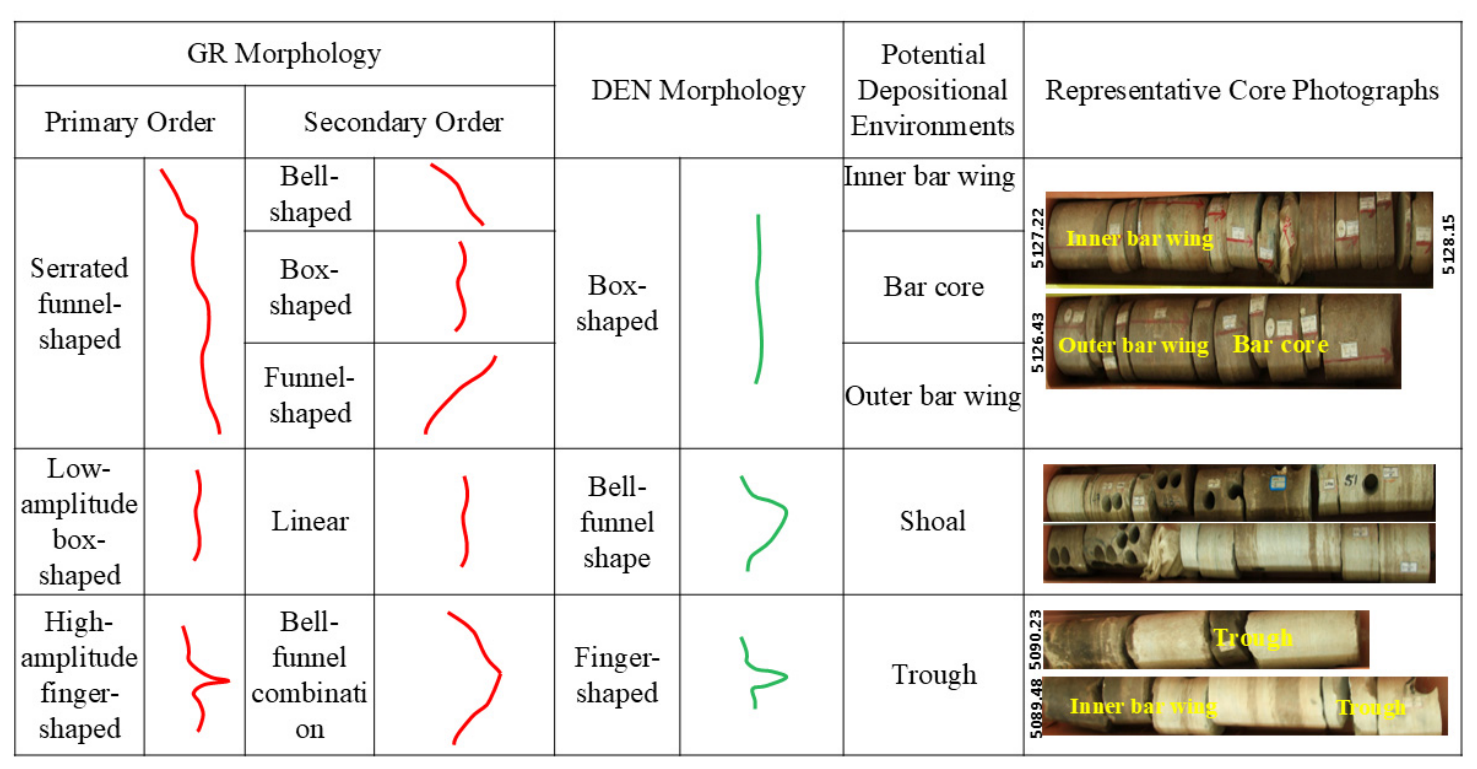
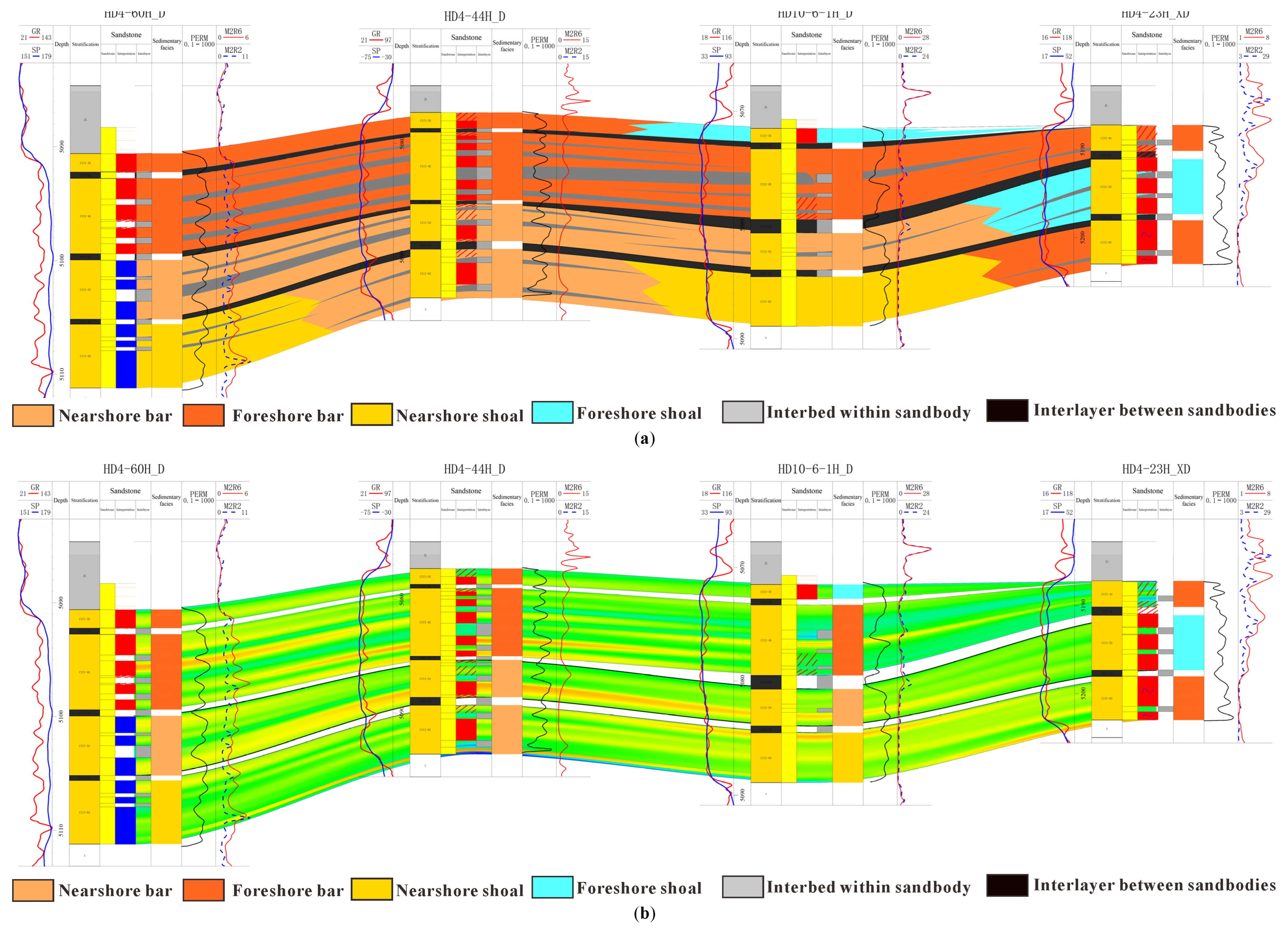
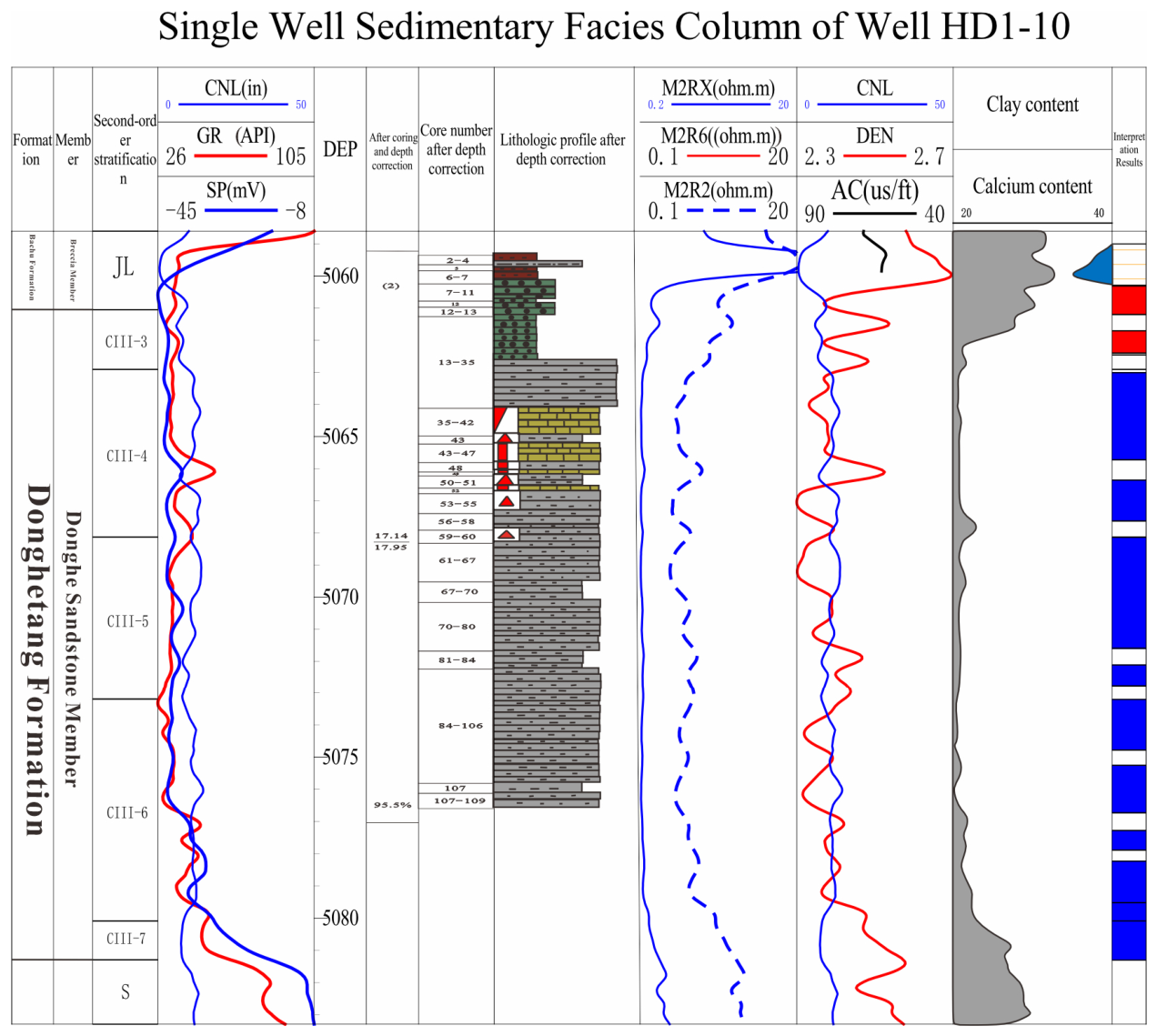
- Shoreface subfacies: This subfacies occurs within the wave-agitated zone between the normal wave base and the mean low-tide level and is subdivided into three architectural microfacies based on hydrodynamic variations: shoreface sand sheet, shoreface bar, and shoreface trough. The shoreface sand sheet is characterized by frequently fluctuating hydrodynamics, with a medium- to high-amplitude serrated bell- or funnel-shaped GR curve (40–60 API). The shoreface bar exhibits decreasing hydrodynamic energy, marked by a medium-amplitude box-shaped GR pattern (35–50 API). The shoreface trough is distinguished by alternating high- and low-energy conditions, showing a high-amplitude serrated funnel-shaped or chaotic GR response.
- (2)
- Foreshore subfacies: This subfacies occurs within the surf zone and is governed by strong wave dynamics. It is subdivided as follows: 1. Foreshore sand sheet, characterized by uniform grain size and a low-amplitude serrated box-shaped or finger-like GR pattern; 2. Foreshore bar, subjected to intense wave reworking and sorting, displaying a low-amplitude, gently box-shaped GR pattern with values concentrated between 22 and 35 API; and 3. Foreshore trough, a low-energy depositional area with thin sand-mud interbeds, exhibiting a medium-amplitude serrated bell-shaped GR curve.
3.1.2. Sedimentary Facies Distribution Patterns
3.2. Types and Distribution of Barriers and Interlayers
3.2.1. Genesis of Barriers and Interlayers
3.2.2. Analysis Based on 3D Cross-Plot Methodology
3.2.3. Distribution and Patterns of Interlayer Spaces
Interlayer Between Single Sand Bodies
Interlayer Within Single Sand Body
3.3. Control of Residual Oil in the Interlayer
The Effect of the Interlayer on Residual Oil
4. Results and Discussion
4.1. Fine Identification of Interlayers Using 3D Cross-Plot Method
4.2. Prediction of Residual Oil Distribution Under Interlayer Influence
4.3. Residual Oil Recovery Strategy Based on Interlayer Separation
5. Conclusions
- (1)
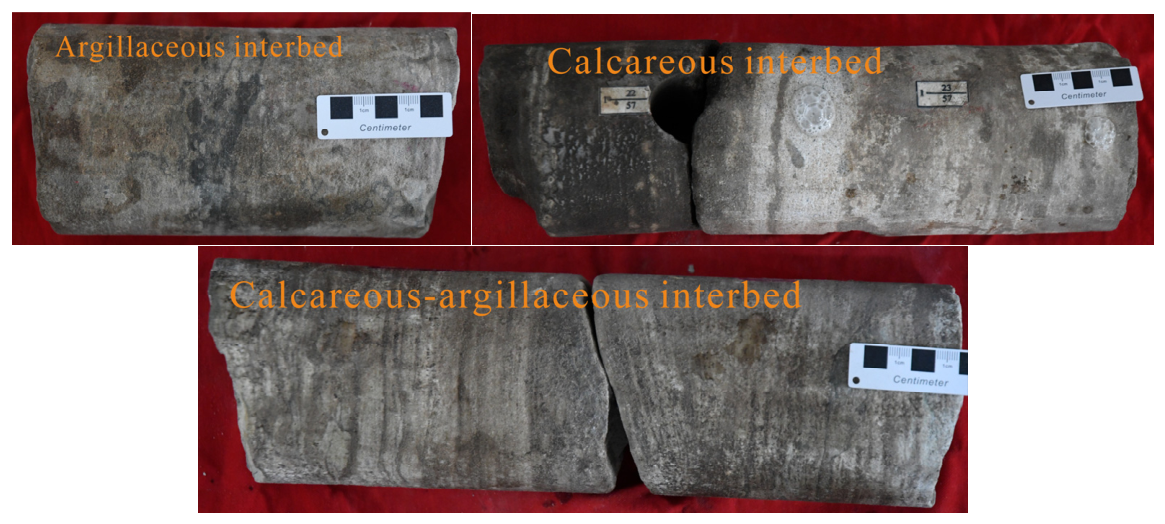
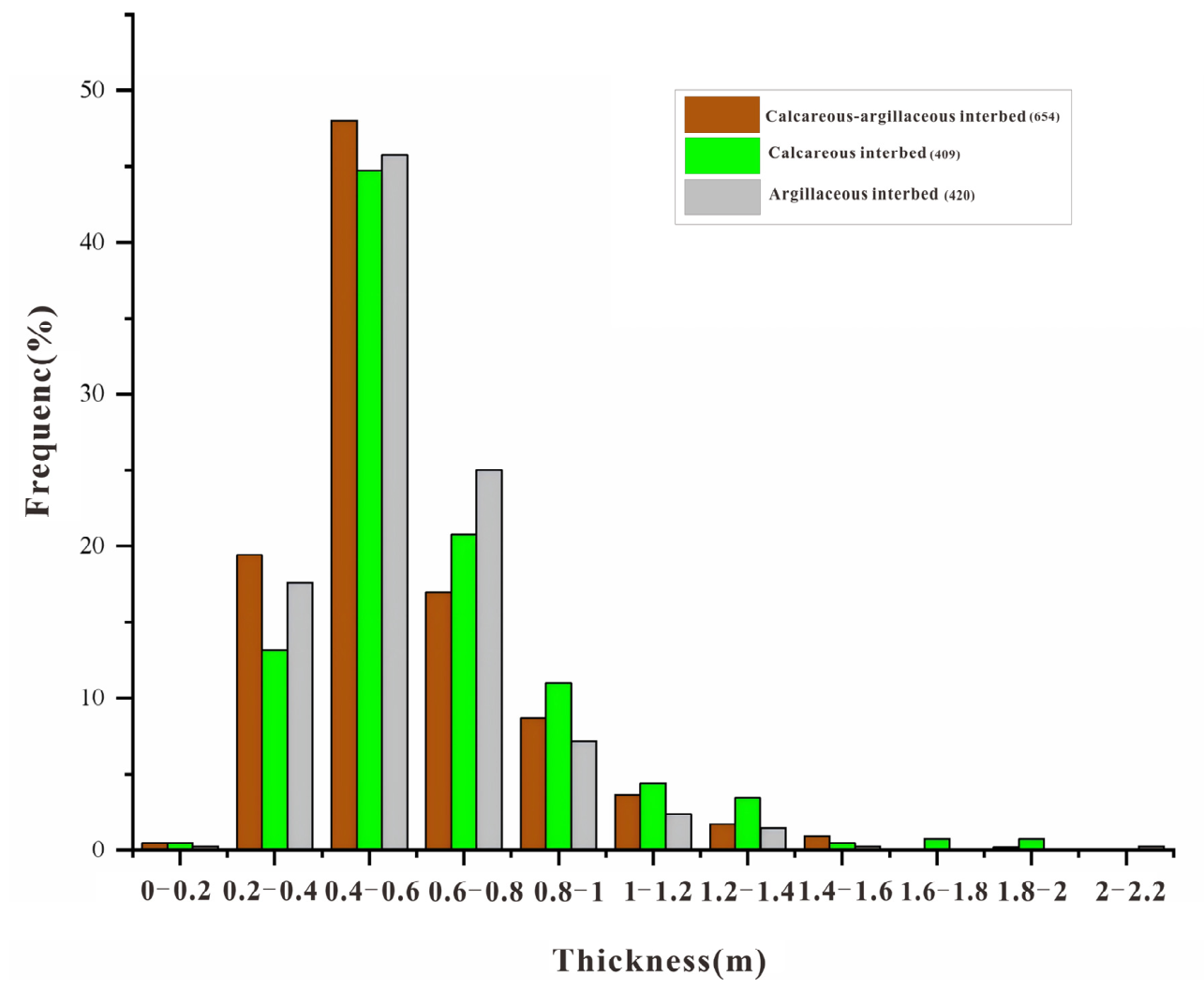
- The genetic and petrophysical differences among the three types of interlayers/barriers in marine littoral reservoirs, as well as their control over the types of flow barriers, have been clarified. Based on core and petrophysical analyses, three types of interlayers/barriers–argillaceous, calcareous, and calcareous-argillaceous—are developed in the littoral facies reservoirs of the Donghe Sandstone in the Tarim Basin. These three types occur in comparable proportions, with average thicknesses ranging from 0.58 to 0.63 m. Among them, argillaceous interlayers/barriers exhibit the lowest permeability (<3 mD) and constitute effective flow barriers. Calcareous interlayers/barriers are characterized by low permeability due to tight cementation. Calcareous-argillaceous interlayers/barriers show permeability values reaching up to 38 mD, and serve as local flow pathways.
- (2)
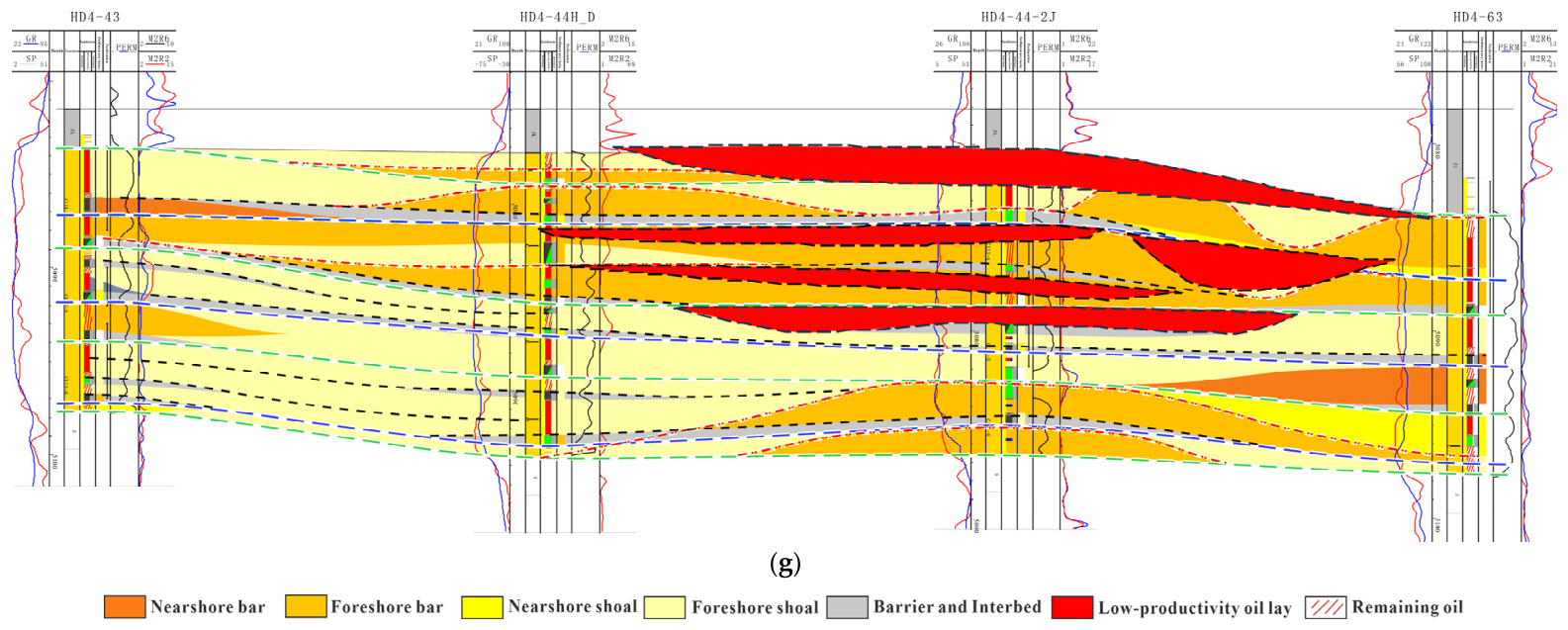
- A dual control mechanism of interlayers/barriers on waterflood pathways and remaining oil accumulation has been revealed. Under semi-confined conditions, interlayers/barriers suppress vertical bottom-water coning, forcing injected water to flow laterally along sandbody cut-and-stack contacts. This results in the formation of unswept zones updip of the interlayers/barriers and sheltered areas above the perforated intervals of injection wells. Dynamic data indicate that water breakthrough time is positively correlated with interlayer/barrier thickness. In contrast, well zones lacking effective barriers exhibit extremely early water breakthrough, with water cut rapidly increasing and leading to the development of ineffective water circulation pathways.
- (3)
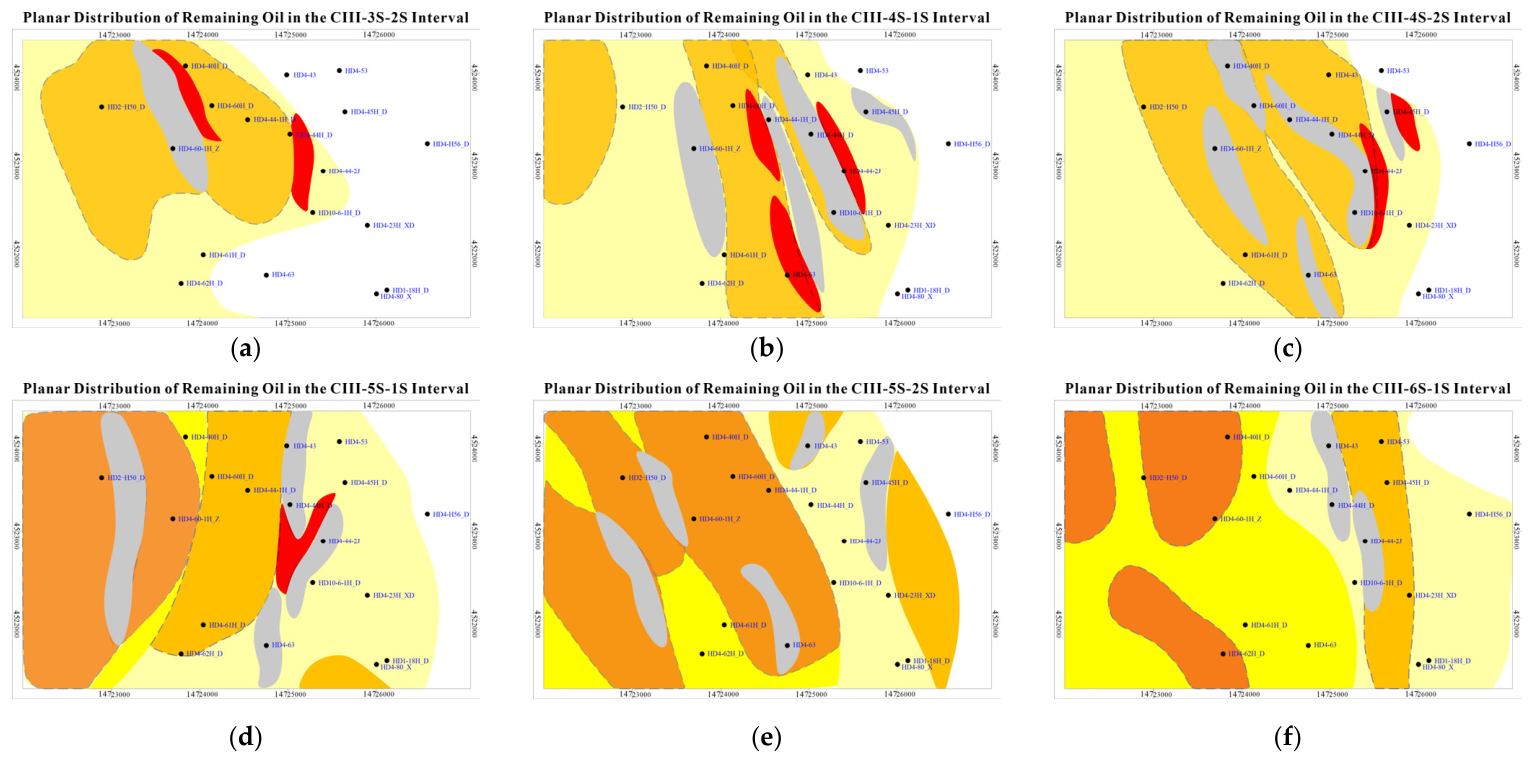
- This study confirms that interlayers/barriers in littoral reservoirs are the fundamental cause of the remaining oil distribution pattern characterized by “macroscopically dispersed yet microscopically locally enriched”. It is clarified that the remaining oil is predominantly continuously enriched in the sheltered zones above the perforated intervals of injection wells, as well as in microstructural highs. This finding not only directly addresses the research objective of elucidating remaining oil distribution patterns but also provides a clear geological targeting framework and scientific basis for fine-scale reservoir potential tapping in the Hadexun Oilfield and other analogous marine littoral reservoirs during the late high-water-cut stage.
Author Contributions
Funding
Institutional Review Board Statement
Informed Consent Statement
Data Availability Statement
Conflicts of Interest
References
- Lu, Y.; Lin, X.; Liu, J.; Xie, R. Distribution Characteristics and Controlling Factors of Oil and Gas in the Donghe Sandstone Reservoir of the Hadexun Oilfield, Tarim Basin. Mar. Geol. Quat. Geol. 2026, 46, 147–163. [Google Scholar] [CrossRef]
- Zhang, Y.; Liu, Y.; Cheng, C.; Rong, C.; Ma, L.; Lu, Y. The Distribution Characteristics of Interlayers in Multi-Stage Distributary Channel Reservoirs of Deltaic Plains and Their Influence on Remaining Oil Distribution: A Case Study of the H6 Reservoir of B Gas Field in Huangyan Area, Xihu Sag. Mar. Geol. Front. 2025, 41, 14–21. [Google Scholar] [CrossRef]
- Ugwu, I.; Okobiebi, O.; Overare, B.; Ogbeide, E. 3D static reservoir modelling: A case study of the Izu Field, coastal swamp depobelt, Niger Delta Basin. Arab. J. Geosci. 2023, 16, 42. [Google Scholar] [CrossRef] [Scilit]
- Wang, W.; Dai, M.; Chen, J.; Zou, Y.; Wu, Q.; Jiang, Q.; Feng, C. Identification and Distribution of Silurian Interlayers in YM 35 Well Block, Tarim Basin. Xinjiang Pet. Geol. 2025, 46, 154–162. [Google Scholar]
- Gharavi, A.; Abbas, K.A.; Hassan, M.G.; Haddad, M.; Ghoochaninejad, H.; Alasmar, R.; Al-Saegh, S.; Yousefi, P.; Shigidi, I. Unconventional reservoir characterization and formation evaluation: A case study of a tight sandstone reservoir in West Africa. Energies 2023, 16, 7572. [Google Scholar] [CrossRef] [Scilit]
- Pszonka, J.; Götze, J. Quantitative estimate of interstitial clays in sandstones using Nomarski differential interference contrast (DIC) microscopy and image analysis. J. Pet. Sci. Eng. 2018, 161, 582–589. [Google Scholar] [CrossRef] [Scilit]
- Fu, H.; Bai, Z.; Guo, H.; Yang, K.; Guo, C.; Liu, L.; Song, K. Remaining Oil Distribution Law and Development Potential Analysis after Polymer Flooding Based on Reservoir Architecture in Daqing Oilfield, China. Polymers 2023, 15, 2137. [Google Scholar] [CrossRef] [Scilit]
- Di, A.; Pandini, R.; Barilaro, F.; Barilaro, F.; Cavallo, A.; Livio, F. Drainage pattern evolution during continental indentation in Central Alps: Constraints from the sedimentary record of associated deep-water clastic offshoots. Mar. Pet. Geol. 2022, 144, 105846. [Google Scholar] [CrossRef] [Scilit]
- Wu, D.; Li, N.; Li, Z.; Zhang, L.; Zhou, J.; Guo, C.; Liu, X.; Huang, P. Research on the Distribution Law of Interlayer and Remaining Oil in Braided River Delta Reservoirs. Well Logging Technol. 2025, 49, 952–961. [Google Scholar] [CrossRef]
- De, S.; Raju, P. Mesoarchean terrestrial sedimentation in a continental rift setting and its provenance implications: An example from the Bisrampur Formation, Singhbhum craton, India. Earth-Sci. Rev. 2022, 234, 104205. [Google Scholar] [CrossRef] [Scilit]
- Motova, Z.; Donskaya, T.; Gladkochub, D.; Khubanov, V. U-Pb ages of detrital zircons and composition of clastic sedimentary rocks from the southern periphery of the Siberian craton: Implications for the earliest Cambrian evolution of southern Siberia. J. Asian Earth Sci. 2024, 264, 106048. [Google Scholar] [CrossRef] [Scilit]
- Liu, T.; Fawad, N.; Li, C.; Li, H.; He, R.; Xu, J.; Ahmad, Q. Physical simulation of remaining oil distribution in the 3rd-order architecture unit in beach sand reservoir. Front. Earth Sci. 2023, 10, 1108525. [Google Scholar] [CrossRef] [Scilit]
- Moreau, K.; Andrieu, S.; Briais, J.; Brigaud, B.; Ader, M. Facies distribution and depositional cycles in lacustrine and palustrine carbonates: The Lutetian-Aquitanian record in the Paris Basin. Depos. Rec. 2024, 10, 124–158. [Google Scholar] [CrossRef] [Scilit]
- Shen, Y.; Jia, J.; Peng, L.; Hou, X.; He, X. Lowstand Wedge Donghe Sandstone and Its Subsequent Progradation in the Tarim Basin: Characteristics and Geological Significance. J. Stratigr. 2025, 49, 316–325. [Google Scholar] [CrossRef]
- Zhao, J.; Sun, H.; Fang, H.; Tian, L.; Zhen, X.; Wang, H. Internal Architecture Patterns and Characterization of Marine Sandy Beach-Bar Reservoirs: A Case Study of the Donghe Sandstone in the Hadexun Oilfield. Acta Sedimentol. Sin. 2026, 44, 689–706. [Google Scholar] [CrossRef]
- Shang, J.; Zhang, Q.; Ye, Q.; Liu, P.; Chao, C. Characterization of Reservoir Architecture Interfaces in Shoreface Facies and Their Control on Remaining Oil Distribution: A Case Study of Oilfield A in the Pearl River Mouth Basin. Acta Sedimentol. Sin. 2025, 43, 1336–1343. [Google Scholar] [CrossRef]
- Arochukwu, E.; Ugwueze, C.; Udom, G. Depositional facies analysis of coastal to shallow marine deposits in the onshore Niger Delta Basin: Accessing the influence of sedimentology and depositional environments on reservoir quality. Sci. Afr. 2023, 22, 335–354. [Google Scholar] [CrossRef] [Scilit]
- Ye, R.; Deng, X.; Lu, R.; Fu, X.; Liu, N.; He, Y.; Li, H. Sedimentary Characteristics and Main Controlling Factors of Coastal Shallow Sea Deposits in the Pearl River Mouth Basin. Mar. Geol. Front. 2025, 41, 24–39. [Google Scholar] [CrossRef]
- Yuan, R.; Sun, Q.; Zhan, M.; Liu, W.; Sun, Y.; Wang, S.; Yuan, Y. Fractal Dimensions of Particle Size Distribution in Littoral Sandstones of Carboniferous Donghetang Formation in Hade Oilfield, Tarim Basin, NW China. Fractal Fract. 2025, 9, 364. [Google Scholar] [CrossRef] [Scilit]
- Wei, Q.; Xie, M.; Liu, W.; Feng, S.; Hong, H. Distribution characteristics of calcareous interbeds and tapping potential of remaining oil. Sci. Technol. Eng. 2025, 25, 12421–12429. [Google Scholar] [CrossRef]
- Zhemchugova, V.; Maslova, E. Facies Control of the Reservoir Distribution in Lower Devonian Deposits at the Eastern Edge of the Khoreiver Depression (Timan-Pechora Petroliferous Basin). Lithol. Miner. Resour. 2022, 57, 25–43. [Google Scholar] [CrossRef] [Scilit]
- Sathish, S.; Kankara, R.; Selvan, S.; Umamaheswari, M.; Arthur James, R. Sedimentary Facies and Morpho-Dynamics of Sand Spit and Island Inference as Coastal River Process. J. Geol. Soc. India 2023, 99, 951–964. [Google Scholar] [CrossRef] [Scilit]
- Shen, W.; Zhu, X.; Xie, H.; Wang, X.; He, Y. Tectonic-Sedimentary Evolution During Initiation of the Tarim Basin: Insights from Late Neoproterozoic Sedimentary Records in the NW Basin. Precambrian Res. 2022, 371, 106598. [Google Scholar] [CrossRef] [Scilit]
- Ben Rouina, S.; Slimene, W.; Touir, J. Late Pleistocene Sedimentary Facies and Their Diagenetic Features Along the Central Eastern Coast of Tunisia: Inference on Depositional Environments. Carbonates Evaporites 2025, 40, 19. [Google Scholar] [CrossRef] [Scilit]
- Leal, M.; Carol, E.; Perdomo, S. Freshening Processes in a Prograding Littoral System of the Río de la Plata-Sea Interaction Area. J. S. Am. Earth Sci. 2025, 159, 105522. [Google Scholar] [CrossRef] [Scilit]
- Yu, Y.; Song, X.; Lin, M.; Guo, R.; Zhu, G.; Shen, Y.; Shen, F.; Li, F. Characteristics and Development Strategies of Interlayers in the Lower Member of Mishrif Formation in H Oilfield, Iraq. J. China Univ. Pet. (Ed. Nat. Sci.) 2023, 47, 1–12. [Google Scholar] [CrossRef]
- Liu, Z.; Lü, W.; Liao, X.; Zhu, J.; Gao, L. Fine Characterization of Interlayers in Braided River Reservoirs Based on Geostatistical Inversion Under Horizontal Well Pattern: A Case Study of Guantao Formation of LD-A Oilfield, Liaozhong Sag, Bohai Sea. China Offshore Oil Gas 2022, 34, 71–81. [Google Scholar] [CrossRef]
- Yu, H.; Song, Y.; Peng, Y.; Liu, B.; Li, T.; Shi, K. Characteristics, Genesis and Distribution of Barriers and Interbeds in E31 Reservoir of Gasi Kule Oilfield in Qaidam Basin. Spec. Oil Gas Reserv. 2021, 28, 79–87. [Google Scholar] [CrossRef]
- Abitkazy, T.; Yan, L.; Albriki, K.; Baletabieke, B.; Yuan, D.; He, Y.; Sarbayev, A. Comprehensive Characterization and Impact Analysis of Interlayers on CO2 Flooding in Low-Permeability Sandstone Reservoirs. Energies 2025, 18, 593. [Google Scholar] [CrossRef] [Scilit]
- Ajuwa, M.; Okengwu, K.; Chiazor, F.; Soronnadi-Ononiwu, G. Characterization of Reservoirs of Oil-Well-OJ1 to Identify Lithofacies, Interpret the Depositional Environments and Sequence Stratigraphy in Field X in the Niger Delta, Nigeria. J. Appl. Sci. Environ. Manag. 2025, 29, 2294–2303. [Google Scholar] [CrossRef] [Scilit]
- Chen, L.; Yu, T.; Wang, C.; Yu, G.; Miu, J.; Xin, X.; Sun, K.; Tu, Z.; Li, G.; Zhao, X.; et al. Identification and Quantitative Characterization of Barriers and Interbeds in Sandstone Reservoirs: A Case Study of the Tazhong-16 Well Block. Geol. Rev. 2025, 71, 333–336. [Google Scholar] [CrossRef]
- Kassab, M.A.; Abdou, A.A.; El Gendy, N.H.; Shehata, M.G.; Abuhagaza, A.A. Reservoir characteristics of some cretaceous sandstones, North Western Desert, Egypt. Egypt. J. Pet. 2017, 26, 391–403. [Google Scholar] [CrossRef] [Scilit]
- Xiong, P.; Liu, Y.; Lou, M.; Chen, C.; Ding, F.; Hu, W.; Tu, Z. Genesis and Distribution of Braided River Delta Interlayer in X Oilfield of Xihu Sag, East China Sea Basin. Sci. Technol. Eng. 2024, 24, 13327–13334. [Google Scholar] [CrossRef]
- Shao, C.; Wang, M.; Chang, L.; Wang, K.; Zhang, F.; Wang, C. Application of Logging Data Wavelet Transform and Pseudo-Imaging to Fine Division of Deep Barrier/Interlayer. Xinjiang Pet. Geol. 2024, 45, 611–621. [Google Scholar] [CrossRef]
- Dou, L.; Shi, Z.; Peng, W.; Pang, W.; Ma, F. Petroleum Geological Characteristics and Exploration Targets of the Oil-Rich Sags in the Central and West African Rift System. Pet. Explor. Dev. 2024, 51, 1–14. [Google Scholar] [CrossRef] [Scilit]
- Chemenda, A. Bed thickness-dependent fracturing and inter-bed coupling define the nonlinear fracture spacing-bed thickness relationship in layered rocks: Numerical modeling. J. Struct. Geol. 2022, 165, 104741. [Google Scholar] [CrossRef] [Scilit]
- McGhee, C.; Muhammed, D.; Simon, N.; Acikalin, S.; Utley, J.E.P.; Griffiths, J.; Wooldridge, L.; Verhagen, I.T.E.; van der Land, C.; Worden, R.H. Stratigraphy and sedimentary evolution of a modern macro-tidal incised valley: An analogue for reservoir facies and architecture. Sedimentology 2022, 69, 696–723. [Google Scholar] [CrossRef] [Scilit]
- Fu, C.; Xie, Y.; Wang, H.; Song, L.; Duan, R.; Yuan, Z.; Xu, W.; Chen, G. Types and Sedimentary Genesis of Barriers and Interlayers in the Composite Turbidite Sand Bodies of Deep-Water Canyon: A Case Study of the Central Canyon in the Qiongdongnan Basin. Nat. Gas Ind. 2023, 43, 23–33. [Google Scholar] [CrossRef] [Scilit]
- Pszonka, J.; Schulz, B.; Sala, D. Application of mineral liberation analysis (MLA) for investigations of grain size distribution in submarine density flow deposits. Mar. Pet. Geol. 2021, 131, 105109. [Google Scholar] [CrossRef] [Scilit]
- Austin, O.; Agbasi, O.; Samuel, O.; Etuk, S. Cross plot analysis of rock properties from well log data for gas detection in Soku field, Coastal Swamp Depobelt, Niger Delta Basin. J. Geosci. Eng. Environ. Technol. 2018, 3, 180–186. [Google Scholar] [CrossRef] [Scilit]
- Pszonka, J.; Godlewski, P.; Fheed, A.; Dwornik, M.; Schulz, B.; Wendorff, M. Identification and quantification of intergranular volume using SEM automated mineralogy. Mar. Pet. Geol. 2024, 159, 106708. [Google Scholar] [CrossRef] [Scilit]
- Fan, T.; Pang, S.; Wang, H.; Zhang, J. New Method for Fine Characterization of Microstructure and Application in Remaining Oil Potential Tapping. China Offshore Oil Gas 2025, 37, 83–92. [Google Scholar] [CrossRef]
- Song, J.; Jiang, S.; Cai, W.; Luo, L.; Chen, P.; Chen, Z. Distribution Characteristics of Remaining Oil in Fractured-Vuggy Carbonate Reservoirs and EOR Strategies: A Case Study from the Shunbei No. 1 Strike-Slip Fault Zone, Tarim Basin. Energies 2026, 19, 593. [Google Scholar] [CrossRef] [Scilit]
- Lee, P.; Tang, H.; Yan, X.; Zhang, S.; Zhang, Z.; Liu, H. Laboratory Evaluation on the Water Flooding Characteristics in Bottom Water Reservoir Containing Interbeds. ACS Omega 2023, 8, 42409–42416. [Google Scholar] [CrossRef] [Scilit] [PubMed]






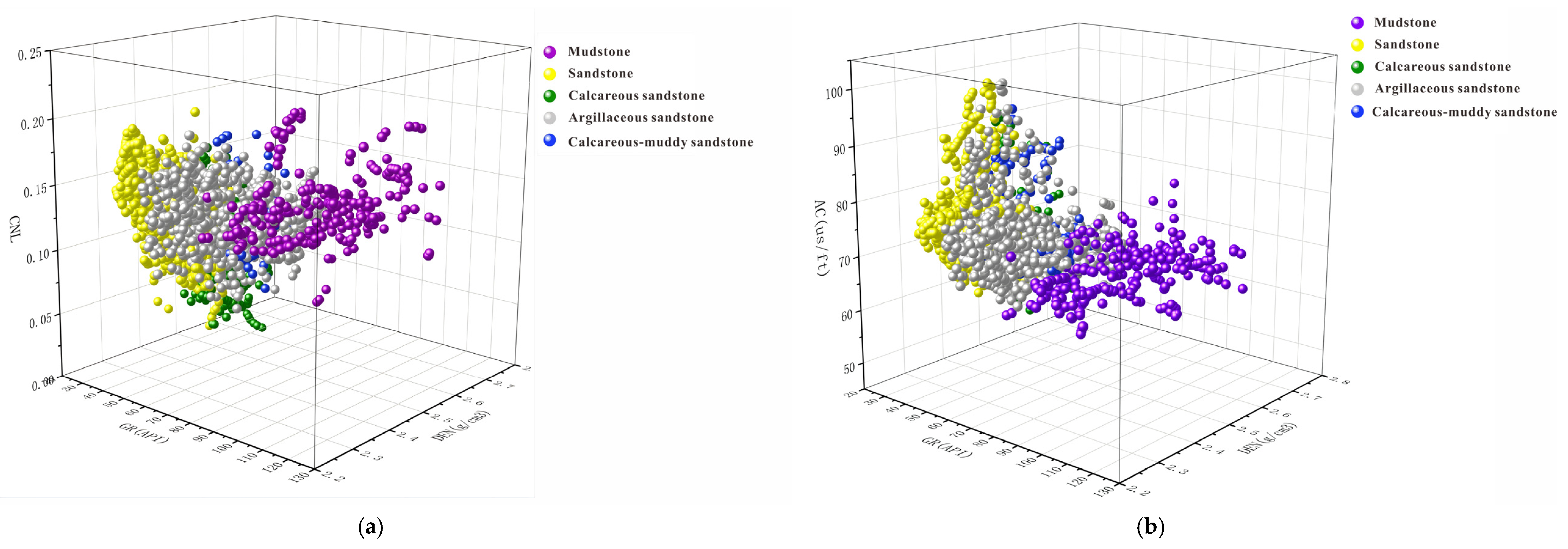
| Lithology | Interbed | GR (API) | CNL | DEN (g/cm3) | AC (μs/ft) |
|---|---|---|---|---|---|
| Sandstone | Reservoir | 22–51 | 0.01–0.2 | 2.27–2.53 | 55–100 |
| Mudstone | Argillaceous interbed | 67–122 | 0.05–0.2 | 2.23–2.72 | 58–79 |
| Argillaceous sandstone | 39–77 | 0.04–0.2 | 2.2–2.6 | 58–99 | |
| Calcareous sandstone | Calcareous interbed | 22–49 | 0–0.16 | 2.49–2.67 | 53–91 |
| Calcareous-argillaceous sandstone | Calcareous-argillaceous interbed | 28–64 | 0.05–0.17 | 2.4–2.57 | 58–94 |
| Well No. | Type of Barrier/Baffle | Thickness of Barrier/Baffle (m) | Water Breakthrough Time (Production Month) | Current Comprehensive Water Cut (%) | Cumulative Oil Production (104 t) | Log Interpretation of Remaining Oil |
|---|---|---|---|---|---|---|
| HD4-44H | Calcareous barrier | 1.2 | 34 | 76 | 12.5 | The barrier constitutes an effective vertical seal. The interval above it remains unswept by injected water, exhibiting low water saturation (Sw < 50%) and representing a highly enriched remaining oil zone. |
| HD4-43 | Argillaceous barrier | 0.8 | 39 | 65 | 10.8 | Lateral baffling is pronounced, creating a typical unswept area of waterflood. The lower part shows strong water flooding, whereas the middle to upper reservoir intervals display continuous enrichment of remaining oil. |
| HD10-6-1H | Calcareous-argillaceous baffle | 0.6 | 15 | 85 | 8.2 | The baffle merely induces local flow retardation, leading to fluid by-passing. Patchy remaining oil enrichment is present within the layer. |
| HD4-63 | Weakly developed argillaceous baffle | 0.2 | 5 | 96 | 4.1 | The baffle is very thin and laterally discontinuous. Bottom water rapidly migrates upward by vertical coning, establishing a preferential water channel. The reservoir is generally strongly water-flooded with minimal remaining oil. |
| HD4-60H | Calcareous baffle | 0.5 | 18 | 88 | 7.6 | Due to permeability contrast, injected water advances preferentially along the lower part of the baffle. A remaining oil accumulation zone is formed at a subtle structural high above the baffle. |
Disclaimer/Publisher’s Note: The statements, opinions and data contained in all publications are solely those of the individual author(s) and contributor(s) and not of MDPI and/or the editor(s). MDPI and/or the editor(s) disclaim responsibility for any injury to people or property resulting from any ideas, methods, instructions or products referred to in the content. |
© 2026 by the authors. Licensee MDPI, Basel, Switzerland. This article is an open access article distributed under the terms and conditions of the Creative Commons Attribution (CC BY) license.
Share and Cite
Tu, L.; Wang, L.; Yao, H.; Fu, H. Identification Characteristics of Interlayers and Interbeds in Shoreface Reservoirs and Their Influence on Remaining Oil Distribution—A Case Study of the Donghe Sandstone in the Hudson Oilfield. Appl. Sci. 2026, 16, 4233. https://doi.org/10.3390/app16094233
Tu L, Wang L, Yao H, Fu H. Identification Characteristics of Interlayers and Interbeds in Shoreface Reservoirs and Their Influence on Remaining Oil Distribution—A Case Study of the Donghe Sandstone in the Hudson Oilfield. Applied Sciences. 2026; 16(9):4233. https://doi.org/10.3390/app16094233
Chicago/Turabian StyleTu, Liyao, Lixin Wang, Hang Yao, and Haiyan Fu. 2026. "Identification Characteristics of Interlayers and Interbeds in Shoreface Reservoirs and Their Influence on Remaining Oil Distribution—A Case Study of the Donghe Sandstone in the Hudson Oilfield" Applied Sciences 16, no. 9: 4233. https://doi.org/10.3390/app16094233
APA StyleTu, L., Wang, L., Yao, H., & Fu, H. (2026). Identification Characteristics of Interlayers and Interbeds in Shoreface Reservoirs and Their Influence on Remaining Oil Distribution—A Case Study of the Donghe Sandstone in the Hudson Oilfield. Applied Sciences, 16(9), 4233. https://doi.org/10.3390/app16094233