1. Introduction
Life cycle assessment (LCA) is a well-established and widely applied methodological framework in sustainability and environmental management for evaluating the environmental performance of products and systems. Its conceptual foundations were developed through early energy and environmental accounting studies and were later formalized into a standardized framework through methodological advances and international standardization. Today, LCA constitutes a core analytical tool within industrial ecology, with extensive methodological development and applications across sectors, including agri-food systems [
1,
2,
3,
4,
5,
6,
7,
8].
By adopting a life cycle perspective, LCA enables the systematic evaluation of environmental impacts across all stages of a product’s life cycle, from raw material extraction and agricultural production to processing, packaging, distribution, and end-of-life management of the product. This holistic approach is essential for identifying environmental hotspots, avoiding burden shifting between life cycle stages or impact categories, and supporting more sustainable production strategies and decision-making processes [
7,
9,
10].
Within the agri-food sector, production systems are characterized by complex interactions among agricultural practices, natural resource use, processing technologies and supply chains [
11]. These interactions have environmental impacts that extend beyond primary production. In this context, LCA plays a critical role in quantifying key environmental indicators, such as greenhouse gas emissions, energy consumption, and water use, while supporting sustainability-oriented policies and management strategies [
9,
10,
12,
13,
14]. Moreover, increasing attention has been given to sustainability assessment frameworks and management practices in the food sector, highlighting the growing relevance of LCA-based approaches in agri-food research and decision-making [
15]. Therefore, LCA is particularly relevant to agri-food value chains, where environmental performance depends on the interplay between upstream and downstream processes.
In the wine sector, LCA applications have expanded significantly over the past two decades, with studies conducted in major wine-producing regions, including Europe, North America, and Australia [
16,
17]. These studies consistently identified viticulture, packaging, and distribution as key contributors to environmental impact. Vineyard-level analyses highlight the importance of inputs, such as fertilizers, pesticides, and fuel use, as major drivers of environmental burdens [
18,
19,
20], while additional studies have quantified the carbon and water footprints across wine production systems [
21]. More recent research has extended this analysis by incorporating circular economy strategies, alternative packaging systems, and resource efficiency improvements, reinforcing the role of LCA as a decision-support tool for sustainable wine production systems [
22,
23,
24,
25].
However, wine production cannot be considered a homogeneous system, as different wine categories are characterized by distinct production processes and environmental profiles [
26,
27]. In particular, sparkling wine production differs substantially from still wine production because of additional stages, such as secondary fermentation, extended aging, and the use of heavier pressure-resistant glass bottles and specialized closures. These characteristics result in higher material and energy requirements and potentially greater environmental impacts, especially during the fermentation, aging, and packaging stages [
28,
29].
Consequently, environmental outcomes derived from LCA studies on still wine cannot be directly extrapolated to sparkling wine. Several studies have identified fermentation, packaging, and distribution as major environmental hotspots in sparkling wine production and highlighted the importance of methodological choices, such as system boundaries, functional units, and impact categories, in shaping LCA results [
16,
30].
Despite the growing body of LCA literature in the wine sector, studies explicitly focusing on sparkling wines remain limited and fragmented. Moreover, existing studies exhibit considerable methodological heterogeneity, particularly in terms of functional units, system boundaries, and impact assessment methods, which limit comparability and hinder the synthesis of results [
31,
32]. In addition, variability in data sources and accounting approaches, such as those related to on-farm processes or loss estimation, further contribute to inconsistencies across studies [
33].
Although several narrative and critical reviews have examined LCA applications in the wine sector [
16], there is currently no comprehensive systematic review specifically addressing sparkling wine production across its full life cycle. Existing reviews tend to focus predominantly on still wine systems, lack standardized selection and screening procedures, and provide limited methodological comparisons across studies. Furthermore, sustainability considerations in the wine sector are increasingly linked to consumer preferences and market dynamics, including perceptions of product attributes and packaging alternatives [
34,
35].
To address this gap, this study adopts a systematic review approach following the PRISMA 2020 guidelines [
36], ensuring transparent and reproducible literature selection, structured comparison of methodological choices, and a comprehensive synthesis of environmental hotspots and impact drivers. In addition, this review integrates evidence from both sparkling and still wine LCA studies to capture shared life cycle stages while critically distinguishing sparkling wine-specific processes.
This study contributes to the literature in three main ways. First, it provides a methodological synthesis by systematically comparing the functional units, system boundaries, allocation methods, and life cycle impact assessment (LCIA) approaches used in wine LCA studies. Second, it identifies environmental hotspots that are consistent across the sparkling wine value chain. Third, it develops a research agenda by highlighting key gaps, including the underrepresentation of sparkling-specific stages and limited coverage of impact categories.
Against this background, this study aimed to systematically review and synthesize the state-of-the-art applications of life cycle assessment (LCA) in sparkling wine production. Specifically, this review examines how environmental performance has been assessed across the entire value chain, identifies key environmental hotspots, and analyzes the methodological trends and sources of variability reported in existing studies. By consolidating and critically analyzing current LCA evidence, this study aims to support more consistent, comparable, and policy-relevant applications of LCA in the wine sector.
The following sections present the research questions, describe the review methodology in accordance with the PRISMA guidelines, report the main findings, and discuss the implications for future research and practice.
2. Background: Fundamentals of Life Cycle Assessment
Life cycle assessment (LCA) is an internationally standardized and scientifically recognized methodology for evaluating the environmental impacts associated with products, processes, and services throughout their life cycles, from raw material extraction to end-of-life management. Its methodological foundations originated in early developments in environmental systems analysis and energy accounting and were later formalized through international guidelines and standards [
3,
4,
5,
6,
37,
38]. A key milestone was the development of methodological guidance by the Society of Environmental Toxicology and Chemistry (SETAC), which provided the basis for the International Organization for Standardization (ISO) standards ISO 14040:2006 [
39] and ISO 14044:2006 [
40], ensuring consistency, transparency, and comparability in LCA applications.
LCA adopts a system-based and holistic perspective to quantify inputs, such as materials, energy, and water, and outputs, including emissions to air, water, and soil, to generate an integrated environmental profile of product systems. This approach enables the identification of environmental hotspots and avoids burden shifting across life cycle stages and impact categories [
7,
37,
41]. This is particularly relevant to complex systems, such as agri-food value chains, where environmental impacts arise from interconnected processes spanning agricultural production, industrial processing, and distribution [
11,
12].
According to the ISO standards, LCA follows four interrelated phases: goal and scope definition, life cycle inventory (LCI) analysis, life cycle impact assessment (LCIA), and interpretation. The goal and scope phase defines the system boundaries and functional unit, which are critical for ensuring comparability across studies. It also establishes the modeling perspective, distinguishing between attributional and consequential approaches [
37,
38,
42,
43]. System boundaries may be defined as cradle-to-gate, cradle-to-grave, or gate-to-gate approaches, depending on the study objectives.
The LCI phase involves compiling material and energy flows within the defined system, while addressing methodological issues such as multifunctionality and allocation procedures, in accordance with ISO 14044:2006 recommendations [
37]. The LCIA phase translates inventory data into environmental impact indicators, commonly including climate change, acidification, eutrophication, and resource depletion [
38]. Recent studies have emphasized the importance of expanding impact assessment beyond climate change to include additional dimensions such as water use, biodiversity, and toxicity-related impacts [
43,
44,
45,
46]. The interpretation phase integrates the results, evaluates uncertainties, and ensures transparent reporting of assumptions and limitations [
39].
Recent methodological developments including dynamic LCA, spatially explicit modeling, and hybrid approaches have enhanced the ability of LCA to capture complex supply chain dynamics [
42,
45,
47,
48,
49]. However, these advancements also contribute to increased methodological variability across studies, particularly regarding functional units, system boundaries, allocation methods, and impact assessment approaches, which directly affect the comparability of results and hotspot identification [
32]. Therefore, a structured and transparent assessment of methodological choices is essential for synthesizing LCA evidence consistently and meaningfully.
These methodological choices are critical in the context of wine production, particularly sparkling wine systems,. The additional stages involved, such as secondary fermentation, extended aging, and the use of pressure-resistant glass bottles, require careful definition of functional units, system boundaries, and impact categories to accurately capture environmental impacts. Accordingly, this review focuses on how such methodological aspects are defined and applied in LCA studies, with particular attention to their implications for sparkling wine production systems.
3. Materials and Methods
3.1. Review Design and Research Question
This study adopts a systematic literature review to identify, analyze, and synthesize existing scientific evidence on the application of life cycle assessment (LCA) to evaluate the environmental performance of sparkling wine production across the entire value chain. The review protocol was registered retrospectively on the Open Science Framework (OSF) in accordance with open science practices and is publicly available at
https://doi.org/10.17605/OSF.IO/PF3VD. A systematic review approach was considered appropriate given the need for a transparent, reproducible, and methodologically rigorous synthesis of a relatively limited but methodologically heterogeneous body of literature on this topic. The review process was conducted in accordance with the Preferred Reporting Items for Systematic Reviews and Meta-Analyses (PRISMA 2020) guidelines, ensuring transparency, consistency, and robustness throughout the study identification, screening, eligibility assessment, and inclusion.
A clearly defined research question guided this review. This was established a priori as follows: How do life cycle assessment studies evaluate the environmental performance of sparkling wine production across the entire value chain, and which sustainability and efficiency hotspots are identified at different stages of production?
This research question informed the selection of databases, development of the search strategy, and definition of the eligibility criteria.
3.2. Information Sources and Search Strategy
A comprehensive bibliographic search was conducted using two major scientific databases, Scopus and the Web of Science. These databases were selected for their extensive coverage of peer-reviewed literature in environmental sciences, sustainability, agri-food systems, and life cycle assessment, as well as for indexing leading journals that publish LCA-based research relevant to the wine industry. The use of Scopus and Web of Science ensured broad coverage of high-quality peer-reviewed literature, which is considered adequate for systematic reviews in this field.
Advanced search functions were employed in both databases using Boolean operators to systematically combine primary and secondary keywords related to life cycle assessment, sparkling wine, and environmental performance. The search strategy was designed to maximize sensitivity while maintaining relevance to the study objectives.
The main keyword combinations included, among others: (“life cycle assessment” OR “life-cycle assessment” OR LCA) AND “sparkling wine”; (“life cycle assessment” OR “life-cycle assessment” OR LCA) AND (“sparkling wine production” OR “wine production”); “sparkling wine” AND (“environmental impact” OR sustainability); “sparkling wine” AND (“value chain” OR viticulture OR winemaking); “sparkling wine” AND (“secondary fermentation” OR packaging); and “wine value chain” AND (“life cycle assessment” OR LCA). The final literature search was conducted on 10 December 2025.
3.3. Eligibility Criteria
The eligibility criteria were defined a priori according to the PRISMA 2020 recommendations. Studies were included if they applied life cycle assessment (LCA) as the primary methodological framework to evaluate the environmental performance of sparkling wine production or general wine production systems; examined general sparkling wine or denomination-specific products, such as Champagne, Cava, or Prosecco; addressed at least one stage of the sparkling wine value chain, with particular emphasis on multistage or complete life cycle assessments; and reported key LCA elements relevant to the research question, including functional unit definition, system boundaries (cradle-to-gate or cradle-to-grave), impact assessment methods or categories, and/or identification of environmental hotspots.
Studies published between 2015 and 2025, written in English, and published as peer-reviewed journal articles, review papers, or technical reports were considered.
An exception was made in an earlier study by Rives et al., 2012 [
50], which was included despite falling outside the formal time window because it represents a seminal and widely cited LCA of champagne cork stoppers. It was included for contextual completeness rather than for comparative statistical synthesis. This component is directly relevant to sparkling wine production systems and has been insufficiently addressed in the recent literature. Therefore, its inclusion was justified based on its high methodological quality and unique contribution to understanding sparkling wine-specific inputs.
Studies were excluded if they did not address the research question or failed to provide sufficient methodological details relevant to the application of LCA to sparkling wine production across the value chain.
LCA studies addressing still wine production were included only as methodological benchmarks to demonstrate LCA application approaches and were not considered sources of empirical evidence for sparkling wine-specific environmental impacts. This choice was justified by the limited number of studies explicitly focusing on sparkling wine and the substantial overlap in the life cycle phases between still and sparkling wine systems, particularly in grape cultivation, primary vinification, bottling, packaging, and distribution. It is acknowledged that additional stages specific to sparkling wine production, such as secondary fermentation, extended aging, and the use of heavier glass bottles, were not fully captured in still wine-focused studies.
In this review, still wine studies are used to characterize shared life cycle stages (e.g., viticulture, primary vinification, packaging, and distribution), while conclusions regarding sparkling wine systems are specifically interpreted considering additional processes unique to sparkling wine production.
3.4. Study Selection Process
All records retrieved from Scopus and Web of Science were exported in the RIS format and imported into EndNote. Duplicate records were identified and removed automatically before the screening. The remaining records were screened sequentially by title and abstract to assess their relevance to the research question, followed by full-text assessment to determine final eligibility. A single reviewer screened the titles, abstracts, and full texts. Given the relatively focused scope of the topic and the limited number of eligible studies, screening by a single reviewer was deemed appropriate for this review.
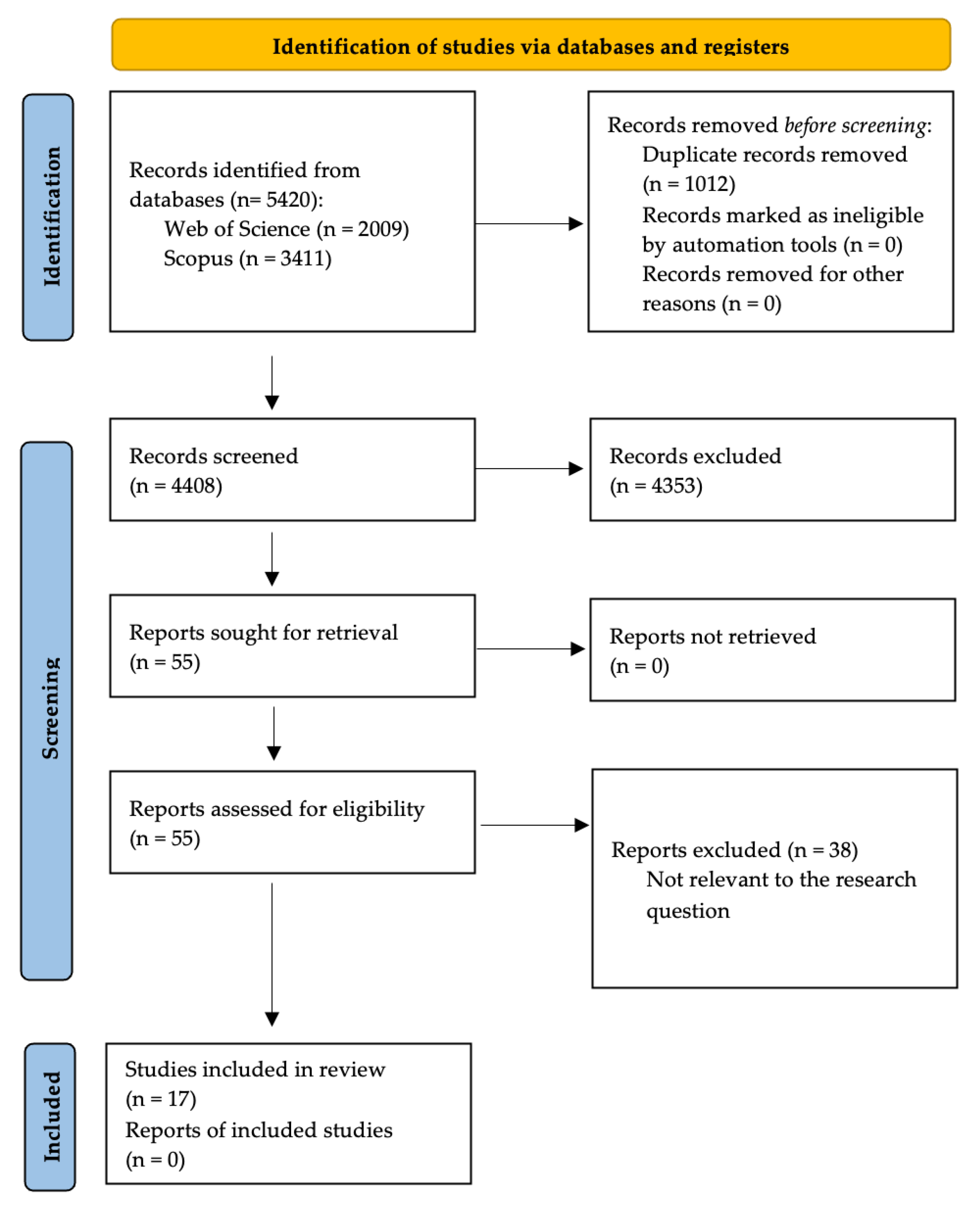
A total of 5420 records were identified across the two databases, including 2009 records from the Web of Science and 3411 records from Scopus. After the automatic removal of 1012 duplicate records, 4408 records remained and were screened by title and abstract. Of these, 4353 records were excluded because of a lack of relevance to the research topic. Consequently, 55 reports were assessed in full text, all of which were successfully retrieved for review. Following the full-text assessment, 38 studies were excluded for failing to address the research question or the review’s central focus. In total, 17 studies met the inclusion criteria and were included in the final qualitative synthesis.
To enhance transparency and reproducibility, the reasons for exclusion at the full-text stage were recorded and used to refine the final set of studies included. The screening and selection processes were designed to prioritize studies that provided sufficient methodological details to support comparisons across LCA applications, including the definition of functional units, system boundaries, and impact assessment approaches.
This relatively small sample size reflects the limited availability of LCA studies specifically addressing sparkling wine production and constitutes an important research gap identified in this study.
The study selection process is summarized in the PRISMA 2020 flow diagram (
Figure 1).
3.5. Data Extraction and Synthesis
Relevant data were systematically extracted from the final set of studies. The extracted information included the scope of the assessment, value chain stages covered, functional units, system boundaries, impact assessment methods and categories, identification of environmental hotspots, and contribution analyses. The extracted data were analyzed qualitatively to synthesize how life cycle assessment studies evaluate the environmental performance of sparkling wine production across the value chain, with particular attention paid to consistently reported environmental hotspots, methodological trends, and sources of variability among studies.
4. Results
Seventeen peer-reviewed studies applying life cycle assessment (LCA) to viticulture, wine production, packaging, and related processes were included. Among these, three studies explicitly addressed sparkling wine systems, including two focusing on sparkling wine production processes and one addressing Champagne cork stoppers. The remaining studies primarily focused on still wine systems, vineyard management, and packaging-related assessments.
The study selection process is presented in
Figure 1 (PRISMA flow diagram). The main reasons for exclusion of full-text articles included lack of LCA application, absence of wine-related systems, and insufficient methodological details.
Table 1 presents a simplified overview of selected LCA studies on wine and sparkling wine production, including objectives, results and findings, conclusions, and limitations. A more detailed version of this table, providing extended information and additional analytical depth, is available in the
Supplementary Materials (Table S1).
From
Table 1, it can be seen that LCA studies on wine and sparkling wine production systems consistently identify key environmental hotspots across the supply chain, with convergence across the vineyard, winery, and packaging stages.
At the vineyard level, input-intensive practices, particularly the use of fertilizers, pesticides, and fossil fuels, have been repeatedly highlighted as major contributors to environmental impacts, underscoring the importance of input optimization strategies [
1,
2,
32,
51,
52].
In parallel, studies focusing on winery operations have emphasized energy consumption as a critical hotspot, with significant potential for impact mitigation through the adoption of renewable energy sources [
10,
55,
56].
Packaging emerges as one of the most dominant contributors across the entire life cycle, with glass bottle production and associated logistics accounting for approximately 55–60% of the total impact in several cases [
30,
50,
54]. This finding is consistently supported by studies at both process and product levels, which show that upstream processes and packaging largely dominate carbon footprint values, typically ranging from 0.9 to 1.9 kg CO
2eq per bottle [
9,
29,
53]. In contrast, alternative packaging solutions, such as bag-in-box, aseptic cartons, and reusable containers, demonstrate substantially lower environmental impacts [
30,
50,
54].
The mitigation strategies assessed across the studies revealed considerable potential for improvement. Studies assessing alternative practices have reported notable environmental improvements, including greenhouse gas (GHG) reductions of approximately 25–30% through precision viticulture and up to 90% through the adoption of renewable energy in wineries [
10,
55,
56]. Additionally, organic and low-input systems generally show lower environmental impacts per hectare than conventional systems [
1,
2,
32,
51,
52].
Integrated and methodological studies contribute to a more comprehensive understanding of sustainability by combining environmental indicators, such as carbon and water footprints, and incorporating economic dimensions [
26,
27,
38]. These approaches not only highlight the strong correlations between different environmental indicators but also provide robust frameworks for benchmarking and supporting more holistic sustainability assessments in the wine sector.
Table 2 summarizes the methodological characteristics of the included studies, including the functional unit, LCA approach, system boundaries, allocation or system expansion procedures, key assumptions and limitations, impact assessment methods, databases and software used, and whether comparative analyses were performed.
4.1. Sparkling Wine-Specific Findings
4.1.1. Key Characteristics and Environmental Performance
Sparkling wine production exhibits distinct environmental characteristics compared with still wine systems. In sparkling wine studies, bottle-based functional units are most commonly used because they can capture downstream processes such as secondary fermentation, storage, and distribution.
Sparkling wine-specific assessments suggest the potential relevance of downstream processes that are absent or less pronounced in the production of still wines. Studies that include secondary fermentation, prolonged storage, and distribution indicate that these stages can contribute substantially to overall environmental impact, particularly through increased energy demand and greenhouse gas emissions.
4.1.2. Carbon Footprint
The carbon footprint values for sparkling wine typically range from 0.9 to 1.9 kg CO2eq per bottle, with variability driven by production systems, geographical context, and methodological scope. A specific example from the reviewed studies includes an organic sparkling wine produced in Italy with a carbon footprint of 1.1 kg CO2eq per 0.75 L of bottled sparkling wine, where package (glass bottle) production contributes 61% of the impacts and grape production contributes 11%.
4.1.3. Critical Hotspots for Sparkling Wine
Viticulture consistently emerges as a major hotspot across the entire value chain, with multiple studies identifying fertilizer application, pesticide use, fuel consumption, and mechanization as key drivers of environmental impact. At the winery level, the electricity and thermal energy demands associated with fermentation, stabilization, refrigeration, and bottling have been repeatedly identified as dominant contributors.
Packaging, particularly glass bottle production, represents one of the most influential hotspots in both still and sparkling wine systems. Given the structural requirements of sparkling wine bottles, including higher weight and pressure resistance, this stage is even more critical.
4.1.4. Environmental Implications of Sparkling Wine-Specific Processes
Secondary fermentation and aging increase energy demand due to extended storage periods under controlled conditions. Riddling and disgorgement introduce additional operational complexity but remain largely unquantified in LCA studies. Pressure-resistant glass bottles significantly increase material use and transport-related impacts compared to still wine systems.
4.2. Methodological Lessons and Frameworks
4.2.1. LCA Approach and Modeling
All reviewed studies applied attributional LCA or attributional carbon footprint approaches. No study applied consequential LCA. System expansion was rarely used and was mainly reported in packaging-related studies that incorporated recycling credits. Most studies addressed multifunctionality through allocation procedures, predominantly based on physical relationships such as mass allocation, whereas economic allocation was used less frequently. In a limited number of studies with restricted system scopes, allocation was not applied owing to the absence of co-products or multifunctional processes.
4.2.2. System Boundaries
The system boundaries varied considerably among the studies. Vineyard-focused studies predominantly adopt cradle-to-farm-gate or cradle-to-gate approaches, focusing on agricultural production stages. Studies addressing winery operations, packaging, or full product systems more commonly apply cradle-to-grave boundaries, including grape cultivation, vinification, bottling, distribution, and end-of-life stages.
Partial system boundaries, such as gate-to-grave or gate-to-gate approaches, have been used in studies focusing on specific technologies, packaging systems, or isolated processes.
The absence of complete system boundaries in Life Cycle Assessment (LCA) studies leads to significant deviations and limitations in environmental impact assessment results. Several studies have applied restricted system boundaries, focusing primarily on energy use or climate change impacts, resulting in partial LCA or carbon footprint studies. This restricted scope means that other significant environmental impact categories, such as water use, eutrophication, ecotoxicity, and resource depletion, are completely excluded from the assessment, creating a severely incomplete picture of environmental performance.
4.2.3. Functional Units
The functional units also showed significant heterogeneity. Area-based functional units (e.g., hectares of vineyards) have been mainly used in viticulture studies. Mass-based functional units (e.g., kg or tons of grapes) were used for the grape production systems. Product-based functional units, particularly one 0.75 L bottle of wine, were most frequently applied in winery-level, packaging, and sparkling wine studies.
The choice of functional unit fundamentally determines which production stages are weighted more heavily in the assessment, directly affecting the proportion of environmental impacts attributed to different hotspots. Bottle-based units, which are most suitable for sparkling wine, emphasize downstream processes, whereas area, or mass-based units, may emphasize earlier agricultural stages, resulting in substantially different hotspot profiles for the same production system.
Differences in functional units (e.g., per hectare, per liter, and per bottle) significantly affect the comparability of results and may lead to inconsistent interpretations of environmental performance.
4.2.4. Impact Assessment Methods
Climate change is the most frequently assessed impact category and is included in nearly all the studies. The most commonly used impact assessment methods are ReCiPe, CML, IMPACT 2002+, IPCC GWP, and the EU Product Environmental Footprint (PEF) method. However, climate change typically dominates both reporting and interpretation, often acting as the primary decision-making indicators. This predominance of climate change as the primary impact category may bias results toward energy- and packaging-related hotspots while underestimating impacts associated with eutrophication, toxicity, and water use.
4.2.5. Inventory Data and Software
Ecoinvent is the most widely used life cycle inventory database. SimaPro was the most frequently reported LCA software, followed by OpenLCA and spreadsheet-based models.
4.2.6. Data Limitations
Most studies reported limitations related to data availability, geographical specificity, and reliance on secondary or generic datasets, particularly for agricultural inputs and the background processes. Data limitations and inconsistencies in inventory modeling, particularly in agricultural systems and loss accounting, remain critical issues that affect robustness and comparability.
4.3. Evidence Gaps in Sparkling Wine Processes Lacking LCA Coverage
This review reveals a lack of comprehensive modeling of sparkling wine-specific production stages, such as secondary fermentation, extended aging, and the use of pressure-resistant, heavier glass bottles. Sparkling wine production remains underrepresented, with only a limited number of studies explicitly modeling secondary fermentation, extended aging, and pressure-resistant packaging.
Comparative assessments between still and sparkling wines are rare, limiting the ability to isolate the environmental implications of sparkling wine-specific processes.
While environmental assessments have advanced, few studies have integrated social or consumer-related dimensions.
The body of evidence explicitly addressing sparkling wine production is limited and fragmented. Substantial methodological heterogeneity, recurring data constraints, and the lack of comprehensive modeling of sparkling wine-specific production stages reduce cross-study comparability and underscore the need for greater methodological harmonization.
5. Discussion
The analysis of the 17 reviewed studies provides a structured synthesis of how life cycle assessment (LCA) has been applied to wine production systems, with particular emphasis on methodological choices, environmental hotspots and sources of variability. The results confirm that although LCA is widely used to assess environmental performance across the wine value chain, the body of evidence explicitly addressing sparkling wine production remains limited and fragmented. Therefore, caution is required when extrapolating findings from still wine systems to sparkling wine production, particularly for stages that are unique to sparkling wine.
In addition, the review reveals substantial methodological heterogeneity, recurring data constraints, and a lack of comprehensive modeling of sparkling wine-specific production stages, such as secondary fermentation, extended aging, and the use of pressure-resistant, heavier glass bottles. These limitations reduce cross-study comparability and underscore the need for greater methodological harmonization and clear research opportunities to strengthen the environmental assessment of sparkling wine production.
5.1. How Do LCA Studies Evaluate Environmental Performance and Identify Hotspots Along the Sparkling Wine Value Chain?
This systematic review examined how LCA studies evaluate the environmental performance of sparkling wine production along the value chain and identified the main sustainability and efficiency hotspots reported at different production stages. The reviewed evidence indicates that LCA is predominantly applied using attributional and process-based approaches, with system boundaries most commonly defined as cradle-to-gate or cradle-to-grave boundaries. However, several studies have applied partial system boundaries, such as gate-to-gate or energy-focused scopes.
Only a limited number of studies have explicitly focused on sparkling wine; nevertheless, the broader wine LCA literature provides a methodological basis for analyzing the life cycle stages shared by still and sparkling wine systems. Sparkling wine-specific assessments suggest the potential relevance of downstream processes that are absent or less pronounced in the production of still wines. Studies that include secondary fermentation, prolonged storage, and distribution indicate that these stages can contribute substantially to the overall environmental impact, particularly through increased energy demand and greenhouse gas emissions [
37]. Component-level assessments further demonstrate that individual inputs, such as closures or packaging materials, can significantly influence environmental performance, with industrial processing and material production acting as dominant contributors [
50].
Viticulture consistently emerges as a major hotspot across the entire value chain, with multiple studies identifying fertilizer application, pesticide use, fuel consumption, and mechanization as key drivers of environmental impact [
18,
19,
20,
21,
57]. These findings are supported by carbon and water footprint analyses, which highlight the contribution of agricultural inputs to overall environmental burden [
21]. At the winery level, the electricity and thermal energy demands associated with fermentation, stabilization, refrigeration, and bottling have been repeatedly identified as dominant contributors [
56,
58].
Packaging, particularly glass bottle production, represents one of the most influential hotspots across both still and sparkling wine systems and frequently accounts for a substantial share of total greenhouse gas emissions [
54,
59,
60]. Given the structural requirements of sparkling wine bottles, including higher weight and pressure resistance, this stage is even more critical.
Taken together, these findings indicate that LCA evaluates the environmental performance of sparkling wine production by integrating agricultural, industrial, and logistical stages while consistently identifying viticulture, energy use, and packaging as critical hotspots for sustainability improvement. These findings also reflect the underlying methodological choices, as the identification and relative importance of hotspots depend strongly on the system boundaries, functional units, and inventory assumptions applied in each study.
5.2. Trends Observed in the Literature and Gaps Identified
From a methodological perspective, several consistent patterns and divergences emerged across the reviewed LCA studies. First, attributional LCA modeling is dominant, with no study adopting a consequential approach. Second, climate change is the most frequently assessed impact category and is often the sole indicator of carbon footprint or energy-focused analyses. Even when multi-impact methods such as ReCiPe, CML, IMPACT 2002+, or the EU Product Environmental Footprint (PEF) are applied, climate change typically dominates both reporting and interpretation, often acting as the primary decision-making indicator [
39,
58].
Another notable trend is the widespread reliance on secondary inventory data, most commonly from databases such as Ecoinvent, although several studies also use national coefficients, sectoral statistics, and company-specific data. Data limitations and inconsistencies in inventory modeling, particularly in agricultural systems and loss accounting, remain critical issues affecting robustness and comparability [
33].
SimaPro is the most frequently reported LCA software, followed by openLCA, spreadsheet-based models, and specialized tools such as the Cool Farm Tool, although several studies do not explicitly report the software used. Recent contributions have increasingly explored benchmarking, scenario analysis, and statistical aggregation techniques to improve the interpretability and comparability of LCA results [
20,
54,
59].
Despite these developments, significant gaps remain. Sparkling wine production remains underrepresented, with only a limited number of studies explicitly modeling secondary fermentation, extended aging, and pressure-resistant packaging. Comparative assessments between still and sparkling wines are rare, limiting the ability to isolate the environmental implications of sparkling wine-specific processes.
In addition, while environmental assessments have advanced, fewer studies have integrated social or consumer-related dimensions. However, existing research indicates that consumer preferences and perceptions—particularly regarding sustainability attributes and packaging alternatives—play an increasingly important role in shaping market dynamics in the wine sector [
34,
35].
5.3. Methodological Limitations of Reviewed Studies and Opportunities for Future Research
The reviewed studies revealed several methodological limitations that constrained their robustness and comparability. Functional unit heterogeneity remains a central issue, with area, mass, and bottle-based units applied depending on the study’s focus. Bottle-based functional units are particularly suitable for sparkling wine systems as they capture key downstream processes such as secondary fermentation, extended storage, packaging requirements, and distribution. However, their inconsistent application limits the synthesis of cross-study data.
Another limitation concerns the system boundary definition. Partial LCA approaches (e.g., gate-to-gate or cradle-to-gate) provide valuable insights into specific processes but fail to capture trade-offs across the entire life cycle. In addition, many studies rely heavily on secondary data and often exclude infrastructure or capital goods, potentially underestimating the total environmental impacts.
More broadly, sustainability assessments in the wine sector have highlighted the need to integrate environmental, economic, and social dimensions, for example, through combined LCA, life cycle costing, or social LCA approaches [
61]. However, this integration remains limited in current LCA applications. Approaches such as life cycle costing (LCC) or integrated environmental–economic assessments could provide valuable insights into the feasibility and scalability of mitigation strategies, including packaging optimization and renewable energy adoption. The absence of such integrated assessments represents an important limitation of current research and should be addressed in future studies to support more comprehensive sustainability evaluations of sparkling wine production systems.
By systematically comparing these methodological aspects and identifying recurring limitations, this review contributes to improving the consistency and interpretability of LCA applications in the wine industry.
5.4. Practical Relevance and Implications for Sustainable Sparkling Wine Production
The reviewed literature confirms that LCA is a valuable decision-support tool for improving environmental performance in the wine industry.
At the viticulture stage, improving input efficiency, optimizing pesticide use, and adopting precision and sustainable farming practices are key strategies for reducing environmental impact [
18,
41,
57].
At the winery level, improving energy efficiency and integrating renewable energy sources offer substantial mitigation potential, particularly in energy-intensive stages, such as fermentation, cooling, and bottling [
38,
56].
Packaging remains one of the most influential hotspots in the field. Strategies such as lightweight glass bottles, alternative packaging systems, and improved end-of-life management can significantly reduce environmental impact. However, in sparkling wine production, these strategies are constrained by technical requirements related to pressure resistance and product safety [
54,
60]. Although packaging, particularly glass bottles, is consistently identified as a major contributor to environmental impacts, the specific effect of increased bottle weight is not always explicitly quantified and is, in some cases, inferred from broader packaging assessments. Additionally, mitigation strategies such as bottle lightweighting or renewable energy adoption must be evaluated considering technical constraints, safety requirements, and economic feasibility, particularly in sparkling wine production systems.
Sustainability strategies for sparkling wine production should consider technical constraints and product quality requirements, focusing on feasible interventions such as optimized energy management, incremental packaging improvements, and context-specific adoption of renewable energy systems.
Finally, benchmarking and standardized assessment approaches, including PEF-based methods, highlight the growing importance of transparent environmental information for regulatory purposes and market positioning. This is particularly relevant because sustainability considerations increasingly influence consumer preferences and purchasing decisions in the wine sector [
34,
35].
Overall, the findings of this review highlight the need for more harmonized, transparent, and comprehensive LCA applications in the wine sector, particularly in sparkling wine production. Addressing current methodological inconsistencies and data gaps is essential to improve cross-study comparability, support robust environmental benchmarking, inform policy development, and enhance the credibility of sustainability claims in increasingly competitive markets.
5.5. Recommended Future Research Directions
Future research should adopt harmonized cradle-to-grave frameworks tailored to sparkling wine systems, incorporating bottle-based functional units, explicit modeling of secondary fermentation and aging stages, and broader impact category coverage beyond climate change, such as eutrophication, toxicity, land use, and water resource use.
Another recommendation is to implement systematic comparative studies applying different methods (ReCiPe, IPCC, PEF, and others) to identical sparkling wine production systems to quantify how methodological choices influence impact results and hotspot rankings.
Another recommendation is to increase the use of primary data, explicit sensitivity analyses, and scenario testing to quantify how methodological choices affect reported environmental hotspots. Additionally, alignment with frameworks such as the Product Environmental Footprint would further enhance the robustness and policy relevance of the results.
Another recommendation is to implement comparative LCAs of identical sparkling wine production systems across different regions and production methods to quantify how location-specific agricultural inputs, energy sources, and processing technologies affect the hotspot magnitude and ranking.
Another recommendation is to implement detailed process-level sensitivity analysis explicitly comparing environmental contributions of sparkling-wine-specific stages relative to still wine equivalents to clarify the incremental environmental load of secondary fermentation, extended aging, and pressure-resistant packaging.
6. Conclusions
Overall, the 17 reviewed studies demonstrate that life cycle assessment (LCA) has become an increasingly established tool for evaluating the environmental performance of wine production systems, while confirming that evidence explicitly addressing sparkling wine production remains limited and fragmented in the literature. In the literature, viticultural practices, energy consumption in winery operations, packaging—particularly glass bottle production—and distribution consistently emerge as the most significant contributors to environmental impacts.
Few studies on sparkling wine indicate that secondary fermentation, prolonged aging, and heavier bottles impose additional energy and material demands, underscoring the importance of a complete life cycle perspective.
Despite the widespread use of attributional modeling and cradle-to-gate or cradle-to-grave boundaries, substantial methodological heterogeneity persists. Variability in functional units, system boundaries, impact category selection, and data sources constrain comparability and limit generalization of results. The strong focus on climate change, often through carbon footprint analyses alone, underrepresents other relevant dimensions such as eutrophication, toxicity, land use, and resource depletion. Excluding infrastructure and capital goods may further underestimate these impacts. These results align with recent advances in LCA applications across food systems, reinforcing the relevance of harmonized and multi-impact assessment frameworks.
The reviewed evidence identifies several priority mitigation opportunities along the sparkling wine value chain in Italy. Improving input efficiency and precision viticulture can reduce upstream impacts, whereas optimizing energy use during fermentation, aging, and bottling, combined with renewable energy integration, offers substantial potential for emission reductions and cost savings. Packaging remains a critical leverage point, with bottle weight, material composition, and end-of-life management strongly influencing the overall performance. Strategies such as bottle lightweighting must be balanced with safety requirements, while energy optimization should prioritize temperature-controlled storage and fermentation processes.
Future LCA research on sparkling wine should move beyond partial assessments and adopt harmonized cradle-to-grave frameworks tailored to the characteristics of sparkling wine. This includes consistent bottle-based functional units, explicit modeling of secondary fermentation and aging, broader coverage of impact categories, and a greater use of primary data. Alignment with PEF methods, scenario analysis, and benchmarking can improve robustness and policy relevance. LCA should be combined with complementary tools such as life cycle costing (LCC), social life cycle assessment (S-LCA), and multi-criteria decision analysis (MCDA). These combined frameworks would enable a more comprehensive evaluation of environmental, economic, and social trade-offs, thereby enhancing the robustness and practical relevance of sustainability assessments in the wine sector.




 ,
,