1. Introduction
Autism spectrum disorder (ASD) is a neurodevelopmental condition characterized by differences in social communication, restricted interests, and repetitive behaviors, with substantial heterogeneity in presentation, developmental trajectories, and support needs [
1,
2]. ASD affects individuals across the lifespan and is associated with diverse cognitive, behavioral, and adaptive profiles, requiring individualized and context-sensitive forms of support [
3]. A large body of research indicates that early and sustained intervention can support developmental outcomes, functional skills, and family well-being for autistic children [
4,
5,
6]. Consequently, autism intervention services have become a central component of health, education, and social care systems worldwide.
Autism interventions encompass a range of behavioral, developmental, and naturalistic approaches delivered across clinical, educational, and home settings. Behavioral interventions, such as Applied Behavior Analysis (ABA), have historically emphasized structured skill acquisition delivered by trained professionals [
7,
8]. Developmental and naturalistic approaches, including Naturalistic Developmental Behavioral Interventions (NDBIs), emphasize learning through everyday interactions and routines, often positioning caregivers as active participants in intervention delivery [
5,
9]. Empirical evidence from randomized controlled trials further supports the effectiveness of caregiver-mediated and developmentally informed interventions in improving social communication outcomes [
10]. Caregiver-mediated models have gained increasing attention due to their potential to support generalization, increase intervention intensity, and embed learning opportunities within daily life [
11,
12].
Caregiver involvement is therefore not a peripheral feature of autism intervention, but a foundational component of how intervention is enacted in practice. Even under optimal service conditions, caregivers are frequently responsible for reinforcing intervention strategies, supporting skill generalization, and coordinating across educational and clinical systems [
13]. Qualitative studies consistently demonstrate that families experience substantial emotional, cognitive, and logistical demands associated with sustaining intervention activities over time [
14]. Qualitative syntheses further highlight that caregiver-mediated interventions require contextual adaptation to family resources, cultural norms, and service infrastructures, underscoring that caregiver roles are embedded within broader systems of care rather than isolated intervention programs [
15].
Despite evidence supporting a range of intervention approaches, access to autism services remains uneven and highly dependent on contextual factors such as service availability, geographic location, socioeconomic resources, and institutional capacity [
16,
17,
18,
19]. Structural inequities contribute to disparities in diagnosis timing, service intensity, and continuity of care across populations [
20]. Workforce shortages, long waiting lists, and high costs contribute to delayed or inconsistent intervention and place additional strain on families [
21,
22]. Across systems, families frequently encounter fragmented care pathways and must actively navigate complex service environments to obtain and sustain support [
23].
These access constraints place substantial demands on caregivers and often require them to assume expanded roles in supporting their children’s learning and development. Prior research demonstrates that caregivers can effectively support intervention goals when provided with appropriate training and guidance [
11]. Caregiver involvement is common across behavioral, developmental, and naturalistic models, including community-based and NDBI-informed approaches designed to embed intervention within daily routines [
24,
25]. However, much of this literature assumes structured professional oversight and relatively stable service access, conditions that are not consistently available in real-world service systems.
Technology-mediated interventions, including telehealth platforms, online learning resources, and remote guidance systems, have been increasingly adopted to mitigate access barriers and support continuity of care [
26,
27]. Systematic reviews and meta-analyses indicate that caregiver-mediated telehealth interventions can improve caregiver implementation fidelity and self-efficacy and, in some cases, reduce parenting stress [
28,
29,
30]. Telehealth delivery has also been shown to extend access for families in rural or underserved areas and to reduce geographic and logistical barriers to service participation [
31,
32].
At the same time, caregiver experiences of technology-mediated support are heterogeneous. Qualitative and mixed-methods studies report ongoing challenges related to interpreting guidance, maintaining consistency, and balancing intervention demands with other caregiving responsibilities [
33,
34]. Expanded caregiving roles, particularly when sustained over time, can increase caregiver workload and stress and contribute to burnout [
13,
35].
When professional services are limited, disrupted, or fragmented, responsibilities associated with intervention delivery increasingly shift from trained providers to caregivers [
15,
23]. This transition should not be understood merely as an adaptive coping response; rather, it reflects a structural reallocation of care [
13,
14]. Constraints in access reduce the frequency, intensity, and continuity of professional support, thereby requiring caregivers to assume responsibilities that would otherwise be guided by specialists [
17,
20,
22]. These responsibilities include independently implementing therapeutic activities, systematically monitoring child progress, and making routine intervention decisions [
11,
12].
In these contexts, caregivers function as
proxy interventionists, implementing therapeutic activities, monitoring progress, and making day-to-day intervention decisions traditionally performed by trained providers [
15,
23]. While caregiver role expansion has been documented across autism intervention settings, the interactive, cognitive, and human factors implications of sustained proxy caregiving remain underexplored.
Research in healthcare systems, human-centered design, and HCI suggests that when technologies redistribute responsibility without adequate scaffolding, this can increase cognitive workload, uncertainty, and coordination demands [
36,
37,
38]. Despite rapid growth in digital tools for autism intervention [
39], these considerations have rarely been examined explicitly. Existing studies often treat caregivers as implementers of discrete programs rather than sustained system users with evolving roles and responsibilities [
40,
41].
Addressing these gaps requires moving beyond single-modality evaluations toward integrated examination of caregiver and service provider experiences over time, combined with analysis of how technology-mediated systems are used in practice. To address this need, the present study adopts a sequential mixed-methods approach spanning two phases. Phase 1 examines structural access constraints, early technology adoption, and stakeholder experiences during periods of disrupted service delivery. Phase 2 examines post-adoption contexts to understand whether caregiver proxy roles and technology-mediated practices persist, how they are enacted in everyday intervention work, and what human factors challenges accompany sustained proxy intervention. This study develops an empirically grounded conceptual framework to inform human-centered design of technology-mediated autism intervention systems.
Research Questions
RQ1. How do access constraints shape caregivers’ roles and experiences in autism intervention services?
RQ2. How do technology-mediated systems mediate caregivers’ sustained proxy intervention roles and associated human factors demands?
2. Materials and Methods
2.1. Study Design
This study employed a sequential mixed-methods design following the framework proposed by Creswell and Plano Clark [
42], integrating quantitative and qualitative methods to examine access to autism intervention services, stakeholder experiences, and the role of technology-mediated support over time. This study design was selected because neither quantitative nor qualitative methods alone could adequately address the study’s aims: quantitative surveys captured the prevalence of access barriers and satisfaction patterns across a larger sample, while qualitative interviews provided contextual depth regarding caregiver experiences, role enactment, and technology use. Integrating both data types enabled triangulation of findings and supported the development of an empirically informed conceptual framework.
The study consisted of two temporally distinct phases. Phase 1 (2020) combined quantitative online surveys, analyzed using descriptive statistics, with qualitative semi-structured interviews, analyzed using inductive thematic analysis; this dual-method approach examined service disruption and early adoption of technology-mediated intervention during the transition from in-person to remote delivery. Phase 2 (2021–2022) relied exclusively on qualitative semi-structured interviews, analyzed using reflexive thematic analysis, to examine post-adoption practices and understand whether technologies introduced during the initial transition persisted and how effectively they supported caregivers acting as proxy interventionists over time. The sequential structure refers to the temporal ordering of these two phases, with Phase 1 findings informing the focus of Phase 2 data collection.
The study involved adult participants only, specifically caregivers and service providers. No children were directly involved in the research. Informed consent was obtained electronically from all participants prior to participation. Participation was voluntary, and participants could withdraw at any time without consequence. Participants were recruited using a convenience sampling strategy through autism service providers and social media platforms, including Facebook and Twitter (now known as X). These platforms were selected due to their established use by autism caregiver and service provider communities for information sharing and peer support. All study activities were conducted in English, and all data were reviewed in anonymized form, with no direct identifiers accessible to the research team.
2.2. Phase 1: Service Disruption and Early Technology Adoption (2020)
Prior to 2020, autism intervention services for most participating families were primarily delivered in person, according to participant reports, with minimal reliance on remote or technology-mediated approaches. The onset of the COVID-19 pandemic resulted in widespread service disruption, including clinic closures, reduced availability of providers, and a rapid transition to remote service delivery. Phase 1 captures this period of abrupt change, during which caregivers were required to assume increased responsibility for supporting intervention and educational activities at home.
Participants included caregivers of children diagnosed with autism spectrum disorder (ASD) and autism service providers. Caregivers were eligible to participate if they were the primary caregiver of at least one child with ASD. Service providers were eligible if they were currently delivering autism-related intervention or educational services.
Data were collected from caregivers (N = 123) and service providers (N = 137). Caregiver participants primarily cared for children aged between 5 and 17 years. Service providers included professionals working in self-employed roles, or within service centers (private agency or public/non-profit organization).
The caregiver survey (
N = 123) examined access to autism intervention services and satisfaction with available support during the disruption period. The caregiver survey comprised two sections.
Section 1 collected background information including the child’s age, pre-disruption service receipt, and service modality during the COVID-19 pandemic (no services, online, or in-person). Participants also indicated whether they had access to any online resources by selecting from options including no access, general e-learning platforms, autism-specific digital intervention platforms, and provider-supplied online materials.
Section 2 measured service satisfaction using a Likert scale (0 = not at all to 7 = very much) applied to two items: satisfaction with educational support and satisfaction with intervention-related support. Participants without e-learning access also rated their interest in using an e-learning platform and rated the importance of five platform features: structured educational programs, intervention strategy guidance, step-by-step activity instructions, progress tracking or feedback, and professional communication. Open-text fields invited participants to describe tools currently in use and challenges experienced.
A separate online survey completed by autism service providers (N = 137) collected demographic information, employment arrangement (self-employed or work in a service center), approximate client caseload, service fee structures during the disruption period, primary mode of service delivery (in-person, remote, hybrid, or none), and whether service consistency was affected. Open-text fields invited providers to describe tools used for service delivery and coordination, challenges encountered, and observations regarding caregiver involvement and technology use.
Online semi-structured interviews were conducted with caregivers and autism service providers (N = 10; eight caregivers and two service providers). Caregiver interview questions addressed the following: (1) types of services received before and during the disruption; (2) changes in access and caregiver role; (3) specific activities and responsibilities taken on; (4) perceived comfort with independent implementation; (5) changes in communication with providers; and (6) use of digital tools, including perceived helpfulness and limitations. Service provider interview questions addressed the following: (1) changes to service delivery model; (2) capacity and consistency; (3) digital tools used and their adequacy; (4) extent and nature of caregiver involvement; (5) progress monitoring practices; and (6) unmet resource needs.
Quantitative data from Phase 1 were analyzed using descriptive statistics; no inferential tests were conducted given the descriptive aims of the survey component. Participants who did not respond to individual items were excluded from the relevant calculation (listwise exclusion). All participants were assigned anonymized numeric identifiers (caregivers: C1–C123; service providers: SP1–SP137) prior to analysis. Qualitative interview data were analyzed using inductive thematic analysis [
43]. Transcripts were read in full and open-coded line by line to generate initial codes reflecting participants’ own language. Codes were iteratively grouped into candidate themes and reviewed against the full dataset. To support analytical rigour, coding decisions were reviewed by a research assistant and any discrepancies were resolved through discussion until agreement was reached. Analytical memos were maintained throughout to document interpretive decisions and support transparency. Qualitative data analysis was supported by ATLAS.ti [
44]. Participant recruitment for Phase 1 occurred between 20 November 2020 and 31 December 2020.
2.3. Phase 2: Post-Adoption Practices and Caregiver Proxy Roles (2021–2022)
Phase 2 examined post-adoption contexts following the initial transition to remote care. Data sources included semi-structured interviews with caregivers (N = 62) and service providers (N = 10). This phase focused on understanding whether technologies introduced during Phase 1 persisted and how they were used to support caregivers’ ongoing roles as proxy interventionists. Caregiver interview questions addressed the following: (1) current service types and comparison to the disruption period; (2) ongoing involvement in home-based intervention; (3) which responsibilities had persisted or become permanent; (4) confidence in independent decision-making; (5) day-to-day challenges and their impact; and (6) what support had been most helpful and what additional support was needed. Service provider interview questions addressed: (1) current service delivery arrangements; (2) changes in caregiver involvement over time; (3) how intervention-related decisions were shared; (4) coordination challenges; (5) tools in current use and their limitations; and (6) what system-level or technological supports would improve long-term delivery.
Qualitative interviews were analyzed using reflexive thematic analysis [
45], which was selected for its suitability for identifying patterns in participants’ accounts of evolving roles and practices over time. Transcripts were read repeatedly to develop familiarity with the data. Initial codes were generated inductively from the full dataset, then grouped into themes reflecting shared patterns across caregiver and service provider accounts. Themes were reviewed, defined, and named in an iterative process. As in Phase 1, coding decisions were reviewed by a research assistant and any discrepancies were resolved through discussion until agreement was reached. Analytical memos were maintained throughout to document interpretive decisions and support transparency. ATLAS.ti [
44] was used to organize and manage the coding process. Analysis focused on four thematic domains: caregiver-mediated intervention practices, decision-making responsibilities, coordination with professionals, and human factors challenges. Participant recruitment for Phase 2 occurred between 1 March 2021 and 1 April 2022.
Table 1 provides a structured overview of the instruments used across both phases.
2.4. Integration Across Phases
Findings from Phase 1 and Phase 2 were integrated using narrative synthesis. Phase 1 established baseline conditions under which caregivers assumed proxy intervention roles during the transition from in-person to remote care. Phase 2 examined the persistence of these roles and assessed whether technology-mediated practices effectively scaffolded caregiver-mediated intervention over time. This integration informed the development of an empirically grounded conceptual framework describing caregivers as proxy interventionists within distributed, technology-mediated care systems. This integration reflects a sequential mixed-methods logic in which quantitative patterns informed the focus of qualitative exploration. Furthermore, qualitative findings in both Phases provided explanatory depth to the survey results.
3. Results
3.1. Phase 1
Caregiver respondents were caregivers or primary caregivers of children diagnosed with autism spectrum disorder, with children ranging from early childhood through adolescence.
3.1.1. Barriers to Accessing Autism Intervention Services
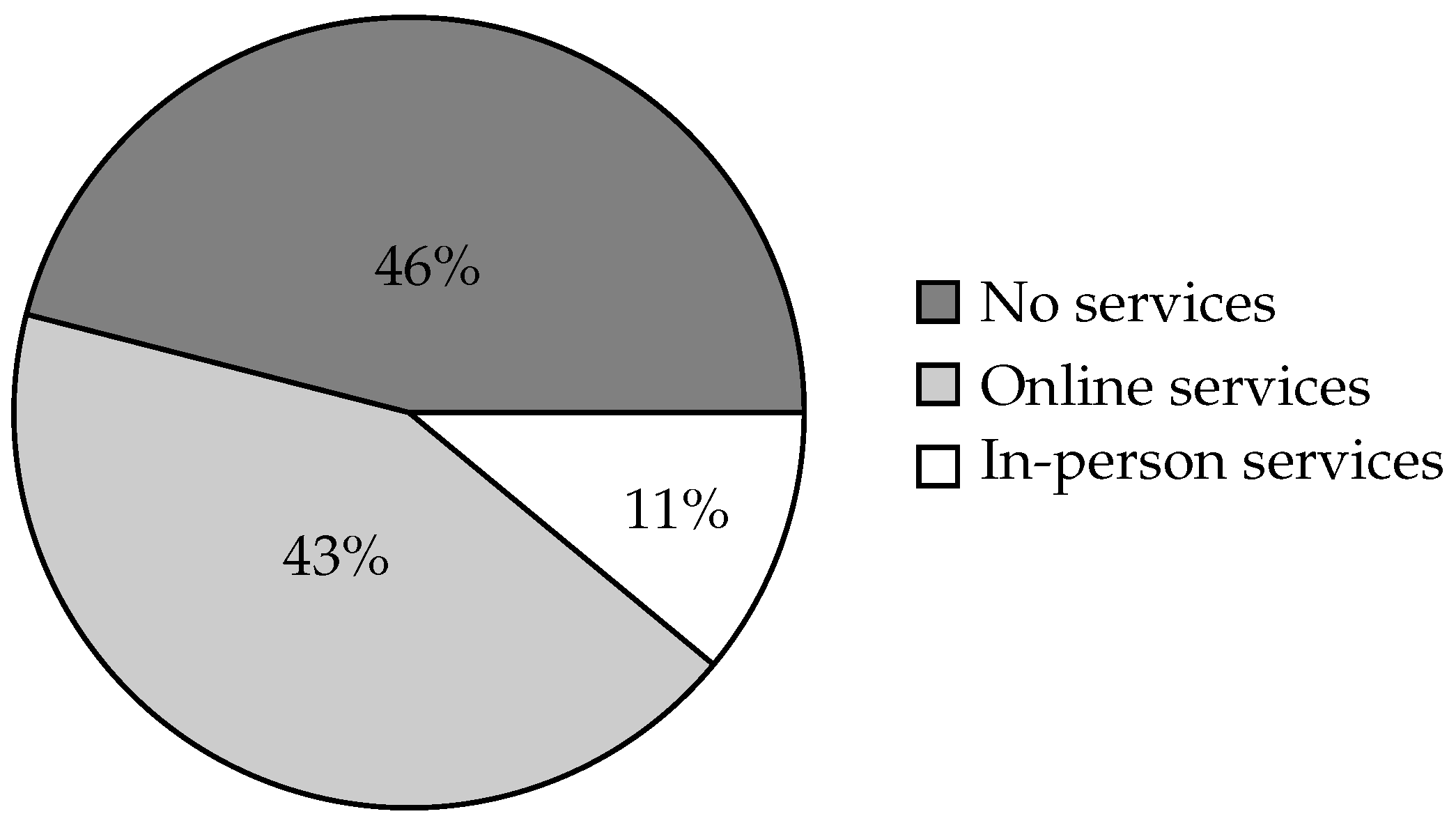
Caregivers reported substantial barriers to accessing consistent autism intervention services during the study period. In total, 93% of caregivers indicated that their family had been affected by limited access to services. Caregivers reported a range of service modalities, including no services, online services, and in-person services. The distribution of reported service modalities is shown in
Figure 1.
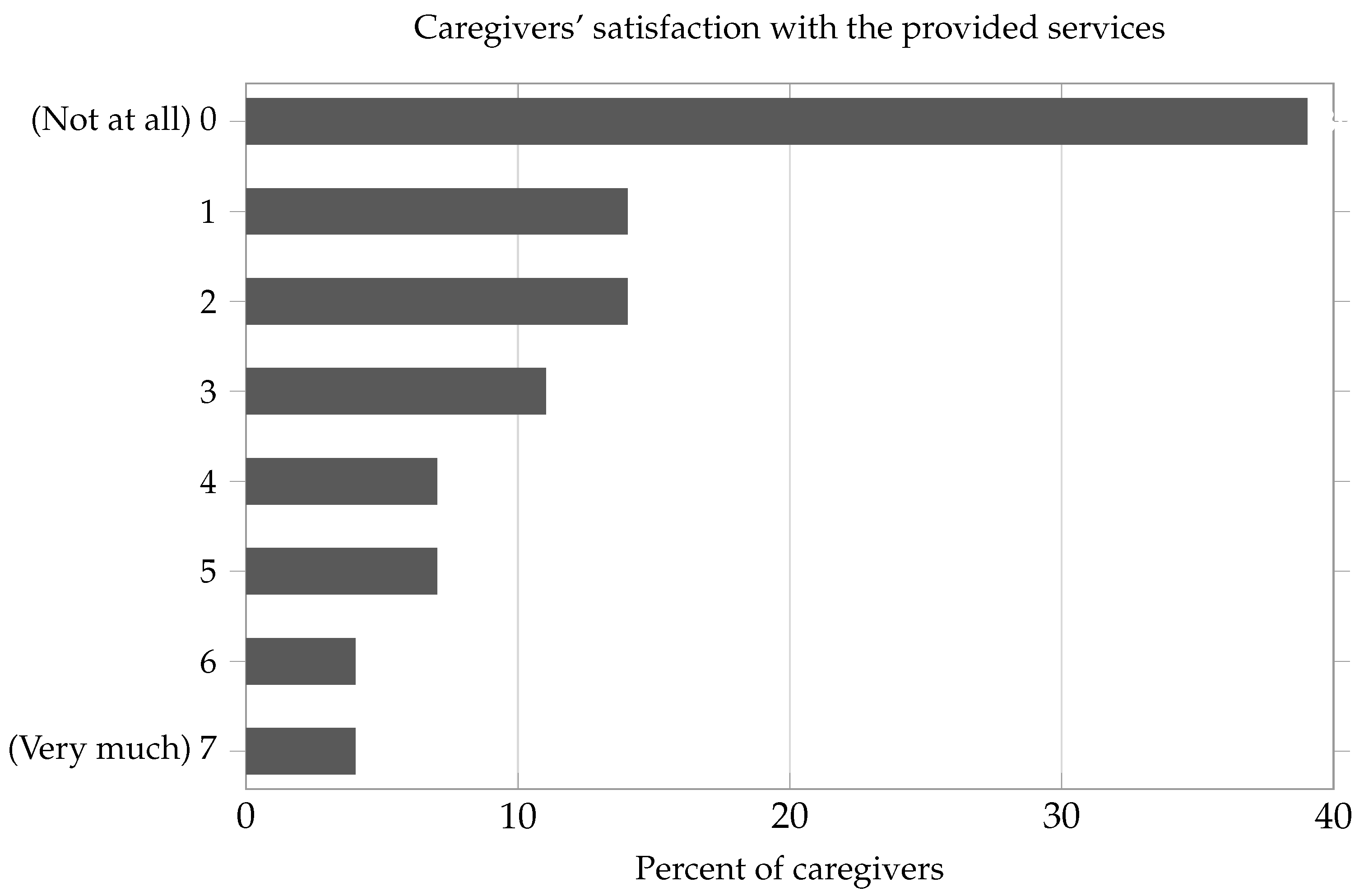
Across respondents, a large proportion reported either no access to services or reliance on online services, while a smaller proportion reported continued access to in-person intervention. Satisfaction responses were concentrated toward the lower end of the scale, indicating generally low perceived adequacy of available services during this period (
Figure 2).
These patterns of constrained access, reported by 93% of caregiver respondents and accompanied by generally low levels of service satisfaction, reflect the structural conditions under which caregivers assumed expanded, quasi-professional roles in supporting their children’s intervention. The transition from professionally delivered to caregiver-delivered intervention should therefore not be interpreted as an intentional or planned model of care, but rather as an emergent response to systemic limitations in service availability and accessibility.
Qualitative responses provided additional context for these patterns. Caregivers frequently described concerns related to interrupted or inconsistent services, including concerns about developmental regression and missed opportunities for early intervention. One caregiver said: “I worry that without consistent therapy, my child will lose skills that took a long time to develop.”
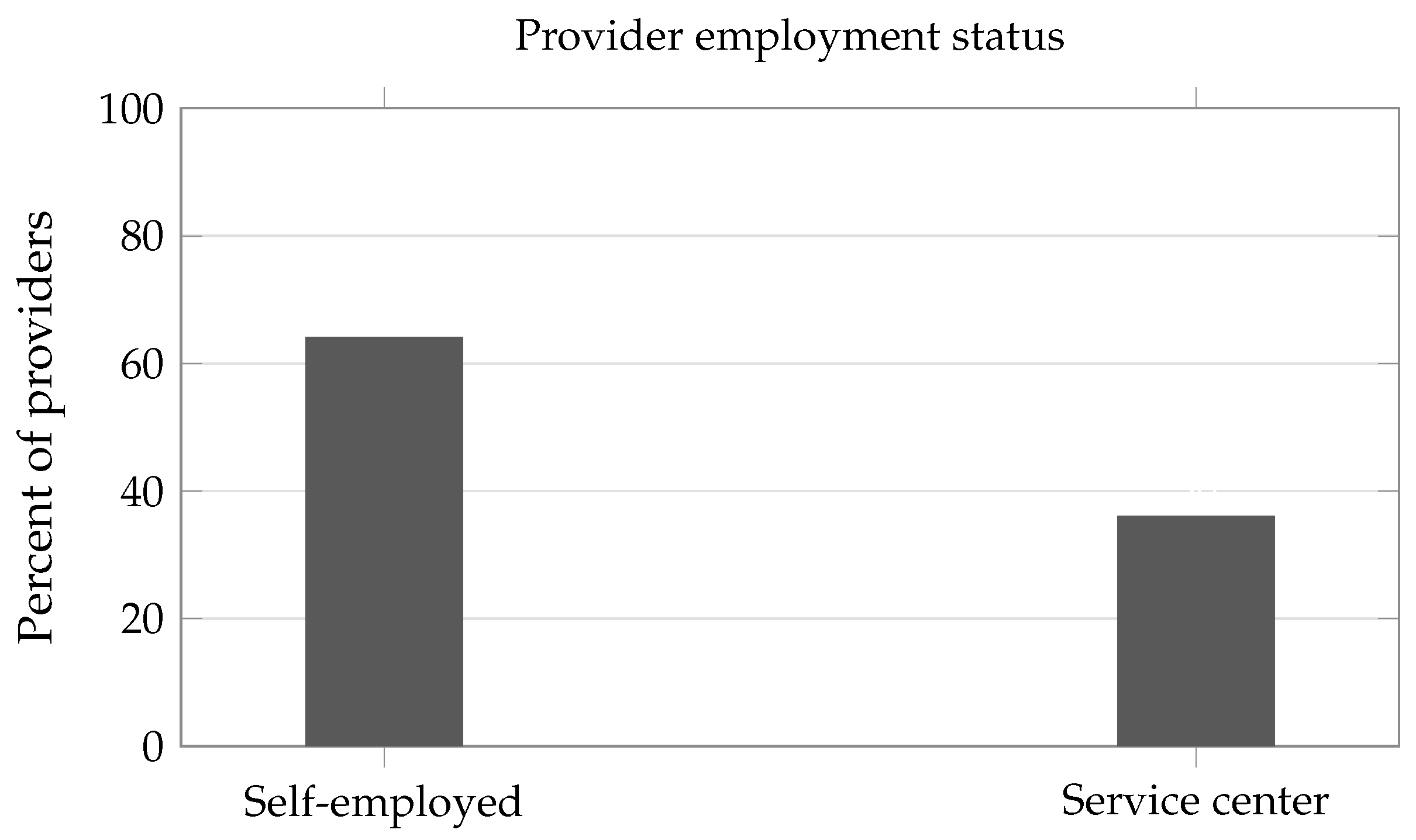
The responses of the service providers highlighted the structural and economic factors associated with access constraints. Most providers reported operating as self-employed professionals, and fewer worked in service centers (
Figure 3). Providers also reported substantial variability in service fees, suggesting affordability as a potential barrier to sustained access for many families.
3.1.2. Stakeholder Perceptions of Technology-Mediated Support
Stakeholders described technology-mediated support as a complementary mechanism to professional services and as a potential resource for caregivers during periods of limited in-person intervention. In interviews, participants emphasized the importance of structured autism-relevant content that caregivers could implement at home because available platforms were often described as generic.
Several caregivers described their interest in online resources that could increase confidence in supporting their child’s learning and development. One caregiver said: “Having step-by-step guidance online would help me feel more confident in supporting my child at home.” Service providers similarly described technology-mediated platforms as potentially useful for maintaining continuity of support when in-person services were disrupted.
3.1.3. Access to Online Resources and Perceived Satisfaction
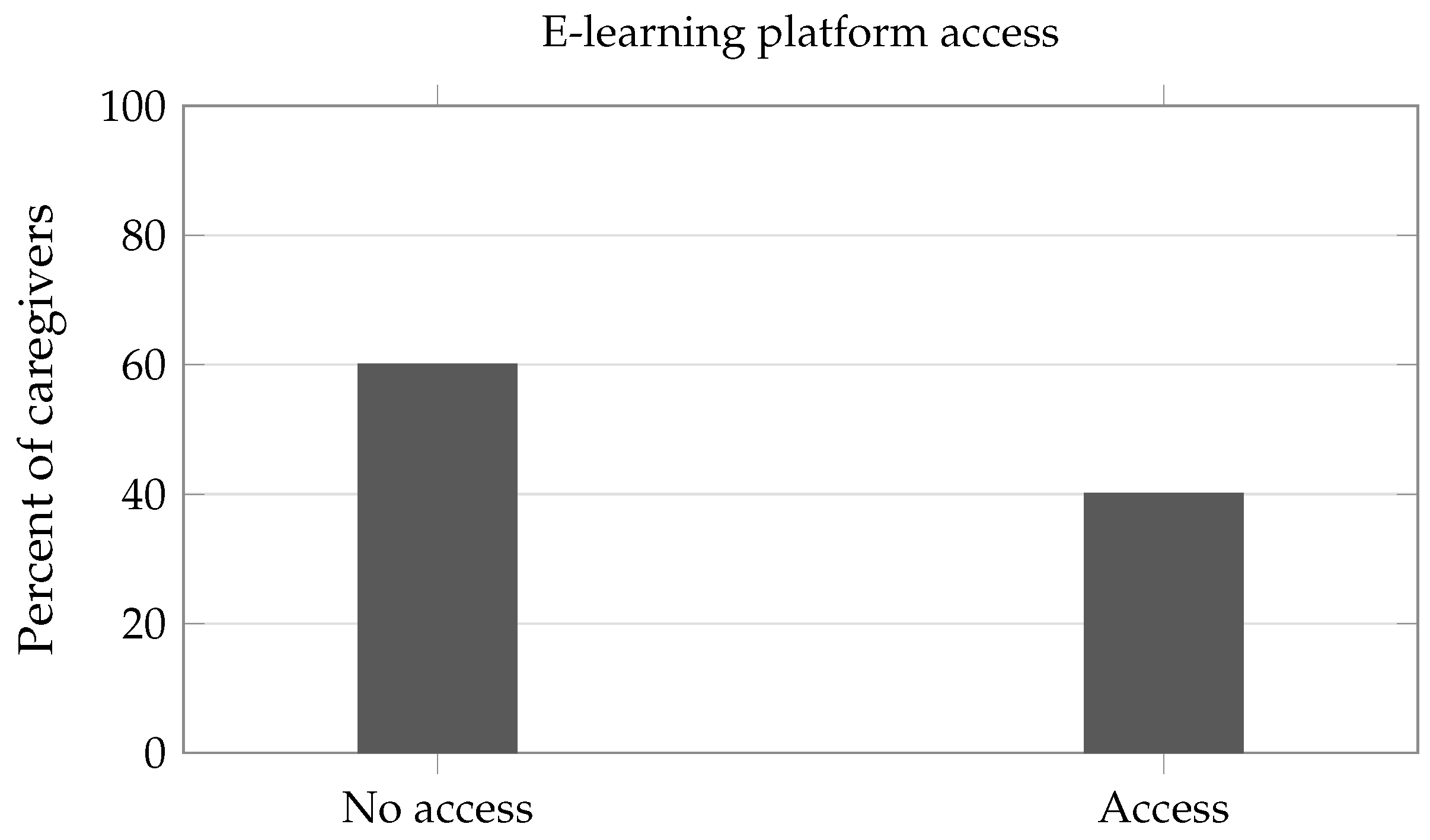
A total of 60% of caregivers reported having no access to online resources (such as an e-learning platform), while 40% reported having access to a general e-learning platform (
Figure 4). Descriptive comparisons of the satisfaction response distributions indicated that caregivers with access to an e-learning platform reported higher perceived satisfaction with educational and intervention support than caregivers without access.
Caregivers without access to the platform frequently expressed interest in adopting an autism-specific e-learning platform, particularly if it included structured educational programs and access to intervention-related guidance. These findings indicate that the availability of the platform and the design features were key factors in caregiver perceptions of the adequacy of support during this period.
3.2. Phase 2
Phase 2 examined post-adoption experiences following the initial period of service disruption and rapid technology adoption. This phase focused on whether caregiver-mediated practices and technology-mediated supports persisted beyond early remote care, how caregivers and service providers described ongoing proxy roles, and how digital tools were used to support coordination and intervention in post-adoption contexts.
3.3. Persistence of Caregiver Proxy Intervention Roles Under Access Constraints
Caregivers consistently described continued participation in intervention-related activities after the initial transition to remote care. These activities included implementing therapeutic exercises, supporting educational goals, monitoring progress, and making day-to-day decisions about intervention priorities. Although the intensity and structure of these activities varied between households, caregivers frequently described themselves as responsible for translating professional guidance into daily practice.
Caregivers commonly reported that these responsibilities persisted even when some in-person or hybrid services resumed. Rather than replacing caregiver participation, post-adoption service models often continued to rely on caregivers to implement and reinforce intervention activities between professional sessions. Service provider interviews aligned with this characterization, and service providers described caregivers as essential partners in the delivery of the intervention and, in many cases, as the primary implementers of intervention activities. Together, these findings indicate that the proxy roles established by caregivers during early remote care remained central to the delivery of the intervention in post-adoption settings.
3.4. Effectiveness of Technology-Mediated Support for Proxy Roles
From a human factors perspective, effective technology-mediated scaffolding for proxy intervention roles would be expected to reduce cognitive workload, support accurate decision-making, and minimize coordination overhead [
36,
37]. The following findings evaluate the extent to which available digital tools met these criteria in post-adoption contexts.
Caregivers and service providers described mixed experiences regarding the effectiveness of technology-mediated support in scaffolding caregiver proxy roles. Caregivers reported continued use of digital resources to support intervention activities, including online content, communication platforms, and informal tracking tools. However, caregivers frequently noted that these tools provided limited structure or feedback, which required them to independently select resources, interpret guidance, and organize intervention activities without systematic support.
The interview data indicated that technology-mediated tools were commonly used to access information, receive guidance, and maintain communication with professionals, but were less frequently described as helping caregivers understand whether interventions were effective or how to adjust them over time.
Service providers similarly reported that they relied on digital tools to communicate goals and receive updates from families, while highlighting limitations in monitoring fidelity and outcomes remotely. These findings suggest that while technology-mediated support persisted after adoption, its effectiveness in scaffolding caregivers’ ongoing intervention responsibilities varied considerably.
3.5. Human Factors Challenges in Sustained Proxy Intervention
Caregivers described a range of human factors challenges associated with sustained proxy intervention roles. Interview data highlighted ongoing cognitive demands related to decision-making, uncertainty about whether activities were implemented correctly, and the need to prioritize intervention tasks alongside other caregiving and household responsibilities. The emotional burden was also frequently discussed, particularly in relation to concerns about making appropriate decisions without continuous professional feedback.
Caregivers also indicated unmet support needs and a continued desire for clearer guidance and reassurance. Service providers acknowledged these challenges, noting substantial variability in caregivers’ capacity, time availability, and confidence. Collectively, these perspectives indicate that the proxy intervention roles introduced during early remote care often persisted after adoption, along with the associated cognitive and emotional demands.
3.6. Coordination Practices and Technology Gaps
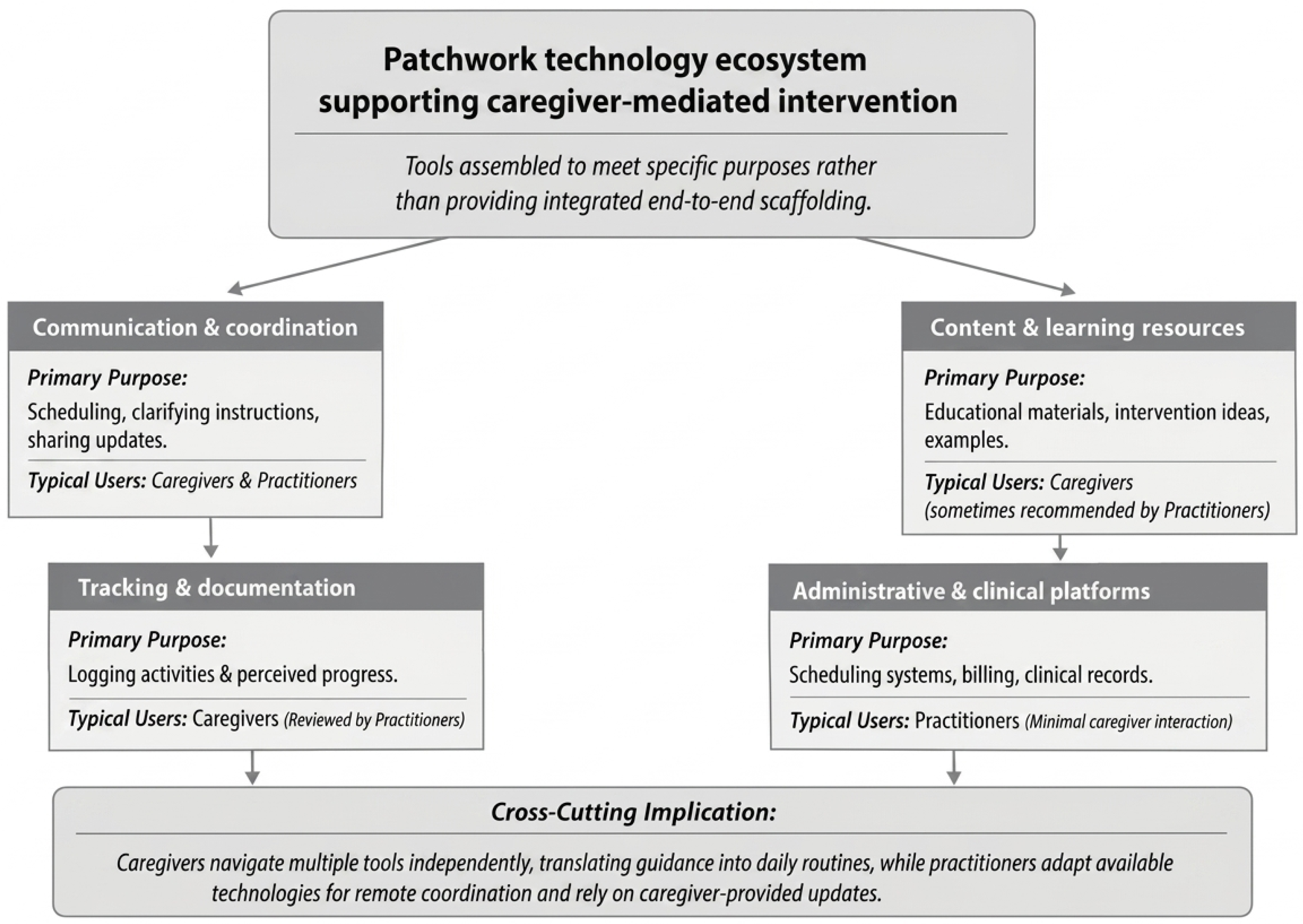
Both caregivers and service providers described the need to rely on a heterogeneous set of digital tools to coordinate intervention-related activities. The technologies reported included general-purpose communication platforms, online content repositories, informal documentation tools, and administrative systems. Rather than using a single integrated system, participants described assembling patchwork technology ecosystems to support coordination and information sharing.
Service providers reported that existing clinical platforms primarily supported administrative and documentation needs, while caregivers relied more heavily on general-purpose tools for day-to-day coordination and implementation. Across interviews, participants described gaps in tools designed to support shared understanding of goals, progress tracking, and feedback between caregivers and professionals. These coordination challenges were described as ongoing in post-adoption contexts, despite increasing familiarity with remote and technology-mediated practices.
3.7. Technology Tools Used in Caregiver-Mediated Intervention
To characterize how technology-mediated practices supported caregiver-mediated intervention in post-adoption contexts, reported websites, applications, and software systems used by caregivers and service providers were analyzed. Data were drawn from caregiver and service provider interviews. A qualitative content analysis approach was applied, whereby each reported tool was coded according to its primary functional purpose rather than its specific features or vendor. Through iterative coding and consolidation, four recurrent functional categories of technology use were identified. First, communication and coordination tools were used to schedule sessions, clarify instructions, and exchange updates between caregivers and service providers. Second, content and learning resources were used primarily by caregivers to access educational materials, intervention ideas, and examples that supplemented or substituted formal guidance. Third, tracking and documentation tools were used to record intervention activities and perceived progress, typically maintained by caregivers and reviewed intermittently by service providers. Fourth, administrative and clinical platforms were primarily used by service providers to support scheduling, billing, and record keeping, with limited direct involvement by caregivers. Across categories, technology use reflected a fragmented ecosystem in which multiple tools were assembled to meet specific purposes rather than providing integrated, end-to-end support for caregiver-mediated intervention. As illustrated in
Figure 5, this fragmentation required caregivers to independently coordinate across tools and translate guidance into daily routines, while service providers adapted available systems for remote coordination and relied on caregiver-provided updates.
3.8. Conceptual Framework for Human-Centered Design
The framework developed in this study builds on established theoretical foundations in human factors and sociotechnical systems research. Specifically, the structural redistribution of care responsibilities is conceptualized through the lens of Carayon’s Systems Engineering Initiative for Patient Safety (SEIPS) model [
36], which frames work system components, including tasks, tools, environment, and person, as jointly shaping performance and outcomes. The concept of caregivers as proxy interventionists extends Norman’s distributed cognition perspective [
37], wherein non-expert actors increasingly assume roles shaped by systemic resource constraints rather than intentional design. The four framework elements are therefore not purely data-driven summaries but reflect convergent evidence interpreted through these theoretical lenses. Findings from Phase 1 and Phase 2 were integrated to develop an empirically informed conceptual framework.
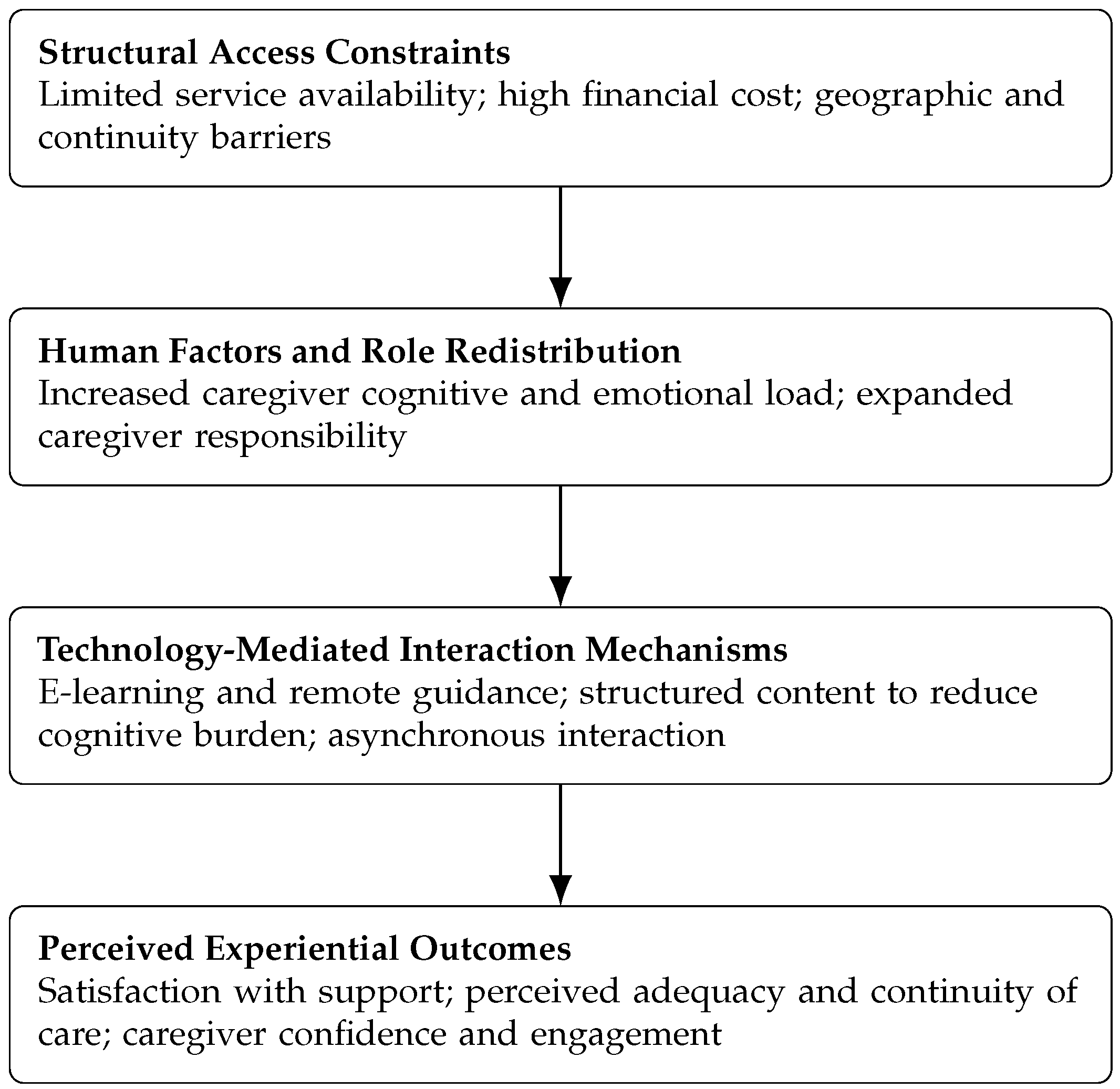
The framework explains how structural access constraints influence stakeholder roles and human factors demands, how technology-mediated support can help address these access gaps, and how these dynamics relate to perceived interaction outcomes. Framework elements were included only when supported by convergent evidence from the studies.
The first element,
Structural Access Constraints, is grounded in the Phase 1 survey finding that 93% of caregivers reported limited access to services, the satisfaction distribution concentrated at the lower end of the scale (
Figure 2), and interview accounts describing service fragmentation, cost barriers, and missed early intervention opportunities. The second element,
Human Factors and Role Redistribution, is grounded in Phase 2 interview data showing that caregivers consistently reported continued responsibility for implementing therapeutic activities, making day-to-day intervention decisions, and monitoring progress even after some in-person services resumed; service providers independently corroborated this characterization. The third element,
Technology-Mediated Interaction Mechanisms, is grounded in Phase 2 findings showing four recurrent categories of technology use (communication and coordination, content and learning resources, tracking and documentation, and administrative platforms), each of which provided partial rather than integrated support. The fourth element,
Perceived Experiential Outcomes, is grounded in both the initial Phase 1 satisfaction distributions and the Phase 2 interview accounts of unmet support needs, emotional burden, and caregiver desire for clearer guidance and professional feedback.
Therefore, the framework in
Figure 6 synthesizes four core elements grounded in the results: (1) structural access constraints (availability, cost, and continuity); (2) stakeholder roles and human factors demands (expanded caregiver responsibilities, need for guidance, and provider capacity); (3) technology-mediated support mechanisms (e-learning platforms and remote guidance); and (4) perceived interaction outcomes (satisfaction with support and perceived adequacy of resources).
4. Discussion
This study examined how structural access constraints to autism intervention services shape caregiver roles, technology use, and human factors demands over time. By integrating findings from two phases spanning early service disruption and post-adoption contexts, the study provides an empirically grounded, human-centered account of how caregivers come to function as proxy interventionists and how technology-mediated support aligns with, and often falls short of, these expanded roles.
Across Phase 1, caregivers reported substantial limitations in service availability, continuity, and affordability. These constraints were reflected in reported service modalities, satisfaction distributions, and qualitative accounts describing concerns about interrupted services and missed early intervention opportunities. Similar access challenges have been documented in previous research on autism services, particularly those related to workforce shortages, geographic disparities, and cost barriers [
17,
22].
From a human factors perspective, this redistribution represents a shift in system boundaries, whereby tasks traditionally performed by trained professionals are transferred to non-expert caregivers [
37]. Phase 2 findings indicate that these proxy roles were not temporary adaptations limited to early disruption, but persisted in post-adoption contexts, even when some in-person or hybrid services resumed. Caregivers continued to implement intervention activities, make day-to-day decisions, and monitor progress, while service providers described caregivers as essential partners and, in many cases, primary implementers. These findings suggest that access constraints may result in lasting changes in care practices rather than short-term coping strategies [
11]. In summary, structural constraints, including limited service availability, high costs, and geographic and continuity barriers, function as the primary drivers of caregiver role expansion. Technology-mediated systems serve as compensatory, yet incomplete, support mechanisms that partially scaffold, but do not fully alleviate, the resulting cognitive, emotional, and coordination demands.
Stakeholders consistently described technology-mediated support as a complementary resource rather than a substitute for professional services. Prior work on telehealth and digital health interventions similarly emphasizes that remote technologies often augment, rather than replace, in-person care [
46]. Across both phases, caregivers and service providers emphasized the value of remote access to information, communication, and guidance, particularly when in-person services were limited or fragmented.
However, Phase 2 results indicate that technology-mediated support primarily facilitated access and coordination rather than providing structured scaffolding for sustained proxy intervention roles. Caregivers frequently reported needing to independently select resources, interpret guidance, and organize intervention activities across multiple tools. Service providers similarly noted limitations in monitoring fidelity and outcomes through existing technologies. This pattern aligns with prior research showing that digital systems often shift interpretive and coordination work onto users when design does not explicitly account for human factors constraints [
36].
A central contribution of this study is the articulation of the human factors demands associated with sustained caregiver proxy intervention roles. Caregivers described ongoing cognitive effort related to decision-making and uncertainty, emotional burden linked to perceived responsibility for outcomes, and coordination effort required to manage fragmented technology ecosystems. These findings are consistent with human factors research demonstrating that increased responsibility in the absence of adequate system support is associated with higher workload and stress [
47].
Dissatisfaction may reflect cumulative cognitive and emotional demands associated with sustained proxy roles, rather than dissatisfaction with any single service component. Similar dynamics have been observed in other caregiving contexts, where perceived service adequacy is shaped by caregiver burden and role strain [
13]. These findings highlight the importance of designing technologies that explicitly reduce uncertainty and cognitive load rather than assuming high levels of caregiver self-direction.
Although Phase 1 data were collected during a period of widespread service disruption, the access constraints and human factors dynamics identified in this study are not unique to that context. Long-standing challenges related to service availability, cost, and geographic access continue to shape caregiver experiences across many regions [
17]. Phase 2 findings demonstrate that proxy roles and technology-mediated practices persisted beyond early disruption, supporting the relevance of the framework to post-adoption and non-crisis settings.
4.1. Implications for Human-Centered Design
The conceptual framework derived from this study highlights several implications for human-centered design. First, technology-mediated systems should explicitly account for caregivers’ expanded roles and associated cognitive and emotional demands, rather than assuming passive consumption of content or guidance [
37]. Second, design efforts should prioritize structure, clarity, and feedback to support decision-making and reduce uncertainty, consistent with established principles of human-centered and participatory design [
48]. Third, technologies should be designed to complement intermittent and variable professional involvement, recognizing that access conditions differ across families and over time.
By framing access constraints as drivers of role redistribution and human factors demands, the framework shifts attention from isolated technological features to the broader interaction ecosystem in which caregivers operate. This systems-oriented perspective has relevance beyond autism intervention and aligns with calls for human-centered approaches to digital health design [
36].
In practical terms, these implications suggest several specific design directions. For clinicians and service providers, technology platforms should include structured session handoff features that allow providers to assign specific home-based activities with step-by-step instructions and built-in progress logging, reducing the interpretive burden on caregivers. For engineers and developers, the findings point to the need for integrated dashboards that consolidate communication, progress tracking, and content access into a single interface. For policymakers, the evidence that proxy intervention roles persist even after service resumption supports investment in caregiver-facing digital tools as a permanent component of autism service infrastructure rather than a crisis-period substitute.
4.2. Limitations and Future Directions
Participant recruitment was conducted through social media platforms and was therefore subject to self-selection bias. Caregivers who actively engaged with social media platforms such as Facebook and Twitter (now known as X), and who were willing to participate in research, may themselves have higher levels of digital literacy, greater familiarity with online resources, and stronger pre-existing service engagement than the broader population of autism caregivers. This has a directional implication for the study’s findings: reported barriers to technology access and service satisfaction may be more favorable than would be observed in populations with lower digital engagement, meaning that actual access barriers and technology difficulties in the wider population may be more pronounced than those captured here. Similarly, service providers recruited through professional networks may over-represent those already comfortable with technology-mediated delivery. This bias may particularly affect findings related to perceived accessibility of digital tools and reported barriers, as less digitally engaged caregivers may experience greater challenges than reflected in this sample.
Furthermore, sample sizes across phases were determined by participant availability during the recruitment window rather than a priori power calculations, which is consistent with the exploratory and qualitative-dominant nature of the design [
42]. No systematic data were collected on participants’ socioeconomic status or cultural background, which represents a further limitation; findings may therefore not reflect the experiences of caregivers in lower-resource, rural, or culturally distinct contexts.
In addition, satisfaction and access were assessed using a Likert-type scale that captured caregivers’ overall perceptions but did not allow for detailed examination of specific mechanisms linking access conditions to caregiver roles and outcomes. Despite these limitations, the in-depth qualitative interviews strengthened the study through data triangulation. The interview data provided contextual insight into caregivers’ experiences, helping to clarify and interpret patterns observed in the survey results.
The cognitive, emotional, and coordination demands described in this study were assessed qualitatively through interview data rather than with validated instruments such as the NASA-TLX [
47]; while this approach captures experiential depth, it limits precise quantification of workload and precludes direct comparison with benchmarked norms.
The study did not systematically measure the usability or interaction quality of specific digital tools reported by participants; a systematic usability evaluation of specific tools, including assessment of learnability, error tolerance, and caregiver cognitive load during use, was beyond the scope of this study but represents an important direction for future work.
Future research should build on the proposed framework by evaluating specific technology-mediated interventions. Longitudinal designs and the use of validated human factors instruments may further support more precise assessment of caregiver workload, stress, and engagement over time. Comparative studies across different care contexts may also help test the broader applicability of the framework and refine its design implications.
5. Conclusions
This study provides an empirically grounded account of how structural access constraints shape caregiver roles, technology use, and human factors demands in autism intervention contexts. By integrating findings across two phases, the study demonstrates that caregivers’ proxy intervention roles emerged under constrained access conditions and persisted over time, even as service delivery models evolved. Technology-mediated systems played an important compensatory role by enabling communication and access to guidance; however, they frequently required caregivers to independently interpret information, coordinate across fragmented tools, and manage intervention activities without continuous professional feedback.
The conceptual framework derived from this work organizes these findings by highlighting how access constraints, role redistribution, technology-mediated interaction mechanisms, and perceived experiential conditions co-occur within everyday intervention practices. Rather than treating technology as a stand-alone solution, the framework emphasizes the broader interaction ecosystem in which caregivers operate and the cognitive, emotional, and coordination demands associated with sustained proxy intervention roles.
These findings have implications for the design of technology-mediated autism intervention systems and other care contexts characterized by distributed responsibility. Human-centered design approaches should explicitly recognize caregivers as primary system users, reduce uncertainty and workload, and support coordination between caregivers and service providers over time.