


Abstract
Conventional uniform-thickness expansion-tube energy-absorbing structures suffer from excessively high initial peak crushing forces (IPCFs) and sub-optimal energy absorption efficiency. Inspired by the gradient stiffness characteristics of the inter node-to-node structure in Buddha’s Belly Bamboo, this study proposed an expansion-tube energy-absorbing structure design featuring a gradient stiffness. An LS-DYNA finite element simulation model was first established, validated through experimental results, and subsequently subjected to multi-objective optimization. The analysis results demonstrate that the stiffness-gradient expansion-type energy-absorbing structure designed in this study not only effectively reduces the IPCF during energy absorption but also further enhances its buffering and specific energy absorption (SEA).
1. Introduction
Crashworthiness remains a fundamental requirement in both road and rail transportation. Energy-absorbing structures are pivotal in crashworthiness research for railway vehicles and automobiles [1,2], effectively dissipating impact kinetic energy in a stable, orderly, and controlled manner to reduce occupant injury [3,4,5,6]. Among these, expansion-tube energy-absorbing structures are widely employed in automotive bumpers and rail collision mitigation systems, prized for their extended energy absorption stroke and remarkably stable mean crushing force (MCF).
Early research extensively probed the mechanical behaviour of expansion-tube energy-absorbing structures and their energy absorption mechanisms. Qi et al. [7,8] delved into their deformation mechanisms and energy absorption characteristics under impact loads, revealing that the reduction in friction factor was the key driver behind the lower dynamic expansion forces observed compared to quasi-static conditions. Concerning theoretical modelling, Wu et al. [9] probed the deformation mechanism and energy absorption characteristics, re-examining the compression of circular tubes and conical columns using a double-arc profile assumption to gain deeper insights into expansion deformation and energy absorption. Tan et al. [10] performed sophisticated thermo-mechanical coupled analyses to gain deeper insights into temperature effects and establish a more accurate evaluation method. Guan et al. and Xu et al. [11,12] respectively investigated the expansion response of expanded circular tubes under eccentric loading conditions for anti-climb devices and connectors.
To enhance energy absorption efficiency, researchers have pursued further investigations into expansion-tube energy-absorbing structures. Zhang et al. [13] proposed a corrugated straight-tube flipping energy-absorbing device, analysing its energy-absorption characteristics through numerical simulations and deriving theoretical formulas for axial load using the energy method. Huang et al. [14] introduced a novel sandwich structure employing low-carbon steel tubes as core energy-absorbing components, effectively mitigating high-energy rockfall impacts; they established a finite element model using LS-DYNA R13.0.0 to systematically study its deformation and energy absorption. Zhao et al. [15] proposed a novel aluminium alloy expansion-tube brake, whose energy dissipation mechanism combines friction with plastic deformation, also conducting a parametric study on the influence of key geometric parameters—such as wall thickness, expansion ratio, and cone angle—on mechanical performance. Researchers have proposed variable-thickness expansion-tube energy-absorbing structures for connector systems to achieve load control objectives [16,17]. Guan et al. [11] investigated the dynamic response and energy absorption characteristics of these structures under eccentric loads and impact loads, focusing on metro vehicle applications. Wu et al. [9] further explored their performance under eccentric impact scenarios built upon the Liu model and further incorporated stress coupling effects, which significantly improved the prediction accuracy of the steady-state expansion force. Guan et al. [11] investigated the crash performance of an expansion-tube energy-absorbing structure with cylindrical anti-creep teeth under eccentric loading in metro vehicles. Additionally, Gattineni [18] confirmed through finite element analysis that composite expansion-tube energy-absorbing structures exhibit significant SEA advantages, with theoretical values markedly superior to conventional metallic structures. Demir et al. [19] investigated the influence of winding angle on the energy absorption of aluminium/carbon fibre hybrid tubes under axial and bending loads. Hu et al. [20] explored hybrid structures featuring CFRP tubes externally nested within perforated aluminium tubes, achieving approximately 40% weight reduction compared to monolithic designs. Xiao et al. [21] described the hybrid enhancement effect of filled honeycomb structures on expansion/crushing modes, whilst Yang et al. [22] examined typical hybrid expansion-tube experiments, analysing metal-composite interface interactions. Hwang et al. [23] studied failure modes of woven composite tubes under complex loading, contrasting deformation mechanisms with metallic expansion-tubes. Chang et al. [24] focused on progressive failure analysis of composite laminate tubes during radial expansion. Zou et al. [25] contrasted the energy absorption efficiency of “shrink tubes” versus “expansion-tubes”, finding shrink tubes more efficient under specific parameters. Zhan et al. [26] explored the feasibility of lightweight magnesium alloys as expansion-tube materials, analysing the influence of die angles on brittle fracture behaviour. Li et al. [27] employed a multi-polyhedral structural design to increase the number of plastic hinges during deformation, thereby enhancing total energy absorption. Zhou et al. [28] incorporated cutting edges onto the expansion die, inducing simultaneous diameter expansion and axial splitting of the tube, significantly boosting the energy absorption platform force. Xie et al. [29] proposed a novel composite energy-absorbing structure based on the principles of circular metal tube contraction and expansion. Results indicated that the crushing force increased with tube wall thickness and decreased monotonically with the contraction die radius, but first decreased and then increased with the expansion die cone angle. Compared to energy-absorbing structures exhibiting solely contraction deformation, this composite absorber demonstrated a 123% increase in steady-state crushing force and higher energy absorption capacity at equivalent displacement. Hao et al. [30] conducted multi-objective optimization of the expansion-tube structure within train anti-climb devices to enhance crashworthiness. Wirawan et al. [31] investigated quasi-static crushing tests of high-speed rail end energy-absorbing structures, analysing the buckling stability of expansion-tubes. Chen et al. [32] proposed a novel expansion-tube absorber—the Multi-Layered Nested Tubular Structure (MNTS)—comprising adjustable square and circular thin-walled tubes. Zhao et al. [33] conducted experimental research on the energy-absorbing characteristics of an expansion-tube anti-climbing device, developed a finite element model, and validated the simulation results against experimental data. Tian et al. [34] fabricated thin-walled carbon fibre reinforced polymer (CFRP) pipes using the filament winding process.
Traditional uniform-thickness expansion tube energy absorption structures exhibit high IPCF during collisions or impacts, making them more prone to damage to protected structures. Given that the compressive equivalent stiffness of expansion tubes correlates positively with wall thickness during compression, this study proposes a rational design approach for tube wall structures to achieve gradient variation in equivalent compressive stiffness. Through this stiffness gradient design, the structure is expected to prioritize deformation in low-stiffness sections when subjected to external loads, with high-stiffness sections subsequently assuming load-bearing functions. This progressive expansion mechanism ultimately achieves the goal of energy absorption through gradual deformation.
2. Design of Gradient Stiffness Expansion-Tube Energy-Absorbing Structures
2.1. Theoretical Analysis of Expansion Force
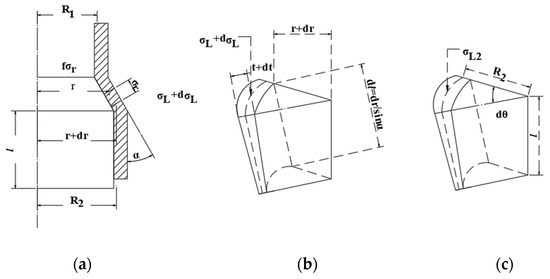
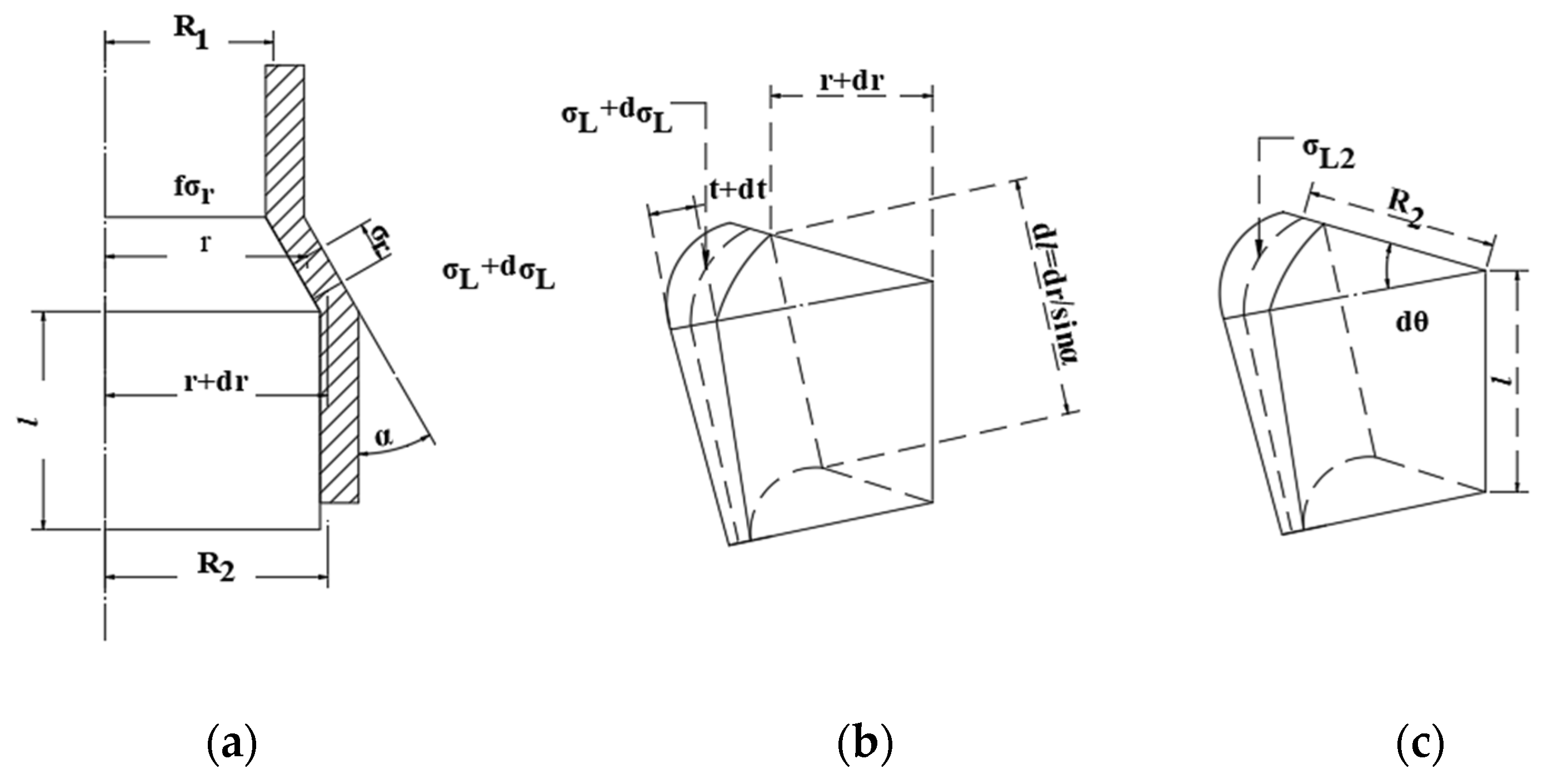
During the expansion-tube pressing and expansion process, the wall thickness at any cross-section is negligible compared to the diameter, rendering stress variations along the wall thickness negligible. Furthermore, disregarding elastic deformation of the expansion-tube typically does not introduce significant computational errors. It can be assumed that when the tube end reaches the exit of the conical mandrel, the expansion process transitions from an unsteady to steady state, as illustrated in Figure 1a.
Figure 1.
Press-in expansion model of the expansion-tube energy-absorbing structure. (a) Schematic Diagram of Press-fit Expansion. (b) Stress state Diagram of The Element. (c) Force Diagram of The Sizing Band Element.
Where denotes wall thickness, represents the die angle of the tapered mandrel, signifies the coefficient of friction (assumed constant), and indicates the length of the sizing zone. The tube diameter transitions from to during thin-walled tube forming. At any radius , the stress state within the element is illustrated in Figure 1b, where , , and denote axial, circumferential, and radial stresses, respectively. Let denote the yield strength of the pipe material.
As shown in Figure 1b, the force equilibrium perpendicular to the tube wall is:
Since is an infinitesimal, according to the trigonometric approximation, , substituting into the third term yields:
Expand the second term of Equation (1):
Substituting (2) and (3) into Equation (1) yields:
Subtract the first and second terms to obtain :
Since , the value within parentheses must equal 0. Moreover, is a second-order infinitesimal, significantly smaller than other first-order infinitesimals and thus negligible. Therefore, we obtain:
Simplified:
Referring to Figure 1a, the force equilibrium parallel to the mould surface is:
Expand the axial pressure difference term:
Ignoring the second-order infinitesimal quantity , the axial pressure difference term is simplified as:
Substitute into Equation (7) and extract the common factor :
Divide both sides by simultaneously, and rearrange to obtain:
Since the wall thickness variation during the expansion process is minimal and can be neglected (i.e., the wall thickness remains approximately constant), we obtain . Substituting this into Equation (11) yields:
For the plane stress state of tube bulging (, it can be considered that ), the expression of the mises yield criterion is:
To simplify the calculation, let:
According to the stress equilibrium at the mould surface, the magnitude of normal compressive stress and radial stress are equal but opposite in direction, i.e., (where is the compressive stress, taking negative values). Substituting into Equation (12) and combining it with Equation (6) to eliminate yields a differential equation involving :
represents the integration constant.
When the expansion tube enters the sizing zone (), as shown in Figure 1c, the inner tube diameter within the sizing zone remains constant (). At this stage, the axial force equilibrium equation is established:
where represents the axial stress at the inlet of the fixed-diameter belt, and denotes the normal compressive stress within the fixed-diameter belt.
The inner pipe material in the fixed-diameter belt has fully yielded with uniformly distributed radial stress. According to the mises yield criterion, when , , and .
Can be obtained:
Substituting into (16) yields:
The axial stress at the inlet of the expansion tube () can be obtained by Equations (6) and (13) in conjunction with .
The axial expansion force equals the axial stress at the inlet multiplied by the cross-sectional area, i.e.:
Substituting the expression for yields the final formula for calculating expansion force:
The summary of formula symbols is shown in Table 1.
Table 1.
Formula symbol summary.
2.2. Parameter Design of Expansion-Tube Energy-Absorbing Structure
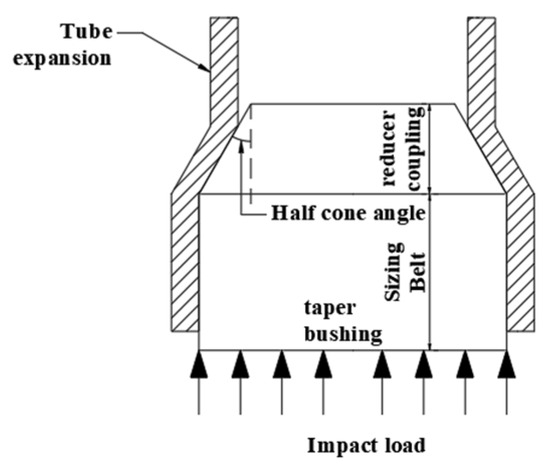
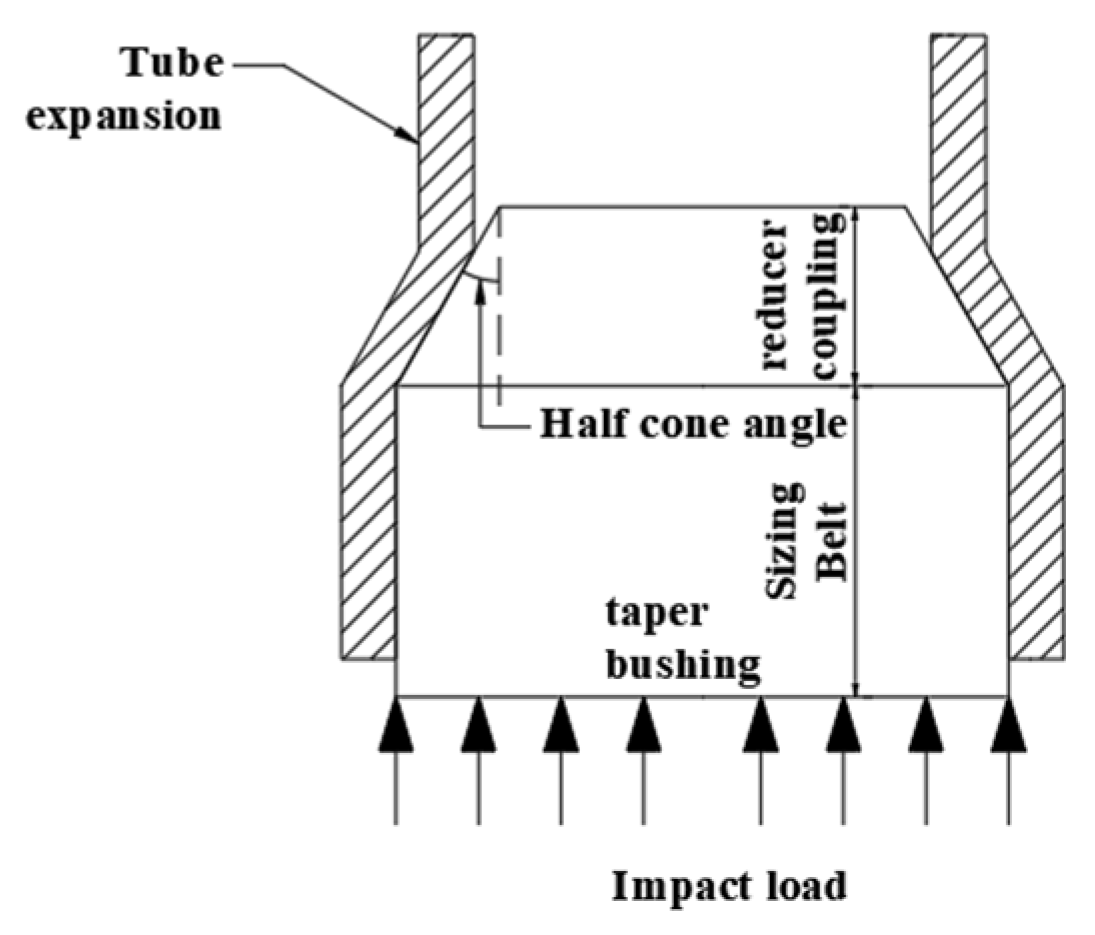
To determine the fundamental structural dimensions of the expansion-tube energy-absorbing structure, this section references existing literature by first establishing the material specifications and partial operational parameters. Subsequently, based on the analysis conducted in the previous section regarding the compression process, unknown parameters are designed. The material parameters of the structure are detailed in Table 2. The maximum compression distance is 200 mm and the maximum load capacity is 110 kN of the structure. The force diagram of the expansion-tube energy-absorbing structure is shown in Figure 2.
Table 2.
Preliminary parameter data.
Figure 2.
Schematic of the expansion-tube energy-absorbing structure.
Substitute the above selected parameters into Equation (21), with the expansion diameter set to 1 mm (i.e., ), to calculate the value of .
Furthermore, since , substituting the known parameters yields . Therefore, the initial determination of the tube expansion radius is 25 mm.
Where denotes the tube expansion wall thickness; represents the cone sleeve half-cone angle; denote the mean radii before and after tube expansion respectively; is the friction coefficient; is the cone sleeve sizing band length; is the yield strength.
2.3. Gradient Stiffness Design
Following the above theoretical analysis, the fundamental parameters of the expansion-tube energy-absorbing structure have been preliminarily determined. These parameters lay the foundation for the structural construction and subsequent design work. Based on these fundamental parameters, a gradient stiffness design is implemented for the expansion-tube energy-absorbing structure. By rationally configuring the gradient stiffness, the structure exhibits more stable energy absorption characteristics when subjected to impact loads compared to previous designs. This enables more effective dispersion and dissipation of energy, thereby mitigating the adverse effects caused by energy concentration.
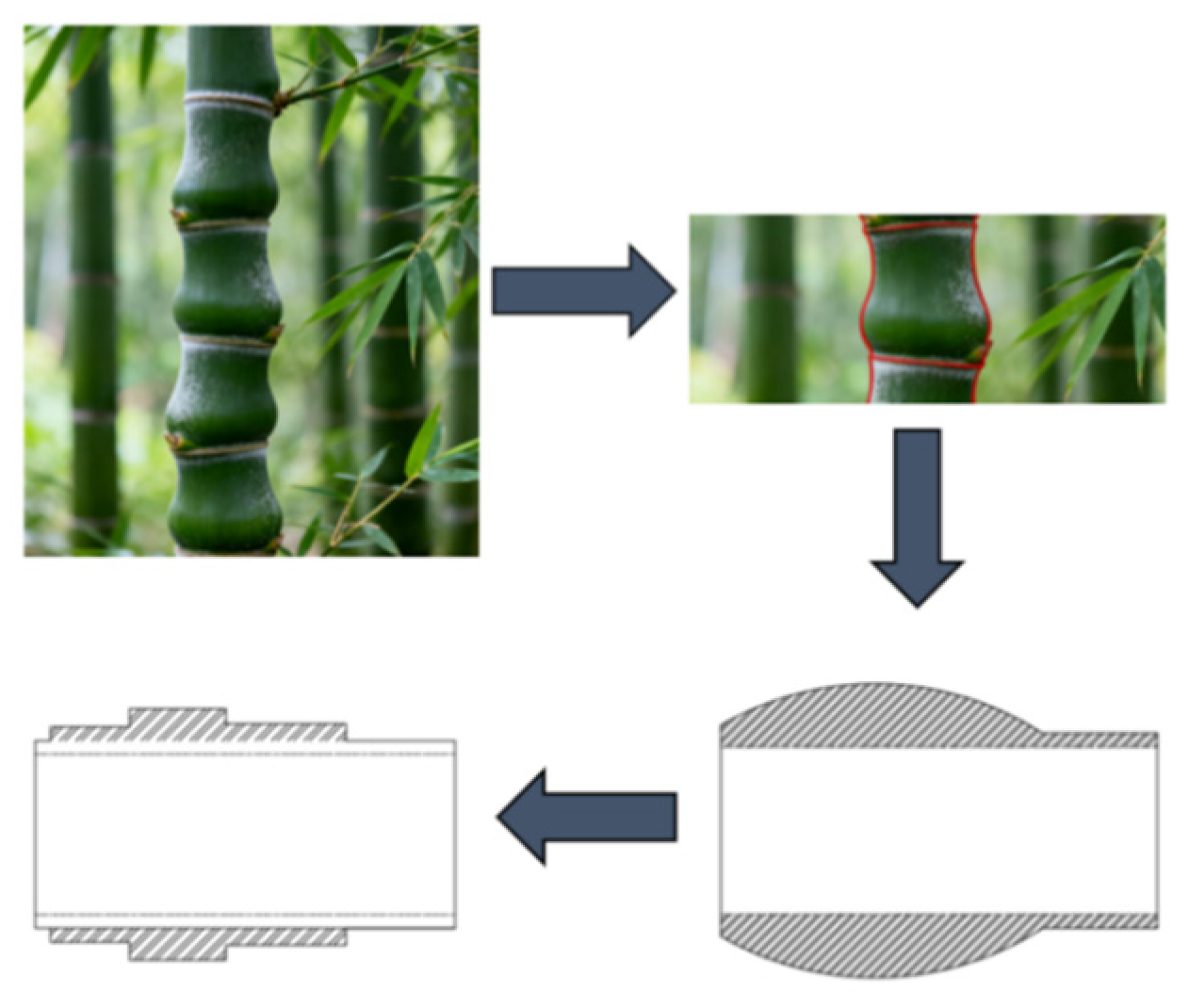
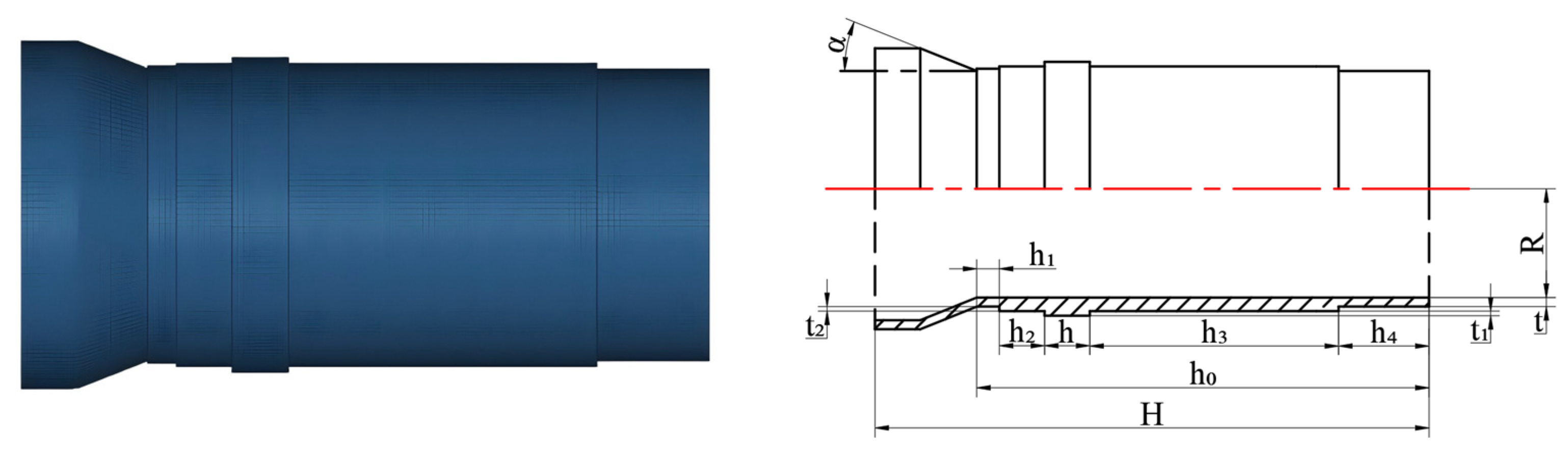
Inspired by the biological structure of Buddha’s Belly Bamboo, as shown in Figure 3, this study adopts a stepwise distribution method to simulate the stiffness gradient characteristics of arc-shaped structures. Given that the peak load in an expansion tube generally occurs at the initial stage, and the equivalent reaction force is positively correlated with the wall thickness during diameter expansion, we design the stiffness gradient by thinning the wall thickness to mitigate the peak load. The platform load stage usually remains stable after the initial stage. To improve the platform load-bearing capacity, we increase the wall thickness at positions far from the initial stage (compared with the initial stage), thereby enhancing the energy absorption efficiency. Figure 4 presents the half-cross-sectional view of the gradient stiffness expansion-tube energy-absorbing structure. These parameters of energy absorbing structure with stiffness gradient expansion tube are listed in Table 3.
Figure 3.
Schematic of gradient stiffness design.
Figure 4.
Cross-section of the gradient stiffness expansion-tube energy-absorbing structure.
Table 3.
Parameters of energy absorbing structure with stiffness gradient expansion tube.
3. Numerical Simulation Analysis
3.1. Establishment of Finite Element Model
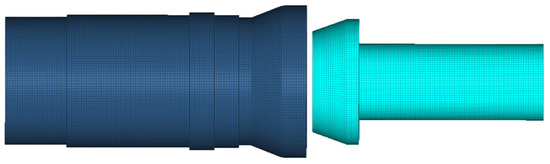
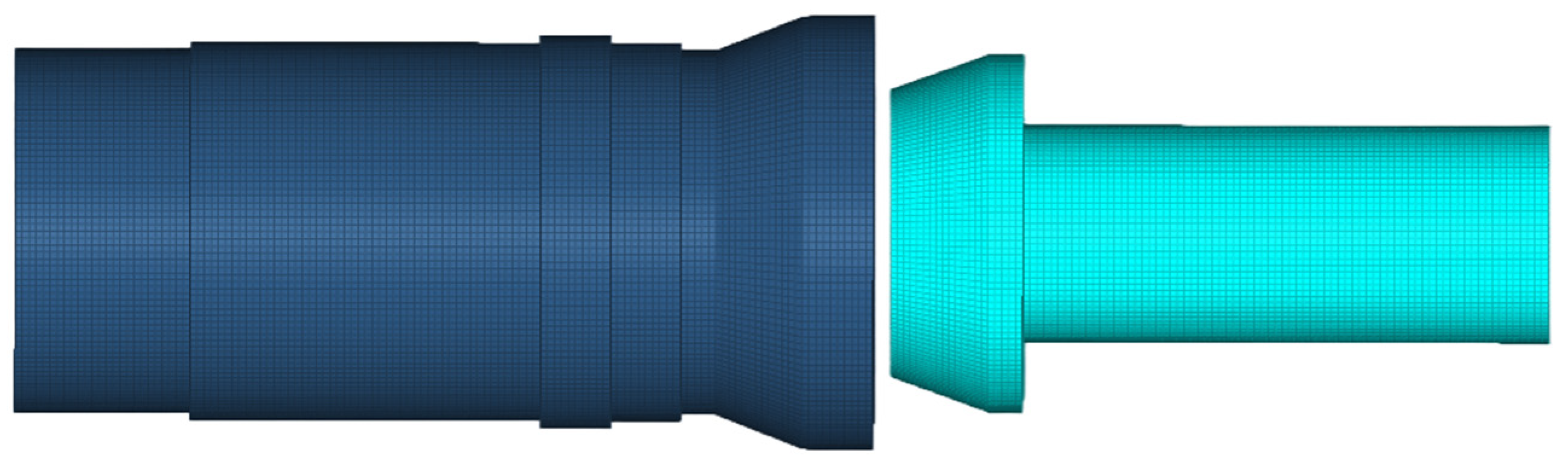
Figure 5 displays the finite element simulation model of the expansion-tube established after implementing a gradient stiffness design based on the conventional expansion-tube structure.
Figure 5.
Finite element model of the impact tube and energy-absorbing structure with gradient stiffness.
Within this model, both the expansion-tube and the tapered sleeve were discretised using hexahedral solid elements. The element mesh size was uniformly set to 2 mm to ensure computational accuracy and efficiency.
Regarding contact configuration, an automatic surface-to-surface contact algorithm is employed to define the interaction between the expansion tube and the conical sleeve. Through reviewing relevant literature [7,33], the friction coefficient was set to 0.3.
For load application, displacement-controlled loading is implemented by gradually applying slow axial compression displacements to simulate quasi-static load conditions. The axial compression velocity was set to 4 mm/s.
In boundary condition settings, the expansion tube’s base is subjected to full fixed constraints, while the conical sleeve is restricted in all degrees of freedom except axial movement to simulate its actual motion behavior. The expansion tube itself maintains free degrees of freedom except for contact with the conical sleeve.
Table 4 and Table 5 below present the fundamental parameters of the energy-absorbing expansion-tube structure and the conical sleeve.
Table 4.
Basic parameters of the energy-absorbing expansion-tube structure.
Table 5.
Basic parameters of tapered sleeve materials.
3.2. Energy Absorption Evaluation Criterion
In evaluating the energy absorption characteristics of an expansion-tube energy-absorbing structure with a gradient stiffness, this paper proposes a systematic and comprehensive analysis of its energy absorption performance based on three key indicators: IPCF, SEA, and mean crushing force. Through an in-depth exploration of the relationship between mean crushing force and dynamic response, combined with the guidance provided by the mass-to-energy ratio parameter for lightweight structural design and the comprehensive reflection of overall performance by energy absorption efficiency, a multidimensional and multi-faceted scientific evaluation of the energy absorption characteristics of the expansion-tube energy-absorbing structure is undertaken.
- (1)
- IPCF
The IPCF experienced by the expansion-tube energy-absorbing structure during impact constitutes a pivotal metric for assessing its energy-absorption capability. The magnitude of this IPCF directly determines structural failure occurrence and the extent of compressive deformation, thereby significantly influencing occupant safety protection.
- (2)
- SEA
Specific energy absorption (SEA) serves as the fundamental metric for evaluating energy absorption per unit mass of the structure. It may be defined as:
where denotes the total mass of the energy-absorbing structure; represents the total energy absorbed by the energy-absorbing structure during the crushing process, expressed as:
where is the collision force, a function of the crushing distance , and is the effective crushing deformation length. For optimal energy absorption and weight reduction, the SEA value is generally required to be as high as possible.
- (3)
- MCF
The mean crushing force serves as a crucial metric for evaluating the energy absorption characteristics of an expansion-tube energy-absorbing structure. Its formula is as follows:
where represents the final displacement of the cone sleeve after the expansion-tube energy-absorbing structure has buffered and absorbed energy; represents the energy absorbed by the expansion-tube energy-absorbing structure, obtained by integrating the load-displacement curve from 0 to ; represents the expansion force (i.e., load) when the cone sleeve displacement is .
3.3. Analysis of Simulation Results
Figure 6 clearly illustrates the expansion deformation evolution of a conventional uniform-thickness energy-absorbing structure under impact loading. During the initial stage, upon contact between the tapered sleeve and the front end of the gradient-stiffness energy-absorbing structure, plastic deformation occurs at the front end of the expansion-tube, initiating expansion. As motion continues, the expansion zone progressively extends towards the rear end of the expansion-tube, exhibiting a characteristic progressive expansion deformation pattern.
Figure 6.
Conventional tube expansion process.
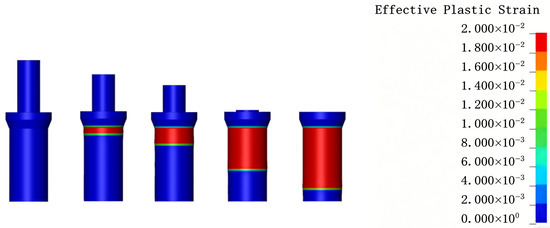
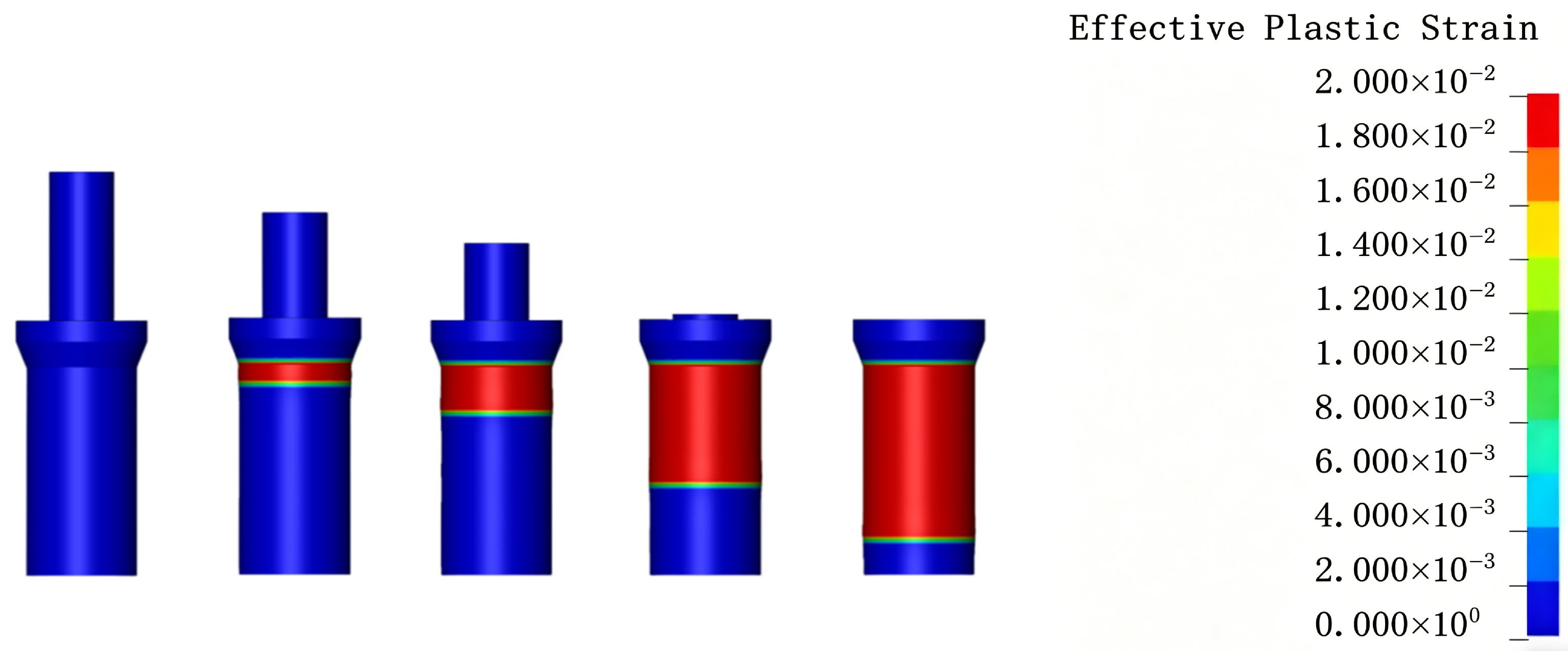
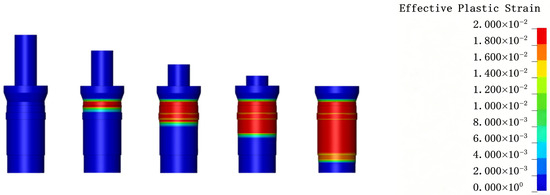
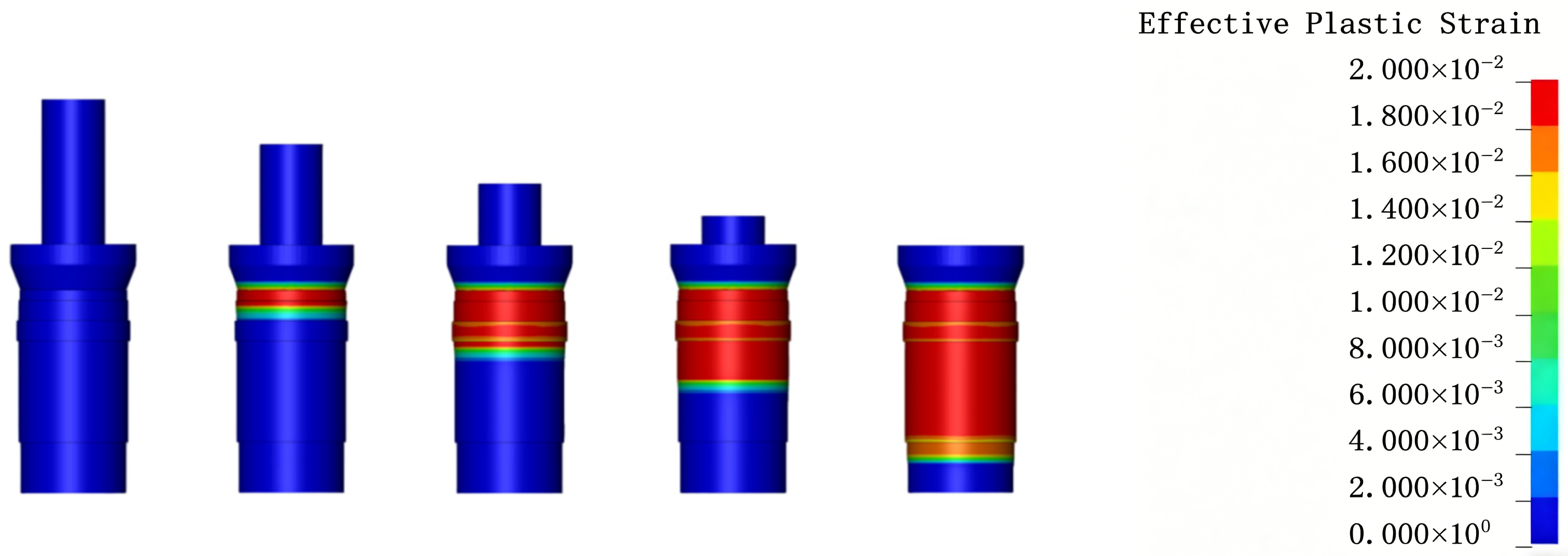
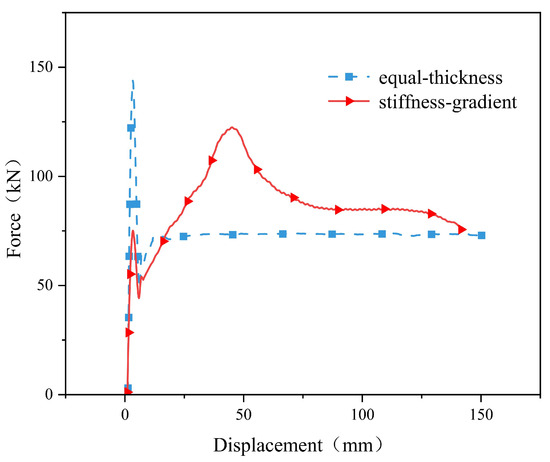
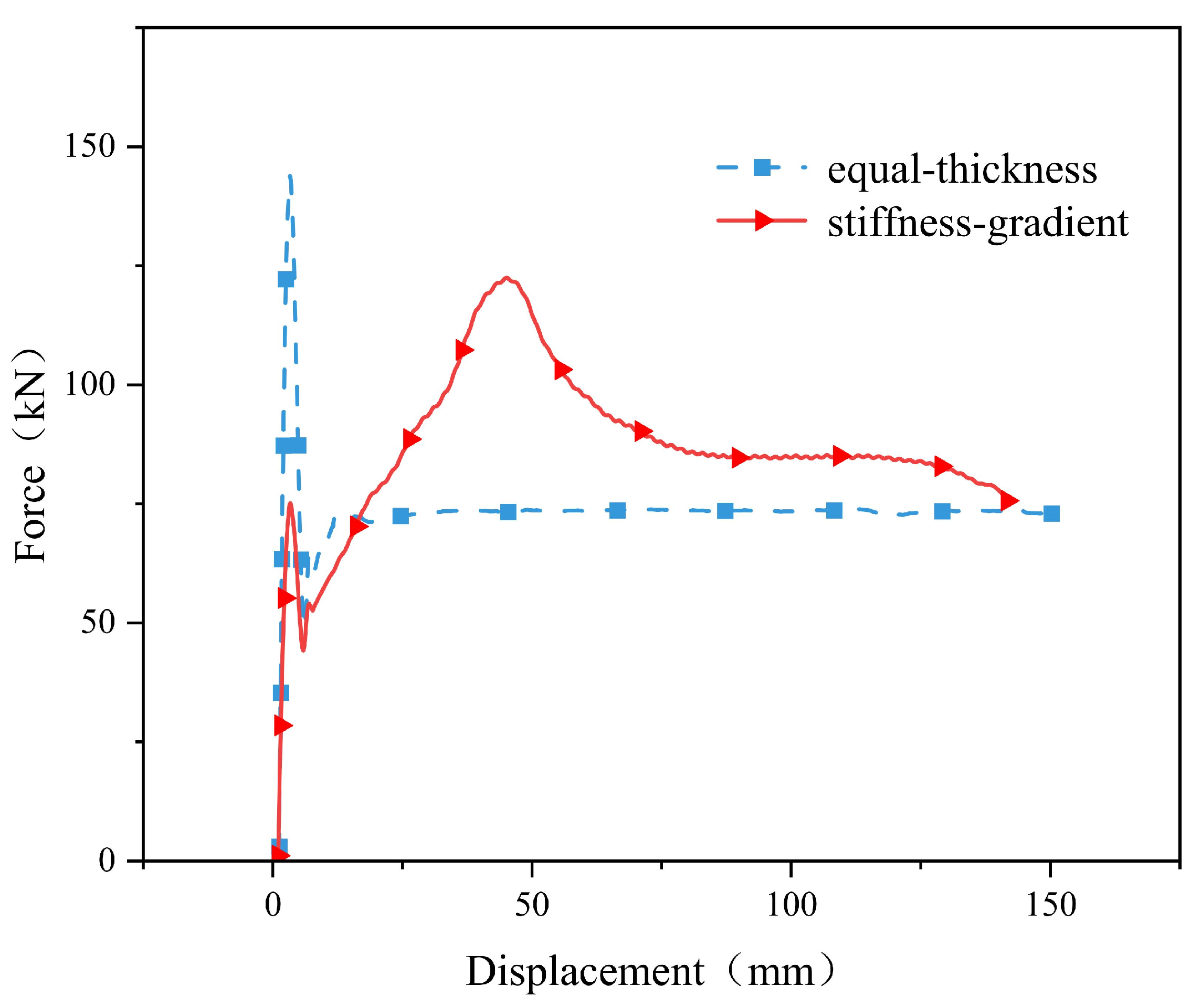
The deformation stress contour map of the expansion process for the gradient stiffness expansion-tube is detailed in Figure 7. The extracted load-displacement simulation curve for the gradient stiffness expansion-tube is shown in Figure 8 and is compared with the load-displacement simulation curve of an equal-thickness expansion-tube of identical mass. The results are presented in Table 6.
Figure 7.
Expansion of gradient stiffness tube.
Figure 8.
Comparison of load-displacement simulation curves for equal-thickness and gradient stiffness expansion-tubes.
Table 6.
Comparison of performance metrics for uniform-thickness and gradient-stiffness expansion-tubes.
By optimizing wall-thickness distribution, both types of expanded pipes maintain consistent quality. A clear comparison in Table 6 reveals that the gradient-stiffness expansion tube holds significant advantages in key performance metrics. Despite a mass reduction of approximately 5.7% compared to the uniform-thickness design, the IPCF experiences a substantial decrease, ranging from 17.2%. This indicates the structure significantly reduces concentrated impact forces during loading, thus lowering the risk of damage to surrounding systems. Crucially, the gradient-stiffness tube achieves an SEA index of 12.28 kJ/kg—a remarkable 22.8% improvement over the uniform-thickness tube. This result undeniably demonstrates the superior performance of the gradient-stiffness design in enhancing energy-absorption efficiency.
4. Experimental Validation of the Gradient Stiffness Expansion-Tube Energy-Absorbing Structure
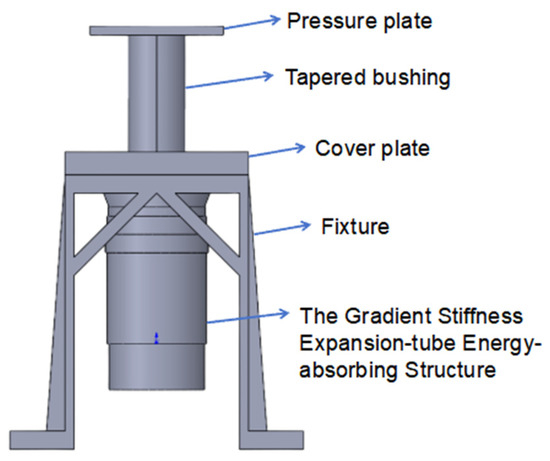
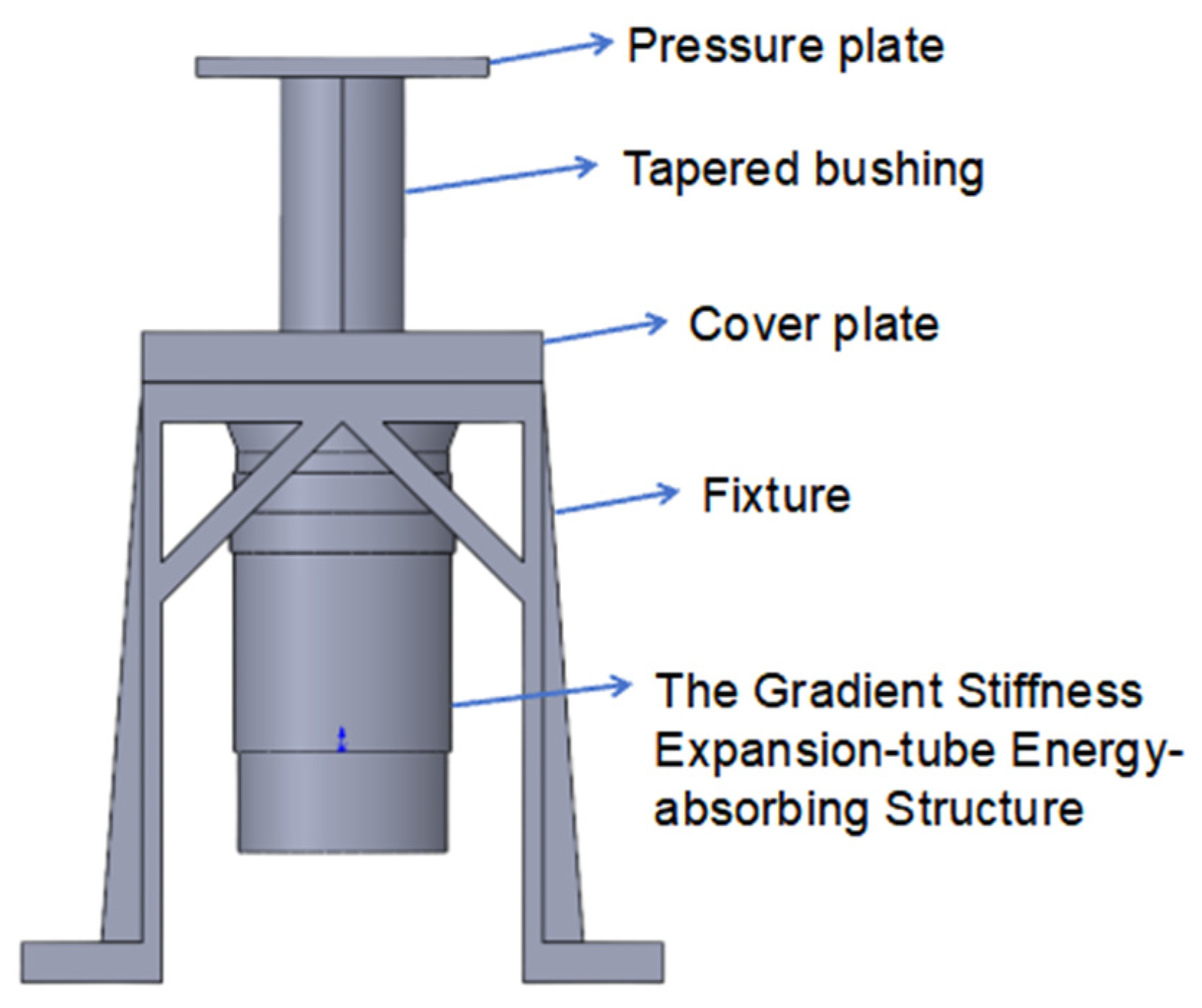
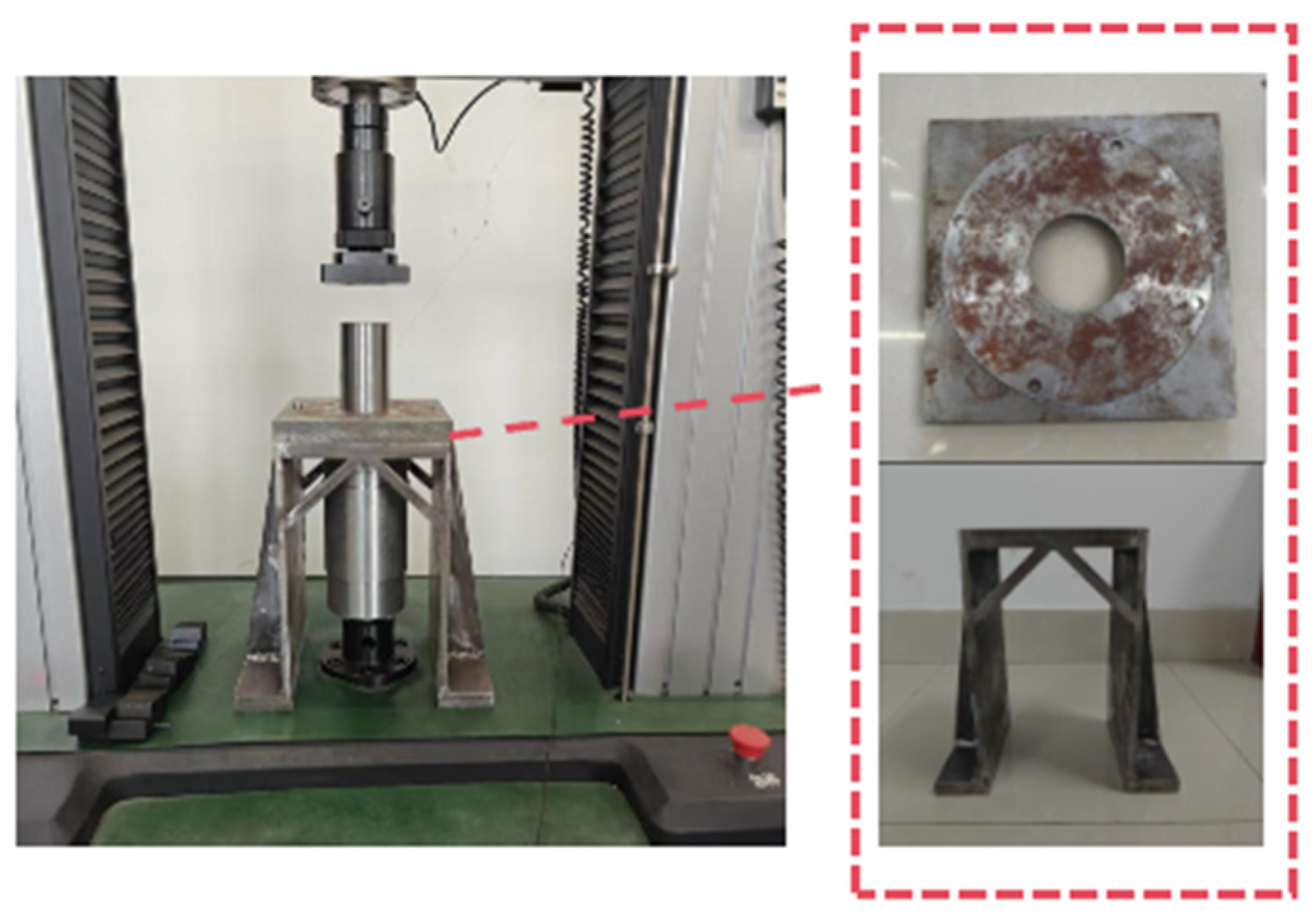
To validate the simulation results, we conducted a quasi-static compression experiment on the gradient stiffness expansion-tube energy-absorbing structure. The experimental platform consists of the following components: Pressure plate, Tapered bushing, Cover plate, Stent, and Expansion-tube. The primary functions of these components are as follows:
- Pressure plate uniformly and stably transfers the concentrated load applied by the compression testing machine punch to the top of the tapered sleeve.
- Tapered bushing deforms the tube expansion through force application.
- Cover plate prevents unnecessary lateral displacement of the tube-expanding energy-absorbing structure during testing.
- Fixture is used to fix the energy-absorbing tube to the experimental table surface.
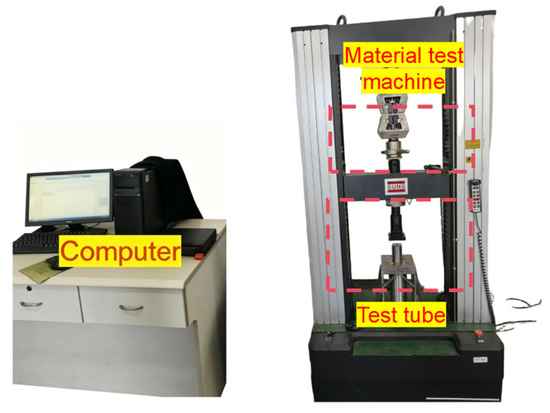
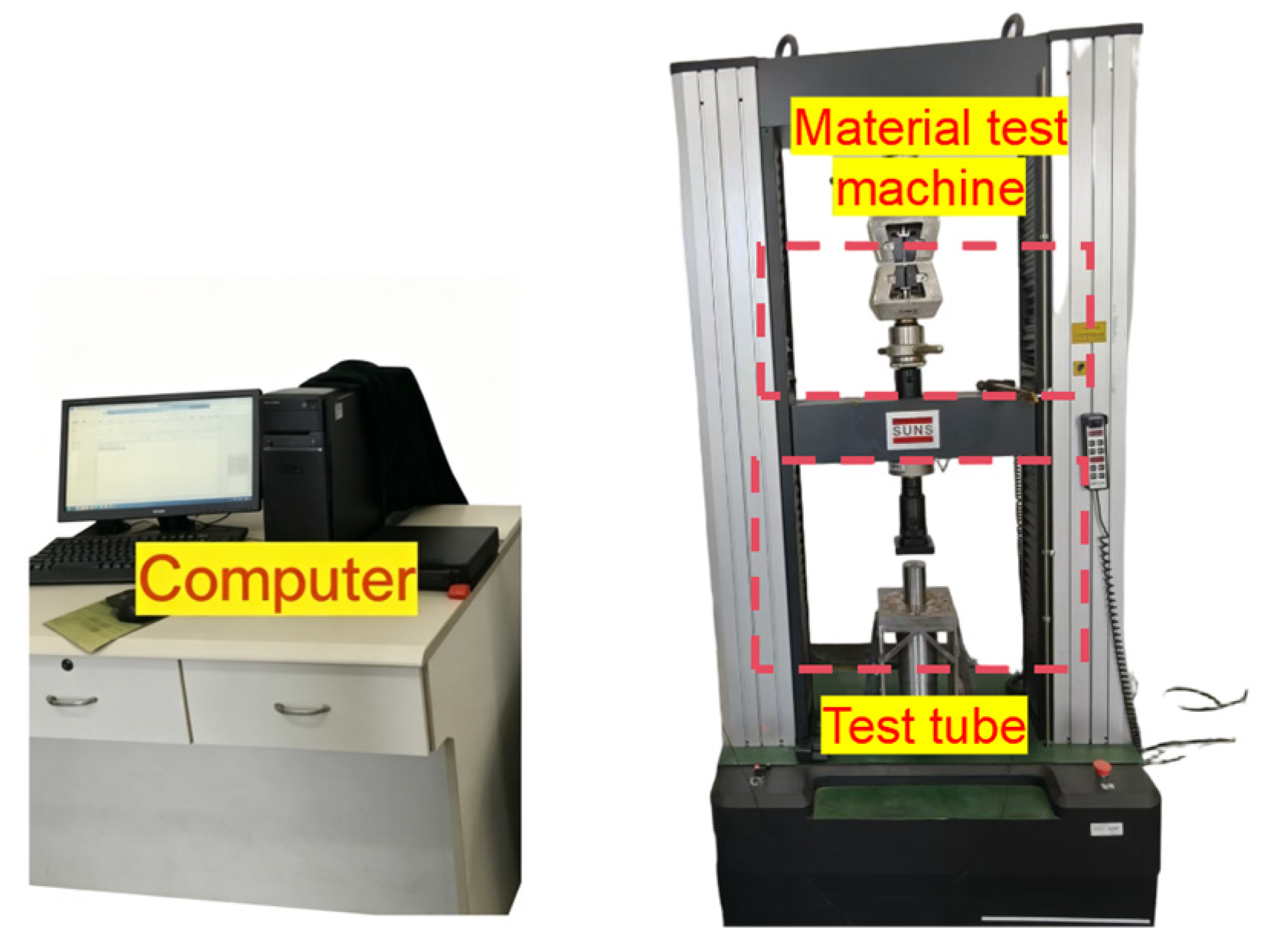
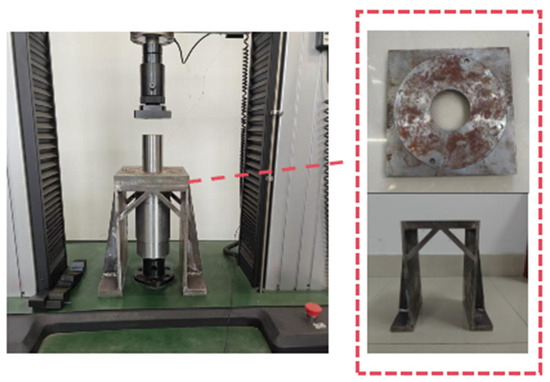
As shown in Figure 9, the working principle of the test model is as follows: Throughout the experiment, once the universal testing machine is activated, its piston rod gradually moves downward according to the preset motion pattern. The downward movement of the piston rod directly presses against the load-bearing plate. The force exerted by the piston rod on the plate causes the tapered sleeve to exhibit downward displacement tendency. Over time, when the pressure applied to the tapered sleeve gradually increases and reaches a certain threshold, the sleeve begins to compress downward. During the downward movement of the tapered sleeve, the energy-absorbing structure of the gradient stiffness expansion tube also undergoes corresponding changes, specifically manifested as diameter expansion. The universal testing machine used in this experiment is from the SUNS-890 series, with testing conducted at a constant speed of 4 mm/s. The support frame effectively restricts the six degrees of freedom of the expansion tube to ensure experimental accuracy. The specific appearance of this series of universal testing machines is shown in Figure 10, while Figure 11 presents a photograph of the experimental model. During the experiment, the surface roughness of the tapered bushing and expansion tube was 1.6 and 3.2, respectively. The measurement error of this equipment is 0.001 N.
Figure 9.
Experimental assembly model of the gradient stiffness expansion-tube energy-absorbing structure.
Figure 10.
Universal testing machine.
Figure 11.
Photograph of the experimental model.
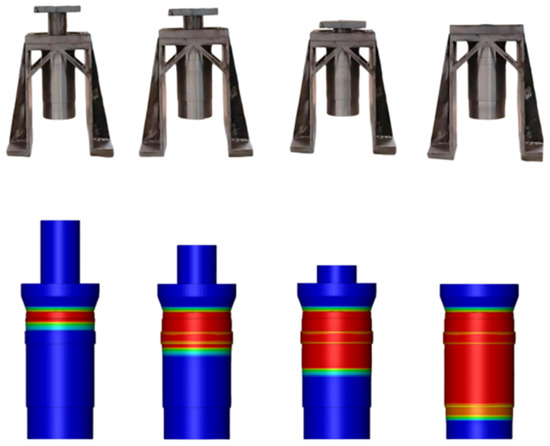
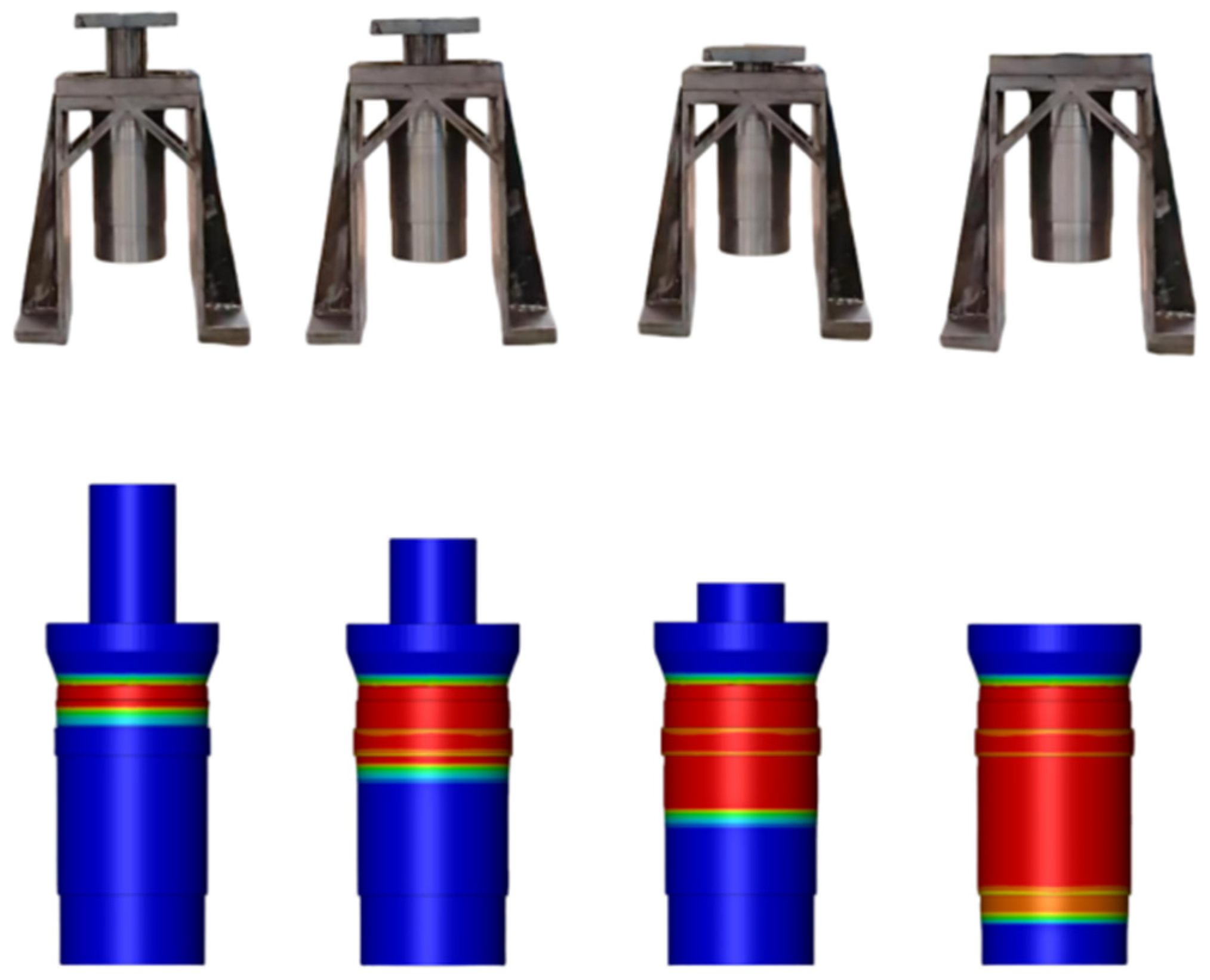
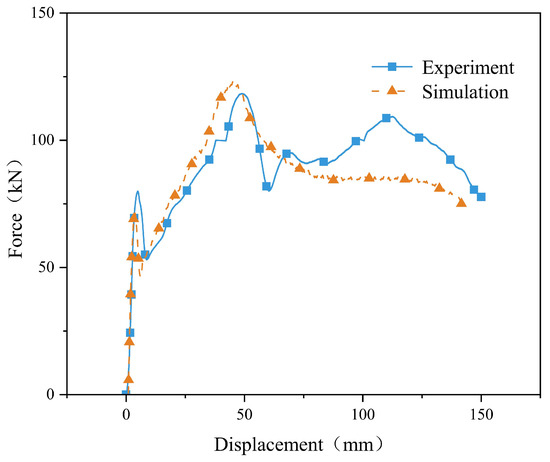
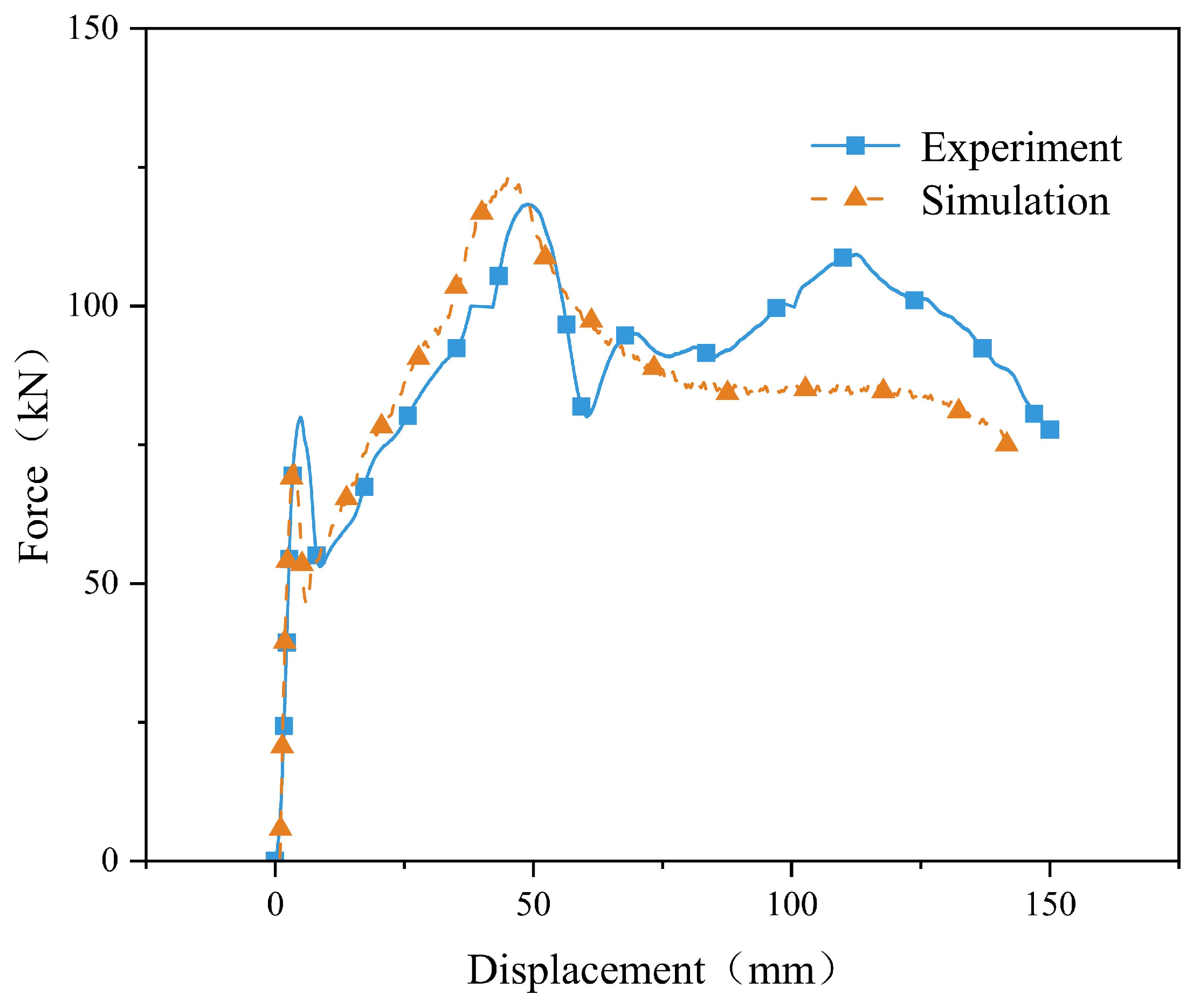
The deformation stress diagram is shown in Figure 12. Figure 13 clearly demonstrates that the IPCF and platform loads derived from simulation analysis exhibit a high degree of conformity with the experimental curve. This phenomenon indicates the simulation possesses a high degree of accuracy. The results of comparing structural loads throughout the entire expansion process are detailed in Table 7. Through detailed calculations and analysis, the specific energy absorbed in experiments and simulations were determined to be 12.99 kJ/kg and 12.28 kJ/kg, respectively, with a relative error of 5.80%. The IPCF measured in experiments and simulated values were 123.7 kN and 124.5 kN respectively, showing a relative error of 0.60%. The experimental peak load results in this model largely align with the simulated values, demonstrating the reliability and effectiveness of the finite element model for subsequent research applications.
Figure 12.
Comparison of experimental and simulation processes.
Figure 13.
Comparison of simulation and experimental data for the expansion-tube energy-absorbing structure.
Table 7.
Comparison of simulation and experimental data for gradient-stiffness expansion-tube energy-absorbing structures.
5. Optimized Design of Gradient Stiffness Expandable Energy-Absorbing Structures
The above research indicates that the stiffness gradient expandable tube energy absorption structure designed in this paper effectively reduces the IPCF and significantly improves the SEA through the segmented differentiated configuration of axial wall thickness and the staged deformation triggering mechanism. However, since the expansion load during compression is positively correlated with the tube wall thickness, the stepped design of this structure caused its maximum platform load to exceed the IPCF. Based on this, this section will further improve the energy absorption performance of the structure through structural optimization design.
5.1. Determination of Optimization Variables and Optimization Model
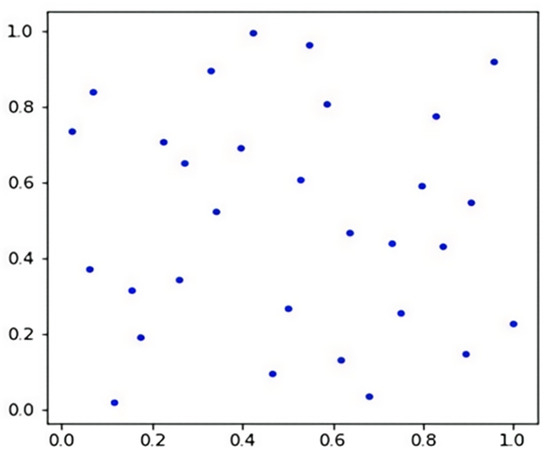
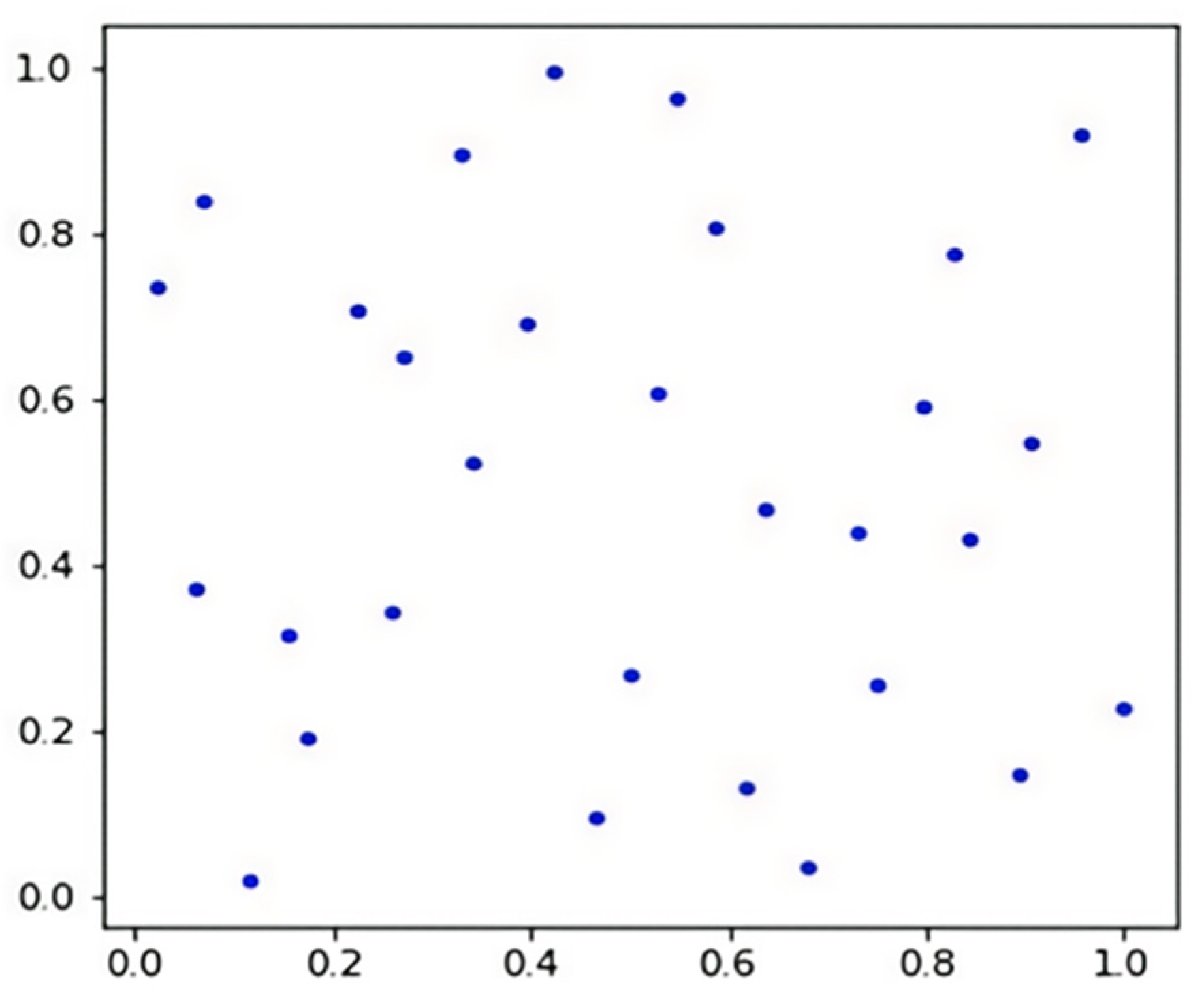
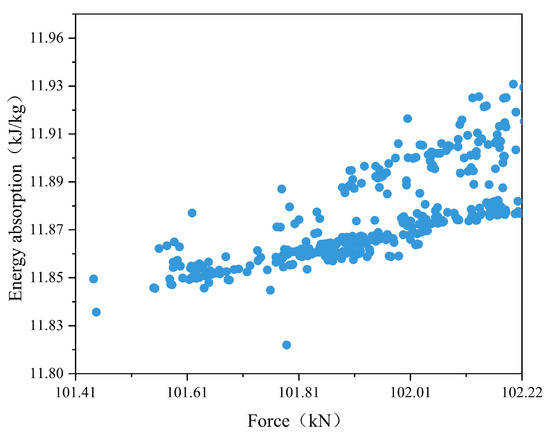
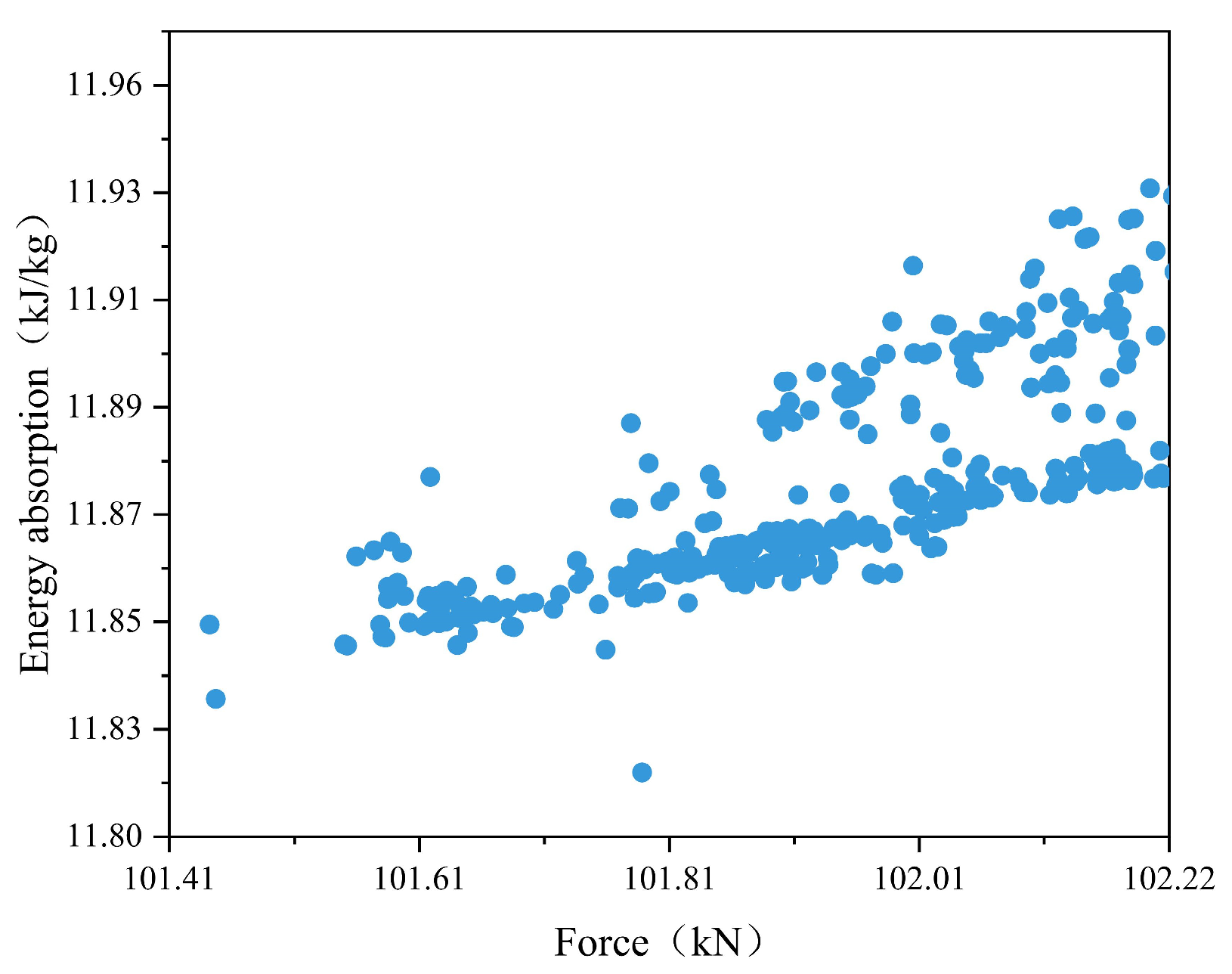
This study selected as design variables, with all other parameters held constant. The specific ranges for these variables are shown in Equation (27). One hundred sample points were generated using Latin hypercube sampling (LHS) with the maximum value criterion. The output responses (IPCF and SEA) for each sample point were obtained from the validation finite element simulation model established in Section 3. Anisotropic Gaussian functions were selected as correlation functions for the Kriging model, and maximum likelihood estimation was employed to solve the model hyperparameters to ensure optimal fitting performance. Results under standard sampling conditions are depicted in Figure 14.
Figure 14.
Maximize minimum sampling criterion.
The optimization problem for the gradient stiffness expansion-tube energy-absorbing structure can be formally described as follows:
In this optimization, the maximum minimum value criterion was selected as the sampling standard for Latin hypercube sampling when optimizing the design of an energy-absorbing structure with a gradient stiffness expansion-tube.
To assess the accuracy of the objective function response surface model, an analysis was conducted on the typical statistical measures: the squared error (R2) and root mean square error (RMSE), thereby evaluating the precision of the approximation model:
where , , and represent the exact numerical simulation values, model predicted values, and average numerical simulation values for each sample point, respectively, with n denoting the number of sample points.
The model accuracy assessment results are presented in Table 8. RMSE measures the average deviation between the predicted values of the surrogate model and the actual finite element simulation values. A smaller RMSE value indicates higher prediction accuracy of the model. In this study, both the SEA and IPCF models exhibited RMSE values below 0.1, demonstrating extremely low prediction bias.
Table 8.
Proxy model accuracy evaluation metrics.
R2 measures the fit between alternative models and sample data, with values ranging from 0 to 1. A higher R2 value indicates better model performance in explaining response variations. Both models in this study achieved R2 values exceeding 0.91, fully meeting the accuracy requirements for engineering optimization. Supplementary validation results from an independent test set demonstrated that the maximum relative error between predicted values and simulated values was below 4.5%, further confirming the reliability and generalization capability of the established Kriging alternative model.
The findings indicate that all R2 values exceed 0.9 and are extremely close to 1, while all RMSE values are significantly below 0.2. Consequently, it can be concluded that both models exhibit high precision and are capable of supporting subsequent optimization design.
5.2. Optimization Results
The Pareto frontier solution set obtained through multi-objective optimization design using genetic algorithms is shown in Figure 15. Considering the technical requirements for IPCF in practical engineering applications, when optimizing for the minimum value of the objective function, the solution set with the IPCF closest to 100 kN was selected as the optimal solution. The IPCF was 102.16 kN, with energy absorption at 11.91 kJ/kg. To validate the reliability of the optimization predictions, finite element simulations were conducted on the structural parameters derived from the optimization results. A comparison between the optimization predictions and the finite element simulation results is presented in Table 9.
Figure 15.
Relationship between SEA and the pareto frontier solution set of IPCF.
Table 9.
Comparison of simulation and optimization results.
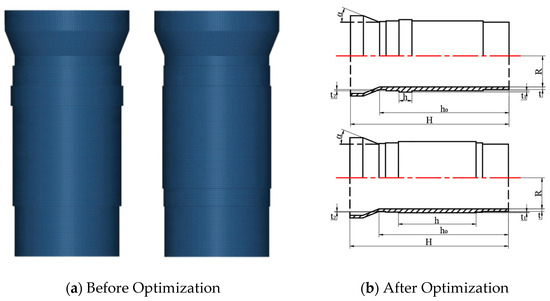
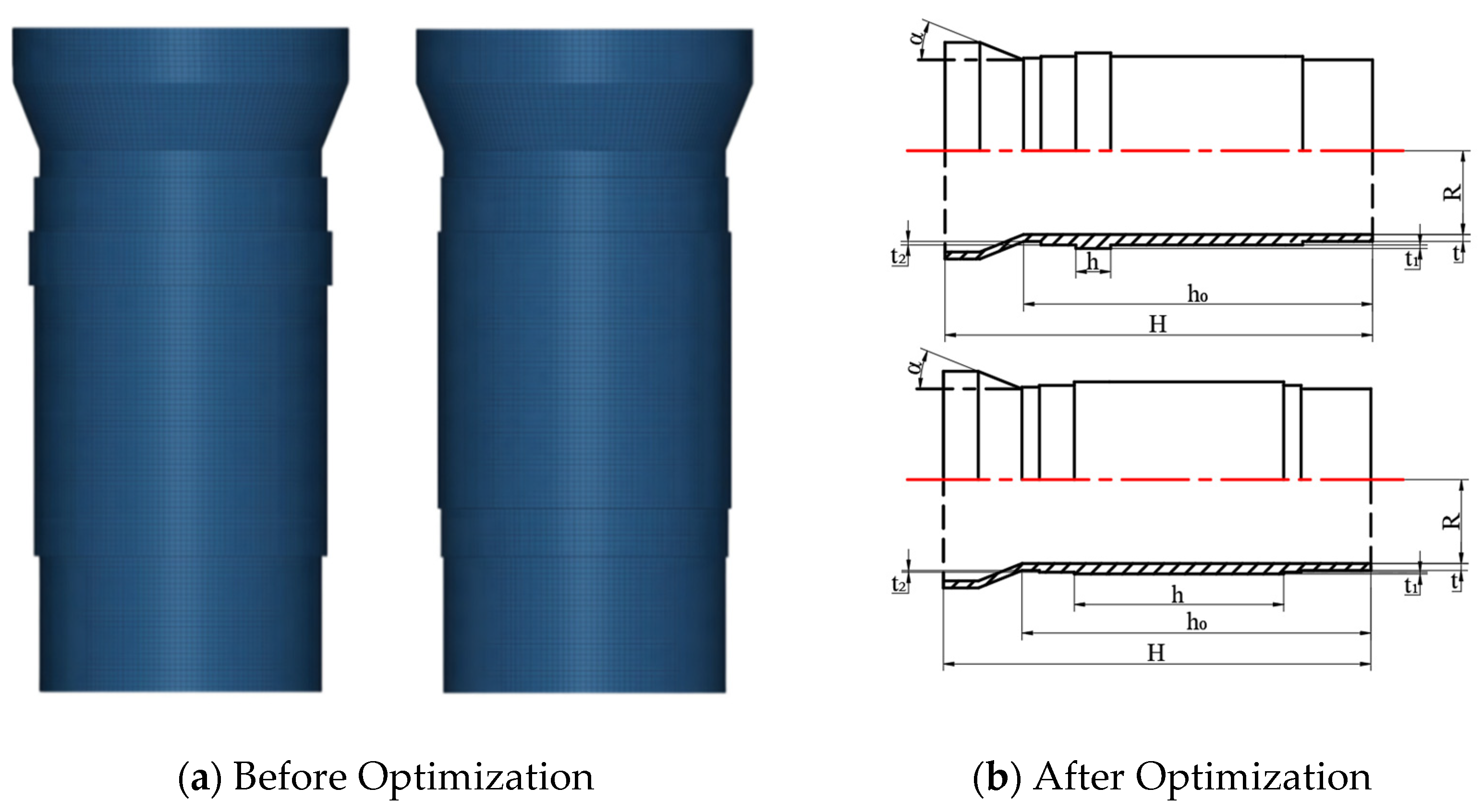
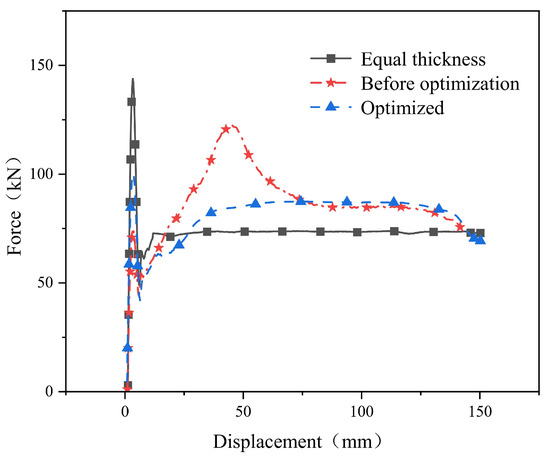
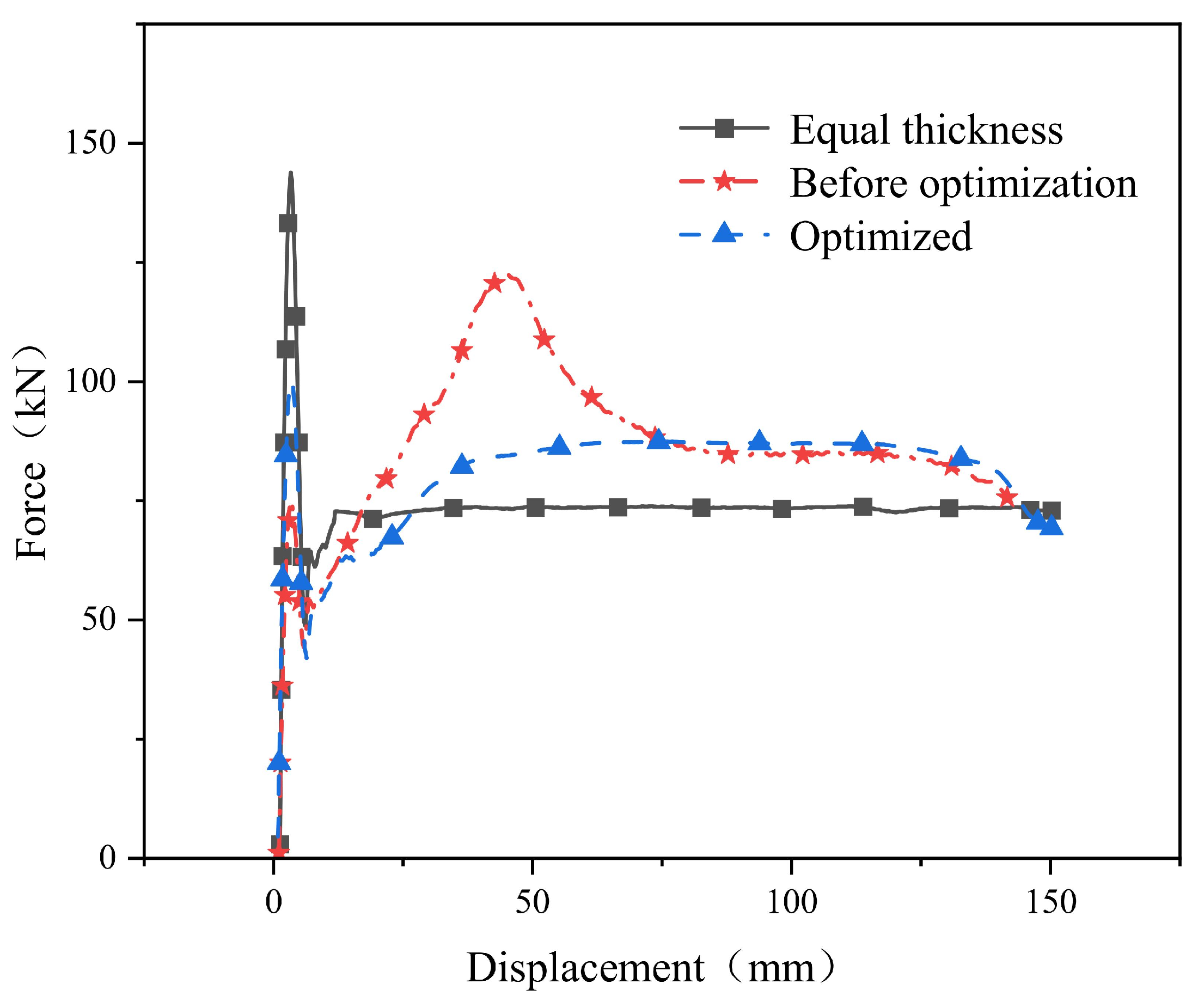
Taking into account practical manufacturing considerations, the final structural parameters selected are shown in Table 10. A comparison of the expansion-tube energy-absorbing structure before and after optimization is illustrated in Figure 16. Figure 17 compares the curves before and after optimization, as well as those of the uniformly thick expanded tube.
Table 10.
Optimized expansion-tube parameters.
Figure 16.
Structural comparison after optimization.
Figure 17.
Comparison of load curves before and after optimization.
The optimization results are clearly evident from the comparative data in Table 11. The total mass of the optimized expansion-tube energy-absorbing structure decreased from 7.45 kg to 6.90 kg, achieving a weight reduction of approximately 7.2%. Concurrently, the IPCF was significantly reduced from 124.5 kN to 100.01 kN, representing a decrease of 19.7%. This effectively mitigates the potential risk of injury to protected targets, which is crucial for enhancing structural safety. Although the SEA decreased slightly from 12.28 kJ/kg to 11.40 kJ/kg (a reduction of approximately 7.2%), the overall optimization scheme strikes a favourable balance between weight reduction, minimizing initial impact damage, and maintaining satisfactory energy absorption efficiency. This is particularly noteworthy given the substantial weight reduction and IPCF reduction achieved while the loss in SEA remains relatively minor. Compared to the constant-thickness structure, the optimized gradient stiffness structure demonstrates clear advantages in three key metrics: total mass, IPCF, and SEA.
Table 11.
Comparison of relevant indicators for the expansion-tube energy-absorbing structure.
6. Conclusions
This study proposed a novel energy-absorbing structure based on gradient stiffness expansion tubes. A combination of numerical simulation, experimental testing and structural optimization design was employed to systematically test and analyse the energy absorption performance of the structure. The primary conclusions are summarized as follows:
(1) To address the issue of excessive IPCF in traditional expansion tube energy absorption structures that may cause damage to protected structures, this study proposed a gradient stiffness layered design scheme. The approach reduced structural equivalent stiffness through initial wall thickness reduction, effectively suppressing initial peak loads. Subsequently, segmented wall thickness design enables gradient variation in equivalent compressive stiffness during tube expansion, significantly enhancing platform load capacity. This innovative solution achieves dual objectives: reducing initial peak loads while improving overall energy absorption efficiency, thereby providing a novel technical pathway to overcome the performance limitations of conventional expansion tube energy absorption systems.
(2) The performance evaluation in this study exclusively focused on axial frontal collision scenarios, excluding common complex load conditions such as eccentric collisions and oblique collisions during impact processes. Future research should prioritize experimental and simulation studies under complex load conditions (including eccentric loads, oblique loads, and multi-directional coupled loads) to elucidate structural mechanical response characteristics under non-axial loads, enhance structural resistance to eccentric loads, refine the design theory of gradient stiffness expansion tubes, and expand their engineering applications in complex collision scenarios.
Author Contributions
Formal analysis, T.W.; Investigation, T.W.; Resources, T.W.; Data curation, Z.M. and T.C.; Writing—original draft, Z.M.; Writing—review & editing, T.W.; Visualization, Z.M.; Funding acquisition, H.H. All authors have read and agreed to the published version of the manuscript.
Funding
This paper is funded by National Natural Science Foundation of China (Grant No. 12572393, No. 12302074).
Institutional Review Board Statement
Not applicable.
Informed Consent Statement
Not applicable.
Data Availability Statement
The original contributions presented in the study are included in the article, further inquiries can be directed to the corresponding author.
Conflicts of Interest
The authors declare no conflict of interest.
References
- Abdullah, N.A.Z.; Sani, M.S.M.; Salwani, M.S.; Husain, N.A. A review on crashworthiness studies of crash box structure. Thin-Walled Struct. 2020, 153, 106795. [Google Scholar] [CrossRef] [Scilit]
- Gao, G.; Zhuo, T.; Guan, W. Recent research development of energy-absorption structure and application for railway vehicles. J. Cent. South Univ. 2020, 27, 1012–1038. [Google Scholar] [CrossRef] [Scilit]
- Ma, W.; Xie, S.; Li, Z.; Feng, Z.; Jing, K. Crushing behaviours of horse-hoof-wall inspired corrugated tubes under multiple loading conditions. Mech. Adv. Mater. Struct. 2022, 29, 3263–3280. [Google Scholar] [CrossRef] [Scilit]
- Wang, Z.; Shi, C.; Ding, S.; Liang, X. Crashworthiness of innovative hexagonal honeycomb-like structures subjected to out-of-plane compression. J. Cent. South Univ. 2020, 27, 621–628. [Google Scholar] [CrossRef] [Scilit]
- Xie, S.; Chen, P.; Wang, N.; Wang, J.; Du, X. Crashworthiness study of circular tubes subjected to radial extrusion under quasi-static loading. Int. J. Mech. Sci. 2021, 192, 106128. [Google Scholar] [CrossRef] [Scilit]
- Feng, Z.; Xie, S.; Ma, W.; Jing, K.; Wang, H. Multi-tube energy-absorbing structures with different matching patterns of heights and diaphragm spacings. Alex. Eng. J. 2022, 61, 11111–11127. [Google Scholar] [CrossRef] [Scilit]
- Qi, Z.; Zhang, Y.; Lin, Y.; Chen, R.; Meng, Y. Dynamic response and energy absorption characteristics of expansion tubes under axial impact. IEEE Access 2020, 8, 90528–90541. [Google Scholar] [CrossRef] [Scilit]
- Qi, Z.; Lin, Y.; Liang, M.; Zhang, Y.; Chen, R.; Li, X. Behaviour of expansion-tubes under impact load: Deformation mode and mechanical response. Mater. Des. 2023, 234, 112321. [Google Scholar] [CrossRef] [Scilit]
- Wu, M.Z.; Zhang, X.W.; Zhang, Q.M. A new model for the expansion-tube considering the stress coupling: Theory, experiments and simulations. Def. Technol. 2022, 18, 1190–1204. [Google Scholar] [CrossRef] [Scilit]
- Tan, B.; Yao, S.; Zhang, L.; Ban, H. Thermo-mechanical coupling analysis of expansion-tubes: Theoretical prediction and experimental investigation. Thin-Walled Struct. 2021, 162, 107559. [Google Scholar] [CrossRef] [Scilit]
- Guan, W.; Gao, G.; Yu, Y.; Zhuo, T. Crashworthiness analysis and multi-objective optimisation of expanding circular tube energy-absorbing structures with cylindrical anti-clamber under eccentric loading for subway vehicles. Struct. Multidiscip. Optim. 2020, 61, 1711–1729. [Google Scholar] [CrossRef] [Scilit]
- Xu, P.; Che, Q.; Yao, S.; Tan, B. Buckling study on Two-Stage absorption energy coupler. Int. J. Crashworthiness 2022, 27, 486–499. [Google Scholar] [CrossRef] [Scilit]
- Zhang, J.; Zhao, F.; Guo, H.; Wan, C.; Xiao, Y. Study on energy absorption characteristics of the corrugated straight tube flip type energy absorption device. Sci. Rep. 2025, 15, 6021. [Google Scholar] [CrossRef] [Scilit] [PubMed]
- Huang, F.; Zhang, L.; Zhou, J.; Han, Z.; Wang, S.; Sun, Q. Energy absorption behaviour of mild steel tube-core sandwich structures for rockfall protection. J. Mt. Sci. 2026, 23, 171–187. [Google Scholar] [CrossRef] [Scilit]
- Zhao, L.; Liu, H.; Qi, X.; Zhu, L.; Li, Y. Development of a Novel expansion-tube Energy-Dissipating Device for Flexible Rockfall Barriers: Static and Dynamic Performance Analysis. Rock Mech Rock. Eng. 2026. [Google Scholar] [CrossRef] [Scilit]
- Wang, Y.; Wang, S.; Hou, L.; Peng, Y. Analysis and optimization of an expanding energy-absorbing structure with variable thickness distribution tube under axial dynamic loading. Int. J. Automot. Technol. 2022, 23, 1579–1592. [Google Scholar] [CrossRef] [Scilit]
- Jin, X.; Lu, J.; Guan, W. Crashworthiness analysis and multiobjective robust optimisation of two-stage variable thickness expansion-tube under impact loading. Struct. Multidiscip. Optim. 2022, 65, 178. [Google Scholar] [CrossRef] [Scilit]
- Gattineni, V.; Nathi, V. Expansion-based composite tubes as energy-absorbing structures for improved specific energy absorption: FEA-based study. Mater. Today Proc. 2021, 46, 811–818. [Google Scholar] [CrossRef] [Scilit]
- Demir, M.M.; Okutan, M.S.; Özsoy, M.İ. Energy absorption properties of filament wound aluminium/CFRP hybrid tubes: Axial, lateral, and bending loadings. Polym. Compos. 2025, 46, 12047–12064. [Google Scholar] [CrossRef] [Scilit]
- Hu, H.; Du, B.; Jiang, W.; Zheng, C.; Zhu, N.; Liu, J.; Chen, L. Integrated Design in Load Carrying and Energy Absorption of Composite Tube. Front. Mater. 2022, 8, 824016. [Google Scholar] [CrossRef] [Scilit]
- Xiao, Y.; Hu, H.L.; Liang, D.; Long, H.; Zhu, S.; Wen, X.D. Effects of tube design on crashworthiness of CFRP thin-walled square beams filled with aluminium honeycomb under axial impact. Int. J. Crashworthiness 2024, 29, 57–66. [Google Scholar] [CrossRef] [Scilit]
- Yang, H.; Lei, H.; Lu, G.; Zhang, Z.; Li, X.; Liu, Y. Energy absorption and failure pattern of hybrid composite tubes under quasi-static axial compression. Compos. Part B Eng. 2020, 198, 108217. [Google Scholar] [CrossRef] [Scilit]
- Hwang, Y.H.; Park, I.K.; Han, J.H. Energy absorption of braided composite tubes under quasi-static combined shear-compression loading. Adv. Compos. Mater. 2025, 34, 574–588. [Google Scholar] [CrossRef] [Scilit]
- Chang, Y.; Wen, W.; Xu, Y.; Cui, H.; Xu, Y. Quasi-static mechanical behaviour of filament-wound composite thin-walled tubes: Tension, torsion, and multi-axial loading. Thin-Walled Struct. 2022, 177, 109361. [Google Scholar] [CrossRef] [Scilit]
- Zou, F.; Yao, S. Multi-objective optimisation of crashworthiness for shrink tube energy absorption structures. Appl. Sci. 2024, 14, 7347. [Google Scholar] [CrossRef] [Scilit]
- Zhan, X.; Yu, Y.; Feng, T. Study on energy absorption characteristics of expansion-tube with light magnesium alloy. Mech. Based Des. Struct. Mach. 2024, 52, 425–446. [Google Scholar] [CrossRef] [Scilit]
- Li, Z.; Ma, W.; Hou, L.; Xu, P.; Yao, S. Crashworthiness analysis of corrugations reinforced multi-cell square tubes. Thin-Walled Struct. 2020, 150, 106708. [Google Scholar] [CrossRef] [Scilit]
- Zhou, H.; Cao, Z.; Feng, Z.; Zhang, J.; Xie, S. Structural design and crashworthiness analysis of expanding-splitting circular tubes. Mech. Based Des. Struct. Mach. 2024, 52, 7306–7324. [Google Scholar] [CrossRef] [Scilit]
- Xie, S.; Cao, Z.; Yang, G.; Liu, R. The energy absorption of a shrinking–expanding circular tube: An experimental and numerical investigation. Thin-Walled Struct. 2023, 184, 110509. [Google Scholar] [CrossRef] [Scilit]
- Zhao, Z.; Xu, P. Analysis and optimization of an expansion energy-absorbing anti-crawler for rail vehicles. Sustainability 2023, 15, 6288. [Google Scholar] [CrossRef] [Scilit]
- Wirawan, W.A.; Choiron, M.A.; Wahjono, H.B.; Rozaq, F.; Rachman, N.F.; Alfana, M.J. Experimental Quasi-Static Test for the energy-absorbing structure Tube in High-Speed Train (HST). In Proceedings of the International Conference on Railway and Transportation (ICORT 2022); Springer Nature: Berlin/Heidelberg, Germany, 2023; Volume 1. [Google Scholar]
- Chen, J.; Wei, B.; Jiang, L.; Zheng, X.; Yuan, S.; Chen, M. Optimisation design and simplified model of a multi-layered nested tubular structure for train collision protection. Adv. Eng. Softw. 2025, 211, 104039. [Google Scholar] [CrossRef] [Scilit]
- Tian, A.; Sun, K.; Che, Q.; Jiang, B.; Song, X.; Guo, L.; Chen, D.; Xiao, S. Axial Impact Response of Carbon Fiber-Reinforced Polymer Structures in High-Speed Trains Based on Filament Winding Process. Materials 2024, 17, 4970. [Google Scholar] [CrossRef] [Scilit] [PubMed]
- Sajid, Z.; Siddique, S.; Ahmad, F.; Raza, M.S.; Shah, S.I.A. Investigation of circular aluminium tube expansion by rigid die as energy absorbers using digital image correlation technology. J. Strain Anal. Eng. Des. 2024, 238, 3911–3926. [Google Scholar]

Disclaimer/Publisher’s Note: The statements, opinions and data contained in all publications are solely those of the individual author(s) and contributor(s) and not of MDPI and/or the editor(s). MDPI and/or the editor(s) disclaim responsibility for any injury to people or property resulting from any ideas, methods, instructions or products referred to in the content. |
© 2026 by the authors. Licensee MDPI, Basel, Switzerland. This article is an open access article distributed under the terms and conditions of the Creative Commons Attribution (CC BY) license.