Sintering Evolution, Mechanical Performance and Heavy-Metal Environmental Safety of Coal Gasification Slag-Based Ceramsite



Abstract
1. Introduction
2. Materials and Methods
2.1. Raw Materials
2.2. Pretreatment, Mix Design, Granulation, and High-Temperature Firing
2.2.1. Pretreatment and Mix Design
2.2.2. Mixing, Hand Granulation, Drying, and Firing
2.3. Characterization and Analytical Methods
- 1.
- Particle-size distribution: The particle-size distribution of CGS was measured using a laser particle-size analyzer (Bettersize 3000, Dandong Bettersize Instruments Ltd., Dandong, China).
- 2.
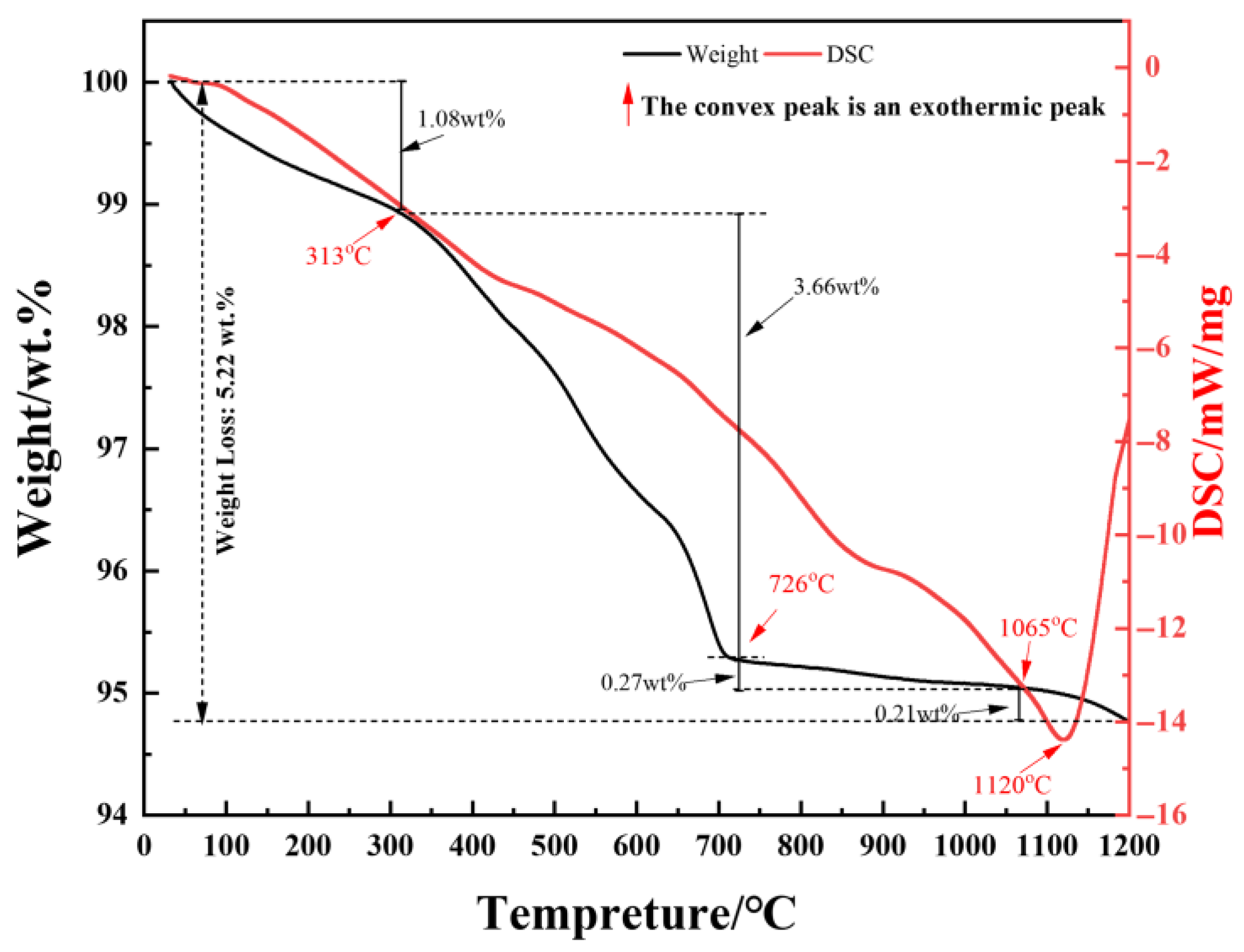
- Thermal analysis: TG-DSC was conducted in air at 10 °C/min from 30 to 1200 °C.
- 3.
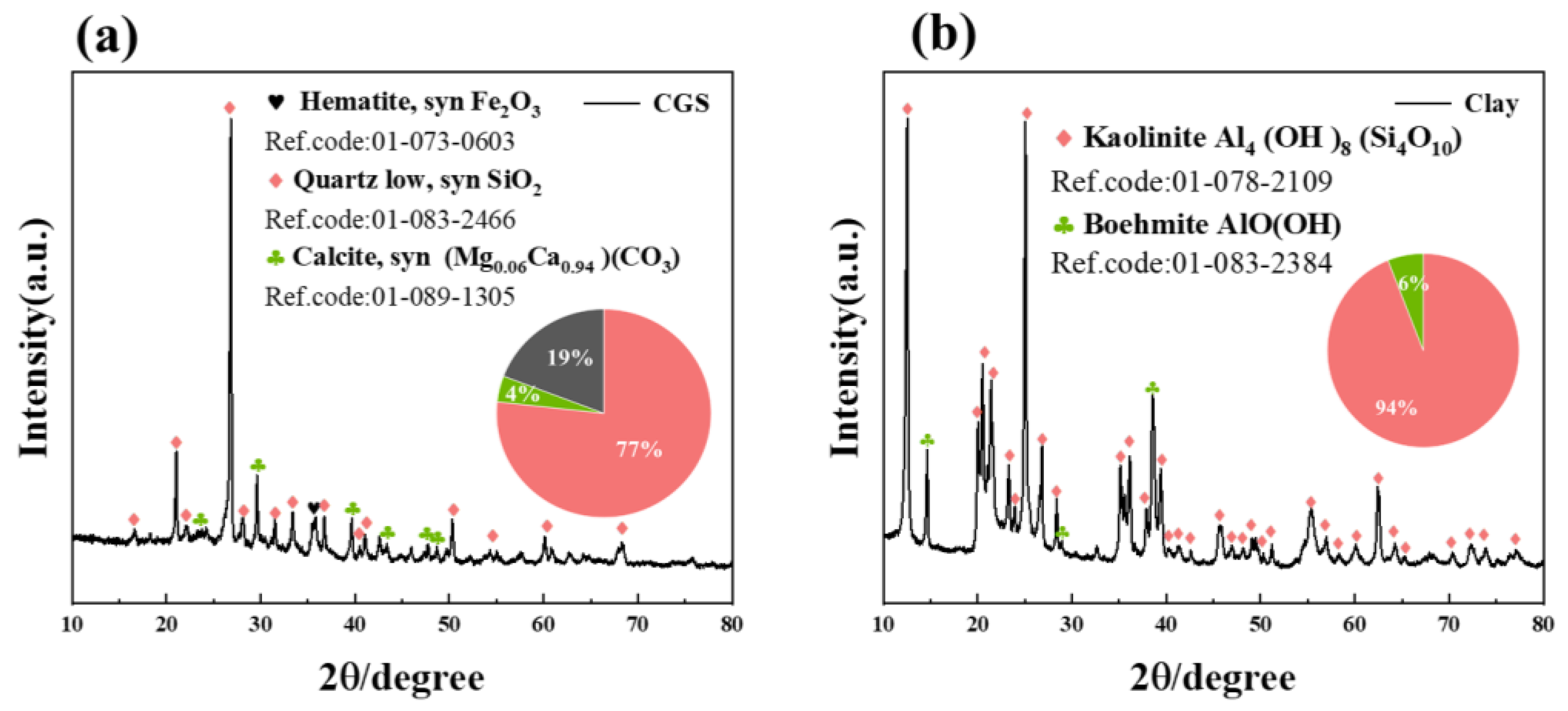
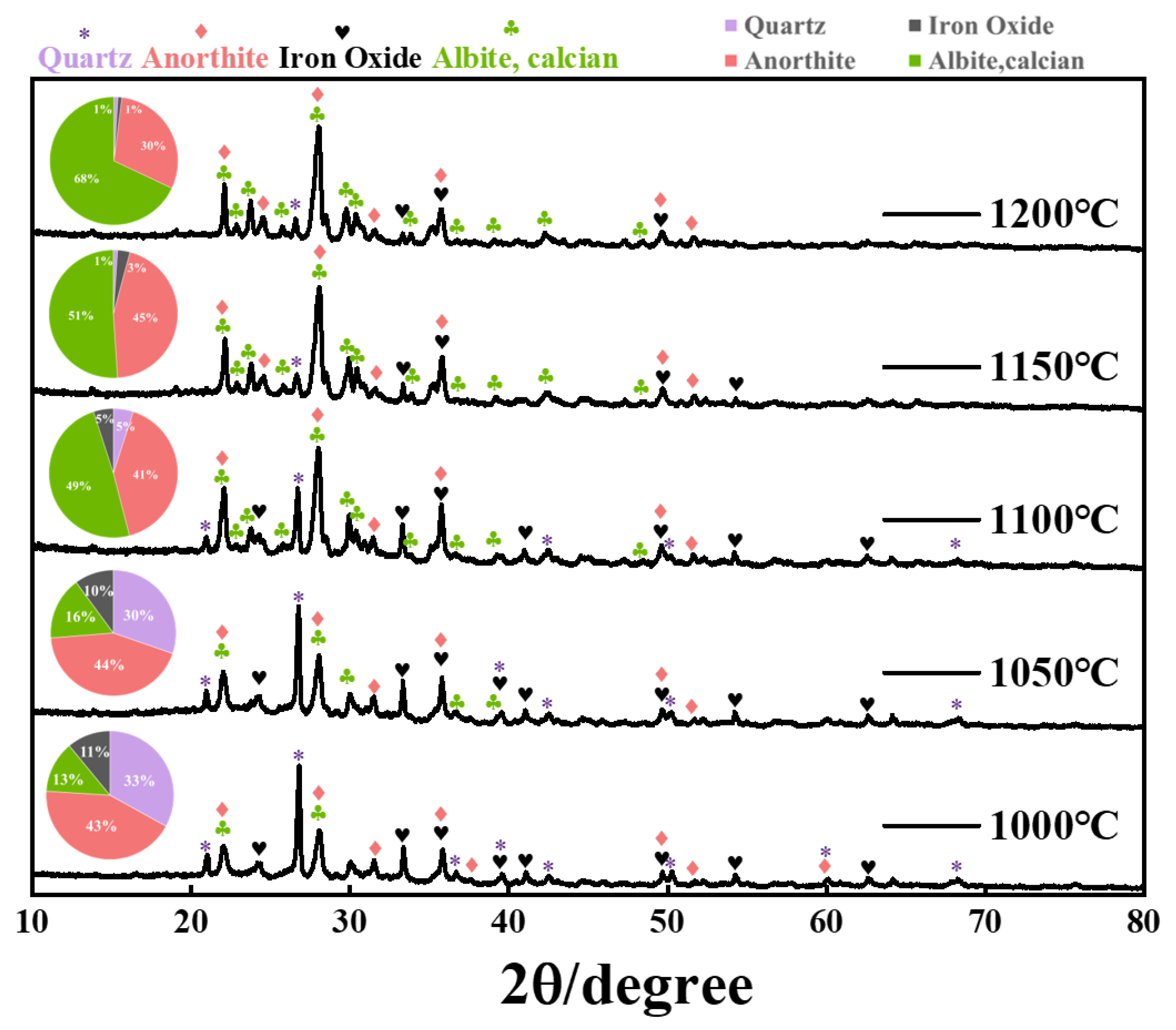
- Phase analysis: XRD (PANalytical X-Pert3 Powder, Almelo, The Netherlands) was used for qualitative and quantitative analysis [17]. Scan range: 5–90°; step size: 0.02°; scan speed: 4°/min.
- 4.
- Major-oxide composition: XRF (Bruker S4-Explorer, Karlsruhe, Germany) was used to determine the major oxide contents.
- 5.
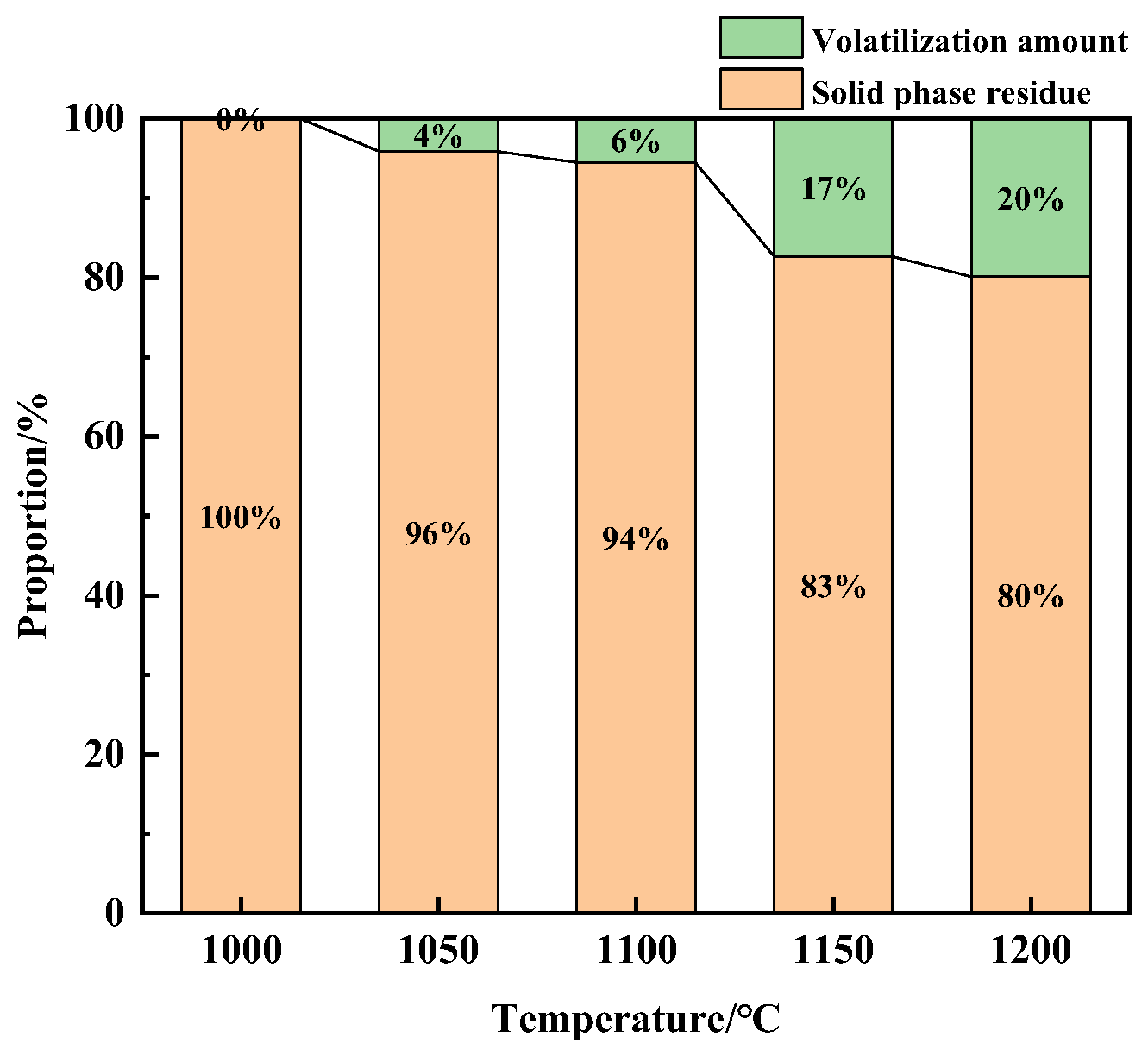
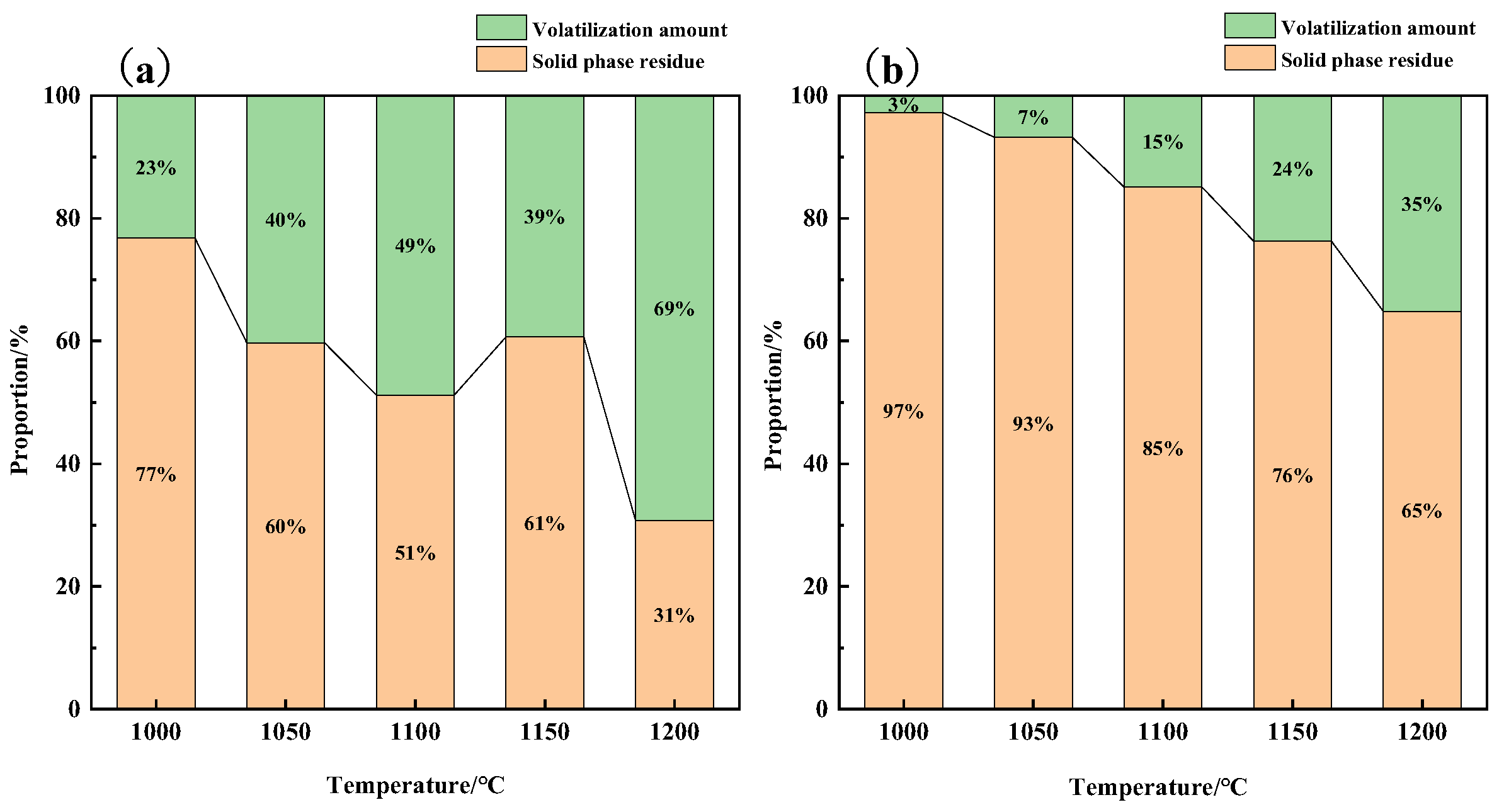
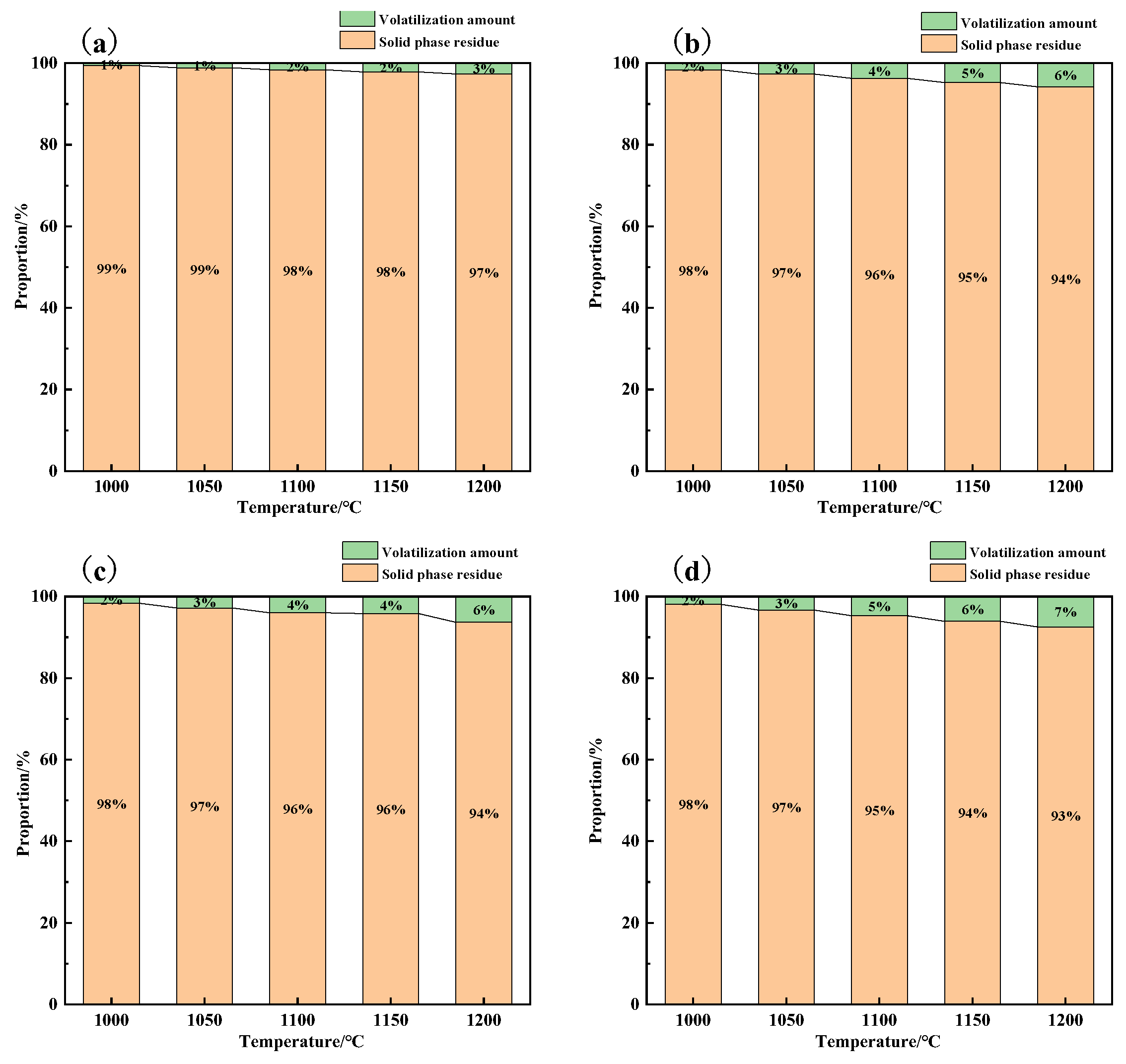
- Elemental analysis: ICP-OES (Agilent 5110, Agilent Technologies, Santa Clara, CA, USA) was used to quantify elements after microwave digestion using HNO3-HCl-HF-H2O2 [18]. The heavy-metal volatilization ratio (v) was calculated as:where C0 and Ct are the total elemental contents before and after calcination, respectively.
- 6.
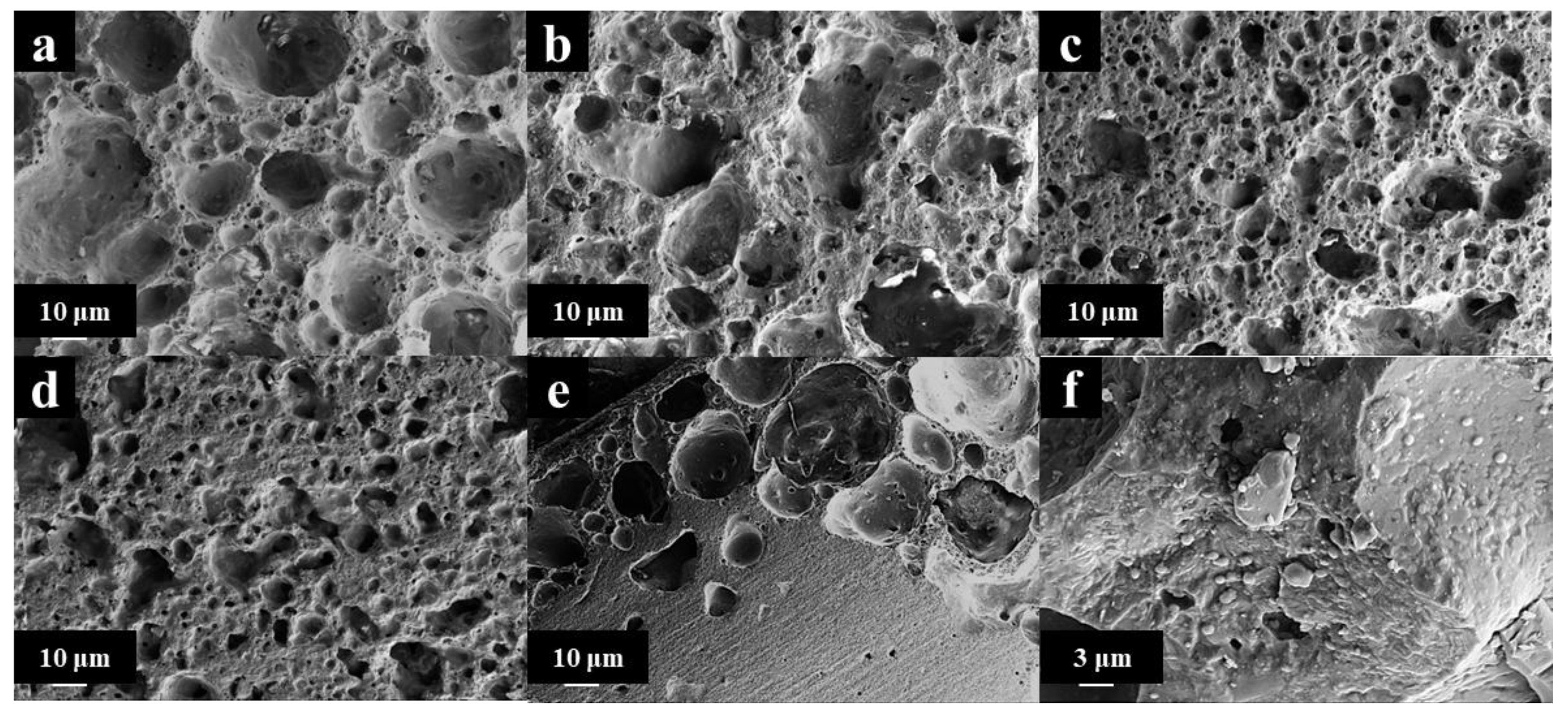
- Microstructure: SEM (Hitachi S4800, Tokyo, Japan) was used to observe the sintered microstructures (10 kV, 10 μA).
- 7.
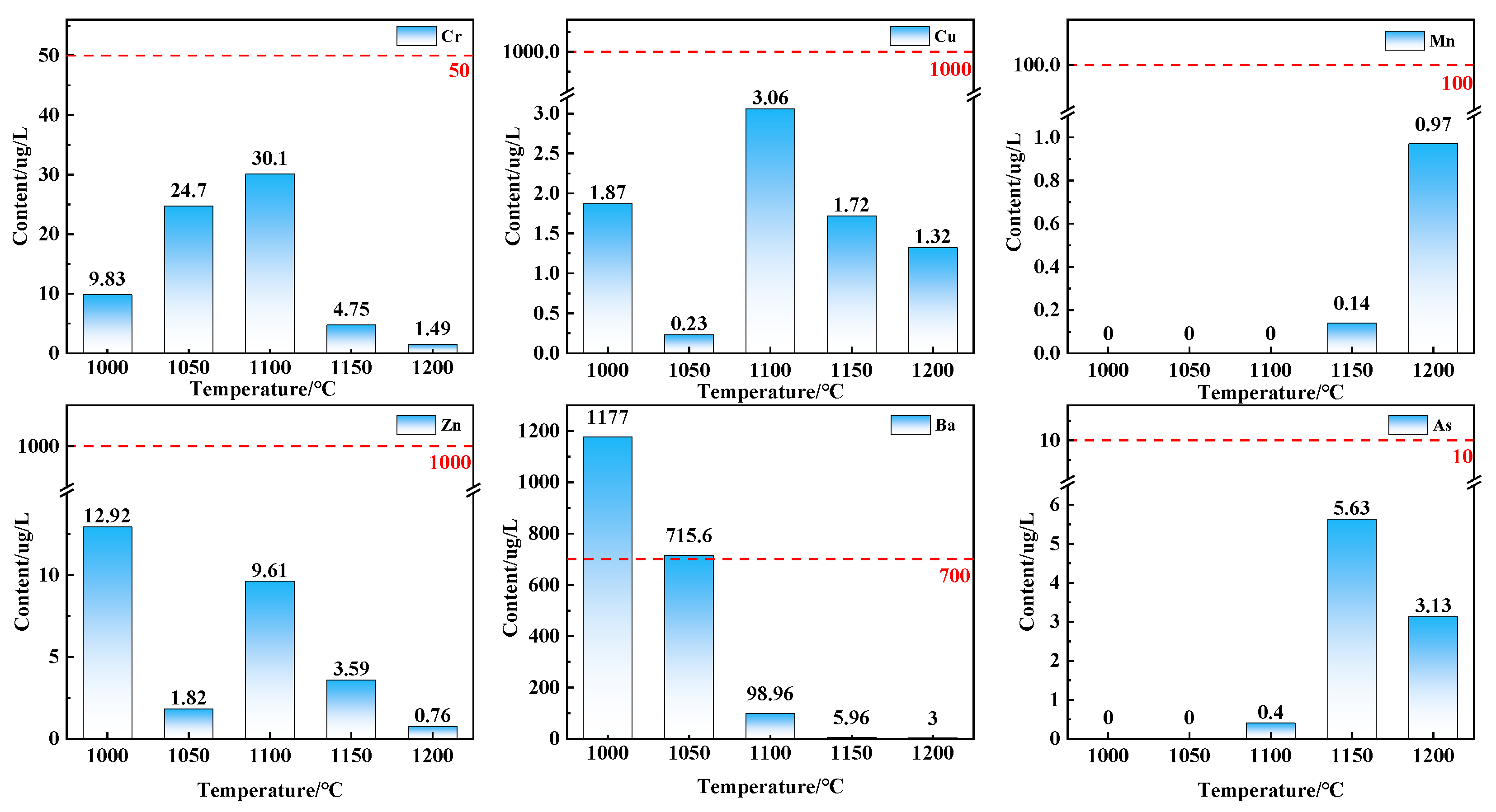
- Leaching test [19]: Leaching was performed according to HJ/T 299-2007 (sulfuric acid–nitric acid method). The extraction solution (pH = 3.20 ± 0.05) was added at a solid-to-liquid ratio of 1:10 (g/mL). After 18 h of end-over-end agitation, the leachate was filtered and analyzed by ICP-MS (Agilent 7800, Agilent Technologies, Santa Clara, CA, USA) for Cr, Mn, Ni, Cu, Zn, As, and Ba.
- 8.
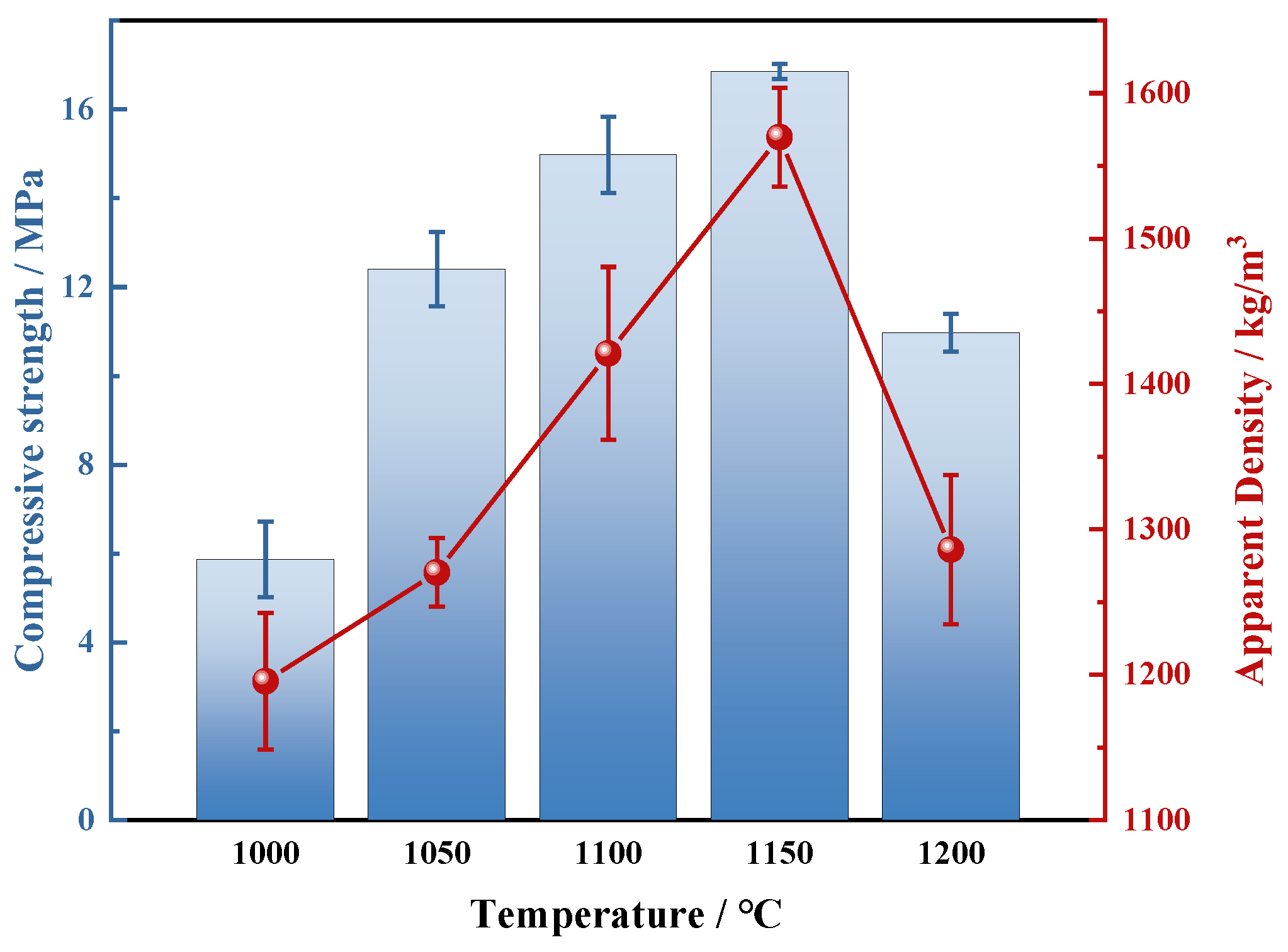
- Apparent density: Pellets (8–12 mm) were dried at 105 °C to constant mass and cooled to room temperature. The apparent volume was measured by water displacement; apparent density was calculated as ρ = m/V. Four replicates were tested per group; results are reported as mean ± standard deviation.
- 9.
- Single-particle compressive strength was measured by a compression test. Intact ceramsite pellets with a particle size of 8–12 mm were placed between two parallel platens and loaded in compression. The crosshead displacement rate was set to 200 mm/min, and the force loading rate was controlled at 10 N/s. The maximum load at failure, Fmax, was recorded. The single-particle compressive strength was calculated as follows:where σ is the compressive strength (MPa) and A is the equivalent loaded area in the loading direction. To ensure reproducibility, the equivalent diameter d (mm) of each pellet in the loading direction was measured using a vernier caliper and approximated by its circular projection. Four parallel specimens were tested for each group, and the results are reported as mean ± standard deviation.
3. Results and Discussion
3.1. Chemical Characteristics and Thermal Behavior of Raw Materials
3.1.1. Phase Composition
3.1.2. Major-Oxide Composition and Baseline Heavy Metals
3.1.3. Thermal Behavior of CGS (TG-DSC)
- (1)
- 0–313 °C (desorption of water; weak endotherm): mass loss ~1.08%, attributed to evaporation of physically adsorbed water and pore water.
- (2)
- 313–726 °C (residual-carbon oxidation/carbonate decomposition): mass loss ~3.66%, corresponding to a weak exotherm (oxidation of residual carbon) and a weak endotherm (carbonate decomposition). This stage is mainly related to oxidation-driven gas release and minor carbonate decomposition [19].CaCO3 → CaO + CO2(g)
- (3)
- 726–1065 °C: a weak and broad mass-loss region (~0.27%) is observed. Considering the limited phase evidence available for this interval, this feature is more conservatively attributed to the tailing oxidation of residual carbon.
- (4)
- 1065–1200 °C: a small additional mass loss (~0.48%) accompanied by an endothermic signal is observed at high temperature. This behavior may be related to the release of minor volatile species and continued structural reorganization associated with liquid-phase formation.
3.2. Effects of Temperature on Properties, Microstructure, and Phases of Ceramsite
3.2.1. Property Evolution
3.2.2. Microstructural Evolution
- (1)
- 1000–1150 °C: property-enhancement stage (liquid phase promotes bonding and densification).
- (2)
- 1200 °C: property-degradation stage (over-melting causes pore-structure deterioration).
3.2.3. Phase Transformation
3.3. Heavy-Metal Migration/Transformation and Leaching Toxicity
3.3.1. Migration and Transformation of Heavy Metals in the Solid Phase
- (1)
- Low-volatility elements (Mn, Ba, Ni, Cu).
- (2)
- Moderate-volatility element (Cr).
- (3)
- High-volatility elements (As, Zn).
3.3.2. Leaching-Toxicity Evaluation
4. Conclusions
- Firing temperature strongly regulates microstructure and phase evolution, thereby defining the mechanical-performance window. With increasing temperature, quartz is progressively consumed and participates in solid-state reactions and/or enters the glassy phase, while stable aluminosilicate crystalline phases dominated by feldspars (anorthite/albite) form at high temperatures. The sample fired at 1150 °C exhibits good pore-wall continuity and structural coherence, with a maximum single-particle compressive strength of 15.38 MPa.
- The combined formation of a molten glassy phase and feldspar-type aluminosilicate crystalline phases promotes the solid-phase retention and immobilization of heavy metals, particularly low-volatility elements such as Mn, Ba, Ni, and Cu and part of Cr. This mechanism is inferred from the coupled evidence of temperature-driven phase evolution, residual solid concentrations, and reduced leached concentrations, although direct heavy-metal speciation was not determined in this work.
- High-temperature treatment markedly reduces the short-term leaching potential of the investigated heavy metals under the applied sulfuric acid–nitric acid leaching test (HJ/T 299-2007). When the firing temperature reaches 1150 °C or higher, the leached concentrations of Cr, Mn, Ni, Cu, Zn, As, and Ba all meet the Class III limits of GB/T 14848-2017, indicating favorable short-term environmental safety of the CGS-based ceramsite. Long-term leaching behavior under realistic service conditions still requires further investigation.
- Considering single-particle compressive strength, pore-wall integrity, and heavy-metal stabilization, 1150 °C is identified as the overall optimal firing temperature under the conditions of this study. Increasing the temperature to 1200 °C can further lower the leached concentrations of some elements, but leads to over-firing, pore coarsening, and strength loss, which is unfavorable for practical application.
Author Contributions
Funding
Institutional Review Board Statement
Data Availability Statement
Acknowledgments
Conflicts of Interest
References
- Liu, Z.; Guan, D.; Wei, W.; Davis, S.J.; Ciais, P.; Bai, J.; Peng, S.; Zhang, Q.; Hubacek, K.; Marland, G.; et al. Reduced carbon emission estimates from fossil fuel combustion and cement production in China. Nature 2015, 524, 335–338. [Google Scholar] [CrossRef] [PubMed]
- Li, J.; Liang, Q.M. The role of coal in China’s energy transition: A review. Renew. Sustain. Energy Rev. 2022, 155, 111924. [Google Scholar]
- Higman, C.; van der Burgt, M. Gasification, 2nd ed.; Gulf Professional Publishing: Houston, TX, USA, 2008. [Google Scholar]
- Feng, X.G.; Wang, H.Y.; Ge, F.F.; Zhang, Y.M.; Zhang, Y.F. Research progress and application prospect of high-value utilization of coal gasification slag. Clean Coal Technol. 2023, 29, 122–132. [Google Scholar]
- Zhao, S.; Duan, Y.; Chen, L.; Li, Y.; Yao, T.; Liu, S.; Liu, M.; Lu, J. Study on the emission of hazardous trace elements in a 350 MW coal-fired power plant. Part 1: Mercury. Environ. Sci. Technol. 2017, 229, 863–870. [Google Scholar] [CrossRef]
- Sun, M.; Gu, S.; Liu, D.; Xu, Z.; Wang, W.; Tu, Y.; Wang, L.; Liu, H.; Lu, S. Enrichment of Residual Carbon in Coal Gasification Fine Slag via Wet Sieving Separation with Ultrasonic Pretreatment. ACS Omega 2022, 7, 40306–40315. [Google Scholar] [CrossRef]
- National Energy Technology Laboratory. Assessment of Gasifier By-Product Utilization; U.S. Department of Energy: Pittsburgh, PA, USA, 2021.
- Zhao, S.; Yao, L.; He, H.; Zou, Y.; Hu, L.; Zhai, Y.; Yu, Y.; Jia, J. Preparation and environmental toxicity of non-sintered ceramsite using coal gasification coarse slag. Arch. Environ. Prot. 2019, 45, 84–90. [Google Scholar] [CrossRef]
- Li, X.; Wang, Y.; Zhang, Y. Preparation and characterization of glass-ceramics from coal gasification slag. Ceram. Int. 2019, 45, 7866–7874. [Google Scholar]
- Zhang, K.; Li, X.N.; Chang, B.; Song, S.; Liu, C.Y. Use of coal gasification coarse slag to amend the soil water, nutrient and salt of waste dump in the northwest arid region: Feasibility and potential. Environ. Dev. Sustain. 2025, 27, 10523–10547. [Google Scholar] [CrossRef]
- Shaheen, S.M.; Hooda, P.S.; Tsadilas, C.D. Opportunities and challenges in the use of coal fly ash for soil improvement—A review. J. Environ. Manag. 2014, 145, 249–267. [Google Scholar] [CrossRef]
- Li, X.; He, C.; Lv, Y.; Jian, S.; Jiang, W.; Jiang, D.; Wu, K.; Dan, J. Effect of sintering temperature and dwelling time on the characteristics of lightweight aggregate produced from sewage sludge and waste glass powder. Ceram. Int. 2021, 47, 33435–33443. [Google Scholar] [CrossRef]
- Molinari, C.; Zanelli, C.; Guarini, G.; Dondi, M. Bloating mechanism in lightweight aggregates: Effect of processing variables and properties of the vitreous phase. Constr. Build. Mater. 2020, 261, 119980. [Google Scholar] [CrossRef]
- Xiang, Y.; Xiang, Y.; Jiao, Y.; Wang, L. Effect of sludge amino acid-modified magnetic coal gasification slag on plant growth, metal availability, and soil enzyme activity. J. Soil Water Conserv. 2020, 75, 515–526. [Google Scholar] [CrossRef]
- Li, Q.; Liu, B.; Liu, J.; Zhang, Q.; An, C.; Sun, Z.; Pulatov, B.; Wei, S.; Fan, J. Review of glass-ceramics: Solidification of toxic elements and durability. Waste Manag. 2025, 200, 114764. [Google Scholar] [CrossRef]
- Yao, Z.T.; Ji, X.S.; Sarker, P.K.; Tang, J.H.; Ge, L.Q.; Xia, M.S.; Xi, Y.Q. A comprehensive review on the applications of coal fly ash. Earth Sci. Rev. 2015, 141, 105–121. [Google Scholar] [CrossRef]
- Cullity, B.D.; Stock, S.R. Elements of X-Ray Diffraction, 3rd ed.; Prentice Hall: Upper Saddle River, NJ, USA, 2001. [Google Scholar]
- Jiao, F.; Zhang, L.; Dong, Z.; Namioka, T.; Yamada, N.; Ninomiya, Y. Study on the species of heavy metals in MSW incineration fly ash and their leaching behavior. Fuel Process. Technol. 2016, 152, 108–115. [Google Scholar] [CrossRef]
- van der Sloot, H.A.; Comans, R.N.J.; Hjelmar, O. Similarities in the leaching behaviour of trace contaminants from waste, stabilized waste, construction materials and soils. Sci. Total Environ. 1996, 178, 111–126. [Google Scholar] [CrossRef]
- Liu, X.; Li, S.; Yao, T. Laboratory investigation on the single particle crushing strength of carbonate gravel incorporating size and shape effects. Géotechnique 2025, 75, 94–110. [Google Scholar] [CrossRef]
- Guo, Y.; Zhang, Y.; Zhao, X.; Xu, J.; Qiu, G.; Jia, W.; Wu, J.; Guo, F. Multifaceted evaluation of distribution, occurrence, and leaching features of typical heavy metals in different-sized coal gasification fine slag from Ningdong region, China: A case study. Sci. Total Environ. 2022, 830, 154726. [Google Scholar] [CrossRef] [PubMed]
- Yang, P.; Suo, Y.; Liu, L.; Qu, H.; Xie, G.; Zhang, C.; Deng, S. Study on the curing mechanism of cemented backfill materials prepared from sodium sulfate modified coal gasification slag. J. Build. Eng. 2022, 62, 105318. [Google Scholar] [CrossRef]
- Fernandes, H.R.; Tulyaganov, D.U.; Ferreira, J.M.F. Preparation and characterization of CaO-Al2O3-SiO2 glass-ceramics. Mater. Chem. Phys. 2009, 115, 744–750. [Google Scholar]
- Jakob, A.; Stucki, S.; Kuhn, P. Evaporation of heavy metals during the heat treatment of municipal solid waste incinerator fly ash. Environ. Sci. Technol. 1995, 29, 2429–2436. [Google Scholar] [CrossRef]
- Mysen, B.O.; Richet, P. Silicate Glasses and Melts: Properties and Structure; Elsevier: Amsterdam, The Netherlands, 2005. [Google Scholar]
- Yu, L.; Shen, K.; Yang, Y.; Liu, H.; Yang, Z.; Wang, R.; An, S. Preparation and phosphorus removal performance of ceramsite from coal gasification slag. Nanomaterials 2025, 15, 1822. [Google Scholar]
- Tian, S.; Li, Y.; Wang, X. Immobilization mechanism of heavy metals in fly ash-based geopolymers: A review. Sci. Total Environ. 2021, 765, 142829. [Google Scholar]
- Nowak, B.; Pessl, A.; Aschenbrenner, P.; Szentannai, P.; Mattenberger, H.; Rechberger, H.; Hermann, L.; Winter, F. Heavy metal removal from municipal solid waste fly ash by chlorination and thermal treatment. J. Hazard. Mater. 2010, 179, 323–331. [Google Scholar] [CrossRef]
- Shih, K.; Tang, Y. Immobilization of heavy metals in ceramite produced from sewage sludge ash. Environ. Sci. Technol. 2011, 45, 7449–7455. [Google Scholar]
- Cheng, J.; Li, Y.; Zhou, J. Vitrification of municipal solid waste incineration fly ash for simultaneous recycling and heavy metal stabilization. J. Mater. Cycles Waste Manag. 2019, 21, 168–178. [Google Scholar]





| Element | Coal Gasification Slag | Clay | Waste Glass |
|---|---|---|---|
| As | 43.16 | 45.70 | 24.65 |
| Ba | 809.67 | ND | 91.47 |
| Cr | 40.58 | 44.14 | 2.95 |
| Cu | 60.69 | 25.17 | 0.98 |
| Mn | 1683.52 | 22.64 | 68.76 |
| Ni | 71.87 | 18.34 | 4.97 |
| Zn | 100.51 | 52.05 | 17.34 |
| Temperature (°C) | Equivalent Pore Diameter (µm) | Local Pore-Wall Thickness (µm) |
|---|---|---|
| 1000 | 7.49 | 2.66 |
| 1050 | 9.11 | 5.85 |
| 1100 | 4.66 | 3.02 |
| 1150 | 5.52 | 4.04 |
| 1200 | 12.61 | 4.49 |
| Element | 1000 °C | 1050 °C | 1100 °C | 1150 °C | 1200 °C |
|---|---|---|---|---|---|
| As | 40.91 | 31.84 | 27.32 | 32.46 | 16.46 |
| Ba | 855.60 | 847.03 | 838.72 | 831.71 | 823.87 |
| Cr | 46.17 | 44.28 | 43.68 | 38.31 | 37.18 |
| Cu | 64.41 | 63.54 | 62.69 | 61.94 | 61.13 |
| Mn | 1774.96 | 1766.97 | 1759.53 | 1754.85 | 1748.48 |
| Ni | 76.50 | 75.64 | 74.80 | 74.83 | 73.27 |
| Zn | 109.46 | 104.97 | 95.93 | 86.19 | 73.39 |
Disclaimer/Publisher’s Note: The statements, opinions and data contained in all publications are solely those of the individual author(s) and contributor(s) and not of MDPI and/or the editor(s). MDPI and/or the editor(s) disclaim responsibility for any injury to people or property resulting from any ideas, methods, instructions or products referred to in the content. |
© 2026 by the authors. Licensee MDPI, Basel, Switzerland. This article is an open access article distributed under the terms and conditions of the Creative Commons Attribution (CC BY) license.
Share and Cite
Zhai, X.; Zhang, W.; Xing, Y.; Wang, H.; Hong, C. Sintering Evolution, Mechanical Performance and Heavy-Metal Environmental Safety of Coal Gasification Slag-Based Ceramsite. Appl. Sci. 2026, 16, 4147. https://doi.org/10.3390/app16094147
Zhai X, Zhang W, Xing Y, Wang H, Hong C. Sintering Evolution, Mechanical Performance and Heavy-Metal Environmental Safety of Coal Gasification Slag-Based Ceramsite. Applied Sciences. 2026; 16(9):4147. https://doi.org/10.3390/app16094147
Chicago/Turabian StyleZhai, Xinlin, Weiwei Zhang, Yi Xing, Hao Wang, and Chen Hong. 2026. "Sintering Evolution, Mechanical Performance and Heavy-Metal Environmental Safety of Coal Gasification Slag-Based Ceramsite" Applied Sciences 16, no. 9: 4147. https://doi.org/10.3390/app16094147
APA StyleZhai, X., Zhang, W., Xing, Y., Wang, H., & Hong, C. (2026). Sintering Evolution, Mechanical Performance and Heavy-Metal Environmental Safety of Coal Gasification Slag-Based Ceramsite. Applied Sciences, 16(9), 4147. https://doi.org/10.3390/app16094147