
Article

Study on the Permanent Deformation Characteristics of Unsaturated Sand Subgrade Fill Under Cyclic Loading

1
School of Geosciences and Info-Physics, Central South University, Changsha 410083, China
2
School of Transportation, Changsha University of Science & Technology, Changsha 410114, China
*
Author to whom correspondence should be addressed.
Appl. Sci. 2026, 16(9), 4086; https://doi.org/10.3390/app16094086
Submission received: 19 March 2026 / Revised: 16 April 2026 / Accepted: 20 April 2026 / Published: 22 April 2026
(This article belongs to the Special Issue Geotechnical Engineering and Infrastructure Construction, 2nd Edition)

Abstract

Under long-term cyclic loading, the cumulative plastic deformation of unsaturated sandy subgrade is a key control factor for the pavement’s service performance. However, its evolution mechanism and quantitative characterization still lack a universal model. In this study, based on the GDS dynamic triaxial system, a series of cyclic tests were conducted under different conditions: matric suction from 0 to 90 kPa, net confining pressure from 30 to 120 kPa, dynamic stress amplitude from 60 to 240 kPa, and compaction degrees of 87–96%, reaching a total of 10,000 cycles. The results reveal that the permanent deformation of unsaturated sandy subgrade material evolves through three stages: fast, slow, and stable. The deformation is exponentially negatively correlated with matric suction, net confining pressure, and compaction degree, and exponentially positively correlated with dynamic stress amplitude. A coupling prediction model was developed by embedding matric suction and compaction degree factors into the Karg model. This model incorporates net confining pressure, dynamic stress amplitude, matric suction, and compaction degree. By using a normalized master curve method, the permanent deformation curves under different working conditions were compressed into a unique dimensionless function. The parameters have clear physical significance and allow for a unified description across stress, suction, state, and soil types. Experimental data, along with data from the literature, were used to validate the model, showing prediction errors of less than 10% and R2 > 0.95. The model provides a simple, high-precision, and transferable theoretical tool for long-service-life subgrade deformation control.

1. Introduction

With the sustained and rapid development of transportation infrastructure in China, large-scale expressway and municipal road construction projects have imposed increasingly stringent requirements on subgrade performance. According to the 14th Five-Year Plan for the Development of a Modern Comprehensive Transportation System and the Outline for Building a Transportation Power, future transportation engineering will place greater emphasis on safety, durability, and environmental sustainability. In this context, the reliable prediction and effective control of long-term subgrade performance have become key scientific issues for ensuring the high-quality development of transportation infrastructure. Extensive engineering practice has demonstrated that under long-term traffic loading, subgrades are susceptible to settlement, differential deformation, and rutting, which significantly compromise highway safety and serviceability. Moreover, subgrade soils are commonly in an unsaturated state [1]. Unlike saturated soils, the presence of matric suction in unsaturated soils not only alters the effective stress state but also exerts a pronounced influence on the permanent deformation behavior of the subgrade [2]. Therefore, from the perspective of unsaturated soil mechanics, a systematic investigation of the permanent deformation characteristics of unsaturated sandy subgrade fill under cyclic loading is of considerable theoretical significance and practical engineering value for enhancing the safety, durability, and long-term service performance of road infrastructure.
In road engineering practice, the deformation and settlement of subgrade soils under vehicular loading have been investigated for several decades. With advancements in experimental techniques and monitoring technologies, increasing attention has been devoted to the permanent deformation behavior of subgrade soils through laboratory testing, field observations, and numerical simulations. Zhang et al. [3] developed a fractional-order constitutive model for subgrade soils under intermittent cyclic loading based on a fractional generalized Kelvin model combined with viscoplastic theory. Liu et al. [4] proposed a fractional cumulative plastic strain prediction model for freeze–thaw aeolian soils using dual Abel viscoplastic theory to characterize long-term deformation under coupled freeze–thaw and intermittent dynamic loading. Cai et al. [5] introduced a fractional cumulative strain rate into the bounding surface plasticity and Barcelona Basic Model (BBM) framework, thereby improving the fractional bounding surface model for unsaturated soils. Qing et al. [6] further coupled BBM with Perzyna viscoplastic theory to establish a long-term cyclic accumulation model for unsaturated subgrade soils that accounts for matric suction effects. It can be observed that most existing models are constructed within complex mechanical frameworks, such as viscoplastic theory, fractional-order constitutive formulations, or bounding surface plasticity. These approaches are often mathematically intricate and involve numerous parameters, which may limit their practical applicability in engineering design. Luo et al. [7] investigated the influence of prior cyclic loading history on the subsequent permanent deformation characteristics of sandy soils. The results indicated that when the accumulated deformation from previous loading exceeds the initial cyclic strain induced by subsequent loading, the soil exhibits pronounced hardening and stabilization behavior. Zhou et al. [8] examined the spatial and temporal distribution of differential settlement between new and existing subgrades under traffic loading and comparatively evaluated the effectiveness of various mitigation measures, including geogrid and geocell reinforcement. Qi et al. [9], combining dynamic triaxial tests with ABAQUS numerical simulations, analyzed the effect of loading cycles on permanent deformation and reported that soil strain and pore water pressure evolve through three distinct stages—rapid growth, gradual growth, and stabilization—with increasing load repetitions. However, the number of loading cycles in these studies was generally limited to approximately 2000, which is insufficient to realistically capture the long-term deformation evolution of subgrades under sustained service conditions. Yue et al. [10] investigated the cyclic deformation behavior of saturated Fujian sand at different loading frequencies by means of undrained cyclic torsional shear tests. The results showed that loading frequency had little influence on deformation during the pre-liquefaction stage, but significantly intensified modulus degradation during the post-liquefaction stage. Fu et al. [11] employed GDS dynamic triaxial tests to examine the dynamic response of saturated remolded loess under cyclic loading, and found that both strain and pore water pressure accumulated progressively with the number of loading cycles, while large-amplitude and low-frequency loading was more likely to induce rapid soil failure. Jin et al. [12] studied the long-term cyclic deformation of soft clay and reported that the accumulated strain followed a power-law relationship with the number of cycles; moreover, the model parameters exhibited a certain degree of invariance, indicating their applicability in long-term deformation prediction. Most previous studies have focused primarily on the permanent deformation characteristics of saturated subgrade fills. However, in practical engineering applications, subgrade soils are typically in an unsaturated state, and the presence of matric suction significantly affects both the effective stress state and deformation behavior of the soil. Neglecting suction variation may lead to underestimation of deformation or misjudgment of subgrade stability.
To address these limitations, cyclic triaxial tests were conducted on unsaturated sandy soils using the GDS dynamic triaxial system under different net confining pressures, matric suctions, dynamic stress amplitudes, and degrees of compaction, in order to systematically investigate the permanent deformation behavior of unsaturated sandy subgrade fill. Based on the test results, a permanent deformation prediction model was further developed. Since existing models usually involve many parameters, complex calculations, and are mainly applicable to saturated soils, their direct application to unsaturated subgrade fill is limited. Therefore, matric suction and degree of compaction were incorporated into the Karg model, yielding a model that accounts for net confining pressure, dynamic stress amplitude, matric suction, and degree of compaction, while retaining simple computation, easy parameter identification, and improved applicability to different unsaturated states and compaction conditions.

2. Materials and Methods

2.1. Materials

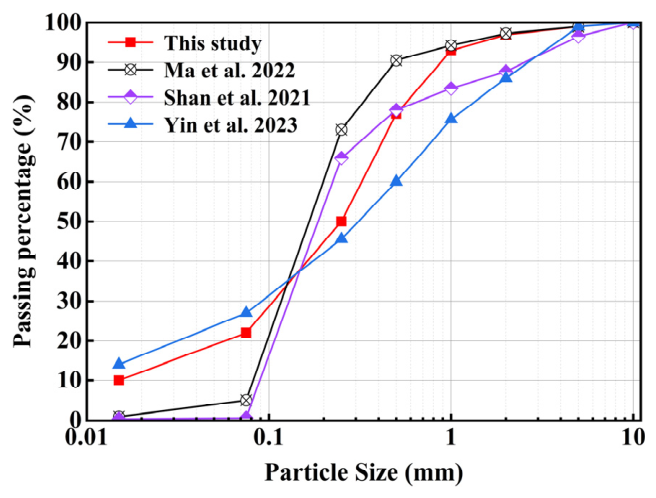
Sandy soils possess favorable drainage capacity, compactability, and bearing performance, along with advantages such as ease of construction, small deformation, and strong environmental adaptability. Consequently, they are widely used as fill materials for highway subgrades. When applied in subgrade construction, the particle gradation of sandy soils should exhibit good continuity. Typically, medium sand or medium-to-coarse sand is preferred, with an appropriate content of fine particles and a relatively uniform particle size distribution. Excessive concentration within a single particle size range should be avoided to ensure sufficient skeletal strength while maintaining adequate drainage performance and compaction effectiveness. Referring to the gradation designs reported by Ma [13], Shan [14], and Yin [15], a graded sandy soil was prepared in this study, as illustrated in Figure 1. The basic physical properties of the soil were determined in accordance with the Test Methods of Soils for Highway Engineering [16], and the corresponding results are summarized in Table 1.

2.2. Specimen Preparation

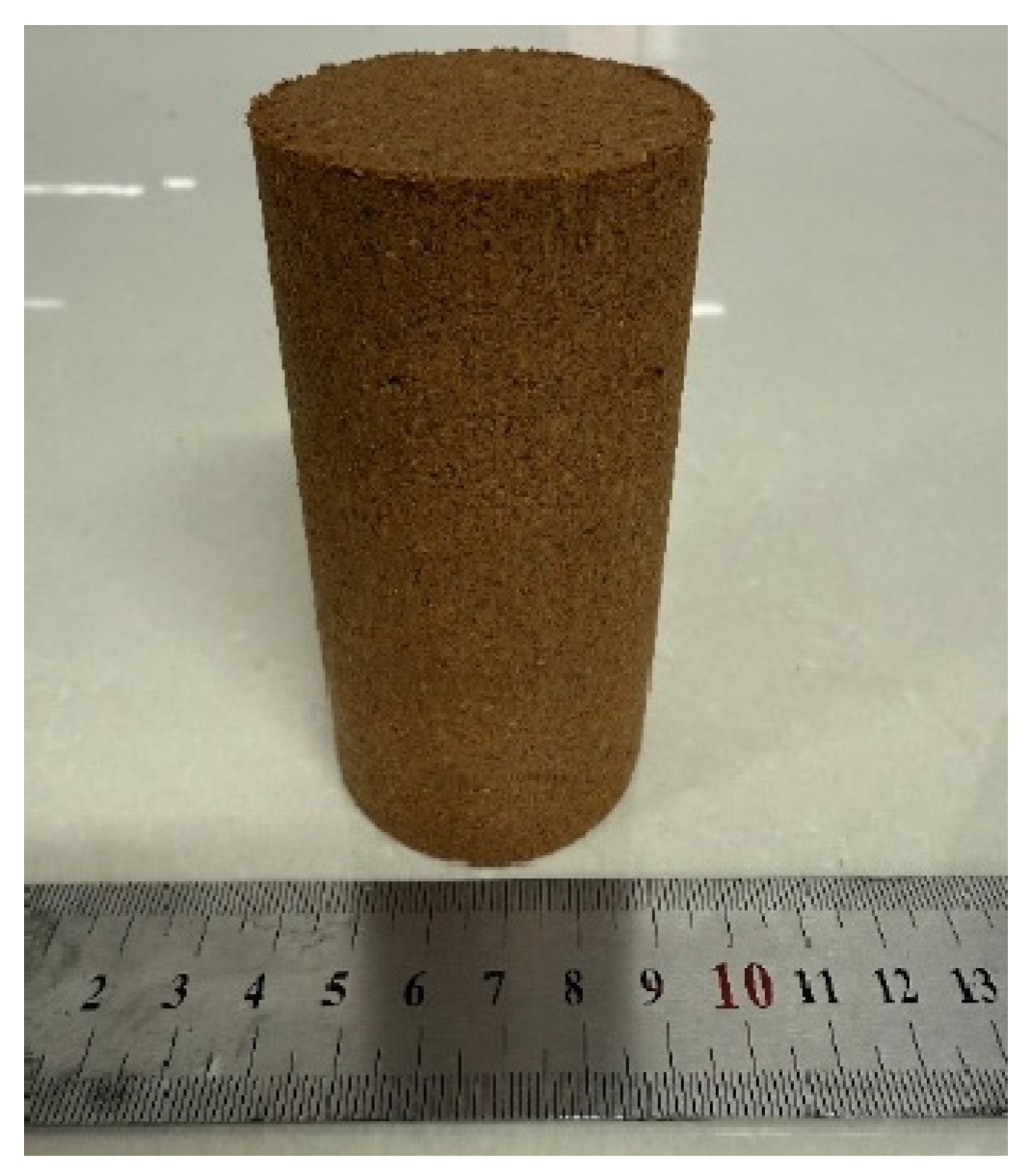
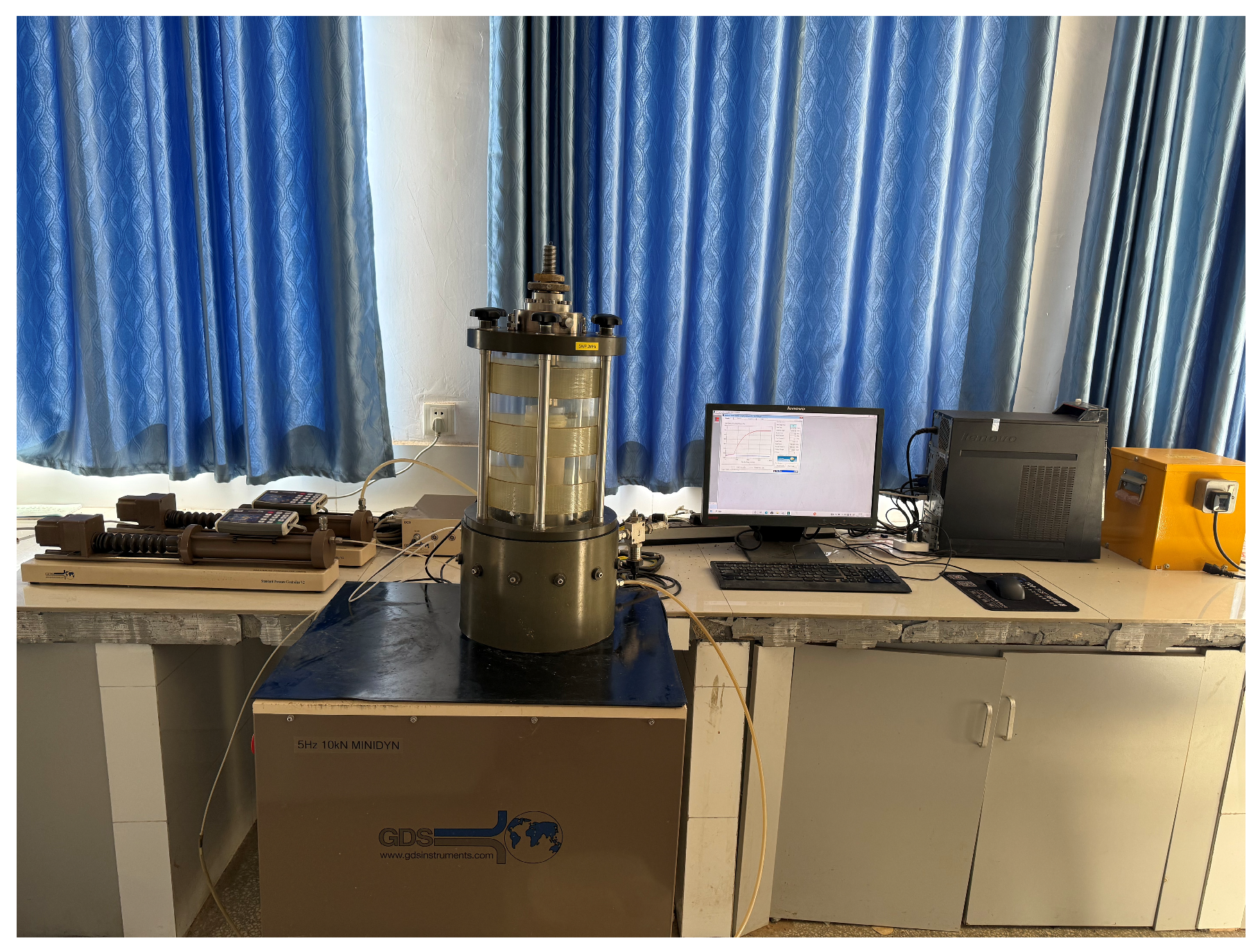
The sandy soil was first prepared in accordance with the designed gradation curve. Deaired water was then sprayed onto the prepared soil to adjust the moisture content to the optimum moisture content (OMC). The soil was subsequently sealed in plastic bags and stored in a moisture-controlled chamber for 24 h to ensure uniform water distribution. Afterward, the water content was measured, and the average value was adopted. In accordance with the Test Methods of Soils for Highway Engineering, the specimens were compacted using the layered compaction method. The soil was compacted in five equal layers, with each layer being compacted successively. After compacting each layer, its thickness was measured using a graduated ruler to ensure uniform density among all layers. The surface of each compacted layer was scarified before placing the next layer to eliminate interlayer voids and to ensure the integrity and homogeneity of the specimen. The final specimens had a diameter of 50 mm and a height of 100 mm, as shown in Figure 2. After preparation, the specimens were placed in a vacuum saturation chamber and subjected to vacuum saturation for more than 24 h. Subsequently, the B-value was measured using the differential pressure transducer of a GDS dynamic triaxial testing system manufactured by Global Digital Systems Ltd., Hook, UK (Figure 3). The specimen was considered to be fully saturated only when the B-value exceeded 0.95; otherwise, the saturation duration needed to be extended, or the specimen had to be re-prepared.

2.3. Experiment Procedures

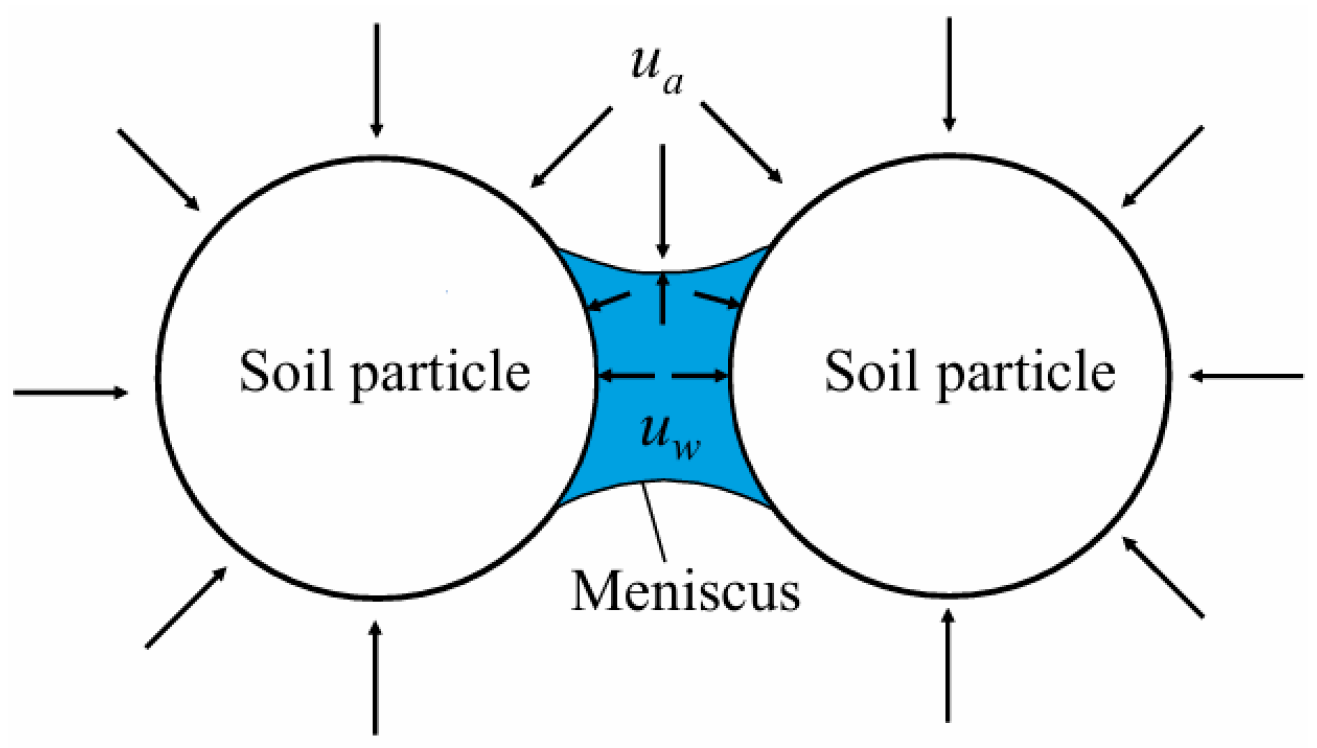
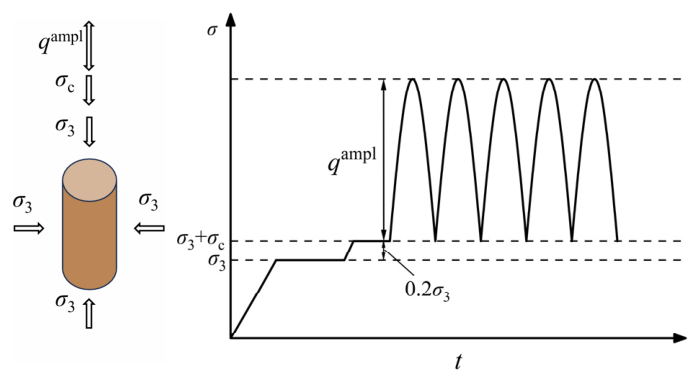
First, the Consolidation module was selected in the dynamic triaxial testing system, and the confining pressure σ 3 was instantaneously applied to the target value to consolidate the specimen. Consolidation was considered complete when the total volume change of the specimen within 24 h was less than 0.05% of the total specimen volume. Subsequently, the 4D UNSAT module was employed to perform tests under unsaturated conditions. This module controls the axial stress σ 1 , confining pressure σ 3 , pore air pressure u a , and pore water pressure u w . The Axial Stress Controlled loading mode was adopted. The axis-translation technique was used to control matric suction s   ( s = u a u w ) (Figure 4). A back-pressure controller (Global Digital Systems Ltd., Hook, UK) was applied to maintain the pore water pressure at 0 kPa, while pore air pressure was increased at a rate of 10 kPa/h until the target suction was reached. Matric suction equilibrium was assumed when the drainage volume within 24 h was less than 0.05% of the total specimen volume. The net confining pressure σ n   ( σ n = σ 3 u a ) was kept constant throughout the entire test. Thereafter, in the Advanced Loading module, a deviatoric stress equal to 0.2 σ n was applied and maintained for 1 h. Finally, cyclic loading was applied in the Dynamic Loading module using the Axial Stress Controlled mode. A half-sine waveform with a loading frequency of 1 Hz was adopted. Among them, the dynamic stress amplitude refers to the peak value of the cyclic deviator stress under constant confining pressure. During dynamic loading, the net confining pressure σ n and matric suction s were kept constant. The test was terminated when the permanent deformation reached 5% or when the number of loading cycles reached 10,000, whichever occurred first. In this study, permanent deformation refers to the irreversible residual deformation generated in the soil under cyclic loading that cannot be recovered after unloading. It was determined from the residual deformation retained after unloading during cyclic loading, which was recorded in real time by a displacement transducer (Global Digital Systems Ltd., Hook, UK). The specific loading procedure is shown in Figure 5.
It should be noted that the test parameters adopted in this study were determined comprehensively based on previous research, field conditions, and relevant code requirements. Existing studies have shown that the net confining pressure of subgrade soils generally ranges from 25 to 120 kPa [17]; therefore, four net confining pressure levels, namely 30, 60, 90, and 120 kPa, were selected in this study. Considering that subgrade soils remain unsaturated for long periods and that matric suction is commonly on the order of several tens of kilopascals according to both field monitoring and laboratory testing [18], four matric suction levels of 0, 30, 60, and 90 kPa were adopted to cover the typical states from near saturation to relatively high suction. In addition, based on field measurements showing that the dynamic stress amplitude in shallow subgrade soils can reach approximately 200 kPa [19], and taking into account heavy traffic and high-stress conditions, four dynamic stress amplitude levels of 60, 120, 180, and 240 kPa were selected to represent cyclic dynamic disturbance from low to high intensity. For the degree of compaction, according to the Specifications for Design of Highway Subgrades [20], the compaction degree of the roadbed and embankment should be no less than 96% and 93%, respectively. Considering that insufficient compaction may occur in actual construction due to topographic conditions and construction-related factors, four compaction levels of 87%, 90%, 93%, and 96% were selected. With respect to the loading method, a half-sine waveform was adopted because traffic loading is characterized by repeated unidirectional compressive pulses, and this waveform better reflects the actual loading process. Meanwhile, since loading frequency is affected by factors such as vehicle speed and subgrade depth, and previous studies have indicated that the dynamic response of subgrade soils is generally dominated by a low frequency of about 1 Hz [21], the loading frequency was uniformly set to 1 Hz in this study.
Therefore, dynamic triaxial tests were conducted under net confining pressures of 30, 60, 90, and 120 kPa; matric suctions of 0, 30, 60, and 90 kPa; dynamic stress amplitudes of 60, 120, 180, and 240 kPa; and degrees of compaction of 87%, 90%, 93%, and 96%. The effects of net confining pressure, matric suction, dynamic stress amplitude, and degree of compaction on the permanent deformation behavior of sandy soil were systematically investigated. The detailed loading schemes are presented in Table 2. Specifically, Groups A, B, and C were established to examine the effects of net confining pressure, matric suction, and degree of compaction on the permanent deformation behavior of the specimens, respectively, whereas test groups Y1 and Y2 were employed to validate the proposed model.

3. Results and Discussion

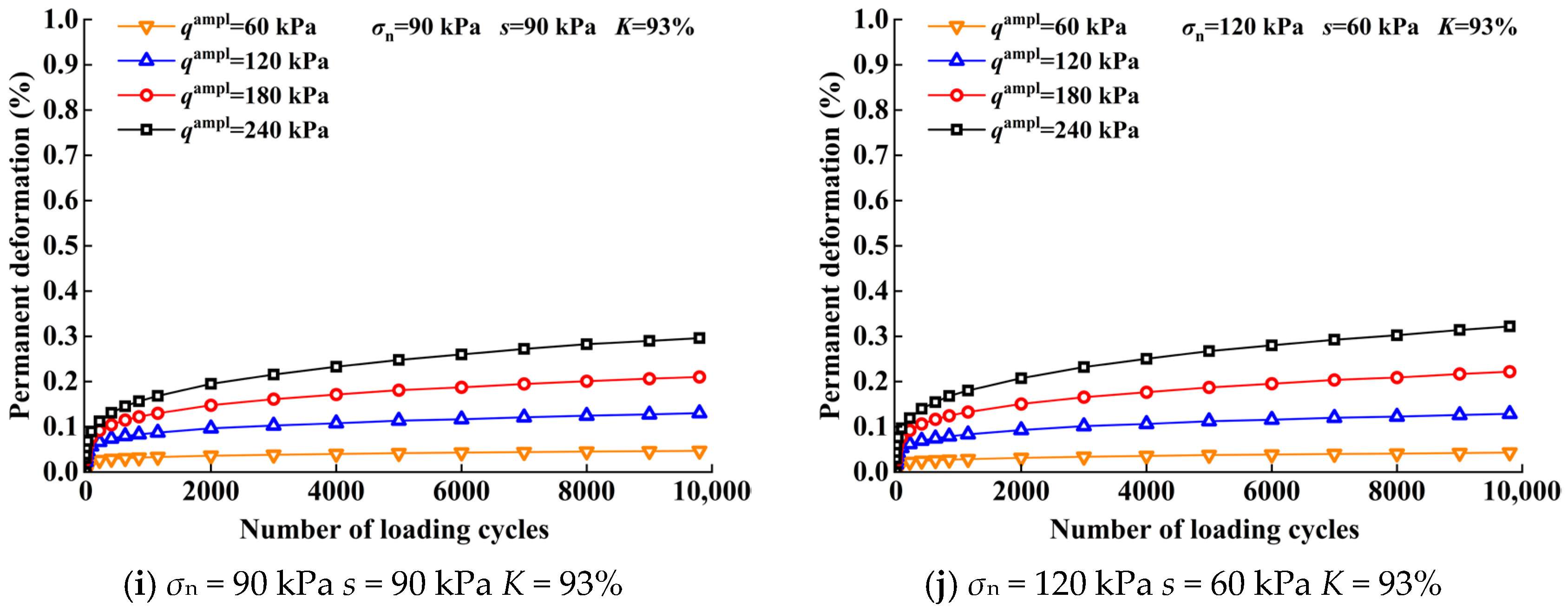
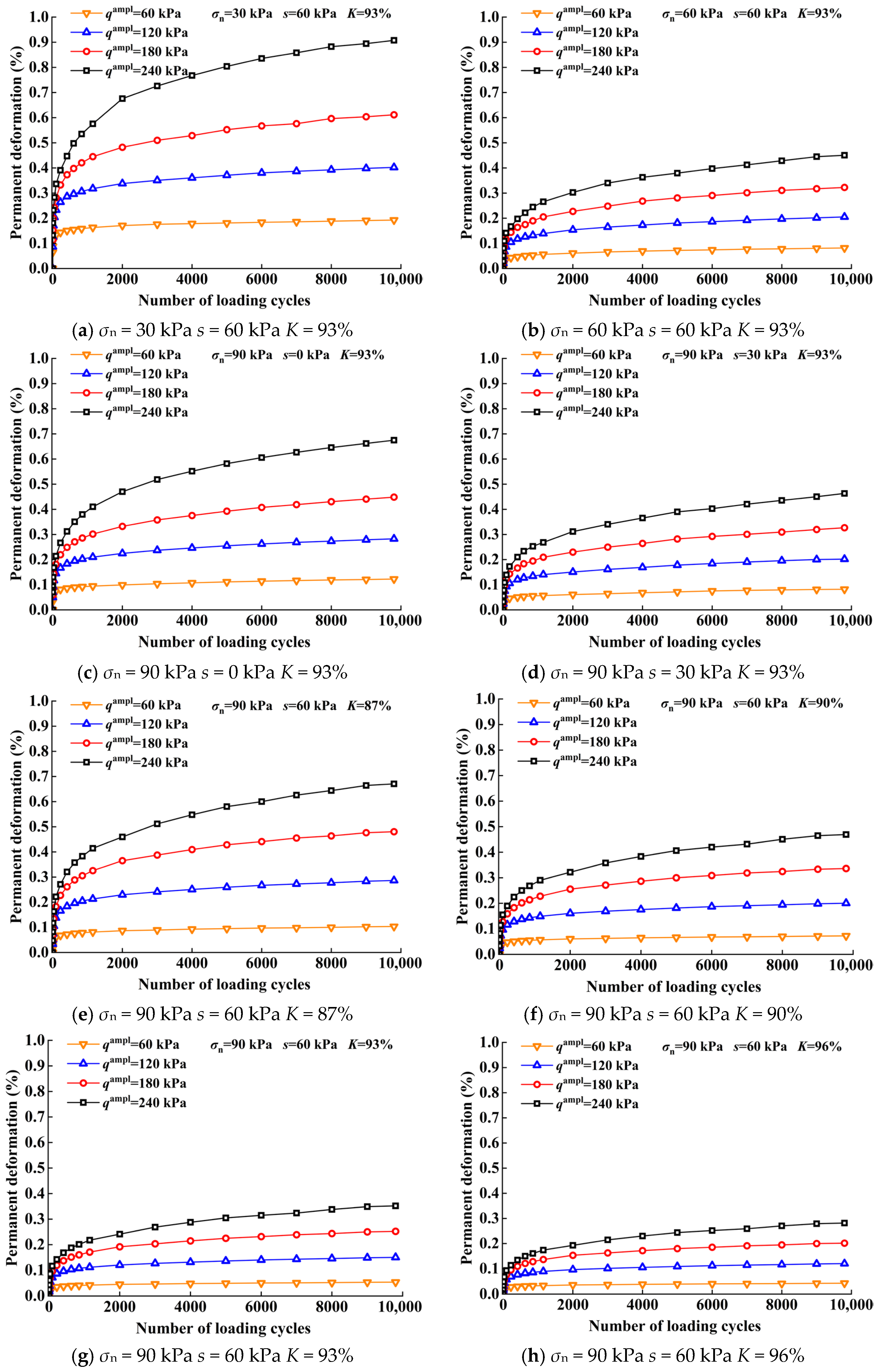
The permanent deformation curves of the unsaturated sandy subgrade fill obtained from the dynamic triaxial tests under different testing conditions are presented in Figure 6.
As shown in Figure 6, the deformation of the sandy subgrade accumulates rapidly within approximately the first 2000 loading cycles. With a further increase in the number of loading cycles, the strain development gradually tends to stabilize. This is because, during the initial stage of cyclic loading, the soil structure has not yet reached a stable state, and significant particle rearrangement and densification occur. At this stage, the accumulated deformation mainly results from particle sliding, rolling, and local crushing, leading to a rapid increase in strain. After about 2000 loading cycles, the specimen has already undergone significant particle rearrangement, pore compression, and skeleton reconstruction during the early loading stage. The initially compressible structure is gradually exhausted, and a relatively stable load-bearing skeleton is progressively formed within the soil. As the number of loading cycles continues to increase, the interparticle contact relationships tend to stabilize, and the increment of new plastic deformation is significantly reduced. Consequently, the growth rate of permanent deformation decreases markedly and gradually tends to stabilize. In addition, during cyclic loading, part of the externally input energy is stored elastically, while another part is dissipated in the form of frictional heat and interparticle sliding. As the number of loading cycles increases, the energy dissipation rate gradually decreases, and the internal friction angle tends to stabilize, corresponding to the observed reduction in the rate of cumulative deformation. Mei et al. [22] reported a similar pattern in their study on the permanent deformation of coarse-grained subgrade soils.

3.1. Effect of Net Confining Pressure on Permanent Deformation

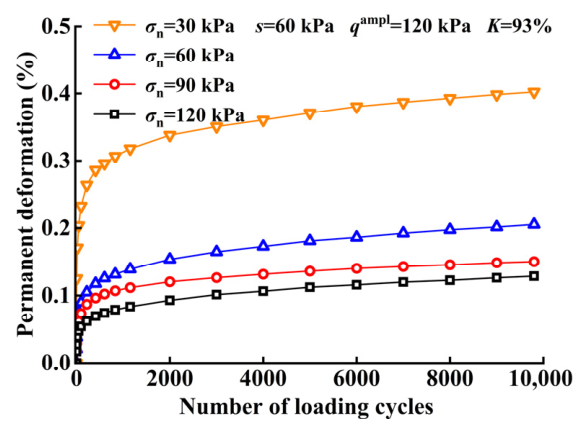
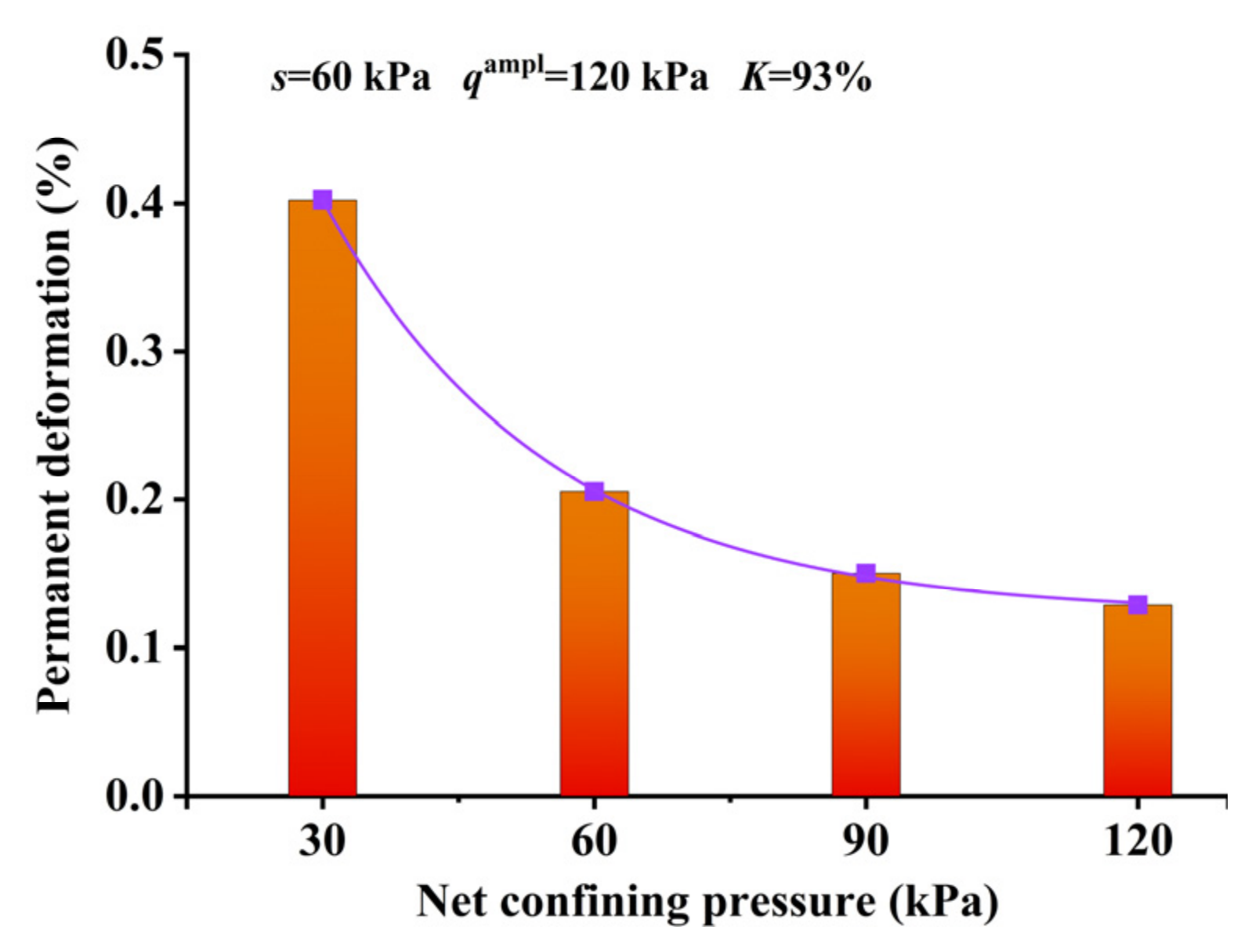
Under the conditions of a matric suction of 60 kPa, a dynamic stress amplitude of 120 kPa, and a degree of compaction of 93%, the permanent deformation curves of the sandy soil obtained from the dynamic triaxial tests are presented in Figure 7. The variation in permanent deformation with net confining pressure is illustrated in Figure 8.
As shown in Figure 7, the permanent deformation of the soil specimen decreases progressively with increasing net confining pressure. This behavior can be attributed to the enhancement of the effective stress level induced by higher net confining pressure, which strengthens interparticle contact constraints and frictional resistance. As a result, the particle skeleton becomes more stable, and particle rearrangement, void adjustment, and dilatancy effects are effectively suppressed. Similar observations have been reported by Huang et al. [23] and Yang et al. [24] in their studies on clay and soft soils. Figure 8 further indicates that as the net confining pressure continues to increase, its restraining effect on the permanent deformation of sandy soil gradually diminishes, exhibiting an exponential attenuation trend. When the net confining pressure increases from 30 kPa to 60 kPa, the permanent deformation decreases by 48.9%, representing the most significant reduction. As it increases from 60 kPa to 90 kPa, the permanent deformation decreases by 26.7%, and the reduction rate becomes noticeably smaller. When the net confining pressure is further increased to 120 kPa, the permanent deformation decreases by only 14.3%. This phenomenon is primarily attributed to the relatively loose structure and larger void ratio of sandy soil under low net confining pressure. An increase in net confining pressure at this stage promotes substantial particle rearrangement and skeleton densification, thereby markedly reducing plastic cumulative deformation. In contrast, under medium to high net confining pressures, the soil structure becomes more stable, and the potential for further compressible void reduction and particle rearrangement is limited. Consequently, the incremental benefit of increasing net confining pressure in suppressing permanent deformation gradually diminishes.

3.2. Effect of Dynamic Stress Amplitude on Permanent Deformation

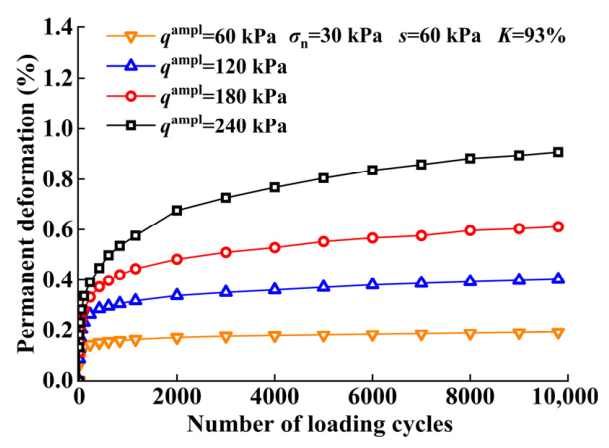
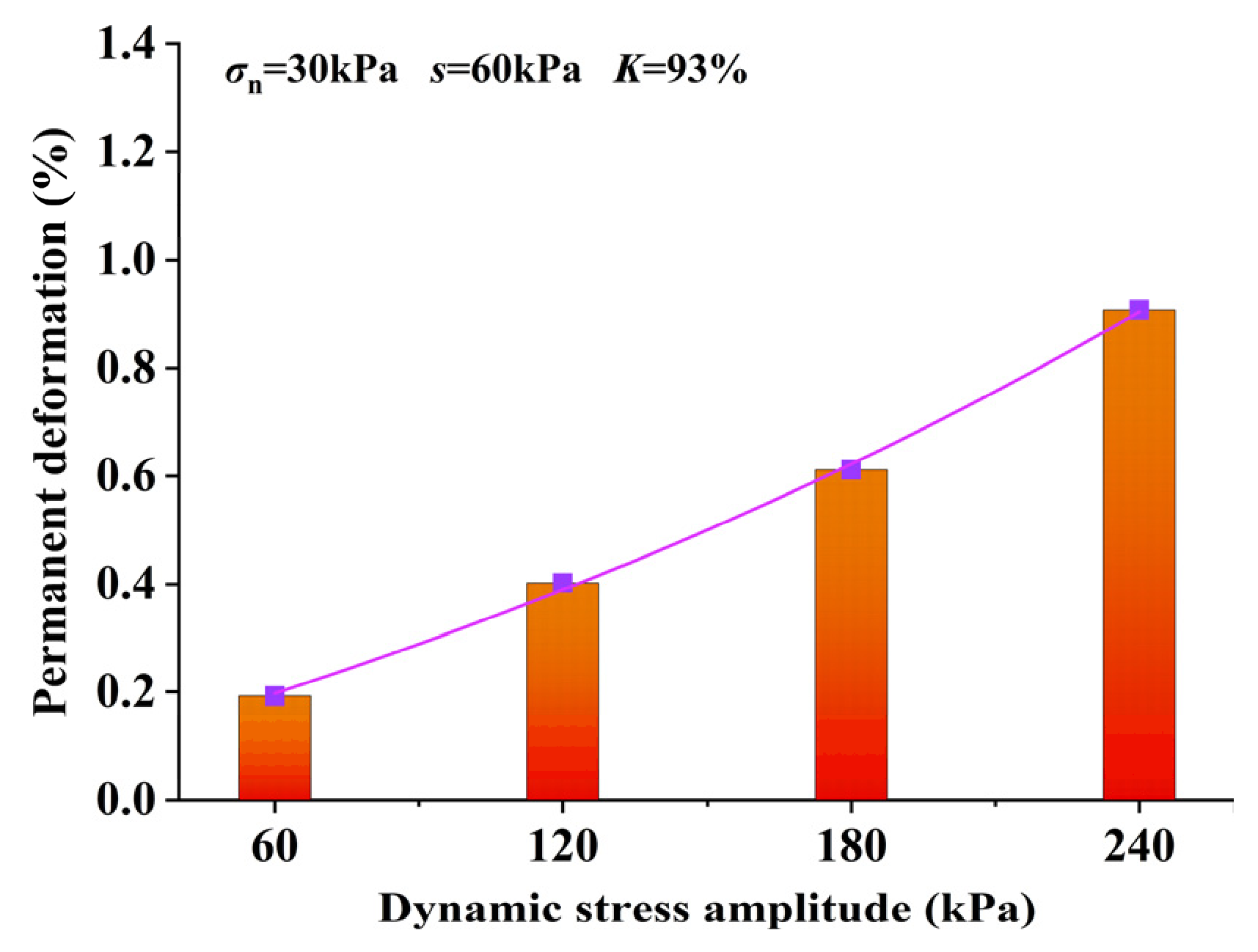
Under the conditions of a net confining pressure of 30 kPa, a matric suction of 60 kPa, and a degree of compaction of 93%, the permanent deformation curves of the sandy subgrade fill obtained from the dynamic triaxial tests are presented in Figure 9. The variation in permanent deformation with dynamic stress amplitude is illustrated in Figure 10.
As shown in Figure 9, the permanent deformation of the soil specimen increases with increasing dynamic stress amplitude. Under dynamic stress amplitudes of 60 kPa, 120 kPa, and 180 kPa, the permanent deformation ceases to increase after approximately 2000 loading cycles, indicating that the specimens enter a stabilized (shakedown) state. However, when the dynamic stress amplitude increases to 240 kPa, the permanent deformation continues to accumulate with the number of loading cycles, exhibiting characteristics of plastic creep. This behavior can be explained by the fact that, at relatively low dynamic stress amplitudes, the interparticle bonds and contact structure are largely preserved, and the deformation is predominantly recoverable elastic deformation. In contrast, at higher dynamic stress amplitudes, interparticle contacts are progressively damaged, and the soil skeleton fails to establish a stable load-bearing structure, resulting in continuous accumulation of permanent deformation during cyclic loading. Similar observations have been reported by Showkat R. et al. [25] and Cui et al. [26] in triaxial tests on sandy soils. As illustrated in Figure 10, compared with the case of a 60 kPa dynamic stress amplitude, the permanent deformation increases by 108%, 217%, and 371% under dynamic stress amplitudes of 120 kPa, 180 kPa, and 240 kPa, respectively. It is evident that the permanent deformation of sandy soil increases exponentially with dynamic stress amplitude. This trend can be attributed to the substantial rise in internal stress levels caused by higher dynamic stress amplitudes, bringing the soil state closer to the critical shakedown threshold and leading to a pronounced reduction in deformation resistance. Consequently, cumulative plastic strain exhibits a nonlinear, exponentially accelerated growth pattern. Similar conclusions were drawn by Rahman et al. [27] in their study on the permanent deformation of coarse-grained subgrade soils.

3.3. Effect of Matric Suction on Permanent Deformation

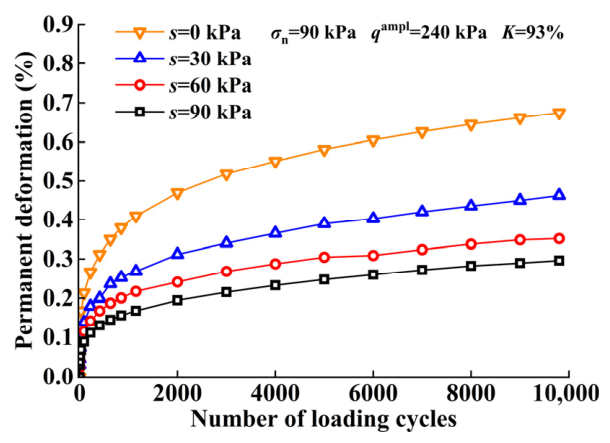
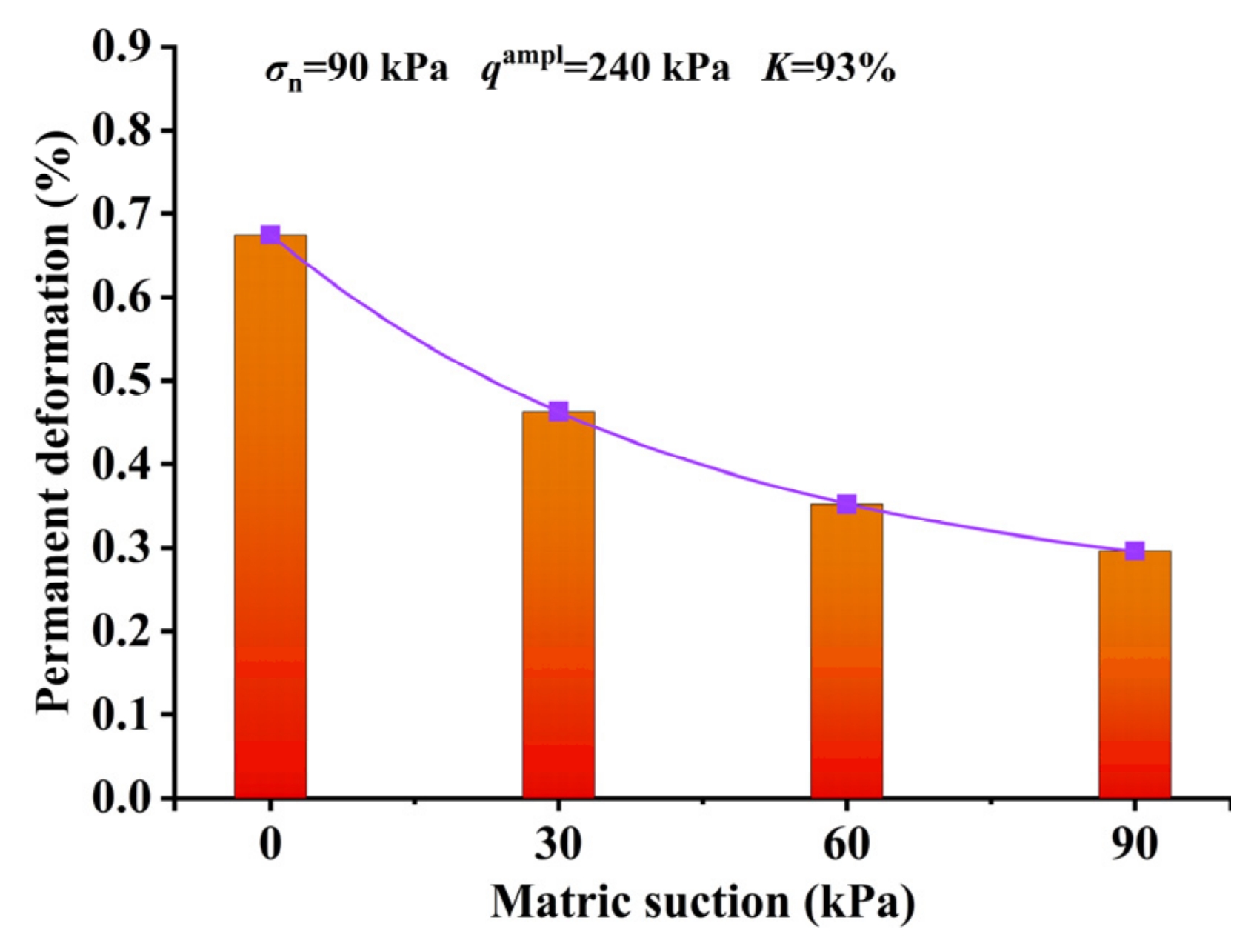
Under the conditions of a net confining pressure of 90 kPa, a dynamic stress amplitude of 240 kPa, and a degree of compaction of 93%, the effect of matric suction on the permanent deformation behavior of sandy subgrade soil was investigated. The corresponding test curves are presented in Figure 11. The variation in permanent deformation with matric suction is shown in Figure 12.
As shown in Figure 11, the permanent deformation of unsaturated sandy soil decreases with increasing matric suction. This behavior is primarily attributed to the enhancement of interparticle interlocking and bonding induced by higher matric suction, which increases the effective stress and restricts particle rearrangement and relative displacement. Similar observations were reported by Guo et al. [28] in their study on the mechanical properties of unsaturated clay. Furthermore, Figure 12 indicates that permanent deformation exhibits an exponential attenuation trend with increasing matric suction, and the incremental influence of suction gradually diminishes. Specifically, when matric suction increases from 0 kPa to 30 kPa, the permanent deformation decreases by 31.4%, whereas an increase from 60 kPa to 90 kPa results in a reduction of only 15.9%. This is because, at relatively low matric suction levels, capillary action within the soil has not yet been fully developed and the additional constraint between particles remains weak. Therefore, an increase in matric suction can significantly enhance capillary tension and apparent cohesion, thereby effectively restraining particle rearrangement and permanent deformation. In contrast, when matric suction becomes relatively high, the strengthening effect of capillary action has already been largely established, and the improvement brought by further increases in suction gradually diminishes.

3.4. Effect of Degree of Compaction on Permanent Deformation

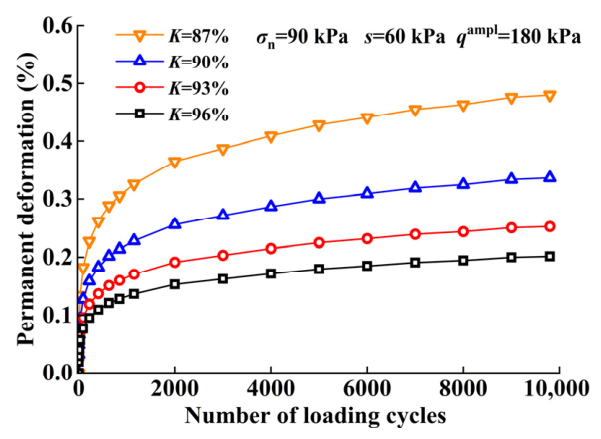
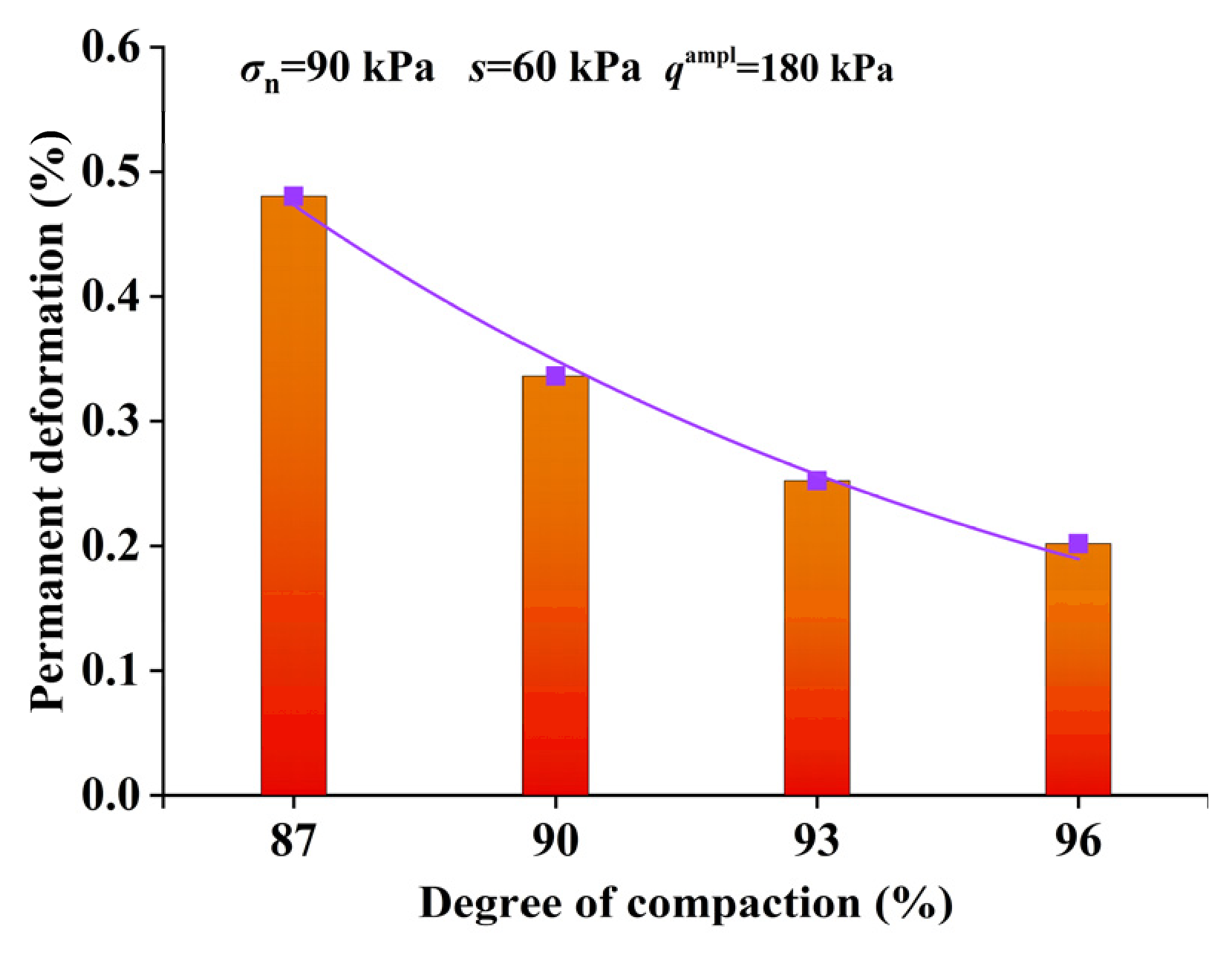
Under the conditions of a dynamic stress amplitude of 180 kPa, a net confining pressure of 90 kPa, and a matric suction of 60 kPa, the permanent deformation curves of the sandy subgrade fill obtained from the dynamic triaxial tests are presented in Figure 13. The variation in permanent deformation with degree of compaction is illustrated in Figure 14.
As shown in Figure 13, the permanent deformation of the sandy subgrade fill decreases significantly with increasing degree of compaction. At a compaction degree of 87%, the specimen exhibits relatively large cumulative deformation even at the early stage of cyclic loading. When the degree of compaction increases to 90% and 93%, the level of permanent deformation is markedly reduced. As the compaction degree is further increased to 96%, the specimen maintains a consistently low cumulative deformation throughout the entire cyclic loading process, demonstrating strong resistance to deformation. This behavior can be explained by the fact that specimens with low compaction degrees possess larger void ratios and looser structures. Under repeated cyclic shear stresses, soil particles are more prone to rearrangement and localized structural damage, leading to rapid accumulation of permanent deformation. In contrast, increasing the degree of compaction reduces the void ratio, increases the number of particle contacts, and promotes a transition from point contacts to surface contacts, thereby forming a more stable and dense particle skeleton structure. Consequently, the development of cumulative plastic deformation becomes increasingly restrained. Figure 14 further indicates that permanent deformation exhibits a pronounced nonlinear attenuation trend with increasing degree of compaction. When the compaction degree increases from 87% to 90%, permanent deformation decreases by 28.6%. A further increase from 90% to 93% results in an additional reduction of 21.3%. However, when the compaction degree increases to 96%, permanent deformation decreases by only approximately 11.5%. These results suggest that enhancing compaction within the low-compaction range has a significant effect on suppressing permanent deformation, whereas the incremental benefit gradually diminishes in the high-compaction range. This is mainly because, within the relatively low compaction range, the soil is characterized by larger pores and a looser structure, making particle rearrangement under cyclic loading more likely. Therefore, an increase in the degree of compaction can significantly reduce the void ratio, enhance particle interlocking, and improve the stability of the soil skeleton, thereby markedly reducing permanent deformation. In contrast, when the degree of compaction is already high, the soil becomes relatively dense, and the structural improvement achieved by further compaction is limited; consequently, its influence gradually diminishes. Similar findings were reported by Qi et al. [29] in their study on compacted clay.

4. Model Development and Validation

Under long-term cyclic loading, the cumulative axial deformation of subgrades is one of the key indicators affecting pavement service performance and operational safety. Establishing a reliable prediction model provides a quantitative approach for estimating subgrade deformation and offers a scientific basis for the selection of design parameters, construction control, and post-construction monitoring and early warning. Therefore, research on prediction models for permanent subgrade deformation is of considerable theoretical significance and practical engineering importance.

4.1. Model Development

Extensive efforts have been made by researchers worldwide to develop prediction models for subgrade deformation. However, most existing models are primarily applicable to cumulative deformation under a relatively small number of loading cycles and therefore cannot accurately predict the permanent deformation of subgrade fills subjected to tens of thousands of load repetitions. In addition, many models involve numerous parameters that are difficult to determine in practice. The model proposed by Karg et al. [30], based on an explicit calculation scheme, has demonstrated good capability in predicting the long-term deformation behavior of soils under traffic loading, and its parameters are relatively straightforward to identify. Nevertheless, this model is mainly applicable to saturated soils and does not account for the influence of compaction degree on permanent subgrade deformation. Accordingly, the Karg model is improved in this study by incorporating influence factors associated with matric suction and degree of compaction, and the model parameters are calibrated using dynamic triaxial test results. The improved model simultaneously considers the effects of net confining pressure \sigma_n, dynamic stress amplitude qampl matric suction s, and degree of compaction Kon cumulative axial strain.
Based on the Karg model, the cumulative axial strain as a function of the number of loading cycles N can be expressed as Equation (1):
ε 1 acc = c 1 ln ( 1 + c 2 N ) + c 3 N
where c 1 l n ( 1 + c 2 N ) denotes the rapidly increasing but gradually decelerating component of deviatoric strain accumulation during the initial stage of cyclic loading, arising from particle rearrangement and structural adjustment; c 3 N denotes the stable linear component of strain accumulation that develops at an approximately constant rate during long-term cyclic loading after the initial adjustment stage; c 1 ,   c 2 , and c 3 are constant parameters; ε a denotes the axial strain; and N is the number of loading cycles.
Taking the derivative of both sides of Equation (1) with respect to the number of loading cycles N, one obtains:
d ε 1 acc d N = c 1 c 2 1 + c 2 N + c 3
Considering that the plastic deformation in the stabilized stage is much smaller than the compressive deformation at the initial stage of the test, Karg et al. neglected the c 3 N term in Equation (1), yielding:
ε 1 acc c 1 ln ( 1 + c 2 N )
By combining Equations (2) and (3) and eliminating the number of loading cycles N, the cumulative axial strain rate can be expressed as follows:
d ε 1 a c c d N = c 1 c 2 exp ε 1 a c c c 1 + c 3
Equation (4) can be further simplified as follows:
d ε 1 acc d N = α f exp ( θ f ε 1 acc ) + β f
where αf = c1c2 and θf = 1/c1 are parameters describing the cumulative axial strain rate at the initial stage, and βf = c3 is a parameter characterizing the cumulative axial strain rate during the stabilized deformation stage.
Assuming that the ratio of the plastic deformation curves of the soil under two different stress states, ( σ n , q ampl , s , K ) and ( σ n 0 , q 0 ampl , s 0 , K 0 ) , remains constant [31,32], the cumulative axial strain of the soil can be expressed as a function of the reference cumulative axial strain as follows:
ε 1 a c c ( N , σ n , q ampl , s , K ) = f σ f q f s f K ε 0 a c c ( N , σ n 0 , q 0 ampl , s 0 , K 0 )
where σ n 0 , q 0 ampl , s 0 , K 0 are the reference values of parameters σ n , q ampl , s , K , respectively, and ε 0 acc denotes the cumulative axial strain under stress state ( σ n 0 , q 0 ampl , s 0 , K 0 ) . The function fσ is expressed as a function of the net confining pressure σ n to account for the influence of mean stress; f q is a function of the dynamic stress amplitude qampl to reflect the effect of cyclic stress level; f s is a function of matric suction s to incorporate suction effects; and f K is a function of the degree of compaction K to represent the influence of compaction.
Based on the experimental curves, the cumulative axial deformation decreases exponentially with increasing net confining pressure, matric suction, and degree of compaction, whereas it increases exponentially with increasing dynamic stress amplitude. Therefore, the influence functions incorporating the effects of net confining pressure, dynamic stress amplitude, matric suction, and degree of compaction can be expressed as follows:
f σ = exp a ( σ n / σ nref 1 )
f q = ( q ampl / q ref ampl ) b
f s = m exp ( s / s ref ) + n
f K = k 1 exp k 2 ( 1 K K ref )
where σ n r e f is the reference net confining pressure, q ref ampl is the reference dynamic stress amplitude, s r e f is the reference matric suction, and K r e f is the reference degree of compaction. The parameters a , b , m , n , k 1 , and k 2 are model constants to be calibrated.
By differentiating Equation (6), the following expression is obtained:
d ε 1 acc ( N , σ n , q ampl , K ) d N = f σ f q f s f K d ε 0 acc ( N , σ n 0 , q 0 ampl , s 0 , K ) d N
By substituting Equation (5) into Equation (11), the following expression is obtained:
α f exp ( θ f ε 1 acc ( N , σ n , q ampl , s , K ) ) + β f = f σ f q f s f K α f 0 exp ( θ f 0 ε 0 acc ( N , σ n 0 , q 0 ampl , s 0 , K 0 ) ) + f σ f q f s f K β f 0
where α f 0 , β f 0 , and θ f 0 are constants associated with cumulative axial deformation.
By substituting Equation (6) into Equation (12), the following expression is obtained:
α f exp ( θ f ε 1 acc ( N , σ n , q ampl , s , K ) ) + β f = f σ f q f s f K α f 0 exp ( θ f 0 ε 1 acc ( N , σ n , q ampl , s , K ) / f σ f q f s f K ) + f σ f q f s f K β f 0
By equating the corresponding terms on both sides of Equation (13), the following relationships can be obtained:
α f = α f 0 f σ f q f s f K
β f = β f 0 f σ f q f s f K
θ f = θ f 0 f σ f q f s f K
By integrating Equation (12) with respect to the number of loading cycles N, the following expression can be obtained:
ε 1 acc = 1 θ f ln exp ( θ f β f N ) α f β f + exp ( θ f ε 0 acc ( N , σ n 0 , q 0 ampl , s 0 , K 0 ) α f β f

4.2. Model Parameter Calibration

4.2.1. Normalization of Net Confining Pressure

To analyze the influence of net confining pressure on cumulative deformation and to determine parameter a in the net confining pressure factor f σ , Tests A1, A2, A3, and A4 were selected for calibration. In this process, f q , f s , and f K were kept constant, and only f σ was allowed to vary. A reference strain ε r e f , which depends solely on the number of loading cycles N , was defined. Here, f N denotes the function describing the effect of loading cycles. The corresponding expression is given as follows:
ε ref 1 acc = f s f q f K f ˙ N d N
Therefore, the cumulative axial strain can be written as follows:
ε 1 acc = f σ ε ref 1 acc
By substituting Equation (7) into Equation (19), the following expression is obtained:
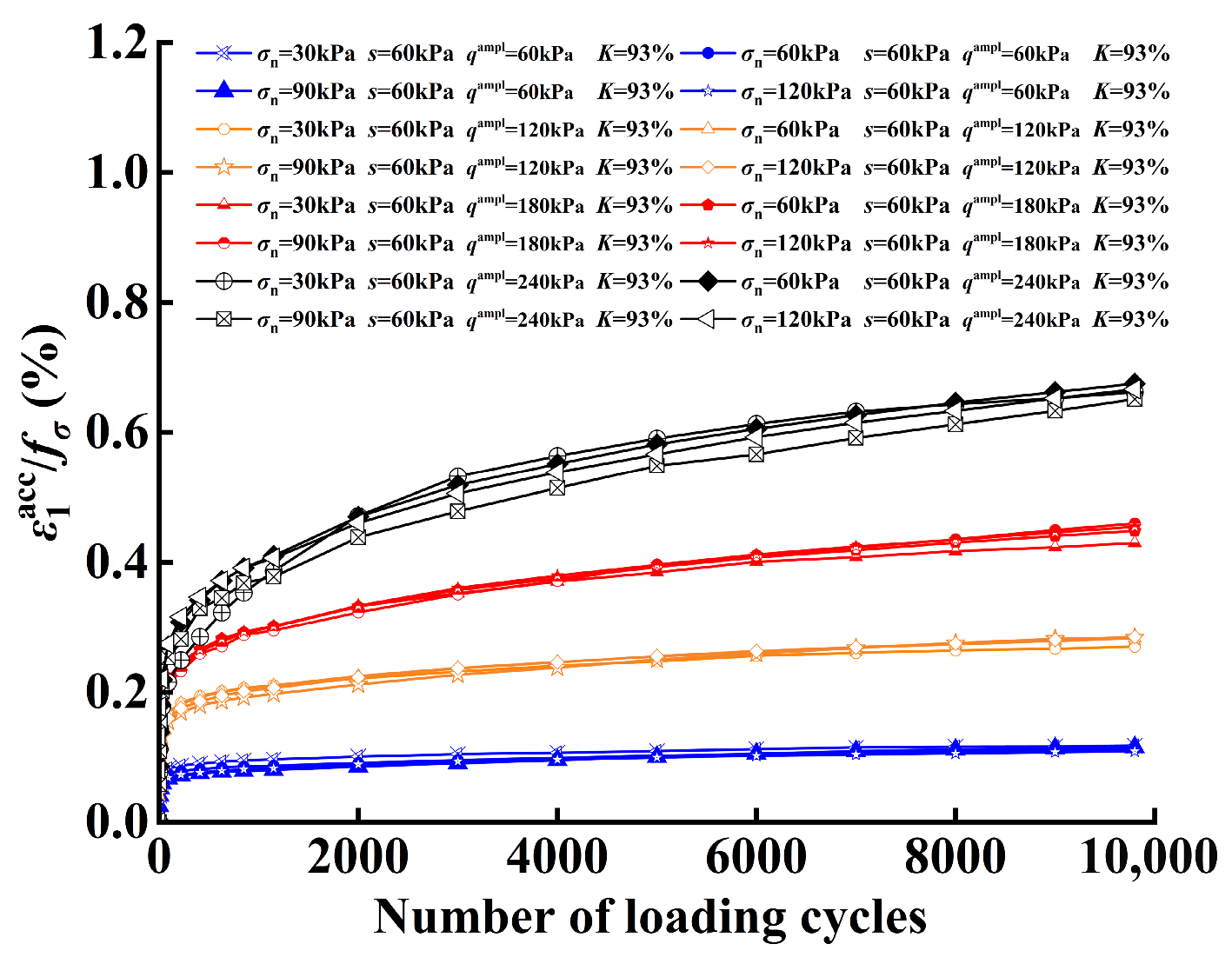
ε 1 acc / ε ref 1 acc = exp a ( σ n / σ nref 1 )
By fitting the data from experiments A1, A2, A3, and A4 with Equation (20), we obtained the parameter a = 1.4126. The normalized cumulative deformation curves evolving with the number of loading cycles, ε 1 acc / f σ , are plotted in Figure 15. As shown in Figure 15, under the same matric suction, dynamic stress amplitude, and degree of compaction, the cumulative deformation curves corresponding to different net confining pressures exhibit a high degree of overlap. This confirms the rationality of the calibrated value of parameter a .

4.2.2. Normalization of Dynamic Stress Amplitude

To analyze the influence of dynamic stress amplitude on cumulative deformation and to determine parameter b in the dynamic stress amplitude factor f q , Tests A3, B1, B2, and B3 were selected for calibration. In this procedure, f σ , f s , and f K were kept constant, and only f q was allowed to vary. A reference strain ε ref 2 acc was defined herein, and its expression is given as follows:
ε ref 2 acc = f σ f s f K f ˙ N d N
Therefore, the cumulative axial strain can be expressed as follows:
ε 1 acc = f q ε ref 2 acc
By substituting Equation (8) into Equation (22), the following expression can be obtained:
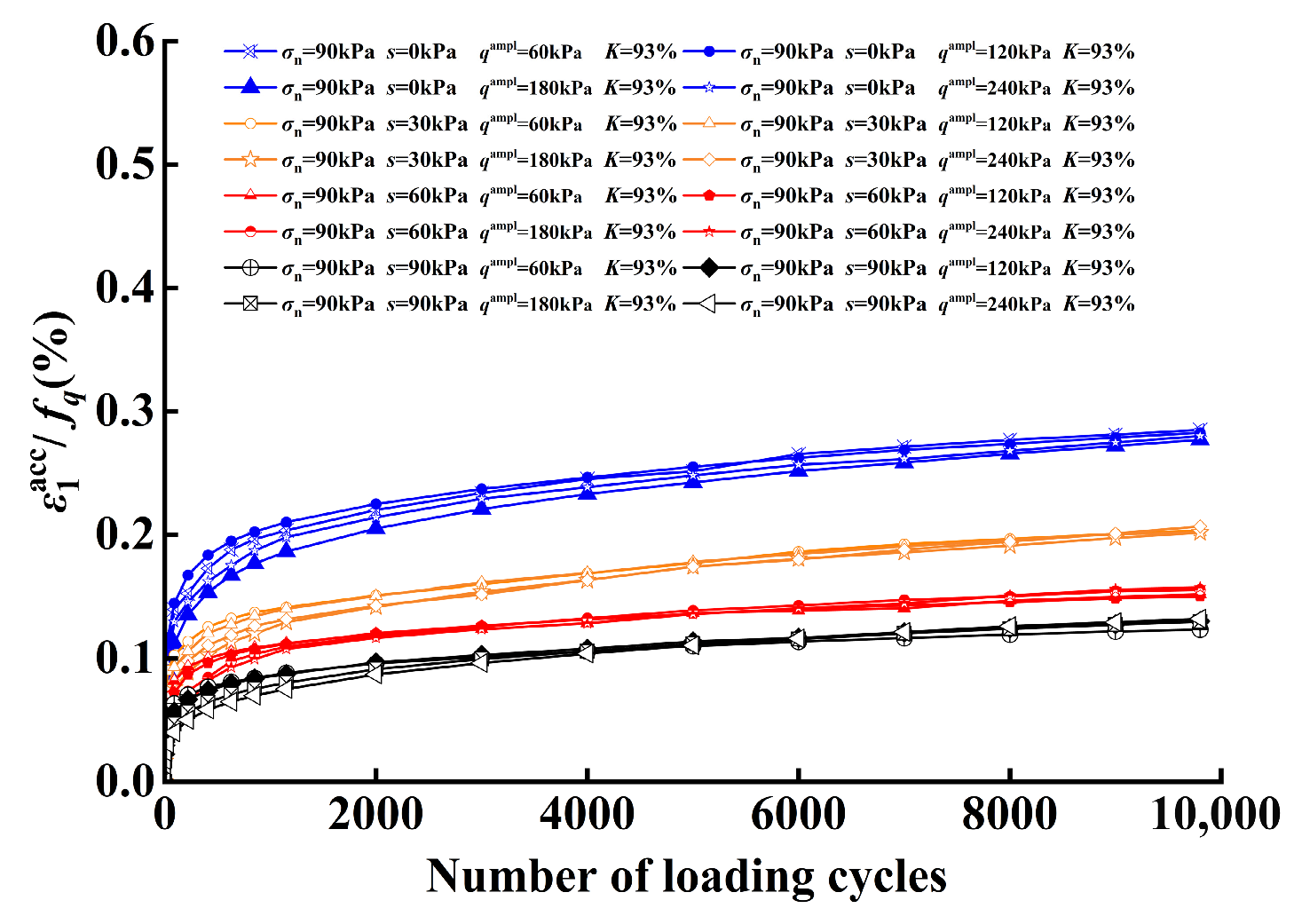
ε 1 acc / ε ref 2 acc = q ampl / q ref ampl b
By fitting the data from Tests A3, B1, B2, and B3 using Equation (23), parameter b = 1.24. The normalized cumulative deformation curves evolving with the number of loading cycles, ε 1 acc / f q , are presented in Figure 16. Under identical net confining pressure, matric suction, and degree of compaction, the cumulative deformation curves corresponding to different dynamic stress amplitudes exhibit a high degree of overlap after normalization. This confirms the rationality of the calibrated value of parameter b .

4.2.3. Normalization of Matric Suction

To analyze the effect of matric suction on cumulative deformation and to determine parameters m and n in the matric suction factor f s , Tests A3, B1, B2, and B3 were selected for calibration. In this procedure, f q , f σ , and f K were kept constant, and only f s was allowed to vary. A reference strain ε ref 3 acc was defined, and its expression is given as follows:
ε ref 3 acc = f σ f q f K f ˙ N d N
Therefore, the cumulative axial strain can be expressed as follows:
ε 1 acc = f s ε ref 3 acc
By substituting Equation (9) into Equation (25), the following expression is obtained:
ε 1 acc = f s ε ref 3 acc
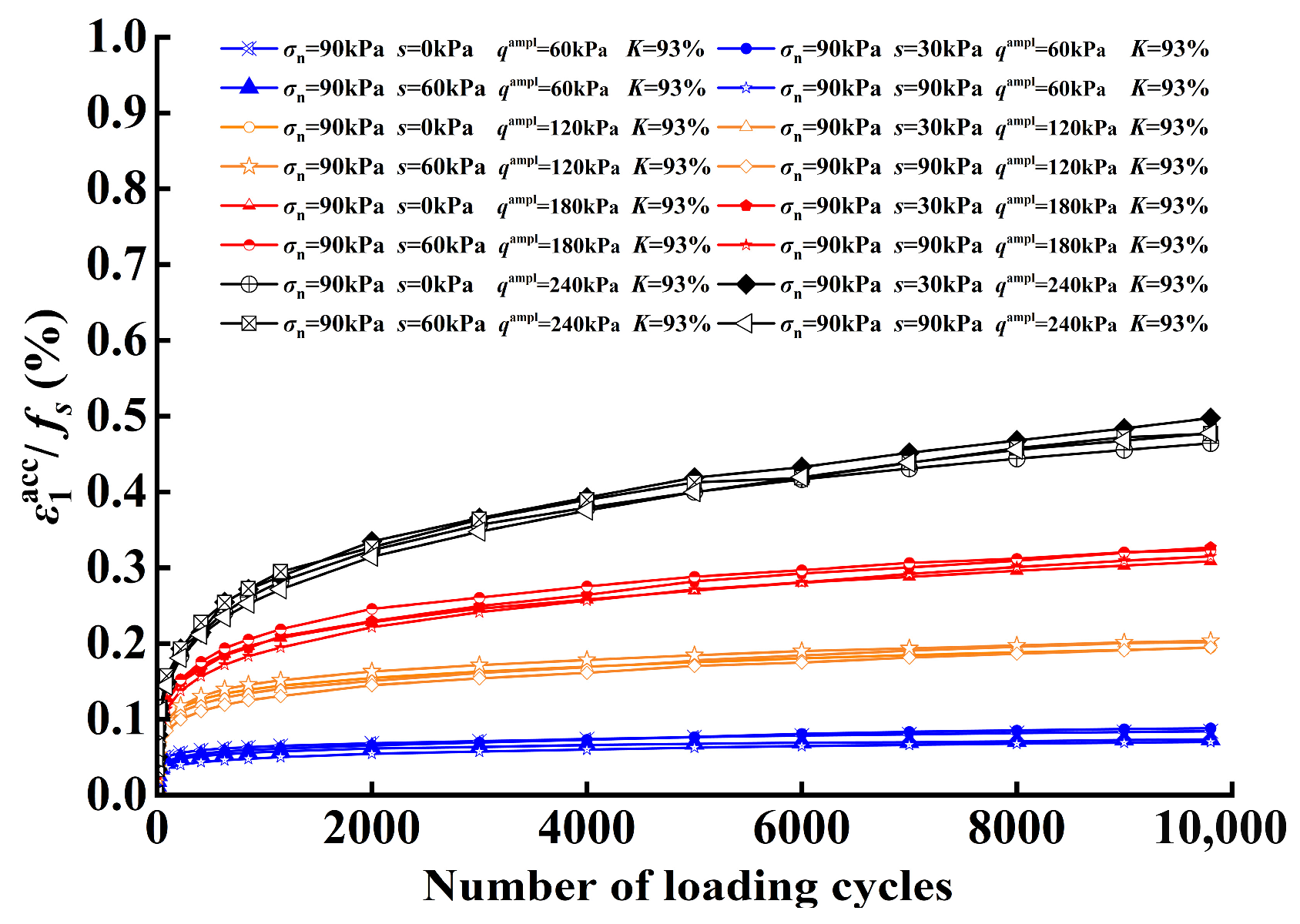
By fitting the data from Tests A3, B1, B2, and B3 using Equation (26), the parameters were determined as m = 0.8277 and n = 0.6262 . The normalized cumulative deformation curves evolving with the number of loading cycles, ε 1 acc / f s , are plotted in Figure 17. As shown in Figure 17, under the same net confining pressure, dynamic stress amplitude, and degree of compaction, the cumulative deformation curves corresponding to different matric suctions exhibit a high degree of overlap after normalization. This confirms the rationality of the calibrated values of m and n .

4.2.4. Normalization of Degree of Compaction

To analyze the influence of degree of compaction on cumulative deformation and to determine parameters k 1 and k 2 in the compaction factor f K , Tests A3, C1, C2, and C3 were selected for calibration. In this procedure, f s , f q , and f σ were kept constant, and only f K was allowed to vary. A reference strain ε ref 4 acc was defined, and its expression is given as follows:
ε ref 4 acc = f s f σ f q f ˙ N d N
Therefore, the cumulative axial strain can be expressed as follows:
ε 1 acc = f K ε ref 4 acc
By substituting Equation (10) into Equation (28), the following expression is obtained:
ε 1 acc / ε ref 4 acc = k 1 exp k 2 ( 1 K K ref )
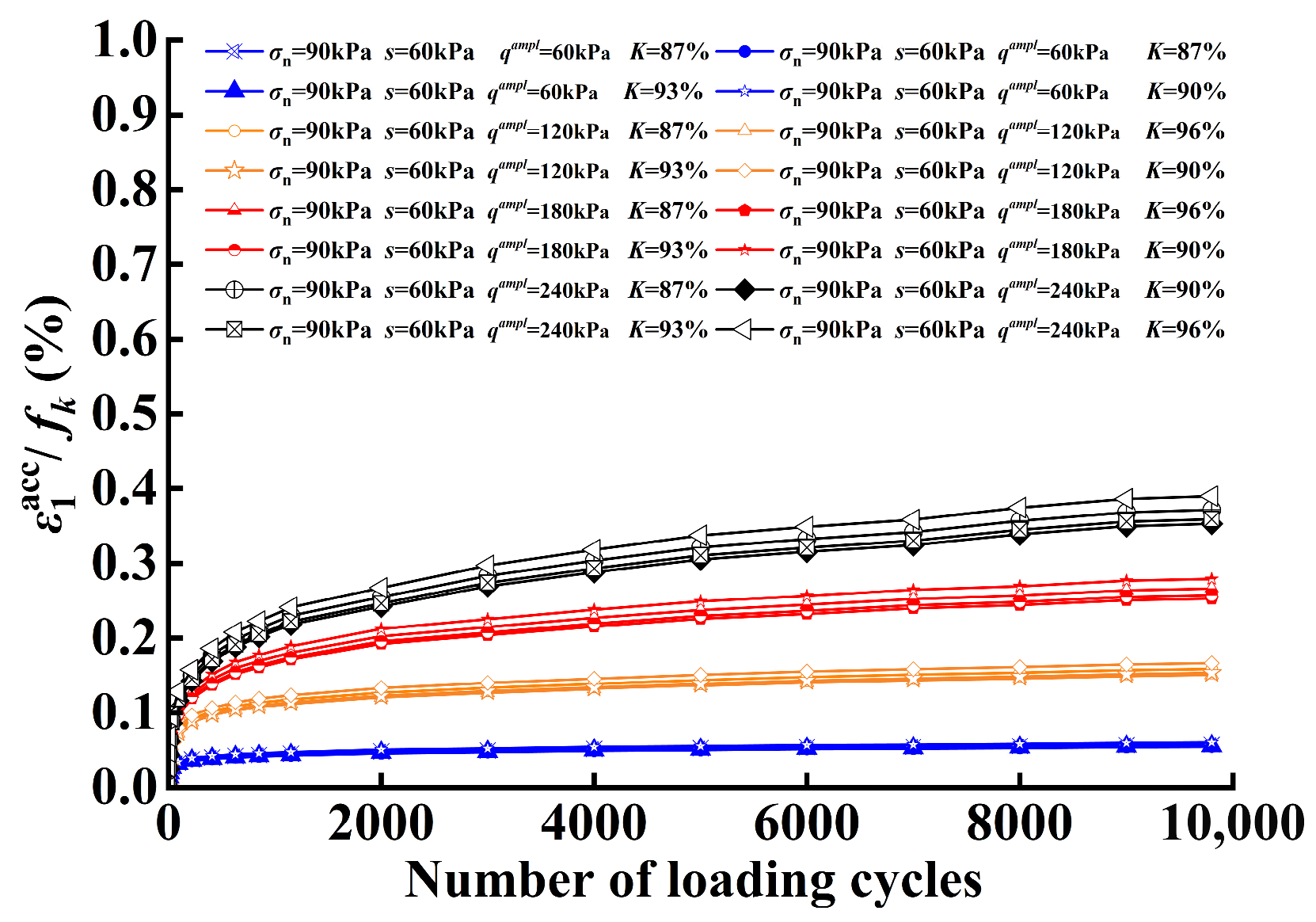
By fitting the data from Tests A3, C1, C2, and C3 using Equation (29), the parameters were determined as k 1 = 1.0197 and k 2 = 9.4552 . The normalized cumulative deformation curves evolving with the number of loading cycles, ε 1 a c c / f K , are plotted in Figure 18. As shown in Figure 18, under the same dynamic stress amplitude, net confining pressure, and matric suction, the cumulative deformation curves corresponding to different degrees of compaction exhibit a high degree of overlap after normalization. This confirms the rationality of the calibrated values of k 1 and k 2 .

4.2.5. Calibration of Model Parameters

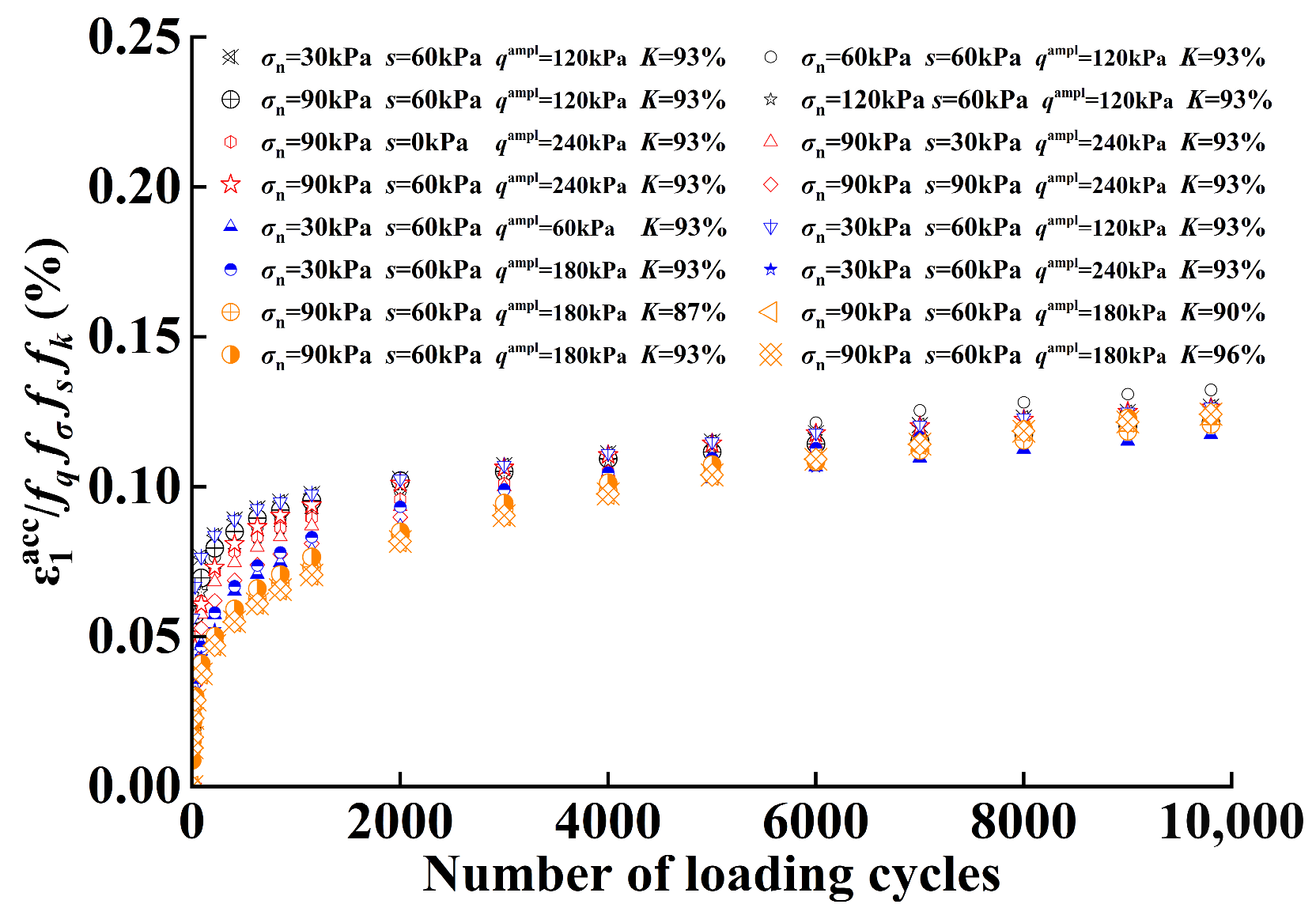
By dividing the experimental data from Tests A1, A2, A3, A4, B1, B2, B3, C1, C2, and C3 by the previously normalized factors f q , f σ , f s , and f K , the cumulative strain ε 1 acc / f σ f q f s f K , which depends solely on the number of loading cycles, can be obtained, as shown in Figure 19. According to Equation (6), the reference cumulative axial strain ε 1 acc ( N , σ 0 , q 0 ampl , s 0 , K 0 ) can be expressed as:
ε 1 a c c ( N , σ 0 , q 0 ampl , s 0 , K 0 ) = ε 1 a c c ( N , σ , q ampl , s , K ) / f σ f q f s f K
Accordingly, the scattered data shown in Figure 19 represent the reference cumulative axial strain ε 1 acc ( N , σ 0 , q 0 ampl , s 0 , K 0 ) . By fitting the data points in Figure 19 using Equation (1), the parameters were obtained as c 1 = 0.0235 , c 2 = 5.6423 , and c 2 = 2.7914 × 10 6 . Based on these results, the corresponding model parameters were calculated as α f 0 = 0.1324 , β f 0 = 2.7914 × 10 6 , and θ f 0 = 42.6076 . By substituting Equations (14)–(16) into Equation (17), the permanent deformation of the subgrade under different net confining pressures, dynamic stress amplitudes, matric suctions, and degrees of compaction can be predicted.
The proposed model explicitly couples four key factors—net confining pressure σ n , dynamic stress amplitude qampl, matric suction s , and degree of compaction K . The model parameters possess clear physical interpretations and can be rapidly determined through conventional dynamic triaxial tests, thereby avoiding overfitting and ensuring extrapolation stability. By normalizing the cumulative strain curves obtained under different testing conditions onto a unified master curve, the dimensional and scale effects induced by variations in stress level, suction, state variables, and soil type are effectively eliminated. As a result, a single set of calibrated parameters can be applied across different soil conditions, enhancing the general applicability and robustness of the model.

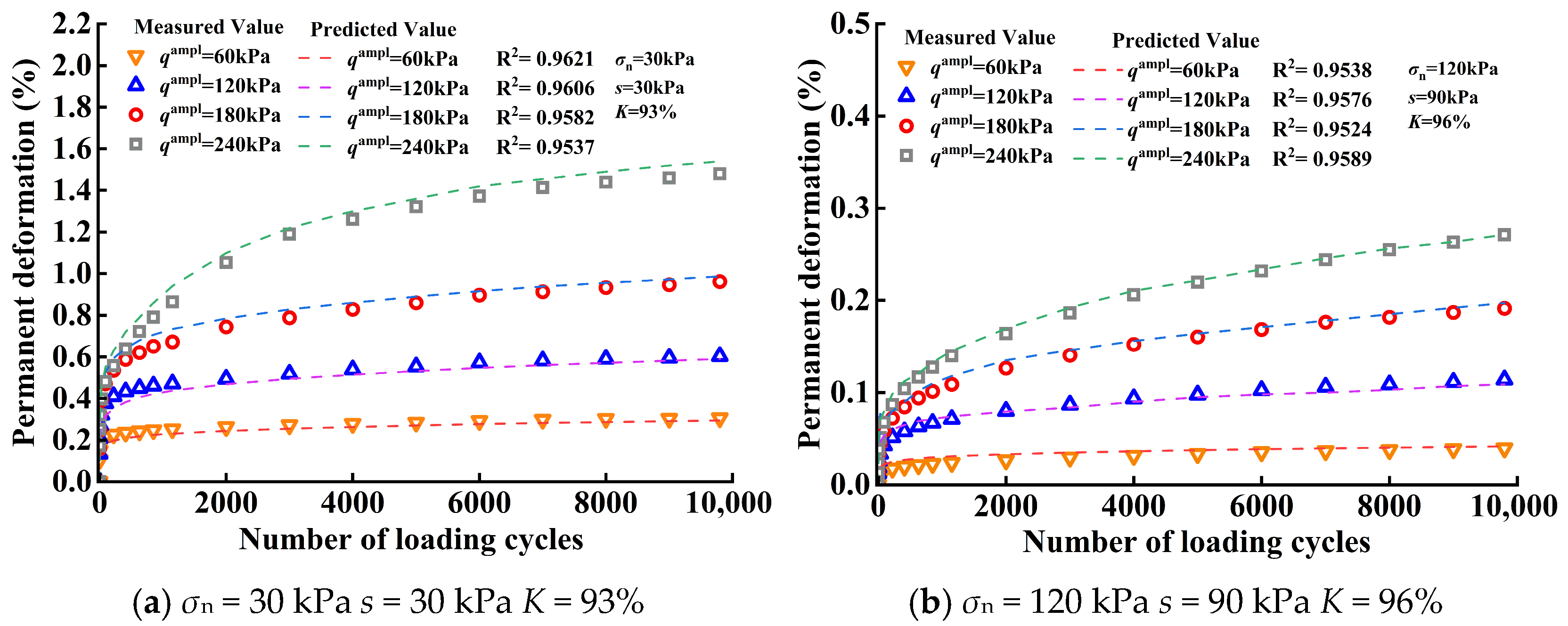
4.3. Model Validation

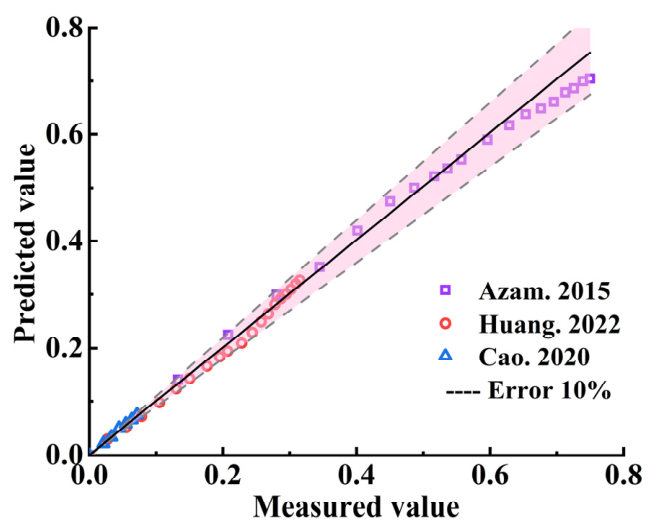
To verify the accuracy and applicability of the proposed permanent deformation prediction model, the test data of Y1 and Y2 in Table 2 were first used to evaluate its predictive accuracy, and the comparison between the measured and predicted values is shown in Figure 20. Furthermore, the experimental data reported by Azam et al. [33], Huang et al. [34], and Cao et al. [35] on coarse-grained subgrade materials were used to further assess the applicability of the proposed model. The corresponding test results are summarized in Table 3, and the comparison between the measured and predicted values is presented in Figure 21.
As shown in Figure 20, the proposed prediction model can effectively capture the permanent deformation curves under varying net confining pressures, dynamic stress amplitudes, matric suctions, and degrees of compaction. The predicted results exhibit strong agreement with the experimental data not only during the rapid accumulation stage within the first 2000 loading cycles, but also throughout the subsequent gradual and stabilized stages. Compared with conventional cumulative deformation models based on incremental cycle-by-cycle integration, the improved model proposed herein does not require integration over each individual loading cycle. Instead, a large number of cycles are equivalently represented by a limited number of computational steps. This approach reduces cumulative numerical errors while significantly improving computational efficiency. To further evaluate the applicability of the model under different conditions, additional experimental data reported in the literature were selected for comparative analysis. As illustrated in Figure 21, the model maintains excellent predictive performance when applied to independent literature datasets, further demonstrating its robustness and high accuracy across different soil types and loading conditions. By normalizing cumulative strain curves obtained under different stress–suction–compaction combinations onto a unified master curve, the dimensional and scale effects induced by variations in stress level, suction, state variables, and soil type are effectively eliminated. Consequently, a single set of calibrated parameters can be seamlessly transferred to external datasets. The improved Karg model, grounded in the intrinsic stress–suction–compaction–deformation relationship, achieves a theoretical extension from specific sandy soils to general subgrade fill materials. It provides a unified, concise, and accurate computational framework for long-term settlement prediction of subgrades under diverse regional and soil conditions.

4.4. Engineering Implications and Limitations

The proposed model can be used to predict the long-term permanent deformation of unsaturated sandy subgrade fill under different net confining pressures, dynamic stress amplitudes, matric suctions, and degrees of compaction, thereby providing quantitative support for subgrade material selection, compaction control, and long-term deformation assessment in pavement and subgrade design. Since the model parameters can be obtained from conventional dynamic triaxial tests, it has the potential to be incorporated into existing design and evaluation procedures as a supplementary tool for performance-based analysis. However, the model is currently established based on laboratory tests on unsaturated sandy subgrade fill under a specific stress range, suction range, compaction range, and low-frequency half-sine cyclic loading condition. Its application to other soil types may therefore be limited, since differences in particle composition, pore structure, and hydro-mechanical behavior may lead to different permanent deformation mechanisms and require recalibration of model parameters.

5. Conclusions

This study employed the GDS dynamic triaxial testing system to investigate the permanent deformation characteristics of unsaturated sandy subgrade fill. Permanent deformation curves under varying net confining pressures, dynamic stress amplitudes, matric suctions, and degrees of compaction were obtained. The influences of these four factors on the permanent deformation behavior of unsaturated sandy subgrade fill were systematically analyzed. Based on these findings, a prediction model for permanent deformation was established and subsequently validated. The main conclusions are summarized as follows:
(1)
The permanent deformation of unsaturated sandy subgrade fill exhibits a three-stage evolution pattern with increasing loading cycles, characterized by rapid accumulation, gradual growth, and eventual stabilization. After approximately 2000 loading cycles, the deformation rate decreases significantly and tends toward stabilization. The permanent deformation shows an exponential negative correlation with net confining pressure, matric suction, and degree of compaction, and an exponential positive correlation with dynamic stress amplitude. Moreover, the restraining or promoting effects of each factor gradually diminish as its magnitude increases.
(2)
Net confining pressure, matric suction, and degree of compaction demonstrate more pronounced inhibitory effects on permanent deformation within their lower value ranges. When the degree of compaction increases from 87% to 90%, permanent deformation decreases by 28.6%. Similarly, when matric suction increases from 0 kPa to 30 kPa, permanent deformation decreases by 31.4%, and when net confining pressure increases from 30 kPa to 60 kPa, the reduction reaches 48.9%. However, when these factors are already at relatively high levels, further increases result in progressively smaller reductions in deformation.
(3)
Within the Karg model framework, matric suction and degree of compaction influence factors are introduced for the first time, leading to the development of a permanent deformation prediction model that simultaneously couples net confining pressure, dynamic stress amplitude, matric suction, and degree of compaction. By applying a normalization approach, cumulative strain curves obtained under different conditions are unified into a master curve with parameters possessing clear physical meanings, enabling a unified description across different stress levels, suction states, soil states, and soil types. Validation against both experimental and literature data demonstrates that the long-term deformation prediction error is less than 10%, with R2 > 0.95. The model maintains high accuracy without requiring cycle-by-cycle integration, thereby providing a concise, reliable, and transferable theoretical tool for long-term subgrade design and performance evaluation.
This study investigated the effects of net confining pressure, dynamic stress amplitude, matric suction, and degree of compaction on the permanent deformation behavior of unsaturated sandy subgrade fill. Future research may further incorporate the coupled influences of particle gradation and loading frequency to enhance the general applicability and predictive capability of the proposed model. Such efforts would provide more comprehensive theoretical support for the dynamic response analysis of unsaturated soils under complex environmental conditions.

Author Contributions

H.Y.: Writing—original draft, Methodology, Investigation. C.Z.: Funding acquisition, Formal analysis. J.L.: Writing—review and editing. All authors have read and agreed to the published version of the manuscript.

Funding

This work was supported by the National Natural Science Foundation of China Young Scientists Fund Project (Grant No. 52408463), the Hunan Provincial Natural Science Foundation of China (Grant No. 2026JJ60042).

Institutional Review Board Statement

Not applicable.

Informed Consent Statement

Not applicable.

Data Availability Statement

Some or all data, models, or code that support the findings of this study are available from the corresponding author upon reasonable request.

Conflicts of Interest

The authors declare that they have no known competing financial interests or personal relationships that could have appeared to influence the work reported in this paper.

References

  1. Abdollahi, M.; Vahedifard, F. Predicting Resilient Modulus of Unsaturated Subgrade Soils Considering Effects of Water Content, Temperature, and Hydraulic Hysteresis. Int. J. Geomech. 2022, 22, 04021259. [Google Scholar] [CrossRef]
  2. Karumanchi, S.R.; Mandal, A.; Lenart, S. Numerical Evaluation of Suction Effects and Groundwater Table Variations on Long-Term Pavement Subgrade Performance. Sustainability 2024, 16, 9469. [Google Scholar] [CrossRef]
  3. Zhang, B.; Chen, K.; Hu, X.; Zhang, X.; Luo, G.; Chen, R. Deformation Constitutive Model of Subgrade Soil under Intermittent Cyclic Loading. Sci. Rep. 2023, 13, 301. [Google Scholar] [CrossRef] [PubMed]
  4. Liu, J.; Ren, Y.; Zhu, K.; Cai, Y.; Zhang, H.; Jin, J. Dynamic Characteristics of Freezing–Thawing Aeolian Soil under Intermittent Cyclic Loading. Int. J. Geomech. 2023, 23, 04023171. [Google Scholar] [CrossRef]
  5. Cai, G.; Han, B.; Zhou, A.; Li, J.; Zhao, C. Fractional-Order Bounding Surface Model for Unsaturated Soils under Cyclic Loading. Comput. Geotech. 2022, 141, 104529. [Google Scholar] [CrossRef]
  6. Qing, Y.; Qin, X.; Li, Q.; Cui, K.; Guo, S. Development and Numerical Application of an Accumulation Model for Unsaturated Soil under Long-Term Cyclic Loading. Comput. Geotech. 2026, 190, 107712. [Google Scholar] [CrossRef]
  7. Luo, X.; Song, W. Effects of Previous Cyclic Loading History on Subsequent Cyclic Hehaviour of Sand. PLoS ONE 2025, 20, 0331063. [Google Scholar] [CrossRef]
  8. Zhou, P.; Cui, L.; Zhang, X.; Ma, C.; Liu, J.; Shao, Y.; Lv, G.; Xie, Q. Study on Deformation Characteristics of Extended Highway in Operation Period. Adv. Civ. Eng. 2022, 2022, 5496999. [Google Scholar] [CrossRef]
  9. Qi, H.; Zhang, X.; Liu, J.; Zhang, T.; Lv, G.; Cui, L.; Xie, Q. Study on Deformation Characteristics of Low Highway Subgrade under Traffic Load. Appl. Sci. 2022, 12, 3406. [Google Scholar] [CrossRef]
  10. Yue, C.; Liang, K.; Xu, C.; Du, X. Experimental Study on Cyclic Deformation Properties of Saturated Fujian Sand at Different Loading Frequencies. Undergr. Space 2023, 13, 150–165. [Google Scholar] [CrossRef]
  11. Fu, Y.; Cao, Y.; Kong, J.; Zheng, J.; Mu, J.; Wang, J.; Zhuang, J. The Dynamic Characteristics of Saturated Remolded Loess under Cyclic Load. Earthq. Res. Adv. 2024, 4, 100235. [Google Scholar] [CrossRef]
  12. Jin, H.; Huang, Z.; Shi, L.; Guo, L.; Cai, Y. Long-Term Cyclic Deformation of Soft Clay: Invariance Behavior and Its Application to Laterally Loaded Monopile Foundations. J. Geotech. Geoenviron. Eng. 2025, 151, 04025138. [Google Scholar] [CrossRef]
  13. Ma, H.; Que, Y.; Ding, F.; Lu, Z. Research on the Application of Improved Iron Tailings Sand in Highway Subgrade. Transp. Sci. Technol. 2022, 25–29. [Google Scholar] [CrossRef]
  14. Shan, L.; Ju, Z.; Zhou, X.; Xie, G. Engineering Properties and Application of Senegal Natural Sand Soil. Subgrade Eng. 2021, 30–34. [Google Scholar] [CrossRef]
  15. Yin, F.; Cai, G.; Su, Y.; Shan, Z.; Li, J. Experimental Study on Mechanical Properties of Unsaturated Coarse-Grained Soil at Constant Suction. J. Geotech. Eng. 2023, 45, 24–28. [Google Scholar] [CrossRef]
  16. JTG E40-2007; Specifications for Highway Geotechnical Testing. Ministry of Transport of China: Beijing, China; China Communications Press: Beijing, China, 2007.
  17. Wang, K.; Chen, Z.; Wang, Z.; Chen, Q.; Ma, D. Critical Dynamic Stress and Cumulative Plastic Deformation of Calcareous Sand Filler Based on Shakedown Theory. J. Mar. Sci. Eng. 2023, 11, 195. [Google Scholar] [CrossRef]
  18. Nguyen, Q.; Fredlund, D.G.; Samarasekera, L.; Marjerison, B.L. Seasonal Pattern of Matric Suctions in Highway Subgrades. Can. Geotech. J. 2010, 47, 267–280. [Google Scholar] [CrossRef]
  19. Bai, W.; Mu, K.; Kong, L.; Zhang, W.; Yue, X. Dynamic Response and Its Frequency Domain Characteristics of Lateritic Soil Subgrade under Traffic Load during Construction. Adv. Civ. Eng. 2020, 2020, 8899482. [Google Scholar] [CrossRef]
  20. JTG D30-2015; Specifications for Design of Highway Subgrades. China Communications Press: Beijing, China, 2015.
  21. Zhao, Y.; Yu, X.; Tan, Y. Influence of Vehicle Speed on Mechanical Parameters and Responses of Asphalt Pavement. J. Beijing Univ. Technol. 2010, 36, 1253–1257. (In Chinese) [Google Scholar]
  22. Mei, H.; Satvati, S.; Leng, W. Experimental Study on Permanent Deformation Characteristics of Coarse-Grained Soil under Repeated Dynamic Loading. Railw. Eng. Sci. 2021, 29, 94–107. [Google Scholar] [CrossRef]
  23. Huang, J.; Sun, X.; Li, X.; Gao, Y.; Chen, J.; Fu, X.; Liu, S. Deformation Behaviors of Saturated Clay under Intermittent Cyclic Loading with Cyclic Confining Pressure. Int. J. Geomech. 2024, 24, 06024009. [Google Scholar] [CrossRef]
  24. Yang, J.; Cui, Z.; Xi, B.; Song, W. Experimental Study on Cyclic Triaxial Behaviors of Saturated Soft Soil Considering Time Intermittent and Variable Confining Pressure. Soil Dyn. Earthq. Eng. 2024, 179, 108508. [Google Scholar] [CrossRef]
  25. Showkat, R. Evaluation of Dynamic Properties of Unsaturated Soils under Cyclic Loading. Soil Dyn. Earthq. Eng. 2025, 190, 109196. [Google Scholar] [CrossRef]
  26. Cui, K.; Zhang, D.; Li, P.; Li, Q.; Zhang, H.; Qing, Y. Influence of the Initial Static Stress State on the Accumulation Behaviour of a Coarse-Grained Soil under Long-Term Cyclic Loading. Soil Dyn. Earthq. Eng. 2023, 172, 108042. [Google Scholar] [CrossRef]
  27. Rahman, M.M.; Gassman, S.L. Permanent Deformation Characteristics of Coarse-Grained Subgrade Soils Using Repeated Load Triaxial Tests. In Proceedings of the Eighth International Conference on Case Histories in Geotechnical Engineering; ASCE: Reston, VA, USA, 2019; pp. 599–609. [Google Scholar] [CrossRef]
  28. Guo, Y.; Cao, L.; Sang, Z.; Zhang, R.; Huo, P. Strength and Deformation of Unsaturated Soil Contaminated with CH3COOH. Geotech. Geol. Eng. 2024, 42, 4707–4719. [Google Scholar] [CrossRef]
  29. Qi, S.; Ma, W.; Zhang, X.; Wang, J.; Hu, X.; Wei, Z.; Liu, J. Effects of Remolding Water Content and Compaction Degree on the Dynamic Behavior of Compacted Clay Soils. Buildings 2024, 14, 2258. [Google Scholar] [CrossRef]
  30. François, S.; Karg, C.; Haegeman, W.; Degrande, G. A Numerical Model for Foundation Settlements Due to Deformation Accumulation in Granular Soils under Repeated Small Amplitude Dynamic Loading. Int. J. Numer. Anal. Methods Geomech. 2010, 34, 273–296. [Google Scholar] [CrossRef]
  31. Sawicki, A.; Swidzinski, W. Mechanics of a sandy subsoil subjected to cyclic loadings. Int. J. Numer. Anal. Methods Geomech. 1989, 13, 511–529. [Google Scholar] [CrossRef]
  32. Triantafyllidis, T.; Wichtmann, T.; Niemunis, A. Explicit accumulation model for granular materials under multiaxial cyclic loading. In Advances in Scattering and Biomedical Engineering; World Scientific Publishing: Singapore, 2004; pp. 394–405. [Google Scholar] [CrossRef]
  33. Azam, A.M.; Cameron, D.A.; Rahman, M.M. Permanent Strain of Unsaturated Unbound Granular Materials from Construction and Demolition Waste. J. Mater. Civ. Eng. 2015, 27, 04014125. [Google Scholar] [CrossRef]
  34. Huang, C.; Zhang, J.; Zhang, A.; Li, J.; Wang, X.-Y. Permanent Deformation and Prediction Model of Construction and Demolition Waste under Repeated Loading. J. Cent. South Univ. 2022, 29, 1363–1375. [Google Scholar] [CrossRef]
  35. Cao, Z.; Zhang, Q.; Cai, Y.; Chen, J.; Gu, C.; Wang, J. The Effects of Suction History on the Cyclic Behavior of Unsaturated Road Base Filling Materials. Eng. Geol. 2020, 276, 105775. [Google Scholar] [CrossRef]
Figure 1. Particle size distribution. The gradation curve was determined based on data from Ma et al. (2022) [13], Shan et al. (2021) [14], and Yin et al. (2023) [15].
Applsci 16 04086 g001
Figure 2. Test specimen.
Applsci 16 04086 g002
Figure 3. GDS dynamic triaxial test system.
Applsci 16 04086 g003
Figure 4. Two-sphere model.
Applsci 16 04086 g004
Figure 5. Schematic diagram of dynamic loading.
Applsci 16 04086 g005
Figure 6. Test results of permanent deformation under different test conditions.
Applsci 16 04086 g006aApplsci 16 04086 g006b
Figure 7. Permanent deformation curves under different net confining pressure conditions.
Applsci 16 04086 g007
Figure 8. Trend of permanent deformation with varying net confining pressure.
Applsci 16 04086 g008
Figure 9. Permanent deformation curves under different dynamic stress amplitude conditions.
Applsci 16 04086 g009
Figure 10. Trend of permanent deformation with varying dynamic stress amplitude.
Applsci 16 04086 g010
Figure 11. Permanent deformation curves under different matric suction conditions.
Applsci 16 04086 g011
Figure 12. Trend of permanent deformation with varying matric suction.
Applsci 16 04086 g012
Figure 13. Permanent deformation curves under different degrees of compaction conditions.
Applsci 16 04086 g013
Figure 14. Trend of permanent deformation with varying degrees of compaction.
Applsci 16 04086 g014
Figure 15. ε 1 acc / f σ development curve with loading times.
Applsci 16 04086 g015
Figure 16. ε 1 acc / f q development curve with loading times.
Applsci 16 04086 g016
Figure 17. ε 1 acc / f s development curve with loading times.
Applsci 16 04086 g017
Figure 18. ε 1 acc / f K development curve with loading times.
Applsci 16 04086 g018
Figure 19. ε 1 acc / f σ f q f s f K development curve with loading times.
Applsci 16 04086 g019
Figure 20. Measured and predicted values of Y1 and Y2 test data.
Applsci 16 04086 g020
Figure 21. Measured and predicted values of experimental data in the literature. Comparison between predicted and measured values using data from Azam (2019) [33], Huang (2020) [34], and Cao (2021) [35].
Applsci 16 04086 g021
Table 1. Basic physical properties of sandy soil.
PropertiesValue
Optimum moisture content (%)10.3
Liquid limit (%)13.39
Plastic limit (%)8.53
Maximum dry density (g/cm3)2.09
Coefficient of uniformity25
Coefficient of curvature1.96
Table 2. Dynamic triaxial test program for unsaturated sand.
NO.Net Confining Pressure σn (kPa) Matric Suction s (kPa)Confining Pressure σ3 (kPa)Degree of Compaction K (%)Dynamic Stress
Amplitude qampl (kPa)
A130609093%60, 120, 180, 240
A2606012093%60, 120, 180, 240
A3906015093%60, 120, 180, 240
A41206018093%60, 120, 180, 240
B19009093%60, 120, 180, 240
B2903012093%60, 120, 180, 240
B3909018093%60, 120, 180, 240
C1906015087%60, 120, 180, 240
C2906015090%60, 120, 180, 240
C3906015096%60, 120, 180, 240
Y130306093%60, 120, 180, 240
Y21209015096%60, 120, 180, 240
Table 3. Experimental results reported in existing literature.
Source of Referencesσn (kPa)qampl (kPa)s (kPa)K (%)αfβfθfR2
Azam et al. [33]1964605098%0.09632.0301 × 10−658.58540.9628
Huang et al. [34]28285496%0.049831.0504 × 10−6113.23100.9694
Cao et al. [35]40609095%0.04659.8120 × 10−7121.21200.9750
Disclaimer/Publisher’s Note: The statements, opinions and data contained in all publications are solely those of the individual author(s) and contributor(s) and not of MDPI and/or the editor(s). MDPI and/or the editor(s) disclaim responsibility for any injury to people or property resulting from any ideas, methods, instructions or products referred to in the content.