Article

Long-Term Evaluation of One-Piece Versus Two-Piece Zirconia Dental Implants: Retrospective Study Up to 10-Year Follow-Up


1
Dental Clinic, Unit of Fixed and Implant-Prosthodontics, Department of Biomedical, Surgical and Dental Sciences, University of Milan, 20122 Milano, Italy
2
Private Practice, 20142 Milano, Italy
*
Author to whom correspondence should be addressed.
Appl. Sci. 2026, 16(8), 3977; https://doi.org/10.3390/app16083977
Submission received: 12 March 2026 / Revised: 12 April 2026 / Accepted: 17 April 2026 / Published: 19 April 2026
(This article belongs to the Special Issue Advanced Technologies in Oral Surgery—2nd Edition)

Abstract

Objectives: The aim of this retrospective study was to evaluate the long-term clinical and radiographic performance of zirconia dental implants with one-piece and two-piece configurations supporting single-tooth restorations. The primary outcome was implant survival, while the secondary outcome was the assessment of interproximal marginal bone loss (MBL) over time. Materials and methods: A total of 67 implants placed in 55 patients were included, with a mean follow-up of 60.6 months. Forty-five implants were one-piece systems and twenty-two were two-piece systems. All surgical and prosthetic procedures were performed by the same operator, following the manufacturer’s recommendations. Final restorations were delivered three months after implant placement. Marginal bone levels were assessed radiographically at the time of definitive prosthesis delivery (T0) and at the last follow-up examination (T1). Statistical significance level was set at 5% (α = 0.05). Results: The overall implant survival rate was 100% in both groups. One-piece implants showed higher initial MBL values than two-piece implants; however, bone level changes over time were limited in both configurations, with no significant intra-group differences between T0 and T1. Conclusions: Both implant configurations showed excellent clinical and radiographic outcomes, with a 100% survival rate and limited marginal bone loss during long-term follow-up. Marginal bone levels appeared to be influenced more by implant neck design than by implant configuration, suggesting that zirconia implants with a smooth transmucosal design may represent a reliable metal-free option for single-tooth rehabilitation in properly selected patients.

1. Introduction

Nowadays, implant therapy is considered as a key milestone in dentistry, as it is one of the most effective and predictable solutions for restoring chewing function and aesthetics in patients affected by partial or total edentulism [1].
Modern implantology developed in the early 1960s, thanks to the studies of Swedish orthopaedic surgeon Branemark and his colleagues, who, with the discovery of the biological principle of osseointegration and therefore of the structural and functional bond that was created between titanium implants and bone tissue, completely revolutionised therapeutic choices and dental treatment plans [2].
Since this discovery, numerous types of titanium implants of different shapes and structures have been produced over the years in order to guarantee reliable structures for oral rehabilitation.
Thus, since the 1960s and for over forty years, titanium implants have been the gold standard thanks to their excellent physical, mechanical and biological properties. In this regard, there are numerous studies in the literature demonstrating their long-term reliability and effectiveness [3]. Furthermore, at the time of writing, digital technologies are transforming implant dentistry by enhancing the planning, surgical and restorative procedures, thus improving the clinical outcome and maintenance over time.
However, in recent years, a number of biological and aesthetic disadvantages have emerged, which have increased interest in alternative materials, known as “metal-free” materials, leading to the development, introduction and then gradual spread of ceramic implants, particularly zirconia implants. Zirconia, or zirconium dioxide, is a ceramic material that combines excellent mechanical properties (flexural strength, hardness and toughness) with high biocompatibility [4].
The main advantage of zirconia over titanium is its aesthetics. Unlike titanium, which can be visible and cause tissue discolouration in patients with a thin, scalloped gingival biotype, zirconia is white in colour, similar to that of natural teeth, making it particularly suitable for restorations in areas of high aesthetic value [5].
In addition to the aesthetic advantage, numerous preclinical and clinical studies have highlighted the excellent biocompatible properties of zirconia, emphasising that it has a lower affinity for bacterial plaque and therefore a reduced inflammatory response compared to titanium implants, thus reducing the risk of mucositis and peri-implantitis [6,7,8].
This promotes proper bone healing, allowing the material to integrate adequately with the surrounding tissues, ensuring stability, durability and reliability over time [9].
Despite these positive characteristics from the point of view of maintaining peri-implant health, the clinical behaviour of zirconia is still being studied, especially with regard to its long-term resistance and survival under cyclic occlusal loads [10].
Zirconia implants were primarily distributed in a one-piece configuration, characterised by a single structure in which both the implant body and the abutment are integrated. This solution has the advantage of eliminating the transmucosal microgap and thus reducing the risk of bacterial infiltration between the various components of the implant, promoting the stability of the surrounding tissues [11,12,13].
However, this solution limits prosthetic flexibility, as it requires extremely precise three-dimensional positioning and does not allow for changes in the angle of the prosthetic abutment. Furthermore, one more shortcoming is represented by the necessity to cement the restorations, which, in turn, may lead to undetected cement remnants triggering peri-implant pathologies [14].
To address these critical issues, two-piece implants have been introduced on the market, which provide a separation between the abutment and the implant body, allowing for greater versatility from a rehabilitation point of view and therefore easier prosthetic management [15,16]. On the other hand, however, the transmucosal connection, whether screwed or cemented, represents a potential critical point of the system, as it promotes bacterial colonisation and, by reducing the thickness of the structure, increases the risk of fracture.
Several studies in the literature have investigated the clinical behaviour of zirconia implants in order to highlight their potential advantages and main critical issues.
In particular, most studies focus on long-term clinical efficacy, analysing implant survival rates, the stability of peri-implant hard and soft tissues, and the presence of any differences between different implant configurations in terms of clinical success and prosthetic management.
With regard to long-term survival, one-piece zirconia implants have shown favourable survival rates, with reduced marginal bone loss and good periodontal parameters, without signs of mobility or inflammation, thus being compatible with peri-implant health [17,18]. A relevant finding concerns implant diameter, as it appears that the survival of smaller-diameter implants is significantly lower than that of larger diameter implants due to the increased risk of fracture [17]. Two-component systems, on the other hand, have reported very high success rates, comparable to those of titanium implants, with a progressive improvement in clinical performance linked to the evolution of materials and surface treatments [19].
Despite the encouraging results, it should be noted that the available literature is still quite limited, mainly due to the heterogeneity of surgical and prosthetic protocols, the small sample sizes and the variable durations of the follow-ups available at the time of writing.
In particular, the number of direct comparative studies between one-piece and two-piece solutions in the same clinical context is quite small, making it difficult to draw unequivocal conclusions regarding the actual superiority of one configuration over the other.
This highlights the importance of conducting further evaluations, which should be carried out in a standardised manner and with objective parameters. The current scientific literature on zirconia implants highlights a lack of clinical validity in relation to two key aspects, namely, follow-up periods that rarely exceed one year, and the lack of comparative data between one-piece and two-piece systems. The distinctive feature of this study is to investigate the clinical validation of prosthetic restorations supported by zirconia implants with a follow-up period of up to 10 years, aiming to provide a medium- to long-term perspective on this clinical rehabilitation strategy. The main objective of the present retrospective study is to investigate the success rate and the radiographic findings of one-piece versus two-piece zirconia dental implants supporting single restorations after at least 12 months of definitive prosthetic loading.

2. Materials and Methods

The protocol of this investigation was approved by the Ethics Committee of the University of Milan (project number: EC 74/22). The present study was conducted according to the World Medical Declaration of Helsinki as revised in Fortaleza in 2013. Dental data pertaining to participants fulfilling eligibility criteria were scrutinised and compared. Prior to the clinical procedures, all patients were carefully informed regarding pros and cons related to ceramic implant placement and their alternatives. They consented to take part during regular visits to assess the implants under study both clinically and radiographically. The involved subjects were requested to sign a specific informed consent form prior to their enrollment. Surgical and prosthetic procedures were performed between July 2015 and May 2023. From that moment on, patients were contacted and invited to participate in a clinical follow-up examination twice a year, where professional oral hygiene was performed in conjunction with reinforcement and motivation for domiciliary self-maintenance. Each participant involved in this study needed implant rehabilitation as a consequence of partial (mono) edentulism at one or several locations. No limitations were imposed concerning dental arches (e.g., maxillary or mandibular) and sites (e.g., frontal or posterior). The present investigation included patients receiving one-piece (the abutment for crown cementation is intended as an inherent part of the implant body) or two-piece zirconia (the abutment supporting the crown is screwed into the implant body, consisting of two different pieces) implants who were observed for at least 2 years after delivery of the final single crown restorations. Data regarding implant surgery and restoration (follow-up, implant position, diameter, length, age, gender, necessity of GBR, marginal bone levels, timing of placement, timing of loading) were obtained from the clinical records of each included subject. All surgical and restorative procedures were performed by the same experienced operator (R.S). The present study was conducted considering the STROBE statement for observational studies (https://www.strobe-statement.org) where applicable.

2.1. Implant Features

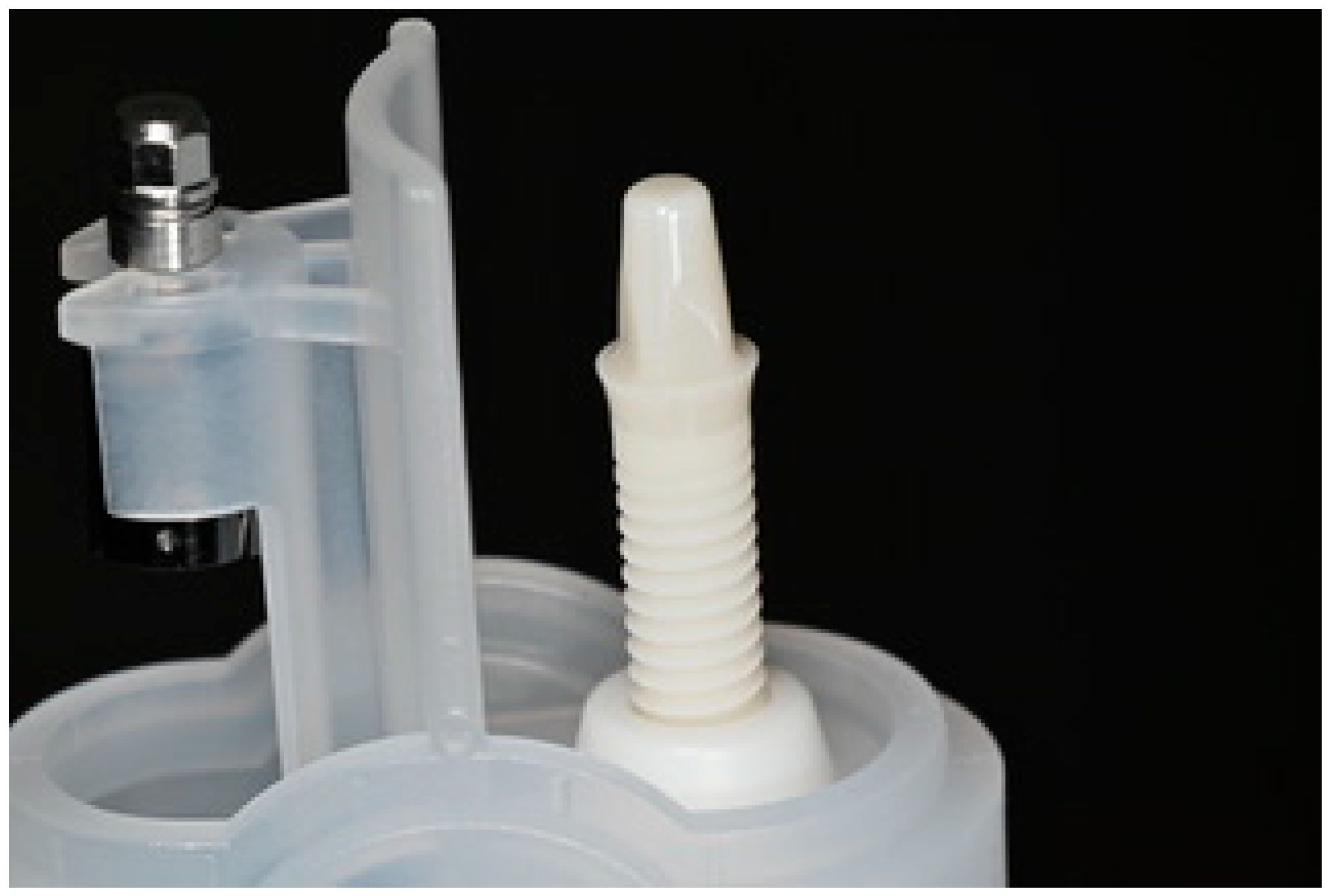
The first type of implant used in the study was the Straumann® PURE Ceramic Implant Monotype (Straumann Holding AG, Basel, Switzerland), which is a ceramic implant made of yttrium-stabilised tetragonal zirconia (Y-TZP).
These are single-component implants, in which the fixture and abutment form a single element, so there is no connection between the two parts. The implant has a predominantly cylindrical external profile, with a more conical shape in the coronal region and a thread pitch of 0.8 mm. The intraosseous portion is characterised by a ZLA-type surface, with a macro- and micro-rough topography (1.3 μm, ZLA® surface topography, Institut Straumann AG, Basel, Switzerland), while the transmucosal portion (implant neck), 1.8 mm long, has a machined surface (0.5 μm). No section of the implant was polished, in order to avoid the formation of micro-fractures within the material (Figure 1).
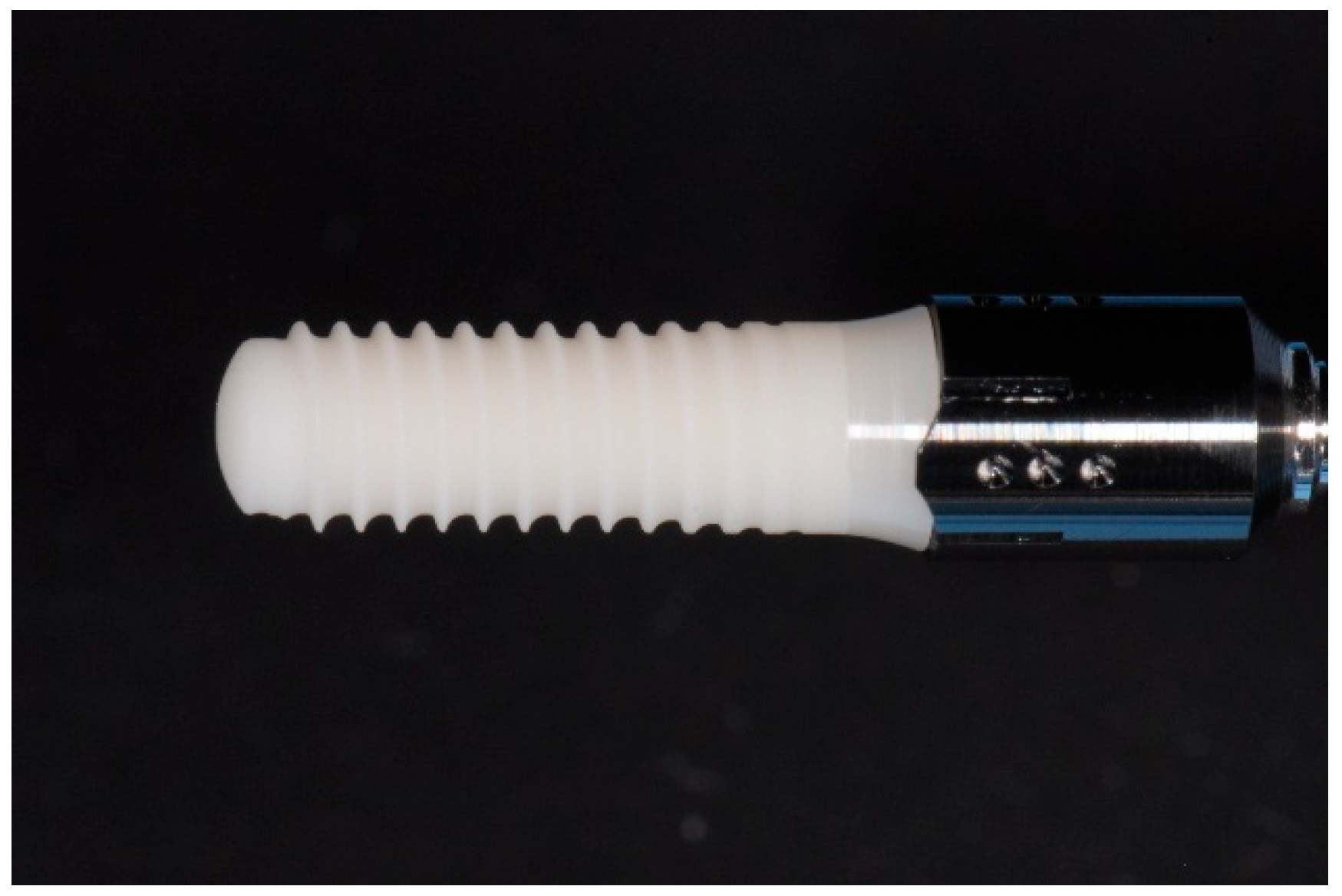
The second type of implant analysed in the study is the CERALOG® Hexalobe implant (Camlog Biotechnologies GmbH, Basel, Switzerland), a two-component implant made of tetragonal polycrystalline zirconia stabilised with ultra-pure yttrium (Y-TZP). The two-component design features an internal hexalobe connection that has been developed and optimised specifically for ceramic materials and ensures that the screw-in forces are transmitted tangentially into the implant, allowing for optimal distribution of these forces, high tightening torque and, therefore, high rotational stability. The hexalobe connection allows the insertion of a separate stump, which is permanently fixed to the implant using a titanium or gold prosthetic screw for abutments. CERALOG® abutments are made of high-performance polyether ketone ketone (PEKK) polymer and are available in both straight and 15° angled versions (types A and B).
CERALOG® implants have a dual surface texture, combining two defined roughnesses in the same implant. The endosseous part of the implant body has a micro-roughness of Ra 1.6 μm to promote targeted osteoblast deposition and ensure osseointegration. The neck of the implant, on the other hand, has a lower roughness, with an Ra value of 0.5 μm, to promote soft tissue adhesion.
This is made possible by a production process called Ceramic Injection Moulding (CIM) (Figure 2).
Inclusion criteria: healthy patients older than 18 years of age, signed informed consent, bone width and height measuring no less than 6 and 10 mm, respectively. Minor guided bone regeneration (GBR) interventions to enhance peri-implant tissue conditions were permitted. These were performed solely when necessary, in conjunction with implant insertion. Such interventions were executed utilising a xenograft (Bio-Oss, Geistlich Pharma AG, Wolhusen, Switzerland) enveloped by a collagen membrane (Bio-Gide, Geistlich Pharma AG, Wolhusen, Switzerland). Exclusion criteria: pregnancy, heavy smokers (>10 cigarettes daily), renal or hepatic diseases, uncontrolled or poorly managed diabetes, intake of bisphosphonates, a history of radiotherapy to the head and neck, ongoing treatment with immunosuppressants or corticosteroids, patients suffering from primary or secondary immunodeficiency, connective tissue disorders, untreated periodontitis, autoimmune conditions, oral parafunctional habits, and persistent infections of the oral cavity. Significant alveolar ridge deficits necessitating two-stage guided bone regeneration were regarded as an exclusion criterion. Zirconia implants with inadequate follow-up (<2 years) were excluded.

2.2. Operative Procedures

All implant surgeries were conducted in accordance with science-based surgical principles and following the specs of the zirconia dental implant producer. Presurgical planning for each patient was carried out using cone beam computed tomography (CBCT) (SCANORA, KaVo, Biberach, Germany). Implant placement was conducted either as an immediate post-extraction implant or through a delayed approach (allowing a minimum of 3 months of healing following dental extraction). In the latter scenario, after administering local anaesthesia, a mucoperiosteal flap was elevated without vertical releasing incisions. Preparation of the implant site was executed in accordance with the manufacturer’s guidelines.

2.2.1. Surgical Protocol Straumann Monotype

The implant site preparation commenced with a round bur measuring 2.3 mm or 3.1 mm in diameter to mark the pilot site. Following this, stainless steel twist drills of 2.2 mm and 2.8 mm in diameter were utilised to establish the implant’s axis. Subsequently, dedicated aligner pins were used to confirm the preparation depth, angulation, and restorability. This sequence was employed to place zirconia implants with a diameter of 3.3 mm. For cases requiring a 4.1 mm diameter implant, an additional twist drill measuring 3.5 mm was used to expand the implant bed preparation. All implants were inserted freehand, without assistance from partial or fully guided surgery. The insertion depth of the implants was dictated by the endosseous portion. The 1.8 mm transmucosal collar served as a landmark and was not pushed apically during implant placement to prevent mechanical stress in the crestal zone. As a result, the machined neck and implant head were positioned epicrestally in accordance with the surgical and restorative protocol. Primary stability was assessed at the time of implant placement using a dedicated counter-torque device. Immediate loading was carried out for implants that exhibited values exceeding 30 Ncm. Zirconia implants varied in length from 10 to 14 mm and in diameter from 3.3 to 4.1 mm. Minor GBR procedures were conducted only when necessary. Consequently, flaps were sutured around the transmucosal portion of the implant body using individual single stitches. An intraoral dental radiograph with an apico-periapical projection was taken at the conclusion of the surgical phase.

2.2.2. Restorative Protocol Straumann Monotype

After completing the implant placement, impression copings were attached, and polyether impressions were taken (Impregum Soft, 3M Espe, Seefeld, Germany). Following this, a resin temporary crown was placed to cover the implant abutment and shape the surrounding tissue. The provisional restoration was obtained by milling after individualised CAD/CAM planning and then positioned to be free of both centric and eccentric contacts. Three months post-surgery, final impressions were performed using polyether material (Impregum Soft, 3M Espe, Seefeld, Germany). Subsequently, veneered zirconia single crowns were applied by an experienced therapist (R.S.) using resin-modified glass ionomer cement (RelyX Luting Plus Cement, Minneapolis, MN, USA) after positioning retraction cords to manage the cementation line. Moreover, during the time of setting (cement hardening), cement remnants were removed with a special dental floss (Superfloss, Procter & Gamble GmbH, Schwalbach am Taunus, Germany) followed by a sharp instrument. Clinical and radiological evaluations were performed from then on once a year during scheduled follow-up visits.

2.2.3. Surgical Protocol Ceralog Hexalobe

The implant bed preparation sequence began with the marking of the cortical bone using a 2.3 mm diameter ball bur. Subsequently, a 2 mm diameter stainless steel pilot bur was used to define the depth of the site and the axis of the implant.
After the initial drilling, parallelism pins were inserted to check both the three-dimensional alignment and the depth of the preparation. Once the implant axis was confirmed, the implant bed was progressively prepared using Progressive-Line Flex drills (Camlog Biotechnologies GmbH, Basel, Switzerland). with increasing diameters (3.3 mm and 3.8 mm) following the sequence for the placement of 4 mm diameter implants. Then, once the final diameter had been established, a Flex profile drill was used to shape the crestal portion of the cavity in order to ensure a precise fit of the implant shoulder and adequate mechanical stability. All implants were placed freehand, without the aid of partially or fully guided guides. Regarding insertion depth, the implants were inserted in an epicrestal position, maintaining a supracrestal placement of approximately +0.4 mm, according to the manufacturer’s instructions. Primary stability was assessed at the time of insertion using a dedicated counter-torque device, and immediate loading was performed only on implants that showed values greater than 30 Ncm. The zirconia implants used were between 8 and 12 mm in length and 4 mm in diameter. Minor guided bone regeneration (GBR) procedures were performed only when necessary. The flaps were sutured around the transmucosal healing cap in polyetherketoneketone (PEEK) using separate single sutures. Once the surgical phase was complete, an intraoral radiograph with apico-periapical projection was taken.

2.2.4. Prosthetic Protocol Ceralog Hexalobe

Once the implant placement was completed, the impression transfers were inserted and polyether impressions (Impregum Soft, 3M Espe, Seefeld, Germany) were taken. A temporary polymethyl methacrylate screw-retained crown was then placed on a polyetherketoneketone (PEKK) abutment in order to cover the implant abutment and condition the profile of the surrounding soft tissues. The temporary restorations were obtained by milling process and adapted to avoid centric and eccentric contacts in order to prevent premature loads on the implant during tissue maturation. Three months after surgery, the final impressions were taken, again using polyether-based material (Impregum Soft, 3M Espe, Seefeld, Germany). The final zirconia-coated crowns were then screwed in place by an experienced operator (R.S.). Clinical and radiographic follow-up evaluations were performed once a year from that point onwards, during scheduled follow-up visits.

2.3. Clinical Evaluation

Clinical evaluation of the implants was performed through the criteria stated by Buser in 1997, which were the evaluated categories summarised in Table 1.

2.4. Radiograph Evaluation

All radiographs were captured using the same projection, employing a customised film holder mounted on a Rinn-type positioner (Dentsply RINN, York, PA, USA) and following the paralleling technique. A single imaging device, set to consistent exposure parameters (Vistascan, Durr Dental, Bietigheim-Bissingen, Germany; 75 kV, 9 mA, 0.22–0.25 s), was used across all time points. The radiographic images were stored on a personal computer and subsequently analysed using dedicated software (ImageJ, version 1.54r, National Institute of Health, Bethesda, Rockville, MA, USA). To minimise potential distortion, each image was standardised using known reference measurements, such as implant diameter or length.
The evaluation of the marginal bone levels (MBLs) was assessed at time points t0 (time of final prosthesis delivery) and t1 (last follow-up visit), according to the protocol described by Linkevicius et al. [5], by calculating the distance between the implant neck (bevel) and the first bone–implant contact, or between the neck and the intercepted bone margin of the line drawn along the longitudinal axis of the implant. Measurements were taken on both the mesial and distal sides of each implant, and an average value was calculated for each implant. All measurements, expressed in millimetres with an accuracy of 0.1 mm, were performed using a monitor with a resolution of 1920 × 1080 pixels and 7× magnification (Samsung Monitor, Daegu, Republic of Korea). The values obtained were classified as negative if the implant collar was below the bone level and as positive if it was above that level. All measurements were performed in duplicate by two different operators (AP and CA) after calibration on a sample of 20 radiographs not belonging to the investigated groups (k statistics = 0.92).

2.5. Statistical Analysis

This study was analysed and visualised using “R project” statistical computing and graphics software (version 4.2.1, https://www.r-project.org (accessed on 11 October 2025)).
Each implant was considered as the statistical unit. The following outcomes were considered: MBL, MBL change, implant survival and success. Simple descriptive statistics were used to define the characteristics of the study variables through a form of counts and percentages for the categorical and nominal variables, while continuous variables were presented by mean and standard deviations. Intragroup comparisons between different timepoints (T0–T1) were performed by paired Student t-test. Intergroup comparisons were investigated by unpaired Student t-test. Level of significance was set to p < 0.05 to reject the null hypothesis. No significant differences were found by comparing the means of mesial and distal MBL at each follow-up with a t-test for paired data, so the mean between mesial and distal MBL was used in the subsequent analysis. Descriptive statistics were performed by calculating mean and standard deviation for continuous variables and frequency distribution for categorical variables, respectively.
The Chi-square test was applied to determine the relationship between categorical variables, assuming a normal distribution.

3. Results

Overall, 69 patients receiving 84 zirconia implants were selected to be included in the present study. Fourteen patients receiving 17 zirconia implants were discarded due to missing, incomplete or damaged (x-ray) documentation. After scrutinising the available datasets, 55 patient cases who received 67 zirconia dental implants could be retrospectively evaluated. Thirty-nine patients received 45 one-piece zirconia implants (GROUP 1), while 16 patients received 22 two-piece zirconia implants (GROUP 2) (Table 2 and Table 3).
Group 1 was characterised by 27 females (69.2%) and 12 males (30.7%) with ages ranging from 30 to 73 years (mean age 49 years). In Group 1 the mean follow-up was 62.1 months, ranging from 24 to 120 months (2 to 10 years). The implant distribution in Group 1 consisted in 22 implants inserted into the maxilla (48.8%), while 23 implants were inserted into the mandible (51.2%); 13 implants required minor GBR procedures (28.8%) and 32 implants were placed in pristine bone without regeneration (71.2%); 21 implants were positioned immediately post-extraction (46.6%), and 24 implants were placed after at least 3 months of healing (53.4%); 16 implants were loaded immediately (35.6%), while 29 implants were loaded following a conventional approach (644%) (Table 4, Table 5 and Table 6).
Regarding implant features in Group 1, 16 implants had a diameter of 3.3 mm (35.6%), while 29 implant had a diameter of 4.1 mm (64.4%) (mean diameter 3.82 mm (Table 7)); 11 implants had a length of 10 mm (24.4%), 26 implants had a length of 12 mm (57.8%) and 8 implants had a length of 14 mm (17.8%) (mean length 11.87 mm (Table 8)).
Regarding Group 1, the mean MBL at T0 was 1.39 mm (sd = 0.81) and was 2.12 mm (sd = 0.77) at T1. The mean MBLchange in Group 1 was 0.726 mm (sd = 0.578).
Group 2 was characterised by 19 females (86.4%) and three males (13.6%) with ages ranging from 33 to 68 years (mean age 53.4 years). In Group 2 the mean follow-up was 57.5 months, ranging from 24 to 96 months (2 to 8 years). The implant distribution in Group 2 consisted of 10 implants inserted in the maxilla (45.5%), while 12 implants were inserted in the mandible (54.5%). Among these zirconia dental implants, seven implants required minor GBR procedures (31.8%), 15 implants were placed in pristine bone without regeneration (68.2%), 10 implants were positioned immediately post-extraction (45.5%), 12 implants were placed after at least 3 months of healing (54.5%), two implants were loaded immediately (9.1%), and 20 implants were loaded following a conventional approach (90.9%) (Table 9, Table 10 and Table 11).
Regarding implant features in Group 2, 22 implants had a diameter of 4 mm (100%), with a mean diameter 4 mm (Table 7); two implants had a length of 8 mm (9.1%), 13 implants ha a length of 10 mm (59.1%), and 7 implants had a length of 12 mm (31.8%), with a mean length 10.45 mm (Table 8).
Regarding Group 2, the mean MBL at T0 was 0.4 mm (sd = 0.28) and was 1.45 mm (sd = 0.69) at T1.
The mean MBL change in Group 2 was 1.05 mm (sd = 0.596).
The intra-group comparisons showed that there were no statistically significant differences in terms of marginal bone loss between T0 and T1 for Group 1 (p = 0.322) and Group 2 (p = 0.541), respectively. The intergroup comparisons showed statistically significant differences between Group 1 and Group 2 at T0 (p < 0.0001; CI 95% 0.634–1.346), at T1 (p = 0.001; CI 95% 0.282–1.057) and in terms of MBL change (p = 0.0367; CI 95% −0.627–0.020).

4. Discussion

This retrospective study evaluated the clinical and radiographic outcomes of 67 zirconia dental implants divided into two groups based on implant design: one-piece (n = 45) and two-piece (n = 22). All implants were observed for a period of between two and ten years of follow-up. In both groups, the results showed a 100% survival and success rate, accompanied by overall satisfactory marginal bone stability, in line with the implant success criteria proposed by Albrektsson et al. [20] Although extremely positive, this result must be interpreted with caution as it is closely related to the characteristics of the sample analysed and the clinical context in which the study was conducted. In fact, all patients were followed up regularly, with six-monthly check-ups and professional hygiene sessions, as well as being constantly motivated to maintain optimal oral hygiene at home. It is therefore a convenience sample, consisting of cooperative patients, selected and treated by the same operator in a controlled environment. These conditions contribute to reducing biological and clinical variability and explain, at least in part, the absence of failures and the stability of the results in the long term.

4.1. Implant Survival

Implant survival is one of the most widely used parameters for assessing the effectiveness and clinical predictability of an implant system [21].
With regard to zirconia implants, the literature reports generally high survival rates, with promising results especially in the medium term, but rarely 100%. In particular, 5-year survival rates are between 97 and 98% [22,23], while 10–15-year survival rates are between 93.8 and 98.7% [24,25].
However, some recent systematic reviews report lower percentages of 70.3% and 67.6% [26,27].
This variability in results is attributable to several factors, including the heterogeneity of the surgical and prosthetic protocols adopted, the lack of homogeneity of the samples, and differences in experimental designs and implant types [8,15,17].
Furthermore, it should be noted that multicentre and prospective studies tend to include patients with poor compliance, suboptimal systemic or periodontal factors, and heterogeneous surgical and prosthetic protocols. In our study, however, surgical and prosthetic homogeneity and a rigorous periodic follow-up programme created favourable conditions for osseointegration and peri-implant tissue stability over time, thus justifying the 100% survival rate observed.

4.2. Marginal Bone Loss

In addition to survival, another parameter of fundamental importance in evaluating the clinical behaviour of dental implants is marginal bone loss (MBL), which reflects the long-term stability of the supporting tissues.
Its aetiology is multifactorial and is the result of the interaction between mechanical and biological factors [28].
Among the mechanical factors, the design of the implant neck has a decisive influence on the tissue–implant interface. Implants with a smooth neck surface tend to show greater early marginal bone loss than those with a rough or micro-threaded neck [29,30,31].
This occurs because machined surfaces transfer occlusal forces less effectively, creating a condition of ‘stress shielding’ that stimulates bone resorption up to the transition line between the smooth and rough surfaces [32]. This behaviour is consistent with the findings of our study, in which one-piece implants showed more pronounced initial marginal resorption (MBL at T0) than two-piece implants (1.39 mm vs. 0.4 mm). This result can be attributed to the greater extension of the smooth neck of one (1.8 mm in one-piece implants) compared to the other (1.5 mm in two-piece implants). In accordance with the findings of Matar et al. [33], after implant placement, the bone level tends to stabilise at the boundary between the smooth and rough surfaces, regardless of the depth of insertion. Consequently, an implant placed at the subcrestal level undergoes bone resorption equal to the height of the smooth portion. It follows that the slightly supracrestal placement of the smooth collar is the most appropriate choice to minimise predictable bone resorption and promote long-term stability of the marginal tissues. At the same time, however, the presence of a smooth surface in the transmucosal area offers significant biological advantages as it reduces the risk of bacterial adhesion and promotes colonisation by gingival fibroblasts, contributing to the formation of a stable peri-implant biological seal [6,7,8].
Recent studies confirm that smooth surfaces facilitate soft tissue adhesion, ensuring greater long-term biological stability and reducing the risk of mucositis and peri-implantitis [34]. Therefore, while a smooth neck may induce minimal early bone loss related to the initial adaptation of hard tissues, it also ensures lasting biological protection and greater tissue stability [35]. In addition to the type of surface, another aspect that could influence bone resorption is the implant system itself. In two-component systems, the implant–abutment connection is a critical area for crestal bone stability as it involves the presence of a micro-gap, indicated by several authors as a potential cause of progressive bone resorption, resulting from micromovement and bacterial percolation [36,37,38]. In this regard, considering the results obtained in our study, it can be observed that two-component systems showed more progressive, albeit limited, bone loss over time. Several studies have shown that movement at the interface generates a ‘pump effect’ that promotes the escape of bacteria and metabolites into the peri-implant tissues, inducing an inflammatory infiltrate and contributing to subsequent bone loss [39,40]. Therefore, the reduction in micro-movements, achieved through a stable and precise connection between the implant and abutment, limits bacterial colonisation and peri-implant inflammation, thus contributing to the preservation of the crestal bone [36,38]. To further minimise these effects, Linkevicius et al. [41] suggest placing two-component implants supra-crestally in order to distance the microgap from the bone. This positioning promotes the formation of a correct biological width, allowing the establishment of an epithelial and connective attachment that protects the underlying bone [42]. At the same time, they recommend that supracrestal implants have a polished collar of approximately 0.5–1 mm, which is useful for ensuring hygiene and the stability of the marginal tissues. In the present study, the lack of statistical significance between T0 and T1 could be attributed precisely to the fact that even the two-component systems used have a smooth neck, which allows the implant–abutment interface to be placed at a distance from the marginal tissues from the moment of placement, limiting direct interaction between the microgap and the bone and reducing the risk of bacterial infiltration. In summary, the comparison between the two groups shows that one-piece implants had a higher initial MBL (1.39 mm compared to 0.4 mm in two-piece implants) but less variation over time than two-piece implants (0.72 mm vs. 1.05 mm). This suggests that in one-piece implants, greater bone loss is concentrated mainly in the initial healing phases, presumably in response to biological adaptation to the smooth neck and any immediate loading stresses, which are more frequent in this group. Conversely, in two-piece implants, initial bone loss is more limited, while variation over time is slightly higher, probably due to micro-movements occurring at the connection or to the different transmission of occlusal forces through the abutment. Overall, based on the results observed, we can conclude that the behaviour of the marginal bone crest is strongly influenced by the design of the implant collar and the position of the connection relative to the bone crest, rather than by the number of components in the system. The presence of a smooth neck can therefore be considered a key factor for long-term tissue stability, regardless of the type of implant, whether one-piece or two-piece. From this perspective, the morphological and functional differences between the two systems are also important from a prosthetic point of view: although one-piece implants eliminate the risk of bacterial infiltration associated with mechanical connections, they require greater precision in prosthetic design and load management, especially in the case of immediate loading. On the contrary, two-piece implants offer greater surgical and prosthetic versatility but require extremely precise connections and mechanically reliable materials in order to avoid micro-movements and localised stress that could compromise bone stability in the long term.

5. Limitations

The present study is characterised by several limitations. First of all, the fact that all surgical and prosthetic procedures were performed by a single experienced practitioner could significantly limit the external generalisability of this study. Secondly, the particularly high survival rate may not reflect the clinical reality of zirconia implants, as any complications that have occurred may go unnoticed if patients choose not to return to the same clinic in the event of failure. It is therefore possible that this analysis is flawed by the use of a so-called “convenience sample”. Thirdly, it is important to bear in mind the retrospective nature of this study. Patients were assessed retrospectively, and it was not possible to control for variables in advance. Furthermore, given the observational nature of the study, the sample size was not calculated prior to the start of patient recruitment, as is typical in interventional studies. Moreover, it is worth noting the disparity in sample size between the two methodologies employed. It is important to notice that in both groups, several patients received more than one implant. The results of the analysis should be interpreted cautiously, as this circumstance may inflate precision. Fourthly, this clinical study is characterised by numerous confounding factors. In both groups, several implants were placed with simultaneous guided bone regeneration, sometimes as post-extraction implants and in some cases with immediate loading. These factors must necessarily be taken into account when interpreting the results of this study with the utmost caution.

6. Conclusions

Overall, the results of this retrospective study showed that zirconia implants, both in one-piece and two-piece configurations, can guarantee good clinical and radiographic performance in the medium to long term when placed in appropriately selected and monitored patients. The presence of a smooth implant neck is confirmed as a determining factor in the stability of peri-implant tissues: although it induces modest bone resorption initially, it promotes the formation of a stable biological seal over time, reducing bacterial adhesion and the consequent risk of mucositis and peri-implantitis. The behaviour observed in the two systems, with more marked but stable initial bone resorption in the one-piece systems and more progressive loss in the two-component systems, which suggests that the design of the collar and the position of the implant–abutment interface relative to the bone crest influence bone stability to a greater extent than the number of components in the system. In particular, the distance of the connection from the crestal bone and the smooth transmucosal morphology help to limit the negative effects of micro-movements and bacterial percolation. Therefore, zirconia implants with a smooth transmucosal design are confirmed as a reliable and biocompatible clinical solution, provided that they are inserted in selected patients, following accurate surgical and prosthetic protocols and a rigorous hygiene maintenance programme. Despite the methodological limitations of the study, such as its retrospective design, the absence of randomisation and the selection of a convenience sample, which reduce its generalisability, the results obtained offer a picture of the clinical behaviour of zirconia implants under optimal maintenance and control conditions, thus suggesting their plausibility as an alternative to titanium. Nevertheless, the clinical validation of zirconia implants must necessarily be based on randomised controlled trials with an adequate sample size and medium- to long-term follow-up before they can be considered a viable option to titanium implants.

Author Contributions

Conceptualization, A.P. and E.R.; Methodology, A.P. and S.S.; Validation, R.S. and S.S.; Formal analysis, E.R.; Investigation, R.S.; Data curation, A.P. and C.A.; Writing—original draft, A.P. and C.A.; Writing—review and editing, A.P., F.A. and S.S.; Visualisation, F.A. and S.S.; Supervision, E.R. All authors have read and agreed to the published version of the manuscript.

Funding

This research received no external funding.

Institutional Review Board Statement

The research has been approved by the Ethics Committee of the University of Milan (project number: EC 74/22).

Informed Consent Statement

Informed consent was obtained from all subjects involved in the study.

Data Availability Statement

The original contributions presented in this study are included in the article. Further inquiries can be directed to the corresponding author.

Conflicts of Interest

The authors declare no conflicts of interest.

References

  1. Lops, D.; Palazzolo, A.; Calza, S.; Proietto, L.; Sordillo, A.; Mensi, M.; Romeo, E. Guided versus freehand single implant placement: A 3-year parallel randomized clinical trial. J. Dent. 2024, 149, 105317. [Google Scholar] [CrossRef] [PubMed]
  2. Buser, D.; Sennerby, L.; De Bruyn, H. Modern implant dentistry based on osseointegration: 50 years of progress, current trends and open questions. Periodontology 2000 2017, 73, 7–21. [Google Scholar] [CrossRef]
  3. Buser, D.; Janner, S.F.M.; Wittneben, J.G.; Brägger, U.; Ramseier, C.A.; Salvi, G.E. 10-year survival and success rates of 511 titanium implants with a sandblasted and acid-etched surface: A retrospective study in 303 partially edentulous patients. Clin. Implant Dent. Relat. Res. 2012, 14, 839–851. [Google Scholar] [CrossRef]
  4. Bienz, S.P.; Hilbe, M.; Hüsler, J.; Thoma, D.S.; Hämmerle, C.H.F.; Jung, R.E. Clinical and Histological Comparison of the Soft Tissue Morphology Between Zirconia and Titanium Dental Implants Under Healthy and Experimental Mucositis Conditions—A Randomized Controlled Clinical Trial. J. Clin. Periodontol. 2021, 48, 721–733. [Google Scholar] [CrossRef]
  5. Linkevicius, T.; Vaitelis, J. The effect of zirconia or titanium as abutment material on soft peri-implant tissues: A systematic review and meta-analysis. Clin. Oral Implant. Res. 2015, 26, 139–147. [Google Scholar] [CrossRef]
  6. Scarano, A.; Piattelli, M.; Caputi, S.; Favero, G.A.; Piattelli, A. Bacterial adhesion on commercially pure titanium and zirconium oxide disks: An in vivo human study. J. Periodontol. 2004, 75, 292–296. [Google Scholar] [CrossRef] [PubMed]
  7. Nascimento, C.D.; Pita, M.S.; Fernandes, F.H.N.C.; Pedrazzi, V.; de Albuquerque Junior, R.F.; Ribeiro, R.F. Bacterial adhesion on the titanium and zirconia abutment surfaces. Clin. Oral Implant. Res. 2014, 25, 337–343. [Google Scholar] [CrossRef] [PubMed]
  8. Duan, C.; Ye, L.; Zhang, M.; Yang, L.; Li, C.; Pan, J.; Wu, Y.; Cao, Y. Clinical performance of zirconium implants compared to titanium implants: A systematic review and meta-analysis of randomized controlled trials. PeerJ 2023, 11, e15010. [Google Scholar] [CrossRef] [PubMed]
  9. Cionca, N.; Hashim, D.; Mombelli, A. Zirconia dental implants: Where are we now, and where are we heading? Periodontology 2000 2017, 73, 241–258. [Google Scholar] [CrossRef]
  10. Romeo, E.; Scaringi, R.; Lops, D.; Palazzolo, A. Single Crown Restorations Supported by One-Piece Zirconia Dental Implants: Case Series with a Mean Follow-Up of 58 Months. Prosthesis 2023, 5, 1060–1074. [Google Scholar] [CrossRef]
  11. Kohal, R.J.; Patzelt, S.B.M.; Butz, F.; Sahlin, H. One-piece zirconia oral implants: One-year results from a prospective case series. 2. Three-unit fixed dental prosthesis (FDP) reconstruction. J. Clin. Periodontol. 2013, 40, 553–562. [Google Scholar] [CrossRef]
  12. Balmer, M.; Payer, M.; Kohal, R.J.; Spies, B.C. EAO Position Paper: Current Level of Evidence Regarding Zirconia Implants in Clinical Trials. Int. J. Prosthodont. 2022, 35, 560–566. [Google Scholar] [CrossRef]
  13. Vohra, F.; Al-Kheraif, A.A.; Ab Ghani, S.M.; Abu Hassan, M.I.; Alnassar, T.; Javed, F. Crestal bone loss and periimplant inflammatory parameters around zirconia implants: A systematic review. J. Prosthet. Dent. 2015, 114, 351–357. [Google Scholar] [CrossRef] [PubMed]
  14. Staubli, N.; Walter, C.; Schmidt, J.C.; Weiger, R.; Zitzmann, N.U. Excess cement and the risk of peri-implant disease–a systematic review. Clin. Oral Implant. Res. 2017, 28, 1278–1290. [Google Scholar] [CrossRef] [PubMed]
  15. Kohal, R.J.; Finke, H.C.; Klaus, G. Stability of prototype two-piece zirconia and titanium implants after artificial aging: An in vitro pilot study. Clin. Implant Dent. Relat. Res. 2009, 11, 323–329. [Google Scholar] [CrossRef]
  16. Cionca, N.; Müller, N.; Mombelli, A. Two-piece zirconia implants supporting all-ceramic crowns: A prospective clinical study. Clin. Oral Implant. Res. 2015, 26, 413–418. [Google Scholar] [CrossRef]
  17. Roehling, S.; Woelfler, H.; Hicklin, S.; Kniha, H.; Gahlert, M. A Retrospective Clinical Study with Regard to Survival and Success Rates of Zirconia Implants up to and after 7 Years of Loading. Clin. Implant Dent. Relat. Res. 2016, 18, 545–558. [Google Scholar] [CrossRef] [PubMed]
  18. Borgonovo, A.E.; Ferrario, S.; Maiorana, C.; Vavassori, V.; Censi, R.; Re, D. A Clinical and Radiographic Evaluation of Zirconia Dental Implants: 10-Year Follow-Up. Int. J. Dent. 2021, 2021, 7534607. [Google Scholar] [CrossRef] [PubMed]
  19. Jank, S.; Hochgatterer, G. Success Rate of Two-Piece Zirconia Implants: A Retrospective Statistical Analysis. Implant Dent. 2016, 25, 193–198. [Google Scholar] [CrossRef]
  20. Albrektsson, T.; Zarb, G.; Worthington, P.; Eriksson, A.R. The long-term efficacy of currently used dental implants: A review and proposed criteria of success. Int. J. Oral Maxillofac. Implant. 1986, 1, 11–25. [Google Scholar]
  21. Howe, M.-S.; Keys, W.; Richards, D. Long-term (10-year) dental implant survival: A systematic review and sensitivity meta-analysis. J. Dent. 2019, 84, 9–21. [Google Scholar] [CrossRef]
  22. Roehling, S.; Gahlert, M.; Bacevic, M.; Woelfler, H.; Laleman, I. Clinical and radiographic outcomes of zirconia dental implants—A systematic review and meta-analysis. Clin. Oral Implant. Res. 2023, 34, 112–124. [Google Scholar] [CrossRef]
  23. Gahlert, M.; Kniha, H.; Laval, S.; Gellrich, N.-C.; Bormann, K.-H. Prospective Clinical Multicenter Study Evaluating the 5-Year Performance of Zirconia Implants in Single-Tooth Gaps. Int. J. Oral Maxillofac. Implant. 2022, 37, 804–811. [Google Scholar] [CrossRef]
  24. Oliva, J.; Oliva, X. 15-Year Post-Market Clinical Follow-up Study of 1,828 Ceramic (Zirconia) Implants in Humans. Int. J. Oral Maxillofac. Implant. 2023, 38, 357–366. [Google Scholar] [CrossRef] [PubMed]
  25. Mohseni, P.; Soufi, A.; Chrcanovic, B.R. Clinical outcomes of zirconia implants: A systematic review and meta-analysis. Clin. Oral Investig. 2024, 28, 15. [Google Scholar] [CrossRef] [PubMed]
  26. Padhye, N.M.; Calciolari, E.; Zuercher, A.N.; Tagliaferri, S.; Donos, N. Survival and success of zirconia compared with titanium implants: A systematic review and meta-analysis. Clin. Oral Investig. 2023, 27, 6279–6290. [Google Scholar] [CrossRef] [PubMed]
  27. Morena, D.; Leitão-Almeida, B.; Pereira, M.; Resende, R.; Fernandes, J.C.H.; Fernandes, G.V.O.; Borges, T. Comparative Clinical Behavior of Zirconia versus Titanium Dental Implants: A Systematic Review and Meta-Analysis of Randomized Controlled Trials. J. Clin. Med. 2024, 13, 4488. [Google Scholar] [CrossRef]
  28. Lombardi, T.; Berton, F.; Salgarello, S.; Barbalonga, E.; Rapani, A.; Piovesana, F.; Gregorio, C.; Barbati, G.; Di Lenarda, R.; Stacchi, C. Factors Influencing Early Marginal Bone Loss around Dental Implants Positioned Subcrestally: A Multicenter Prospective Clinical Study. J. Clin. Med. 2019, 8, 1168. [Google Scholar] [CrossRef] [PubMed] [PubMed Central]
  29. Schwarz, F.; Messias, A.; Sanz-Sánchez, I.; Carrillo de Albornoz, A.; Nicolau, P.; Taylor, T.; Beuer, F.; Schär, A.; Sader, R.; Guerra, F.; et al. Influence of implant neck and abutment characteristics on peri-implant tissue health and stability. Oral reconstruction foundation consensus report. Clin. Oral Implant. Res. 2019, 30, 588–593. [Google Scholar] [CrossRef] [PubMed]
  30. Hermann, J.S.; Jones, A.A.; Bakaeen, L.G.; Buser, D.; Schoolfield, J.D.; Cochran, D.L. Influence of a machined collar on crestal bone changes around titanium implants: A histometric study in the canine mandible. J. Periodontol. 2011, 82, 1329–1338. [Google Scholar] [CrossRef] [PubMed]
  31. Zhang, Q.; Yue, X. Marginal Bone Loss around Machined Smooth Neck Implants Compared to Rough Threaded Neck Implants: A Systematic Review and Meta-Analysis. J. Prosthodont. 2021, 30, 401–411. [Google Scholar] [CrossRef] [PubMed]
  32. Wiskott, H.W.A.; Belser, U.C. Lack of integration of smooth titanium surfaces: A working hypothesis based on strains generated in the surrounding bone. Clin. Oral Implant. Res. 1999, 10, 429–444. [Google Scholar] [CrossRef] [PubMed]
  33. Matar, R.; Naaman, N.; Mansour, S.; Karouni, M.; Fares, A.; Antoun, H. Influence of Crestal Implant Position and a Smooth Collar on Marginal Bone Level: A 2-Year Retrospective Radiographic Analysis. Int. J. Periodontics Restor. Dent. 2023, 43, 743–751. [Google Scholar] [CrossRef] [PubMed]
  34. Paul, S.J.; Nesic, D. Influence of the Transmucosal Surface of Dental Implants on the Soft Tissue Attachment Level and Marginal Bone Loss in Preclinical Studies: A Systematic Review. Int. J. Oral Maxillofac. Implant. 2024, 39, 173–183. [Google Scholar] [CrossRef] [PubMed]
  35. Jin, S.; Yu, Y.; Zhang, T.; Xie, D.; Zheng, Y.; Wang, C.; Liu, Y.; Xia, D. Surface modification strategies to reinforce the soft tissue seal at transmucosal region of dental implants. Bioact. Mater. 2024, 42, 404–432. [Google Scholar] [CrossRef] [PubMed] [PubMed Central]
  36. Liu, Y.; Wang, J. Influences of microgap and micromotion of implant-abutment interface on marginal bone loss around implant neck. Arch. Oral Biol. 2017, 83, 153–160. [Google Scholar] [CrossRef] [PubMed]
  37. Sasada, Y.; Cochran, D.L. Implant-Abutment Connections: A Review of Biologic Consequences and Peri-implantitis Implications. Int. J. Oral Maxillofac. Implant. 2017, 32, 1296–1307. [Google Scholar] [CrossRef] [PubMed]
  38. Koutouzis, T. Implant-abutment connection as contributing factor to peri-implant diseases. Periodontology 2000 2019, 81, 152–166. [Google Scholar] [CrossRef] [PubMed]
  39. Piattelli, A.; Vrespa, G.; Petrone, G.; Iezzi, G.; Annibali, S.; Scarano, A. Role of the microgap between implant and abutment: A retrospective histologic evaluation in monkeys. J. Periodontol. 2003, 74, 346–352. [Google Scholar] [CrossRef] [PubMed]
  40. King, G.N.; Hermann, J.S.; Schoolfield, J.D.; Buser, D.; Cochran, D.L. Influence of the size of the microgap on crestal bone levels in non-submerged dental implants: A radiographic study in the canine mandible. J. Periodontol. 2002, 73, 1111–1117. [Google Scholar] [CrossRef] [PubMed]
  41. Linkevicius, T. Zero Bone Loss Concepts; Quintessence Publishing: Berlin, Germany, 2019. [Google Scholar]
  42. Davarpanah, M.; Martinez, H.; Tecucianu, J.F. Apical-coronal implant position: Recent surgical proposals. Technical note. Int. J. Oral Maxillofac. Implant. 2000, 15, 865–872. [Google Scholar] [PubMed]
Figure 1. Characteristics of the ceramic one-piece implant system (Straumann® PURE Ceramic Implant Monotype, Straumann Holding AG, Basel, Switzerland). Implant Monotype (Straumann Holding AG, Basel, Switzerland).
Applsci 16 03977 g001
Figure 2. Characteristics of the ceramic two-piece implant system, CERALOG® Hexalobe implant (Camlog Biotechnologies GmbH, Basel, Switzerland).
Applsci 16 03977 g002
Table 1. Buser’s criteria of success.
Criteria of Success
1Absence of persistent subjective complaints such as pain, foreign body sensation, and/or dysesthesia
2Absence of mobility
3Absence of a peri-implant infection with suppuration
4Absence of a continuous radiolucency around the implant
5Possibility for restoration
Table 2. Group 1 Implant locations.
Implants Locations
Maxilla
Implants
n%Posterior (n)Anterior (n)Anterior (n)Posterior (n)
2776
2248.9%9 13
00111423401320
Implant
location
1716151413121121222324252627
4746454443424131323334353637
18310023001022
Implants
Mandible
2351.1%15 8
13234
Total45100%
Table 3. Group 2 Implant locations.
Implants Locations
Maxilla
Implants
n%Posterior (n)Anterior (n)Anterior (n)Posterior (n)
3106
1045.5%4 6
00120100002310
Implant
location
1716151413121121222324252627
4746454443424131323334353637
141 0000001032
Implants
Mandible
1254.5%6 6
6006
Total22100%
Table 4. Group 1 Distribution of implants according to the timing of implant placement (immediate or delayed).
Type of Insertion
Immediate Placement (IP)Delayed Placement (DP)TOT
Maxilla13922
Mandible81523
TOT212445
Table 5. Group 1 Distribution of implants according to the loading protocol (immediate or conventional).
Type of Loading
Immediate Loading (IL)Conventional Loading (CL)TOT
Maxilla111122
Mandible51823
TOT162945
Table 6. Group 1 Distribution of implants placed with or without guided bone regeneration (GBR).
GBR
YesNoTOT
Maxilla81422
Mandible51823
TOT133245
Table 7. Group 1 and Group 2 distribution of implants according to implant diameter.
Implant Diameter
3.3 mm4 mm4.1 mmTOT
Monotype1602945
Ceralog022022
TOT16222967
Table 8. Group 1 and Group 2 distribution of implants according to implant length.
Implant Lenght
8 mm10 mm12 mm14 mmTOT
Monotype01126845
Ceralog2137022
TOT22433867
Table 9. Group 2 distribution of implants according to the timing of implant placement (immediate or delayed).
Type of Insertion
Immediate Placement (IP)Delayed Placement (DP)TOT
Maxilla8210
Mandible21012
TOT101222
Table 10. Group 2 distribution of implants according to the loading protocol (immediate or conventional).
Type of Loading
Immediate Loading (IL)Conventional Loading (CL)TOT
Maxilla21113
Mandible099
TOT22022
Table 11. Group 2 distribution of implants placed with or without guided bone regeneration (GBR).
GBR
YesNoTOT
Maxilla6410
Mandible11112
TOT71522
Disclaimer/Publisher’s Note: The statements, opinions and data contained in all publications are solely those of the individual author(s) and contributor(s) and not of MDPI and/or the editor(s). MDPI and/or the editor(s) disclaim responsibility for any injury to people or property resulting from any ideas, methods, instructions or products referred to in the content.