Synergistic Identification of Rockburst Precursors Integrating Tensile Shear Fracture Evolution and Critical Slowing Down

 , , ,
, , ,
Abstract
1. Introduction
2. Unloading Rockburst Testing and Theory
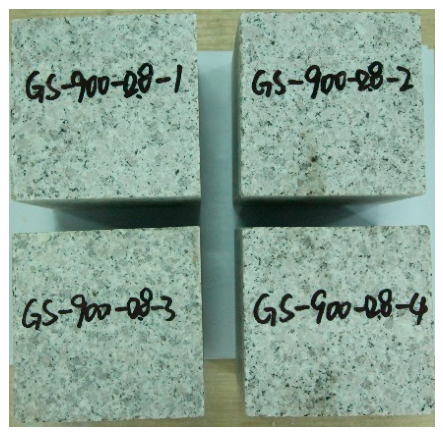
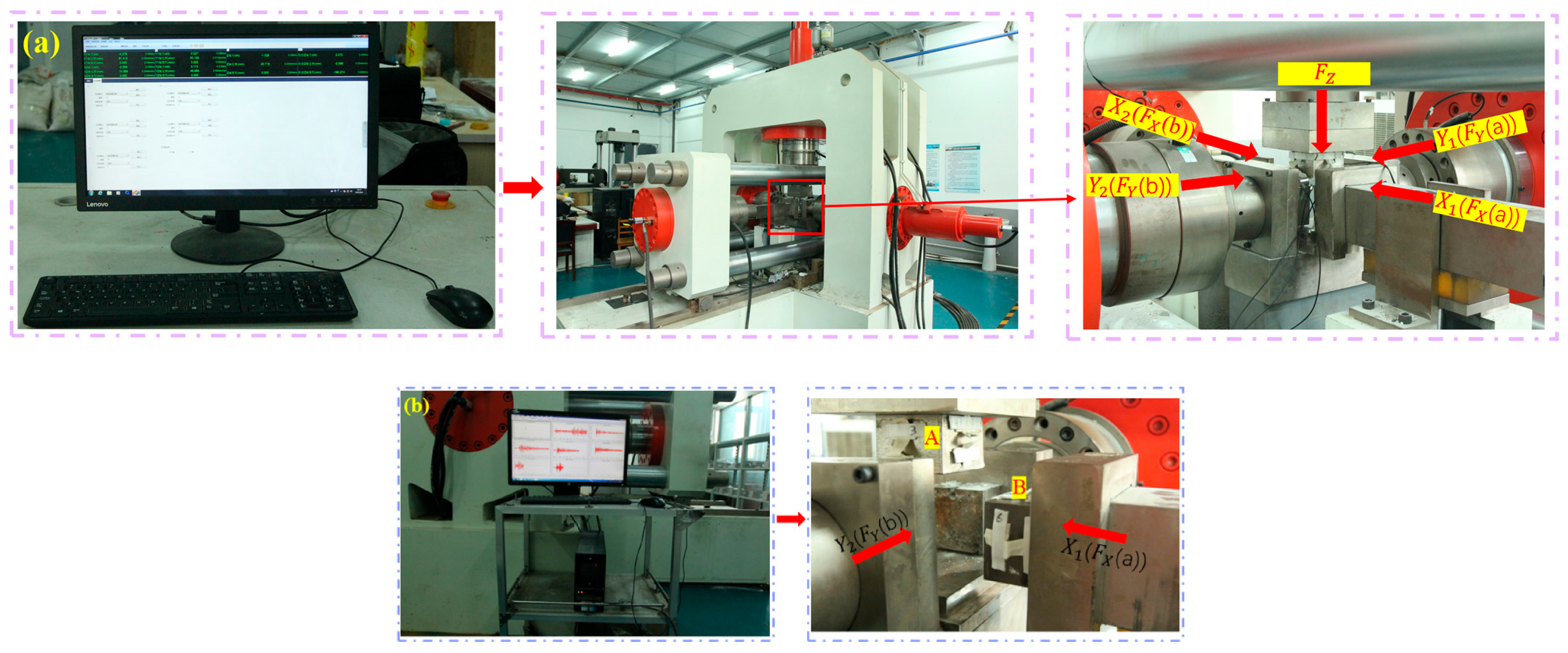
2.1. Test Specimens and Rockburst System
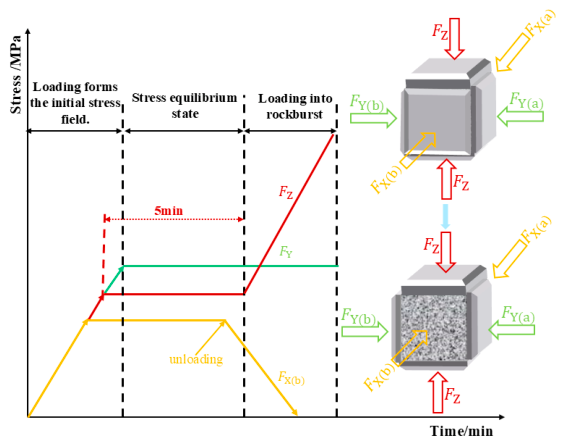
2.2. Testing Protocol
2.3. Acoustic Emission Analysis Method
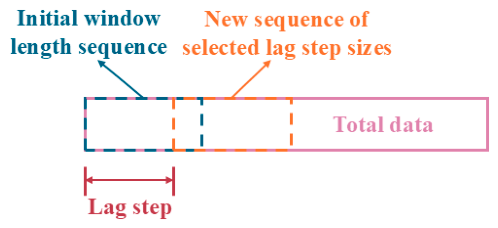
2.3.1. Critical Slowing Down Theory
2.3.2. The Value of b and Its Significance
3. Rockburst Fracture Evolution and Acoustic Emission Characteristics
3.1. Rockburst Instability Failure Process
3.2. Characteristics of Rockburst Acoustic Emission Behavior During Unloading
4. Quantitative Characterization and Evolutionary Features of Tensile–Shear Fracturing During Rockburst Processes Under Unloading Conditions
4.1. Quantitative Characterization of Tensile Shear Failure
4.2. Dynamic Evolution and Precursor Characteristics of Tensile Shear Failure
5. Critical Slowing Down Behavior of Acoustic Emission Prior to Rockburst Under Unloading Conditions
5.1. Effect of Window Length and Lag Step Size on Critical Slowing Down Indicators
5.2. Critical Slowing Down Behavior Analysis of Multi-Parameter Acoustic Emission
5.2.1. Autocorrelation Coefficient Analysis
5.2.2. Analysis of Variance
5.3. Analysis of Precursor Characteristics
6. Characterization of the b-Value in Acoustic Emission
Rockburst Failure Analysis Based on b-Value
7. Conclusions
- (1)
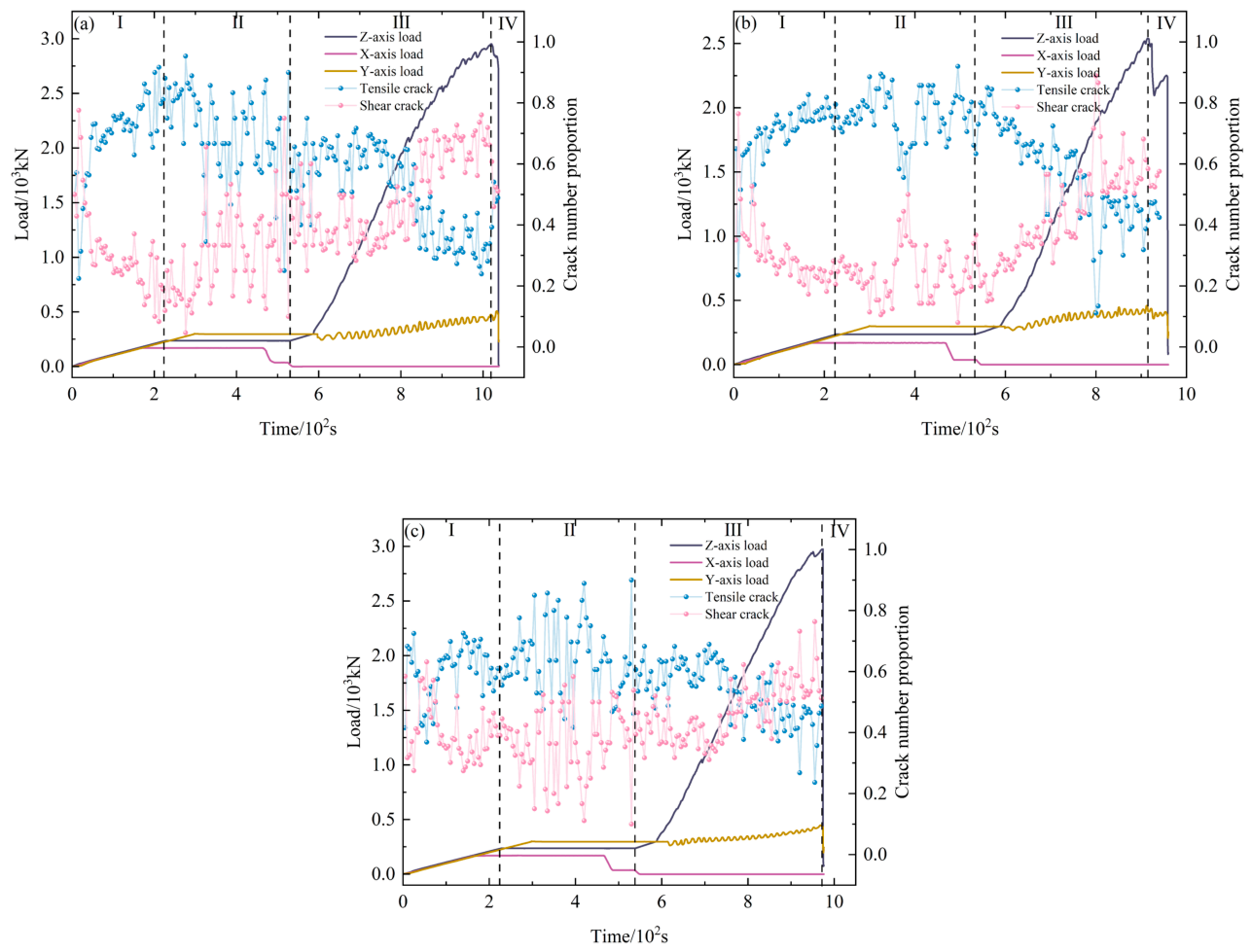
- During rockburst events, fracture types evolve in distinct phases: tensile fractures dominate initially, with the proportion of tensile fractures exceeding 50% (Ntr > 50%), while shear fractures grow in proportion and become predominant as instability nears, with the proportion of shear fractures exceeding 50% (Nsr > 50%). The proposed tensile–shear ratio (TSR) effectively characterizes the dynamic transition between these two fracture types. Under the present experimental conditions, a sustained TSR below 1 signals a shift from tensile to shear failure, acting as a critical precursor for imminent rockbursts.
- (2)
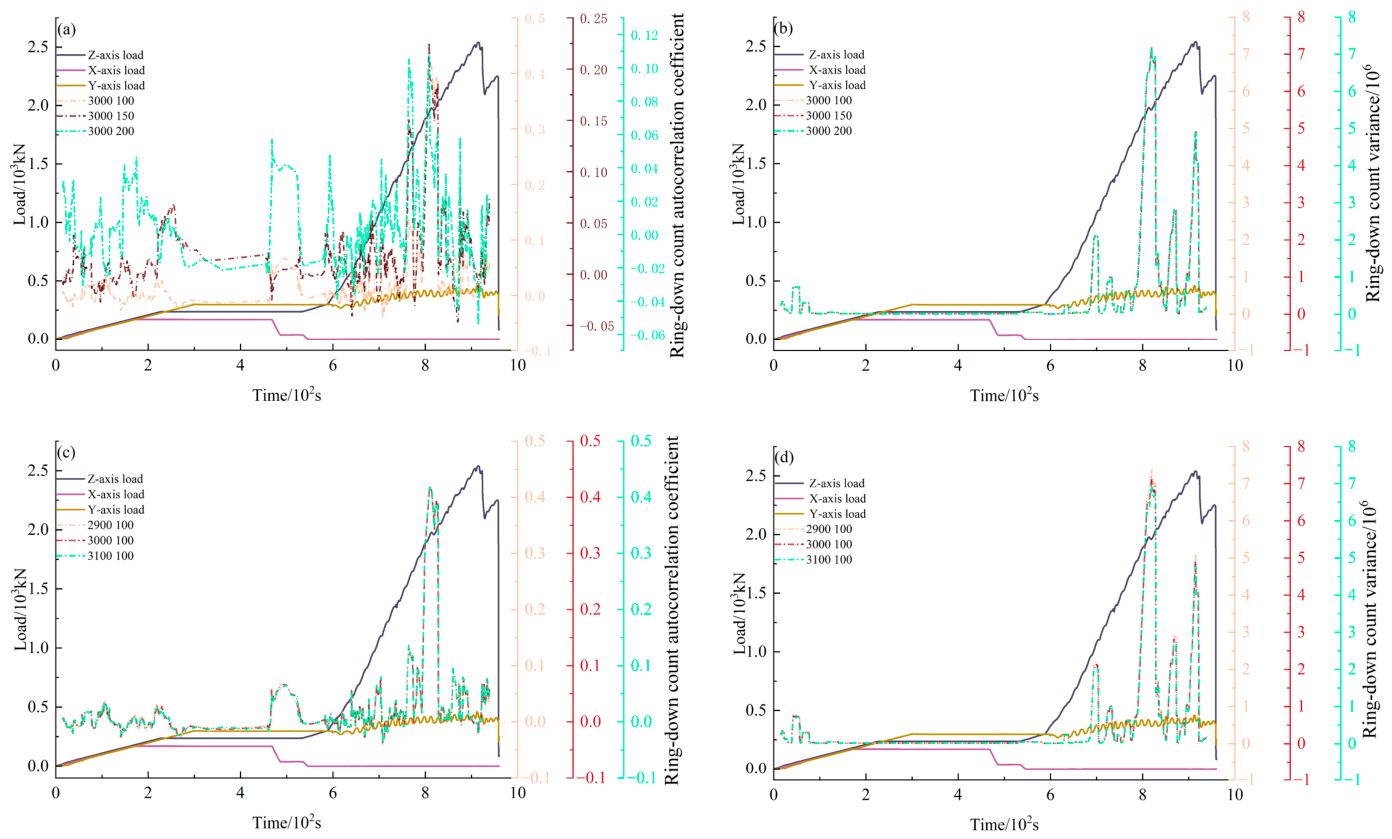
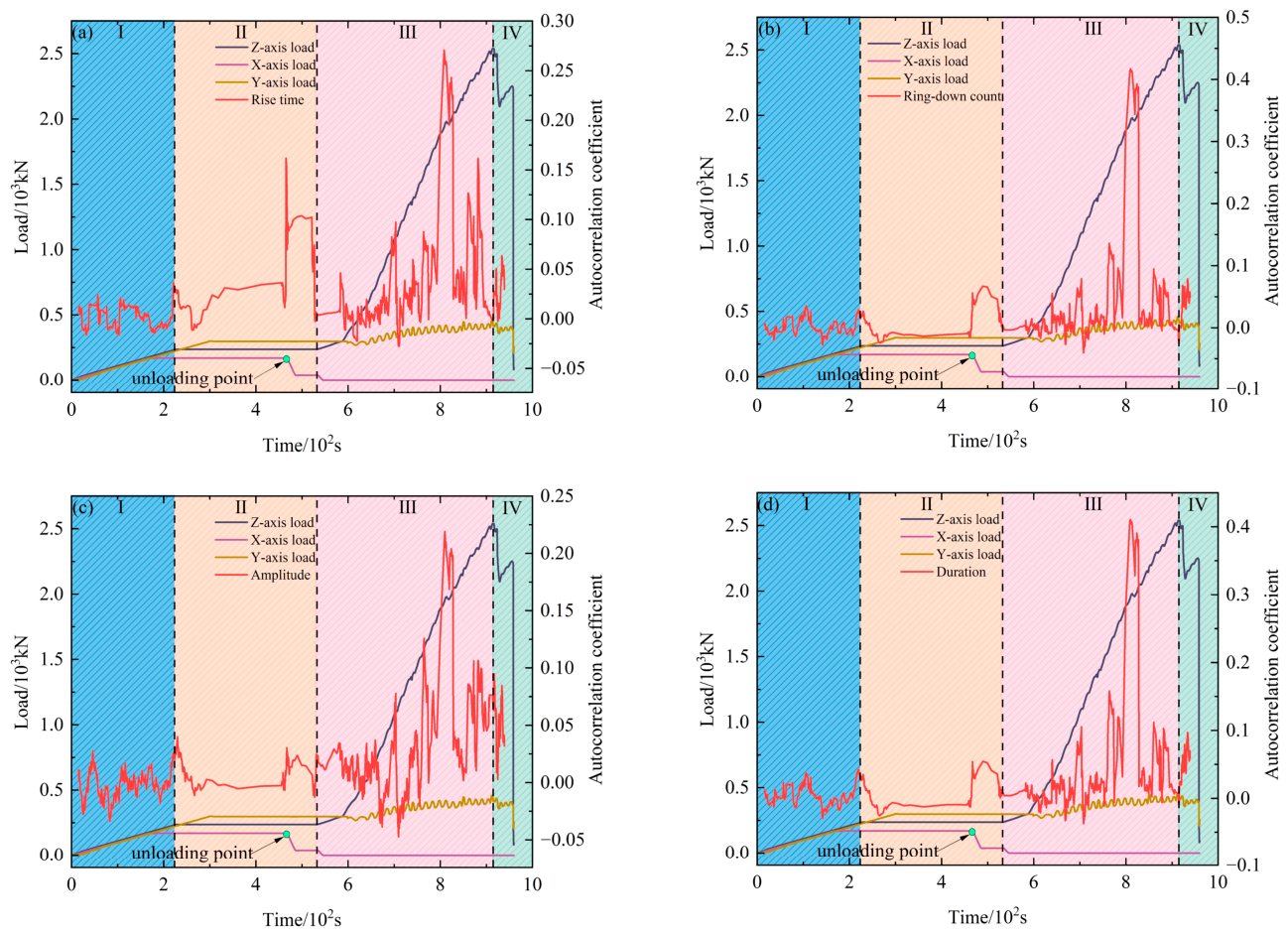
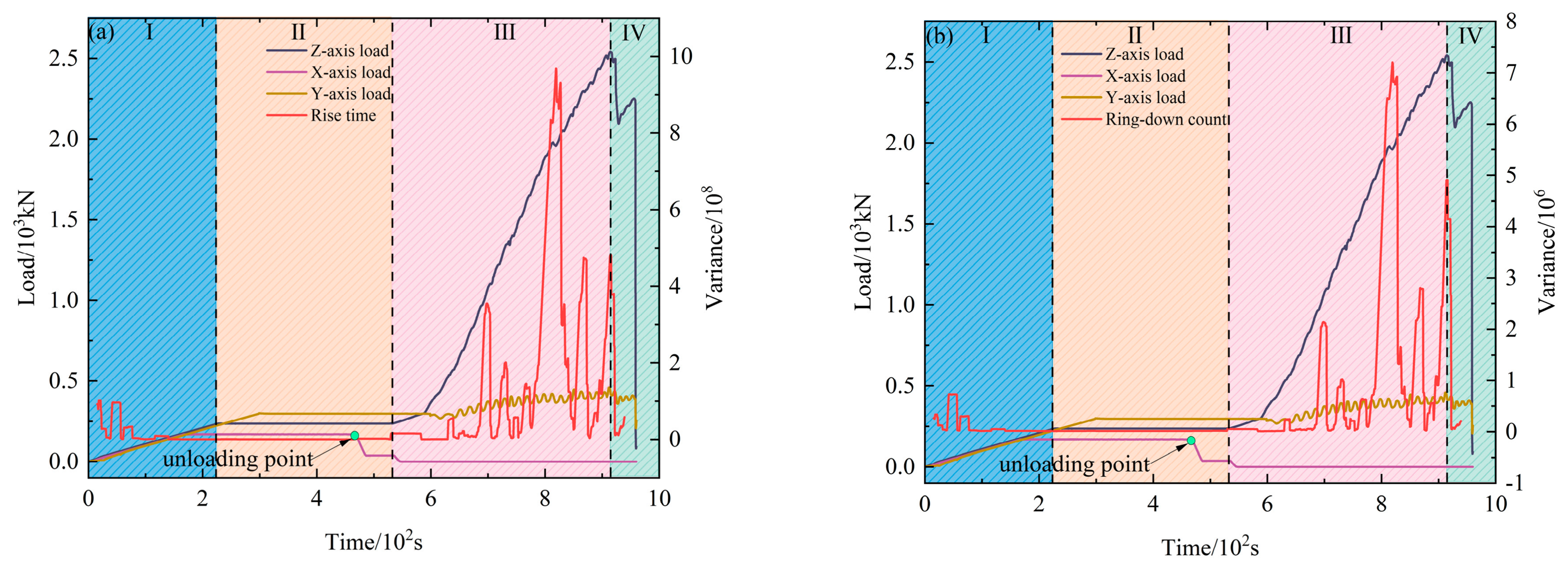
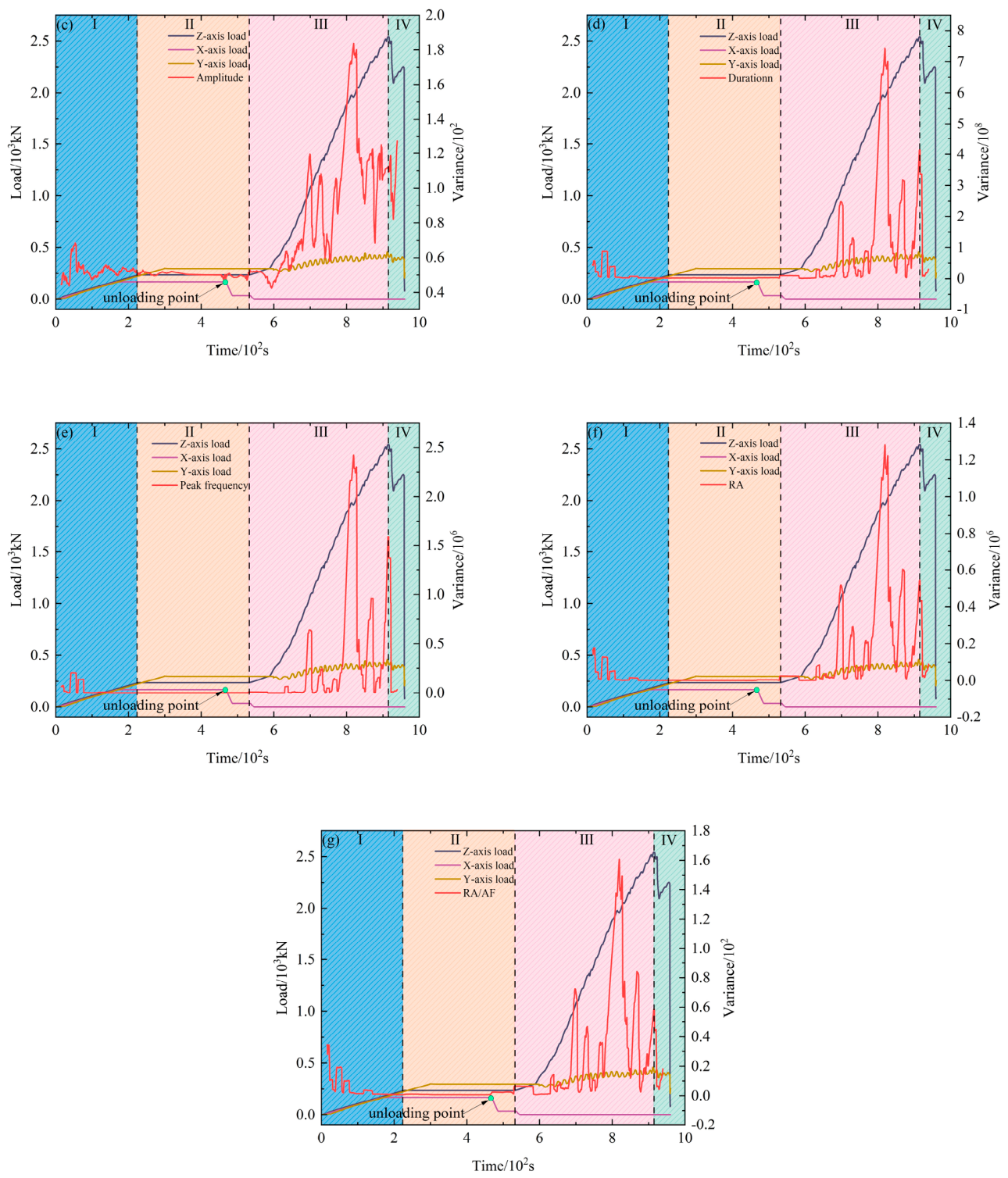
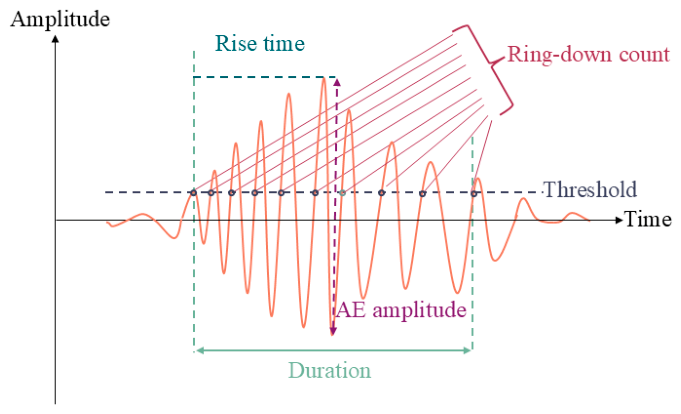
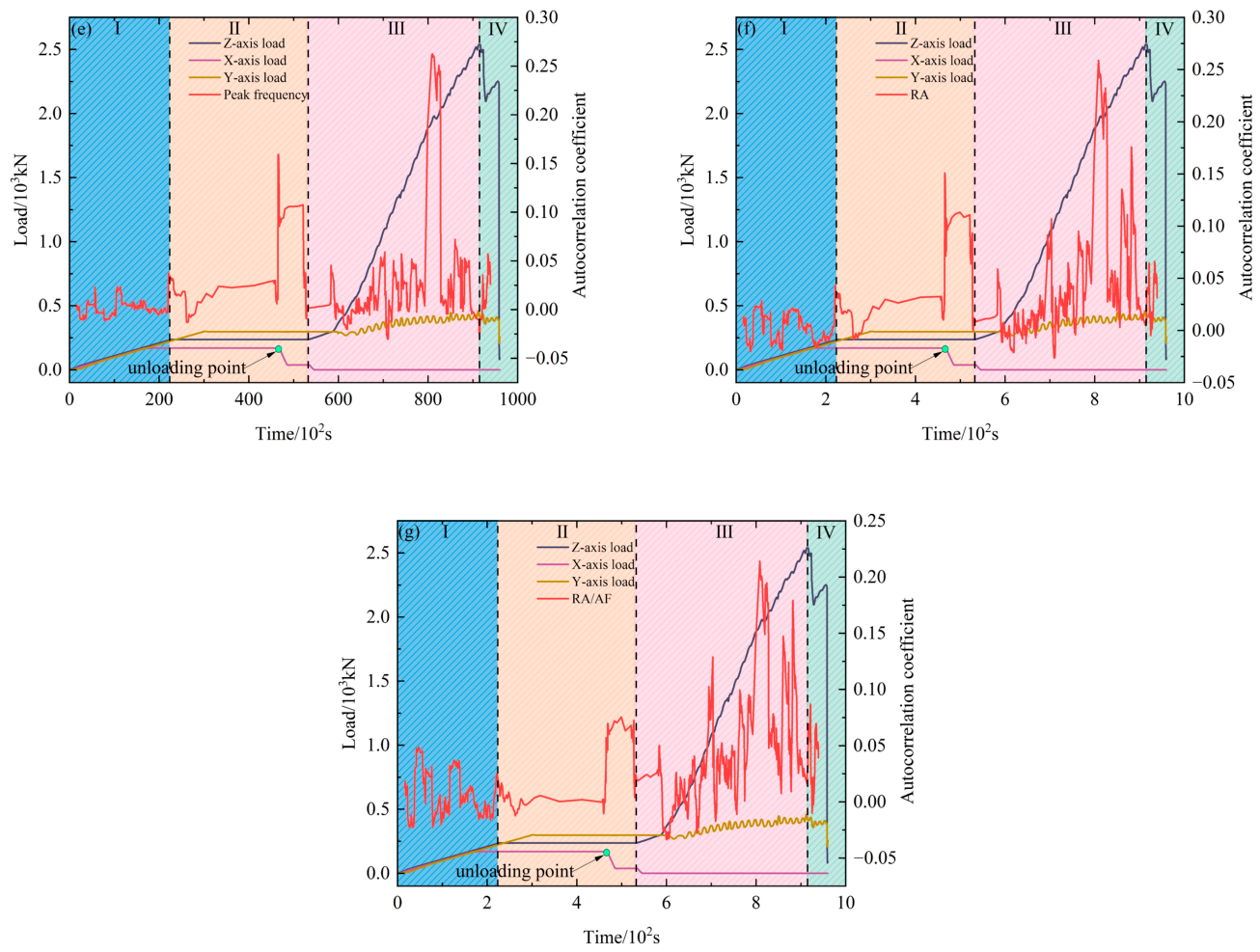
- Critical slowing down (CSD) theory-based analysis shows that autocorrelation coefficients and variances of acoustic emission (AE) characteristic parameters—rise time, ring-down count, amplitude, duration, peak frequency, RA and RA/AF—increase significantly prior to rockbursts, showing typical CSD characteristics. This confirms the sensitivity and applicability of CSD methods for rockburst early warning. Further analysis reveals that window length and lag step size barely affect the emergence timing of variance precursor points, while the peak of these precursor points decreases with increasing window length.
- (3)
- During unloading rockburst evolution, precursor manifestations of critical slowing down (CSD) indicators (autocorrelation coefficient and variance) in acoustic emission (AE) characteristic parameters show high consistency, with minimal time differences between precursor points, demonstrating excellent cross-parameter stability. The autocorrelation coefficient typically emerges 3–8% earlier than the variance, indicating the system follows a CSD trajectory from “diminished recovery capacity” to “increased fluctuations” prior to instability.
- (4)
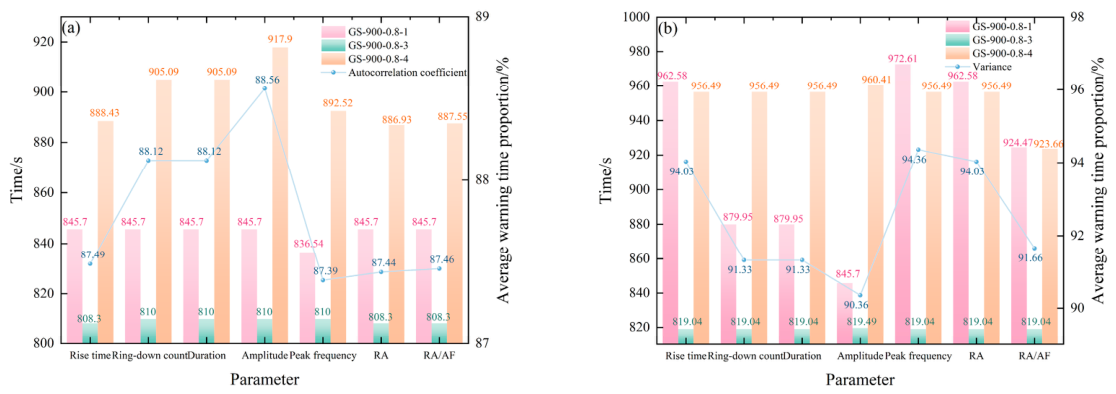
- For acoustic emission (AE) parameters, the average time proportion of autocorrelation coefficient precursor points falls between 87 and 89%, and that of variance falls between 91 and 95%. In contrast, the tensile-shear ratio (TSR) has an average precursor time proportion of 85.18%, indicating an earlier response during unloading-induced rockbursts and suitability for rapid early-stage warning. Conversely, critical slowing down (CSD) indicators (autocorrelation coefficient and variance) are more applicable for mid-to-late stage warning as the system nears instability. This complementary timing advantage suggests that combining TSR and CSD indicators can improve the effectiveness of rockburst early warning at different stages.
- (5)
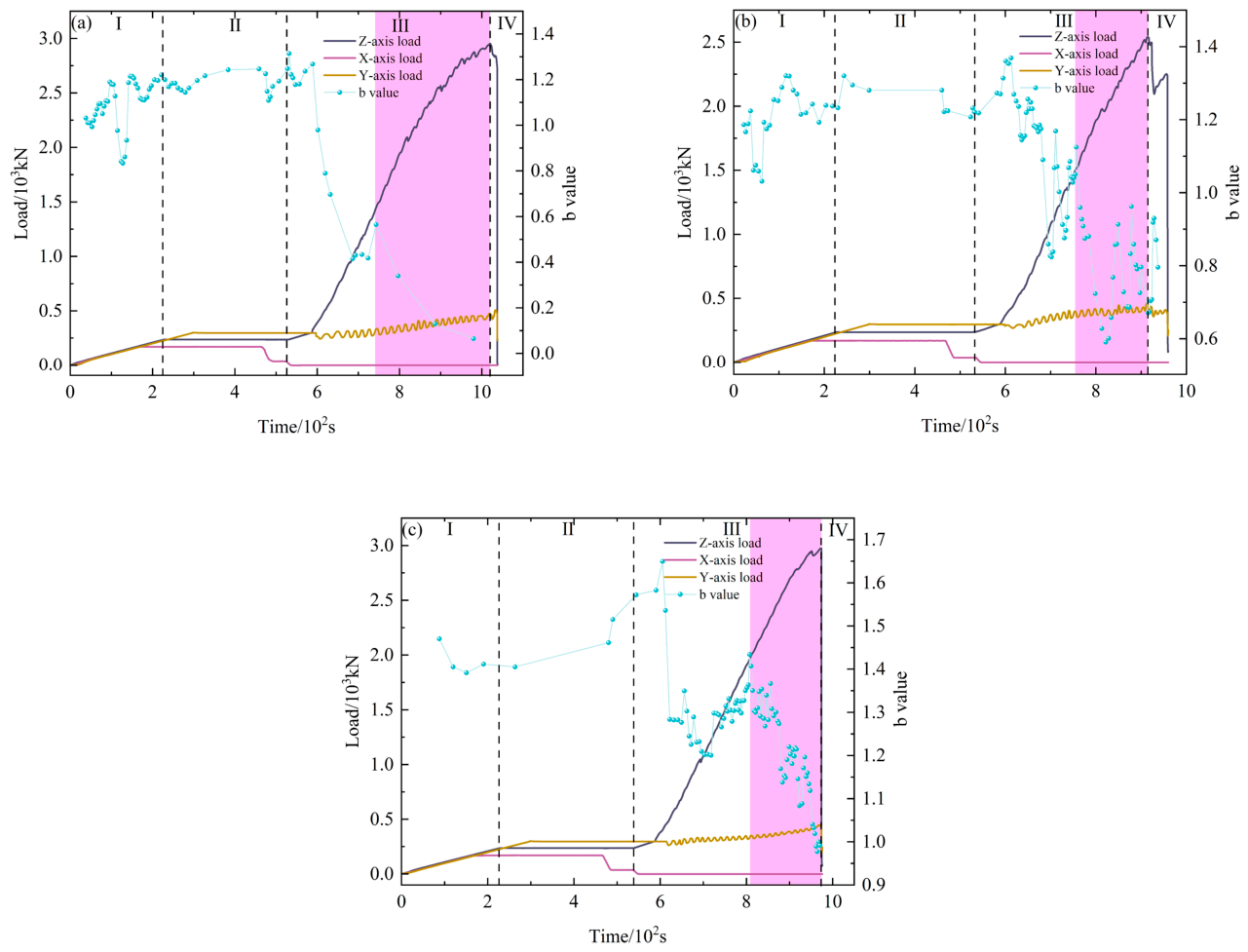
- Prior to granite failure, the acoustic emission (AE) b-value declines rapidly with fluctuations. Notably, the precursor points identified by the tensile-shear ratio (TSR) and critical slowing down (CSD) theory fall within the b-value decreasing interval before peak stress. This consistency confirms the reliability of the TSR and CSD methods for analyzing granite rockburst failure. Furthermore, integrating TSR, variations in CSD indicators (autocorrelation coefficient and variance) of AE parameters and AE b-value evolution characteristics effectively reveal the evolutionary patterns of granite rockburst failure.
Author Contributions
Funding
Institutional Review Board Statement
Informed Consent Statement
Data Availability Statement
Conflicts of Interest
References
- Li, M.L.; Li, K.G.; Wu, S.C.; Qin, Q.C.; Zheng, Z. Tunnel rockburst with a single set of joints under true-triaxial stress condition. J. Rock Mech. Geotech. Eng. 2025, 17, 4827–4851. [Google Scholar] [CrossRef] [Scilit]
- Zhou, J.; Li, X.; Mitri, H.S. Evaluation method of rockburst: State-of-the-art literature review. Tunn. Undergr. Space Technol. 2018, 81, 632–659. [Google Scholar] [CrossRef] [Scilit]
- Liu, J.; Zhang, L.M.; Cong, Y.; Wang, Z.Q. Research on the mechanical characteristics of granite failure process under true triaxial stress path. Rock Soil Mech. 2021, 42, 2069–2077. [Google Scholar] [CrossRef]
- Imashev, A.; Suimbayeva, A.; Zhunusbekova, G.; Adoko, A.C.; Issakov, B. Assessing stability of mine workings driven in stratified rock mass. Min. Miner. Depos. 2024, 18, 82–88. [Google Scholar] [CrossRef] [Scilit]
- Sun, Y.S.; Yu, F.; Lv, J.G. Research on the Characteristics of Acoustic Emission Activities of Granite and Marble under Different Loading Methods. Lithosphere 2023, 2023, 2773795. [Google Scholar] [CrossRef] [Scilit]
- Wang, C.S.; Wan, H.; Ma, J.J.; Chen, X.L. Acoustic Emission Characteristics and Initiation Mechanism of Instantaneous Rock Burst for Beishan Granite. Shock Vib. 2024, 2024, 6813580. [Google Scholar] [CrossRef] [Scilit]
- Zhao, F.; Meng, S.Z.; Liu, D.Q.; Huang, Z.Q.; Yuan, G.X.; Hu, C.Y.; Wang, H.Y.; Wang, H.J. Failure precursor of granite rockburst based on acoustic emission signal characteristics. Chin. J. Rock Mech. Eng. 2024, 43, 2669–2686. [Google Scholar]
- Liu, J.; Zhou, Z.H.; Zhang, J.; Wang, C.; Hou, T.K.; Qiao, M. Acoustic emission characteristics of diorite at varying unloading rates and identification of its unsteady phases. Rock Soil Mech. 2025, 46, 225–232+243. [Google Scholar] [CrossRef]
- Gao, F.Q.; Zhang, C.Y.; Han, L.C.; Xia, Y.X.; Gao, Q.W.; Zhou, Y.Q.; Li, D.Y. Study on the evolution law of acoustic emission time series characteristics of coal-rock assemblage under true triaxial conditions. Front. Earth Sci. 2025, 13, 1594518. [Google Scholar] [CrossRef] [Scilit]
- Liu, S.J.; Zheng, H.J.; Chen, G.Q.; Hu, Y.T.; Meng, K. Acoustic emission precursor information of rock failure under true triaxial loading and unloading conditions. Front. Earth Sci. 2023, 11, 1182413. [Google Scholar] [CrossRef] [Scilit]
- Sun, B.; Ren, F.Q.; Liu, D.Q. Research on the failure precursors of layered slate based on multifractal characteristics of acoustic emission. Rock Soil Mech. 2022, 43, 5. [Google Scholar] [CrossRef]
- Li, P.; Sun, J.L.; Cai, M.F.; Ren, F.H.; Guo, Q.F.; Miao, S.J.; Wu, X. Acoustic emission behavior of rock materials containing two preexisting flaws and an opening subjected to uniaxial compression: Insights into self-similarity, chaotic, and fractal features. J. Mater. Res. Technol. 2022, 20, 1786–1801. [Google Scholar] [CrossRef] [Scilit]
- Du, K.; Li, X.F.; Tao, M.; Wang, S.F. Experimental study on acoustic emission (AE) characteristics and crack classification during rock fracture in several basic lab tests. Int. J. Rock Mech. Min. Sci. 2020, 133, 104411. [Google Scholar] [CrossRef] [Scilit]
- Ju, S.Y.; Li, D.S.; Jia, J.Q. Machine-learning-based methods for crack classification using acoustic emission technique. Mech. Syst. Signal Process. 2022, 178, 109253. [Google Scholar] [CrossRef] [Scilit]
- Ling, K.; Liu, D.Q.; Wang, S.Y.; Guo, Y.P.; Zhang, Y.Y.; Yang, J.S.; Zhang, X.P. Research on the synergetic precursors identification of rockburst based on the critical slowing-down theory and the Mann–Kendall test. Bull. Eng. Geol. Environ. 2025, 84, 531. [Google Scholar] [CrossRef] [Scilit]
- Li, K.H.; Du, G.Z.; Han, D.Y.; Yin, Z.Y.; Li, J.T.; Lin, H. Mechanical and acoustic emission characteristics of anisotropic rock subjected to tiered cyclic intermediate principal stress. Eng. Geol. 2025, 358, 108403. [Google Scholar] [CrossRef] [Scilit]
- Li, J.Y.; Liu, D.Q.; He, M.C.; Guo, Y.P.; Wang, H.S. Experimental investigation of true triaxial unloading rockburst precursors based on critical slowing-down theory. Bull. Eng. Geol. Environ. 2023, 82, 65. [Google Scholar] [CrossRef] [Scilit]
- Zhu, C.; Huang, M.; Ren, F.Q.; Li, X.S.; Gu, J.Z.; Li, H.B.; He, M.C. Multivariate acoustic emissions precursors of rockburst from the perspective of early warning. Int. J. Min. Sci. Technol. 2025, 35, 703–717. [Google Scholar] [CrossRef] [Scilit]
- Wang, C.Y.; Sui, Q.R.; Liu, C.C.; Yan, Y.H.; Zhu, H.J.; Guo, Y. Test study on failure precursors of orthogonal cross fractured sandstone under uniaxial compression. J. Vib. Shock 2024, 43, 202–212+257. [Google Scholar] [CrossRef]
- Wang, Z.; Yang, C.; Lin, H. Fracture instability and acoustic emission critical slowing down characteristics of rock with hole-shaped flaw under the coupling of high-temperature and cyclic load. Comput. Part. Mech. 2025, 12, 2183–2205. [Google Scholar] [CrossRef] [Scilit]
- Saik, P.; Lozynskyi, V.; Berdnyk, M.; Klimov, D. Dynamics of temperature-strength changes in the immediate roof and formation of the gasified cavity of an underground gasifier. Eng. J. Satbayev Univ. 2026, 48, 16–28. [Google Scholar] [CrossRef] [Scilit]
- Pan, C.; Liu, C.Y.; Zhao, G.M.; Yuan, W.; Wang, X.; Meng, X.R. Fractal characteristics and energy evolution analysis of rocks under true triaxial unloading conditions. Fractal Fract. 2024, 8, 387. [Google Scholar] [CrossRef] [Scilit]
- Liu, C.Y.; Zhao, G.M.; Xu, W.S.; Meng, X.R.; Liu, Z.X.; Cheng, X.; Lin, G. Experimental study on failure characteristics of single-sided unloading rock under different intermediate principal stress conditions. Int. J. Min. Sci. Technol. 2023, 33, 275–287. [Google Scholar] [CrossRef] [Scilit]
- Li, H.R.; He, M.C.; Xiao, Y.M.; Liu, D.Q.; Hu, J.; Cheng, T. Granite strainbursts induced by true triaxial transient unloading at different stress levels: Insights from excess energy ΔE. J. Rock Mech. Geotech. Eng. 2025, 17, 7078–7092. [Google Scholar] [CrossRef] [Scilit]
- Wu, M.; Ye, Y.C.; Wang, Q.H.; Hu, N.Y. Development of rockburst research: A comprehensive review. Appl. Sci. 2022, 12, 974. [Google Scholar] [CrossRef] [Scilit]
- Hu, C.Y.; Mei, Z.H.; Xiao, Z.H.; Mei, F.D. Strain-Mode Rockburst Dynamics in Granite: Mechanisms, Evolution Stages, and Acoustic Emission-Based Early Warning Strategies. Appl. Sci. 2025, 15, 4884. [Google Scholar] [CrossRef] [Scilit]
- Liu, J.Z.; Gao, Y.T.; Chen, F.; Cao, Z.S. Mechanism study and tendency judgement of rockburst in deep-buried underground engineering. Minerals 2022, 12, 1241. [Google Scholar] [CrossRef] [Scilit]
- Sun, Y.; Tan, C.X. An analysis of present-day regional tectonic stress field and crustal movement trend in China. J. Geomech. 1995, 1, 1–12. [Google Scholar]
- Jiang, J.Q.; Su, G.S.; Liu, Y.X.; Zhao, G.F.; Yan, X.Y. Effect of the propagation direction of the weak dynamic disturbance on rock failure: An experimental study. Bull. Eng. Geol. Environ. 2021, 80, 1477–2671. [Google Scholar] [CrossRef] [Scilit]
- Zhao, K.; Zhong, J.C.; Wen, D.T.; Liu, Y. Predicting destabilisation precursor phenomena in low-strength molybdenum ore during destruction: Insights based on critical slowing down and cusp catastrophe theory. Nondestruct. Test. Eval. 2025, 1–25. [Google Scholar] [CrossRef] [Scilit]
- Liang, P.; Li, Z.; Li, Q.; Yu, G.Y.; Wang, S.; Han, Q.; Huang, X.H. The critical slowing-down characteristics of multi-physical field monitoring information about the brittle failure of rock under three-point bending. Nondestruct. Test. Eval. 2024, 39, 701–723. [Google Scholar] [CrossRef] [Scilit]
- Kong, X.G.; Zhan, M.Z.; Cai, Y.C.; Ji, P.F.; He, D.; Zhao, T.S.; Hu, J.; Lin, X. Precursor signal identification and acoustic emission characteristics of coal fracture process subjected to uniaxial loading. Sustainability 2023, 15, 11581. [Google Scholar] [CrossRef] [Scilit]
- Casas, N.; Giorgetti, C.; Pignalberi, F.; Scuderi, M.M. The role of grain size on shear localization illuminated by acoustic emissions. J. Geophys. Res. Solid Earth 2025, 130, e2024JB030448. [Google Scholar] [CrossRef] [Scilit]
- Zhang, K.; Zhang, S.; Ren, J.X.; Wang, M.; Jing, S.; Zhang, W.J. Study on Characteristics of Acoustic Emission b Value of Coal Rock with Outburst-Proneness under Coupled Static and Dynamic Loads. Shock Vib. 2023, 2023, 2400632. [Google Scholar] [CrossRef] [Scilit]
- Zhang, L.; Li, Z.J.; Li, Q.; Liang, P.; Cheng, H.J. Influence of intermediate Principal Stress on Triaxial Unloading Failure and Energy Characteristics of Deep Hard Rock. Min. RD 2022, 42, 127–132. [Google Scholar] [CrossRef]
- Sun, F.Y.; Guo, J.Q.; Fan, J.Q.; Liu, X.L. Experimental study on rockburst fragment characteristic of granite under different loading rates in true triaxial condition. Front. Earth Sci. 2022, 10, 995143. [Google Scholar] [CrossRef] [Scilit]
- Su, G.S.; Jiang, J.Q.; Feng, X.T.; Mo, C.; Jiang, Q. Experimental study of ejection process in rockburst. Chin. J. Rock Mech. Eng. 2016, 35, 1990–1999. [Google Scholar]
- Wang, J.X.; Liang, P.; Zhang, Y.B.; Yao, X.L.; Yu, G.Y.; Han, Q. Real-time identification of acoustic emission signals of rock tension-shear fracture based on machine learning and study on precursory characteristics. Mech. Syst. Signal Process. 2025, 230, 112665. [Google Scholar] [CrossRef] [Scilit]
- Zhu, X.; Tang, Y.; Fan, J.; Hu, J.W.; Liu, J.F.; He, C.L. Experimental study on failure precursors of fine sandstone based on critical slowing down theory. Chin. J. Rock Mech. Eng. 2022, 41, 53–61. [Google Scholar]
- Wei, Y.; Li, Z.H.; Kong, G.X.; Zhang, Z.B.; Wang, J.L.; Cheng, F.Q. Critical slowing characteristics of sandstone under uniaxial compression failure. J. China Coal Soc. 2018, 43, 427–432. [Google Scholar] [CrossRef]




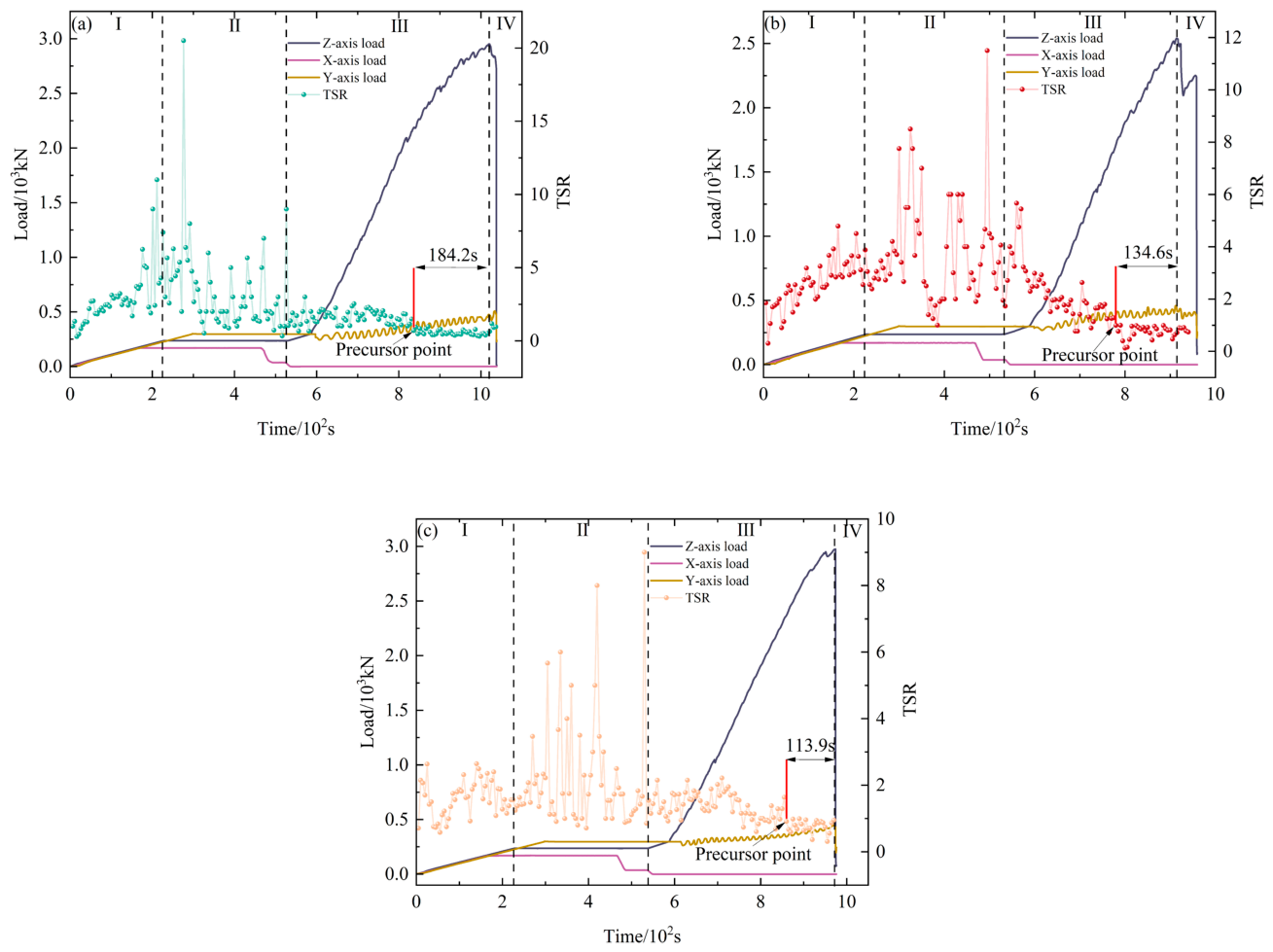





| Specimen Number | TSR | Rockburst Time/s | Warning Time/s | Early Warning Lead Time/s | Average Early Warning Time/s | Proportion of Warning Time/% | Average Proportion of Warning Time/% |
|---|---|---|---|---|---|---|---|
| GS-900-0.8-1 | 0.70 | 1020.50 | 836.30 | 184.20 | 144.2 | 81.95 | 85.18 |
| GS-900-0.8-3 | 0.99 | 914.60 | 780.00 | 134.60 | 85.28 | ||
| GS-900-0.8-4 | 0.91 | 973.90 | 860.00 | 113.90 | 88.30 |
| Specimen Number | Parameter/s | ||||||
|---|---|---|---|---|---|---|---|
| Rise Time | Ring-Down Count | Duration | Amplitude | Peak Frequency | RA | RA/AF | |
| GS-900-0.8-1 | 174.80 | 174.80 | 174.80 | 174.80 | 183.96 | 174.80 | 174.80 |
| GS-900-0.8-3 | 106.30 | 104.60 | 104.60 | 104.60 | 104.60 | 106.30 | 106.30 |
| GS-900-0.8-4 | 85.47 | 68.81 | 68.81 | 56.00 | 81.38 | 86.97 | 86.36 |
| Average | 122.19 | 116.07 | 116.07 | 111.80 | 123.31 | 122.69 | 122.49 |
| Specimen Number | Parameter/s | ||||||
|---|---|---|---|---|---|---|---|
| Rise Time | Ring-Down Count | Duration | Amplitude | Peak Frequency | RA | RA/AF | |
| GS-900-0.8-1 | 140.55 | 140.55 | 140.55 | 174.8 | 47.89 | 57.92 | 96.03 |
| GS-900-0.8-3 | 95.56 | 95.56 | 95.56 | 95.11 | 95.56 | 95.56 | 95.56 |
| GS-900-0.8-4 | 17.41 | 17.41 | 17.41 | 13.5 | 17.41 | 17.41 | 50.24 |
| Average | 84.51 | 84.51 | 84.51 | 94.47 | 53.62 | 56.96 | 80.61 |
| Specimen Number | GS-900-0.8-1 | GS-900-0.8-3 | GS-900-0.8-4 |
|---|---|---|---|
| TSR precursor time/s | 836.30 | 780.00 | 860.00 |
| AE parameter precursor interval/s | 836.54–972.61 | 808.30–819.49 | 886.93–960.41 |
| b-value decreasing interval/s | 743.46–979.97 | 757.00–917.77 | 807.43–970.66 |
Disclaimer/Publisher’s Note: The statements, opinions and data contained in all publications are solely those of the individual author(s) and contributor(s) and not of MDPI and/or the editor(s). MDPI and/or the editor(s) disclaim responsibility for any injury to people or property resulting from any ideas, methods, instructions or products referred to in the content. |
© 2026 by the authors. Licensee MDPI, Basel, Switzerland. This article is an open access article distributed under the terms and conditions of the Creative Commons Attribution (CC BY) license.
Share and Cite
Liang, P.; Lu, Y.; He, Z.; Cao, Y.; Han, Q.; Sun, Q. Synergistic Identification of Rockburst Precursors Integrating Tensile Shear Fracture Evolution and Critical Slowing Down. Appl. Sci. 2026, 16, 3962. https://doi.org/10.3390/app16083962
Liang P, Lu Y, He Z, Cao Y, Han Q, Sun Q. Synergistic Identification of Rockburst Precursors Integrating Tensile Shear Fracture Evolution and Critical Slowing Down. Applied Sciences. 2026; 16(8):3962. https://doi.org/10.3390/app16083962
Chicago/Turabian StyleLiang, Peng, Yao Lu, Zhilong He, Yongsheng Cao, Qiang Han, and Qingli Sun. 2026. "Synergistic Identification of Rockburst Precursors Integrating Tensile Shear Fracture Evolution and Critical Slowing Down" Applied Sciences 16, no. 8: 3962. https://doi.org/10.3390/app16083962
APA StyleLiang, P., Lu, Y., He, Z., Cao, Y., Han, Q., & Sun, Q. (2026). Synergistic Identification of Rockburst Precursors Integrating Tensile Shear Fracture Evolution and Critical Slowing Down. Applied Sciences, 16(8), 3962. https://doi.org/10.3390/app16083962