Article

Effects of Vitamin C-Containing Commercial Toothpastes on Surface Roughness and Microhardness of Composite Resins: An In Vitro Study


1
Department of Restorative Dentistry, Faculty of Dentistry, Inonu University, Malatya 44280, Turkey
2
Mechanical Engineering, Faculty of Engineering, Inonu University, Malatya 44210, Turkey
3
Department of Diagnostic Sciences, Texas A&M College of Dentistry, Dallas, TX 75246, USA
*
Author to whom correspondence should be addressed.
Appl. Sci. 2026, 16(8), 3899; https://doi.org/10.3390/app16083899
Submission received: 10 March 2026 / Revised: 5 April 2026 / Accepted: 8 April 2026 / Published: 17 April 2026
(This article belongs to the Section Applied Dentistry and Oral Sciences)

Abstract

Background: The aim of this in vitro study is to comparatively evaluate the effects of toothpaste formulations containing and not containing vitamin C on the surface roughness and microhardness of different composite resin materials. Methods: Four different toothpastes (Sensodyne, Colgate, Klorhex, Dentiste) and three composite resin materials (Arabesk—microhybrid, Charisma Smart—nanohybrid, Estelite Sigma Quick—supra-nano filled) were used in the study. Composite discs measuring 10 mm in diameter and 2 mm in thickness were prepared and subjected to brushing simulations equivalent to 1 month (150 s) and 3 months (450 s). Surface roughness was measured using a mechanical profilometer, and microhardness was evaluated with a Vickers hardness tester. Surface morphology was further examined in detail using scanning electron microscopy (SEM) and atomic force microscopy (AFM). For statistical analyses, one-way ANOVA, repeated measures ANOVA, Kruskal–Wallis test, and Friedman test were employed, with the significance level set at p < 0.05. Results: Brushing procedures resulted in statistically significant changes in the surface roughness (ΔRa) and microhardness of the composites across all toothpaste groups (p < 0.05). The increase in surface roughness varied depending on the composite type, with the highest increase observed in the ESQ composite. In the ESQ composite, higher ΔRa values were obtained, particularly in the Dentiste (≈1.70 µm) and Colgate (≈1.52 µm) groups. Microhardness results, however, differed depending on the composite and toothpaste type. While a general trend toward increased microhardness was observed, a significant decrease in microhardness was detected in the Colgate and Dentiste groups of the ESQ composite (p < 0.05). Conclusions: This study demonstrates that the addition of vitamin C to toothpaste formulations increases the surface roughness of restorative materials and results in significant changes in their microhardness properties. These findings highlight the importance of considering the type of toothpaste used by patients in clinical practice, particularly in terms of restorative material selection and the long-term preservation of surface integrity.

1. Introduction

Vitamin C, also known as ascorbic acid, is generally obtained through diet and is considered an essential element necessary for the normal functioning of the body [1,2]. Vitamin C, which acts as a cofactor in enzymatic reactions, is recognized as the most important hydrophilic antioxidant. Many plants and animals can synthesize vitamin C from D-galactose and D-glucose. However, humans lack the enzyme L-gulonolactone oxidase (GLO) and therefore cannot synthesize vitamin C, requiring it to be obtained from external sources [3,4]. Vitamin C deficiency leads to problems in collagen production. As a result, impaired wound healing, fatigue, open skin lesions, and dry skin may occur. The most common intraoral finding is swollen, spongy, bleeding gingiva [5]. In healthy individuals, scurvy may develop when daily vitamin C intake falls short by as little as 10 mg. Moreover, prolonged deficiency increases the risk of cancer, anemia, and infections [6,7].
Healthy teeth and periodontal tissues are among the most important prerequisites for good oral health [8,9]. Good oral health can be achieved through proper oral hygiene practices and regular dental check-ups. Toothbrushing is universally recognized as the primary method for maintaining oral hygiene [10]. The effectiveness of toothbrushing is further enhanced by the use of toothpaste. In recent years, to attract consumer interest and to potentially improve dental health outcomes, toothpaste manufacturers have introduced new formulations containing various innovative ingredients. For example, toothpastes containing xylitol, activated charcoal, hydroxyapatite, and blue covarine have become popular due to their claimed benefits [11,12]. These toothpastes are marketed not only for caries prevention but also for purposes such as tooth whitening, reducing sensitivity, and protecting the gums. Similarly, vitamin C-containing toothpastes have been launched in recent years, promoted for their potential roles in improving periodontal health and preventing dental caries [13]. Researchers continue to investigate the effects of such novel ingredients in toothpastes and report their findings [14,15,16].
Studies on oral health focus not only on teeth and periodontal tissues but also on restorative materials applied to teeth. Composite resins, widely used in restorative dentistry due to their aesthetic and functional properties, are a preferred choice, and their surface characteristics are critically important for the long-term success of restorations. The surface roughness and microhardness of composite resins directly influence their aesthetic performance, as well as clinical outcomes such as plaque accumulation, staining, and wear [17,18,19]. Consequently, interactions between composite resins and various chemical agents, toothpastes, and oral care products are extensively investigated in the dental literature [17,18,19]. Vitamin C-containing drugs and preparations can also interact with oral tissues and restorative materials. Particularly, vitamin C solutions, effervescent tablets, or syrups with low pH values may exert acidic effects on tooth hard tissues and composite resin surfaces [20,21]. Researchers have demonstrated that vitamin C-containing effervescent tablets and syrups can cause significant increases in surface roughness and alterations in microhardness on composite resin surfaces. These findings are noteworthy as they indicate that vitamin C-containing products may induce physical and chemical changes on restorative materials [17,21,22]. Previous review studies have shown that the effects of oral hygiene products on restorative materials are largely dependent on factors such as abrasion, chemical degradation, and material composition [23,24]. However, in the current literature, the effects of vitamin C-containing products on restorative materials have mostly been evaluated using liquid formulations; to the best of our knowledge, there are no studies that directly examine the effects of vitamin C-containing toothpastes on the surface properties of restorative materials. In light of this information, the aim of our study was to investigate the effects of vitamin C-containing toothpastes on the surface roughness and microhardness of different composite resin materials, thereby revealing their potential impact on restorative materials. The null hypotheses of the study were as follows:
  • The effect of formulations containing vitamin C toothpaste on the surface roughness of resin composites is comparable to that of formulations containing non-vitamin C toothpaste.
  • The effect of formulations containing vitamin C toothpaste on the surface microhardness of resin composites is comparable to that of formulations containing non-vitamin C toothpaste.

2. Materials and Methods

This study is an in vitro laboratory study. Four different toothpastes (Table 1) and three different composite resins (Table 2) were used in the study.

2.1. Sample Size Calculation

The G*Power software (G*Power Ver. 3.0.10, Germany) was used to calculate the sample size. At a 95% confidence level (α = 0.05) and 80% power (β = 0.20), assuming an effect size of 0.2, the minimum required sample size was calculated as 10 specimens per group.

2.2. Preparation of Specimens

Three different types of composites were used in the study: nanohybrid, supra-nano filler, and microhybrid (Table 2). These materials were selected to represent commonly used composite types with different filler particle characteristics. Specimens were prepared as disc-shaped samples with a diameter of 10 mm and a thickness of 2 mm using a custom-made Teflon mold. After placing the composites into the molds, a transparent strip was gently pressed onto the surface, and the samples were polymerized for 20 s using a second-generation LED curing unit (Guilin Woodpecker Medical Instrument Co., Guilin, China) emitting light at a wavelength of 470 nm (light intensity 1200 mW/cm2). The discs were then removed from the molds and additionally cured for 20 s on the opposite surface. Subsequently, the specimens were polished using extra-coarse, coarse, medium, and fine discs (OptiDisc, Kerr, FL, USA) attached to a rotary handpiece operating at 15,000 rpm, following the manufacturer’s instructions. After polishing, the thickness of the samples was measured using a digital caliper (Insize Co., Ltd., Suzhou, China) to ensure uniform thickness. The prepared specimens were stored in distilled water at 37 °C for 24 h.

2.3. Brushing Procedure

A total of four different toothpastes were applied to the three types of composite resins. One of the toothpastes was selected as the Control Group (Sensodyne, GlaxoSmithKline, Brentford, SD, USA). The other groups consisted of three different vitamin C-containing toothpastes. Brushing of the specimens was performed by a single operator using a rechargeable toothbrush (Oral B Clean DB04; Procter & Gamble, Cincinnati, OH, USA) to ensure standardization. The pressure applied during brushing was controlled by the operator using an electronic toothbrush with pressure-sensitive feedback and was kept as constant as possible. A round headed brush head with medium bristles (Toocare, Shenzhen, China) was used during the brushing procedures, and the brush head was replaced for each sample. Toothpastes were prepared in slurry form by mixing them with distilled water in a 1:1 ratio to simulate clinical usage conditions and were applied fresh for each sample. Assuming that the oral cavity contains 28 teeth, the average contact time required for the surface of each tooth was calculated as 5 s [25]. Brushing times of 150 s and 450 s were used to simulate periods of 1 month and 3 months, respectively [26]. All procedures were carried out under standard laboratory conditions, and environmental factors such as temperature were kept constant throughout the experiment.

2.4. Calibration

All surface roughness and microhardness analyses of the specimens were performed by a single operator (FO). For this purpose, the operator was trained in the use of a profilometer (Mitutoyo SJ-210; Mitutoyo, Kawasaki, Japan) and a microhardness testing device (HMV-2, Shimadzu, Kyoto, Japan) [27]. For validation purposes, measurements were carried out on 10 composite specimens excluded from the study. These specimens were prepared from a single composite material to ensure consistency during the calibration process. Measurements were repeated after an interval of one week, and a reproducibility agreement of 90% was achieved.

2.5. Randomization (Blinding)

According to the computer-based randomization list generated by RANDOM.ORG, all composite samples were numbered and randomly assigned to 12 subgroups [27]. The toothpastes were applied using the same randomization method, ensuring a balanced distribution among the groups.

2.6. Measurement of Surface Roughness

Surface roughness measurements of all specimens were performed using a mechanical profilometer (Mitutoyo SJ-210; Mitutoyo, Kawasaki, Japan). Measurements were conducted at baseline (0 s), after 1 m (150 s), and after 3 m (450 s). For each specimen, measurements were taken from three different points equidistant from the center, at a speed of 0.25 mm/s and a cutoff length of 0.80 mm. The arithmetic mean of the obtained values (Ra, µm) was calculated and recorded.

2.7. Measurement of Surface Microhardness

The surface microhardness of all specimens was measured using a Vickers hardness tester (HMV-2, Shimadzu, Kyoto, Japan) and recorded as Vickers Hardness Number (VHN). Measurements were performed at baseline (0 s), after 1 month (150 s), and after 3 months (450 s). A dwell time of 15 s and a load of 0.49 N were applied to each specimen [28]. Hardness measurements were recorded in VHN by making three indentations on each specimen, starting from the center and spaced 100 μm apart.

2.8. Atomic Force Microscope (AFM) and Scanning Electron Microscope (SEM)

One sample randomly selected from each group was subjected to examination in AFM and SEM devices. AFM Device (Nanomagnetics Instruments, Oxford, UK) scanned an area of 10 × 10 μm at a speed of 1 Hz in contact mode. The 3D image of the obtained surface and the corresponding average surface roughness value (Ra) were presented together. All imaging was performed from the center of the samples to ensure standardization. XEI Data Analysis Program, version 1.6 (Park Systems Inc., Suwon, Republic of Korea) analysis software was used to obtain surface topography from AFM images and for roughness calculations. For SEM examination, the selected samples were coated with an Au-Pd alloy in a coating device BAL-TEC 050 (Capovani Brothers, Scotia, NY, USA) to increase conductivity. Then, images of the samples placed in the SEM device (EVO 40 Carl Zeiss, Oberkochen, Germany) were taken and recorded at magnifications of ×1000, ×5000 and ×10,000 at a voltage speed of 20.00 kv.

2.9. Statistical Analysis

The data were analyzed using the Statistical Package for the Social Sciences (SPSS) V.27 (IBM, Chicago, USA) software. The Shapiro–Wilk test was used to determine the distribution of the data. Repeated Measures ANOVA test was used to compare the parametric data obtained before and after brushing. Subsequently, depending on homogeneity, the data were compared using the post hoc Tukey and Games–Howell tests. The Friedman Two-Way Analysis of Variance was used for the comparison of non-parametric data. One-Way ANOVA test was used to examine the data according to toothpaste and composite variables. The homogeneity distribution of the data was determined using Mauchly’s Test of Sphericity. For the comparison of non-parametric data, the Kruskal–Wallis test was applied. Multiple comparisons were performed using the Bonferroni post hoc correction. The significance level for all tests was set at p < 0.05.

3. Results

3.1. Surface Roughness Analysis

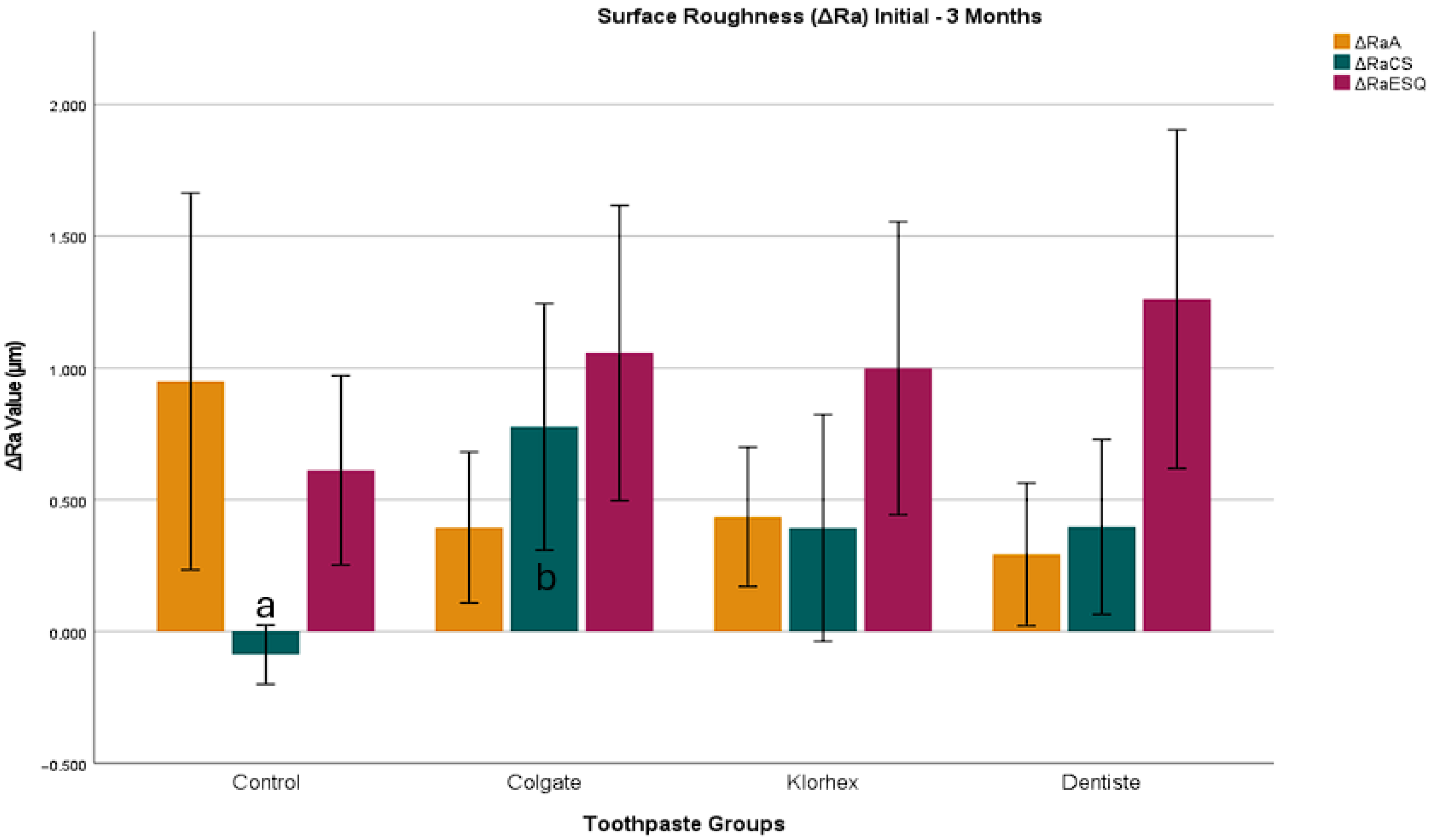
According to the statistical analyses presented in Table 3 and Figure 1, brushing procedures performed with the control group and vitamin C-containing toothpastes resulted in statistically significant increases in composite surface roughness. Analyses were performed separately based on the variables of time, type of toothpaste, and type of composite; comparisons involving interactions of multiple variables were not found to be statistically significant (Table 3).
The results can be summarized as follows:
  • Baseline Measurements
The lowest baseline surface roughness was measured in the A composite; however, this difference was not statistically significant among the groups (p > 0.05).
  • 1-Month Brushing Results
Except for the A and CS composites brushed with Dentiste toothpaste, all groups showed a significant increase in surface roughness values (p < 0.05) (Table 3).
Specifically in the ESQ composite: Surface roughness increased to a high level and was statistically significant with Colgate (d = 1.019), Dentiste (d = 1.250), and Klorhex (d = 1.001) toothpastes (Table 3). The average surface roughness values of the A and CS composites after one month of brushing were found to be similar (Table 3).
  • 3-Month Brushing Results
In the control group, the surface roughness increases in the A (d = 0.949) and ESQ (r = 0.887) composites were found to be statistically significant (p < 0.05) (Table 3). Colgate (d = 1.351) and Klorhex (d = 1.284) toothpastes significantly increased surface roughness in all composites (p < 0.05). For both toothpastes, the highest increase was observed in the ESQ composite, whereas Dentiste toothpaste caused a significant increase in surface roughness only in the ESQ composite (d = 1.404, p < 0.05) (Table 3) (Figure 1).
After three months of brushing, the ESQ composite exhibited the highest surface roughness values compared to the other composites, and the difference from baseline values was found to be statistically significant (p < 0.05) (Table 3) (Figure 1).

3.2. Microhardness Analysis

According to the statistical analyses presented in Table 4, brushing procedures performed with both the control toothpaste and the vitamin C-containing toothpastes led to statistically significant changes in the surface microhardness of the composites. The analyses were conducted separately for the variables of time, toothpaste type, and composite type; comparisons involving the interaction of multiple variables were not found to be statistically significant (Table 4).
The findings can be summarized as follows:
  • Baseline Measurements
The lowest baseline surface microhardness was measured in the ESQ composite (Table 4). The baseline microhardness values of the A and CS composites were found to be similar (Table 4).
  • Results After 1 Month of Brushing
Overall, an increase in surface microhardness was observed in the composites after one month of brushing (Table 4). The most pronounced increase was detected in the ESQ composite brushed with Klorhex toothpaste, and this increase was statistically significant (p < 0.001, d = 3.720) (Table 4).
  • Results After 3 Months of Brushing
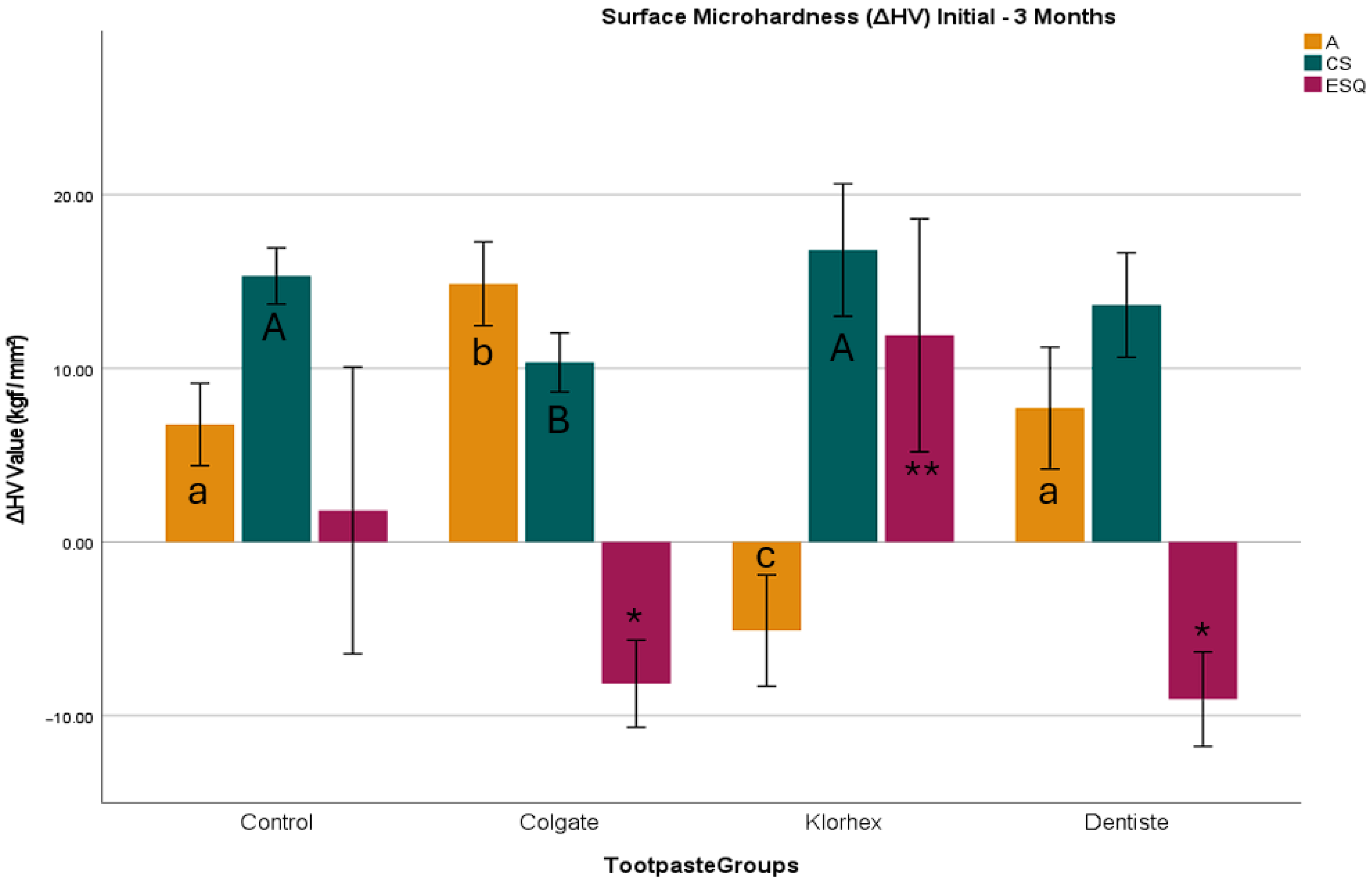
In the control group, the highest increase in surface microhardness was observed in the CS composite (Table 4) (Figure 2). In the A composite brushed with Colgate toothpaste, surface microhardness significantly increased compared to the baseline, reaching the highest value (p < 0.001, r = 0.887) (Table 4) (Figure 2). Colgate toothpaste (d = 2.326) led to a significant reduction in surface microhardness in the ESQ composite (p < 0.001). Similarly, Dentiste toothpaste (d = 2.383) caused the greatest decrease in microhardness in the ESQ composite, and this change was statistically significant (p < 0.001) (Table 4) (Figure 2). In the A composite brushed with Klorhex toothpaste, surface microhardness also decreased, and this reduction was statistically significant (p = 0.017, d = 1.138) (Table 4) (Figure 2).
Following three months of brushing, the ESQ composite exhibited both the lowest baseline microhardness values and notable reductions in microhardness after brushing with certain toothpastes.

3.3. SEM Results

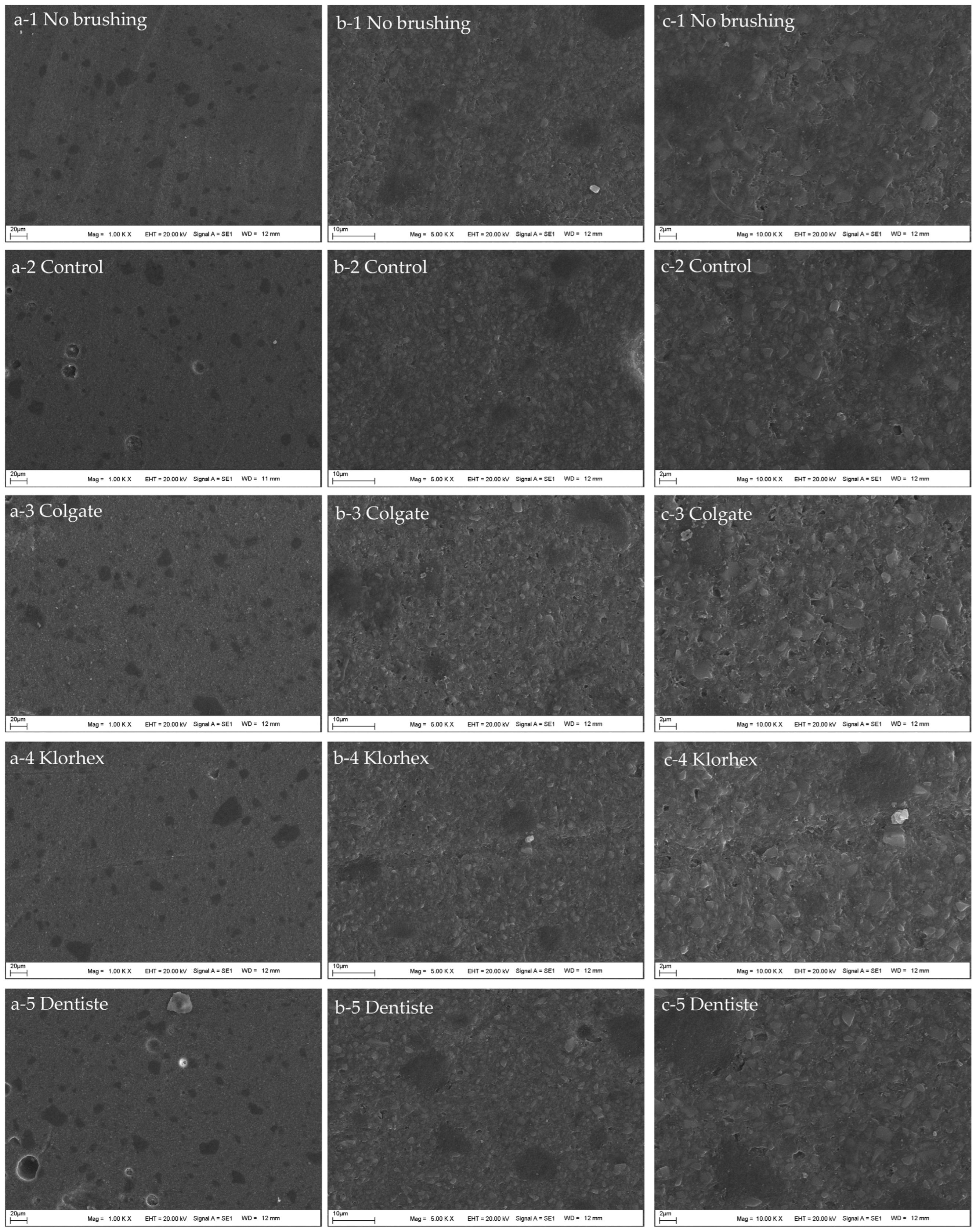
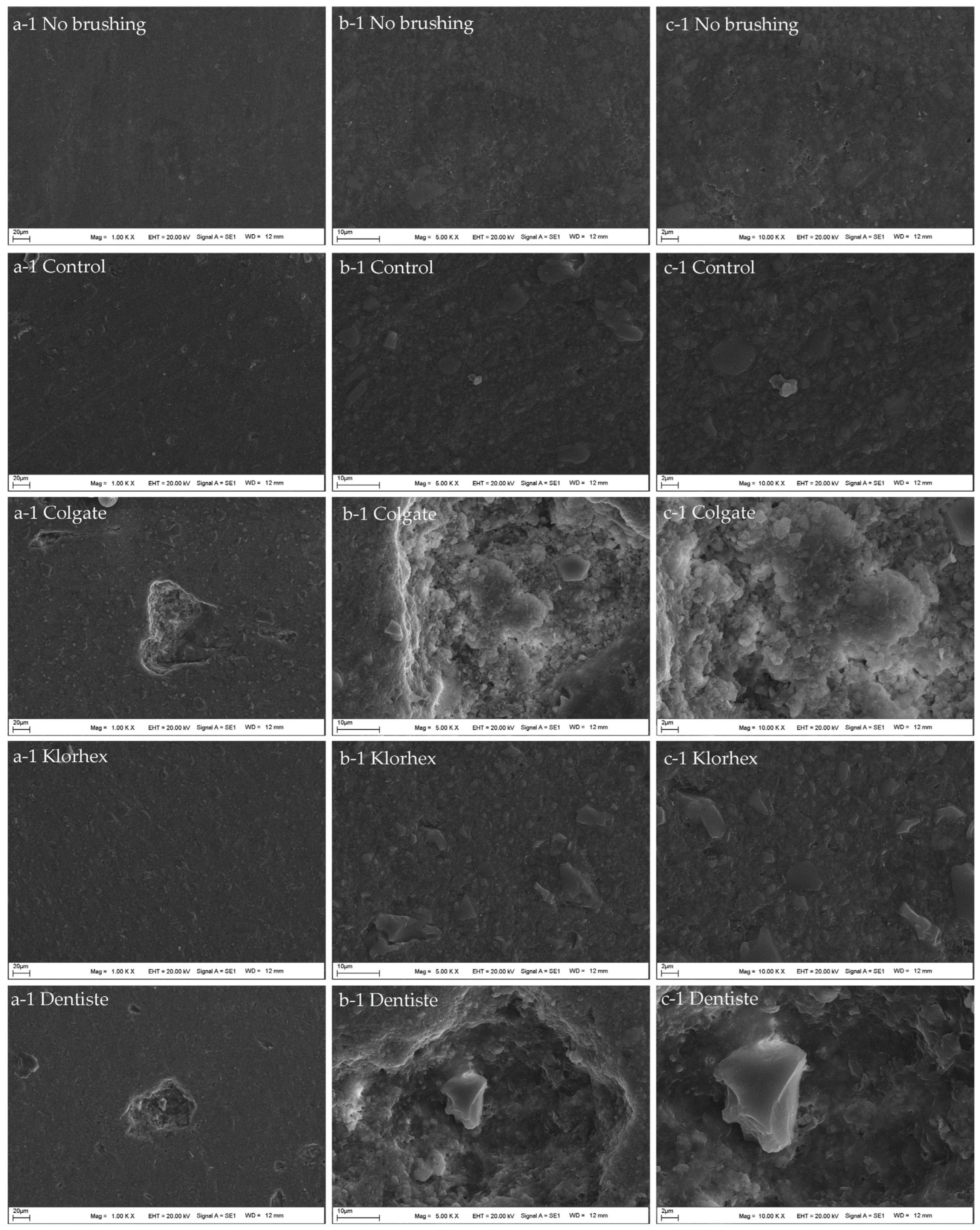
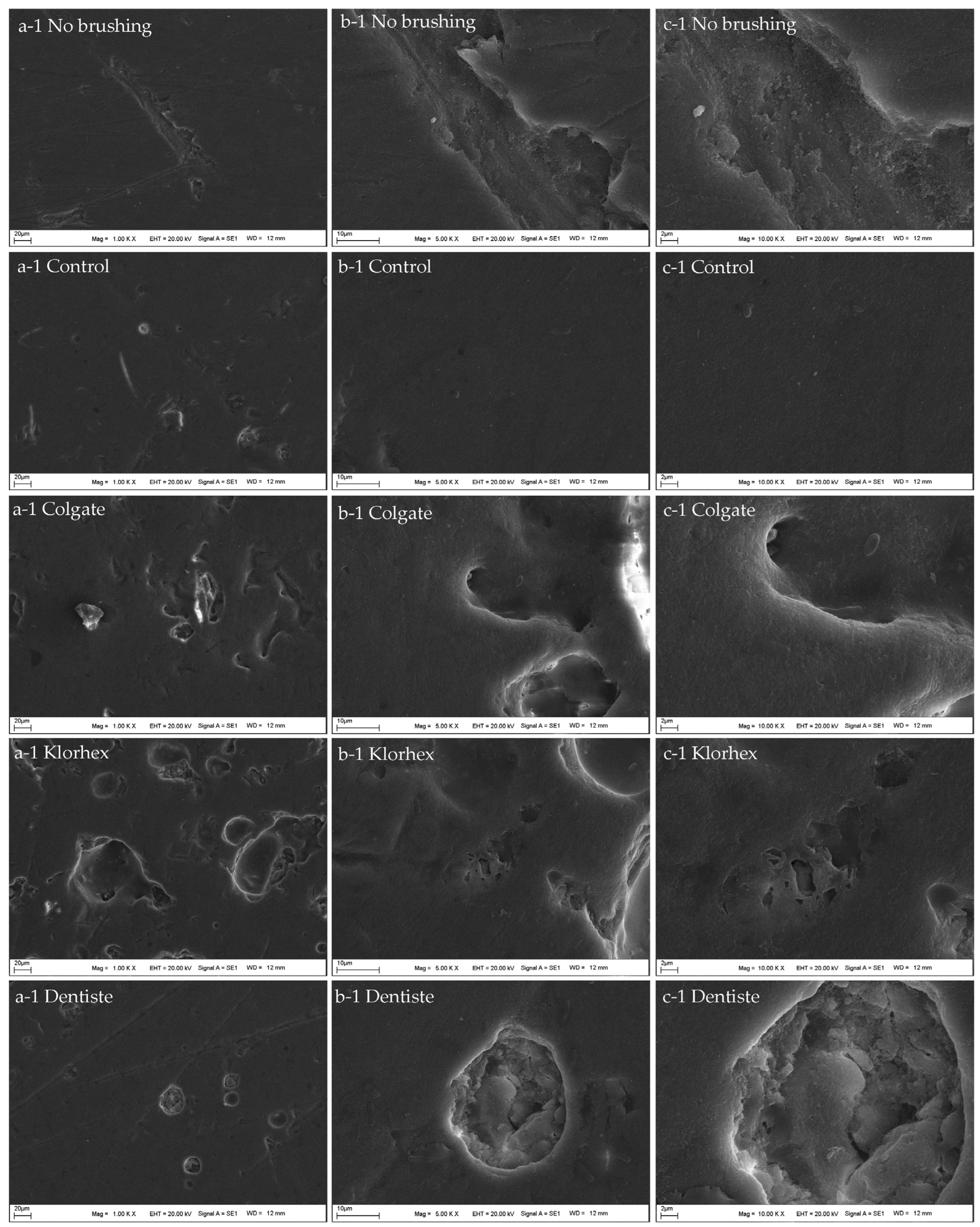
Figure 3, Figure 4 and Figure 5 display the SEM images of the composite groups at magnifications of ×1000, ×5000, and ×10,000. The images were obtained from areas near the center of the composite specimens and reflect the surface condition both before brushing and after three months of brushing for each composite group. Overall, more scratches, grooves, protrusions, and material losses were observed on the composite surfaces subjected to brushing with toothpastes compared to the unbrushed group.
The findings for each composite group can be summarized as follows:
  • A Composite
In the polished, unbrushed group, the surface was smooth and free of irregularities. The control group also exhibited the smoothest surface. Even at ×10,000 magnification, irregularities remained minimal (Figure 3). The roughest surfaces were observed in the groups brushed with Colgate and Klorhex toothpastes, which displayed pronounced scratches, grooves, protrusions, and particle losses (Figure 3).
  • CS Composite
The smoothest surface was observed in the unbrushed group, while fewer irregularities were noted in the control group (Figure 4). In the group brushed with Colgate toothpaste, large pieces of material were lost from the surface, and significant pits and scratches were observed, indicating this group had the roughest surface characteristics (Figure 4).
  • ESQ Composite
The control group exhibited the smoothest surface (Figure 5). In the groups brushed with Colgate and Klorhex toothpastes, large and deep pits were observed on the surface, making these groups the roughest in appearance (Figure 5).
In general, it was noted that Colgate and Klorhex toothpastes applied to the ESQ composite resulted in a greater number and depth of pits and grooves compared to other groups, indicating a rougher surface in these specimens (Figure 5).

3.4. AFM Results

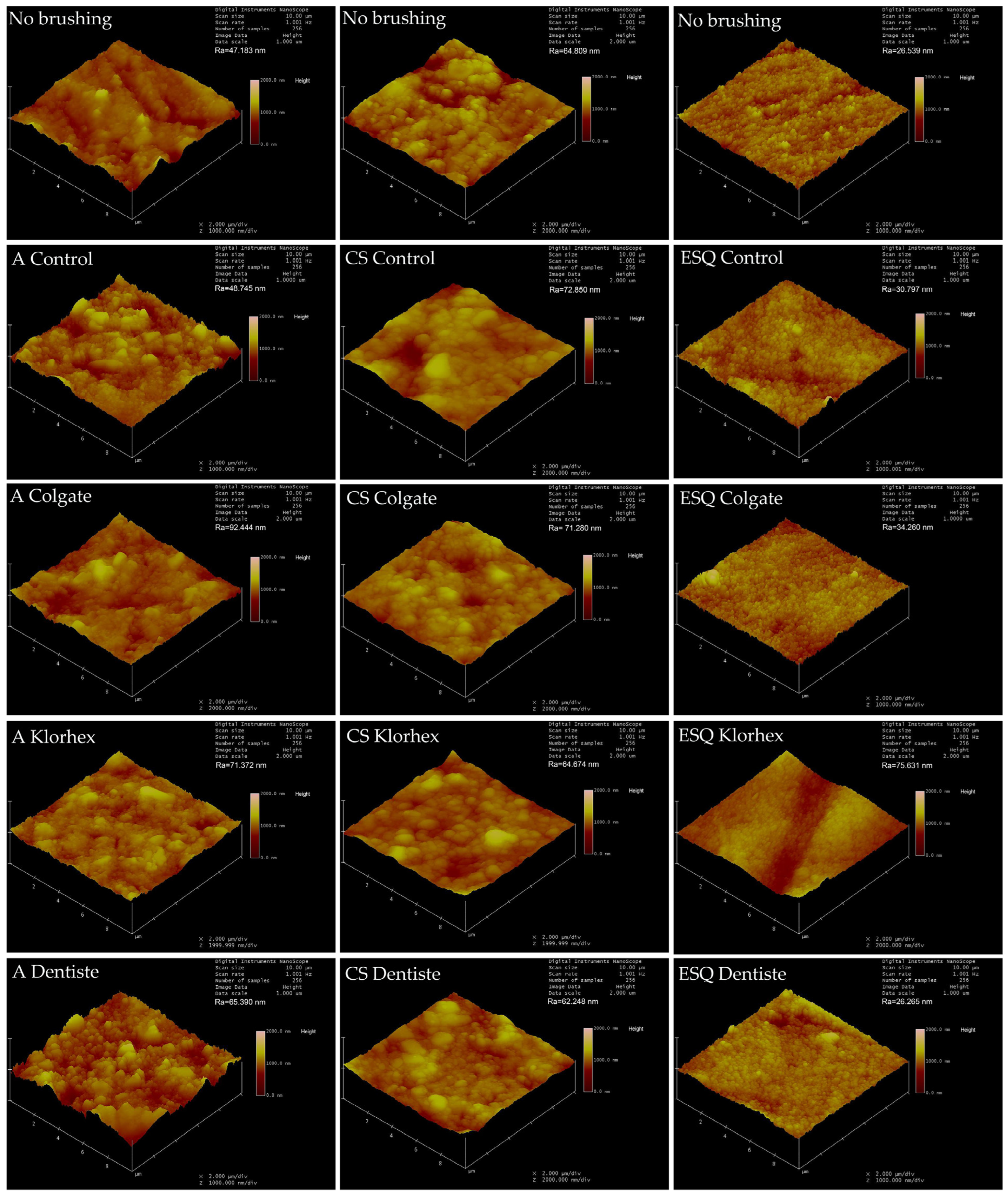
Figure 6 presents the three-dimensional images of surface roughness for the composite groups, both before brushing and after three months of brushing. The images were obtained from areas closest to the center of the composite specimens, covering a 10 × 10 µm surface area.
The findings for each composite group can be summarized as follows:
  • A Composite
The lowest surface roughness was observed in the group without brushing and the control group (Figure 6). The highest surface roughness was recorded in the group brushed with Colgate toothpaste (Figure 6).
  • CS Composite
The group without brushing, along with the groups brushed with Klorhex and Dentiste toothpastes, exhibited very similar surface roughness values and the lowest roughness overall (Figure 6). The highest surface roughness was observed in the Control and Colgate groups (Figure 6).
  • ESQ Composite
The lowest surface roughness was found in the group without brushing and the group brushed with Dentiste toothpaste (Figure 6). The highest surface roughness was recorded in the group brushed with Klorhex toothpaste (Figure 6).
Among all composite groups, Colgate and Klorhex toothpastes were found to cause the greatest increases in surface roughness (Figure 6). The control group generally demonstrated the lowest surface roughness (Figure 6).

4. Discussion

In this study, the effects of toothpastes containing vitamin C on the surface properties of different restorative materials were evaluated. After brushing for 1 and 3 months, a general increase in surface roughness and changes in microhardness were observed. Brushing durations of 150 s (1 m) and 450 s (3 m) were selected in our study. These durations correspond to routine clinical use, simulating twice-daily tooth brushing habits, assuming an average of 5 s of brushing per tooth surface [29]. In this way, it was possible to evaluate both short-term and medium-term effects. Similar durations have also been considered sufficient in the literature to reveal surface changes that may occur on both dental hard tissues and restorative materials [26,29].
In this study, mechanical profilometer, SEM and AFM surface imaging methods were used to minimize possible surface roughness measurement errors and to obtain more objective results. The combined use of these three methods enabled visualization of the general profile of the surface as well as details at the micro/nano level, providing a more comprehensive roughness analysis [30]. Mechanical profilometer is frequently preferred for surface roughness measurement [18,31]. This device offers the advantage of being able to perform measurements of desired length in different areas and to analyze the surface profile in detail thanks to its precise tip [32]. Surface microhardness was measured using a Vickers Hardness Tester. Microhardness is an important parameter for the durability and long-term performance of composites. Maintaining surface microhardness is also defined as a mechanical property that reflects resistance to wear, external factors, and surface deformations [23,33]. The microhardness of composite resins can be affected by many factors, such as the material composition, degree of polymerization, and abrasive or chemical agents applied to the surface [34].
In the literature, it has been reported that natural products containing vitamin C are added to toothpaste formulations, particularly due to their antioxidant and anticancer effects [35]. Similarly, vitamins E and D have been incorporated into toothpaste formulations to evaluate their effects on oral and systemic health [36,37]. The acidic nature and potential chemical reactivity of vitamin C pose certain risks for both dental hard tissues and restorative materials. Although the toothpastes used in our study had neutral or slightly basic pH levels, their formulations contained both vitamin C and silicon-based abrasive particles (e.g., hydrated silica, silicon dioxide). This raises the question of whether the addition of vitamin C to toothpaste might adversely affect the surface properties of restorative materials when combined with abrasive agents. Therefore, while the incorporation of vitamin C into toothpastes offers biological benefits, it must also be carefully evaluated for its potential chemical and mechanical effects on restorative materials. The primary motivation of our study was to clarify this uncertainty and objectively investigate the effects of vitamin C-containing toothpastes, particularly those with neutral pH, on the surface properties of restorative materials.
After the applied brushing procedure, an increase in surface roughness was observed in all groups in general. Toothpastes containing vitamin C increased surface roughness at a high level, especially in the CS and ESQ composites, compared to the control group (Table 3, Figure 1). When examined from a mechanical perspective, the surface changes observed in toothpaste can be attributed to three main factors: abrasive particles, surfactants, and components containing vitamin C [38]. When the compositions of the toothpastes used in our study were examined, it was observed that the control group toothpaste, Sensodyne, as well as Colgate and Klorhex toothpastes, contained hydrated silica. Similarly, the silicon dioxide present in Dentiste toothpaste is also a silica-based abrasive [39] (Table 1). In the literature, it has been reported that toothpastes containing abrasives such as hydrated silica or silicon dioxide can increase the surface roughness of composite resins [19,40]. In addition, factors such as surfactants present in toothpaste formulations (e.g., sodium lauryl sulfate), brushing duration, applied force, type of toothbrush used, and the structural properties of the composite material may also influence surface roughness [41,42]. Vitamin C is a highly hydrophilic molecule and may create an environment that increases water sorption in composite resins. It is well known that water sorption in resin-based materials leads to plasticization of the polymer matrix, resulting in a decrease in mechanical properties [23,43]. Furthermore, the presence of water may cause hydrolytic degradation of the silane bonds between the filler and the organic matrix, leading to the detachment of filler particles from the matrix [44]. This results in the formation of a heterogeneous structure on the composite surface and deterioration of surface integrity. Previous studies have demonstrated that chemically weakened composite surfaces become more susceptible to mechanical abrasion, and silica-based abrasives present in toothpastes may cause greater material loss and increased surface roughness in such surfaces [24,45]. In this context, the effects observed in our study may be explained by the hydrolytic weakening of the composite surface by vitamin C-containing formulations, which subsequently increases the impact of abrasive particles. As a result, the first hypothesis “The effect of formulations containing vitamin C in toothpastes on the surface roughness of resin composites will be similar to those without vitamin C” was rejected. In a study conducted by Güler et al., it was reported that multivitamin syrups containing vitamin C caused a significant increase in surface roughness of restorative materials [22]. The fact that this study was conducted on liquid forms and that these products had low pH values suggests that the observed effects may be related to the acidic nature and other components of the products, unlike the toothpastes used in our study. Therefore, it is not possible to explain the surface changes observed in the present study solely by an acidic effect. However, the increase in surface roughness caused by vitamin C-containing toothpastes in some composite materials is consistent with findings reported in the literature at the outcome level. This may be related to the fact that vitamin C-containing toothpaste formulations, together with their abrasive particles and other components, make the composite surface more susceptible to abrasion. Therefore, although similar surface changes are observed across different product forms, the underlying mechanisms may vary depending on the formulation and physicochemical properties of the products. In another study, Avunduk et al. investigated the effects of effervescent vitamin C preparations on the surface properties of restorative materials [21]. In that study, no significant increase in surface roughness was detected; however, a noticeable increase in color change was observed. This finding contradicts both our study and the study by Güler et al. [22]. This discrepancy may be attributed to differences in the form of the products used, application duration, pH values, or composition.
The pronounced increase in surface roughness observed in the ESQ composite treated with Colgate and Klorhex toothpastes can be explained not only by the abrasive effect of the hydrated silica contained in these products but also by the supra-nano filler structure of the ESQ composite. In supra-nano filled composites, filler particles are generally homogeneous and spherical in morphology, allowing the achievement of a smoother initial surface. However, in such composites, surface integrity largely depends on the stability of the filler–matrix interface [46]. It is well known that the hydrophilic environment created by vitamin C-containing toothpastes can increase water sorption in the resin matrix, leading to plasticization and weakening of the silane bonds at the filler–matrix interface [33]. This condition may cause supra-nano particles, which are small and homogeneously distributed, to be more easily detached from the matrix or to protrude from the surface. Subsequently, the mechanical abrasion caused by hydrated silica particles leads to greater filler dislocation and matrix loss on this chemically weakened surface, thereby increasing surface roughness [46,47]. Previous studies have shown that brushing procedures applied after water exposure and chemical degradation in composite resins significantly increase surface roughness, particularly in composites containing small particles, and that filler detachment is the primary mechanism in this process. In this context, the increase in roughness observed in the ESQ composite is considered to be associated not only with the effect of abrasive particles but also with the increased susceptibility of the supra-nano structure to chemical weakening, followed by an enhanced effect of abrasion [30].
In terms of surface microhardness, both increasing and decreasing trends were observed, and a significant difference in the rate of surface microhardness change between vitamin C-containing toothpastes and the control group was found, particularly in the ESQ composite (Figure 2). Although a slight increase in surface microhardness was observed in most composite groups in our study, a significant decrease was detected in the Colgate and Dentiste groups applied to the ESQ composite (Table 4, Figure 2). Notably, a possible relationship between the decrease in microhardness and the fact that these groups also exhibited the highest increase in surface roughness is evident. Researchers have reported that wear of the polymer matrix and loss of filler particles after brushing may lead to structural weaknesses on the composite surface, resulting in a decrease in surface microhardness [48,49]. However, the fact that the aforementioned study was conducted on liquid-form products with low pH values suggests that the observed effect may largely be associated with chemical degradation caused by an acidic environment. In contrast, the basic pH values of the toothpastes used in our study indicate that the changes observed in microhardness cannot be explained by an acidic mechanism. Nevertheless, the reduction in microhardness caused by vitamin C-containing toothpastes in some composite materials is consistent with findings reported in the literature at the outcome level. This may be related to the hydrophilic environment created by vitamin C-containing toothpaste formulations, which may lead to plasticization in the resin matrix and weakening at the filler–matrix interface, followed by increased material loss from the surface due to the mechanical action of silica-based abrasive particles. In this context, the relationship between the increase in surface roughness and the decrease in microhardness may be explained by the increased susceptibility of the chemically weakened surface to abrasion. As a result, the second hypothesis “The effect of formulations containing vitamin C in toothpastes on the surface microhardness of resin composites will be similar to those without vitamin C” was partially rejected.
For SEM and AFM, images were obtained from the region closest to the center of the samples in both imaging methods, and one representative sample was randomly selected from each group to obtain qualitative and descriptive information about the surface morphology. Thus, an attempt was made to achieve standardization to ensure the comparability of the results obtained. In our study, SEM analyses showed an increase in surface roughness consistent with the findings of the mechanical profilometer. The CS and ESQ composites were the groups with the greatest increase in surface roughness. However, AFM analyses presented lower roughness values, especially in the Colgate and Dentiste groups of the ESQ composite, compared to the Control group. The authors think that AFM measurements being carried out on very small areas may have led to different results than SEM analyses, which cover a larger area. Similarly, in their study, Kakaboura et al. examined the surface properties of resin composites with SEM and AFM methods and reported that AFM measured lower roughness values compared to SEM and also showed surface topography in more detail. The study emphasized that morphological irregularities observed with SEM did not always correspond to high roughness values in AFM analyses [50]. The ESQ composite generally exhibited lower surface roughness values in AFM results compared to SEM and mechanical profilometer results. In a similar study, Say et al. reported that AFM measured lower roughness values compared to SEM and provided more detailed information on three-dimensional surface topography. The same study emphasized that morphological irregularities observed with SEM did not always coincide with high roughness values in AFM analyses. This situation may explain why AFM measurements were lower in our study compared to SEM and profilometer findings in the ESQ composite [51].
This study has some limitations. Firstly, the study was conducted under in vitro conditions, and the complexity of the intraoral environment could not be fully simulated. Oral environmental factors such as saliva, pH changes, temperature fluctuations, enzymes, and mechanical chewing forces may affect the surface properties of restorative materials. Therefore, the results obtained should not be directly generalized to clinical conditions. In addition, although the brushing force was controlled using a pressure-sensitive electric toothbrush, the exact force applied during brushing could not be quantitatively measured. Therefore, slight variations in brushing force may have occurred, and this should be considered as a limitation of this study. In the SEM and AFM analyses, one randomly selected sample from each group and images obtained only from a specific surface region of these samples were evaluated. The purpose of these analyses was to provide descriptive rather than fully representative information about the surface morphology. Especially in AFM analyses, since very small surface areas are scanned, the data obtained may not fully represent the average roughness characteristics of the entire surface. Finally, although the pH values of the toothpastes used in the study were in the neutral or slightly basic range, the effects of other ingredients in the toothpastes on composite surfaces constitute a complex process. Therefore, there are many factors that cannot be attributed solely to the presence of vitamin C. Considering these limitations, it can be said that while the data obtained from the study shed light on clinical applications, more comprehensive and long-term studies are needed.

5. Conclusions

This study demonstrates that toothpastes containing vitamin C can lead to a significant increase in surface roughness of composite restorations compared to the control group. In terms of microhardness, it was observed that toothpastes containing vitamin C caused a marked decrease in hardness in some composite materials, particularly in the ESQ composite. However, it is understood that these effects are not solely attributable to the presence of vitamin C, but also depend on other abrasive and chemical components contained in the toothpastes, the composite resin matrix structure, the filler particle size, and the analytical methods used. These findings indicate that the addition of vitamin C does not produce an abrasive or softening effect on restorative materials to the same extent as reported for liquid vitamin C-containing products; however, it may still cause significant surface alterations, especially in certain composite materials. The potential synergistic effects between abrasive particles present in toothpaste formulations and vitamin C should not be overlooked. It is considered important to take this into account in clinical practice, and there is a need for further long-term studies testing different materials and products.

Author Contributions

F.Ö.: Conceptualization, Methodology, Investigation, Formal analysis, Data curation, Writing—original draft, Writing—review & editing, Supervision. B.D.: Methodology, Investigation, Data curation, Writing—review & editing. E.B.: Methodology, Formal analysis, Data curation, Writing—review & editing. Ş.D.: Formal analysis, Data curation, Supervision. All authors have read and agreed to the published version of the manuscript.

Funding

This study was supported by the Scientific Research Projects Coordination Unit of İnönü University under project number TSA-2025-4171.

Institutional Review Board Statement

Not applicable.

Informed Consent Statement

Not applicable.

Data Availability Statement

The original contributions presented in this study are included in the article. Further inquiries can be directed to the corresponding author.

Conflicts of Interest

The authors declare no competing interests.

References

  1. Abdullah, M.; Jamil, R.T.; Attia, F.N. Vitamin C (ascorbic acid). In StatPearls; StatPearls Publishing: Treasure Island, FL, USA, 2023. [Google Scholar] [PubMed]
  2. Abeysuriya, H.I.; Bulugahapitiya, V.P.; Loku Pulukkuttige, J.J. Total vitamin C, ascorbic acid, dehydroascorbic acid, antioxidant properties, and iron content of underutilized and commonly consumed fruits in Sri Lanka. Int. J. Food Sci. 2020, 2020, 4783029. [Google Scholar] [CrossRef]
  3. Bruno, E.J.; Ziegenfuss, T.N.; Landis, J.J. Vitamin C: Research update. Curr. Sports Med. Rep. 2006, 5, 177–181. [Google Scholar] [CrossRef]
  4. Pawlowska, E.; Szczepanska, J.; Blasiak, J. Pro- and antioxidant effects of vitamin C in cancer in correspondence to its dietary and pharmacological concentrations. Oxid. Med. Cell. Longev. 2019, 2019, 7286737. [Google Scholar] [CrossRef]
  5. Munday, M.R.; Rodricks, R.; Fitzpatrick, M.; Flood, V.M.; Gunton, J.E. A pilot study examining vitamin C levels in periodontal patients. Nutrients 2020, 12, 2255. [Google Scholar] [CrossRef] [PubMed]
  6. Granger, M.; Eck, P. Dietary vitamin C in human health. Adv. Nutr. Res. 2018, 83, 281–310. [Google Scholar] [CrossRef]
  7. Abiri, B.; Vafa, M. Vitamin C and cancer: The role of vitamin C in disease progression and quality of life in cancer patients. Nutr. Cancer 2021, 73, 1282–1292. [Google Scholar] [CrossRef]
  8. Lang, N.P.; Bartold, P.M. Periodontal health. J. Periodontol. 2018, 89, S9–S16. [Google Scholar] [CrossRef]
  9. Mariotti, A.; Hefti, A.F. Defining periodontal health. BMC Oral Health 2015, 15, S6. [Google Scholar] [CrossRef]
  10. Attin, T.; Hornecker, E. Tooth brushing and oral health: How frequently and when should tooth brushing be performed? Oral Health Prev. Dent. 2005, 3, 153–161. [Google Scholar]
  11. Forouzanfar, A.; Hasanpour, P.; Yazdandoust, Y.; Bagheri, H.; Mohammadipour, H.S. Evaluating the effect of active charcoal-containing toothpaste on color change, microhardness, and surface roughness of tooth enamel and resin composite restorative materials. Int. J. Dent. 2023, 2023, 6736623. [Google Scholar] [CrossRef]
  12. Yılmaz, C.; Kanık, Ö. Investigation of surface roughness values of various restorative materials after brushing with blue covarine containing whitening toothpaste by two different methods: AFM and profilometer. Microsc. Res. Tech. 2022, 85, 521–532. [Google Scholar] [CrossRef]
  13. Murererehe, J.; Uwitonze, A.M.; Nikuze, P.; Patel, J.; Razzaque, M.S. Beneficial effects of vitamin C in maintaining optimal oral health. Front. Nutr. 2022, 8, 805809. [Google Scholar] [CrossRef]
  14. Daly, S.; Seong, J.; Newcombe, R.; Davies, M.; Nicholson, J.; Edwards, M.; West, N. A randomised clinical trial to determine the effect of a toothpaste containing enzymes and proteins on gum health over 3 months. J. Dent. 2019, 80, S26–S32. [Google Scholar] [CrossRef]
  15. Pedersen, A.M.L.; Darwish, M.; Nicholson, J.; Edwards, M.; Gupta, A.; Belstrøm, D. Gingival health status in individuals using different types of toothpaste. J. Dent. 2019, 80, S13–S18. [Google Scholar] [CrossRef]
  16. Mazumdar, M.; Chatterjee, A.; Majumdar, S.; Chandrika, M.; Patki, P.J. Evaluation of the safety and efficacy of complete care herbal toothpaste in controlling dental plaque, gingival bleeding and periodontal diseases. J. Herb. Med. 2013, 2, 1000124. [Google Scholar] [CrossRef]
  17. Yilmaz, M.N.; Gul, P.; Unal, M.; Turgut, G. Effects of whitening toothpastes on the esthetic properties and surface roughness of a composite resin. J. Oral Sci. 2021, 63, 320–325. [Google Scholar] [CrossRef] [PubMed]
  18. Colak, G.; Katirci, G. In vitro evaluation of the effects of whitening toothpastes on the color and surface roughness of different composite resin materials. BMC Oral Health 2023, 23, 580. [Google Scholar] [CrossRef] [PubMed]
  19. Dayı, B.; Öcal, F. Evaluation of the effects of whitening toothpaste containing nanohydroxyapatite on surface roughness and color change in restorative materials. J. Prosthodont. 2023, 11, e15692. [Google Scholar] [CrossRef]
  20. Wegehaupt, F.J.; Lunghi, N.; Hogger, V.M.; Attin, T. Erosive potential of vitamin and vitamin + mineral effervescent tablets. Swiss Dent. J. 2016, 126, 457–465. [Google Scholar] [CrossRef] [PubMed]
  21. Avunduk, A.T.E.; Delikan, E.J. Effect of effervescent C vitamins on the surface roughness and color stability of composite resins: A SEM study. J. Biomed. Res. 2023, 7, 43–53. [Google Scholar] [CrossRef]
  22. Guler, E.B.G.; Bayrak, G.D.; Unsal, M.; Kuvvetli, S.S. Effect of pediatric multivitamin syrups and effervescent tablets on the surface microhardness and roughness of restorative materials: An in vitro study. J. Dent. Sci. 2021, 16, 311–317. [Google Scholar] [CrossRef] [PubMed]
  23. Ferracane, J.L. Resin composite—State of the art. Dent. Mater. 2011, 27, 29–38. [Google Scholar] [CrossRef] [PubMed]
  24. Heintze, S. How to qualify and validate wear simulation devices and methods. Dent. Mater. 2006, 22, 712–734. [Google Scholar] [CrossRef]
  25. Alpan, A.L.; Özdede, M.J. Investigation of the effects of whitening toothpastes on enamel and cementum surfaces. J. Oral Sci. 2020, 73, 55–64. Available online: https://www.termedia.pl/Investigation-of-the-effects-of-whitening-toothpastes-on-enamel-and-cementum-surfaces,137,41050,0,1.html (accessed on 7 April 2026).
  26. Jamwal, N.; Rao, A.; MC, G.S.; K, R.S.; Bh, M.P.; Jodalli, P.; Ks, A.; Br, A. Effect of whitening toothpastes on the surface roughness and microhardness of human teeth—An in vitro study. Clin. Oral Investig. 2023, 27, 7889–7897. [Google Scholar] [CrossRef] [PubMed]
  27. Vural, U.K.; Bagdatli, Z.; Yilmaz, A.E.; Çakır, F.Y.; Altundaşar, E.; Gurgan, S. Effects of charcoal-based whitening toothpastes on human enamel in terms of color, surface roughness, and microhardness: An in vitro study. Clin. Oral Investig. 2021, 25, 5977–5985. [Google Scholar] [CrossRef]
  28. Atalı, P.Y.; Kaya, B.D.; Özen, A.M.; Tarçın, B.; Şenol, A.A.; Bayraktar, E.T.; Korkut, B.; Göçmen, G.B.; Tağtekin, D.; Türkmen, C. Assessment of micro-hardness, degree of conversion, and flexural strength for single-shade universal resin composites. Polymers 2022, 14, 4987. [Google Scholar] [CrossRef]
  29. Celik, N.; Iscan Yapar, M.J. Colour stability of stained composite resins after brushing with whitening toothpaste. Int. J. Dent. Hyg. 2021, 19, 413–420. [Google Scholar] [CrossRef]
  30. Croll, S.G.; Payne, S.A. Quantifying abrasive-blasted surface roughness profiles using scanning electron microscopy. J. Coat. Technol. Res. 2020, 17, 1231–1242. [Google Scholar] [CrossRef]
  31. Wiktorski, C.A.; Michelogiannakis, D.; Rossouw, P.E.; Javed, F. The effect of charcoal-based dentifrice and conventional whitening toothpaste on the color stability and surface roughness of composite resin: A systematic review of in vitro studies. Dent. J. 2024, 12, 58. [Google Scholar] [CrossRef]
  32. Oglakci, B.; Kucukyildirim, B.; Özduman, Z.; Eliguzeloglu Dalkilic, E. The effect of different polishing systems on the surface roughness of nanocomposites: Contact profilometry and SEM analyses. J. Oral Dent. 2021, 46, 173–187. [Google Scholar] [CrossRef] [PubMed]
  33. Yap, A.; Chew, C.; Ong, L.; Teoh, S. Environmental damage and occlusal contact area wear of composite restoratives. J. Oral Rehabil. 2002, 29, 87–97. [Google Scholar] [CrossRef]
  34. Mitra, S.B.; Wu, D.; Holmes, B.N. An application of nanotechnology in advanced dental materials. J. Am. Dent. Assoc. 2003, 134, 1382–1390. [Google Scholar] [CrossRef]
  35. Chowdhury, B.R.; Garai, A.; Deb, M.; Bhattacharya, S. Herbal toothpaste: A possible remedy for oral cancer. J. Oral Nanotechnol. Prod. 2013, 6, 44–55. [Google Scholar]
  36. Schäfer, F.; Adams, S.E.; Nicholson, J.A.; Cox, T.F.; McGrady, M.; Moore, F. In vivo evaluation of an oral health toothpaste with 0.1% vitamin E acetate and 0.5% sunflower oil (with vitamin F). Int. Dent. J. 2007, 57, 119–123. [Google Scholar] [CrossRef]
  37. Lee, N.; Lee, J.J. Investigating a vitamin D delivery toothpaste using a penetration enhancer compound. Appl. Biochem. Biotechnol. 2023, 14, 1–17. [Google Scholar] [CrossRef]
  38. Enax, J.; Meyer, F.; Wiesche, E.S.Z.; Fuhrmann, I.C.; Fabritius, H.-O. Toothpaste abrasion and abrasive particle content: Correlating high-resolution profilometric analysis with relative dentin abrasivity (RDA). Dent. J. 2023, 11, 79. [Google Scholar] [CrossRef] [PubMed]
  39. Sampaio, F.C.; de Oliveira, A.F.B.; Fernandes, N.L.S.; Gentile, A.C.C.; Marinho, G.B.; Bönecker, M.J.S.; Paschoal, M.A.B.; D’alpino, P.H.P.; Vilhena, F.V. Silicon-, silica-, and silicate-toothpastes for remineralization and repair of teeth: A scoping review. Dent. J. 2024, 4, 467–486. [Google Scholar] [CrossRef]
  40. de Moraes Rego Roselino, L.; Torrieri, R.T.; Sbardelotto, C.; Amorim, A.A.; de Arruda, C.N.F.; Tirapelli, C.; de Carvalho Panzeri Pires-de-Souza, F. Color stability and surface roughness of composite resins submitted to brushing with bleaching toothpastes: An in situ study. J. Appl. Oral Sci. 2019, 31, 486–492. [Google Scholar] [CrossRef]
  41. Biçer, Z.; Yaman, B.C.; Çeliksöz, Ö.; Tepe, H. Surface roughness of different types of resin composites after artificial aging procedures: An in vitro study. BMC Oral Health 2024, 24, 876. [Google Scholar] [CrossRef] [PubMed]
  42. Ludovichetti, F.S.; Lucchi, P.; Bernardelle, M.; Signoriello, A.G.; Pezzato, L.; Bertolini, R.; Gallo, M.; Mazzoleni, S. Comparative effects of different abrasives on surface roughness of dental materials: An in vitro study. Materials 2024, 14, 8956. [Google Scholar] [CrossRef]
  43. Majd, E.S.; Goldberg, M.; Stanislawski, L. In vitro effects of ascorbate and Trolox on the biocompatibility of dental restorative materials. Biomaterials 2003, 24, 3–9. [Google Scholar] [CrossRef]
  44. Sarosi, C.; Antoniac, A.; Prejmerean, C.; Pastrav, O.C.; Patroi, D.; Popescu, G.; Moldovan, M. Hydrolytic degradation of dental composites. Key Eng. Mater. 2024, 614, 113–117. [Google Scholar] [CrossRef]
  45. Paula, A.; Alonso, R.C.B.; de Araújo, G.A.S.; Rontani, J.P.; Correr-Sobrinho, L.; Puppin-Rontani, R.M. Influence of chemical degradation and abrasion on surface properties of nanorestorative materials. Braz. J. Oral Sci. 2015, 14, 100–105. [Google Scholar] [CrossRef][Green Version]
  46. Aydın, N.; Topçu, F.T.; Karaoğlanoğlu, S.; Oktay, E.A.; Erdemir, U. Effect of finishing and polishing systems on the surface roughness and color change of composite resins. J. Cosmet. Dent. 2021, 13, e446. [Google Scholar] [CrossRef] [PubMed]
  47. Yamaguchi, S.; Karaer, O.; Lee, C.; Sakai, T.; Imazato, S. Color matching ability of resin composites incorporating supra-nano spherical filler producing structural color. Dent. Mater. 2021, 37, e269–e275. [Google Scholar] [CrossRef] [PubMed]
  48. Elmalawany, L.M.; El-Refai, D.A.; Alian, G.A. Change in surface properties of two different dental resin composites after using various beverages and brushing. BMC Oral Health 2023, 23, 966. [Google Scholar] [CrossRef]
  49. Mikhal’chenkov, A.; Kozarez, I.; Filin, Y.I.; Mikhal’chenkova, M. Removal of solid filler particles from composite with polymer matrix as a factor of abrasive wear. Int. Mater. Rev. 2023, 14, 1003–1006. [Google Scholar] [CrossRef]
  50. Kakaboura, A.; Fragouli, M.; Rahiotis, C.; Silikas, N. Evaluation of surface characteristics of dental composites using profilometry, scanning electron, atomic force microscopy and gloss-meter. J. Mater. Sci. Mater. Med. 2007, 18, 155–163. [Google Scholar] [CrossRef] [PubMed]
  51. Say, E.C.; Yurdagüven, H.; Yaman, B.C.; Özer, F. Surface roughness and morphology of resin composites polished with two-step polishing systems. Dent. Mater. J. 2014, 33, 332–342. [Google Scholar] [CrossRef]
Figure 1. ΔRa 3-month values. Different letters indicate significant differences (p < 0.05). Error bars represent standard error (SE).
Applsci 16 03899 g001
Figure 2. ΔHV 3-month values. Different letters indicate statistically significant differences among toothpastes within the same composite group (p < 0.05). Lowercase letters (a, b, c) represent intra-group differences for the A composite. Uppercase letters (A, B, C) represent intra-group differences for the CS composite. The * symbol indicates that, in the ESQ composite, the respective toothpaste differs significantly from the control group (p < 0.05). The ** symbol indicates that, in the ESQ composite, the Colgate group differs significantly from both the Klorhex and Dentiste groups (p < 0.05). Error bars represent standard error (SE).
Applsci 16 03899 g002
Figure 3. A composite groups. First group without brushing. The other SEM images show groups subjected to 3 months of brushing with Control, Colgate, Klorhex and Dentiste toothpastes respectively ((a1a5) ×1000, (b1b5) ×5000, (c1c5) ×10,000 magnification).
Applsci 16 03899 g003
Figure 4. CS composite groups. First group without brushing. The other SEM images show groups subjected to 3 months of brushing with Control, Colgate, Klorhex and Dentiste toothpastes respectively ((a1a5) ×1000, (b1b5) ×5000, (c1c5) ×10,000 magnification).
Applsci 16 03899 g004
Figure 5. ESQ composite groups. First group without brushing. The other SEM images show groups subjected to 3 months of brushing with Control, Colgate, Klorhex and Dentiste toothpastes respectively ((a1a5) ×1000, (b1b5) ×5000, (c1c5) ×10,000 magnifiation).
Applsci 16 03899 g005
Figure 6. Composite groups. First group without brushing. The other AFM images show groups subjected to 3 months of brushing with Control, Colgate, Klorhex and Dentiste toothpastes respectively.
Applsci 16 03899 g006
Table 1. Toothpastes used in the study and their compositions and pH values.
ToothpastesCompoundpHManufacturer
Colgate Total Vitamin CSodium fluoride, glycerin, aqua, hydrated silica, sodium lauryl sulfate, arginine, aroma, zinc oxide, cellulose gum, benzyl alcohol, polaxamer 407, zinc citrate, tetrasodium pyrophosphate, cocamidopropyl betaine, sodium saccharin, xanthan gum, phosphoric acid, sodium ascorbyl phosphate, sucralose, eugenol, limonene, Cl 774927.6Colgate-Palmolive, New York, NY, USA
Dentiste Vitamin CXylitol, silicone dioxide, peppermint oil, clove oil, menthol, vitamin C, eucalyptus oil, sage extract, chamomile extract, fennel extract, glycyrrhiza extract, cinnamon bark extract6.5Dentiste, Bangkok, Thailand
Dentasave KlorhexAqua, glycerin, hydrated silica, sodium cocoamphoacetate, sorbitol, potassium nitrate, cellulose gum, peg-40 hydrogenated castor oil, aroma, phenoxyethanol, sodium saccharin, ascorbic acid, sodium fluoride, clorhexidine digluconate, sodium metabisulfite, sodium hydroxide, ethylhexylglycerin, Cl 47005, Cl 420516.9Drogsan, Ankara, Turkiye
Sensodyne (Control)Aqua, sorbitol, hydrated silica, glycerin, potassium nitrate, aroma, sodium saccharin, sodium fluoride, sodium hydrooxide, limonene, Cl 42090.6.6GlaxoSmithKline, Brentford, UK
Table 2. Composite resins used in the study and their compositions.
CompositesTypeCompoundManufacturer
Arabesk (A)MicrohybridMatrix: Bis-GMA, UDMA, TEGDMA
Filler: Silicon dioxide, Barium-/strontium borosilicate
Particle Size: 0.5–2 μm by weight 76.5% by volume 60%
Voco, Cuxhaven, Germany
Charisma Smart (CS)NanohybridMatrix: Bis-EMA, HEDMA, TEGDMA
Filler: barium aluminum fluoride glass filler, pyrogenic silicon dioxide
Particle size: 0.02–2 μm, 5 vol%, 0.02–0.07 μm. 78 wt%, 65 vol%
Kulzer, Hanau, Germany
Estelite Sigma Quick (ESQ)Supra-nano-filledMatrix: Bis GMA, UDMA, TEGDMA
Filler: Silicon dioxide, Zirconium dioxide, Titanium dioxide
Particle size: 0.1–0.3 µm
Tokuyama Dental, Tokyo, Japan
Table 3. Descriptive statistics and multiple comparison results for roughness values according to composite resin, group and time.
Composites
ToothpastesGroupsACSESQ
Control (Sensodyne)Baseline0.342 (0.01) A,D0.450 (0.46)0.435 (0.03) A
1 month0.379 (0.03) D,F,G0.717 (0.10) A,E1.102 (0.21) A,E,H
3 months1.291 (0.31) C,E,F,G0.362 (0.01) D1.046 (0.16) C,E
Average0.670 (0.13) a0.510 (0.46) a,c0.861 (0.10) b
Colgate Total Vitamin CBaseline0.321 (0.03) A0.440 (0.07) A,C0.466 (0.06) A
1 month0.667 (0.12) B,D,G1.002 (0.22) A,B1.499 (0.31) E,H
3 months0.716 (0.13) B,D,G1.217 (0.17) B,F1.523 (0.21) C,E
Average0.568 (0.06) a0.886 (0.11) a,b,c1.163 (0.15) b
Dentasave KlorhexBaseline0.330 (0.26) A0.463 (0.07) A,C0.443 (0.03) A
1 month0.657 (0.15) A,B,E,G0.649 (0.07) A,B,E1.289 (0.25) D,F,H
3 months0.765 (0.10) B,G0.855 (0.16) B,D1.441 (0.25) B,C,F
Average0.584 (0.07) a0.656 (0.07) a,c1.058 (0.06) b
Dentiste Vitamin CBaseline0.338 (0.02) A,D0.429 (0.02) C,E0.445 (0.41) A
1 month0.585 (0.14) A,E,G0.658 (0.07) A,E1.460 (0.25) B,D,H
3 months0.631 (0.12) A,E,G0.826 (0.13) E,F1.706 (0.28) B,C,D
Average0.518 (0.06) a0.638 (0.05) b,c1.204 (0.16) b
a–c: No difference between the main effects with the same letter; A–H: No difference between interactions that have the same letter; mean ± standard error.
Table 4. Descriptive statistics and multiple comparison results for microhardness values according to composite resin, group and time.
Composites
ToothpastesGroupsACSESQ
Control (Sensodyne)Baseline67.59 (0.25) A65.37 (0.47) B57.87 (0.52) C,D
1 month65.63 (2.23) A,C,D70.66 (1.39) C,G62.19 (2.68) D
3 months74.36 (1.12) E80.69 (0.99) A59.68 (3.56) D,G
Average69.19 (1.06) a,d72.24 (1.31) a,e59.91 (1.48) c
Colgate Total Vitamin CBaseline67.4 (0.36) A65.61 (0.36) B57.2 (0.82) C,D
1 month80.43 (1.24) B,E76.16 (2.79) C,E58.71 (0.86) D
3 months82.27 (1.08) B75.95 (1.01) A,C49.04 (0.76) E,G
Average76.7 (1.34) b,d72.57 (1.31) a,c,e54.98 (0.91) a,c
Dentasave KlorhexBaseline68.41 (0.46) A65.18 (0.83) B,D56.53 (0.22) C
1 month74.02 (1.98) B63.95 (2.47) D,G71.88 (2.56) B
3 months63.31 (1.31) F81.99 (1.61) E68.44 (2.91) B,F
Average68.58 (1.12) a,d70.37 (1.81)65.61 (1.74) b,c
Dentiste Vitamin CBaseline66.51 (0.36) A64.9 (0.41) A,B57.14 (0.67) C
1 month76.2 (1.93) B67.43 (2.22) A,G67.79 (3.01) A,B
3 months74.22 (1.59) B,E78.56 (1.56) C,E48.08 (1.04) G
Average72.31 (1.31) d70.3 (1.41) d,e57.67 (1.82) a,c
a–e: No difference between the main effects with the same letter; A–G: No difference between interactions that have the same letter; mean ± standard error.
Disclaimer/Publisher’s Note: The statements, opinions and data contained in all publications are solely those of the individual author(s) and contributor(s) and not of MDPI and/or the editor(s). MDPI and/or the editor(s) disclaim responsibility for any injury to people or property resulting from any ideas, methods, instructions or products referred to in the content.