Review

Brain–Computer Interfaces in Learning Disorders and Mathematical Learning: A Scoping Review with Structured Narrative Synthesis


by
Viktoriya Galitskaya
1,2,
Georgios Polydoros
3,
Alexandros-Stamatios Antoniou
2,
Pantelis Pergantis
1,4 and
Athanasios Drigas
1,*
1
Net Media Lab & Mind & Brain R&D, Institute of Informatics & Telecommunications, National Centre of Scientific Research ‘Demokritos’, 15341 Agia Paraskevi, Greece
2
Department of Pedagogy and Primary Education, National and Kapodistrian University of Athens, 10680 Athens, Greece
3
Department of Mathematics & Applied Mathematics, University of Crete, 70013 Heraklion, Greece
4
Department of Information & Communication Systems Engineering, University of the Aegean, 83200 Karlovasi, Greece
*
Author to whom correspondence should be addressed.
Appl. Sci. 2026, 16(8), 3846; https://doi.org/10.3390/app16083846
Submission received: 16 March 2026 / Revised: 3 April 2026 / Accepted: 10 April 2026 / Published: 15 April 2026

Abstract

Brain–Computer Interfaces (BCIs) have increasingly been explored as tools for monitoring and modulating cognitive processes relevant to learning. However, their application to learning disorders, and especially to mathematical learning difficulties such as dyscalculia and ageometria, remains conceptually promising but empirically underdeveloped. The present study offers a scoping review with structured narrative synthesis of recent empirical research on BCI-based interventions in learning disorder populations, with particular attention paid to their possible translational relevance for mathematical learning. Following PRISMA-ScR principles and a Population–Concept–Context framework, studies published between 2020 and 2025 were identified through database searches in Scopus, IEEE Xplore, and PubMed. A total of 30 studies met the inclusion criteria. All eligible studies focused on Attention-Deficit/Hyperactivity Disorder (ADHD), while no eligible BCI intervention studies were found for dyscalculia or ageometria. The reviewed literature was dominated by EEG-based neurofeedback interventions. To move beyond descriptive summary, the included studies were organized using a structured analytical framework based on intervention modality, primary cognitive target, methodological robustness, and translational proximity to mathematical learning disorders. Across the evidence base, the most consistent findings concerned attention regulation and executive function outcomes, whereas academic and mathematics-related outcomes were sparse and methodologically less developed. Although several studies suggested improvements in domain-general cognitive mechanisms relevant to mathematical learning, the absence of direct evidence in dyscalculia and ageometria prevents confirmatory conclusions. The review therefore identifies both the promise and the limits of current BCI applications in learning disorder contexts and argues that future research should prioritize theory-driven, disorder-specific trials targeting numeracy, visuospatial reasoning, and executive processes in mathematical learning disabilities. Although current findings suggest promising cognitive and educational potential, these technologies are not yet ready for routine implementation in standard classroom environments without further validation, teacher training, ethical safeguards, and cost-effective deployment models.

1. Introduction

1.1. Brain–Computer Interfaces in Educational and Cognitive Contexts

Brain–Computer Interfaces (BCIs) enable the recording and interpretation of neural activity in order to support communication, monitoring, or adaptive system responses. Although BCIs were initially developed primarily for medical and rehabilitative purposes, their use has gradually expanded into cognitive training, neurofeedback, and educational applications [1,2,3,4,5]. In non-invasive forms, particularly electroencephalography (EEG)-based systems, BCIs offer a relatively accessible means of examining attentional states, workload, self-regulation, and other learning-relevant processes in real time [1,6,7,8,9].
Within educational research, the relevance of BCI does not lie merely in the technology itself, but in its potential to support core cognitive functions that underlie academic performance. These include attention regulation, working memory, inhibitory control, and broader executive functions [5,8,10,11]. Such functions are especially important in populations with neurodevelopmental or learning-related difficulties, where cognitive self-regulation often constrains learning progress. Accordingly, the educational significance of BCI should be understood not as a general technological novelty, but as a possible mechanism for identifying, monitoring, and modulating processes directly related to learning performance. In the present review, the term Educational BCI refers to non-invasive brain–computer interface systems used to monitor, regulate, or adapt learning-relevant cognitive processes within instructional, training, or school-related contexts. This definition distinguishes educational BCIs from purely clinical diagnostic systems, whose main purpose is medical assessment or treatment, and from general assistive technologies, which support access or communication without necessarily providing real-time neurophysiological feedback linked to learning processes.
This review therefore does not attempt to provide a broad overview of BCI technology. Instead, it focuses specifically on empirical studies in learning disorder populations and examines whether the current evidence base offers a meaningful foundation for future BCI applications in mathematical learning difficulties.

1.2. BCIs and Learning Disorders

BCI technologies have attracted growing interest in the study of learning disorders because they can be used to monitor and potentially modulate cognitive processes central to learning. In particular, neurofeedback-based BCI paradigms have been investigated as interventions targeting attention, working memory, self-regulation, and executive functioning [10,12]. These domains are highly relevant to educational performance and are frequently impaired across neurodevelopmental conditions.
Although BCIs were originally designed for individuals with severe motor or communication impairments [2,13], more recent work has explored their applicability in populations with learning and developmental difficulties. Existing evidence suggests that BCI-related interventions may improve selected cognitive and behavioral outcomes, especially in children with Attention-Deficit/Hyperactivity Disorder (ADHD), though the findings remain heterogeneous and are shaped by differences in protocol design, control conditions, and outcome measures [1,8,11].
The present review is especially concerned with the relevance of these developments for mathematical learning disorders. This emphasis is important because difficulties in mathematics are often linked not only to domain-specific numerical deficits, but also to domain-general weaknesses in attention, working memory, and executive control. Therefore, the value of reviewing BCI studies in learning disorder populations lies in understanding whether current interventions target mechanisms that are also central to mathematical learning failure.
Conventional computer-aided instruction can support repetition, visualization, and adaptive task sequencing; however, it typically relies on overt performance rather than direct physiological indicators of attentional engagement, cognitive load, or self-regulatory state. In contrast, BCI-related approaches may provide access to real-time neurophysiological feedback, thereby offering the possibility of more immediate adaptation to fluctuations in cognitive state. For this reason, BCIs may complement rather than simply replace conventional digital instruction, particularly in populations where hidden attentional or executive difficulties constrain learning.

1.3. BCIs in Mathematical and Geometric Learning

Compared with the broader BCI literature, research directly examining mathematical or geometric learning remains limited. Nevertheless, the available studies suggest that BCI-related approaches may have relevance for mathematics education. Prior work has reported associations between BCI-supported cognitive gaming and mathematical engagement, EEG-based monitoring of attentional states during mathematics instruction, and emerging motor imagery or adaptive systems designed to support geometry-related learning [14,15,16].
At present, however, this line of research remains fragmented. Most studies focus on engagement, attention, or task-related cognitive states rather than on diagnosed mathematical learning disorders. As a result, the literature does not yet provide direct empirical evidence regarding BCI-based intervention for dyscalculia or ageometria. This absence is itself a meaningful finding and underscores the need for a structured review that distinguishes between direct evidence, indirect evidence, and purely speculative extension. A further theoretical rationale for considering BCI-related interventions in mathematical learning difficulties derives from the concept of neuroplasticity, that is, the capacity of neural systems to reorganize in response to repeated experience, feedback, and training. This concept is especially relevant in mathematics education because successful numerical and geometrical learning depends on the progressive coordination of attentional, executive, visuospatial, and symbolic processing networks. From this perspective, BCI-related interventions may be relevant not only because they provide practice opportunities, but also because they may support more adaptive regulation of neural states associated with learning. Although direct evidence in dyscalculia remains absent, the neuroplasticity framework helps justify why targeted neurofeedback or BCI-supported training may be theoretically suitable for future intervention development.

1.4. Rationale and Objectives

Despite increasing interest in BCI applications in education, their explicit use in mathematical learning disorders remains underexplored. In the current literature, two partially overlapping but analytically distinct evidence streams can be identified. The first concerns BCI applications in learning disorder or neurodevelopmental populations, particularly studies targeting attention, working memory, and executive functions. The second concerns BCI-related applications in mathematics or geometry learning among general student populations. What remains largely absent is the intersection of these two streams: direct BCI intervention research for dyscalculia or ageometria.
This gap justifies the present review. The importance of the topic lies not in assuming that findings from ADHD or dyslexia can be directly generalized to mathematical learning disorders, but in examining whether existing studies target shared neurocognitive mechanisms that may hold translational relevance. Dyscalculia and related mathematical learning difficulties are frequently associated with weaknesses in working memory, attentional control, and executive functioning [17,18]. Because these same mechanisms are common targets of BCI-related interventions in other learning disorder populations, a careful mapping of the current evidence base is warranted.
Accordingly, the present study is framed as a scoping review with structured narrative synthesis. Its aims are as follows:
(a)
To map recent empirical evidence on BCI-based interventions in learning disorder populations;
(b)
To organize this evidence using a structured analytical framework;
(c)
To evaluate which cognitive and academic outcomes have been most frequently targeted;
(d)
To assess, in cautious and explicitly hypothesis-generating terms, the potential translational relevance of this literature for future work on dyscalculia and ageometria.
This review therefore contributes not by claiming demonstrated efficacy of BCIs for mathematical learning disorders, but by clarifying the current state of evidence, its internal limitations, and the most promising directions for disorder-specific future research.

2. Materials and Methods

2.1. Identification of Research Questions

The following are the specific research questions that this scoping review proposes to address:
  • RQ1. What are the modern applications of Brain–Computer Interfaces (BCIs) for populations with learning disabilities, and what are the key objectives and unique aspects of the relevant interventions?
  • RQ2. To what extent have the BCI-based interventions been found to have the potential for improving cognitive skills such as attention, working memory, and executive functions for students with learning disabilities?
  • RQ3. To what extent is there empirical support for the notion that the application of Brain–Computer Interface (BCI) can lead to improved mathematical and geometric skills for both typical and atypical learners?
  • RQ4. What are the existing gaps in the existing literature that need to be addressed, particularly with regard to the application of Brain–Computer Interfaces (BCI) for learners with dyscalculia and ageometria?
Because the aim of this study was to map the scope, characteristics, and conceptual relevance of the existing evidence rather than to pool effect sizes quantitatively, the review was designed as a scoping review with structured narrative synthesis rather than a meta-analysis. Consistent with this purpose, the analysis emphasizes evidence mapping, a comparison of study characteristics, and critical interpretation of translational relevance.

2.2. Justification for the Focus on ADHD and Dyslexia

While mathematical learning disabilities, including dyscalculia and ageometria, are the main concern of this review, the systematic assessment was restricted to empirical studies that examined Attention-Deficit Hyperactivity Disorder (ADHD) and dyslexia. This approach, while clearly a pragmatic decision, was further supported by theoretical underpinnings derived from an emerging study on transdiagnostic approaches, which have clearly demonstrated a high degree of comorbidity and shared neurocognitive substrates among these learning disorders. Accordingly, ADHD and dyslexia are employed as theoretically informed, albeit strictly as a means for hypothesis generation, surrogates for dyscalculia trials.
As described in [19], ADHD, dyslexia, and dyscalculia are often present in a co-occurring pattern, with shared etiological factors linked with a number of neurocognitive deficits, including those in working memory, executive functions, and attentional control. In addition, a number of meta-analytic studies have clearly demonstrated that children with ADHD are characterized by a number of working memory deficits, both in verbal and visuospatial components, as well as more general executive control systems, including those in inhibition and cognitive flexibility [20,21,22,23]
In a similar vein, individuals who have been identified as being dyslexic show evidence of deficits in executive abilities, specifically in the areas of updating, shifting, and inhibition, even when comorbid ADHD is taken into consideration [24].
In addition to these empirical behavioral studies, neuroimaging meta-analyses have identified convergent patterns of both structural and functional changes in the fronto-parietal and temporo-occipital networks that support cognitive processes such as attention, working memory, and numerical abilities [25,26]. Moreover, parallel genetic meta-analytic results also confirm the existence of underlying common genetic risk factors that relate to reading skills, attention, and mathematical ability [27]. Overall, all of the above results serve to substantiate the theoretical premise that ADHD, dyslexia, and dyscalculia can be viewed as interrelated cognitive representations of underlying common neurodevelopmental risk factors that affect domain-general executive functions and attention.
Furthermore, academic investigations into the fields of neuroeducation and cognitive psychology [17,18,28] have also argued that dyscalculia and ageometria can be differentiated based on underlying impairments to working memory ability, spatial cognition, and executive functioning—cognitive abilities that are also commonly related to the presence of ADHD and dyslexia. Such conceptual overlap serves to provide a compelling rationale for including both ADHD and dyslexia within the current scoping review as theoretically relevant constructs to dyscalculia.
With the ability of Brain–Computer Interface (BCI) to aid in attention control, executive regulation, and working memory—cognitive abilities commonly impacted by the disorders—the existing benefits of BCI for populations dealing with both ADHD and dyslexia point to a promising translational relevance to mathematical learning disabilities [29,30,31,32]. Therefore, the selection of only review studies focusing on ADHD and dyslexia creates a theoretically grounded framework for speculatively considering how such an intervention might be extended to aid those dealing with dyscalculia and related mathematical learning challenges.

2.3. Eligibility Criteria and PCC Framework

In accordance with the guidelines for a scoping review as outlined by the Joanna Briggs Institute (JBI), the inclusion criteria were informed by the Population Concept Context framework [33]. This framework facilitated a systematic approach to the scope and focus of the review.
This PCC approach ensured that relevant studies are systematically included if they directly align with the main goal of this review, which is to map existing evidence on educational uses of BCI technologies in populations with learning difficulties, and infer their potential impact on mathematical learning difficulties such as dyscalculia and ageometria.

2.4. Inclusion and Exclusion Criteria

  • Inclusion Criteria (IC):
  • IC1. Studies published between 2020 and 2025, reflecting recent developments in BCI technology.
  • IC2. Experimental, quasi-experimental, controlled, or mixed-method empirical studies.
  • IC3. Studies employing BCI for educational, cognitive, or skill-enhancing purposes.
  • IC4. Studies involving children, adolescents, or young adults with ADHD or dyslexia.
  • IC5. Published in English.
  • Exclusion Criteria (EC):
  • EC1. Publications before 2020.
  • EC2. Literature reviews, systematic reviews, meta-analyses, editorials, protocols, and non-empirical papers.
  • EC3. Publications using BCI for non-educational or treatment purposes.
  • EC4. Publications with populations not within the context of education or not focusing on cognitive or academic improvements.
  • EC5. Non-English publications.

2.5. Search Strategy

The review followed Joanna Briggs Institute guidance for scoping reviews, and the study selection process was reported using the PRISMA-ScR framework. The search was conducted in Scopus, IEEE Xplore, and PubMed, and the snowball technique was additionally used to identify potentially relevant records from reference lists. Search terms included combinations of “Brain–Computer Interface,” “BCI,” “EEG,” “Neurofeedback,” “ADHD,” “Dyslexia,” “Attention,” “Working Memory,” and “Executive Function.” Scopus, IEEE Xplore, and PubMed were selected because together they provide broad coverage of biomedical, neurotechnological, and interdisciplinary educational research. While additional databases such as Web of Science and ScienceDirect may also contain relevant records, the selected databases were considered sufficient to capture the core literature for the purposes of this scoping review.

2.6. Examples of Database-Specific Search Strings

Scopus: TITLE-ABS-KEY ((BCI OR EEG) AND (dyslexia OR ADHD) AND (“Executive Function” OR “working memory” OR attention)) AND PUBYEAR > 2019 AND PUBYEAR < 2026.
IEEE Xplore: (“Brain-Computer Interface” OR BCI OR EEG) AND (ADHD OR dyslexia) AND (attention OR “working memory” OR “Executive Function”).
PubMed: ((“Brain-Computer Interfaces” [MeSH]) OR (BCI OR EEG OR neurofeedback [Title/Abstract])) AND ((“Dyslexia” [MeSH]) OR (“Attention Deficit Disorder with Hyperactivity” [MeSH])) AND ((“Executive Function” [MeSH]) OR “working memory” [MeSH] OR “Attention” [Title/Abstract]).
Full database-specific search strings, search dates, and export records were archived during the review process and are available in the Appendix A to enhance transparency and reproducibility.

2.7. Reviewer Agreement and Data Management

The titles, abstracts, and full texts were screened independently by two reviewers using Rayyan (Rayyan Systems Inc., Cambridge, MA, USA; web version) after a pilot calibration process. Both reviewers had prior Research experience in neuroeducation, learning disabilities, and evidence synthesis Methodology.. The inter-rater reliability was assessed using Cohen’s κ, where κ = 0.84, indicating strong agreement between reviewers, with disagreements resolved through discussion of a third reviewer. A piloted data-charting template was developed to extract information on study design, sample, BCI/NF protocol, comparators, dosage, outcomes, and results. All search exports, screening logs, and data-charting files are version-controlled and archived, including full database strings and date stamps, as presented in the Appendix A.

2.8. Methodological Quality Appraisal

Although formal risk-of-bias assessment is not mandatory in scoping reviews, a light critical appraisal was undertaken using Joanna Briggs Institute (JBI) checklists aligned to the design (JBI RCT, JBI Quasi-Experimental, JBI Before–After). Items were coded Y/N/U/NA (Yes/No/Unclear/Not applicable) and synthesized into an overall qualitative judgment (Low, Some concerns, High). A concise methodological summary is presented in Section 3, while detailed item-level matrices (abbreviated domains: RAND, ALLOC, P-BLIND, A-BLIND, BASE/COMP, CONFOUND, FOLLOW-UP, OUTCOME, ANALYSIS) are provided in Appendix Table A1.

2.9. Analytical Framework for Evidence Mapping

To move beyond descriptive summary and provide conceptual added value, the included studies were organized using a structured analytical framework. Each study was classified along four dimensions.
First, studies were grouped by intervention modality, including the following:
(a)
EEG-based neurofeedback;
(b)
EEG-guided biofeedback or adaptive learning systems;
(c)
fNIRS-based neurofeedback;
(d)
Mobile or home-based BCI systems;
(e)
Hybrid or multimodal approaches combining BCI/neurofeedback with medication, behavioral intervention, or computerized cognitive training.
Second, studies were classified according to their primary target domain:
(a)
Attention regulation;
(b)
Working memory;
(c)
Executive functions;
(d)
Academic or school-related performance;
(e)
Mathematics-related performance where applicable.
Third, studies were evaluated in terms of translational proximity to mathematical learning disorders. A study was coded as direct if it assessed mathematical or geometry-related outcomes; indirect-near if it targeted domain-general mechanisms central to mathematical learning, such as attention, working memory, or executive functions; and indirect-far if it focused primarily on general symptom reduction or behavioral outcomes without a clear educational or mathematics-related endpoint.
Fourth, studies were interpreted in light of methodological robustness, distinguishing randomized sham-controlled trials, controlled non-randomized or quasi-experimental studies, and single-group before–after designs.
This analytical framework was used to structure the synthesis, compare patterns across studies, identify concentrations of evidence, and highlight the translational gap between current BCI research and direct intervention work in dyscalculia and ageometria.
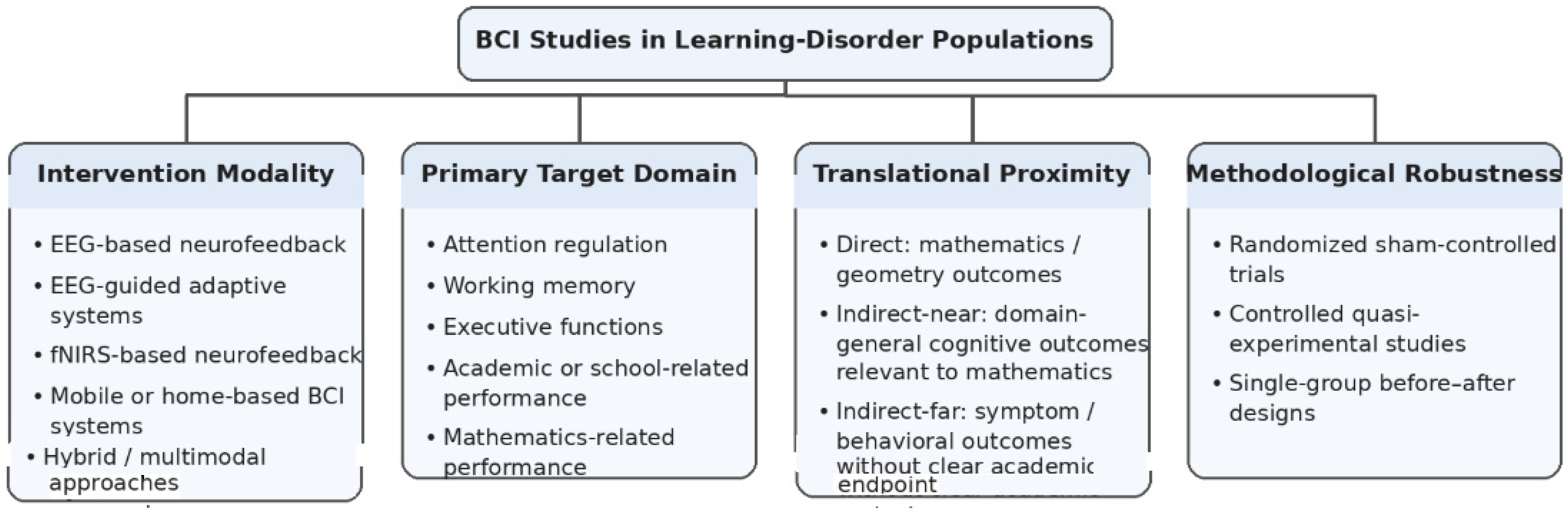
The analytical framework used in the present review is illustrated in Figure 1, which summarizes the four dimensions through which the included studies were classified and interpreted.
Figure 1 illustrates the analytical taxonomy used in the present review. The reviewed literature was organized across four intersecting dimensions—intervention modality, primary target domain, translational proximity to mathematical learning disorders, and methodological robustness. This taxonomy was used to structure the synthesis and to distinguish between domain-general cognitive evidence and direct evidence relevant to dyscalculia or ageometria.

2.10. Study Selection

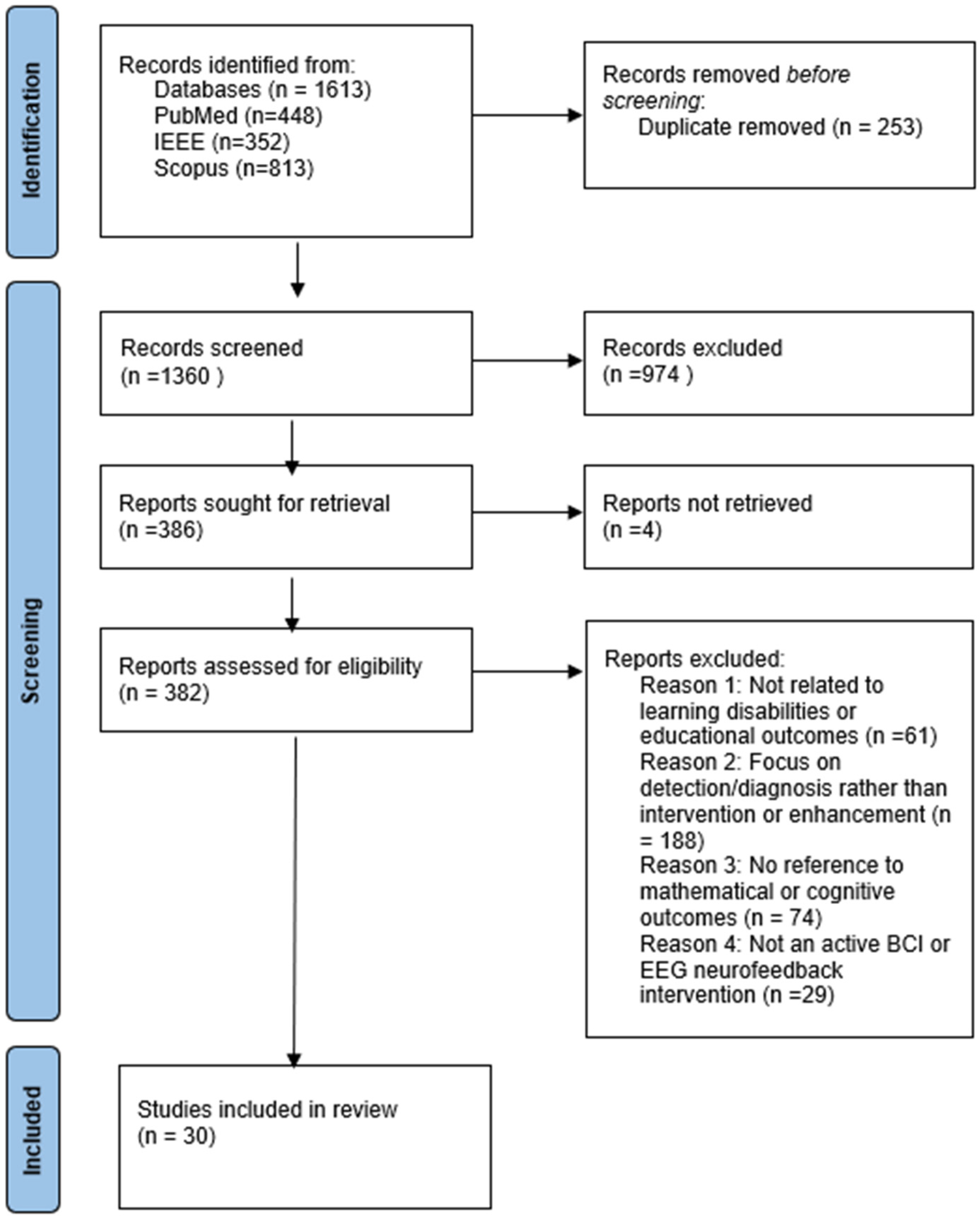
A total of 1613 records were identified through the database search and related screening procedures (see Figure 2). The search covered the period from January 2020 to September 2025 and was designed to identify studies on the use of Brain–Computer Interface (BCI) technologies in children and adolescents with learning-related difficulties.
Eligibility criteria were formulated in accordance with the Population–Concept–Context (PCC) framework (see Table 1). The search combined keywords related to Brain–Computer Interfaces (BCIs), electroencephalography (EEG), neurofeedback, ADHD, dyslexia, and educational interventions, using Boolean operators across the selected databases.
After the removal of duplicates (n = 253), 974 records were retained for title and abstract screening. Screening was conducted independently by two reviewers using the predefined inclusion and exclusion criteria. The title and abstract review covered records retrieved from Scopus, IEEE Xplore, and PubMed for the period 2020–2025. Inter-rater reliability was assessed using Cohen’s κ, which yielded a high agreement value of κ = 0.84.
The remaining 386 records were subjected to full-text assessment. Of these, 4 articles were inaccessible for full-text evaluation. Reasons for full-text exclusion included observational EEG-only studies without BCI or neurofeedback integration, non-empirical studies, prototypes without educational outcome data, studies conducted outside educational or rehabilitative settings, and studies that did not focus on cognitive, attentional, or academic outcomes.
Ultimately, 30 studies met all predefined inclusion criteria and were included in the scoping review. Data extraction was conducted using a standardized charting template. Extracted variables included study design, population characteristics, intervention type, cognitive outcomes (e.g., attention, working memory, executive functioning), and educational context. The extracted data were systematically organized in a spreadsheet to support accuracy and replicability.
The characteristics of the included studies are summarized in Table 2 for single-group studies and Table 3 for controlled studies. The majority of interventions were based on EEG-based neurofeedback or related BCI approaches targeting attention regulation, executive functioning, or academic performance. A concise study-level overview of methodological quality is presented in Section 3, while detailed JBI item codings are provided in Appendix Table A1.

3. Results

3.1. Study Selection and Characteristics

A total of 30 studies met the predefined inclusion criteria for this scoping review. Although the search strategy was initially designed to identify studies on Brain–Computer Interface (BCI) applications in populations with ADHD, dyslexia, dyscalculia, and related learning difficulties, the final set of eligible studies consisted exclusively of research involving participants with ADHD. No eligible intervention studies were identified for dyscalculia or ageometria, and no dyslexia studies met all inclusion criteria for the present review.
Representative examples of the ADHD-focused studies that met all eligibility criteria include [40,44,48,49,50], which collectively illustrate the dominant emphasis of the current literature on attention regulation, executive functioning, and neurofeedback-based cognitive modulation.
The included studies were published between 2020 and 2025 and comprised a range of single-group, controlled, quasi-experimental, and randomized sham-controlled designs. Sample sizes ranged from 8 to 157 participants, with most studies involving children and adolescents between 6 and 15 years of age. The predominant intervention modality was EEG-based neurofeedback, usually targeting theta, beta, alpha, sensorimotor rhythm (SMR), or theta/beta ratio (TBR) activity. A smaller number of studies used mobile neurofeedback systems, adaptive EEG-guided protocols, multimodal biofeedback approaches, or fNIRS-based neurofeedback.
The duration and intensity of the interventions varied substantially across studies. Training protocols ranged from short multi-session programs to interventions extending over several months. Outcome measures included behavioral rating scales, neuropsychological tests of attention and executive functioning, academic indicators, and neurophysiological markers such as EEG power ratios, event-related potentials, and connectivity measures. This heterogeneity in design, intervention dosage, and measurement highlights both the breadth of the literature and the challenges of direct cross-study comparison.
Age-related interpretation remains limited because the included studies were concentrated primarily in childhood and early adolescence, with most participants ranging from approximately 6 to 15 years of age. As a result, the current evidence does not support strong conclusions regarding differential efficacy across developmental stages. Future research should compare age groups explicitly in order to determine whether responsiveness to BCI-related interventions changes across development.
The characteristics of the included studies, including their primary objectives, intervention formats, outcomes, and main findings, are summarized in Table 2 for single-group designs and Table 3 for controlled studies.
A concise study-level overview of methodological quality indicated that randomized sham-controlled studies most often raised concerns related to attrition, adherence, or allocation concealment, whereas quasi-experimental and single-group designs were more commonly limited by lack of randomization, weak comparators, and confounding. Detailed JBI-based study-level judgments are provided in Appendix Table A1.

3.2. Structured Synthesis of the Evidence

The included studies were synthesized using the analytical framework described in Section 2 in order to move beyond descriptive summary and provide a more conceptually organized interpretation of the field. Specifically, the evidence was examined across four intersecting dimensions: intervention modality, primary target domain, translational proximity to mathematical learning disorders, and methodological robustness. This approach made it possible to interpret the literature not only in terms of whether outcomes were reported as positive or neutral, but also in terms of what kinds of BCI-related interventions were used, what cognitive or academic processes they targeted, how directly they related to mathematical learning difficulties, and how strongly their findings were supported by study design.

3.2.1. Synthesis by Intervention Modality, Target Domain, and Translational Relevance

Across the included studies, the most common intervention modality was EEG-based neurofeedback, which clearly dominated the evidence base. These protocols typically focused on the regulation of theta, beta, alpha, sensorimotor rhythm (SMR), or theta/beta ratio (TBR) activity. A smaller number of studies used adaptive EEG-guided systems, mobile or home-based neurofeedback applications, task-based neurofeedback paradigms, or hybrid multimodal approaches that combined neurofeedback with medication, behavioral interventions, or computerized cognitive training. Only a limited number of studies employed alternative approaches such as fNIRS-based neurofeedback, indicating that the field remains methodologically concentrated around EEG-based systems. From a technical perspective, most reviewed systems were non-invasive and relied on oscillatory EEG features, whereas a smaller subset incorporated portable EEG platforms, tablet-based delivery, mobile neurofeedback configurations, or fNIRS-assisted systems. This indicates that the field currently depends more on relatively accessible wearable or semi-portable systems than on highly complex laboratory-only platforms.
In terms of their primary target domain, the reviewed studies focused mainly on attention regulation and executive functions, with a smaller but still meaningful subgroup addressing working memory. In contrast, relatively few studies examined academic performance, and even fewer reported outcomes directly related to mathematics or geometry learning. This distribution is theoretically important because it shows that the current BCI literature in learning disorder populations is centered primarily on domain-general cognitive modulation rather than direct intervention for mathematical learning disorders.
From a translational perspective, the reviewed studies can be grouped into three broad categories. A very small number may be considered directly relevant, because they included mathematics-related or geometry-related outcomes. A much larger portion falls into the indirect-near category, as these studies targeted attention, working memory, inhibition, self-regulation, or broader executive functions that are also centrally implicated in dyscalculia and ageometria. A smaller subset may be classified as indirect-far, because these studies focused primarily on general behavioral improvement, symptom reduction, or feasibility outcomes without a clear academic or mathematics-related endpoint.
This distinction is critical for responsible interpretation of the evidence. The reviewed literature does provide meaningful support for the idea that BCI-related interventions may influence cognitive mechanisms relevant to learning. However, it does not yet provide direct empirical evidence for the effectiveness of such interventions in dyscalculia or ageometria. At present, the strongest contribution of the field is therefore mechanism-based and hypothesis-generating, rather than disorder-specific and confirmatory.
As shown in Table 4, the field is heavily concentrated in EEG-based interventions targeting attention and executive control, while most studies fall into the indirect-near translational category. This pattern is central to the interpretation of the review because it demonstrates that the current literature provides a plausible theoretical and mechanistic foundation for future work on mathematical learning disorders, but does not yet constitute direct intervention evidence for dyscalculia or ageometria.

3.2.2. Synthesis by Outcome Domain

To clarify where empirical attention has been concentrated, the included studies were also synthesized according to their principal outcome domains. As presented in Table 5, the evidence base is strongest for attention regulation, followed by executive functions, while the number of studies addressing working memory is smaller but generally favorable. By contrast, academic outcomes and particularly mathematics-related outcomes remain sparse and methodologically less developed.
Attention-related outcomes were the most extensively represented across the reviewed literature. A substantial number of studies reported improvement in attentional control, sustained attention, response speed, or reductions in inattentive symptom expression. Nevertheless, these findings were not equally robust across all study designs. More favorable results were often reported in single-group or quasi-experimental studies, whereas sham-controlled trials more frequently produced mixed or attenuated effects. This pattern suggests that design-related factors, including expectancy effects, limited blinding, or weak comparator conditions, may partly contribute to the apparent strength of the literature.
Executive function outcomes, including inhibition, planning, cognitive flexibility, and response control, also showed generally positive trends. These findings are particularly relevant in the present review because executive dysfunction is implicated not only in ADHD but also in mathematical learning difficulties. At the same time, cross-study comparison remains challenging because executive functioning was operationalized in different ways across studies, using varying combinations of behavioral rating scales, neuropsychological tests, and electrophysiological measures.
Working memory outcomes were reported less frequently, but the available studies generally suggested beneficial effects. Even so, this body of evidence remains relatively limited in size, and the diversity of intervention protocols and outcome measures makes it difficult to draw strong conclusions.
The weakest area of the evidence base concerns academic transfer. Only a small subset of studies reported outcomes related to school performance, classroom functioning, or academic achievement, and even fewer included results that could be interpreted as directly relevant to mathematics. Accordingly, the present review concludes that current BCI research is far more developed with respect to cognitive-process modulation than with respect to demonstrated educational or mathematics-specific benefit.
As indicated in Table 5, the evidence base is concentrated in domain-general cognitive outcomes, especially attention regulation and executive functioning, whereas direct mathematics-related applications are rare. This reinforces a central conclusion of the review: the present literature may inform translational hypotheses for mathematical learning disorders, but it does not yet provide sufficient direct evidence to support claims of established effectiveness in dyscalculia or ageometria.

3.2.3. Comparative Appraisal by Study Design

Because the interpretation of reported effectiveness depends heavily on methodological rigor, the reviewed studies were also considered in relation to study design. This comparison revealed a methodologically uneven field. Single-group and before–after studies frequently reported positive outcomes, particularly in attentional and behavioral domains. However, such designs provide limited protection against regression to the mean, repeated testing effects, placebo-related influences, and rater expectancy. These studies are useful for feasibility assessment and early signal detection, but they do not provide a strong basis for causal inference.
Controlled quasi-experimental studies offered a stronger interpretive basis because they included comparison groups, yet many remained limited by non-random allocation, possible baseline imbalance, co-intervention confounding, or unclear blinding procedures. Their results are therefore informative, but still require cautious interpretation.
The most rigorous studies were randomized and sham-controlled trials, which were better positioned to address placebo effects, expectancy bias, and non-specific improvement. Notably, these studies often yielded more cautious or mixed findings than less controlled designs. This pattern is important because it suggests that the apparent positivity of the broader literature may be somewhat inflated when methodological quality is not taken sufficiently into account.
A further point concerns the interpretation of hybrid interventions, such as those combining neurofeedback with medication, behavioral management, or computerized cognitive training. Although these multimodal approaches sometimes appeared more effective than standalone protocols, they also made it more difficult to isolate the specific contribution of the BCI component itself. Similarly, mobile and home-based systems improved feasibility and ecological validity, but introduced additional concerns related to adherence, fidelity of implementation, and standardization across contexts.
Taken together, the comparative appraisal (see Table 6) indicates that the current literature provides its strongest support for the feasibility and cognitive relevance of BCI-related interventions, especially for attention and executive-control processes, rather than for strong claims of established academic effectiveness. The field should therefore be regarded as promising but methodologically uneven, with clear need for more rigorous and mathematics-specific research.
Overall, the structured synthesis shows that current BCI research in learning disorder populations is concentrated in ADHD-focused, EEG-based interventions targeting domain-general cognitive mechanisms, especially attention regulation and executive functioning. This literature provides a meaningful mechanism-level foundation for future work on mathematical learning disorders, but it does not yet offer direct empirical confirmation for dyscalculia or ageometria.

3.3. Summary of Findings

Taken together, the structured synthesis indicates that the strongest evidence concerns domain-general cognitive outcomes, especially attention regulation and executive functions, whereas direct mathematics-related applications remain sparse and underdeveloped. Improvements in working memory were also reported, although these findings were based on a smaller subset of studies. Academic outcomes showed some positive trends, but they were comparatively underrepresented and were often reported as secondary rather than primary endpoints. Overall, the convergence between behavioral and neurophysiological findings suggests preliminary promise for BCI-related cognitive interventions in neurodevelopmental populations; however, the evidence remains methodologically uneven, particularly with respect to rigorous controls, academic transfer, and direct relevance to mathematical learning disorders.
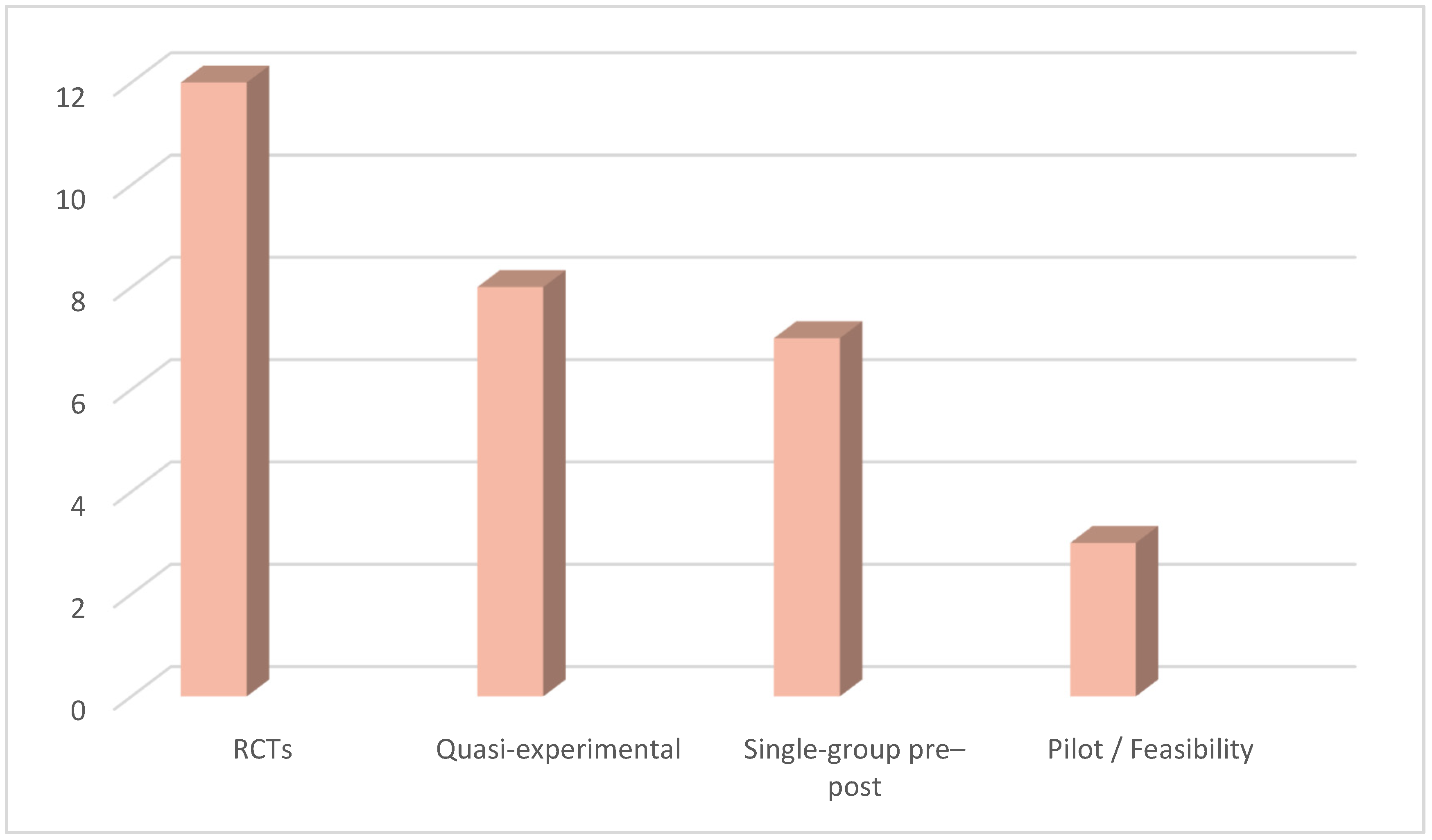
As illustrated in Figure 3, the included studies were distributed across different methodological designs, with randomized controlled trials being the most frequent, followed by quasi-experimental and single-group pre–post studies.

3.4. Geographical Distribution of Studies

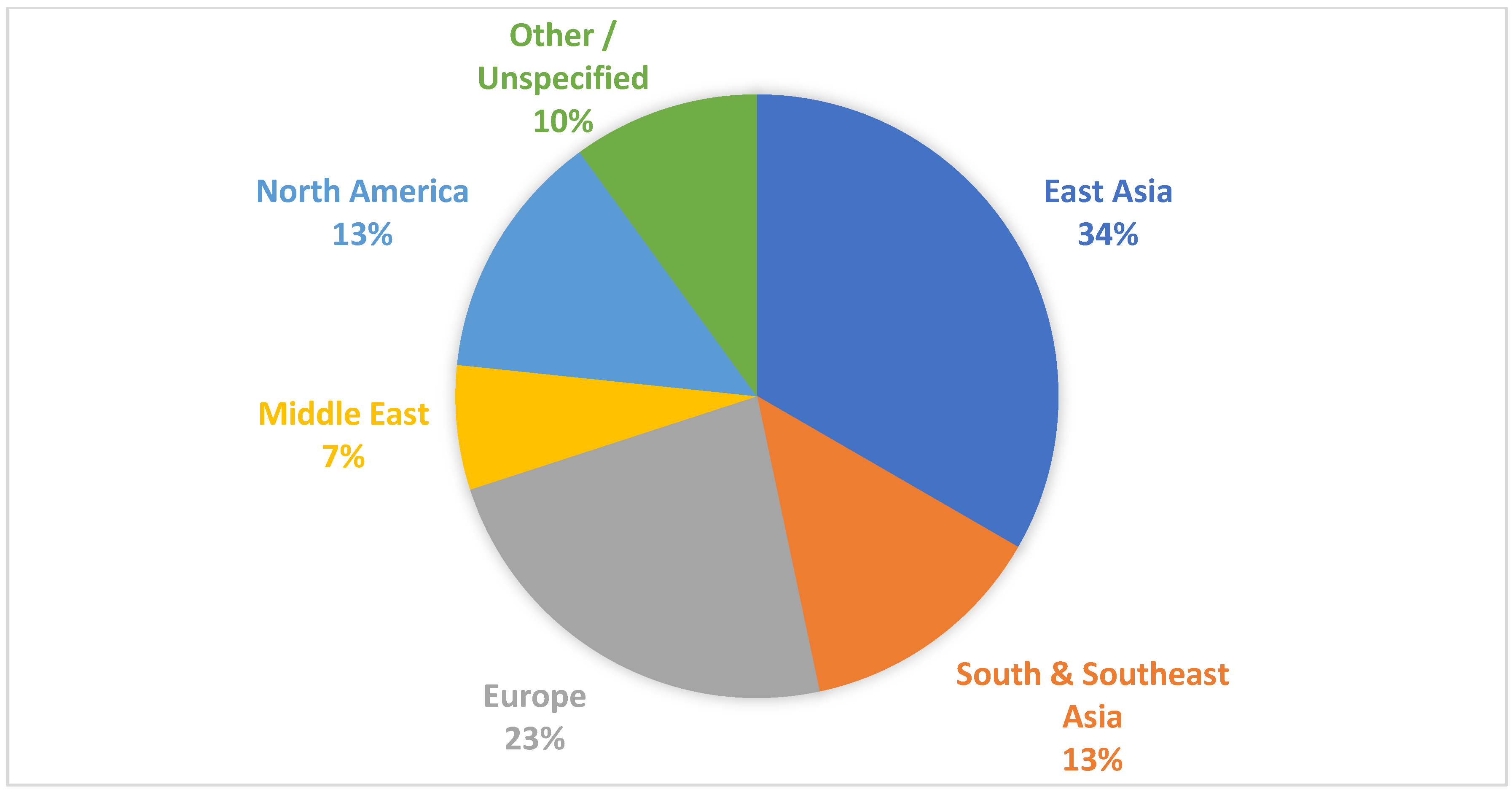
The geographical distribution of the included studies was examined in order to provide an overview of regional research activity in BCI applications for learning disabilities. As shown in Figure 4, the studies were distributed across four categories: Asia, Europe, North America, and Not specified. The final category included studies that did not provide sufficient information to determine a clear geographical setting.
The results indicate that most studies were conducted in Asia (14 studies), followed by Europe (7 studies) and North America (5 studies), while 2 studies did not specify a clear geographical context. This pattern suggests that Asian countries, particularly China and South Korea, currently play a leading role in the experimental development of BCI-related interventions in educational and clinical contexts. At the same time, although fewer in number, studies conducted in Europe and North America appeared, in general, to employ comparatively stronger methodological controls. This geographical imbalance is important because it may shape the current evidence base in terms of both innovation and methodological rigor.

3.5. Interpretation of Findings in Relation to Research Questions

  • RQ1. What are the current applications of BCI for populations with learning disabilities, and what are the main characteristics of these interventions?
The reviewed studies indicate that the majority of BCI-related interventions were based on EEG neurofeedback paradigms targeting oscillatory activity associated with attention regulation and executive functioning, most commonly in the theta, alpha, and beta frequency bands. Frequently reported approaches included theta/beta ratio training [34,38,39], sensorimotor rhythm (SMR) neurofeedback [37,61], and slow cortical potential (SCP) neurofeedback [62]. A smaller number of studies employed fNIRS-based approaches [62] or mobile/home-based BCI systems [48,51], suggesting an emerging trend toward more portable and ecologically flexible intervention formats. Some studies also incorporated hybrid models combining EEG-based neurofeedback with pharmacological or behavioral interventions [52,57,63]. Although the broader search strategy included multiple learning disorder populations, only ADHD-focused studies met the full set of eligibility criteria, highlighting the current concentration of the field and the absence of comparable intervention evidence for dyslexia, dyscalculia, or ageometria.
  • RQ2. To what extent do BCI-based interventions appear to improve attention, working memory, and executive functions?
Across the included studies, the most consistent findings concerned attention regulation and executive function outcomes, as measured through behavioral rating scales, neuropsychological tasks, and neurophysiological indicators. Reported gains included improvements in attentional control, inhibitory processes, response consistency, and selected executive tasks, while some studies also documented favorable working-memory outcomes. For example, [35] reported event-related potential modulations associated with response inhibition, whereas [50] found improvement in executive functions alongside better mathematical performance. In addition, some multimodal interventions combining neurofeedback with pharmacological treatment appeared to yield stronger behavioral effects than single-modality approaches [52,63]. Nevertheless, these findings should be interpreted cautiously. Although the overall pattern is promising, more rigorous sham-controlled studies often produced more mixed results than single-group or quasi-experimental designs. Accordingly, the present review interprets the literature as suggesting potential cognitive benefit, rather than confirming established efficacy.
  • RQ3. To what extent is there support for the possible relevance of BCI interventions to mathematical and geometric learning?
The reviewed literature provides only limited direct evidence in this area. Very few studies assessed mathematics-related or geometry-related outcomes directly. However, the literature does provide indirect-near translational support, because the main cognitive domains targeted by BCI-related interventions—namely attention, working memory, and executive functions—are also central to mathematical learning and are frequently impaired in dyscalculia [64,65,66]. This interpretation is further strengthened by broader theoretical and empirical work suggesting that ADHD, dyslexia, and dyscalculia share overlapping vulnerabilities in executive control, working memory, and attentional regulation [20,21,22,23,24,25,26,27]. On this basis, it is reasonable to argue that BCI interventions targeting these domain-general mechanisms may hold translational relevance for mathematical learning disorders. At the same time, this relevance remains hypothesis-generating rather than confirmatory, because no eligible studies directly tested BCI interventions in learners with dyscalculia or ageometria. On this basis, it is reasonable to argue that BCI interventions targeting these domain-general mechanisms may hold translational relevance for mathematical learning disorders (see Figure 5).
  • RQ4. What are the major gaps in the literature, particularly in relation to dyscalculia and ageometria?
The most important finding in relation to this question is the complete absence of eligible BCI intervention studies focused on dyscalculia or ageometria. This absence indicates that the application of BCI technologies to mathematical learning disabilities remains an emerging and underdeveloped area of research. One possible reason is the longstanding fragmentation of research on mathematical learning disorders, including variation in diagnostic criteria and the relative scarcity of disorder-specific intervention studies [67]. Even so, the reviewed evidence suggests that a cautious translational pathway may be theoretically justified when interventions target cognitive processes that are impaired across ADHD, dyslexia, and dyscalculia, and when those processes are linked to fronto-parietal systems associated with numerical cognition [20,23,24,68]. Future research should therefore move beyond general cognitive training and develop disorder-specific BCI protocols for learners with dyscalculia and ageometria, with direct assessment of numeracy, arithmetic performance, visuospatial reasoning, and geometry-related outcomes.

4. Discussion

The present scoping review aimed to examine Brain–Computer Interface (BCI)-related interventions in learning disorder populations and to consider their possible relevance to mathematical learning difficulties, particularly dyscalculia and ageometria. Despite extensive database searching, no eligible intervention studies were identified that directly examined BCI applications in cohorts with dyscalculia or ageometria. This absence highlights a significant gap in the literature and indicates that the use of BCI-related approaches for mathematical learning disabilities remains at an early stage of development.
Although this review was conceptually informed by the literature on ADHD, dyslexia, and mathematical learning difficulties, only ADHD-focused intervention studies met the final inclusion criteria. This pattern is relevant because ADHD, dyslexia, and dyscalculia have been linked in the broader literature through partially overlapping difficulties in working memory, executive functioning, and attentional control [69,70]. Accordingly, the present review considered whether evidence from ADHD-focused BCI interventions might hold translational relevance for mathematical learning difficulties at the level of shared cognitive mechanisms.
Although no eligible intervention studies were identified for dyscalculia or dyslexia in the final review sample, some broader EEG- and neurofeedback-related literature in dyslexia remains theoretically informative. For example, [71] discussed the role of visual training in small-world network connectivity, while [72] reported that a protocol combining neurofeedback and visual training was associated with improved connectivity and cognitive performance in children with dyslexia. In addition, [73] identified EEG abnormalities in fronto-temporal and parietal regions implicated in phonological processing, executive control, and working memory. Because such processes are also relevant to mathematical cognition, these studies may offer contextual support for a mechanism-level translational perspective. However, they should not be interpreted as direct evidence for BCI effectiveness in dyscalculia or ageometria.
Taken together, the available evidence suggests that BCI-related approaches may have translational relevance for mathematical learning difficulties insofar as they target cognitive mechanisms such as attention regulation, working memory, and executive control. Nevertheless, this relevance remains tentative and hypothesis-generating, especially in the absence of direct empirical studies in mathematical learning environments. Thus, the current synthesis does not confirm the effectiveness of BCIs for dyscalculia or ageometria, but rather identifies a potentially promising direction for future disorder-specific research.
The absence of intervention studies specifically targeting dyscalculia may reflect both theoretical and methodological challenges, including the heterogeneity of mathematical learning profiles and the lack of standardized neurophysiological markers for numerical cognition. Addressing these challenges will likely require closer collaboration among cognitive neuroscience, neuroeducation, and computational modeling in order to develop more precise BCI frameworks for numeracy-related learning processes.
Overall, the present evidence base offers preliminary support for BCI-related approaches in modulating cognitive mechanisms relevant to mathematics, particularly attention, working memory, and executive control, while direct BCI studies of dyscalculia and ageometria remain a clear priority for future research.

4.1. Classifier Design, Personalization, and Real-Time Educational BCI Challenges

An additional issue emerging from the broader BCI literature concerns the type, interpretability, and reporting transparency of classifiers used to decode neurophysiological signals. Although the studies included in the present review focused primarily on intervention outcomes rather than algorithmic benchmarking, the reviewer’s observation is important: future educational BCI systems, especially those intended for dyscalculia or ageometria, will require more precise and interpretable classifiers capable of detecting meaningful cognitive states in real time. This includes clearer reporting of whether the adopted models are deterministic or probabilistic, whether uncertainty estimation or rejection options are used, and whether the system supports personalized co-adaptation. Such issues are especially relevant for learners with difficulties, whose neural responses, fatigue patterns, and neuroplastic adaptation may vary substantially across individuals. Accordingly, future research should not only evaluate behavioral outcomes, but also address classifier robustness, personalization, and uncertainty-aware decision-making in real-world educational settings.
With regard to state-of-the-art signal classification approaches, the eligible intervention literature included in the present review did not provide substantial evidence of widespread implementation of advanced deep learning pipelines or Vision Transformer (ViT)-based architectures. This likely reflects the fact that the reviewed studies were primarily intervention-oriented rather than algorithm development studies. Nevertheless, future educational BCI research may benefit from examining whether recent advances in deep learning and transformer-based models can improve real-time decoding, personalization, and robustness in learning-related applications.

4.2. Additional Practical Challenges for Educational BCI Integration

Three additional issues deserve explicit attention in future research. First, the challenge of EEG-symbol synchrony remains important in educational BCI applications, particularly where neural responses must be aligned with symbolic numerical or geometric stimuli in real time. Second, mental fatigue is a major practical concern, since BCI systems often require sustained attention, while adolescents with learning difficulties may experience cognitive exhaustion relatively early during demanding tasks. Third, the effective pedagogical integration of BCI technologies depends not only on technical performance but also on the training of teaching staff. Without adequate teacher preparation, even promising neurotechnological systems may remain difficult to implement meaningfully in classroom practice. These issues highlight the need for future studies to combine neurotechnological innovation with educational design, usability, and implementation research.

4.2.1. Ethical and Practical Considerations

The implementation of BCI technologies among minor groups requires appropriate governance structures to ensure the privacy of their neurodata. Some of the key considerations include obtaining informed consent or assent, data minimization, data retention limits, and data access controls. In addition, implementation of BCI technologies in learning institutions must be guided by international ethics frameworks such as the UNESCO Recommendation on the Ethics of Artificial Intelligence (2021) and the IEEE 7010-2020/2022 [74,75]. At the organizational level, learning institutions or research groups must have specific protocols for the implementation of BCI technologies that include opting out for the minor’s parents or guardians, data storage mechanisms, and training for staff on the management of sensitive data. The reporting of the implementation of the above considerations must be standardized.
These issues are especially sensitive in minors, for whom neural data may reveal patterns related not only to attention or fatigue, but potentially to broader developmental characteristics, thereby increasing the need for strict governance and proportionate data protection.
The educational context is not a neutral implementation setting. In school environments, learners with difficulties may experience reduced confidence, repeated failure, motivational decline, or emotional burden associated with academic underperformance. For this reason, BCI-related interventions in educational settings should not be evaluated only in terms of cognitive performance, but also in relation to student motivation, emotional well-being, classroom acceptability, and pedagogical integration.
Economic feasibility represents another major condition for educational adoption. Although the transition from clinical-grade systems to consumer-grade wearables may gradually reduce costs and improve portability, widespread implementation in schools still depends on affordability, maintenance, staff training, technical support, and evidence that the educational benefit justifies the investment. Thus, future studies should evaluate not only efficacy but also cost-effectiveness and realistic deployment models in school settings.
A major unresolved challenge is to determine whether short-term BCI-related gains reflect durable reorganization of learning-relevant neural networks and whether such changes translate into stable benefits in authentic educational tasks. This issue is especially important for mathematical learning difficulties, where long-term transfer to real-world academic functioning remains essential.
A related question concerns the cross-disorder applicability of BCI-related interventions. The present review suggests that transfer across conditions may be plausible only when an intervention targets cognitive mechanisms shared across disorders, such as attention regulation, working memory, or executive control. However, such generalization should not be assumed automatically. Interventions designed for mathematical learning difficulties may not generalize directly to children with ADHD, and vice versa, unless their cognitive targets, task demands, and learning outcomes are explicitly aligned. Future research should therefore test such transfer empirically rather than infer it theoretically.

4.2.2. Limitations and Future Research

Another important limitation associated with the present review is that no empirical studies were identified that specifically examined the BCI interventions for individuals who were diagnosed with a learning disorder such as dyscalculia or ageometria. While the original goal was to identify such studies, the search was unsuccessful in identifying studies that conformed to the established criteria. Furthermore, no studies were identified that specifically examined the topic of dyslexia in the realm of BCI that adequately addressed the research inquiries posed by the present review.
Nevertheless, the present review makes an important contribution to the scientific discourse by identifying the current state of brain–computer interface (BCI) research in the realm of learning disorders, identifying the primary cognitive domains that can be modulated by neurofeedback and BCI interventions, and highlighting the potential importance of interventions that were originally conceptualized for attention deficit/hyperactivity disorder and dyslexia. The review combines empirical evidence for cognitive and neurophysiological mechanisms that are shared between these disorders and creates a strong foundation for future research.
As we progress further in our discussion, it is essential that empirical research focuses on the development and assessment of Brain–Computer Interface (BCI) protocols that are particularly designed to address the phenomenon of dyscalculia and ageometria. This will enable the evaluation of numeracy-related cognitive mechanisms such as working memory, executive functions, as well as visuospatial reasoning. Such research endeavors could prove instrumental in bridging the existing gap between research and practice to ensure that BCIs are appropriately tailored to address the learning needs of children and adolescents who experience various forms of mathematical learning disabilities.
Future research directions will include the implementation of pilot randomized controlled trials (RCTs) that particularly focus on numeracy-related mechanisms such as visuospatial working memory as well as quantity processing.

5. Conclusions

The present scoping review examined recent empirical research on Brain–Computer Interface (BCI)-related interventions in learning disorder populations and considered their possible relevance to mathematical learning difficulties, particularly dyscalculia and ageometria. This review showed that the current evidence base is composed almost exclusively of ADHD-focused studies and is dominated by EEG-based neurofeedback interventions targeting attention regulation, working memory, and executive functions. Although some findings suggest promising effects on domain-general cognitive mechanisms relevant to mathematical learning, no eligible intervention studies were identified that directly addressed dyscalculia or ageometria.
Accordingly, the present review does not support confirmatory conclusions regarding the effectiveness of BCIs for mathematical learning disabilities. Instead, it provides a structured overview of the current literature, clarifies the translational relevance of existing findings, and identifies the major empirical and conceptual gaps that must be addressed in future research. In particular, future studies should prioritize disorder-specific BCI protocols for dyscalculia and ageometria, with direct assessment of numeracy, arithmetic performance, visuospatial reasoning, and geometry-related learning outcomes.
Future work should also explore the development of multimodal BCI systems that integrate EEG with complementary data streams such as eye-tracking and movement sensors, thereby enabling a richer and more ecologically valid understanding of classroom engagement, cognitive effort, and learning behavior.
In addition, the successful educational use of BCIs will depend not only on technological refinement but also on the preparation of educators. Teachers will need training to interpret BCI-generated data appropriately, integrate such information into pedagogical decision-making, and use these systems in ways that support rather than distort classroom practice.
Overall, BCI-related technologies appear to hold meaningful long-term promise for educational and neurodevelopmental applications. However, their use in standard educational settings, especially for mathematical learning disabilities, remains at an early stage and requires substantially more rigorous empirical validation, ethical safeguards, technical refinement, and pedagogically grounded implementation research.

Author Contributions

V.G., G.P., A.-S.A., P.P. and A.D. contributed equally to the conception, development, writing, editing, and analysis of this manuscript. All authors have read and agreed to the published version of the manuscript.

Funding

This research received no external funding.

Institutional Review Board Statement

Not applicable.

Informed Consent Statement

Not applicable.

Data Availability Statement

No new data were created or analyzed in this study. Data sharing is not applicable to this article.

Acknowledgments

We thank the Demokritos National Center for Scientific Research, Greece.

Conflicts of Interest

The authors declare no conflicts of interest.

Appendix A

Table A1. JBI item-level coding (abbreviated domains). Legend: Y = Yes; N = No; U = Unclear; NA = Not applicable. Domains: RAND (randomization), ALLOC (allocation concealment), P-BLIND (participants/personnel blinding), A-BLIND (assessor blinding), BASE/COMP (baseline comparability or stability for before–after), CONFOUND (confounding addressed), FOLLOW-UP (attrition/completeness), OUTCOME (valid/reliable measures), and ANALYSIS (appropriate statistics).
Study (Year)DesignRANDALLOCP-BLINDA-BLINDBASE/COMPCONFOUNDFOLLOW-UPOUTCOMEANALYSIS
Ha et al. (2022) [34]Before–afterNANANAUUNUUY
Neuhäußer et al. (2023) [35]Before–afterNANANAUUUUYY
Pérez Vidal et al. (2024) [36]Before–afterNANANAUUNUUU
Subandriyo et al. (2021) [37]Before–afterNANANAUUNUUY
Wang et al. (2021) [39]Controlled trial with reference controlsNANANAUUUUYY
Wang et al. (2022) [38]Before–afterNANANAUUNUYY
Arnold et al. (2021) [40]RCTYUUUYYUYY
Bach-Morrow et al. (2022) [41]RCT (sham)YUYUYYUYY
Banait & Ranjan (2024) [42]Quasi-expNNAUUUNUUY
Bluschke et al. (2022) [44]RCTYUUUYYUYY
Cantera et al. (2025) [45]Quasi-exp (sham)NNAUUUUUYY
Hao et al. (2022) [47]RCTYUYUYYUYY
Kwon et al. (2024) [48]RCT (sham)YUUUYYUYY
Li et al. (2025) [49]Quasi-expNNAUUUNUYY
Liao et al. (2022) [50]Quasi-exp (wait-list)NNAUUUUUYY
Lim et al. (2023) [51]Quasi-exp (feasibility)NNAUUUNUUY
Liu et al. (2025) [52]Quasi-exp (NF + ATX vs. ATX)NNANUUNUYY
Luo et al. (2023) [53]Quasi-exp (multi-arm)UNAUUUUUYY
Ölçüoğlu et al. (2024) [54]RCT (sham)YUYYYYYYY
Purper-Ouakil et al. (2022) [55]Quasi-expNNAUUUNUYY
Qin (2021) [56]Quasi-expUNAUUUUUYY
Rahmani et al. (2022) [57]Quasi-exp (± vit. D)NNAUUUNUYY
Rajabi et al. (2020) [58]Quasi-exp (wait-list)NNAUUNNUYY
Roley-Roberts et al. (2023) [59]RCT (sham)YUUUYYUYY
Roy et al. (2022) [60]Quasi-exp (NF vs. MPH vs. BM)NNAUUUNUYY
Song & Li (2022) [61]Quasi-exp (site)NNAUUUUUYY
Wu et al. (2022) [62]Quasi-exp (NIRS/EEG/EMG)NNAUUUNUYY
Zhang et al. (2025) [63]Quasi-exp (NF + ATX vs. ATX)NNANUU

References

  1. Mridha, M.F.; Das, S.C.; Kabir, M.M.; Lima, A.A.; Islam, M.R.; Watanobe, Y. Brain-computer interface: Advancement and challenges. Sensors 2021, 21, 5746. [Google Scholar] [CrossRef]
  2. Nicolas-Alonso, L.F.; Gomez-Gil, J. Brain computer interfaces, a review. Sensors 2012, 12, 1211–1279. [Google Scholar] [CrossRef]
  3. Wolpaw, J.R.; Millán, J.d.R.; Ramsey, N.F. Brain-computer interfaces: Definitions and principles. Handb. Clin. Neurol. 2020, 168, 15–23. [Google Scholar]
  4. Shih, J.J.; Krusienski, D.J.; Wolpaw, J.R. Brain-computer interfaces in medicine. Mayo Clin. Proc. 2012, 87, 268–279. [Google Scholar] [CrossRef]
  5. Gao, X.; Wang, Y.; Chen, X.; Gao, S. Interface, interaction, and intelligence in generalized brain–computer interfaces. Trends Cogn. Sci. 2021, 25, 671–684. [Google Scholar] [CrossRef]
  6. Alzahab, N.A.; Apollonio, L.; Di Iorio, A.; Alshalak, M.; Iarlori, S.; Ferracuti, F.; Monteriù, A.; Porcaro, C. Hybrid Deep Learning (hDL)-Based Brain-Computer Interface (BCI) Systems: A Systematic Review. Brain Sci. 2021, 11, 75. [Google Scholar] [CrossRef]
  7. McFarland, D.J.; Wolpaw, J.R. EEG-Based Brain-Computer Interfaces. Curr. Opin. Biomed. Eng. 2017, 4, 194–200. [Google Scholar] [CrossRef] [PubMed]
  8. Peksa, J.; Mamchur, D. State-of-the-Art on Brain-Computer Interface Technology. Sensors 2023, 23, 6001. [Google Scholar] [CrossRef]
  9. Gonzalez-Astudillo, J.; Cattai, T.; Bassignana, G.; Corsi, M.-C.; Fallani, F.D.V. Network-based brain–computer interfaces: Principles and applications. J. Neural Eng. 2021, 18, 011001. [Google Scholar] [CrossRef]
  10. Wu, D.; Lu, B.L.; Hu, B.; Zeng, Z. Affective Brain-Computer Interfaces (aBCIs): A Tutorial. Proc. IEEE 2023, 111, 1314–1332. [Google Scholar] [CrossRef]
  11. Ma, Y.; Gong, A.; Nan, W.; Ding, P.; Wang, F.; Fu, Y. Personalized Brain–Computer Interface and Its Applications. J. Pers. Med. 2023, 13, 46. [Google Scholar] [CrossRef]
  12. Karikari, E.; Koshechkin, K.A. Review on brain-computer interface technologies in healthcare. Biophys. Rev. 2023, 15, 1351. [Google Scholar] [CrossRef] [PubMed]
  13. Chaudhary, U.; Birbaumer, N.; Ramos-Murguialday, A. Brain-computer interfaces for communication and rehabilitation. Nat. Rev. Neurol. 2016, 12, 513–525. [Google Scholar] [CrossRef] [PubMed]
  14. Verkijika, S.F.; De Wet, L. Using a brain-computer interface (BCI) in reducing math anxiety: Evidence from South Africa. Comput. Educ. 2015, 81, 113–122. [Google Scholar] [CrossRef]
  15. Hou, Z.; Li, X.; Yang, J.; Xu, S.Y. Enhancing mathematical learning outcomes through a low-cost single-channel BCI system. Npj Sci. Learn. 2024, 9, 65. [Google Scholar] [CrossRef]
  16. Lu, J.; Tian, Y.; Zhang, Y.; Sheng, Q.Z.; Zheng, X. LGL-BCI: A Motor-Imagery-Based Brain-Computer Interface with Geometric Learning. Proc. ACM Interact. Mob. Wearable Ubiquitous Technol. 2025, 9, 1–28. [Google Scholar] [CrossRef]
  17. Galitskaya, V.; Drigas, A. The importance of working memory in children with Dyscalculia and Ageometria. Sci. Electron. Arch. 2021, 14, 64–68. [Google Scholar] [CrossRef]
  18. Galitskaya, V.; Drigas, A.; Antoniou, A.-S. Understanding the challenges of learning disabilities and psychosocial disorders. Sci. Electron. Arch. 2024, 17. [Google Scholar] [CrossRef]
  19. van Bergen, E.; de Zeeuw, E.L.; Hart, S.A.; Boomsma, D.I.; de Geus, E.J.C.; Kan, K.J. *Co-Occurrence and Causality Among ADHD, Dyslexia, and Dyscalculia. Psychol. Sci. 2025, 36, 204–217. [Google Scholar] [CrossRef]
  20. Martinussen, R.; Hayden, J.; Hogg-Johnson, S.; Tannock, R. A meta-analysis of working memory impairments in children with attention-deficit/hyperactivity disorder. J. Am. Acad. Child. Adolesc. Psychiatry 2005, 44, 377–384. [Google Scholar] [CrossRef]
  21. Kasper, L.J.; Alderson, R.M.; Hudec, K.L. Moderators of working memory deficits in children with attention-deficit/hyperactivity disorder (ADHD): A meta-analytic review. Clin. Psychol. Rev. 2012, 32, 605–617. [Google Scholar] [CrossRef] [PubMed]
  22. Ramos, A.A.; Hamdan, A.C.; Machado, L. A meta-analysis on verbal working memory in children and adolescents with ADHD. Clin. Neuropsychol. 2020, 34, 873–898. [Google Scholar] [CrossRef]
  23. Willcutt, E.G.; Doyle, A.E.; Nigg, J.T.; Faraone, S.V.; Pennington, B.F. Validity of the executive function theory of attention-deficit/hyperactivity disorder: A meta-analytic review. Biol. Psychiatry 2005, 57, 1336–1346. [Google Scholar] [CrossRef]
  24. Lonergan, A.; Doyle, C.; Cassidy, C.; Mahon, S.M.; Roche, R.A.; Boran, L.; Bramham, J. A meta-analysis of executive functioning in dyslexia with consideration of the impact of comorbid ADHD. J. Cogn. Psychol. 2019, 31, 725–749. [Google Scholar] [CrossRef]
  25. McGrath, L.M.; Stoodley, C.J. Are there shared neural correlates between dyslexia and ADHD? A meta-analysis of voxel-based morphometry studies. J. Neurodev. Disord. 2019, 11, 31. [Google Scholar] [CrossRef]
  26. Liloia, D.; Crocetta, A.; Cauda, F.; Duca, S.; Costa, T.; Manuello, J. Seeking Overlapping Neuroanatomical Alterations between Dyslexia and Attention-Deficit/Hyperactivity Disorder: A Meta-Analytic Replication Study. Brain Sci. 2022, 12, 1367. [Google Scholar] [CrossRef]
  27. Daucourt, M.C.; Erbeli, F.; Little, C.W.; Haughbrook, R.; Hart, S.A. A Meta-Analytical Review of the Genetic and Environmental Correlations between Reading and Attention-Deficit Hyperactivity Disorder Symptoms and Reading and Math. Sci. Stud. Read. 2020, 24, 23–56. [Google Scholar] [CrossRef]
  28. Fastame, M.C. Intervention Programmes for Students with Dyscalculia: Living with the Condition; Understanding Dyscalculia; Routledge: Oxon, UK, 2020; pp. 41–64. [Google Scholar]
  29. Bravou, V.; Drigas, A. BCI-based games and ADHD. Res. Soc. Dev. 2021, 10, e52410413942. [Google Scholar] [CrossRef]
  30. Sideraki, A.; Drigas, A. The role of cortisol and microbiome in the anxiety of people with ASD and the use of ICTs for regulation. World J. Biol. Pharm. Health Sci. 2023, 14, 137–148. [Google Scholar] [CrossRef]
  31. Stathopoulou, A.; Karabatzaki, Z.; Tsiros, D.; Katsantoni, S.; Drigas, A. Mobile apps the educational solution for autistic students in secondary education 2019. Int. J. Interact. Mob. Technol. 2019, 13, 89–101. [Google Scholar]
  32. Chaidi, I.; Drigas, A. Digital games & special education. Tech. Soc. Sci. J. 2022, 34, 214. [Google Scholar] [CrossRef]
  33. Peters, M.D.J.; Marnie, C.; Tricco, A.C.; Pollock, D.; Munn, Z.; Alexander, L.; McInerney, P.; Godfrey, C.M.; Khalil, H. Updated methodological guidance for the conduct of scoping reviews. JBI Evid. Synth. 2020, 18, 2119–2126. [Google Scholar] [CrossRef]
  34. Ha, S.; Han, J.H.; Ahn, J.; Lee, K.; Heo, J.; Choi, Y.; Park, J.Y.; Cheon, K.-A. Pilot study of a mobile application-based intervention to induce changes in neural activity in the frontal region and behaviors in children with attention deficit hyperactivity disorder and/or intellectual disability. J. Psychiatr. Res. 2022, 146, 286–296. [Google Scholar] [CrossRef]
  35. Neuhäußer, A.M.; Bluschke, A.; Roessner, V.; Beśte, C. Distinct effects of different neurofeedback protocols on the neural mechanisms of response inhibition in ADHD. Clin. Neurophysiol. 2023, 153, 111–122. [Google Scholar] [CrossRef]
  36. Vidal, A.F.P.; Cervantes, J.-A.; Rumbo-Morales, J.Y.; Sorcia-Vázquez, F.D.J.; Ortiz-Torres, G.; Moncada, C.A.C.; Arias, I.d.l.T. Development of RelaxQuest: A Serious EEG-Controlled Game Designed to Promote Relaxation and Self-Regulation with a Potential Focus on ADHD Intervention. Appl. Sci. 2024, 14, 11173. [Google Scholar] [CrossRef]
  37. Subandriyo, A.P.E.P.; A Jongsma, M.L.; A Wijaya, D.; Trisnadewi, B.A.P.; Paravoti, A.; Novihartanti, B.L.; Widyorini, E.; Sulastri, A.; Breteler, M.H.M. Offering Neurofeedback as an Intervention for Children with Attention Deficit/Hyperactivity Disorder in Indonesia: A Feasibility Study. Kobe J. Med. Sci. 2021, 67, E125–E136. [Google Scholar]
  38. Wang, F.; Sun, L.; Cui, X.; Zhao, H.; Yang, L.; Wang, Z.; Shi, T. Comparative efficacy of targeted structural patterns of electroencephalography neurofeedback in children with inattentive or combined attention deficit hyperactivity disorder. Brain Behav. 2022, 12, e2572. [Google Scholar] [CrossRef]
  39. Wang, S.; Zhang, D.; Fang, B.; Liu, X.; Yan, G.; Sui, G.; Huang, Q.; Sun, L.; Wang, S. A Study on Resting EEG Effective Connectivity Difference before and after Neurofeedback for Children with ADHD. Neuroscience 2021, 457, 103–113. [Google Scholar] [CrossRef]
  40. Arnold, L.E.; Arns, M.; Barterian, J.; Bergman, R.; Black, S.; Conners, C.K.; Connor, S.; Dasgupta, S.; Debeus, R.; Higgins, T.; et al. Double-Blind Placebo-Controlled Randomized Clinical Trial of Neurofeedback for Attention-Deficit/Hyperactivity Disorder With 13-Month Follow-up. J. Am. Acad. Child. Adolesc. Psychiatry 2021, 60, 841–855. [Google Scholar] [CrossRef] [PubMed]
  41. Bach-Morrow, L.; Boccalatte, F.; DeRosa, A.; Devos, D.; Garcia-Sanchez, C.; Inglese, M.; Droby, A. Functional changes in prefrontal cortex following frequency specific training. Sci. Rep. 2022, 12, 20316. [Google Scholar] [CrossRef] [PubMed]
  42. Banait, S.; Ranjan, P. Embracing Neurodiversity: Leveraging Brainwave Entrainment to Cultivate Artistic Abilities in Kids with Attention Differences. In Proceedings of the 2024 15th International Conference on Computing Communication and Networking Technologies (ICCCNT), Mandi, India, 24–28 June 2024; pp. 1–5. [Google Scholar] [CrossRef]
  43. Bluschke, A.; Schreiter, M.L.; Friedrich, J.; Adelhöfer, N.; Roessner, V.; Beśte, C. Neurofeedback trains a superordinate system relevant for seemingly opposing behavioral control deficits depending on ADHD subtype. Dev. Sci. 2020, 23, e12956. [Google Scholar] [CrossRef] [PubMed]
  44. Bluschke, A.; Eggert, E.; Friedrich, J.; Jamous, R.; Prochnow, A.; Pscherer, C.; Schreiter, M.L.; Teufert, B.; Roessner, V.; Beste, C. The Effects of Different Theta and Beta Neurofeedback Training Protocols on Cognitive Control in ADHD. J. Cogn. Enhanc. 2022, 6, 463–477. [Google Scholar] [CrossRef] [PubMed]
  45. Cantera, E.; Estudillo-Guerra, A.; Ali, L.; Martinez, D.; Hornero, R.; Morales-Quezada, L. Effects of a novel non-pharmacological intervention based on respiratory biofeedback, neurofeedback and median nerve stimulation to treat children with ADHD. Front. Hum. Neurosci. 2025, 19, 1478501. [Google Scholar] [CrossRef] [PubMed]
  46. Dobrakowski, P.; Łebecka, G. Individualized Neurofeedback Training May Help Achieve Long-Term Improvement of Working Memory in Children With ADHD. Clin. EEG Neurosci. 2020, 51, 94–101. [Google Scholar] [CrossRef]
  47. Hao, Z.; He, C.; Ziqian, Y.; Haotian, L.; Li, X. Neurofeedback training for children with ADHD using individual beta rhythm. Cogn. Neurodyn. 2022, 16, 1323–1333. [Google Scholar] [CrossRef]
  48. Kwon, S.Y.; Seo, G.; Jang, M.; Shin, H.; Choi, W.; Bin Lim, Y.; Shin, M.-S.; Kim, B.-N. The Effect of Mobile Neurofeedback Training in Children with Attention Deficit Hyperactivity Disorder: A Randomized Controlled Trial. Clin. Psychopharmacol. Neurosci. 2024, 22, 67–78. [Google Scholar] [CrossRef]
  49. Li, Y.; Tian, C.; Xu, L.; Pei, L.; Huang, X.; Wang, X. EEG-Guided Adaptive Learning: A New Neuroeducational Approach to the Facilitation of Cognitive Control in ADHD Children. Child Care Health Dev. 2025, 51, e70113. [Google Scholar] [CrossRef]
  50. Liao, Y.C.; Guo, N.W.; Su, B.Y.; Chen, S.J.; Tsai, H.F. Effects of Twenty Hours of Neurofeedback-Based Neuropsychotherapy on the Executive Functions and Achievements among ADHD Children. Clin. EEG Neurosci. 2022, 53, 387–398. [Google Scholar] [CrossRef]
  51. Lim, C.G.; Soh, C.P.; Lim, S.S.Y.; Fung, D.S.S.; Guan, C.; Lee, T.-S. Home-based brain–computer interface attention training program for attention deficit hyperactivity disorder: A feasibility trial. Child Adolesc. Psychiatry Ment. Health 2023, 17, 15. [Google Scholar] [CrossRef]
  52. Liu, X.; Li, X.; Liu, L.; Sun, X.; Yu, Z. Clinical Efficacy of Atomoxetine Hydrochloride Combined with Electroencephalogram Biofeedback in Attention-Deficit/Hyperactivity Disorder in Children. eNeuro 2025, 12. [Google Scholar] [CrossRef]
  53. Luo, X.; Guo, X.; Zhao, Q.; Zhu, Y.; Chen, Y.; Zhang, D.; Jiang, H.; Wang, Y.; Johnstone, S.; Sun, L. A randomized controlled study of remote computerized cognitive, neurofeedback, and combined training in the treatment of children with attention-deficit/hyperactivity disorder. Eur. Child. Adolesc. Psychiatry 2023, 32, 1475–1486. [Google Scholar] [CrossRef]
  54. Ölçüoğlu, R.; Kozanoğlu, İ.; Mıdık, M.; Gül Ateş, E. The Impact of Neurofeedback Training on Cognitive Abilities Assessed by the Wechsler Intelligence Scale for Children-Revised in Children with Attention Deficit: A Randomized Single-Blind Sham-Controlled Study. Clin. EEG Neurosci. 2024, 55, 603–612. [Google Scholar] [CrossRef]
  55. Purper-Ouakil, D.; Blasco-Fontecilla, H.; Ros, T.; Acquaviva, E.; Banaschewski, T.; Baumeister, S.; Bousquet, E.; Bussalb, A.; Delhaye, M.; Delorme, R.; et al. Personalized at-home neurofeedback compared to long-acting methylphenidate in children with ADHD: NEWROFEED, a European randomized noninferiority trial. J. Child. Psychol. Psychiatry 2022, 63, 187–198. [Google Scholar] [CrossRef]
  56. Qin, Y. Multimodal intervention improves core symptoms in preschool children with attention-deficit/hyperactivity disorder. Soc. Behav. Pers. Int. J. 2021, 49, 1–14. [Google Scholar] [CrossRef]
  57. Rahmani, M.; Mahvelati, A.; Farajinia, A.H.; Shahyad, S.; Khaksarian, M.; Nooripour, R.; Hassanvandi, S. Comparison of Vitamin D, Neurofeedback, and Neurofeedback Combined with Vitamin D Supplementation in Children with Attention-Deficit/Hyperactivity Disorder. Arch. Iran. Med. 2022, 25, 285–293. [Google Scholar] [CrossRef]
  58. Rajabi, S.; Pakize, A.; Moradi, N. Effect of combined neurofeedback and game-based cognitive training on the treatment of ADHD: A randomized controlled study. Appl. Neuropsychol. Child. 2020, 9, 193–205. [Google Scholar] [CrossRef] [PubMed]
  59. Roley-Roberts, M.E.; Pan, X.; Bergman, R.; Tan, Y.; Hendrix, K.; Debeus, R.; Kerson, C.; Arns, M.; Jehli, N.R.G.; Connor, S.; et al. For Which Children with ADHD is TBR Neurofeedback Effective? Comorbidity as a Moderator. Appl. Psychophysiol. Biofeedback 2023, 48, 179–188. [Google Scholar] [CrossRef] [PubMed]
  60. Roy, S.; Mandal, N.; Ray, A.; Roy, P.K.; Bhattacharyya, A.; Saha, P.K. Effectiveness of neurofeedback training, behaviour management including attention enhancement training and medication in children with attention-deficit/hyperactivity disorder—A comparative follow up study. Asian J. Psychiatr. 2022, 76, 103133. [Google Scholar] [CrossRef] [PubMed]
  61. Song, J.; Li, X. Comparison of EEG biofeedback training effects in different brain regions of children with attention deficit hyperactivity disorder. In Proceedings of the 2022 16th ICME International Conference on Complex Medical Engineering (CME), Zhongshan, China, 4–6 November 2022; pp. 28–32. [Google Scholar] [CrossRef]
  62. Wu, W.-J.; Cui, L.-B.; Cai, M.; Peng, Z.-W.; Zhang, W.-C.; Lv, S.; Xu, J.-Y.; Hu, Y.; Li, G.; von Deneen, K.M.; et al. Near-infrared spectroscopy (NIRS)-neurofeedback as a treatment for children with attention deficit hyperactivity disorder (ADHD). Psychiatry Res. 2022, 309, 114364. [Google Scholar] [CrossRef]
  63. Zhang, C.; Zhou, X.; Hu, N.; Xu, L. Effect of biofeedback intervention on neurological characteristics of children with attention deficit hyperactivity disorder. Int. J. Neurosci. 2025, 135, 684–691. [Google Scholar] [CrossRef]
  64. Kuhn, J.T.; Ise, E.; Raddatz, J.; Schwenk, C.; Dobel, C. Basic numerical processing, calculation, and working memory in children with dyscalculia and/or ADHD symptoms. Z. Für Kinder Und Jugendpsychiatrie Und Psychother. 2016, 44, 365–375. [Google Scholar] [CrossRef]
  65. Van Luit, J.E.H.; Toll, S.W.M. Associative cognitive factors of math problems in students diagnosed with developmental dyscalculia. Front. Psychol. 2018, 9, 354949. [Google Scholar] [CrossRef] [PubMed]
  66. Pappas, M.; Drigas, A.; Malli, E.; Kalpidi, V. Enhanced Assessment Technology and Neurocognitive Aspects of Specific Learning Disorder with Impairment in Mathematics. Int. J. Eng. Pedagog. 2018, 8, 4–15. [Google Scholar]
  67. Swanson, H.L.; Jerman, O. Math disabilities: A selective meta-analysis of the literature. Rev. Educ. Res. 2006, 76, 249–274. [Google Scholar] [CrossRef]
  68. Arsalidou, M.; Taylor, M.J. Is 2 + 2 = 4? Meta-analyses of brain areas needed for numbers and calculations. Neuroimage 2011, 54, 2382–2393. [Google Scholar]
  69. Kaufmann, L.; Aster Mvon Göbel, S.M.; Marksteiner, J.; Klein, E. Developmental Dyscalculia in Adults. Lern. Und Lernstörungen 2020, 9, 126–137. [Google Scholar] [CrossRef]
  70. Gooch, D.; Snowling, M.; Hulme, C. Time perception, phonological skills and executive function in children with dyslexia and/or ADHD symptoms. J. Child. Psychol. Psychiatry 2011, 52, 195–203. [Google Scholar] [CrossRef]
  71. Dushanova, J.; Christov, M. The effect of aging on EEG brain oscillations related to sensory and sensorimotor functions. Adv. Med. Sci. 2014, 59, 61–67. [Google Scholar] [PubMed]
  72. Taskov, T.; Dushanova, J. Improving functional connectivity in developmental dyslexia through combined neurofeedback and visual training. Symmetry 2022, 14, 369. [Google Scholar] [CrossRef]
  73. Cainelli, E.; Vedovelli, L.; Carretti, B.; Bisiacchi, P. EEG correlates of developmental dyslexia: A systematic review. Ann. Dyslexia 2023, 73, 184–213. [Google Scholar]
  74. United Nations Educational, Scientific and Cultural Organization. Recommendations on the Ethics of Artificial Intelligence. 2021. Available online: https://unesdoc.unesco.org/ark:/48223/pf0000380455 (accessed on 9 April 2026).
  75. IEEE Standard 7010-2020; IEEE Recommended Practice for Assessing the Impact of Autonomous and Intelligent Systems on Human Well-Being. IEEE: New York, NY, USA, 2020. [CrossRef]
Figure 1. Proposed analytical taxonomy of BCI studies in learning disorder populations.
Applsci 16 03846 g001
Figure 2. The PRISMA-ScR flow diagram.
Applsci 16 03846 g002
Figure 3. Types of studies.
Applsci 16 03846 g003
Figure 4. Percentages of research per continent.
Applsci 16 03846 g004
Figure 5. Proposed translational pathway of BCI interventions from ADHD to math learning disabilities.
Applsci 16 03846 g005
Table 1. Population–Concept–Context (PCC).
ElementDescription
Population (P)Children, adolescents, and young people (5–18 years) with ADHD or dyslexia, selected because these populations share cognitive and neuropsychological characteristics relevant to mathematical learning difficulties, particularly in attention, working memory, and executive functioning [17,19].
Concept (C)The application of Brain–Computer Interface (BCI) technologies, including EEG-based and neurofeedback systems, aimed at improving learning outcomes, cognitive enhancement, attention regulation, and working memory.
Context (C)Educational or experimental settings, formal or informal (school or training/rehabilitation centers). Research from different countries and cultural backgrounds was considered if it was peer-reviewed and published in English.
Table 2. Single-group studies.
Study (Year)nAge (Years)Primary ObjectiveBCI/NF InterventionDosageOutcome MeasuresMain Results
Ha et al. (2022) [34]21ADHD: 6.69, ID: 7.66To examine whether an app-based EEG intervention improves executive and attentional outcomes in children with ADHD and/or intellectual disabilityEEG (theta, alpha, beta, TBR); DoBrain app (story + game sessions)12 weeks, 3 sessions/week, 108 sessionsBRIEF-2, K-ARS, CGI-I, EEG, CAT, CANTAB↓ frontal theta and TBR; executive function, attention, and hyperactivity improved; 60% improved per CGI-I
Neuhäußer et al. (2023) [35]64NRTo compare the effects of different NF protocols on response inhibition and ERP indicators in ADHDEEG/ERP neurofeedback (N2RIDE, P3RIDE); protocols targeting ↑θ, ↑β, and combined ↑θ↑β with Go/No-Go task8 weeksADHD symptoms, Go/No-Go, ERPAll NF protocols improved response inhibition; theta training ↑ Nogo-P3, beta training ↑ P3, combined protocol reduced N2RIDE
Vidal et al. (2024) [36]NRNRTo promote relaxation, self-regulation, and attentional control through an EEG-based serious gameEEG alpha; RelaxQuest serious gameMultiple trialsRelaxation, self-regulation, attentionGradual improvement in relaxation states; alpha ↑; task consistency and speed ↑
Subandriyo et al. (2021) [37]86–12To explore whether SMR neurofeedback improves inhibitory control and academic-related outcomes in children with ADHDEEG SMR neurofeedback; Go/No-Go task25 sessions (~30 min each)VADRS, IQ, Go/No-Go, academicModest ADHD symptom improvement; performance IQ ↑; inhibitory control improved
Wang et al. (2022) [38]386.02–11.78 (M = 8.29)To assess subtype-specific EEG neurofeedback effects across repeated training courses in ADHD-PI and ADHD-CTEEG neurofeedback tailored to ADHD subtype; reduction of θ, increase in α/β; normalization of θ/β and θ/α ratios across 3 consecutive NF courses~20 sessions/course, 3 coursesEEG relative power (θ, α, β, θ/β, θ/α); IVA/CPT attention and response control quotientsAfter 1 course: ↓θ and improved IVA/CPT quotients; after 2 courses: ↓θ/β and θ/α, ↑α and β; after 3 courses: further gains; ADHD-CT showed stronger improvement; ≥2 courses necessary, 3 optimal
Table 3. Controlled studies.
Study (Year)nAge (Years)Primary ObjectiveBCI/NF InterventionComparator/ControlDosageOutcome MeasuresMain Results
Wang et al. (2021) [39]22 ADHD, 15 controlsADHD: 8.23 ± 1.59To examine whether EEG NF normalizes network topology and improves symptoms relative to controlsEEG TBR neurofeedbackHealthy controls60 sessionsEEG connectivity (PTE), SWANNetwork topology normalized toward controls; SWAN scores improved (attention, hyperactivity)
Arnold et al. (2021) [40]1447–10To test the efficacy of TBR neurofeedback against sham neurofeedback for ADHD inattentionTBR NF (Cz/Fz)Sham NF38 sessions, 14 weeksADHD inattention, CGI-IBoth groups improved; no significant group difference; NF group used less medication at follow-up
Bach-Morrow et al. (2022) [41]416–18To examine whether portable EEG-based FSCT improves attention, executive function, and memory relative to placeboFSCT via portable EEG (Cz, C4)Placebo FSCT (random feedback)13 sessions, 3×/week, 40 minAttention (CPT-II), EF (D-KEFS), memory (RAVLT)FSCT improved attention, EF, and memory vs. placebo; beta increase and frontostriatal activation observed
Banait & Ranjan (2024) [42]209–12To test whether brainwave entrainment enhances attentional efficiency relative to non-BWE task performanceBrainwave entrainment (8 Hz, binaural beats)Non-BWE same tasks30 min/day × 15 daysTask efficiency, attentionADHD group +75% improvement with BWE; EEG TBR normalized; focus and efficiency increased
Bluschke et al. (2020) [43]559–13To evaluate TBR NF effects on response speed and inhibition relative to healthy controlsTBR NF (Cz)Healthy controls, no NF2 sessions/week × 8 weeks (1 h each; 16 total sessions)Go/No-Go task, ADHD Symptom ChecklistImproved response speed in ADD; improved response inhibition in ADHD-C; no changes in controls
Bluschke et al. (2022) [44]1577–10To compare TBR neurofeedback with sham neurofeedback in children with ADHDTBR NF (Cz/Fz)Sham NF38 sessions, 14 weeksADHD inattention, CGI-IBoth groups improved; no significant difference; NF group used less medication
Cantera et al. (2025) [45]608–18To evaluate multimodal neurofeedback/biofeedback intervention relative to sham conditionNFB + R-BFB ± MNSSham MNS + R-BFB/NFB10 sessions × 30 minBehavior, anxiety, EEG powerActive group showed greater improvement in behavior, anxiety, and hyperactivity; EEG theta ↑, alpha ↓; effects maintained 1 month
Dobrakowski & Łębecka (2020) [46]486–12To determine whether individualized PAF-based NF improves working memory relative to wait-listIndividualized PAF-based NFWait-list10–12 sessions over 10 weeksn-back test, MOXO testNF group showed significant improvement in working memory post-training, with effects maintained at 1-year follow-up
Hao et al. (2022) [47]554–10To compare individualized beta rhythm training with fixed beta rhythm training in ADHDNFT: iBeta vs. Beta rhythm, EEG CzBoth groups trained (blinded comparative design)Multiple sessionsEEG beta, alpha, theta; ADHD-RSBoth groups improved; iBeta group had greater ADHD-RS and attention improvement
Kwon et al. (2024) [48]748–15To assess whether mobile neurofeedback improves attention and EF relative to sham NFMobile NF (OmniCNS app, theta/beta)Sham NF (random feedback)3 monthsAttention, Stroop, EF, parent ADHD symptomsMNF improved attention and EF; MNF + med showed faster auditory responses; effects maintained post-training
Li et al. (2025) [49]608–12To evaluate EEG-guided adaptive learning relative to standard educational supportEEG-guided adaptive learningStandard educational support8 weeksAttention, impulse control, EF, EEG metrics, academic performance↓ theta/beta, ↑ frontal alpha and P300; improved attention, impulse control, and academic performance
Liao et al. (2022) [50]50ChildrenTo examine whether task-based NF improves EF, attention, and math performance relative to wait-listTask-based NF (prefrontal, Go/No-Go, ToL, WCST, CNAT)Wait-list20 hEF, ADHD symptoms, daily attention, math performance↑ ToL, ↓ WCST errors, improved CNAT, ↓ ADHD symptoms; better daily attention and math performance
Lim et al. (2023) [51]206–12To assess feasibility and symptom outcomes of tablet-based BCI delivered at home versus clinicTablet-based BCIHome vs. clinic delivery (both trained)24 sessions, 8 weeksADHD-RS, feasibilityFeasible; inattentive symptoms reduced; improvements similar in home and clinic settings
Liu et al. (2025) [52]906–12To compare combined EEG biofeedback plus atomoxetine with atomoxetine aloneEEG biofeedbackAtomoxetine monotherapy12 weeksSNAP-IV, IVA-CPT, PSQCombination NF + ATX superior to ATX alone for attention, self-regulation, and behavior
Luo et al. (2023) [53]807.1–12.3To compare NFT, CCT, combined NFT/CCT, and home-based digital training in ADHDNFT, CCT, NFT/CCT, home-based digital trainingOther intervention arms used as comparators3 monthsADHD-RS, BRIEF, WFIRS-P, EEGAll improved ADHD, EF, and daily function; EEG alpha ↑; pre-training alpha predicted gains
Ölçüoğlu et al. (2024) [54]1008–12To test ILF-NFB effects on cognitive performance relative to sham NFILF-NFBSham NF5 monthsWISC-R (IQ subtests)Significant improvement in verbal, performance, and total IQ vs. sham
Purper-Ouakil et al. (2022) [55]90–1117–13To compare personalized at-home NF with methylphenidate treatmentPersonalized at-home NFMethylphenidate (long-acting)16–20 sessionsADHD-RS, BRIEF, SDQ, CPT-3NF improved ADHD symptoms (26.7%); MPH superior (46.9%); NF had fewer adverse events
Qin (2021) [56]42 per group4.38 ± 0.49To compare EEG biofeedback and psychobehavioral intervention against controlEEG biofeedback (audiovisual games)Control (no intervention)4 monthsAttention, hyperactivity, impulsivityCombined EEG + psychobehavioral intervention most effective; single-modal approaches also effective; control no change
Rahmani et al. (2022) [57]1206–15To evaluate NF alone and NF plus vitamin D relative to no treatmentNF (ProComp) ± vitamin DNo treatment30 min, 2×/week, 12 weeksADHD-RS-IVNF + vitamin D group showed greatest symptom reduction; NF alone produced moderate improvement
Rajabi et al. (2020) [58]3210 ± 1To test NF effects on symptoms and EEG indicators relative to waiting listNF (ProComp2 + SmartMind)Waiting list30–45 min, 3×/week, 3 monthsCPRS-R, CTRS-R, IVA-CPT, EEGParent- and teacher-rated ADHD symptoms improved; EEG: ↑ beta, ↑ SMR, ↓ θ/β ratio
Roley-Roberts et al. (2023) [59]1427–10To evaluate TBR NF relative to sham NF and explore subgroup effectsTBR NFSham NF (prerecorded EEG)38 sessionsParent/teacher ADHD inattentionNF not effective for ADHD + anxiety; effective for ADHD with ODD; overall mixed
Roy et al. (2022) [60]84–906–12To compare NF with behavior management and medicationNFBehavior management, methylphenidate3 monthsConners 3–P Short ScaleMedication > NF > BM for inattention and hyperactivity; NF best for learning and peer relations
Song & Li (2022) [61]406–11To compare electrode site effects in EEG biofeedback trainingEEG biofeedback (θ suppression, SMR enhancement)FCz vs. Fp130 sessionsEEG θ/β, θ/SMR; IVA-CPTBoth groups improved attention and response control; FCz more effective for SMR
Wu et al. (2022) [62]277–10To compare NIRS-NF with EEG SCP-NF and EMG feedbackNIRS-NF (DLPFC), EEG SCP-NF, EMG feedbackMatched EEG and EMG groups12 sessionsADHD symptom reduction, attention task, quality of lifeNIRS most efficient; EEG/EMG showed trends; ADHD symptoms improved; no adverse effects
Zhang et al. (2025) [63]1506–12To compare EEG biofeedback plus atomoxetine with atomoxetine aloneEEG biofeedback + atomoxetineAtomoxetine onlyNot specifiedCPT, SNAP-IV, WFIRS-P, fMRICombined group improved attention, behavior, and daily function; increased fMRI activity; safe and non-invasive
Table 4. Analytical taxonomy of included studies.
Analytical DimensionCategoriesDescriptionRelevance for Present Review
Intervention modalityEEG neurofeedback; EEG-guided adaptive systems; fNIRS-based neurofeedback; mobile/home-based BCI; hybrid interventionsClassifies studies according to the form of neurotechnological intervention usedDemonstrates the dominance of EEG-based neurofeedback approaches
Primary target domainAttention; working memory; executive functions; academic performance; mathematics-related performanceOrganizes studies by the main intended cognitive or educational outcomeShows that most studies target domain-general cognition rather than mathematics directly
Translational proximityDirect; indirect-near; indirect-farDirect = mathematics/geometry outcomes; indirect-near = domain-general cognitive outcomes relevant to mathematics; indirect-far = general symptom/behavioral outcomesDistinguishes actual mathematical evidence from mechanism-based inference
Methodological robustnessRandomized sham-controlled; controlled quasi-experimental; single-group before–afterClassifies studies by design strengthSupports more cautious interpretation of positive findings
Table 5. Structured synthesis by outcome domain.
Outcome DomainNumber of StudiesMain BCI ModalitiesDirection of FindingsTypical Study DesignsTranslational Relevance to Math Learning
Attention regulation24Mainly EEG neurofeedback; some mobile NF, adaptive EEG systems, hybrid interventionsMostly positive, but mixed in sham-controlled trialsSingle-group, quasi-experimental, randomized/sham-controlledIndirect-near
Working memory6–7EEG neurofeedback, individualized NF, adaptive systemsGenerally positive, based on fewer studiesMostly controlled and quasi-experimental; few highly powered trialsIndirect-near
Executive functions13EEG neurofeedback, task-based NF, multimodal systemsLargely positive, though effect consistency varies by designMixed designs, including randomized and quasi-experimental studiesIndirect-near
Academic/school-related performance4EEG-guided learning, task-based NF, selected neurofeedback protocolsPreliminary positive trends, limited evidence baseMostly quasi-experimental or secondary outcomesIndirect-near to direct
Mathematics-related performanceVery fewEEG-guided learning/task-based NFSparse and preliminaryLimited and methodologically heterogeneousDirect but weak evidence
Table 6. Comparative appraisal of evidence patterns by study design.
Study Design CategoryTypical StrengthsCommon LimitationsOverall Interpretation
Randomized sham-controlled trialsBetter control of expectancy and placebo effects; stronger causal inferenceAttrition, adherence issues, allocation concealment often unclearMost rigorous but often more mixed findings
Controlled quasi-experimental studiesPractical relevance; comparison groups availableNon-randomization, confounding, baseline imbalanceModerately informative but interpret with caution
Single-group/before–after studiesFeasibility and early signal detectionNo control group, learning effects, regression to the mean, inflated positivityUseful for hypothesis generation, not strong efficacy claims
Disclaimer/Publisher’s Note: The statements, opinions and data contained in all publications are solely those of the individual author(s) and contributor(s) and not of MDPI and/or the editor(s). MDPI and/or the editor(s) disclaim responsibility for any injury to people or property resulting from any ideas, methods, instructions or products referred to in the content.