1. Introduction
The construction of basic transportation infrastructure in Guangxi, China, often involves bridge and tunnel projects. The excavated spoil and mudstone from tunnel excavation accumulated in large quantities, posing a major disposal challenge [
1,
2,
3]. In addition, the region has highly developed karst geology [
4], and bridge pile foundations inevitably rest on karst caves [
5,
6]. Under the long-term dissolving action of water on the rock, the strata are prone to uneven settlement, instability, and collapse [
7,
8]. Therefore, considerable attention has been paid to construction activities in karst regions. For most pile foundation constructions in karst cave areas, the primary treatment techniques include the block stone and clay filling method, the concrete backfilling method, and the grouting method [
9]. Grouting is most commonly employed, as it is a cost-effective, efficient, and relatively simple method for treating karst caves [
10,
11].
In the application of the grouting method, the performance, cost, and environmental friendliness of the grouting materials are of critical importance. As a new environmentally friendly material composed primarily of soil with supplementary stabilizing agents, modified soil has been the subject of extensive research by many scholars in recent years. Zhang used bentonite and cement as base materials, supplemented with stabilizing agents, for filling karst caves in shield tunnel construction under conditions of groundwater flow [
10]. Liang developed a high-performance modified clay–cement grouting material using cement and clay as the primary raw materials [
12]. Cui investigated a high-performance synchronous grouting material by modifying red clay with epoxy resin as the base material [
13]. Zhu combined calcined coal gangue powder and fly ash with a silica sol chemical slurry, enhanced by stabilizers and catalysts, to develop a novel green grouting material [
14]. Lin addressed the shortcomings of recycled cement in terms of workability and mechanical performance under high water-to-solid ratios, thereby enabling its use as grouting material [
15]. Building upon conventional cement-based solidifying agents, Wang investigated the effects of incorporating industrial slag, employing a binary-component solidifying agent, and utilizing a vibration-mixing process on the performance of fluidized solidified soils [
16]. Liu developed a novel powdered geopolymer grouting material using slag powder, fly ash, alkali activators, chemical additives, and reinforcing agents [
17]. Li found that incorporating carbon nanotubes and fly ash into cementitious composites enhanced dynamic compressive strength by 10.25% to 31.86% compared to ordinary cement grouting materials [
18]. Xu developed a high-flowability, rapid-setting, micro-expansive grouting material using a high-efficiency water reducer, a rapid-setting agent, and an expansive agent as the main raw materials [
19]. Liu investigated the stabilizing effect of a novel soil stabilizer, composed of mineral powder, lime powder, gypsum dihydrate, and sodium hydroxide, on construction waste residues [
20]. Yu employed response surface methodology to optimize the Equation of EICP solutions and studied the stabilization of red-layer mudstone filler [
21]. Liu proposed the use of alkali-activated slag cement instead of traditional Portland cement for the stabilization of sludge, resulting in the formation of fluidized stabilized soil [
22]. Bai prepared high-strength geopolymers using red mud and active-substance-rich Class 1, Class 2, and Class C fly ash as raw materials in the presence of an alkaline activator, thereby fulfilling the requirements for comprehensive utilization of industrial waste residues [
23]. Wang developed a low-carbon geopolymer grouting material using industrial by-products and, through multi-scale characterization, revealed the hydration mechanism of the cyclically fluidized bed fly ash (CFBFA)-ground granulated blast furnace slag (GGBS) soil polymer [
24]. Li utilized ultrafine red mud to prepare slag-red mud-based grout, a low-cost underground engineering grouting material that extends the setting time of slag-based soil slurry while reducing the viscosity and thixotropy of the grout [
25]. Sharghi developed a novel dual-liquid grouting material to investigate the impact of grout properties on ground settlement. This grout possesses compressive strength comparable to that of soil, making it sufficiently robust to fill voids and control surface settlement [
26].
Currently, materials commonly used for underwater karst cave filling consist primarily of cement slurry and cement-clay composite slurry. Cement slurry, as a particulate material, has drawbacks such as long setting times, poor stability, and a tendency for the formed stone body to shrink. In underwater karst environments, cement grout and clay materials are prone to water segregation [
27]. Therefore, it is necessary to develop a novel grouting material that is reliable in performance and cost-effective to address the challenges of underwater karst cave filling and reinforcement.
At present, extensive research has been conducted on soil solidification. However, studies focusing on modified mudstone remain relatively limited. Mudstone is a special type of soft rock rich in highly hydrophilic clay minerals, characterized by a series of unfavorable engineering properties such as water-induced swelling and softening, shrinkage cracking upon dehydration, as well as high susceptibility to disintegration and dispersion [
28]. Strongly weathered mudstone, in particular, not only exhibits all the undesirable engineering properties of mudstone but also features low overall strength, poor water stability, and high softening tendency. These characteristics not only result in poor stability during engineering applications but also impose more stringent requirements on the selection of solidifying agent types, mix proportion design, and construction techniques.
This study selected large quantities of mudstone generated during tunnel excavation near karst formations as the primary raw material. Based on uniform design experiments, a novel modified mudstone grouting material was developed using methods such as stepwise nonlinear regression, response surface methodology, and multi-objective optimization. This material is intended for the filling and stabilization of karst cavities associated with pile foundation construction. Following mix proportion optimization, the flowable solidified mudstone material exhibited excellent pumpability and stability, as well as satisfactory short-term mechanical properties, water stability, and anti-dispersion performance under laboratory conditions. The proposed material can serve as an effective alternative to conventional backfilling materials for the filling and stabilization of karst cavities in pile foundation engineering. The optimized mix proportion obtained in this study was developed based on mudstone from tunnel engineering in Guangxi, and is therefore applicable only to this specific raw material. For mudstone materials with significantly different mineral compositions, clay contents, or degrees of weathering, the mix design framework for solidified mudstone proposed in this study can still be adopted. However, the optimal mix proportion should be recalibrated through material-specific trial mixing and performance verification.
This study not only promotes the resource valorization of waste mudstone generated during tunnel construction but also provides a novel technical approach for the filling and reinforcement of pile foundation cavities in karst regions, thereby yielding significant economic and environmental benefits. It should be noted that the present work focuses on the development and performance evaluation of the grouting material itself, rather than on the geotechnical profiling or structural design of a specific pile-foundation project, such as the thickness of weak soils or the depth to the competent base.
Compared with previously published studies on conventional clay-cement, geopolymer, or industrial-solid-waste-based grouting materials, the present study contributes to the subject area in two main aspects. First, it focuses on tunnel-excavated mudstone as a relatively underexplored raw material for karst cavity treatment in pile-foundation engineering. Second, it establishes an integrated research framework combining raw-material characterization, uniform design, stepwise regression modeling, multi-objective optimization, and experimental validation for grout mix design.
2. Materials and Methods
2.1. Materials
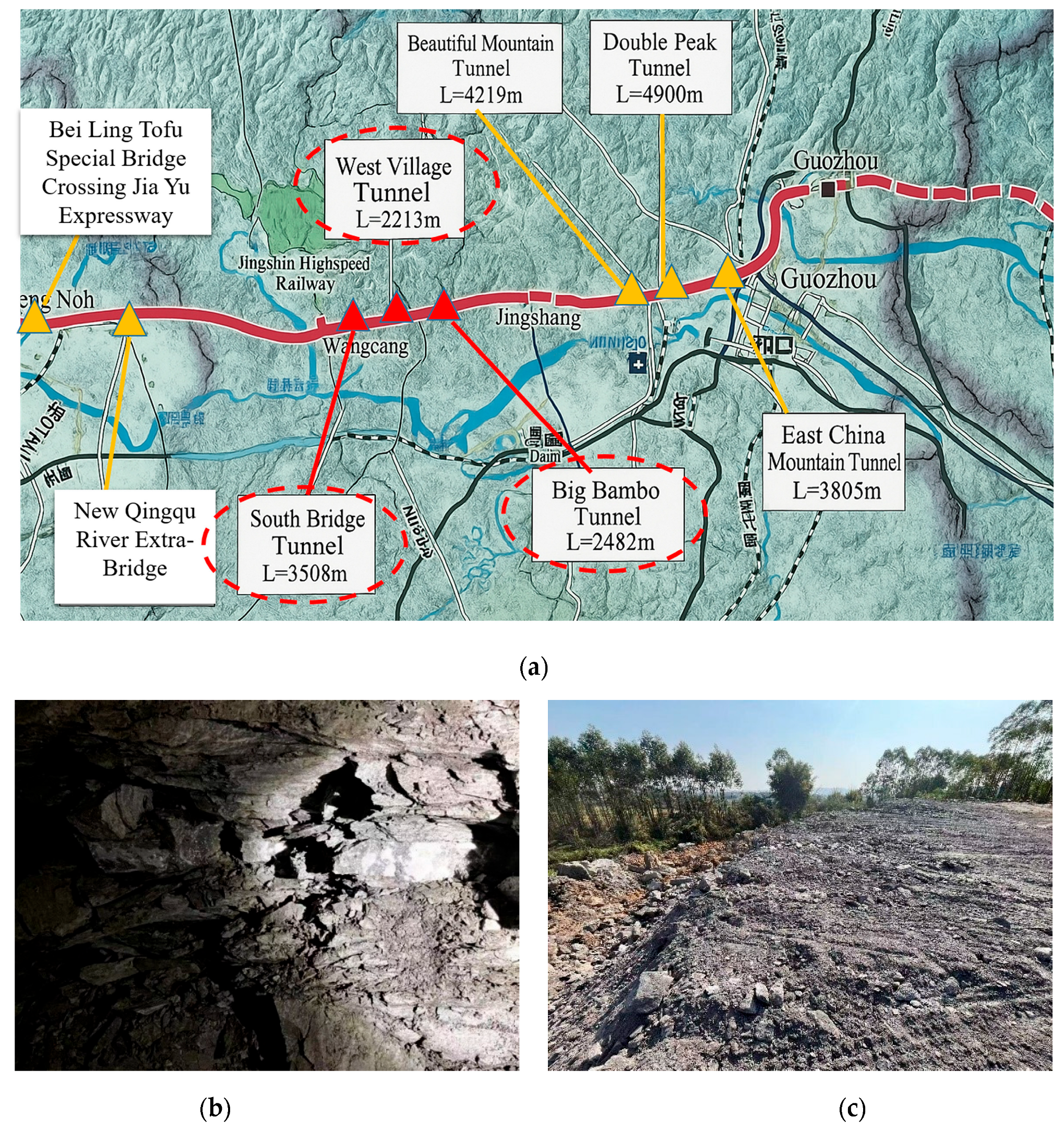
The raw material used in the experiment was mudstone excavated from a tunnel project in Guangxi, as shown in
Figure 1a. This section is located near the Dum Tunnel, Xicun No. 2 Tunnel, and Dazhu Tunnel. The state of the mudstone excavated at the tunnel site is illustrated in
Figure 1b,c. This paper describes the consolidation of the excavated mudstone for potential application in karst pile foundation cavity treatment near the excavation site. The engineering background is introduced here only to explain the source and intended use of the raw material, whereas site-specific geological parameters, such as the thickness of weak soils or the depth to the competent bearing stratum, are beyond the scope of the present study. The native mudstone was dried and crushed, then screened through a 4.75 mm sieve. The physical and mechanical parameters of the screened mudstone were determined in accordance with the Standard for Geotechnical Testing Method [
29]. The density of this mudstone was 1.46 g·cm
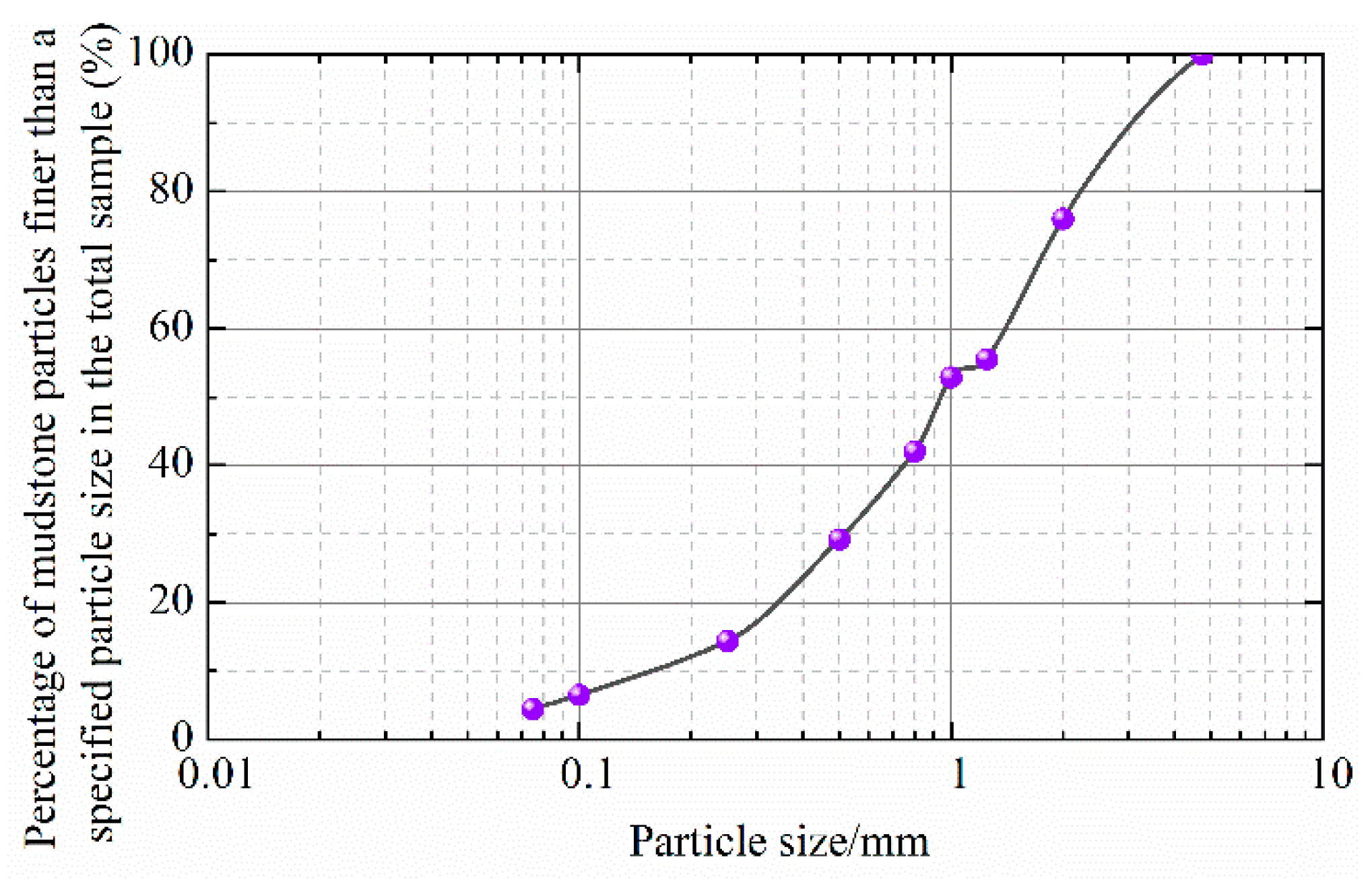
3, with liquid limit, plastic limit, and plasticity index values of 20.6%, 13.3%, and 7.3%, respectively. The particle size distribution curve of the crushed mudstone is shown in
Figure 2.
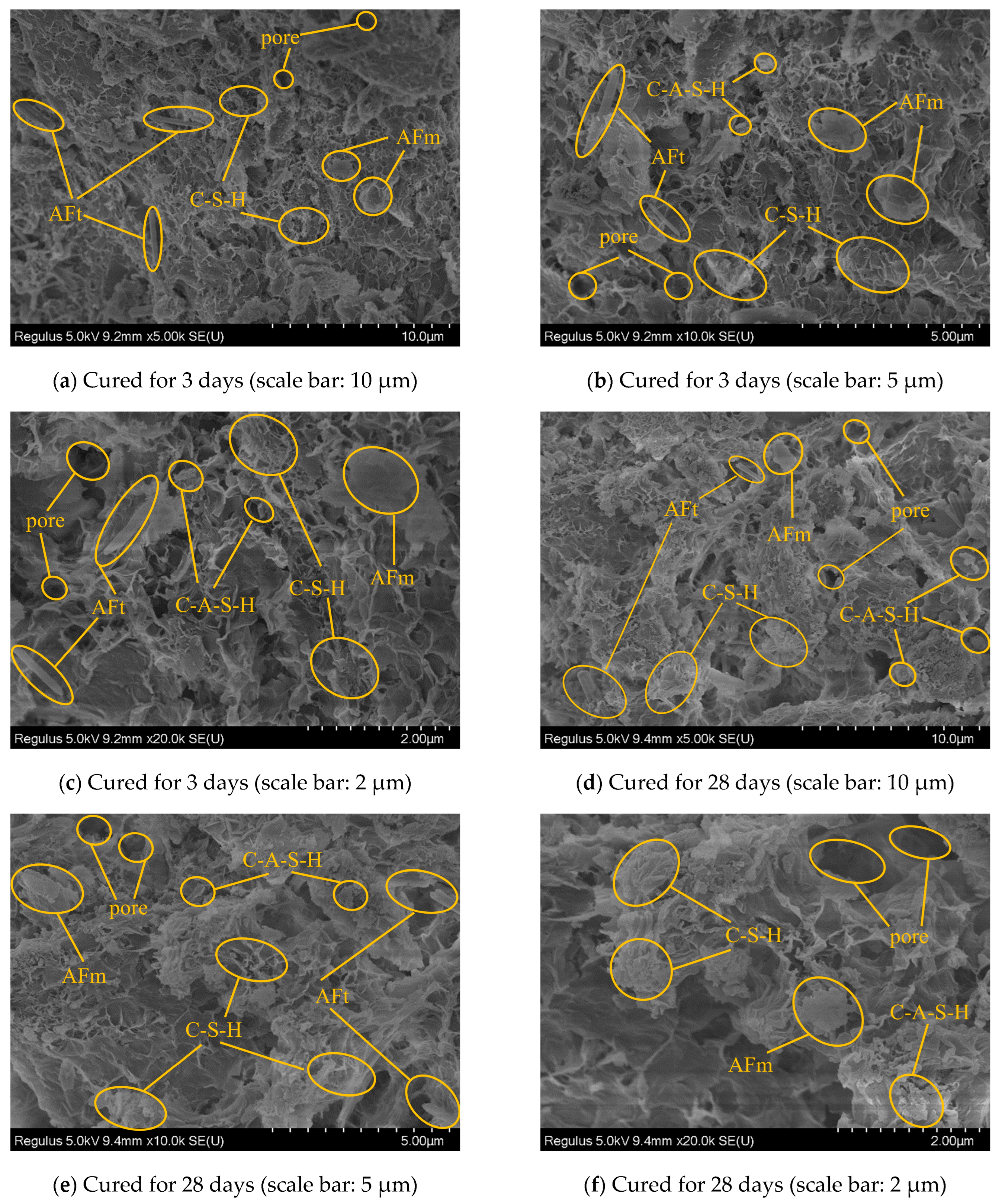
Table 1 and
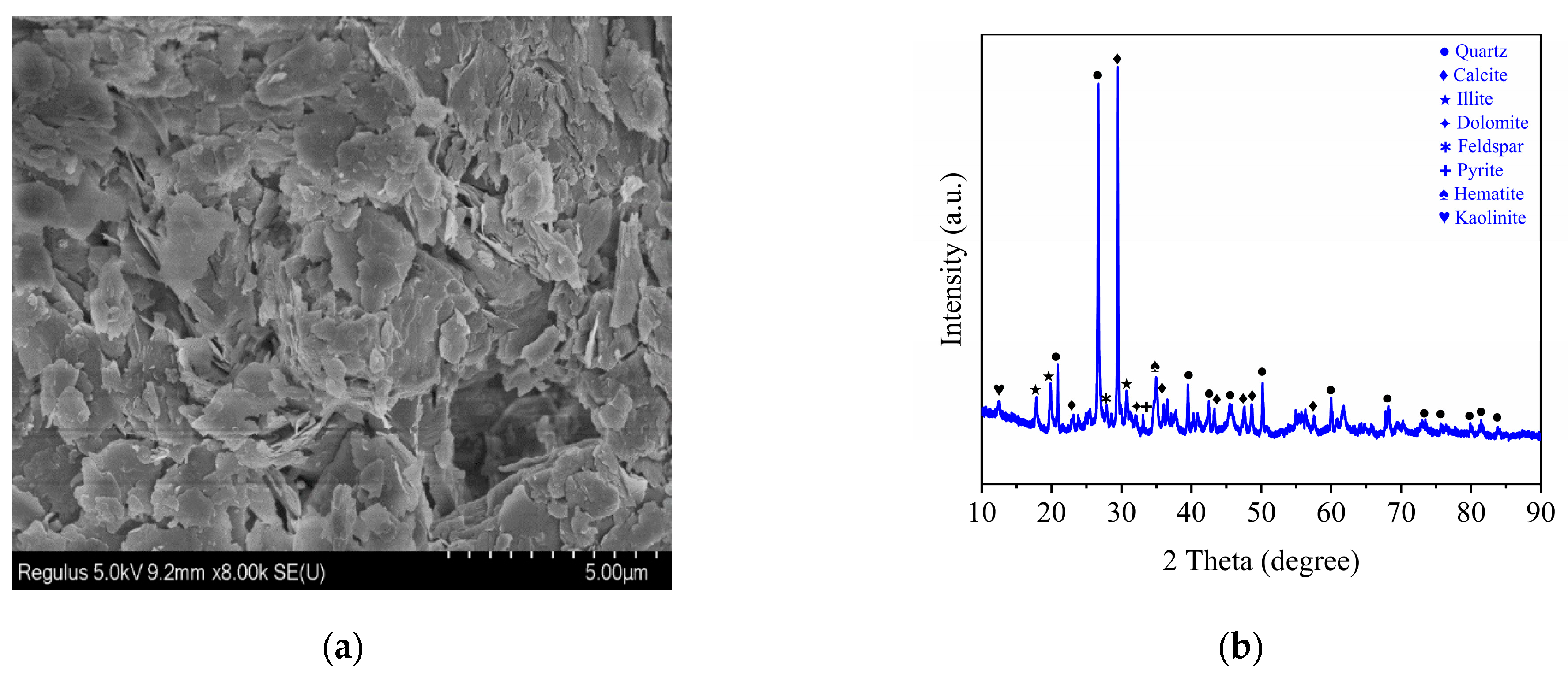
Figure 3 present the chemical mineral composition and microstructure. The mudstone primarily consists of non-clay minerals, with a small proportion of clay minerals dominated by illite and kaolinite, exhibiting poor cohesion. Tunnel mudstone primarily occurs in the form of flakes or thin plates [
30], with obvious planar ductile characteristics, showing a certain degree of tendency to directional arrangement, and the existence of a large number of intergranular pores formed by the accumulation of particles, which are mostly irregular in shape and have a wider size distribution, resulting in weak cohesion between particles and poor resistance to dispersion.
The cement used is 42.5 ordinary Portland cement with a specific surface area of 352 m
2/kg, an initial setting time of 188 min, and a final setting time of 239 min. The performance indicators are shown in
Table 2.
The mineral powder used is S105 grade mineral powder with a density of 2.93 g/cm
3, a specific surface area of 628 m
2/kg, a fluidity ratio of 102%, and a moisture content of 0.2%. The performance indicators are shown in
Table 3.
The admixture is prepared by mixing hydroxypropyl methylcellulose and early strength agent in a specific ratio. The mixing water used in the test is tap water from the building materials laboratory, which complies with national standards and has a pH value greater than 4. From the perspective of raw material selection, the slag powder used in this study is a conventional mineral admixture widely used in cement-based materials, while hydroxypropyl methylcellulose (HPMC) is a cellulose ether mainly serving as a thickening and water-retaining agent. The early-strength agent was incorporated at a relatively low dosage to regulate setting and early-age strength development. Therefore, no obvious high-risk heavy-metal-bearing constituents were intentionally introduced into the formulation. These characteristics provide a preliminary basis for the environmental compatibility of the material system, although dedicated leaching tests on the hardened body are still required for a more comprehensive environmental safety evaluation.
2.2. Performance Indicators
The purpose of grouting for karst cavity treatment in pile foundation engineering is to reduce significant concrete loss during the pouring process, improve the filling and stabilization effect of karst cavities, and provide more favorable material conditions for grout pumping, cavity filling, and subsequent construction processes. To achieve thorough filling and reinforcement of cavities, karstic voids, or fissures within karst pile foundations, the grouting slurry must first possess working fluidity compatible with the cavity geometry, diffusion, and filling process. This enables the slurry to penetrate cavities under high-pressure injection conditions and form a more cohesive bonded mass with the filling medium, thereby improving the filling and stabilization effect of karst cavities and providing favorable conditions for subsequent pile foundation construction. Simultaneously, the grout must maintain excellent system stability during diffusion and settling: on one hand, it should suppress water separation and segregation to reduce underfilling and structural non-uniformity caused by grout settlement; on the other hand, it should minimize shrinkage rate to enhance formation efficiency and volume retention capability. The shrinkage rate characterizes the ratio of the stone body volume to the grout volume, while the bleeding rate reflects the degree of free water separation from the grout. In engineering applications, a low shrinkage rate and low bleeding rate are typically desired to ensure the compactness and integrity of the reinforced structure. While meeting the requirements for subsequent secondary drilling in karst reinforcement and providing borehole wall support (wall protection), the grout must also exhibit an adjustable setting and hardening process: the setting time should neither be too short—risking insufficient plasticity retention, increased pipeline resistance, or even pipeline blockage—nor too long, which would compromise early stability. Simultaneously, the relationship between pumpability and early strength development must be balanced. This ensures the grout maintains sufficient fluidity within the construction window while achieving rapid strength development after the pumpable period. It should be noted that the evaluation indicators selected in this study are intended to assess the workability, filling stability, and construction adaptability of the grout material for karst cavity treatment, rather than the structural load-bearing behavior of completed piles or the direct verification of construction safety and field construction performance.
Based on the aforementioned engineering requirements and incorporating common characterization approaches for key indicators such as “bleed rate and strength” in grouting material performance studies, this paper selects slurry density, bleed rate, shrinkage rate, water stability, setting time, compressive strength, and flowability as performance evaluation metrics. These metrics respectively characterize the slurry’s fluidity and injectability, system stability, and post-curing mechanical properties. Based on prior research and engineering experience [
31,
32], the specific performance requirements for grouting materials used in karst pile foundations in this study are presented in
Table 4. Due to the excessive length of the performance metric names, abbreviations will be used consistently hereafter. The specific abbreviations are as follows: Density (DE), Initial fluidity (IF), Fluidity at 80 min (F80), Bleeding rate (BR), Shrinkage rate (SR), Initial setting time (IST), Final setting time (FST), Compressive strength (CS), Water stability (WS).
2.3. Experimental Design
Based on past construction experience and site conditions, the primary factors affecting the construction performance of grouting materials include the type and content of cementitious materials, the type and content of admixtures, water content, and the type and content of raw materials. Following the general approach for characterizing grouting material mix proportions, “ratio-type indicators” were adopted as independent variables. Given the numerous influencing factors and levels, to ensure highly uniform distribution of test points within the design domain, this study employs a uniform design method [
33], selecting four factors: cementitious materials-to-mudstone ratio (mass ratio of cementitious materials to mudstone), external-additive-to-cementitious materials ratio (mass ratio of admixtures to cementitious materials), water-to-solids ratio (mass ratio of water to total solids), and slag powder content-to-cementitious materials ratio (mass ratio of slag powder content to cementitious materials). To better determine the optimal mix ratio for this mudstone solidification and backfill material, preliminary small-scale tests were conducted to establish the optimal range for each factor’s component dosage, thereby narrowing the range for the optimal mix ratio. To enhance testing efficiency, the initial mix design phase only evaluated material density, flowability, shrinkage rate, and 3-day compressive strength. The preliminary mix design plan is shown in
Table 5, and the test results are presented in
Table 6.
Let the cementitious materials-to-mudstone ratio X
1 = (C + M)/S, the ratio of additives to cementitious materials X
2 = E/(C + M), the water-to-solid ratio be X
3 = (W/S + C + M), and slag powder content-to-cementitious materials ratio X
4 = (M/(C + M)); Based on the preliminary trial-mix results in
Table 6 and the target performance indices in
Table 4, and considering the pumpability and early-age compressive strength required for mudstone-solidification grouting, the present study X
1 = (C + M/S):0.12, X
2 = (E/C + M): 0.05, X
3 = (W/S + C + M): 0.58, X
4 = (M/(C + M)): 0.35 as the central points for a radial search, determining the dosage ranges for the studied materials as follows: X
1 = (C + M/S): 0.08~0.16; X
2 = (E/C + M): 0.03~0.07; X
3 = (W/S + C + M): 0.5~0.66; X
4 = (M/(C + M)): 0.25~0.45. Where S: mudstone content; C: cement content; M: slag powder content; E: admixture content; W: mixing water content.
This experiment involves four factors. Based on the design principles of uniform experiments and referencing the usage guidelines for Table U
15*(15
7) in
Table 7, when the number of factors is four, columns 1, 2, 4, and 6 of the uniform design table U
15*(15
7) are utilized to establish the uniform experimental design sequence. Following the aforementioned experimental design methodology, the specific experimental plan for this study was derived. The experimental design table U
15*(15
4) and the specific material mix ratios are shown in
Table 8 and
Table 9, respectively.
2.4. Preparation Process and Testing Methods
The density (DE) and setting time (ST) of the slurry were measured in accordance with the “Standard Test Methods for Basic Properties of Construction Mortar” [
34]. The fluidity of the slurry was measured according to the “Test Methods for Air-Entrained Mortar and Air-Entrained Grout” by the Japan Highway Public Corporation [
35]. The bleeding rate (BR) of the slurry was measured in accordance with the “Test Method for Bleeding of Cement” [
36]. The compressive strength (CS) at 3 and 28 days was measured according to the “Standard Test Methods for Soil” [
29].
In addition to the conventional test items specified by relevant standards, two study-specific indices, namely shrinkage ratio (SR) and water stability (WS), were introduced to evaluate the performance of the slurry. The SR was determined using a modified method based on the Standard for Soil Test Methods. Fresh slurry was filled into a cutting ring (20 mm in height and 61.8 mm in diameter) placed on a glass plate lined with filter paper, and the initial volume was recorded. After standard curing for 3 d, the specimen volume was measured again, and the SR was calculated as (initial volume − volume after 3 d of curing)/initial volume. For WS determination, the slurry was cast into cylindrical molds (50 mm in diameter and 100 mm in height) in two layers, with each layer tamped 15 times. After demolding at 24 h, the specimens were wrapped with plastic film and subjected to standard curing for 27 d. The cured specimens were then divided into two groups: one group was directly tested for unconfined compressive strength (UCS), while the other group was immersed in water at (20 ± 2) °C for 24 h, with the water level maintained at least 5 cm above the specimen top, before UCS testing. The WS was defined as the ratio of the UCS after water immersion to that of the specimens under standard curing. For each test, three parallel specimens were prepared, and the average value was reported.
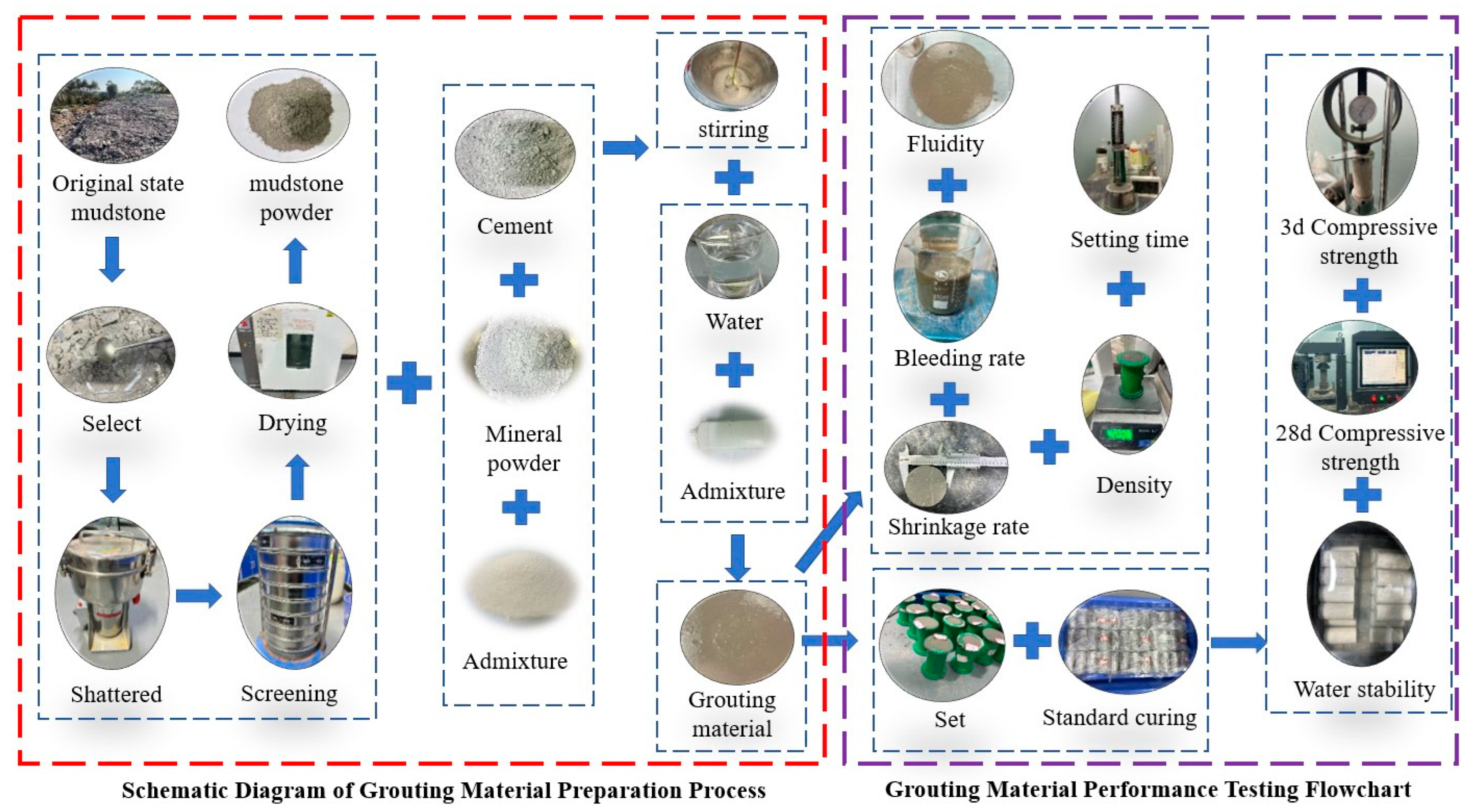
The preparation and testing workflow of the grouting material, including raw material pretreatment, batching, slurry preparation, specimen curing, and performance testing, is illustrated in
Figure 4.
3. Experimental Results and Analysis
3.1. Uniform Experimental Results
Based on the specific mix design table for uniform testing in
Table 9, 15 sets of indoor experiments were conducted. The performance indicators of the 15 mix designs for mud slurry materials were measured. The performance indicators of the modified mudstone slurry materials are shown in
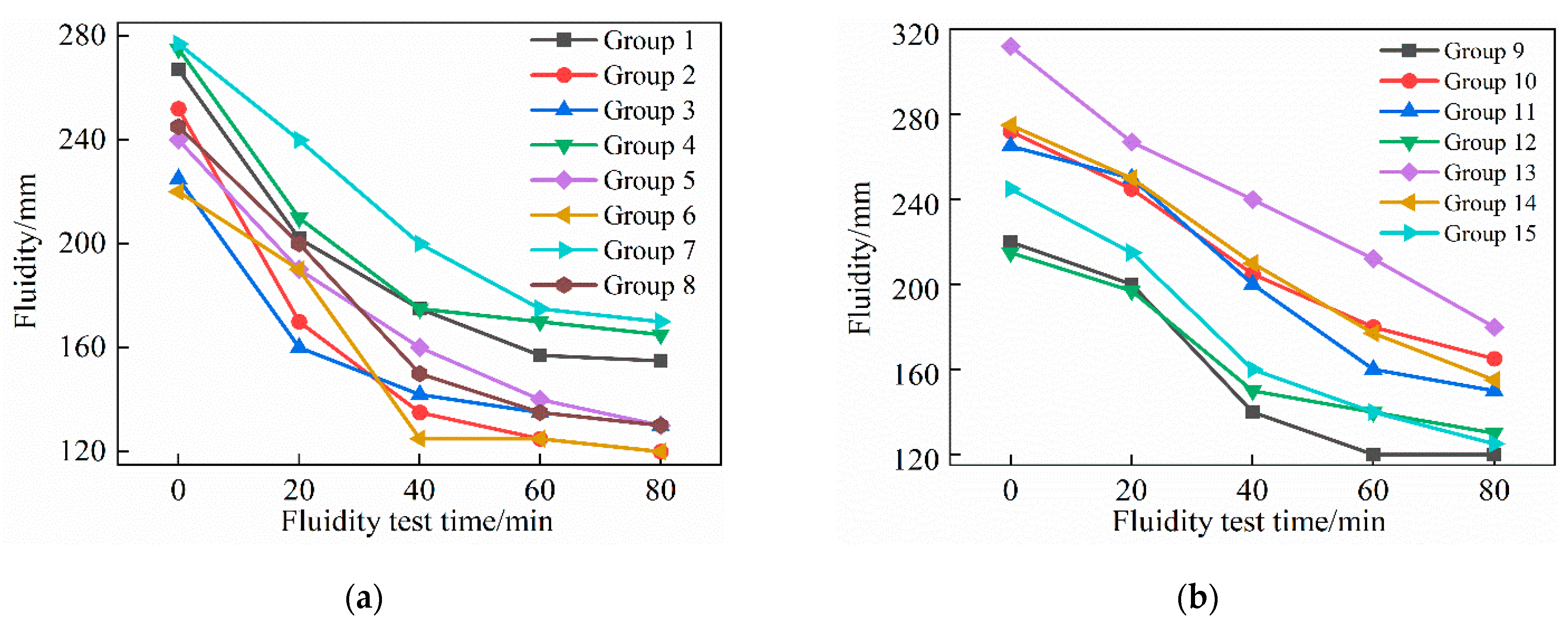
Table 10. To evaluate the time-dependent rheological behavior and construction adaptability of the mudstone-solidified slurry, this study measured its fluidity at different time intervals. The corresponding results are presented in
Table 11.
3.2. Stepwise Multiple Regression Analysis
Due to certain macroscopic properties of materials, such as compressive strength and flowability, nonlinear relationships often exist between these properties and their respective component ratio parameters. Simple linear models prove ineffective for analysis, particularly when parameter variations span a wide range. Furthermore, since additive, restrictive, and synergistic effects between factors are ubiquitous, interaction effects frequently arise. Quadratic models achieve a precise characterization of inflection points, extrema, and synergistic interactions within response surfaces by incorporating squared terms and interaction terms for each factor. In addition, this experimental design employs a uniform experimental design. A uniform design enables exploration of a broad parameter space with minimal test points, while a quadratic model can fully exploit these sparse yet uniformly distributed data points to achieve precise localization and prediction of the optimal mixing ratio region. Therefore, based on a quadratic regression model, this study employs IBM SPSS version 31.0.0 (IBM SPSS Statistics, Armonk, NY, USA) to perform stepwise multiple regression analysis on the performance test data of flowable solidified mudstone grouting materials from
Table 10 and
Table 11. The analysis investigates the effects of binder-to-clay ratio X
1(C − M/S) X
1(C + M/S), external binder ratio X
2(E/C + M), water-solid ratio X
3(W/S + C + M), and mineral-binder ratio X
4(M/C + M) on the performance of this flowable solidified mudstone grouting material and their interactions. The quadratic regression model can be expressed as shown in Equation (1):
where
yn denotes the different properties of the slurry;
a0,
ai,
aii,
aij represent the regression coefficients;
xi and
xj are the independent variables;
k is the number of independent variables, taken as 4 in this paper;
ε is the random error.
Through stepwise multiple regression analysis of experimental data, regression equations were derived to model the relationship between various properties of the flowable solidified mudstone grouting material and its constituent factors, as shown in
Table 12. Based on the uniform design test results for mudstone solidification slurry properties in
Table 10, the bleeding rates of all 15 test specimens were below 0.5%, indicating minimal bleeding under practical conditions. Due to the extremely small differences and concentrated distribution of bleeding rates across test groups, insufficient variability existed to establish statistically significant relationships with factors through stepwise multiple regression analysis. Therefore, no regression fitting was performed for bleeding rate in this study.
Table 13 summarizes the evaluation results for the regression equations presented in
Table 12, including their significance and reliability. Here,
R2 is the coefficient of determination of the fitted regression equation, whereas adjusted
R2 represents the adjusted coefficient of determination. Values closer to 1 indicate a better goodness-of-fit of the regression model.
F is the test statistic used to evaluate the reliability of the fitted regression equation, and
Fcr is the corresponding critical value. A regression equation is considered reliable when
F exceeds
Fcr; otherwise, it is regarded as unreliable.
p denotes the significance level of the equation 0.01 <
p < 0.05, which indicates statistical significance.
p < 0.01 indicates high significance, and
p > 0.05 indicates non-significance. As shown in
Table 13, the statistical parameters of the fitted equations, including
R2, adjusted
R2,
p-value,
F-value, and
Fcr, demonstrate that all established regression models are statistically acceptable. The fitted equations show good agreement between the performance responses and the influencing factors, with high reliability and strong statistical significance. Here, the response variables listed in
Table 12 and
Table 13 refer to the performance indices of the slurry (e.g., IF, F80, SR, IST, FST, 3dCS, 28dCS, WS, and DE), while X
1–X
4 are the independent mix-design factors defined in
Section 2.3.
3.3. Single-Factor Effect Analysis
Based on the fitted regression equations listed in
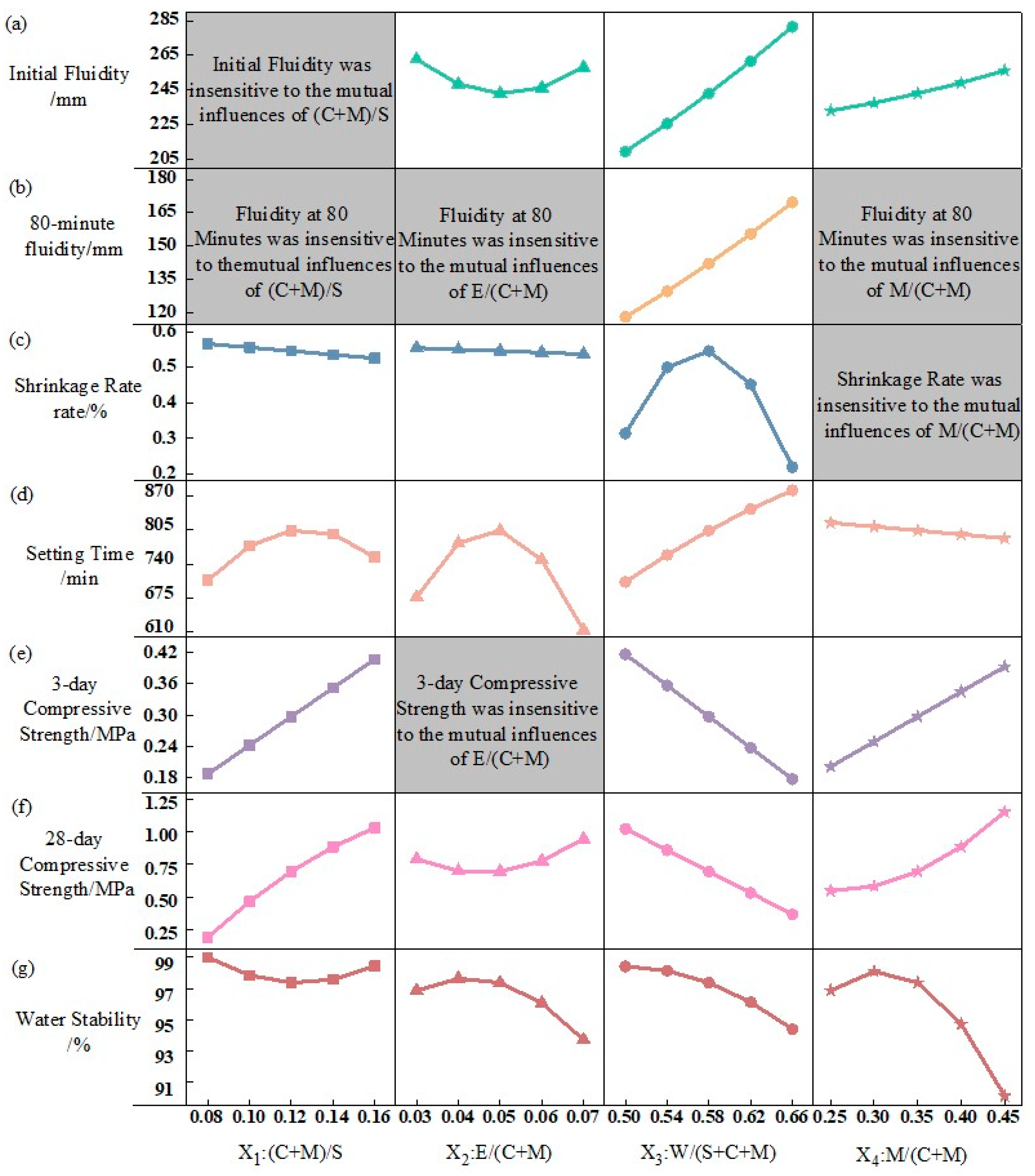
Table 12, a single-factor analysis was conducted by fixing three independent variables at their median levels and varying the remaining factor within its design range. The resulting response curves are presented in
Figure 5, which illustrates the individual influence of each mix design factor on the key performance responses of the slurry, including fluidity, setting time, strength, shrinkage ratio, water stability, and density. These single-factor response trends provide a direct and intuitive basis for understanding the sensitivity of each response variable. As shown in
Figure 5, the four mix design factors do not influence slurry performance in a uniform manner. Certain response variables vary approximately linearly with the factors, whereas others exhibit marked nonlinear characteristics, with distinct inflection or turning points appearing within the investigated range. These results indicate that the optimization of the grouting material cannot be based on any single performance criterion alone, but should instead be achieved through a comprehensive balancing of multiple response indices.
3.3.1. The Effect of (C + M)/S on Various Performance Indicators
With the gradual increase in the cementitious-materials-to-mudstone ratio, the initial fluidity and the 80 min fluidity did not change significantly, but the compressive strength increased significantly in 3 and 28 days, showing an approximately linear positive correlation. The shrinkage rate gradually decreased, showing a clear improvement trend. The setting time was first extended and then shortened, gradually increasing when the cementitious-materials-to-mudstone ratio increased from 0.08 to 0.12, and gradually decreased after exceeding 0.12, and the shortening was greater than the extension range. The water stability decreased first and then increased, gradually decreased from 0.08 to 0.12, and then gradually increased from 0.12 to 0.16.
3.3.2. The Effect of E/(C + M) on Various Performance Indicators
With increasing admixture-to-cementitious-material ratio, the shrinkage rate gradually decreases. The initial fluidity and 28-day compressive strength first decrease and then increase. The setting time and water stability also exhibit non-monotonic trends, first increasing and then decreasing. Specifically, the 28-day compressive strength decreases slightly when the admixture-to-cementitious-material ratio increases from 0.03 to 0.04, but increases again when the ratio exceeds 0.04. The setting time is significantly extended in the range of 0.03 to 0.05 and then decreases almost linearly beyond 0.05. By contrast, the 3-day compressive strength remains relatively stable within the investigated range.
3.3.3. The Effect of W/(S + C + M) on Various Performance Indicators
With increasing water-to-solid ratio, the initial fluidity, 80 min fluidity, and setting time all increase approximately linearly, indicating a strong positive correlation. In contrast, the 3-day compressive strength, 28-day compressive strength, and water stability decrease markedly with increasing water-to-solid ratio, showing an approximately linear negative trend. In addition, the shrinkage ratio first increases and then decreases. It rises significantly when the water-to-solid ratio increases from 0.50 to 0.58, but gradually decreases once the ratio exceeds 0.58, with the most pronounced decrease observed in the range of 0.62–0.66.
3.3.4. The Effect of M/(C + M) on Various Performance Indicators
With increasing mineral-powder-to-cementitious-material ratio, the 3-day compressive strength increases significantly and approximately linearly. The 28-day compressive strength also increases, but in a nonlinear manner: the increase is relatively small when the ratio rises from 0.25 to 0.30 and becomes more pronounced once it exceeds 0.30. In addition, the initial fluidity shows a slight linear increase, whereas the 80 min fluidity and shrinkage ratio remain relatively stable and are only slightly affected by this factor.
3.4. Multifactor Effect Analysis
Based on the fitted equations in
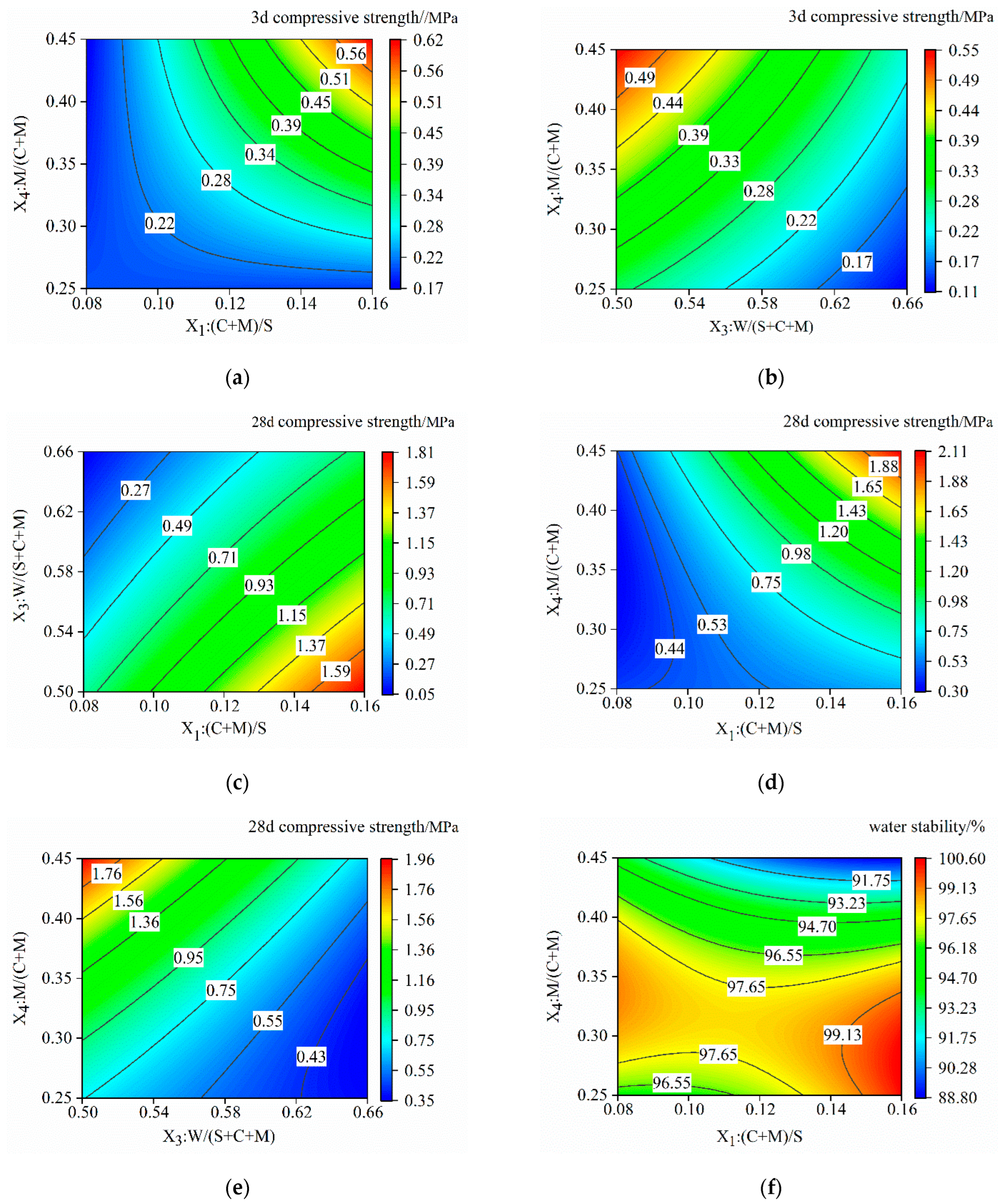
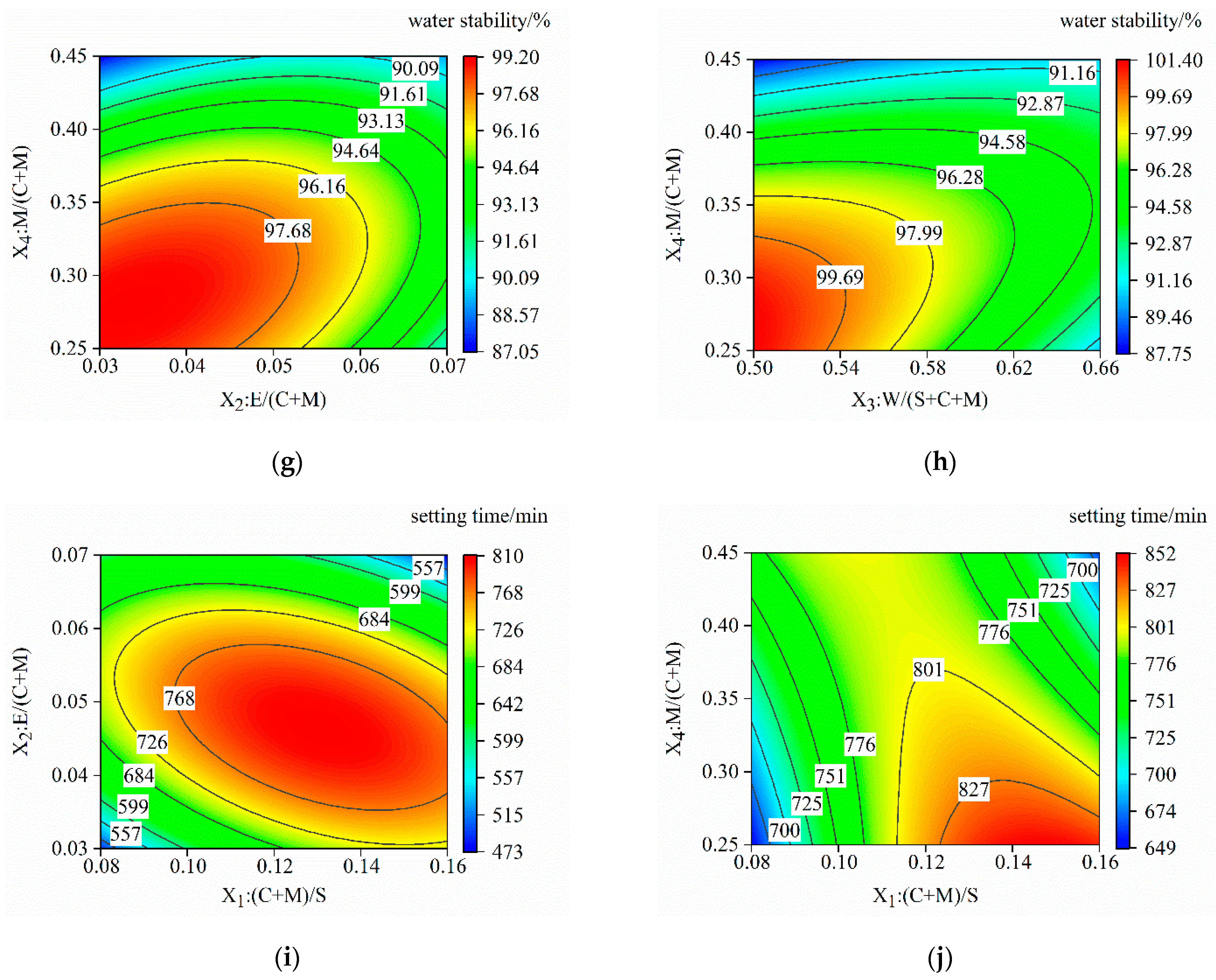
Table 12, relevant influencing factors were identified. Two non-interacting factors were fixed at their median levels, while the two interacting factors were varied to observe the corresponding changes in results, as shown in
Figure 6. It should be noted that the response surface plots in this study are primarily used to illustrate the interaction effects of two factors on individual performance indices and to identify relatively favorable parameter regions. The final optimal mix proportion was not determined from any single response surface plot alone, but from the subsequent multi-objective optimization considering all key performance constraints simultaneously.
3.4.1. Mutual Influence Between the Factors on the 3 d Compressive Strength
Figure 6a indicates that relatively high 3-day compressive strength is achieved when both X
1 and X
4 are at relatively high levels, specifically when X
1 ranges from 0.14 to 0.16 and X
4 ranges from 0.40 to 0.45. When X
1 ranges from 0.08 to 0.10, variation in X
4 exerts only a weak influence on the 3-day compressive strength. By contrast, when X
1 ranges from 0.12 to 0.16, the 3-day compressive strength increases markedly with increasing X
4.
Figure 6b indicates that the 3-day compressive strength remains relatively high when X
3 ranges from 0.50 to 0.54 and X
4 ranges from 0.40 to 0.45. In this range, increasing X
4 significantly promotes the development of 3-day compressive strength. However, when X
3 ranges from 0.62 to 0.66, the positive effect of X
4 on 3-day compressive strength becomes much less pronounced.
3.4.2. Mutual Influence Between the Factors on the 28 d Compressive Strength
Figure 6c indicates that the highest 28-day compressive strength is achieved when X
1 ranges from 0.14 to 0.16 and X
3 ranges from 0.50 to 0.54. In contrast, relatively low 28-day compressive strength is observed when X
1 is in the lower range and X
3 is in the higher range.
Figure 6d indicates that the 28-day compressive strength increases markedly when both X
1 and X
4 are at relatively high levels. By contrast, when X
1 ranges from 0.08 to 0.10, variation in X
4 exerts only a weak influence on the 28-day compressive strength.
Figure 6e further indicates that the 28-day compressive strength is highest when X
3 ranges from 0.50 to 0.54 and X
4 ranges from 0.40 to 0.45. However, when X
3 ranges from 0.62 to 0.66, the effect of increasing X
4 on the 28-day compressive strength becomes insignificant.
3.4.3. Mutual Influence Between the Factors on the Water Stability
Figure 6f shows that when X
1 ranges from 0.08 to 0.14, the water stability first increases and then decreases with increasing X
4, reaching relatively high values when X
4 ranges from 0.30 to 0.35. When X
1 ranges from 0.14 to 0.16 and X
4 ranges from 0.25 to 0.35, the water stability remains high and increases with increasing X
1. When X
1 ranges from 0.14 to 0.16 and X
4 ranges from 0.35 to 0.45, the water stability first increases and then decreases.
Figure 6g shows that the water stability gradually decreases with the simultaneous increase in X
2 and X
4, and remains relatively high when both variables are within the lower ranges, i.e., when X
2 ranges from 0.03 to 0.05 and X
4 ranges from 0.25 to 0.35.
Figure 6h shows that the water stability gradually decreases with the simultaneous increase in X
3 and X
4, and remains relatively high when both variables are within the lower ranges, i.e., when X
3 ranges from 0.50 to 0.54 and X
4 ranges from 0.25 to 0.35.
3.4.4. Mutual Influence Between the Factors on the Setting Time
Figure 6i shows that the setting time remains relatively high when X
1 ranges from 0.10 to 0.16 and X
2 ranges from 0.04 to 0.06. When X
1 ranges from 0.08 to 0.10 and X
2 ranges from 0.03 to 0.04, the setting time increases with increasing X
2. However, when X
1 ranges from 0.08 to 0.10 or from 0.14 to 0.16, and X
2 ranges from 0.06 to 0.07, the setting time decreases with increasing X
2.
Figure 6j shows that when X
1 and X
4 increase simultaneously from 0.08 and 0.25 to 0.10 and 0.45, respectively, the setting time increases accordingly. When X
1 ranges from 0.12 to 0.16, the setting time gradually decreases with increasing X
4.
3.5. Time-Dependent Analysis of Fluidity
Based on the fluidity data of the 15 uniform experimental groups presented in
Table 11, the variation in slurry fluidity with time for different mix proportions was plotted, as shown in
Figure 7. Here, Groups 1–15 refer to the 15 mix-design schemes defined in the uniform experimental design, corresponding to the group numbers listed in
Table 8 and
Table 9 and the performance results reported in
Table 10 and
Table 11.
As shown in
Figure 7 and
Table 11, the fluidity of all 15 grout mixtures decreases continuously with time, indicating a pronounced time-dependent behavior. Overall, the fluidity decay can be divided into two stages: a rapid decay stage from 0 to 40 min and a slow decay stage from 40 to 80 min. Based on the data in
Table 11, the average fluidity of the 15 groups decreases from 253.7 mm at 0 min to 143.0 mm at 80 min, with an overall reduction of approximately 43.6%. Among this reduction, about 32.5% occurs within the first 40 min, whereas only about 11.1% occurs during 40–80 min, indicating that the initial period after mixing is the critical stage for fluidity loss. This behavior is mainly attributed to the combined effects of cement hydration, water absorption and swelling of mudstone particles, and progressive restructuring of the slurry matrix. In engineering practice, the first 40 min should therefore be regarded as the key operation window for pumping and cavity filling.
From the perspective of the underlying mechanism, in the initial stage after mixing, the slurry exhibits a highly dispersed and highly fluid state. However, as time progresses, hydration reactions and particle structure reorganization gradually occur within the slurry. The hydration of active mineral particles consumes free water, generating initial hydration products, which leads to a decrease in the effective water-to-binder ratio. The hydrophilic swelling of mudstone particles causes free water to be further adsorbed onto the particle surfaces, forming an adsorbed water layer and reducing the flow of water. Flocculation and bridging effects gradually intensify, transforming particles from a dispersed state into weakly structured aggregates, leading to a rapid increase in flow resistance. Therefore, the most significant decrease in slurry flowability occurs within the first 0 to 40 min.
Once the slurry system has initially formed a structural framework, the free water content decreases to a certain level, and the interactions between hydration products and particles gradually stabilize. At this stage, the thixotropic properties of the slurry begin to manifest. Weak structures between particles continuously form and stabilize, while the early hydration rate of cement gradually slows down. The impact of newly formed hydration products on flowability becomes negligible. Mudstone particles approach saturation in water absorption, limiting further consumption of free water. During this phase, the decline in slurry flowability moderates, ultimately stabilizing at a relatively low value.
The flowability of mud slurry exhibits typical time-dependent behavior, with its decay process primarily governed by hydration reactions, water absorption and swelling of mud particles, and restructuring of the slurry matrix. The first 40 min represent a critical time window for construction operations, during which the slurry rapidly loses its fluidity. Thereafter, the flowability gradually stabilizes. Therefore, in practical engineering applications, to meet the requirements for effective pumping and filling, the mixing and usage time of the grout should be reasonably controlled to ensure that grouting and filling operations are completed during the stage when the grout exhibits high flowability.
4. Determination and Validation of the Optimal Mix Proportion
4.1. Optimal Mix Proportion
Due to the complexity of field conditions, the grout must achieve a balanced performance across multiple requirements. Therefore, the design of grout mixtures needs to comprehensively consider various performance indices, which constitutes a typical multi-objective optimization problem. The empirical relationships established in this study are all nonlinear in form; consequently, the optimization involved falls within the category of constrained nonlinear optimization. In this study, the fmincon function in the Matlab MATLAB (R2024) Optimization Toolbox is employed to perform multi-objective optimization. This function determines the minimum of multivariable nonlinear functions under specified constraints, thereby enabling the optimization of grout mix proportions. This study aims to determine a grout mix proportion that achieves the optimal overall cost–performance balance, considering both performance optimization and cost minimization. The objective functions include initial fluidity, fluidity after 80 min, 3-day compressive strength, 28-day compressive strength, setting time, water stability, density, and cost. Based on the fitted relationships for the target performance indices of the grout described above, the corresponding objective functions for grout performance can be derived, as presented in Equation (2).
According to the performance requirements for grouting materials to satisfy construction demands, as listed in
Table 4, the constraint conditions in this study were adjusted with particular emphasis on material strength and workability. Specifically, the constraint limits for 3-day and 28-day compressive strength were increased to 305 kPa and 805 kPa, respectively, while the initial fluidity requirement was reduced to below 270 mm. Although these constraints represent numerical adjustments relative to the original settings, they remain within the reasonable range of performance evaluation criteria. Moreover, the revised constraints are more stringent while still ensuring satisfactory material performance, thereby further enhancing the reliability and stability of the grout material. The technical constraints associated with the objective functions can be expressed as shown in Equation (3).
In addition to the technical constraints described above, further conditions are required to ensure the practical feasibility of the optimized mix proportion. Specifically, certain objective functions must satisfy non-zero or physically reasonable conditions. For example, the bleeding rate of grouting material should be greater than zero, the density should be greater than 1.60 g/cm
3, the initial setting time should be shorter than the final setting time, and the 3-day compressive strength should be lower than the 28-day compressive strength. Accordingly, based on relationships observed during the experimental study, the following non-technical constraints were established, as expressed in Equation (4).
In this study, the fmincon function in the Matlab Optimization Toolbox was employed to perform numerical optimization of the proposed model. During the solution process, all performance indices were first converted to a consistent optimization direction and subsequently normalized. These indices were then incorporated into a distance-based evaluation function, whereby the multi-objective optimization problem was scalarized through the minimization of the Euclidean distance between feasible solutions in the objective space and the ideal solution point. The optimal mix proportions of the flowable solidified mudstone grout were thus obtained as follows: the mass ratio of cementitious materials to mudstone (C − M/S) (C + M/S) is 0.16; the mass ratio of admixtures to cementitious materials (E/C + M) is 0.06; the water-to-solid ratio (W/S + C + M) is 0.63; and the mass ratio of slag powder content to cementitious materials (M/(C + M)) is 0.34. When converted to material consumption per unit volume, the optimal mix corresponds to 851.29 kg/m
3 of mudstone, 89.92 kg/m
3 of cement, 45.95 kg/m
3 of slag powder, 8.18 kg/m
3 of admixture, and 624.67 kg/m
3 of water. As presented in
Table 14, the optimization analysis not only identified the optimal mix proportion of the slurry but also generated predictions for the corresponding performance indices under the optimized condition. These predicted results represent the expected performance of the optimized mix proportion and serve as a reference benchmark for the subsequent experimental verification in
Section 4.2.
4.2. Optimal Mix Proportion Validation
Indoor experiments were conducted based on the optimized mix proportion obtained above, and the experimental results were compared with the predicted performance parameters listed in
Table 14 for validation. The comparison results are presented in
Table 15. It can be observed that both the predicted values and experimental results of the optimized mix proportion meet the performance requirements for on-site construction. Except for the shrinkage rate and 28-day strength, the errors between other performance indicators and their predicted values are all less than 5%, demonstrating excellent accuracy. The shrinkage rate and 28-day strength are also within the range of 10%, and the shrinkage rate of the materials studied in this paper is generally low, less than 1%, which can be ignored. The experimental value of the 28-day strength exceeds the predicted value, meeting the performance requirements for construction.
As shown in
Table 15, under laboratory conditions, the flowable solidified mudstone grouting material exhibits superior system stability and produces hardened bodies with reduced shrinkage after setting. In addition, it demonstrates a low bleeding rate, relatively high compressive strength at 3 d and 28 d, and good pumpability, indicating its considerable potential for engineering application in terms of short-term performance.
5. Anti-Dispersibility Testing and Microanalysis
5.1. Anti-Dispersibility
According to the “Test Specification for Underwater Non-Dispersive Concrete” [
37], the anti-dispersion performance of the slurry was tested, with results shown in
Table 16 and
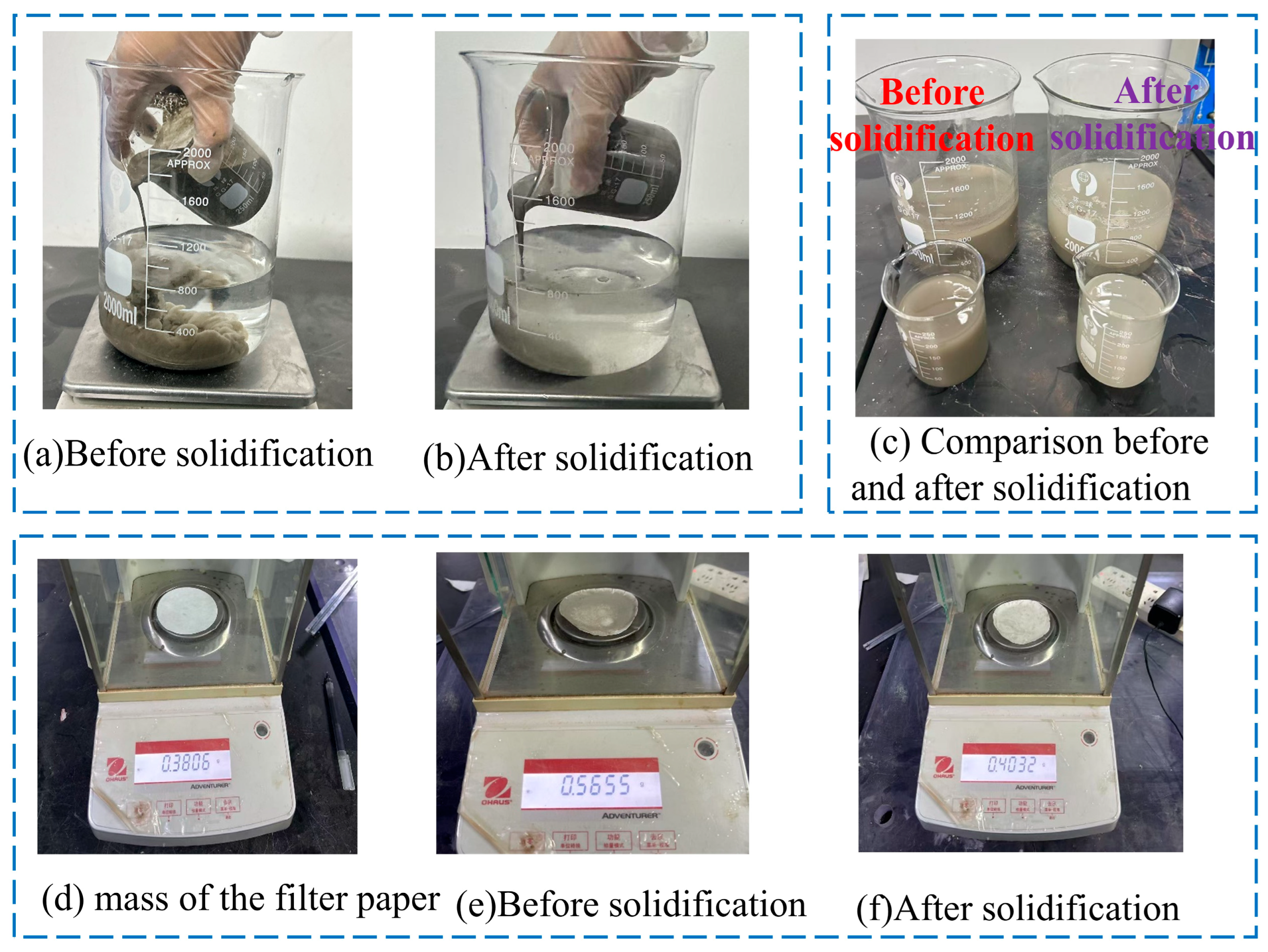
Figure 8. On the one hand, in many cases, the water in karst cavities does not flow continuously but remains in a relatively static state; simulating hydrostatic conditions helps evaluate the anti-dispersion performance of solidified mudstone. On the other hand, water flow patterns in karst cavities are complex; under dynamic flow conditions, the impact of water flow can exacerbate the dispersion of mudstone, which may affect the evaluation of the anti-dispersion performance of the solidified mudstone material in the experiment. Therefore, to investigate the anti-dispersion properties of mudstone solidification slurry materials, this study was conducted under static water conditions.
As shown in
Figure 8a, prior to the solidification of the mudstone, the slurry becomes mist-like when it comes into contact with water, is highly dispersed, and has a high suspended solids content; As shown in
Figure 8b, the solidified mudstone becomes compacted upon contact with water and does not disperse easily; the suspended solids content is very low, and its resistance to dispersion has improved by 87.78% compared to before solidification; The small beaker in
Figure 8c contains the supernatant extracted from the large beaker. On the left is the supernatant from the mudstone before water was added, and on the right is the supernatant from the mudstone after solidification. As can be seen, the supernatant from the solidified mudstone is noticeably clearer, indicating that the solidified mudstone exhibits significant resistance to dispersion.
From the perspective of evaluation methods, the resistance to dispersion of underwater materials is commonly characterized by indicators such as the loss of cementitious constituents, suspended solids concentration, and turbidity of the supernatant. A reduction in suspended solids or turbidity, together with clarification of the water–material interface, is generally regarded as direct evidence of enhanced anti-dispersion performance [
38]. In the present study, the macroscopic observations of significantly weakened mist-like diffusion and a clarified supernatant were consistent with the measured suspended solids content, indicating that the solidified mudstone material possesses improved resistance to dispersion and better stability in an underwater environment.
From a mechanistic perspective, untreated mudstone slurry essentially behaves as a suspension dominated by fine particles, in which particle interactions are mainly maintained by weak physical adsorption and thin water films. Upon entering water, hydrodynamic shear, diffusion, and dissolution processes facilitate the detachment of fine particles from aggregate surfaces and their subsequent resuspension, resulting in characteristic mist-like diffusion and increased turbidity and suspended solids concentration. When the system exhibits insufficient cohesion, cementitious phases or fine particles are readily lost through water exchange, leading to pronounced water turbidity and solid–liquid segregation. After solidification, the key improvement in anti-dispersion behavior arises from the transformation of the system from a resuspendable particle suspension into a consolidated body with a continuous structural skeleton. In cement–slag systems, for example, hydration products such as calcium silicate hydrate (C-S-H) gel and ettringite (AFt) form in gel-like and needle- or rod-shaped morphologies, growing between particles, interlocking and encapsulating fine particles. This process converts dispersed particles into a cemented aggregate–block structure, thereby significantly reducing sensitivity to redispersion and hydraulic erosion.
5.2. Microanalysis
The macroscopic performance of cementitious materials is largely governed by their microstructural mechanisms [
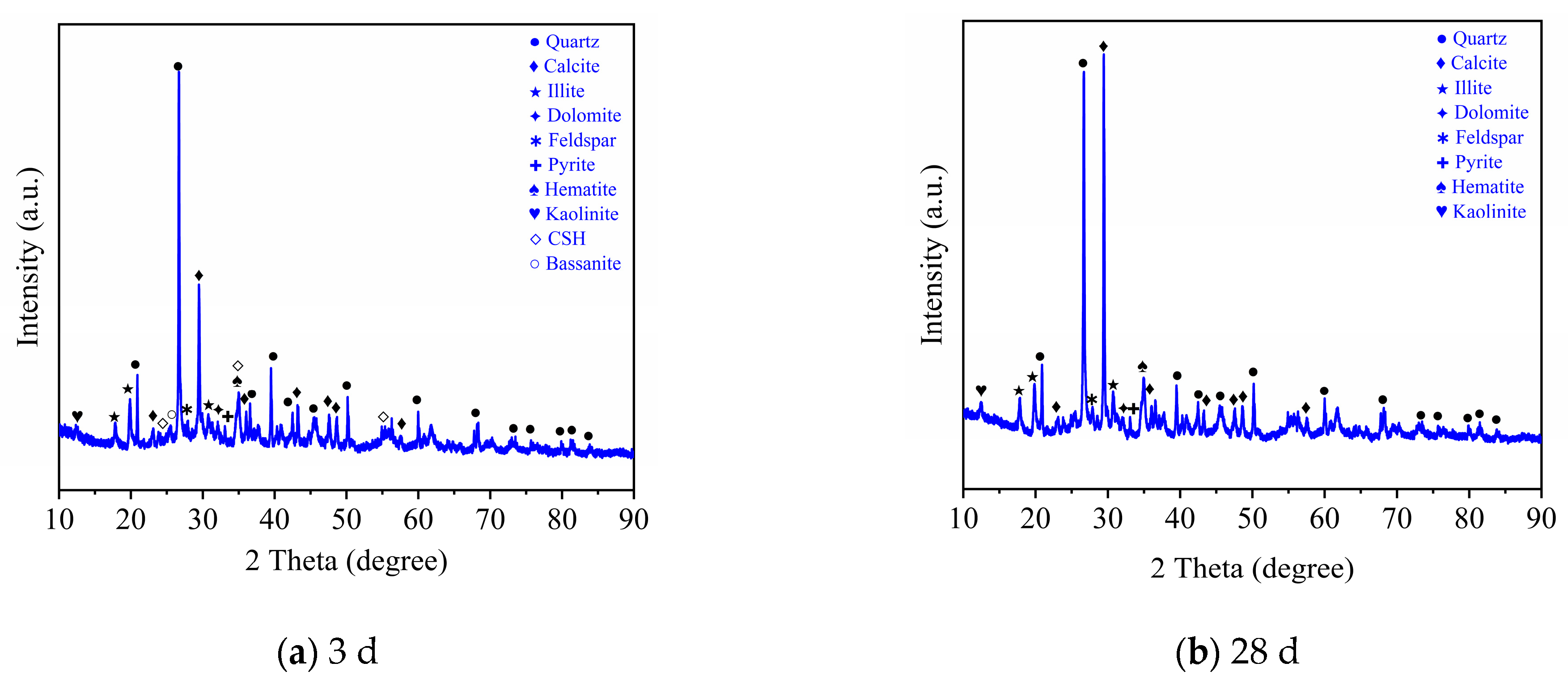
39]. To elucidate the micro-scale solidification mechanism, the optimal mixture identified above was selected for SEM and XRD characterization, as shown in
Figure 9 and
Figure 10. In
Figure 9a–c, the specimen cured for 3 days is dominated by flocculent and reticular cementitious phases; locally, bundles of needle-like crystals coexist with unreacted particles. In
Figure 9a, pores and residual mineral particles are encapsulated by early-age binding phases, and needle-like crystals exhibit a clustered, fascicular distribution in some areas.
Figure 9b further indicates that the needle-like crystals interweave with plate- and foil-like matrices, forming an initial load-bearing skeleton. In
Figure 9c, the bridging and pore-filling effects of the cementitious phases become more evident. In contrast,
Figure 9d–f shows that the matrix becomes markedly denser after 28 days of curing. In
Figure 9d, the continuous cementitious phase expands substantially and the characteristic pore size decreases.
Figure 9e,f reveal a microstructural evolution from a “loose network” to a more continuous foil-like and clustered morphology, accompanied by increasingly indistinct boundaries of residual particles. The XRD patterns in
Figure 10 exhibit characteristic reflections associated with cement hydration, particularly those attributable to C-S-H and ettringite (AFt). From 3 to 28 days, the intensities of the diffraction peaks related to C-S-H and AFt increase noticeably, indicating that the generation and accumulation of these hydration products are enhanced with curing time.
From the perspective of the curing mechanism. In the early stages of fluid-cured mud slurry solidification, the hydration reaction of ordinary Portland cement clinker is the primary process. Under the action of mixing water, the silicate minerals in the clinker (primarily C3S and C2S) undergo dissolution and precipitation, forming C-S-H gel and precipitating Ca(OH)2 and C-S-H as the primary cementing phase, which often appears in SEM as a flocculent, reticulated, or lamellar matrix. At the same time, the gypsum (CaSO4·2H2O) present in cement supplies SO42− ions, which react with the aluminate phase (C3A) to form alunite (AFt; commonly found as needle-like crystals). Under conditions of limited sulfate ions, AFt further transforms into AFm (a monosulfate-type layered hydrated aluminate), forming plate-like and layered crystals that contribute to pore filling.
In the middle to late stages of the fluid-cured mud slurry curing process, S105 slag powder is activated in the highly alkaline environment created by cement hydration (specifically, the Ca2+ and OH− ions released by the dissolution of Ca(OH)2), triggering a pozzolanic hydration reaction characterized by the consumption of Ca(OH)2 and the formation of C-(A)-S-H. This reaction causes the cementitious phase to continue growing and refines the pore structure; Furthermore, the CaO-SiO2-Al2O3 glass phase in the slag powder acts as a key indicator of the reaction’s progress in the composite system, as evidenced by a decrease in Ca(OH)2 content, and leads to the formation of a dense C-S-H gel and an aluminum-containing C-A-S-H gel.
At the same time, the mudstone component of the raw material contains calcite (CaCO3) and dolomite (CaMg(CO3)2), which can supply CO32− under strongly alkaline conditions and undergo a “carbon-aluminate” reaction with the aluminate hydration system. This causes a shift in the AFm stability region and leads to the formation of layered products such as hydrated calcium aluminate, thereby further filling and consolidating the pores and interfaces.
With regard to admixtures, the HPMC component primarily influences the hydration environment of the slurry by enhancing water retention and improving particle dispersion and flocculation structure (rather than introducing new inorganic hydration products). This indirectly promotes the uniform formation of the gel phase and reduces pore connectivity, a mechanism that is particularly critical for slurry stability under wet, dry, or seepage conditions. Early strength agents accelerate the dissolution-precipitation of clinker and the formation of early-stage products without altering the main framework of the product, thereby facilitating the formation of a continuous matrix in the early stages of the slurry and enhancing the development of early strength.
6. Economic and Environmental Benefits
One objective of this study is to reduce construction costs. Based on local market research, the unit prices of raw materials for the mudstone solidification grouting material are as follows: cement at 300 yuan/ton, slag powder at 200 yuan/ton, thickener at 18,000 yuan/ton, early strength agent at 3250 yuan/ton, and water at 2.8 yuan/ton, as shown in
Table 17. To standardize volume measurement and mass conversion for cost accounting purposes, the relative mass density is taken as the arithmetic mean of 15 uniform test groups: 1.66 g/cm
3. The mass content of each raw material in the fluid-state mudstone solidification grout is determined by Equations (5)–(9), while the unit price of the fluid-state mudstone solidification grout material is calculated using Equation (10):
In Equation (5), mc denotes the cement content per cubic meter of flowable solidified mudstone grout. In Equation (6), mm represents the slag powder content per cubic meter of grout. In Equation (7), me indicates the admixture content per cubic meter of grout. In Equation (8), mw denotes the water content per cubic meter of grout. In Equation (9), m represents the total material content per cubic meter of grout. Finally, in Equation (10), y10 denotes the unit cost of the flowable solidified mudstone grouting material.
Based on the predicted optimal mix proportion, the material consumption per unit volume was calculated as follows: mudstone 851.29 kg/m3, cement 89.92 kg/m3, slag powder 45.95 kg/m3, admixture 8.18 kg/m3, and water 624.67 kg/m3. Substituting these values into Equation (10) yields a material cost of 104.58 yuan/m3. For comparison, the market price of cement-mortar grouting materials in engineering practice generally ranges from 300 to 600 yuan/m3, depending on region, construction organization, equipment configuration, pumping distance, and working-face conditions. In the subsequent economic comparison, the midpoint of this range, i.e., 400 yuan/m3, was adopted as the reference value. The results indicate that the proposed flowable solidified mudstone slurry reduces the unit cost by 73.8% relative to conventional cement mortar, demonstrating significant economic advantages.
Beyond its economic advantage, the proposed material also exhibits notable environmental potential. In this study, CO2 emissions per unit volume were used as the evaluation index, and the emission factor method was adopted to quantify carbon emissions during material production. Specifically, the amounts of cement, ground granulated blast-furnace slag, admixtures, and water were multiplied by their respective emission factors and summed to obtain the CO2 emissions per cubic meter of material. The adopted emission factors, compiled from existing life cycle assessment studies and publicly available technical documents or databases, were 735 kg CO2/t for cement, 92 kg CO2/t for ground granulated blast-furnace slag, 0.168 kg CO2/t for water, 21 kg CO2/t for material mixing, transportation, and placement, and 4 kg CO2/t for the admixture.
Based on the material consumption of the optimal mix proportion, the CO2 emissions of the mudstone-solidified grouting material developed in this study were calculated as 104.37 kg/m3. In comparison, the corresponding values for conventional cement–soil, C25 concrete, and C30 concrete are 165.7 kg/m3, 320.3 kg/m3, and 332.5 kg/m3, respectively. Thus, the proposed material reduces carbon emissions by 37% relative to cement–soil, and by 67.4% and 68.6% compared with C25 and C30 concrete, respectively. These results indicate that, while meeting engineering application requirements, the proposed material can significantly reduce CO2 emissions during material preparation, demonstrating considerable energy-saving and emission-reduction benefits.
7. Conclusions
Based on a uniform experimental design, this study employs stepwise nonlinear regression and response surface methodology to investigate the individual effects of various factors on the performance of mudstone solidification materials, as well as the interactions among multiple factors. It analyzes the rheological mechanisms underlying flowability. Finally, a multi-objective optimization method is used to determine the optimal formulation that meets construction requirements, which is then validated through laboratory testing. A novel method for mudstone solidification is proposed, leading to the following main conclusions:
(1) A method for improving the treatment of waste tunnel mudstone was proposed. Research indicates that the slurry offers the best cost-effectiveness when the cementitious materials-to-mudstone ratio is 0.16, the ratio of additives to cementitious materials is 0.06, the water-to-solid ratio is 0.63, and the slag powder content-to-cementitious materials ratio is 0.34. The mortar exhibits low shrinkage and bleeding rates, high compressive strength, as well as good resistance to dispersion and good workability. It reduces costs by approximately 73.8% compared to traditional cement mortar. Compared with conventional cement–soil, C25 concrete, and C30 concrete, the proposed material achieves reductions in carbon emissions of 37%, 67.4%, and 68.6%, respectively, demonstrating significant economic and environmental benefits. This also indicates that the mudstone excavated from a tunnel project in Guangxi, China, has considerable potential for resource valorization, thereby offering a new pathway for the cost-efficient development and engineering application of grouting materials in karst regions.
(2) The single-factor and interaction analyses indicate that the water-to-solid ratio plays a dominant role in regulating workability, setting time, strength, and water stability, whereas the other mix-design factors mainly exhibit nonlinear or comparatively weaker effects within the investigated range. The flowability, setting time, strength, shrinkage, and water stability of the slurry are jointly influenced by coupled factor interactions. In particular, the interactions involving X1–X4 and X3–X4 exert pronounced effects on strength development and water stability, while the interaction between X2 and X3 contributes to density variation.
(3) Microscopic analysis results indicate that the curing process of grouting materials used to solidify tunnel mudstone is primarily governed by the combined effects of cement hydration, the activation of latent reactivity in slag powder, and the participation of mudstone components in the reaction. After 3 days of curing, an initial skeleton had formed within the tunnel mudstone flow-solidified slurry specimens, consisting primarily of flocculent and network-like cemented phases and needle-like crystals; after 28 days of curing, the cemented products increased further and became more continuous, the pore structure became significantly finer, and the internal structure became denser. Combining the XRD and SEM results reveals that the slurry system primarily formed C-S-H gel, AFt, and related aluminum-containing hydration products. The slag powder continued to participate in the reaction under highly alkaline conditions, promoting the growth of the later-stage gel phase and pore filling. At the same time, the admixture played a positive role in enhancing the formation and stability of the slurry structure by improving water retention and particle dispersion.
(4) Although the optimized mudstone-based grouting material exhibited satisfactory short-term water stability, low bleeding, low shrinkage, and improved anti-washout performance, its long-term durability in sulfate-rich or flowing groundwater environments has not yet been clarified. Consequently, prior to its large-scale application in permanent karst settings exposed to aggressive groundwater, further investigations are needed to systematically assess its sulfate resistance, leaching resistance, and long-term durability.
(5) The optimal mix proportion obtained in this study was developed specifically for tunnel mudstone in Guangxi and should not be regarded as a universal formulation applicable to all mudstone types. For mudstone materials with significantly different mineral compositions, clay contents, or degrees of weathering, direct application of this mix proportion may be inappropriate. Nevertheless, the solidification-based mix design framework established in this study—comprising raw material characterization, uniform design, regression analysis, multi-performance objective optimization for determining the optimal mix proportion, and experimental validation—can be extended to other mudstone types for tailored mix design. Overall, this study advances the field by extending grouting-material research to tunnel mudstone and by establishing an integrated framework for developing cost-effective, lower-carbon grouting materials for karst cavity treatment.