Article

Wild and Cultivated Fabaceae Plants in Livestock Feeding: Chemical Contents and Antiparasitic Activity


by
Eleni D. Myrtsi
,
Epameinondas Evergetis
and
Serkos A. Haroutounian
*
Laboratory of Nutritional Physiology and Feeding, Department of Animal Science, School of Animal Bioscience, Agricultural University of Athens, Iera Odos 75, 11855 Athens, Greece
*
Author to whom correspondence should be addressed.
Current address: Department of Agricultural Sciences, Biotechnology & Food Science, Cyprus University of Technology, 30 Arch. Kyprianos Street, 3036 Limassol, Cyprus.
Deceased.
Appl. Sci. 2026, 16(7), 3602; https://doi.org/10.3390/app16073602
Submission received: 23 February 2026 / Revised: 15 March 2026 / Accepted: 4 April 2026 / Published: 7 April 2026
(This article belongs to the Section Chemical and Molecular Sciences)

Abstract

Parasitic infections constitute a common concern for livestock breeders, since they induce animals with various physiological, behavioral, and neurological alterations. Consequently, they negatively affect their health, productivity, and welfare, leading to reduced productivity and increased mortality, and causing severe economic losses to livestock breeders. In the context of recent interest in the development of functional animal feeds and/or feed supplements with potent antiparasitic activity, we exploited the chemical contents and bioactivities of 21 wild and cultivated Fabaceae plant species against Haemonchus contortus and Trichostrongylus colubriformis, two widely prevalent gastrointestinal nematode parasites of small ruminants. The respective results revealed that four wildly grown plants exhibit potent antiparasitic activity, with Lathyrus laxiflorus exerting the most significant protective effect against both parasites tested. This plant was also found to display the highest antioxidant potency and the richest phenolic and tannin contents, with rutin molecules being the most abundant. Moreover, the extracts of 11 cultivated species were found to display potent antiparasitic activity, while Trifolium repens, Medicago sativa, and Lathyrus sativus species were determined to provide higher extraction yields and display the most potent antiparasitic activities. Results herein are indicative of Fabaceae plants’ potential to act against parasitic infections, either as grazing plants in pasture-based systems, or as bioactive dietary supplements in intensive farming systems, eventually contributing to reductions in antiparasitic drug utilization.

1. Introduction

Animal welfare is closely linked to the applied livestock breeding system. Pasture-based systems promote animal welfare, since natural environments favor engagement with species-typical behaviors, such as grazing, roaming, and socializing, which benefits the physical and mental well-being of animals [1]. On the other hand, intensive farming systems provide controlled, easily monitored environments, but have often been criticized because the poor living conditions cause high levels of stress. It must be noted, however, that although the development of parasitic infections is a common concern for both systems, they are mainly observed in pasture-based systems, affecting both livestock health and land management [2].
Parasites comprise a critical parameter for animal welfare that intersects veterinary science with public health, negatively affecting host organisms and causing various forms of physical discomfort and other detrimental effects that impact animals’ overall fitness and health. In particular, by triggering chronic stress and/or neurological effects [3,4], parasites change the behavior of hosts, impacting their overall fitness and well-being, and eventually resulting in reduced survival or a lower growth rate for the parasitized hosts [5]. Consequently, animals infected by parasites have reduced productivity and increased mortality, causing severe economic losses for livestock breeders [6,7,8], who are also obliged to cover costs associated with antiparasitic treatments and pasture management that further exacerbate their financial burden.
Since the adoption of pasture systems increases the risk of parasitic infestation [9,10], farmers often use semi-extensive or semi-intensive systems for grazing their livestock. This is achieved by employing both grazing and supplementary feeding, aiming to provide a natural and cost-effective source of food. The application of this procedure allows farmers to reduce their feed costs and simultaneously promote animal health/welfare and support sustainable land use.
Recently, the development of functional feeds that exhibit antiparasitic properties has attracted considerable research interest, either in the form of natural alternatives to synthetic antiparasitic molecules and/or the development of feed supplements that are capable of enhancing conventional treatments. Beyond basic nutrition, these feeds provide various health benefits because of their rich content of biologically active compounds capable of promoting health and preventing the development of parasitic infections. For example, pomegranate fruit has been found to display high efficacy against E. histolytica trophozoites, since its methanolic or aqueous extracts are potent inhibitors of this parasite’s in vitro growth [11]. Plant secondary metabolites naturally present in many forages, such as tannins and saponins, also exhibit potent antiparasitic properties. Thus, the incorporation of feeds that contain these compounds into pasture-based or semi-intensive systems has the potential to reduce parasite loads, improve animal welfare, and support sustainable grazing, benefitting both productivity and health goals [12].
In this context, this study concerns the exploitation of 21 Fabaceae family plant species in respect to their phytochemical profile, antioxidant capacity and antiparasitic properties. In particular, six wild species are studied that commonly grow in areas where semi-extensive animal farming is applied and livestock feeding relies entirely on natural rangeland grazing. The remaining species are cultivated species that provide plant biomass used in animal feeding. Thus, their extracts can be incorporated into semi-intensive systems as supplementary feed. The respective results are expected to contribute towards the advancement of our knowledge of the prevention of parasitic infections by utilizing wild plants for grazing and/or bioactive plant biomass as feed supplements in intensive farming systems.

2. Materials and Methods

2.1. Plant Samples

Plant material was obtained from species belonging to the Fabaceae family. All samples consisted of whole plants collected in the vegetative stage of late flowering/early seed development. The plant material samples were from Greek flora and are included in Table 1, along with the collection sites. In particular, six samples were from the wildly grown plant taxa, collected from mountain Parnassos and the island of Crete, while the rest were cultivated plant samples obtained either from Kilkis (a region of Central Macedonia) farms or located in the Larissa (a region of Thessaly) farm of the Institute of Industrial and Forage Crops of the Hellenic Agricultural Organization ELGO DIMITRA. A voucher specimen of each plant is deposited in the herbarium of the Agricultural University of Athens, Athens, Greece.

2.2. Chemicals and Standards

Hexane and methanol used as plant extraction solvents were obtained in analytical purity grade from Fisher Chemicals (Hampton, NH, USA). All standards used for the determination of the contained phytochemicals were provided by Sigma-Aldrich (Burlington, MA, USA), except catechin, epigallocatechin gallate, gallic acid and isoquercetin, which were purchased from ExtraSynthese (Genay, France). The LC–MS/MS solvents acetonitrile, methanol and water were purchased from JT Baker (Phillipsburg, NJ, USA), while LC–MS grade formic acid was provided by Fisher Chemicals (Hampton, NH, USA).
The following reagents and solvents were used for the assessments: 2,2-diphenyl-1-picrylhydrazyl (DPPH), 2,4,6-tris(2-pyridyl)-s-triazine (TPTZ), Folin–Ciocalteu’s reagent and analytical purity glacial acetic acid were purchased from Sigma-Aldrich (Burlington, MA, USA); anhydrous sodium carbonate (99.999+% purity) and sulfuric acid (98% purity) were purchased from Chem-Lab (Zedelgem, Belgium); analytical purity chloroform, diethyl ether, dimethylsulfoxide (DMSO) and petroleum ether (40–60 °C) were provided by Fisher Chemicals (Hampton, NH, USA); heptahydrate iron sulfate (99+% purity), hexahydrate ferric chloride (97% purity) and potassium hydroxide (KOH, 99.99% purity) were provided by Alfa Aesar (Holbrook, NY, USA); and trolox (6-hydroxy-2,5,7,8-tetramethylchroman-2-carboxylic acid (95% purity)) and vanillin (99% purity) were provided by Acros Organics (Geel, Belgium).

2.3. Plant Material Extraction

Immediately after sampling, each plant material was spread in a dark, well-ventilated covered space and allowed to dry at ambient temperature to prevent the photodegradation of contained phytochemicals. The dried plant tissues were ground to a homogeneous powder which was kept in special containers until extraction.
All investigated samples were initially extracted with n-hexane to remove fatty acids and non-polar constituents, and then extracted with methanol to obtain the working samples. Each extraction lasted 48 h, using seven parts solvent for each part of plant material. Each solvent the extraction was performed in triplicate and the combined extracts were condensed under vacuum at a temperature below 35 °C. Extract condensation was implemented under vacuum and heat-assisted solvent evaporation, keeping the temperature below 35 °C, utilizing Büchi Rotavapor R-210 apparatus equipped with a Büchi vacuum pump V-700 and vacuum controller V-850 (all obtained from Büchi Labortechnik AG, Flawil, Switzerland) connected to a Julabo F12 cooling unit (Julabo GmbH, 77960 Seelbach, Germany). The respective yields of methanolic extracts are included in Table 1.

2.4. Assessment of Total Phenolic (TPC) and Tannin (TTC) Contents

The TPC and TTC determinations were performed applying previously reported spectrophotometric methods [13]. Triplicate samples were placed into a 96-well microplate (Sarstedt AG & Co. KG, Nümbrecht, Germany) and the respective absorbances were measured in a NanoQuant, infinite M200PRO (Tecan Group Ltd., Männedorf, Switzerland) instrument. The TPC value was determined at the 765 nm absorption wavelength, and the respective number was calculated with the aid of a gallic acid standard calibration curve. The results are expressed as mg of gallic acid equivalents per g of extract (mg GAE/g extract). The TTC was measured at 500 nm absorption wavelength, and its value was calculated against a catechin standard calibration curve. The respective results are provided as mg of catechin equivalents per g of extract (mg CE/g extract).

2.5. Antioxidant Properties Evaluation

The FRAP (Ferric Reducing Antioxidant Power) and DPPH (Radical Scavenging) assays were used for the determination of samples’ antioxidant properties. The respective assessments were performed using a NanoQuant infinite M200PRO (Tecan Group Ltd., Männedorf, Switzerland) instrument and in accordance with previously reported procedures [14]. For the FRAP assay, the absorbance was measured at 593 nm wavelength, and the reducing capacity was determined against an FeSO4 standard calibration curve. The respective results are expressed as mmol Fe2+/g of extract. For the DPPH assay, the absorbance was measured at 515 nm wavelength and the antioxidant activity was determined against a Trolox calibration standard curve. The respective results are expressed as mg Trolox Equivalents (TE)/g of extract procedures [14].

2.6. Determination and Quantitation of Individual Phytochemicals Presence

The individual phytochemical compounds’ presence were determined using an Accela Ultra High-Performance Liquid Chromatography system coupled with a TSQ Quantum Access triple quadrupole mass spectrometer (Thermo Fisher Scientific, Inc., Waltham, MA, USA), as has previously been described by Myrtsi et al. [15]. The analytes’ chromatographic separation was achieved on a C18 column (150 × 2.1 mm, 3 μm, Fortis Technologies Ltd., Neston, Cheshire, UK), which was coupled with an AF C18 guard column (10 × 2.0 mm, 3 μm, Fortis Technologies Ltd., Neston, Cheshire, UK) using a mobile phase consisting of A—water with 0.1% formic acid and B—100% acetonitrile. The ElectroSpray Ionization (ESI) technique was used for the MS/MS determination, and the determinations were performed on Selected Reaction Monitoring mode (SRM). The quantification of phytochemicals was achieved by constructing a calibration curve for each analyte using six concentration levels for each standard solution, along with an internal standard solution. The respective parameters of transition, collision energy, polarity, retention time, calibration curve equation, and determination coefficient for each analyte have recently been reported [15].

2.7. Assessment of Antiparasitic Properties

The in vitro anthelmintic activity assays of Haemonchus contortus and Trichostrongylus colubriformis parasites were implemented at the Institute of Veterinary Research of the Hellenic Agricultural Organization ELGO-DIMITRA, following the guidelines of the World Association for the Advancement of Veterinary Parasitology. Specifically, the antiparasitic efficacy of the investigated samples was assessed on infective third-stage larvae (L3) using the Larval Exsheathment Inhibition Assay (LEIA), while the effects on parasite eggs were assessed using the Egg Hatch Assay (EHA), all according to a previously described procedure [16].

2.8. Data Analysis

Statistical analysis was conducted using Microsoft Excel 360 and the JMP® Student Edition (Edition 18). Calibration curves were generated by linear regression analysis in Excel. Analytical results are expressed as mean ± standard deviation based on three analytical replicates (n = 3) in order to evaluate the measurements’ repeatability. Principal Component Analysis (PCA) and Partial Least Squares (PLS) regression were performed in JMP to explore data structure and identify potential clustering trends among samples. No inferential statistical tests were applied because the study included one biological sample per plant, and the triplicate measurements represent analytical replicates rather than independent biological observations.

3. Results

3.1. Total Phenolic Content (TPC) and Total Tannin Content (TTC)

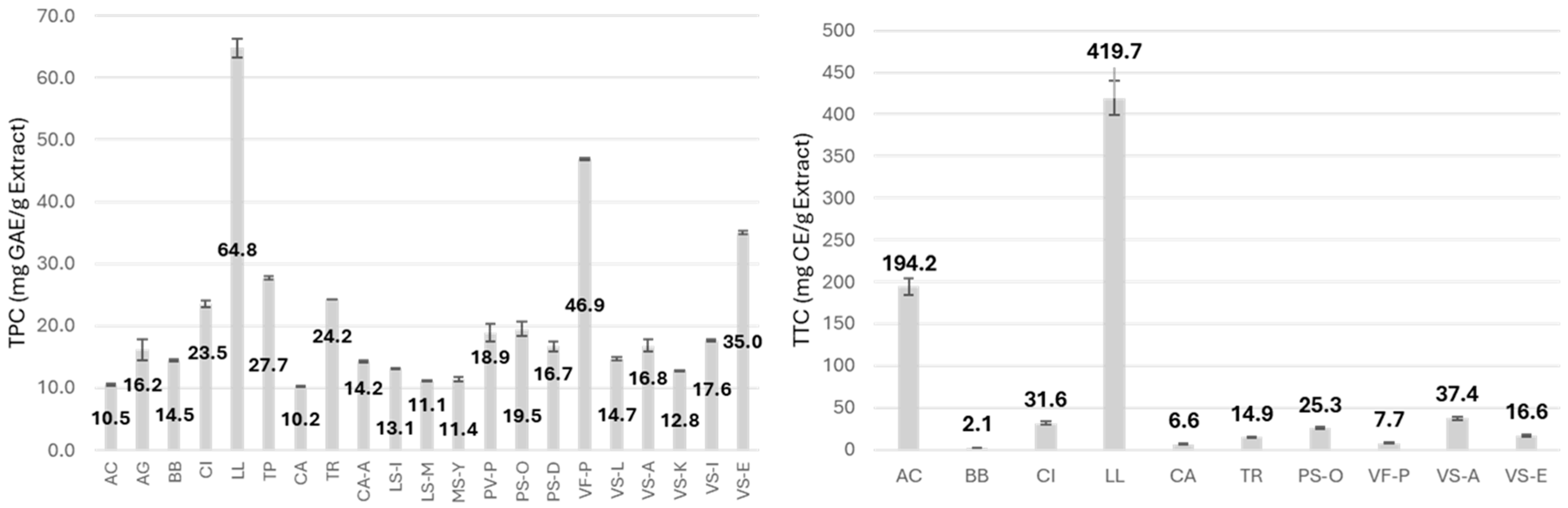
The results of the Total Phenolic Content (TPC) and Total Tannin Content (TTC) determinations are illustrated as graphs in Figure 1, highlighting the wildly grown plant L. laxiflorus (LL) as possessing a particularly high content of both phenolics and tannins (64.8 mg GAE/g and 419.7 mg CE/g respectively).
On the other hand, the cultivated species V. faba (cl. Polykarpi) (VF-P) also exhibited a rich content of total phenolics (46.9 mg GAE/g extract), followed by V. sativa (cl. Evinos) (VF-E) with 35.0 mg GAE/g extract. In respect of TTC determination, L. laxiflorus (LL) was followed by the wildly grown species A. creticus (AC) in displaying the highest Total Tannin Content (194.2 mg CE/g extract).

3.2. Evaluation of Antioxidant Capacities

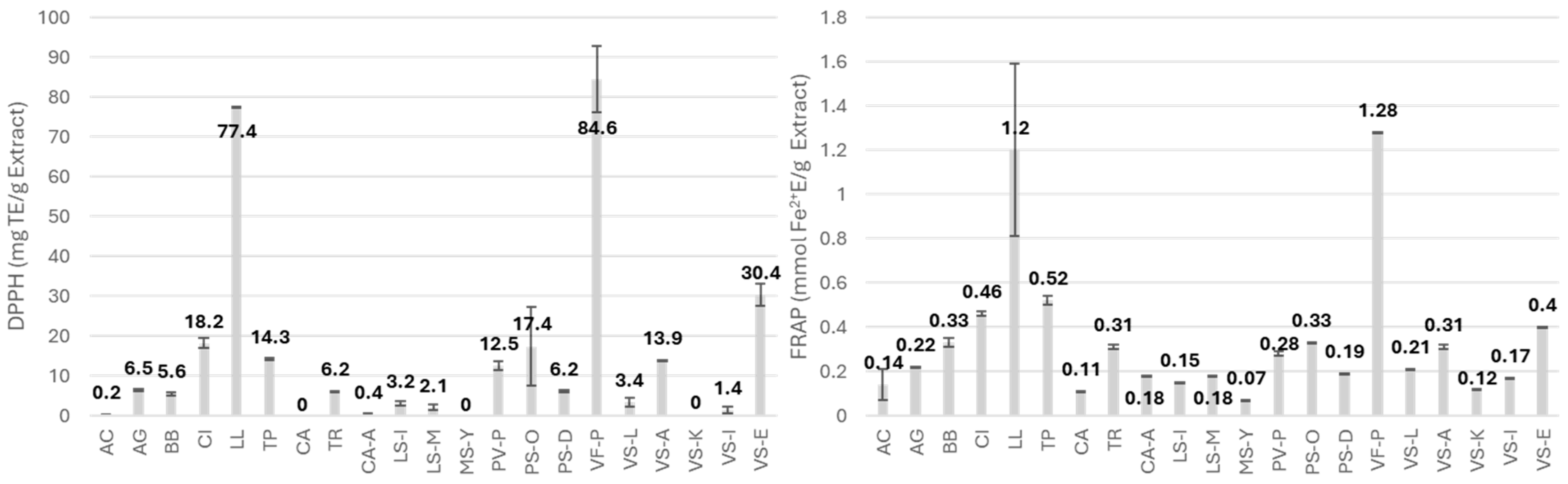
The antioxidant capacities of the investigated plants were determined by implementing DPPH and FRAP assessments on their methanolic extracts. The respective results are presented as graphs in Figure 2, highlighting as more active the methanolic extracts of wild L. laxiflorus (LL) and cultivated V. faba (cl. Polykarpi) (VF-P). It must be noted that these results are in accordance with the previously determined phenolic contents.

3.3. Antiparasitic Potency

The antiparasitic potency of the plant material studied was evaluated in vitro against the two widely prevalent gastrointestinal nematode parasites that affect small ruminants, namely Haemonchus contortus and Trichostrongylus colubriformis, by applying the Egg Hatch Assay (EHA) and the Larval Exsheathment Inhibition Assay (LEIA). The respective results, expressed as EC50, are included in Table 2, highlighting four wild and eleven cultivated Fabaceae plant species as exhibiting the most potent antiparasitic activity. Among the six plant extracts determined as potent inhibitors of both H. contortus and T. colubriformis larvae, the wildly grown species L. laxiflorus (LL), which displayed EC50 values of 0.241 and 0.549 mg/mL, was identified as most active, followed by the cultivated species M. sativa (MS) and V. sativa (VS). In respect of extracts inhibiting only the H. contortus larvae, the wildly grown C. incisum (CI), with an EC50 value of 0.607 mg/mL, was found to be the most potent. Finally, the methanolic extract of cultivated species T. repens (TR) was the only extract that displayed potent inhibitory activity against egg hatching in T. colubriformis. The same extract was also found to be a potent larval inhibitor of both parasites.

3.4. Phytochemical Content

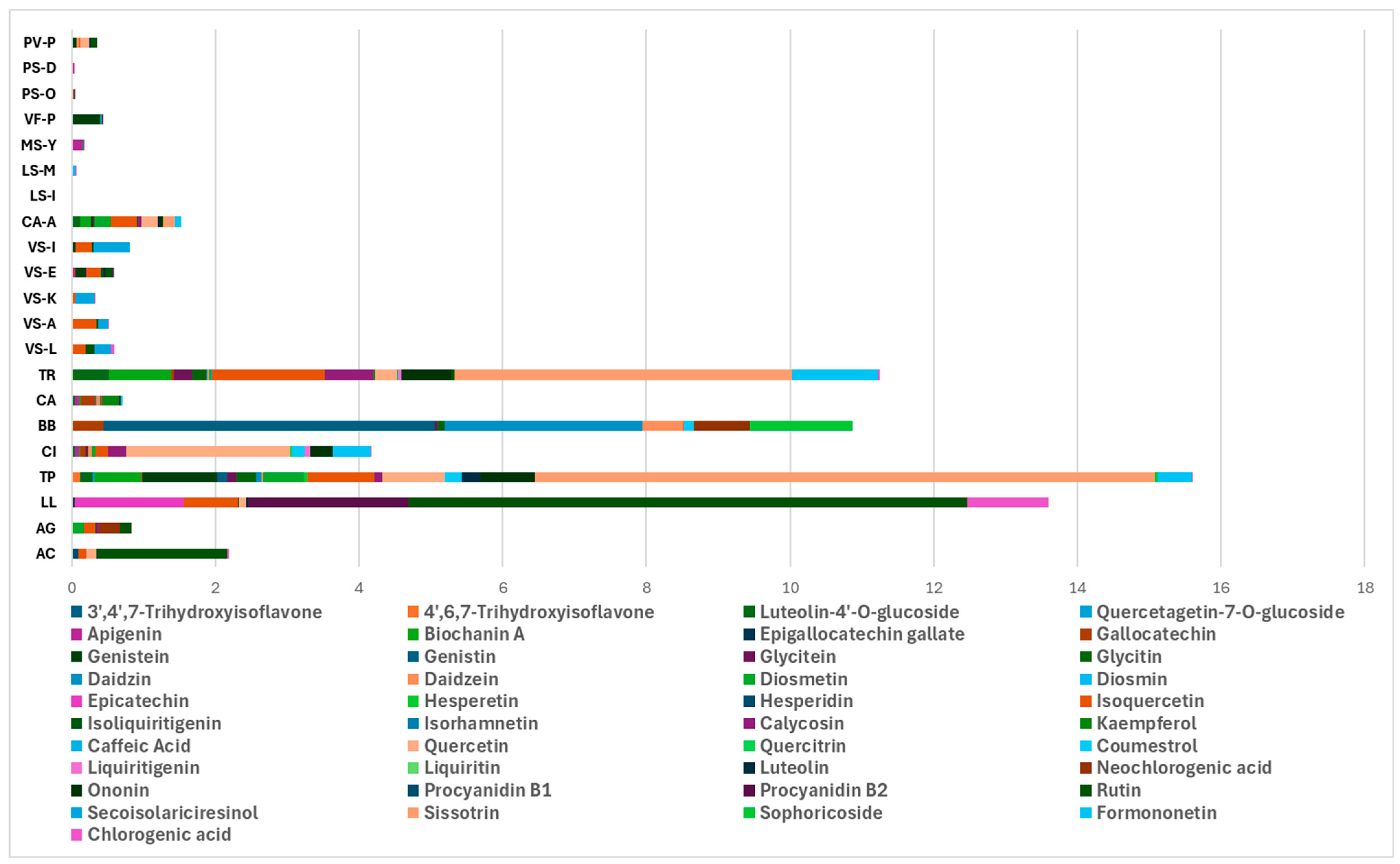
The fingerprinting of phytochemicals in the investigated extracts was performed by applying the UPLC–MS/MS technique to determine the presence of the most abundant molecules. The respective results are presented in Figure 3, revealing the presence of 41 compounds, all classified as phenolics, out of a total of 62 investigated phytochemicals. The detailed quantification of the detected molecules is included in Supplementary Table S1A,B.
Among the 21 Fabaceae plant extracts studied, three wildly grown species, namely L. laxiflorus (LL), T. physodes (TP) and B. bituminosa (BB), and the cultivated T. repens (TR), were found to exhibit the richest content. Specifically, L. laxiflorus (LL) is particularly rich in rutin (7.79 mg/g) and contains lesser amounts of procyanidin B2, epicatechin and chlorogenic acid (2.23, 1.52 and 1.13 mg/g, respectively). Sissotrin (8.63 mg/g) is the most abundant phenolic in T. physodes (TP), followed by genistein, isoquercetin, quercetin and oninin, in concentrations ranging from 1.0 to 0.75 mg/g. Similarly, sissotrin (4.70 mg/g) is the most abundant in T. repens (TR), followed by isoqurcetin (1.59 mg/g), formenontin and biochanin A (1.12 and 0.87 mg/g, respectively). Finally, the prevailing phenolics in B. bituminosa (BB) are the isoflavones genistin and daidzin (4.62 and 2.75 mg/g).

3.5. Multivariate Analysis of Phenolic Content and Antiparasitic Activity

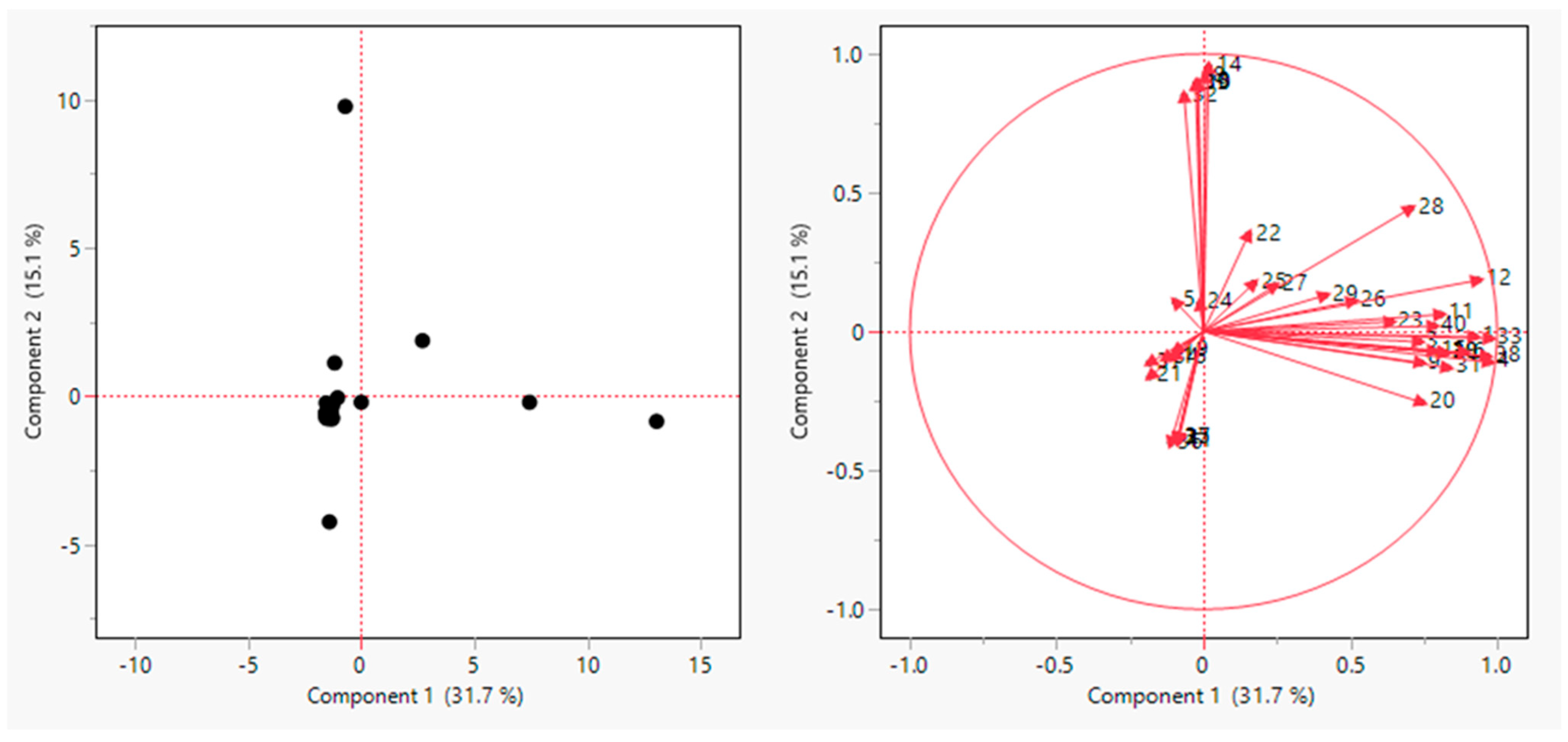
Principal Component Analysis (PCA) was used to exploit the chemical composition patterns of the investigated plant samples. Partial Least Squares (PLS) regression with leave-one-out cross-validation was also applied to elucidate the relationship between chemical constituents and biological activity. The contribution of individual variables to the PLS model was assessed using Variable Importance in Projection (VIP) scores. Variables with VIP ≥ 0.8 were considered relevant contributors to the model, whereas those with VIP ≥ 1 were regarded as highly influential. The calculations are included in Figure 4 and Figure 5 and Figure S1.
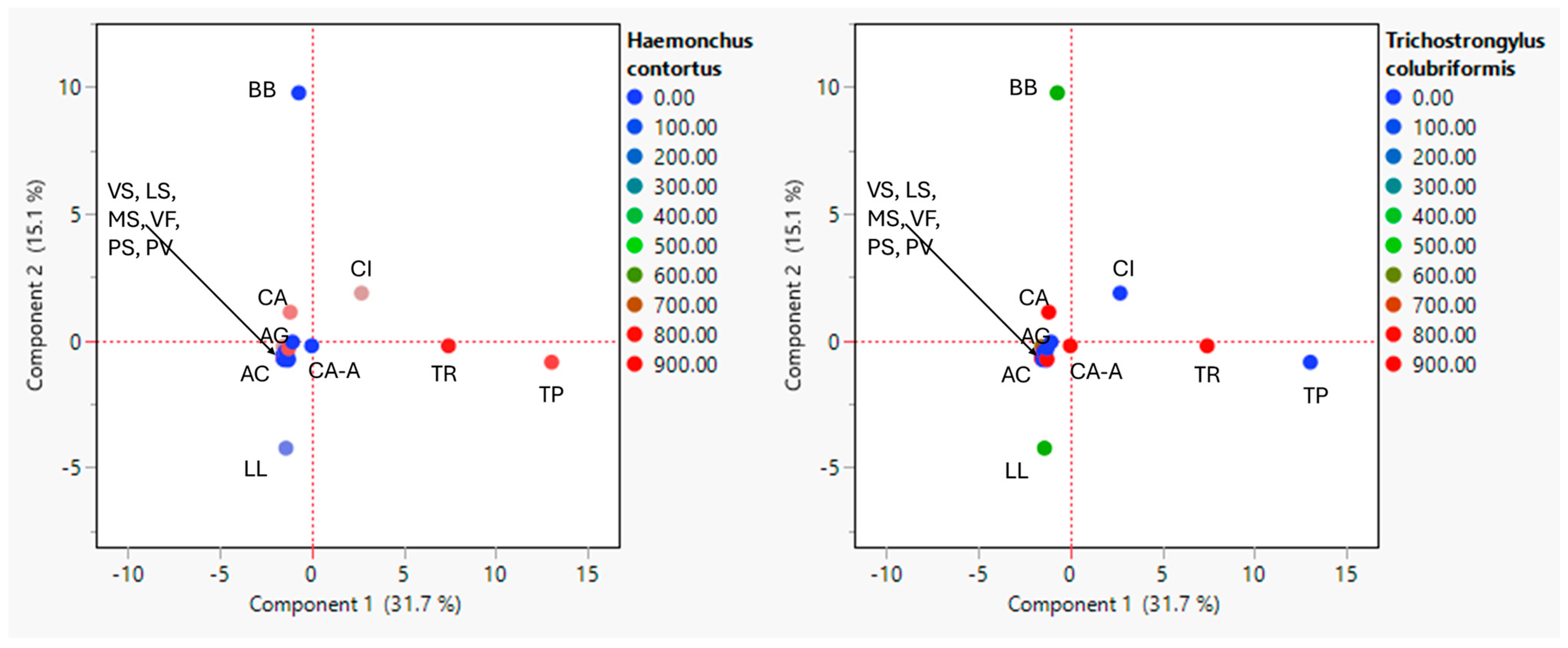
The PCA score plot illustrates the distribution of the plant extracts based on their phenolic composition. The first two principal components, PC1 and PC2, accounted for 46.8% of the total variance. Specifically, T. physodes (TP) extract exhibits a strong positive score on PC1, indicating that this species’ extract is chemically distinct from the other samples and is characterized by a higher concentration of compounds that are strongly correlated with this component. Additionally, the T. repens (TR) extract also lies on the positive side of PC1, sharing some similarities with T. physodes (TP) but to a lesser extent. On the other hand, B. bituminosa (BB) extract shows a strong positive score on PC2 and is clearly separated from the remaining samples, while L. laxiflorus (LL) displays negative scores for both components, reflecting its distinct chemical profile as compared to all other investigated extracts. Finally, the methanolic extracts of C. incicum (CI) and C. arientinum (CA) are located close to each other, suggesting similarities in their phenolic compound composition.

4. Discussion

There are several studies in the literature linking increased TTC values with antiparasitic activity [17,18], while other studies have linked antiparasitic potency with the presence of various flavonoids [17]. Results herein showed that L. laxiflorus extract displayed the highest tannin content and was also revealed as the most active against both parasites tested. Condensed tannins from plants displayed EC50 values 0.108 mg/mL for H. contortus and 0.166 mg/mL for T. colubriformis [19]. L. laxiflorus exhibited EC50 values 0.241 mg/mL for H. contortus and 0.539 mg/mL for T. colubriformis, confirming that H. contortus is more susceptible. However, this pattern was not verified for other extracts, since a high TTC value was not always related to potent antiparasitic activity, highlighting the significance of simultaneous consideration of their individual phenolic composition. Similar results were also observed in respect to the antioxidant potency of the extracts. Specifically, methanolic extract of L. laxiflorus exhibited the highest antioxidant potency in both the DPPH and FRAP assays and was found to be the most potent larval inhibitor of both parasites. On the other hand, the extract of V. faba (cl. Polykarpis) exhibited high antioxidant potency but was moderately active against only one parasite. These contradictory results have revealed the necessity of determining the individual phenolic composition of the investigated plant extracts compared with their antiparasitic activity.
The results of the detailed determination of plant extracts’ qualitative and quantitative phenolic composition are included in Supplementary Table S1A,B. The values verify that the individual phenolic contents of the extracts differed greatly, showing the necessity of exploiting the contribution of individual phenolics (or their combination) to antiparasitic activity. For this purpose, a PCA study was initiated to delineate the relationship between extracts’ phenolic content and antiparasitic activity. According to the PCA loading plot (Figure 4), compounds positioned on the right side of the plot, such as glycitin, 3′,4′,7-trihydroxyisoflavone, biochanin A, and formonetin, are abundant in the T. physodes and T. repens extracts. At the upper part of the plot, compounds such as daidzein and gallocatechin are the major compounds contributing to the separation of B. bituminosa extract. Regarding L. laxiflorus, the most potent antiparasitic extract, it is mainly characterized by its rutin and chlorogenic acid content. Clearly, samples near the center of the plot contain compounds present in relatively similar concentrations in almost all extracts. Previous studies have shown that both rutin and chlorogenic acid have also demonstrated promising antiparasitic properties. Rutin has been reported as a potent antiparasitic compound against the fluke Gastrothylax crumenifer, exhibiting anthelmintic effect by damaging the parasite’s tegument and reducing motility [20]. In experimental leishmaniasis, rutin has effectively controlled infection from both sensitive and resistant Leishmania donovani strains by enhancing host immune responses without toxicity [21], while chlorogenic acid has been shown to be an effective inhibitor of this parasite by arresting its cell cycle and modulating immune responses [22].
Moreover, PCA plots revealed chemical differentiation among the investigated extracts by utilizing the visual enhancement of score plots by color coding the individual samples in accordance with their antiparasitic activity (Figure 5). For this purpose, a continuous color scale was applied using a row legend function that allows for the projection of biological response values onto the multivariate chemical space. Samples exhibiting lower antiparasitic activity against H. contortus were clustered along the positive side of PC1, indicating a strong association between chemical composition and activity. In contrast, the activity against T. colubriformis showed a more dispersed pattern, suggesting a more complex relationship involving multiple chemical factors.
In addition to the PCA plot, the PLS regression method with leave-one-out cross-validation was also applied aiming to identify constituents associated with antiparasitic activity. The Variable Importance Plots (VIPs) for both parasites have been included in Supplementary Figure S1. The PLS regression identified specific constituents with high VIP scores (>0.8), suggesting a major contribution to biological activity. In particular, the PLS analysis demonstrated that antiparasitic efficacy was primarily associated with specific flavonoid aglycones. Compounds such as daidzein and genistein were negatively correlated with EC50 values, indicating enhanced activity, whereas glycosylated flavonoids showed the opposite trend. These findings highlight the importance of chemical specificity over total phenolic abundance. Nevertheless, regarding the antiparasitic activity of individual extracts, the T. repens extract was found to be potent against both parasites and inhibited the egg hatching of T. colubriformis, a critical stage for interrupting parasite development and transmission [23,24]. It must be noted that this extract was found to be rich in isoflavones, compounds known to display antiparasitic activity against various parasites [25,26]. Similarly, the L. laxiflorus methanolic extract contained a large amount of rutin, a flavonoid that has shown antiparasitic effects in both in vitro and in vivo studies against a range of parasites, such as protozoa (e.g., malaria and leishmaniasis) and trematodes (e.g., schistosomiasis) [27,28].
Finally, the monomeric gallocatechin has been found to be a VIP (Variable Importance in Projection) compound against both parasites displaying a value of >1.2 (Supplementary Figure S1), which is indicative of a major contribution to antiparasitic activity. The potency of this compound is already studied as an in vitro larval inhibitor of T. colubriformis [29]. Supplementary Figure S1 provides the VIP scores reflecting the relative contribution of each compound to antiparasitic activity. Specifically, the variability of antiparasitic activity is delineated, since only the variables exceeding the VIP threshold value of 0.8 (red dashed line) are considered to be influential. In both models, several phenolic compounds, such as flavonoids, phenolic acids, isoflavones and condensed tannins, exhibited VIP values above this threshold, indicating their contribution to antiparasitic efficacy. Τhe VIP analysis revealed a multifactorial contribution of plant secondary metabolites to anthelmintic activity, and not the dominance of a single compound. Thus, the antiparasitic activity of the extracts is not likely to be attributable to the presence of a single compound but rather to a synergistic effect among multiple phenolic constituents. Since there are compounds that positively or negatively affect antiparasitic activity, the multivariate analysis results suggest that there are synergistic or antagonistic effects modulating the overall bioactivity of extracts. As compared to the currently used conventional antiparasitic drugs, the plant extracts exhibited lower potency. For example, both Bolumisole M1 and Ivomec-D act on ion channels to display very low IC50 values, ranging 0.024–0.144 µg/mL, against H. contortus, although resistance in these drugs is often observed [30]. Moxidectin, another well-known antiparasitic drug, has been determined to be capable of reducing worm burdens in sheep at 0.2 mg/kg by 45% for H. contortus and 82% for T. colubriformis, but long-term use can lead to resistance [31]. However, the long-term use of moxidectin alone can lead to resistance development, as shown by selection experiments requiring higher doses for similar efficacy [32]. It is obvious that resistance to many conventional anthelmintics is widespread, highlighting the need for developing alternative compounds.
On the other hand, an additional advantage of plant extract incorporation into animal feeding is connected with their synergistic effects, which do not favor resistance development. Thus, this study has shown that certain wild plants in the Fabaceae family display the potential for utilization as functional feeds in extensive grazing systems, since besides their rich content of protein [33] and health-promoting nutrients, such as fatty acids [14] and antioxidants, they exhibit significant protective activity against parasites. Additionally, the methanolic extracts of the cultivated Fabaceae species showed promising potential for use as antiparasitic supplementary feeds in intensive farming systems. However, most extracts had little or no effect on egg hatching, indicating that eggs may remain viable and sustain infection cycles. Thus, extracts such as T. repens that are capable of inhibiting egg hatching may be particularly valuable.
This study represents an initial step toward the evaluation of Fabaceae plants’ potential to act as antiparasitic supplements. Since all evaluations have been conducted in vitro, the observed antiparasitic effects may not directly translate to in vivo livestock conditions. For this reason, future research is needed to focus on the validation of these findings in animal models in order to determine safe and effective dosages, explore possible synergistic interactions among phenolic compounds, and evaluate the practical incorporation of these plants or extracts as functional feed supplements in both extensive and intensive farming systems.

5. Conclusions

In conclusion, current findings suggest that among investigated plant species, the wildly grown L. laxiflorus exerts the most significant protective effect against both H. contortus and T. colubriformis parasites. It was also found to have the highest antioxidant potency and the richest phenolic and tannin content, with the molecule rutin being the most abundant. Moreover, 11 cultivated species were shown to display potent antiparasitic activities. Among them, T. repens, M. sativa and L. sativus were found to provide the highest extraction yields and display the most potent antiparasitic activities. The results are indicative of the potential of these plants to act against parasitic infections, either as grazing plants in pasture-based systems or as bioactive dietary supplements in intensive farming systems, contributing eventually to a reduction in the use of antiparasitic drugs.

Supplementary Materials

The following supporting information can be downloaded at https://www.mdpi.com/article/10.3390/app16073602/s1: Supplementary Table S1A,B: Polyphenolic composition of Fabaceae plants studied (mg/g extract). Values represent the mean ± standard deviation of three analytical replicates (n = 3) from a single biological sample per plant species; Supplementary Table S2: Calibration curves and correlation coefficients (R2) of compounds identified and quantified from methanolic plant extracts; Supplementary Table S3: Monitoring of ion transitions (parent > products), polarities and retention times for each analyte; Supplementary Figure S1: PLS regression (NIPALS, leave-one-out cross-validation) was applied to correlate chemical composition with antiparasitic activity. The optimal model with 4 latent variables was selected based on minimum PRESS. Variables with VIP > 0.8 were considered as significant contributors.

Author Contributions

Conceptualization, E.D.M. and S.A.H.; methodology, E.D.M. and E.E.; software E.D.M.; validation, E.D.M. and E.E.; formal analysis, E.D.M.; investigation, E.D.M.; data curation, E.D.M., E.E. and S.A.H.; writing—original draft preparation, E.D.M.; writing—review and editing, S.A.H.; visualization, E.D.M.; supervision, E.E. and S.A.H.; project administration, S.A.H.; funding acquisition, S.A.H. Author E.E. passed away prior to the publication of this manuscript. All authors have read and agreed to the published version of the manuscript.

Funding

This research was funded by the LIFE MiCliFeed project (LIFE20 CCM/GR/001703) entitled ‘Mitigating climate impact of small ruminants through innovative feeding approaches’ and funded by the European Commission LIFE program.

Institutional Review Board Statement

Not applicable.

Informed Consent Statement

Not applicable.

Data Availability Statement

All data are either contained within the article or included in the Supplementary Materials Section.

Acknowledgments

The authors acknowledge the valuable contribution of Katerina Saratsi and Smaragda Sotiraki, who performed the in vitro anthelmintic activity evaluations of the investigated plant extracts against Haemonchus contortus and Trichostrongylus colubriformis parasites and provided the data.

Conflicts of Interest

The authors declare no conflicts of interest.

References

  1. Spigarelli, C.; Zuliani, A.; Battini, M.; Mattiello, S.; Bovolenta, S. Welfare Assessment on Pasture: A Review on Animal-Based Measures for Ruminants. Animals 2020, 10, 609. [Google Scholar] [CrossRef]
  2. Pietrosemoli, S.; Tang, C. Animal Welfare and Production Challenges Associated with Pasture Pig Systems: A Review. Agriculture 2020, 10, 223. [Google Scholar] [CrossRef]
  3. Adamo, S.A. Parasites: Evolution’s Neurobiologists. J. Exp. Biol. 2013, 216, 3–10. [Google Scholar] [CrossRef] [PubMed]
  4. Lafferty, K.D.; Shaw, J.C. Comparing Mechanisms of Host Manipulation across Host and Parasite Taxa. J. Exp. Biol. 2013, 216, 56–66. [Google Scholar] [CrossRef] [PubMed]
  5. Field, S.G.; Michiels, N.K. Parasitism and Growth in the Earthworm Lumbricus terrestris: Fitness Costs of the Gregarine Parasite Monocystis sp. Parasitology 2005, 130, 397–403. [Google Scholar] [CrossRef]
  6. Gogolin-Ewens, K.J.; Maddox, J.F.; Fabb, S.A.; Brandon, M.R. Genetic Markers for the Selection of Parasite Resistance in Livestock. In Animal Parasite Control Utilizing Biotechnology; CRC Press: Boca Raton, FL, USA, 2024; pp. 407–447. ISBN 978-1-003-57488-0. [Google Scholar]
  7. Rashid, M.; Rashid, M.I.; Akbar, H.; Ahmad, L.; Hassan, M.A.; Ashraf, K.; Saeed, K.; Gharbi, M. A Systematic Review on Modelling Approaches for Economic Losses Studies Caused by Parasites and Their Associated Diseases in Cattle. Parasitology 2019, 146, 129–141. [Google Scholar] [CrossRef]
  8. Strydom, T.; Lavan, R.P.; Torres, S.; Heaney, K. The Economic Impact of Parasitism from Nematodes, Trematodes and Ticks on Beef Cattle Production. Animals 2023, 13, 1599. [Google Scholar] [CrossRef]
  9. Jackson, F.; Bartley, D.; Bartley, Y.; Kenyon, F. Worm Control in Sheep in the Future. Small Rumin. Res. 2009, 86, 40–45. [Google Scholar] [CrossRef]
  10. Preston, S.J.M.; Sandeman, M.; Gonzalez, J.; Piedrafita, D. Current Status for Gastrointestinal Nematode Diagnosis in Small Ruminants: Where Are We and Where Are We Going? J. Immunol. Res. 2014, 2014, 210350. [Google Scholar] [CrossRef]
  11. Idan, E.M.; Ahmed, Z.A.; Salman, I.S.; Mahmood, E.A. In Vitro Evaluation of the Activity of Punica granatum L. Aqueous and Methanol Extracts on the Trophozoites of Entamoeba Histolytica. Al-Rafidain J. Med. Sci. 2024, 6, 127–132. [Google Scholar] [CrossRef]
  12. Makkar, H.P.S.; Siddhuraju, P.; Becker, K. Plant Secondary Metabolites, 7th ed.; Humana Press: Totowa, NJ, USA, 2007; Volume 67–81, pp. 93–100. [Google Scholar] [CrossRef]
  13. Myrtsi, E.D.; Evergetis, E.; Koulocheri, S.D.; Haroutounian, S.A. Bioactivity of Wild and Cultivated Legumes: Phytochemical Content and Antioxidant Properties. Antioxidants 2023, 12, 852. [Google Scholar] [CrossRef]
  14. Myrtsi, E.D.; Vlachostergios, D.N.; Petsoulas, C.; Evergetis, E.; Koulocheri, S.D.; Haroutounian, S.A. Hays of Novel-Improved Legume Cultivars: Phytochemical Content and Nutritional Value. Plants 2024, 13, 3058. [Google Scholar] [CrossRef]
  15. Myrtsi, E.D.; Koulocheri, S.D.; Haroutounian, S.A. A Novel Method for the Efficient Simultaneous Quantification of 67 Phytoestrogens in Plants and Foodstuffs. Food Biosci. 2023, 56, 103357. [Google Scholar] [CrossRef]
  16. Sebai, E.; Serairi, R.; Saratsi, K.; Abidi, A.; Sendi, N.; Darghouth, M.A.; Wilson, M.S.; Sotiraki, S.; Akkari, H. Hydro-Ethanolic Extract of Mentha Pulegium Exhibit Anthelmintic and Antioxidant Proprieties In Vitro and In Vivo. Acta Parasitol. 2020, 65, 375–387. [Google Scholar] [CrossRef]
  17. Chylinski, C.; Degnes, K.F.; Aasen, I.M.; Ptochos, S.; Blomstrand, B.M.; Mahnert, K.-C.; Enemark, H.L.; Thamsborg, S.M.; Steinshamn, H.; Athanasiadou, S. Condensed Tannins, Novel Compounds and Sources of Variation Determine the Antiparasitic Activity of Nordic Conifer Bark against Gastrointestinal Nematodes. Sci. Rep. 2023, 13, 13498. [Google Scholar] [CrossRef]
  18. Rodríguez-Hernández, P.; Reyes-Palomo, C.; Sanz-Fernández, S.; Rufino-Moya, P.J.; Zafra, R.; Martínez-Moreno, F.J.; Rodríguez-Estévez, V.; Díaz-Gaona, C. Antiparasitic Tannin-Rich Plants from the South of Europe for Grazing Livestock: A Review. Animals 2023, 13, 201. [Google Scholar] [CrossRef]
  19. Quijada, J.; Fryganas, C.; Ropiak, H.M.; Ramsay, A.; Mueller-Harvey, I.; Hoste, H. Anthelmintic Activities against Haemonchus contortus or Trichostrongylus colubriformis from Small Ruminants Are Influenced by Structural Features of Condensed Tannins. J. Agric. Food Chem. 2015, 63, 6346–6354. [Google Scholar] [CrossRef] [PubMed]
  20. Minsakorn, S.; Watthanadirek, A.; Poolsawat, N.; Puttarak, P.; Chawengkirttikul, R.; Anuracpreeda, P. The Anthelmintic Potentials of Medicinal Plant Extracts and an Isolated Compound (Rutin, C27H30O16) from Terminalia catappa L. against Gastrothylax crumenifer. Vet. Parasitol. 2021, 291, 109385. [Google Scholar] [CrossRef]
  21. Chauhan, K.; Kaur, G.; Kaur, S. Activity of Rutin, a Potent Flavonoid against SSG-Sensitive and -Resistant Leishmania Donovani Parasites in Experimental Leishmaniasis. Int. Immunopharmacol. 2018, 64, 372–385. [Google Scholar] [CrossRef] [PubMed]
  22. Majumder, N.; Ganguly, S.; Ghosh, A.K.; Kundu, S.; Banerjee, A.; Saha, S. Chlorogenic Acid Acts upon Leishmania donovani Arresting Cell Cycle and Modulating Cytokines and Nitric Oxide in Vitro. Parasite Immunol. 2020, 42, e12719. [Google Scholar] [CrossRef] [PubMed]
  23. Schärer, A.; Biendl, S.; Keiser, J. Trichuris Muris Egg-Hatching Assay for Anthelminthic Drug Discovery and Characterization. Int. J. Parasitol. Drugs Drug Resist. 2023, 23, 63–70. [Google Scholar] [CrossRef]
  24. Goulding, D.; Tolley, C.; Mkandawire, T.T.; Doyle, S.R.; Hart, E.; Airs, P.M.; Grencis, R.K.; Berriman, M.; Duque-Correa, M.A. Hatching of Whipworm Eggs Induced by Bacterial Contact Is Serine-Protease Dependent. PLoS Pathog. 2025, 21, e1012502. [Google Scholar] [CrossRef]
  25. Mead, J.R.; McNair, N. Antiparasitic Activity of Flavonoids and Isoflavones against Cryptosporidium parvum and Encephalitozoon intestinalis. FEMS Microbiol. Lett. 2006, 259, 153–157. [Google Scholar] [CrossRef]
  26. Sartorelli, P.; Carvalho, C.S.; Reimão, J.Q.; Ferreira, M.J.P.; Tempone, A.G. Antiparasitic Activity of Biochanin A, an Isolated Isoflavone from Fruits of Cassia fistula (Leguminosae). Parasitol. Res. 2009, 104, 311–314. [Google Scholar] [CrossRef]
  27. Bhatt, D.; Kumar, S.; Kumar, P.; Bisht, S.; Kumar, A.; Maurya, A.K.; Pal, A.; Bawankule, D.U. Rutin Ameliorates Malaria Pathogenesis by Modulating Inflammatory Mechanism: An in Vitro and in Vivo Study. Inflammopharmacology 2022, 30, 159–171. [Google Scholar] [CrossRef] [PubMed]
  28. Hamad, R.S. Rutin, a Flavonoid Compound Derived from Garlic, as a Potential Immunomodulatory and Anti-Inflammatory Agent against Murine Schistosomiasis mansoni. Nutrients 2023, 15, 1206. [Google Scholar] [CrossRef] [PubMed]
  29. Molan, A.L.; Meagher, L.P.; Spencer, P.A.; Sivakumaran, S. Effect of Flavan-3-Ols on in Vitro Egg Hatching, Larval Development and Viability of Infective Larvae of Trichostrongylus colubriformis. Int. J. Parasitol. 2003, 33, 1691–1698. [Google Scholar] [CrossRef]
  30. Zabre, G.; Ouedraogo, E.; Traore, B.; Tindano, B.; Kabore, A.; Bayala, B.; Tamboura, H.H.; Belem, A.M.G. Anti-Parasitic Activities of Four Synthetic Chemicals Anthelmintics on Haemonchus Contortus. World J. Adv. Res. Rev. 2023, 20, 683–689. [Google Scholar] [CrossRef]
  31. Almeida, F.A.; Garcia, K.C.O.D.; Torgerson, P.R.; Amarante, A.F.T. Multiple Resistance to Anthelmintics by Haemonchus contortus and Trichostrongylus colubriformis in Sheep in Brazil. Parasitol. Int. 2010, 59, 622–625. [Google Scholar] [CrossRef]
  32. Ranjan, S.; Wang, G.T.; Hirschlein, C.; Simkins, K.L. Selection for Resistance to Macrocyclic Lactones by Haemonchus contortus in Sheep. Vet. Parasitol. 2002, 103, 109–117. [Google Scholar] [CrossRef]
  33. Ignaczak, S.; Andrzejewska, J.; Sadowska, K.; Albrecht, K.A. Fodder Galega vs. Alfalfa: Yield and Feed Value of Leaves, Stems, and Whole Plants. Agronomy 2022, 12, 1687. [Google Scholar] [CrossRef]
Figure 1. Total Phenolic Content in mg GAE/g extract and Total Tannin Content in mg CE/g extract. Values represent the mean ± standard deviation of three analytical replicates (n = 3). Error bars indicate the variability of the analytical measurements obtained from a single biological sample per plant.
Applsci 16 03602 g001
Figure 2. DPPH and FRAP antioxidant assay results for the methanolic extracts of studied Fabaceae plants. Values represent the mean ± standard deviation of three analytical replicates (n = 3). Error bars indicate the variability of the analytical measurements obtained from a single biological sample per plant.
Applsci 16 03602 g002
Figure 3. Phytochemical composition of the investigated Fabaceae family plant extracts (mg/g extract).
Applsci 16 03602 g003
Figure 4. Principal Component Analysis (PCA) and xy-scatter plot graph of the polyphenolic compounds 3’,4’,7-Trihydroxyisoflavone (1), 4’,6,7-Trihydroxyisoflavone (2), Luteolin-4’-O-glucoside (3), Quercetagetin-7-O-glucoside (4), Apigenin (5), Biochanin (6), Epigallocatechin gallate (7), Gallocatechin (8), Genistein (9), Genistin (10), Glycitein (11), Glycitin (12), Daidzin (13), Daidzein (14), Diosmetin (15), Diosmin (16), Epicatechin (17), Hesperetin (18), Hesperidin (19), Isoquercetin (20), Isoliquiritigenin (21), Isorhamnetin (22), Calycosin (23), Kaempferol (24), Caffeic Acid (25), Quercetin (26), Quercitrin (27), Coumestrol (28), Liquiritigenin (29), Liquiritin (30), Luteolin (31), Neochlorogenic acid (32), Ononin (33), Procyanidin B1 (34), Procyanidin B2 (35), Rutin (36), Secoisolariciresinol (37), Sissotrin (38), Sophoricoside (39), Formononetin (40), and Chlorogenic acid (41).
Applsci 16 03602 g004
Figure 5. PCA plots of plant extracts based on their polyphenolic composition in respect to their antiparasitic activities. Samples are color-coded in accordance with their EC50 values, with cooler colors indicating higher antiparasitic activity and warmer colors indicating lower activity.
Applsci 16 03602 g005
Table 1. Samples’ taxa, sampling locations, harvest years and yields of methanolic extraction.
CodeTaxaLocationHarvest YearPlant OriginExtraction Yield
(%)
ACAstragalus creticusMt. Parnassos2022Wild12.30
AGAstragalus glycyphyllos L.Mt. Parnassos2022Wild12.60
LLLathyrus laxiflorus (Desf.) KuntzeMt. Parnassos2022Wild9.90
TPTrifolium physodes Steven ex M.Bieb.Mt. Parnassos2022Wild11.90
CICicer incisum (Willd.) K.MalyCrete Isl.2023Wild4.60
BBBituminaria bituminosa (L.) C.H.Stirt.Mt. Parnassos2022Wild12.40
CACicer arietinum L.Kilkis2023Cultivated1.30
TRTrifolium repens L.Kilkis2024Cultivated11.90
VS-LVicia sativa (cl. Agros Leonidas)Larissa2024Cultivated5.29
VS-AVicia sativa (cl. Agros Alexandros)Larissa2024Cultivated1.82
VS-KVicia sativa (cl. Agros Kalliroi)Larissa2024Cultivated11.10
VS-EVicia sativa (cl. Evinos)Larissa2024Cultivated5.29
VS-IVicia sativa (cl. Istros)Larissa2024Cultivated9.17
CA-ACicer arietinum (cl. Amorgos)Larissa2024Cultivated9.79
LS-ILathyrus sativus (Inbred line LSW)Larissa2024Cultivated21.06
LS-MLathyrus sativus (cl. Maleme-107)Larissa2024Cultivated17.58
MS-YMedicago sativa L. (cl. Yliki)Larissa2024Cultivated15.00
VF-PVicia faba (cl. Polykarpi)Larissa2024Cultivated12.35
PS-OPisum sativum (cl. Olympos)Larissa2024Cultivated12.98
PS-DPisum sativum (cl. Dodoni)Larissa2024Cultivated10.48
PV-PPhaseolus vulgaris L. (cl. Pyrgetos)Larissa2024Cultivated10.84
Table 2. Antiparasitic activity against Haemonchus contortus and Trichostrongylus colubriformis, calculated as EC50 values (mg/mL).
SampleEgg Hatch Assay
(EHA)
Larval Exsheathment
Inhibition Assay (LEIA)
H. contortusT. colubriformisH. contortusT. colubriformis
BBN.A. 1N.A.N.A.0.540
CIN.A.N.A.0.607N.A.
LLN.A.N.A.0.2410.539
TPN.A.N.A.0.845N.A.
CAN.A.N.A.0.6960.921
TRN.A.0.5380.9520.840
CA-AN.A.N.A.N.A.0.810
LS-IN.A.N.A.0.6960.876
LS-MN.A.N.A.N.A.0.752
MS-YN.A.N.A.0.6290.639
PV-PN.A.N.A.0.813N.A.
PS-DN.A.N.A.N.A.0.825
VF-PN.A.N.A.N.A.0.785
VC-LN.A.N.A.N.A.0.854
VC-IN.A.N.A.0.7500.802
1 N.A.—Not Active.
Disclaimer/Publisher’s Note: The statements, opinions and data contained in all publications are solely those of the individual author(s) and contributor(s) and not of MDPI and/or the editor(s). MDPI and/or the editor(s) disclaim responsibility for any injury to people or property resulting from any ideas, methods, instructions or products referred to in the content.