Article

A Cross-Sectional Comparison of Functional Performance in Recreational Windsurfing and Kitesurfing Athletes


1
Sport Research Center, Faculty of Physical Education and Sport, Charles University, 162 52 Prague, Czech Republic
2
Faculty of Sports Sciences, Manisa Celal Bayar University, Manisa 45040, Türkiye
*
Author to whom correspondence should be addressed.
Appl. Sci. 2026, 16(7), 3508; https://doi.org/10.3390/app16073508
Submission received: 6 March 2026 / Revised: 27 March 2026 / Accepted: 1 April 2026 / Published: 3 April 2026
(This article belongs to the Special Issue Human Performance in Sports and Training)

Abstract

Windsurfing (WS) and kitesurfing (KS) share the same environment but differ in biomechanics and equipment demands. This cross-sectional study compared physical performance between WS and KS athletes. Twenty-five male recreational athletes participated (WS n = 13, age 27.7 ± 7.0 years; KS n = 12, age 29.0 ± 7.5 years). Body composition, isometric strength (handgrip and back-and-leg dynamometer), dynamic balance (Y-Balance Test: YBT), functional movement quality (FMS), and drop-jump performance (ground contact time, reactive strength index, jump height, take-off time) were assessed. Groups were compared using the Mann–Whitney U test (p < 0.05), and Cliff’s δ was calculated for significant outcomes. Participant characteristics were similar, although surfing experience was greater in WS. KS showed higher leg strength (p = 0.041; δ = 0.481) with no difference in handgrip strength. KS also demonstrated higher FMS shoulder mobility (p = 0.022; δ = 0.532) and total FMS score (p = 0.014; δ = 0.577). No between-group differences were found for YBT metrics or drop-jump variables (p > 0.05). These findings indicate that KS athletes exhibit greater isometric pulling strength and movement proficiency, whereas balance and reactive jump performance are comparable, supporting discipline-specific conditioning priorities.

1. Introduction

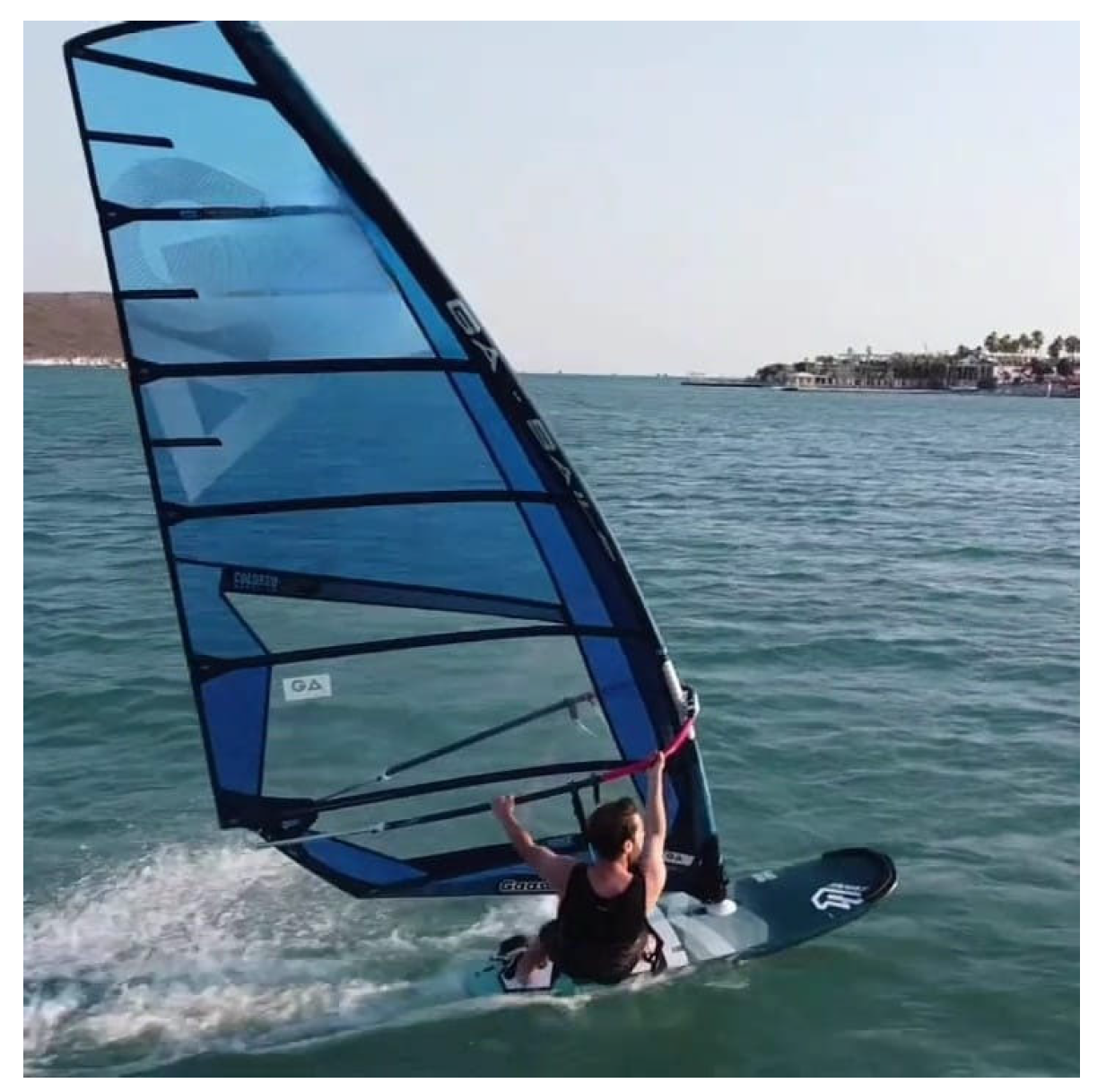
Sailing sports constitute a multifaceted area of research in sports science due to the combined demands of physical capacity, technical–tactical skill, and sport-specific biomechanical requirements [1]. Among these disciplines, windsurfing has been the subject of scientific studies since the 1990s, with a particular focus on muscle activation patterns and physiological demands [2,3]. Recent electromyographic evidence has further shown that pumping in elite windsurfers is characterized by four stable muscle synergies and phase-specific lateral asymmetries, indicating that this technique depends on coordinated whole-body neuromuscular control rather than isolated upper-extremity effort [4]. Windsurfing (WS; Figure 1) involves substantial sustained isometric muscle activity during sail control and postural stabilization [1,5]. In addition to the predominantly isometric demands of stance maintenance, dynamic maneuvers such as sail pumping (SPT) involve rapid alternating concentric and eccentric muscle actions [6,7]. Electromyography analyses have revealed that muscles such as the flexor carpi ulnaris, extensor carpi radialis, and biceps brachii exhibit significant activity during SPT [8,9], while the rectus femoris and biceps brachii muscles are particularly shown to have high activation levels in the slalom discipline [10]. Moreover, it was reported that during windsurfing, maximal oxygen uptake reaches 70–85% of aerobic capacity [11] and that sport-specific energy requirements were quite high [7,12]. In this context, endurance, agility, and isometric muscle strength are among the key determinants of performance [13,14,15].
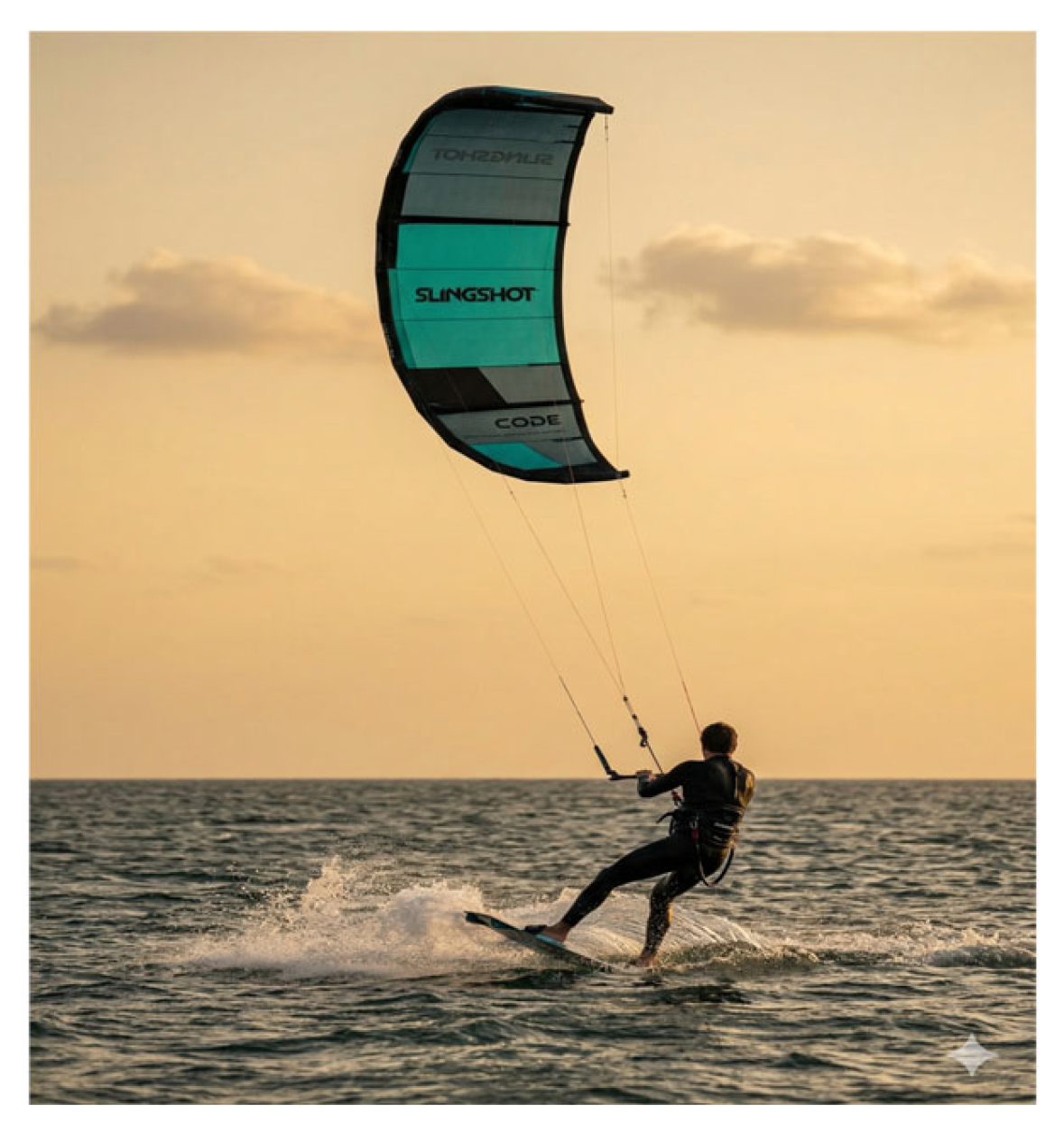
In contrast, kitesurfing (KS; Figure 2) has emerged as a more recent development in sailing sports, based on kite control and board steering. Physiologically, under typical conditions, aerobic metabolism operates at approximately 65–70% VO2 level [16], while during acrobatic maneuvers [17] this level can reach 80–90% [7]. Although there are difficulties in directly measuring energy demand [18] biomechanical studies show that both lower and upper extremity muscle groups perform intense isometric contractions, and that isotonic muscle contractions are predominant in acrobatic and freestyle movements [19,20]. With advances in safety equipment, the popularity of this sport has increased, and the number of epidemiological studies on potential injuries has also risen [21,22,23].
As a result, WS and KS are largely sustained by the aerobic energy system, but the anaerobic system kicks in during maneuvers and freestyle movements. Therefore, developing lower extremity strength, postural control, technical skills, and sport-specific training programs is of critical importance [13,24]. Furthermore, the detailed assessment of athletes’ anthropometric profiles and body composition contributes to a comprehensive understanding of performance [24,25].
The literature indicates that both sports require a high level of endurance, technical skill, muscle strength, and energy system interaction. Despite the growing worldwide popularity of WS and KS, comparative studies examining their effects on functional movement, mobility, and strength remain limited. Most existing studies have examined physiological requirements [3,11,16,20] or injury epidemiology [5,26,27,28,29] leaving a gap in the understanding of how these factors affect the functional performance outcomes of these sports. In this context, the aim of the present study is to examine the functional performance levels of WS and KS athletes and to reveal the differences between the two disciplines.

2. Materials and Methods

2.1. Research Design

This study employed a cross-sectional design to evaluate functional performance in recreational WS and KS athletes. The test battery included body composition assessment, dynamic balance (Y-Balance Test: YBT), isometric strength (handgrip and back-and-leg dynamometer), Functional Movement Screen (FMS), and a drop jump test to quantify reactive performance. Each participant completed one test per day in the morning, after breakfast and before the start of their regular water training session, over five consecutive days.
Data collection was conducted at Bubi Surf School in Alaçatı, İzmir, Türkiye. All procedures were conducted in accordance with the Declaration of Helsinki, and ethical approval was obtained from the Health Sciences Ethics Committee of Manisa Celal Bayar University Faculty of Medicine (decision no: 20.478.486/484; 29 July 2020). Written informed consent was obtained from all participants prior to participation.

2.2. Participants

A total of 25 male recreational athletes (aged 18–41 years) voluntarily participated in the study, including 13 WS athletes and 12 KS athletes from İzmir, Türkiye. The mean age of the windsurfing group was 27.7 ± 6.7 years, and the kitesurfing group was 29.5 ± 7.2 years. The study included athletes who had not sustained any injuries in the past three months. All participants had a minimum of three years of experience and demonstrated advanced proficiency in their respective disciplines. In addition, the individual training load of the participants consisted of 2–4 h of training per session, three times per week, depending on wind conditions.
Prior to participation, all athletes were informed about the study procedures both verbally and in writing, and written informed consent was obtained from each participant.
Participant characteristics are presented in Table 1. No between-group differences were observed for age, height, body mass, or body mass index (BMI) (p > 0.05); however, surfing experience (sport age) was higher in the WS group [p < 0.001; Cliff’s δ = −0.667 (95% CI: −0.929, −0.314)].

2.3. Methods

2.3.1. Body Composition

Body composition was assessed using a multi-frequency bioelectrical impedance analyzer (Tanita MC-780MA, Tanita Corp., Tokyo, Japan), with a measurement precision of ±0.1 kg for body mass. Participants were instructed to follow standardized pre-assessment guidelines regarding hydration and nutrition 24 h before testing to ensure measurement reliability.

2.3.2. Y-Balance Test

Dynamic balance was evaluated using the Y-Balance Test. Lower limb length was measured bilaterally (cm) from the anterior superior iliac spine to the distal medial malleolus in a supine position. During testing, participants stood barefoot with their hands on their hips and reached in three directions (anterior, posteromedial, and posterolateral) while maintaining heel contact with the floor. The procedure was demonstrated by the researcher, and participants performed three familiarization trials per direction. Trials were repeated if errors occurred (e.g., weight transfer to the reaching foot, heel lift, or removal of hands from hips). Reach distances were recorded in centimeters and normalized to limb length for analysis [30].

2.3.3. Isometric Strength Assessment

Handgrip Strength: Participants performed maximal voluntary contractions using a digital handgrip dynamometer (Takei Scientific Instruments Co., Niigata, Japan). Testing was conducted in a standing position with the elbow fully extended and the arm positioned alongside the body. Two trials were performed for each hand, and the highest value (kg) was recorded. Grip span was adjusted to the participant’s hand size.
Back-and-leg strength: Isometric back and leg strength were assessed using a back-and-leg dynamometer (Takei Scientific Instruments Co., Niigata, Japan; capacity: 660 lb). Before testing, the bar and chain length were individually adjusted according to each participant’s height [31].
Back extensor strength: For the back extensor strength test, participants stood on the dynamometer platform with approximately 10° of knee flexion and grasped the bar with a pronated grip. The elbows were maintained at approximately 90° of flexion, and the trunk was inclined forward to about 60° while the spine remained in a neutral position. From this standardized posture, participants were instructed to exert maximal pulling force while attempting to extend the trunk to an upright position without altering the prescribed testing stance. Peak force was recorded in kilograms. After a sufficient rest period, a second trial was performed, and the highest value was retained for analysis.
Leg strength: For the leg strength test, participants stood on the dynamometer platform with approximately 110° of knee flexion and held the bar between the knees using a supinated grip, with the elbows fully extended. While maintaining an upright posture and neutral spinal alignment, they were instructed to produce maximal force using the lower limbs. Two trials were performed with sufficient rest between attempts, and the highest value displayed by the dynamometer (kg) was used for analysis.

2.3.4. Functional Movement Screening

Functional movement quality was assessed using the FMS, which consists of seven movement patterns: Deep Squat, Hurdle Step, In-Line Lunge, Shoulder Mobility, Active Straight Leg Raise, Trunk Stability Push-Up, and Rotary Stability. Each pattern was scored on a 0–3 scale, and the total FMS score was calculated as the sum of individual pattern scores. To preserve natural movement strategies, no additional warm-up was performed immediately before FMS testing. Movements were recorded from frontal and sagittal views (photo/video) to support standardized scoring [32,33].

2.3.5. Drop Jump Assessment

Reactive jump performance was evaluated using a drop jump from a 30 cm platform. Jumps were recorded and analyzed using the My Jump 2 smartphone application (Android version 2.0.9; Carlos Balsalobre, Madrid, Spain) in high-speed mode (240 fps). Participants stepped down from the platform and were instructed to rebound immediately into a maximal vertical jump with minimal ground contact time [34,35]. Ground contact time, jump height, reactive strength index (RSI), and take-off time were calculated. Two trials were performed, and the trial with the highest RSI was retained for analysis.

2.4. Statistical Analysis

Statistical analyses were performed using IBM SPSS Statistics for Windows, Version 25.0 (IBM Corp., Armonk, NY, USA). Descriptive statistics were calculated for participant characteristics. Normality of data distribution was assessed using the Shapiro–Wilk test. As normality assumptions were not met, between-group comparisons (WS vs. KS) were performed using the Mann–Whitney U test. For ordinal outcomes with a high number of ties (FMS sub-scores), exact two-tailed p-values were reported (SPSS Exact Tests). Effect sizes were calculated using Cliff’s delta (δ) for significant comparisons and interpreted as small (0.147 ≤ δ < 0.33), medium (0.33 ≤ δ < 0.474), and large (δ ≥ 0.474) [36]. Statistical significance was set at p < 0.05.

3. Results

Y-Balance Test results for both groups are presented in Table 2.
The Mann–Whitney U test indicated no statistically significant differences between the KS and WS groups across all YBT parameters, including right and left anterior, posteromedial, posterolateral, and composite scores (p > 0.05).
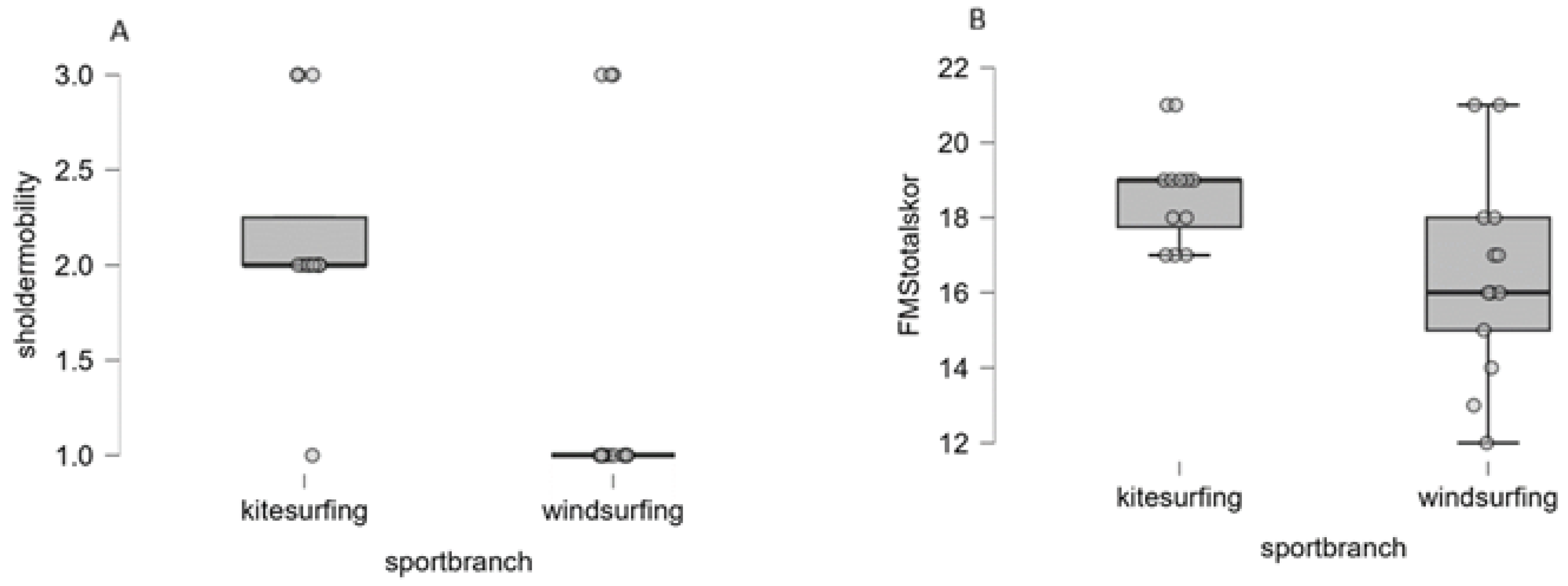
Table 3 presents the FMS results for both groups. The Mann–Whitney U test revealed no statistically significant differences between the KS and WS groups in individual movement patterns, including Deep Squat, Hurdle Step, In-Line Lunge, Active Straight Leg Raise (ASLR), Trunk Stability Push-Up (TSPU), and Rotary Stability (p > 0.05). However, a significant difference was observed in Shoulder Mobility (p = 0.022; Cliff’s δ = 0.532, 95% CI [0.109, 0.917]), indicating a large effect size. Additionally, the total FMS score differed significantly between groups (p = 0.014; Cliff’s δ = 0.577, 95% CI [0.167, 0.910]), also reflecting a large effect. These significant findings are further illustrated in Figure 3 and Figure 4.
The isometric strength assessment results of the KS and WS groups are presented in Table 4.
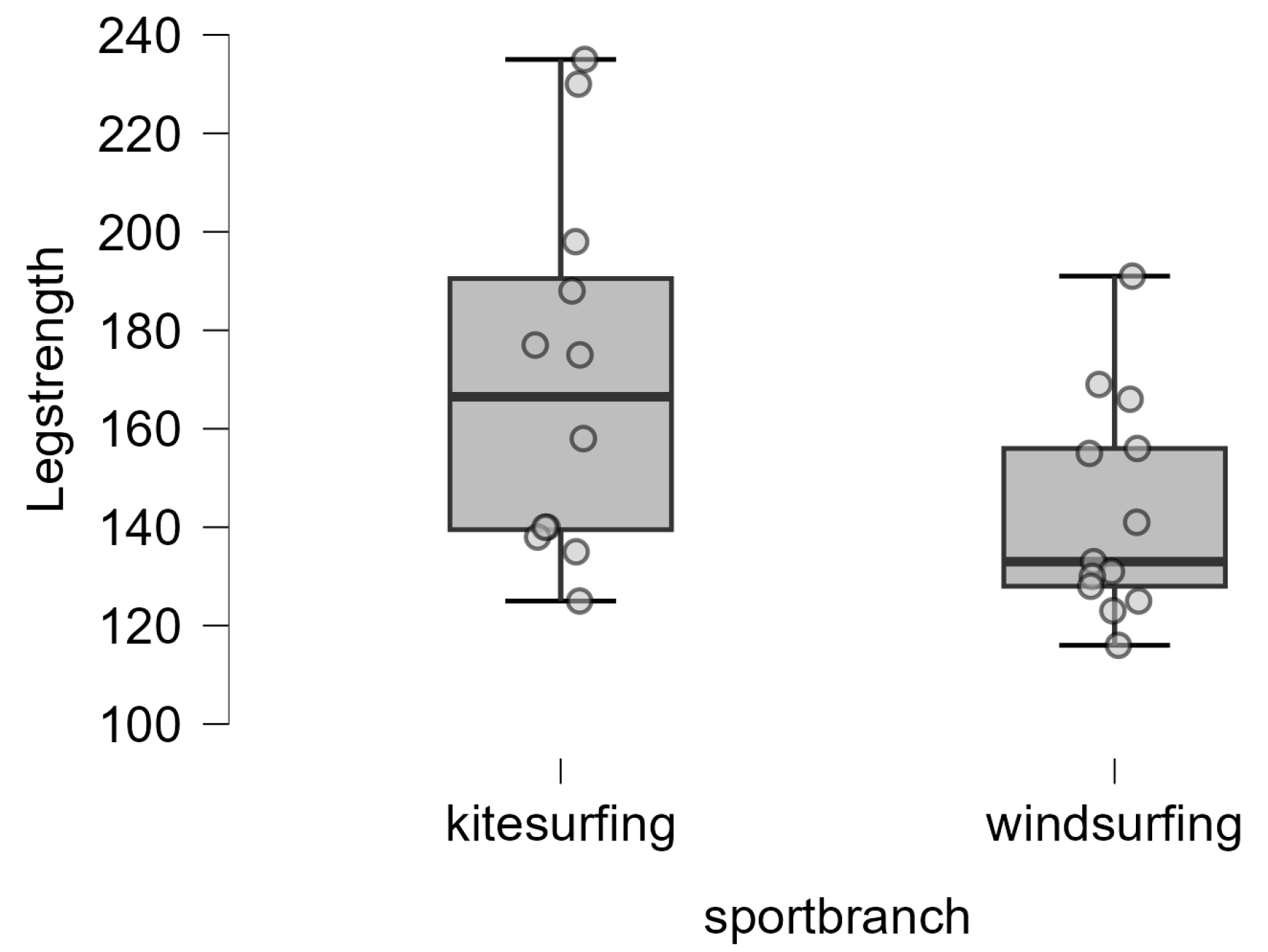
Leg strength results demonstrated a significant difference between the KS and WS groups (p = 0.041; Cliff’s δ = 0.481, 95% CI [0.051, 0.821]), indicating a large effect size, as illustrated in Figure 4. In contrast, no significant differences were observed between groups in left and right handgrip strength or back extensor strength measurements (p > 0.05), as presented in Table 4.
The drop jump assessment results of the KS and WS groups are presented in Table 5.
Drop jump data is shown in Table 5. No significant between-group differences were detected for ground contact time, RSI, jump height, or take-off time (p > 0.05).

4. Discussion

This study examined functional performance differences between recreational WS and KS athletes using selected assessments of isometric strength, dynamic balance, drop-jump-derived reactive performance, and functional movement quality. Functional performance analysis and posture-oriented exercises are particularly relevant in kitesurfing, a discipline that requires high levels of coordination and core stability. Moreover, functional performance testing is widely recognized as essential not only for optimizing athletic performance but also for injury prevention and rehabilitation processes.
The primary findings indicate that dynamic balance and lower-extremity reactive performance were similar between groups (p > 0.05). Previous literature has demonstrated that trained athletes exhibit superior balance compared to sedentary individuals [37,38] and kitesurf athletes have shown enhanced joint mobility and Y-balance performance relative to inactive controls [39]. In the present study, however, no between-group differences in YBT performance were observed, possibly because both disciplines involve balance-related demands under unstable environmental conditions, which may contribute to comparable dynamic balance performance.
Similarly, no between-group differences were observed in drop jump variables, including ground contact time, RSI, jump height, and take-off time (p > 0.05). The drop jump is commonly interpreted as an indicator of stretch–shortening cycle behavior and reactive strength rather than stimulus–response “reaction time” [40,41]. Therefore, the present findings suggest that lower-extremity reactive performance may be developed to a comparable degree in WS and KS at the recreational level, potentially due to shared requirements for rapid force modulation and postural regulation during on-water maneuvers.
Body composition outcomes did not differ between groups, whereas KS athletes demonstrated greater leg strength (p < 0.05). This finding may reflect discipline-specific loading patterns and the mechanical demands of kitesurfing, where sustained resistance against kite pull and edging positions can require prolonged force production with intermittent dynamic corrections [16]. In contrast, handgrip strength did not differ between groups, indicating that the observed strength distinction was more apparent in the leg strength task than in general grip capacity. Although isometric strength adaptations may be enhanced through structured resistance training and combined eccentric–concentric strategies [8], the cross-sectional design of the present study requires cautious interpretation of the potential mechanisms underlying the observed differences between the sports.
KS athletes demonstrated higher FMS shoulder mobility and higher total FMS scores, whereas the remaining FMS subtests were comparable between groups. Accordingly, the between-discipline difference in movement quality appeared to be driven primarily by the upper-limb mobility domain rather than broad multi-segmental movement competency. The Functional Movement Screen is intended to identify fundamental movement limitations and asymmetries that may reflect underlying mobility or stability deficits. From a mechanistic perspective, the FMS shoulder mobility task is influenced by combined glenohumeral range of motion, scapulothoracic mobility/control, and thoracic extension [32]. Kitesurfing requires repeated bar steering and power regulation with sustained upper-limb positioning and high traction loads, which may promote sport-specific shoulder and thoracic adaptations. At the same time, range-of-motion characteristics, rotator cuff strength, scapular function, and training load have been identified as modifiable risk factors for overuse shoulder injuries in overhead-dominant sports [42]. Although kitesurfing injuries are frequently reported in the lower extremity, shoulder involvement has also been documented in epidemiological studies [19,43]. Accordingly, targeted shoulder-mobility and scapular-control exercises may be prioritized for WS athletes, whereas KS athletes may benefit from monitoring side-to-side asymmetry and pairing mobility work with rotator cuff strengthening and load management.
An important consideration when interpreting the present findings is the disparity in sports experience between the groups. The greater sport age observed in the windsurfing group may partly reflect the longer-established competitive and developmental pathway of windsurfing compared with kitesurfing in Türkiye. Official federation records indicate that windsurfing had a broader domestic competitive presence in earlier archived seasons, whereas kiteboard competitions became more clearly institutionalized later. Since long-term sport-specific training may influence postural control, movement quality, and neuromuscular performance, sport experience should be considered a potential confounding factor when interpreting the present results. However, the fact that the kitesurfing group demonstrated superior outcomes in some variables despite lower sport age suggests that the observed differences cannot be explained by training age alone and may also reflect discipline-specific mechanical and neuromuscular demands.

Limitations of the Study

This study has several limitations that should be acknowledged. First, the sample size was relatively small (n = 25), which may limit the statistical power and generalizability of the findings. Second, sports experience differed significantly between the groups, and this imbalance may have influenced the functional test outcomes independently of sport discipline. Although this issue was discussed in relation to the developmental context of the two sports in Türkiye, training age should still be considered a potential confounding factor. Third, although only athletes who had not sustained any injury within the previous 3 months were included in the study, a detailed history of earlier musculoskeletal injuries or residual complaints was not systematically recorded. Therefore, the possible influence of previous injury history on FMS and YBT performance cannot be completely ruled out. Future studies should include larger samples, more closely matched training backgrounds, and more detailed injury-history assessment.

5. Conclusions

Overall, while recreational WS and KS athletes demonstrate similar balance and reactive strength profiles, kitesurfing appears to impose greater demands on isometric leg strength and shoulder mobility, as reflected in the FMS outcomes. These results highlight the importance of implementing discipline-specific conditioning strategies tailored to the mechanical and postural requirements of each sport. Functional performance measurements remain critical tools for optimizing sport-specific training, reducing injury risk, and enhancing long-term athletic development in water-based board sports. A further limitation is the absence of data on participants’ injury history, which may have influenced FMS and YBT outcomes. Future research should include injury profiling to better interpret functional performance results.

Author Contributions

Conception and design of study, N.D. and O.I.; methodology, O.I. and T.G.; acquisition of data, O.I.; analysis and interpretation of data, N.D. and O.I.; writing, N.D., O.I. and T.G. All authors have read and agreed to the published version of the manuscript.

Funding

This research received no external funding.

Institutional Review Board Statement

The study was conducted in accordance with the Helsinki Declaration, and ethical approval was granted by the Health Sciences Ethics Committee at Manisa Celal Bayar University Faculty of Medicine (decision number 20.478.486/484, dated 29 July 2020). This study is derived from a master’s thesis.

Informed Consent Statement

Informed consent was obtained from all subjects involved in the study.

Data Availability Statement

The data presented in this study are available on request from the corresponding author.

Conflicts of Interest

The authors have no conflicts of interest relevant to this article.

Abbreviations

WSWindsurfing
KSIn contrast, kitesurfing
FMSFunctional Movement Screen
YBTY-Balance Test
SBTSail pumping

References

  1. Pagliaro, A.; Alioto, A.; Rossi, C.; Baldassano, S.; Proia, P. Performance enhancing strategies in sailing sports: Beyond training and nutrition. Hum. Mov. 2024, 25, 15–25. [Google Scholar] [CrossRef]
  2. Guevel, A. Heart rate and blood lactate responses during competitive Olympic board sailing. J. Sports Sci. 1999, 17, 135–141. [Google Scholar] [CrossRef] [PubMed]
  3. Vogiatzis, I.; De Vito, G.; Rodio, A.; Madaffari, A.; Marchetti, M. The physiological demands of sail pumping in Olympic level windsurfers. Eur. J. Appl. Physiol. 2002, 86, 450–454. [Google Scholar] [CrossRef] [PubMed]
  4. Lundgren, L.; Brorsson, S.; Hilliges, M.; Osvalder, A.L. Sport performance and perceived musculoskeletal stress, pain and discomfort in kitesurfing. Int. J. Perform. Anal. Sport 2011, 11, 142–158. [Google Scholar] [CrossRef]
  5. Woo, C.C. Recreational windsurfing-related acute injuries: A narrative review. Part 2 Injury prevention and a proposal for a set of potential prevention strategies with a holistic approach. J. Can. Chiropr. Assoc. 2023, 67, 159–174. [Google Scholar]
  6. Fontana, C.; Laiola, N.; Naddeo, A.; Califano, R. Musculoskeletal and ergonomic demands of the pumping maneuver in Laser-class sailing: An integrated biomechanical analysis. Sports 2026, 14, 113. [Google Scholar] [CrossRef]
  7. Castagna, O.; Brisswalter, J.; Lacour, J.R.; Vogiatzis, I. Physiological demands of different sailing techniques of the new Olympic windsurfing class. Eur. J. Appl. Physiol. 2008, 104, 1061–1067. [Google Scholar] [CrossRef]
  8. Andrianopoulos, V.; Vogiatzis, I. Windsurfing: The Physiology of Athletic Performance and Training. In Extreme Sports Medicine; Feletti, F., Ed.; Springer: Cham, Switzerland, 2016; pp. 357–363. [Google Scholar] [CrossRef]
  9. Campillo, P.; Leszczynski, B.; Marthe, C.; Hespel, J.M. Electromyographic analysis on a windsurfing simulator. J. Sports Sci. Med. 2007, 6, 135–141. [Google Scholar]
  10. Atalağ, O. Rüzgâr Sörfündeki Aktif Kas Gruplarının Kablosuz EMG Yöntemiyle Belirlenmesi ve 8 Haftalık Kuvvet Antrenmanının Sörf Performansına Etkisi. Ph.D. Thesis, Ege University, Institute of Health Sciences, İzmir, Türkiye, 2012. [Google Scholar]
  11. Vogiatzis, I.; De Vito, G. Physiological assessment of Olympic windsurfers. Eur. J. Sport Sci. 2014, 15, 228–234. [Google Scholar] [CrossRef]
  12. De Vito, G.; Di Filippo, L.; Rodio, A.; Felici, F.; Madaffari, A. Is the Olympic boardsailor an endurance athlete? Int. J. Sports Med. 1997, 18, 281–284. [Google Scholar] [CrossRef]
  13. Dyson, R. Incidence of sports injuries in elite competitive and recreational windsurfers. Br. J. Sports Med. 2006, 40, 346–350. [Google Scholar] [CrossRef]
  14. Ouadahi, N.; Chadli, S.; Ababou, A.; Ababou, N. A simulator dedicated to strengthening exercises for windsurfers. Procedia Eng. 2016, 147, 532–537. [Google Scholar] [CrossRef]
  15. Wu, W.L.; Hsu, H.T.; Chu, I.H.; Liang, J.M.; Chen, Y.T.; Wu, J.H. The study of physical requirements for windsurfing specialty. J. Sports Med. Phys. Fit. 2016, 56, 968–973. [Google Scholar]
  16. Vercruyssen, F.; Blin, N.; L’Huillier, D.; Brisswalter, J. Assessment of physiological demand in kitesurfing. Eur. J. Appl. Physiol. 2009, 105, 103–109. [Google Scholar] [CrossRef] [PubMed]
  17. Draper, N.; Hodgson, C. Adventure Sport Physiology, 1st ed; P-28; Wiley-Blackwell (Wiley): Hoboken, NJ, USA, 2008. [Google Scholar]
  18. Keytel, L.R.; Goedecke, J.H.; Noakes, T.D.; Hiiloskorpi, H.; Laukkanen, R.; van der Merwe, L.; Lambert, E.V. Prediction of Energy Expenditure from Heart Rate Monitoring during Submaximal Exercise. J. Sports Sci. 2005, 23, 289–297. [Google Scholar] [CrossRef]
  19. van Bergen, C.J.A.; Weber, R.I.K.; Kraal, T.; Kerkhoffs, G.M.M.J.; Haverkamp, D. Kitesurf Injury Trauma Evaluation Study: A Prospective Cohort Study Evaluating Kitesurf Injuries. World J. Orthop. 2020, 11, 243–251. [Google Scholar] [CrossRef]
  20. Bourgois, J.G.; Boone, J.; Callewaert, M.; Tipton, M.J.; Tallir, I.B. Biomechanical and physiological demands of kitesurfing and epidemiology of injury among kitesurfers. Sports Med. 2014, 44, 55–66. [Google Scholar] [CrossRef]
  21. Gastoł, B.; Mikolap, K.; Olszewski, J.; Blek, N. Epidemiology and risk factors for traumas in kitesurfing with particular regard to head and spine injuries. A narrative review. Disaster Emerg. Med. J. 2024, 10, 44–52. [Google Scholar] [CrossRef]
  22. Dunne, L.; Murphy, E.; Dawson, P.H.; Leonard, M. Kite surfing: Epidemiology of trauma. BMJ Case Rep. 2018, 2018, bcr-2017. [Google Scholar] [CrossRef]
  23. da Luz, R.L.F.; da Silva, F.A.; Coertjens, M. The impact of kitesurfing on the dynamic equilibrium. Asian J. Sports Med. 2016, 7, e32854. [Google Scholar] [CrossRef]
  24. Pérez-Turpin, J.A.; Cortell-Tormo, J.M.; Suárez-Llorca, C.; Andreu-Cabrera, E.; Llana-Belloch, S.; Pérez-Soriano, P. Relationship between anthropometric parameters, physiological responses, routes and competition results in formula windsurfing. Acta Kinesiol. Univ. Tartu. 2009, 14, 95–110. [Google Scholar] [CrossRef]
  25. Sánchez-Oliver, A.J.; Caraballo, I.; Pérez-Bey, A.; Sánchez-Gómez, A.; Domínguez, R. Anthropometric characteristics of young elite sailors based on performance level. J. Exerc. Sci. Fit. 2023, 21, 125–130. [Google Scholar] [CrossRef]
  26. Błażkiewicz, A.; Białecka, M.; Goliński, M.; Dudziński, W.; Chamera, T.; Tan, B.; Vaz Pardal, C.; Grygorowicz, M. Epidemiology of injuries in the iQFOiL olympic windsurfing class: Risk factors and injury trends in elite sailors at the 2021 iQFOiL European championships. BMC Sports Sci. Med. Rehabil. 2025, 17, 134. [Google Scholar] [CrossRef] [PubMed]
  27. Szymski, D.; Achenbach, L.; Siebentritt, M.; Simoni, K.; Kuner, N.; Pfeifer, C.; Krutsch, W.; Alt, V.; Meffert, R.; Fehske, K. Injury Epidemiology of 626 Athletes in Surfing, Wind Surfing and Kite Surfing. Open Access J. Sports Med. 2021, 12, 99–107. [Google Scholar] [CrossRef] [PubMed]
  28. van Bergen, C.J.A.; Commandeur, J.P.; Weber, R.I.K.; Haverkamp, D.; Breederveld, R.S. Windsurfing vs kitesurfing: Injuries at the North Sea over a 2-year period. World J. Orthop. 2016, 7, 814–822. [Google Scholar] [CrossRef] [PubMed]
  29. Nathanson, A.; Bird, S.; Dao, L.; Tam-Sing, K. Competitive surfing injuries: A prospective study of surfing-related injuries among contest surfers. Am. J. Sports Med. 2007, 35, 113–117. [Google Scholar] [CrossRef] [PubMed]
  30. Plisky, P.J.; Rauh, M.J.; Kaminski, T.W.; Underwood, F.B. Star Excursion Balance Test as a predictor of lower extremity injury in high school basketball players. J. Orthop. Sports Phys. Ther. 2006, 36, 911–919. [Google Scholar] [CrossRef]
  31. Ten Hoor, G.A.; Musch, K.; Meijer, K.; Plasqui, G. Test-retest reproducibility and validity of the back-leg-chest strength measurements. Isokinet. Exerc. Sci. 2016, 24, 209–216. [Google Scholar] [CrossRef]
  32. Cook, G.; Burton, L.; Hoogenboom, B. Functional movement screening: The use of fundamental movements as an assessment of function Part 1. Int. J. Sports Phys. Ther. 2014, 9, 396–409. [Google Scholar]
  33. Cook, G.; Burton, L.; Hoogenboom, B. Functional movement screening: The use of fundamental movements as an assessment of function Part 2. Int. J. Sports Phys. Ther. 2014, 9, 549–563. [Google Scholar]
  34. Haynes, T.; Bishop, C.; Antrobus, M.; Brazier, J. The validity and reliability of the My Jump 2 app for measuring the reactive strength index and drop jump performance. J. Sports Med. Phys. Fit. 2019, 59, 253–258. [Google Scholar] [CrossRef] [PubMed]
  35. Balsalobre-Fernández, C.; Glaister, M.; Lockey, R. The validity and reliability of an iPhone app for measuring vertical jump performance. J. Sports Sci. 2015, 33, 1574–1579. [Google Scholar] [CrossRef] [PubMed]
  36. Meissel, K.; Yao, E.S. Using Cliff’s delta as a non-parametric effect size measure: An accessible web app and R tutorial. Pract. Assess. Res. Eval. 2024, 29, 2. [Google Scholar]
  37. Granacher, U.; Behm, D. Relevance and effectiveness of combined resistance and balance training to improve balance and muscular fitness in healthy youth and youth athletes: A scoping review. Sports Med. 2022, 53, 349–370. [Google Scholar] [CrossRef]
  38. Ricotti, L.; Rigosa, J.; Niosi, A.; Menciassi, A. Analysis of balance, rapidity, force and reaction times of soccer players at different levels of competition. PLoS ONE 2013, 8, e77264. [Google Scholar] [CrossRef]
  39. Dut, R.; Dönmez, G.; Kaymakoğlu, M.; Talmaç, M.A.; Işık, A.; Bayraktar, B. Analysis of Joint Range of Motion, Balance and Injury among Kitesurfers: A Cross-Sectional Study. Spor Hekim. Derg. 2020, 55, 122–130. [Google Scholar] [CrossRef]
  40. Flanagan, E.P.; Comyns, T.M. The Use of Contact Time and the Reactive Strength Index to Optimize Fast Stretch-Shortening Cycle Training. Strength Cond. J. 2008, 30, 32–38. [Google Scholar] [CrossRef]
  41. Xu, J.; Turner, A.; Jordan, M.J.; Comyns, T.M.; Chavda, S.; Bishop, C. A narrative review of rebound jumping and fast stretch-shortening cycle mechanics. Strength Cond. J. 2025, 47, 302–316. [Google Scholar] [CrossRef]
  42. Tooth, C.; Gofflot, A.; Schwartz, C.; Croisier, J.L.; Beaudart, C.; Bruyère, O.; Forthomme, B. Risk factors of overuse shoulder injuries in overhead athletes: A systematic review. Sports Health 2020, 12, 478–487. [Google Scholar] [CrossRef]
  43. Beer, Y.; Yona, T.; Arama, Y.; Lindner, D.; Garrigues, G.; Feletti, F.; Blond, L.; Gilat, R. Kiteboarding Injuries: Epidemiology, Common Treatment Strategies, and Time to Return to Kiteboarding Following Injury. Clin. J. Sport Med. 2025, 35, 498–504. [Google Scholar] [CrossRef]
Figure 1. Windsurfing.
Applsci 16 03508 g001
Figure 2. Kitesurfing.
Applsci 16 03508 g002
Figure 3. Significant FMS findings in the kitesurf and windsurf groups. (A) Shoulder Mobility scores. (B) Total FMS scores.
Applsci 16 03508 g003
Figure 4. Box plot with jittered individual data points for leg strength in the kitesurf and windsurf groups.
Applsci 16 03508 g004
Table 1. Characteristics of the participant.
AgeHeightWeight (kg)BMI (kg/m2)Surf Age
Kitesurfing (n = 12)29.00 ± 7.53179.00 ± 6.4573.10 ± 5.7722.79 ± 2.727.25 ± 3.44
Windsurfing (n = 13)27.76 ± 7.06176.61 ± 7.0071.45 ± 9.6022.88 ± 2.4913.23 ± 5.32
p0.850.290.370.570.001 *
BMI: body mass index; n: number of athletes, * significant differences values at p < 0.05.
Table 2. Y-Balance test results between the groups.
GroupNMedian (Q1–Q3)Up
Right AnteriorKitesurfing1260.49 (53.21–63.55)64.000.446
Windsurfing1362.92 (53.37–68.72)
Right PosterolateralKitesurfing1299.13 (88.52–114.30)48.000.103
Windsurfing13113.68 (103.92–120.97)
Right PosteromedialKitesurfing12106.66 (91.35–117.92)65.000.480
Windsurfing13114.60 (94.08–126.18)
RCTKitesurfing1288.76 (79.85–99.60)53.000.174
Windsurfing1397.14 (85.87–102.30)
Left AnteriorKitesurfing1266.66 (53.71–68.87)61.000.355
Windsurfing1359.04 (53.84–66.16)
Left PosterolateralKitesurfing12101.45 (98.26–107.09)52.000.157
Windsurfing13108.16 (99.09–118.67)
Left PosteromedialKitesurfing12106.42 (96.10–118.93977.000.957
Windsurfing13110.41 (90.72–120.51)
LCTKitesurfing1290.12 (85.42–95.83)74.500.849
Windsurfing1395.88 (82.55–101.90)
RCT: Right Combined Total; LCT: Left Combined Total, p < 0.05.
Table 3. FMS results between the groups.
GroupNMedian (Q1–Q3)Up (Exact)
Deep SquatKitesurfing123.00 (2.25–3.00)61.500.376
Windsurfing133.00 (2.00–3.00)
Hurdle StepKitesurfing122.00 (2.00–3.00)70.000.689
Windsurfing132.00 (2.00–2.50)
In Line LungeKitesurfing123.00 (3.00–3.00)47.000.098
Windsurfing132.00 (2.00–3.00)
Shoulder MobilityKitesurfing122.00 (2.00–2.75)36.500.022 *
Windsurfing131.00 (1.00–2.00)
ASLRKitesurfing123.00 (3.00–3.00)55.000.225
Windsurfing133.00 (2.00–3.00)
TSPUKitesurfing123.00 (3.00–3.00)72.000.769
Windsurfing133.00 (3.00–3.00)
Rotary StabilityKitesurfing123.00 (2.00–3.00)62.000.406
Windsurfing132.00 (2.00–3.00)
Total ScoreKitesurfing1219.00 (17.25–19.00)33.000.014 *
Windsurfing1316.00 (14.50–18.00)
ASLR: Active Straight Leg Raise; TSPU: Trunk Stability Push Up, * significant differences values at p < 0.05.
Table 4. Isometric strength assessment results between the groups.
GroupNMedian (Q1–Q3)Up
Right HandgripKitesurfing1249.65 (41.92–55.07)62.500.401
Windsurfing1346.00 (42.55–48.00)
Left HandgripKitesurfing1246.85 (41.47–53.47)68.000.586
Windsurfing1345.10 (42.00–51.30)
Back extensor strengthKitesurfing12129.00 (112.50–173.25)49.000.115
Windsurfing13115.00 (103.00–131.50)
Leg strengthKitesurfing12166.50 (138.50–195.50)40.500.041 *
Windsurfing13133.00 (126.50–161.00)
p < 0.05 *.
Table 5. Drop jump assessment results between the groups.
GroupNMedian (Q1–Q3)Up
GCTKitesurfing12215 (202.75–291.25)73.500.807
Windsurfing13247 (195.00–255.50)
RSIKitesurfing121.92 (1.61–2.19)72.000.744
Windsurfing131.89 (1.82–2.44)
JHKitesurfing1225.90 (17.62–32.90)58.000.277
Windsurfing1327.55 (26.71–34.25)
TTKitesurfing12459.50 (379.00–518.00)56.000.231
Windsurfing13481.00 (469.00–528.50)
GCT: ground contact time; RSI: reactive strength index; JH: jump height; TT: take-off time; p < 0.05.
Disclaimer/Publisher’s Note: The statements, opinions and data contained in all publications are solely those of the individual author(s) and contributor(s) and not of MDPI and/or the editor(s). MDPI and/or the editor(s) disclaim responsibility for any injury to people or property resulting from any ideas, methods, instructions or products referred to in the content.