1. Introduction
Workplace ergonomics is key to preventing occupational injuries and illnesses. While widely developed in the industrial sector, its use in healthcare remains limited, despite the physically demanding nature of many clinical tasks. This has a significant impact on professionals’ health and, indirectly, on the quality of care [
1]. Orthopaedic surgeons have a high prevalence of MSDs, attributed to exposure to radiation, toxic substances, sustained and forced postures, repetitive movements, and suboptimal instrument ergonomics. It is estimated that 70–97% of orthopaedic surgeons develop musculoskeletal problems during their careers [
2,
3,
4,
5,
6].
Despite this high prevalence, MSDs are frequently under-recognised by surgeons or perceived as an unavoidable part of the profession. In recent years, interest in surgical ergonomics has increased, aiming to improve awareness and working conditions. However, most ergonomic studies in surgery focus primarily on the lead surgeon, without systematically evaluating the assistant, who is also exposed to occupational risk and whose posture may be affected by workflow changes targeting the surgeon.
Total hip arthroplasty (THA) is one of the most frequently performed orthopaedic procedures in Spain, with approximately 25,000 operations annually [
7]. The direct lateral (modified Hardinge) and posterolateral (Moore) approaches are among the most used techniques. These approaches differ in surgical exposure, limb positioning, and working corridors, which may result in different postural demands for both the surgeon and the assistant. To date, no studies have systematically compared ergonomic risk for both team members across THA approaches in a stepwise manner.
The Rapid Entire Body Assessment (REBA) is an observational tool used in occupational risk prevention to evaluate postural load and musculoskeletal risk [
8]. Its application and scoring criteria are standardised by the Spanish National Institute for Safety and Health at Work (INSST) in NTP 601, particularly for tasks combining manual handling, force, and repetitive movements [
9]. Although REBA has been widely applied in industrial contexts [
8], its use in healthcare [
10,
11,
12] and operating rooms [
13,
14] is increasing, while evidence in orthopaedic surgery remains limited. REBA was selected for this study because it provides whole-body postural assessment, incorporates force and repetition, and is feasible for use in simulated surgical environments without wearable instrumentation. The aim of this study was to use the REBA method to analyse ergonomic risk for both the surgeon and the assistant during primary THA performed through the direct lateral and posterolateral approaches, and to evaluate whether a change in team positioning during acetabular cup preparation reduces postural risk.
2. Materials and Methods
A bench-top simulation study reproduced a total left hip arthroplasty (THA) on a phantom. The centre’s Research Ethics Committee approved the study (Registration No. 26–2025). A right-handed surgeon (180 cm, 75 kg, arm length 73 cm) with >10 years of experience participated, assisted by a right-handed second-year orthopaedic surgery resident (175 cm, 65 kg, arm length 64 cm).
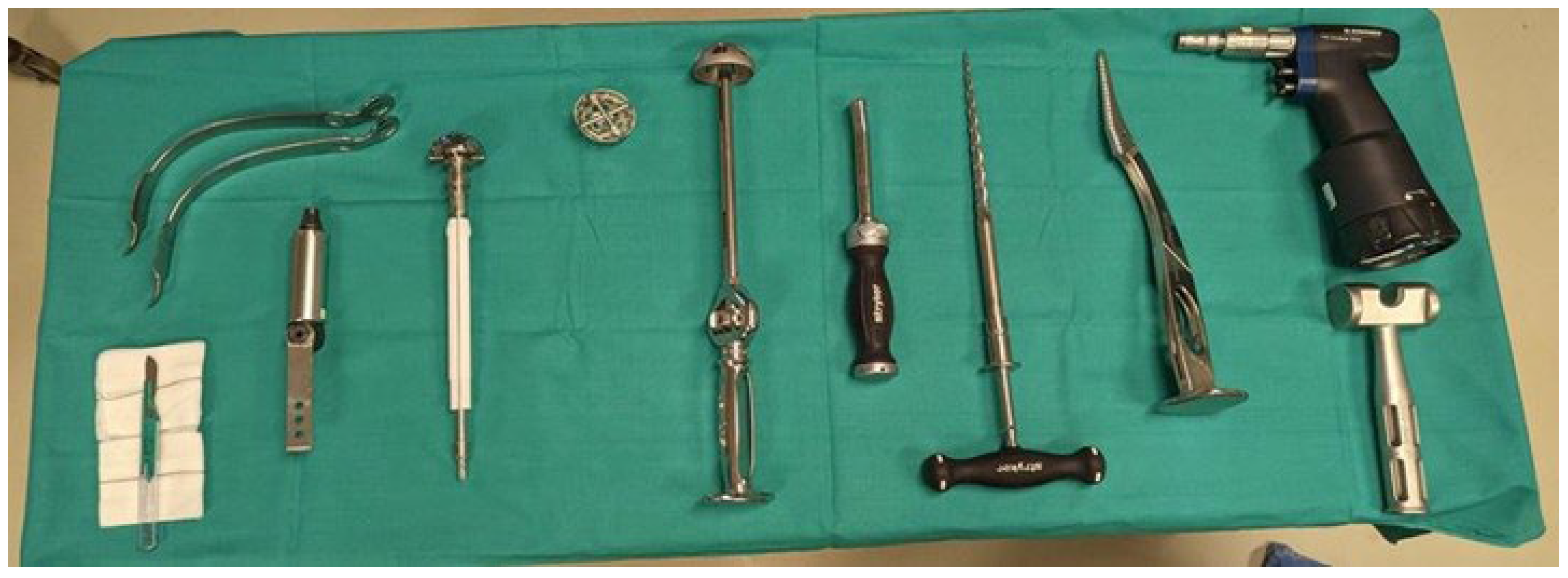
Real THA instruments (Accolade stem, Trident cup, Stryker
®, Mahwah, NJ, USA) were used (
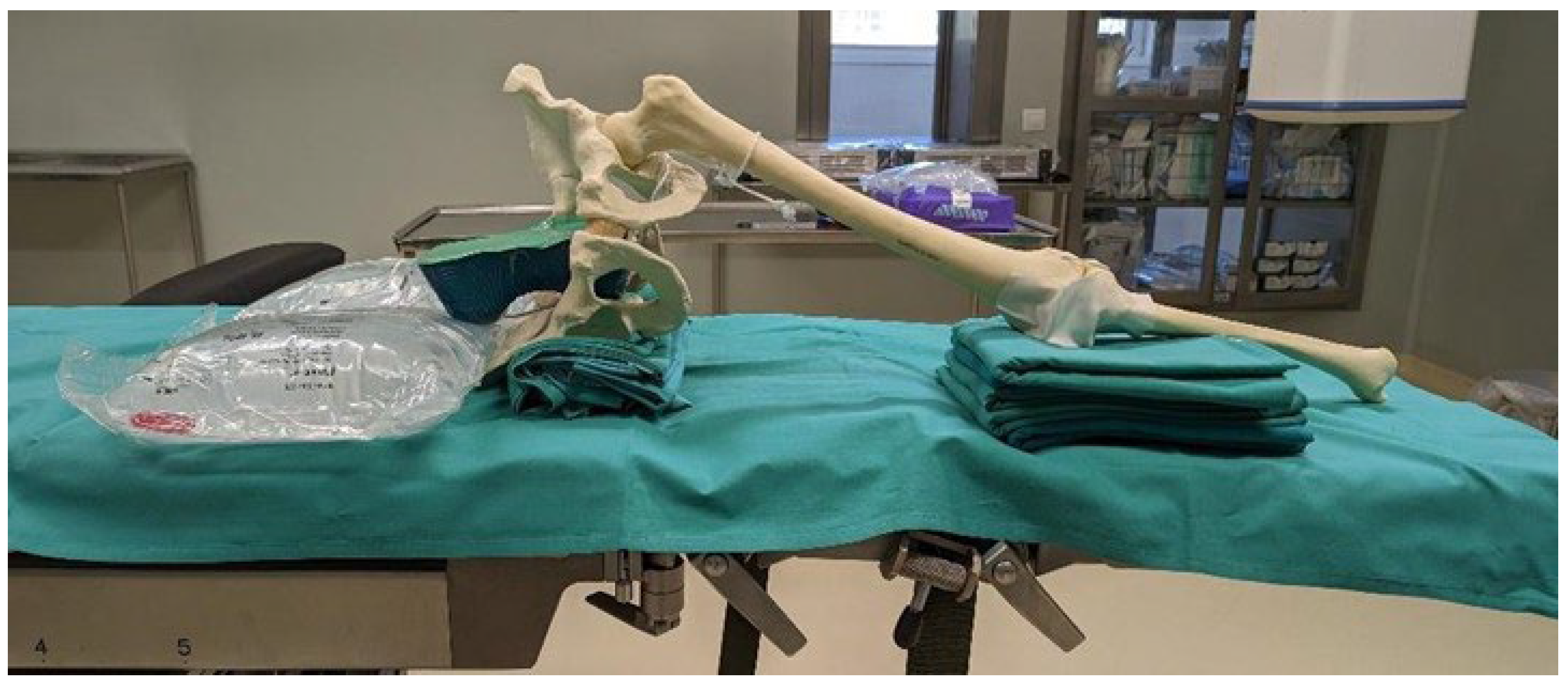
Figure 1). The simulation model consisted of a pelvis, femur, and tibia phantom mounted in a gel support and stabilised with cloths and liquid bags (
Figure 2). The operating table (OPT/80, OPT SurgiSystems, Calliano, Italy) was adjusted to a height comfortable for the surgeon (73 cm). An auxiliary Mayo table was used to control leg drop during the simulation. This standardised setup was intentionally designed to eliminate patient-specific and environmental confounders.
The procedure was divided into eight main steps, defined a priori based on the step-by-step description of primary THA technique provided by Sledge [
15]: incision (I), femoral osteotomy (OST), cup bottom reaming (CBR), cup perimeter reaming (CPR), cup impaction (CI), femoral notch (FN), femoral canal broaching (FCB), and femoral stem impaction (FSI). The assistant’s posture was not evaluated during the incision because this step was performed almost exclusively by the surgeon.
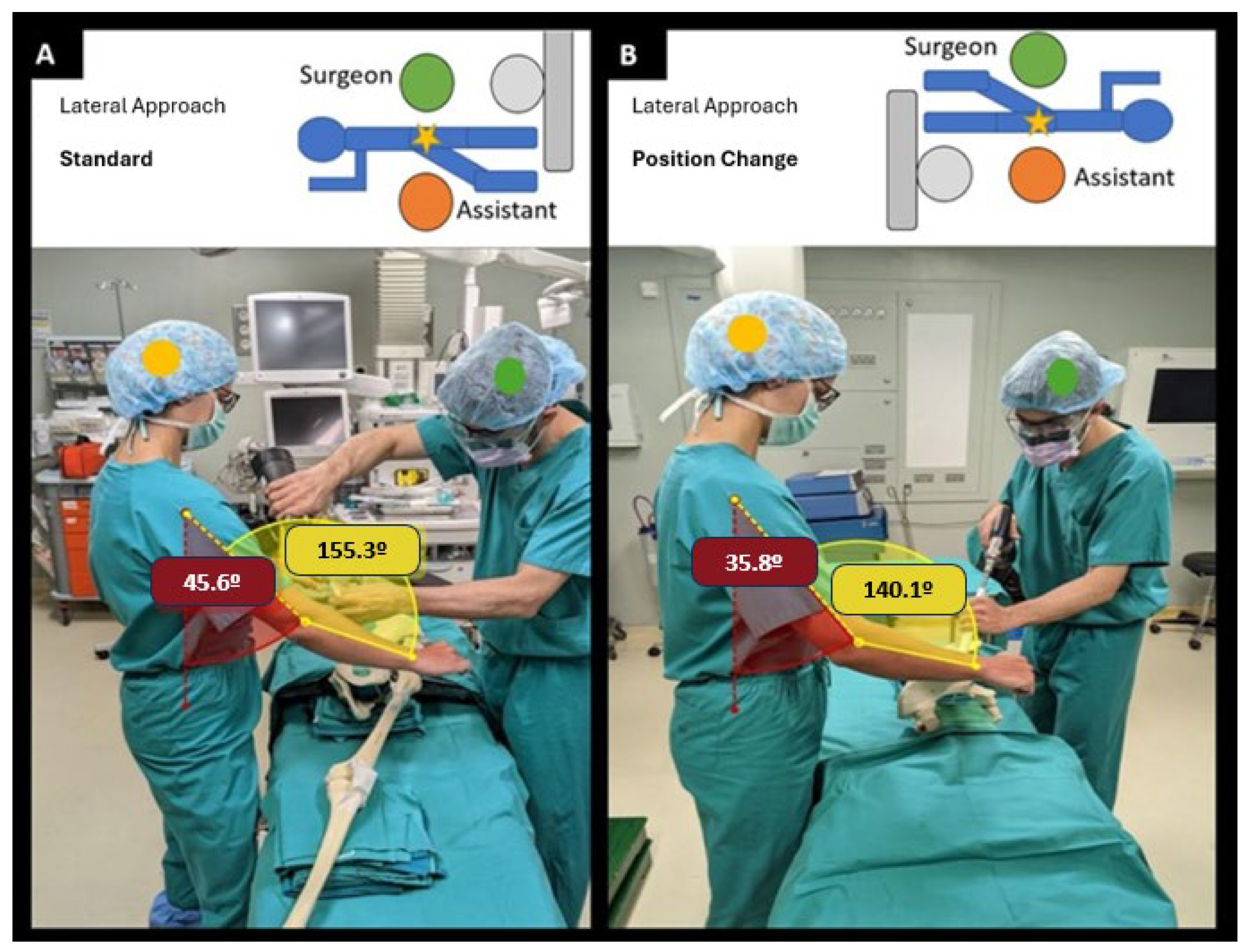
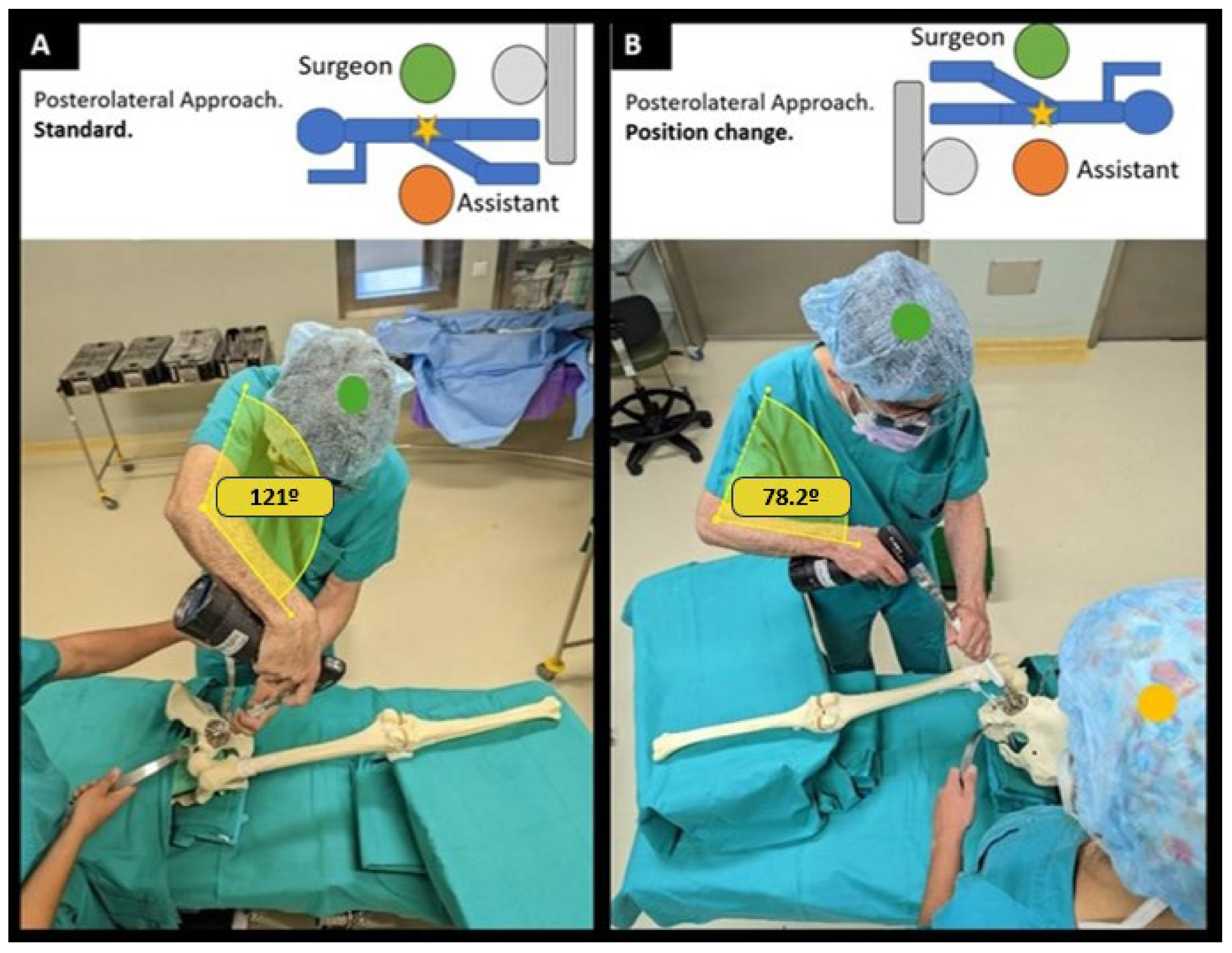
During the cup preparation steps (CBR, CPR, CI), an alternative experimental condition was introduced in which the surgeon and assistant swapped positions, with the surgeon standing in front of the patient and the assistant behind (
Figure 3 and
Figure 4).
During each surgical step, 360-degree photographs were taken using a smartphone camera (Google Pixel 7pro, Google LLC, Mountain View, CA, USA). Images were selected when body segments were visually orthogonal to the camera. The angles of the neck, trunk, legs, arms, forearm, and dominant wrist were measured using Kinovea software (v. 0.9.5).
Kinovea is a free and open-source (GPL v2-licensed) photo and video analysis tool designed for sports analysis, validated for angular measurements under defined conditions, and developed by J. Charmant (
asso@kinovea.org).
It can be used to measure kinematic parameters and is a valid and reliable tool, capable of accurate measurements up to 5 metres from the object and over an angular range of 90° to 45° [
16].
This programme was used to measure the angles of the neck, trunk, legs, arm, forearm, and dominant wrist (right) (
Figure S1).
Measured angles were converted into REBA scores following standardised procedures [
9] (
Figure S2), which is an observational whole-body method that translates posture into an overall risk score and action level by scoring two segment groups: Group A (neck, trunk, and legs) and Group B (upper arms, lower arms, and wrists). Segment scores are obtained using standardised scoring tables and combined into Group A and Group B scores; these are then cross-referenced in the REBA conversion table to generate a final score. The final score can be adjusted for activity factors (static postures, repetitive movements, sudden postural changes, or unstable postures), yielding an action level for each surgical step. Higher scores indicate greater urgency of intervention and higher injury risk: negligible (1), low risk (2–3), medium risk (4–7), high risk (8–10), or very high risk (11–15) [
9].
Two evaluators, both holding a master’s degree in occupational risk prevention and experienced in occupational ergonomics, independently measured joint angles using Kinovea and applied the REBA method to score postural risk.
In THA, both team members typically remain in fixed positions during each step, with the legs acting as a stable base. Postural load is mainly determined by trunk/neck orientation and upper-limb positioning to maintain exposure. Therefore, each step was scored based on a static working posture. A load of less than 5 kg and a good grip on the instruments were assumed. Wrist deviation was classified as neutral except for obvious hyperextension or radial/ulnar deviation. The neck and trunk were considered rotated if they did not align with the feet. A correction was applied for repetitive use of a hammer or saw.
The sample included 42 postural instances (22 from the surgeon, 20 from the assistant). Each instance was assessed three times: twice by Observer 1 in test–retest conditions and once by Observer 2. A total of 126 REBA observations were made. Measurements were independent and at least 15 days apart. Intra- and inter-observer reliability were calculated using the intraclass correlation coefficient (ICC; 2,1). For interpretability, ICC magnitudes were additionally described using the qualitative categories proposed by Landis and Koch [
17]. Because these benchmarks were originally developed for kappa statistics, we used them only as descriptive labels to aid readers. A postural instance was defined as one photograph capturing the posture of the surgeon or assistant during a specific surgical step.
Statistical analysis was performed using SPSS v.26 (IBM, Chicago, IL, USA). The significance level was p < 0.05, with a 95% confidence interval. Normality was assessed with the Kolmogorov–Smirnov test to guide the selection of parametric versus non-parametric paired comparisons. When normality assumptions were met, paired Student’s t-tests were used; otherwise, the Wilcoxon signed-rank test was applied. The Wilcoxon signed-rank test was used in paired comparisons, as REBA scores are ordinal, the sample size is small, and some distributions were not normal. Minimum detectable change at 95% (MDC95) was calculated from the standard error of measurement. A change was considered relevant when the absolute difference exceeded MDC95, distinguishing real change from measurement variability.
3. Results
A total of 99 photographs were analysed. Each was assessed three times, with two test–retest measurements by Observer 1 and one by Observer 2. This resulted in 126 REBA observations. For angular measurements with Kinovea, intra- and inter-observer reliability was almost perfect in the surgeon (ICC, 0.998–1.000). For the assistant, values ranged from 0.974 to 1.000 (
Table S1). These results confirm strong measurement consistency before using the REBA method.
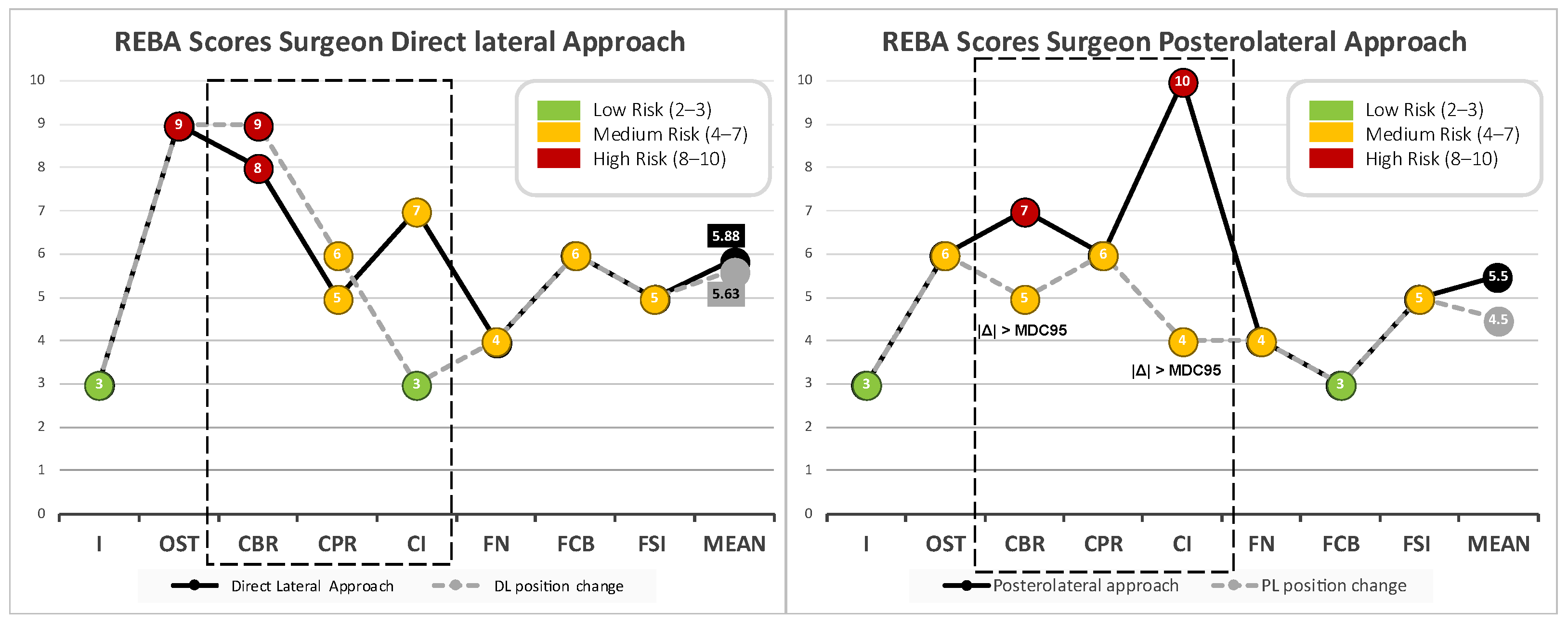
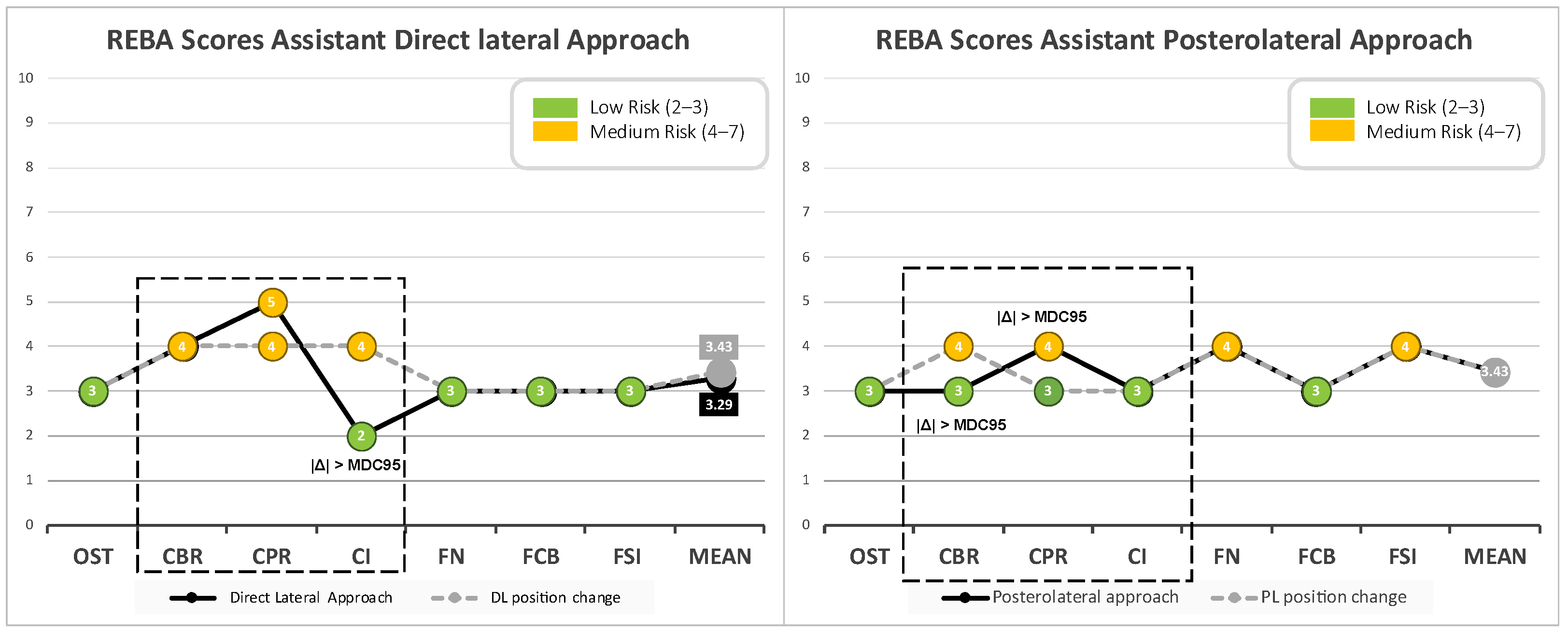
The surgeon’s overall REBA scores indicate a slightly lower ergonomic risk with the posterolateral approach (5.5) than with the lateral approach (5.88). Both approaches remain in the medium risk range, and require preventive measures. For the assistant, REBA scores were 3.29 in the lateral approach and 3.43 in the posterolateral approach, categorising these as low risk where preventive actions may be needed (
Table S2).
Stepwise analysis identified the highest surgeon REBA scores during acetabular cup impaction (10 points), anterior femoral osteotomy (9 points), and anterior bottom reaming (8 points) (
Figure 5). For the assistant, the most significant postural demand occurred during anterior perimeter reaming (5 points) (
Figure 6).
Introducing the position change modified the surgeon’s postural risk, with mean scores dropping from 5.88 to 5.63 in the lateral approach and from 5.5 to 4.5 in the posterolateral approach (
Table S2), exceeding the minimal detectable change (MDC95), suggesting a meaningful ergonomic improvement. Key decreases at specific steps were observed for cup impaction (posterolateral: Δ = −6; lateral: Δ = −4) and bottom reaming (posterolateral: Δ = −2), as shown in
Figure 5. Crucially, the position-swap successfully shifted the surgeon’s REBA action level. During cup impaction in the posterolateral (Moore) approach, the REBA score dropped from 10 (high risk) to 4 (medium risk), and in the direct lateral (Hardinge) approach, it dropped from 7 (medium risk) to 3 (low risk). In contrast, bottom reaming and perimeter reaming in the direct lateral (modified Hardinge) approach worsened by one point, but these changes were below the MDC95 threshold.
For the assistant, the position change did not affect the posterolateral approach score, which remained 3.43. In the lateral approach, the mean increased from 3.29 to 3.43 (
Table S2). Cup impaction increased by two points (Δ = +2, detectable). Peripheral reaming increased by one point, while bottom reaming remained stable (
Figure 6).
Finally, the reliability analysis of the REBA scores revealed that, in the surgeon, ICC values ranged from 0.90 to 0.97 for intra-observer test–retest and were almost perfect in the inter-observer comparison (0.96–1.00) (
Table S2). In the case of the assistant, the results were more heterogeneous: in some scenarios, there was no agreement (negative ICC in the direct lateral (modified Hardinge) approach with change), while in others, perfect agreement values were achieved (ICC = 1.0 in the posterolateral approach with change). Inter-observer reliability regarding the assistant ranged from 0.14 to 0.92 (
Table S2), indicating greater sensitivity of the method to variations in the assistant’s tasks.
4. Discussion
To our knowledge, this study is the first systematic assessment of the ergonomics of surgeons and assistants during total hip arthroplasty (THA), comparing the Hardinge direct lateral and Moore posterolateral approaches using the REBA method. Most previous studies on ergonomics in orthopaedic surgery have focused on the primary surgeon and various procedures [
3,
12,
13,
18,
19]; therefore, the results presented here provide novel insights into the dynamics of the surgical team in THA.
The findings indicate that Moore’s posterolateral approach is associated with lower postural risk for the surgeon, while Hardinge’s direct lateral approach is slightly more favourable for the assistant. However, the differences between the two approaches were small in both roles, and in all cases, the mean REBA scores were at levels that require or may require preventive action. This circumstance is consistent with the high prevalence of musculoskeletal disorders in orthopaedic surgeons, regardless of the procedure or approach used [
2,
3,
4,
5,
6,
20].
The analysis, conducted in a step-by-step manner, allowed us to identify those with the highest postural demands. For the surgeon, femoral osteotomy and acetabular work were the most demanding parts, especially the impaction of the acetabular component. For the assistant, the highest scores corresponded to the acetabular reaming phases. Our results are consistent with the findings previously published on total knee arthroplasty by Sánchez-Robles et al. [
20], where the phases of most significant ergonomic risk were the placement of the tibial and femoral cutting guides, the distal and anteroposterior bone cuts, and the implantation of the final tibial component. Although these are different procedures, both studies agree that the phases of greatest mechanical stress on the bone or implant have the highest REBA scores. In our case, these corresponded to the milling and impaction of the acetabular cup, whereas in the knee, they were in the cutting and component placement steps. This convergence reinforces the idea that the surgical moments that require the greatest application of force and sustained postures are the most critical from an ergonomic perspective and, therefore, those that would benefit most from corrective measures [
6].
A major contribution of this study is the evaluation of a simple workflow modification: swapping the surgeon and assistant positions during cup preparation. As detailed in the results, this intervention significantly reduced the surgeon’s ergonomic load, particularly during acetabular impaction. Because these improvements exceed MDC95, they confirm that the postural benefit reflects a real anatomical change rather than an artifact of random measurement variability.
More importantly, this reduction is not merely numerical but clinically actionable. The REBA score dictates the urgency of preventive measures required (ranging from 1: no action needed, to 15: immediate action). By successfully shifting the surgeon’s risk from a high to a medium action level in the posterolateral approach, and from a medium to a low action level in the direct lateral approach, the proposed modification objectively changes the clinical recommendations for the surgical team.
Regarding the assistant, the position swap did not worsen the mean risk in the posterolateral approach and produced only a minor, low-risk increase in the lateral approach. Overall, these findings support the position-swap as a promising, low-cost ergonomic strategy under standardized conditions, but they should not be over-generalized to all surgeons, assistants, patients, or live THA environments.
The reliability analysis revealed high consistency for the surgeon’s measurements, whereas the assistant’s REBA outcomes showed greater heterogeneity. It is critical to interpret this not as a lack of precision in the kinematic data, but as a mathematical artifact of the REBA scoring system. For the assistant, joint angles consistently clustered within a narrow, low-risk range. In such scenarios, minor angular variations (e.g., 1–2°) near a category threshold can trigger a shift in the ordinal score, disproportionately penalizing the ICC estimates despite excellent underlying agreement in raw angular measurements. This phenomenon, where a restricted score range leads to unstable reliability coefficients, is a known limitation of threshold-based observational tools. Furthermore, the inherent variability of the assistant’s tasks and the technical challenge of maintaining perfectly orthogonal camera views for all assistant positions likely contributed to this clustering effect. Consequently, the assistant’s REBA scores should be viewed as a reliable reflection of low-risk postural trends, with the observed heterogeneity being a function of discretisation and non-linear score aggregation rather than methodological weakness. Similar patterns have been reported in previous work by our group on knee arthroplasty [
20].
The study has limitations inherent to its in vitro design, including the participation of a single surgeon and assistant, the absence of real intraoperative conditions (e.g., soft tissue tension, bleeding, fatigue, anatomical variability, and patient BMI), 2D analysis, and the lack of consideration for accumulated fatigue or dynamic table adjustments. Standardizing these patient-specific variables in a bench-top Sawbones model was a necessary and intentional methodological choice to isolate the effect of the position-swap and maximize internal validity. At the same time, this design necessarily limits external validity and the generalizability of the findings to live surgery, other surgeon-assistant dyads, different anthropometric profiles, and variable operating-room environments. Therefore, our conclusions should be interpreted as strong evidence of a controlled postural effect rather than as definitive proof of the magnitude of benefit in every real-world THA setting. These limitations are partly mitigated by standardizing surgical steps, using real instruments, and using MDC95 to interpret relevant changes. In addition, REBA evaluates ergonomic risk rather than surgical accuracy. While the ergonomic benefits of the position-swap are supported by this controlled simulation, future clinical implementation should verify that this change in team positioning does not inadvertently compromise visualisation, workflow, or final implant orientation.
From a clinical perspective, the results suggest a potentially applicable modification to standard surgical practice rather than a universally generalizable recommendation. The described position change may be implemented easily and without additional equipment in surgical environments with an operating room setup similar to ours. In our standard operating room configuration, cables, power connections, and other potential obstacles are systematically arranged toward the patient’s head, which facilitates team repositioning and helps minimize the risk of contamination or disruption of the sterile field. In addition, other ergonomic measures could be incorporated to enhance its effect, such as dynamic adjustments to the table height [
21,
22,
23] adapted to each surgical step, the introduction of programmed micro-breaks to reduce accumulated fatigue, and the redesign of instruments (longer handles, optimised angulation) to minimise extreme joint deviations [
24]. Complementary measures, such as stretching and muscle-strengthening exercises to reduce fatigue and musculoskeletal pain, as well as structured ergonomics training and awareness programmes, may also be beneficial [
25,
26,
27]. These strategies, integrated into surgical planning, could help reduce the incidence of musculoskeletal disorders in the medium and long term. Furthermore, this study reinforces the usefulness of the REBA method as a preventive monitoring tool, aiming to promote safer and more sustainable surgical practices. In summary, this study not only identifies ergonomic differences between approaches but also provides a framework for implementing practical, low-cost measures in the operating theatre, while highlighting the potential of REBA as a training and preventive tool for occupational health in surgical teams.





 ,
,