Investigation and Discrimination of Hand-Deboned and Mechanically Separated Pork Meat Using Ultrasonic Velocity Measurements
 , ,
, ,
Abstract
1. Introduction
1.1. Background on the Current Status of Investigations into the Properties of Meat
1.2. Importance of the Investigation of Hand-Deboned (HD) and Mechanically Separated (MSM) Pork Meat
1.3. Existing Methods Used in the Investigation of Hand-Deboned (HD) and Mechanically Separated (MSM) Pork Meat
- 1)
- Inductively coupled mass spectroscopy [5];
- 2)
- Ion chromatography with conductivity detection [6];
- 3)
- Evaluation of radio-strontium levels [7];
- 4)
- X-ray micro-computed tomography [8];
- 5)
- Targeted liquid chromatography–mass spectroscopy (LC-MS/MS) [9];
- 6)
- Electron spin resonance [10].
- Complicated setup and operation procedures;
- Time-consuming measurements;
- Bulky equipment and highly complicated hardware;
- Tedious off-line sample preparation.
1.4. Existing Ultrasonic Techniques to Investigate the Properties of Meat
1.5. Basic Characteristics of the Proposed New Ultrasonic Method for Investigation and Discrimination of Hand-Deboned (HD) and Mechanically Separated (MSM) Pork Meat
- 1)
- Possibility for real-time measurements;
- 2)
- Fully automated measurement process;
- 3)
- Fully computerized portable instrumentation;
- 4)
- High accuracy due to implementation of advanced signal processing procedures;
- 5)
- Fast measurement process;
- 6)
- Relatively low cost and simplicity.
1.6. Main Objectives of the Present Study
- 1)
- Develop a new ultrasonic method for real-time measurements of raw meat materials and products employing advanced instrumentation and signal processing procedures that have emerged in the 21st century during the digital Fourth Industrial Revolution.
- 2)
- Discriminate between HD and MSM meat samples from ultrasonic measurements of longitudinal velocity c.
- 3)
- Correlate the content of main ingredients in the pork meat samples such as protein, fat, sodium and ash with measurements of ultrasonic longitudinal velocity c.
2. Materials and Methods
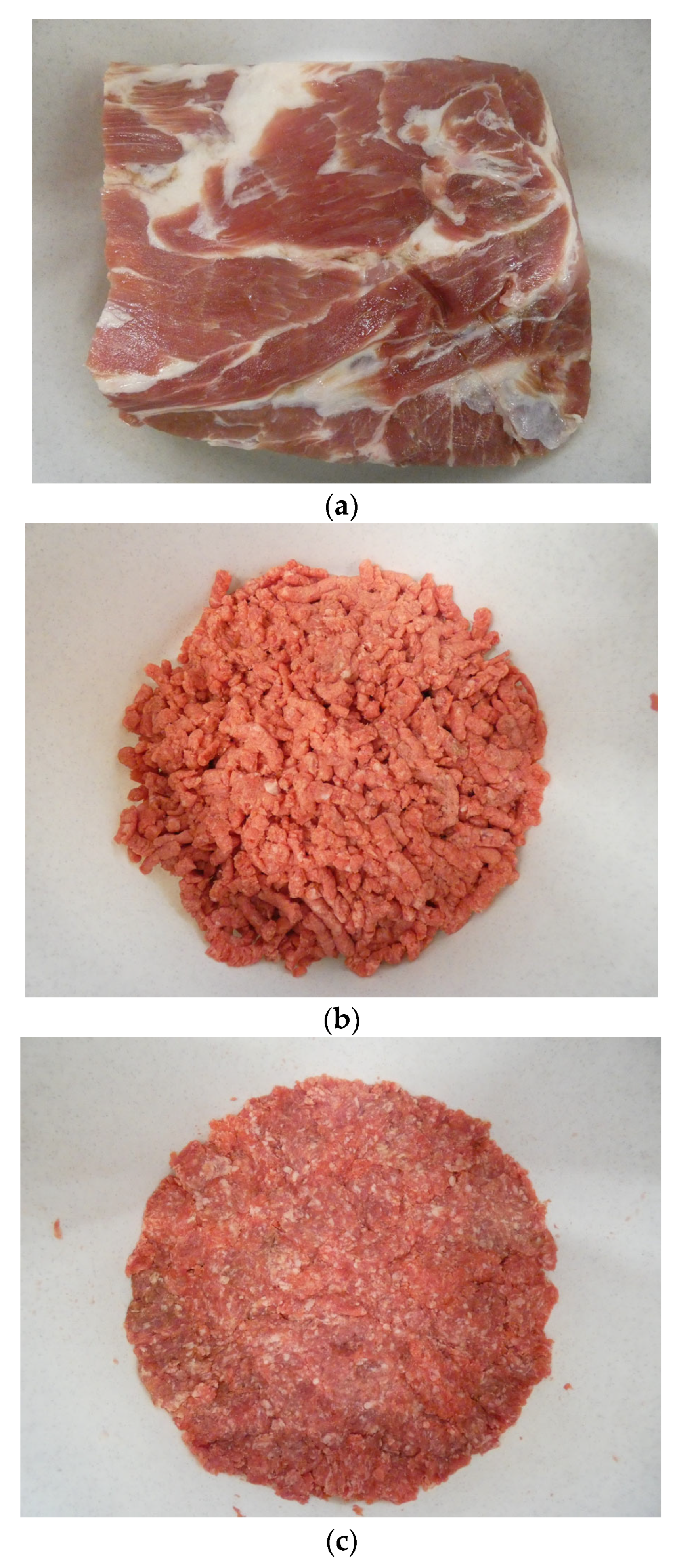
2.1. Investigated Pork Meat Samples
- 1)
- Low-pressure Sepamatic Sepa 1200 belt separator device (Overath, Germany).
- 2)
- High-pressure LIMA RM 600 S separator (Quimper, France).
- A)
- Minced HD pork loin;
- B)
- Low-pressure MSM meat from pork loin bones;
- C)
- High-pressure MSM meat from pork loin bones;
- D)
- Minced HD pork neck;
- E)
- Low-pressure MSM meat from pork neck bones;
- F)
- High-pressure MSM meat from pork neck bones.
2.2. Physicochemical Parameters of the Investigated Pork Meat Samples
- a)
- Density
- b)
- Calcium content
- c)
- Phosphorus content
- d)
- Sodium content
- e)
- Water content
- f)
- Protein content
- g)
- Fat content
- h)
- Collagen content
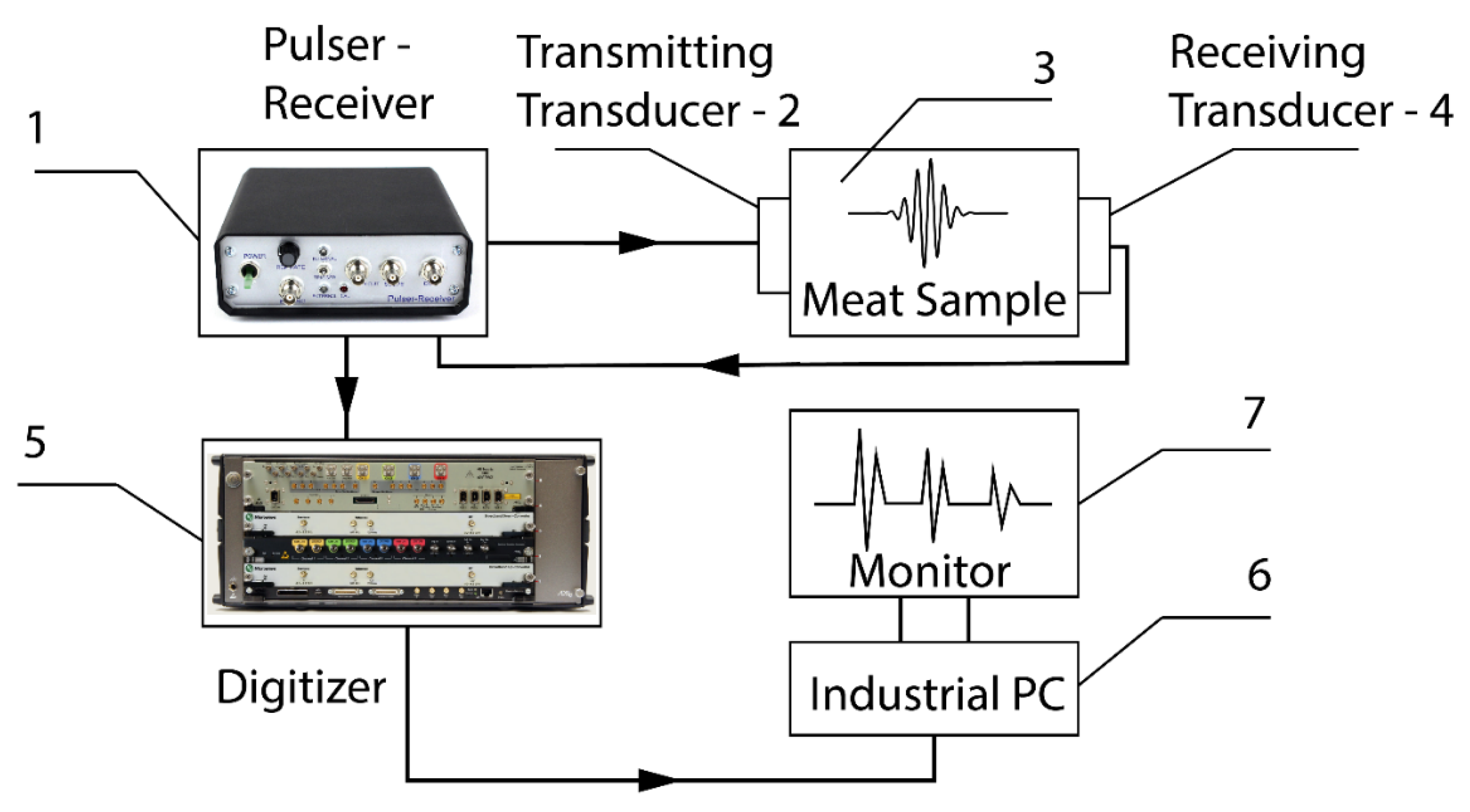
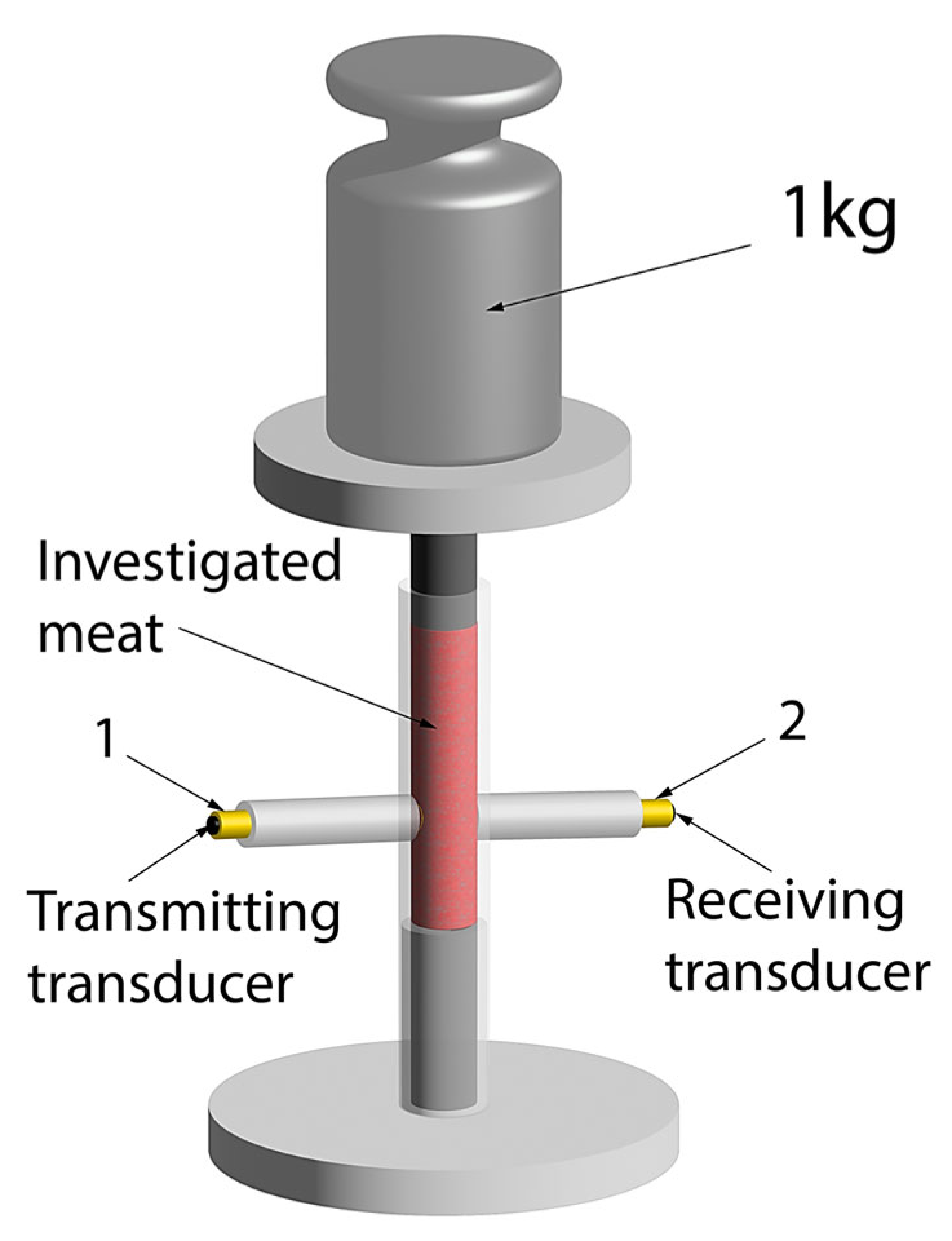
2.3. Ultrasonic Measurement System
2.3.1. Transducer Unit
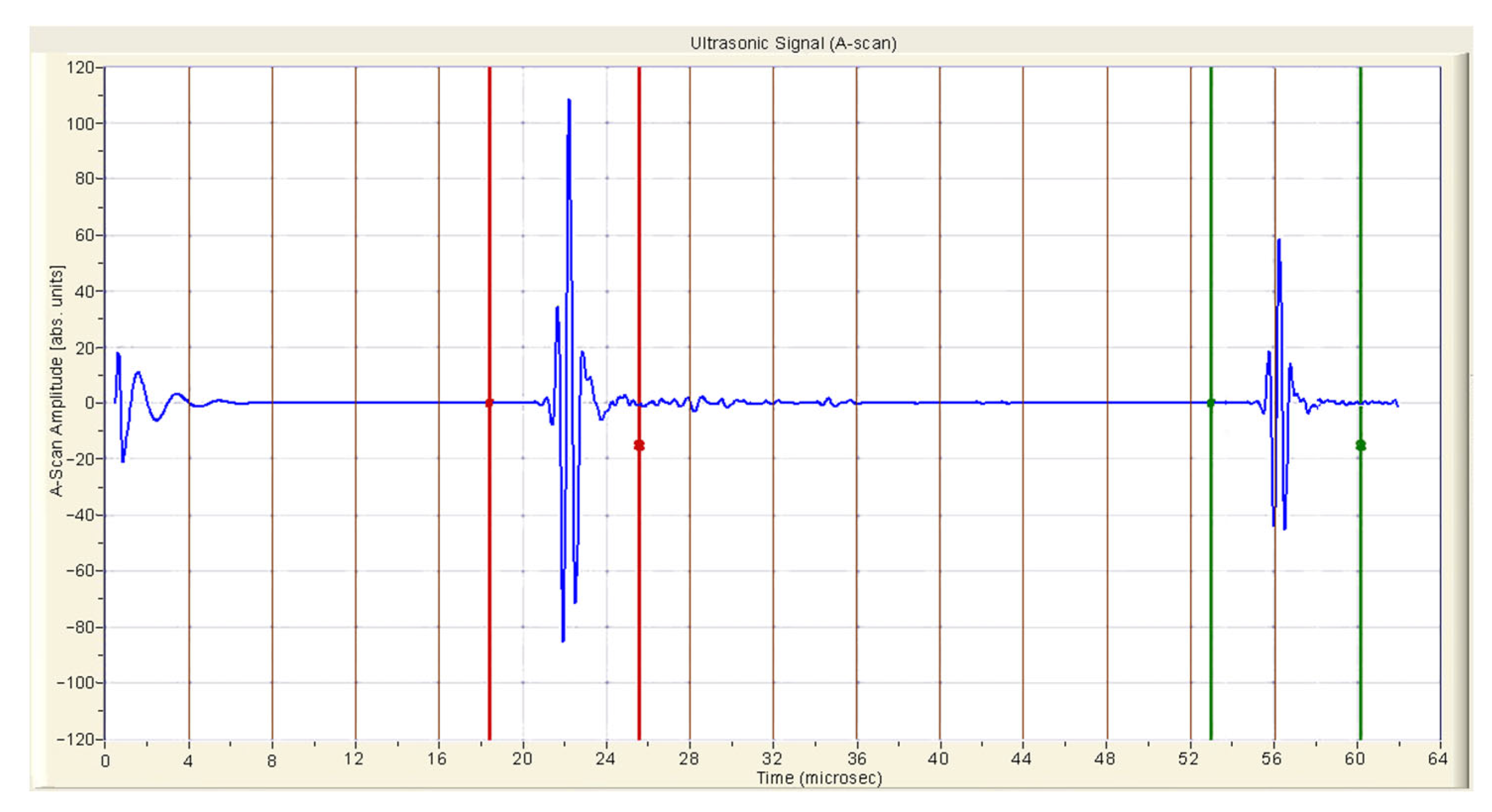
2.3.2. Determination of the Time of Flight (TOF) Between Two Selected Ultrasonic Impulses
2.4. Statistical Analysis
3. Experimental Results
3.1. Evaluation of Physicochemical Parameters of the Tested Pork Meat Samples
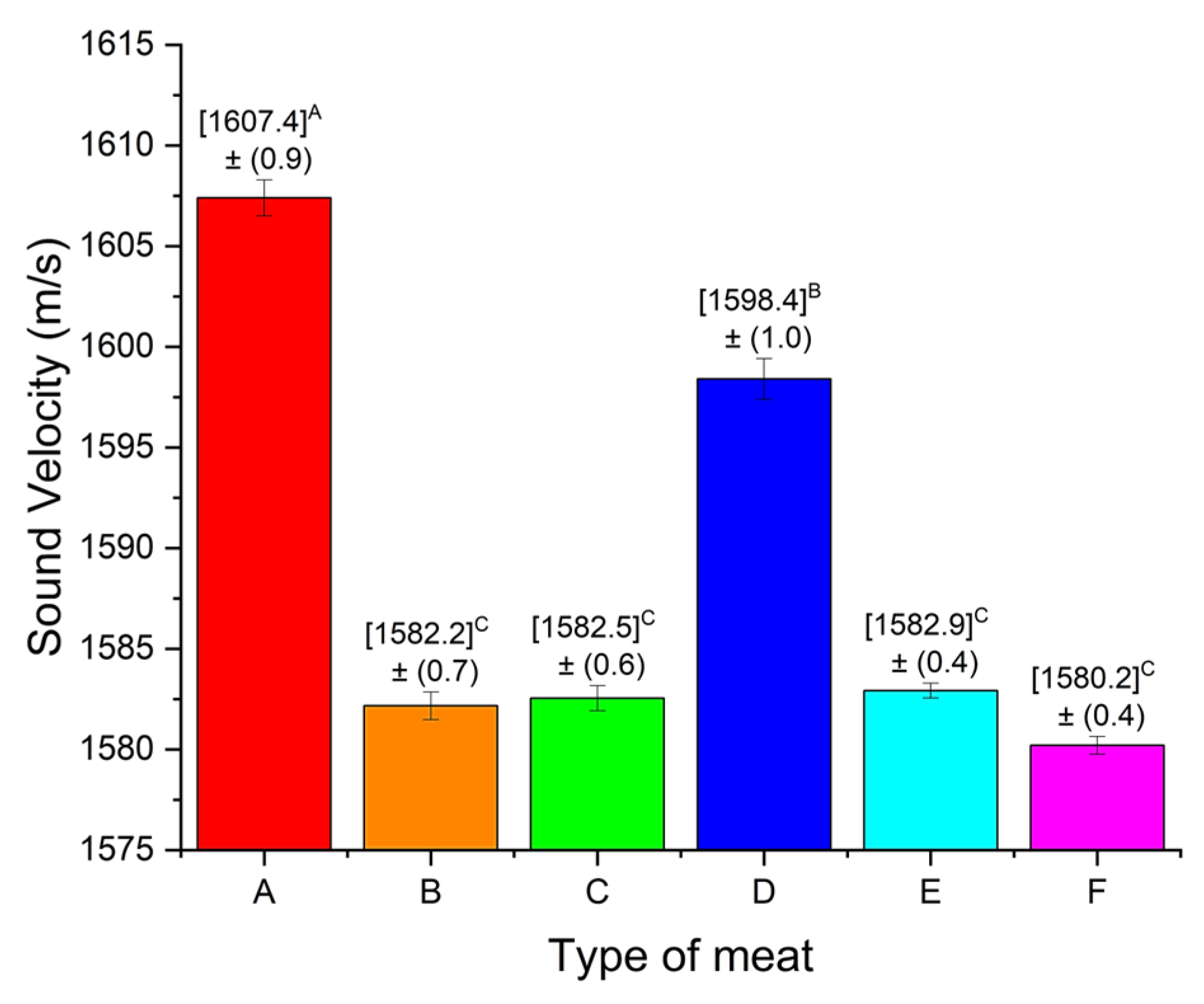
3.2. Measurements of the Speed of Sound c of Longitudinal Ultrasonic Waves
3.3. Density
3.4. Linear Regression Curves
4. Discussion
4.1. Elastic Properties of Meat (Young’s Modulus E)
4.2. Discrimination Between HD Meat and MSM Meat
4.3. Speed of Sound as a Function of Physicochemical Properties of Pork Meat
4.4. Advancement in Existing Ultrasonic Techniques for Investigation of Meat Properties
- 1)
- A lack of portability;
- 2)
- Slow operation;
- 3)
- Limited accuracy.
5. Conclusions
- The research hypothesis, presented in Section 1.2 of this paper, has been confirmed by the results of the measurements and analysis using the newly developed ultrasonic method and the designed instrumentation.
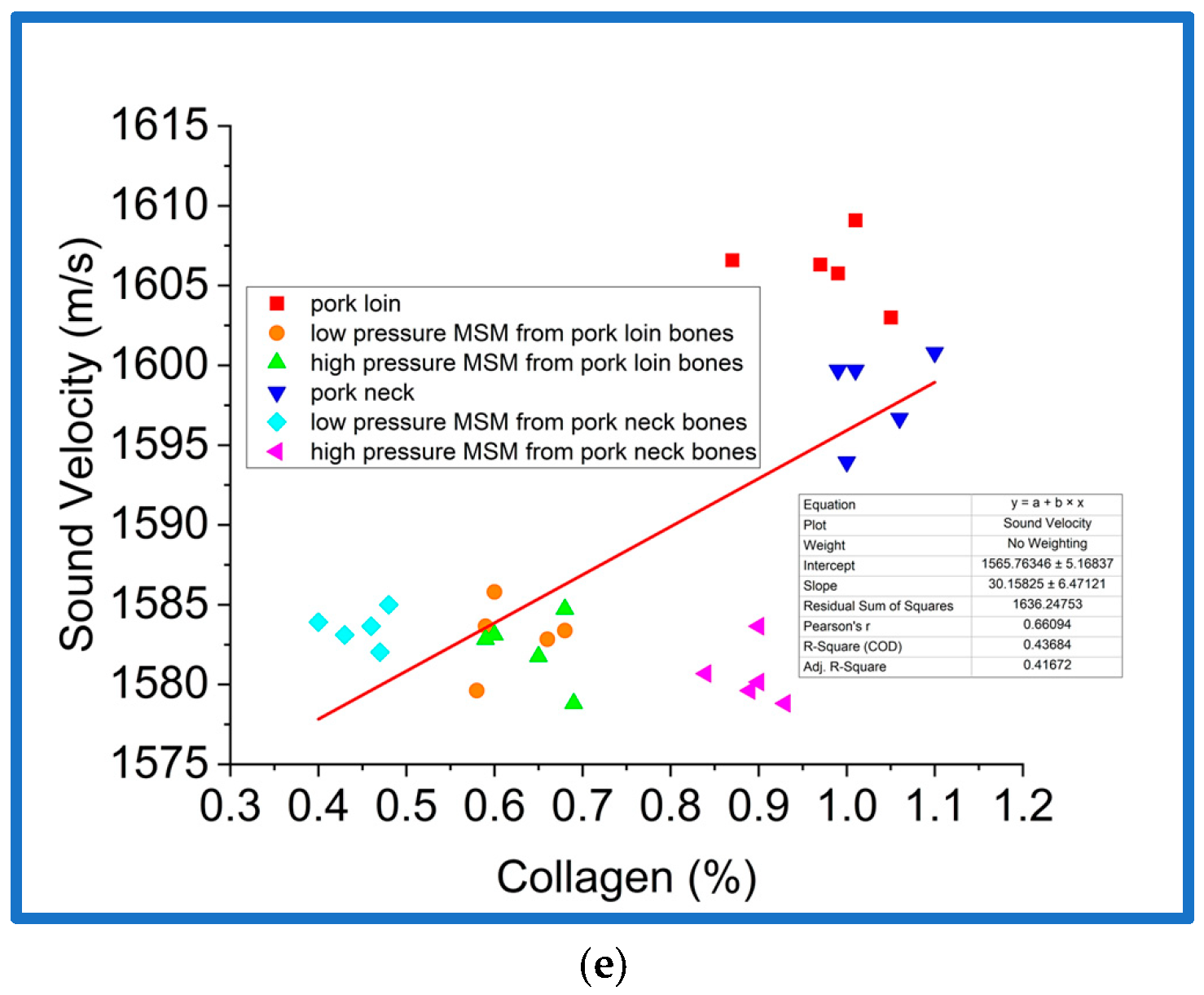
- From ultrasonic measurements of velocity c, it is possible to discriminate between hand-deboned (HD) and mechanically separated (MSM) meat samples as well as to quantify the content of main ingredients in the measured meat samples.
- The developed new ultrasonic method and digital instrumentation allow for fully automated, real-time measurements in the actual industrial environment.
- The development of the new method and instrumentation was possible due to the employment of tools enabled by the digital Fourth Industrial Revolution, such as fully computerized instrumentation, sophisticated signal processing procedures, network connectivity, graphical user interface (GUI), huge data storage and archiving capacity.
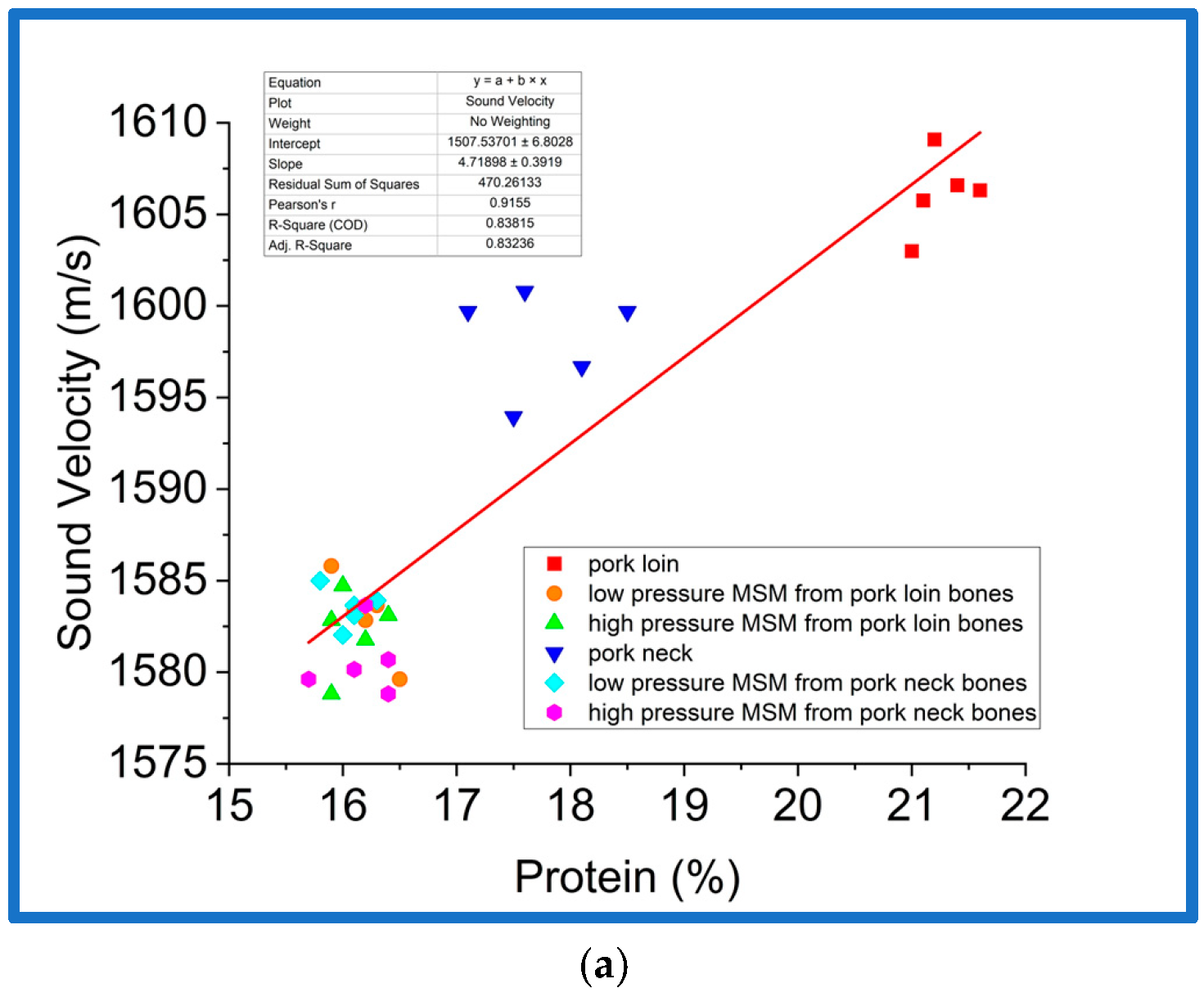
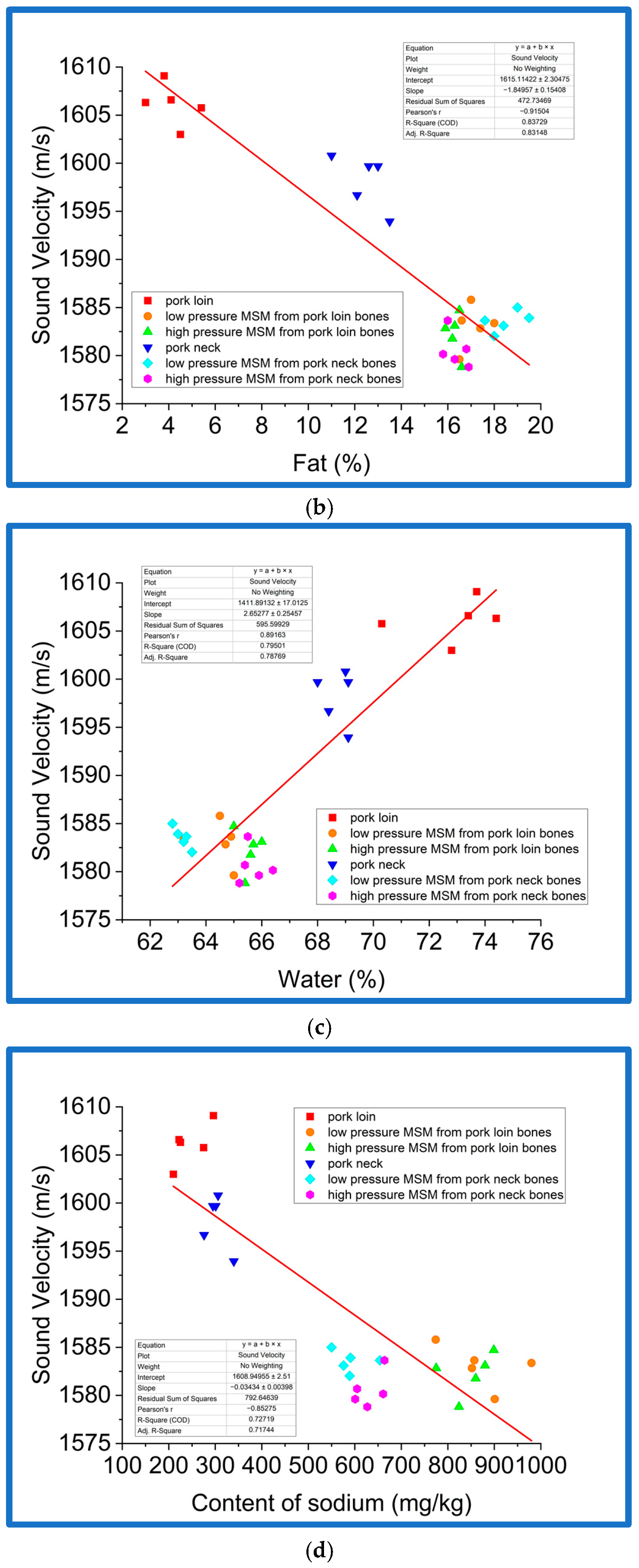
- A statistically significant correlation was found between the speed of sound c and the main ingredients of pork meat, such as (a) protein content ( and ), (b) fat content ( and ), (c) water content ( and ) and (d) sodium content (, ).
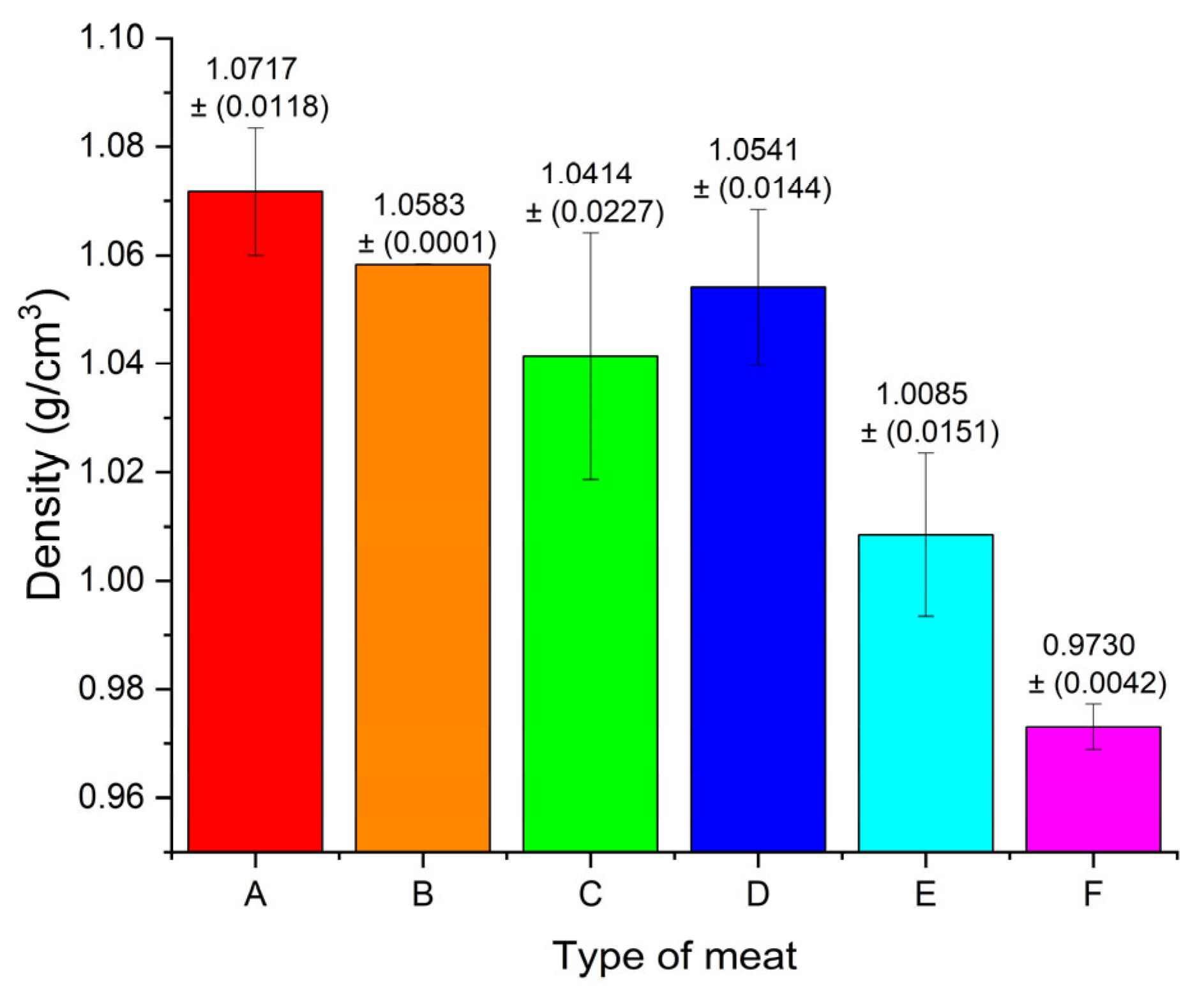
- The measured average density values do not exhibit significant statistical differences. Therefore, density measurements cannot be used to discriminate various types of pork meat.
Author Contributions
Funding
Institutional Review Board Statement
Informed Consent Statement
Data Availability Statement
Conflicts of Interest
Appendix A
Appendix A.1. Instrumentation of the New Ultrasonic System
Appendix A.2. Signal Processing Procedures Employed in the New Ultrasonic System
- Signal averaging;
- Cross-correlation;
- Fast Fourier Transform (FFT);
- Hilbert transform;
- Cubic-spline interpolation.
Appendix A.3. Software Development Tools Used in Development of the New Ultrasonic System
- Microsoft Visual Studio (version 8.0) software development environment;
- National Instruments Measurements Studio (version 8.1.2);
- Microsoft Foundation Class (MFC) Library (version 8.0);
- Microsoft Object-Oriented C++ programming (version 8.0) language.
References
- Giacomozzi, A.; Benedito, J.; Gómez Álvarez-Arenas, T.E.; Garcia-Perez, J.V. Air-coupled ultrasonic inspection of foods: A review. IEEE Ultrason. Ferroelectr. Freq. Control 2024, 4, 100–115. [Google Scholar] [CrossRef]
- Bowler, A.L.; Pound, M.P.; Watson, N.J. A review of ultrasonic sensing and machine learning methods to monitor industrial processes. Ultrasonics 2022, 124, 106776. [Google Scholar] [CrossRef]
- EFSA—European Food Safety Authority. Scientific Opinion on the public health risks related to mechanically separated meat (MSM) derived from poultry and swine. EFSA J. 2013, 11, 3137. [Google Scholar] [CrossRef]
- Llull, P.; Simal, S.; Benedito, J.; Rossell’o, C. Evaluation of textural properties of a meat-based product (sobrassada) using ultrasonic techniques. J. Food Eng. 2002, 53, 279–285. [Google Scholar] [CrossRef]
- Miedico, O.; Nardelli, V.; D’Amore, T.; Casale, M.; Oliveri, P.; Malegori, C.; Paglia, G.; Iammarino, M. Identification of mechanically separated meat using multivariate analysis of 43 trace elements detected by inductively coupled mass spectrometry: A validated approach. Food Chem. 2022, 397, 133842. [Google Scholar] [CrossRef] [PubMed]
- Iammarino, M.; Miedico, O.; Sangiorgi, E.; D’Amore, T.; Berardi, G.; Accettulli, R.; Dalipi, R.; Marchesani, G.; Chiaravalle, A.E. Identification of mechanically separated meat in meat products: A simplified analytical approach by ion chromatography with conductivity detection. Int. J. Food Sci. Technol. 2021, 56, 5305–5314. [Google Scholar] [CrossRef]
- Iammarino, M.; Miedico, O.; Petrella, A.; Mangiacotti, M.; Chiaravalle, A.E. Innovative approaches for identifying a mechanically separated meat: Evaluation of radiostrontium levels and development of a new tool of investigation. J. Food Sci. Technol. 2019, 57, 484–494. [Google Scholar] [CrossRef]
- Pospiech, M.; Zikmund, T.; Javůrková, Z.; Kaiser, J.; Tremlová, B. An innovative detection of mechanically separated meat in meat products. Food Anal. Methods 2019, 12, 652–657. [Google Scholar] [CrossRef]
- Wilhelm, C.; Hofsommer, M.; Fischbach, N.; Wittke, S. Detection of Mechanically Separated Meat from Pork in Meat-Containing Foods by Targeted LC-MS/MS Analysis. Foods 2025, 14, 1317. [Google Scholar] [CrossRef]
- Tomaiuolo, M.; Chiaravalle, A.E.; Mangiacotti, M.; Petrella, A.; Di Taranto, A.; Iammarino, M. Innovative techniques for identifying a mechanically separated meat: Sample irradiation coupled to electronic spin resonance. Eur. Food Res. Technol. 2019, 245, 2331–2341. [Google Scholar] [CrossRef]
- Koch, T.; Lakshmanan, S.; Brand, S.; Wicke, M.; Raum, K.; Mörlein, D. Ultrasound velocity and attenuation of porcine soft tissues with respect to structure and composition: I. Muscle. Meat Sci. 2011, 88, 51–58. [Google Scholar] [CrossRef]
- Koch, T.; Lakshmanan, S.; Brand, S.; Wicke, M.; Raum, K.; Mörlein, D. Ultrasound velocity and attenuation of porcine soft tissues with respect to structure and composition: II. Skin and backfat. Meat Sci. 2011, 88, 67–74. [Google Scholar] [CrossRef]
- Fariñas, M.D.; Sanchez-Jimenez, V.S.; Benedito, J.; Garcia-Perez, J.V. Monitoring physicochemical modifications in beef steaks during dry salting using contact and non-contact ultrasonic techniques. Meat Sci. 2023, 204, 109275. [Google Scholar] [CrossRef]
- Muñoz-Osorio, G.A.; Tırınk, C.; Thobela Louis Tyasi, T.L.; Ramirez-Bautista, M.A.; Cruz-Tamayo, A.A.; Dzib-Cauich, D.A.; Garcia-Herrera, R.A.; Chay-Canul, A.J. Using fat thickness and longissimus thoracis traits real-time ultrasound measurements in Black Belly ewe lambs to predict carcass tissue composition through multiresponse multivariate adaptive regression splines algorithm. Meat Sci. 2024, 207, 109369. [Google Scholar] [CrossRef]
- Marimuthu, J.; Loudon, K.M.W.; Smith, L.J.; Gardner, G.E. Comparison of ultra wide band microwave system and ultrasound in live cattle to predict beef carcase subcutaneous fatness. Meat Sci. 2025, 220, 109694. [Google Scholar] [CrossRef]
- Mishra, G.; Sahnib, P.; Pandiselvam, R.; Pandad, B.K.; Bhatie, D.; Mahantif, N.K.; Kothakotag, A.; Kumarh, M.; Cozzolino, D. Emerging Non-destructive Techniques to Quantify the Textural Properties of Food. A state of the art review. J. Texture Stud. 2023, 54, 173–205. [Google Scholar] [CrossRef] [PubMed]
- Diaz-Almanza, S.; García-Galicia, I.A.; Rentería-Monterrubio, A.L.; Reyes-Villagrana, R.A. Analysis of the simultaneous measurement of acoustic phase velocity and stress-strain relationship in beef: An approach to Young’s modulus. Appl. Acoust. 2021, 182, 108237. [Google Scholar] [CrossRef]
- Ludwiczak, A.; Stanisz, M.; Lisiak, D.; Janiszewski, P.; Bykowska, M.; Składanowska, J.; Ślósarz, P. Novel ultrasound approach for measuring marbling in pork. Meat Sci. 2017, 131, 176–182. [Google Scholar] [CrossRef] [PubMed]
- Hassoun, A.; Jagtap, S.; Trollman, H.; Garcia-Garcia, G.; Abdullah, N.A.; Goksen, G.; Bader, F.; Ozogul, F.; Barba, F.J.; Cropotova, J.; et al. Food processing 4.0: Current and future developments spurred by the fourth industrial revolution. Food Control 2023, 145, 109507. [Google Scholar] [CrossRef]
- Kiełczyński, P.; Ptasznik, S.; Szalewski, M.; Balcerzak, A.; Wieja, K.; Rostocki, A.J. Application of Ultrasonic Methods for Evaluation of High-Pressure Physicochemical Parameters of Liquids. Arch. Acoust. 2019, 44, 329–337. [Google Scholar] [CrossRef]
- Kiełczyński, P.; Szalewski, M.; Balcerzak, A.; Wieja, K.; Rostocki, A.J.; Siegoczyński, R.M. Ultrasonic evaluation of thermodynamic parameters of liquids under high pressure. IEEE Trans. Ultrason. Ferroelectr. Freq. Control 2015, 62, 1122–1131. [Google Scholar] [CrossRef] [PubMed]
- Association of the Official Analytical Chemists. Official Methods Analysis, 18th ed.; Association of the Official Analytical Chemists: Gaithersburg, MD, USA, 2006. [Google Scholar]
- Kiełczyński, P.; Szymański, P.; Szalewski, M.; Wieja, K.; Balcerzak, A.; Ptasznik, S. Application of Density Measurements for Discrimination and Evaluation of Chemical Composition of Different Types of Mechanically Separated Meat (MSM). Molecules 2022, 27, 7600. [Google Scholar] [CrossRef]
- PN-ISO 1442:2000; Meat and Meat Products—Determination of Moisture Content (Reference Method). Polish Committee for Standardization: Warsaw, Poland, 2000.
- PN-ISO 1444:2000; Meat and Meat Products—Determination of Free Fat Content. Polish Committee for Standardization: Warsaw, Poland, 2000.
- PN-ISO 3496:2000; Meat and Meat Products—Determination of Hydroxyproline Content. Polish Committee for Standardization: Warsaw, Poland, 2000.
- Viola, F.; Walker, W.F. A comparison of the performance of time-delays estimators in medical ultrasound. IEEE Trans. Ultrason. Ferroelectr. Freq. Control 2003, 50, 392–401. [Google Scholar] [CrossRef]
- Arfken, G.B.; Weber, H.J. Mathematical Methods for Physicists, 6th ed.; Elsevier: Amsterdam, The Netherlands, 2005. [Google Scholar]
- Wieja, K.; Kiełczyński, P.; Szymański, P.; Szalewski, M.; Balcerzak, A.; Ptasznik, S. Identification and investigation of mechanically separated meat (MSM) with an innovative ultrasonic method. Food Chem. 2021, 348, 128907. [Google Scholar] [CrossRef]
- Lepetit, J. Collagen contribution to meat toughness: Theoretical aspects. Meat Sci. 2008, 80, 960–967. [Google Scholar] [CrossRef] [PubMed]
- Nowak, K.M.; Markowski, M.; Daszkiewicz, T. Ultrasonic determination of mechanical properties of meat products. J. Food Eng. 2015, 147, 49–55. [Google Scholar] [CrossRef]
- Garcia-Perez, J.V.; De Prados, M.; Benedito, J. Characterization of Pork Meat Products using Ultrasound. In Ultrasound in Food Processing: Recent Advances; Villamiel, L., Montilla, A., Garcia-Perez, J.V., Carcel, J.A., Benedito, J., Eds.; Wiley-Blackwell: Chichester, UK, 2017; pp. 86–114. [Google Scholar]
- Sifre, L.; André, B.; Coton, J.P. Development of a system to quantify muscle fibre destructuration. Meat Sci. 2009, 81, 515–522. [Google Scholar] [CrossRef]
- Contreras, M.; Benedito, J.; Garcia-Perez, J.V. Ultrasonic characterization of salt, moisture and texture modifications in dry-cured ham during post-salting. Meat Sci. 2021, 172, 108356. [Google Scholar] [CrossRef]





| Type of Meat | Content of | ||||||||
|---|---|---|---|---|---|---|---|---|---|
| Calcium [mg/kg] | Sodium [mg/kg] | Phosphorus P2O5 [%] | Water [%] | Protein [%] | Fat [%] | Collagen [%] | Ash [%] | Density [g/cm3] | |
| pork loin | 8 | 296 | 0.47 | 73.7 | 21.2 | 3.8 | 1.01 | 1.0 | 1.116 |
| 7 | 222 | 0.48 | 73.4 | 21.4 | 4.1 | 0.87 | 1.0 | 1.076 | |
| 8 | 225 | 0.47 | 74.4 | 21.6 | 3.0 | 0.97 | 1.0 | 1.055 | |
| 8 | 275 | 0.53 | 70.3 | 21.1 | 5.4 | 0.99 | 1.0 | 1.051 | |
| 6 | 210 | 0.40 | 72.8 | 21.0 | 4.5 | 1.05 | 1.0 | 1.061 | |
| mean | [7.4] A ± (0.4) | [245.6] A ± (16.8) | [0.47] A,B ± (0.02) | [72.9] A ± (0.7) | [21.3] A ± (0.1) | [4.2] A ± (0.4) | [0.98] A,B ± (0.03) | [1.0] A ± (0.1) | [1.072] ± (0.012) |
| low-pressure MSM from pork loin bones | 378 | 774 | 0.57 | 64.5 | 15.9 | 17.0 | 0.60 | 1.2 | 1.058 |
| 332 | 852 | 0.50 | 64.7 | 16.2 | 17.4 | 0.66 | 1.2 | 1.059 | |
| 390 | 857 | 0.49 | 64.9 | 16.3 | 16.6 | 0.59 | 1.2 | 1.059 | |
| 310 | 980 | 0.51 | 63.2 | 16.1 | 18.0 | 0.68 | 1.2 | 1.058 | |
| 430 | 901 | 0.43 | 65.0 | 16.5 | 16.5 | 0.58 | 1.2 | 1.058 | |
| mean | [368.0] B ± (21.3) | [872.8] B ± (33.7) | [0.50] B,C ± (0.02) | [64.5] B,C ± (0.3) | [16.2] B ± (0.1) | [17.1] B ± (0.3) | [0.62] C ± (0.02) | [1.2] B ± (0.1) | [1.058] ± (0.001) |
| high-pressure MSM frompork loin bones | 379 | 824 | 0.45 | 65.4 | 15.9 | 16.6 | 0.69 | 1.2 | 1.106 |
| 364 | 860 | 0.50 | 65.6 | 16.2 | 16.2 | 0.65 | 1.2 | 1.083 | |
| 292 | 775 | 0.48 | 65.7 | 15.9 | 15.9 | 0.59 | 1.1 | 1.007 | |
| 260 | 899 | 0.41 | 65.0 | 16.0 | 16.5 | 0.68 | 1.2 | 1.025 | |
| 399 | 880 | 0.47 | 66.0 | 16.4 | 16.3 | 0.60 | 1.2 | 0.987 | |
| mean | [338.8] B ± (26.7) | [847.6] B ± (22.0) | [0.46] A,B ± (0.02) | [65.5] B ± (0.2) | [16.1] B ± (0.1) | [16.3] B ± (0.1) | [0.64] C ± (0.02) | [1.2] B ± (0.1) | [1.041] ± (0.023) |
| pork neck | 11 | 306 | 0.43 | 69.0 | 17.6 | 11.0 | 1.10 | 1.0 | 1.080 |
| 8 | 276 | 0.43 | 68.4 | 18.1 | 12.1 | 1.06 | 0.9 | 1.096 | |
| 8 | 295 | 0.42 | 69.1 | 18.5 | 12.6 | 0.99 | 0.9 | 1.036 | |
| 10 | 340 | 0.41 | 69.1 | 17.5 | 13.5 | 1.00 | 0.9 | 1.036 | |
| 9 | 301 | 0.40 | 68.0 | 17.1 | 13.0 | 1.01 | 0.9 | 1.022 | |
| mean | [9.2] A ± (0.6) | [303.6] A ± (10.4) | [0.42] A ± (0.01) | [68.7] D ± (0.2) | [17.8] C ± (0.2) | [12.4] C ± (0.4) | [1.03] B ± (0.02) | [0.9] C ± (0.1) | [1.054] ± (0.014) |
| low-pressure MSM from pork neck bones | 361 | 654 | 0.53 | 63.3 | 16.1 | 17.6 | 0.46 | 1.2 | 1.060 |
| 384 | 576 | 0.59 | 63.2 | 16.1 | 18.4 | 0.43 | 1.2 | 1.020 | |
| 356 | 589 | 0.54 | 63.5 | 16.0 | 18.0 | 0.47 | 1.2 | 0.992 | |
| 330 | 550 | 0.61 | 62.8 | 15.8 | 19.0 | 0.48 | 1.2 | 0.998 | |
| 389 | 591 | 0.53 | 63.0 | 16.3 | 19.5 | 0.40 | 1.2 | 0.972 | |
| mean | [364.0] B ± (10.6) | [592.0] C ± (17.1) | [0.56] C ± (0.02) | [63.2] C ± (0.1) | [16.1] B ± (0.1) | [18.5] D ± (0.3) | [0.45] D ± (0.01) | [1.2] B ± (0.1) | [1.008] ± (0.015) |
| high-pressure MSM from pork neck bones | 240 | 664 | 0.50 | 65.5 | 16.2 | 16.0 | 0.90 | 1.1 | 0.974 |
| 248 | 605 | 0.48 | 65.4 | 16.4 | 16.8 | 0.84 | 1.1 | 0.957 | |
| 282 | 627 | 0.47 | 65.2 | 16.4 | 16.9 | 0.93 | 1.1 | 0.978 | |
| 255 | 661 | 0.44 | 66.4 | 16.1 | 15.8 | 0.90 | 1.1 | 0.977 | |
| 286 | 601 | 0.51 | 65.9 | 15.7 | 16.3 | 0.89 | 1.1 | 0.980 | |
| mean ± standard error | [262.2] C ± (9.2) | [631.6] C ± (13.4) | [0.48] A,B ± (0.01) | [65.7] B ± (0.2) | [16.2] B ± (0.1) | [16.4] B ± (0.2) | [0.89] A ± (0.01) | [1.1] D ± (0.1) | [0.973] ± (0.004) |
| Chemical Properties of Meat | Linear Regression Equation | -Value | |
|---|---|---|---|
| Protein content | y = 4.7200 x + 1507.54 | 1.37 × 10⁻¹² | 0.9155 |
| Fat content | y = −1.8496 x + 1615.11 | 1.48 × 10⁻¹² | −0.9150 |
| Water content | y = 2.6528 x + 1411.89 | 3.85 × 10⁻¹¹ | 0.8916 |
| Sodium content | y =−0.0343 x + 1608.95 | 2.19 × 10⁻¹¹ | −0.8528 |
Disclaimer/Publisher’s Note: The statements, opinions and data contained in all publications are solely those of the individual author(s) and contributor(s) and not of MDPI and/or the editor(s). MDPI and/or the editor(s) disclaim responsibility for any injury to people or property resulting from any ideas, methods, instructions or products referred to in the content. |
© 2026 by the authors. Licensee MDPI, Basel, Switzerland. This article is an open access article distributed under the terms and conditions of the Creative Commons Attribution (CC BY) license.
Share and Cite
Kiełczyński, P.; Szymański, P.; Wieja, K.; Balcerzak, A.; Ptasznik, S. Investigation and Discrimination of Hand-Deboned and Mechanically Separated Pork Meat Using Ultrasonic Velocity Measurements. Appl. Sci. 2026, 16, 3401. https://doi.org/10.3390/app16073401
Kiełczyński P, Szymański P, Wieja K, Balcerzak A, Ptasznik S. Investigation and Discrimination of Hand-Deboned and Mechanically Separated Pork Meat Using Ultrasonic Velocity Measurements. Applied Sciences. 2026; 16(7):3401. https://doi.org/10.3390/app16073401
Chicago/Turabian StyleKiełczyński, Piotr, Piotr Szymański, Krzysztof Wieja, Andrzej Balcerzak, and Stanisław Ptasznik. 2026. "Investigation and Discrimination of Hand-Deboned and Mechanically Separated Pork Meat Using Ultrasonic Velocity Measurements" Applied Sciences 16, no. 7: 3401. https://doi.org/10.3390/app16073401
APA StyleKiełczyński, P., Szymański, P., Wieja, K., Balcerzak, A., & Ptasznik, S. (2026). Investigation and Discrimination of Hand-Deboned and Mechanically Separated Pork Meat Using Ultrasonic Velocity Measurements. Applied Sciences, 16(7), 3401. https://doi.org/10.3390/app16073401