3.1. Modal Characteristics of the ABH Isolators
From
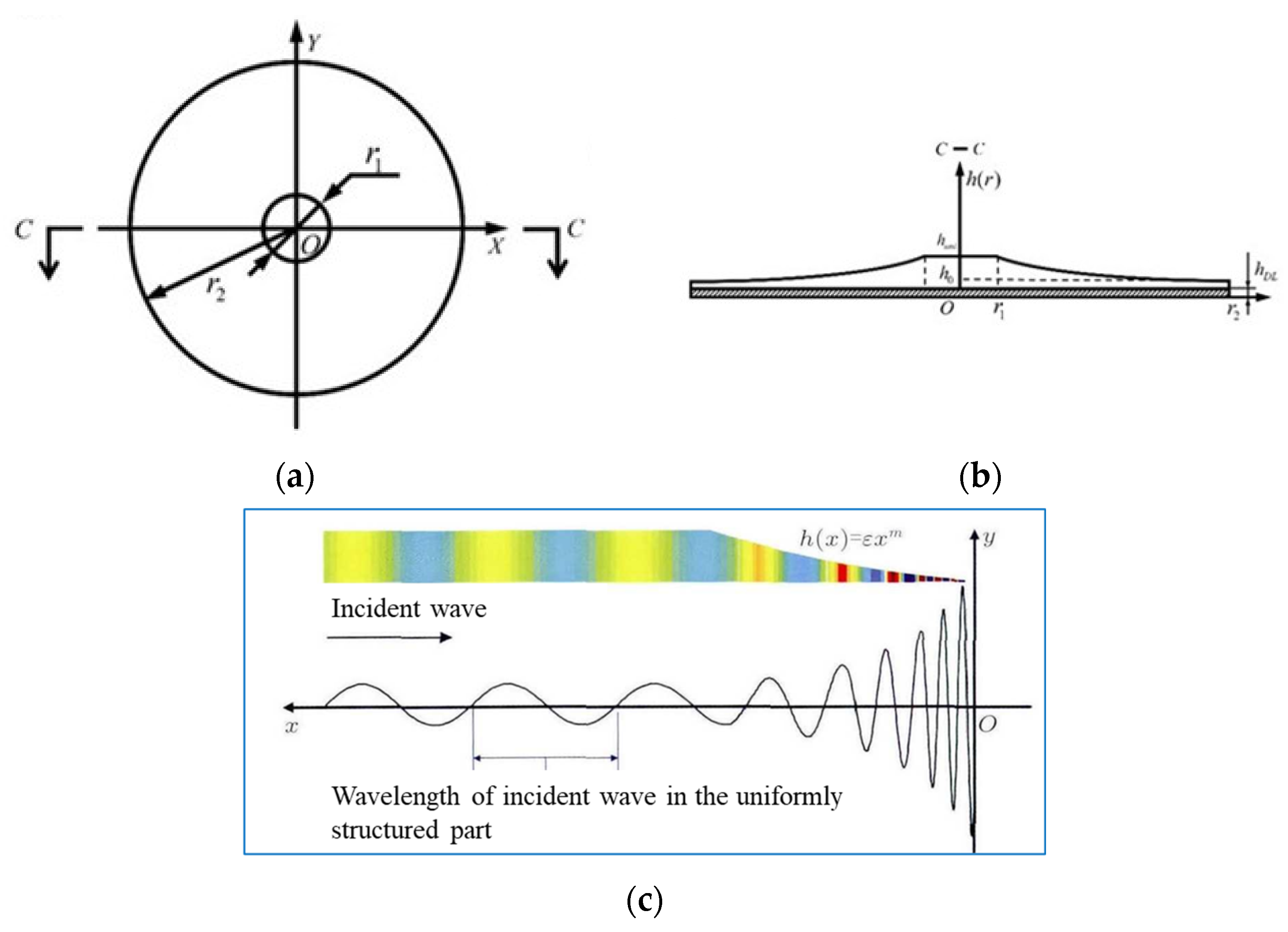
Figure 2 the first twenty natural frequencies of the ABH disk-like structure (
LABH = 95 mm,
huni = 5 mm,
h0 = 0.5 mm, and elastic stiffness
kk = 6 × 10
8 N/m) were calculated, with the results listed in
Table 1. The first five natural frequencies are 1.81 Hz, 2.09 Hz, 3.33 Hz, 8.07 Hz, and 9.11 Hz, respectively—these are ultra-low frequency modes with over 60% rotational deformation around the
x/
y axes. Per
Section 2.1, in Kirchhoff’s thin plate theory, rotational modes contribute minimally to vertical vibration (the core demand for the marine equipment), so they are excluded from the subsequent analysis.
The physical significance of the
MPF is the vibration contribution coefficient of a certain mode to a specific degree of freedom, and its value is calculated by the normalization of the inner product of the modal displacement vector and the excitation force vector. Therefore, the
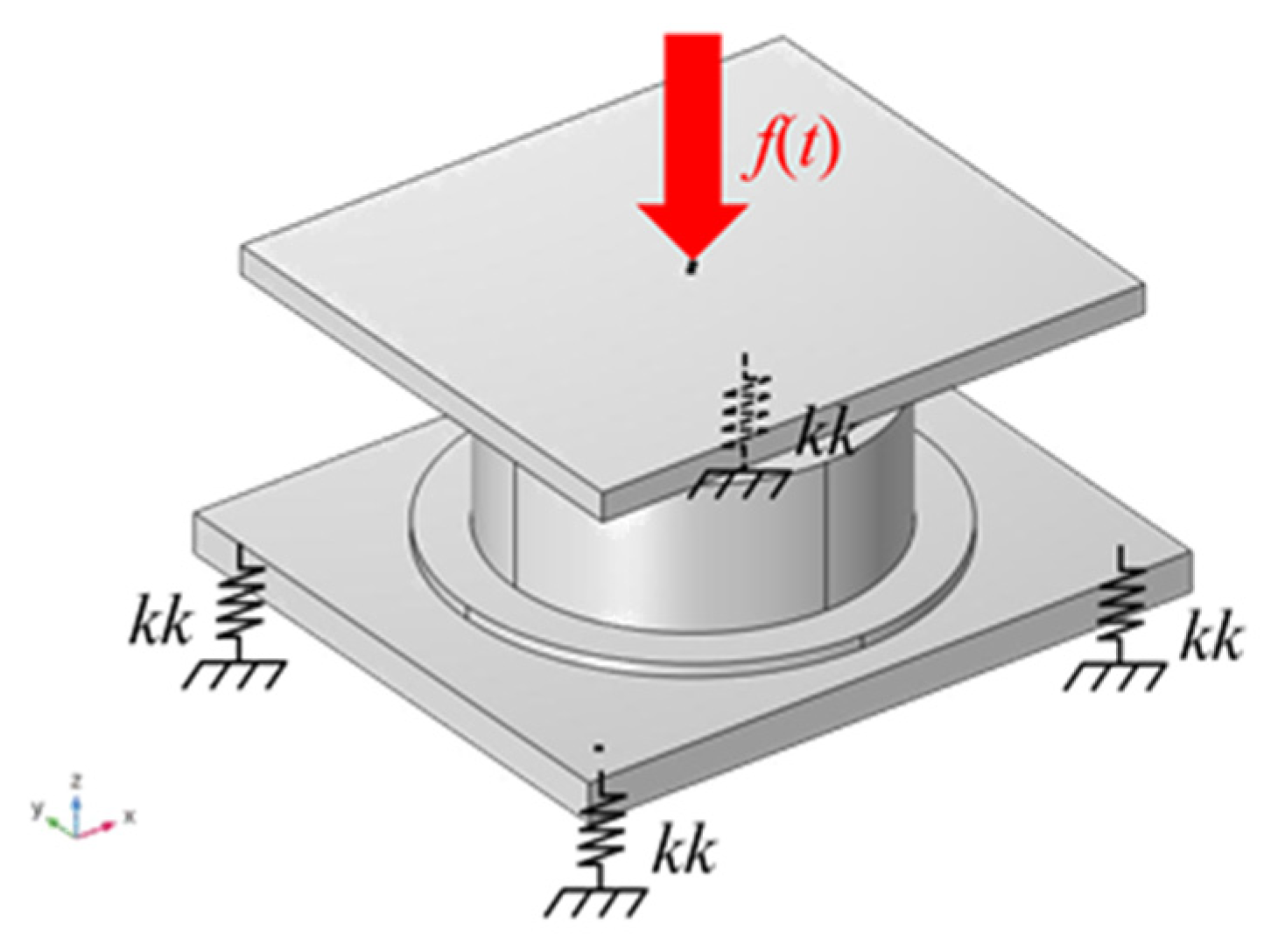
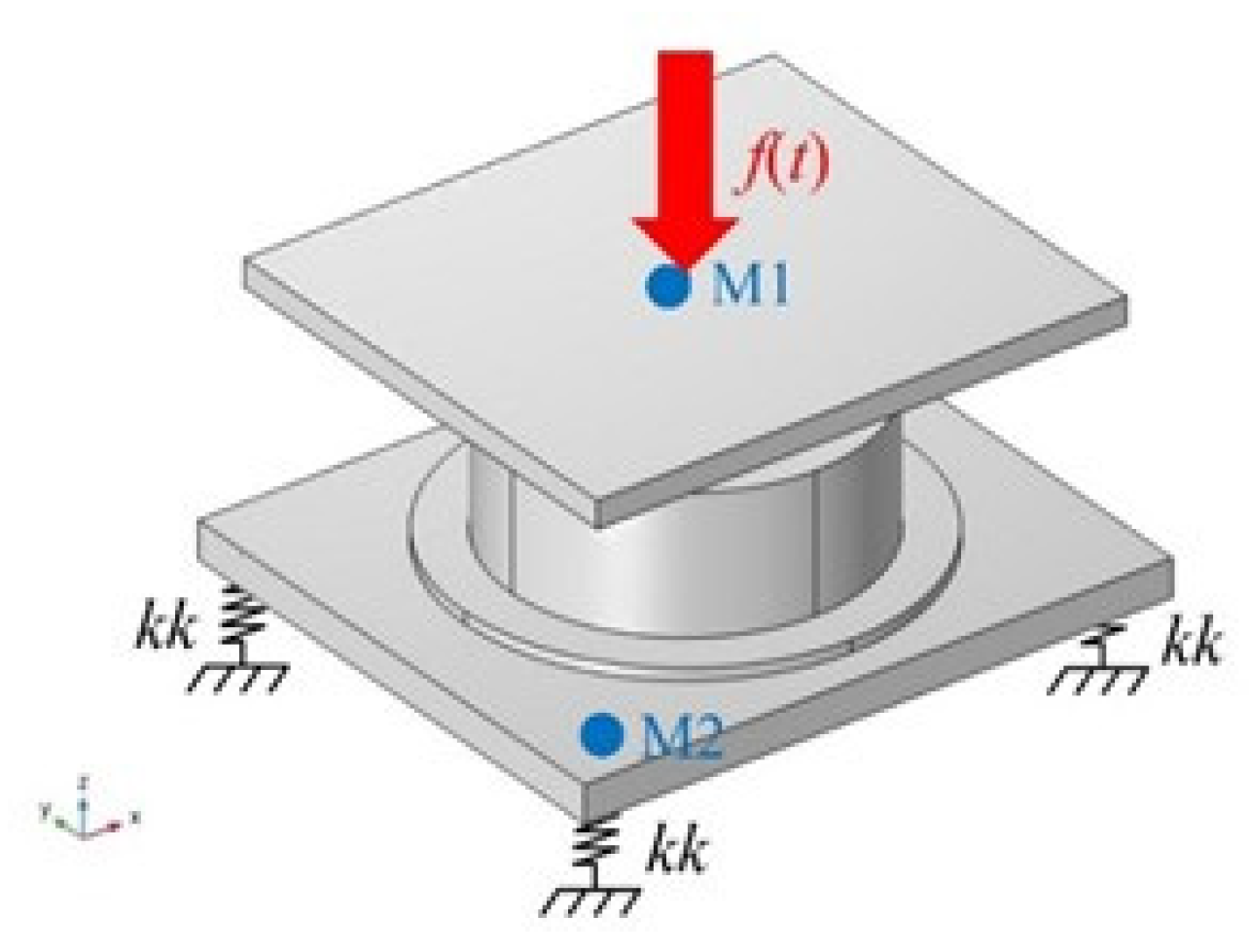
MPFs of the target orders within 10 Hz to 315 Hz can be evaluated easily based on the following model shown in
Figure 3.
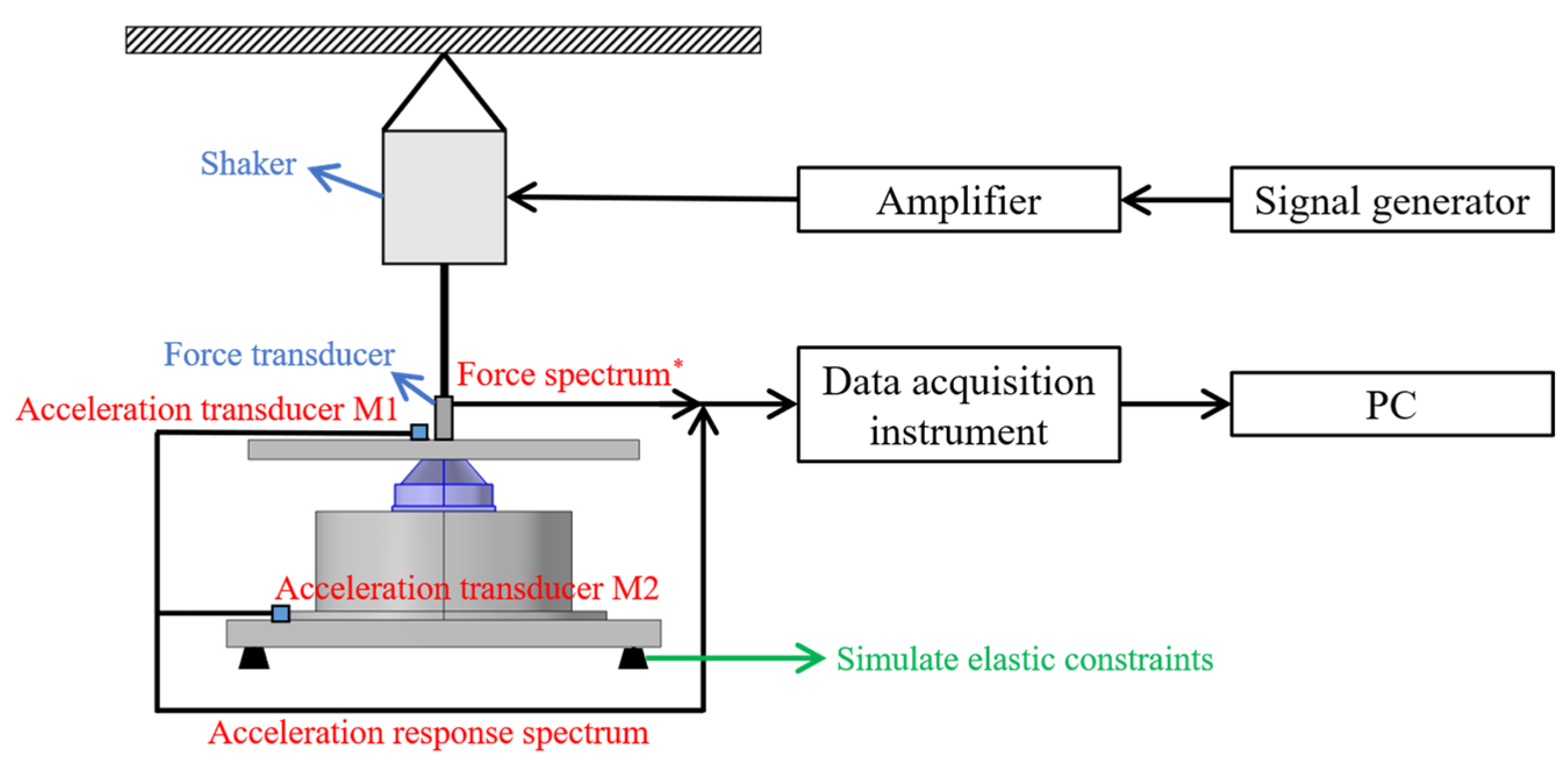
In this model, f(t) drives the isolator on (0 m, 0 m, and 0.191 m), where the amplitude is 1 N from 1 Hz to 500 Hz; kk = 6 × 10⁸ N/m is the elastic connection stiffness between the entire isolator system and the rigid ground.
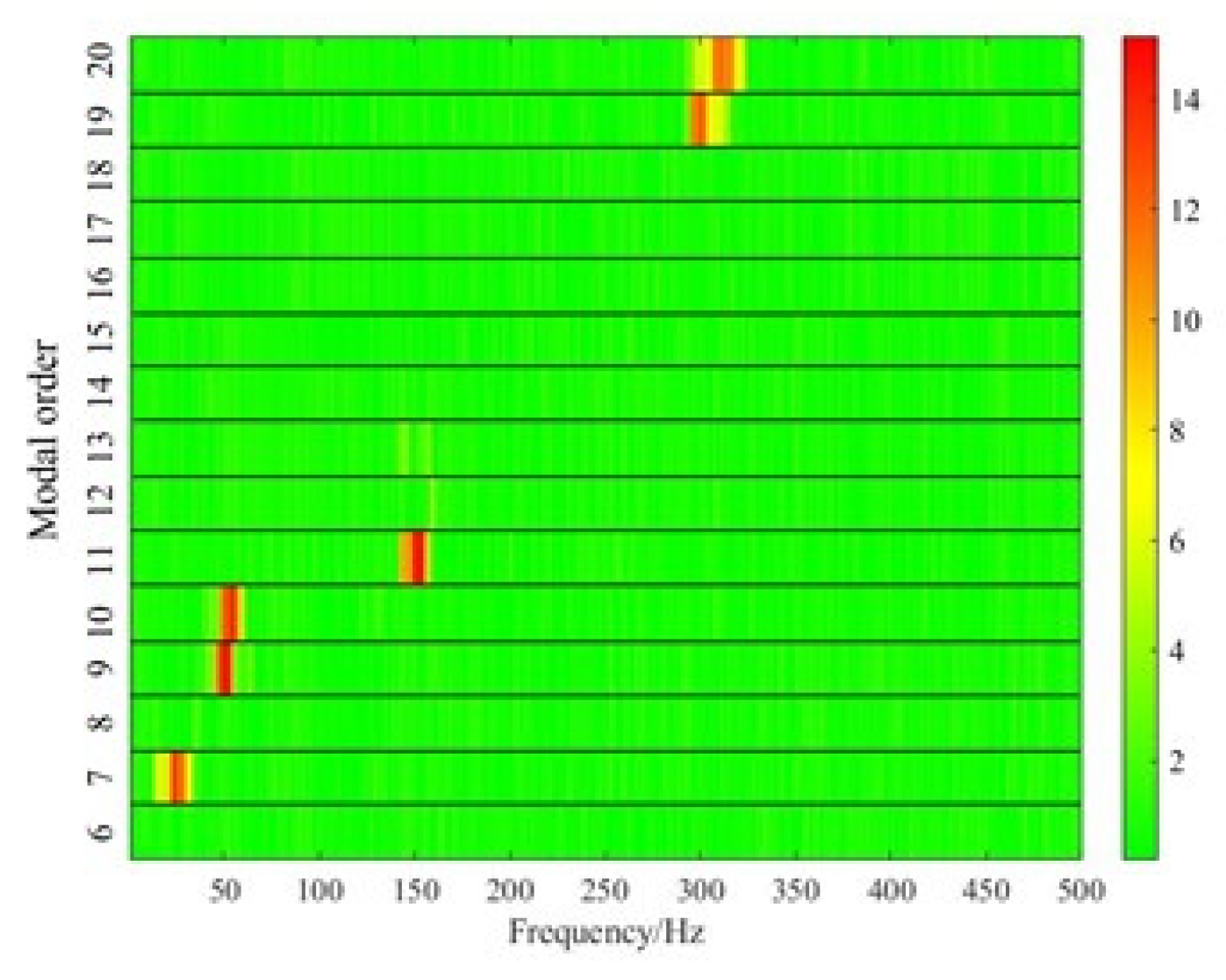
Figure 4 presents the
MPF contour map of the isolator in the 1 Hz to 500 Hz band, with distinct peaks marking the dominant modes: 24.92 Hz (7th mode), 49.48 Hz (9th mode), 51.78 Hz (10th mode), 149.97 Hz (11th mode), 300.21 Hz (19th mode), and 302.63 Hz (20th mode). These high
MPF values indicate a strong resonance excitation, confirming the six modes as the primary contributors to the low-frequency vibration. Excluding the noise modes with the extraordinarily small
MPFs, the remaining dominant modes are concentrated in the 10 Hz to 315 Hz band, aligning with the target frequency range.
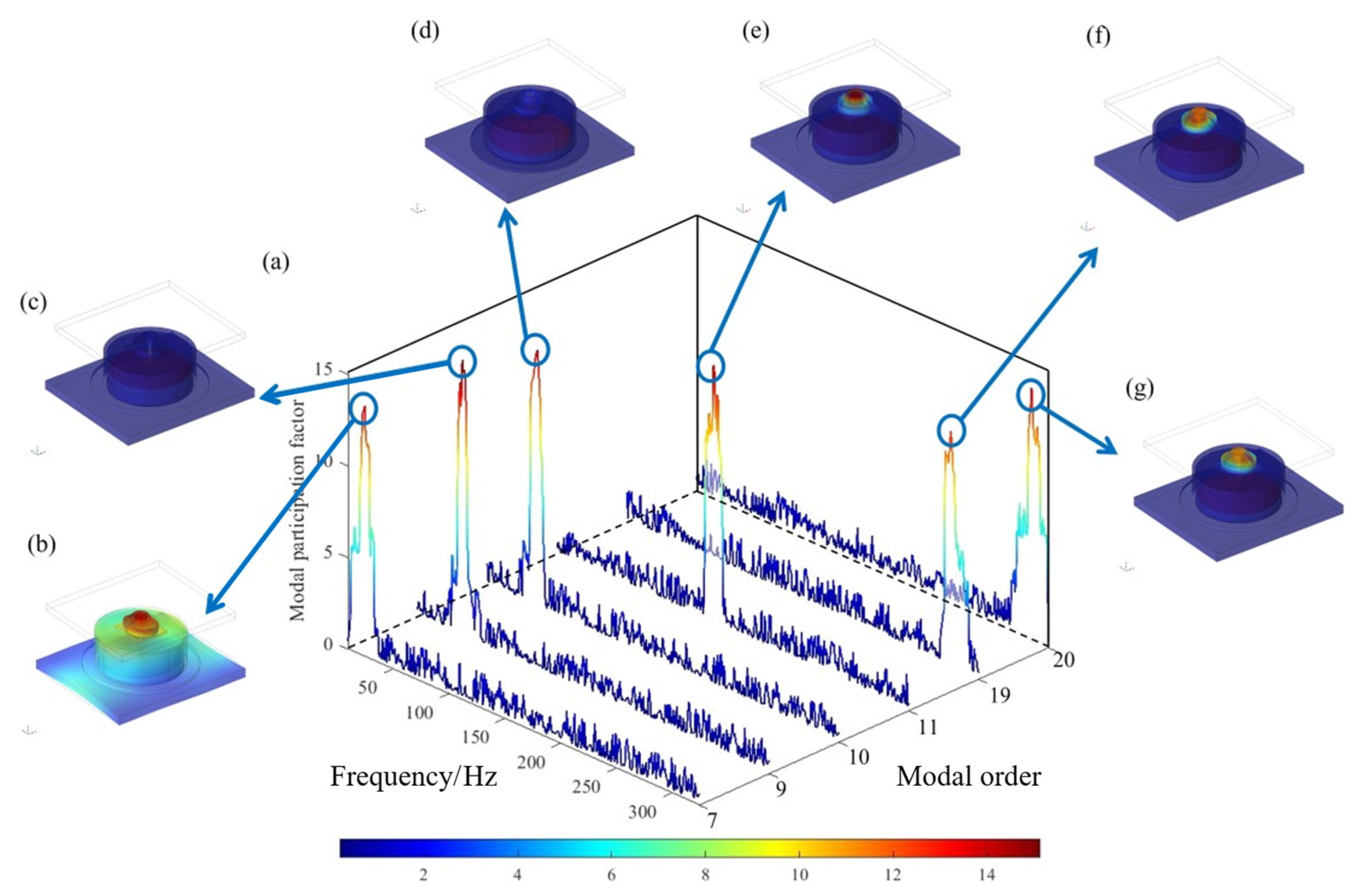
To clarify the vibration characteristics of the dominant modes, the modal shapes of the six high-
MPF orders were extracted (
Figure 5), which all exhibited a
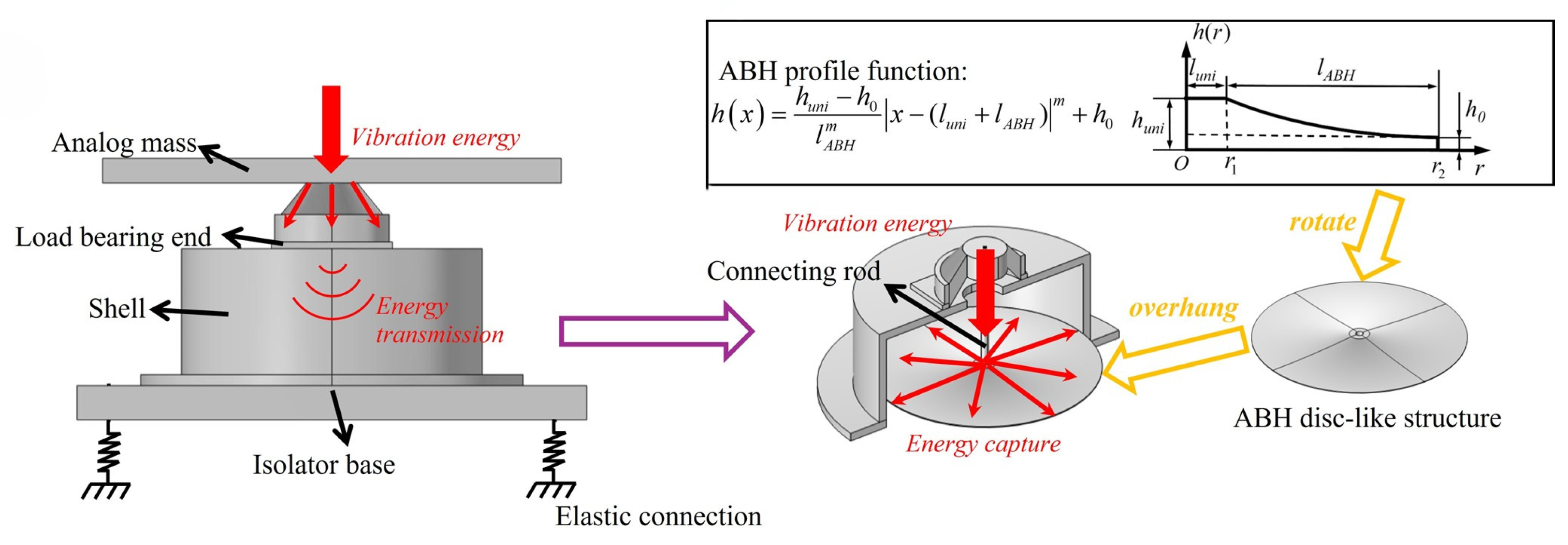
DVA-like mechanism formed by the ABH disk and connecting rods.
For the seventh modal shape (24.3 Hz), the isolator base and shell deform slightly. The load-bearing end undergoes a 71%
z-directional deformation (
Table 2), directly responding to the vertical vibration demands. Meanwhile, for the 9th–10th modal shapes (50.2 Hz to 52.5 Hz), the ABH disk vibrates significantly. With the connecting rods synchronously vibrating (a swing angle smaller than 1° relative to the vertical axis) and the negligible load-bearing end motion, the resonance behavior enables effective energy trapping. The coupled vibration occurs in the 11th, 19th, and 20th modal shapes (148.9 Hz to 308.6 Hz). However, the
z-directional motion accounts for 76–81% of the total deformation (
Table 2), ensuring vertical vibration control. All six dominant modes function as
DVA-like structures, laying the foundation for the low-frequency broadband vibration isolation.
All the modes with high MPFs can thus function like DVA structures, enabling the control and absorption of the vibration energy within the target frequency range. However, the extent to which the introduction of such a DVA-like structure can enhance the performance of the passive vibration isolators still requires further analysis and consideration.
3.2. Parameter Investigation and Analysis
After analyzing the modal characteristics of the vibration isolator in the low-frequency band, it is determined to exhibit a
DVA-like structure between 10 Hz and 315 Hz. However, neither its broad frequency-band vibration isolation performance nor the influence of the ABH disk-like structural parameters has been confirmed or evaluated. Per
Section 2.1’s cutoff frequency equation and
DL theory, using the numerical model in
Figure 6, the vibration isolation performance of the isolators with different structural parameters (such as
LABH and
huni and
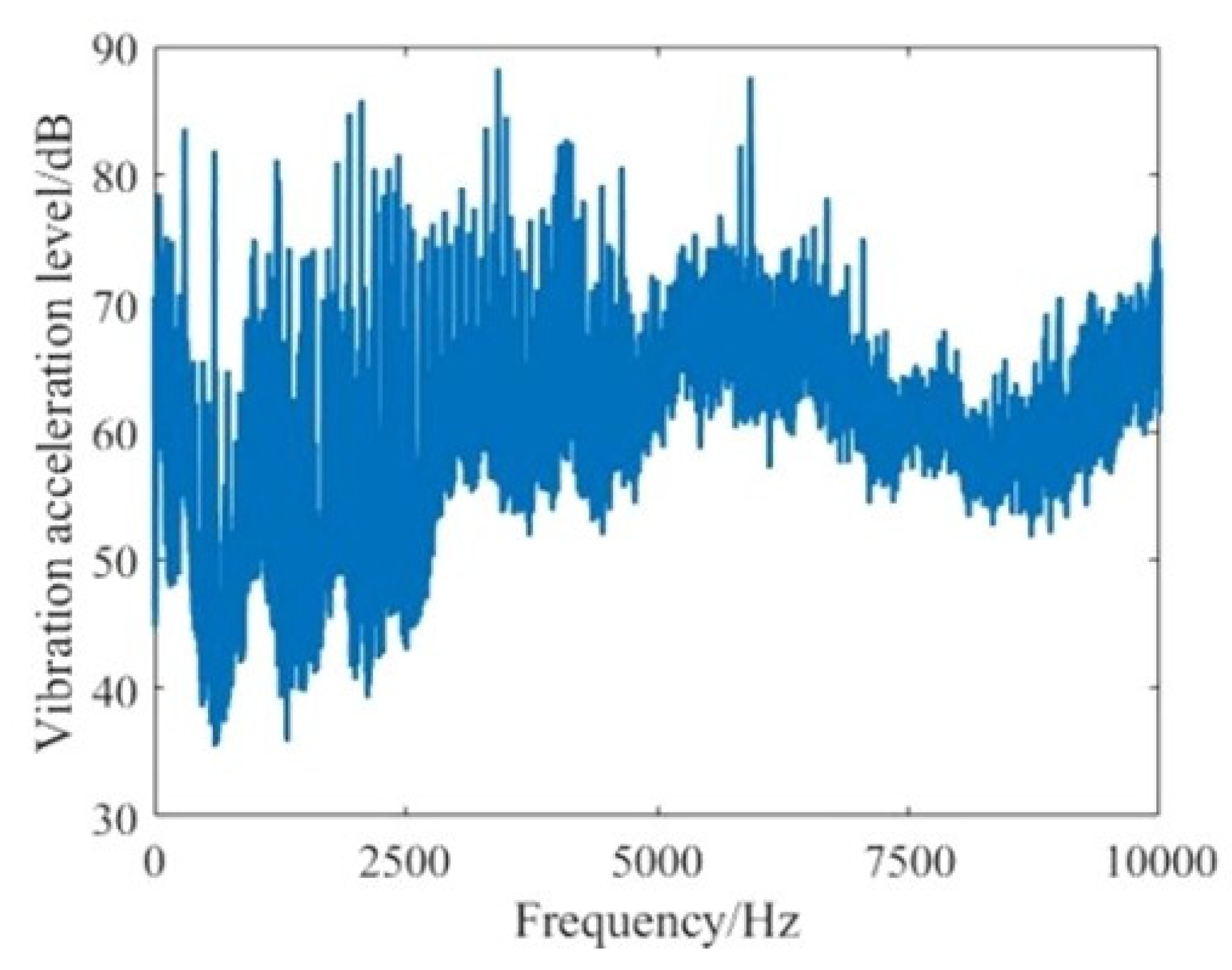
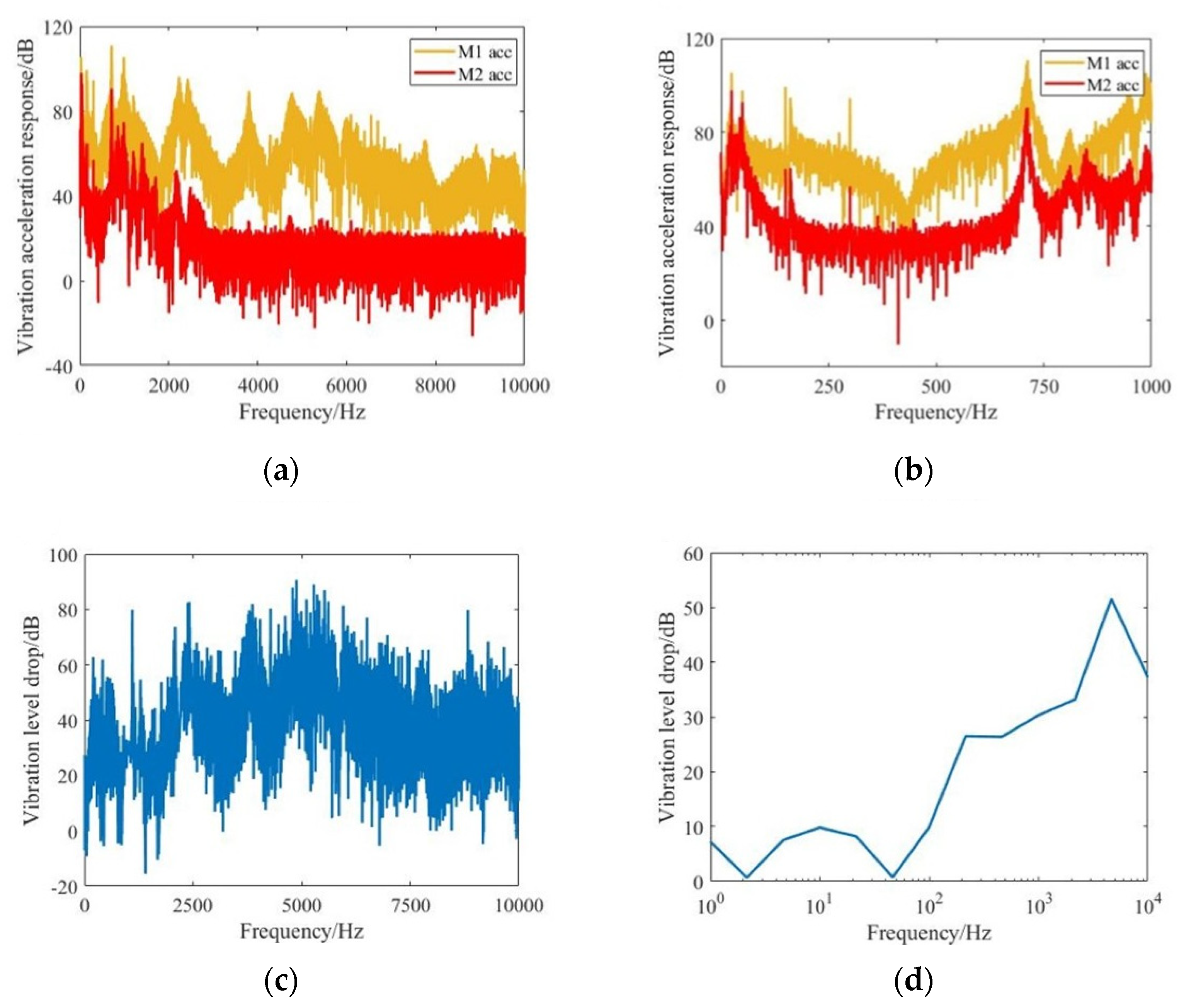
DLs) within 1 Hz to 10 kHz can be analyzed. Two measurement points are arranged on the isolators to calculate their vibration level drop (
VLD).
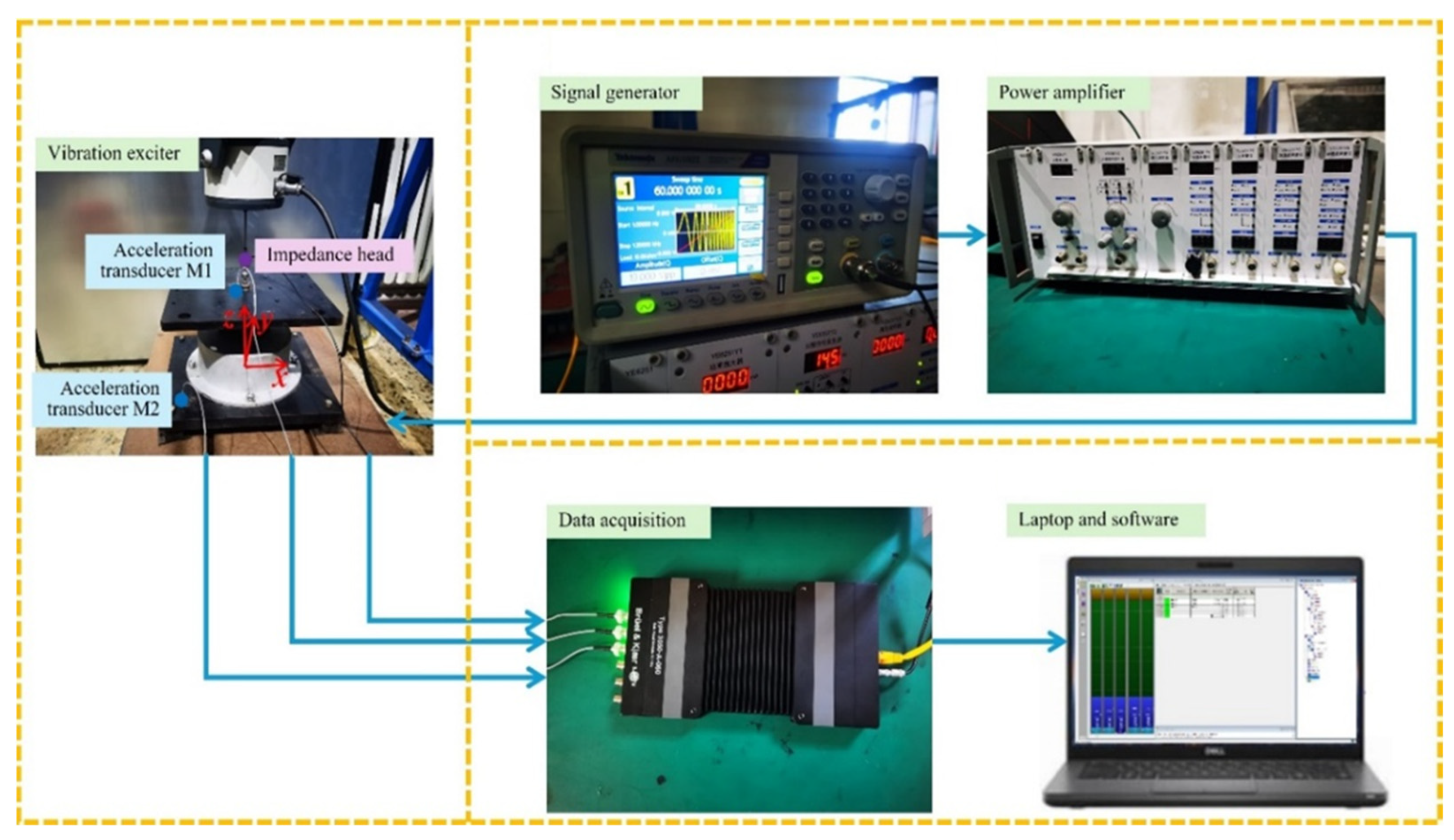
The vibration acceleration responses can be measured at M1(−0.01 m, −0.01 m, and 0.191 m) and M2 (−0.175 m, −0.175 m, and 0.025 m), where the origin of the coordinate system is located at the center of the bottom surface of the isolator base. The excitation force (
f(
t)), located at the same point in
Figure 4, with the amplitude 1 N. kk = 6 × 10
8 N/m, is the elastic connection stiffness between the entire isolator system and the rigid ground, which is the same as the model in the above chapter.
The
VLD is used as the performance metric:
where
aM1 and
aM2 represent the vibration accelerations evaluated by the acceleration transducer,
aref is the reference acceleration when calculating the vibration level, usually
aref = 1 × 10
−6 m/s
2.
VARLM1 and
VARLM2 represent the vibration acceleration response level of the M1 and M2 measurement points, respectively.
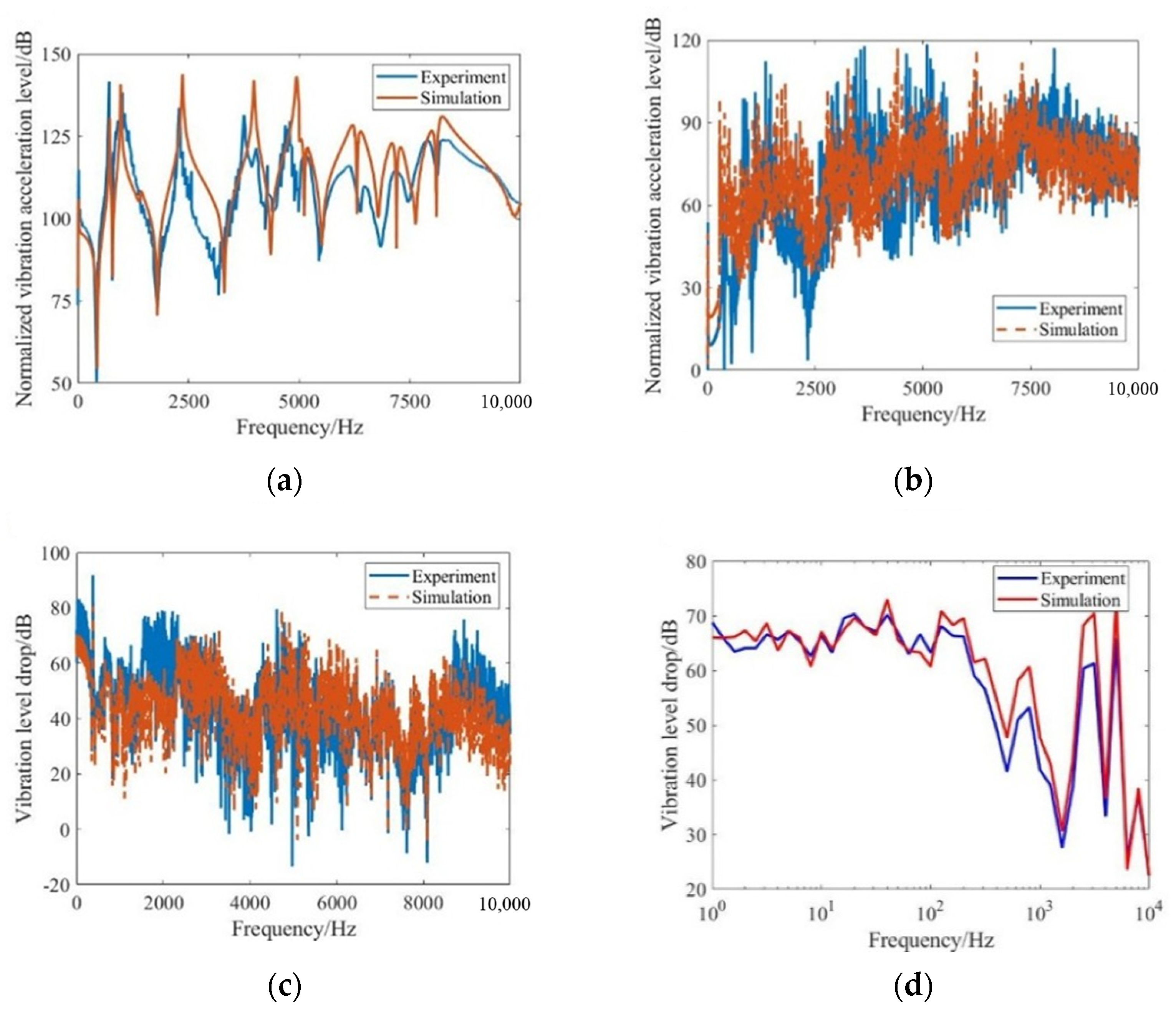
Initially, the improvement effect of the vibration isolation performance for the isolator system was evaluated upon introducing the initial ABH disk-like structure. The initial design is the vibration isolation system without the ABH disk-like structure, while Case 1 (LABH = 95 mm, huni = 5 mm) refers to the system that has an ABH initial structure.
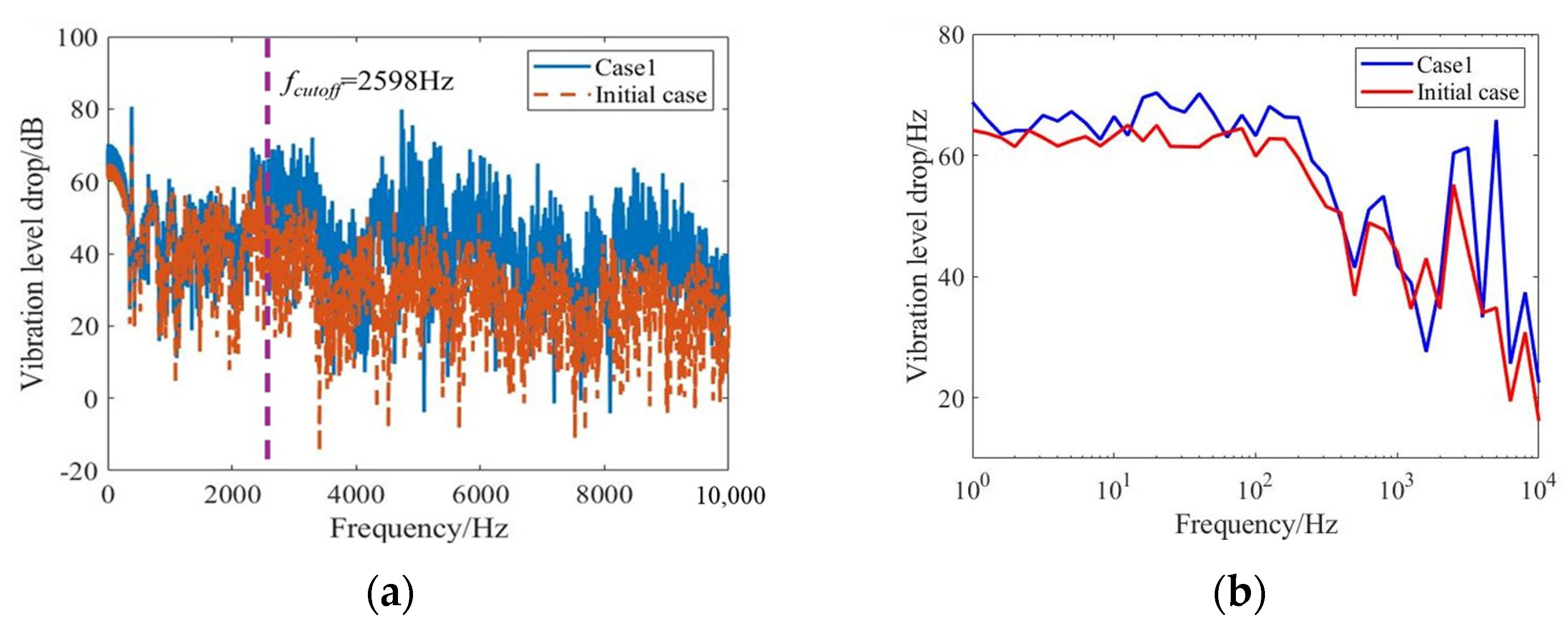
Figure 7 illustrates that the ABH disk-like structure enhances the performance of the vibration isolation system.
As Case 1’s
fc = 2598 Hz, dividing the
VLD spectrum into two segments, the vibration isolation performance can be discussed with the following two frequency ranges: below
fc (10–2598 Hz), where Case 1’s
VLD is 2–4 dB higher than the initial design, which is attributed to
DVA-like resonance, and above
fc (2598–10 kHz), where the
VLD improves by 4–8 dB, resulting from the ABH’s flexural wave convergence and eddy formation. The initial design achieves 61.52 dB (10–315 Hz) and 39.79 dB (315 Hz–10 kHz), while Case 1 yields 65.78 dB and 45.11 dB (
Appendix A,
Table A1), which is a 4.26 dB and 5.32 dB improvement, respectively. These results confirm the feasibility of ABH integration for the improvement of both the low- and high-frequency performance.
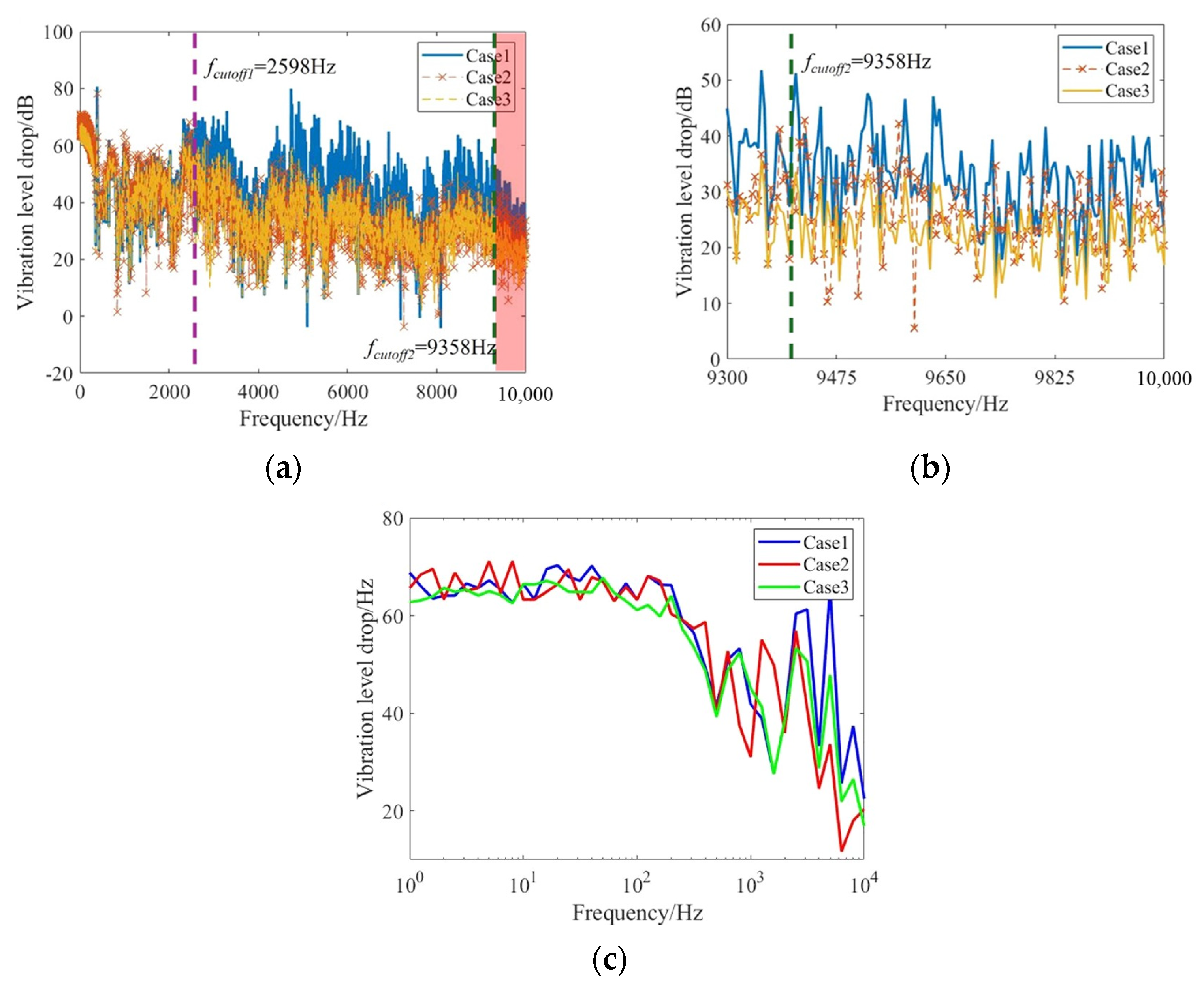
To further investigate the vibration energy confinement capability of ABHs, ABH disk-like structures with varying parameters were integrated into the isolation system, and their performance was evaluated. First, the influence of the different ABH region lengths on the vibration isolation performance was assessed. The vibration isolators incorporating the ABH structures, with
LABH = 50 mm and
LABH = 10 mm, were included as references, with their respective cutoff frequencies calculated as 9358 Hz and 233,973 Hz. Case 1, Case 2, and Case 3 refer to the isolation system with a
LABH = 95 mm,
LABH = 50 mm, and
LABH = 10 mm ABH disk-like structure. The numerical analysis results of the vibration isolation performance for the above-mentioned three cases are shown in
Figure 8.
From the
Figure 8, the cutoff frequency increases are 9358 Hz (Case 2) and 23.39 kHz (Case 3). The cutoff frequency for Case 3 is well above 10 kHz, such that neither the
VLD spectrum nor the one-third octave analysis captures its efficacy. As
LABH decreases, fc increases sharply. Case 3’s fc far exceeds 10 kHz, so no ABH energy trapping occurs in the analyzed band. Its slight
VLD improvement, from 39.79 dB to 40.04 dB, stems from inertial damping due to an increased structural mass, which is unrelated to the ABH wave manipulation. For the cutoff frequencies under 10 kHz (Case 1 and Case 2), the vibration isolation performance from their cutoff frequencies to 10 kHz is improved. However, Case 2’s
fc = 9358 Hz narrows the effective high-frequency band to 9358–10 kHz, with an average
VL of 40.84 dB, which is 4.27 dB lower than Case 1. Case 1’s
fc = 2598 Hz covers 74.0% of the target high-frequency band, achieving the highest
VLD with 45.11 dB. Furthermore, the one-third octave analysis further confirms that a larger
LABH lowers
fc to match the target bandwidth, maximizing the energy dissipation (
Appendix A,
Table A2).
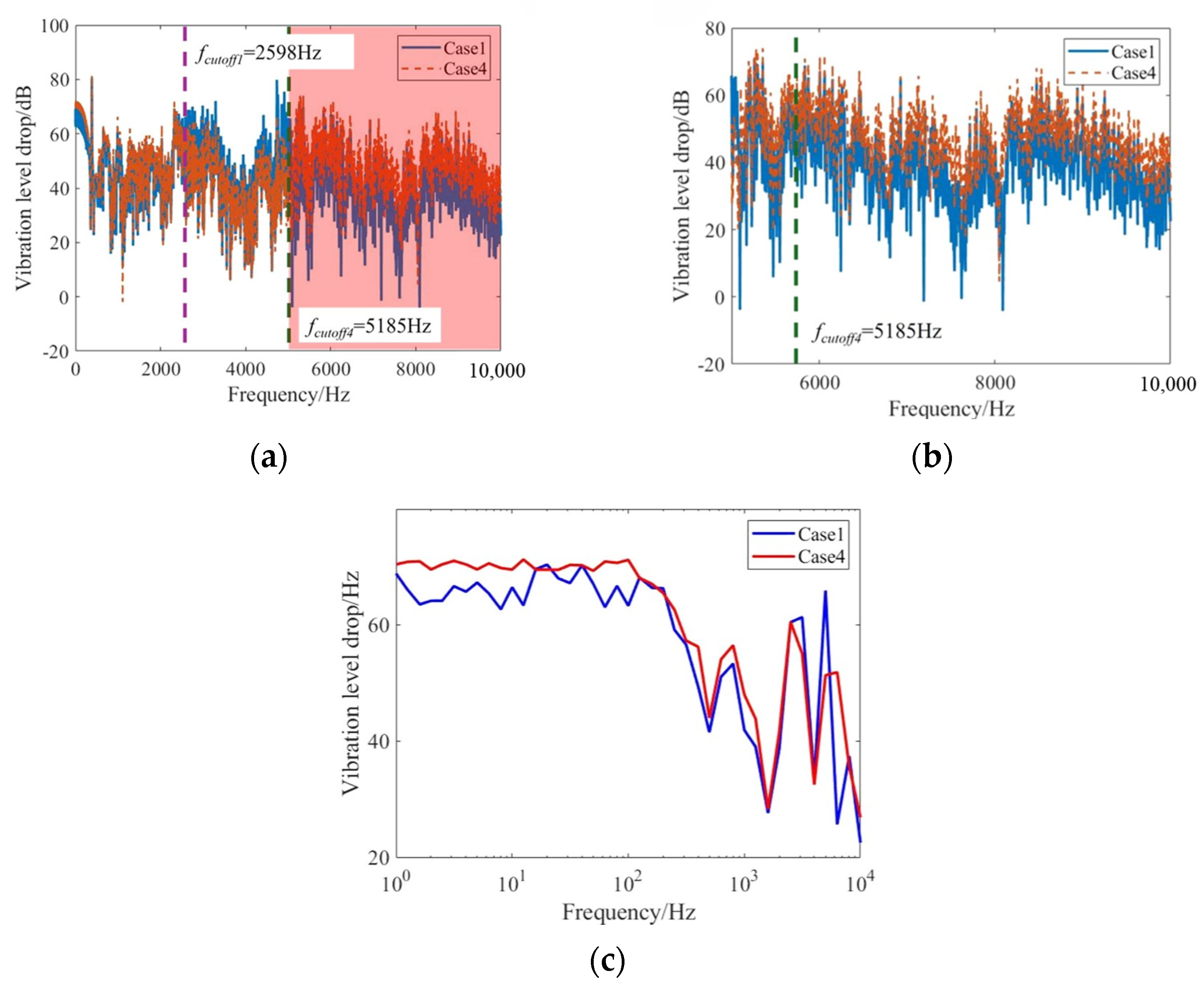
Subsequently, the uniform area height (huni) is selected for analysis. Due to the lower sensitivity to the cutoff frequency described in Equation (8), the ABH disk-like structure with huni = 10 mm has been analyzed as a reference case.
When
huni = 10 mm, the
fc of Case 4 increases to 5185 Hz. The isolation performance depicted in
Figure 9a is also enhanced. This indicates that a higher
huni provides bending waves with a longer propagation path. During propagation, the waves continuously interact with the structure, undergoing physical phenomena such as reflection, refraction, and scattering, thereby enhancing the opportunities for vibrational energy dissipation. The one-third octave analysis results further validate this finding. Furthermore, Case 4’s average
VLD is 6 dB higher than Case 1 due to an increased
huni boosting modal mass participation in the high-
MPF modes, which strengthen the
DVA-like resonance. The one-third octave data (
Appendix A,
Table A3) shows Case 4’s 10–315 Hz and 315 Hz–10 kHz
VLD reach of 68.29 dB and 48.19 dB, confirming that
huni = 10 mm balances the low-frequency resonance and high-frequency trapping.
The parametric analysis reveals that the larger values of
LABH and
huni enhance the energy dissipation above the cutoff frequency. The damping layers (
DLs) enhance the energy dissipation via the hysteresis effects (
Section 2.2). Thus, a detailed analysis was conducted to investigate the performance enhancement of the vibration isolation system enabled by the
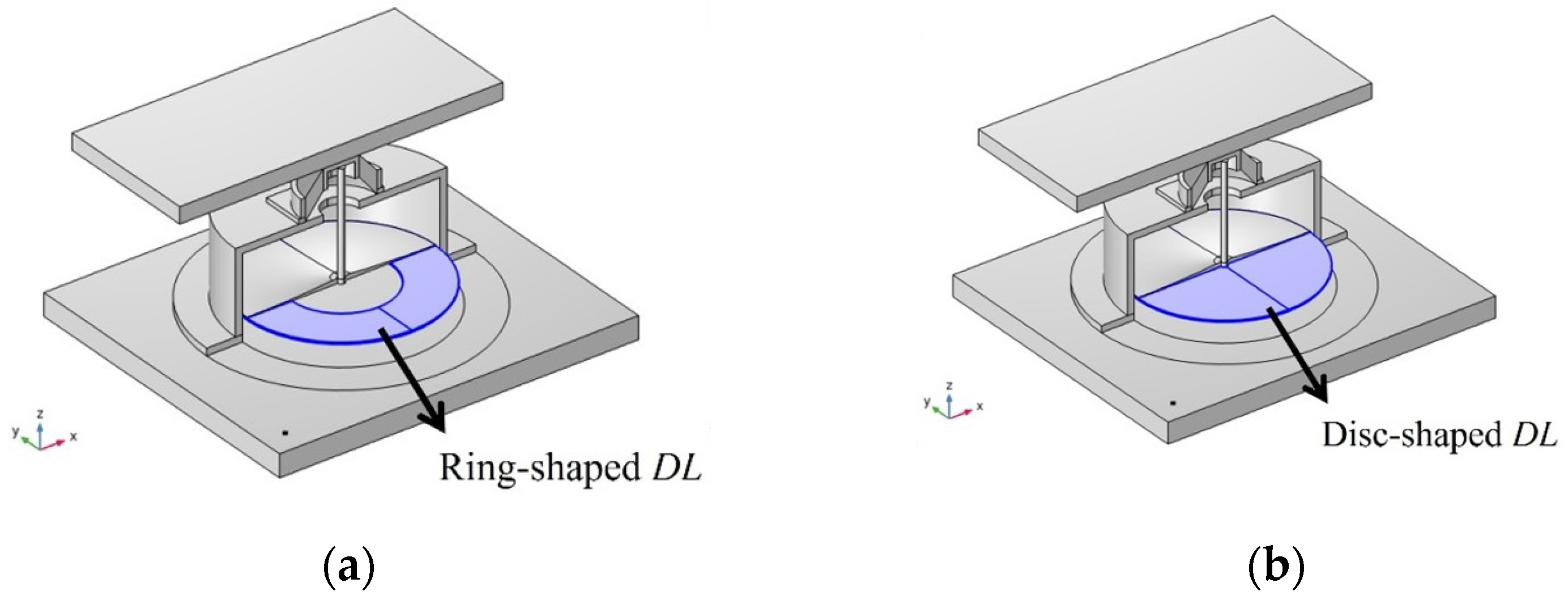
DL. Case 5 (ring-shaped
DL, 40% coverage) and Case 6 (disk-shaped
DL, 100% coverage) were compared to Case 1 (no
DL). The isolators with
DL structures are shown in
Figure 10.
The results in
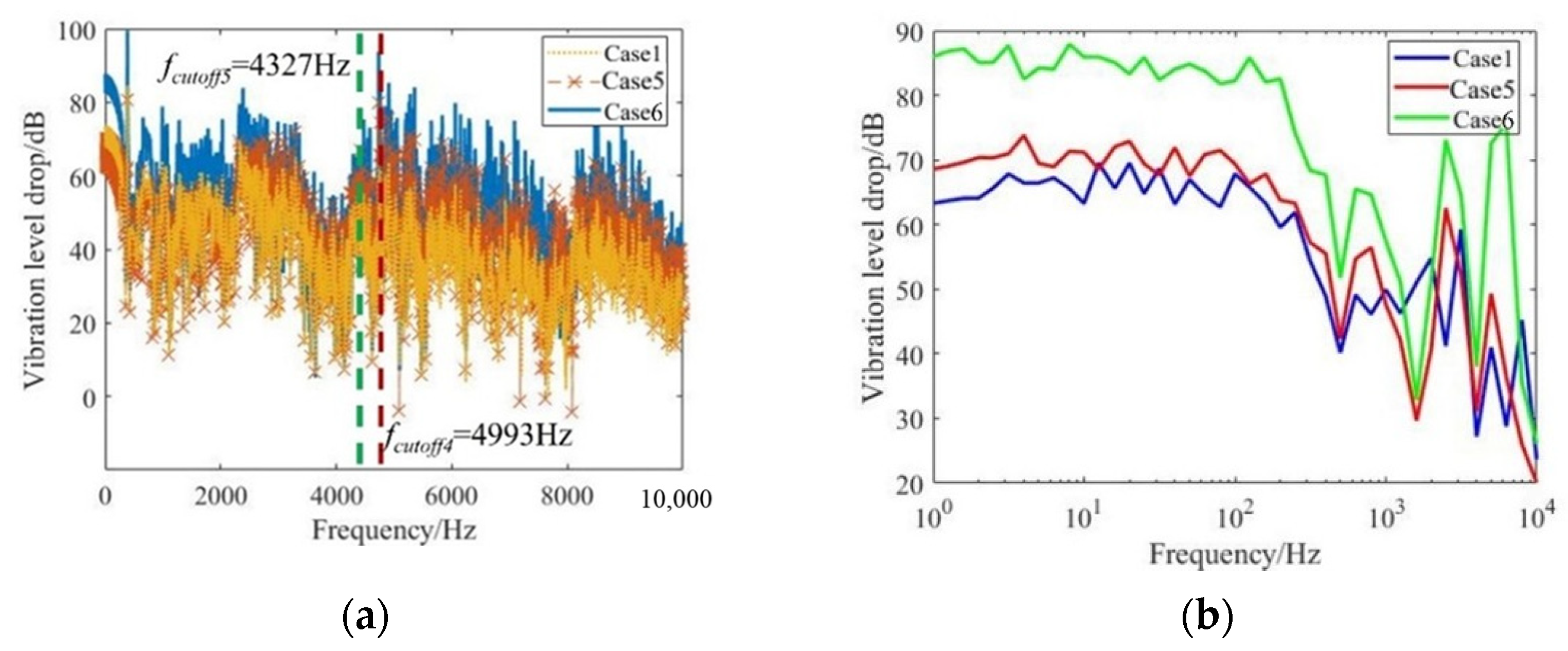
Figure 11a demonstrate that integrating the
DL significantly enhances the vibration isolation systems’ performance. From the 1–10 kHz
VLD spectrum, both of the
DL configurations improve the performance, with Case 6 outperforming Case 5—the disk-shaped
DL’s full coverage maximizes the contact with the ABH region, accelerating the energy conversion to heat. Below
fc = 2598 Hz, Case 6 forms dense energy eddies by coupling with the
DVA-like mechanism, boosting the 10 Hz to 315 Hz
VLD by 7.14 dB (compared with Case 1). For the high frequency band, Case 6’s
VLD has been improved to 57.31 dB in 315 Hz–10 kHz, which is 12.2 dB higher than Case 1. Meanwhile, Case 5 only reaches 46.78 dB in the high-frequency band. This difference stems from Case 6’s 92% energy dissipation efficiency. The one-third octave analysis (
Appendix A,
Table A4) can also confirm that the disk-shaped
DL is the configuration for the cross-band vibration suppression.
3.3. Energy Flow Analysis in the Designed Isolators
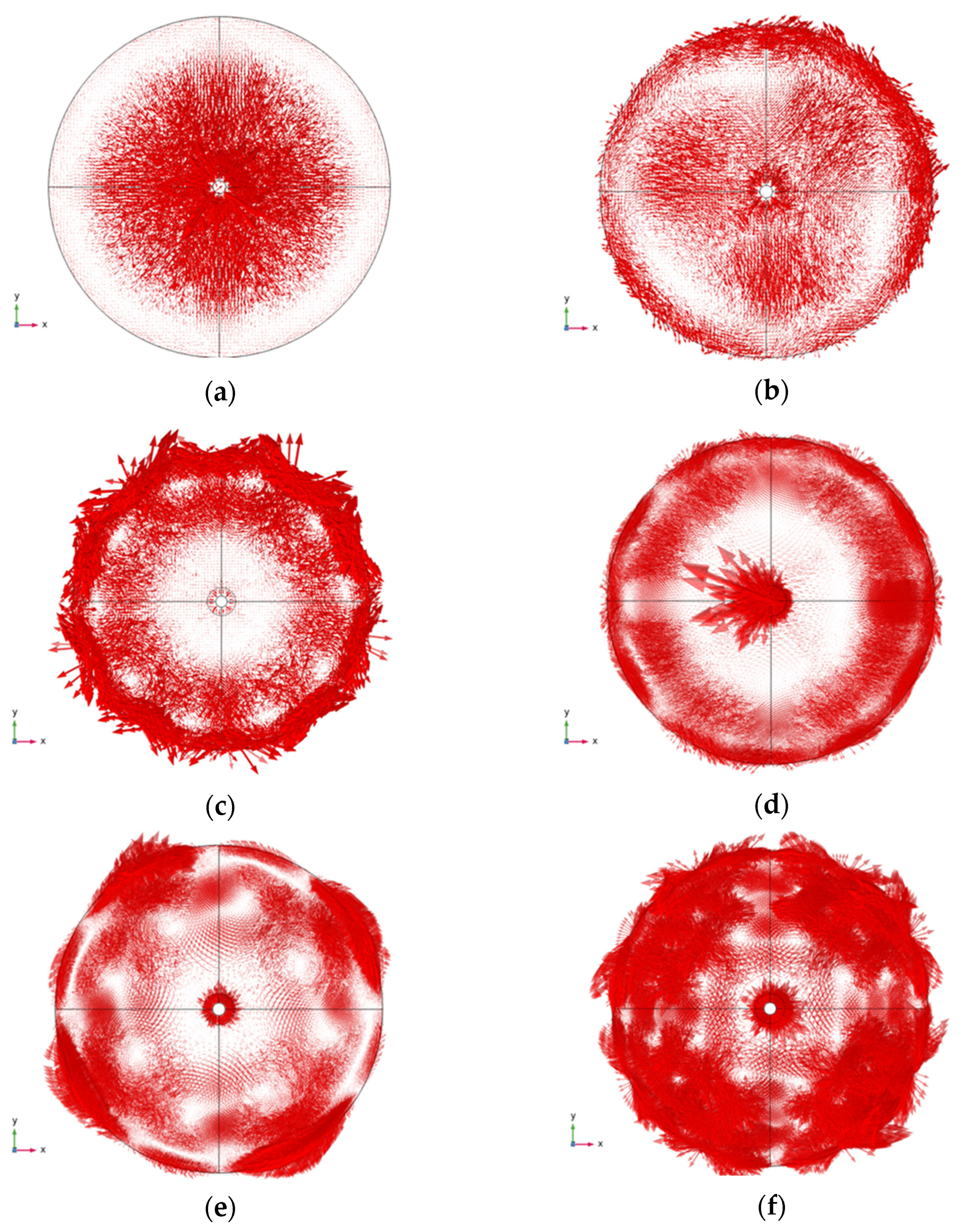
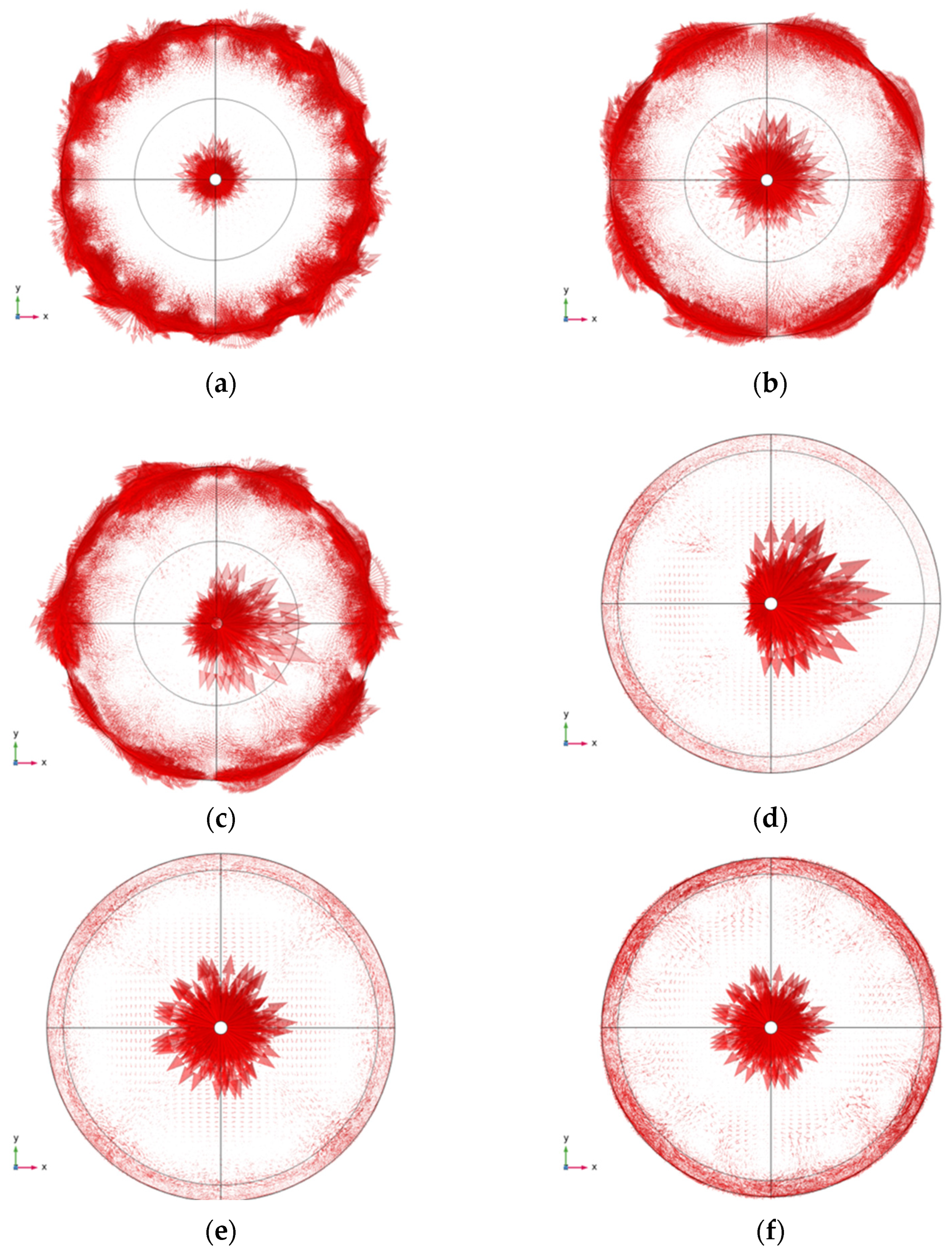
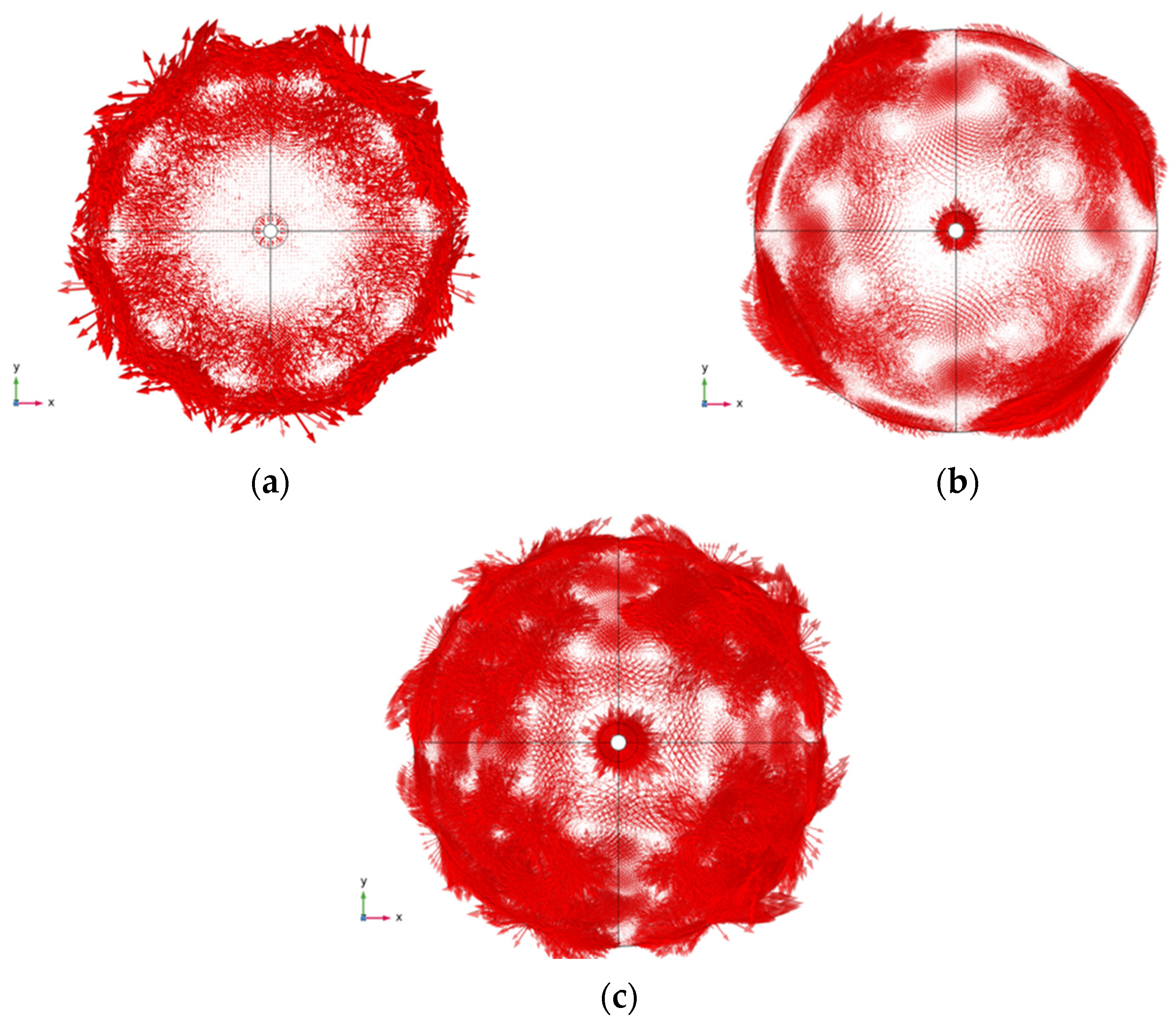
Previous studies have evaluated the vibration isolation capability of different isolators within the target frequency band, but the disk-like ABH structure’s exceptional ability to concentrate and dissipate vibrational energy lacks explicit demonstration. To address this, meticulous numerical computations were conducted to analyze the vibrational energy distribution and energy flow density within the disk-like ABH under various modal orders, aiming to establish quantitative criteria for a structural parameter design. The energy vortices in the ABH disk-like structures with varying configurations are depicted using vector arrows. Each unit-length vector represents an energy flux density of 1 × 10
−4 W/m
3 passing through the local region, whereas a higher density of vectors indicates more intricate energy flow patterns within that area. First, the vibration energy flow in the Case 1 ABH disk-like structure is evaluated as shown in
Figure 12.
In the high-frequency band (after fc, covering most of the 315 Hz–10 kHz effective bandwidth), the energy flow exhibits pronounced concentration: flexural waves converge radially outward from the uniform region, with wavenumber k(r) increasing per Equation (4) to reduce the wave velocity, driving the energy flow density from about 0.8 × 10⁻⁴ W/m2 in the uniform region to about 6.1 × 10⁻⁴ W/m2 in the ABH outer region. The partial reflection ∣R0∣ ≈ 0.3 forms dense energy eddies, which persist across 2598 Hz–10 kHz, resulting in a 45.11 dB VLD in the high-frequency segment of the effective bandwidth. Below fc, the wave gradient effects weaken, but the ABH disk and the connecting rods form a DVA-like resonance structure (confirmed by MPF analysis), trapping the energy via mechanical resonance to yield faint eddies with a core density of 4.5 × 10⁻⁴ W/m2, enabling basic sub-fc manipulation.
Case 2 (
LABH = 50 mm,
fc = 9358 Hz) and Case 3 (
LABH = 10 mm,
fc = 233.97 kHz) reveal
LABH’s critical role in the high-frequency effective bandwidth. The energy transmission vectors are shown in
Figure 13.
Case 2’s
fc = 9358 Hz narrows the effective high-frequency band to 9358 Hz–10 kHz, with the energy flow density peaking at 3.8 × 10
−4 W/m
2 (44% lower than Case 1) and eddies only forming in this limited range, reducing the effective bandwidth utilization to 68%. Case 3’s
fc far exceeds 10 kHz, so a negligible ABH-induced energy concentration occurs in the entire 315 Hz–10 kHz band; the energy flow density remains uniform (0.7 × 10
−4 W/m
2 to 0.9 × 10
−4 W/m
2), with attenuation from inertial damping alone. By comparing
Figure 12d–f and
Figure 13, the results can further validate the conclusions drawn in
Section 3.2. Specifically, the larger the value of
LABH, the higher the energy density within the ABH structure and the more pronounced the improvement effect of the vibration isolation provided by the ABH.
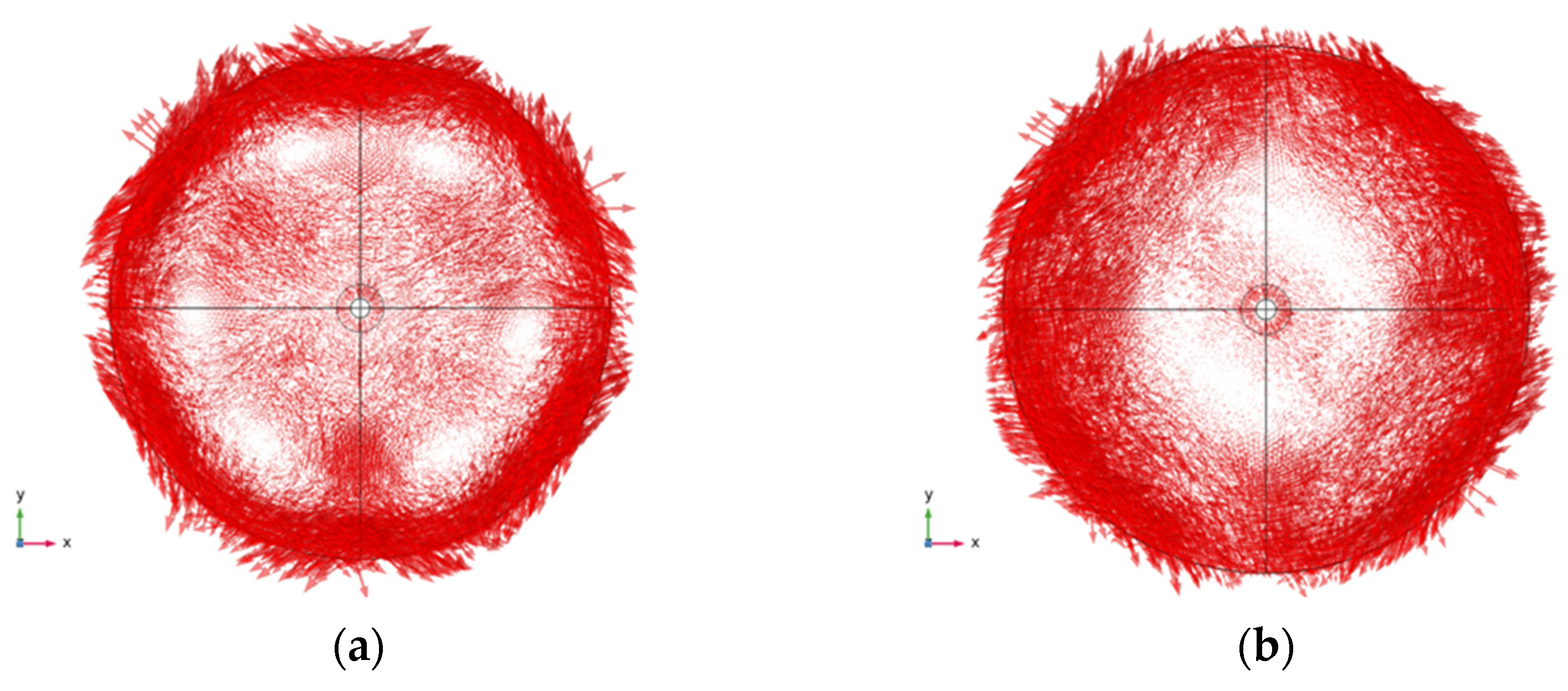
The distribution characteristics of the energy transfer vectors within the ABH structure featuring a uniform thickness of 10 mm (Case 4) are analyzed, and the corresponding results are illustrated in the
Figure 14.
In the high-frequency band (5185 Hz–10 kHz), the increased huni boosts the uniform-region bending stiffness D0, raising the energy input to the ABH region (1.8 × 10⁻⁴ W/m2 compared with Case 1’s 1.2 × 10⁻⁴ W/m2). The energy flow density peaks at 7.3 × 10⁻⁴ W/m2, which is 20% higher than Case 1, with eddy density increasing 30% across the band, lifting the high-frequency VLD to 48.19 dB. Below fc, the larger huni strengthens the ABH disk’s mass participation in the DVA-like resonance, driving the eddy density to 5.2 × 10⁻⁴ W/m2 at 1000 Hz, balancing the high-frequency efficacy and the sub-fc capture.
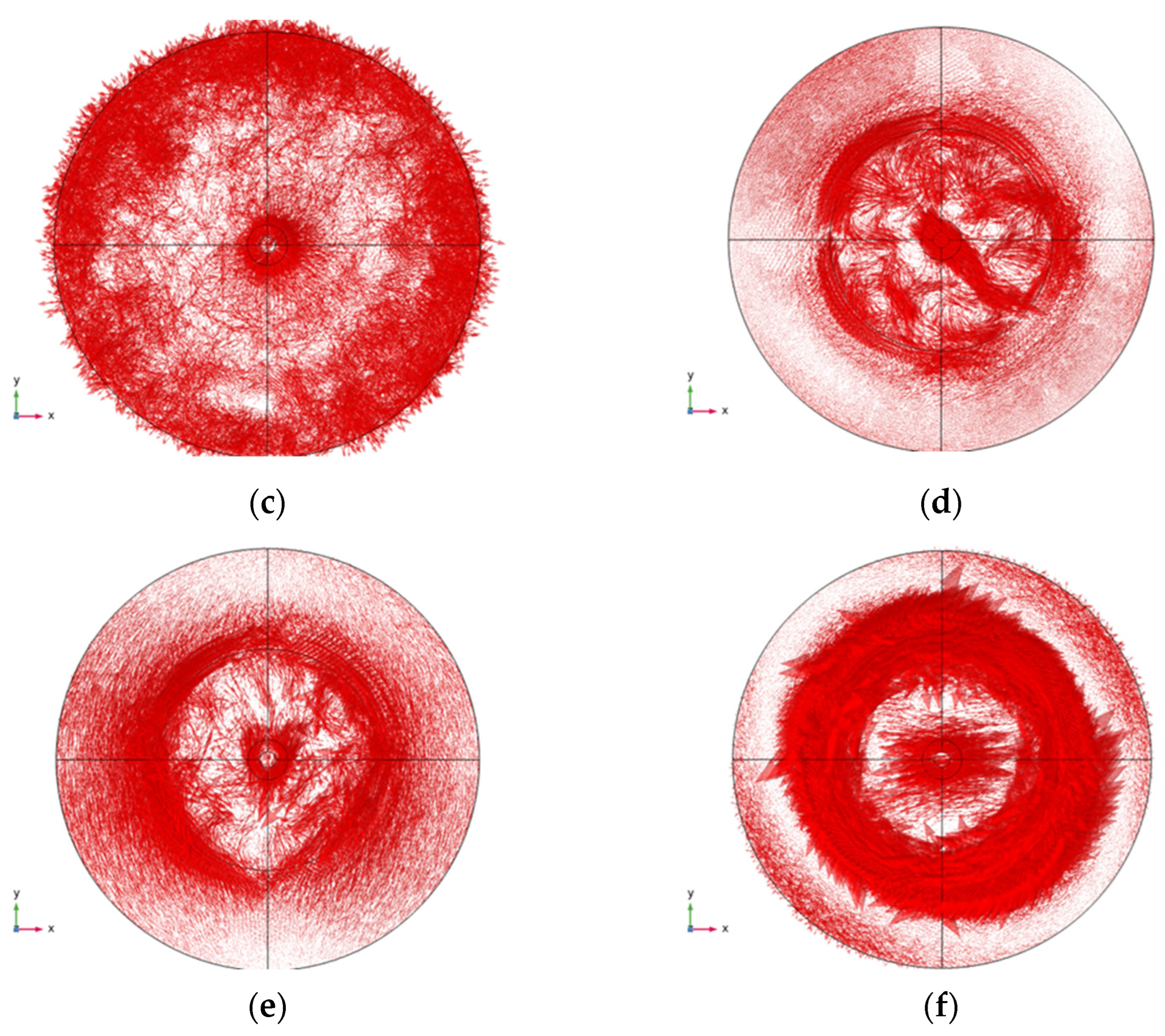
Furthermore, the energy transmission vectors in Case 5 and Case 6 were computed and evaluated to further demonstrate the enhancement effect of the damping layer on the vibration isolation performance of the vibration isolator, with the corresponding results compared and presented in
Figure 15.
From the
Figure 15, in the high-frequency band, Case 6’s full-coverage
DL dissipates 92% of the trapped energy compared with Case 5, with the energy flow density that is downstream of the eddies dropping to 0.5 × 10
−4 W/m
2, compared with Case 5’s 1.2 × 10
−4 W/m
2, pushing the high-frequency
VLD to 57.31 dB. The disk-shaped
DL maximizes the contact with the ABH region, enhancing hysteretic dissipation (
Ddiss) by about 0.26 × 10
−4 W/m
2 across the 315 Hz–10 kHz band. Below
fc, Case 6’s
DL induces pronounced eddies (absent in Case 5) by coupling with the
DVA-like motion, with core density of 6.8 × 10
−4 W/m
2, while Case 5’s edge-only
DL fails to leverage the trapped energy, confirming that the full-coverage
DL is key to cross-band efficacy.
In summary, high-frequency (post-fc) energy manipulation hinges on matching the ABH parameters to the 315 Hz–10 kHz effective bandwidth: LABH = 95 mm covers most of the high frequencies, huni = 10 mm boosts the energy accumulation, and disk-shaped DL amplifies the dissipation, resulting in 57.31 dB VLD in the high-frequency segment. Below fc, the DVA-like resonance of the ABH disk and connecting rods provides the foundational trapping mechanism, strengthened by huni’s enhanced modal participation and disk-shaped DL’s damping-induced eddy formation, overcoming traditional ABH sub-fc ineffectiveness. This synergistic design enables a seamless energy manipulation across the entire effective bandwidth.