Article

Nonlinear Seismic Response of Long-Span Bridges Constructed by the Balanced Cantilever Method Under Earthquake Excitations


1
Escuela de Ingeniería Civil, Universidad Industrial de Santander, Bucaramanga 680002, Colombia
2
Departamento de Ingeniería de la Construcción y de Proyectos de Ingeniería Civil, Universitat Politècnica de València, 46022 Valencia, Spain
*
Author to whom correspondence should be addressed.
Appl. Sci. 2026, 16(7), 3312; https://doi.org/10.3390/app16073312 (registering DOI)
Submission received: 6 February 2026 / Revised: 11 March 2026 / Accepted: 20 March 2026 / Published: 29 March 2026
(This article belongs to the Section Civil Engineering)

Abstract

Long-span bridges are critical components of transportation infrastructure because they promote efficient connectivity between agricultural production centers, tourist destinations, and major urban areas. To construct these structures, the balanced cantilever method is widely used; however, the lack of rigid longitudinal connections between the pylons and the deck often allows for large displacement demands during seismic activities. Fluid viscous dampers (FVDs) are employed to mitigate these effects. This study investigates the impact of using FVDs at the abutments of the Hisgaura cable-stayed bridge located on the Curos-Malaga corridor in the department of Santander, Colombia. A nonlinear response history analysis was conducted using seismic records from crustal sources, scaled to the local seismic hazard, and performed in SAP2000©. The results indicate that the presence of FVDs does not adversely affect the axial forces in the stay cables under the Extreme Event Limit State I. Furthermore, demand reductions were observed at the pylon closest to the abutment (Pylon 4). Under critical seismic records, reductions of up to 81.95% in relative deck-pylon displacement, 62.17% in bending moment, and 58.46% in base shear were achieved. These findings demonstrate an improved global structural behavior under severe seismic loading conditions.

1. Introduction

Long-span bridges play a crucial role in transportation networks by facilitating connections between agricultural, tourist, and urban regions. They also help ensure connectivity, support economic development, and enable rescue operations in cities and rural areas following natural disasters [1]. The choice of bridge typology depends on environmental conditions, financial assessments, and visual integration with the surrounding landscape [2]. In the construction of long-span bridges (e.g., box girder or cable-stayed bridges), a widely used methodology is successive cantilever construction, which involves segmental execution of the superstructure to reduce reliance on temporary support and ensure safe, long-lasting structures [3,4].
In recent years, the construction of cable-stayed bridges has increased owing to their aesthetic appeal, reduced construction time, and ability to distribute internal forces more uniformly and efficiently through stay cables, which characterizes the structure as highly redundant [5,6]. This redundancy provides advantages regarding wind load resistance, reduced maintenance, and the ability to span long distances [7,8,9].
However, owing to their high flexibility compared with box girder bridges, cable-stayed bridges exhibit greater sensitivity to seismic excitation, mainly because of their low intrinsic damping ratios [10]. A clear example of this vulnerability is the Chi-Lu Bridge, which sustained significant damage to the pylon owing to large displacements during the 1999 Chi-Chi earthquake [11]. These events have reinforced the importance of designing cable-stayed bridges with structural safety criteria that address seismic hazards in high-risk regions [12].
Cable-stayed bridges frequently incorporate floating or semi-floating configurations, where the continuity between the deck and pylons is intentionally interrupted to allow relative displacements during extreme events and lengthen the fundamental period of the structure to attract lower spectral acceleration. Although this approach facilitates internal force redistribution, the absence of a longitudinal connection increases the demand for deck displacement [13,14]. The decoupling between the deck and pylons necessitates the implementation of alternatives to reduce the longitudinal seismic demands. To address this structural challenge, modern engineering explores two main philosophies: enhancing the intrinsic ductility of the structure through sustainable advanced materials, such as Ultra-High Ductile Concrete (UHDC), which dissipates energy via strain-hardening behavior and multiple microcracking [15], or incorporating supplementary energy dissipation systems. Given the critical nature of cable-stayed bridges, where preventing permanent structural damage is paramount, passive seismic protection systems have been widely promoted to improve their seismic performance [16].
A wide range of seismic protection systems have been developed, among which fluid viscous dampers (FVDs) stand out because of their efficiency in controlling displacements through energy dissipation by fluid viscosity [17]. These devices help to ensure structural safety, serviceability, and long-term durability [18,19]. Although FVDs have been shown to reduce longitudinal displacement demands, their performance depends on several factors, including the damper configuration, installation location, ambient temperature, and loading conditions.
Historically, engineering practice has dictated the installation of velocity-dependent devices at the internal connections between the deck and pylons. The study in [20] investigated the behavior of a hysteretic device installed between the deck and pylon of a cable-stayed bridge, showing that such devices effectively dissipate seismic energy by reducing displacements. Nevertheless, placing the devices at the pylon interfaces can present spatial constraints and logistical complexities, particularly during retrofit interventions in operational bridges [21], and in some cases, the energy dissipation system at the abutments offers a highly accessible and practical alternative to control the global longitudinal translation of the deck and to reduce the internal force demands on the pylon compared to conventional deck-pylon installations [11].
Although the operational advantages of installing fluid viscous dampers (FVDs) in abutments are recognized, their performance is often evaluated primarily for controlling local displacement at the ends of the deck. However, the effectiveness of this specific configuration in reducing critical internal forces in piers has not been thoroughly explored under varying levels of seismic energy. Therefore, it is necessary to understand how characterizing the seismic signal using metrics such as the Arias intensity and frequency bandwidth can provide a more comprehensive assessment of the mitigation achieved at the pylon base.
Therefore, this study evaluates the influence of an equivalent fluid viscous damper installed at the abutment of the Hisgaura Bridge (Colombia) and compares its dynamic behavior under seismic excitation with a specific focus on the demand reduction at the pylon base. The study integrates non-linear time-domain analyses in SAP2000© [22], using a set of 11 ground motion records selected for their spectral compatibility with the local seismic hazard. The displacements and internal forces at the critical locations of the structure were analyzed, along with the hysteretic response of the damper. The results are presented by comparing the models with and without the equivalent damper, allowing the identification of the effects of the damper on the pylons and their connection zones. Finally, the practical implications of using FVDs at abutments are discussed, providing quantitative evidence of their influence on this structural configuration.

2. Bridge Description

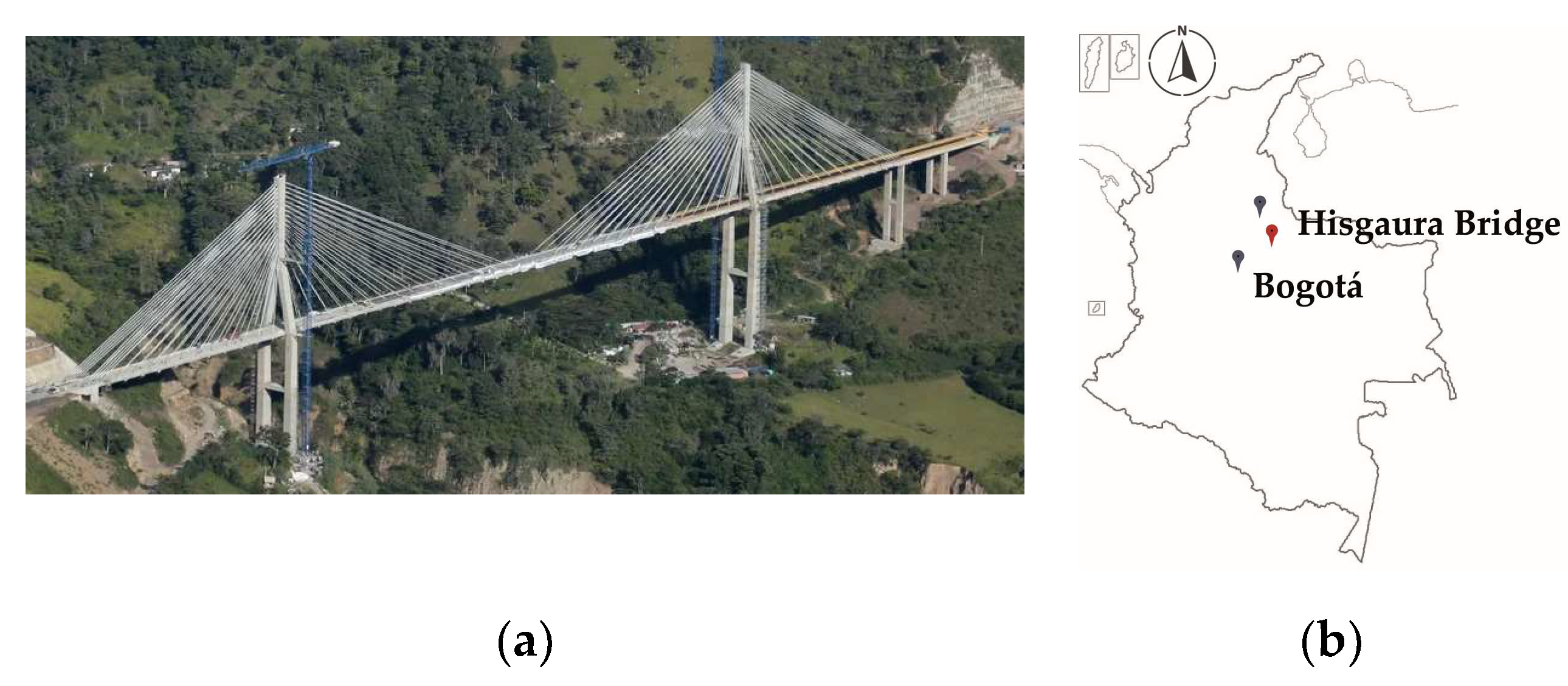
The Hisgaura Bridge, situated in Santander (Colombia), serves as a link in the Curos–Málaga corridor, as shown in Figure 1b. The structural and geometric data are presented in Table 1 based on the built drawings. Its design combines two systems: the main section follows a successive cantilever method that eventually becomes a cable-stayed structure, whereas the approach spans rely on a continuous box-girder deck. Such a hybrid layout was the only practical way to deal with the rugged topography of the site and the long spans required by the terrain.
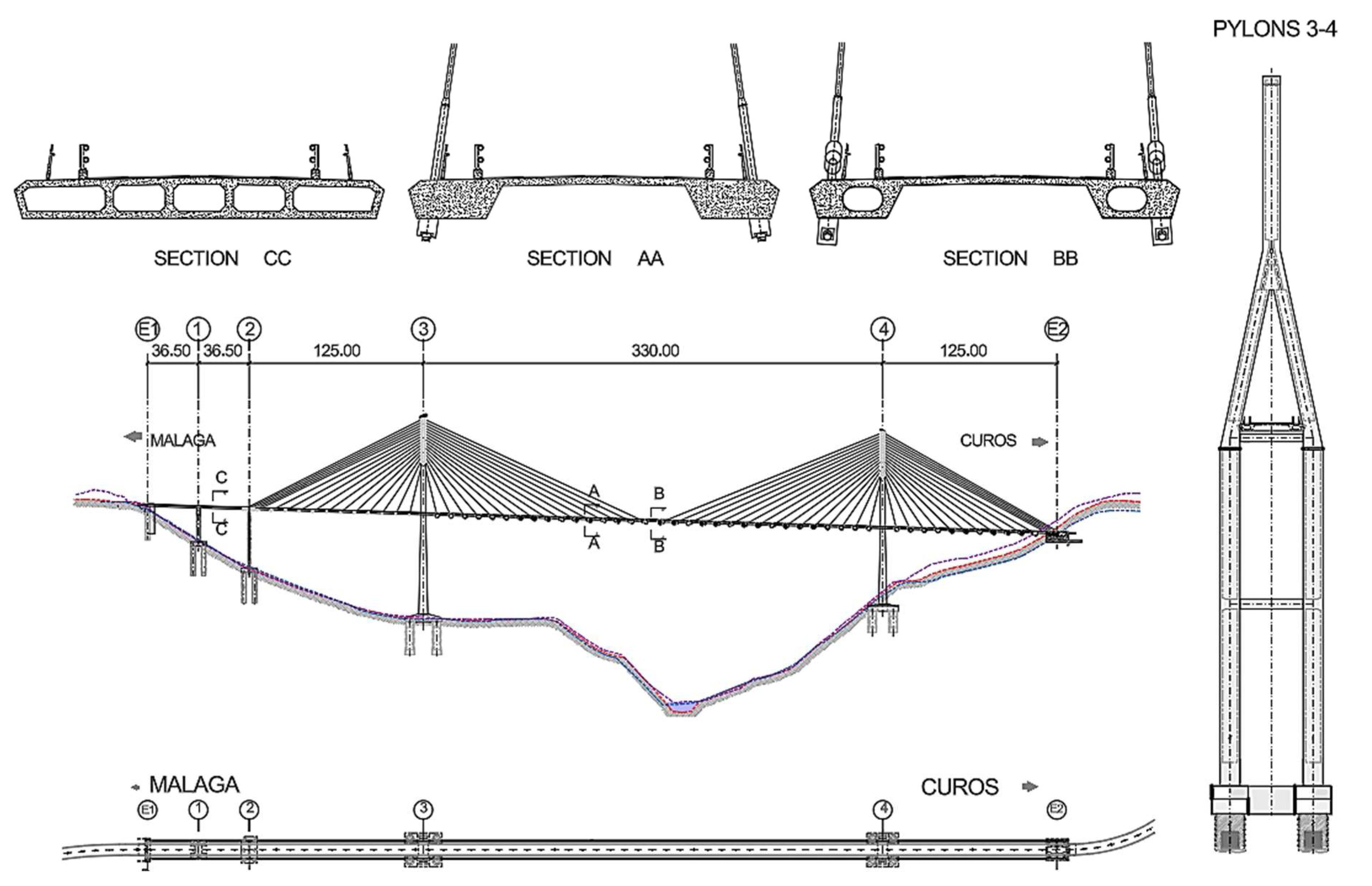
The stay cables were arranged in a semi-harp configuration and anchored along two inverted Y-shaped pylons, as shown in Figure 1a and Figure 2. The superstructure was continuous along its entire length, supported by a multidirectional pot bearing at the pier on Axis 1, monolithically connected to the pier at Axis 2, and transversely supported by elastomeric sliding bearings on the pylons. Viscous fluid dampers were installed at the Curos abutment and oriented along the longitudinal direction of the bridge. Additionally, the concrete deck featured a cross-section composed of two lateral girders, each with a depth of 1.40 m. Outside the stay cable anchorages, the section was lightened, as illustrated in Figure 2 (Sections AA and BB).

3. Numerical Model and Seismic Analysis

3.1. Scope and Limitations of the Numerical Model

The geometry of the finite element model was established based on information from the Instituto Nacional de Vías (INVIAS). At the same time, the material properties were assumed based on specific construction data. In this case, the material parameters used in the finite element model are presented in Table 2.
The numerical model was developed using the structural analysis software SAP2000 (version 25.0.0). The translational and rotational degrees of freedom at the base of the piers and pylons were fully restrained to neglect the soil–structure interaction. This modeling assumption corresponds to the critical boundary condition for evaluating the maximum bending moments and shear forces at the base of the pylons, resulting in a conservative estimate of the seismic demands in these regions. Abutments 1 and 2 were modeled as the rigid bodies.
To evaluate the seismic performance of fluid viscous dampers (FVDs), a two-dimensional numerical model of a bridge was developed in the longitudinal plane. This computational approach is directly aligned with the primary axis of the energy dissipation system. Because FVDs are installed longitudinally at the abutments, their mechanical activation and subsequent energy dissipation are governed almost entirely by the longitudinal relative velocity between the deck and substructure. Equivalent stiffness values were used to approximate the dynamic response and reproduce the representative behavior of the three-dimensional model. In addition, the stiffness and mass contributions of the stay cables were doubled to account for the presence of two symmetrical cable planes. This approach allows for a direct assessment of the damper effects while significantly reducing the computational effort.
The substructure and superstructure were modeled using frame elements, whereas the stay cables were represented as nonlinear cable elements available in SAP2000© [22], which is based on an elastic catenary formulation that captures large deflections, sag effects, and tension-dependent axial stiffness. Additionally, the deck loads were transferred through elastomeric bearings modeled as elastic link elements, with axial and transverse stiffness values computed based on a Shore A hardness of 60 and the geometry provided in the construction drawings. The FVDs located at Abutment 2 were modeled as equivalent nonlinear link elements.
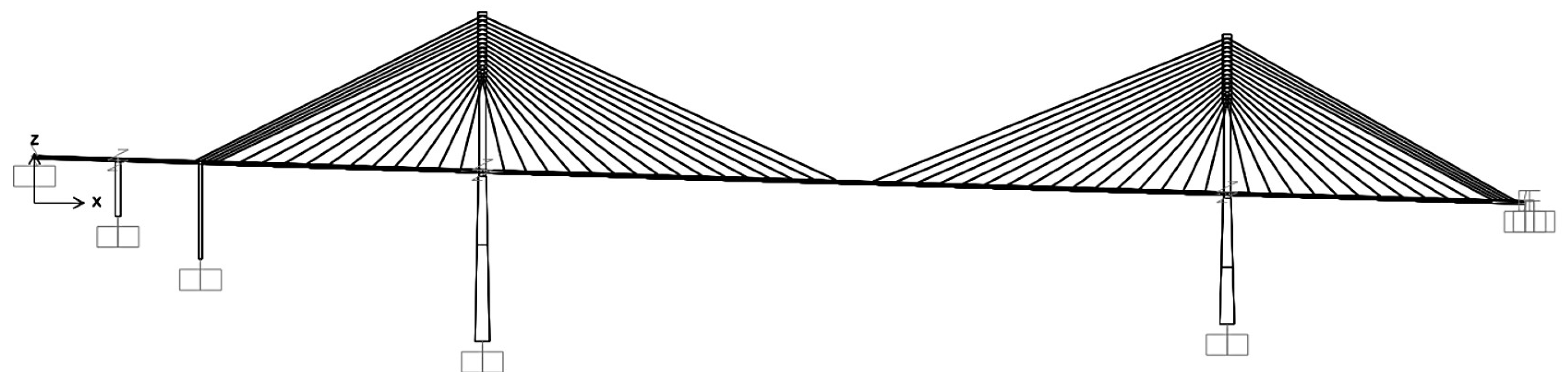
Finally, deformable link elements that represented the stiffness of the elastomeric bearings in this area were used to model the load transfer from the deck to the piers. These elements directly connect the deck to the piers without transmitting forces to the pylons, thereby releasing bending moments and preserving the intended structural behavior conceived in the original design. Therefore, the SAP2000© bridge model is shown in Figure 3.

Modeling for Viscous Dampers

A two-dimensional analysis of the four viscous dampers at abutment two was conducted using an equivalent nonlinear link element. This element is defined based on the properties specified in the construction drawings, as presented in Table 3.
The force F resisted by each damper is defined as:
F = CVα,
C is the damping coefficient, V is the expected relative velocity, and α is the velocity exponent.

3.2. Ground Motion Selection

Ground motion was selected based on the identification of the seismic source to accurately represent the local seismic conditions. In contrast, the most critical records were selected based on their highest frequency, in accordance with ASCE 7-16 [23].

3.2.1. Seismogenic Source Identification

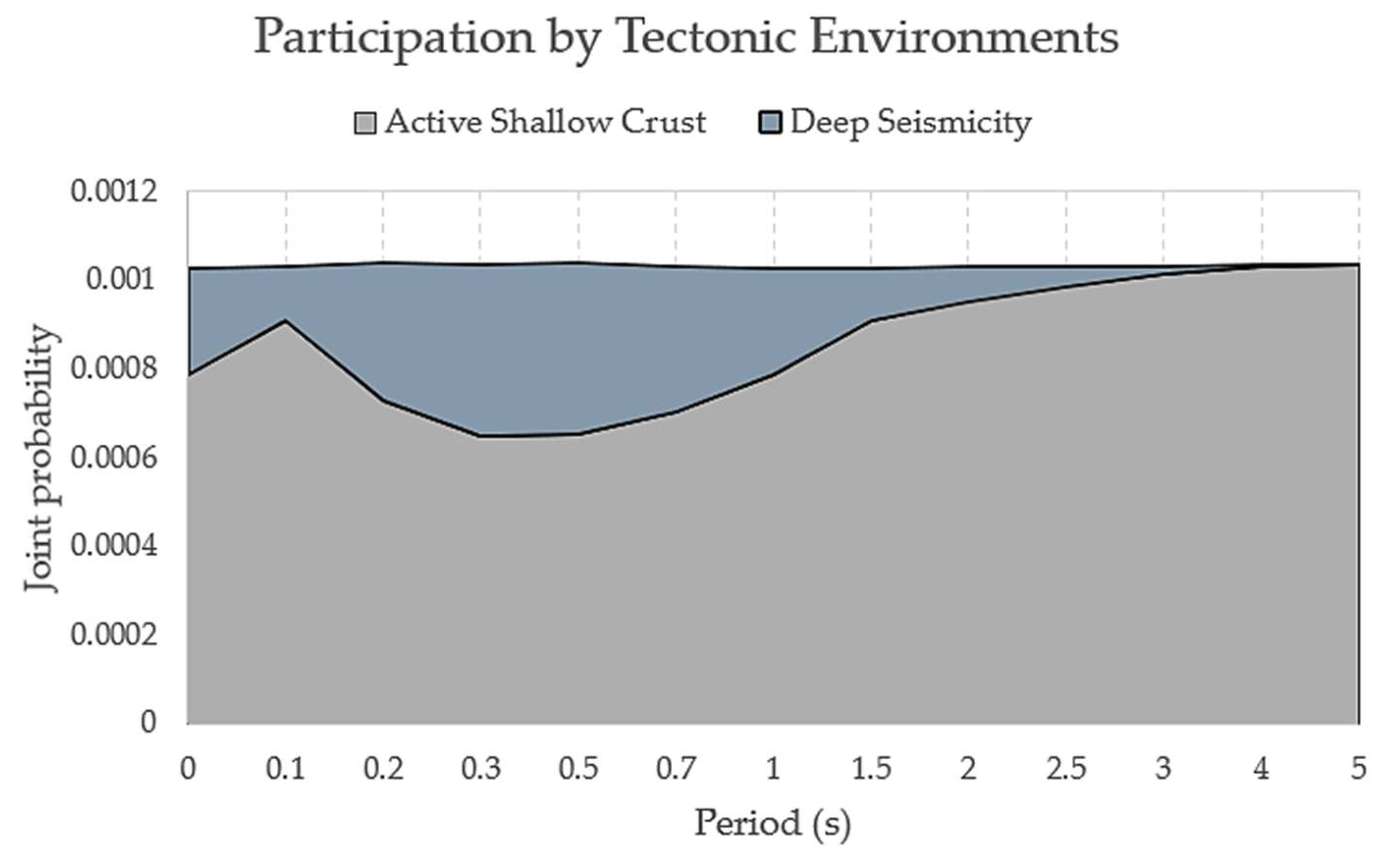
To select the seismogenic source, data from the Colombian Geological Service (Servicio Geológico Colombiano, SGC) were used to determine the contributions of different tectonic environments, as reflected in the joint probability of seismic events affecting the case study area, as shown in Figure 4. This analysis revealed that the region is characterized predominantly by shallow crustal and deep-focus seismicity (the Bucaramanga Seismic Nest).
Given that the fundamental period of the structure, obtained from the modal analysis, is approximately 3.42 s, the contribution of the tectonic environments in the region is shared between crustal and deep seismicity. Therefore, the crustal source was selected for the ground motion records because the crustal and deep sources do not differ at the fundamental period of the structure, as shown in Figure 4.

3.2.2. Record Selection and Scaling Procedure

Owing to the absence of technical recommendations for time-history analysis in the Colombian Bridge Design Code (CCP-14), the FEMA P695 Far-Field set was utilized to obtain real crustal seismic records. This set comprises 22 ground motion records with two orthogonal components, selected from the PEER NGA database (see Section A.7 of FEMA P695) [24]. The 22 records originated from 14 seismic events between 1971 and 1999, with moment magnitudes ranging from M6.5 to M7.6 and an average magnitude of M7.0.
Table 4 summarizes the event magnitude, year, and name and owner of the recording station.
The pseudo-acceleration response spectrum was constructed using the ground motion records listed in Table 4 as follows: the OpenSeesTools library [22] was implemented in Python using Spyder 3.12. The spectra were computed using the Newmark-beta method with conventional parameters α = 1/2 and β = 1/4. These values correspond to the average acceleration method, which ensures unconditional numerical stability and is widely adopted in structural dynamics for linear and moderately nonlinear systems.
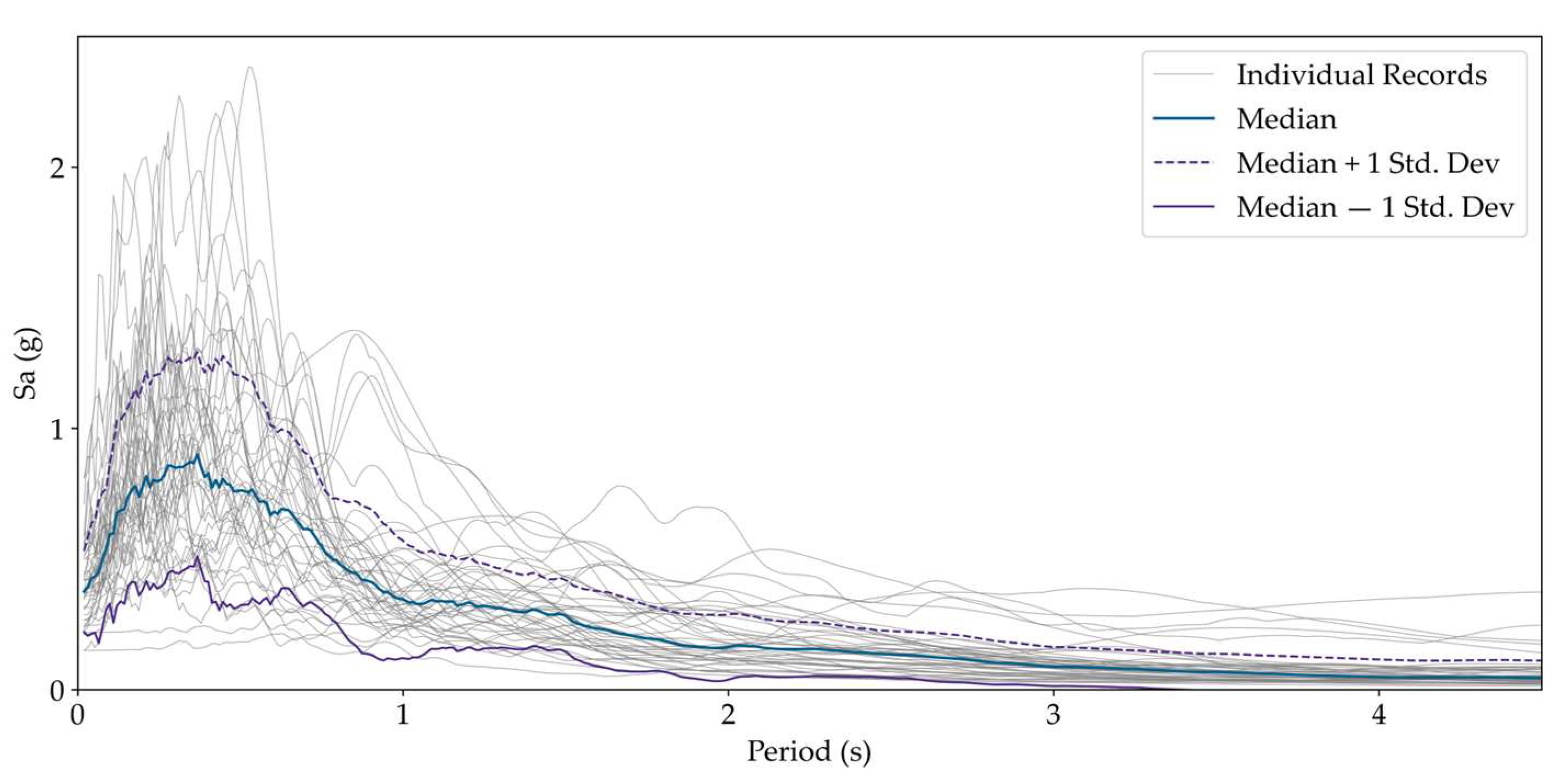
Figure 5 shows the median response spectrum and associated ±1 standard deviation bounds. This statistical representation provides a robust estimate of the central tendency and variability of the selected ground motions, which is essential for evaluating the consistency and dispersion of the spectral demands. The median curve serves as a reference spectrum for comparison with the design spectra or for scaling procedures in the time-history analysis.
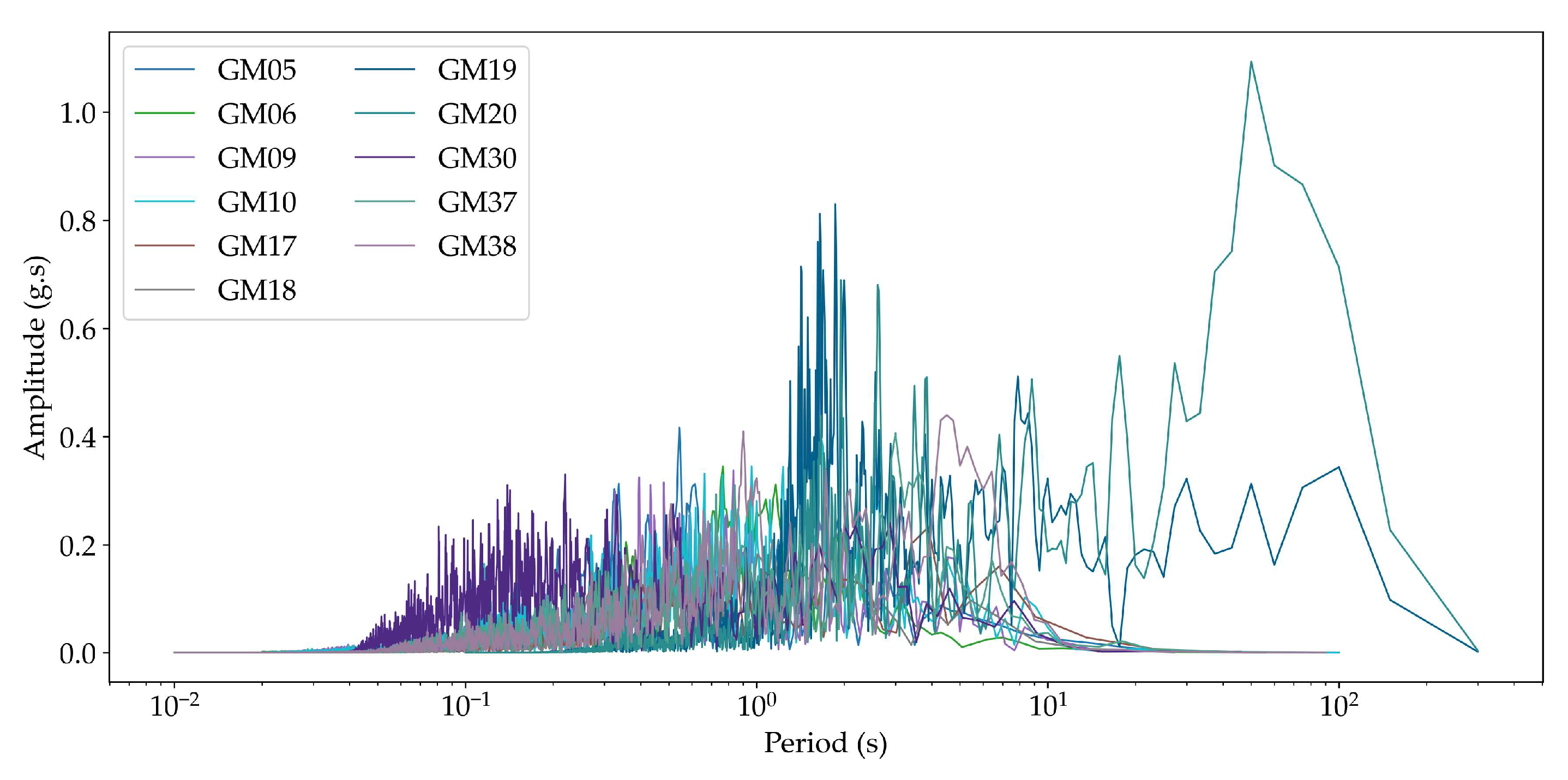
To select the 11 seismic records, the most significant damage potential was identified by the area under the Fourier amplitude spectrum (Figure 6). The integration was performed over the frequency range corresponding to 20% to 150% of the fundamental period (T) of the structure, following the criteria established in Section 16.2.3.2 of ASCE 7-16 [23].
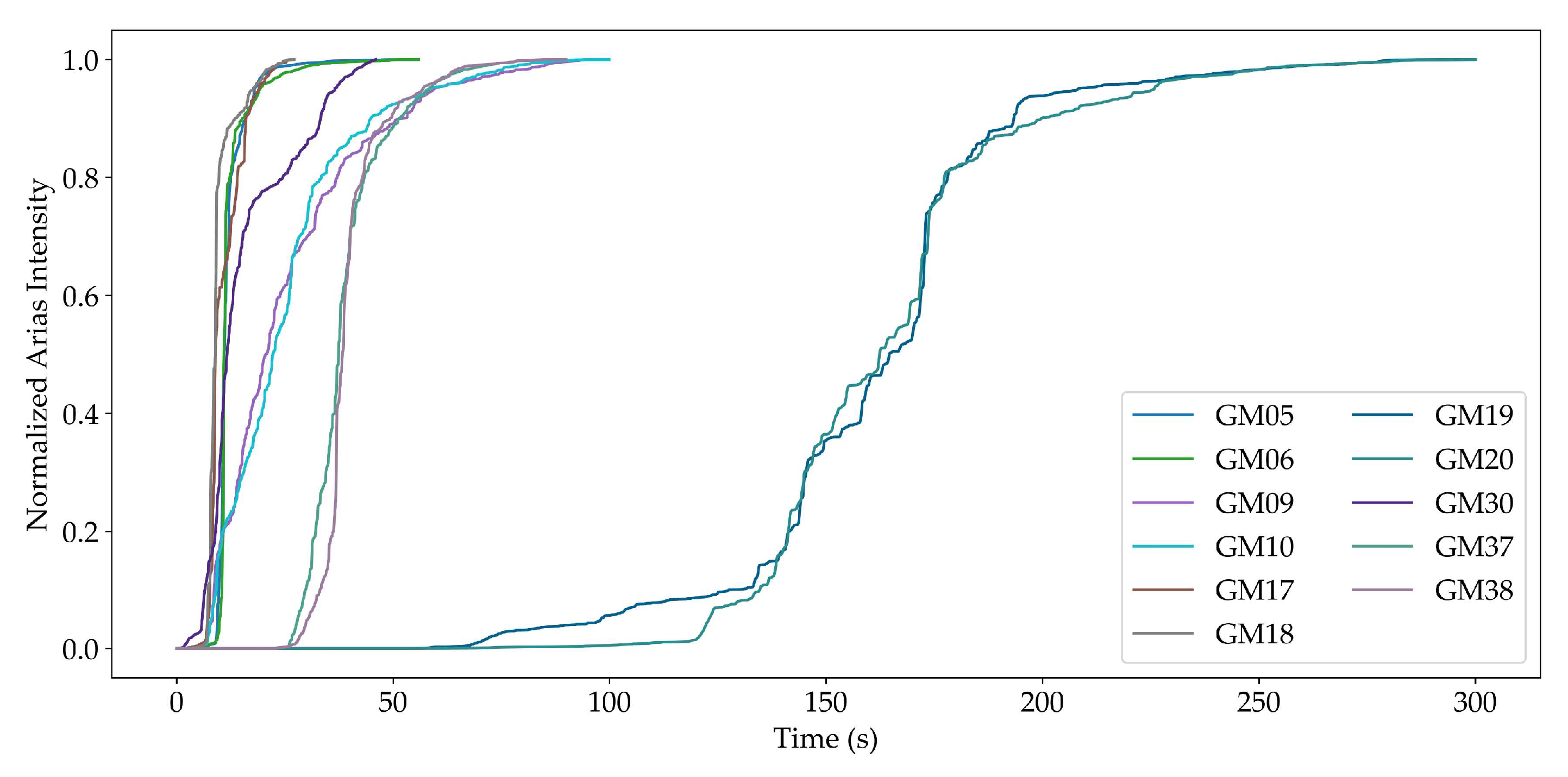
As shown in Figure 7 the Arias Intensity (Ia) was calculated to measure the energy distribution of the 11 selected ground motions. In contrast to the peak ground acceleration, Ia indicates the total energy lost during the entire duration of the seismic event. In this study, Ia was employed as the primary metric to characterize the energy release of the records.
The records were categorized based on the slopes of the normalized Arias intensity curves. As shown in Figure 7, records with nearly vertical slopes were classified as impulsive ground motions, indicating a substantial release of seismic energy over a brief period. Conversely, long-duration ground motions—characterized by a gradual energy release over an extended period—were identified with a gentler and longer slope.
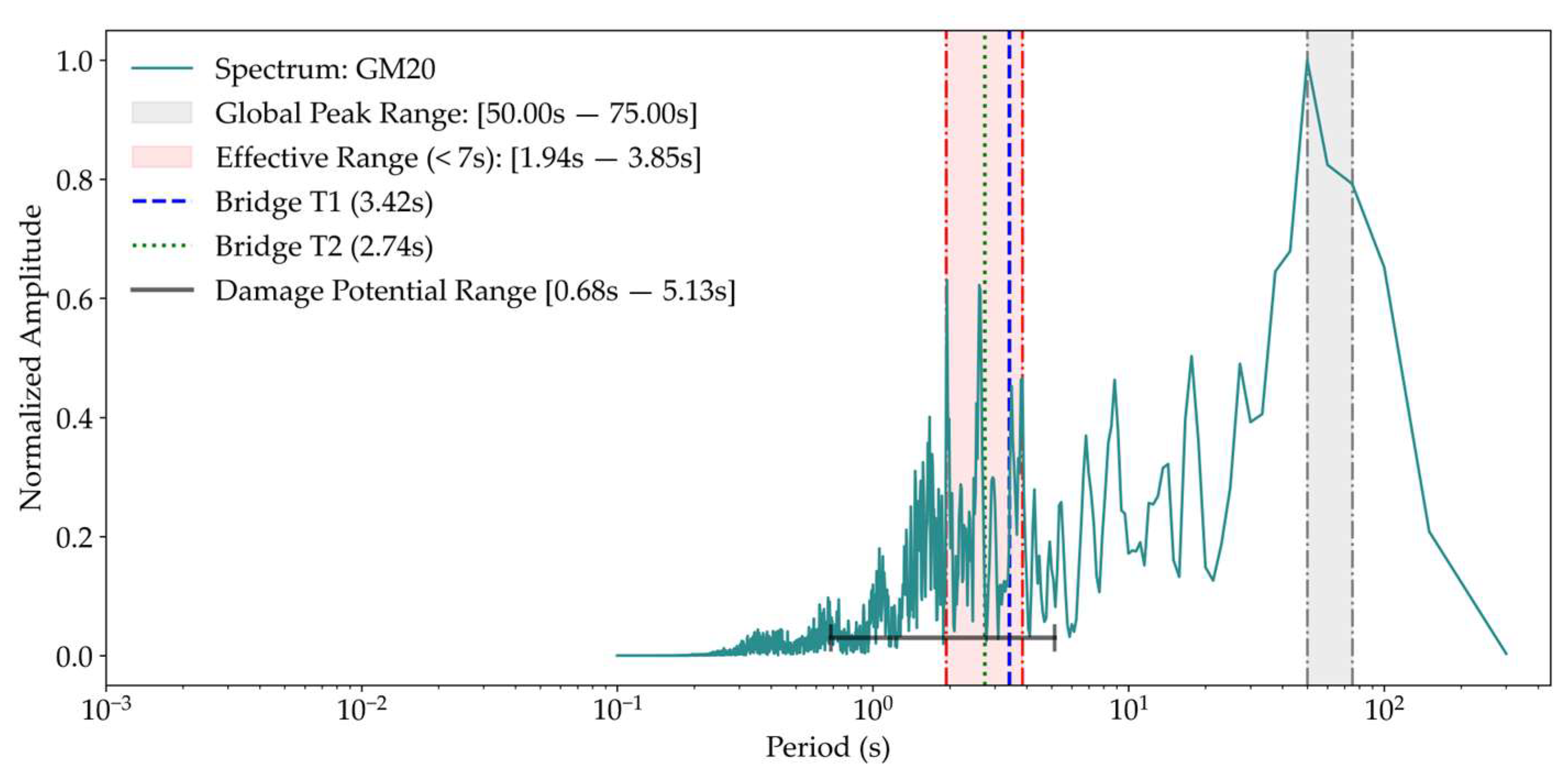
The energy distribution analysis from the Arias Intensity curves is shown in Figure 7 and the Fourier Amplitude Spectra are shown in Figure 6. Table 5 summarizes the duration of each ground motion and the dominant period range. The latter were established using the half-power bandwidth criterion [25], which identifies the frequency interval associated with a reduction of the spectral peak to 0.707 of its maximum amplitude. This bandwidth defines the dominant frequency range in which most of the seismic energy is concentrated, providing a basis for evaluating the subsequent efficiency of the FVD system.
Therefore, ground motions GM05, GM06, GM09, GM10, GM17, GM18, GM19, GM20, GM30, GM37, and GM38 were selected for scaling based on the fundamental periods of the structures.
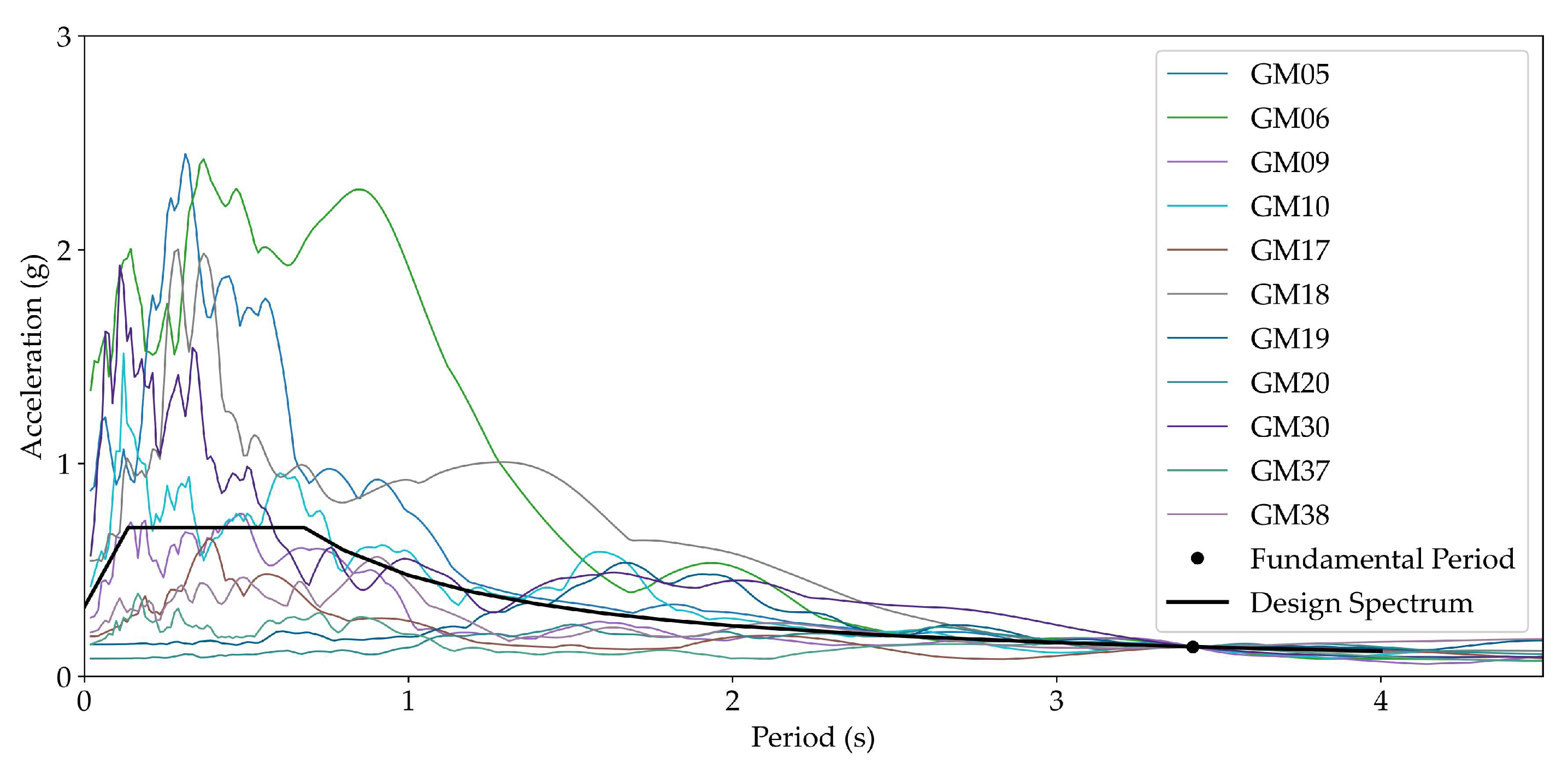
The 11 previously selected ground motions were scaled relative to the design spectrum to adjust for expected seismic hazards. For this purpose, the pseudo-acceleration response spectrum for the site was constructed considering a return period of 1000 years, with FPGA = 1.3, PGA = 1.4, and Fv = 1.9, according to Section 3.10.4 of the Colombian Bridge Design Code CCP-14 [26], which is based on the AASHTO LRFD Bridge Design Specifications [27]. The goal was to determine the pseudo-acceleration corresponding to the fundamental period of the structure, T = 3.42 s, obtained from the modal analysis in SAP2000© [22]. Once the pseudo-acceleration value at the fundamental period was identified, a scale factor was computed as the ratio between the design spectral acceleration and the spectral acceleration of each ground motion at the same period, as shown in Figure 8.

3.3. Nonlinear Response History Analysis

To capture the nonlinear behavior of the FVDs located at Abutment 2 of the bridge, a nonlinear response-history (NL-RHA) dynamic analysis was performed. Structural damping was modeled using Rayleigh damping, which is a linear combination of the mass and stiffness matrices [28]. The coefficients a0 and a1 were calibrated based on the square roots of the eigenvalues associated with the first two longitudinal vibration modes of the bridge.
C = a 0 m + a 1 k ,
a 0 = ξ 2 ω 1 ω 2 ω 1 + ω 2 ,
a 1 = ξ 2 ω 1 + ω 2 ,
where C is the damping matrix of the structure, and M and K are the mass and stiffness matrices, respectively, for a multi-degree-of-freedom (MDOF) system. The coefficients a0 and a1 are determined based on the square roots of the eigenvalues ω1 and ω2, which correspond to the first two translational vibration modes in the longitudinal direction of the bridge, and are extracted from the modal analysis. ξ is the structural damping ratio, which was assumed to be 0.02, in accordance with the value specified by the original designers in the calculation reports and documented.
Nonlinear dynamic analyses were performed using implicit direct time integration with the Newmark average acceleration method (α = 1/2, β = 1/4). The integration time step (Δt) was set equal to the original sampling interval of each accelerogram, and the time steps were dependent on the record duration. The specific Δt values and corresponding number of steps for each ground motion are summarized in Table 6. The nonlinear equilibrium at each increment was solved using the full Newton–Raphson method with a maximum of 40 iterations per time step and a relative equilibrium residual tolerance of 1.0 × 10⁻⁴. A line search algorithm was enabled to enhance the convergence robustness, and an increased iteration limit was adopted to ensure stable convergence in the presence of geometric nonlinearities in the cable elements, as recommended in [22].

4. Results and Discussion

The nonlinear response history analysis results for all 11 selected ground motions are presented, including the hysteresis behavior of the viscous fluid dampers, variations in stay cable forces, longitudinal deck-pylon connection displacements, and bedding and shear forces at the pylon bases, comparing scenarios with and without dampers.

4.1. Baseline Structural Verification (Strength I Limit State)

The analysis yielded Demand/Capacity (D/C) ratios for stay cables that were strictly below 1.0. This guarantees the structural integrity and safety of the bridge under the combined effects of dead and extreme vehicular live loads.
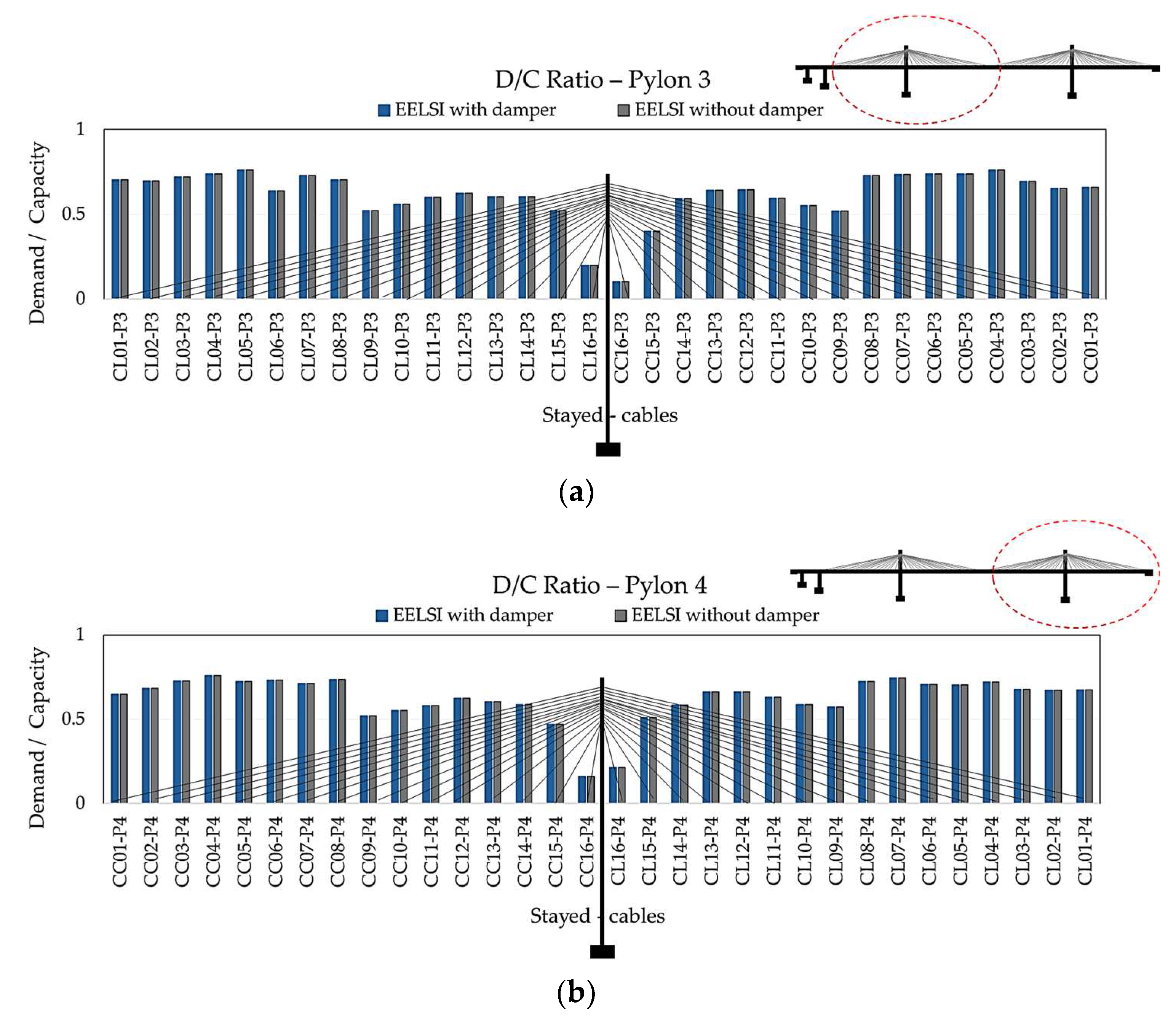
To verify the structural safety under the extreme-event limit state I, the assessment followed the Colombian Bridge Design Code CCP-14 [26], which is based on the AASHTOLRFD Bridge Design Specifications [27]. Figure 9 presents the demand-to-capacity ratio of the cable stayed for the structure with the equivalent FVD at the abutment and the structure without the damper. The presence of the FVD did not affect the axial forces in the stay cables of either Pylon 3 or Pylon 4.
Fluid viscous dampers are strictly velocity-dependent devices that possess zero static stiffness. Consequently, the implementation of the FVD system does not alter the static load path, absorb gravitational loads, or restrict slow-moving actions, such as thermal expansion and contraction.

4.2. Hysteretic Behavior of the Fluid Viscous Dampers

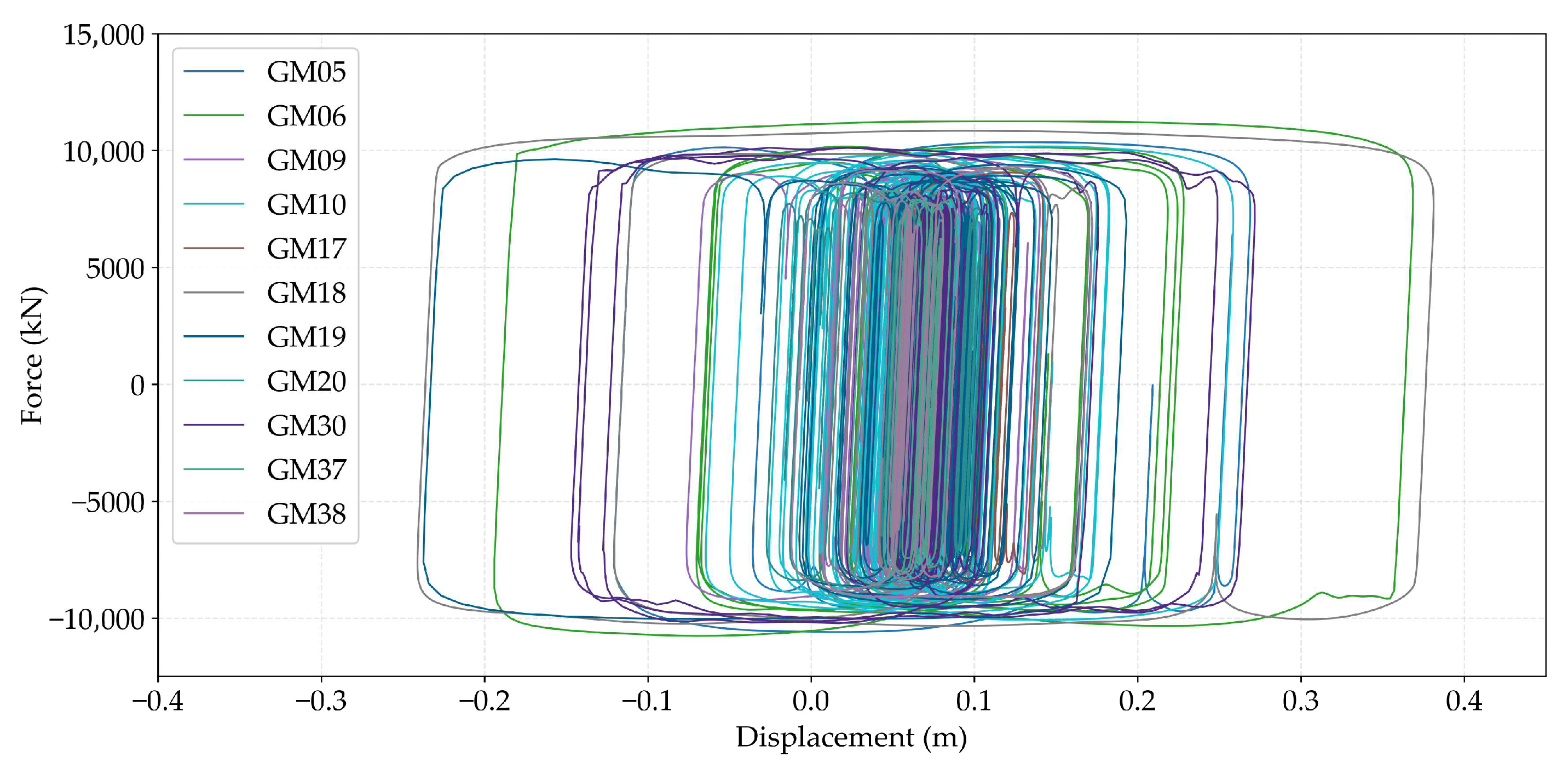
The mechanical response of the FVD system was evaluated to understand the energy dissipation mechanisms during seismic events. Figure 10 shows the force-displacement hysteresis loops generated by the dampers under the 11 selected ground motions.
As shown in Figure 10, the equivalent maximum axial force reaches approximately ±10,000 kN, which reflects the combined behavior of the four individual FVDs arranged at the pylon-deck connection, each with a nominal maximum capacity of 2500 kN. Furthermore, the curves exhibit a highly rectangular hysteretic shape, which is consistent with the low velocity exponent assigned to the nonlinear devices α = 0.10).
Ground motions GM18 and GM06 subjected the system to severe kinematic demands; however, the absolute maximum displacement in any direction did not exceed the mechanical limit of ±0.5 m. This confirms that the FVD system is appropriately sized to avoid stroke saturation or mechanical damage under the selected seismic demands.

4.3. Overall Efficiency of the FVD System

Table 7 summarizes the structural response of the bridge under the selected ground motions, detailing the maximum damper displacement and reduction ratios for the relative deck-pylon displacement, bending moment, and base shear. These results are presented specifically for Pylon 4, as its immediate proximity to the abutment and the fluid viscous damper (FVD) system suggest that the influence of the energy dissipation mechanism is most significant at this location.
A detailed analysis of the results reveals a critical, nonlinear relationship between the kinematic demand on the damper and the actual structural protection it provides. A cluster of ground motions comprising GM09, GM10, GM17, GM19, and GM20 demonstrated high mitigation efficiency, yielding bending moment reductions exceeding 40%. The maximum structural protection was observed under the GM20 record, achieving a remarkable 62.17% and 58.46% reductions in the bending moment and base shear, respectively. Paradoxically, contrasting behaviors become evident in specific anomalous records. For instance, the GM18 record required the maximum damper stroke (0.62 m) but provided low structural protection, resulting in only a 4.08% reduction in the bending moment and a 0.98% reduction in the base shear. Conversely, the optimal GM20 record displaced the damper (0.13 m) and yielded the highest overall mitigation efficiency. Furthermore, under the GM06 record, despite a damper displacement of 0.56 m, the base shear response was amplified, resulting in a negative reduction ratio of −3.70%.

4.4. Frequency-Domain Characterization and Dominant Bandwidth

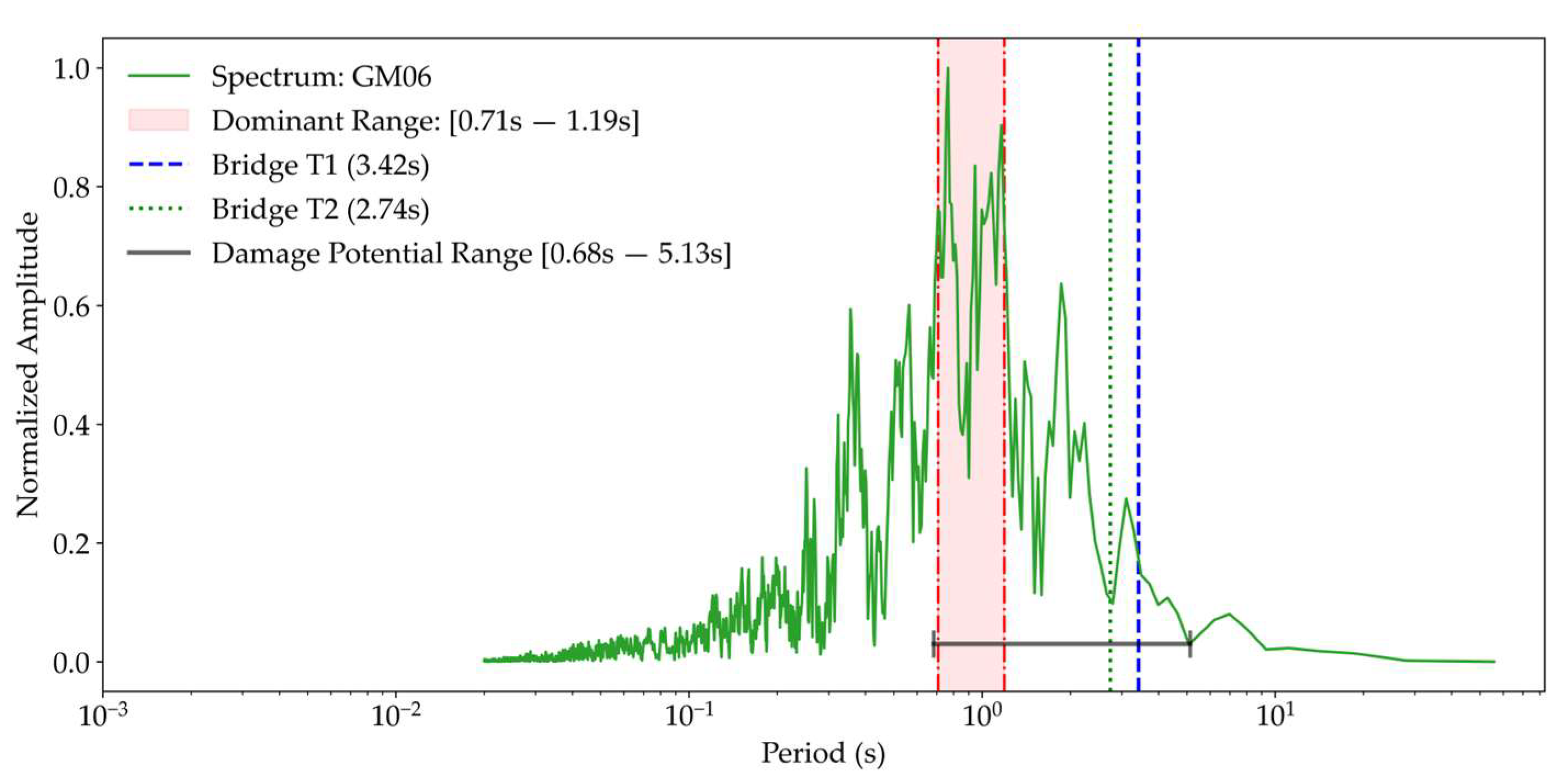
A frequency-domain analysis was conducted to elucidate the disparities in the FVD performance of the system. Figure 11 presents the normalized Fourier amplitude spectrum of the GM06 record, which is heavily concentrated in the high-frequency range (short periods). Consequently, the seismic record excites higher or rigid body modes of the bridge before the flexible deck can adequately deform. This phase mismatch prevents the FVD from engaging effectively during the critical cycles, resulting in a poor bending-moment reduction (14.52%) and a detrimental impact on the base shear (−3.70%).
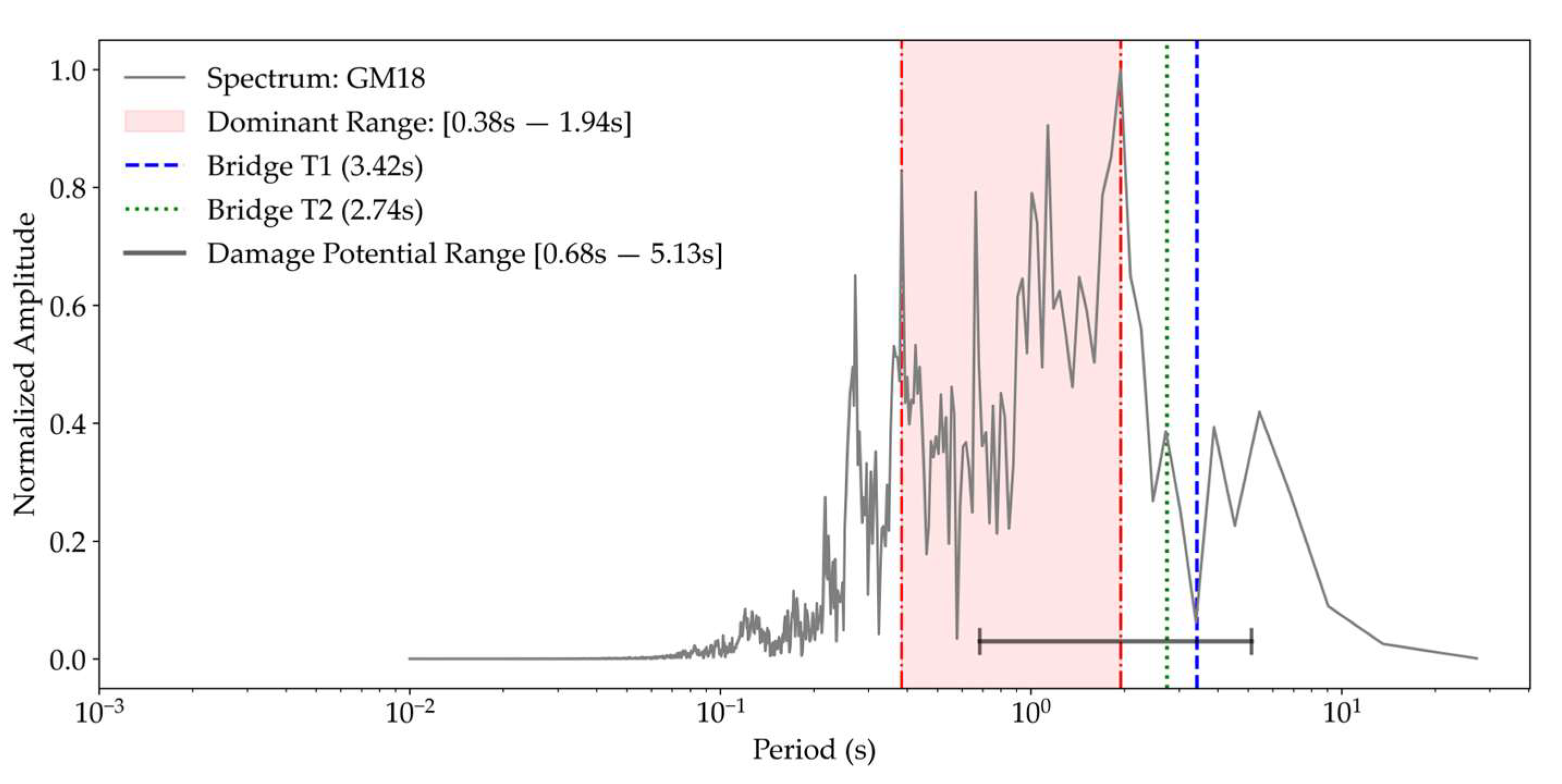
Similarly, the GM18 record shown in Figure 12 has a highly impulsive nature. The abrupt and massive energy input rapidly exhausted the stroke capacity of the damper, driving it to 0.62 m almost instantaneously. This pulse-like excitation saturated the device before stable hysteretic cycles could be established, leaving the pylon base virtually unprotected against the peak seismic demand (4.08% moment reduction).
Analyzing the spectral response of the long-duration GM20 record required the establishment of two distinct bandwidths. As illustrated in Figure 13, the global peak amplitudes corresponded to exceptionally long periods (between 50.00 and 75.00 s). Because it is highly improbable that the structural stiffness will degrade sufficiently to reach this range, these global peaks hold little practical significance for the bridge. Consequently, a secondary “effective bandwidth” was defined to isolate the substantial energy concentration within a physically plausible timeframe (less than 7 s). This effective range (1.94–3.85 s) perfectly encompasses the primary dynamic characteristics of the structure, specifically including both T1 (3.42 s) and T2 (2.74 s). Under this tuned resonance condition, the structural response generates optimal relative velocities at the abutment. Therefore, the FVD operates at peak efficiency without requiring massive longitudinal deck displacements (only 0.13 m), ultimately maximizing the energy-dissipation capacity of the velocity-dependent device.

4.5. Time-Domain Mitigation of Dynamic Response

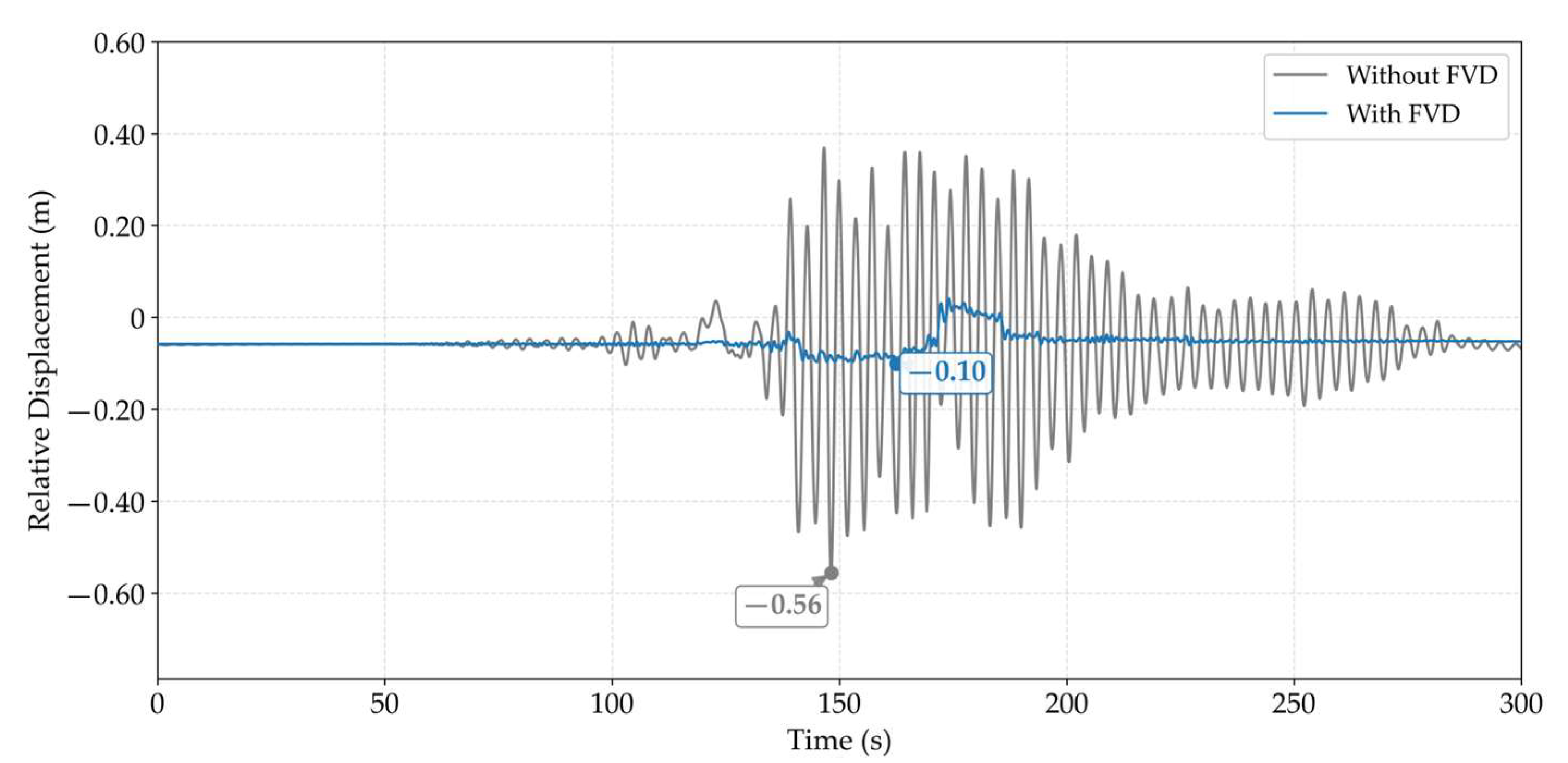
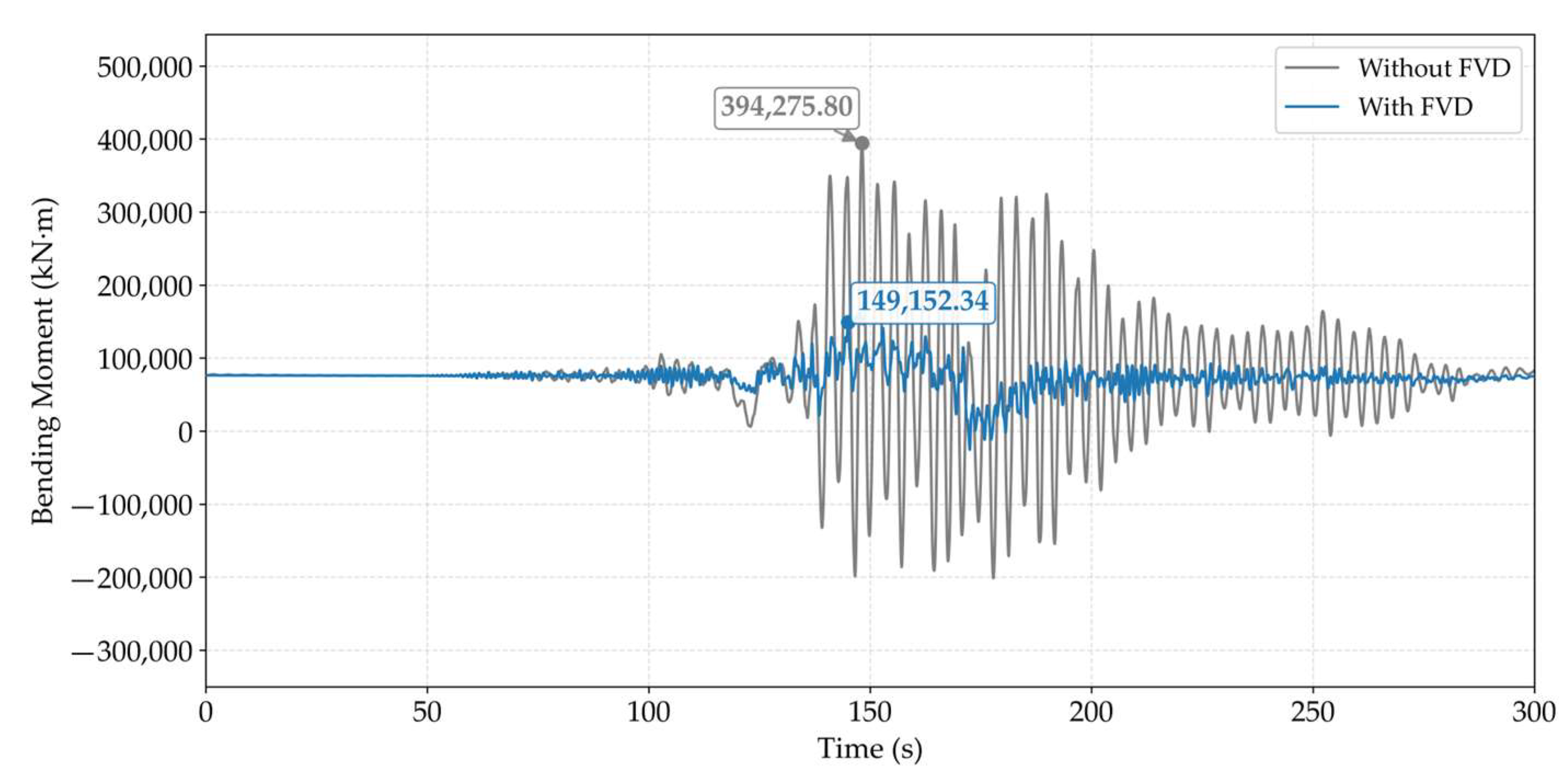
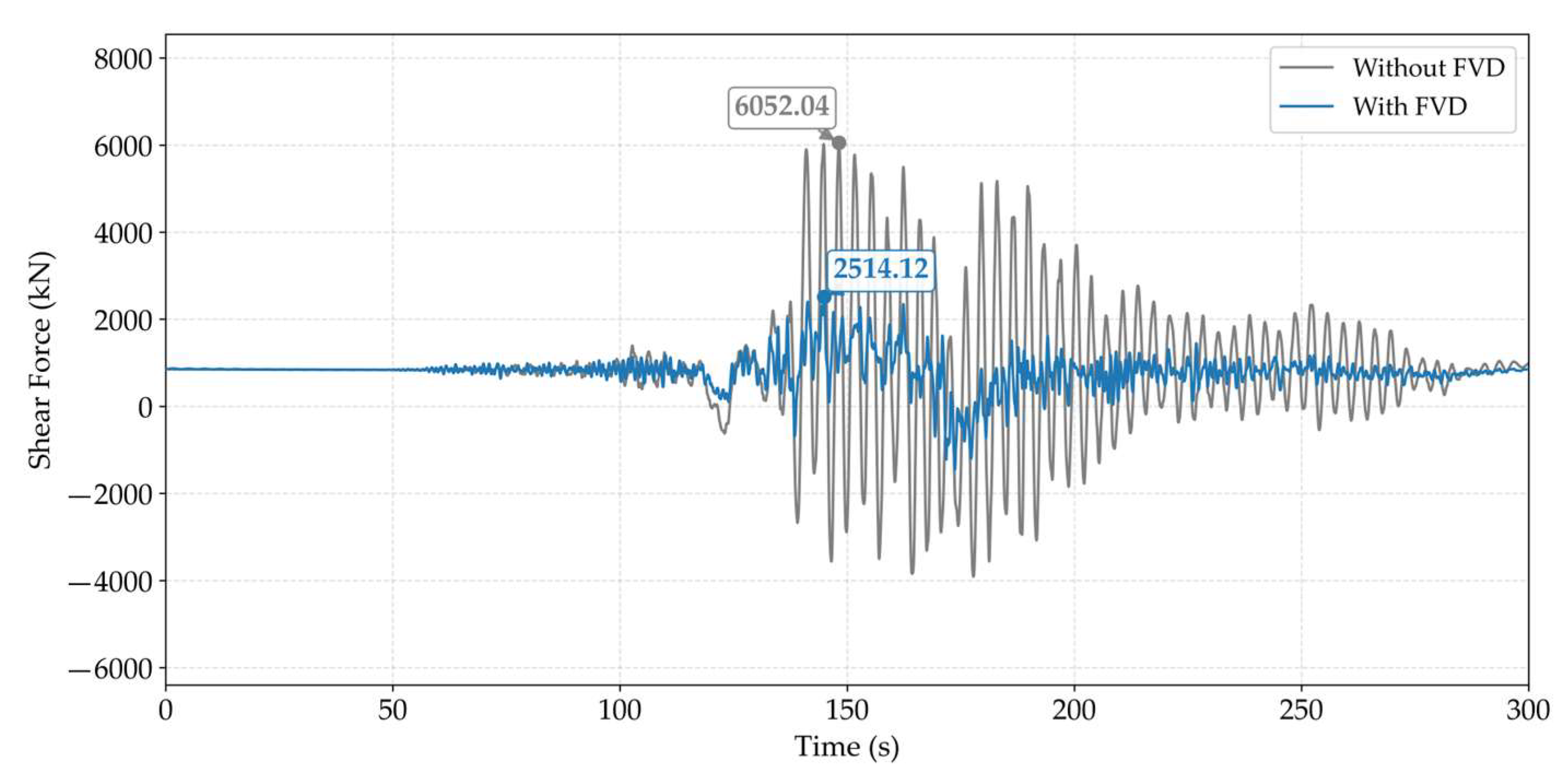
The seismic performance of the bridge was further evaluated by comparing the time history responses of Pylon 4 under the GM20 record, which exhibited the highest mitigation efficiency owing to its spectral alignment with the fundamental period of the structure.
Figure 14 illustrates the longitudinal displacement of the pylon-deck connection. The implementation of a fluid viscous damper (FVD) system at the abutment attenuates the oscillation amplitude of the deck. The peak-to-peak reduction was 81.95%. This reduction demonstrates the ability of the damper to constrain the translation of the semi-floating pontoon deck.
The bending moment at the pylon base was reduced by 62.17%, as shown in Figure 15. The time-history plot shows that the FVD introduced a discernible phase shift in the response, in addition to clipping the maximum flexural peaks. This behavior demonstrates that the additional damping successfully stopped the buildup of inertial forces that would otherwise cause significant stress at the base of the pylon.
Finally, the shear force response at the pylon foundation is shown in Figure 16. In line with the flexural mitigation, the base shear was reduced by 58.46% in this study. While the undamped model exhibited sharp force transitions, the isolated (FVD) model showed a smoother and more damped response curve. It is important to note that, unlike axial forces, which remain largely unaffected by velocity-dependent devices, the shear demand is directly governed by the structural velocity and acceleration, both of which are controlled by the energy dissipation mechanism of the FVD.

5. Conclusions

This study investigated the seismic mitigation efficiency of Fluid Viscous Dampers (FVDs) installed at the abutment of a cable-stayed bridge with a semi-floating deck. By integrating a frequency-domain bandwidth characterization with nonlinear time-history analyses across 11 selected ground motions, the study evaluated the global structural demand reduction, particularly at the critical pylon base. Based on the numerical results, the following conclusions were drawn:
(1)
Baseline and Hysteretic Performance: The implementation of the velocity-dependent FVD system at the abutment did not alter the static load path, leaving the longitudinal cable tension and the Demand/Capacity (D/C) ratios unchanged under the extreme-event limit state I. Under dynamic conditions, the devices exhibited stable, highly rectangular force-displacement hysteresis loops consistent with a low velocity exponent (α = 0.10). The maximum kinematic demands remained safely within the physical clearance limit of ±0.5 m across all scenarios, avoiding stroke saturation at the abutment.
(2)
Stroke-Efficiency: The results demonstrated that the maximum damper displacement at the abutment does not linearly correlate with the maximum structural protection at the pylons. Although the FVD system generally reduced the relative displacements, its efficiency in mitigating internal forces varied widely with ground motion. For example, the highly impulsive GM18 record drove the damper to its maximum stroke (0.62 m peak-to-peak) but yielded low base protection for Pylon 4 (4.08% reduction in the bending moment). Conversely, the optimal GM20 record required minimal damper displacement (0.13 m) and achieved the highest structural relief, reducing the bending moment and base shear by 62.17% and 58.46%, respectively.
(3)
Frequency-Domain Dependency: The core efficiency of the FVD system is fundamentally governed by the energy of the seismic record. The highest energy dissipation occurs when the effective dominant bandwidth of the earthquake aligns with the fundamental period of the bridge (T1). The abutment damper effectively controlled the longitudinal translation deck under these circumstances (e.g., GM20) by operating at optimal relative velocities. However, rigid-body or higher modes are excited by high-frequency ground motions (such as GM06) before the flexible deck can deform, which hinders the ability of the FVD to engage efficiently and may increase the base shear demands.
Limitations and Future Work: The findings presented herein should be interpreted within the scope of the limitations of this study. The numerical evaluation was based on a two-dimensional longitudinal model that precluded the assessment of transverse or torsional seismic coupling. Additionally, because the analysis was predicated on fixed-base conditions, soil–structure interaction (SSI) effects, which can alter resonance scenarios and shift dynamic patterns, were not accounted for. Future studies should examine the three-dimensional isolated bridge response and assess the sensitivity of the effectiveness of mitigation to different soil profiles.

Author Contributions

Conceptualization, A.V.; methodology, S.C.V.; software, S.C.V.; formal analysis, S.C.V.; investigation, S.C.V.; resources, A.V.; data curation, S.C.V.; writing—original draft preparation, S.C.V.; writing—review and editing, A.V. and C.M.G.; visualization, S.C.V.; supervision, A.V. and C.M.G.; project administration, A.V.; funding acquisition, A.V. All authors have read and agreed to the published version of the manuscript.

Funding

This research was funded by the Ministerio de Ciencia, Tecnología e Innovación of Colombia under project code 1102-890-82321 (Contract No. 2022-0647), as part of the research project “Monitoreo del comportamiento a largo plazo de la respuesta estructural de puentes viga cajón segmentales”. The analysis presented in this paper contributes to the project by evaluating the damage scenario associated with seismic actions on bridges constructed using the balanced cantilever method. The APC was supported by the Ministerio de Ciencia, Tecnología e Innovación of Colombia.

Institutional Review Board Statement

Not applicable.

Informed Consent Statement

Not applicable.

Data Availability Statement

Data sharing does not apply to this article.

Acknowledgments

The authors would like to thank the Universidad Industrial de Santander (UIS) for their administrative support throughout this project. We also thank the Instituto Nacional de Vias (INVIAS) for providing the preliminary construction plans used in the research.

Conflicts of Interest

The authors declare no conflicts of interest.

Abbreviations

The following abbreviations are used in this manuscript:
FVDFluid Viscous Damper
FVDsFluid Viscous Dampers
GMGround Motion
MDOFmulti-degree-of-freedom
D/CDemand/Capacity
CCP-14Colombian Bridge Design Code
AASHTO LRFDBridge Design Specifications
NL-RHANonlinear Response-History Analysis

References

  1. Karriqi, T.; Matos, J.C.; Dang, N.-S.; Xia, Y. Bridge Assessment under Earthquake and Flood-Induced Scour. Appl. Sci. 2024, 14, 5174. [Google Scholar] [CrossRef]
  2. Park, J.; Yoon, J.; Park, C.; Lee, J. Studying the Cable Loss Effect on the Seismic Behavior of Cable-Stayed Bridge. Appl. Sci. 2023, 13, 5636. [Google Scholar] [CrossRef]
  3. Granata, M.F.; Arici, M. Serviceability of Segmental Concrete Arch-Frame Bridges Built by Cantilevering. Bridge Struct. 2013, 9, 21–36. [Google Scholar] [CrossRef]
  4. Guerrero Castellanos, J.L. Revisión Bibliográfica del Monitoreo de Comportamiento Estructural a Largo Plazo de Puentes Viga Cajón en Concreto. Bachelor’s Thesis, Universidad Industrial de Santander, Bucaramanga, Colombia, 2024. [Google Scholar]
  5. Zhong, J.; Hu, Z.; Yuan, W.; Chen, L. System-Based Probabilistic Optimization of Fluid Viscous Dampers Equipped in Cable-Stayed Bridges. Adv. Struct. Eng. 2018, 21, 1815–1825. [Google Scholar] [CrossRef]
  6. Lu, L.; Li, J.; Jia, L. Control of the Dynamic Response of Cable-Stayed Bridge with Highway and Railway under Multiple Loading by a Viscous Damper. In Proceedings of the IABSE Conference, Geneva, Switzerland, 23–25 September 2015; pp. 1829–1836. [Google Scholar]
  7. Naranjo-Pérez, J.; Jiménez-Alonso, J.F.; Díaz, I.M.; Quaranta, G.; Sáez, A. Motion-Based Design of Passive Damping Systems to Reduce Wind-Induced Vibrations of Stay Cables under Uncertainty Conditions. Appl. Sci. 2020, 10, 1740. [Google Scholar] [CrossRef]
  8. Ma, Y.; Song, C.; Wang, Z.; Jiang, Z.; Sun, B.; Xiao, R. Efficient Design Optimization of Cable-Stayed Bridges: A Two-Layer Framework with Surrogate-Model-Assisted Prediction of Optimum Cable Forces. Appl. Sci. 2024, 14, 2007. [Google Scholar] [CrossRef]
  9. Wang, L.; Xiao, Z.; Li, M.; Fu, N. Cable Force Optimization of Cable-Stayed Bridge Based on Multiobjective Particle Swarm Optimization Algorithm with Mutation Operation and the Influence Matrix. Appl. Sci. 2023, 13, 2611. [Google Scholar] [CrossRef]
  10. Guo, J.; Zhong, J.; Dang, X.; Yuan, W. Seismic Responses of a Cable-Stayed Bridge with Consideration of Uniform Temperature Load. Appl. Sci. 2016, 6, 408. [Google Scholar] [CrossRef]
  11. Xu, Y.; Wang, R.L.; Li, J.Z. Shake Table Test of a Cable-Stayed Bridge Using Yielding Steel Dampers. In Proceedings of the International Conference on Advances in Experimental Structural Engineering; University of Illinois Urbana-Champaign: Urbana, IL, USA, 2015; Volume 2015. [Google Scholar]
  12. Wu, C.; He, X.; He, L.; Zhao, X.; Wang, Y.; Li, C.; Yang, Y.; Zhang, X. Improving Cable-Stayed Bridge Longitudinal Aseismic Capability via Fluid Viscous Damper Parametric Optimization and Experimental Investigation. Structures 2023, 57, 105199. [Google Scholar] [CrossRef]
  13. Qiu, W.L.; Jiang, M.; Zhang, X.B. Seismic Response Reduction of Cable-Stayed Bridge with Viscous Dampers. Appl. Mech. Mater. 2012, 137, 154–158. [Google Scholar] [CrossRef]
  14. Wu, S.P.; Xu, L.; Fang, Z.Z. Study on Optimized Shock Absorption Design of a Floating Cable-Stayed Bridge. Appl. Mech. Mater. 2013, 438–439, 874–878. [Google Scholar] [CrossRef]
  15. Xiao, J.; Song, L.; Guan, X.; Bai, M. Mechanical, Hydration Process, and Microstructural Properties of Eco-Friendly UHDC Incorporating Recycled Concrete Powder. Constr. Build. Mater. 2026, 507, 145063. [Google Scholar] [CrossRef]
  16. Gao, H.; Li, L.; Ding, Z.; Zhang, L.; Zhang, K.; Luo, Z. Seismic Study of An Isolated Cable-Stayed Bridge under Near-Fault Ground Motions. Appl. Sci. 2024, 14, 6220. [Google Scholar] [CrossRef]
  17. Liu, Q.; Liu, Z.; Zhao, J.; Lei, Y.; Zhu, S.; Wu, X. Seismic Optimization of Fluid Viscous Dampers in Cable-Stayed Bridges: A Case Study Using Surrogate Models and NSGA-II. Buildings 2025, 15, 1446. [Google Scholar] [CrossRef]
  18. Chen, Y.; Sun, H.; Feng, Z. Study on Seismic Isolation of Long Span Double Deck Steel Truss Continuous Girder Bridge. Appl. Sci. 2022, 12, 2567. [Google Scholar] [CrossRef]
  19. Martínez-Rodrigo, M.D.; Filiatrault, A. A Case Study on the Application of Passive Control and Seismic Isolation Techniques to Cable-Stayed Bridges: A Comparative Investigation through Non-Linear Dynamic Analyses. Eng. Struct. 2015, 99, 232–252. [Google Scholar] [CrossRef]
  20. Domaneschi, M.; Martinelli, L. Extending the Benchmark Cable-Stayed Bridge for Transverse Response under Seismic Loading. J. Bridge Eng. 2014, 19, 04013003. [Google Scholar] [CrossRef]
  21. Rådeström, S.; Ülker-Kaustell, M.; Andersson, A.; Tell, V.; Karoumi, R. Application of Fluid Viscous Dampers to Mitigate Vibrations of High-Speed Railway Bridges. Int. J. Rail Transp. 2017, 5, 47–62. [Google Scholar] [CrossRef]
  22. Computers and Structures, Inc. (CSI). SAP2000 Structural Analysis Software 25.0.0; Computers and Structures, Inc. (CSI): Walnut Creek, CA, USA, 2025. [Google Scholar]
  23. American Society of Civil Engineers. Minimum Design Loads and Associated Criteria for Buildings and Other Structures; American Society of Civil Engineers: Reston, VA, USA, 2024. [Google Scholar] [CrossRef]
  24. Applied Technology Council. FEMA P-695, Quantification of Building Seismic Performance Factors—Applied Technology Council Online Store; Applied Technology Council: Redwood City, CA, USA, 2009. [Google Scholar]
  25. Qiu, Z.; Zhu, W.; Du, J.; Feng, G. Spectral Analysis Method of Seismic Waves: Time-Frequency Response Spectrum. Int. J. Hous. Sci. Its Appl. 2024, 45, 98–106. [Google Scholar] [CrossRef]
  26. INVIAS. Norma Colombiana de Diseño de Puentes CCP14; INVIAS: Bogota, Colombia, 2014. [Google Scholar]
  27. American Association of State Highway and Transportation. AASHTO LRFD Bridge Design Guide; American Association of State Highway and Transportation: Washington, DC, USA, 2020. [Google Scholar]
  28. Chopra, A.K. Dynamics of Structures: Theory and Applications to Earthquake Engineering, 5th ed.; Prentice-Hall International Series in Civil Engineering and Engineering Mechanics; Pearson: Hoboken, NJ, USA, 2017. [Google Scholar]
Figure 1. (a) Overall view of the Hisgaura Bridge; (b) Location of the Bridge.
Applsci 16 03312 g001
Figure 2. General drawing of the Hisgaura Bridge.
Applsci 16 03312 g002
Figure 3. Numerical model of the Hisgaura bridge.
Applsci 16 03312 g003
Figure 4. Joint probability of occurrence associated with tectonic-source types.
Applsci 16 03312 g004
Figure 5. Pseudo-Acceleration Response Spectra for 44 Ground Motion Records.
Applsci 16 03312 g005
Figure 6. Fourier Amplitude Spectrum.
Applsci 16 03312 g006
Figure 7. Normalized Arias Intensity curves for the seismic dataset.
Applsci 16 03312 g007
Figure 8. Scaled Pseudo-Acceleration Spectra.
Applsci 16 03312 g008
Figure 9. Comparison of Demand-to-Allowable Capacity Ratios for (a) Pylon 3 Stay Cables with and without Damper; (b) Pylon 4 Stay Cables with and without Damper.
Applsci 16 03312 g009
Figure 10. Hysteretic Response of the Equivalent Damper—11 Seismic Records.
Applsci 16 03312 g010
Figure 11. Fourier amplitude spectrum normalized-GM06.
Applsci 16 03312 g011
Figure 12. Fourier amplitude spectrum normalized-GM18.
Applsci 16 03312 g012
Figure 13. Fourier amplitude spectrum normalized-GM20.
Applsci 16 03312 g013
Figure 14. Comparison of history responses at pylon 4 with damper and without damper cases under Ground Motion GM20. Displacement at the pylon-deck connection.
Applsci 16 03312 g014
Figure 15. Comparison of history responses at pylon 4 with and without damper under Ground Motion GM20. Bending moment at the pylon base.
Applsci 16 03312 g015
Figure 16. Comparison of history responses at pylon 4 with and without damper under Ground Motion GM20. Shear force at the pylon base.
Applsci 16 03312 g016
Table 1. Summary of the bridge geometry.
ParameterValue
Total length653 m
Span arrangement36.50 + 36.50 + 125.0 + 330.0 + 125.0 m
Main span length330.0 m
Deck width13.70 m
Deck depth1.40 m
Piers 1–2 height24.0–46.0 m
Above-deck height of pylons 3–470.0 m
Below-deck height of pylons 3–473.0–55.0 m
Pylon typeInverted Y-shaped
Deck-pylon connectionSemi-floating
Cable planesDouble
Number of stay cables128 (64 per plane)
Vehicular lanes2
Number of pedestrian walkways2
Lane width3.65 m
Pedestrian walkway width1.0 m
Lateral shoulder width0.50 m
Table 2. Material properties of FE model.
Component NamesElastic Modulus (GPa)Poisson RatioMass Density (kg/m3)Linear Expansion Coefficient (10−5 1/°C)
Approach Deck31.11 10.202500 11.0
Deck33.94 10.202500 11.0
Pier 131.11 10.202500 11.0
Pier 233.94 10.202500 11.0
Pylon 3–431.11 10.202500 11.0
Stay cables196.50 10.307850 11.2
1 All the material properties implemented in the finite element model were defined based on the specifications provided in the construction drawings.
Table 3. The parameters of the viscous dampers are specified in the construction drawings.
ParameterValueUnits
Maximum Force (F)2500kN
Maximum Velocity (V)0.56m/s
Velocity Exponent (α)0.10--
Damping Coefficient (C)2649.24 1kN-s/m
Maximum Displacement (Δ)±500mm
1 The damping coefficient C was estimated from the maximum force and velocity values in the construction drawing.
Table 4. Selected ground motion records.
IDsEarthquakeRecording Station
GMMYearNameNameOwner
01–026.71994NorthridgeBeverly Hills-MulholUSC
03–046.71994NorthridgeCanyon Country-WLCUSC
05–067.11999Duzce, TurkeyBoluERD
07–087.11999Hector MineHectorSCSN
09–106.51979Imperial ValleyDeltaUNAMUCSD
11–126.51979Imperial ValleyEl Centro Array #11USGS
13–146.91995Kobe, JapanNishi-AkashiCUE
15–166.91995Kobe, JapanShin-OsakaCUE
17–187.51999Kocaeli, TurkeyDuzceERD
19–207.51999Kocaeli, TurkeyArcelikKOERI
21–227.31992LandersYermo Fire StationCDMG
23–247.31992LandersCoolwaterSCE
25–266.91989Loma PrietaCapitolaCDMG
27–286.91989Loma PrietaGilroy Array #3CDMG
29–307.41990Manjil, IranAbbarBHRC
31–326.51987Superstition HillsEl Centro Imp. Co.CDMG
33–346.51987Superstition HillsPoe Road (temp)USGS
35–367.01992Cape MendocinoRio Dell OverpassCDMG
37–387.61999Chi-Chi, TaiwanCHY101CWB
39–407.61999Chi-Chi, TaiwanTCU045CWB
41–426.61971San FernandoLA-Hollywood StorCDMG
43–446.51976Friuli, ItalyTolmezzoCDMG
Note: Adapted from FEMA P695 [24].
Table 5. Information on records.
RecordDuration (s)Period Range (s)
GM0555.900.32–0.60
GM0655.900.71–1.10
GM0999.920.33–2.04
GM1099.920.66–2.56
GM1727.190.68–3.89
GM1827.190.38–1.94
GM19300.001.42–2.01
GM20300.0050.00–75.00
GM3053.520.08–2.88
GM3790.000.73–3.75
GM3890.000.88–6.43
Table 6. Nonlinear parameters from analysis.
Load CaseOutput Time Step SizeOutput Time Steps
GM050.015590
GM060.015590
GM090.019992
GM100.019992
GM170.0055437
GM180.0055437
GM190.056000
GM200.056000
GM300.022676
GM370.00518,000
GM380.00518,000
Table 7. Results from analysis.
RecordDamper Displacement (m)Displacement 1
(%)
Bending Moment 2 (%)Shear 2
(%)
GM050.3949.8311.9611.07
GM060.5647.8414.52−3.70
GM090.2282.2550.3225.46
GM100.3265.0843.846.57
GM170.0974.7752.1241.08
GM180.6211.674.080.98
GM190.4349.4350.0238.07
GM200.1381.9562.1758.46
GM300.4251.2914.538.90
GM370.0786.5866.7648.00
GM380.1864.9353.7433.90
1 Pylon 4–deck displacement ratio; 2 Base shear ratio and bending moment ratio of pylon 4.
Disclaimer/Publisher’s Note: The statements, opinions and data contained in all publications are solely those of the individual author(s) and contributor(s) and not of MDPI and/or the editor(s). MDPI and/or the editor(s) disclaim responsibility for any injury to people or property resulting from any ideas, methods, instructions or products referred to in the content.