Runway Incursion Risk Propagation Model Based on Complex Network Theory

Abstract
1. Introduction
2. Construction of the Runway Incursion Risk Indicator System
- The event was explicitly classified as a runway incursion according to ICAO definitions;
- The case narrative contained sufficient detail to allow for the extraction of causal risk factors and their relationships;
- Risk Factor A is explicitly stated or strongly implied to temporally precede and directly contribute to the occurrence or exacerbation of Risk Factor B;
- The narrative logic indicates that B would not have occurred, or would have been less severe, in the absence of A. Mere co-occurrence or contextual association without a directed, generative link was not coded as a causal relationship.
- Assessment of Theoretical Saturation: After the initial coding framework (112 first-order concepts and the higher-order categories) was established from the first batch of cases, we analyzed additional, sequentially selected case reports. The purpose was to determine if new first-order concepts, categories, or substantial modifications to the existing category relationships emerged. This iterative process continued until no new substantive insights were generated from the additional data, at which point the coding framework was considered theoretically saturated.
- Coding Validation and Reliability: To enhance the credibility of the coding results, two researchers independently performed open and axial coding on a randomly selected subset of cases (approximately 30% of the total dataset). They then compared their derived concepts and categories. Discrepancies were discussed and resolved through consensus, referring back to the original text. The inter-coder agreement, measured by Cohen’s Kappa coefficient, reached 0.81, indicating an almost perfect level of agreement. This process helped to minimize individual coder bias and strengthen the validity of the final risk indicator system.
3. Model Development
3.1. Determining Edge Connectivity and Directionality
3.2. Determination of Directed Edge Weights
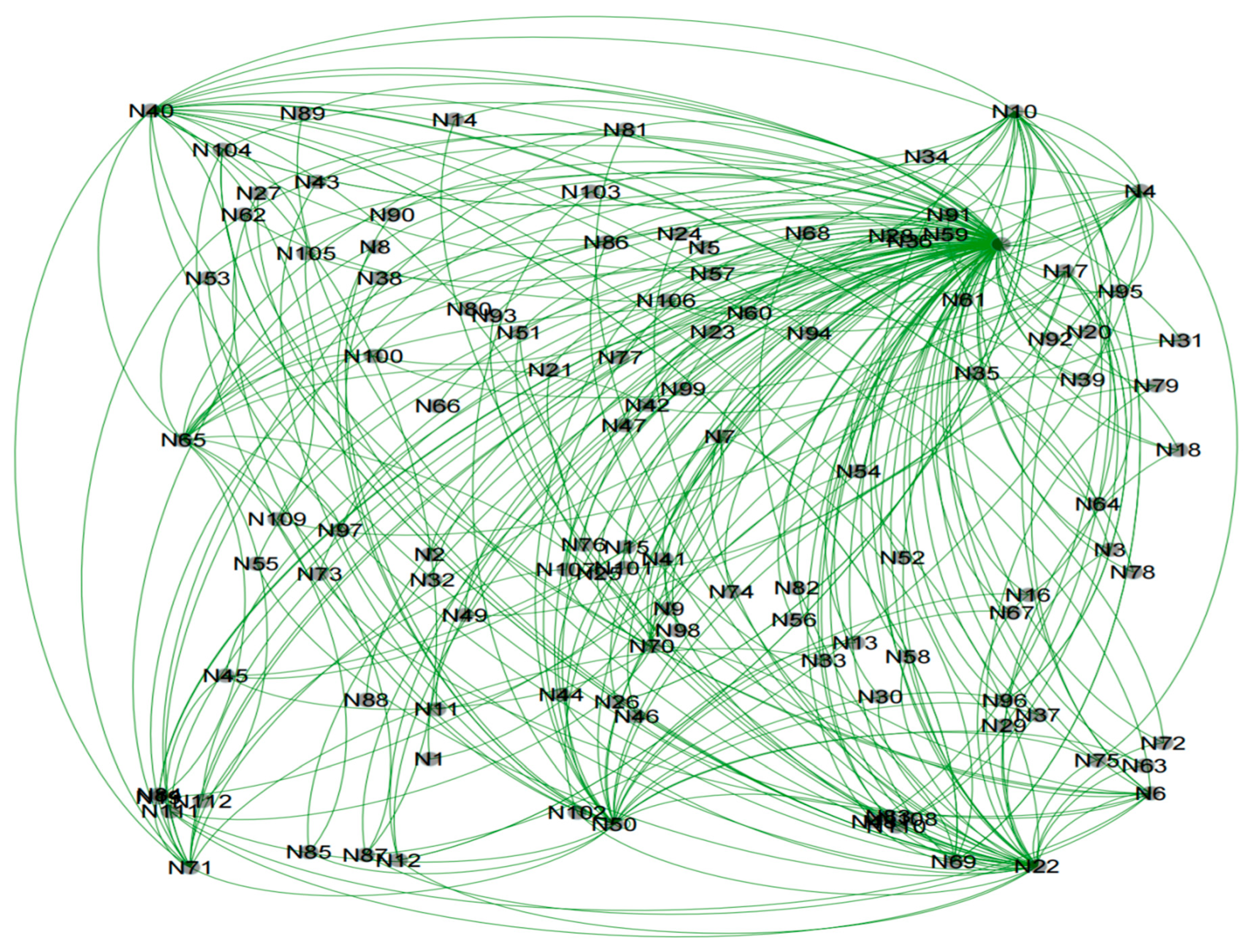
3.3. Causal Network Model Construction
3.4. Complex Network Model Characteristic Analysis
- 1.
- Node Degree
- 2.
- Network density
- 3.
- Clustering Coefficient
- 4.
- Network Diameter and Average Path Length
- 5.
- Betweenness Centrality
3.5. Node Importance Evaluation
3.6. Runway Incursion Risk Propagation Model Based on Load Allocation
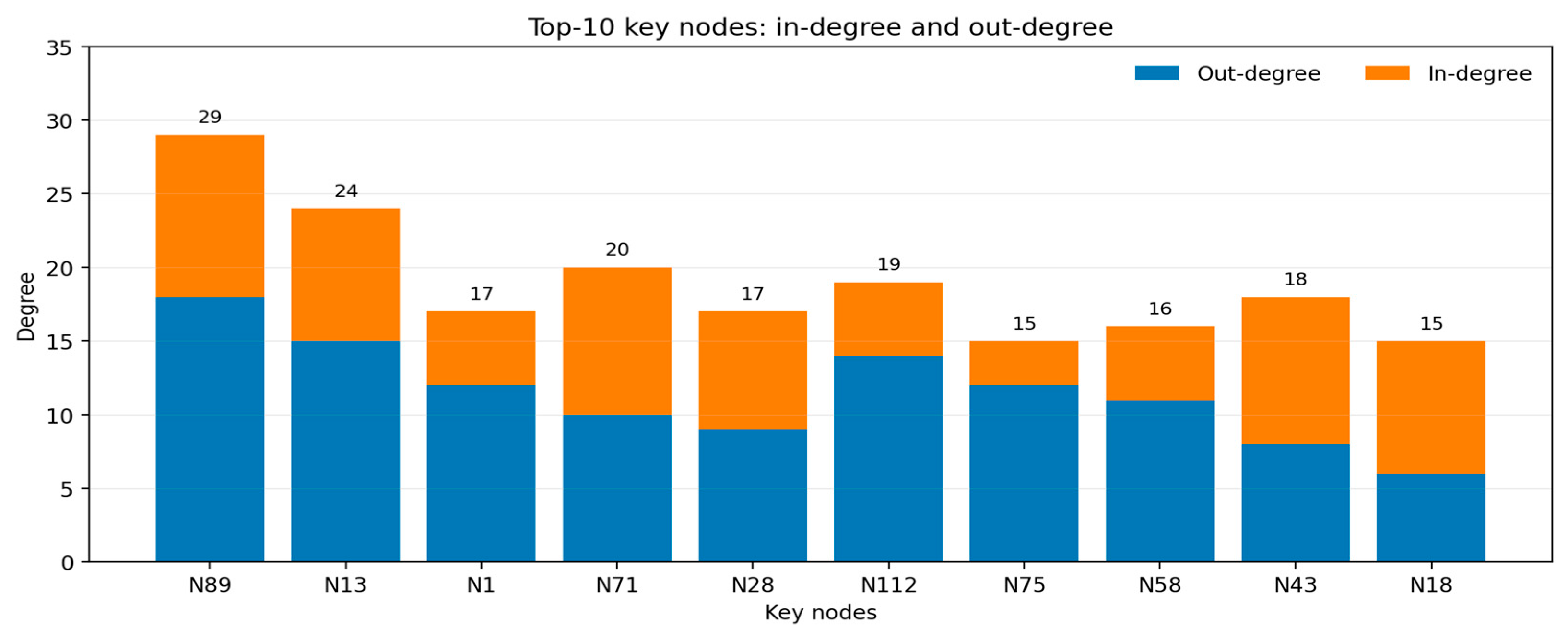
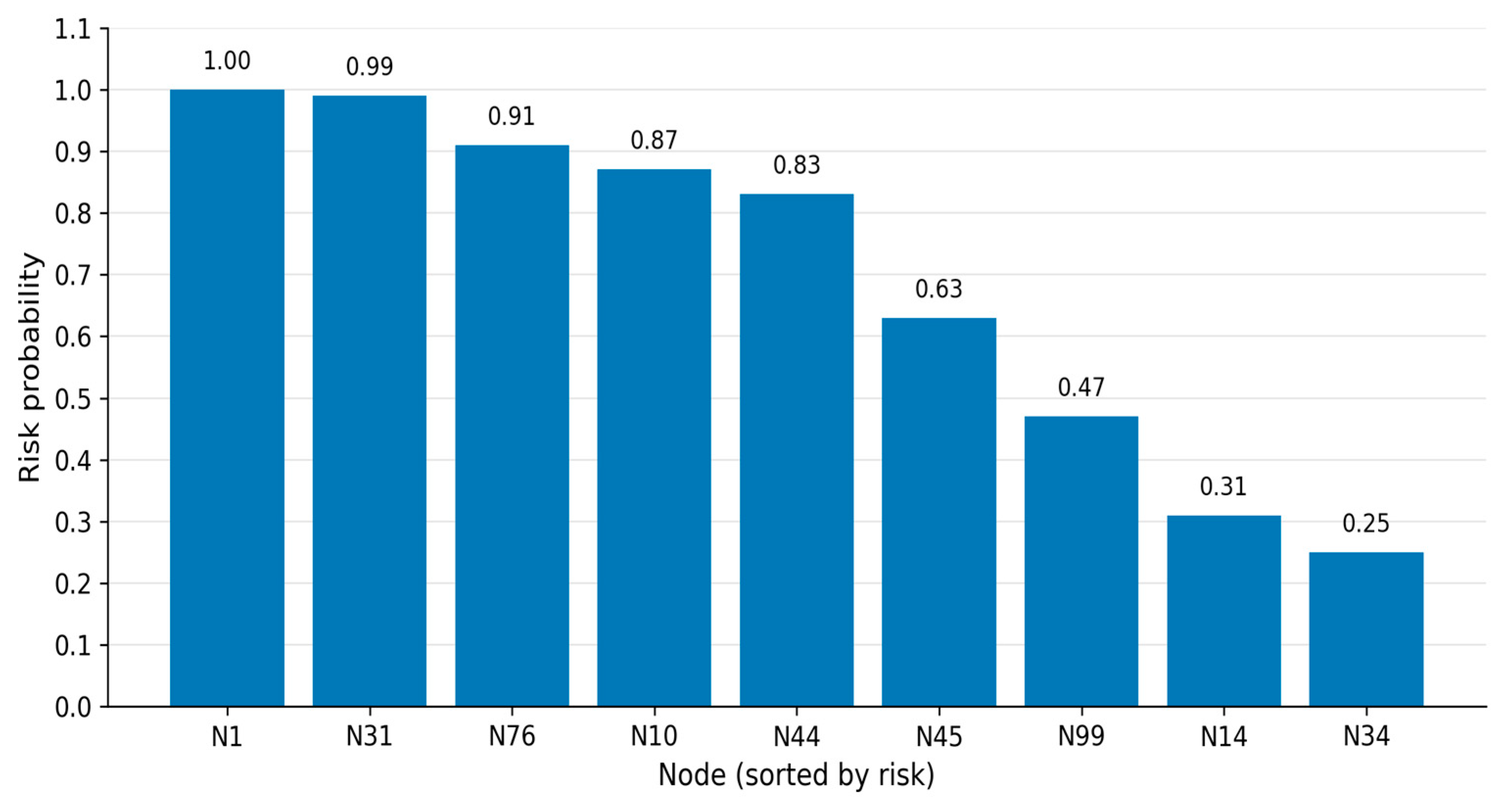
- Q represents the comprehensive risk propagation value of a node, measuring its potential to spread risks across the entire network. The calculated result is a dimensionless value: higher values indicate stronger risk propagation capabilities when the node is activated (i.e., when a risk event occurs), meaning it is more likely to trigger cascading failure effects. By ranking nodes based on Q values, critical nodes with significant propagation influence can be identified and thus should receive prioritized attention in risk prevention and control efforts.
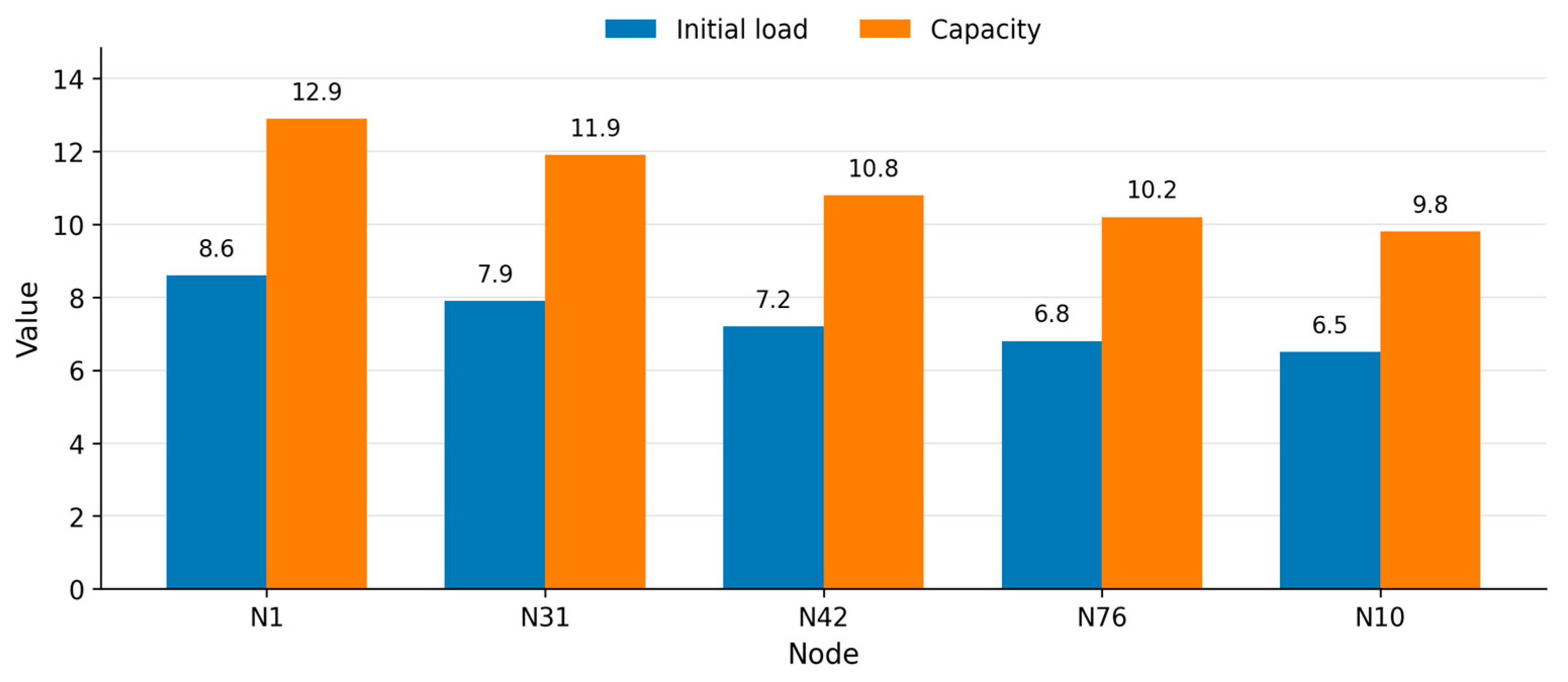
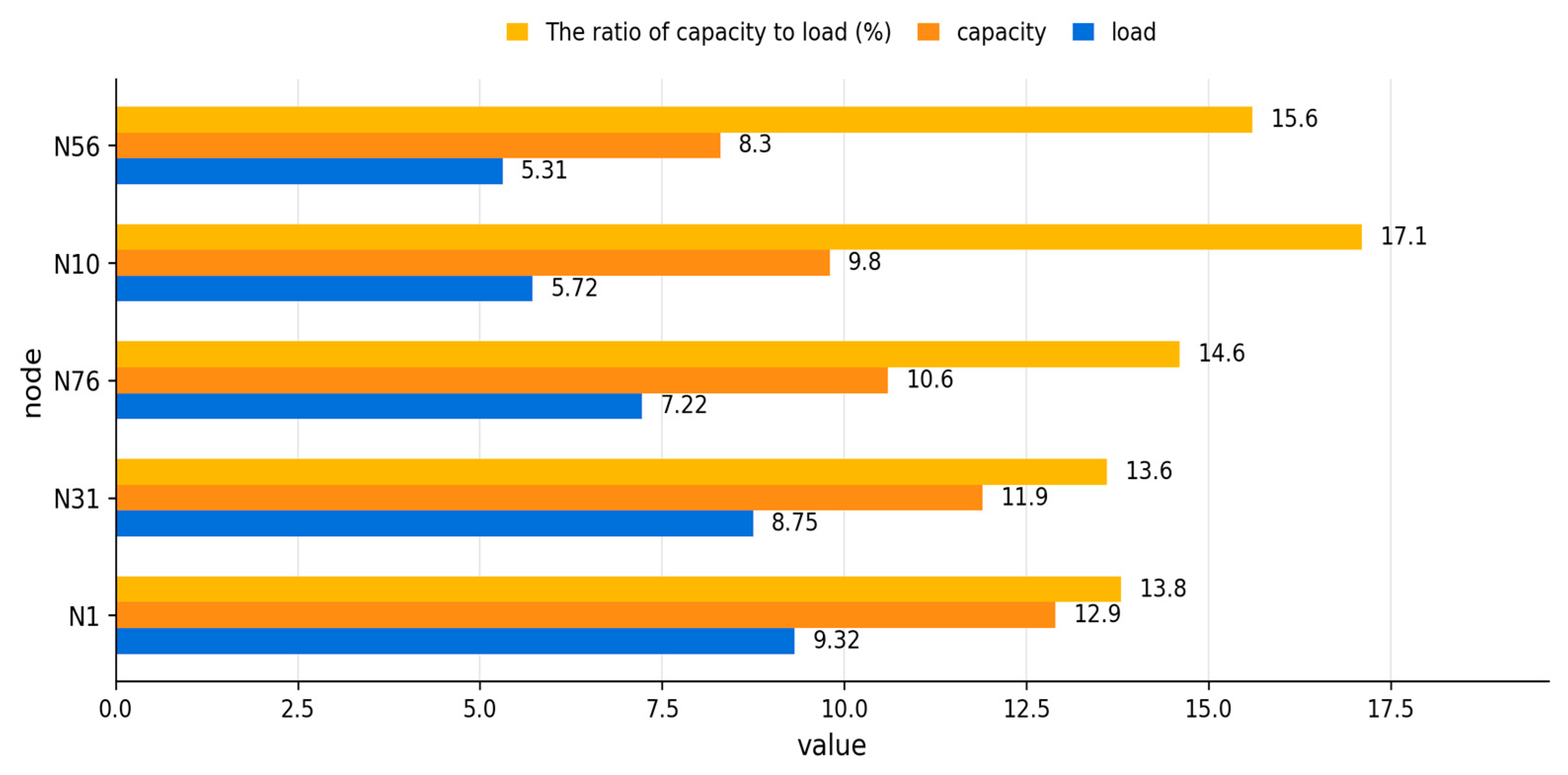
- P denotes the risk propagation probability of a node, representing the likelihood that its load exceeds capacity threshold when activated (risk event occurs), thereby triggering risk transmission to adjacent nodes. With values ranging from [0,1], P is calculated through the load-to-capacity ratio analysis.
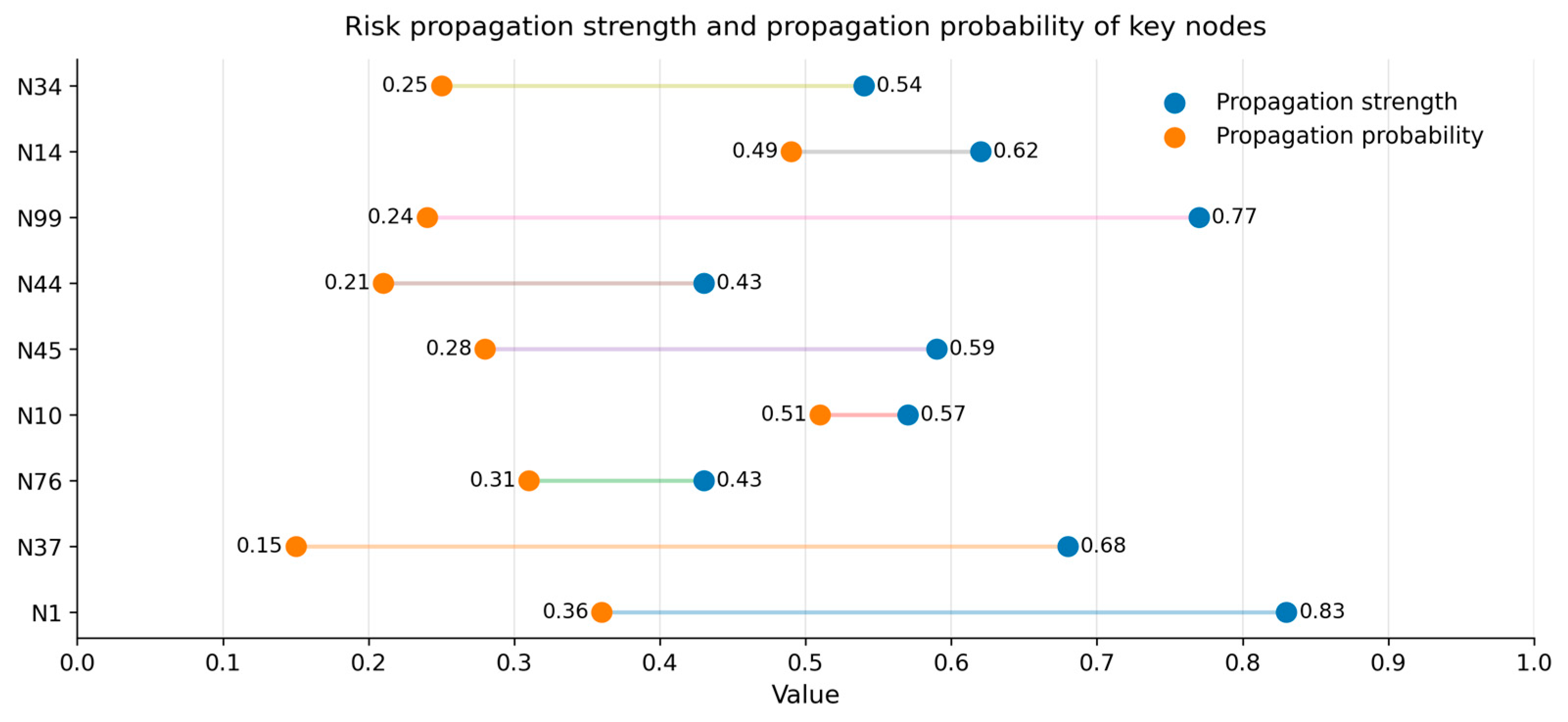
- F indicates the risk propagation intensity, quantifying the impact scope or severity during risk propagation events. Its value spans [0,∞), determined by the combined evaluation of a node’s median centrality and edge weights.
4. Discussion
4.1. Dataset
- The event was officially classified as a runway incursion according to ICAO definitions;
- The investigative narrative contained sufficient detail to allow for the unambiguous extraction of risk factors and their causal relationships;
- The incidents occurred within the specified 2022–2025 timeframe to maintain data contemporaneity. This curated dataset formed the empirical foundation for the subsequent three-stage coding procedure.
4.2. Results
4.3. Sensitivity Analysis of the Tolerance Coefficient (β)
5. Conclusions
- 1.
- Construction of a grounded theory-based risk factor system.
- 2.
- Development of a causal complex network model and identification of key nodes.
- 3.
- Quantification of risk propagation using load allocation theory.
- 4.
- Derivation of targeted operational recommendations.
- For excessive controller workload (N10): Implement dynamic staffing models aligned with traffic complexity and enhance decision-support tools to alleviate cognitive fatigue;
- For ambiguous controller instructions (N1): Enforce phraseology standardization through recurrent training and explore automated speech monitoring for real-time correction;
- For taxi-route memory errors (N14): Accelerate the deployment of advanced surface guidance technology (e.g., stop bars, A-SMGCS) and mandate recurrent familiarization training on airport hotspot charts;
- For insufficient night lighting (N99): Establish a rigorous inspection and maintenance regime for airfield lighting, ensuring adherence to standards, particularly in construction areas.
Author Contributions
Funding
Data Availability Statement
Acknowledgments
Conflicts of Interest
Abbreviations
| ATC | Air Traffic Control |
| RI | Runway incursion |
| NOTAM | Notice to Airmen/Notice to Air Missions |
| CRM | Cockpit Resource Management |
| CPDLC | Controller–Pilot Data Link Communications |
| ADS-B | Automatic Dependent Surveillance–Broadcast |
| ASDE | Airport Surface Detection Equipment |
| MLAT | Multilateration |
| A-SMGCS | Advanced Surface Movement Guidance and Control System |
| RWSL | Runway Status Lights |
| TOPSIS | Technique for Order Preference by Similarity to Ideal Solution |
| LVO | Low Visibility Operations |
Appendix A

| Number | Category | Definitions and Interpretations | Conceptual Connotation |
|---|---|---|---|
| 1 | Controller factor | In the process of aircraft or vehicle operation control, there are various factors that increase the risk of runway incursion due to deficiencies or deviations in the cognition, decision-making, work, communication and professional status of air traffic controllers | N1: Ambiguous controller instructions N2: Instructions delivered too rapidly N3: Use of non-standard phraseology/terminology N4: Unfamiliarity with special operations N5: Fatigue-induced inattention N6: Failure to monitor radar/surface surveillance displays N7: Lack of situational awareness N8: Failure to correct unit errors in a timely manner N9: Insufficient multitasking capability N10: Excessive controller workload N11: Failure to strictly implement readback/hearback procedures N12: Inexperience of newly assigned personnel |
| 2 | The pilot factor | In the course of aircraft operation, due to the pilot’s understanding of control instructions, judgment of his own position and decision-making errors in taxiing, take-off, landing and other links, the scope of various factors that cause the aircraft to mistakenly enter the runway, stay improperly on the runway or collide with other aircraft or vehicles | N13: Misunderstanding of ATC instructions N14: Taxi-route memory errors N15: Failure to read back key instructions N16: Reliance on habit without cross-checking N17: Non-compliance with standard taxi procedures N18: Incorrect identification of runway markings N19: Failure to use airport charts/airport moving-map aids N20: Cockpit Resource Management (CRM) breakdown N21: Insufficient foreign-language communication proficiency N22: Failure to monitor the movement of ground vehicles N23: Excessive taxi speed at night N24: Incorrect execution of pre-take-off checks N25: Failure to notice NOTAM updates/changes N26: Failure to use taxi guidance lights N27: Unclear division of labor within the unit/crew |
| 3 | Ground vehicle personnel factors | The driver of the airport ground support vehicle and the accompanying operators have deviations in the perception and behavior of safety boundaries in airport ground operations (such as taxiway driving, parking space operations, runway perimeter support, etc.), causing the vehicle to mistakenly enter the runway, runway protection area, or conflict with aircraft and other ground facilities | N28: Runway entry without clearance N29: Failure to monitor ATC frequencies N30: Non-compliance with vehicle speed limits N31: Failure to taxi via the assigned route N32: Failure to follow the designated route N33: Rushing to depart under time pressure N34: Failure to observe aircraft movements N35: Construction vehicles lack warning markings/devices |
| 4 | Communication system factors | The scope of technical defects, rule loopholes, signal interference or improper use of various communication means used for information transmission in airport operation leads to the failure of information transmission methods between controllers, pilots, and ground vehicle personnel, resulting in runway incursion | N36: Headset/microphone malfunction N37: Radio signal interference N38: Speech-recognition system misinterprets instructions N39: Backup communication equipment not enabled N40: Frequency congestion causes communication delays N41: Non-unified cross-department communication channels N42: CPDLC not deployed (controller–pilot data link communication) |
| 5 | Monitor device factors | All kinds of equipment used to monitor the position of aircraft, ground vehicles, personnel and runway status in real time are subject to the category of risk factors that cause controllers to be unable to accurately grasp the status of the runway due to technical performance defects, data processing deviations, improper operation and maintenance, etc., and then cause runway incursion. | N43: ADS-B signal loss N44: Blind spots in airport surface surveillance radar (ASDE) coverage N45: Unreasonable alarm threshold settings N46: MLAT system not installed (multilateration unavailable) N47: Insufficient monitoring system refresh rate N48: Runway incursion alert not triggered N49: Lack of AI-based risk prediction capability N50: Tower display information latency |
| 6 | Airport guidance system factors | Various guidance facilities and systems used to guide aircraft and ground vehicles to move and position safely on the ground at airports cause navigators to misjudge the position, path or runway status due to design defects, maintenance omissions, insufficient information deviations and other problems, which in turn leads to a series of risk factors that lead to mistakenly entering the runway or deviating from the specified path. | N51: Faded taxiway signage/markings N52: Runway centerline lighting malfunction N53: Stop-bar lights malfunction N54: Hotspot warning signs not provided N55: Temporary closure areas not properly marked N56: Electronic charts not updated N57: A-SMGCS not deployed (Advanced Surface Movement Guidance and Control System) N58: Runway Status Lights (RWSL) not activated N59: Substandard lighting in construction areas N60: Complex design of taxiway–runway intersections |
| 7 | Training and qualification factors | It covers all elements of the training system, qualification management and competency maintenance of pilots, controllers, ground staff and airport vehicle drivers | N61: Insufficient controller simulation training N62: Pilots lack dedicated runway incursion prevention training N63: Lack of multi-department joint exercises/drills N64: Excessive interval between recurrent trainings N65: Training content does not cover typical cases N66: Lack of situational awareness assessment N67: Insufficient onboarding training for new staff N68: Lack of foreign-language radiotelephony training N69: VR-based simulation training not introduced N70: Formalistic evaluation of training effectiveness |
| 8 | Run program factors | A series of standardized operating rules, coordination mechanisms and emergency response procedures formulated to standardize the use process of key areas such as airport runways and taxiways and ensure the orderly and controllable activities of aircraft, vehicles and personnel | N71: Unreasonable taxi-route design/setting N72: Unclear cross-department responsibilities N73: Night-operation risks not specifically controlled N74: Disorganized temporary procedures during construction N75: Lack of an emergency plan for runway incursions N76: Imperfect low-visibility operating procedures (LVO) N77: Failure to enforce standard phraseology N78: Insufficient resource allocation during peak traffic periods N79: Runway Safety Team (RST/RSS) mechanism not implemented N80 N81: Delayed safety information sharing N82: No risk early-warning indicator database established |
| 9 | Safety culture factors | It runs through the scope of safety values and codes of conduct for airport flight crews, air traffic control personnel, ground handling support, management departments and other personnel. | N83: Low willingness among staff to report hazards N84: Management insufficiently prioritizes risk N85: Safety meetings become formalities N86: No anonymous reporting system established N87: Non-transparent reward-and-punishment mechanism N88: Failure to promote a just culture |
| 10 | Meteorological factors | Weather conditions such as visibility, snowfall, wind, etc., may interfere with the judgment, operation or equipment operation of relevant personnel on the runway, thereby increasing the risk range of runway incursion probability. | N89: Fog with visibility below minimum standards N90: Heavy rainfall affects taxi control N91: Crosswinds increase deviation/overrun risk N92: Thunderstorms disrupt communications N93: Low cloud obscures runway lights/visual cues N94: Snow-covered taxiway signs N95: Adverse airfield physical environment |
| 11 | Airport environmental factors | Due to problems such as unreasonable design, unclear signage, and spatial conflict of the airport’s physical layout, facility identification, and airspace structure, it interferes with the judgment of relevant personnel on the location and route, thereby increasing the risk range of runway incursion probability. | N96: Excessive runway/taxiway intersections N97: Construction areas encroach on taxi routes N98: Airport expansion leads to layout changes N99: Insufficient night lighting N100: Perimeter obstacles restrict line of sight |
| 12 | Information transmission factors | Between the controllers, pilots, ground staff, airport dispatchers, etc., involved in the operation of the runway, due to untimely, inaccurate, incomplete or misunderstanding of information transmission, the relevant personnel misjudged the status of the runway and other key information. | N101: Flight schedule inconsistent with electronic systems N102: Delayed NOTAM updates N103: Real-time flight dynamics not shared N104: Conflicts between voice instructions and digital clearances N105: Digital taxi guidance not used N106: Lack of coordination between tower and apron control N107: Critical instruction timestamps not recorded |
| N108: Unclear handover of ATC and ground-handling responsibilities N109: Missing emergency response coordination mechanism N110: No regular runway safety meetings held N111: Construction contractors fail to notify operational plans N112: Airline information not synchronized with airport systems |
References
- Civil Aviation Administration of China. Statistics of Key Performance Indicators for China’s Civil Aviation Industry in 2024; Civil Aviation Administration of China: Beijing, China, 2025.
- National Civil Aviation Safety Committee, Sub-Committee on Runway Incursions. Final Report; Transport Canada: Ottawa, ON, Canada, 2000.
- Kaminski-Morrow, D. Communications breakdown led to snowplough runway incursion. Flight Int. 2021, 10, 2. [Google Scholar]
- Song, R. Discussion on Strategies to Prevent Runway Incursions. Civ. Aviat. Manag. 2024, 7, 47–51. [Google Scholar]
- Wu, W.; Luo, X.; Wei, M. Vulnerability analysis of runway incursion risk control network based on SD model. China J. Saf. Sci. 2021, 31, 41–48. [Google Scholar] [CrossRef]
- Zhao, Y. Research on Anti-Runway Incursion Based on Video Image Object Detection Technology. Master’s Thesis, China Civil Aviation Flight Academy, Guanghan, China, 2024. [Google Scholar] [CrossRef]
- Liang, B. Research on Evaluation of Airport Runway incursion Safety and Emergency Response Based on HFACS-RID. Master’s Thesis, East China Jiaotong University, Nanchang, China, 2023. [Google Scholar] [CrossRef]
- Yang, C.; Zhao, Y. Research on anti-runway incursion detection technology based on NSCT and half-tensor product. Aviat. Comput. Technol. 2024, 54, 41–45. [Google Scholar]
- Yuan, L.; Zhao, L.; Zhang, W.; Cui, X. Analysis of Civil Aviation Runway incursion Incidents Based on Complex Networks. J. Saf. Environ. 2023, 23, 1368–1375. [Google Scholar] [CrossRef]
- Shen, X.; Zhang, X.; Zhang, S. Research on Runway incursion Conflict Detection and Alarm Based on ADS-BJ. Chin. J. Saf. Sci. 2019, 29, 119–124. [Google Scholar] [CrossRef]
- Pan, W.; Wu, D. Runway incursion analysis based on gray correlation analysis. West. China Sci. Technol. 2013, 12, 4–6. [Google Scholar]
- Tang, X.; Luo, F. Comprehensive assessment of human-caused risks to airport runway incursions based on grey clustering. J. Univ. Electron. Sci. Technol. China (Soc. Sci. Ed.) 2015, 17, 27–33. [Google Scholar] [CrossRef]
- Wang, P.; Zhao, F. Research on short-term traffic flow prediction of expressway based on SVD-BiGRUJ/OL. J. Taiyuan Univ. (Nat. Sci. Ed.) 2025, 43, 72–77. [Google Scholar]
- Sun, H.; Li, Y.; Zhang, L.; Zhai, Y.; Chen, Z.; Chen, C. Complexity calculation model based on actual road test scenarios under design operating conditions. Automot. Eng. 2024, 46, 1983–1992. [Google Scholar] [CrossRef]
- Wang, H.; Wen, R. Air Traffic Situation Risk Assessment Method Based on Complex Networks. China Saf. Sci. J. 2018, 28, 172–178. [Google Scholar] [CrossRef]
- Cheng, Q.; Bai, Y.; Wang, Y.; Xia, Q. Analysis of Directed Weighted Structure Characteristics of Chengdu-Chongqing Airport Group Route Network. Ship Electron. Eng. 2024, 44, 104–110. [Google Scholar]
- Cao, B. Analysis of risk factors of unsafe civil aviation maintenance incidents based on complex networks. China Saf. Prod. Sci. Technol. 2023, 19, 143–149. [Google Scholar]
- Zhang, W.; Lei, Z.; Li, F.; Niu, X.; Gao, X. Research on the Evolution of Structural Characteristics of China’s Urban Network Based on Aviation Flow. Resour. Dev. Mark. 2023, 39, 696–705. [Google Scholar]
- Cheng, M.; Mei, A. Research on the Construction of Runway Landing Event Evolution Network Based on Association Rules. China Saf. Prod. Sci. Technol. 2022, 18, 203–208. [Google Scholar]
- Fang, Z.; Zhong, H.; Zou, X. Urban road extraction combining trajectory continuity and image feature similarity. J. Surv. Mapp. 2020, 49, 1554–1563. [Google Scholar]
- Yan, Y.; Boufous, S.; Molesworth, B.R.C. A systematic review of pilot-related runway incursions from a human factors perspective. Int. J. Aerosp. Psychol. 2024, 34, 1–19. [Google Scholar]
- Zhou, N.; Gu, W.; Zhang, L.; Jing, X.; Wang, M.; Luo, M.; Yang, X.; Wang, W. ‘Forward or Backward’, a Grounded Theory Study of Ambivalent Psychosocial Experiences of Couples Undergoing In Vitro Fertilisation and Embryo Transfer. J. Clin. Nurs. 2025, 34, 3330–3339. [Google Scholar] [CrossRef] [PubMed]
- Estrada, E. The Structure of Complex Networks: Theory and Applications; American Chemical Society: Washington, DC, USA, 2012. [Google Scholar]



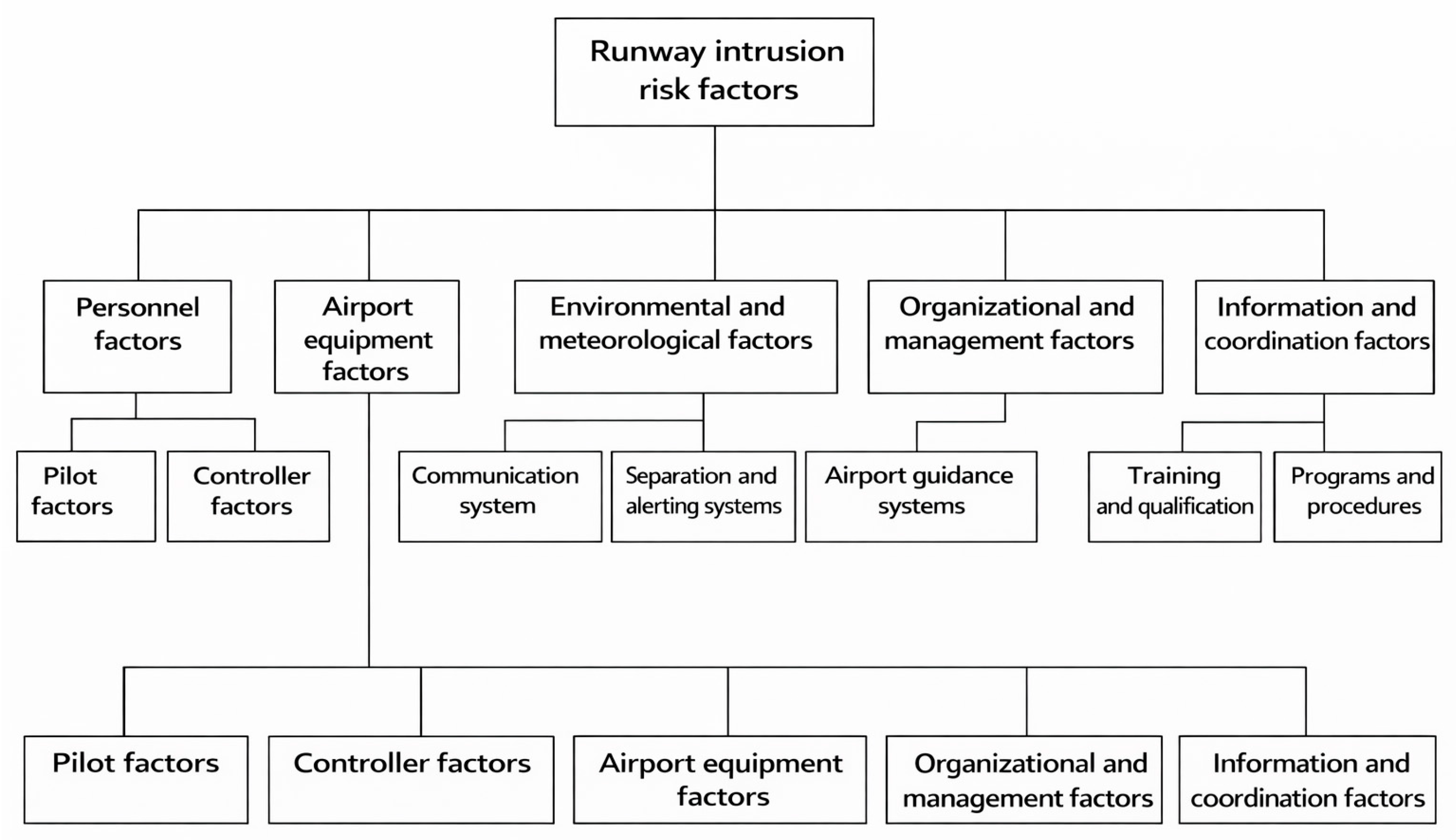
| Number | Main Category | Affect the Category of Relationships |
|---|---|---|
| 1 | Personnel factors | Standard land-air calls are not used; controller workload; the unit did not follow the taxiing route; |
| 2 | Organizational and management factors | Inadequate ground support; new employee management is not timely |
| 3 | Airport equipment factors | Technical condition of equipment; system failure |
| 4 | Environmental and meteorological factors | Weather reasons |
| 5 | Information and coordination factors | Errors occur in the communication and information transmission process of decision-making |
| LINK | N1 | N2 | N3 | N4 | N5 | N6 | N7 | N8 | N9 | N10 | … |
|---|---|---|---|---|---|---|---|---|---|---|---|
| N1 | 0 | 0 | 0 | 0 | 4 | 0 | 0 | 0 | 0 | 0 | … |
| N2 | 0 | 0 | 0 | 0 | 0 | 0 | 0 | 2 | 0 | 0 | … |
| N3 | 0 | 0 | 1 | 0 | 0 | 0 | 3 | 0 | 0 | 0 | … |
| N4 | 0 | 0 | 0 | 0 | 0 | 0 | 0 | 1 | 0 | 0 | … |
| … | … | … | … | … | … | … | … | … | … | … | … |
| Node | N1 | N2 | N3 | N4 | N5 | N6 | N7 | N8 | N9 | N10 | … |
|---|---|---|---|---|---|---|---|---|---|---|---|
| N1 | 0 | 0 | 0 | 3 | 2 | 0 | 0 | 0 | 0 | 0 | … |
| N2 | 0 | 0 | 0 | 0 | 0 | 0 | 0 | 0 | 0 | 0 | … |
| N3 | 0 | 0 | 0 | 0 | 0 | 0 | 0 | 5 | 0 | 0 | … |
| N4 | 0 | 0 | 0 | 0 | 3 | 0 | 0 | 0 | 0 | 0 | … |
| … | … | … | … | … | … | … | … | … | … | … | … |
| Parameter Name | Parameter Values | Parameter Name | Parameter Values |
|---|---|---|---|
| Several (nodes) | 112 | Network diameter | 6 |
| There are several border articles | 270 | Network density | 0.0315 |
| Average | 3.57 | Average clustering coefficient | 0.153 |
| Average weighting | 3.3 | Average path length | 2.13 |
| Node | Proximity | Risk Factors |
|---|---|---|
| N31 | 0.872 | Failure to taxi via the assigned route |
| N1 | 0.865 | Ambiguous controller instructions |
| N76 | 0.851 | Imperfect low-visibility operating procedures (LVO) |
| N99 | 0.843 | Insufficient night lighting |
| N10 | 0.832 | Excessive controller workload |
| N45 | 0.821 | Unreasonable alarm threshold settings |
| N26 | 0.815 | Failure to use taxi guidance lights |
| N37 | 0.809 | Radio signal interference |
| N63 | 0.798 | Lack of multi-department joint exercises/drills |
Disclaimer/Publisher’s Note: The statements, opinions and data contained in all publications are solely those of the individual author(s) and contributor(s) and not of MDPI and/or the editor(s). MDPI and/or the editor(s) disclaim responsibility for any injury to people or property resulting from any ideas, methods, instructions or products referred to in the content. |
© 2026 by the authors. Licensee MDPI, Basel, Switzerland. This article is an open access article distributed under the terms and conditions of the Creative Commons Attribution (CC BY) license.
Share and Cite
Wang, R.; Pan, W.; Feng, Y.; Dai, X.; Li, Y.; Jiang, Y. Runway Incursion Risk Propagation Model Based on Complex Network Theory. Appl. Sci. 2026, 16, 3293. https://doi.org/10.3390/app16073293
Wang R, Pan W, Feng Y, Dai X, Li Y, Jiang Y. Runway Incursion Risk Propagation Model Based on Complex Network Theory. Applied Sciences. 2026; 16(7):3293. https://doi.org/10.3390/app16073293
Chicago/Turabian StyleWang, Rundong, Weijun Pan, Yujiang Feng, Xiqiao Dai, Yinxuan Li, and Yanqiang Jiang. 2026. "Runway Incursion Risk Propagation Model Based on Complex Network Theory" Applied Sciences 16, no. 7: 3293. https://doi.org/10.3390/app16073293
APA StyleWang, R., Pan, W., Feng, Y., Dai, X., Li, Y., & Jiang, Y. (2026). Runway Incursion Risk Propagation Model Based on Complex Network Theory. Applied Sciences, 16(7), 3293. https://doi.org/10.3390/app16073293