Augmenting the Cytotoxicity of Anticancer Peptide K6L9 by In Vitro-Synthesized mRNA

 , ,
, ,  , , ,
, , , 
Featured Application
Abstract
1. Introduction
2. Materials and Methods
2.1. Cell Culture
2.2. Design and Amplification of SA-K6L9-AS DNA Template
2.3. In Vitro Transcription (IVT) of mRNAs
2.4. Assessment of IVT mRNAs Using RNA ScreenTape Assay
2.5. Transfecting Cells with mRNAs
2.6. MTT Cell Viability Assay
2.7. Apoptosis Analysis by IncuCyte Live-Cell Analysis System
2.8. Apoptosis Analysis by Flow Cytometry
2.9. Statistical Analysis
3. Results
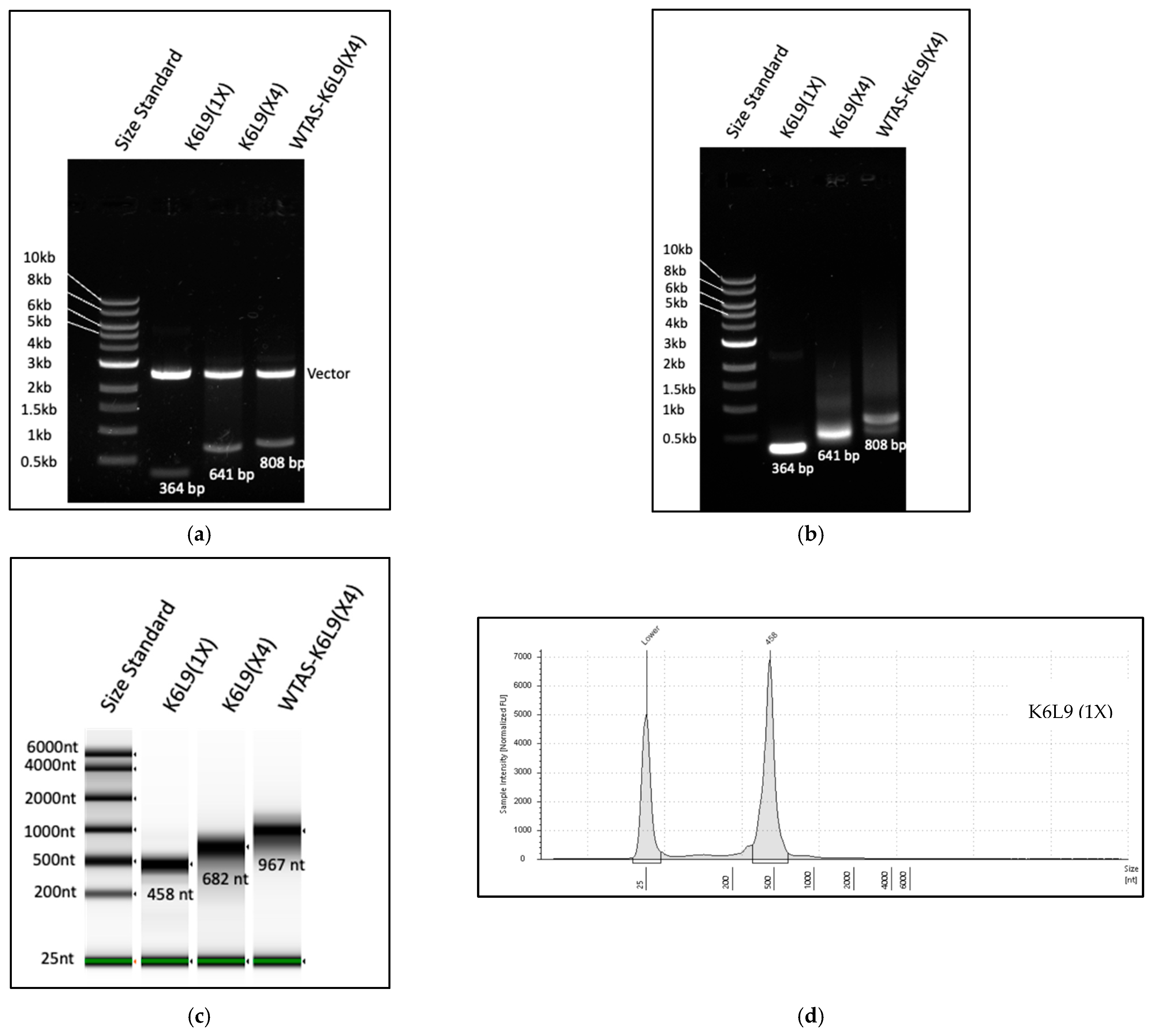
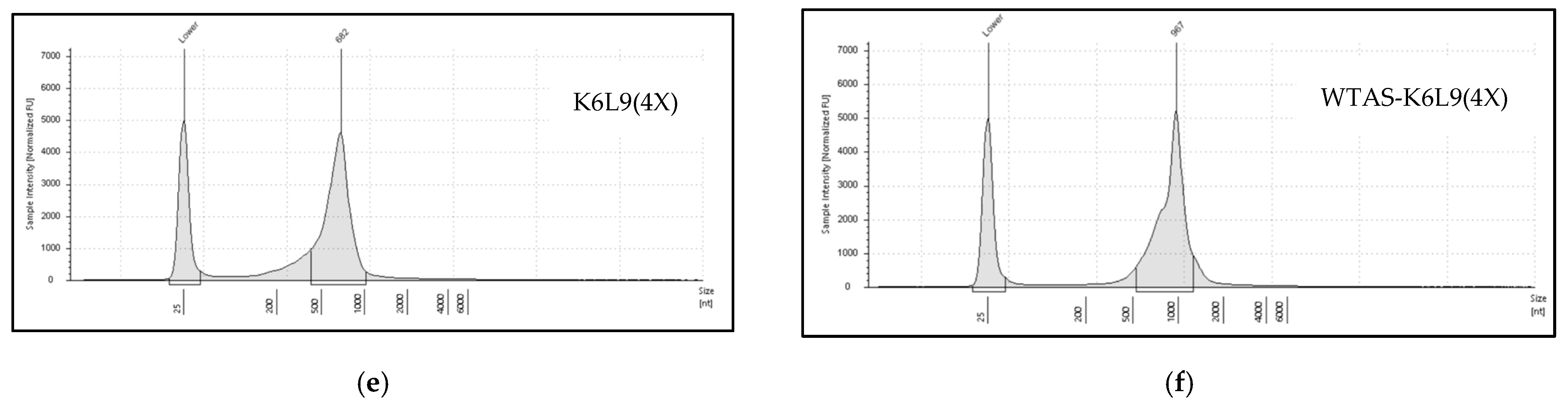
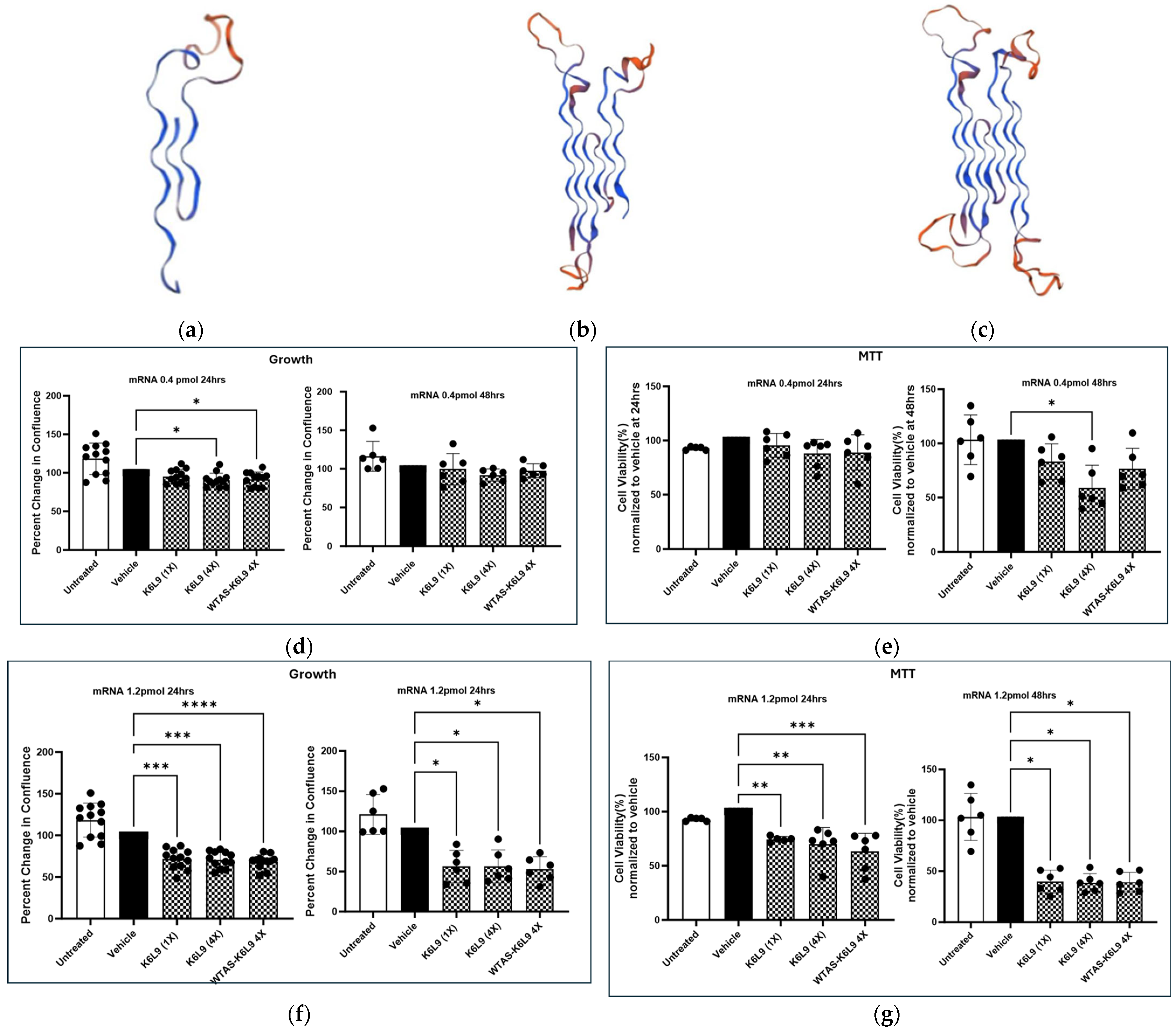
3.1. Design, In Vitro Synthesis, and Validation of mRNAs Encoding Chimeric Synthetic Anticancer K6L9 Peptides
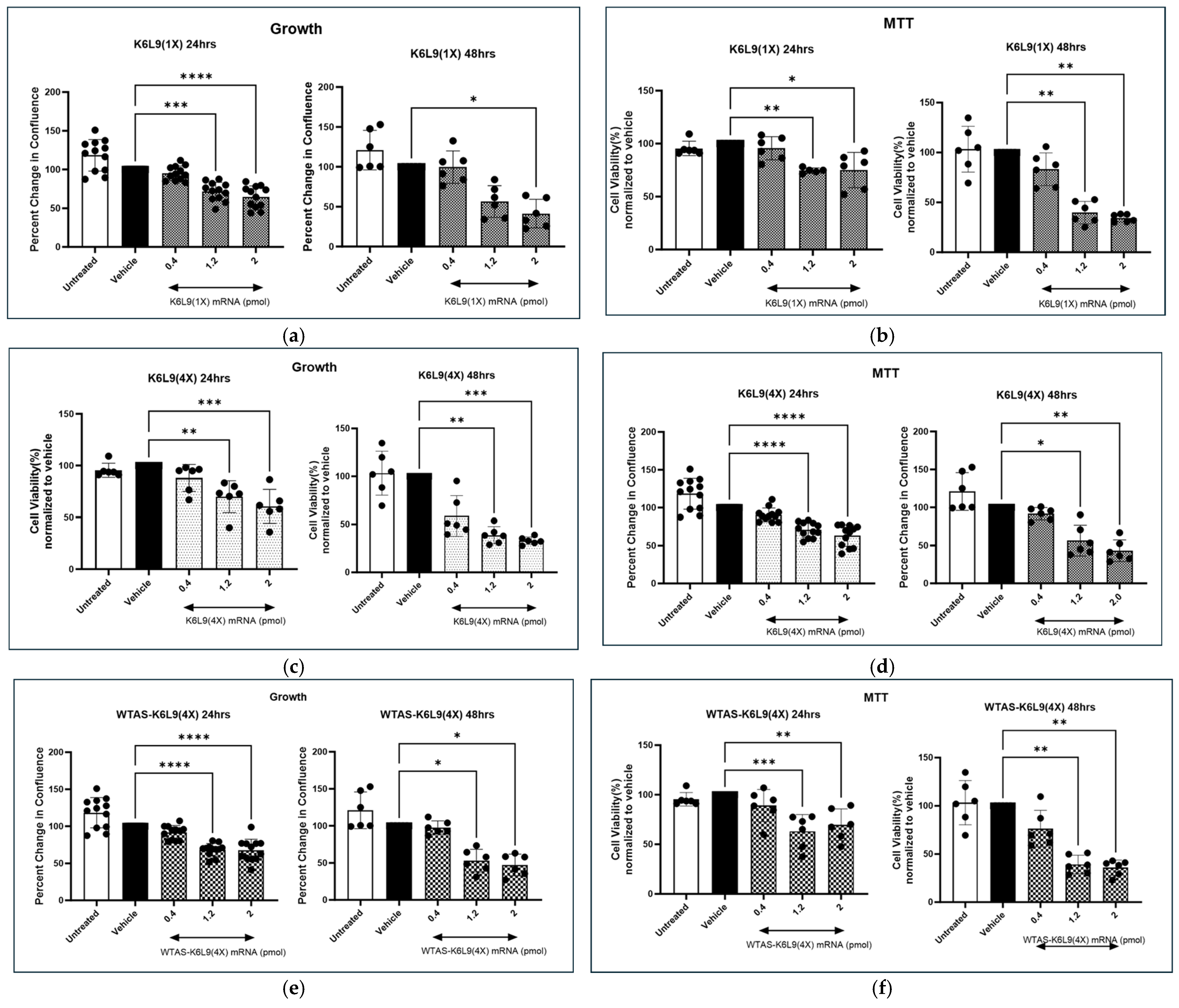
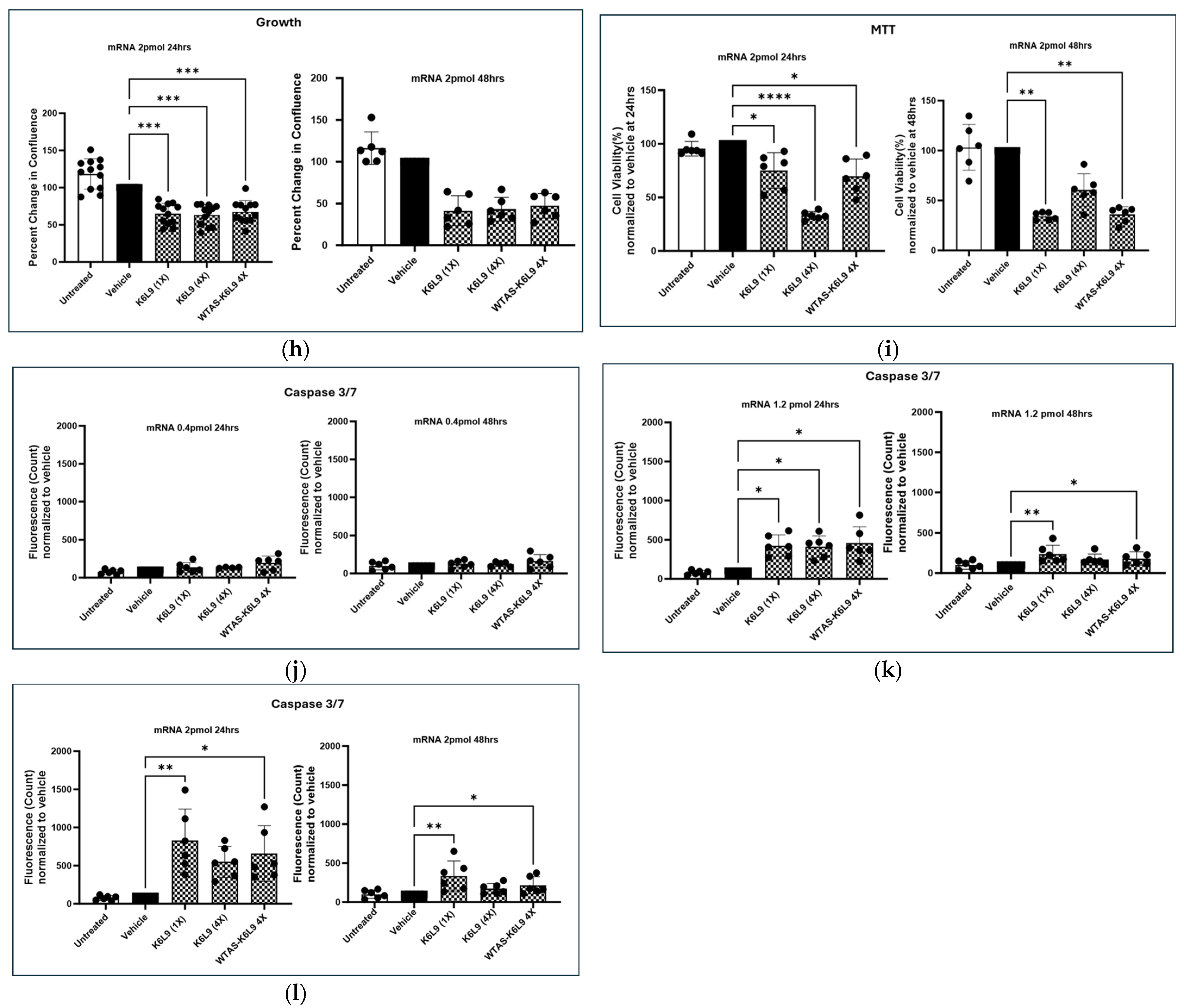
3.2. Translation of Anticancer K6L9 Peptide mRNAs Reduced Cellular Proliferation and Induced Cytotoxicity in 4T1 Cells
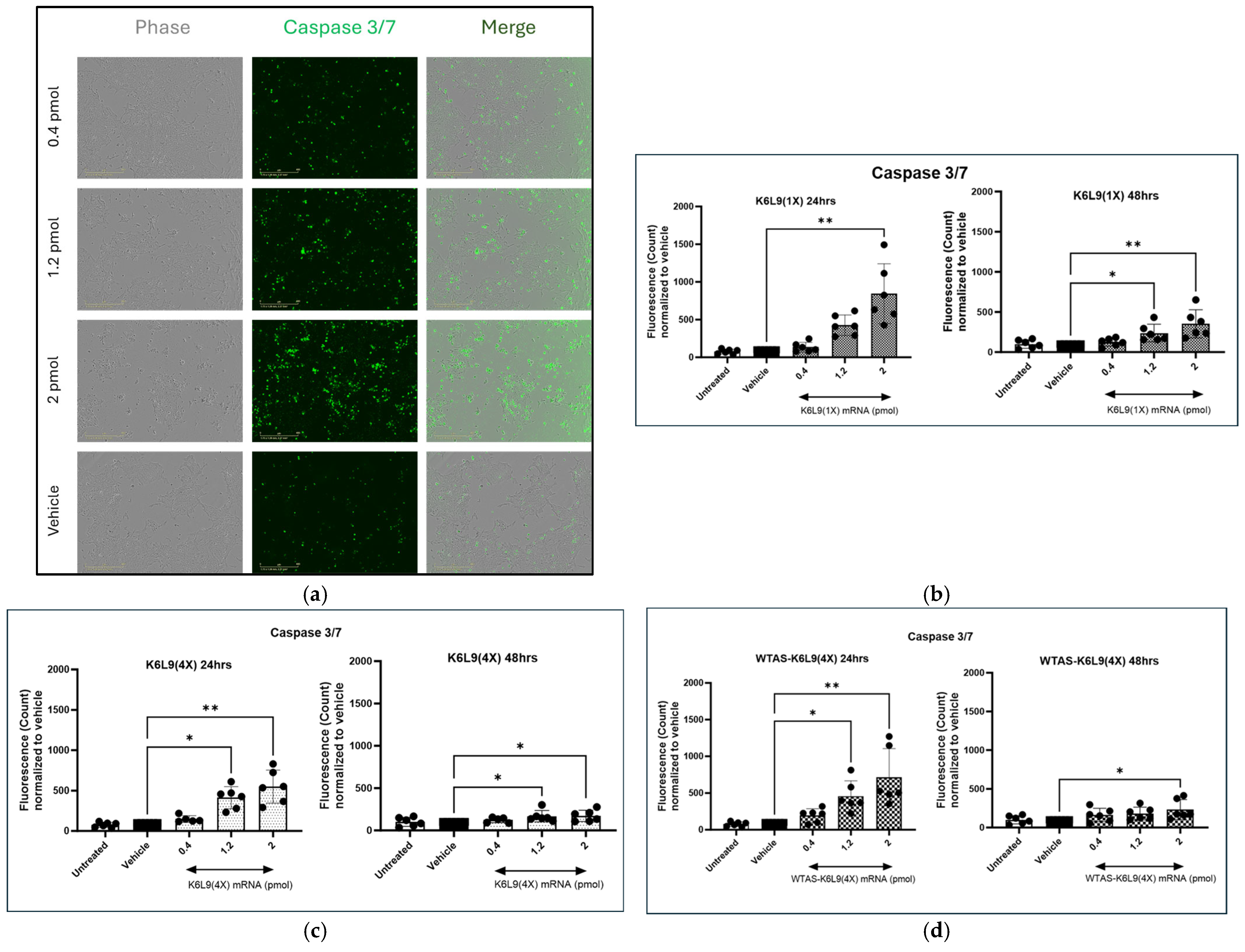
3.3. The Expression of Synthetic Anticancer K6L9 Peptide mRNAs Activated the Apoptosis Pathway in 4T1 Cells
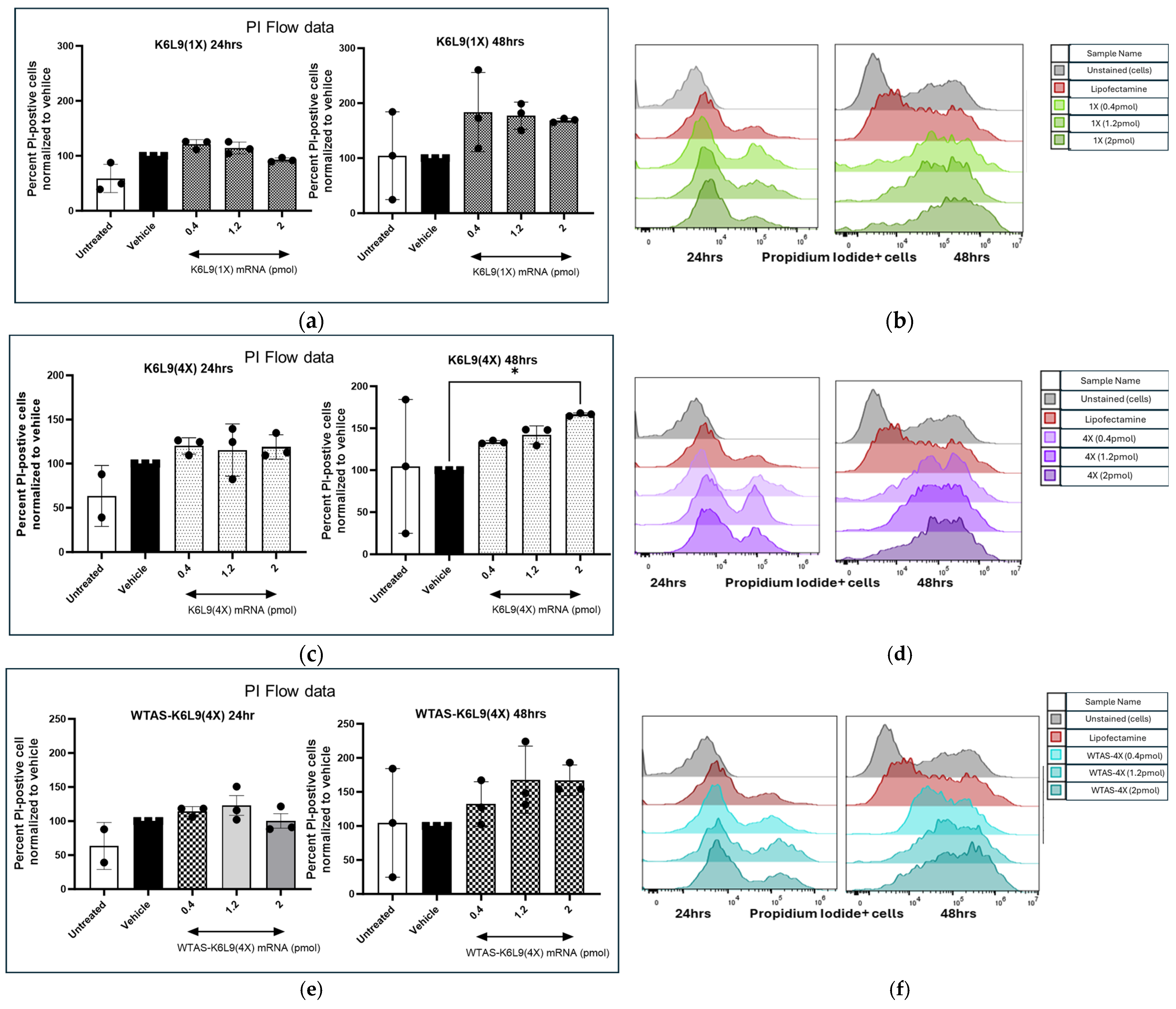
3.4. Translation of Synthetic Anticancer K6L9 Peptides Induced Cellular Toxicity at 48 h in 4T1 Cells
3.5. ACPs Generated Through mRNA Transfection Are Similar in Cytotoxic Activity
4. Discussion
5. Conclusions
Supplementary Materials
Author Contributions
Funding
Institutional Review Board Statement
Informed Consent Statement
Data Availability Statement
Acknowledgments
Conflicts of Interest
Abbreviations
| IVT | In vitro transcription |
| mRNA | Messenger ribonucleic acid |
| MTT | 3-(4,5-Dimethylthiazol-2-yl)-2,5-diphenyltetrazolium bromide |
| ACP | Anticancer peptide |
| PI | Propidium iodide |
| K6L9 | LKLLKKLLKKLLKLL amino acid sequence |
| D-K6L9 | LKLLKKLLKKLLKLL |
| SA-K6L9-AS | SALKLLKKLLKKLLKLLAS amino acid sequence |
| K6L9(1X) | Fusion peptide with one SA-K6L9-AS repeat |
| K6L9(4X) | Fusion peptide with four SA-K6L9-AS repeats |
| WTAS-K6L9(4X) | Fusion peptide with four SA-K6L9-AS repeats plus cell-penetrating peptide WTAS |
| WTAS-K6L9(4X)-GFP | Fusion peptide with four SA-K6L9-AS repeats plus cell-penetrating peptide WTAS plus GFP |
| GFP | Green fluorescent protein |
| FITC | Fluorescein isothiocyanate |
| NIR | Near-infrared |
| CDS | Coding sequence |
| AES | Amino-terminal enhancer of split |
| mtRNR1 | Non-coding mitochondrial 12S rRNA |
References
- Baden, L.R.; El Sahly, H.M.; Essink, B.; Kotloff, K.; Frey, S.; Novak, R.; Diemert, D.; Spector, S.A.; Rouphael, N.; Creech, C.B.; et al. Efficacy and Safety of the mRNA-1273 SARS-CoV-2 Vaccine. N. Engl. J. Med. 2021, 384, 403–416. [Google Scholar] [CrossRef] [PubMed]
- Polack, F.P.; Thomas, S.J.; Kitchin, N.; Absalon, J.; Gurtman, A.; Lockhart, S.; Perez, J.L.; Perez Marc, G.; Moreira, E.D.; Zerbini, C.; et al. Safety and Efficacy of the BNT162b2 mRNA COVID-19 Vaccine. N. Engl. J. Med. 2020, 383, 2603–2615. [Google Scholar] [CrossRef] [PubMed]
- Walsh, E.E.; Frenck, R.W., Jr.; Falsey, A.R.; Kitchin, N.; Absalon, J.; Gurtman, A.; Lockhart, S.; Neuzil, K.; Mulligan, M.J.; Bailey, R.; et al. Safety and Immunogenicity of Two RNA-Based COVID-19 Vaccine Candidates. N. Engl. J. Med. 2020, 383, 2439–2450. [Google Scholar] [CrossRef]
- Miliotou, A.N.; Georgiou-Siafis, S.K.; Ntenti, C.; Pappas, I.S.; Papadopoulou, L.C. Recruiting In Vitro Transcribed mRNA against Cancer Immunotherapy: A Contemporary Appraisal of the Current Landscape. Curr. Issues Mol. Biol. 2023, 45, 9181–9214. [Google Scholar] [CrossRef]
- Bray, F.; Laversanne, M.; Sung, H.; Ferlay, J.; Siegel, R.L.; Soerjomataram, I.; Jemal, A. Global cancer statistics 2022: GLOBOCAN estimates of incidence and mortality worldwide for 36 cancers in 185 countries. CA Cancer J. Clin. 2024, 74, 229–263. [Google Scholar] [CrossRef]
- Chen, Y.; Xu, X.; Hong, S.; Chen, J.; Liu, N.; Underhill, C.B.; Creswell, K.; Zhang, L. RGD-Tachyplesin inhibits tumor growth. Cancer Res. 2001, 61, 2434–2438. [Google Scholar]
- Hilchie, A.L.; Haney, E.F.; Pinto, D.M.; Hancock, R.E.; Hoskin, D.W. Enhanced killing of breast cancer cells by a d-amino acid analog of the winter flounder-derived pleurocidin NRC-03. Exp. Mol. Pathol. 2015, 99, 426–434. [Google Scholar] [CrossRef]
- Papo, N.; Seger, D.; Makovitzki, A.; Kalchenko, V.; Eshhar, Z.; Degani, H.; Shai, Y. Inhibition of tumor growth and elimination of multiple metastases in human prostate and breast xenografts by systemic inoculation of a host defense-like lytic peptide. Cancer Res. 2006, 66, 5371–5378. [Google Scholar] [CrossRef] [PubMed]
- Liu, S.; Yang, H.; Wan, L.; Cheng, J.; Lu, X. Penetratin-mediated delivery enhances the antitumor activity of the cationic antimicrobial peptide Magainin II. Cancer Biother. Radiopharm. 2013, 28, 289–297. [Google Scholar] [CrossRef]
- Sani, M.A.; Separovic, F. How Membrane-Active Peptides Get into Lipid Membranes. Acc. Chem. Res. 2016, 49, 1130–1138. [Google Scholar] [CrossRef]
- Agrawal, P.; Bhagat, D.; Mahalwal, M.; Sharma, N.; Raghava, G.P.S. AntiCP 2.0: An updated model for predicting anticancer peptides. Brief. Bioinform. 2021, 22, bbaa153. [Google Scholar] [CrossRef]
- Li, X.; Shen, B.; Chen, Q.; Zhang, X.; Ye, Y.; Wang, F.; Zhang, X. Antitumor effects of cecropin B-LHRH’ on drug-resistant ovarian and endometrial cancer cells. BMC Cancer 2016, 16, 251. [Google Scholar] [CrossRef]
- Giuliani, A.; Pirri, G.; Nicoletto, S.F. Antimicrobial peptides: An overview of a promising class of therapeutics. Cent. Eur. J. Biol. 2007, 2, 1–33. [Google Scholar] [CrossRef]
- Torfoss, V.; Isaksson, J.; Ausbacher, D.; Brandsdal, B.O.; Flaten, G.E.; Anderssen, T.; Cavalcanti-Jacobsen Cde, A.; Havelkova, M.; Nguyen, L.T.; Vogel, H.J.; et al. Improved anticancer potency by head-to-tail cyclization of short cationic anticancer peptides containing a lipophilic beta(2,2)-amino acid. J. Pept. Sci. 2012, 18, 609–619. [Google Scholar] [CrossRef]
- Johnstone, S.A.; Gelmon, K.; Mayer, L.D.; Hancock, R.E.; Bally, M.B. In vitro characterization of the anticancer activity of membrane-active cationic peptides. I. Peptide-mediated cytotoxicity and peptide-enhanced cytotoxic activity of doxorubicin against wild-type and p-glycoprotein over-expressing tumor cell lines. Anticancer Drug Des. 2000, 15, 151–160. [Google Scholar]
- Hu, J.; Chen, C.; Zhang, S.; Zhao, X.; Xu, H.; Zhao, X.; Lu, J.R. Designed antimicrobial and antitumor peptides with high selectivity. Biomacromolecules 2011, 12, 3839–3843. [Google Scholar] [CrossRef]
- Min, J.W.; Koh, Y.; Kim, D.Y.; Kim, H.L.; Han, J.A.; Jung, Y.J.; Yoon, S.S.; Choi, S.S. Identification of Novel Functional Variants of SIN3A and SRSF1 among Somatic Variants in Acute Myeloid Leukemia Patients. Mol. Cells 2018, 41, 465–475. [Google Scholar] [CrossRef] [PubMed]
- Dennison, S.R.; Whittaker, M.; Harris, F.; Phoenix, D.A. Anticancer alpha-helical peptides and structure/function relationships underpinning their interactions with tumour cell membranes. Curr. Protein Pept. Sci. 2006, 7, 487–499. [Google Scholar] [CrossRef] [PubMed]
- Dobrzynska, I.; Szachowicz-Petelska, B.; Sulkowski, S.; Figaszewski, Z. Changes in electric charge and phospholipids composition in human colorectal cancer cells. Mol. Cell. Biochem. 2005, 276, 113–119. [Google Scholar] [CrossRef]
- Utsugi, T.; Schroit, A.J.; Connor, J.; Bucana, C.D.; Fidler, I.J. Elevated expression of phosphatidylserine in the outer membrane leaflet of human tumor cells and recognition by activated human blood monocytes. Cancer Res. 1991, 51, 3062–3066. [Google Scholar] [PubMed]
- Van Blitterswijk, W.J.; De Veer, G.; Krol, J.H.; Emmelot, P. Comparative lipid analysis of purified plasma membranes and shed extracellular membrane vesicles from normal murine thymocytes and leukemic GRSL cells. Biochim. Biophys. Acta 1982, 688, 495–504. [Google Scholar] [CrossRef] [PubMed]
- Zwaal, R.F.; Comfurius, P.; Bevers, E.M. Surface exposure of phosphatidylserine in pathological cells. Cell. Mol. Life Sci. 2005, 62, 971–988. [Google Scholar] [CrossRef]
- Burdick, M.D.; Harris, A.; Reid, C.J.; Iwamura, T.; Hollingsworth, M.A. Oligosaccharides expressed on MUC1 produced by pancreatic and colon tumor cell lines. J. Biol. Chem. 1997, 272, 24198–24202. [Google Scholar] [CrossRef]
- Cappelli, G.; Paladini, S.; D’Agata, A. Tumor markers in the diagnosis of pancreatic cancer. Tumori 1999, 85, S19–S21. [Google Scholar] [CrossRef] [PubMed]
- Papo, N.; Shahar, M.; Eisenbach, L.; Shai, Y. A novel lytic peptide composed of DL-amino acids selectively kills cancer cells in culture and in mice. J. Biol. Chem. 2003, 278, 21018–21023. [Google Scholar] [CrossRef]
- Papo, N.; Braunstein, A.; Eshhar, Z.; Shai, Y. Suppression of human prostate tumor growth in mice by a cytolytic D-, L-amino Acid Peptide: Membrane lysis, increased necrosis, and inhibition of prostate-specific antigen secretion. Cancer Res. 2004, 64, 5779–5786. [Google Scholar] [CrossRef] [PubMed]
- Yu, J.; Chlebanowski, L.; Hammer, J.L.; Thapa, P.; Shrestha, T.B.; Wang, H.; Covarrubias-Zambrano, O.; Troyer, D.L.; Bossmann, S.H. Assembly of Mesoporous Silica Nanoparticle Drug Conjugates for Enhanced Delivery. In Supramolecular Nanotechnology; Wiley-VCH: Weinheim, Germany, 2023; pp. 765–794. [Google Scholar]
- Covarrubias-Zambrano, O.; Shrestha, T.B.; Pyle, M.; Montes-Gonzalez, M.; Troyer, D.L.; Bossmann, S.H. Development of a Gene Delivery System Composed of a Cell-Penetrating Peptide and a Nontoxic Polymer. ACS Appl. Bio Mater. 2020, 3, 7418–7427. [Google Scholar] [CrossRef]
- Chen, C.H.; Liu, Y.H.; Eskandari, A.; Ghimire, J.; Lin, L.C.; Fang, Z.S.; Wimley, W.C.; Ulmschneider, J.P.; Suntharalingam, K.; Hu, C.J.; et al. Integrated Design of a Membrane-Lytic Peptide-Based Intravenous Nanotherapeutic Suppresses Triple-Negative Breast Cancer. Adv. Sci. 2022, 9, e2105506. [Google Scholar] [CrossRef]
- Huang, Y.; Peng, H.; Zeng, A.; Song, L. The role of peptides in reversing chemoresistance of breast cancer: Current facts and future prospects. Front. Pharmacol. 2023, 14, 1188477. [Google Scholar] [CrossRef]
- Oo, K.K.; Kamolhan, T.; Soni, A.; Thongchot, S.; Mitrpant, C.; O-Charoenrat, P.; Thuwajit, C.; Thuwajit, P. Development of an engineered peptide antagonist against periostin to overcome doxorubicin resistance in breast cancer. BMC Cancer 2021, 21, 65. [Google Scholar] [CrossRef]
- GenSmart Codon Optimization. GenSmart: Codon Optimization Tool. 2024. Available online: https://www.genscript.com/tools/gensmart-codon-optimization (accessed on 15 January 2024).
- Sanger, F.; Coulson, A.R. A rapid method for determining sequences in DNA by primed synthesis with DNA polymerase. J. Mol. Biol. 1975, 94, 441–448. [Google Scholar] [CrossRef]
- Stockert, J.C.; Blazquez-Castro, A.; Canete, M.; Horobin, R.W.; Villanueva, A. MTT assay for cell viability: Intracellular localization of the formazan product is in lipid droplets. Acta Histochem. 2012, 114, 785–796. [Google Scholar] [CrossRef] [PubMed]
- Ligon, T.S.; Leonhardt, C.; Radler, J.O. Multi-level kinetic model of mRNA delivery via transfection of lipoplexes. PLoS ONE 2014, 9, e107148. [Google Scholar] [CrossRef]
- van Asbeck, A.H.; Dieker, J.; Egberink, R.O.; van den Berg, L.; van der Vlag, J.; Brock, R. Protein Expression Correlates Linearly with mRNA Dose over Up to Five Orders of Magnitude In Vitro and In Vivo. Biomedicines 2021, 9, 511. [Google Scholar] [CrossRef]
- van den Brand, D.; Gorris, M.A.J.; van Asbeck, A.H.; Palmen, E.; Ebisch, I.; Dolstra, H.; Hallbrink, M.; Massuger, L.; Brock, R. Peptide-mediated delivery of therapeutic mRNA in ovarian cancer. Eur. J. Pharm. Biopharm. 2019, 141, 180–190. [Google Scholar] [CrossRef]
- Chen, C.Y.; Shyu, A.B. AU-rich elements: Characterization and importance in mRNA degradation. Trends Biochem. Sci. 1995, 20, 465–470. [Google Scholar] [CrossRef]
- Holtkamp, S.; Kreiter, S.; Selmi, A.; Simon, P.; Koslowski, M.; Huber, C.; Tureci, O.; Sahin, U. Modification of antigen-encoding RNA increases stability, translational efficacy, and T-cell stimulatory capacity of dendritic cells. Blood 2006, 108, 4009–4017. [Google Scholar] [CrossRef] [PubMed]
- Kuhn, A.N.; Beiβert, T.; Simon, P.; Vallazza, B.; Buck, J.; Davies, B.P.; Tureci, O.; Sahin, U. mRNA as a versatile tool for exogenous protein expression. Curr. Gene Ther. 2012, 12, 347–361. [Google Scholar] [CrossRef]
- Jia, L.; Mao, Y.; Ji, Q.; Dersh, D.; Yewdell, J.W.; Qian, S.B. Decoding mRNA translatability and stability from the 5′ UTR. Nat. Struct. Mol. Biol. 2020, 27, 814–821. [Google Scholar] [CrossRef]
- Kuhn, A.N.; Diken, M.; Kreiter, S.; Selmi, A.; Kowalska, J.; Jemielity, J.; Darzynkiewicz, E.; Huber, C.; Tureci, O.; Sahin, U. Phosphorothioate cap analogs increase stability and translational efficiency of RNA vaccines in immature dendritic cells and induce superior immune responses in vivo. Gene Ther. 2010, 17, 961–971. [Google Scholar] [CrossRef] [PubMed]
- Sample, P.J.; Wang, B.; Reid, D.W.; Presnyak, V.; McFadyen, I.J.; Morris, D.R.; Seelig, G. Human 5′ UTR design and variant effect prediction from a massively parallel translation assay. Nat. Biotechnol. 2019, 37, 803–809. [Google Scholar] [CrossRef] [PubMed]
- Strenkowska, M.; Grzela, R.; Majewski, M.; Wnek, K.; Kowalska, J.; Lukaszewicz, M.; Zuberek, J.; Darzynkiewicz, E.; Kuhn, A.N.; Sahin, U.; et al. Cap analogs modified with 1,2-dithiodiphosphate moiety protect mRNA from decapping and enhance its translational potential. Nucleic Acids Res. 2016, 44, 9578–9590. [Google Scholar] [CrossRef]
- Bernstein, P.; Peltz, S.W.; Ross, J. The poly(A)-poly(A)-binding protein complex is a major determinant of mRNA stability in vitro. Mol. Cell. Biol. 1989, 9, 659–670. [Google Scholar] [CrossRef]
- Mockey, M.; Goncalves, C.; Dupuy, F.P.; Lemoine, F.M.; Pichon, C.; Midoux, P. mRNA transfection of dendritic cells: Synergistic effect of ARCA mRNA capping with Poly(A) chains in cis and in trans for a high protein expression level. Biochem. Biophys. Res. Commun. 2006, 340, 1062–1068. [Google Scholar] [CrossRef]
- Bendall, L.J.; Green, D.R. Autopsy of a cell. Leukemia 2014, 28, 1341–1343. [Google Scholar] [CrossRef] [PubMed]
- Deslouches, B.; Di, Y.P. Antimicrobial peptides with selective antitumor mechanisms: Prospect for anticancer applications. Oncotarget 2017, 8, 46635–46651. [Google Scholar] [CrossRef] [PubMed]


Disclaimer/Publisher’s Note: The statements, opinions and data contained in all publications are solely those of the individual author(s) and contributor(s) and not of MDPI and/or the editor(s). MDPI and/or the editor(s) disclaim responsibility for any injury to people or property resulting from any ideas, methods, instructions or products referred to in the content. |
© 2026 by the authors. Licensee MDPI, Basel, Switzerland. This article is an open access article distributed under the terms and conditions of the Creative Commons Attribution (CC BY) license.
Share and Cite
Njoka, M.; Covarrubias-Zambrano, O.; Tripathi, A.; Santana-Magal, N.; Jeppson, J.; Akhavan, D.; Pyaram, K.; Bossmann, S.H.; Kamath, D. Augmenting the Cytotoxicity of Anticancer Peptide K6L9 by In Vitro-Synthesized mRNA. Appl. Sci. 2026, 16, 3288. https://doi.org/10.3390/app16073288
Njoka M, Covarrubias-Zambrano O, Tripathi A, Santana-Magal N, Jeppson J, Akhavan D, Pyaram K, Bossmann SH, Kamath D. Augmenting the Cytotoxicity of Anticancer Peptide K6L9 by In Vitro-Synthesized mRNA. Applied Sciences. 2026; 16(7):3288. https://doi.org/10.3390/app16073288
Chicago/Turabian StyleNjoka, Muturi, Obdulia Covarrubias-Zambrano, Aprajita Tripathi, Nadine Santana-Magal, John Jeppson, David Akhavan, Kalyani Pyaram, Stefan H. Bossmann, and Divya Kamath. 2026. "Augmenting the Cytotoxicity of Anticancer Peptide K6L9 by In Vitro-Synthesized mRNA" Applied Sciences 16, no. 7: 3288. https://doi.org/10.3390/app16073288
APA StyleNjoka, M., Covarrubias-Zambrano, O., Tripathi, A., Santana-Magal, N., Jeppson, J., Akhavan, D., Pyaram, K., Bossmann, S. H., & Kamath, D. (2026). Augmenting the Cytotoxicity of Anticancer Peptide K6L9 by In Vitro-Synthesized mRNA. Applied Sciences, 16(7), 3288. https://doi.org/10.3390/app16073288