Article

Optimization of CNC Milling Parameters of SKD11 Material for Core Component with Different Tool Path Strategies Based on Integration Approach of Taguchi Method, Response Surface Method and Lichtenberg Optimization Algorithm

Faculty of Mechanical Engineering, Ho Chi Minh City University of Technology and Engineering, Ho Chi Minh City 700000, Vietnam
*
Author to whom correspondence should be addressed.
Appl. Sci. 2026, 16(7), 3261; https://doi.org/10.3390/app16073261
Submission received: 30 January 2026 / Revised: 19 March 2026 / Accepted: 20 March 2026 / Published: 27 March 2026
(This article belongs to the Special Issue Advances in Manufacturing and Machining Processes)

Abstract

This study proposes a useful multi-criteria optimization approach for defining the proper fabrication factors for the CNC milling process on the inclined surfaces of SKD 11 material. The method is to be used in mold fabrication technology within the field of mechanical engineering. A combination technique of the Taguchi technique (TM), response surface method (RSM), and Lichtenberg optimization algorithm (LA) was proposed to optimize the fabrication factors for enriching the superiority attributes. In the first stage, several initial experiments of the fabricating parameters were generated by the TM. Secondly, the mathematical equations among the main fabricating parameters, the surface roughness, the flatness, and the CNC milling time were then established by the RSM. Significant influences of fabrication elements on surface roughness, flatness, and CNC milling time were evaluated by variance analysis and sensitivity analysis based on three distinct CNC milling toolpath strategies. Finally, the Lichtenberg optimization algorithm was carried out based on regression equations to define the optimized factors for three cutting strategies. The optimized results showed that the reverse CNC milling toolpath strategy was the best for achieving the three quality responses. Furthermore, the results demonstrated that the inaccuracies among optimized as well as experiment confirmations for the surface roughness, flatness and CNC milling time were 6.54%, 18.182% and 11.972%, respectively. The verifications of experiment results were relatively suitable with the anticipated consequences. The outcomes reveal that an integration optimization methodology is a successful approach to tackling the multi-objective optimal problem of determining the best CNC milling parameters for the cartwheel specimen made of SKD11 material in injection mold technology. It can also be expanded to apply to complicated multi-criteria optimization problems.

1. Introduction

SKD11 material is an alloy steel with high carbon and chromium content, with many remarkable advantages applied in industrial applications, especially in mold making and cutting tool manufacturing. One of the outstanding properties of SKD11 is its high wear resistance, which helps increase the life and performance of the product. At the same time, the hardness and durability of this material ensure the ability to resist impact and maintain the sharpness of the cutting tool for a long time. In addition, SKD11 is capable of withstanding high temperatures while maintaining hardness and ensuring the dimensional stability of the product in harsh working environments. This stability makes SKD11 an ideal choice for applications requiring high precision and durability, such as mold-making in industrial production. SKD11 material not only brings high performance but also helps reduce maintenance costs and improve productivity in the production process. In addition, SKD11 has very good quenching permeability and low quenching stress, making it very suitable for post-heat treatment processing of parts that require high precision in geometric dimensions while still achieving high hardness to perform specific applications. After heat treatment, SKD11 material can reach a hardness of 58-62HRC. Nevertheless, the aforementioned attributes make SKD11 difficult to manufacture through machining processes [1,2]. If the CNC milling parameters are not appropriately utilized, the material’s toughness can lead to quick tool wear, bad surface finishes, and increased machining times. Thus, selecting appropriate settings enhances machining performance and efficiency. Several researchers have examined the fabricating procedure for SKD11 material. Specifically, Inkhamnoi et al. [3] investigated the influences of fabricating factors and coolants on the SKD11 surface hardness of the manufactured straight plan. Gong et al. [4] examined the wear and breakage of the coated carbide tool in the SKD11 milling procedure. Dong et al. [5] investigated the performance evaluation of minimum quantity for SKD 11 using MoS2 nanoparticles to improve the fabricated surfaces. Mac et al. [6] examined the effect of thermal-assisted machining ability for SKD11 material. In CNC machining of complex structures, Zhang et al. [7] proposed an adaptive nonlinear-error control approach for five-axis fabrication. In addition, Wu et al. [8]. developed an error-controlled G3-continuous oriented toolpath optimization method and adjusted speed planning for five-axis machining.
Furthermore, optimizing machining conditions [9] for SKD11 material is crucial for improving the component’s quality and minimizing manufacturing costs. Scientists have employed different techniques to enhance the CNC fabricating settings for SKD 11, each possessing distinct advantages. Specifically, the Taguchi method (TM) [10] is a widely recognized approach because it is cost-effective and can determine the most significant elements. For instance, Samtas [11] optimized machining factors for face milling with AA5083-H111 material. Nipu et al. [12] applied the TM to find suitable cutting parameters affecting the quality responses in the SKD11 turning process. In addition, the response surface method [13] effectively predicted the quality characteristic in the finishing of the fabricating process of SKD11 material. Furthermore, in prior research, several population-based algorithms were progressed. Soori et al. [14] employed the genetic algorithm to find optimal fabricating factors to reduce the error. Basu et al. [15] employed a cuckoo search algorithm to resolve the dispatch problem. Additionally, effective incorporation approaches to handle a single optimized trouble, for example, an integration technique of response surface method (RSM) as well as radian foundation function network, were employed via Kadirgama et al. [16] to determine appropriate fabricating factors to minimize surface roughness in the Al6061 milling procedure. A hybrid technique comprising the TM, RSM, and genetic algorithm (GA) was employed by Hou et al. [17] to optimize the parameters of a nano-particle wet milling process. Moreover, there has been an integration of various optimization approaches such as neural network (NN) and multi-criteria genetic algorithm (MOGA) [18], NN–particle swarm optimization (PSO) [19], GA-ANN [20], Taguchi–Fuzzy–Moth-Flame Optimization Algorithm [21], PSO-GA [22], RSM-PSO [23], ANFIS-TLBO [24], TM–RSM–water cycle algorithm [25], and RSM-MOGA [26]. More specifically, Nguyen [27] applied TM and an archive-based micro-genetic algorithm (AMGA) to optimize cutting parameters for simultaneously achieving three quality responses, including production rate, surface roughness, and machining energy in the SKD61 milling process. Zhou et al. [28] employed grey analysis-integrated NN and PSO for optimizing cutting parameters of the Inconel 718 milling process. Muaz et al. [29] utilized a hybrid approach of TM and grey relational analysis for optimizing the finishing milling process for AISI 4340 steel. More specifically, the Lichtenberg optimization algorithm (LOA) [30,31,32] was an effective approach for conducting a multi-objective optimization process for many research fields. However, the integration technique of TM, RSM, and Lichtenberg optimization algorithm (LOA) has been less investigated for optimizing fabricating factors to enhance three quality responses, including surface roughness, CNC milling time, and flatness of the CNC milling process of SKD11 material based on three cutting strategies. In addition, an artificial neural network (ANN) was used to predict the three quality responses for the three milling strategies.
This study proposes identifying appropriate machining parameters to improve the three quality responses based on an effective approach in the CNC milling process of SKD11 material for core components using various toolpath strategies for the cartwheel plastic mold. To address the multi-criteria objective, the hybrid technique of TM, RSM, and LOA is cultivated.

2. Optimization Method

2.1. Optimization Problem Form

In CNC milling fine fabrication of a plastic mold, the milling time is the significant response for ensuring high productivity. In addition, surface roughness and flatness are important quality responses to warranty the technical requirements of manufactured mold core components. Therefore, in this study, the milled specimen of SKD 11 with the inclined surface profile for the core part in a cartwheel mold should satisfy the succeeding criteria: (i) the surface roughness (f1) ought to be as minor for ensuring the fabricated tilting face attribute, (ii) the minor flatness (f2) should be as small as possible to increase the manufacturing efficiency as well as ensure the technical requirement, and (iii) the CNC milling time (f3) should be as small as possible to ensure the high productivity. A combination approach of the TM, response surface method, and Lichtenberg algorithm (LA) was developed to balance them and improve output quality characteristics for three cutting strategies. As a result, the optimization problem for the CNC milling specimen of the core component is shown as follows:
Seek for the main parameters: X = [K, S, t, F]
Minimize the f1(K, S, t, F):
f 1 K ,   S ,   t ,   F ,
Minimize the f2(K, S, t, F):
f 2 K ,   S ,   t ,   F ,
Minimize the f3(K, S, t, F):
f 3 K ,   S ,   t ,   F ,
Subject to constraints:
1500   rpm S 4000   rpm 0 . 02   mm t 0 . 4   mm 400   ( mm / min ) F 1000   ( mm / min ) ,
f 1 K ,   S ,   t ,   F 0.5   ( μ m ) ,
f 2 K ,   S ,   t ,   F 0.0013 ( mm ) ,
f 3 K ,   S ,   t ,   F 2000 ( s ) ,
f = w 1 · f 1 + w 2 · f 2 + w 3 · f 3
w 1 + w 2 + w 3 = 1
where f1, f2 and f3 are the quality responses. In addition, w1, w2 and w3 are the weight factors for the quality responses, respectively. Moreover, f is the integrated function of three quality responses. In general, the total weight factors for three quality responses are set to 1 to provide a neutral baseline and to reflect a compromise solution across competing responses, rather than focusing on a single characteristic. In this research, the weight factor for each response is equally allocated because there are no predefined industrial priority coefficients for the three quality response metrics. This approach ensures a balanced consideration of surface roughness, dimensional precision, and productivity without bias toward a single performance metric.
More specifically, K are different cutting strategies including forward milling toolpath strategy (F), reverse milling toolpath strategy (R) and forward–reverse milling toolpath strategy (FR). In addition, S, t, and F are spindle speed, cutting depth and feed rate, correspondingly.
To ensure the surface fabricating attribute, the technical requirements of the surface roughness, the flatness, and the CNC milling time should be chosen as tiny as feasible. In addition, based on the technical requirements and CNC fabrication experiences, surface roughness, flatness and CNC milling time were suggested to achieve smaller 0.5 (µm), 0.0013 (mm), and 2000 (s).
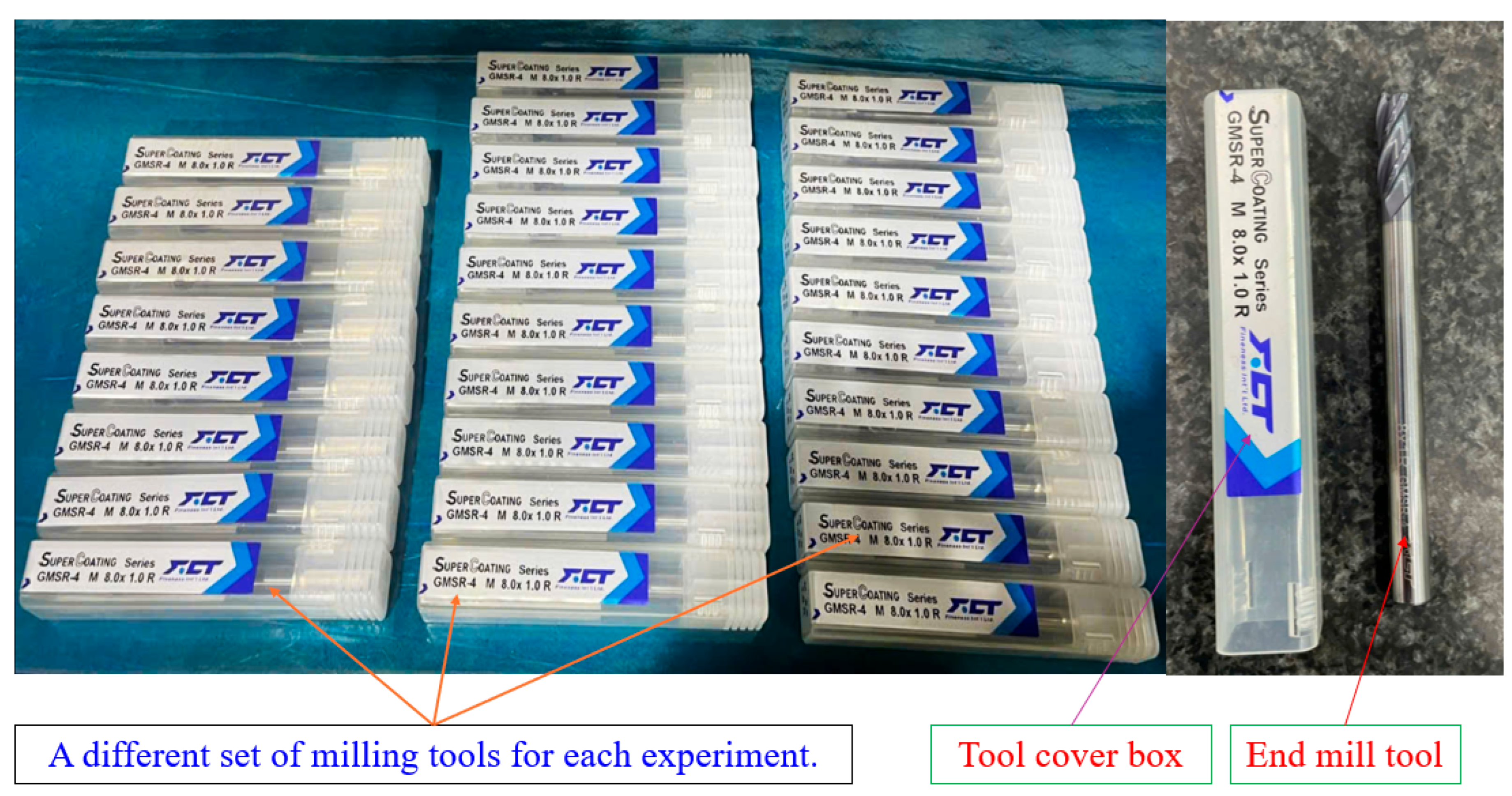
The constraint range conditions of the main parameters were demonstrated in Equations (4) and (5). Based on the manufacturing ability as well as the expertise of mechanical engineers, the range limits for fabricating parameters were proposed for the experimental CNC milling process for the specimen material with SKD11 obtaining mechanical hardness after heating more than 58 HRC. In addition, the chemical composition of SKD11 material is shown in Table 1. In addition, the flute radius end mill tools with code, namely GMSR-4, Fineness Int’l Ltd., Taiwan, from Carbide Micro Grain material with a super coating layer of ALTiN, with main parameters such as D = Ø8 mm, R = 1 mm, l = 20 mm, d = Ø8 mm, γ = 30 ° , and L = 100 mm, were applied in high speed machining, wet and dry cutting conditions, as illustrated in Figure 1. In addition, different end mill tools for the experimental process are shown in Figure 2.

2.2. Integration Method

The influences of the fabricating parameters on quality responses were examined by developing an integration method of the TM, RSM, as well as Lichtenberg optimization algorithm to define the optimized factors for the proposed milling specimen based on mold fabricating technology applied to precise mechanical manufacturing. The hybrid optimization approach included the main steps:
-
The TM was conducted to build an experimental orthogonal array.
-
The experimental process for milling SKD11 material under three different strategies was conducted.
-
The output responses, including surface roughness, flatness and milling time, were measured by the surface roughness tester, CMM machine and recorded by the CNC machine, respectively.
-
The ANOVA analysis was used to determine the impact of key inputs on the quality attributes for three CNC milling strategies.
-
Based on the experimental results, an ANN was applied to predict the three quality responses associated with the three milling strategies.
-
The regression equations were formed for mapping the main parameters and quality features by the response surface method. A whole model for forming a regression equation was conveyed as the following equation:
F k = γ 0 + i = 1 n γ i x i + i = 1 n γ i i x i 2 + i = 1 n 1 j = i + 1 n γ i j x i x j + ε k
where n is the number of design variables, γ 0 is the intercept coefficient, γ i (i = 1, 2, …, n) are linear regression coefficients, γ i i are the quadratic coefficients, γ i j (i < j) are association coefficients between xi and xj; x1, x2,…, xn are coded independent variables, and ε is an arbitrary error.
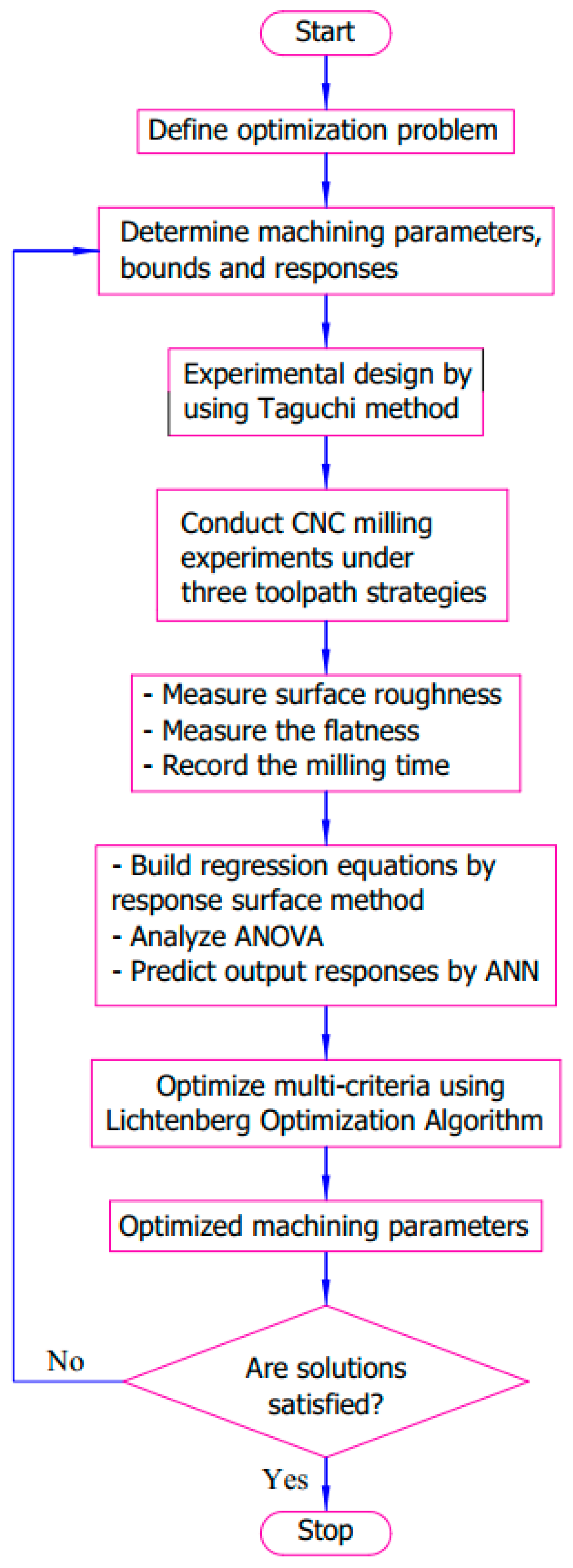
Eventually, the optimization procedure was carried out using the Lichtenberg algorithm, which was based on a regression equation chain for three different toolpath strategy circumstances in order to define optimized machining parameters. Based on the optimized parameters for three strategies, a suitable strategy was proposed to conduct the machining process for SKD11 material. The algorithm utilizes a hybrid system in its optimization process, integrating population and trajectory-based approaches. Through the use of a Lichtenberg figure, which is generated with different sizes and rotations at each iteration, it showcases robust exploration and exploitation capabilities by dispersing evaluation points in the objective function. More specifically, this algorithm achieved high convergence speed for multi-objective optimization problems. Therefore, according to the regression equations, the Lichtenberg algorithm was applied to find the optimization parameters because of the convergence speed. Matlab R2021b was used to program the Lichtenberg algorithm. Figure 3 depicts a hybrid strategy flowchart for the manufacturing factor optimization process. More details about the Lichtenberg algorithm can be found in ref. [33].

3. Discussion of Experimental Results

3.1. Experiment with an Orthogonal Array

As shown in Table 2, each element can be classified into three rankings according to expertise and manufacturing experience. The L27 orthogonal array was used to establish the initial experiment plan, based on the TM.

3.2. Experimental Process and Mathematical Model

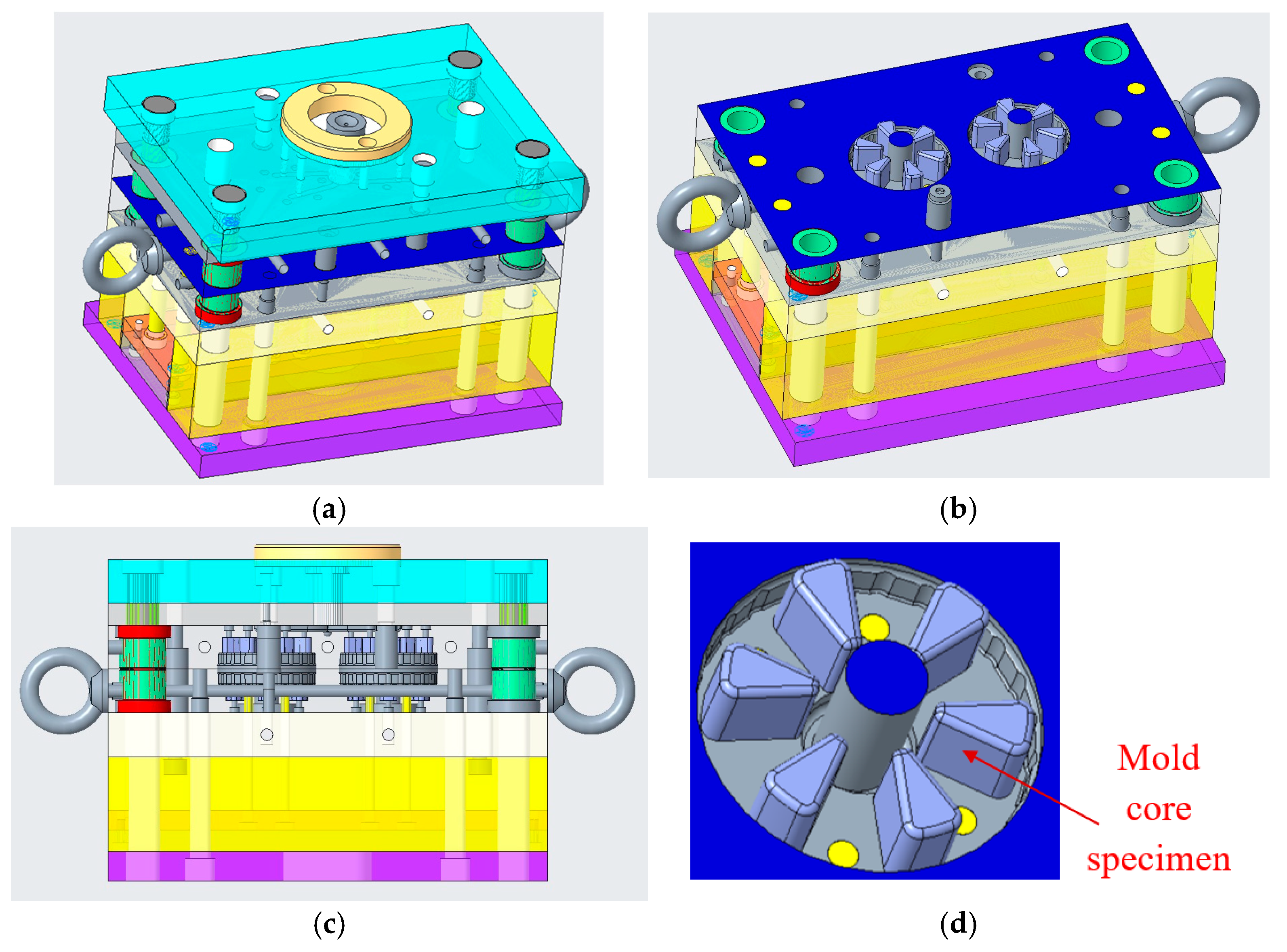
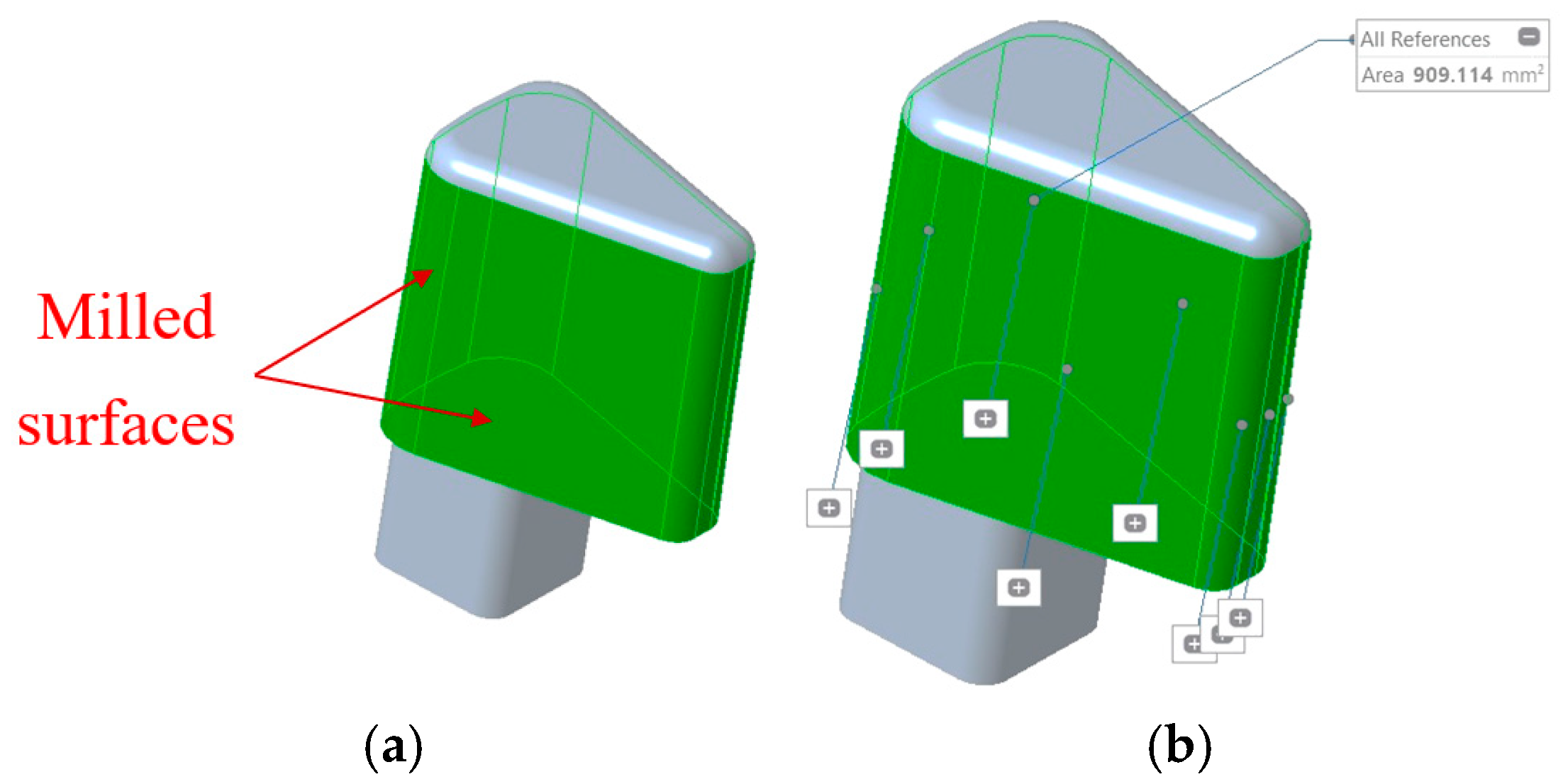
To begin, Creo software v.11 was exploited for building a 3D design of the cartwheel mold, as shown in Figure 4. Furthermore, to improve the quality products from the cartwheel mold, the mold core components were investigated to find suitable parameters for enhancing the technical requirements as well as machining productivity of the CNC milling fabricating process of core parts. Therefore, several initial core component specimens were generated according to the Taguchi method for fabricating, measuring as well as recording for producing primary data between input design variables and output responses for three CNC milling strategies. Figure 5 exhibits the mold core specimen’s green milled surfaces with a fabricated square of 909.114 mm2.
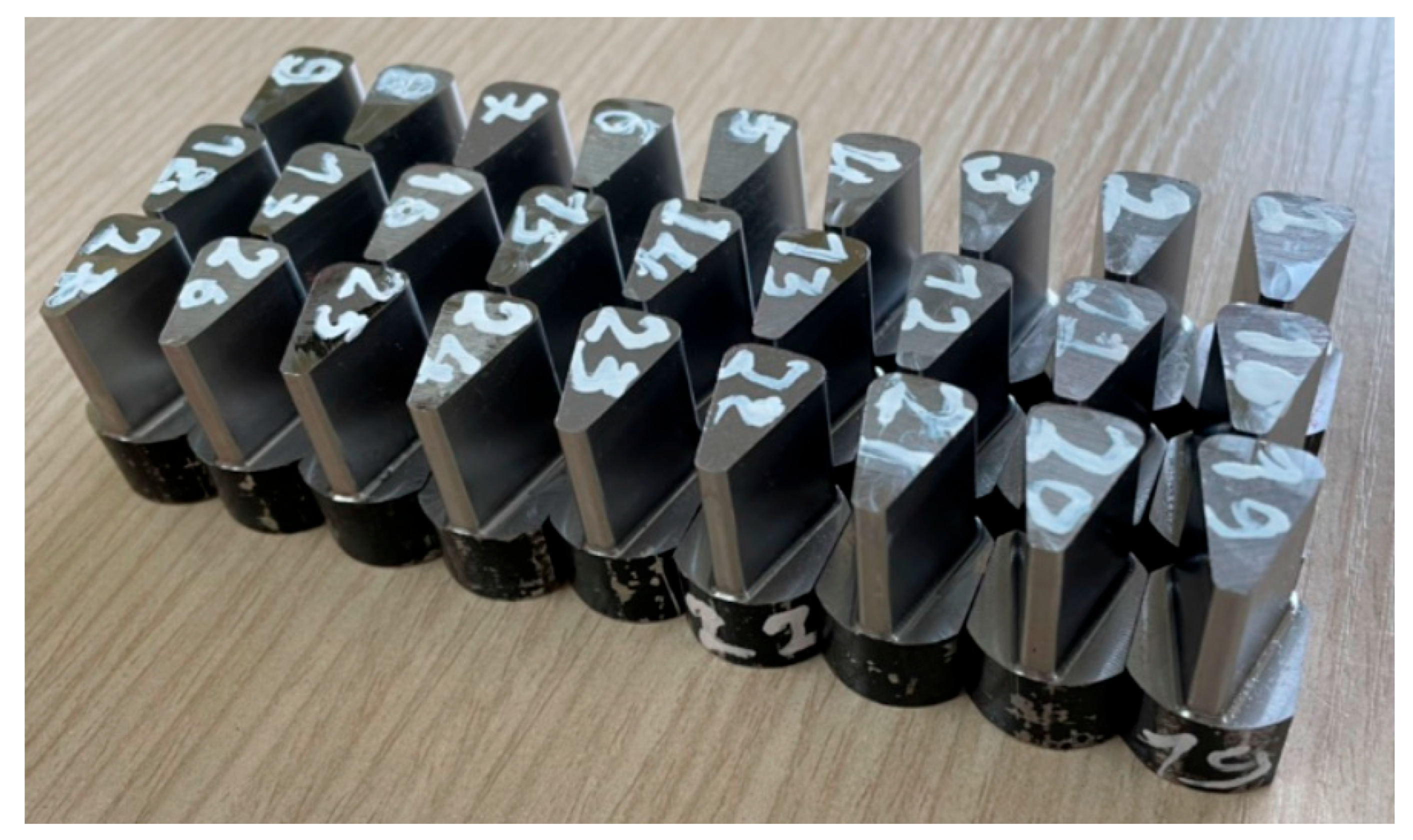
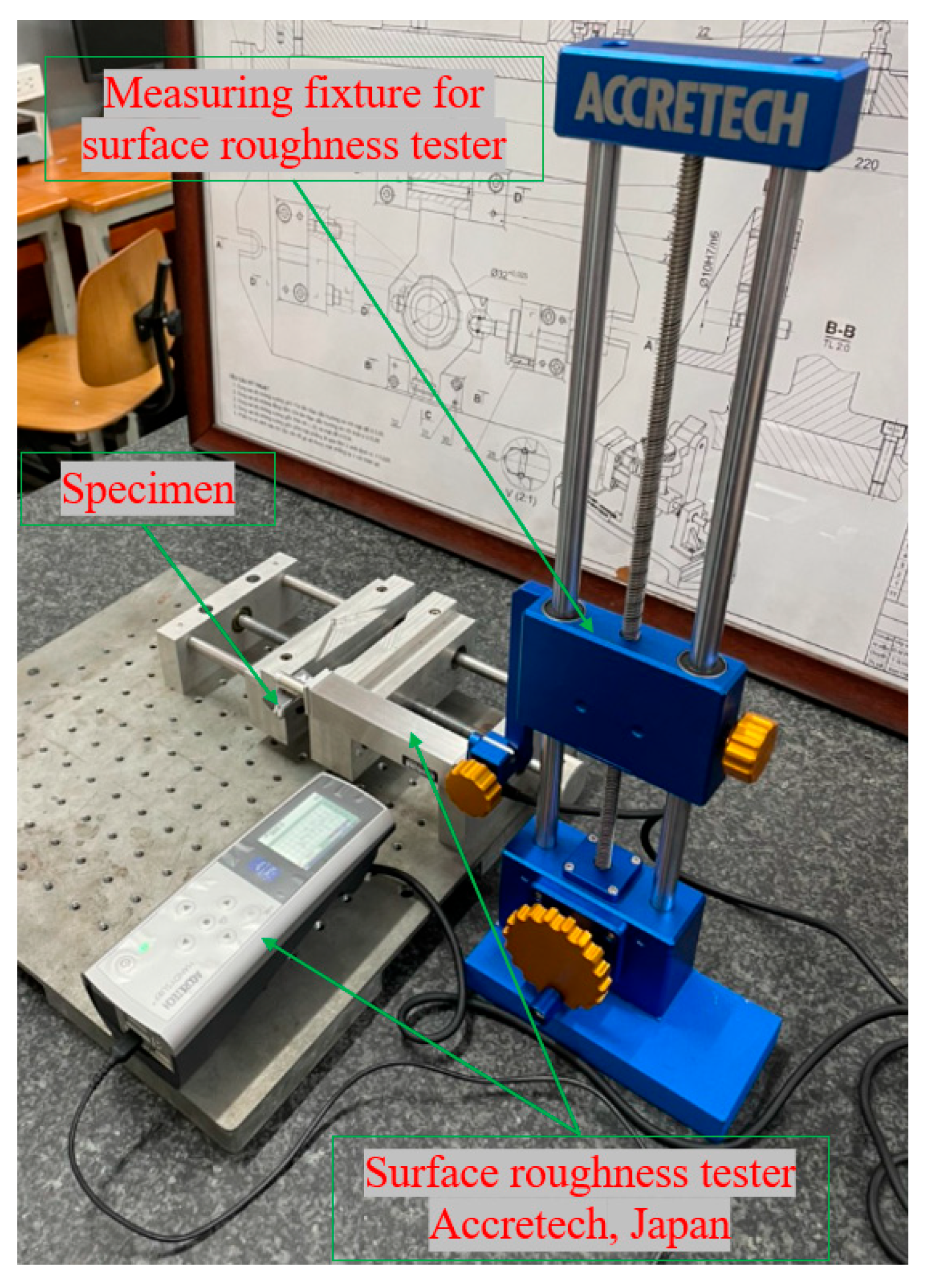
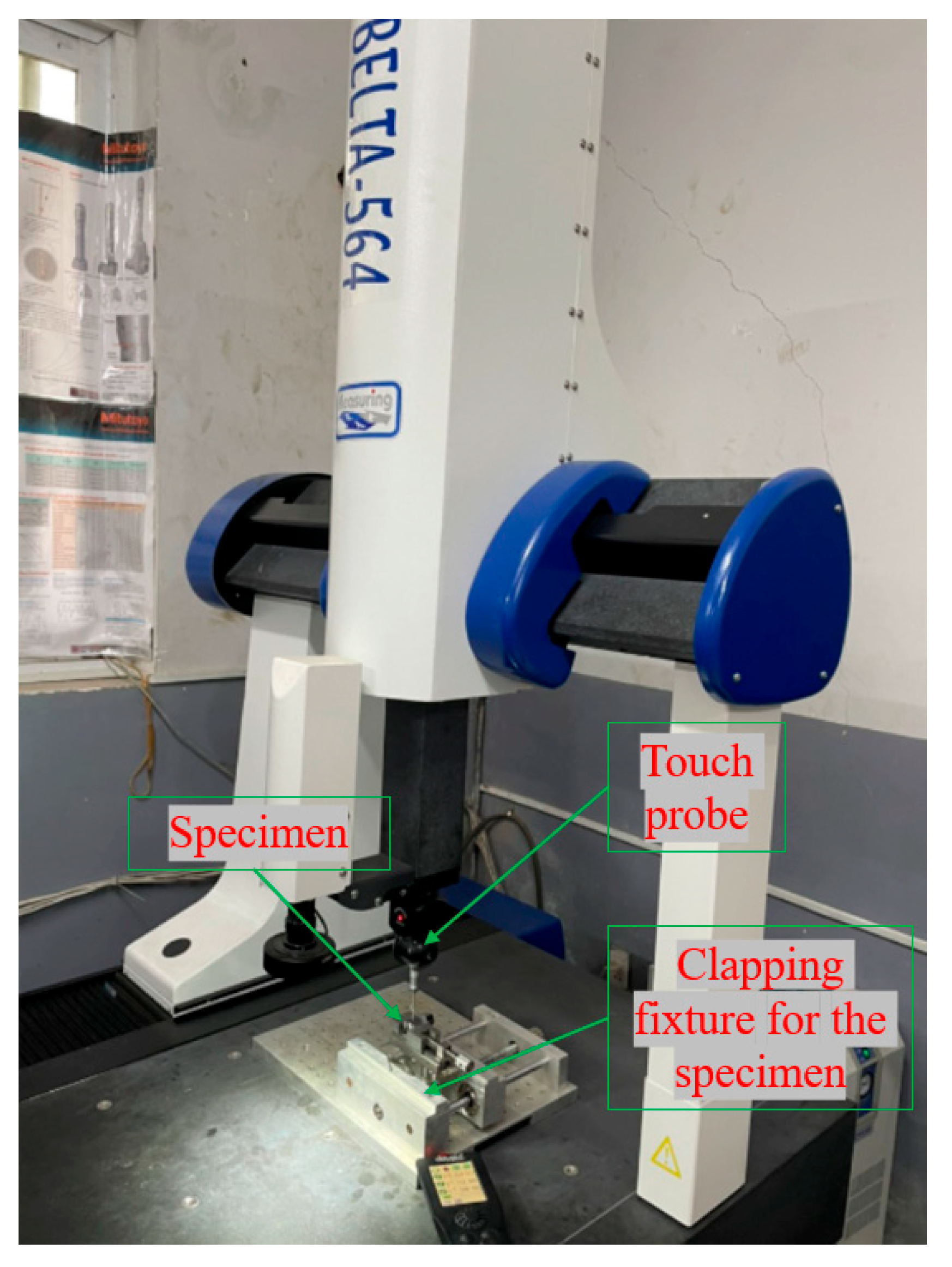
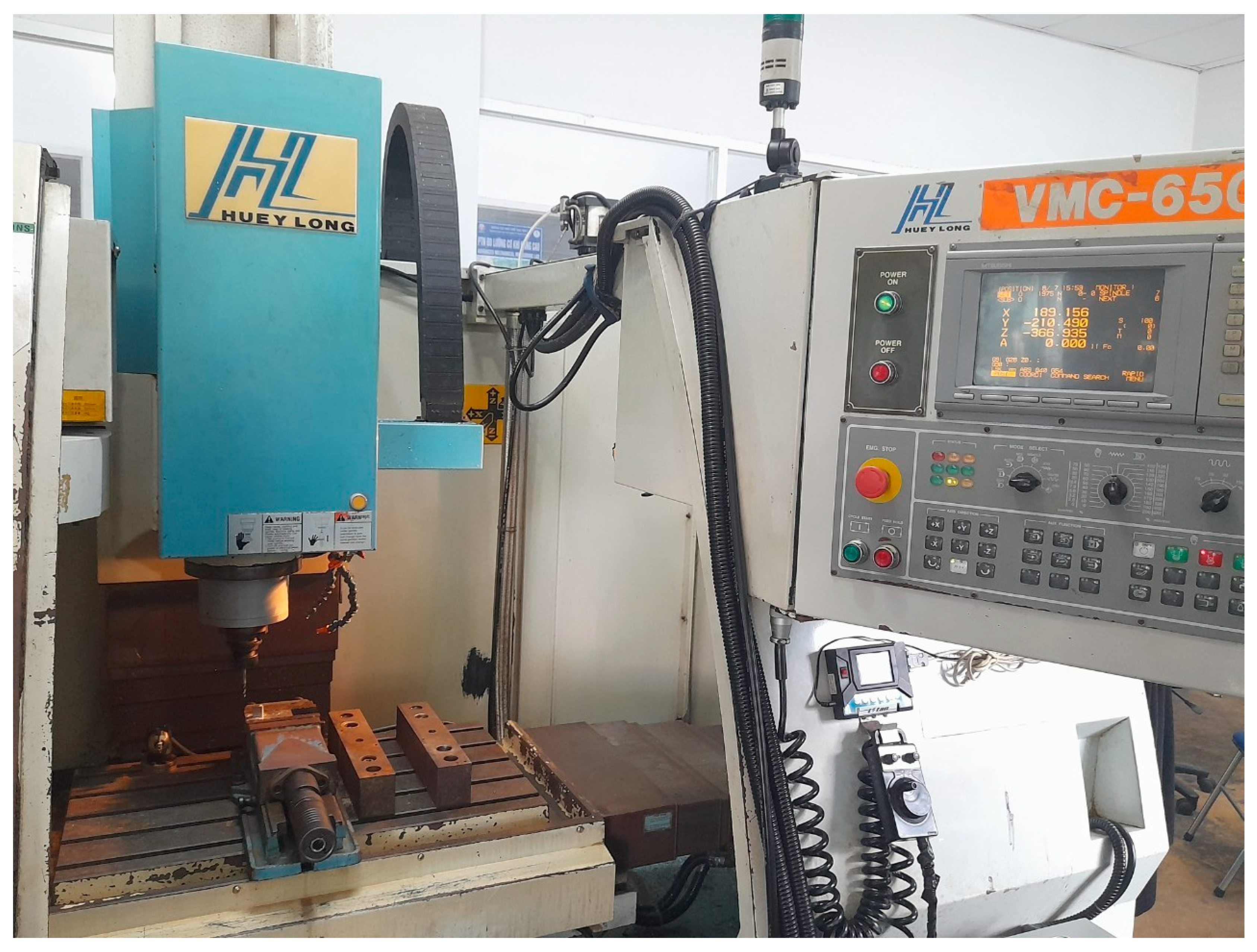
Later, twenty-seven experimental specimens, as illustrated in Figure 6, were manufactured by the CNC milling machine (VMC-650,Huey Long company, Taichung city, Taiwan). Subsequently, the surface roughness was assessed using an Accretech surface roughness tester (Tokyo Seimitsu company, Tokyo, Japan), as visualized in Figure 7. Furthermore, a measuring fixture was built for mounting the milled specimen and measuring surface roughness with the medium of three various measuring times. Furthermore, as depicted in Figure 8, the CNC milling machine recorded the machining time, and the flatness was measured by a coordinate measuring machine with the machine code, namely, BELTA-564 (Measuring company, Taichung city, Taiwan). As a result, the experiment outcomes are presented in Table 3.
Finally, based on the data in Table 3, regression equations of three output characteristics for three different milling strategies were formed as follows.
Case 1: Forward CNC milling strategy (F).
f 1 F = 0.7102 + 0.000278 × S 0.3201 × t + 0.002545 × F 1.163 × t × t 0.000001 × F × F   + 0.000147 × S × t
f 2 F = 0.000184 + 0.000001 × S + 0.001078 × t 0.000001 × F 0.01094 × t × t + 0.000001 × S × t
f 3   F = 4453 + 0.09547 × S + 562.1 × t 7.066 × F 0.000013 × S × S 507.8 × t × t   + 0.003409 × F × F 0.1670 × S × t 0.000003 × S × F
Case 2: Forward–reverse CNC milling strategy (FR).
f 1 F R     = 0.4576 + 0.000489 × S + 0.8650 × t + 0.000766 × F 4.414 × t × t + 0.000285 × S × t
f 2   F R = 0.000771 + 0.002588 × t + 0.000001 × F 0.002770 × t × t
f 3   F R = 4469 + 0.01832 × S + 127.2 × t 6.806 × F 0.000001 × S × S 253.9 × t × t   + 0.003291 × F × F 0.03649 × S × t 0.000015 × S × F
Case 3: Reverse CNC milling strategy (R).
f 1 R = 0.04581 + 0.000255 × S 0.2550 × t 0.000033 × F 0.5725 × t × t + 0.000108 × S × t
f 2   R = 0.000063 + 0.000246 × t + 0.000003 × F 0.000046 × t × t
f 3   R = 4455 0.2876 × S 18188 × t 5.512 × F + 0.000072 × S × S 87.72 × t × t   + 0.003180 × F × F + 0.4618 × S × t 0.000293 × S × F

3.3. ANOVA Analysis for Three CNC Milling Strategies

The ANOVA consequences of surface roughness, flatness as well as CNC milling time for the forward CNC milling strategy are demonstrated in Table 4, Table 5 and Table 6, correspondingly. As portrayed in Table 4, the spindle speed and feed rate significantly affected the surface roughness with 30.93% and 23.39%; meanwhile, the figure for cutting thickness was relatively small with 4.12%. More details about interaction proportions among the main factors affecting the surface roughness were illustrated in Table 4. Consequently, the spindle speed and feed rate need to be considered for reducing the surface roughness to enhance the product attribute. Additionally, as illustrated in Table 5, the feed rate and the cutting thickness influenced flatness with 16.68% and 5.19%, respectively. However, the spindle speed insignificantly affected the flatness with 0.07%. Meanwhile, the interaction proportions among t and t, S and S, and F and F were 33.45%, 27.69%, and 0.33%, respectively. Therefore, the feed rate needs to be considered for reducing the flatness to enhance the product attribute. Furthermore, the interaction proportions among t and t and S and S should be considered for achieving the minimal flatness. As illustrated in Table 6, the feed rate greatly affected the CNC milling time with 92.37%. Conversely, the spindle speed and cutting thickness showed slight influences with 0.07% and 0.09%, respectively. Consequently, the feed rate should be regarded to decline the CNC milling time so as to enhance the productivity.
The ANOVA consequences of surface roughness, flatness as well as CNC milling time for the forward–reverse CNC milling strategy are displayed in Table 7, Table 8 and Table 9, congruently. Specifically, as shown in Table 7, the spindle speed and feed rate considerably affected the surface roughness with 14.92% and 26.58%; meanwhile, the figure for cutting thickness was relatively small with 3.93%. More details about interaction proportions among the main factors influential to the surface roughness are illustrated in Table 7. Consequently, the spindle speed and feed rate need to be considered for reducing the surface roughness to enhance the product attribute. Additionally, as illustrated in Table 8, the feed rate affected the flatness with 41.69%. However, the effect proportions of the spindle speed and the cutting thickness were relatively small, with 2.14% and 2.91%, respectively. Further details about interaction proportions among the main factors influential to the flatness are illustrated in Table 8. Therefore, the feed rate should be regarded to reduce the flatness of the product so as to ensure the technical requirement. As depicted in Table 9, the feed rate affected extremely the CNC milling time with 93.62%. Meanwhile, the spindle speed and cutting thickness showed slight influences with 0.01% and 0.03%, respectively. Consequently, the feed rate should be regarded to decline the CNC milling time so as to enhance the productivity.
The ANOVA outcomes of surface roughness, flatness as well as CNC milling time for the reverse CNC milling strategy are exhibited in Table 10, Table 11 and Table 12, correspondingly. As portrayed in Table 10, the feed rate had an enormous effect on the surface roughness with 81.52%; meanwhile, the figures for cutting thickness and spindle speed were relatively small with 3.78% and 0.17%, respectively. Consequently, the feed rate should be considered for reducing the surface roughness to enhance the product attribute. Additionally, as illustrated in Table 11, the spindle speed and cutting thickness significantly influenced the flatness with 47.57% and 32.35%, respectively. However, the effect ratio of feed rate to the flatness was relatively small, with 3.9%. Therefore, the spindle speed and cutting thickness should be considered to decline the flatness in order to ensure the technical requirement. Additionally, Table 12 revealed that the feed rate affected tremendously the CNC milling time with 92.57%. Conversely, the effect ratios of spindle speed and cutting thickness on the CNC milling time were very small 0% and 0.77%. Consequently, the feed rate should be regarded to decline the CNC milling time so as to enhance the productivity.
In brief, for the three above-mentioned CNC milling strategies, the feed rate was the main parameter affecting the CNC milling time extremely. Conversely, the spindle speed and the cutting thickness differently affected the surface roughness and the flatness for the three CNC milling strategies.

3.4. Analysis of Sensitivity for Three CNC Milling Strategies

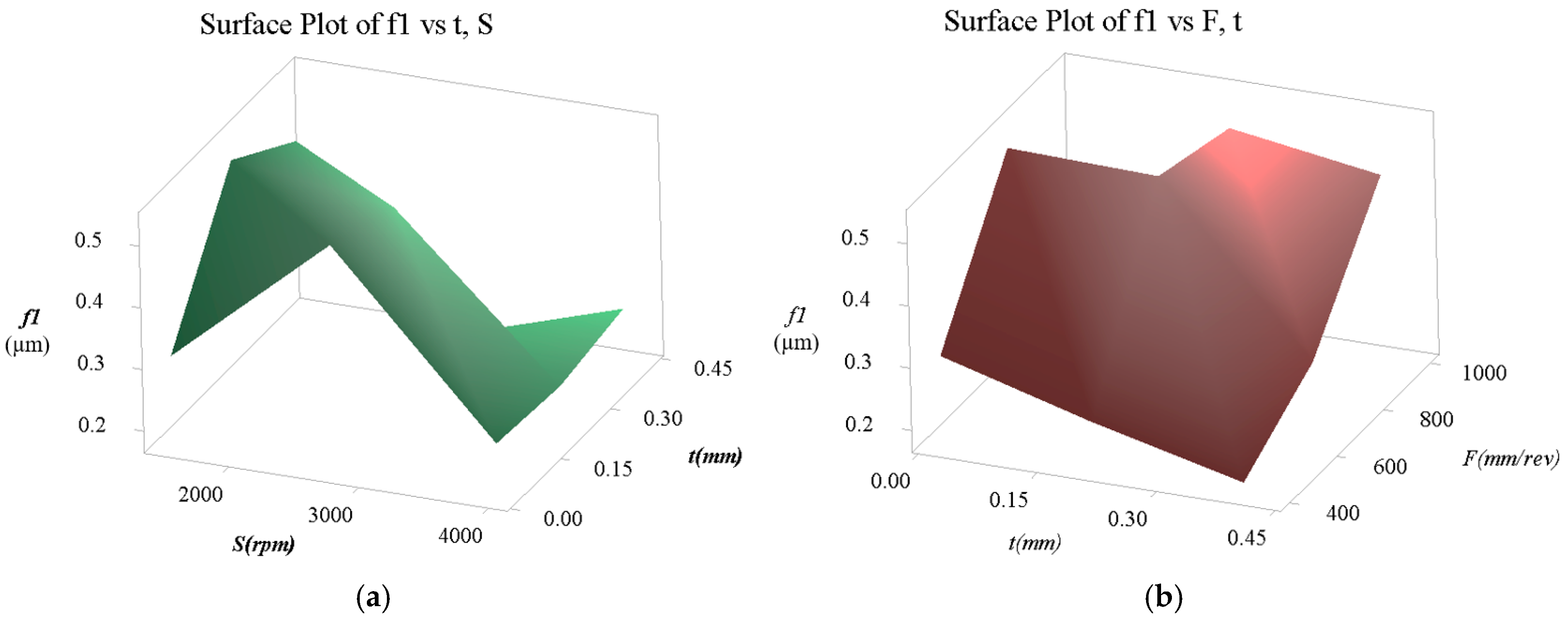
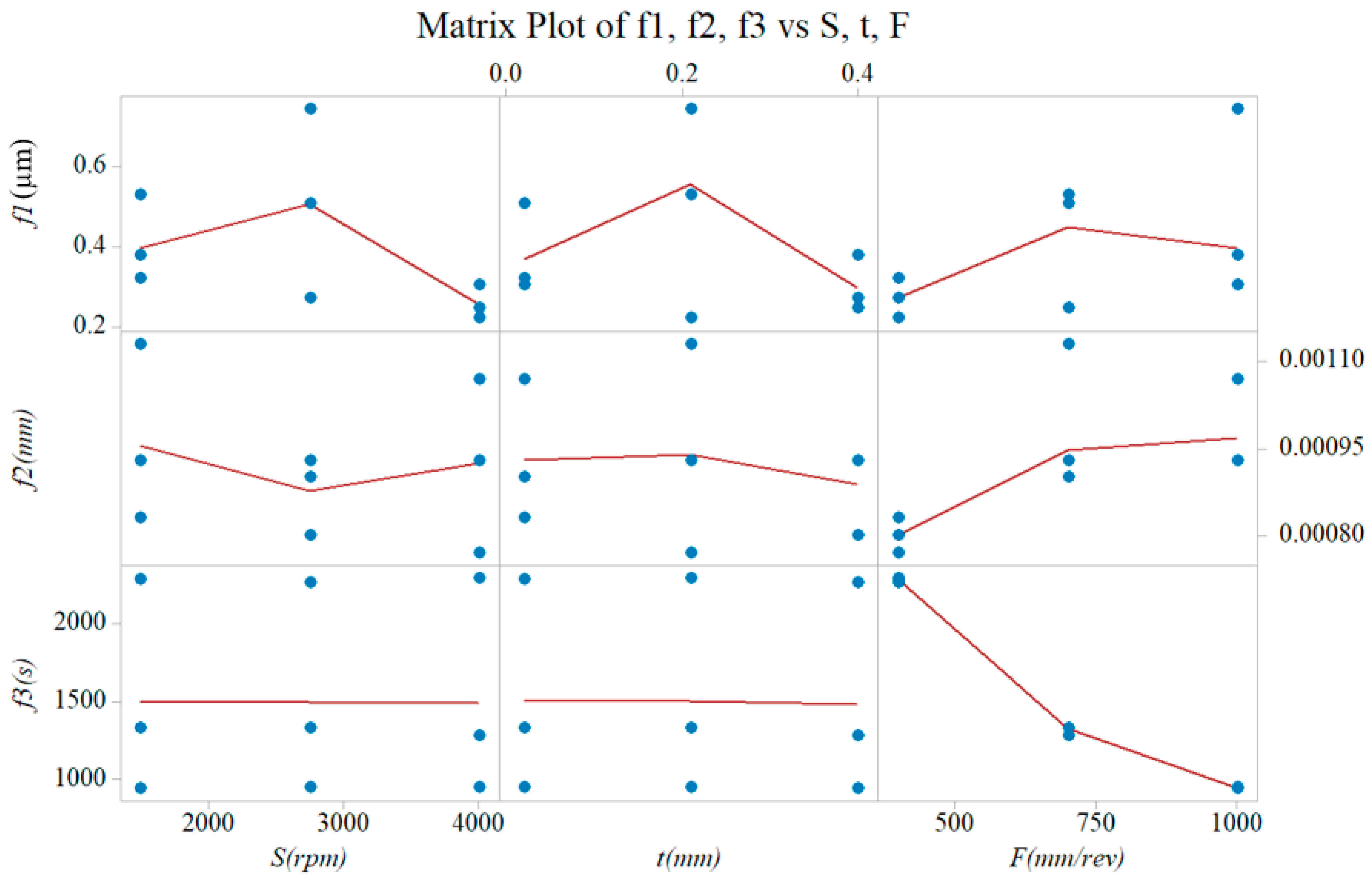
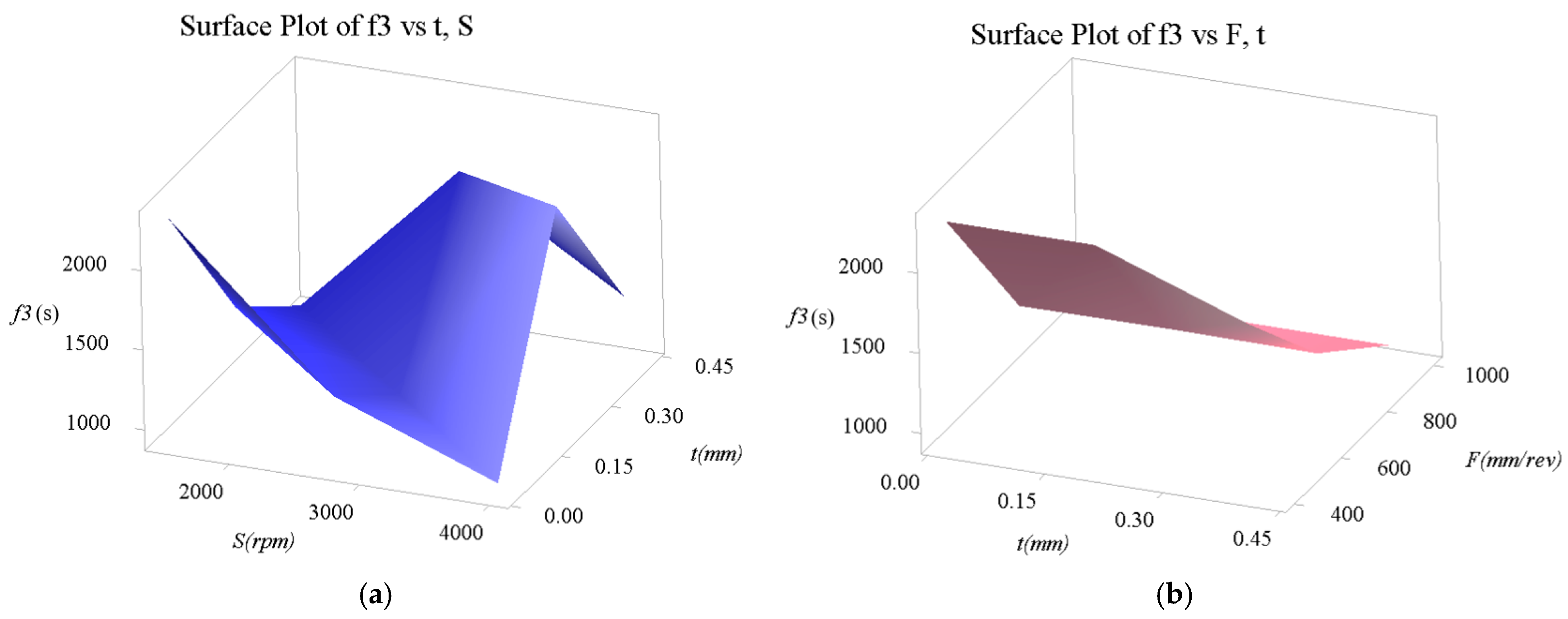
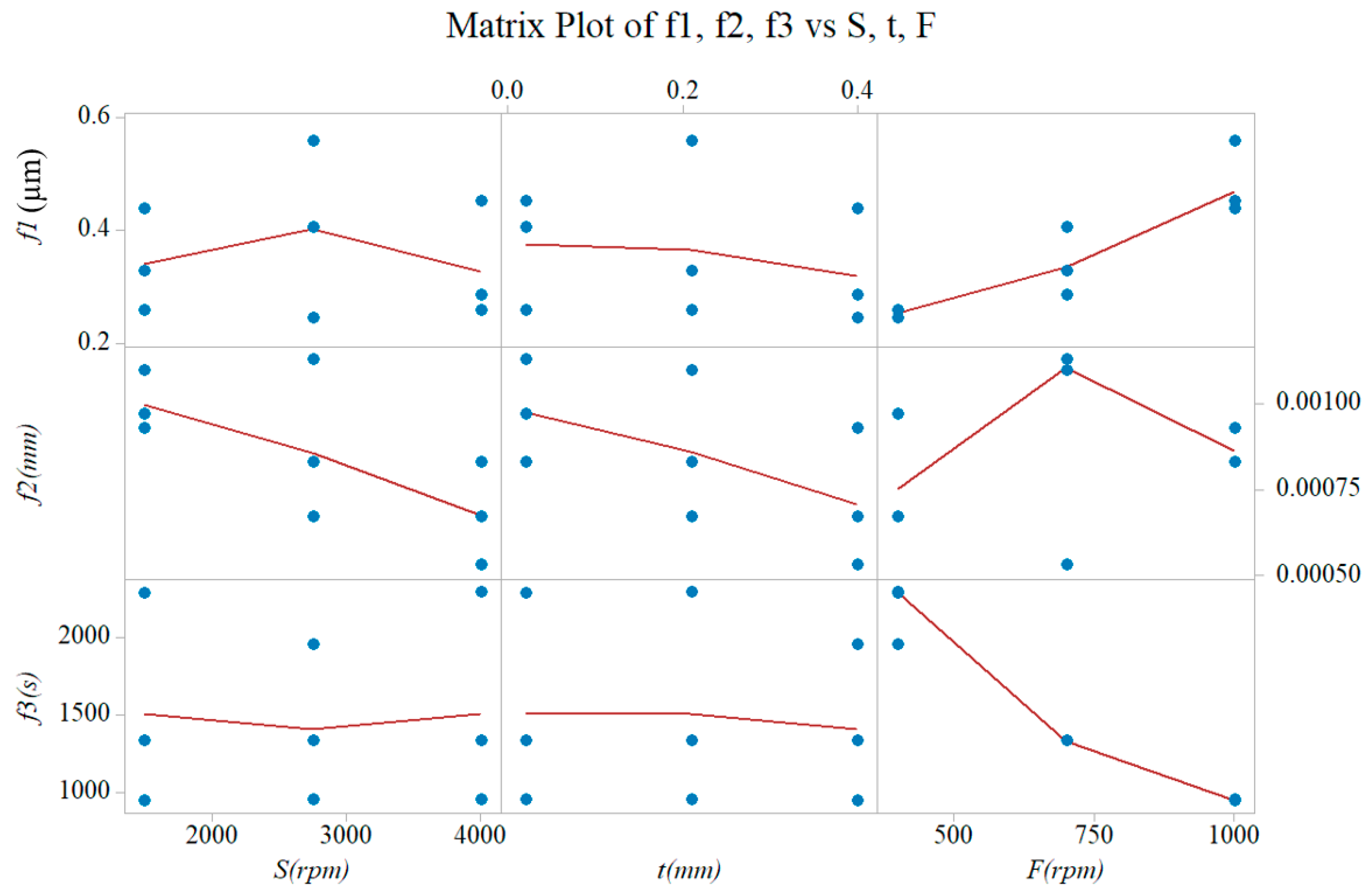
To evaluate the degree of effect of fabrication factors on the output features, a statistical approach was utilized. More specifically, for the forward CNC milling strategy, the spindle speed slightly increased f1 in [2000 rpm, 3000 rpm], as shown in Figure 9a and Figure 12. In addition, as illustrated in Figure 9a and Figure 10, the spindle speed in the range 3000 rpm to 4000 rpm significantly affected the decrease in surface roughness. In addition, in the range [0.02 mm, 0.21 mm], the cutting thickness steadily affected in increasing the surface roughness and in the range [0.21 mm, 0.4 mm], the cutting thickness gradually affected in decreasing the surface roughness. As depicted in Figure 9b and Figure 12, the feed rate affected dramatically in increasing the surface roughness in the range [400 mm/min, 700 mm/min]; conversely, in the range [700 mm/min, 1000 mm/min], the feed rate affected gradually in declincing the surface roughness. Furthermore, as shown in Figure 10a,b and Figure 12, there was a gradual fluctuation of spindle speed and feed rate effects on the flatness in the range [2000 rpm, 4000 rpm] and [400 mm/min, 1000 mm/min], respectively. In addition, as depicted in Figure 10b and Figure 12, the cutting thickness moderately contributed to the increase in flatness in the range [0.02 mm, 0.21 mm]; conversely, the cutting thickness slightly contributed to the reduction in flatness in the range [0.21 mm, 0.4 mm]. As illustrated in Figure 11a and Figure 12, the spindle speed and cutting thickness did not affect the CNC milling time. Conversely, as illustrated in Figure 11b and Figure 12, the feed rate extremely affected the milling time in declining in the range [400 mm/min, 700 mm/min] as well as gradually affected the milling time in declining in the range [700 mm/min, 1000 mm/min].
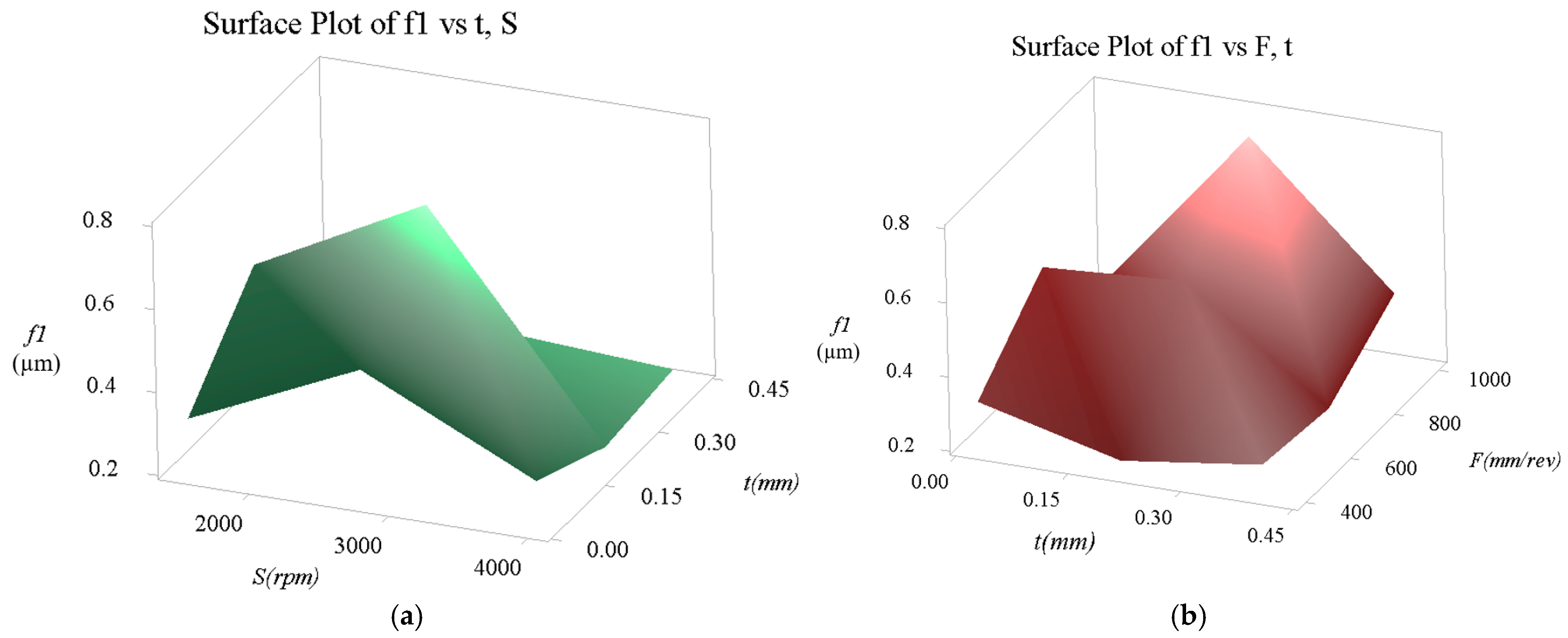
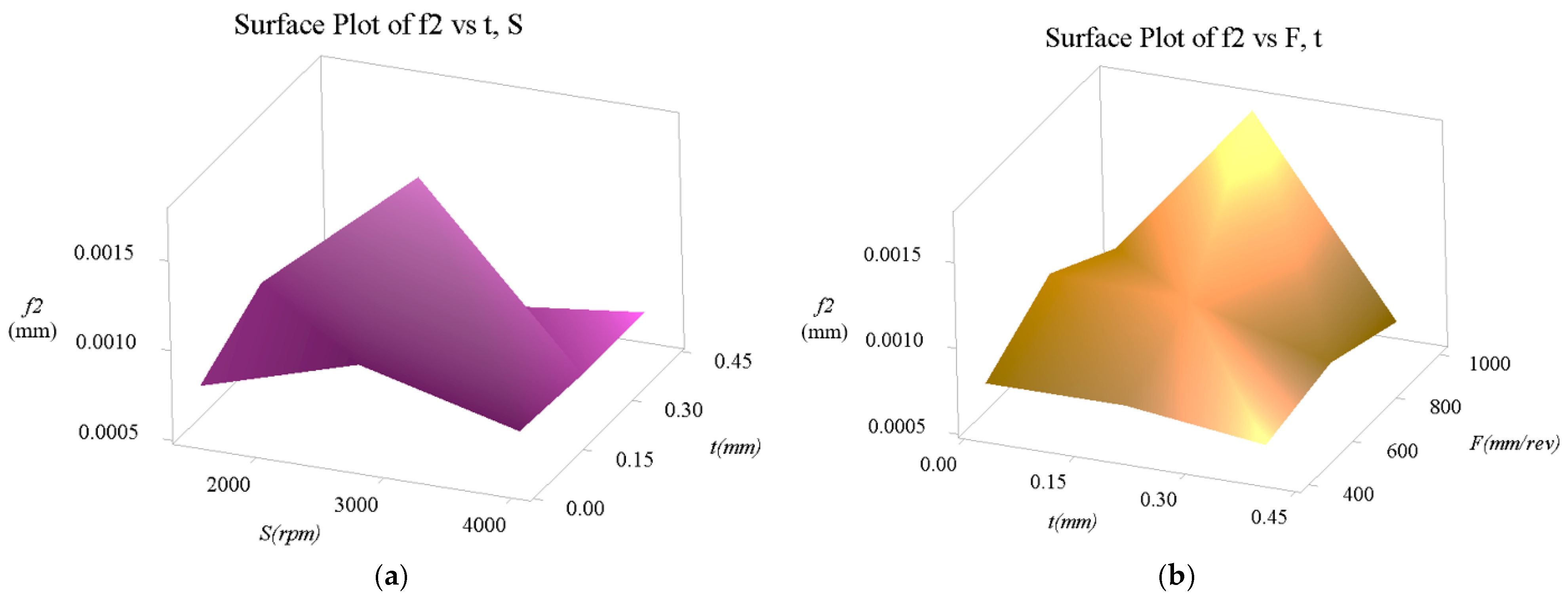
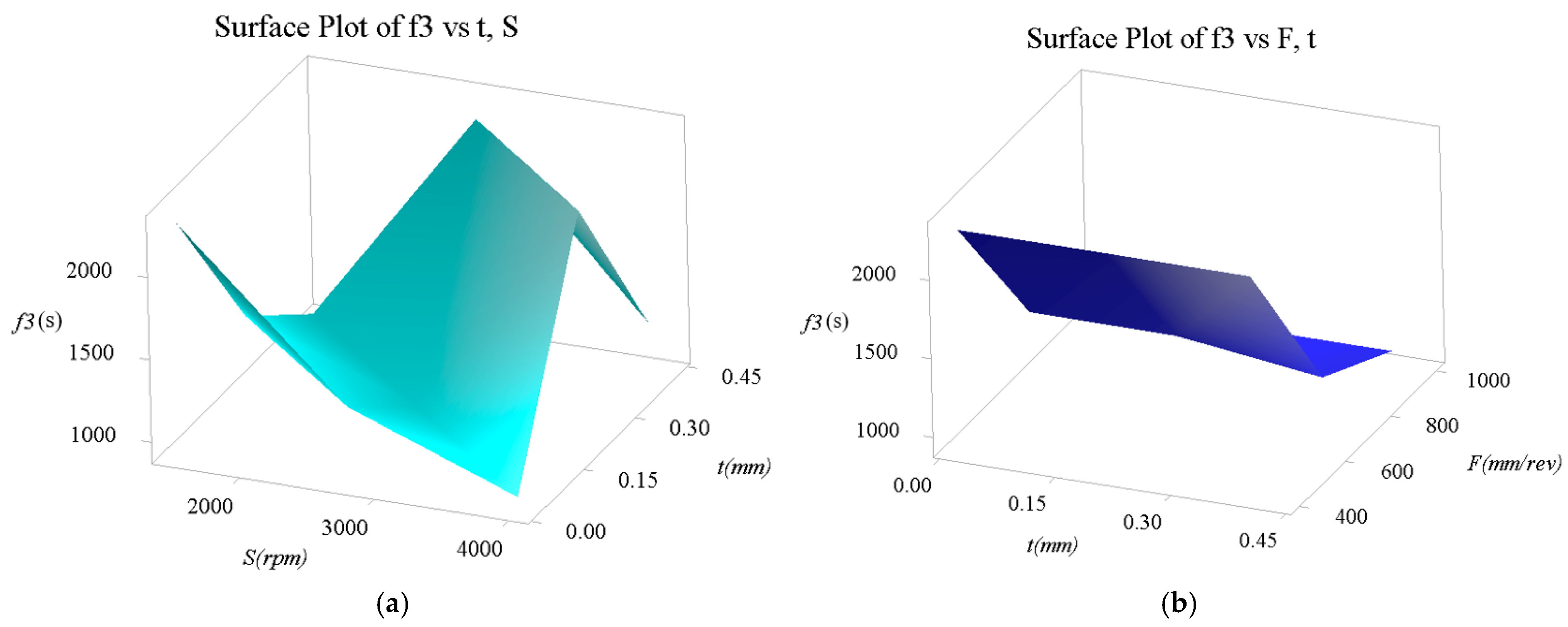
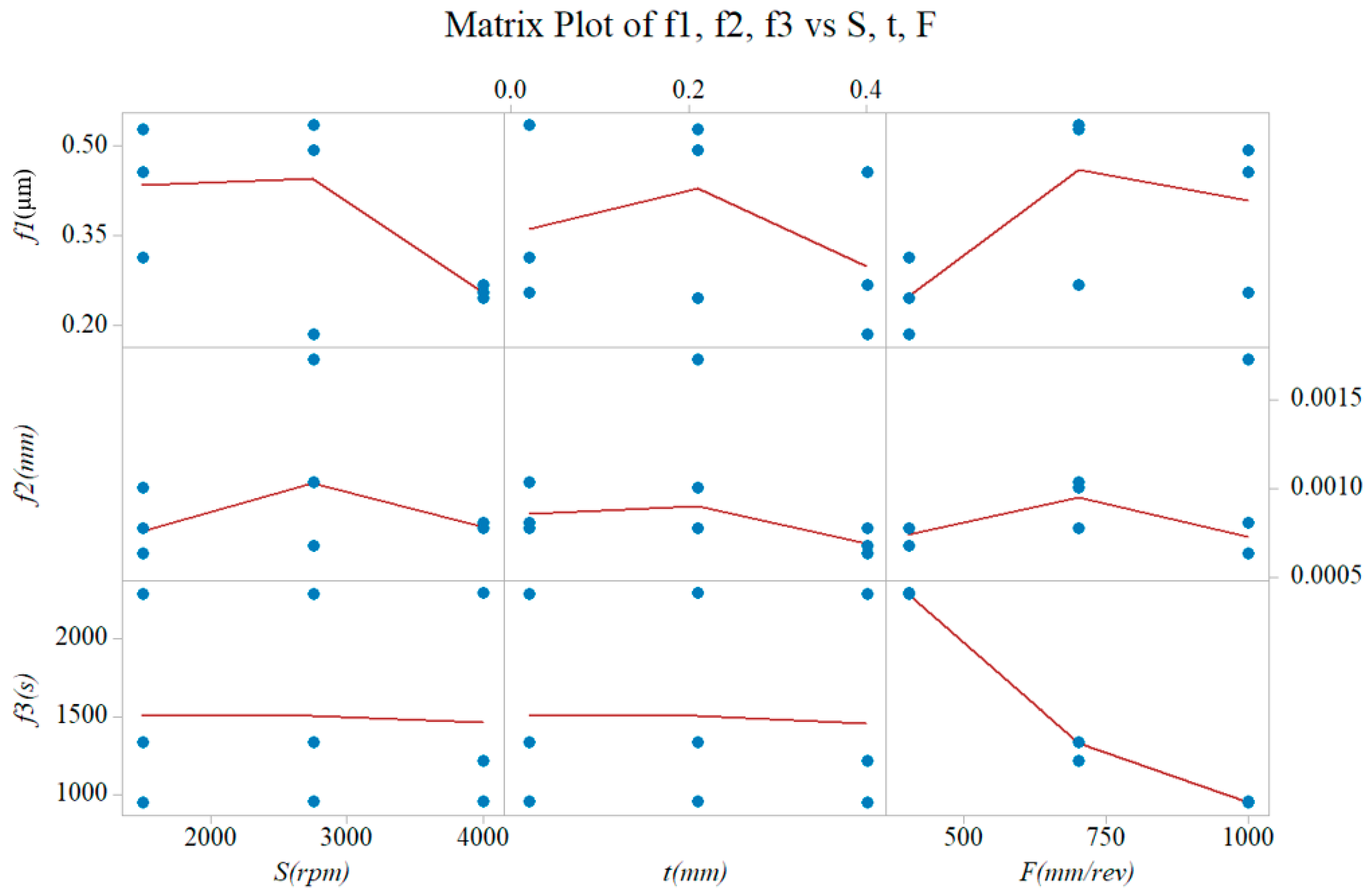
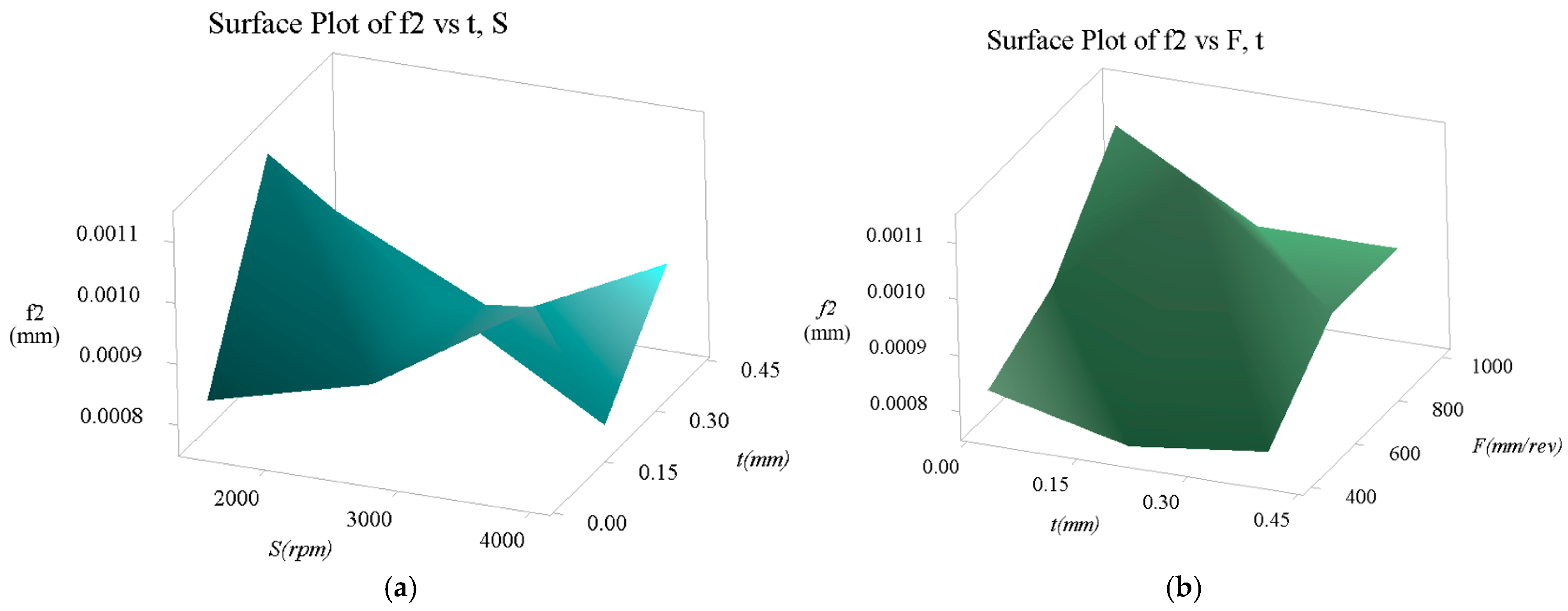
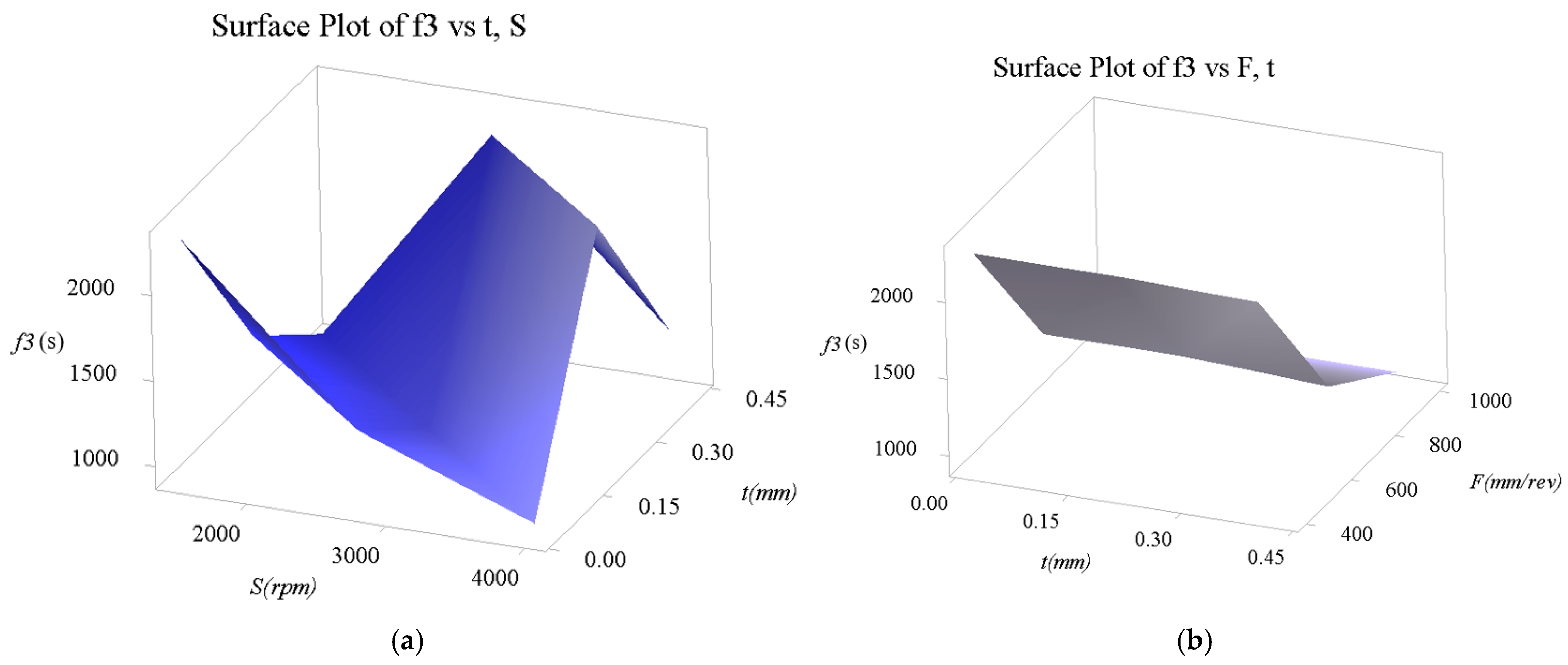
For the forward–reverse CNC milling strategy, as illustrated in Figure 13a and Figure 16, the spindle speed gradually affected in increasing the surface roughness in the range [2000 rpm, 3000 rpm]; conversely, the spindle speed had a dramatic impact on reducing the surface roughness in the range [3000 rpm, 4000 rpm]. In addition, Figure 13a and Figure 16, there was a sharp impact of cutting thickness on surface roughness in the range [0.02 mm, 0.21 mm]; meanwhile, the cutting thickness significantly affected the reduction in the surface roughness in the range [0.21 mm, 0.4 mm]. Furthermore, as illustrated in Figure 13b and Figure 16, the feed rate gradually impacted the surface roughness in the range [400 mm/min, 700 mm/min]; meanwhile, there was a slight impact of the feed rate on surface roughness in the range [700 mm/min, 1000 mm/min]. As illustrated in Figure 14a and Figure 16, the spindle speed had a gradual effect on the flatness in the range [2000 rpm, 3000 rpm]; meanwhile, there was a progressive increase in the spindle speed on the flatness in the range [3000 rpm, 4000 rpm]. Moreover, there was a slight fluctuation of the cutting thickness to the flatness in the range [0.02 mm, 0.4 mm]. As shown in Figure 14b and Figure 16, the feed rate had a sharp effect on the flatness in the range [400 mm/min, 700 mm/min]; meanwhile, there was a slight increase in the flatness in the range [700 mm/min, 1000 mm/min]. As demonstrated in Figure 15a,b and Figure 16, the spindle speed and the cutting thickness did not affect the CNC milling time in ranges [2000 rpm, 4000 rpm] and [0.02 mm, 0.4 mm], respectively. However, the feed rate dramatically affected the CNC milling time in the range [400 mm/min, 700 mm/min]. In addition, within the range [700 mm/min, 1000 mm/min], there was a progressive decrease in the feed rate during CNC milling time.
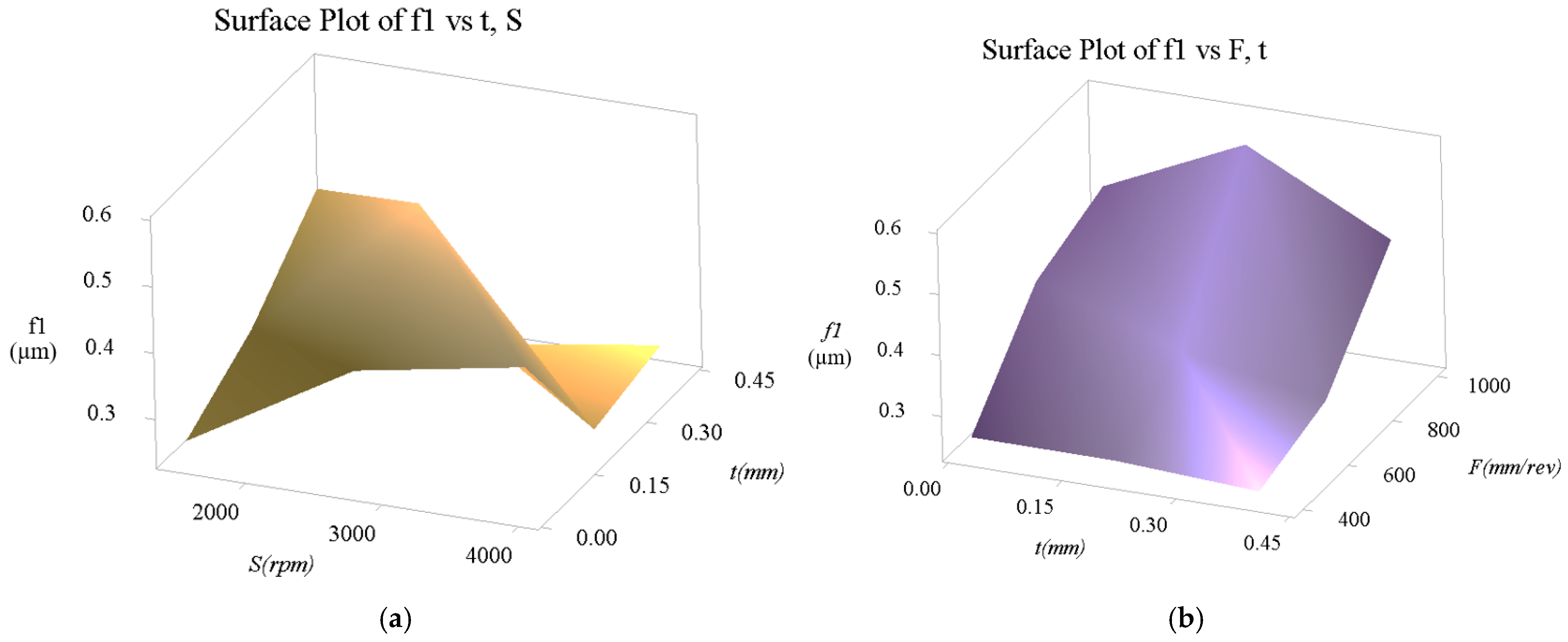
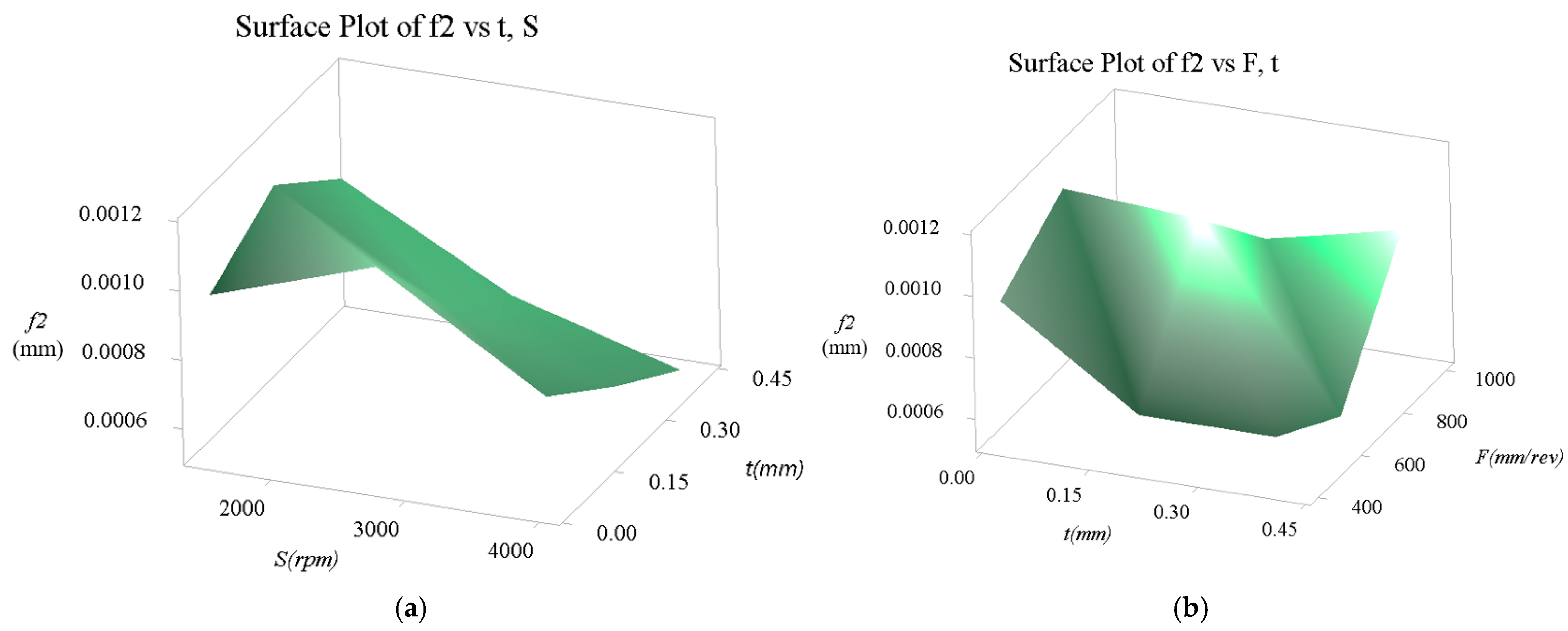
For the reverse CNC milling strategy, as illustrated in Figure 17a and Figure 20, the spindle speed gradually affected in increasing the surface roughness in the range [2000 rpm, 3000 rpm]. In addition, there was a progressive decrease in spindle speed on surface roughness in the range [3000 rpm, 4000 rpm]. Moreover, there was a slight decrease in the cutting thickness to the surface roughness in the range [0.02 mm, 0.4 mm]. As illustrated in Figure 17b and Figure 20, there was a sharp increase in feed rate on surface roughness in the range [400 mm/min, 1000 mm/min]. As illustrated in Figure 18a and Figure 20, there were dramatic decreases in the spindle speed and the cutting thickness on the flatness in the ranges [2000 rpm, 4000 rpm] and [0.02 mm, 0.4 mm], respectively. However, as illustrated in Figure 18b and Figure 20, the feed rate sharply affected the increase in flatness in the range [400 mm/min, 700 mm/min] and significantly influenced the reduction in the flatness in the range [700 mm/min, 1000 mm/min]. In addition, as depicted in Figure 19a and Figure 20, the spindle speed slightly affected the decrease in the CNC milling time in the range [2000 rpm, 3000 rpm]; meanwhile, there was a minor increase in spindle speed on the CNC milling time in the range [3000 rpm, 4000 rpm]. In addition, the cutting thickness remained unchanged with respect to the CNC milling time in the range [0.02 mm, 0.21 mm] and a minor decrease in the cutting thickness with respect to the CNC milling time in the range. Conversely, the feed rate had a pronounced influence on reducing milling time in the range [400 mm/min, 700 mm/min] and significantly affected this reduction in the range [700 mm/min, 1000 mm/min].
Case 1: Forward CNC milling strategy (F)
In brief, the effects of fabricating parameters on quality characteristics were exhibited in Figure 10. The figure describes the influence of the trends of each main factor on the output response. Based on the recorded results, the significant influencing parameters should be considered to attain the quality of output responses.
Case 2: Forward–reverse CNC milling strategy (FR)
Case 3: Reverse CNC milling strategy (R)

3.5. Predicted Results

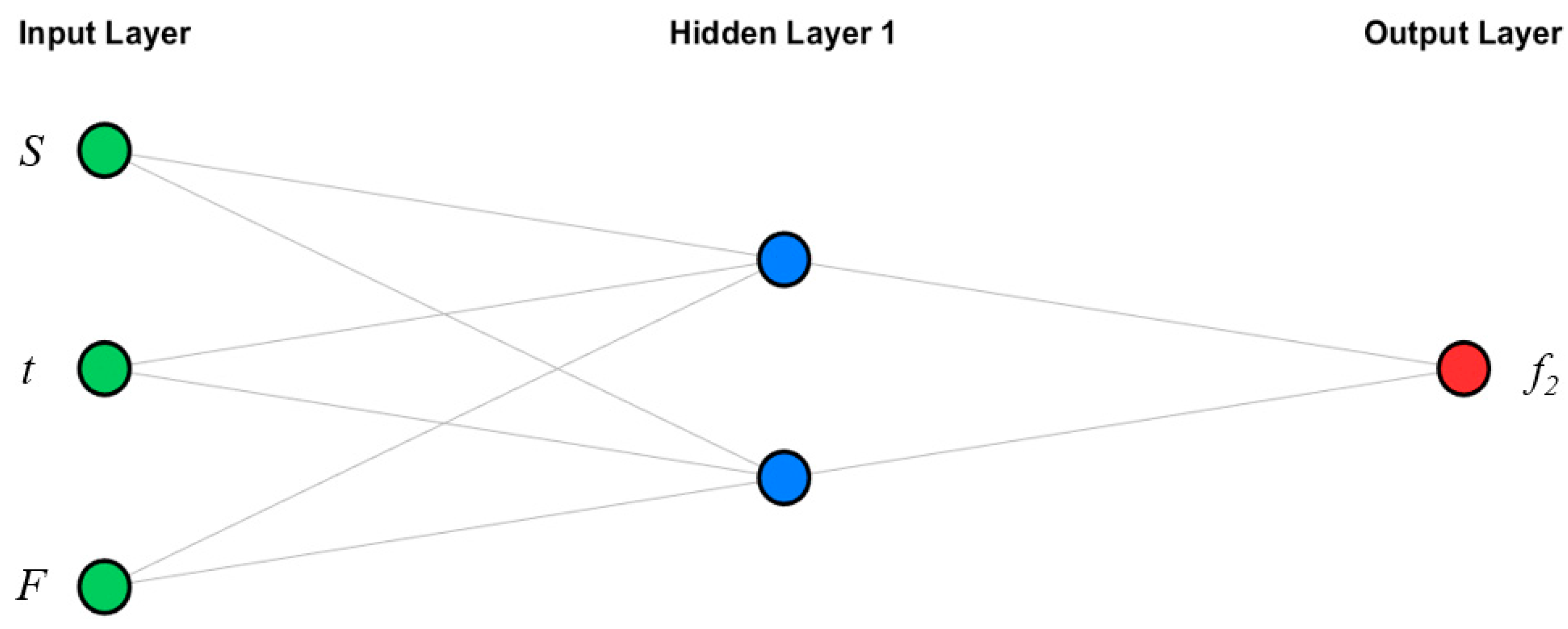
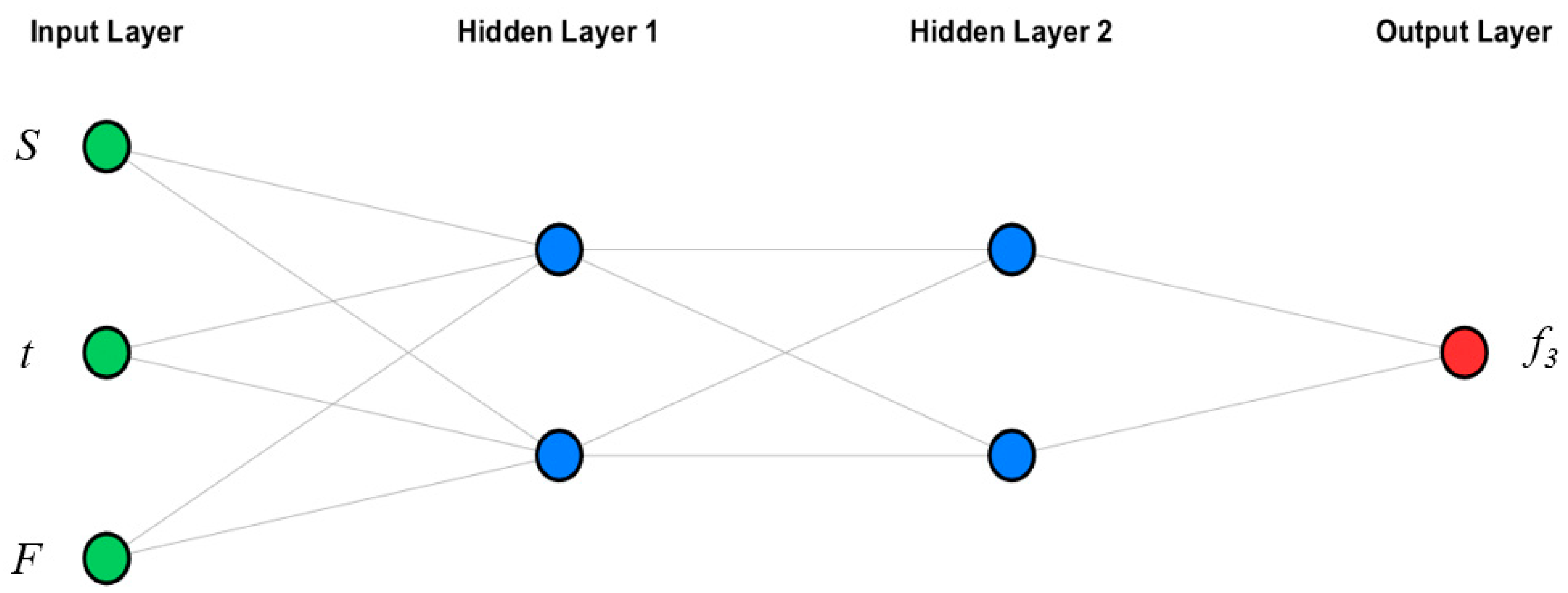
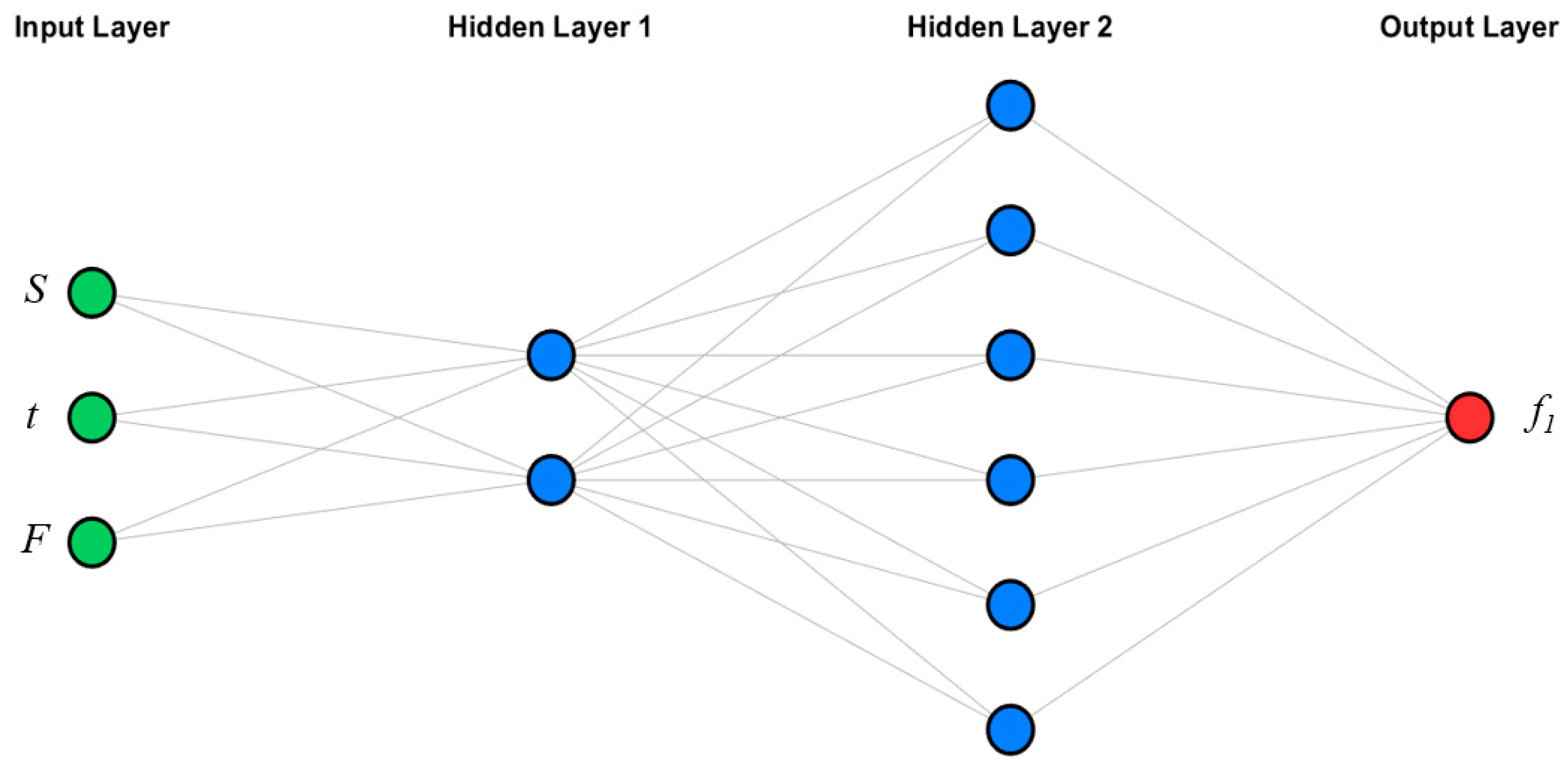
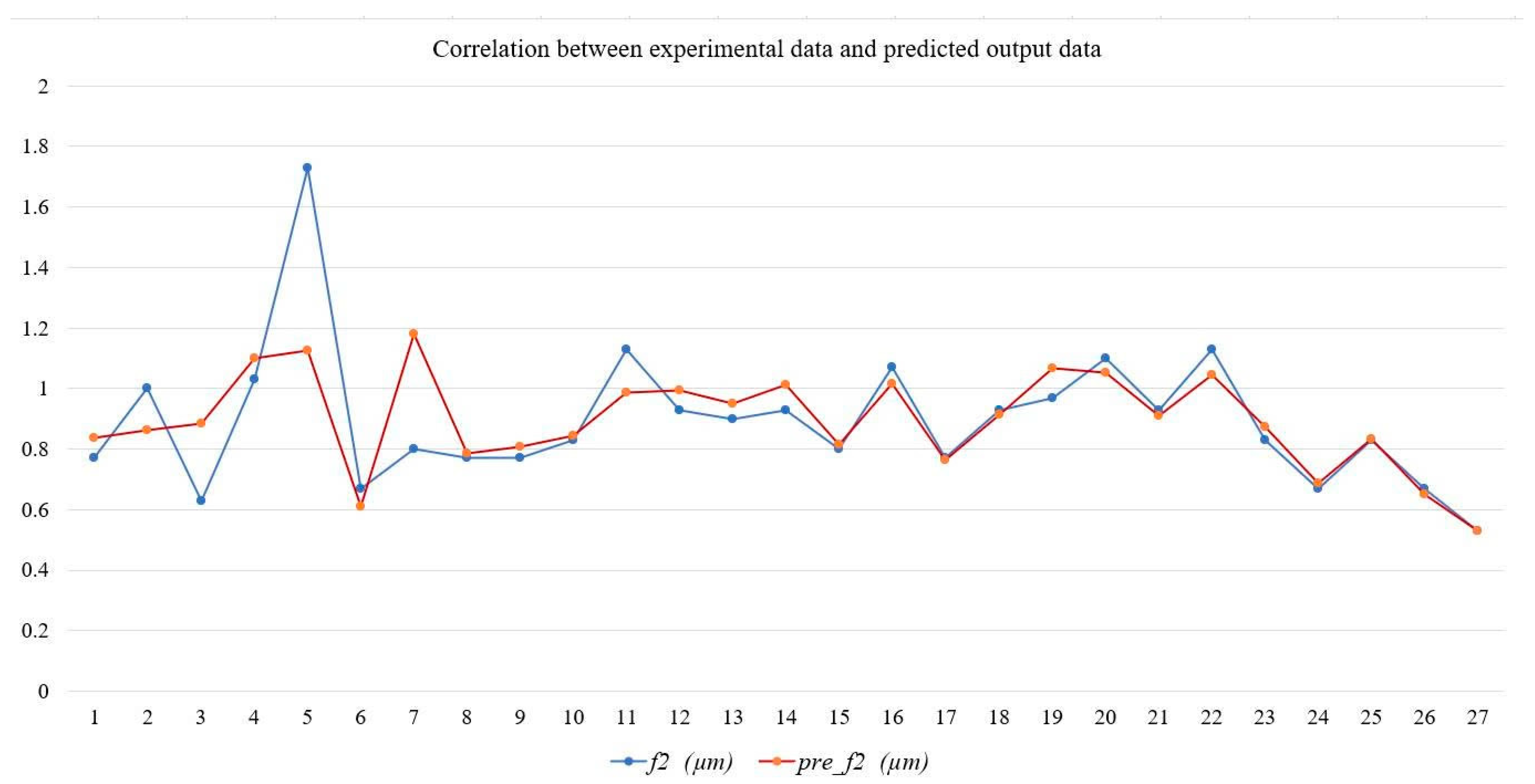
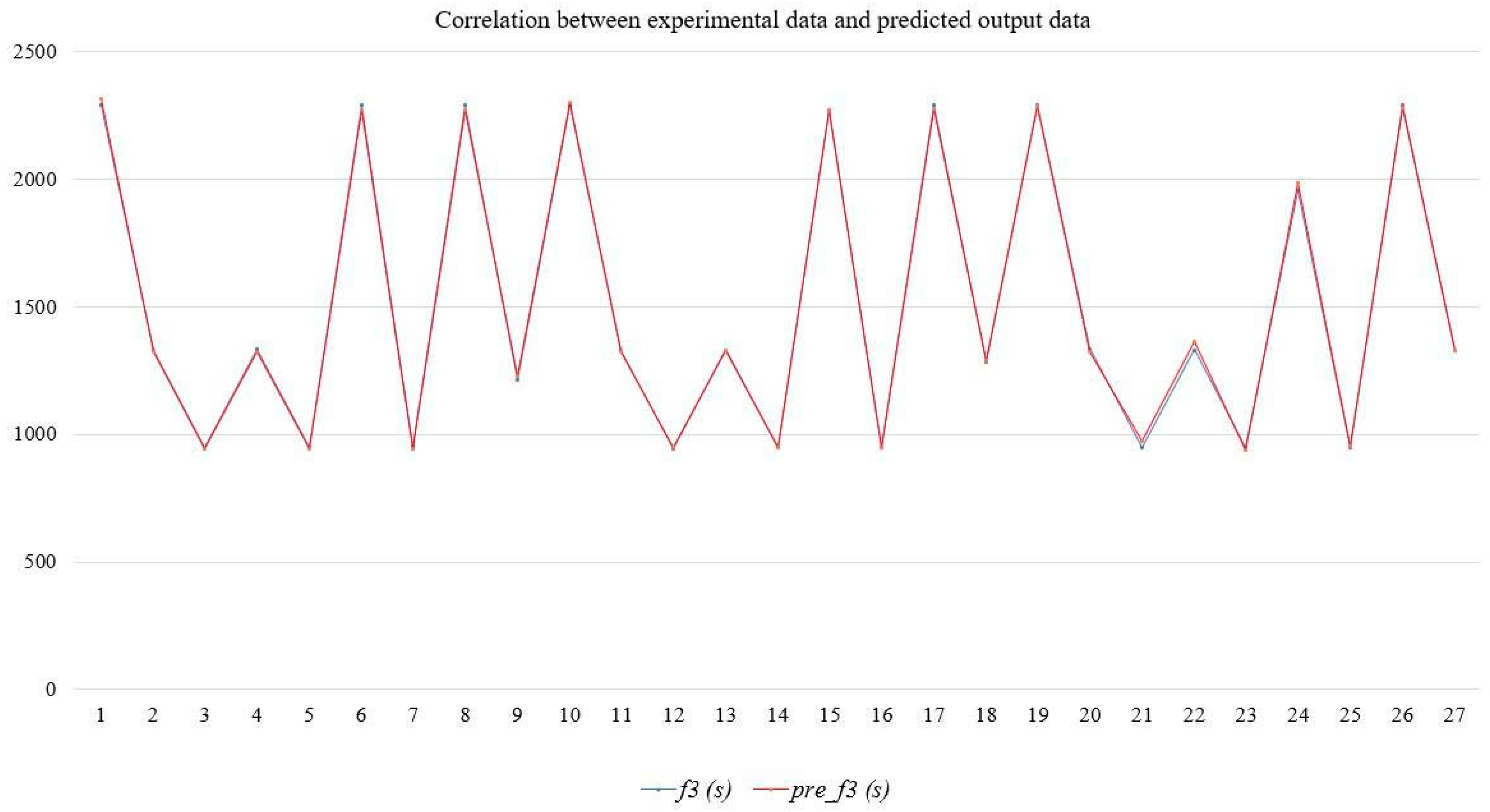
Based on the experimental results, an artificial neural network was applied to predict the three quality responses associated with the three milling strategies. Different artificial neural network architectures based on minimized root mean squared error (RMSE) were used to predict three quality responses, as illustrated in Figure 21, Figure 22 and Figure 23. Specifically, the RMSEs for f1, f2, and f3 based on the forward strategy were 0.082, 0.053, and 137.526, respectively. In addition, the RMSEs for f1, f2, and f3 based on the forward–reverse strategy were 0.081, 0.084, and 45.26, respectively. Based on the forward strategy, the RMSEs for f1, f2, and f3 were 0.005, 0.02, and 227.641, respectively. The artificial neural network architecture for predicting surface roughness (f1) comprised two hidden layers with two nodes for the first layer and six nodes for the second layer, as depicted in Figure 21. The artificial neural network architecture predicting the flatness (f2) comprised one hidden layer with two nodes, as described in Figure 22. The artificial neural network architecture for predicting the milling time (f3) comprised two hidden layers with two nodes for the first layer and two nodes for the second layer, as depicted in Figure 23.
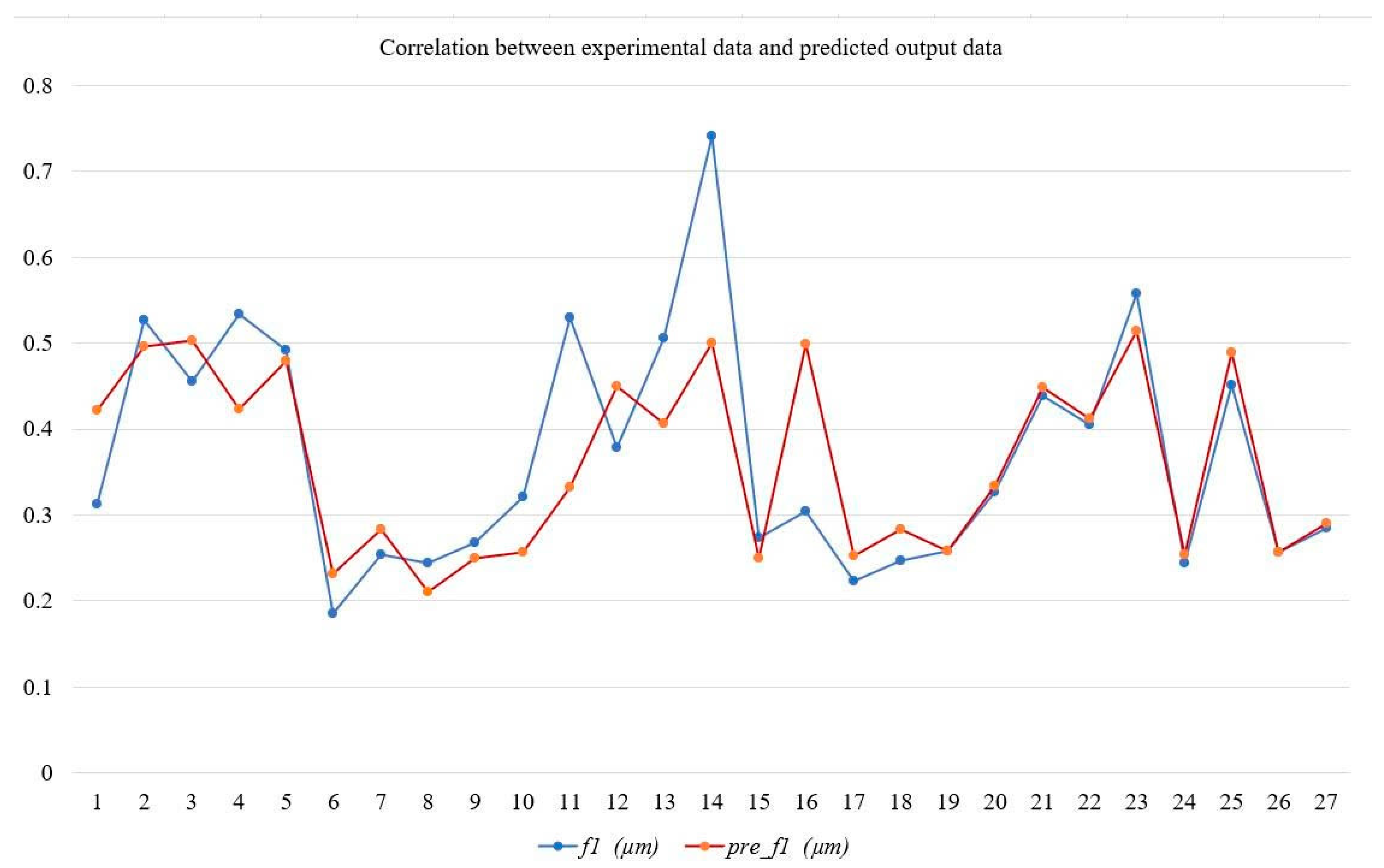
Based on the experimental results in Table 3, the predicted results were achieved according to the neural network for the three quality responses of the three milling strategies, as illustrated in Table 13. In addition, the relationships between the experiment results and the predicted results of the three quality responses were illustrated in Figure 24, Figure 25 and Figure 26.

3.6. Optimized Results

Firstly, a numerical experiment array was generated using the TM. Twenty-seven specimens were produced, measured, and recorded to determine the worth of quality characteristics involving surface roughness, flatness, and CNC turning time, based on the original data of the TM. In addition, the RSM was utilized to construct regression equations for surface roughness, flatness, and CNC turning time using recorded data from principal manufacturing parameters and three quality criteria. The LA was adopted to tackle the optimization problem that encompasses multiple objectives. In this study, the LA was implemented using Matlab R2021b software. As illustrated in Table 14, the optimized results for the forward CNC milling strategy were found at S = 1500 (rpm), t = 0.4 (mm), F = 497.8147 (mm/min), f1 = 0.4999 µm, f2 = 0.0106 (mm) and f3 = 1935.3648 (s). The optimized results for the reverse CNC milling strategy were found at S = 1981.7423 (rpm), t = 0.2588 (mm), F = 400 (mm/min), f1 = 0.3974 (µm), f2 = 0.0013 (mm) and f3 = 1999.999 (s). In addition, the optimized results for the forward–reverse CNC milling strategy were found at S = 1500 (rpm), t = 0.3753 (mm), F = 470.872 (mm/min), f1 = 0.4999 (µm), f2 = 0.00182 (mm) and f3 = 1999.993 (s). Comparing the optimized results, the reverse CNC milling strategy achieved better optimization output responses based on the balance of initial technical requirements.

3.7. Verification

The optimal results for the reverse CNC milling strategy were utilized to fabricate the core mold specimen so as to verify the optimization results, as illustrated in Figure 27. As illustrated in Table 15, the verified results of the optimal specimen were at f1 = 0.373 (µm), f2 = 0.0011 (mm), and f3 = 2272 (s). The inaccuracies among optimal outcomes and experiment outcomes for surface roughness, flatness, and CNC milling time were 6.54%, 18.182%, and 11.972%, respectively.
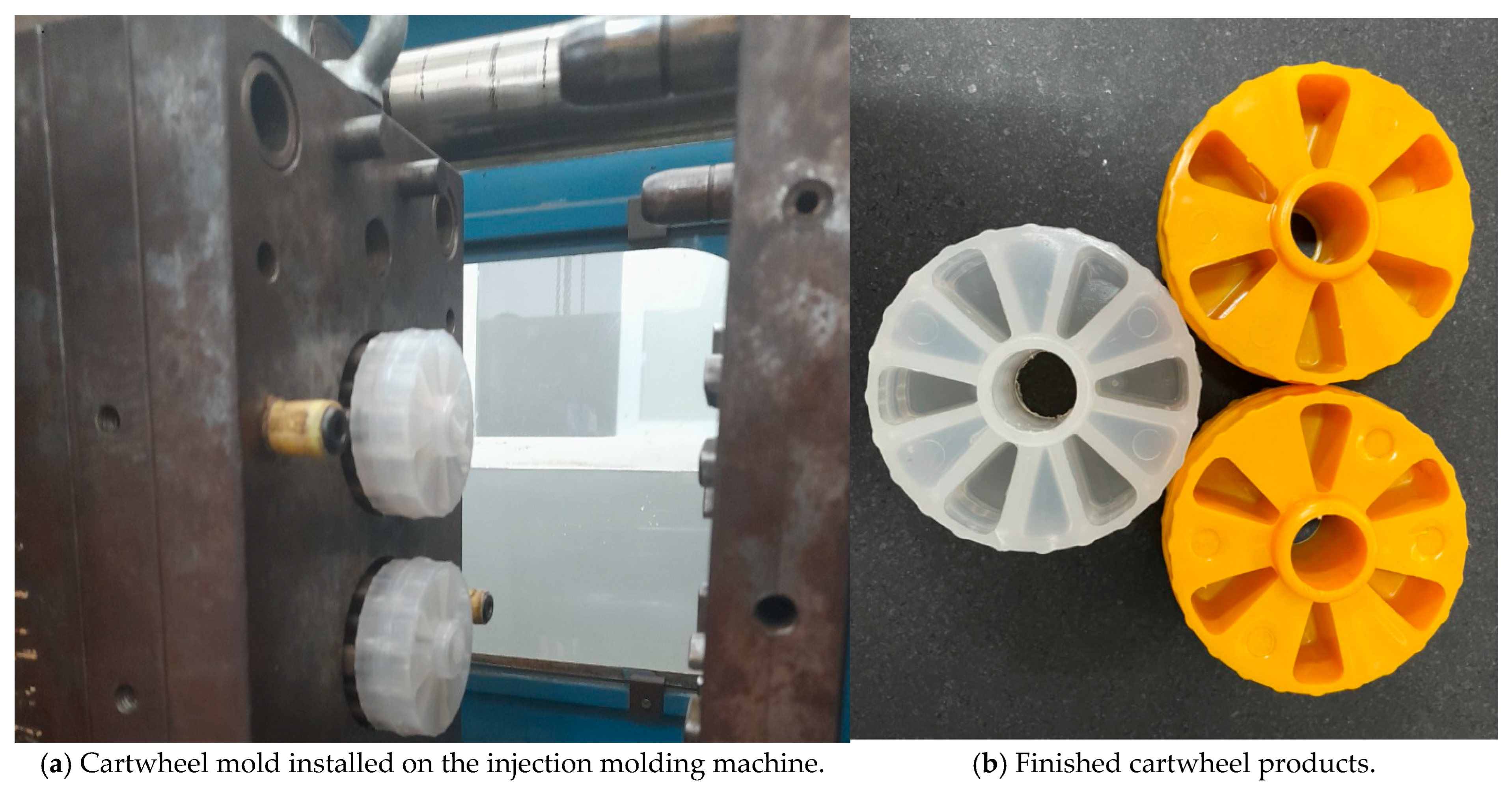
The achieved results demonstrated that the optimized surface roughness, the flatness, and the CNC milling time satisfied the technical requirements for the CNC milling procedure for inclined surfaces of SKD 11 material applied for the cartwheel mold manufacturing process. According to the optimum values, the cartwheel mold was manufactured and injected with cartwheel components, as illustrated in Figure 28.
In addition, this study was compared with the previous studies, as illustrated in Table 16.

4. Conclusions

The present study presents a successful hybrid optimization method for determining the ideal manufacturing parameters of core specimens using SKD11 applied to plastic mold technology. Critical parameters to explore were input design variables such as spindle speed, cutting depth, feed rate, and CNC milling toolpath strategies. To enhance surface roughness, flatness, and CNC milling time, the fabricating elements were optimized by integrating the TM, experimental data, RSM, and Lichtenberg optimization algorithm.
The contributions of fabrication factors to surface roughness, flatness, and CNC milling time were evaluated using sensitivity analysis and ANOVA. ANOVA research for three CNC milling toolpath strategies (forward, forward–reverse, and reverse) demonstrated that feed rate was the most influential parameter to CNC milling time, with 92.37%, 93.62%, and 92.57%, respectively. The contributions of spindle speed to surface roughness for three CNC milling toolpath strategies were 30.93%, 14.92%, and 0.17%, respectively. In addition, the influences of the cutting depth on the flatness for three CNC milling toolpath strategies were 5.19%, 2.91%, and 32.35%, respectively.
A hybrid technique of the TM, RSM and Lichtenberg optimization algorithm was applied to seek the optimal fabricating parameters for cartwheel inclined surfaces with SKD material utilized in the cartwheel injecting mold. The optimal results of the reverse strategy were better than the optimal results of the forward–reverse strategy. More specifically, the consequences exhibited that the optimized results for the reverse CNC milling toolpath strategy were detected at S = 1981.7423 (rpm), t = 0.2588 (mm), F = 400 (mm/min), f1 = 0.3974 µm, f2 = 0.0013 (mm) and f3 = 1999.999 (s). Furthermore, the consequences showed that the errors between predicted and experiment confirmations for the roughness surface, flatness, and CNC turning time were 6.54%, 18.182%, and 11.972%, respectively. The validations of the experiment results were relatively suitable compared to the forecasted results. According to these findings, the hybrid optimization method is an efficient strategy for addressing the problem of optimizing multiple objectives applied to fabricating parameters across different CNC milling toolpath strategies. In addition, the artificial neural network was used to predict the three quality responses based on the experimental results.
This study faces various challenges in reducing flatness and CNC milling time errors. In addition, other parameters should be considered in future studies to reduce surface roughness, flatness, CNC milling time, and other quality responses, based on different CNC milling strategies. Furthermore, in future work, various suitable hard materials in plastic mold technology need to be investigated to find suitable parameters in the plastic mold fabricating process. A hybrid approach of artificial intelligence, machine learning and advanced algorithms should be considered to predict and optimize the fabricating factors to obtain proficient simultaneous quality responses.

Author Contributions

Conceptualization, M.P.D. and C.T.T.; Methodology, M.P.D.; Software, M.P.D.; Validation, M.P.D., C.T.T. and T.V.A.D.; Formal Analysis, C.T.T. and T.V.A.D.; Investigation, M.P.D. and C.T.T.; Data Curation, C.T.T. and T.V.A.D.; Writing—Original Draft Preparation, M.P.D.; Writing—Review and Editing, M.P.D. and T.V.A.D. All authors have read and agreed to the published version of the manuscript.

Funding

This research was funded by Ho Chi Minh City University of Technology and Engineering, Vietnam, No. T2025-64.

Institutional Review Board Statement

Not applicable.

Informed Consent Statement

Not applicable.

Data Availability Statement

The original contributions presented in the study are included in the article; further inquiries can be directed to the corresponding author.

Acknowledgments

The authors acknowledge the support of Ho Chi Minh City University of Technology and Engineering for this study.

Conflicts of Interest

The authors declare that they have no known competing financial interests or personal relationships that could have appeared to influence the work reported in this paper.

References

  1. Xavierarockiaraj, S.; Kuppan, P. Investigation of cutting forces, surface roughness and tool wear during Laser assisted machining of SKD11Tool steel. Procedia Eng. 2014, 97, 1657–1666. [Google Scholar] [CrossRef]
  2. Sun, S.; Brandt, M.; Dargusch, M.S. Thermally enhanced machining of hard-to-machine materials—A review. Int. J. Mach. Tools Manuf. 2010, 50, 663–680. [Google Scholar] [CrossRef]
  3. Inkhamnoi, A.; Jirapattarasilp, K. Effect of Milling Parameters and Coolants on Surface Hardness of Tool Steel: SKD 11. Adv. Mater. Res. 2013, 650, 596–601. [Google Scholar] [CrossRef]
  4. Gong, F.; Zhao, J.; Ni, X.; Liu, C.; Sun, J.; Zhang, Q. Wear and breakage of coated carbide tool in milling of H13 steel and SKD11 hardened steel. SN Appl. Sci. 2019, 1, 1111. [Google Scholar] [CrossRef]
  5. Dong, P.Q.; Duc, T.M.; Long, T.T. Performance evaluation of MQCL hard milling of SKD 11 tool steel using MoS2 nanofluid. Metals 2019, 9, 658. [Google Scholar] [CrossRef]
  6. Mac, T.B.; Luyen, T.T.; Nguyen, D.T. Assessment of the Effect of Thermal-Assisted Machining on the Machinability of SKD11 Alloy Steel. Metals 2023, 13, 699. [Google Scholar] [CrossRef]
  7. Zhang, Y.; Wu, T.; Wang, Y.; Hu, B.; Li, C. Adaptive nonlinear-error control method for five-axis machining of complex structures. Int. J. Mech. Sci. 2026, 29, 111322. [Google Scholar] [CrossRef]
  8. Wu, T.; Zhang, Y.; Wang, Y.; Hu, B.; Li, C. An error-controlled G3-continuous oriented toolpath optimization algorithm and modified speed planning for five-axis machining. J. Manuf. Process. 2026, 160, 456–478. [Google Scholar] [CrossRef]
  9. Rao, R.V.; Kalyankar, V.D. Optimization of modern machining processes using advanced optimization techniques: A review. Int. J. Adv. Manuf. Technol. 2014, 73, 1159–1188. [Google Scholar] [CrossRef]
  10. Ghani, J.A.; Choudhury, I.A.; Hassan, H.H. Application of Taguchi method in the optimization of end milling parameters. J. Mater. Process. Technol. 2004, 145, 84–92. [Google Scholar] [CrossRef]
  11. Samtaş, G. Optimisation of cutting parameters during the face milling of AA5083-H111 with coated and uncoated inserts using Taguchi method. Int. J. Mach. Mach. Mater. 2015, 17, 211–232. [Google Scholar] [CrossRef]
  12. Nipu, S.A.; Karim, R.; Rahman, A.; Moon, M.; Choudhury, I.A.; Omar, J.B.; Khushbu, M.S. Turning SKD 11 Hardened Steel: An Experimental Study of Surface Roughness and Material Removal Rate Using Taguchi Method. Adv. Mater. Sci. Eng. 2023, 2023, 6421918. [Google Scholar] [CrossRef]
  13. Son, N.H.; Trung, D.D.; Nguyen, N.T. Surface roughness prediction in grinding process of the SKD11 steel by using response surface method. In IOP Conference Series: Materials Science and Engineering; IOP Publishing: Bristol, UK, 2020; Volume 758, p. 012029. [Google Scholar]
  14. Soori, M.; Arezoo, B.; Habibi, M. Tool deflection error of three-axis computer numerical control milling machines, monitoring and minimizing by a virtual machining system. J. Manuf. Sci. Eng. 2016, 138, 081005. [Google Scholar] [CrossRef]
  15. Basu, M.A.; Chowdhury, A. Cuckoo search algorithm for economic dispatch. Energy 2013, 60, 99–108. [Google Scholar] [CrossRef]
  16. Kadirgama, K.; Noor, M.M.; Rahman, M.M. Optimization of surface roughness in end milling on mould aluminium alloys (AA6061-T6) using response surface method and radian basis function network. Jourdan J. Mech. Ind. Eng. 2008, 2, 209–214. [Google Scholar]
  17. Hou, T.H.; Su, C.H.; Liu, W.L. Parameters optimization of a nano-particle wet milling process using the Taguchi method, response surface method and genetic algorithm. Powder Technol. 2007, 173, 153–162. [Google Scholar] [CrossRef]
  18. Chatterjee, S.; Sarkar, S.; Hore, S.; Dey, N.; Ashour, A.S.; Shi, F.; Le, D.N. Structural failure classification for reinforced concrete buildings using trained neural network based multi-objective genetic algorithm. Struct. Eng. Mech. 2017, 63, 429–438. [Google Scholar]
  19. Chatterjee, S.; Sarkar, S.; Hore, S.; Dey, N.; Ashour, A.S.; Balas, V.E. Particle swarm optimization trained neural network for structural failure prediction of multistoried RC buildings. Neural Comput. Appl. 2017, 28, 2005–2016. [Google Scholar] [CrossRef]
  20. Murlidhar, B.R.; Sinha, R.K.; Mohamad, E.T.; Sonkar, R.; Khorami, M. The effects of particle swarm optimisation and genetic algorithm on ANN results in predicting pile bearing capacity. Int. J. Hydromechatronics 2020, 3, 69–87. [Google Scholar] [CrossRef]
  21. Dang, M.P.; Le, H.G.; Chau, N.L.; Dao, T.P. Optimization for a Flexure Hinge Using an Effective Hybrid Approach of Fuzzy Logic and Moth-Flame Optimization Algorithm. Math. Probl. Eng. 2021, 2021, 6622655. [Google Scholar] [CrossRef]
  22. Garg, H. A hybrid PSO-GA algorithm for constrained optimization problems. Appl. Math. Comput. 2016, 274, 292–305. [Google Scholar] [CrossRef]
  23. Chau, N.L.; Le, H.G.; Dao, T.P.; Dang, M.P.; Dang, V.A. Efficient Hybrid Method of FEA-Based RSM and PSO Algorithm for Multi-Objective Optimization Design for a Compliant Rotary Joint for Upper Limb Assistive Device. Math. Probl. Eng. 2019, 2019, 2587373. [Google Scholar] [CrossRef]
  24. Phung, M.; Hieu, D.; Le, G.; Le, N.; Thanh, C.; Dao, P. A multi-objective optimization design for a new linear compliant mechanism. Optim. Eng. 2019, 21, 673–705. [Google Scholar] [CrossRef]
  25. Tran, C.T.; Dang, M.P.; Le, H.G.; Le Chau, N.; Dao, T.P. Optimization of CNC milling parameters for complex 3D surfaces of SIMOLD 2083 alloy mold core utilizing multiobjective water cycle algorithm. Math. Probl. Eng. 2021, 2021, 9946404. [Google Scholar] [CrossRef]
  26. Shrivastava, Y.; Singh, B. Assessment of stable cutting zone in CNC turning based on empirical mode decomposition and genetic algorithm approach. Proc. Inst. Mech. Eng. Part C J. Mech. Eng. Sci. 2018, 232, 3573–3594. [Google Scholar] [CrossRef]
  27. Nguyen, T. Prediction and optimization of machining energy, surface roughness, and production rate in SKD61 milling. Measurement 2019, 136, 525–544. [Google Scholar] [CrossRef]
  28. Zhou, J.; Ren, J.; Yao, C. Multi-objective optimization of multi-axis ball-end milling Inconel 718 via grey relational analysis coupled with RBF neural network and PSO algorithm. Measurement 2017, 102, 271–285. [Google Scholar] [CrossRef]
  29. Muaz, M.; Choudhury, S.K. Experimental investigations and multi-objective optimization of MQL-assisted milling process for finishing of AISI 4340 steel. Measurement 2019, 138, 557–569. [Google Scholar] [CrossRef]
  30. Pereira, J.L.J.; Francisco, M.B.; Diniz, C.A.; Oliver, G.A.; Cunha, S.S., Jr.; Gomes, G.F. Lichtenberg algorithm: A novel hybrid physics-based meta-heuristic for global optimization. Expert Syst. Appl. 2021, 170, 114522. [Google Scholar] [CrossRef]
  31. Challan, M.; Jeet, S.; Bagal, D.K.; Mishra, L.; Pattanaik, A.K.; Barua, A. Fabrication and mechanical characterization of red mud based Al2025-T6 MMC using Lichtenberg optimization algorithm and Whale optimization algorithm. Mater. Today Proc. 2022, 50, 1346–1353. [Google Scholar] [CrossRef]
  32. Francisco, M.B.; Junqueira, D.M.; Oliver, G.A.; Pereira, J.L.J.; da Cunha, S.S., Jr.; Gomes, G.F. Design optimizations of carbon fibre reinforced polymer isogrid lower limb prosthesis using particle swarm optimization and Lichtenberg algorithm. Eng. Optim. 2021, 53, 1922–1945. [Google Scholar] [CrossRef]
  33. Pereira, J.L.J.; Oliver, G.A.; Francisco, M.B.; Cunha, S.S., Jr.; Gomes, G.F. Multi-objective lichtenberg algorithm: A hybrid physics-based meta-heuristic for solving engineering problems. Expert Syst. Appl. 2022, 187, 115939. [Google Scholar] [CrossRef]
  34. Jia, S.; Wang, S.; Zhang, N.; Cai, W.; Liu, Y.; Hao, J.; Zhang, Z.; Yang, Y.; Sui, Y. Multi-objective parameter optimization of CNC plane milling for sustainable manufacturing. Environ. Sci. Pollut. Res. 2022, 1–22, Online ahead of print. [Google Scholar] [CrossRef]
  35. Hammood, S.A. Optimization of cutting parameters for milling process of (4032) Al-alloy using Taguchi-based grey relational analysis. Al-Khwarizmi Eng. J. 2021, 17, 1–12. [Google Scholar] [CrossRef]
Figure 1. Basic geometric dimensions of the end mill.
Applsci 16 03261 g001
Figure 2. Different end mill tools for each experiment in the experimental process.
Applsci 16 03261 g002
Figure 3. The flowchart for the optimization process of fabricating factors by the integrated methodology.
Applsci 16 03261 g003
Figure 4. A model sketching of the cartwheel mold of (a) assembling sketch and (b) assembling sketch without the upper mold plate, (c) the assembly front drawing, and (d) the mold core specimens.
Applsci 16 03261 g004
Figure 5. The green milled faces of the specimen with a square: (a) milled surfaces and (b) fabricated area.
Applsci 16 03261 g005
Figure 6. Twenty-seven experimental specimens manufactured on the CNC milling machine.
Applsci 16 03261 g006
Figure 7. Surface roughness tester fixture for assessing the surface roughness of turned specimens.
Applsci 16 03261 g007
Figure 8. Coordinate measuring machine for measuring the flatness of milled specimens.
Applsci 16 03261 g008
Figure 9. Surface roughness impact scheme of: (a) S and t, (b) t and F.
Applsci 16 03261 g009
Figure 10. Flatness impact scheme of: (a) S and t, (b) t and F.
Applsci 16 03261 g010
Figure 11. CNC milling time impact scheme of: (a) S and t, (b) t and F.
Applsci 16 03261 g011
Figure 12. Sensitivity scheme of the fabricating parameters on surface roughness, flatness and CNC turning time for the forward CNC milling strategy.
Applsci 16 03261 g012
Figure 13. Surface roughness impact scheme of: (a) S and t, (b) t and F.
Applsci 16 03261 g013
Figure 14. Flatness impact scheme of: (a) S and t, (b) t and F.
Applsci 16 03261 g014
Figure 15. CNC milling time impact scheme of: (a) S and t, (b) t and F.
Applsci 16 03261 g015
Figure 16. Sensitivity scheme of the fabricating parameters on surface roughness, flatness and CNC turning time for the forward–reverse CNC milling strategy.
Applsci 16 03261 g016
Figure 17. Surface roughness impact scheme of: (a) S and t, (b) t and F.
Applsci 16 03261 g017
Figure 18. Flatness impact scheme of: (a) S and t, (b) t and F.
Applsci 16 03261 g018
Figure 19. CNC milling time impact scheme of: (a) S and t, (b) t and F.
Applsci 16 03261 g019
Figure 20. Sensitivity scheme of the fabricating parameters on surface roughness, flatness and CNC turning time for the reverse CNC milling strategy.
Applsci 16 03261 g020
Figure 21. The artificial neural network architecture for predicting f1.
Applsci 16 03261 g021
Figure 22. The artificial neural network architecture for predicting f2.
Applsci 16 03261 g022
Figure 23. The artificial neural network architecture for predicting f3.
Applsci 16 03261 g023
Figure 24. Relationship between experimental result and predicted result for f1.
Applsci 16 03261 g024
Figure 25. Relationship between experimental result and predicted result for f2.
Applsci 16 03261 g025
Figure 26. Relationship between experimental result and predicted result for f3.
Applsci 16 03261 g026
Figure 27. The fabricated specimen on CNC milling machine according to optimal parameters.
Applsci 16 03261 g027
Figure 28. The finished cartwheel products based on the injection molding process.
Applsci 16 03261 g028
Table 1. Chemical composition of the SKD11 material.
CSiMnVPSMoCr
1.50.250.450.36≤0.025≤0.01112
Table 2. Input fabricating factors and their rankings.
ParametersRangeSmall LevelMedium LevelHigh LevelUnit
K(F, FR, R)FFRR-
S1500–4000150027504000(rpm)
t0.02–0.40.020.210.4(mm)
F400–10004007001000mm/min
Table 3. Experimental results.
No.KS
(rpm)
t
(mm)
F
(mm/min)
f1
(µm)
f2
(mm)
f3
(s)
1F15000.024000.3120.000772290
2F15000.217000.5270.0011331
3F15000.410000.4550.00063949
4F27500.027000.5340.001031336
5F27500.2110000.4920.00173950
6F27500.44000.1850.000672291
7F40000.0210000.2540.0008952
8F40000.214000.2440.000772292
9F40000.47000.2670.000771215
10FR15000.024000.3210.000832291
11FR15000.217000.5290.001131331
12FR15000.410000.3780.00093945
13FR27500.027000.5060.00091332
14FR27500.2110000.7410.00093950
15FR27500.44000.2730.00082270
16FR40000.0210000.3040.00107951
17FR40000.214000.2230.000772292
18FR40000.47000.2470.000931285
19R15000.024000.2580.000972291
20R15000.217000.3270.00111337
21R15000.410000.4380.00093949
22R27500.027000.4050.001131332
23R27500.2110000.5570.00083950
24R27500.44000.2440.000671956
25R40000.0210000.4510.00083950
26R40000.214000.2570.000672292
27R40000.47000.2840.000531331
Table 4. Surface roughness ANOVA analysis for the forward CNC milling strategy.
ResourceDFSeq SSImpactAdj SSAdj MS
Pattern80.150784100.00%0.1507840.018848
Linear30.08811558.44%0.0822730.027424
S10.04664030.93%0.0466400.046640
t10.0062084.12%0.0176330.017633
F10.03526723.39%0.0266020.026602
Square30.05060733.56%0.0240830.008028
S × S10.0073214.85%0.0073200.007320
t × t10.0149649.92%0.0026460.002646
F × F10.02832218.78%0.0154530.015453
2-Way Collaboration20.0120628.00%0.0120620.006031
S × t10.0001810.12%0.0018370.001837
S × F10.0118827.88%0.0118820.011882
Fault0----
Whole80.150784100.00%
Table 5. Flatness ANOVA analysis for forward CNC milling strategy.
ResourceDFSeq SSImpactAdj SSAdj MS
Pattern80.000001100.00%0.0000010.000000
Linear30.00000021.94%0.0000000.000000
S10.0000000.07%0.0000000.000000
t10.0000005.19%0.0000000.000000
F10.00000016.68%0.0000000.000000
Square30.00000161.46%0.0000010.000000
S × S10.00000027.69%0.0000000.000000
t × t10.00000033.45%0.0000000.000000
F × F10.0000000.33%0.0000000.000000
2-Way Collaboration20.00000016.60%0.0000000.000000
S × t10.00000016.57%0.0000000.000000
S × F10.0000000.03%0.0000000.000000
Fault0----
Whole80.000001100.00%
Table 6. Milling time ANOVA analysis for forward CNC milling strategy.
ResourceDFSeq SSImpactAdj SSAdj MS
Pattern82,918,884100.00%2,918,884364,860
Linear32,700,65692.52%1,550,910516,970
S120530.07%20542054
t125220.09%13231323
F12,696,08192.37%1,428,9901,428,990
Square3215,0007.37%14698548,995
S × S18680.03%868868
t × t17090.02%504504
F × F1213,4227.31%141,220141,220
2-Way Collaboration232280.11%32281614
S × t132270.11%23602360
S × F110.00%11
Fault0----
Whole82,918,884100.00%
Table 7. Surface roughness ANOVA analysis for forward–reverse CNC milling strategy.
ResourceDFSeq SSImpactAdj SSAdj MS
Pattern80.230290100.00%0.2302900.028786
Linear30.10460745.42%0.0889820.029661
S10.03435314.92%0.0343530.034353
t10.0090483.93%0.0045630.004563
F10.06120626.58%0.0545400.054540
Square30.11657050.62%0.0979390.032646
S × S10.05985825.99%0.0598580.059858
t × t10.05088022.09%0.0380810.038081
F × F10.0058322.53%0.0006100.000610
2-Way Collaboration20.0091133.96%0.0091130.004556
S × t10.0091123.96%0.0068680.006868
S × F10.0000000.00%0.0000000.000000
Fault0----
Whole80.230290100.00%
Table 8. Flatness ANOVA analysis for forward–reverse CNC milling strategy.
ResourceDFSeq SSImpactAdj SSAdj MS
Pattern80.000000100.00%0.0000000.000000
Linear30.00000046.74%0.0000000.000000
S10.0000002.14%0.0000000.000000
t10.0000002.91%0.0000000.000000
F10.00000041.69%0.0000000.000000
Square30.00000027.12%0.0000000.000000
S × S10.0000007.92%0.0000000.000000
t × t10.0000001.98%0.0000000.000000
F × F10.00000017.22%0.0000000.000000
2-Way Collaboration20.00000026.14%0.0000000.000000
S × t10.0000002.39%0.0000000.000000
S × F10.00000023.75%0.0000000.000000
Fault0----
Whole80.000000100.00%
Table 9. Milling time ANOVA analysis for forward–reverse CNC milling strategy.
ResourceDFSeq SSImpactAdj SSAdj MS
Pattern82,858,380100.00%2,858,380357,298
Linear32,677,17493.66%1,463,087487,696
S12530.01%253253
t19130.03%690690
F1267,600893.62%1,355,42413,55,424
Square3180,8936.33%134,82744,942
S × S150.00%55
t × t12880.01%126126
F × F1180,6016.32%131,572131,572
2-Way Collaboration23130.01%313156
S × t12640.01%113113
S × F1480.00%4848
Fault0----
Whole82,858,380100.00%
Table 10. Surface roughness ANOVA analysis for reverse CNC milling strategy.
ResourceDFSeq SSImpactAdj SSAdj MS
Pattern80.096493100.00%0.0964930.012062
Linear30.08247285.47%0.0489100.016303
S10.0001600.17%0.0001600.000160
t10.0036513.78%0.0042560.004256
F10.07866281.52%0.0486410.048641
Square30.01268613.15%0.0123800.004127
S × S10.0087569.07%0.0087560.008756
t × t10.0022672.35%0.0006410.000641
F × F10.0016631.72%0.0026040.002604
2-Way Collaboration20.0013351.38%0.0013350.000667
S × t10.0003210.33%0.0009880.000988
S × F10.0010141.05%0.0010140.001014
Fault0----
Whole80.096493100.00%
Table 11. Flatness ANOVA analysis for reverse CNC milling strategy.
ResourceDFSeq SSImpactAdj SSAdj MS
Pattern80.000000100.00%0.0000000.000000
Linear30.00000083.88%0.0000000.000000
S10.00000047.57%0.0000000.000000
t10.00000032.35%0.0000000.000000
F10.0000003.96%0.0000000.000000
Square30.0000007.70%0.0000000.000000
S × S10.0000000.89%0.0000000.000000
t × t10.0000000.33%0.0000000.000000
F × F10.0000006.48%0.0000000.000000
2-Way Collaboration20.0000008.42%0.0000000.000000
S × t10.0000007.56%0.0000000.000000
S × F10.0000000.85%0.0000000.000000
Fault0----
Whole80.000000100.00%
Table 12. Milling time ANOVA analysis for reverse CNC milling strategy.
ResourceDFSeq SSImpactAdj SSAdj MS
Pattern82,451,442100.00%2,451,442306,430
Linear32,288,28193.34%1,143,301381,100
S130.00%33
t118,9280.77%37,07437,074
F12,269,35092.57%941,360941,360
Square3139,0345.67%150,38550,128
S × S125,2381.03%25,23825,238
t × t167670.28%1515
F × F1107,0304.37%122,837122,837
2-Way Collaboration224,1270.98%24,12712,063
S × t159770.24%18,04018,040
S × F118,1500.74%18,15018,150
Fault0----
Whole82,451,442100.00%
Table 13. Comparison of experimental results and predicted results.
No.KStFf1f2f3pre-f1pre-f2pre-f3
(rpm)(mm)(mm/min)(µm)(µm)(s)(µm)(µm)(s)
1F15000.024000.3120.7722900.4210378.37 × 10−12314.779
2F15000.217000.527113310.4965748.62 × 10−11325.323
3F15000.410000.4550.639490.5028888.85 × 10−1945.8986
4F27500.027000.5341.0313360.4228811.100449811322.778
5F27500.2110000.4921.739500.4790021.12454189945.7056
6F27500.44000.1850.6722910.2306186.09 × 10−12271.695
7F40000.0210000.2540.89520.282661.18210261945.5151
8F40000.214000.2440.7722920.210637.85 × 10−12270.437
9F40000.47000.2670.7712150.2499388.09 × 10−11227.581
10FR15000.024000.3210.8322910.2558240.845191252300.015
11FR15000.217000.5291.1313310.3325770.98701761322.241
12FR15000.410000.3780.939450.4493230.9935997947.169
13FR27500.027000.5060.913320.4060420.949233911330.652
14FR27500.2110000.7410.939500.500771.01325872948.1216
15FR27500.44000.2730.822700.2490660.814462412270.44
16FR40000.0210000.3041.079510.4991891.01673375949.1106
17FR40000.214000.2230.7722920.2519740.763263272276.759
18FR40000.47000.2470.9312850.2828170.915375451289.715
19R15000.024000.2580.9722910.2577981.066529322285.189
20R15000.217000.3271.113370.3332031.052687211323.203
21R15000.410000.4380.939490.4484770.9087515976.2025
22R27500.027000.4051.1313320.4119531.044502031362.96
23R27500.2110000.5570.839500.5145570.87263611939.0452
24R27500.44000.2440.6719560.2532360.685374251984.174
25R40000.0210000.4510.839500.4884660.83496765952.6519
26R40000.214000.2570.6722920.2561390.651469092280.403
27R40000.47000.2840.5313310.2905070.530690311331.632
Table 14. Optimal results for three different CNC milling strategies.
Input ParametersOutput Responses
CNC milling strategyS
(rpm)
t
(mm)
F
(mm/min)
f1
(µm)
f2
(mm)
f3
(s)
Forward (F)15000.4497.81470.49990.01061935.3648
Reverse (R)1981.74230.25884000.39740.00131999.999
Forward–reverse (FR)15000.3753470.8720.49990.001821999.993
Table 15. Errors between optimal results and verified results.
ResponsesOptimization ResultVerification ResultError (%)
f1 (µm)0.39740.3736.54
f2 (mm)0.00130.001118.182
f3 (s)1999.999227211.972
Table 16. Differences in current consequences with preceding studies.
MaterialOptimal ApproachInput FactorsShape of Fabricated SurfacesOptimized Characteristics by Experiment ProcessAuthors [Ref.]
SKD11Hybrid approach of TM, RSM, and Lichtenberg optimization algorithmS = 1883.8678 (1500 rpm–4000 rpm);
t = 0.2595 (0.02 mm–0.4 mm);
F = 400 (400 mm/min–1000 mm/min)
Three CNC milling strategies: reverse (forward, reverse, forward–reverse)
Inclined 3D surfaces of cartwheel componentsThe surface roughness is 0.373 µm, the flatness is 0.0011 (mm), and the CNC milling time is 2272 (s)This study
45# SteelNSGA-IICutting velocity vc 2174.16 rpm (60 m/min–120 m/min)
F = 0.1 (0.03 mm/tooth–0.12 mm/tooth)
Milling depth ap 2 (0.5 mm–2 mm)
Milling depth ae 8.64 (6 mm–12 mm)
Straight surfacesThe surface roughness was 1.73 µm, total energy consumption was 497,430.29 J, and the CNC milling time was 2,272,541.94 (s)Jia et al. [34]
4032 Al-alloyTM–Gray Relational AnalysisS = 1883.8678 (2000 rpm–4000 rpm);
t = 0.2595 (0.5 mm–1.5 mm);
F = 400 (0.03 mm/tooth–1 mm/tooth)
Straight surfacesThe surface roughness was 1.742 µm, the material removal rate was 4200 mm3/min, and the micro-hardness was 138.34 HV0.2Hammood [35]
Disclaimer/Publisher’s Note: The statements, opinions and data contained in all publications are solely those of the individual author(s) and contributor(s) and not of MDPI and/or the editor(s). MDPI and/or the editor(s) disclaim responsibility for any injury to people or property resulting from any ideas, methods, instructions or products referred to in the content.