


Featured Application
The proposed methodology enables non-destructive estimation of open porosity () and water absorption by immersion () from ultrasound propagation velocity () measurements, reducing the need for destructive tests and shortening characterization time. This is particularly useful for quarry quality control, block selection, and material grading, as well as for in situ assessment of natural stone in building elements and heritage structures.
Abstract
Ultrasound propagation velocity was investigated as a non-destructive predictor of open porosity () and water absorption () in volcanic rocks (two ignimbrites, a trachyte, and a basalt). Six velocity measurements were obtained under dry and saturated conditions along three orthogonal directions, and the dry Z-axis velocity was selected as the reference univariate predictor because it provided the highest explanatory power and the best cross-validated performance among the tested ultrasound variables. Four univariate regressions (linear, exponential, power law, and second-order polynomial), parametric multivariable linear regression, and five machine learning regressors were compared using lithology-stratified 5-fold cross-validation, grouping both ignimbrites as a single lithology. Univariate models showed moderate predictive capability for (cross-validated coefficient of determination 0.506 to 0.580), whereas was captured more accurately, with the power law model reaching 0.923 ± 0.008. Multivariable linear regression improved when lithology was included (0.803 ± 0.084), while changes for were small. The highest accuracy was achieved by ensemble tree methods: extremely randomized trees with lithology yielded 0.949 ± 0.015 for (root mean square error 2.16 ± 0.38 percentage points), and Gradient Boosting with lithology yielded 0.976 ± 0.006 for (0.80 ± 0.12 percentage points).
1. Introduction
Porosity is a fundamental physical property that governs the behavior of volcanic rocks, as it controls key processes such as fluid circulation, permeability, effective stiffness, and mechanical strength [1]. In volcanic materials, even small variations in porosity can translate into significant changes in elastic and dynamic properties due to a highly heterogeneous microstructure dominated by vesicles of varying size, oriented microcracks, and glassy phases that are partially or fully altered [2]. Pore distribution, connectivity, and geometry also condition permeability, saturation degree, responses to thermal or moisture cycling, and long-term physico-chemical degradation, making accurate porosity characterization essential for a wide range of engineering applications involving volcanic materials [3,4].
Along with open porosity (), water absorption by immersion at atmospheric pressure () is a widely used hydrophysical parameter to describe the hydric behavior of natural stone and its susceptibility to water-mediated deterioration mechanisms (wetting–drying, salt crystallization, freeze–thaw, among others) [5]. Although and are often related, they are not redundant quantities. depends directly on the fraction of accessible pores and, more importantly, on the effective connectivity of the pore network and the presence of open microcracking, which may vary even at the same in heterogeneous volcanic materials [6]. Therefore, considering together with enables a more comprehensive assessment of how pore structure influences water transport and, consequently, in-service performance.
Porosity in volcanic rocks is closely linked to the geological processes responsible for their formation, including the evolution of the eruptive system, degassing rate, magmatic composition, and the cooling regime of lavas and pyroclasts [7,8]. The coexistence of primary vesiculation (associated with gas expansion during eruption) and secondary vesiculation (driven by alteration, leaching, or mineral dissolution) leads to complex microstructures that directly affect mechanical properties, permeability, and the dynamic response of these materials [9]. Such microstructures (ranging from large isolated vesicles to interconnected networks of micropores and microfractures) can induce anisotropy in the physical and dynamic properties of volcanic rocks [10], with direct implications for both and .
Within this context, ultrasound propagation velocity () has become a valuable non-destructive technique for inferring the internal structure of stone materials and assessing their conservation state, mechanical integrity, and degree of fracturing [11]. Ultrasound propagation velocity provides indirect information on the effective stiffness of the medium, the presence of discontinuities, apparent density, and the degree of alteration, all of which are strongly influenced by pore content and distribution [12]. Moreover, in porous media, the water content (dry vs. saturated condition) modifies the ultrasound response by changing impedance contrasts and the state of microcracks; thus, measurements under different moisture conditions can capture relevant changes associated with pore accessibility and effective connectivity, which are closely linked to behavior [13,14]. In volcanic rocks, whose microstructure can vary markedly even at the centimetric scale, has been shown to be highly sensitive to pore geometry, size, and distribution, as well as to the topology of the pore space, factors that directly control the material’s dynamic response [15].
Multiple studies have shown a clear correlation between porosity and ultrasound propagation velocity, although the relationship is rarely strictly linear due to the complexity of pore geometry and the anisotropy inherent to many volcanic materials [16]. In basalts, for example, increasing microcrack content can markedly reduce wave velocity, even at moderate porosity levels [17]. In ignimbrites, variability in welding degree and alteration (together with vesicular structure and the presence of partially to fully altered volcanic glass) can lead to pronounced changes in , associated with differences in porosity and pore network connectivity [18]. Similarly, in trachytes and phonolites, intergrown crystalline phases and porphyritic textures contribute to a complex ultrasound response that depends on both mineralogy and the microstructural state of the material [19].
Variations in ultrasound response as a function of saturation state have also been investigated, since water alters the acoustic impedance of the porous system and may fill microcracks or interconnected pores, producing measurable changes in the recorded velocity [20]. The difference between dry and saturated velocities is, therefore, a particularly relevant indicator of pore network connectivity and of the volume of water-accessible pores, making an effective tool to indirectly infer porosity and its distribution in volcanic rocks [21]. In this context, connectivity not only controls open porosity () but also affects the material’s hydric behavior. Water absorption () depends on both the fraction of accessible pores and, especially, the continuity of water ingress and transport pathways within the pore network. Consequently, a close relationship between and is expected, particularly when dry and saturated measurements are considered [22].
Despite the usefulness of traditional ultrasound approaches, the microstructural complexity of volcanic rocks often makes linear empirical models insufficient to capture the full relationship among porosity, anisotropy, mineralogy, and ultrasound propagation velocity [23]. Lithological variability, the degree of hydrothermal alteration, the presence of oriented microcracks, pore connectivity, and interactions between crystalline and glassy phases introduce significant nonlinearities that limit the accuracy of classical models [24]. This limitation can be even more pronounced when estimating hydrophysical properties, such as , because, at a given , differences in effective connectivity, pore-throat size distribution, and microcracking can substantially change water uptake without producing proportional changes in a single ultrasound measurement [25]. For this reason, recent years have seen increased interest in advanced models (including probabilistic approaches, multivariate methods, and artificial intelligence-based techniques) capable of capturing complex relationships among multiple physical and petrophysical variables [26].
Within this framework, machine learning models offer a promising alternative by enabling the identification of nonlinear patterns between porosity and ultrasound propagation velocities measured along different material axes [27]. Techniques such as Random Forest, Gradient Boosting, and Support Vector Regression can jointly integrate multiple variables and improve -based predictive capability relative to linear empirical models by capturing nonlinear relationships between microstructure and the material’s dynamic response [28]. Recent studies have shown that combining ultrasound propagation velocities measured under different moisture conditions (natural, dry, and saturated), together with physical properties, such as density, water absorption, and porosity, can reveal microstructural features that are not evident when only a single moisture state is considered [29]. Accordingly, it is reasonable to extend this approach to assess not only but also , leveraging the fact that water absorption integrates the effects of pore accessibility and network connectivity, which in turn influence ultrasound propagation velocity, particularly under saturation.
The aim of this study is to systematically evaluate the ability of ultrasound propagation velocity () to estimate open porosity () and water absorption by immersion () in volcanic rocks exhibiting distinct petrophysical responses. To this end, is measured along three orthogonal directions under two moisture states (dry and saturated), and both univariate empirical formulations (linear and nonlinear) and multivariable approaches, including machine learning-based models, are explored. The analysis relies on lithology-stratified cross-validation to quantify robustness and generalization capability, and the effects of anisotropy, microstructural heterogeneity, and lithological grouping on the relationships between and porosity-related properties are discussed, with the goal of proposing a non-destructive predictive framework applicable to petrophysical characterization and hydric behavior assessment of volcanic rocks.
2. Materials
The stones selected for this study are natural building stones, mostly quarried in the Canary Islands (Spain). Four commercial stone varieties were analyzed (Figure 1): “Marrón de Abades—MRA” and “Molinera de Tenerife—MOT” (Tenerife, Spain), “Azul Lomo Tomás de León—AZL” (Gran Canaria, Spain) and “Basalto Lávico—LAV” (Hainan, China). A total of 96 specimens were included in the dataset, with 24 specimens per variety. From a strict lithological standpoint, these four varieties are grouped into three lithologies, since both MRA and AZL correspond to ignimbrites, whereas MOT and LAV correspond to trachyte and basalt, respectively. It should be clarified that lithology refers to the geological category used to classify stone materials according to their nature and petrographic characteristics.
Figure 1.
Macroscopic appearance of sawn surfaces: Marrón de Abades (MRA), Azul Lomo Tomás de León (AZL), Molinera de Tenerife (MOT), and Basalto Lávico (LAV). Dimensions: (50 × 50) mm.
Their inclusion was motivated by the need to cover clearly differentiated behaviors within the study set, particularly in terms of porosity and water absorption. Notably, although MRA and AZL belong to the same lithology (ignimbrites), they show markedly different porosity and water absorption, providing a relevant contrast within the IGN group; in addition, MOT and LAV broaden the response range by representing rocks with distinct textures and mineralogies.
The ignimbrites MRA (southern Tenerife) and AZL (“Piedra de Arucas”, Gran Canaria) are extrusive igneous rocks with a eutaxitic texture, consisting of lithic fragments within a cineritic, glassy matrix; macroscopically, MRA is ochre-colored and shows visible lithic fragments aligned with the flow fabric, whereas AZL is bluish-grey, with less prominent fragments and a weaker flow-related fabric. MOT, quarried in southern Tenerife, is classified as a trachyte and displays a vacuolar aphanitic texture, with a fluidal microcrystalline matrix and microphenocrysts of anorthoclase, aegirine–augite, and hornblende. LAV corresponds to a microgranular basalt with an aphanitic microgranular texture, mainly composed of plagioclase, pyroxene, and olivine, with minor opaque phases; it is the only imported stone in the dataset and corresponds to the Hainan black basalt.
3. Methods
3.1. Physical Properties
The measured properties were open porosity (), water absorption (), and ultrasound propagation velocity (). Open porosity and water absorption are directly related to the internal pore structure, which significantly influences ultrasound propagation velocity. Prior to testing, all specimens were prepared following standard recommendations for the petrophysical characterization of natural stone. The samples were dried to constant mass in a ventilated oven at 70 ± 5 °C to remove moisture and ensure comparable initial conditions among specimens, preventing variations in water content from affecting subsequent measurements.
Open porosity was determined following the procedure described in UNE-EN 1936 [30] and was calculated as the ratio between the volume of open pores and the apparent volume of the specimen, according to Equation (1).
where is the saturated mass of the specimen, is the dry mass of the specimen, and is the mass of the specimen immersed in water.
Water absorption was determined in accordance with UNE-EN 13755 [31] and calculated using Equation (2).
where is the saturated mass of the specimen and is the dry mass of the specimen.
It should be noted that the saturated mass () used to calculate open porosity is not obtained using the same procedure as the saturated mass used to calculate water absorption (). More specifically, is obtained after vacuum saturation, whereas is obtained after immersion at atmospheric pressure until a constant mass is reached. For open porosity, the saturated mass is determined by subjecting the specimens to a vacuum (2 kPa) for 2 h to remove air from the open pore network. While maintaining this pressure, distilled water is introduced into the vessel until the specimens are fully covered, after which atmospheric pressure is restored. After 24 h of immersion, the specimens are removed, excess surface water is wiped off, and the specimens are weighed to obtain . By contrast, the saturated mass used in the water absorption calculation corresponds to the mass reached by the specimens at constant mass after applying the immersion procedure specified in the relevant standard.
Ultrasound propagation velocity was measured using a Pundit Lab+ ultrasonic pulse tester (Screening Eagle) equipped with 50 kHz contact transducers. Measurements were performed along three orthogonal directions (X, Y, and Z) (Figure 2) in order to evaluate the directional dependence of associated with the intrinsic anisotropy of the texture, fabric, and internal structure of each lithology. In this way, the differences observed among directions are interpreted primarily as an expression of the anisotropic behavior of the material rather than as an effect of measurement resolution. For each direction, ultrasound velocity was calculated from the recorded transit time and the effective propagation path length between transducers.
Figure 2.
Orthogonal X, Y, and Z directions for measurements in the MRA specimen.
To analyze the influence of water content on ultrasound propagation velocity, tests were performed under two moisture conditions: dry and saturated. In the dry state, measurements were taken after drying the specimens to constant mass; in the saturated state, measurements were taken after the water absorption test, i.e., once constant mass had been reached at atmospheric pressure.
To ensure adequate transmission of the ultrasound signal, a coupling medium was applied between the transducers and the specimen surface, minimizing contact losses. For each specimen and test condition, ten repeated measurements were performed per direction, with the transducers being repositioned and readjusted before each reading in order to account for slight surface irregularities and improve measurement reliability; the mean value was then taken as representative.
3.2. Modeling Approaches
3.2.1. Traditional Regression Models
Traditional approaches (empirical and regression-based models) were evaluated to estimate open porosity and water absorption from ultrasound propagation velocity (), which was treated as the independent variable due to its inverse relationship with the presence of pores and microcracks. Both linear and nonlinear formulations were analyzed, including decreasing functions of , to capture the nonlinear behavior typically observed in heterogeneous volcanic materials. Predictions were performed using measured along three axes (X, Y, and Z) under dry and saturated conditions, considering both directional values and derived parameters (e.g., mean ) to assess the effects of anisotropy and moisture content.
Univariate Empirical Models
Univariate models were formulated using a single ultrasound propagation velocity variable () and were evaluated through four expressions widely used in prediction studies based on non-destructive testing.
- Linear Equation (3):
This model is suitable when the relationship between the target property, (%) or (%), and (km/s) is approximately proportional over the analyzed range. Its main advantage is interpretability; the slope b quantifies the average change in y per unit increase in , and the parameters can be estimated directly and robustly.
- Exponential Equation (4):
This type of formulation captures curvature in the response when relatively small changes in (km/s) are associated with non-proportional variations in the property, as expected in porous materials where pore connectivity and microcrack closure can lead to strongly nonlinear behavior.
- Power law Equation (5):
This model is particularly suitable when the response exhibits scale (power law) behavior, such that relative increases in (km/s) translate into proportional changes in y. Moreover, the model can be linearized through a logarithmic transformation (), which facilitates robust parameter estimation and allows the exponent b to be interpreted as a sensitivity measure.
- Second-order polynomial model Equation (6):
The second-order polynomial is suitable when the y– relationship shows mild curvature, and a flexible formulation is desired without applying logarithmic transformations. Its parameters are estimated directly by linear regression using and , and the c term controls the direction and magnitude of the curvature (c > 0, convex; c < 0, concave).
In all these models, y denotes the target property, (%) or (%), and (km/s) corresponds to the ultrasound propagation velocity selected as the predictor variable.
Multivariable Linear Regression (MLR)
In addition to the univariate models, a multivariable linear regression was evaluated using the six measured velocities as predictors Equation (7).
Given the multi-lithological nature of the dataset, traditional methods were applied both globally, pooling all lithologies, and separately by rock type. In addition, to quantify the effect of including categorical information, the multivariable regression was evaluated under two scenarios, (i) without lithological information (pure NDT case) and (ii) with known lithology, using one-hot-encoded indicator variables (dummy variables) to capture systematic differences among lithologies.
3.2.2. Machine Learning Models
To overcome the limitations inherent to global empirical formulations (particularly in datasets with lithological heterogeneity and potential anisotropy), regression-oriented machine learning models were implemented. These models can capture complex nonlinear relationships between ultrasound propagation velocity and the target properties (open porosity and water absorption) without assuming a specific functional form. The main input feature vector comprised the six measurements obtained under dry and saturated conditions along the three orthogonal axes (, ).
Analogously to the traditional methods, two scenarios were analyzed: (i) a pure NDT case, in which y is predicted using only ultrasound velocities, and (ii) a lithology-informed case, where lithology is included as a categorical variable encoded via one-hot to assess its contribution to predictive performance. Accordingly, a set of algorithms spanning different bias–variance trade-offs and nonlinear modeling capabilities was employed, including Random Forest Regressor (RF), Extra Trees Regressor (ET), Gradient Boosting Regressor (GBR), Support Vector Regression with an RBF kernel (SVR), and k-nearest neighbors Regressor (kNN).
For scale-sensitive models, input features were standardized within each training fold to prevent information leakage. Hyperparameters (Table 1) were tuned using nested cross-validation, with a bounded randomized search performed only on the training data (inner CV: 3 folds; n_iter = 50; objective: maximize mean ). Model performance was then estimated using an outer lithology-stratified 5-fold cross-validation (reported as mean ± SD). This scheme was adopted to reduce the risk of overfitting and to ensure that model selection and performance estimation were both carried out under strict separation between training and validation data.
Table 1.
Machine learning models and hyperparameter settings used in this study.
3.2.3. Evaluation and Comparison with Traditional Methods
All traditional models were evaluated using lithology-stratified 5-fold cross-validation to preserve the representativeness of each rock type in the training and test sets. For each model, we report both the apparent fit computed on the full dataset () and the predictive performance obtained by cross-validation, quantified through , RMSE, and MAE. The former should be interpreted as an in-sample measure, i.e., the extent to which the model reproduces the available observations when evaluated on the same data used for fitting. By contrast, 5-fold cross-validation provides a more realistic estimate of generalization. The dataset is divided into five subsets. In each iteration, the model is trained on four of them and evaluated on the remaining subset, and this procedure is repeated until all data have been used once as validation data. For this reason, model comparison and predictive interpretation are based primarily on the cross-validation results rather than on the apparent fit. This framework enables discussion of the trade-off between interpretability (traditional models) and predictive capability (machine learning), as well as the effect of including or excluding lithological information.
3.2.4. Complementary Analyses
To complement the main modeling framework and improve the interpretability of the results, two additional analyses were performed. First, a variable importance analysis was carried out to assess the relative contribution of the input ultrasonic variables to the predictive performance of the models. Second, a complementary variety-dependent clustering analysis was performed to evaluate whether the global relationships observed between ultrasonic velocity and petrophysical properties could be influenced by clustering within the dataset.
Variable Importance Analysis
To provide additional interpretive insight into the role of the input variables in the machine learning models, a complementary feature importance analysis was carried out on the best-performing models for each target property, namely, Extra Trees for open porosity and Gradient Boosting Regressor for water absorption. Specifically, the relative contribution of the six ultrasound propagation velocity () measurements, obtained along the three orthogonal axes and under dry and saturated conditions, was evaluated in order to identify which variables were most influential and to determine to what extent the predictive improvement depended on a single direction or on the combination of multiple directions and moisture states. In addition to the individual analysis of the six predictors, a grouped importance analysis was also performed by considering moisture condition (dry versus saturated) and measurement direction (X-, Y-, and Z-axes) separately. Given the high degree of correlation among these predictors, the results of this analysis were intended primarily for qualitative interpretation, as a supporting tool for the physical discussion of the models, rather than as a strict ranking of the individual weight of each variable.
Variety-Dependent Clustering Analysis
To evaluate whether the global relationships observed between ultrasonic velocity and petrophysical properties could be influenced by clustering within the dataset, a complementary analysis was performed at the variety level. Although the clusters visible in the scatter plots could be visually interpreted as lithology-dependent, in the present study, they actually correspond to the four analyzed varieties (MRA, MOT, AZL, and LAV), with MRA and AZL belonging to the same broader lithological group. For this analysis, was used as a predictor, and separate linear regressions were fitted for each variety against open porosity and water absorption. In addition, an ANCOVA-type linear model was evaluated, including variety as a factor and the interaction term variety, in order to distinguish within-variety effects from between-variety effects.
4. Results and Discussion
4.1. Traditional Regression Models
4.1.1. Univariate Empirical Models
Candidate univariate predictors were screened using lithology-stratified 5-fold cross-validation. These included axis-specific values measured under dry and saturated conditions (X, Y, and Z), together with several mean velocity descriptors, namely, the mean dry velocity, the mean saturated velocity, and the overall mean velocity. Among the screened candidates, the dry Z-axis velocity, , showed the most favorable combination of predictive performance and stability and was, therefore, selected as the reference univariate predictor for the four univariate regression models. The full results of this comparative screening are presented in Table A1 and Table A2 of Appendix A. Accordingly, all reported univariate results were obtained using as a predictor, whereas the remaining variables were considered only during the screening stage.
The superior performance of should not be interpreted as a universal rule applicable to all volcanic rocks but rather as an empirical result for the dataset analyzed here. A plausible explanation is that, particularly in the ignimbrites, the direction can reasonably be associated with the direction perpendicular to the dominant flow-related fabric, whereas and lie within its plane. As a result, measurements along may be more sensitive to variations in pore connectivity, degree of welding, and the presence of oriented discontinuities. In addition, the fact that the selected variable corresponds to the dry state is consistent with greater sensitivity to the network of open pores and microcracks, since saturation tends to attenuate part of the acoustic contrast associated with these features. This does not mean that saturated-state velocities lack predictive value; rather, in the present dataset, they appear to play a mainly complementary role, particularly when combined with the other ultrasound variables in the multivariable and machine learning models. Accordingly, the axis may be regarded as the most informative individual direction within the univariate screening, whereas the improvement observed in the multivariable and machine learning models indicates that prediction also benefits from the complementary information provided by multiple directions and by the two moisture states. These factors may help explain why provided the most favorable combination of explanatory power and cross-validated stability in this study.
- Linear model
- -
- Open porosity
Stratified 5-fold cross-validation (IGN/TRA/BAS, with IGN combining MRA and AZL) showed moderate performance and noticeable fold-to-fold variability (CV 5-fold (mean ± SD): 0.580 0.097, RMSE = 6.24 0.82 pp (percentage points), and MAE = 5.19 0.33 pp) (Figure 3a). These results indicate that ultrasound propagation velocity captures a relevant fraction of the variability in porosity, consistent with the fact that higher is typically associated with a more compact matrix and, consequently, lower open porosity values. Nevertheless, the observed scatter suggests that the linear relationship does not fully account for the influence of microstructural heterogeneity and lithology, which introduce additional variability even at similar values.
Figure 3.
Linear model: (a) open porosity () vs. ultrasound propagation velocity () and (b) water absorption () vs. ultrasound propagation velocity (). The black dashed line represents the fitted regression model.
In our study, the global linear relationship between ultrasound propagation velocity and open porosity is weaker than that reported by other authors. Kahraman and Yeken [32] achieved = 0.88 for limestones and travertines, Diamantis et al. [33] reported an of 0.84 for peridotite rocks, Boulanouar et al. [34] obtained R2 values of ~0.87 under both dry and saturated conditions, and Kurtulus et al. [35] reported an of 0.85. Khajevand and Fereidooni [36] reached = 0.89–0.98 when fitting by lithology. Our lower global (≈0.59) is plausibly explained by the higher lithological and microstructural heterogeneity of our dataset (texture, pore connectivity, and anisotropy), which hampers a single linear trend. When lithology and/or multiple velocity descriptors are incorporated, the fit improves markedly (≈0.89), bringing our results into line with previous studies.
- -
- Water absorption
The linear model for showed moderate-to-high overall performance ( = 0.768) and good stability under stratified cross-validation (IGN/TRA/BAS), with CV 5-fold (mean ± SD): = 0.758 0.036, RMSE = 2.51 0.21 pp, and MAE = 2.16 0.14 pp (Figure 3b). The trend was consistent; higher values were associated with lower water absorption, suggesting a reduction in effective pore connectivity.
In the present work, the linear fit for reached = 0.77, which is comparable to the values reported for sandstones by Aşcı et al. [37] ( = 0.81) and for marly rocks by Azimian and Ajalloeian [38] ( = 0.83), whereas for sedimentary rocks, Yagiz [39] reported a similar coefficient ( = 0.72). In contrast, the higher reported by Valido et al. [40] ( = 0.94) is expected because their analysis is restricted to a single lithology (ignimbrites), thereby reducing scatter associated with between-lithotype variability.
- Exponential model
- -
- Open porosity
The exponential formulation reproduces the expected decreasing trend; as increases, decreases, consistent with a more compact matrix and a lower fraction of connected pores. However, in predictive terms, the model does not substantially improve upon the linear one. The overall performance ( = 0.527) and the stratified 5-fold cross-validation results (mean ± SD), = 0.526 0.146, with errors on the order of RMSE = 6.61 1.14 pp and MAE = 4.88 0.79 pp (Figure 4a), indicate that the curvature captured by the exponential model does not compensate for the scatter associated with microstructural heterogeneity and, in particular, lithology-driven separation.
Figure 4.
Exponential model: (a) open porosity () vs. ultrasound propagation velocity () and (b) water absorption () vs. ultrasound propagation velocity (). The black dashed line represents the fitted regression model.
When comparing the - relationship with previous studies on volcanic rocks and mixed-lithology datasets, our fit between ultrasound propagation velocity and open porosity shows a more moderate correlation ( 0.53) than that reported by Entwisle et al. [41] ( 0.70) for stones from the Borrowdale Volcanic Group, or the much higher value obtained by Rezaei et al. [22] ( 0.90) for a dataset including several lithologies (schist, phyllite, and sandstones). These discrepancies may be attributed to differences in the porosity range, microstructural variability, and anisotropy of the materials investigated, as well as to the specific treatment of velocity adopted in each study, all of which affect data scatter and, consequently, the resulting .
- -
- Water absorption
This model provides a markedly better predictive performance than the linear one for water absorption; the global fit reaches = 0.882 and, under stratified 5-fold cross-validation, CV 5-fold (mean ± SD) yields = 0.880 0.013, with RMSE = 1.78 0.22 pp and MAE = 1.40 0.15 pp (Figure 4b). The trend is physically consistent (negative exponent); as increases, decreases, reflecting a reduction in effective pore connectivity and/or in the pore volume accessible to water. Nevertheless, although the exponential model improves upon the linear one by capturing curvature, it remains an empirical univariate model; therefore, it may be outperformed by alternative nonlinear formulations or by models incorporating additional information (multivariable and/or lithology).
In our case, the exponential fit for ( = 0.88) is slightly lower than the strongest correlations reported in other settings. For instance, Ahmed et al. [42] obtained = 0.95 for marbles from northern Pakistan, suggesting a tighter relationship in a relatively homogeneous material and within a narrower porosity range. Similarly, Yüksek [43] reported 0.92 for tuffs and basalts from Central Anatolia, and Rezaei et al. [22] achieved = 0.90 across multiple lithologies from western Iran, indicating that, under specific lithology selections/ranges and experimental conditions, scatter can be reduced relative to more heterogeneous datasets.
- Power law model
- -
- Open porosity
The obtained relationship is decreasing (b < 0), consistent with the idea that increases in reflect a more compact matrix and, therefore, lower open porosity values. The global fit reached = 0.506 and, under stratified 5-fold cross-validation, mean performance was CV 5-fold (mean ± SD); = 0.506 0.145, with RMSE = 6.76 1.14 pp and MAE = 4.94 0.86 pp (Figure 5a). Overall, the power law model adequately captures the global trend and some curvature (greater sensitivity at low velocities), but its predictive capability remains moderate, indicating that variability is strongly driven by microstructural heterogeneity and lithology-related differences not represented by a single predictor.
Figure 5.
Power law model: (a) open porosity () vs. ultrasound propagation velocity () and (b) water absorption () vs. ultrasound propagation velocity (). The black dashed line represents the fitted regression model.
The correlation obtained in this work ( 0.53) is lower than that reported for travertines by Török and Vásárhelyi [44] ( = 0.73–0.75, depending on measured under dry or saturated conditions). Vasconcelos et al. [45] reported a similar value for nine granites from northern Portugal ( = 0.53), whereas Ahmad [46] achieved a very high correlation ( = 0.93). For the latter two studies, the values were recomputed from the published data, since the original power law fits treated as the dependent variable. Overall, these results indicate that internal fabric and water content can markedly influence the scatter in the - relationship.
- -
- Water absorption
The negative exponent confirms a pronounced decrease in as increases, consistent with a reduction in accessible pore volume and/or effective pore connectivity. The global fit reached = 0.925, and stratified 5-fold cross-validation yielded CV 5-fold (mean ± SD); = 0.92 0.008, with low errors (RMSE = 1.42 0.15 pp and MAE = 1.08 0.11 pp) (Figure 5b). These results suggest that, for , the relationship with follows a well-defined power law behavior.
Regarding the power law correlation between ultrasound propagation velocity and water absorption, our results show a markedly strong fit ( = 0.92). In the literature, Ahmed et al. [42] reported a more moderate correlation for granites ( = 0.76), whereas Rezaei et al. [22], for a dataset including schists, phyllites, and sandstones, obtained = 0.78.
- Second-order polynomial model
- -
- Open porosity
The quadratic term is negative (c = −0.116), introducing concave curvature; the effective slope () becomes slightly more negative as increases (Figure 6a). Physically, this is consistent with the idea that in the high-velocity range (more compact matrices), small increases in may be associated with somewhat faster reductions in . However, in predictive terms, the model does not improve appreciably over the linear one; the global fit ( = 0.588) and the stratified 5-fold cross-validation results (mean ± SD), = 0.576 0.096, with RMSE = 6.27 0.81 pp and MAE = 5.25 0.28 pp, are essentially equivalent. This indicates that the main limitation is not the average curvature but rather the scatter driven by microstructural heterogeneity and lithology-related differences, which a univariate predictor (even a nonlinear one) cannot fully capture.
Figure 6.
Second-order polynomial model: (a) open porosity () vs. ultrasound propagation velocity () and (b) water absorption () vs. ultrasound propagation velocity (). The black dashed line represents the fitted regression model.
Regarding the second-order polynomial relationship between ultrasound propagation velocity and porosity, our fit is more moderate ( = 0.59) than that reported by other authors. Ahmed et al. [42] obtained a substantially higher correlation ( = 0.96), and Rezaei et al. [22], for a dataset comprising schists, phyllites, and sandstones, also reported a high fit ( = 0.94). These differences can be attributed to the greater microstructural heterogeneity and anisotropy of the volcanic rocks analyzed in our study, particularly when compared with the work of Rezaei et al. [22], which considered multiple lithologies, whereas in the case of Ahmed et al. [42], a higher degree of correlation was expected because the analysis focused on a single lithotype (sandstone).
- -
- Water absorption
Here, the quadratic term is positive (c = 2.108), implying convex curvature and a minimum within the data range at approximately 5.52 km/s (Figure 6b). In practice, the polynomial captures curvature and improves upon the linear model (higher = 0.588 and lower errors), with a global fit of = 0.902 and stratified 5-fold cross-validation (mean ± SD) of = 0.898 0.004, RMSE = 1.64 0.10 pp, and MAE = 1.25 0.12 pp. However, convexity entails a slight upturn at high velocities if the model is extrapolated; therefore, the fit should be interpreted only within the experimental domain and as an empirical approximation. Nonlinear formulations with monotonic behavior (e.g., power law or exponential) may be preferable if a physically stable relationship across the full range is required.
Second-order polynomial fitting does not appear to be among the most commonly used approaches to assess the relationship between ultrasound propagation velocity and water absorption. Accordingly, within the literature surveyed, only the study by Rezaei et al. [22] can be cited; it reported a coefficient of determination of = 0.94, slightly higher but of the same order of magnitude as that obtained in our study ( 0.90).
4.1.2. Multivariable Linear Regression
- -
- Open porosity
The multivariable linear regression combined the six measurements (dry and saturated conditions along X–Y–Z), describing through the fitted equation (Equation (16)). The global fit was = 0.663; however, under lithology-stratified 5-fold cross-validation (IGN/TRA/BAS), mean performance decreased to = 0.578 0.087, with RMSE = 6.23 0.50 pp and MAE = 5.15 0.47 pp (Figure 7a). The predicted–measured scatter suggests that, for a given , variability associated with lithological differences and microstructural heterogeneity is not fully captured by a single common linear model.
Figure 7.
Comparison between measured and predicted open porosity () using parametric multivariable linear regression: (a) without lithology and (b) with lithology. The black dashed line indicates perfect agreement between measured and predicted values.
When lithology was incorporated as a categorical variable (with IGN = MRA + AZL), the fitted equation (Equation (17)) markedly improved performance: = 0.835 for the global fit and = 0.803 0.084 under 5-fold cross-validation, with reduced errors (RMSE = 4.17 0.85 pp; MAE = 3.51 0.80 pp) (Figure 7b). This indicates systematic offsets among lithologies in the - relationship that a single lithology-agnostic model cannot reproduce. Nevertheless, grouping MRA and AZL as ignimbrite (IGN) preserves within ignimbrite variability that the categorical term cannot disentangle, and the linear nature of the model limits the capture of more complex interactions.
with for ignimbrites (MRA or AZL), = 1 for trachyte (MOT), and basalt (LAV) as the reference category ( = = 0).
- -
- Water absorption
For , the MLR based on the six measurements (dry and saturated conditions along X–Y–Z) showed stable behavior (Equation (18)). The global fit reached = 0.830 and remained high under lithology-stratified 5-fold cross-validation, with = 0.811 0.060, together with RMSE = 2.20 0.31 pp and MAE = 1.86 0.28 pp (Figure 8a). These results suggest that the multiaxial measurements under two moisture states consistently capture the variability of , consistent with the sensitivity of to effective pore connectivity. Nevertheless, a strictly linear scheme may smooth out curvature in the - relationship.
Figure 8.
Comparison between measured and predicted water absorption () using parametric multivariable linear regression: (a) without lithology and (b) with lithology. The black dashed line indicates perfect agreement between measured and predicted values.
Including grouped lithology (Equation (19)) barely changes performance relative to the lithology-agnostic model; = 0.834 for the global fit and = 0.804 0.077 under 5-fold cross-validation, with RMSE = 2.22 0.36 pp and MAE =1.87 0.30 pp (Figure 8b). This suggests that, once the six variables are included, the additional information provided by lithology (three classes) is limited in explaining . In other words, the signal captured by ultrasound propagation velocity already accounts for much of the effective hydrophysical control, and the categorical term acts as a fine adjustment rather than a structural improvement of the model.
with for ignimbrites (MRA or AZL), = 1 for trachyte (MOT), and basalt (LAV) as the reference category ( = = 0).
In the literature reviewed, no directly comparable studies were identified that propose a multivariable linear regression model using, simultaneously as predictors, ultrasound propagation velocity measured under dry and saturated conditions along the three orthogonal axes () to estimate porosity or water absorption. Therefore, it is not possible to quantitatively benchmark the performance of our multivariable model against previously published results.
4.2. Machine Learning Models
In some of the machine learning models discussed below, the apparent in-sample fit reaches . This should not be interpreted as evidence of perfect generalization but rather as a consequence of the high flexibility of some learners when fitted to the available dataset. For this reason, model assessment and comparison are based primarily on lithology-stratified 5-fold cross-validation, which provides a more reliable estimate of out-of-sample predictive performance. In each iteration, the model is trained only on a subset of the data and evaluated on unseen samples, so that potential overfitting is reflected in a degradation of the validation metrics relative to the apparent fit. This is particularly relevant for flexible ensemble tree methods, in which a perfect in-sample fit may reflect not only useful signal capture but also partial adaptation to noise present in the training data.
4.2.1. Random Forest Regressor (RF)
- -
- Open porosity
The RF model used the six measurements (dry and saturated conditions along X, Y, and Z) to estimate . The global fit was = 0.986, indicating a high explanatory capability. Under stratified 5-fold cross-validation (IGN/TRA/BAS), mean performance was = 0.865 0.057, with RMSE = 3.47 0.74 pp and MAE = 2.52 0.48 pp (Figure 9a), reflecting robust generalization, albeit with some variability across folds.
Figure 9.
Comparison between measured and predicted open porosity () using Random Forest (RF) regression: (a) without lithology and (b) with lithology. The black dashed line indicates perfect agreement between measured and predicted values.
When lithology was incorporated as a categorical (one-hot) variable, with IGN = (MRA + AZL), performance improved consistently; = 0.991 for the global fit and, under 5-fold cross-validation, = 0.901 0.048, with lower errors (RMSE = 2.96 0.72 pp; MAE = 2.18 0.46 pp) (Figure 9b). This gain suggests that part of the variability in is driven by systematic differences among rock types that are not fully captured by the six measurements alone.
- -
- Water absorption
For , RF achieved high accuracy without incorporating lithology; = 0.994 and, under 5-fold cross-validation, = 0.945 0.039, with RMSE = 1.15 0.40 pp and MAE = 0.81 0.19 pp (Figure 10a). These results indicate that the relationship between and hydric behavior is captured very effectively, although variability across folds suggests that microstructural heterogeneity and lithology-group differences still introduce residual scatter in the predictions.
Figure 10.
Comparison between measured and predicted water absorption () using Random Forest (RF) regression: (a) without lithology and (b) with lithology. The black dashed line indicates perfect agreement between measured and predicted values.
Adding lithology (one-hot; IGN/TRA/BAS) yields a moderate improvement; = 0.996 and, in 5-fold CV, = 0.961 0.027, with RMSE = 0.98 0.34 pp and MAE = 0.67 0.18 pp (Figure 10b). The gain is smaller than for , which is consistent with being more directly governed by effective pore connectivity already captured by and with lithology acting mainly as a correction for systematic group-level biases.
4.2.2. Extra Trees Regressor (ET)
- -
- Open porosity
The ET model used the six measurements (dry and saturated conditions along X, Y, and Z) to estimate . The global fit was = 1.00; therefore, model assessment relies primarily on cross-validation. Under stratified 5-fold cross-validation (IGN/TRA/BAS), mean performance was = 0.908 0.042, with RMSE = 2.88 0.71 pp and MAE = 2.12 0.38 pp (Figure 11a), indicating high and relatively stable generalization.
Figure 11.
Comparison between measured and predicted open porosity () using Extra Trees (ET) regression: (a) without lithology and (b) with lithology. The black dashed line indicates perfect agreement between measured and predicted values.
When lithology was incorporated as a categorical (one-hot) variable, with IGN = (MRA + AZL), performance improved clearly; = 1.00 and, in 5-fold CV, = 0.949 0.015, with lower errors (RMSE = 2.16 0.38 pp; MAE = 1.71 0.27 pp) (Figure 11b). This gain suggests that a relevant fraction of variability is associated with rock type and that the lithology term helps reduce scatter for a given .
- -
- Water absorption
For , ET performed excellently without incorporating lithology; = 1.00 and, under 5-fold cross-validation, = 0.961 0.037, with RMSE = 0.94 0.43 pp and MAE = 0.62 0.18 pp (Figure 12a). These values indicate strong predictive capability, albeit with some variability across folds associated with dataset heterogeneity.
Figure 12.
Comparison between measured and predicted water absorption () using Extra Trees (ET) regression: (a) without lithology and (b) with lithology. The black dashed line indicates perfect agreement between measured and predicted values.
Including lithology (one-hot; IGN/TRA/BAS) yields an incremental improvement; = 1.00 and, in 5-fold CV, = 0.968 0.024, with RMSE = 0.87 0.32 pp and MAE = 0.58 0.14 pp (Figure 12b). The gain is smaller than for , which is consistent with being strongly controlled by effective pore connectivity captured by and with lithology acting mainly as an additional refinement.
4.2.3. Gradient Boosting Regressor (GBR)
- -
- Open porosity
GBR achieved a perfect in-sample fit ( = 1.00); however, under stratified 5-fold cross-validation, mean performance decreased to = 0.809 0.097, with RMSE = 4.07 0.89 pp and MAE = 2.88 0.58 pp (Figure 13a), indicating higher sensitivity to data partitioning and between-group heterogeneity.
Figure 13.
Comparison between measured and predicted open porosity () using Gradient Boosting (GBR) regression: (a) without lithology and (b) with lithology. The black dashed line indicates perfect agreement between measured and predicted values.
When lithology was included as a categorical (one-hot) variable, with IGN = (MRA + AZL), performance improved; = 1.00 and, in 5-fold CV, = 0.868 0.095, with reduced errors (RMSE = 3.28 1.03 pp; MAE = 2.40 0.65 pp) (Figure 13b). This gain confirms that the lithology component helps correct systematic offsets among rock types, although appreciable variability across folds remains.
- -
- Water absorption
For , GBR showed very high and stable performance; = 1.00 and, under 5-fold CV, = 0.972 0.007, with RMSE = 0.84 0.15 pp and MAE = 0.63 0.10 pp (Figure 14a). The low standard deviation indicates good robustness for describing the nonlinear relationship between and .
Figure 14.
Comparison between measured and predicted water absorption () using Gradient Boosting (GBR) regression: (a) without lithology and (b) with lithology. The black dashed line indicates perfect agreement between measured and predicted values.
With lithology (one-hot; IGN/TRA/BAS), the improvement is small but consistent; = 1.00 and, in 5-fold CV, = 0.976 0.006, with RMSE = 0.80 0.12 pp and MAE = 0.60 0.07 pp (Figure 14b). This suggests that the boosting nonlinearity already captures nearly all relevant signals contained in , with lithology acting mainly as a fine correction.
4.2.4. Support Vector Regression with an RBF Kernel (SVR)
- -
- Open porosity
SVR (with scaling) achieved a global fit of = 0.941 and, under stratified 5-fold cross-validation, a mean performance of = 0.897 0.029, with RMSE = 3.07 0.50 pp and MAE = 2.47 0.34 pp (Figure 15a), indicating good generalization with moderate variability across folds.
Figure 15.
Comparison between measured and predicted open porosity () using Support Vector (SVR) regression: (a) without lithology and (b) with lithology. The black dashed line indicates perfect agreement between measured and predicted values.
When lithology was added as a categorical (one-hot) variable, with IGN = (MRA + AZL), performance increased to = 0.964 and, in 5-fold CV, = 0.926 0.022, with RMSE = 2.62 0.45 pp and MAE = 2.08 0.41 pp (Figure 15b). This improvement suggests that lithology-group separation helps correct systematic biases in the prediction space at comparable values.
- -
- Water absorption
For , SVR showed high performance without incorporating lithology; = 0.975 and, under 5-fold CV, = 0.947 0.022, with RMSE = 1.15 0.23 pp and MAE = 0.86 0.13 pp (Figure 16a). These values indicate that the model adequately captures the nonlinear relationship between and hydric behavior.
Figure 16.
Comparison between measured and predicted water absorption () using Support Vector (SVR) regression: (a) without lithology and (b) with lithology. The black dashed line indicates perfect agreement between measured and predicted values.
Including lithology (one-hot; IGN/TRA/BAS) yields a moderate improvement; = 0.976 and, in 5-fold CV, = 0.955 0.013, with RMSE = 1.08 0.15 pp and MAE = 0.82 0.08 pp (Figure 16b). The gain is smaller than for , which is consistent with being strongly controlled by effective pore connectivity as reflected in .
4.2.5. k-Nearest Neighbors Regressor (kNN)
- -
- Open porosity
kNN (with scaling) achieved a perfect global fit ( = 1.00), so cross-validation is key to assessing generalization. Under 5-fold CV, mean performance was = 0.919 0.018, with RMSE = 2.73 0.36 pp and MAE = 2.04 0.16 pp (Figure 17a), indicating good performance and high stability.
Figure 17.
Comparison between measured and predicted open porosity () using k-nearest neighbors (kNN) regression: (a) without lithology and (b) with lithology. The black dashed line indicates perfect agreement between measured and predicted values.
When lithology was added (one-hot; IGN = (MRA + AZL), TRA, BAS), performance improved slightly; = 1.00 and, in 5-fold CV, = 0.934 0.041, with RMSE =2.39 0.70 pp and MAE = 1.84 0.31 pp (Figure 17b). This gain suggests that lithology helps define more comparable neighborhoods; however, the larger standard deviation indicates increased variability across folds.
- -
- Water absorption
For , kNN achieved a perfect global fit ( = 1.00), but under 5-fold CV, mean performance decreased to = 0.933 0.075, with RMSE = 1.18 0.63 pp and MAE = 0.72 0.20 pp (Figure 18a), indicating higher sensitivity to data partitioning and to the local data distribution.
Figure 18.
Comparison between measured and predicted water absorption () using k-nearest neighbors (kNN) regression: (a) without lithology and (b) with lithology.
Including lithology (one-hot; IGN/TRA/BAS) yields a modest improvement; = 1.00 and, in 5-fold CV, = 0.939 0.067, with RMSE = 1.13 0.59 pp and MAE = 0.70 0.18 pp (Figure 18b). This suggests that, for kNN, lithology information does not stabilize performance as strongly as in ensemble models, and appreciable variability across folds remains.
In the literature on natural stones used in construction, machine learning (ML) has been mainly applied to the prediction of mechanical properties, particularly uniaxial compressive strength (UCS), using easily measurable indices, such as ultrasound propagation velocity (), as input variables, together with other physical properties. For instance, for travertine, statistical and ML models have been proposed to estimate UCS from and porosity ()/density [26], and explainable AI approaches, e.g., Shapley additive explanations (SHAP), have also been developed to model UCS [47]. Similarly, other travertine studies apply models such as trees (M5 tree), k-nearest neighbors (kNNs), and artificial neural networks (ANNs) to predict UCS, additionally incorporating hydraulic variables, such as water absorption () [48]. For marble, techniques such as Random Forest (RF) and Support Vector Machine (SVM) have been compared for UCS prediction based on experimental measurements that include , , and water absorption [49]. There are also multi-lithology datasets (including lithologies typical of natural building stones) that use kNNs/SVR/trees/networks to estimate UCS, with and among the inputs [50]. Overall, this evidence supports that and are typically treated as auxiliary variables or predictors within UCS-oriented models, whereas their direct estimation via ML from (and, even more so, incorporating multidirectional X–Y–Z measurements under dry and wet conditions) is uncommon and scarcely explored, reinforcing the novelty of the present study.
4.3. Summary of Predictive Performance and Validation
Table 2 and Table 3 summarize the performance of the evaluated models for estimating, respectively, open porosity () and water absorption () from ultrasound propagation velocity data (). For each approach, we report the apparent in-sample fit computed on the full dataset () and the generalization capability assessed by lithology-stratified 5-fold cross-validation (CV 5-fold, mean ± SD), together with RMSE and MAE (in percentage points, pp). We also report the scenario in which lithology is explicitly included as a predictor (“including lithology”) to quantify its impact on prediction accuracy and stability. Accordingly, model comparison and generalization claims are based primarily on cross-validation metrics rather than on apparent fit values, particularly in the case of the more flexible machine learning models.
Table 2.
Summary of model performance for estimating open porosity ().
Table 3.
Summary of model performance for estimating water absorption ().
It should also be noted that, in some cases, including lithology as a predictor improves the mean predictive accuracy but increases the variability of the cross-validation scores across folds. This behavior can be interpreted as a trade-off between mean predictive accuracy and model stability. Lithology introduces an additional categorical structure that helps correct systematic offsets among rock groups, but it may also make model performance more sensitive to the exact composition of each training/validation split. This effect is more likely when the number of samples per group is limited and when a grouped category, such as IGN, still retains appreciable internal variability. Therefore, the inclusion of lithology may improve mean predictive accuracy without necessarily reducing fold-to-fold variability.
From a practical standpoint, the results indicate that the usefulness of the “pure NDT” models depends on the target property. In the case of open porosity, excluding lithological information entails a clear loss of accuracy, indicating that part of the predictive structure reflects systematic offsets among lithologies that cannot be fully captured by ultrasonic variables alone. By contrast, for water absorption, the “pure NDT” models still show highly competitive performance, suggesting that they may be suitable for rapid estimations or initial approximations when explicit lithological information is unavailable.
4.4. Variable Importance Analysis
The results obtained reveal clear differences between the two target properties. In the case of open porosity (), the individual importance analysis (Figure 19a) indicates that was the most influential variable, followed by . Nevertheless, the relative contribution of the remaining variables was not negligible, suggesting that the predictive capability of the model does not depend exclusively on a single measurement but also on the complementary information provided by several directions and moisture states. This interpretation is reinforced by the grouped analysis (Figure 19b), in which both the dry-state block and the saturated-state block show relevant contributions, while the Z-axis stands out as the most informative direction compared with the X- and Y-axes. Taken together, these results suggest that the prediction of open porosity benefits from a multiaxial and dual-moisture state characterization capable of capturing more completely the anisotropy, pore connectivity, and microstructural heterogeneity of the material.
Figure 19.
Permutation importance of the ultrasound variables in the lithology-informed ET model for open porosity prediction: (a) individual importance; (b) grouped importance by moisture state and measurement direction. Bars represent the mean decrease in validation , and error bars denote the standard deviation across folds.
In the case of water absorption (), the pattern was different. The individual importance analysis (Figure 20a) showed a clear predominance of , far above the remaining predictors, whereas the saturated-state velocities exhibited a very limited individual contribution. The grouped analysis (Figure 20b) confirmed this tendency, since the dry state and the Z-axis concentrated most of the predictive signal, whereas the saturated block showed a much smaller contribution. This behavior is consistent with the previous results presented in the manuscript, where had already been identified as the best univariate predictor, and the traditional models showed high performance for . Therefore, for this property, the improvement provided by machine learning appears to rely less on a balanced combination of all variables and more on the efficient exploitation of a dominant signal already contained in the dry-state velocity measured along the Z direction.
Figure 20.
Permutation importance of the ultrasound variables in the lithology-informed GBR model for water absorption prediction: (a) individual importance; (b) grouped importance by moisture state and measurement direction. Bars represent the mean decrease in validation , and error bars denote the standard deviation across folds. Very small negative values were truncated to zero for visualization purposes only.
In general terms, the feature importance analysis supports two relevant ideas of the study. First, it suggests that is the most informative individual variable within the analyzed dataset. Second, it indicates that the added value of multidirectional measurements and dual-moisture state testing is not the same for all properties; it appears to be especially relevant for open porosity, whereas for water absorption, its role is more complementary and, to a greater extent, subordinate to the main signal provided by .
4.5. Variety-Dependent Clustering Analysis
For open porosity, the within-variety regressions showed a significant relationship only for MRA (, ), whereas MOT, AZL, and LAV did not show significant internal trends. At the pooled level, the global regression yielded . However, when variety was incorporated as a factor, model performance improved markedly (; variety effect: ), while the interaction term was not significant () (Figure 21a). These results indicate that, for open porosity, the overall trend is strongly influenced by differences among varieties, mainly through shifts in intercept rather than through clearly different slopes.
Figure 21.
Relationship between and (a) open porosity and (b) water absorption for the four studied varieties (MRA, MOT, AZL, and LAV). The black dashed line represents the pooled linear regression, whereas the colored dashed lines correspond to the regressions fitted separately for each variety.
For water absorption, only MRA showed a significant within-variety regression (, ), whereas MOT, AZL, and LAV again showed no significant internal linear relationship. The pooled regression yielded , and the inclusion of variety greatly improved the model (; variety effect: ). In this case, the interaction term was also significant (), indicating that the slope of the relationship between and depends on variety (Figure 21b). This interaction was mainly driven by MRA, which showed a markedly steeper trend than the other varieties.
Overall, these results suggest that the pooled regressions partly reflect between-variety differences, in addition to any within-variety association. Consequently, the global relationships should be interpreted as empirical trends valid for the combined dataset, whereas the complementary variety-based analysis reveals a relevant clustering structure, particularly in the case of water absorption.
5. Conclusions
This study evaluated the ability of ultrasound propagation velocity, measured under dry and saturated states along three orthogonal directions, to estimate two key petrophysical properties of volcanic rocks: open porosity () and water absorption by immersion (). Among the ultrasound variables analyzed, the dry velocity measured along the Z-axis showed the best performance as a univariate predictor and was adopted as the reference descriptor.
Overall, univariate empirical formulations captured only a moderate fraction of the variability in under lithology-stratified cross-validation ( 0.506 to 0.580, with errors on the order of 6–7 pp), highlighting the influence of microstructural heterogeneity and lithology-dependent offsets that are difficult to represent with a single predictor. In contrast, exhibited a much tighter relationship with , and the power law model achieved high and stable performance ( = 0.923 0.008; RMSE = 1.42 0.15 pp; MAE = 1.08 0.11 pp). This suggests that ultrasound propagation velocity is particularly sensitive to the effective connectivity of the water-accessible pore network that governs hydric behavior.
Multivariable linear regression based on the six ultrasound measurements did not substantially improve porosity prediction when only ultrasound variables were used ( 0.578 0.087). However, including lithology as a categorical predictor markedly increased accuracy ( = 0.803 0.084; RMSE = 4.17 0.85 pp), evidencing systematic lithology-related offsets in the - relationship. For , the multivariable regression showed robust but more limited performance ( = 0.811 0.060), and adding lithology produced only small changes, consistent with ultrasound information already capturing a large fraction of the hydrophysical control.
Machine learning models clearly outperformed traditional formulations, particularly for . Using ultrasound variables only, tree ensemble methods and local nonlinear models achieved good generalization (e.g., ET: = 0.908 0.042; kNN: = 0.919 0.018). When lithology was included, the best porosity results were obtained with Extra Trees ( = 0.949 0.015; RMSE = 2.16 0.38 pp; MAE = 1.71 0.27 pp), demonstrating the value of combining multiaxial ultrasound information measured under different moisture states (dry and saturated) to correct systematic biases among rock types. For , all machine learning models delivered very high performance; the best results were achieved with Gradient Boosting, including lithology ( = 0.976 0.006; RMSE = 0.80 0.12 pp; MAE = 0.60 0.07 pp), while the overall contribution of lithology was small but consistently positive.
From an applied standpoint, these findings support a practical non-destructive estimation scheme based on . For water absorption, “pure NDT” models can already provide reliable estimates, particularly when simple univariate formulations, such as the power law model, are used. For open porosity, however, the trade-off between simplicity and accuracy is more pronounced. When lithological information is available, even in grouped form, the Extra Trees model provides the best performance (RMSE = 2.16 0.38 pp). Under a strictly “pure NDT” scenario, in which lithological information is not available, the same model still yields reasonable estimates, although with lower accuracy (RMSE = 2.88 0.71 pp). Therefore, the “pure NDT” approach may be useful for preliminary estimation, whereas the lithology-informed approach is preferable when higher accuracy is required.
However, the complementary variety-dependent analysis indicates that part of the global trend reflects differences among varieties, particularly for open porosity, while for water absorption, the variety effect also modifies the slope of the relationship. Accordingly, the pooled regressions should be interpreted as empirical relationships for the combined dataset. In many specialized applications, such lithological information can be established with reasonable confidence from the material provenance, its commercial name, or expert assessment. In addition, acquiring along multiple directions and under two moisture states provides relevant information on anisotropy and pore network accessibility that cannot be captured by a single measurement. Future work should expand the lithological domain and sample diversity and perform external validation on independent datasets to better quantify transferability and uncertainty in field applications.
Author Contributions
Conceptualization, J.A.V.; methodology, J.A.V.; software, J.A.V.; validation, J.A.V., J.M.C., and L.S.; formal analysis, J.A.V.; investigation, J.A.V.; resources, J.M.C. and L.S.; data curation, J.A.V.; writing—original draft preparation, J.A.V.; writing—review and editing, J.A.V., J.M.C., and L.S.; visualization, J.A.V.; supervision, J.M.C. and L.S.; funding acquisition, J.A.V. and L.S. All authors have read and agreed to the published version of the manuscript.
Funding
This research was carried out within the framework of the “Catalina Ruiz” program of the Universidad de La Laguna, funded by the “Agencia Canaria de Investigación, Innovación y Sociedad de la Información” of the Government of the Canary Islands, through the postdoctoral contract of the first author. This study was funded by the Portuguese State through the FCT—Foundation for Science and Technology under the strategic project UID/00073/2025, UID/PRR/00073/2025, and UID/PRR2/00073/2025.
Institutional Review Board Statement
Not applicable.
Informed Consent Statement
Not applicable.
Data Availability Statement
The data supporting the findings of this study are included within the manuscript.
Acknowledgments
We would like to thank “Mármoles Gestoso S.L.”, “Cantería de Arucas S.L.”, and “Rocas Canarias S.A.” for providing the samples used in this study.
Conflicts of Interest
The authors declare no conflicts of interest.
Abbreviations
The following abbreviations are used in this manuscript:
| Open porosity | |
| Water absorption | |
| Ultrasound propagation velocity | |
| Ultrasound propagation velocity measured along the X-axis in the dry state | |
| Ultrasound propagation velocity measured along the Y-axis in the dry state | |
| Ultrasound propagation velocity measured along the Z-axis in the dry state | |
| Ultrasound propagation velocity measured along the X-axis in the saturated state | |
| Ultrasound propagation velocity measured along the Y-axis in the saturated state | |
| Ultrasound propagation velocity measured along the Z-axis in the saturated state | |
| Coefficient of determination | |
| Global fit | |
| CV | Cross-validation |
| SD | Standard deviation |
| RMSE | Root mean squared error |
| MAE | Mean absolute error |
| pp | Percentage points |
| ML | Machine learning |
| MLR | Multivariable linear regression |
| RF | Random forest regressor |
| ET | Extra trees regressor |
| GBR | Gradient boosting regressor |
| SVR | Support vector regression |
| RBF | Radial basis function (kernel) |
| kNN | K-nearest neighbors regressor |
| SHAP | Shapley additive explanation |
| UCS | Uniaxial compressive strength |
| ANN | Artificial neural network |
| SVM | Support vector machine |
| NDT | Non-destructive testing |
| MRA | Marrón de Abades |
| AZL | Azul Lomo Tomás de León |
| MOT | Molinera de Tenerife |
| LAV | Basalto Lávico |
| IGN | Ignimbrite |
| TRA | Trachyte |
| BAS | Basalt |
Appendix A
Appendix A compiles the preliminary comparative screening of the candidate univariate ultrasound predictors considered for estimating open porosity and water absorption. Table A1 and Table A2 report their performance across different univariate regression forms under lithology-stratified 5-fold cross-validation, thereby supporting the selection of the reference ultrasound variable adopted in the main analysis.
Table A1.
Comparative screening of candidate univariate ultrasound predictors for open porosity using four univariate model forms under lithology-stratified 5-fold cross-validation.
Table A2.
Comparative screening of candidate univariate ultrasound predictors for water absorption using four univariate model forms under lithology-stratified 5-fold cross-validation.
Appendix B
Appendix B presents the measured properties of the studied rock varieties
Table A3.
Results of the properties measured in the ignimbrite (MRA).
Table A4.
Results of the properties measured in the ignimbrite (AZL).
Table A5.
Results of the properties measured in the trachyte (MOT).
Table A6.
Results of the properties measured in the basalt (LAV).
References
- Lamur, A.; Kendrick, J.E.; Eggertsson, G.H.; Wall, R.J.; Ashworth, J.D.; Lavallée, Y. The permeability of fractured rocks in pressurised volcanic and geothermal systems. Sci. Rep. 2017, 7, 6173. [Google Scholar] [CrossRef] [Scilit]
- Heap, M.J.; Lavallée, Y.; Petrakova, L.; Baud, P.; Reuschlé, T.; Varley, N.R.; Dingwell, D.B. Microstructural controls on the physical and mechanical properties of edifice-forming andesites at Volcán de Colima, Mexico. J. Geophys. Res. Solid Earth 2014, 119, 2925–2963. [Google Scholar] [CrossRef] [Scilit]
- Benavente, D.; del Cura, M.A.G.; Fort, R.; Ordóñez, S. Durability estimation of porous building stones from pore structure and strength. Eng. Geol. 2004, 74, 113–127. [Google Scholar] [CrossRef] [Scilit]
- Germinario, L.; Török, Á. Variability of technical properties and durability in volcanic tuffs from the same quarry region—Examples from Northern Hungary. Eng. Geol. 2019, 262, 105319. [Google Scholar] [CrossRef] [Scilit]
- Benavente, D.; Martínez-Martínez, J.; Algozzini, G.; García del Cura, M.A. Influence of water transport and pore structure on the durability of porous building stones. In Proceedings of the 10th IAEG International Congress (IAEG2006), Nottingham, UK, 6–10 September 2006; The Geological Society of London: London, UK, 2006; Volume 33, pp. 1–8. [Google Scholar]
- Di Benedetto, C.; Cappelletti, P.; Favaro, M.; Graziano, S.F.; Langella, A.; Calcaterra, D.; Colella, A. Porosity as key factor in the durability of two historical building stones: Neapolitan Yellow Tuff and Vicenza Stone. Eng. Geol. 2015, 193, 310–319. [Google Scholar] [CrossRef] [Scilit]
- Sruoga, P.; Rubinstein, N.; Hinterwimmer, G. Porosity and permeability in volcanic rocks: A case study on the Serie Tobífera, South Patagonia, Argentina. J. Volcanol. Geotherm. Res. 2004, 132, 31–43. [Google Scholar] [CrossRef] [Scilit]
- Sruoga, P.; Rubinstein, N. Processes controlling porosity and permeability in volcanic reservoirs from the Austral and Neuquén basins, Argentina. AAPG Bull. 2007, 91, 115–129. [Google Scholar] [CrossRef] [Scilit]
- Heap, M.J.; Meyer, G.G.; Noël, C.; Wadsworth, F.B.; Baud, P.; Violay, M.E.S. The permeability of porous volcanic rock through the brittle-ductile transition. J. Geophys. Res. Solid Earth 2022, 127, 6. [Google Scholar] [CrossRef] [Scilit]
- Sarpün, I.H.; Hersat, S.B.; Özkan, V.; Tuncel, S.; Yıldız, A. The elastic properties determination of volcanic rocks by using ultrasonic method. In Proceedings of the 10th European Conference on Non-Destructive Testing (ECNDT 2010), Moscow, Russia, 7–11 June 2010; pp. 1–8. [Google Scholar]
- Kahraman, S. Evaluation of simple methods for assessing the uniaxial compressive strength of rock. Int. J. Rock Mech. Min. Sci. 2001, 38, 981–994. [Google Scholar] [CrossRef] [Scilit]
- Chen, Y.; Dong, P. Modeling of Characteristics of Complex Microstructure and Heterogeneity at the Core Scale. Appl. Sci. 2024, 14, 11385. [Google Scholar] [CrossRef] [Scilit]
- Yang, H.; Duan, H.-F.; Zhu, J.; Zhao, Q. Water Effects on Elastic S-Wave Propagation and Attenuation Across Single Clay-Rich Rock Fractures: Insights from Ultrasonic Measurements. Rock Mech. Rock Eng. 2024, 57, 2645–2659. [Google Scholar] [CrossRef] [Scilit]
- Besharatinezhad, A.; Khodabandeh, M.A.; Rozgonyi-Boissinot, N.; Török, Á. The Effect of Water Saturation on the Ultrasonic Pulse Velocities of Different Stones. Period. Polytech. Civ. Eng. 2022, 66, 532–540. [Google Scholar] [CrossRef] [Scilit]
- Di Martino, M.D.P.; De Siena, L.; Tisato, N. Pore Space Topology Controls Ultrasonic Waveforms in Dry Volcanic Rocks. Geophys. Res. Lett. 2022, 49, 18. [Google Scholar] [CrossRef] [Scilit]
- Vanorio, T.; Prasad, M.; Patella, D.; Nur, A. Ultrasonic velocity measurements in volcanic rocks: Correlation with microtexture. Geophys. J. Int. 2002, 149, 22–36. [Google Scholar] [CrossRef] [Scilit]
- Griffiths, L.; Heap, M.J.; Lengliné, O.; Baud, P.; Schmittbuhl, J.; Gilg, H.A. Thermal Stressing of Volcanic Rock: Microcracking and Crack Closure Monitored Through Acoustic Emission, Ultrasonic Velocity, and Thermal Expansion. J. Geophys. Res. Solid Earth 2024, 129, 3. [Google Scholar] [CrossRef] [Scilit]
- Valido, J.A.; Cáceres, J.M.; Sousa, L.M.O. Physical and mechanical properties of Ignimbrite from Arucas, Canary Islands. Environ. Earth Sci. 2023, 82, 342. [Google Scholar] [CrossRef] [Scilit]
- Heap, M.J.; Xu, T.; Chen, C.-F. The influence of porosity and vesicle size on the brittle strength of volcanic rocks and magma. Bull. Volcanol. 2014, 76, 856. [Google Scholar] [CrossRef] [Scilit]
- Sutiyoso, H.S.; Sahoo, S.K.; North, L.J.; Minshull, T.A.; Falcon-Suarez, I.H.; Best, A.I. Laboratory measurements of water saturation effects on the acoustic velocity and attenuation of sand packs in the 1–20 kHz frequency range. Geophys. Prospect. 2024, 72, 3316–3337. [Google Scholar] [CrossRef] [Scilit]
- Liu, Z.; Zhao, J. An Experimental Study of Velocity-Saturation Relationships in Volcanic Rocks. Open Pet. Eng. J. 2014, 8, 142–152. [Google Scholar] [CrossRef] [Scilit]
- Rezaei, M.; Davoodi, P.K.; Najmoddini, I. Studying the correlation of rock properties with P wave velocity index in dry and saturated conditions. J. Appl. Geophys. 2019, 169, 49–57. [Google Scholar] [CrossRef] [Scilit]
- Shibutani, S.; Lin, W.; Sano, T.; Murata, S.; Fujii, M.; Sado, K. Estimation of Porosity for Sedimentary Rocks and Volcanic Rocks from Sonic Log Data in the Futagawa Fault Drilling. Mater. Trans. 2024, 65, 844–851. [Google Scholar] [CrossRef] [Scilit]
- Pola, A.; Crosta, G.B.; Fusi, N.; Castellanza, R. General characterization of the mechanical behaviour of different volcanic rocks with respect to alteration. Eng. Geol. 2014, 169, 1–13. [Google Scholar] [CrossRef] [Scilit]
- De Kock, T.; Turmel, A.; Fronteau, G.; Cnudde, V. Rock fabric heterogeneity and its influence on the petrophysical properties of a building limestone: Lede stone (Belgium) as an example. Eng. Geol. 2017, 216, 31–41. [Google Scholar] [CrossRef] [Scilit]
- Saldaña, M.; González, J.; Pérez-Rey, I.; Jeldres, M.; Toro, N. Applying Statistical Analysis and Machine Learning for Modeling the UCS from P-Wave Velocity, Density and Porosity on Dry Travertine. Appl. Sci. 2020, 10, 4565. [Google Scholar] [CrossRef] [Scilit]
- Kumar, J.; Mukherjee, B.; Sain, K. Porosity prediction using ensemble machine learning approaches: A case study from Upper Assam basin. J. Earth Syst. Sci. 2024, 133, 99. [Google Scholar] [CrossRef] [Scilit]
- Abdelhedi, M.; Jabbar, R.; Said, A.B.; Fetais, N.; Abbes, C. Machine learning for prediction of the uniaxial compressive strength within carbonate rocks. Earth Sci. Inform. 2023, 16, 1473–1487. [Google Scholar] [CrossRef] [Scilit]
- Arman, H.; Paramban, S. Dimensional Effects on Dynamic Properties and the Relationships between Ultrasonic Pulse Velocity and Physical Properties of Rock Under Various Environmental Conditions. Geotech. Geol. Eng. 2021, 39, 3947–3957. [Google Scholar] [CrossRef] [Scilit]
- UNE-EN 1936; Natural Stone Test Methods. Determination of Real Density and Apparent Density, and of Total and Open Porosity. Spanish Association for Standardisation and Certification (AENOR): Madrid, Spain, 2007.
- UNE-EN 13755; Natural Stone Test Methods. Determination of Water Absorption at Atmospheric Pressure. Spanish Association for Standardisation and Certification (AENOR): Madrid, Spain, 2009.
- Kahraman, S.; Yeken, T. Determination of physical properties of carbonate rocks from P-wave velocity. Bull. Eng. Geol. Environ. 2008, 67, 277–281. [Google Scholar] [CrossRef] [Scilit]
- Diamantis, K.; Bellas, S.; Migiros, G.; Gartzos, E. Correlating Wave Velocities with Physical, Mechanical Properties and Petrographic Characteristics of Peridotites from the Central Greece. Geotech. Geol. Eng. 2011, 29, 1049–1062. [Google Scholar] [CrossRef] [Scilit]
- Boulanouar, A.; Rahmouni, A.; Boukalouch, M.; Samaouali, A.; Géraud, Y.; Harnafi, M.; Sebbani, J. Determination of Thermal Conductivity and Porosity of Building Stone from Ultrasonic Velocity Measurements. Geomaterials 2013, 3, 138–144. [Google Scholar] [CrossRef]
- Kurtuluş, C.; Sertçelik, F.; Sertçelik, İ. Correlating physico-mechanical properties of intact rocks with P-wave velocity. Acta Geod. Geophys. 2016, 51, 571–582. [Google Scholar] [CrossRef] [Scilit]
- Khajevand, R.; Fereidooni, D. Assessing the empirical correlations between engineering properties and P wave velocity of some sedimentary rock samples from Damghan, northern Iran. Arab. J. Geosci. 2018, 11, 528. [Google Scholar] [CrossRef] [Scilit]
- Aşcı, M.; Kaplanvural, İ.; Karakaş, A.; Şahin, Ö.K.; Kurtuluş, C. Correlation of physical and mechanical properties with ultrasonic pulse velocities of sandstones in Çenedağ, Kocaeli-Turkey. Int. J. Adv. Geosci. 2017, 5, 109–115. [Google Scholar] [CrossRef] [Scilit]
- Azimian, A.; Ajalloeian, R. Empirical correlation of physical and mechanical properties of marly rocks with P wave velocity. Arab. J. Geosci. 2015, 8, 2069–2079. [Google Scholar] [CrossRef] [Scilit]
- Yagiz, S. P-wave velocity test for assessment of geotechnical properties of some rock materials. Bull. Mater. Sci. 2011, 34, 947–953. [Google Scholar] [CrossRef] [Scilit]
- Valido, J.A.; Cáceres, J.M.; Sousa, L. A characterisation study of ignimbrites of Tenerife Island employed as building stone. Environ. Earth Sci. 2023, 82, 280. [Google Scholar] [CrossRef] [Scilit]
- Entwisle, D.C.; Hobbs, P.R.N.; Jones, L.D.; Gunn, D.; Raines, M.G. The relationships between effective porosity, uniaxial compressive strength and sonic velocity of intact Borrowdale Volcanic Group core samples from Sellafield. Geotech. Geol. Eng. 2005, 23, 793–809. [Google Scholar] [CrossRef] [Scilit]
- Ahmed, W.; Ahmad, N.; Janjuhah, H.T.; Islam, I.; Sajid, M.; Kontakiotis, G. The Evaluation of Non-Destructive Tests for the Strength and Physical Properties of Granite, Marble, and Sandstone: A Case Study from North Pakistan. Quaternary 2023, 6, 4. [Google Scholar] [CrossRef] [Scilit]
- Yüksek, S. Mechanical properties of some building stones from volcanic deposits of mount Erciyes (Turkey). Mater. Constr. 2019, 69, 334. [Google Scholar] [CrossRef] [Scilit]
- Török, Á.; Vásárhelyi, B. The influence of fabric and water content on selected rock mechanical parameters of travertine, examples from Hungary. Eng. Geol. 2010, 115, 237–245. [Google Scholar] [CrossRef] [Scilit]
- Vasconcelos, G.; Lourenço, P.B.; Alves, C.A.S.; Pamplona, J. Ultrasonic evaluation of the physical and mechanical properties of granites. Ultrasonics 2008, 48, 453–466. [Google Scholar] [CrossRef] [Scilit]
- Ahmad, A. Investigation of marble deterioration and development of a classification system for condition assessment using non-destructive ultrasonic technique. Mediterr. Archaeol. Archaeom. 2020, 20, 75–89. [Google Scholar] [CrossRef]
- Nasiri, H.; Homafar, A.; Chelgani, S.C.C. Prediction of uniaxial compressive strength and modulus of elasticity for Travertine samples using an explainable artificial intelligence. Results Geophys. Sci. 2021, 8, 100034. [Google Scholar] [CrossRef] [Scilit]
- Malkawi, D.A.; Rabab’ah, S.R.; Sharo, A.A.; Aldeeky, H.; Al-Souliman, G.K.; Saleh, H.O. Enhancing of uniaxial compressive strength of travertine rock prediction through machine learning and multivariate analysis. Results Eng. 2023, 20, 101593. [Google Scholar] [CrossRef] [Scilit]
- Jan, M.S.; Hussain, S.; Zahra, R.E.; Emad, M.Z.; Khan, N.M.; Rehman, Z.U.; Cao, K.; Alarifi, S.S.; Raza, S.; Sherin, S.; et al. Appraisal of Different Artificial Intelligence Techniques for the Prediction of Marble Strength. Sustainability 2023, 15, 8835. [Google Scholar] [CrossRef] [Scilit]
- Mahmoodzadeh, A.; Mohammadi, M.; Ibrahim, H.H.; Abdulhamid, S.N.; Salim, S.G.; Ali, H.F.H.; Majeed, M.K. Artificial intelligence forecasting models of uniaxial compressive strength. Transp. Geotech. 2021, 27, 100499. [Google Scholar] [CrossRef] [Scilit]

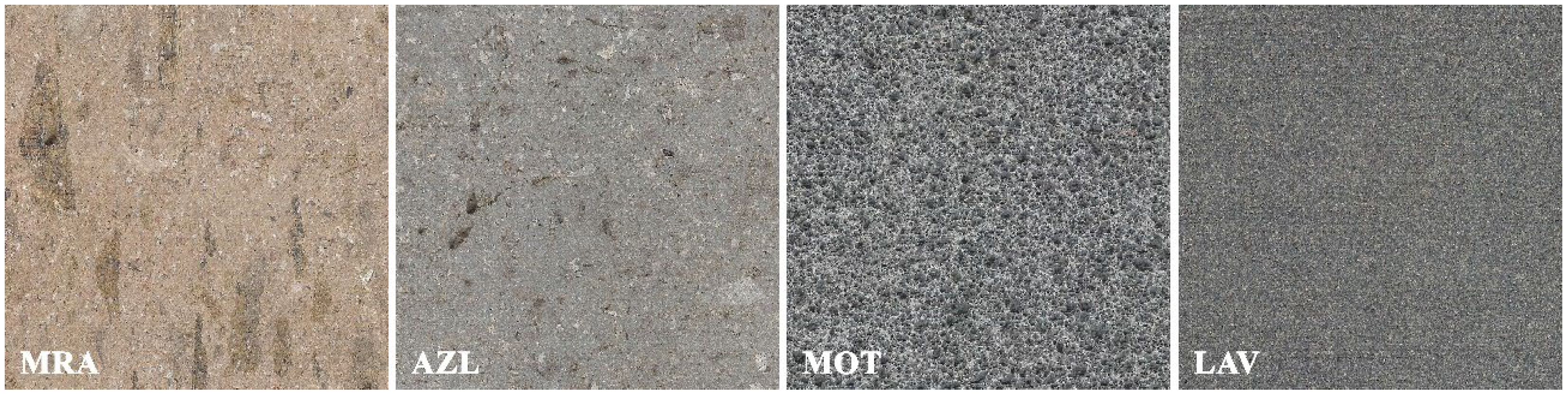
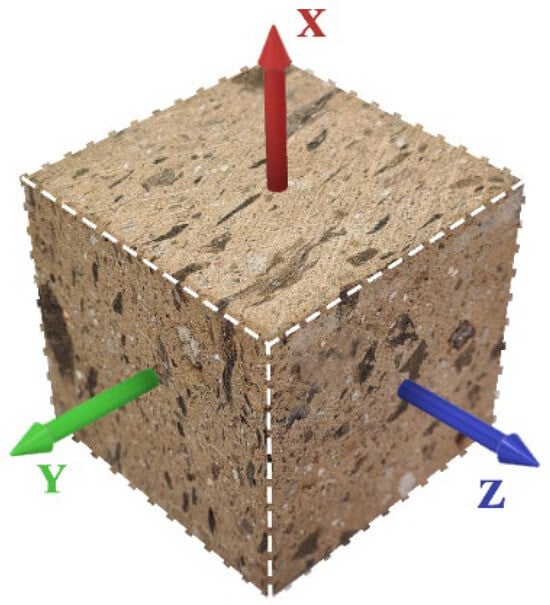
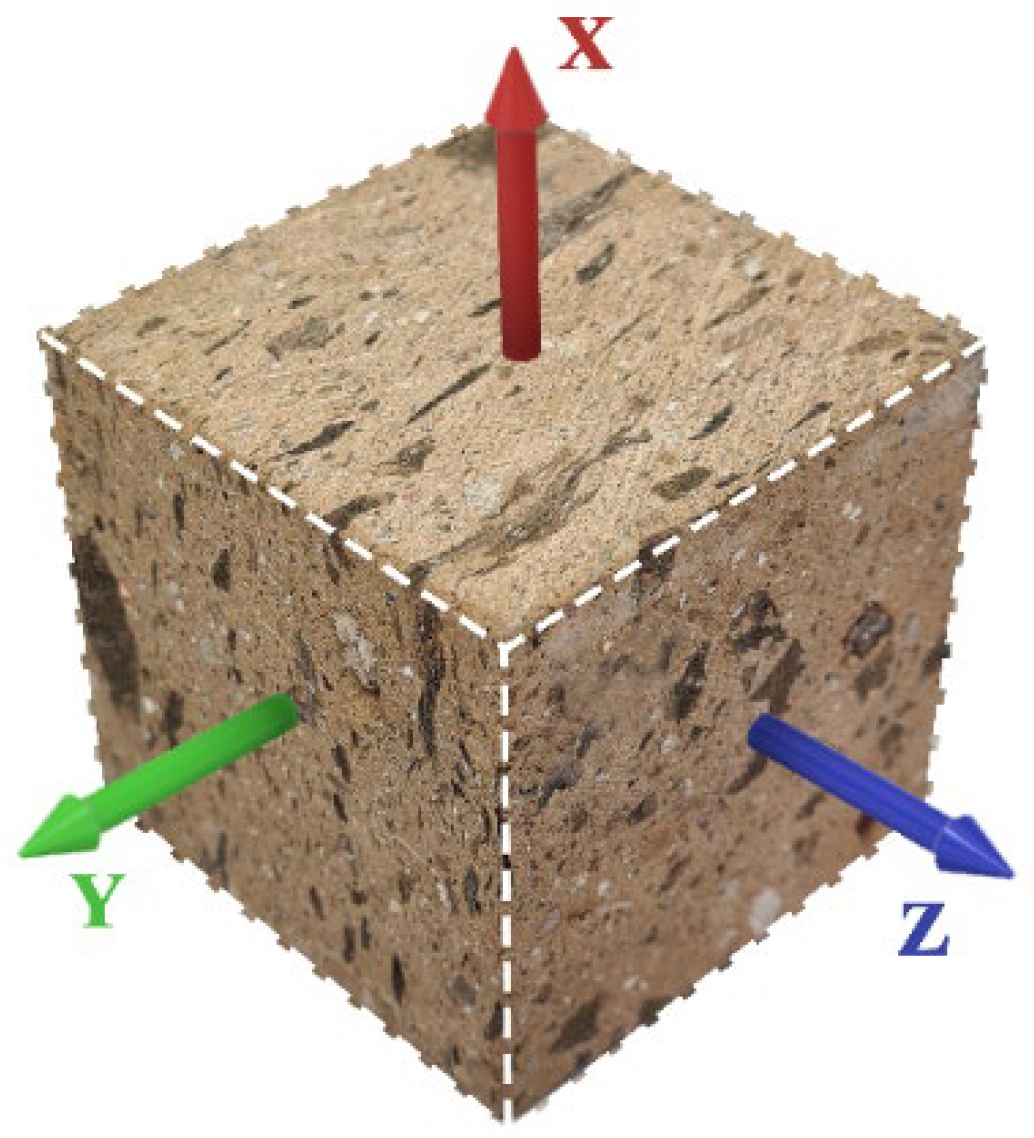
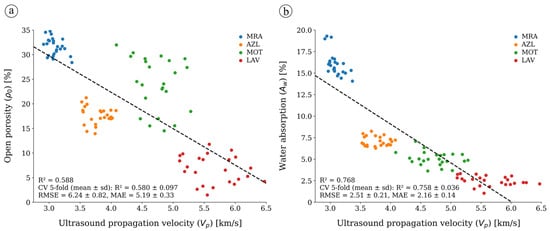
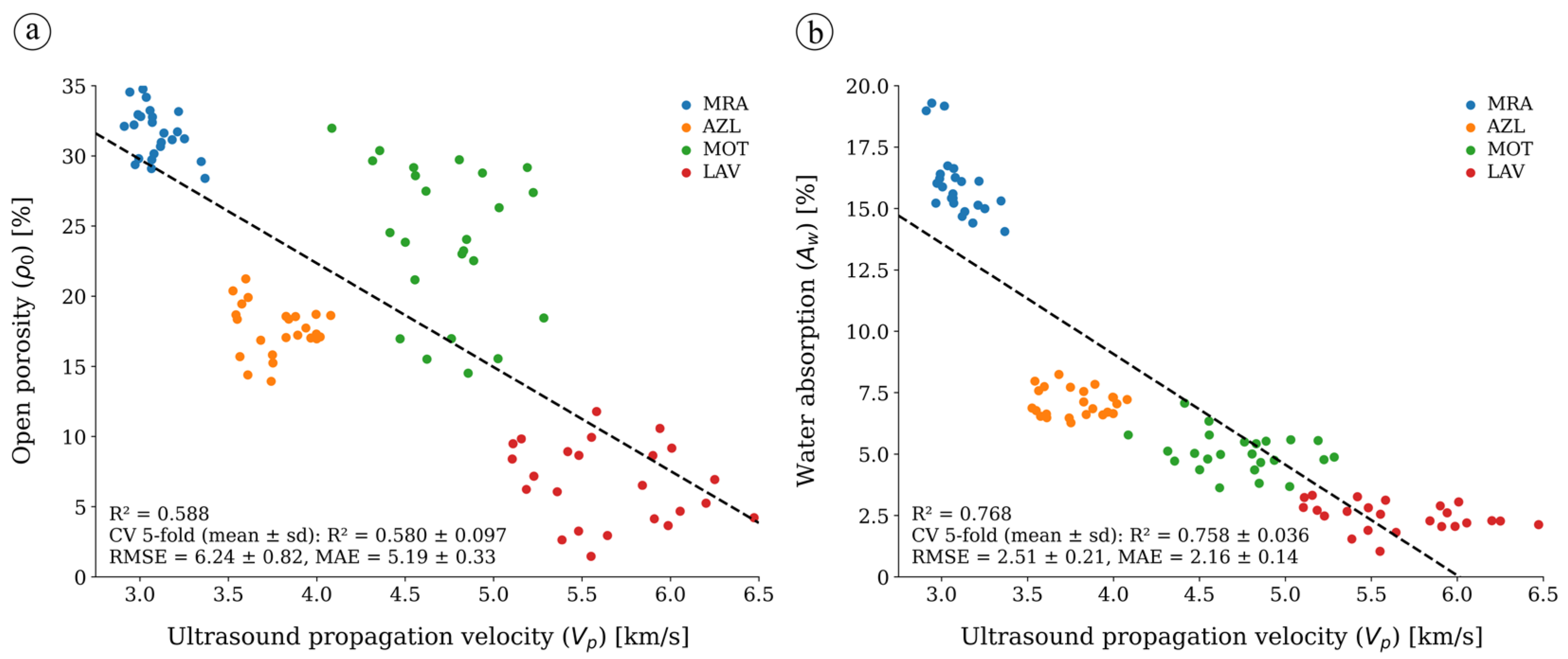
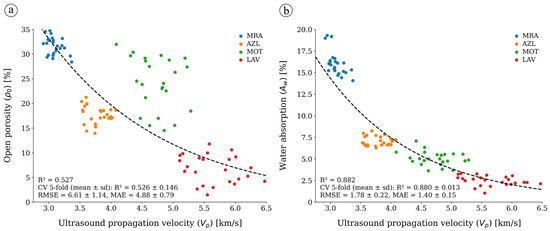
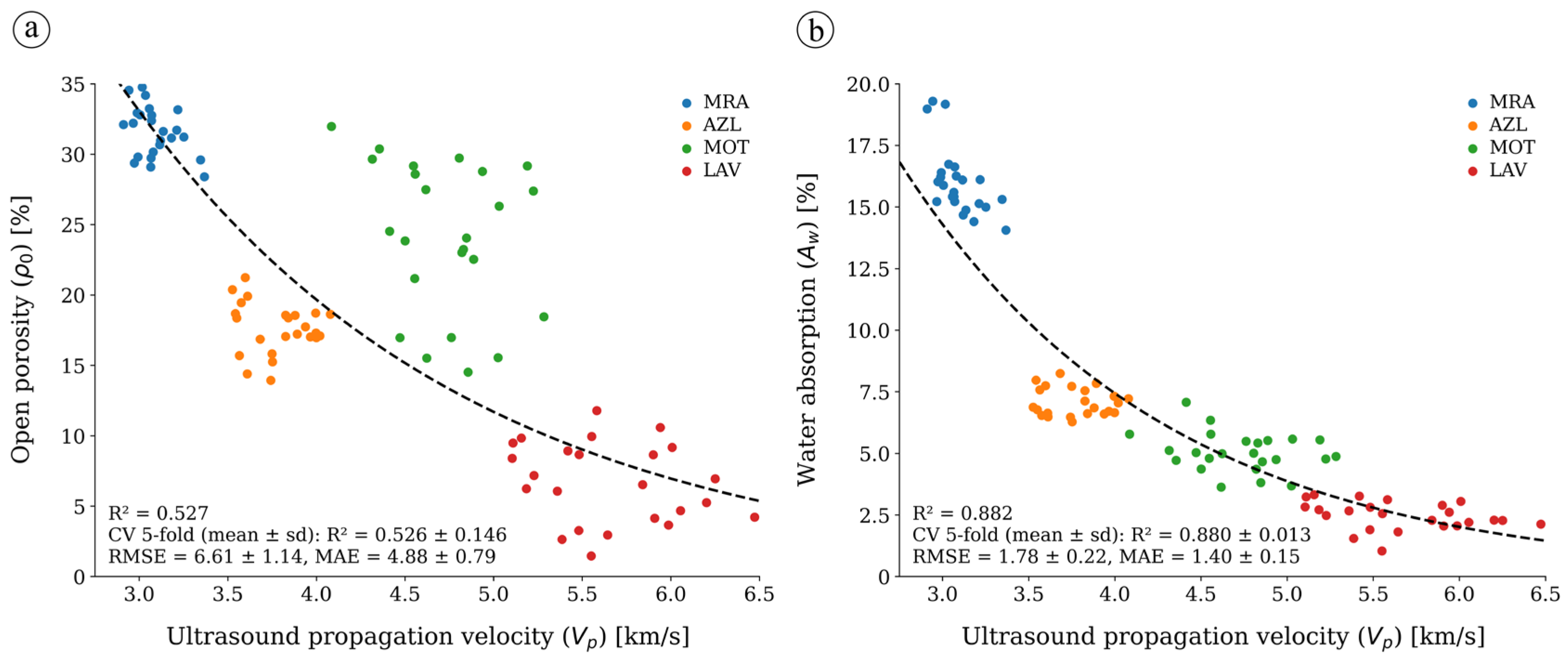
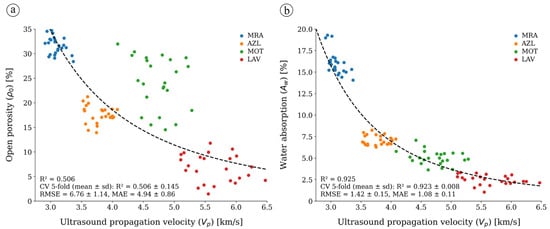
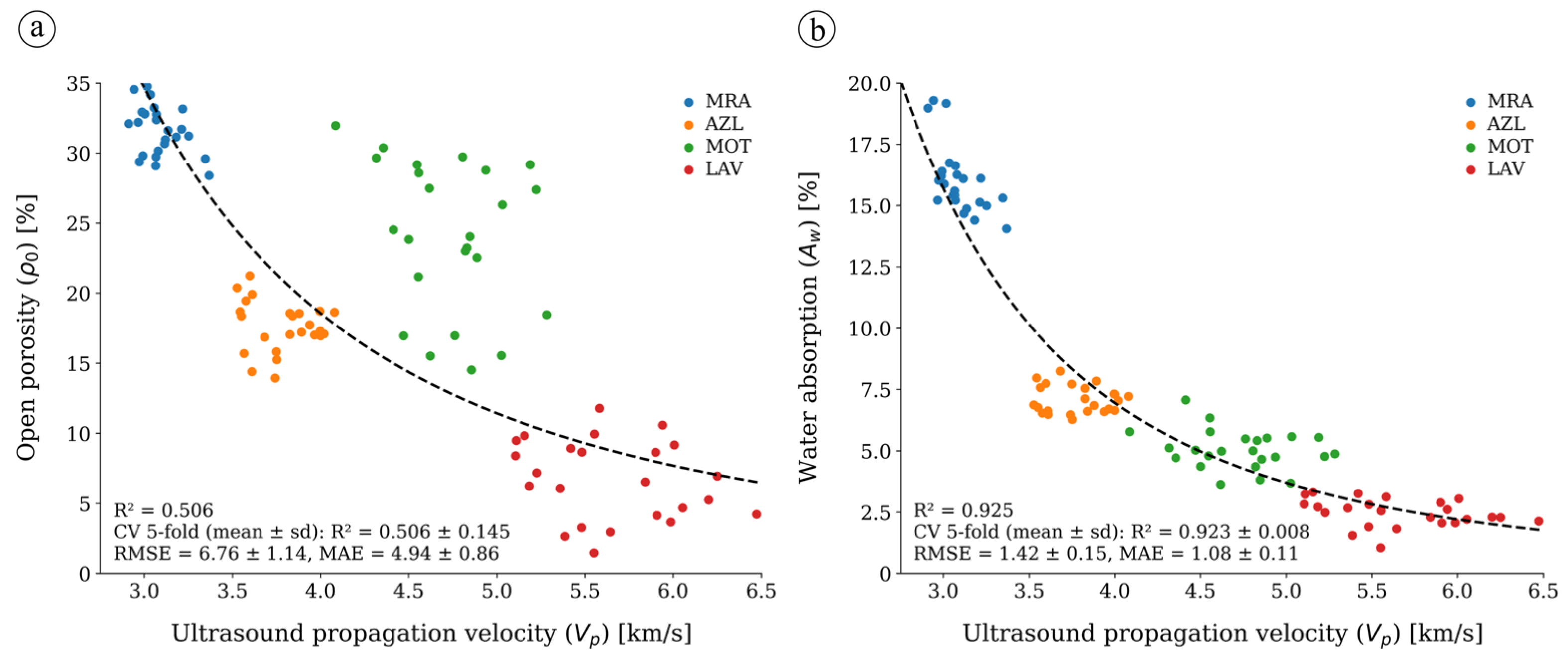
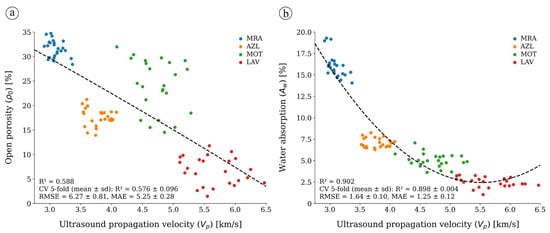
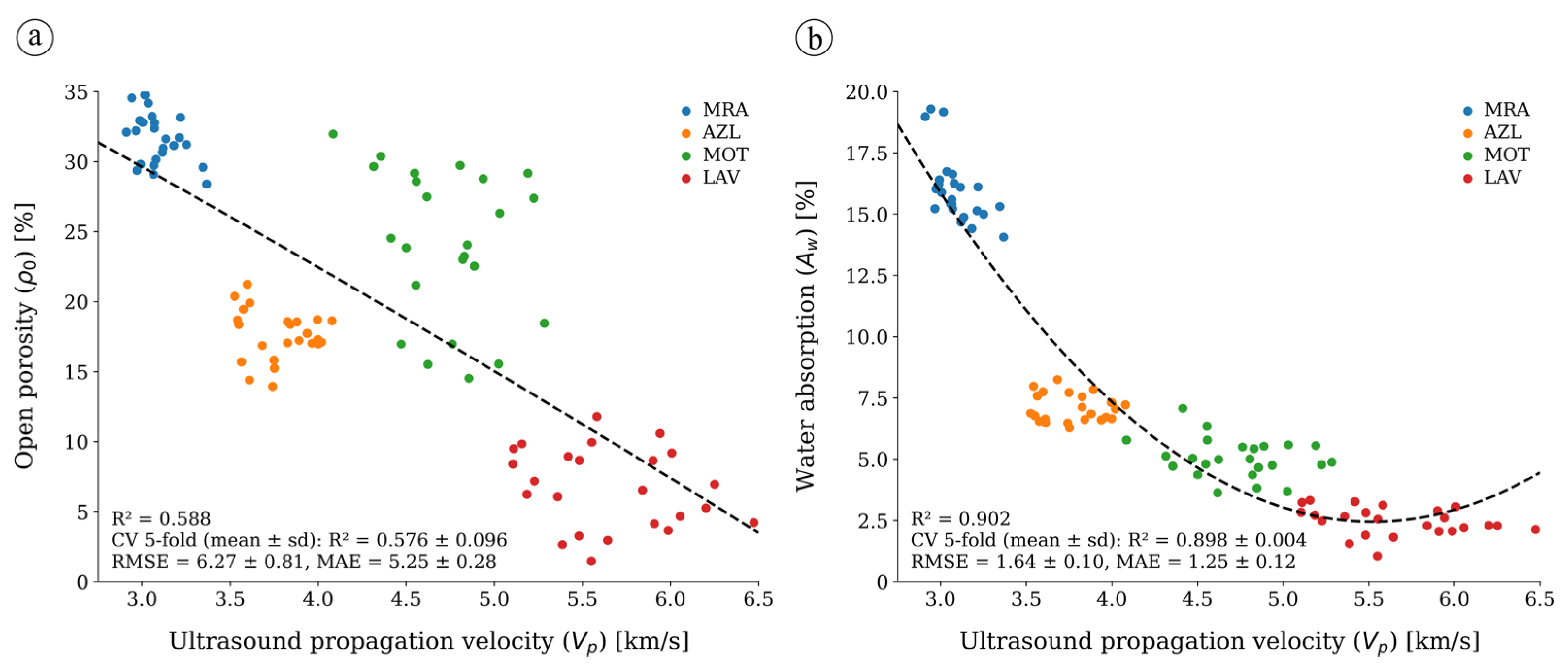
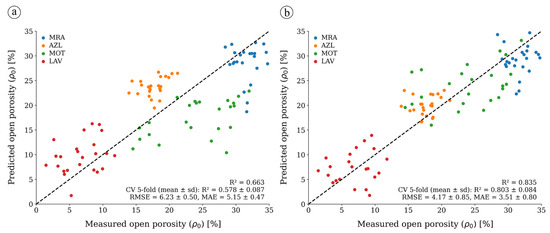
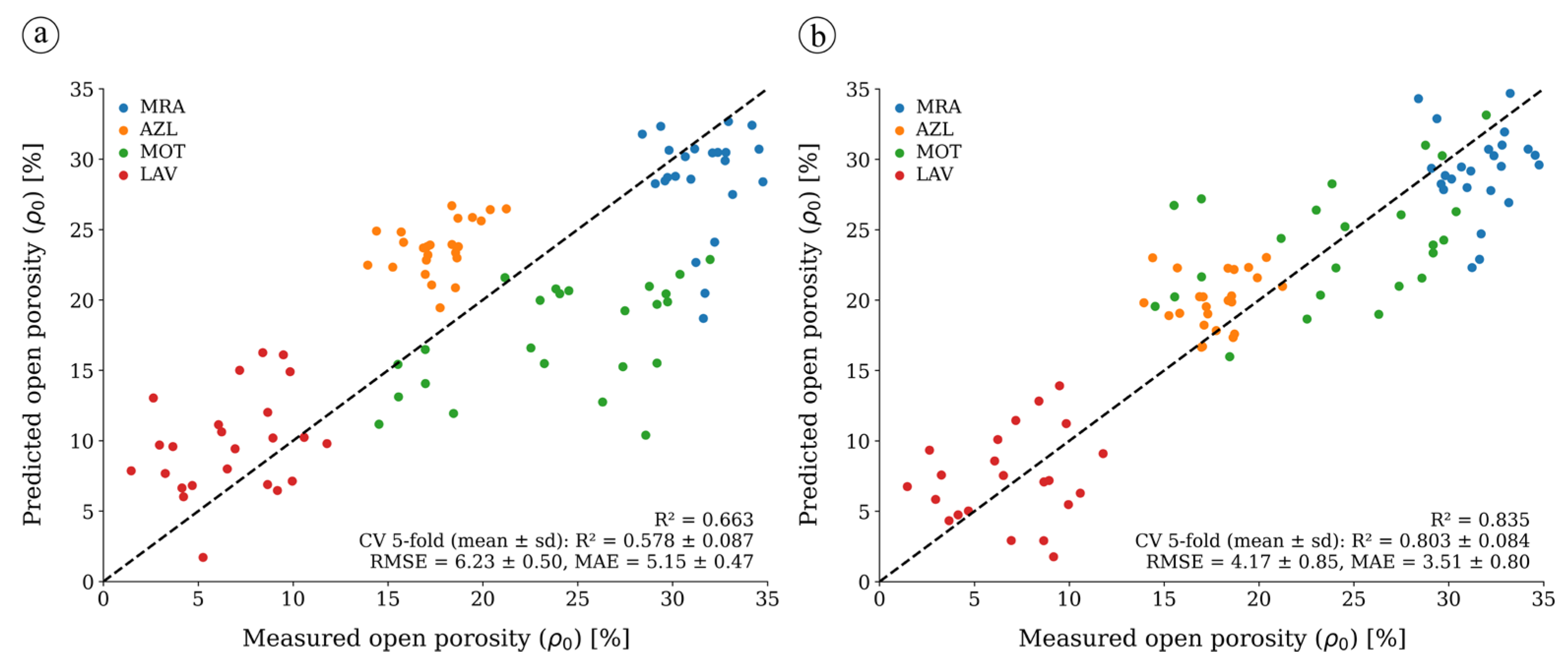
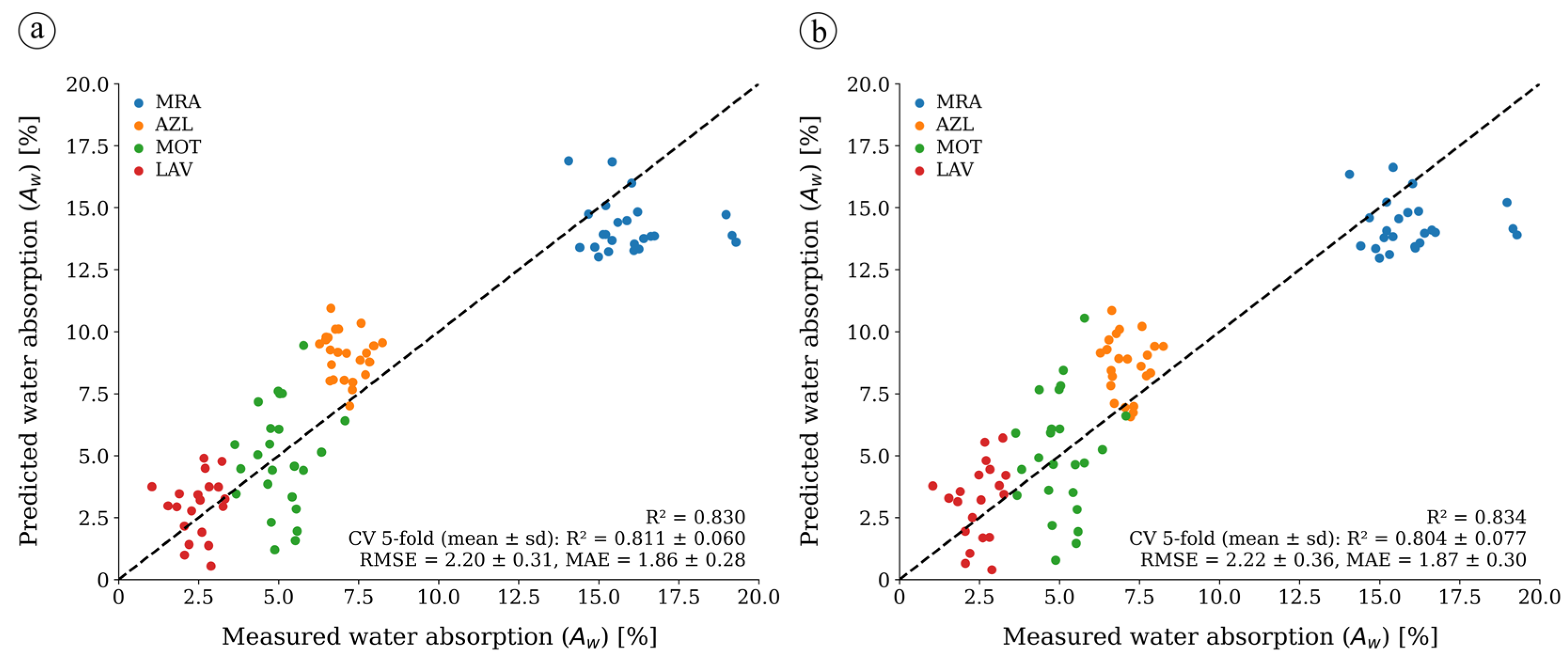
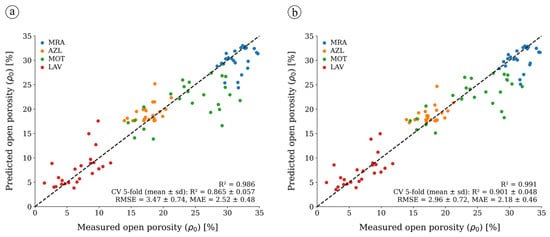
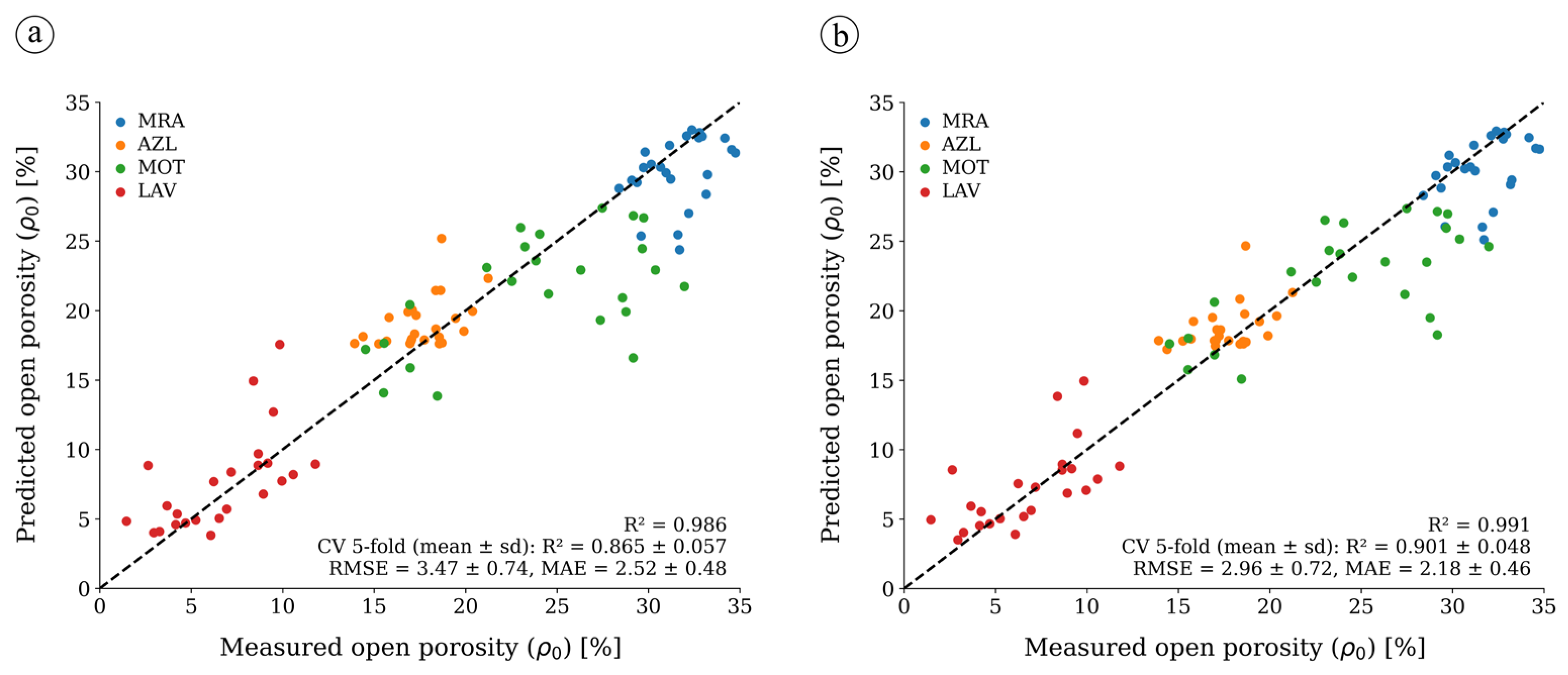
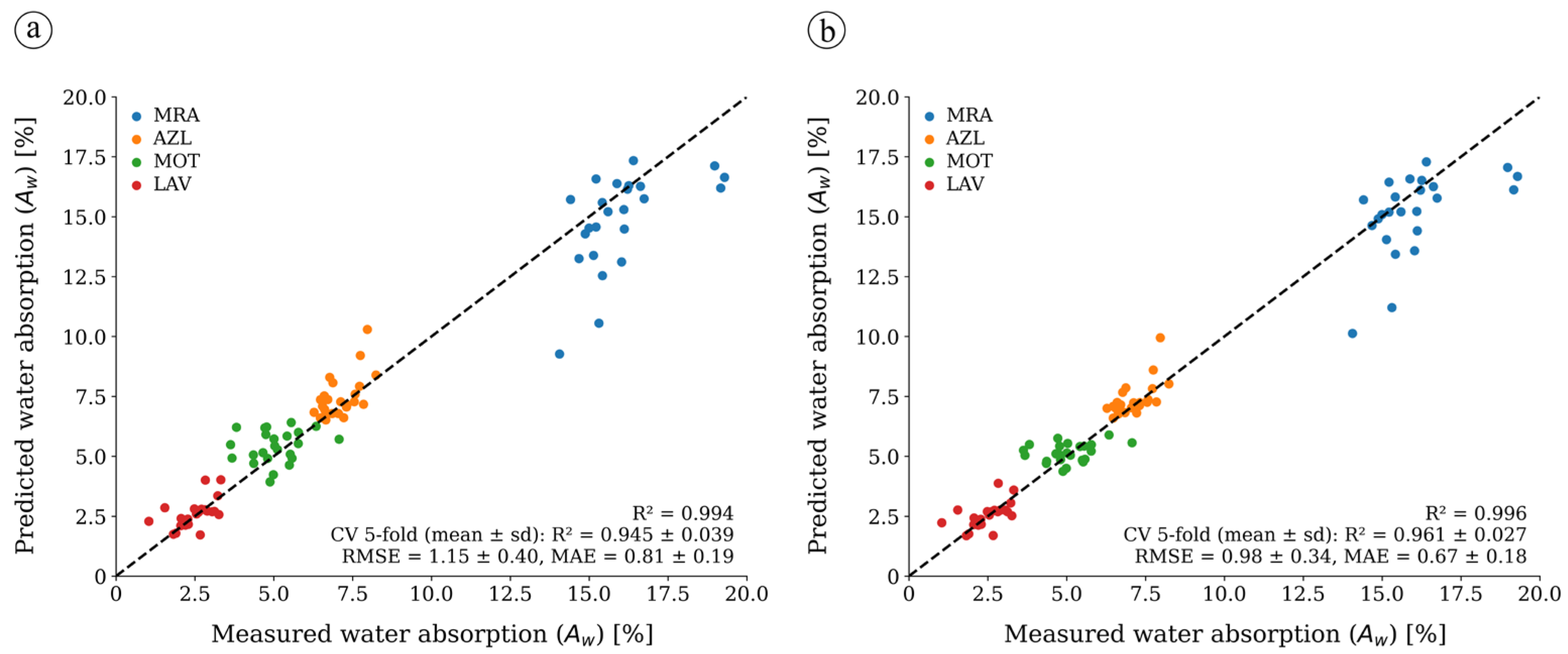
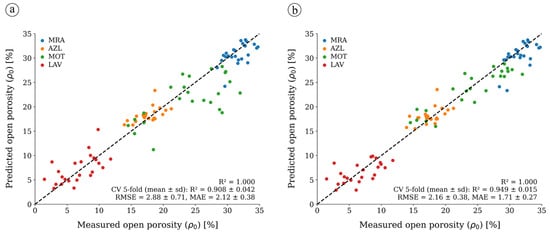
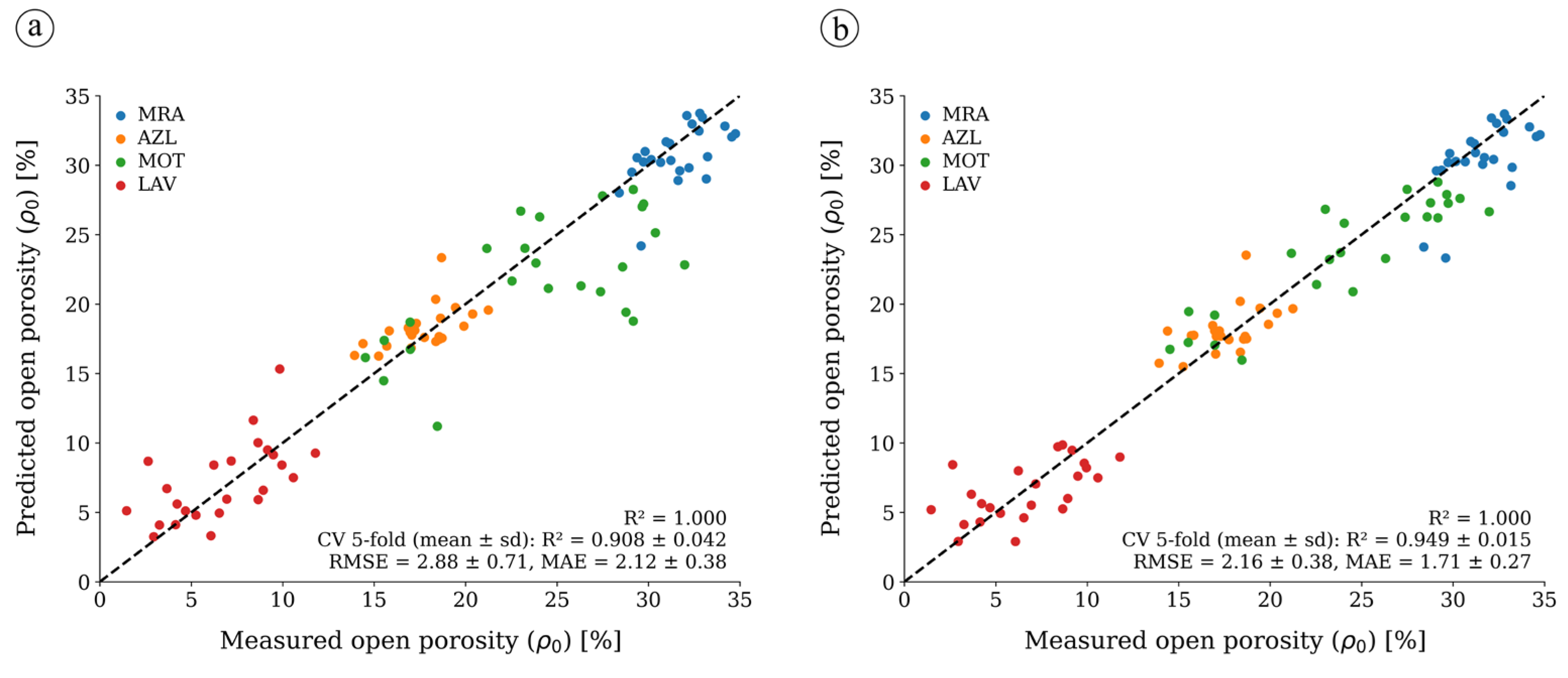
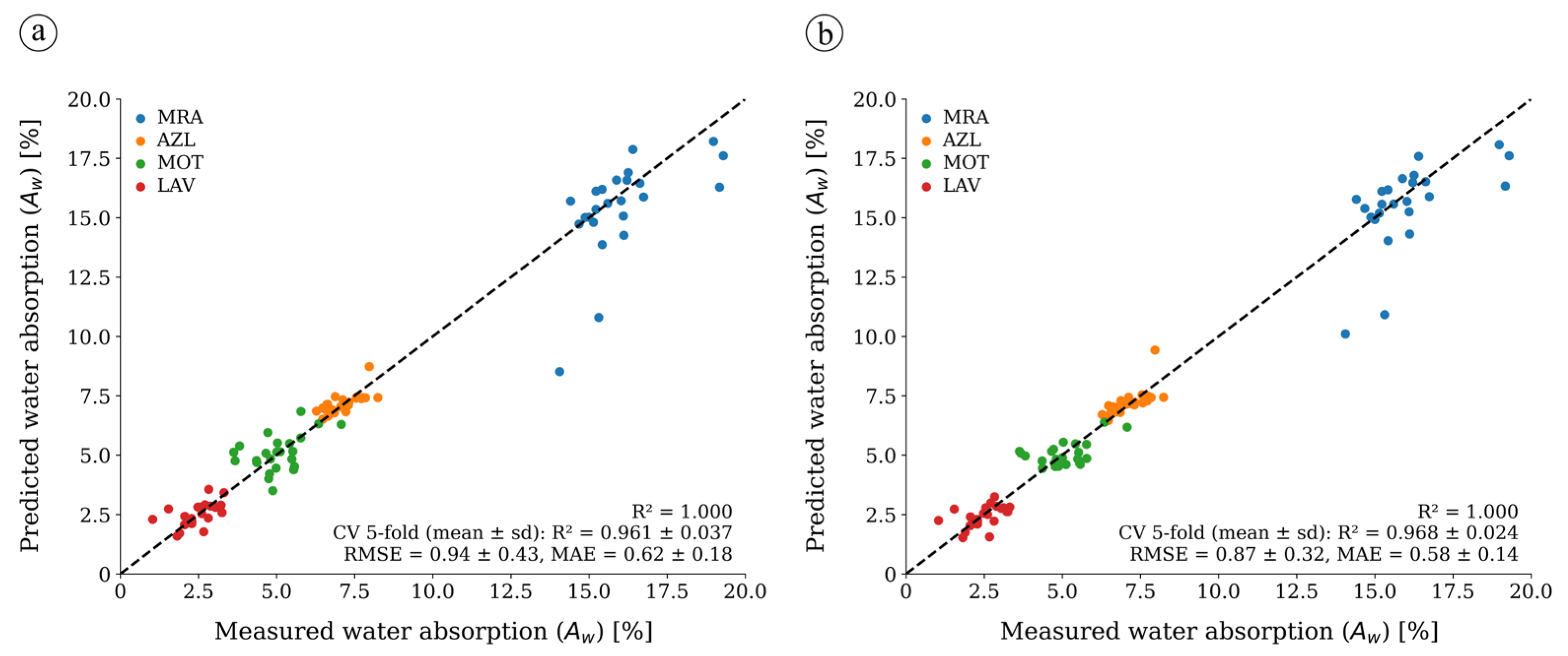
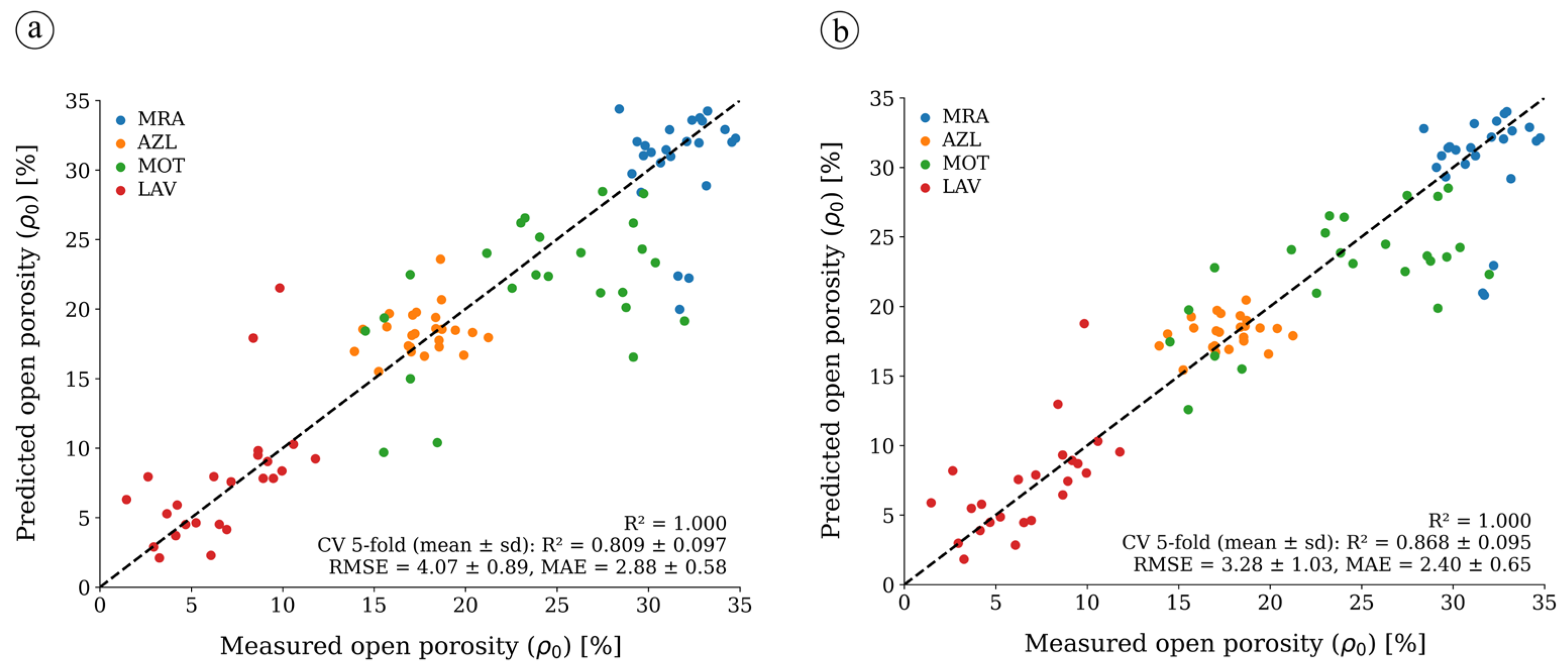
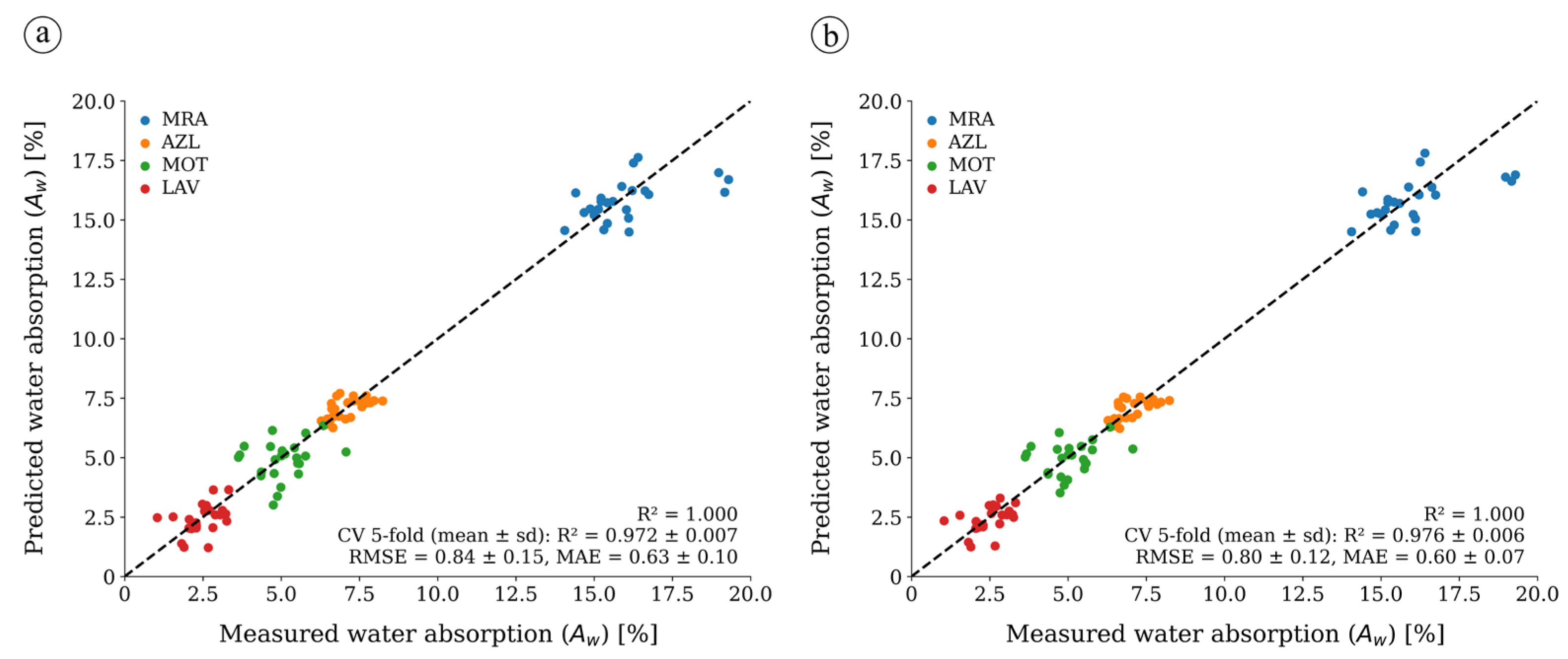
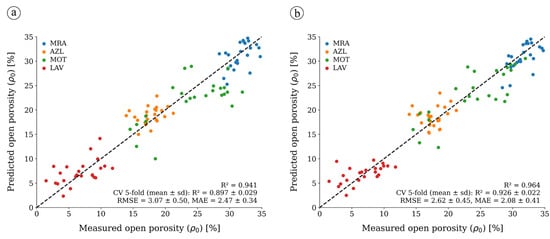
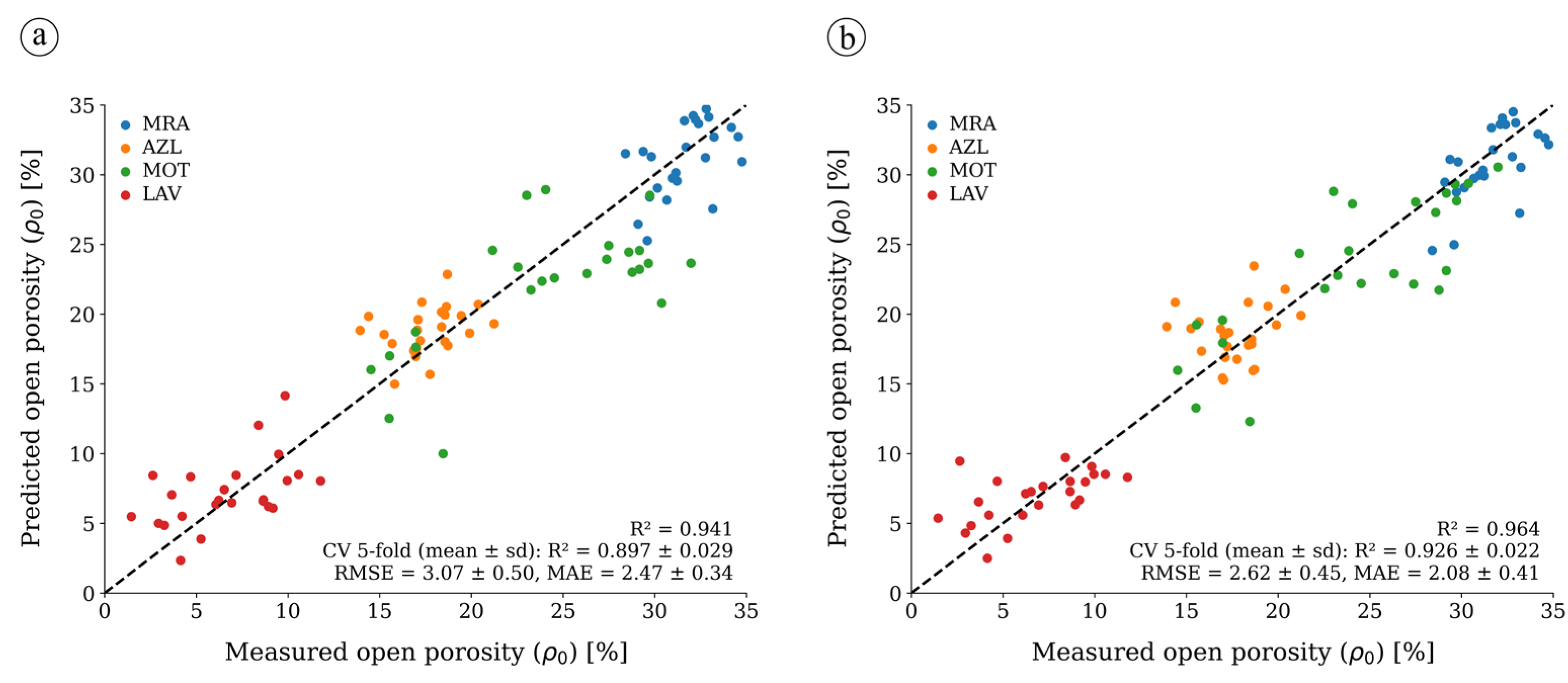
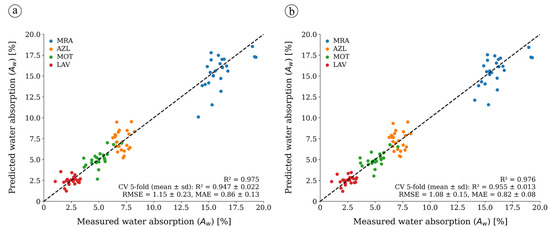
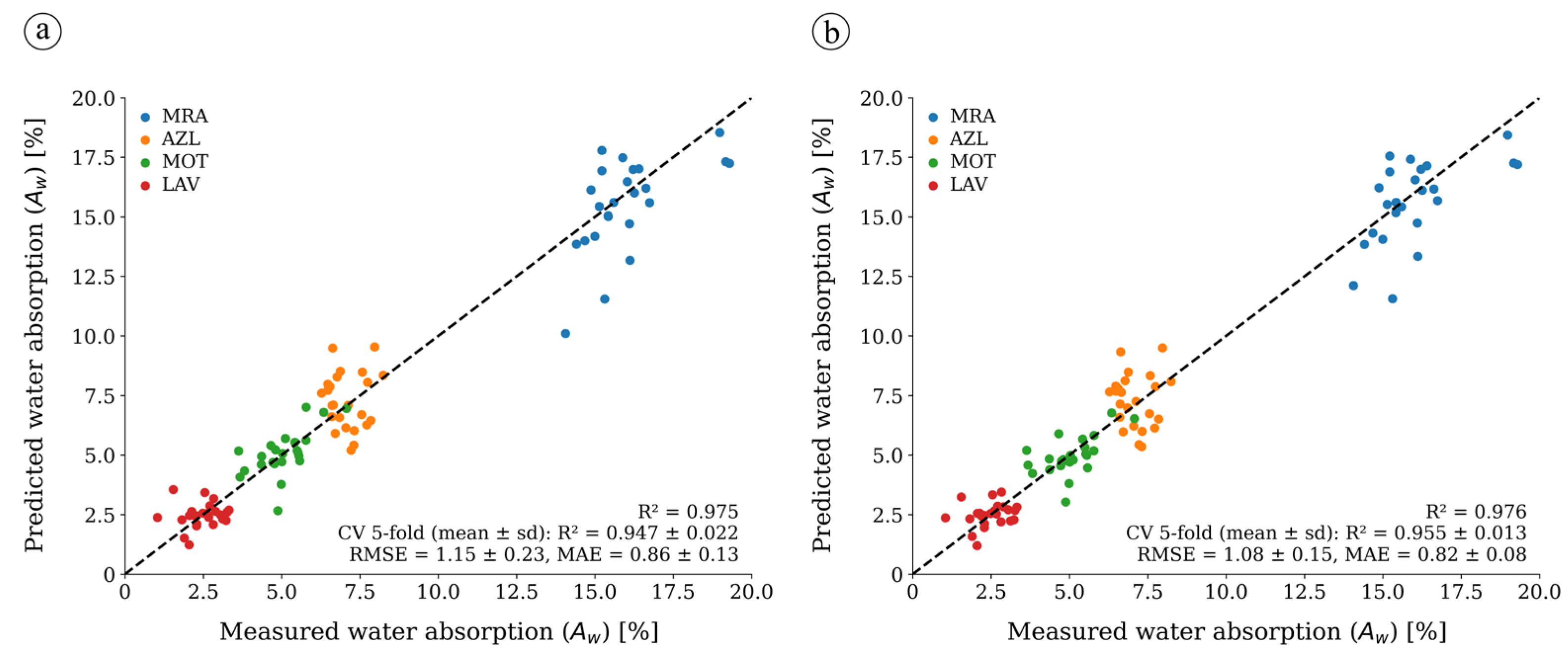
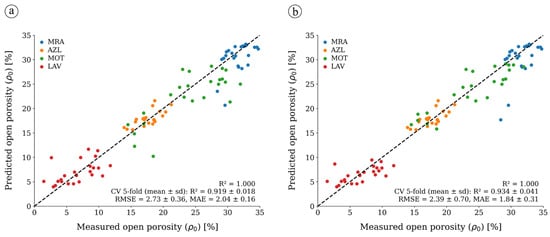
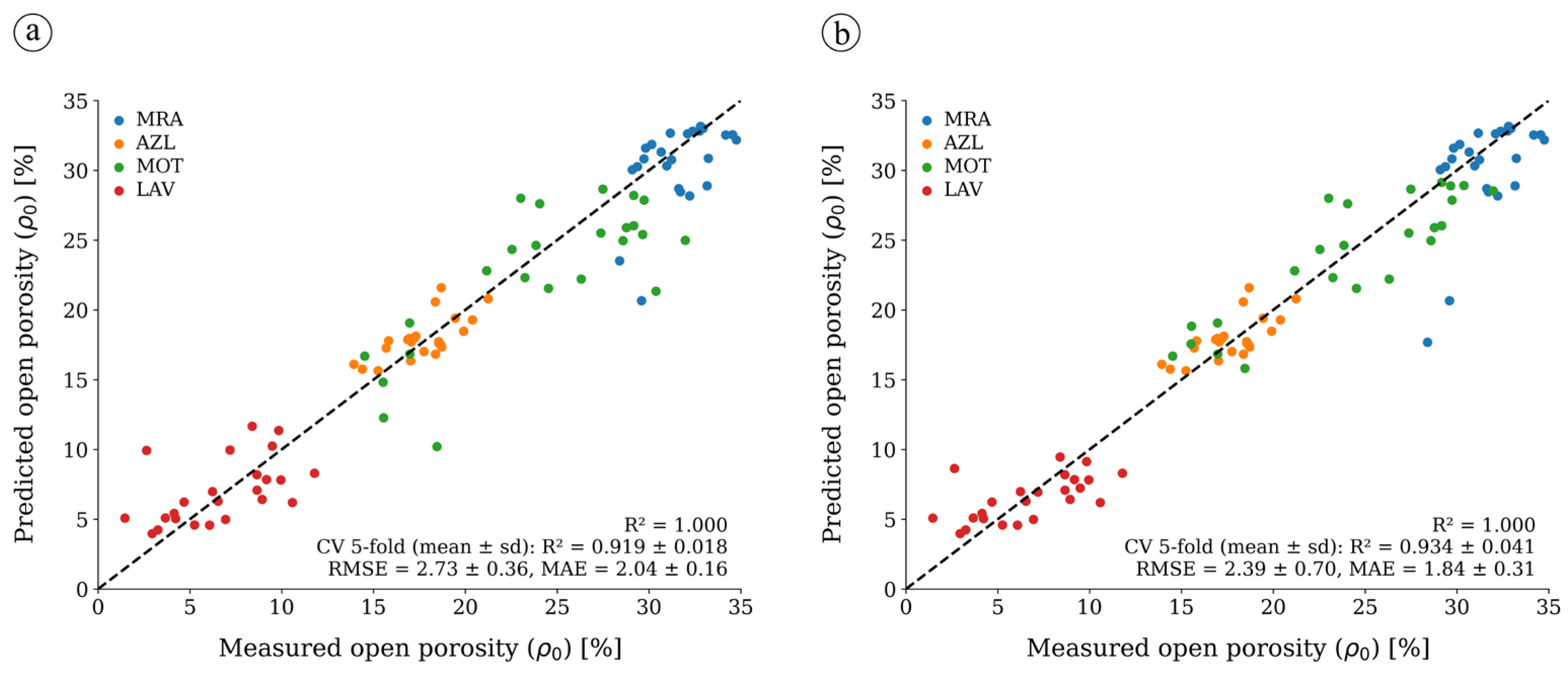
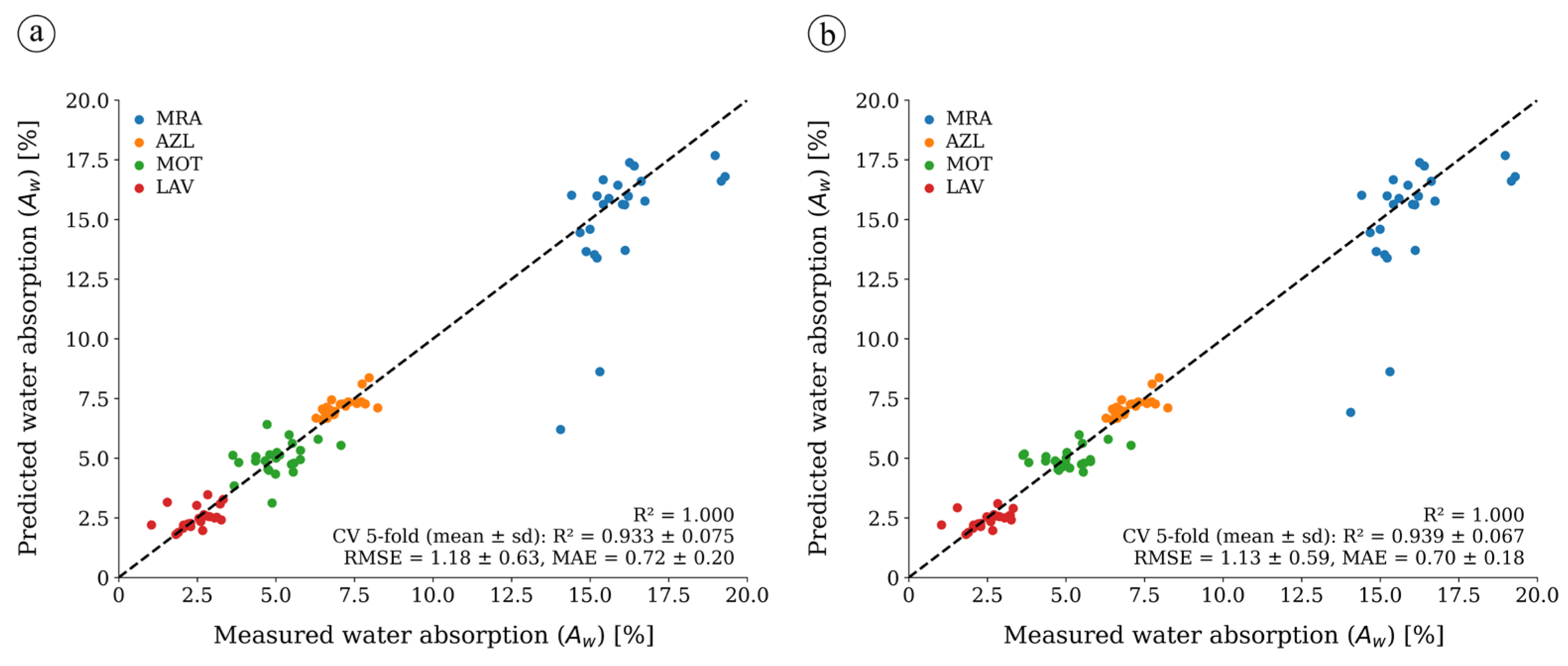
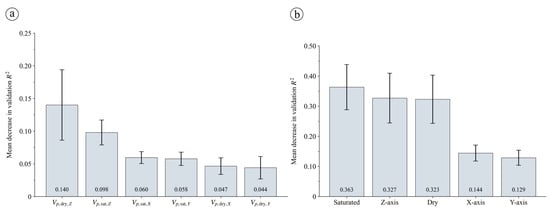
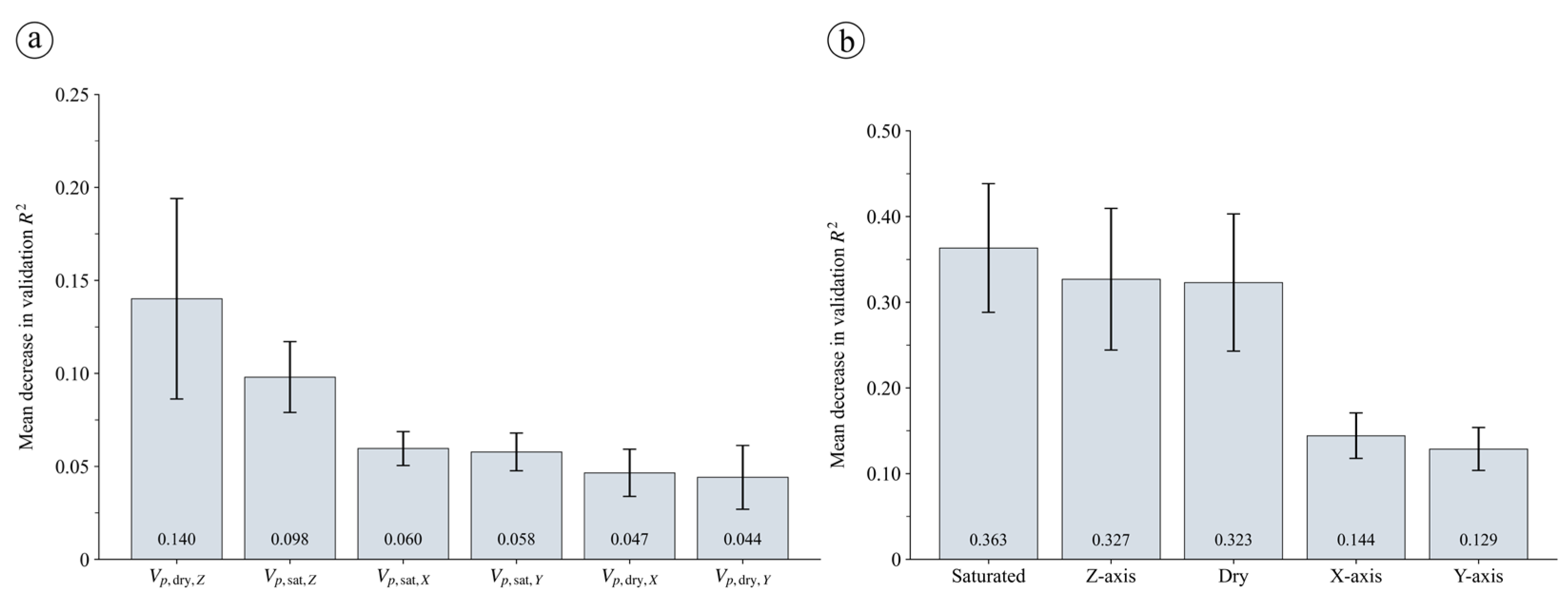
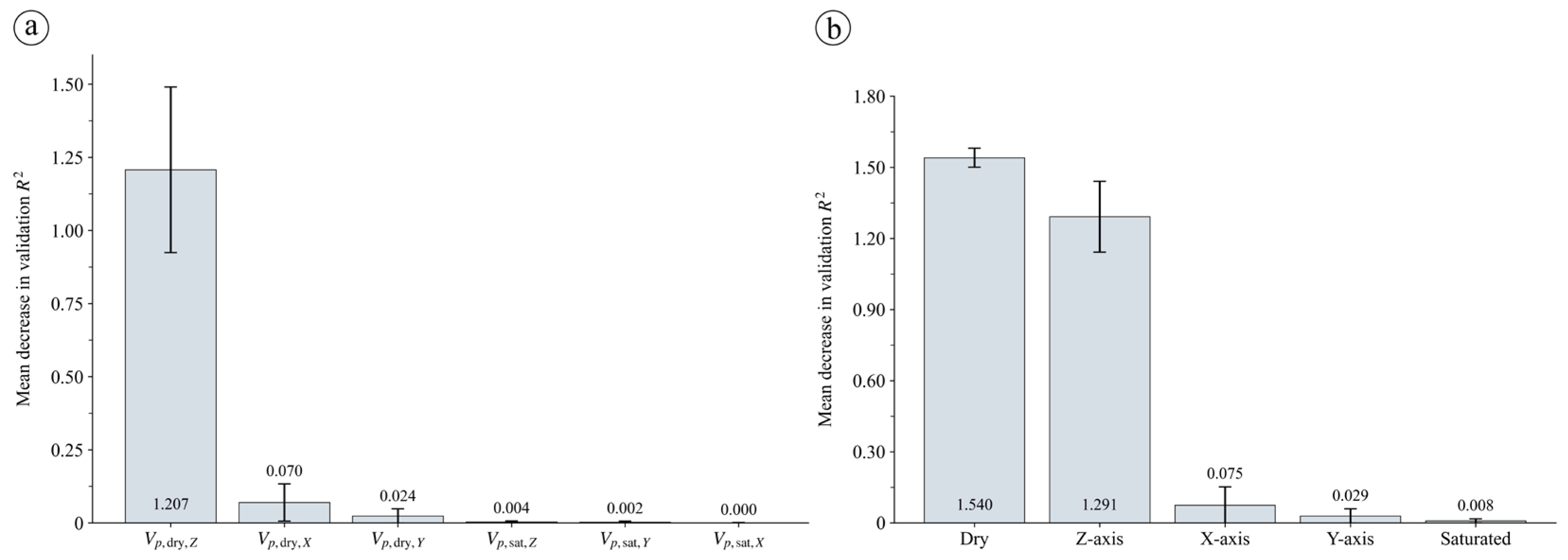
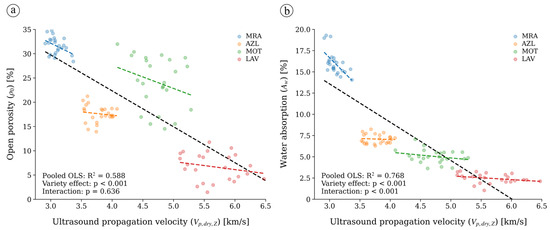
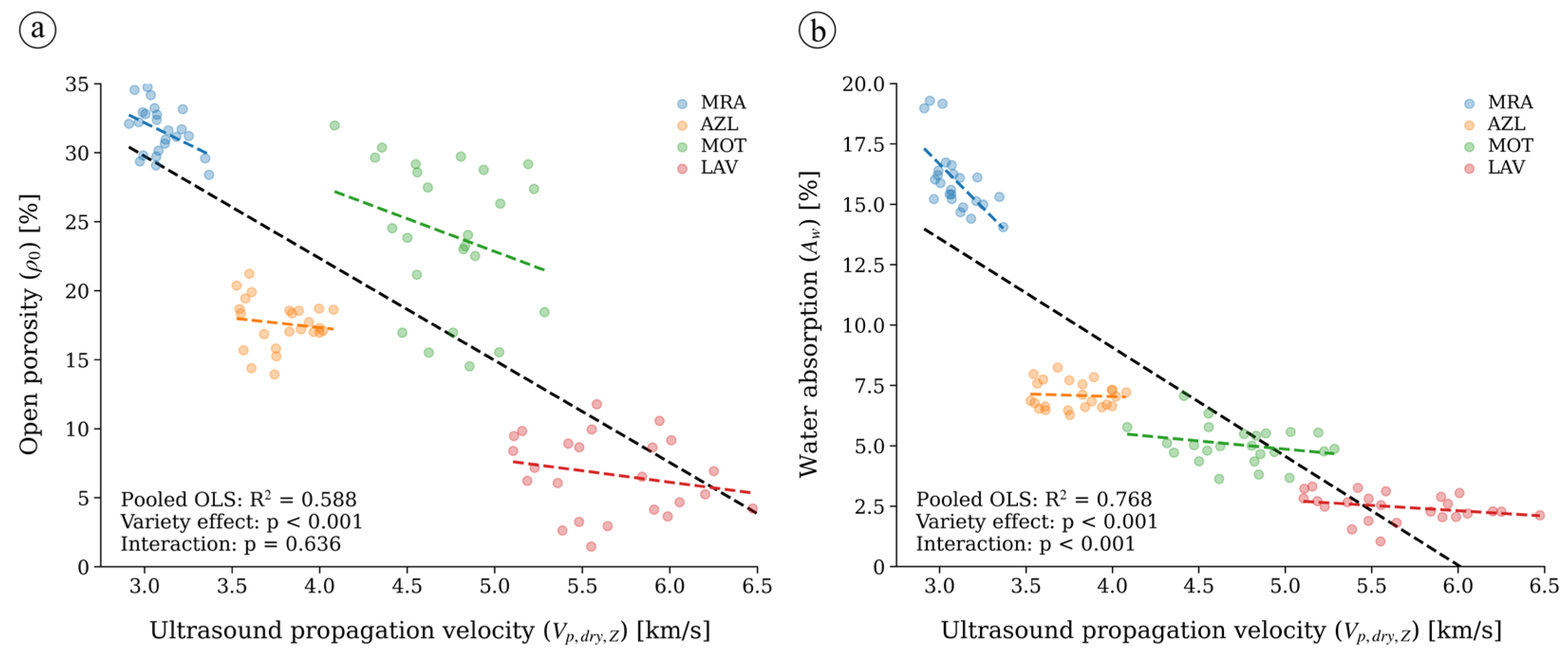

Disclaimer/Publisher’s Note: The statements, opinions and data contained in all publications are solely those of the individual author(s) and contributor(s) and not of MDPI and/or the editor(s). MDPI and/or the editor(s) disclaim responsibility for any injury to people or property resulting from any ideas, methods, instructions or products referred to in the content. |
© 2026 by the authors. Licensee MDPI, Basel, Switzerland. This article is an open access article distributed under the terms and conditions of the Creative Commons Attribution (CC BY) license.