


Abstract
With rising global energy demand and the gradual depletion of petroleum-based resources, interest in alternative fuels for internal combustion diesel engines (ICDEs) has increased. In ICDEs, firing-related and mechanical excitations may result in adverse vibration and noise responses. This study examines whether incorporating sour cherry pit pyrolysis oil (SCPO) with n-butanol and 2-ethylhexyl nitrate (2-EHN) may reduce vibration and noise under constant-load, steady-state operating conditions compared with neat diesel (D100). For the experimental tests, five fuel types were prepared: one neat diesel fuel and four blended fuels with a constant diesel fraction of 40% and a fixed 2-ethylhexyl nitrate (2-EHN) content of 5%, while the SCPO and n-butanol fractions were varied (D40/SCPO0/B55/2-EHN5, D40/SCPO5/B50/2-EHN5, D40/SCPO10/B45/2-EHN5, and D40/SCPO15/B40/2-EHN5). Experiments were performed using a single-cylinder ICDE at a fixed load of 10 Nm under steady-state conditions at engine speeds of 1500, 1800, 2400, 3000, and 3600 rpm. For each operating condition, vibration and noise data were recorded over a 10.4 s window. Experimental findings indicate that D40/SCPO10/B45/2-EHN5 yielded the lowest mean overall RMS vibration, with a 37.5% reduction relative to neat diesel (D100), and the lowest equivalent sound level (LAeq) among the tested fuels. Under the investigated steady-state constant-load conditions, the D40/SCPO10/B45/2-EHN5 fuel blend demonstrates the potential to achieve lower measured vibration and noise levels than neat diesel.
1. Introduction
With rapid global population growth, energy demand has increased substantially across key sectors. At the same time, the progressive depletion of petroleum-based resources has intensified concerns regarding supply security and has contributed to rising energy costs. Continued reliance on petroleum-derived fuels also drives substantial greenhouse-gas emissions and associated environmental impacts, including climate change. In response, international agreements have been established to mitigate these effects [1]. Consequently, research has increasingly focused on alternative energy sources that can reduce dependence on fossil fuels. In this context, biofuels have attracted attention as renewable, potentially cost-effective options. Among these, biodiesel and biomass-derived pyrolysis oils (bio-oils) are widely considered promising pathways for internal combustion diesel engine (ICDE) applications, particularly when implemented as blends supported by suitable formulation strategies [2,3]. However, while biodiesel- and bio-oil-based blends have been widely examined in terms of performance and emissions, their NVH (noise–vibration–harshness) response remains comparatively less characterized, particularly for waste-derived pyrolysis-oil blends formulated with an alcohol co-solvent (n-butanol) and a cetane improver (2-EHN) under controlled constant-load, steady-state conditions. To address this gap, this study provides a controlled experimental comparison of vibration and noise responses of SCPO–butanol–diesel blends against neat diesel over the investigated speed set (1500, 1800, 2400, 3000, and 3600 rpm).
Accordingly, biodiesel fuels and biomass-derived bio-oils have been increasingly investigated as diesel-engine blend components. Biodiesel fuels can be produced from a range of waste vegetable and animal oils through chemical conversion processes [4,5]. Their use in ICDEs dates back to the early stages of diesel-engine development [6]. Numerous studies have therefore investigated biodiesel blends—especially those derived from waste cooking oil (WCO) and other vegetable oils—by evaluating engine performance, fuel consumption, brake thermal efficiency (BTE), and exhaust emissions under different load–speed conditions [7,8]. For WCO-based biodiesel, increasing the biodiesel fraction may impose modest penalties in power and BTE, while increasing specific fuel consumption, while CO often decreases; NOx responses vary with blend ratio and operating conditions [9,10,11,12]. Similar tendencies are reported for biodiesels derived from other waste vegetable oils, which typically reduce CO/HC/smoke-related emissions but tend to increase brake-specific fuel consumption; NOx trends remain dependent on fuel properties, formulation details, and operating point [13,14,15,16]. Collectively, these findings underline that blend design and operating conditions govern the performance–emissions balance during biodiesel operation in ICDEs.
In parallel, biomass-derived pyrolysis oils (bio-oils) have emerged as a distinct renewable and oxygenated fuel pathway for ICDE applications. Pyrolysis oils are produced via thermochemical conversion of biomass under oxygen-limited conditions, and their physicochemical properties depend strongly on the selected conversion route and operating parameters. Key attributes such as viscosity, water content, acidity, and stability directly constrain blend formulation and engine operability [17,18]. Accordingly, pyrolysis oils are most commonly assessed as blend components rather than neat fuels. Alcohol co-solvents are frequently employed to improve miscibility and handling, enabling repeatable engine testing of bio-oil–diesel formulations [19,20]. Consistent with this need, recent engine-oriented studies have reported the use of n-butanol as a co-solvent in the preparation of pyrolysis-oil–diesel microemulsion blends to obtain stable mixtures suitable for ICDE evaluation [21,22]. In addition, oxygenated components and alcohol additions can depress ignition quality and extend ignition delay. Nitrate-based cetane improvers—most commonly 2-ethylhexyl nitrate (2-EHN) are therefore widely used to recover ignition quality and stabilize combustion phasing in oxygenated-blend operation [23]. Beyond short-duration performance/emissions testing, durability-oriented studies have also demonstrated extended operation using stabilized fast-pyrolysis bio-oil blends under modified engine conditions [24].
Recent research has increasingly validated pyrolysis oil-containing blends under practical ICDE operating conditions. These studies quantify how blend composition and calibration influence combustion stability and phasing, BTE, brake-specific fuel consumption, and regulated emissions, thereby establishing a performance-emissions baseline for systematic evaluation of emerging bio-oil blend concepts [25,26,27,28,29]. Transient assessments further indicate that outcomes can be dependent on the operating cycle. For example, Jaworski et al. reported that, in a Euro 6 passenger car tested over the WLTC, an HVO–tire/plastic-pyrolysis-oil blend slightly increased fuel consumption relative to B7 diesel and neat HVO, while distance-specific CO remained well below B7 and PM decreased markedly; however, NOx increased in some WLTC phases, highlighting sensitivity to blend ignition characteristics and aftertreatment state [30]. More broadly, the literature indicates that the achievable trade-off depends strongly on upgrading level, blend fraction, and calibration. Han et al. demonstrated that heavy-duty operation with 50% hydrotreated pyrolysis oil blended in marine gas oil can be achieved without engine modification, with only ~1% reduction in net indicated efficiency at representative cruise conditions and very low PM (0.002 g/kWh), while enabling ~1 g/kWh ISNOx at 40% EGR under low-load operation [31]. Hunicz et al. reported that waste-plastic pyrolysis oils show strong sensitivity to control parameters and that appropriate calibration can permit high admissible admixture levels with sizeable cumulative-emission improvements (e.g., up to 60% polypropylene pyrolysis oil and ~20% polystyrene pyrolysis oil, with reported reductions of ~50% and up to ~81%, respectively) [32]. Mariappan et al. showed that a quaternary blend strategy (plastic pyrolysis oil with oxygenate/additive support) enabled ~65% diesel substitution and achieved a reported ~6.8% BTE improvement with ~13.6% NOx reduction under optimized conditions [33]. At the system scale, Wang et al. summarized a long-duration genset application in which adding ~10% ethanol to fast pyrolysis bio-oil enabled ~500 h of operation with diesel-comparable efficiency and markedly reduced NOx emissions. However, CO increased, underscoring the dependence of stability and emissions on the solvency/volatility package and combustion control [34]. Moreover, additive-assisted formulations and optimization-driven calibration are increasingly adopted to improve performance and regulated emissions of pyrolysis-oil-containing blends in ICDEs [35,36,37,38,39]. Wiangkham et al. examined the addition of diethyl ether (DEE) (5–15 vol.%) to waste-plastic-oil fuels and reported shorter ignition delay and advanced combustion, along with marked NOx reduction and potential improvements in high-load performance; they also implemented NSGA-II coupled with GRNN surrogate modeling for multi-objective optimization [40]. Kaewbuddee et al. studied n-butanol–waste plastic oil blends (5–15 vol.% n-butanol) and showed that alcohol addition can penalize thermal efficiency and elevate HC/CO at low load, motivating GRNN-based multi-objective modeling and NSGA-II optimization to identify practical operating regions [41]. Lu et al. quantified 2-EHN dosing (1–3‰) and reported improved combustion stability with reduced incomplete-combustion products (e.g., THC and CO reductions up to ~85% and ~50%, respectively), supporting the role of nitrate-based improvers when oxygenated components extend ignition delay [42]. Synthesis work further emphasizes that net outcomes are governed by the combined choice of an additive package and a calibration/optimization strategy, consistent with the growing use of data-driven and multi-objective approaches in this pathway [43]. Prior studies indicate that performance–emissions outcomes of oxygenated diesel blends are chiefly governed by blend formulation and operating condition/calibration. For bio-oil-containing blends, physicochemical constraints (e.g., viscosity, water content, acidity, stability) typically necessitate the use of alcohol co-solvents to achieve homogeneity, while ignition-quality penalties often require nitrate-based cetane improvers (e.g., 2-EHN) to stabilize combustion. Despite this established performance–emissions baseline, NVH responses of waste-derived bio-oil blends under constant-load conditions remain insufficiently characterized, motivating the present study.
High operating pressures in ICDEs can lead to undesired vibration and noise effects. Such effects may reduce engine life, increase fuel consumption, decrease driving comfort, elevate noise emissions, and adversely affect worker health due to long-term exposure to vibration and noise. Despite extensive research on performance, emissions, and combustion characteristics, comparatively fewer studies have examined engine vibration and noise responses under biofuel operation [44,45,46]. For example, Abdo et al. experimentally examined the effects of biodiesel–diesel blends produced from jojoba oil on engine block vibration and noise emissions [47]. They reported that, due to the higher cetane number and different combustion characteristics of jojoba biodiesel, higher maximum pressures and pressure rise rates were obtained compared with neat diesel fuel, which consequently led to higher block vibration and external noise levels (approximately 1–2 dB higher). Notably, they also found that fuel blends containing 25–50% biodiesel reduced both vibration and noise emissions. Similarly, Pawar et al. investigated the combined use of rice bran biodiesel and a constant 5% n-butanol additive on engine performance, combustion, emissions, and vibration behavior [48]. They observed that crankcase and cylinder head vibrations remained within a similar range to those of neat diesel for all fuel blends. They identified the B20n5 and B30n5 blends as suitable alternatives to diesel fuel for both emissions and vibration characteristics. For pyrolysis-oil fuels, Manigandan Sekar monitored engine noise and vibration during operation with plastic-waste pyrolysis-oil blends (10–30%); they reported increased vibration with higher pyrolysis-oil fraction, while hydrogen enrichment and Ce2O3 nanoparticle addition reduced noise and mitigated vibration by promoting smoother combustion [49]. Overall, these findings indicate that NVH outcomes are strongly formulation-dependent, yet evidence remains limited for biomass-derived bio-oils under controlled steady-state conditions.
In this study, a controlled experimental assessment is conducted to quantify the vibration and noise characteristics of an ICDE fueled by blends of sour cherry pit pyrolysis oil (SCPO), n-butanol, and diesel. SCPO is incorporated as a pyrolysis-derived bio-oil component, while n-butanol is employed as a co-solvent to ensure blend homogeneity. A nitrate-based cetane improver (2-ethylhexyl nitrate, 2-EHN) is added at a fixed dosing level to recover ignition quality degraded by oxygenated constituents. The engine is tested at a constant load (10 Nm) over the investigated speed range (1500–3600 rpm) using neat diesel as the reference fuel. Vibration is measured simultaneously at the upper engine block in three orthogonal directions and at the ground, and the acquired signals are analyzed using RMS- and FFT-based metrics. Noise is quantified using the A-weighted equivalent sound pressure level (LAeq). The results identify blend formulations that minimize vibration and noise relative to neat diesel under the tested conditions, providing an NVH-focused perspective that complements the conventional performance–emissions evaluation of bio-oil-containing fuels.
2. Materials and Methods
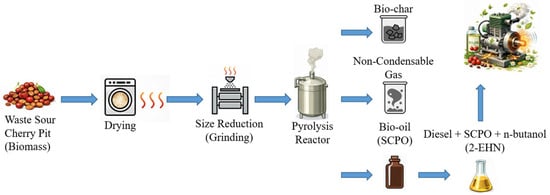
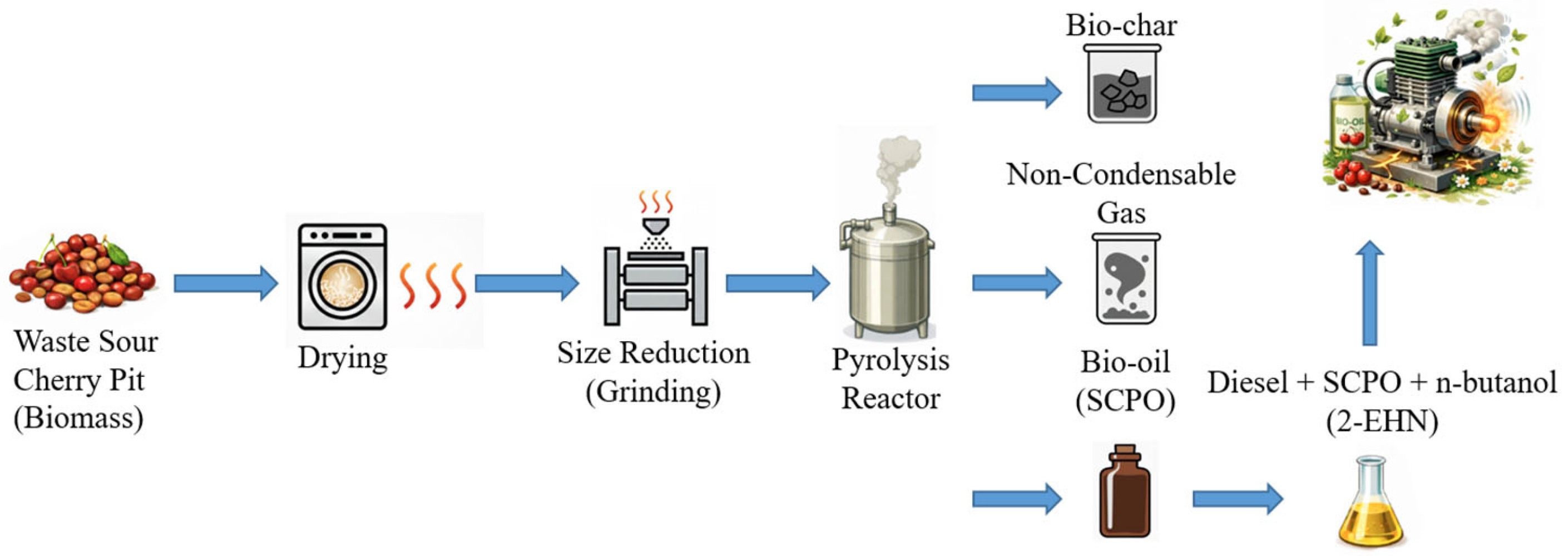
Various renewable fuels can be produced from waste-derived feedstocks, including waste biomass residues and agro-industrial by-products. Depending on the conversion route, such feedstocks can be converted into liquid fuels via thermochemical processes, such as pyrolysis. In this study, sour cherry pit pyrolysis oil (SCPO) was produced from waste sour cherry pits via oxygen-free fast pyrolysis, as summarized in Figure 1. The fast pyrolysis process produces a liquid fraction, commonly referred to as pyrolysis oil (bio-oil), along with a non-condensable gas and a solid char.
Figure 1.
Sour Cherry Pit Pyrolysis Oil (SCPO) production process.
For use in the experimental investigations, the produced SCPO was filtered and stored in sealed containers before blend preparation. SCPO was used directly as a blend component in diesel-based test fuels. Because pyrolysis-derived oils exhibit limited miscibility with diesel, n-butanol was employed as a co-solvent to obtain homogeneous mixtures. All blends were prepared on a mass basis (wt %); the diesel fraction was held constant at 40% (wt %), the SCPO fraction was varied stepwise, and 2-ethylhexyl nitrate (2-EHN) was added at a fixed level of 5% (wt %) to support ignition stability and to enable consistent comparisons of vibration and noise responses [50,51]. The mixing ratios of the test fuels are summarized in Table 1.
Table 1.
Fuel labels and mass-based (wt %) blending ratios of the test fuels.
2.1. SCPO Production (Fast Pyrolysis) and Preparation of Test Fuels
Sour cherry pit pyrolysis oil (SCPO) was obtained from waste sour cherry pits via oxygen-free fast pyrolysis. The pyrolysis process parameters were selected based on preliminary optimization experiments aimed at maximizing pyrolytic oil yield. Specifically, the maximum oil yield was achieved at a reactor temperature of 450 °C, a nitrogen flow rate of 0.5 L/min, a heating rate of 10 °C/min, a residence time of 15 min, and a crushed (≤5 mm) particle form, resulting in a maximum pyrolytic oil yield of 29.7 wt %. The optimization experiments were conducted in triplicate for each experimental stage. After production, the liquid SCPO was filtered to remove suspended solids and stored in sealed containers before blend preparation. SCPO was then used directly as a blend component in diesel-based test fuels. Because pyrolysis oils exhibit limited miscibility with diesel, n-butanol was employed as a co-solvent to obtain homogeneous mixtures. All blends were prepared on a mass basis (wt %); the diesel fraction was held constant at 40% (wt %), the SCPO fraction was increased stepwise (0–15% (w/w)), and 2-ethylhexyl nitrate (2-EHN) was added at a fixed level of 5% (wt %) to improve ignition quality and enable consistent comparisons of vibration and noise responses. In this way, an approximately 80–89% improvement in the cetane number (CN) of the fuel blends was achieved, calculated as based on the values reported in Table 2. The fuel properties of each component and the prepared blends were measured using standardized test methods. Additionally, key quality parameters for fast pyrolysis bio-oils were considered in line with commonly used specifications (ASTM D7544-23 [52]; EN 16900:2017 [53]) (Table 2).
Table 2.
Physicochemical properties of fuel components and SCPO-based test fuels.
The properties of diesel, n-butanol and 2-EHN were obtained from supplier specifications. The physicochemical properties of SCPO and the selected homogeneous blends were measured in a nationally accredited laboratory following standardized ASTM/EN-ISO test methods. The laboratory certificates did not report expanded uncertainty values or replicate-test information for all properties; therefore, Table 2 provides the certified measured values, and uncertainty/replicate reporting is limited to the information available in the certificates.
2.2. Experimental Setup and Studies
Experimental investigations were conducted under laboratory conditions using an ICDE to evaluate the engine vibration and noise performance of the SCPO-based diesel fuel blends and the reference neat diesel fuel. A single-cylinder internal combustion engine was used as a controlled test platform to measure vibration and noise, enabling clearer comparisons among the fuel blends. The technical specifications of the test system employed in the experiments are presented in Table 3. The test engine produces a maximum torque of 16.6 Nm at 2400 rpm (Table 3). However, under actual operating conditions, sustained operation at this load level is not practical in terms of engine stability and safety. Preliminary experimental studies showed that steady-state operation of the engine was maintained at a load of 10 Nm, at which the engine exhibited its maximum vibration and noise levels. Below this load level of 10 Nm, the engine produced lower vibration and noise. Therefore, it is more meaningful to compare the fuel blends for the highest vibration and noise levels rather than under lower vibro-acoustic conditions. Accordingly, the tests were conducted at a constant load of 10 Nm and at variable engine speeds of 1500, 1800, 2400, 3000, and 3600 rpm. These specific speed values were selected to span a representative low-to-high engine-speed range under a constant-load condition, while ensuring stable steady-state acquisition at each speed.
Table 3.
Technical specifications of the test engine.
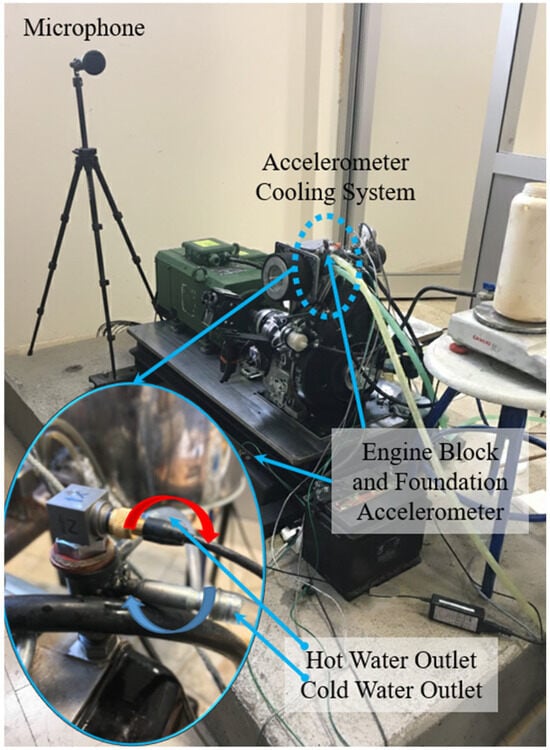
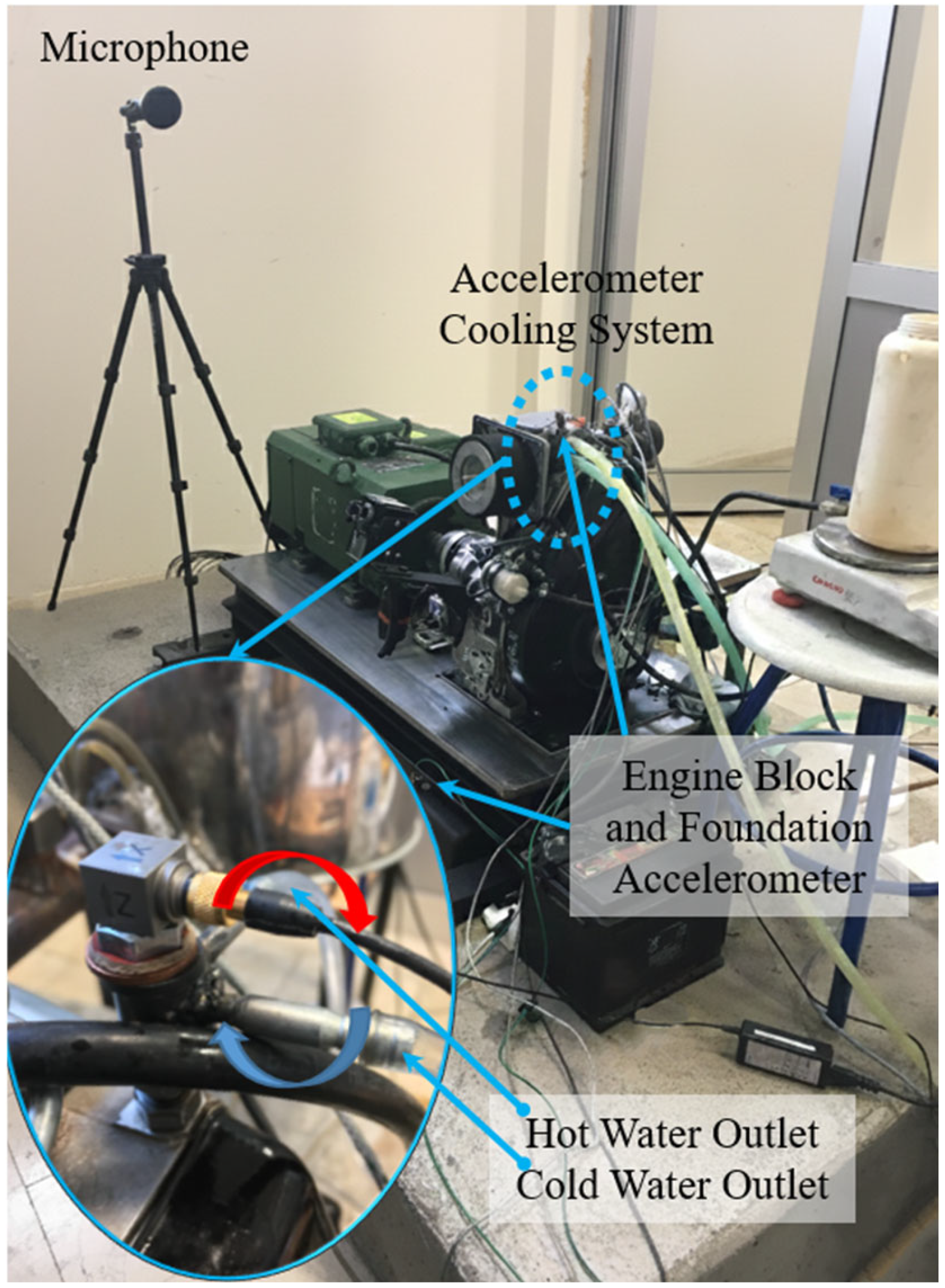
Throughout the tests, acceleration data were collected from two different locations: the upper engine block and the foundation. Engine vibration signals were measured and recorded using a B&K 4535-B triaxial accelerometer (sensitivity: 9.8 mV/g, ±10%, calibrated in 2024; Brüel & Kjær, Nærum, Denmark) mounted near the piston top dead center, while foundation vibration signals were obtained from the engine mount using a B&K 4517-002 uniaxial accelerometer (sensitivity: 10 mV/g, ±10%, calibrated in 2025; Brüel & Kjær, Nærum, Denmark). The accelerometer on the engine block was installed using the stud-mounting method, whereas the accelerometer on the base was mounted using an adhesive method. The same mounting locations and procedures were used for all tests to avoid mounting-related variability. Engine block vibration data were acquired along three orthogonal axes, namely the piston motion direction (-axis), the crankshaft axis (x-axis), and the radial direction relative to the crankshaft (-axis). In contrast, the floor vibrations were recorded only in the vertical () direction, corresponding to the piston motion. To mitigate the thermal effects on the engine block under operating conditions and to improve data accuracy, a water-cooled cooling system was designed and installed between the engine block and the accelerometer (Figure 2). Steady-state vibration data for 10.4 s were acquired for each fuel at each engine speed value. CI/SD computed from engine cycles within 10.4 s data represents within-data (cycle-to-cycle) variation and does not quantify between-run repeatability. FFT analysis was performed using 16,384-point data blocks, yielding a frequency resolution of 0.31 Hz (). A Fast Fourier Transform (FFT) was applied to the acquired time-domain signals in B&K RT Pro Photon+ version 7.0 (Brüel & Kjær, Nærum, Denmark) using a Hanning window, multi-frame spectral averaging, and 0% overlap. Frequency-domain vibration responses were then obtained for each fuel blend.
Figure 2.
Engine block, foundation accelerometer and accelerometer cooling system.
To quantitatively evaluate the vibration amplitude levels of the acceleration-time signals obtained along three orthogonal axes from the upper engine block, the root mean square (RMS) acceleration components, which represent an energy-based signal metric, were calculated from steady-state time records acquired at each constant engine speed and load using Equation (1). Acceleration/deceleration transients were excluded from the analysis window. In Equation (1), denotes the practical amplitude of the acceleration signal over the measurement period, represents the instantaneous acceleration at each sampling point, and denotes the total number of samples in the associated measurement sequence. Within the scope of this study, 16,384-sample blocks were used as a computationally efficient FFT length and to provide adequate frequency resolution () for resolving the relevant vibration spectral content under the tested operating conditions. To determine the total acceleration magnitude representing the global vibration level of the engine, the axis-based RMS acceleration components were combined vectorially, and the total RMS vibration amplitudes were calculated using Equation (2). In Equation (2), the terms and refer to the RMS acceleration components calculated in the and directions, respectively. This approach enables a comprehensive three-dimensional assessment of the engine block’s vibration behavior.
The vibration performance of the engine is not only governed by its intrinsic dynamic behavior but is also significantly influenced by environmental vibrations. Under unsuitable floor conditions or insufficient ground isolation, vibrations generated by the engine may be transmitted through structural elements into the surrounding environment, causing discomfort and noise-related issues. Therefore, reducing the influence of environmental factors on engine vibrations and limiting the transmission of engine-induced vibrations to the surroundings through the supporting surface are crucial. To this end, elastomer-based vibration-isolation mounts were placed between the engine and the floor. The isolation configuration was kept identical for all tests. Thus, while the isolation affects absolute vibration levels, it does not affect the fuel-to-fuel comparisons under identical boundary conditions. To evaluate the effectiveness of the isolation elements, the vibration isolation ratio () was calculated using Equation (3). In Equation (3), denotes the percentage vibration isolation, represents the RMS acceleration amplitude measured at the engine foundation, and denotes the RMS acceleration component measured in the vertical () direction at the upper engine block.
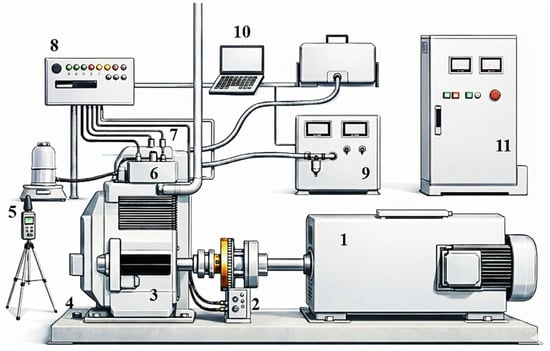
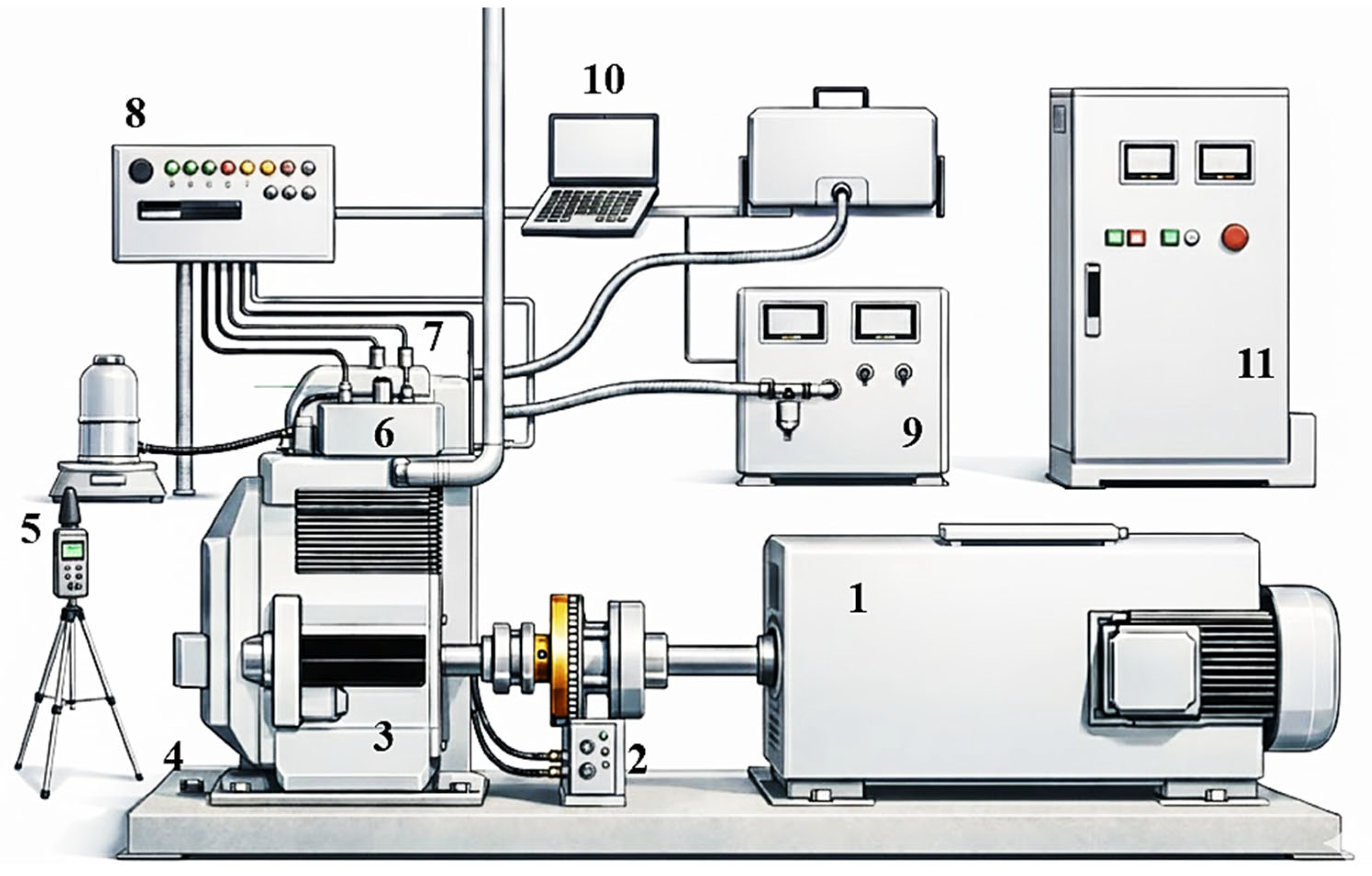
To determine the engine noise emissions, a B&K 2250 series single-channel Class-1 sound level meter and a handheld analyzer were used (Brüel & Kjær, Nærum, Denmark), and the data were acquired simultaneously with the vibration measurements. To ensure precise measurements, the microphone was placed at a fixed, standardized position (1.0 m from the engine and 1.25 m above the floor) for all tests. Accordingly, the microphone position was kept fixed at this standardized location throughout all tests to provide a consistent basis for comparing the noise responses of the fuel blends. Before the measurements, the analyzer’s microphone was calibrated using a B&K 4231 Class 1 sound calibrator in accordance (Brüel & Kjær, Nærum, Denmark) with IEC 61672-1:2013 [54]. Although human auditory sensitivity decreases at very low frequencies, noise data were recorded over a wide frequency range (10 Hz–20 kHz) in the present study. The noise signals were evaluated using 1/3-octave band analysis with Environmental Measurement Partner Suite BZ-5503 software to provide a standardized broadband comparison of fuel-blend noise levels under identical operating conditions. A Kemsan DC dynamometer (Kemsan Elektromekanik Ltd., Ankara, Turkey) with a capacity of at was used to control the engine speed and load. Engine torque was measured with a Kistler 4550A torque sensor (Kistler Group, Winterthur, Switzerland), and all experimental data were recorded using the Kistler KiBox data acquisition Type 2893A software system (Kistler Group, Winterthur, Switzerland). The schematic layout of the experimental test setup is presented in Figure 3.
Figure 3.
Experimental setup equipment: 1. Dynamometer; 2. Torqmeter; 3. Engine; 4. Foundation accelerometer; 5. Brüel & Kjær 2250 sound analyser and calibrator; 6. Accelerometer cooling system; 7. Engine triaxial accelerometer; 8. Kistler KiBox; 9. Brüel & Kjær Photon; 10. Analysis workstation; 11. Power supply unit.
To support the reliability of the reported results, the measurement accuracy and uncertainty associated with the main instrumentation were assessed based on manufacturer specifications and calibration information. The reported values represent instrumentation-related (Type B) uncertainty for the investigated operating conditions (constant-load 10 Nm, 1500–3600 rpm). Specifically, the torque uncertainty at 10 Nm was obtained by combining the torque meter linearity (<0.03% FSO) and resolution (0.01 Nm) using the root-sum-square method. For acoustic measurements, the sound analyzer was field-calibrated using a Class-1 calibrator (B&K 4231; ±0.2 dB). The uncertainty information for the main instrumentation channels is summarized in Table 4.
Table 4.
Measurement accuracy and maximum uncertainty of the main instrumentation used in the experiments.
3. Results and Discussion
3.1. Vibration Results
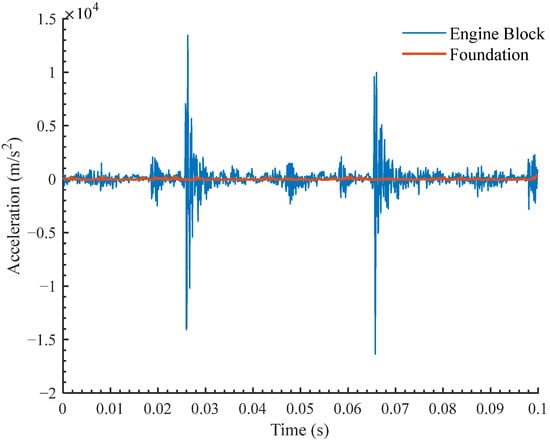
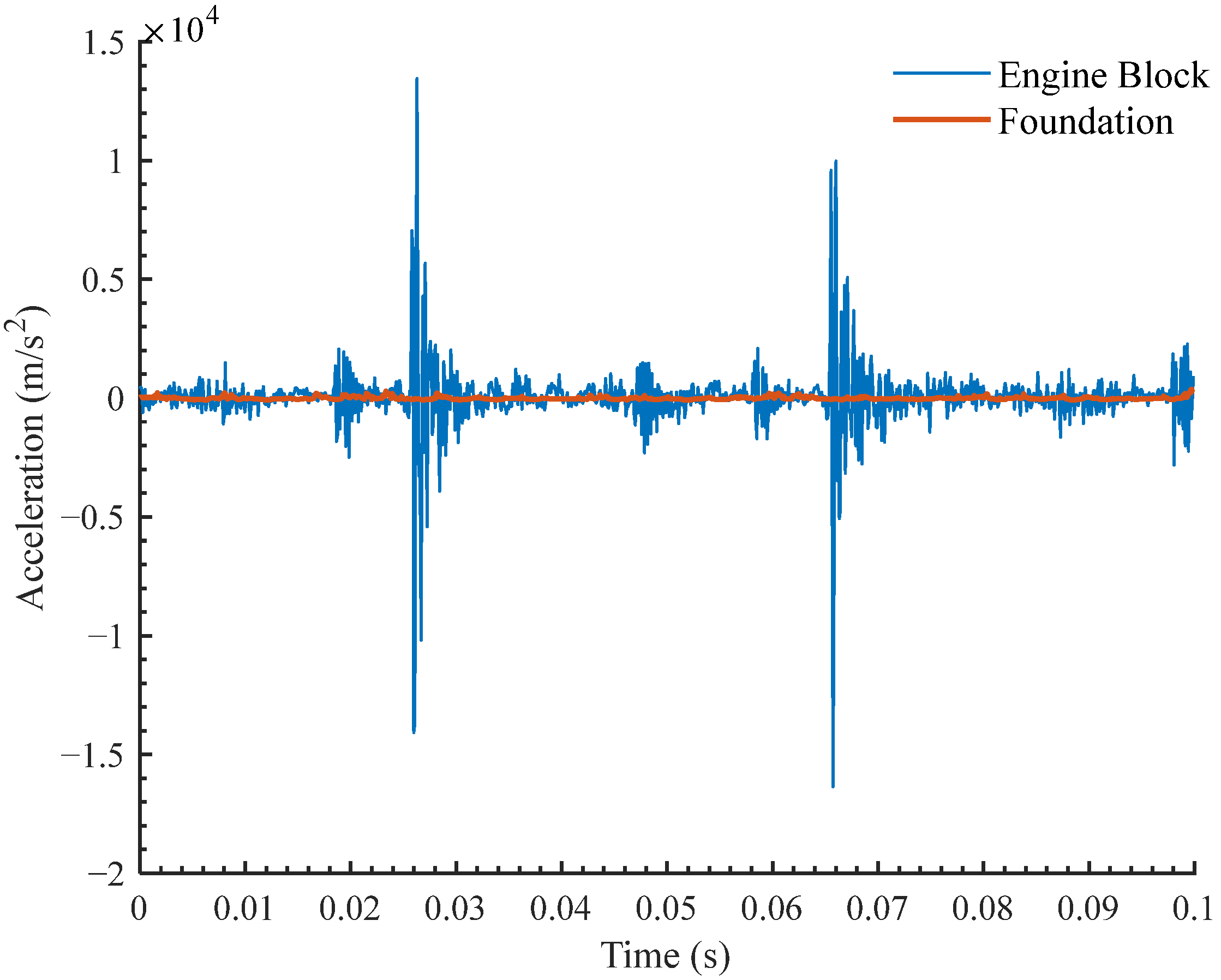
It was observed that the vibration amplitudes measured at the engine foundation remained considerably lower compared with the vibration amplitudes recorded on the upper engine block (Figure 4). From the frequency response results, it was determined that the elastomer-based vibration isolation mounts provided approximately a 70% reduction in vibration. Owing to the high isolation ratio, the transmission of engine-induced vibrations to the surroundings was effectively limited. In addition, external vibrations transmitted from the environment back to the engine were reduced to a negligible level. The time-domain acceleration signals were acquired using the Brüel & Kjær Photon+ analyzer with the default internal anti-aliasing filter enabled; no additional digital filtering or smoothing was applied in post-processing.
Figure 4.
Time-domain acceleration responses of the engine block and foundation.
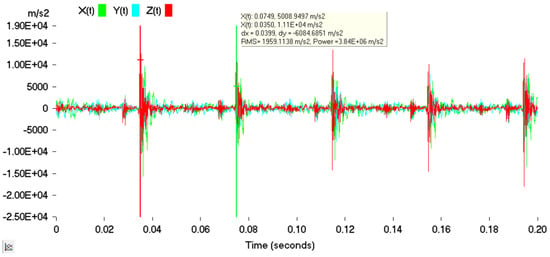
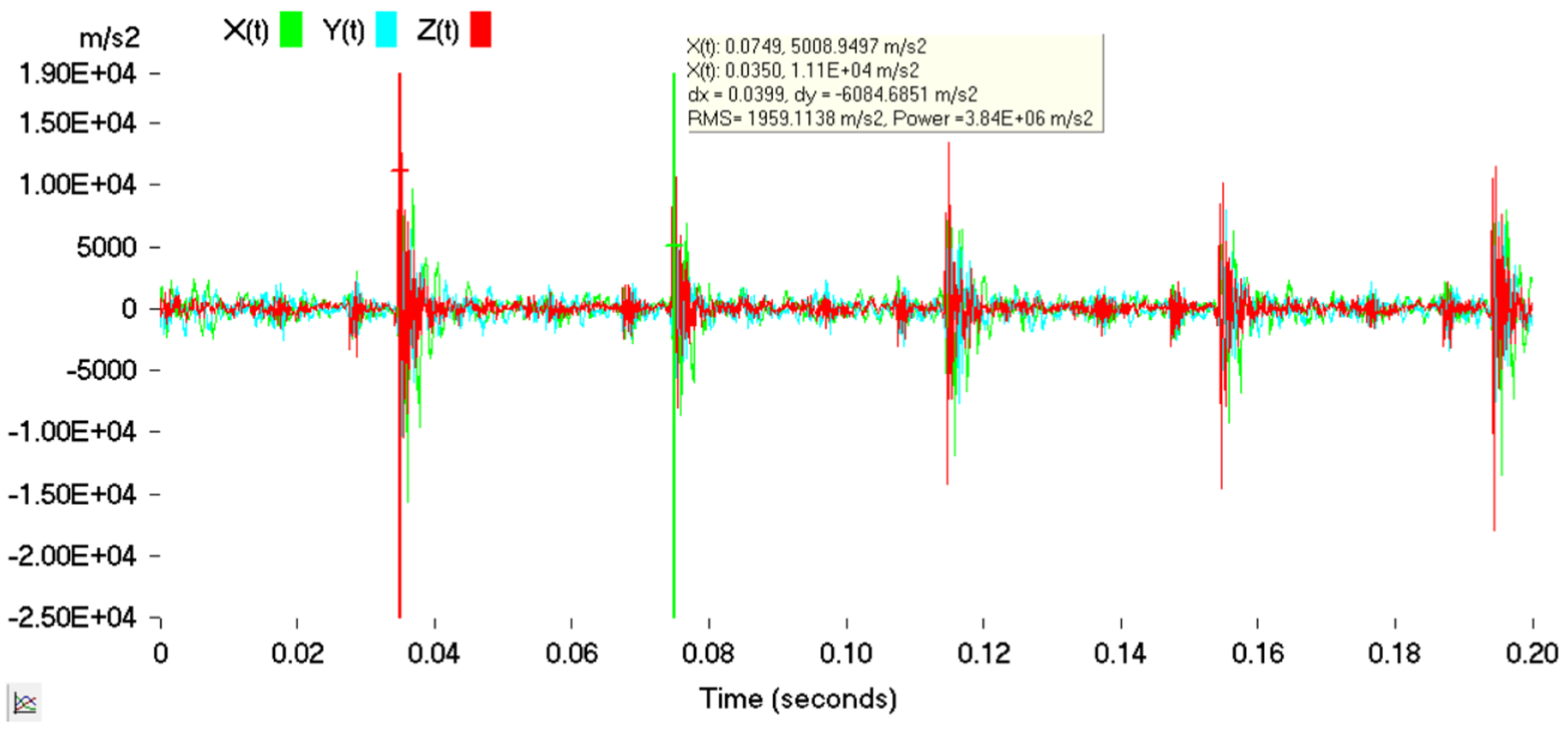
The time response of the vibration signals of the ICDE under constant-load (10 Nm) conditions and at 3000 rpm for the reference neat diesel fuel F1 is presented in Figure 5. As expected, examination of the time responses obtained along each axis shows that the maximum vibration amplitudes occur in the vertical axis, which corresponds to the piston motion direction. This behavior is consistent with the dominant excitation being aligned with the crank-connecting rod–piston line in the vertical direction. The peak-to-peak period is 0.0399 s (Figure 5). This value is consistent with the single-cylinder firing period of a four-stroke engine at 3000 rpm (0.5× engine order), indicating that the measured signal reflects periodic excitation associated with the firing event. Furthermore, the periodic occurrence of the dominant amplitude signals confirms that the test system and accelerometer mounting configuration were stable, and that the ICDE exhibited a stable operating behavior for the F1 fuel.
Figure 5.
Time-domain vibration signals of the engine block at 3000 rpm for constant load (10 Nm).
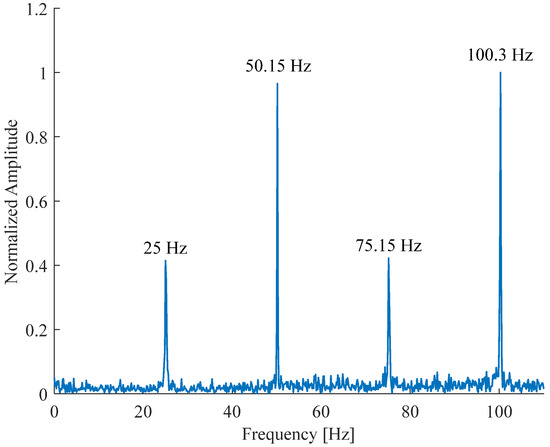
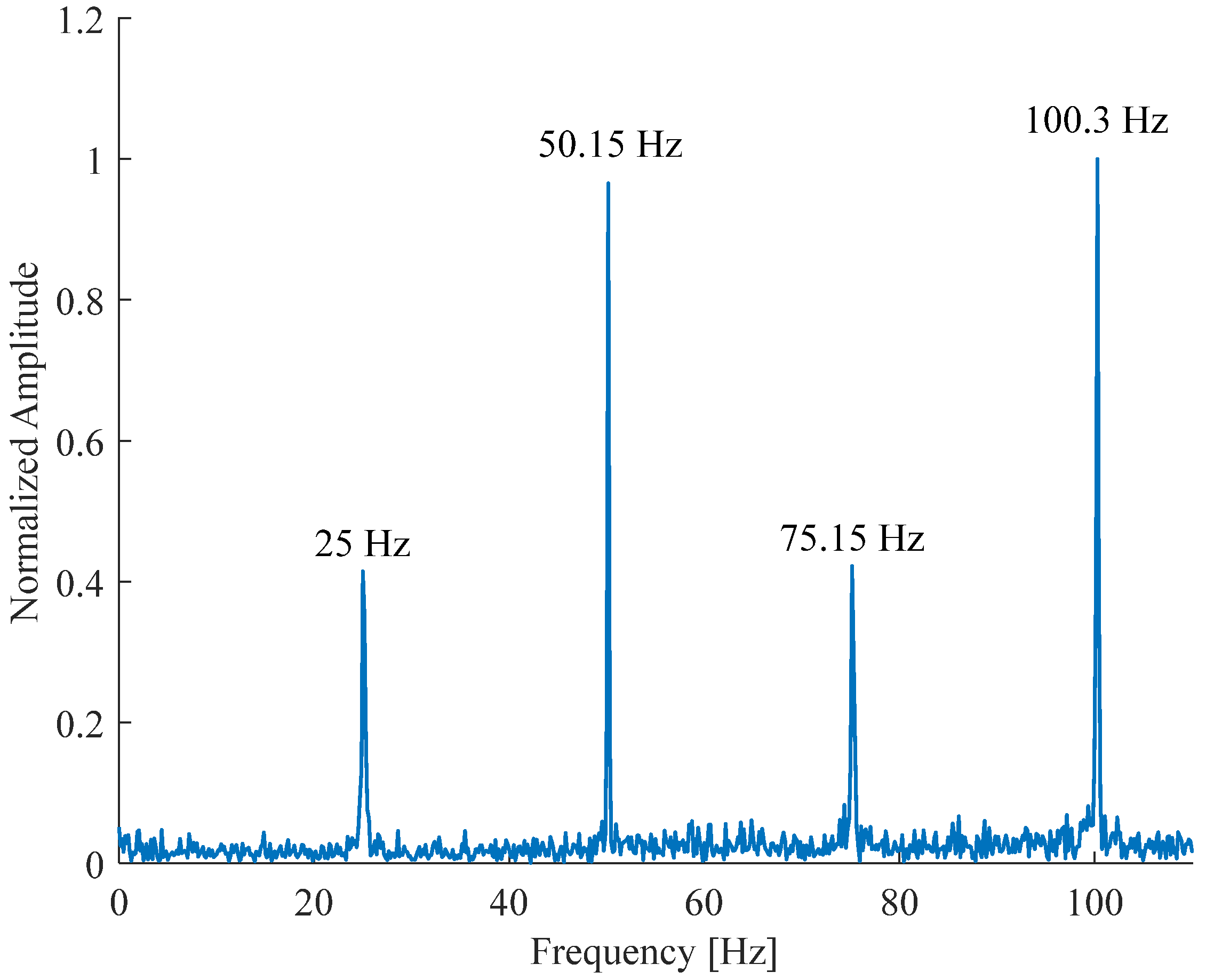
The frequency response of the F1 fuel under constant load (10 Nm) and 3000 rpm operating conditions is presented in Figure 6. As is well known, during one engine cycle, the crankshaft completes two full revolutions, while the camshaft completes one full revolution. The measured frequency response shows that the dominant spectral peaks are associated with the expected rotational frequencies (orders) of the crankshaft and camshaft. In this context, at an operating speed of 3000 rpm, the fundamental crankshaft frequency is 50 Hz, the camshaft frequency is 25 Hz, and the maximum amplitudes occur near these frequencies. As shown in the figure, the highest amplitudes are concentrated at the harmonic components associated with the crankshaft, indicating that the crankshaft dynamics govern the dominant excitation source of the engine vibrations. The approximately 0.04 s cycle period observed in the time signal matches the fundamental component in the frequency domain. This agreement supports the consistency between the time- and frequency-domain analyses.
Figure 6.
Frequency-domain response of the engine block for constant load (10 Nm) at 3000 rpm.
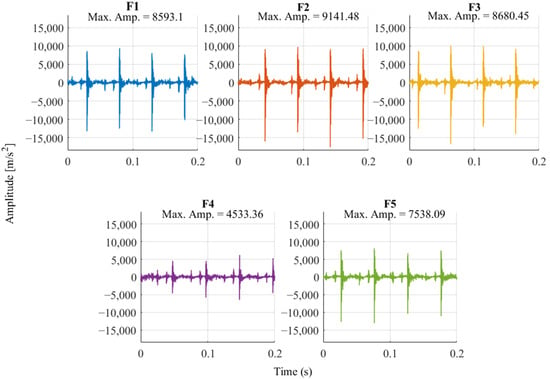
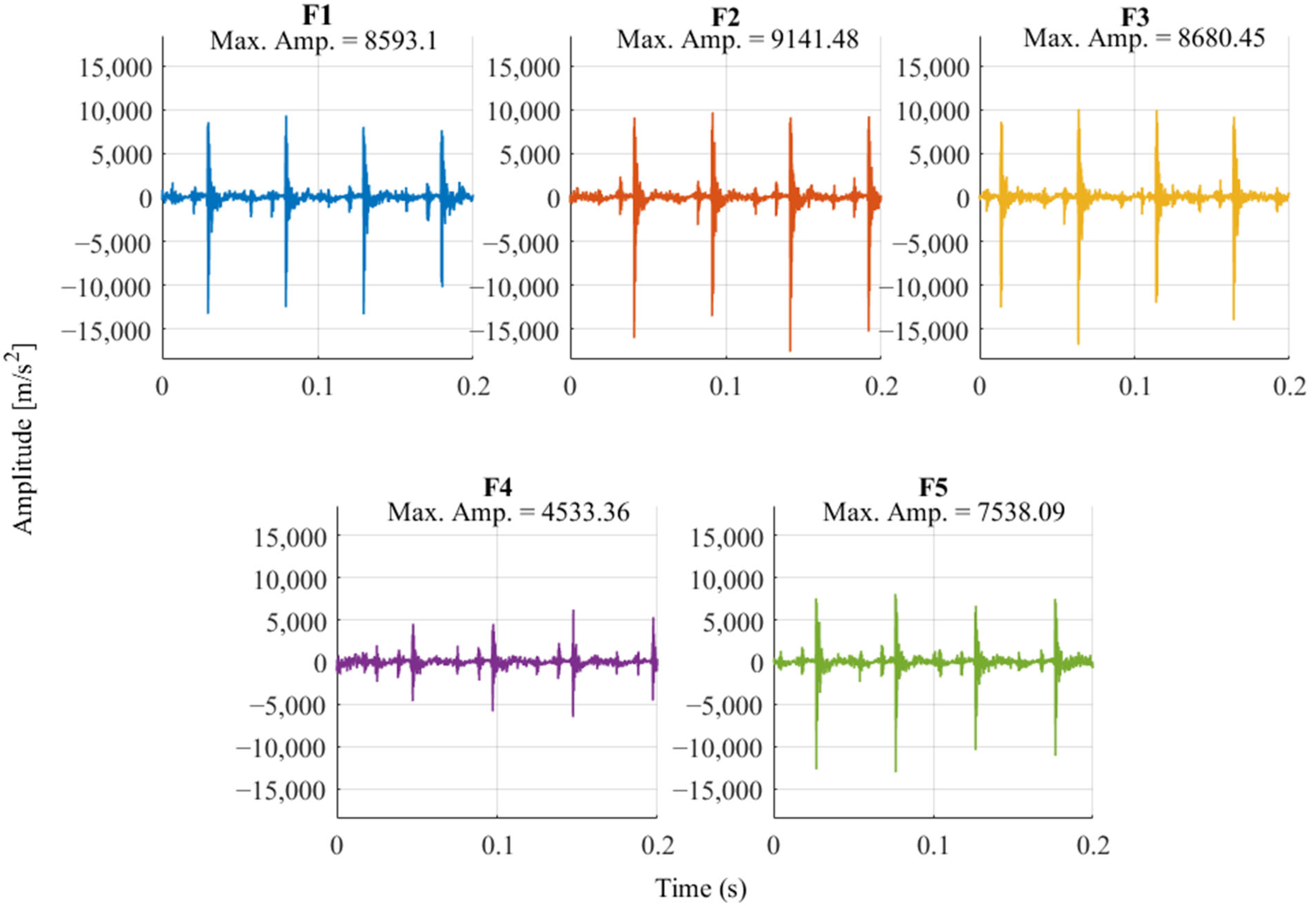
Under constant-load (10 Nm) and 2400 rpm operating conditions, the acceleration-time responses in the vertical (z) direction of the upper engine block for all test fuels are presented in Figure 7. The data indicate that the high-amplitude vibration peaks corresponding to the ignition event recur at approximately 0.04 s, exhibiting a cyclically similar pattern. For the reference diesel fuel (F1), the maximum peak amplitude is 8593.1 m/s2. For the F2 and F3 blends, this value increases by approximately 6.4% and 1.0%, reaching 9141.5 and 8680.5 m/s2, respectively. In contrast, for the F4 and F5 test fuels, the peak amplitudes decrease by about 47.2% and 12.3% compared with F1, respectively, dropping to 4533.4 and 7538.1 m/s2. In particular, the F4 fuel blend reduced the maximum peak amplitude by approximately 47% relative to the reference diesel fuel. It was determined that fuels with appropriate blending ratios can substantially reduce the engine’s dynamic loads while preserving its cyclic operating characteristics.
Figure 7.
Comparison of vertical (z-axis) time-domain vibration of the engine block for all test fuels at 2400 rpm for constant-load (10 Nm).
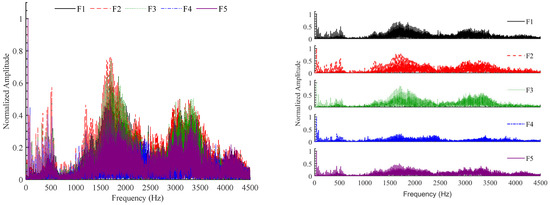
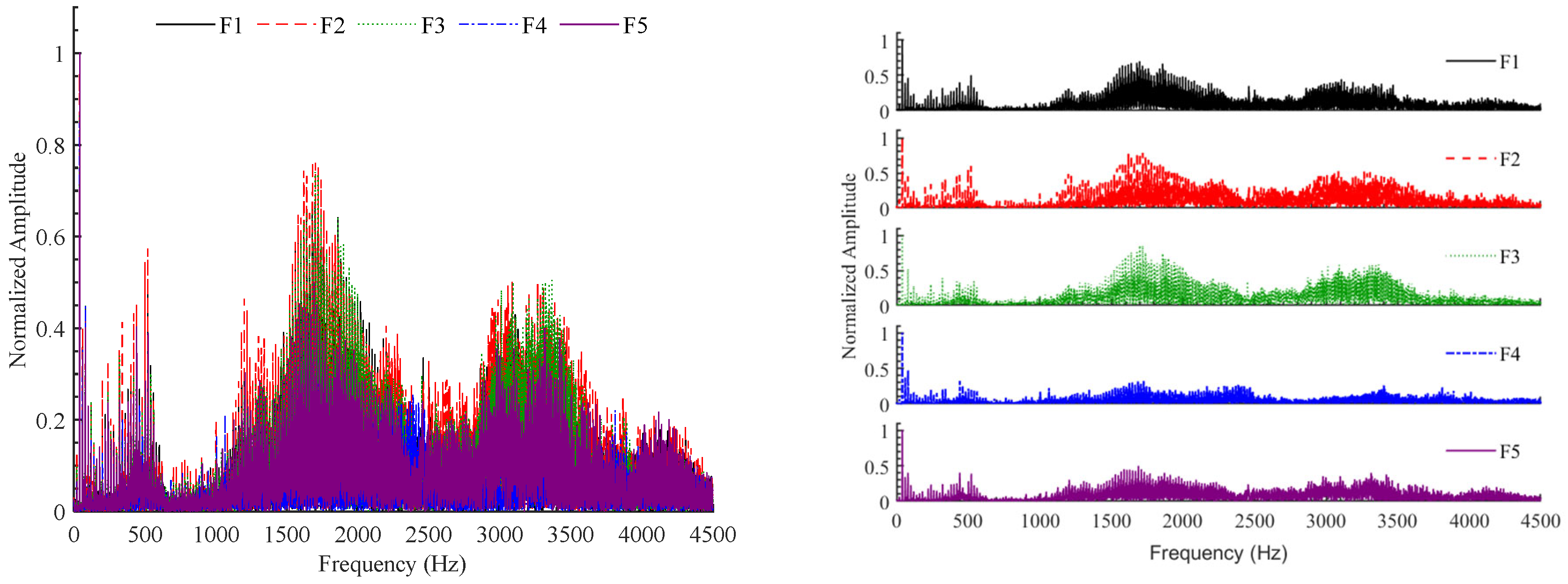
The frequency-domain analysis of the vibration signals obtained under constant operating conditions (10 Nm load at 2400 rpm) for all fuel blends over the 0–4500 Hz range is presented in Figure 8. Since the engine block, shaft bearing elements, and dynamometer system that constitute the test setup possess different natural and forced excitation characteristics, a multi-component response is observed in the frequency spectrum. Examination of the measured spectra indicates that the dominant vibration content is concentrated within a relatively narrow band (1400–2200 Hz). At 2400 rpm (≈40 Hz, 1× order), noticeable spectral content is also observed at approximately 400, 1600, and 3200 Hz, which is consistent with the 10th, 40th, and 80th engine orders, respectively. Accordingly, the high-frequency components appear compatible with an order-related harmonic structure in the measured response. While the overall spectral form remains similar across fuels, differences are observed in the normalized amplitudes. Within the 1400–2200 Hz band, the maximum and minimum normalized vibration amplitudes are obtained for the F2 and F4 fuel blends, respectively. This trend suggests that, under identical operating conditions, F2 is associated with a higher dynamic response level of the engine structure, whereas the lower amplitudes for F4 indicate a reduced vibration response transmitted to the engine structure.
Figure 8.
Frequency-domain vibration responses of the engine block for all test fuels under constant-load at 2400 rpm.
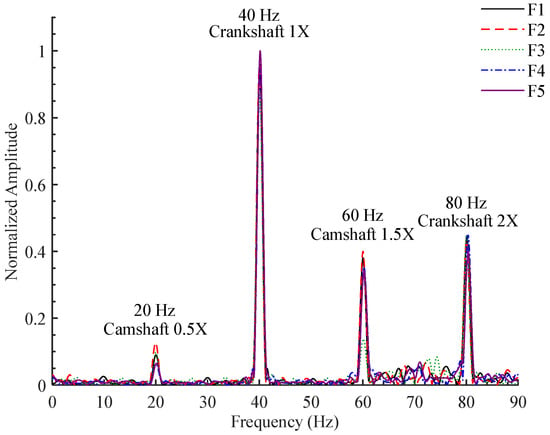
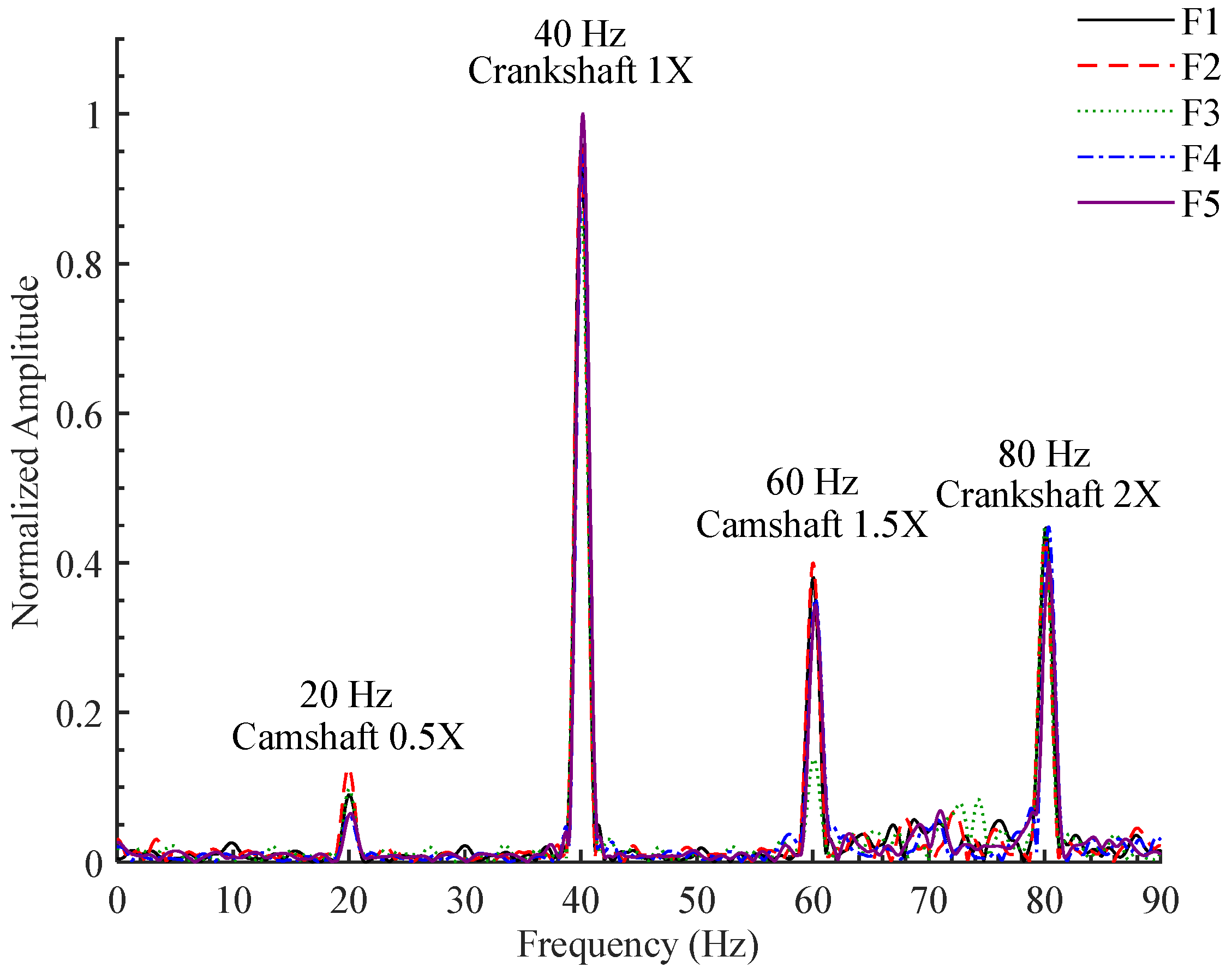
The low-frequency spectrum in the range of 0–90 Hz, presented in Figure 9, clearly reveals the fundamental kinematic excitation components of the ICDE. In the spectrum, the maximum amplitude occurring at 40 Hz corresponds to the crankshaft frequency (1×), which is directly related to the engine speed. The amplitudes observed at 20 Hz and 60 Hz represent the half-order camshaft frequency (0.5×) and 1.5×, respectively. In addition, the pronounced amplitude observed at 80 Hz is associated with the higher-order harmonic component (2×) of the crankshaft. These discrete components are primarily driven by kinematic and inertial mechanisms (e.g., unbalance and reciprocating inertia), with the resulting forces transmitted through the engine structure. Fuel-dependent differences may influence the vibration amplitudes of camshaft and crankshaft order components through differences in firing-related excitation sources. Accordingly, within this band, the maximum and minimum vibration amplitudes were observed for the F2 and F4 fuel blends, respectively.
Figure 9.
Low-frequency vibration spectra of the engine block for all test fuels.
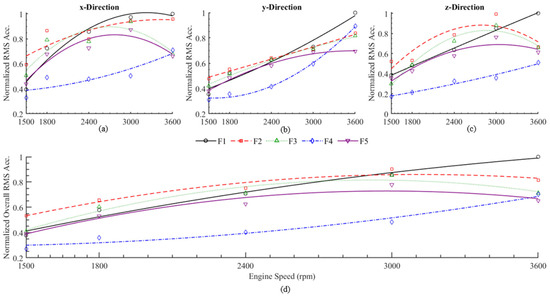
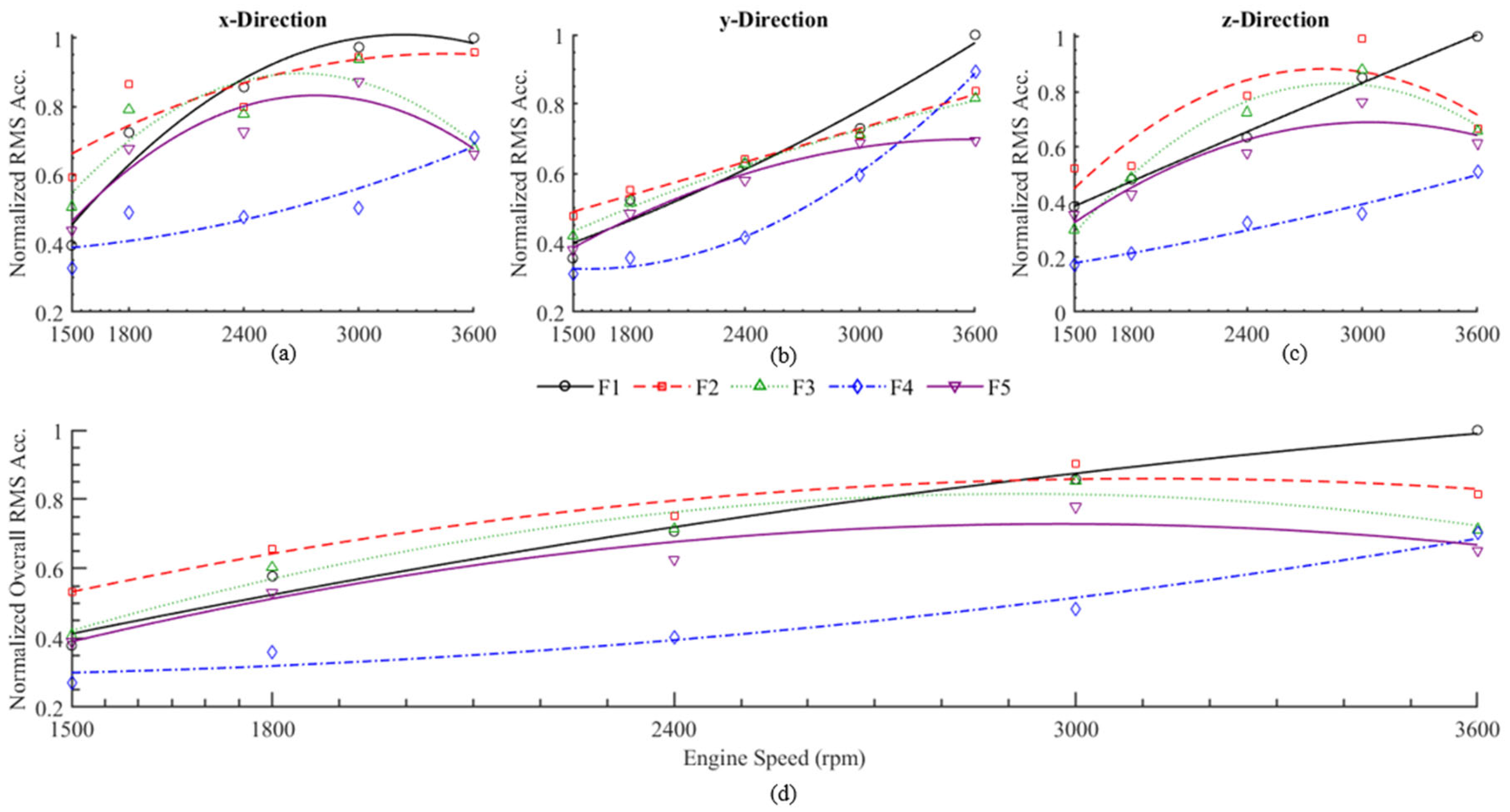
The variation in the normalized RMS vibration accelerations collected along each axis (x, y, and z) as a function of engine speed is presented in Figure 10. To describe the dependence of the RMS acceleration on engine speed, second-order polynomial trend was fitted to the measured discrete RMS values at each speed value (point) for each fuel blend (Table S1). Given the discrete set of speed points (Nspeed = 5), these fits are descriptive (trend fitting), and R2 and RMSE for the trend line are reported only as descriptive fit indicators. For the overall RMS response (Figure 10d), the second-order fits yielded R2 = 0.868–0.981 and RMSE = 0.028–0.033 (normalized units) across fuels. In Figure 10d, the overall RMS amplitude generally increases from 1500 to 3000 rpm for all blends. Beyond 3000 rpm (i.e., at 3600 rpm), the response becomes fuel-dependent: the overall RMS levels for F1 and F4 continue to rise, whereas the other blends show a reduced growth tendency and/or a decreasing trend. The change in trend near 3000 rpm at a higher-excitation speeds, where increasing kinematic/inertial loads, along with other speed-related excitation sources, can make fuel-dependent differences in the measured RMS response more evident.
Figure 10.
Variation in normalized RMS vibration amplitudes with engine speed for all test fuels: shown with second-order polynomial trend lines: (a) x-direction, (b) y-direction, (c) z-direction, and (d) overall RMS response.
When the vibration amplitudes along each axis are considered, the highest RMS acceleration is observed in the -axis, which corresponds to the direction of piston motion. Under the 3000 rpm operating condition, the maximum RMS acceleration in the -axis was obtained for the F1 fuel (), whereas the minimum acceleration amplitude was recorded for the F4 fuel blend (). Consequently, the F4 fuel blend provided approximately a 58.82% reduction in vertical vibration, specifically engine block vibrations, compared to the reference diesel fuel. From the 3000 rpm z-axis time history, the 720° engine cycle period is 0.04 s. For the confidence-interval calculation, a 6.4 s steady-state segment was extracted from the 10.4 s record (N = 160 cycles). The estimated reduction was 58.82%, with a within-data (cycle-to-cycle) 95% confidence interval of 57.74–59.91%. This interval reflects within-record variability only and does not quantify between-run repeatability.
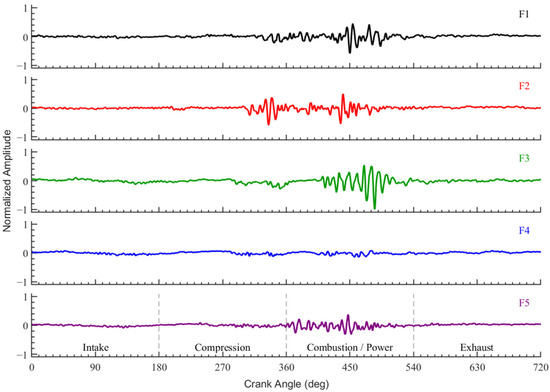
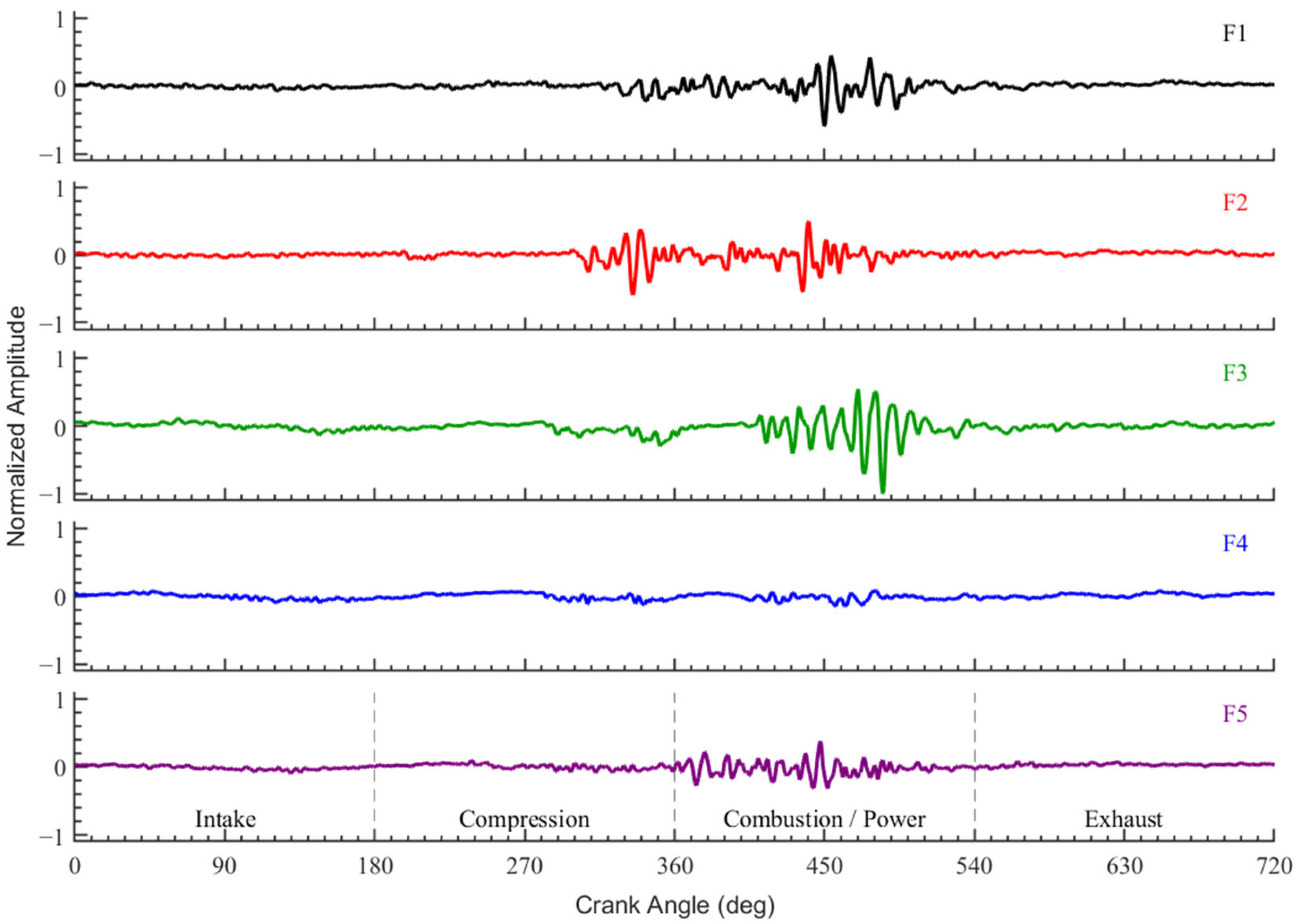
The vibration signals as a function of crank angle, presented in Figure 11, were obtained by converting the acceleration data recorded at constant engine speed from the time domain to a 0–720° crank-angle domain. For each test fuel, successive engine cycles were segmented using the cycle duration corresponding to the relevant speed, and cycle-to-cycle variation was assessed after the crank-angle transformation by examining the consistency of the cycle-resolved response within the combustion/power-stroke interval. To minimize minor phase offsets arising from measurement conditions, the dominant response peak for each fuel was used as a reference, and the signals were aligned and normalized accordingly. The resulting crank-angle-resolved responses enable evaluation of vibration amplitudes as a function of engine phase. As shown in Figure 11, vibration amplitudes increase markedly within the combustion/power-stroke interval, whereas they remain comparatively low during the intake, compression, and exhaust strokes. This phase-dependent (crank-angle-locked) behavior is therefore reported as a crank-angle-based phase association rather than a direct pressure-based attribution. In line with the earlier results, the maximum and minimum vibration amplitudes within the combustion/power-stroke interval were observed for the F2 and F4 fuel blends, respectively.
Figure 11.
Engine-block vibration responses in the 0–720° crank-angle range for all test fuels.
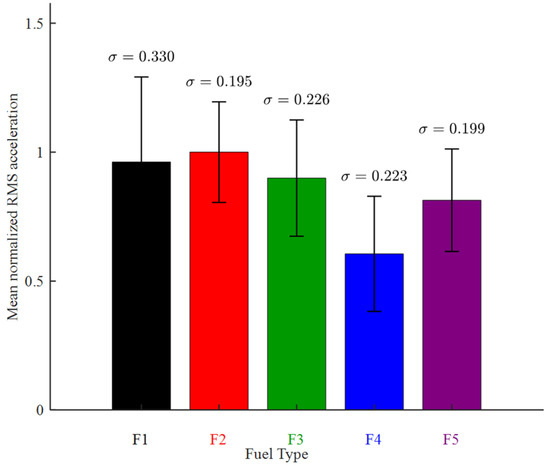
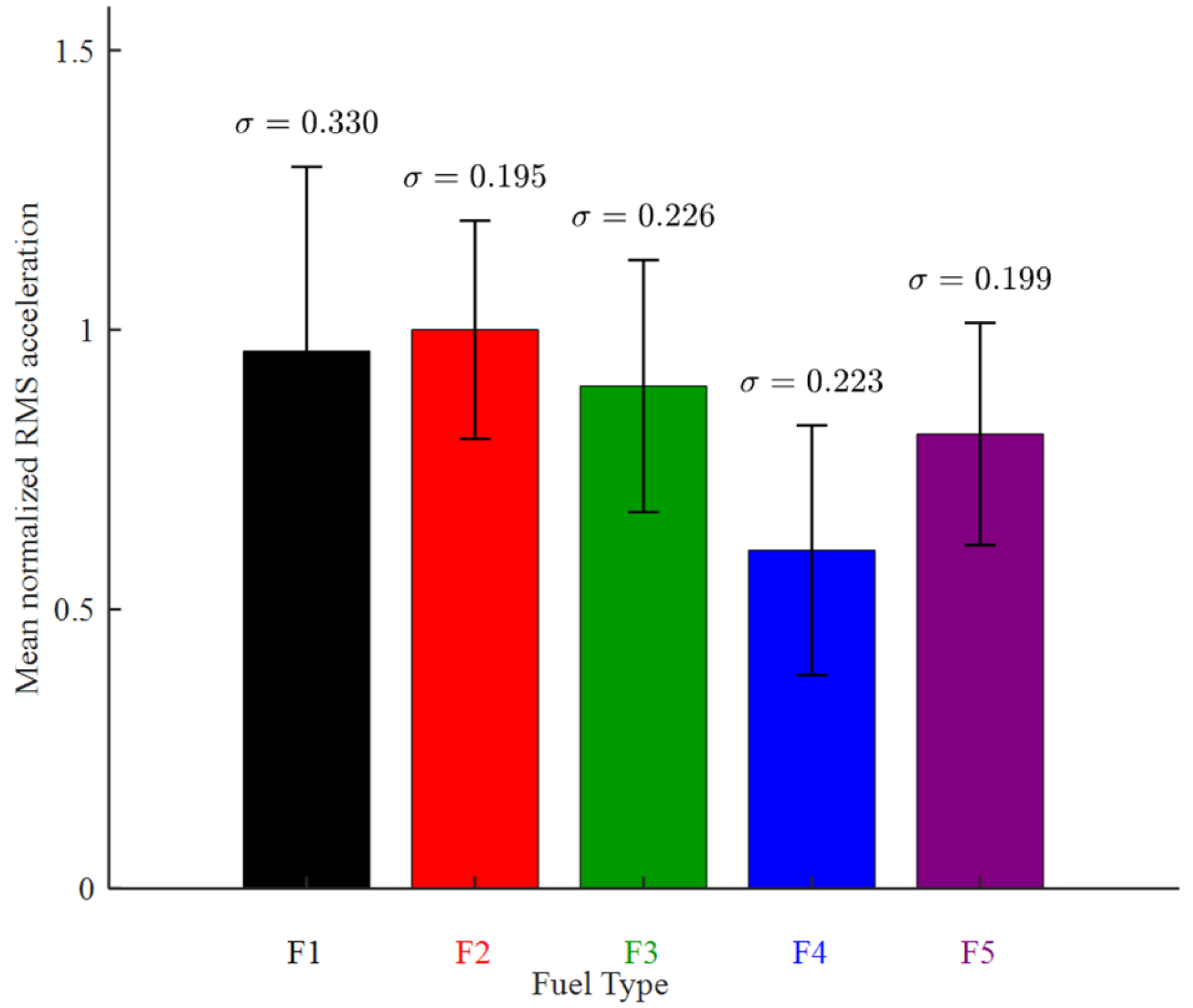
In Figure 12, the mean values of the total RMS acceleration obtained under all variable-speed conditions are comparatively presented as a function of fuel type. Figure 12 summarizes the mean ± SD of the normalized overall RMS acceleration across the tested engine speeds: for each fuel and each speed condition, RMS values were computed from the 10.4 s acceleration records; the bars represent the mean across the five tested speed points, and the error bars indicate the standard deviation across speeds. The normalized maximum and minimum mean RMS vibration levels were obtained for the F2 () and F4 () fuel blends, respectively, while the corresponding value for the reference neat diesel fuel (F1) was . Accordingly, the F4 fuel blend provided an approximate 37.5% reduction in the mean RMS vibration amplitude compared with the reference diesel fuel. Similarly, the F3 and F5 fuel blends produced lower mean vibration levels than the reference fuel F1 by approximately 6.3% and 14.6%, respectively. Overall, these mean ± SD results provide a descriptive comparison of fuel-dependent vibration levels and their variability over the investigated speed range, consistent with the speed-dependent trends observed in Figure 10.
Figure 12.
Comparison of mean normalized overall RMS vibration levels for all test fuels.
3.2. Noise Results
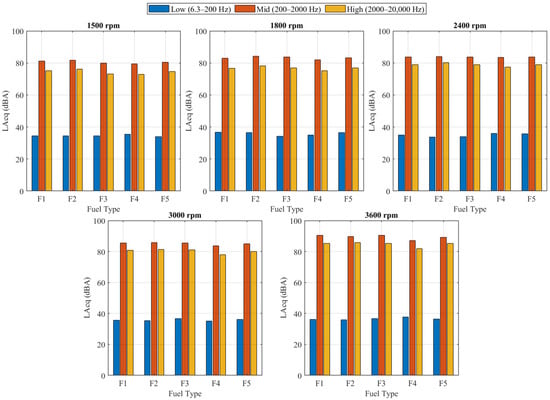
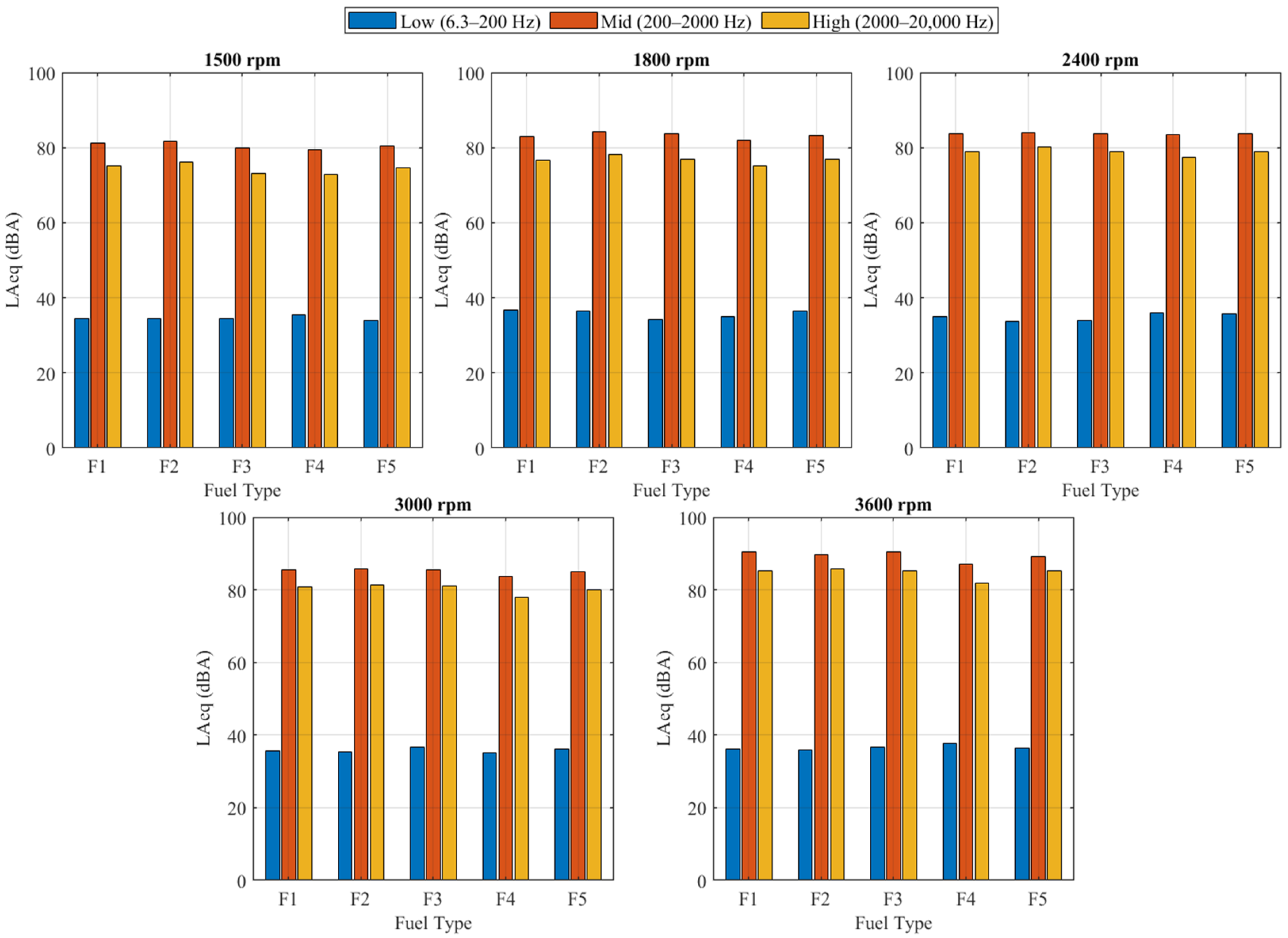
Engine noise emissions were collected simultaneously with the vibration data using a B&K 2250 series Class-1 (Type 1) sound level meter and evaluated as the A-weighted equivalent continuous sound level (LAeq). Figure 13 presents the LAeq noise distributions for the low-, medium-, and high-frequency bands, obtained at different engine speeds and fuel types. It is observed that, at all engine speeds, the noise spectrum is predominantly concentrated in the mid- (200–2000 Hz) and high-frequency (2000–20,000 Hz) bands, while the contribution of the low-frequency region remains relatively limited. This finding suggests that a combination of firing-induced impact and high-frequency mechanical excitations may influence engine-block noise. Across all frequency bands, the highest LAeq noise levels were observed for the F2 fuel blend, whereas the lowest were observed for the F4 blend. In particular, at the higher tested speeds (3000 and 3600 rpm), the F4 fuel blend produced approximately 1.8–2.6 dBA lower noise than the reference diesel fuel (F1), while the F2 blend showed an increase of about 2–3 dBA. However, when all speed conditions are evaluated together, the differences in noise level among the fuel types do not exceed the 3 dBA perceptibility threshold. Therefore, although small fuel-dependent differences are observed experimentally, as reported in the literature, variations below this level are typically not clearly noticeable, and thus the observed differences are expected to translate into only limited perceptual differences under practical conditions [57].
Figure 13.
Noise levels for all test fuels at various engine speeds.
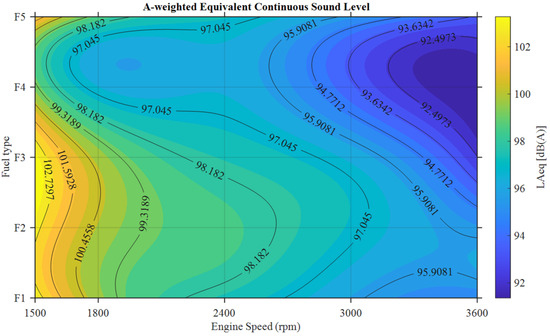
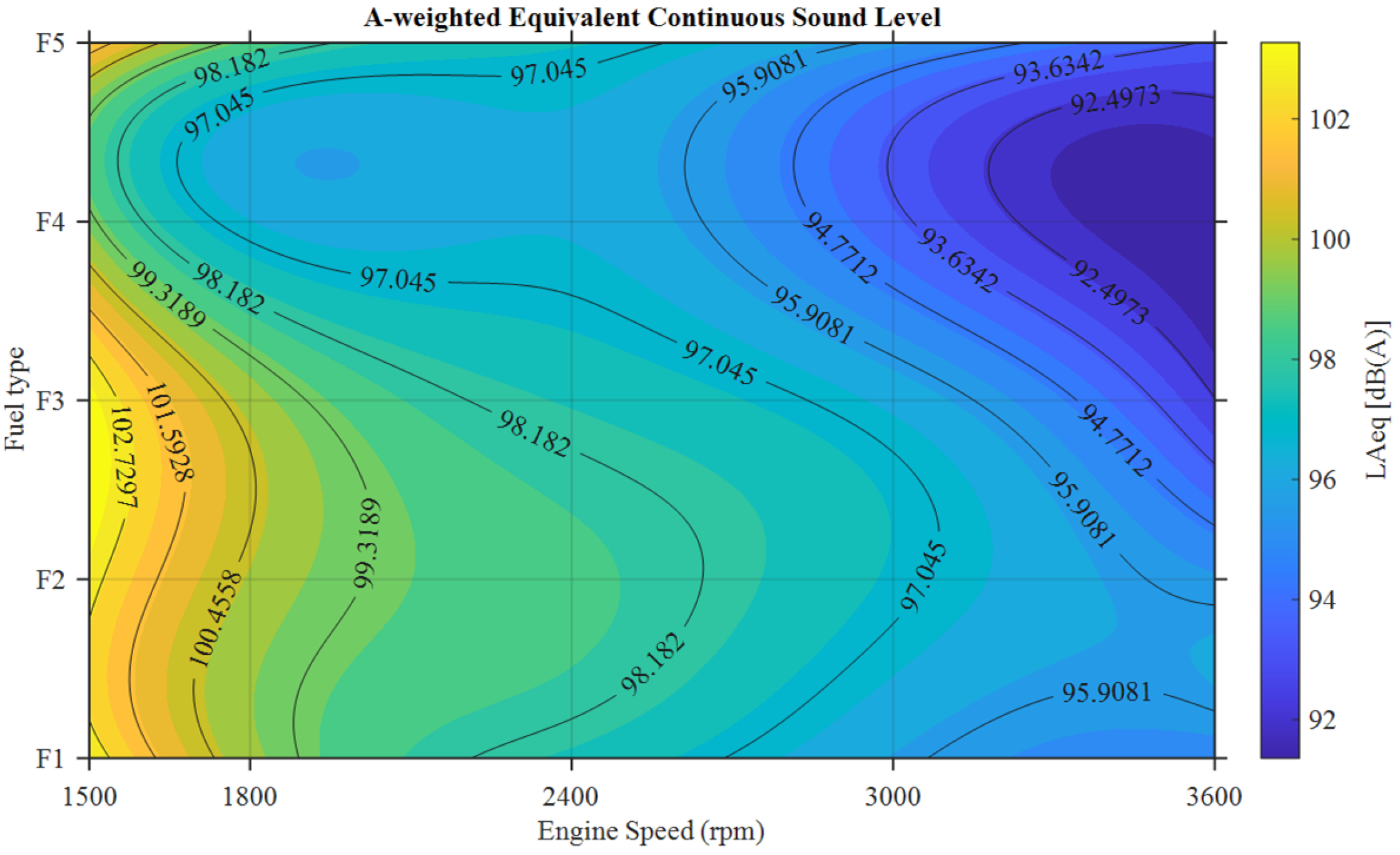
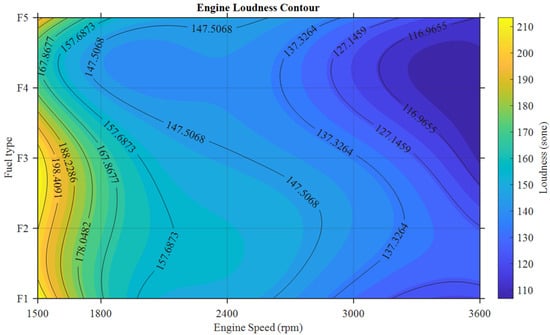
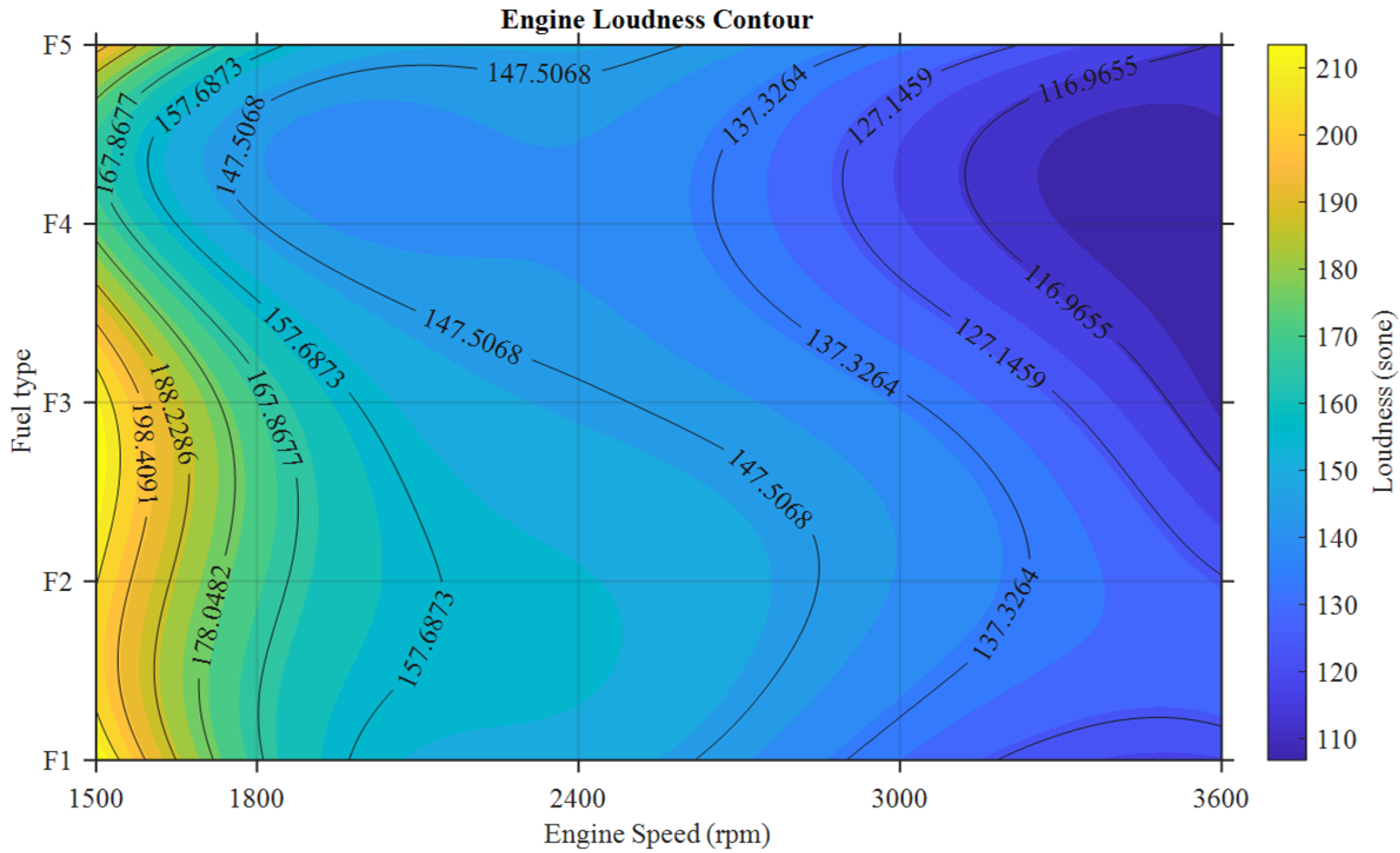
The variations in the engine noise response as a function of both engine speed and fuel type, based on the A-weighted equivalent continuous sound level (LAeq) and perceived loudness contour maps, are presented in Figure 14 and Figure 15. Examination of the maps reveals that, at low engine speeds (1500–1800 rpm), LAeq and loudness are higher for all fuel types than at higher engine speeds. As engine speed increases, a distinct decrease in noise levels is observed in both plots. Vibration-induced sounds predominantly generate low-frequency noise. As frequency increases, vibration amplitudes decrease, and consequently, low-frequency sound components are reduced. For this reason, increases in engine speed result in reductions in noise emissions. This decreasing trend may be associated with changes in speed-related excitation and the suppression of broadband noise components at higher speeds.
Figure 14.
Contour map of engine noise level as a function of speed and fuel type.
Figure 15.
Contour map of engine loudness as a function of speed and fuel type.
Among all test fuels, the F2 blend exhibits the highest noise emissions under all speed conditions, whereas the F4 blend yields the lowest noise levels (Figure 14). For example, at 1500 rpm, the LAeq value reaches approximately 103.31 dBA for the F1 fuel, while it decreases to around 99.53 dBA for the F4 blend, corresponding to an improvement of about 3 dBA compared with the reference diesel fuel (F1). Similarly, in the loudness contour, the F2 test fuel reaches approximately 200 sone in the low-speed region, whereas the F4 test fuel decreases to around 150 sone (Figure 15). As engine speed increases, the measured noise emissions decrease across the investigated operating range. Under the present test conditions, the F4 fuel blend exhibited the lowest noise levels among the tested fuels.
4. Conclusions
The vibration and noise emission performance of ICDEs fueled by SCPO-based blends was experimentally investigated. Five test blends were prepared, including neat diesel (F1) and four SCPO-based diesel fuel blends (F2, F3, F4, and F5). Under constant-load engine conditions (10 Nm) and at 1500, 1800, 2400, 3000, and 3600 rpm, vibration and noise data were collected simultaneously. It was observed that the vibration response was dominated by the vertical direction, consistent with piston motion. At 2400 rpm and 10 Nm, the lowest and highest vertical vibration amplitudes were obtained for F4 (4533.4 m/s2) and F2 (9141.5 m/s2), respectively, corresponding to an approximate 47.2% reduction when using F4 instead of F1 under this operating condition. Across the investigated speed range, the total RMS vibration increased with engine speed. Regarding engine noise, fuel-dependent differences were observed at 1500 rpm: the noise level decreased from approximately 103.31 dBA (F1) to about 99.53 dBA (F4), a reduction of only ~3 dBA. Within the investigated operating conditions, the results indicate that the F4 fuel blend exhibits the most favorable vibration and noise emission characteristics among the tested fuels. Accordingly, owing to its lower vibration and noise levels, the F4 fuel blend may improve engine operating comfort and reduce engine-induced environmental noise.
Supplementary Materials
The following supporting information can be downloaded at: https://www.mdpi.com/article/10.3390/app16073215/s1, Table S1: Second-order (degree-2) polynomial fit summary for normalized RMS (descriptive trend fitting).
Author Contributions
Conceptualization, M.B. and H.D.; methodology, M.B.; investigation, M.B.; formal analysis, M.B.; data curation, M.B.; writing—original draft preparation, M.B.; writing—review and editing, M.B. and H.D.; supervision, H.D. All authors have read and agreed to the published version of the manuscript.
Funding
This research received no external funding.
Institutional Review Board Statement
Not applicable.
Informed Consent Statement
Not applicable.
Data Availability Statement
The dataset is publicly available on Mendeley Data (https://doi.org/10.17632/7d2t7fgy4w.1).
Acknowledgments
The authors would like to thank the Engine Laboratory of the Department of Mechanical Engineering, Bolu Abant Izzet Baysal University, for providing the experimental facilities and technical support during the tests conducted in this study.
Conflicts of Interest
The authors declare no conflicts of interest.
References
- United Nations Framework Convention on Climate Change (UNFCCC). Paris Agreement. 2015. Available online: https://unfccc.int/sites/default/files/english_paris_agreement.pdf (accessed on 24 November 2025).
- Kundu, D.; Barathi, A.; Pooja, K.; Surya, M.; Jacob, S.; Samanta, P.; Kumar, V.; Singh, H.; Adhikari, M.D. Aligning policy, sustainability metrics and environmental assessment for biofuels: A comprehensive review. Bioresour. Technol. Rep. 2025, 32, 102300. [Google Scholar] [CrossRef] [Scilit]
- Mohan, K.; Kandasamy, S.; Pachiannan, T.; Vivekanandan, K.E.; Surendran, R.P.; Ganesan, A.R. Insect-based biofuel: A review on emerging technologies and sustainable energy pathways. Biomass Bioenergy 2026, 205, 108498. [Google Scholar] [CrossRef] [Scilit]
- Pranta, M.H.; Cho, H.M. A comprehensive review of the evolution of biodiesel production technologies. Energy Convers. Manag. 2025, 328, 119623. [Google Scholar] [CrossRef] [Scilit]
- Keshta, B.E.; Abdalla, S.; Tesnim, D.; Abou El-Reash, Y.G.; Al-Farraj, E.S.; Shaban, M.M.; El-Harairy, A.; El-Saeed, H.M.; El-Harairy, A.; Ebtehal, A. Shaban MOF-based catalysts for sustainable biodiesel production: Classification, performance, and advances from 2020 to 2025. RSC Adv. 2025, 15, 48692–48726. [Google Scholar] [CrossRef] [Scilit]
- Chaudhary, A.; Rathour, R.K.; Solanki, P.; Kakkar, P.M.; Pathania, S.; Walia, A.; Baadhe, R.R.; Bhatia, R.K. Recent technological advancements in biomass conversion to biofuels and bioenergy for circular economy roadmap. Renew. Energy 2025, 244, 122714. [Google Scholar] [CrossRef] [Scilit]
- Ishak, R.; Veny, H.; Hamzah, F.; Puasa, S.W.; Passarella, R.; Abd Hashib, S. Effect of biodiesel and triacetin produced via enzymatic interesterification of waste cooking oil on diesel engine gas emissions. J. Indian Chem. Soc. 2025, 102, 102233. [Google Scholar] [CrossRef] [Scilit]
- Gholami Ghanati, S.; Doğan, B.; Yeşilyurt, M.K.; Yaman, H. Performance and emissions analysis of a diesel engine fueled with waste cooking oil biodiesel–diesel blends enhanced by SiO2 and TiO2 nanoparticles: An experimental and numerical study. Fuel 2026, 407, 137259. [Google Scholar] [CrossRef] [Scilit]
- Zamboni, G.; Capobianco, M. Integrated Control Strategies of EGR System and Fuel Injection Pressure to Reduce Emissions and Fuel Consumption in a DI Engine Fueled with Diesel–WCOME Blends and Neat Biodiesel. Energies 2025, 18, 2791. [Google Scholar] [CrossRef] [Scilit]
- Gaur, R.K.; Goyal, R. A review: Effect on performance and emission characteristics of waste cooking oil biodiesel–diesel blends on IC engine. Mater. Today Proc. 2022, 63, 643–646. [Google Scholar] [CrossRef] [Scilit]
- Nadanakumar, V.; Loganathan, P.; Arivalagar, A.A.; Nandakumar, S.; Selvakumar, R. An Experimental Study on the Performance, Combustion, and Emission Characteristics of a Direct-Injection Diesel Engine Fueled with Various Blends of Camelina sativa Biodiesel. Eng. Proc. 2024, 61, 25. [Google Scholar] [CrossRef] [Scilit]
- Meng, J.; Xu, W.; Meng, F.; Wang, B.; Zhao, P.; Wang, Z.; Ji, H.; Yang, Y. Effects of waste cooking oil biodiesel addition on combustion, regulated and unregulated emission characteristics of common-rail diesel engine. Process Saf. Environ. Prot. 2023, 178, 1094–1106. [Google Scholar] [CrossRef] [Scilit]
- Al-Bawwat, A.K.; Gomaa, M.R.; Cano, A.; Jurado, F.; Alsbou, E.M. Extraction and characterization of Cucumis melon seeds (Muskmelon seed oil) biodiesel and studying its blends impact on performance, combustion, and emission characteristics in an internal combustion engine. Energy Convers. Manag. X 2024, 23, 100637. [Google Scholar] [CrossRef] [Scilit]
- Rhithuparna, D.; Saha, B.B.; Rokhum, S.L.; Halder, G. Advanced non-catalytic biodiesel production under microwave irradiation using waste cooking oil: Assessment of scale-up potential. Renew. Energy 2026, 259, 125017. [Google Scholar] [CrossRef] [Scilit]
- Chembedu, G.; Manu, P.V. Investigation of performance and emissions of a diesel engine fueled with preheated blends of diesel–watermelon seed biodiesel–isopentanol–turmeric oil. Process Saf. Environ. Prot. 2025, 196, 106863. [Google Scholar] [CrossRef] [Scilit]
- Mikky, Y.A.; Bhran, A.A.; El-Araby, R.Y.; Mohamed, A.M.A.; Gadallah, A.G.; Shoaib, A.M. Optimization of Biodiesel–Nanoparticle Blends for Enhanced Diesel Engine Performance and Emission Reduction. Processes 2024, 12, 2471. [Google Scholar] [CrossRef] [Scilit]
- Awodun, K.; He, Y.; Wu, C.; Soltani, S.M. Catalytic pyrolysis of bio-waste in synthesis of value-added products: A systematic review. Fuel Process. Technol. 2025, 275, 108258. [Google Scholar] [CrossRef] [Scilit]
- Agrawal, M.; Yadav, S. Two-phase bio-oil formation with hot vapor residence time variation during fast pyrolysis of mixed food waste. J. Environ. Chem. Eng. 2025, 13, 116111. [Google Scholar] [CrossRef] [Scilit]
- Bhunia, S.; Mandal, S.; Bhattacharya, T.K. An experimental assessment of combustion and emission characteristics of compression ignition engine fuelled with microemulsion of pine needle pyrolysis oil and diesel. Renew. Energy 2025, 253, 123492. [Google Scholar] [CrossRef] [Scilit]
- Yu, Y.; Mei, D.; Yan, Z.; Wang, C.; Feng, P.; Wei, N. Evaluating raw bio-oil from wood chip pyrolysis as a diesel substitute: Combustion and emissions performance. J. Energy Inst. 2025, 120, 102078. [Google Scholar] [CrossRef] [Scilit]
- Mishra, S.; Acharya, B.; Sharma, R.; Dash, S. Phase behavior and alternative fuel characteristics of some castor oil blended diesel–Tween 80–n-butanol/i-butanol–water/brine microemulsions. J. Mol. Liq. 2025, 437, 128312. [Google Scholar] [CrossRef] [Scilit]
- Valera, H.; Singh, R.K.; Mehra, S.; Čedík, J.; Pexa, M.; Agarwal, A.K. Alcohol-diesel blends fueled off-road CI engine development: Part 3—Evaluating the influence of butanol-diesel blends on performance, combustion, and emissions. Fuel 2026, 405, 136611. [Google Scholar] [CrossRef] [Scilit]
- Chauhan, R.S.; Shrivastava, N. Neuro fuzzy-grey wolf optimization-based modelling and analysis of diesel engine using tire oil with different proportions of 2-EHN. Fuel 2025, 384, 133849. [Google Scholar] [CrossRef] [Scilit]
- Khongchamnan, P.; Laobuthee, A.; Veranitisagul, C.; Chomchatwarl, T.; Laosiripojana, N.; Weerasai, K.; Daorattanachai, P.; Chakthranont, P.; Laurenti, D.; Wanmolee, W. Two-stage fast pyrolysis and catalytic steam reforming of corn waste bio-oil for hydrogen production: Screening and optimization of NiFe catalysts supported on porous clay heterostructures. Fuel Process. Technol. 2026, 283, 108411. [Google Scholar] [CrossRef] [Scilit]
- Sathiyamoorthi, E.; Lee, J.; Al Obaid, S.; Salmen, S.H.; Shanmuganathan, R. Effect of tyre pyrolysis oil and nano alumina enriched with diesel fuel on performance and emission characteristics of CI engine. Int. J. Hydrog. Energy 2025, 143, 609–614. [Google Scholar] [CrossRef] [Scilit]
- Kumar, K.S.; Surakasi, R.; Patro, S.G.K.; Govil, N.; Ramis, M.K.; Razak, A.; Sharma, P.; Alsubih, M.; Islam, S.; Yunus Khan, T.M.; et al. Performance, combustion, and emission analysis of diesel engine fuelled with pyrolysis oil blends and n-propyl alcohol—RSM optimization and ML modelling. J. Clean. Prod. 2024, 434, 140354. [Google Scholar] [CrossRef] [Scilit]
- Kumar, K.S.; Muniamuthu, S.; Yunus Khan, T.M.; Razak, A. Performance evaluation of a diesel engine fuelled with waste plastic pyrolysis oil, 1-butanol, and CeO2 additives under varying injection pressures. Case Stud. Therm. Eng. 2025, 72, 106284. [Google Scholar] [CrossRef] [Scilit]
- Mohan, I.; Mandal, S.; Panda, A.K.; Prakash, R.; Kumar, S. An experimental investigation in a CI engine for the performance, emission and combustion characteristics of liquid fuel produced through catalytic co-pyrolysis. Fuel 2024, 363, 130909. [Google Scholar] [CrossRef] [Scilit]
- Anand, T.; Debbarma, S. Performance and emission characteristics of a CRDI diesel engine operated on waste plastic oil with hydrogen enrichment under variable injection parameters. Int. J. Hydrog. Energy 2026, 215, 153874. [Google Scholar] [CrossRef] [Scilit]
- Jaworski, A.; Kuszewski, H.; Szpica, D.; Woś, P.; Balawender, K.; Ustrzycki, A.; Krzemiński, A.; Jakubowski, M.; Mieczkowski, G.; Borawski, A.; et al. Comparative study on the effects of diesel fuel, hydrotreated vegetable oil, and its blends with pyrolytic oils on pollutant emissions and fuel consumption of a diesel engine under WLTC dynamic test conditions. Energies 2025, 18, 5038. [Google Scholar] [CrossRef] [Scilit]
- Han, J.; Somers, L.M.T.; van de Beld, B. Experimental investigation of performance and emission of hydrotreated pyrolysis oil in a heavy-duty engine with EGR. Fuel Process. Technol. 2024, 255, 108061. [Google Scholar] [CrossRef] [Scilit]
- Hunicz, J.; Rybak, A.; Szpica, D.; Gęca, M.S.; Woś, P.; Yang, L.; Mikulski, M. Waste plastic pyrolysis oils as diesel fuel blending components: Detailed analysis of combustion and emissions sensitivity to engine control parameters. Energy 2024, 313, 134093. [Google Scholar] [CrossRef] [Scilit]
- Mariappan, M.; Panithasan, M.S.; Venkadesan, G. Pyrolysis plastic oil production and optimisation followed by maximum possible replacement of diesel with bio-oil/methanol blends in a CRDI engine. J. Clean. Prod. 2021, 312, 127687. [Google Scholar] [CrossRef] [Scilit]
- Wang, Y.; van de Beld, B.; Florijn, J.; Holle, E.; Scheer, R.; Maes, N.; Somers, B. Application of fast pyrolysis bio-oil in a genset engine for combined heat and power generation. Renew. Sustain. Energy Rev. 2025, 211, 115285. [Google Scholar] [CrossRef] [Scilit]
- Thomas, T.J.; Thangapandian, N.; Sakthivel, D.; Mohideen, S.M.S.F.; Basha, S.; Brindhadevi, K.; Ramya, G. Experimental analysis of C.I. engine using pyrolyzed plastic oil blended with alumina nano additive. Fuel 2022, 312, 122929. [Google Scholar] [CrossRef] [Scilit]
- Gacem, A.; Sambandam, P.; Santhosh, S.; Silambarasan, T.; Saravanan, P.; Bairavi, B.; Mangesh, P.V.L.; Yadav, K.K.; Khalid, M.; Alqhtani, H.A.; et al. Catalytic hydroprocessing of mixed plastic waste using Ni-Ce/ZSM-5: Performance and emission analysis of diesel blends across blending ratios. Energy Rep. 2025, 13, 1590–1607. [Google Scholar] [CrossRef] [Scilit]
- Adhikari, S.P.; Pant, B.; Khanal, A.; Devkota, L.K.; Karn, R.L. Effect of CuO nanoparticles in pine oil–diesel blends on performance, combustion, and emissions of a single-cylinder diesel engine. Next Res. 2026, 3, 101174. [Google Scholar] [CrossRef] [Scilit]
- Azarudeen, J.M.; Mariadhas, A.; Jayaraman, J.J.; Yashashwini, S.; Anand, A.V.; Muniyappan, K.; Bahl, A.; Kanan, M.; Muraliraja, R.; Ramanathan, V. Performance optimization of CI engine using python with blends of waste oil biodiesel, plastic pyrolysis oil, and diesel. Results Chem. 2025, 18, 102769. [Google Scholar] [CrossRef] [Scilit]
- Sirisangsawang, R.; Permsombut, N.; Thiamsinsangwon, P.; Rojviroon, O.; Phetyim, N. Co-pyrolysis of waste tires and used oil: RSM optimization and prediction of fuel properties. Fuel 2026, 410, 137874. [Google Scholar] [CrossRef] [Scilit]
- Wiangkham, A.; Klinkaew, N.; Aengchuan, P.; Liplap, P.; Ariyarit, A.; Sukjit, E. Experimental and optimization study on the effects of diethyl ether addition to waste plastic oil on diesel engine characteristics. RSC Adv. 2023, 13, 25464–25482. [Google Scholar] [CrossRef] [Scilit]
- Kaewbuddee, C.; Maithomklang, S.; Aengchuan, P.; Wiangkham, A.; Klinkaew, N.; Ariyarit, A.; Sukjit, E. Effects of alcohol-blended waste plastic oil on engine performance characteristics and emissions of a diesel engine. Energies 2023, 16, 1281. [Google Scholar] [CrossRef] [Scilit]
- Lu, T.; Liu, H.; Liang, Z.; Wang, Y.; Wang, T. The effects of ethylhexyl nitrate on the performance of diesel engine fueled with diesel and gasoline blends: From engine bench test to vehicle driving cycle test. Case Stud. Therm. Eng. 2024, 61, 105072. [Google Scholar] [CrossRef] [Scilit]
- Yaqoob, H.; Tan, E.S.; Ali, H.M.; Ong, H.C.; Jamil, M.A.; Farooq, M.U. Sustainable energy generation from plastic waste: An in-depth review of diesel engine application. Environ. Technol. Innov. 2024, 34, 103467. [Google Scholar] [CrossRef] [Scilit]
- Zikri, J.M.; Sani, M.S.M.; Adam, A. Exploring the world of diesel engines: Analyzing noise and vibration characteristics with biodiesel application. Renew. Sustain. Energy Rev. 2026, 226, 116168. [Google Scholar] [CrossRef] [Scilit]
- Dal, H.; Emiroğlu, A.O.; Bilge, H.; Şen, M. Experimental investigation of the effects of chicken and turkey biodiesel blends on diesel engine noise emissions. Int. J. Environ. Sci. Technol. 2019, 16, 5147–5154. [Google Scholar] [CrossRef] [Scilit]
- Morgül, Ö.K. Experimental analysis for assessing noise and vibration of the diesel engine fuelled with a butanol diesel blend under different injection pressures and engine speeds. Int. J. Environ. Sci. Technol. 2021, 18, 2019–2030. [Google Scholar] [CrossRef] [Scilit]
- Abdo, B.N.; Selim, M.Y.E.; Attai, Y.A.; Radwan, M.S. Engine roughness, block vibration and external noise of diesel engine running on jojoba biodiesel and diesel blends. Int. J. Thermofluids 2025, 27, 101236. [Google Scholar] [CrossRef] [Scilit]
- Pawar, R.; Patil, S.; Jagadale, K.; Gujar, P.; Barade, V. Experimental investigation on performance, combustion, emission and vibration analysis of diesel engine fuelled with rice bran biodiesel and n-butanol additive. J. Eng. Res. 2023, 11, 303–318. [Google Scholar] [CrossRef] [Scilit]
- Sekar, M. Effects of hydrogen and Ce2O3 nanoparticles in a diesel engine fueled with pyrolysis plastic oil. Renew. Energy 2025, 249, 123222. [Google Scholar] [CrossRef] [Scilit]
- Kuszewski, H.; Jaworski, A. Investigating the effect of 2-ethylhexyl nitrate cetane improver (2-EHN) on the autoignition characteristics of a 1-butanol–diesel blend. Energies 2024, 17, 4085. [Google Scholar] [CrossRef] [Scilit]
- Ahmed, B.M.; Luo, M.; Elbadawi, H.A.M.; Mahmoud, N.M.; Sui, P.-C. Experimental study of 2-ethylhexyl nitrate effects on engine performance and exhaust emissions of diesel engine fueled with diesel–2-methylfuran blends. Energies 2025, 18, 98. [Google Scholar] [CrossRef] [Scilit]
- ASTM D7544-23; Standard Specification for Pyrolysis Liquid Biofuel. ASTM International: West Conshohocken, PA, USA, 2023.
- EN 16900:2017; Fast Pyrolysis Bio-Oils for Industrial Boilers—Requirements and Test Methods. European Committee for Standardization (CEN): Brussels, Belgium, 2017.
- IEC 61672-1:2013; Electroacoustics—Sound Level Meters—Part 1: Specifications. International Electrotechnical Commission (IEC): Geneva, Switzerland, 2013.
- IEC 60942:2017; Electroacoustics—Sound Calibrators. International Electrotechnical Commission (IEC): Geneva, Switzerland, 2017.
- ANSI/ASA S1.40-2006; Specifications and Verification Procedures for Sound Calibrators. Acoustical Society of America (ASA): Melville, NY, USA, 2006.
- Murphy, E.; King, E. Environmental Noise Pollution: Noise Mapping, Public Health, and Policy, 1st ed.; Elsevier: Oxford, UK, 2014. [Google Scholar]

Disclaimer/Publisher’s Note: The statements, opinions and data contained in all publications are solely those of the individual author(s) and contributor(s) and not of MDPI and/or the editor(s). MDPI and/or the editor(s) disclaim responsibility for any injury to people or property resulting from any ideas, methods, instructions or products referred to in the content. |
© 2026 by the authors. Licensee MDPI, Basel, Switzerland. This article is an open access article distributed under the terms and conditions of the Creative Commons Attribution (CC BY) license.