Trichoscopy and Computational Models for Hair and Scalp Disorders: Image Analysis, Quantification, and Clinical Integration

 ,
,  , , , ,
  ,
,  , ,
, ,  , and
, and
Featured Application
Abstract
1. Introduction
2. Materials and Methods
Citation Network Analysis
3. Results
- −
- Studies focusing exclusively on basic biological or molecular mechanisms without imaging or AI method implementation;
- −
- Animal or in vitro investigations not translatable into clinical or imaging settings;
- −
- Reports addressing hair growth or follicle physiology without the use of diagnostic imaging or computational analysis;
- −
- Studies lacking quantitative or visual diagnostic data relevant to trichoscopic or dermoscopic evaluation.
- Records identified through database searching: 1261;
- Records after screening and eligibility assessment: 58 included;
- Records excluded: 1203.
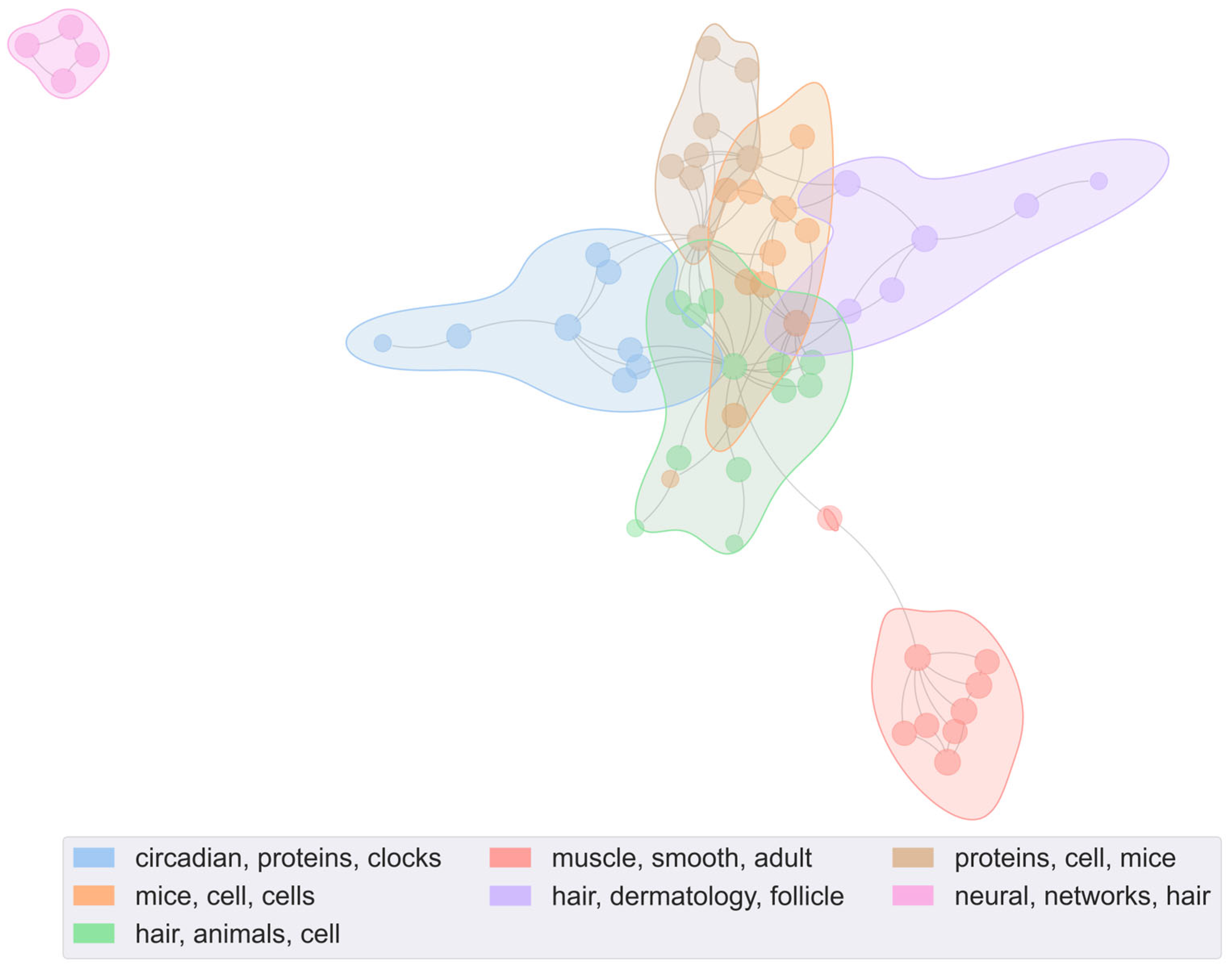
- Results—Citation network
- Larger communities were characterized by methodological and technological descriptors, such as Algorithms, Neural Networks, Computer-Assisted Image Analysis, and Radiography, reflecting clusters of studies focused on automated or imaging-based hair assessment.
- Other communities showed stronger associations with clinical and biological descriptors, including Hair Follicle, Scalp, Alopecia, Humans, and sex-specific terms, suggesting clinically oriented research groups.
- Smaller communities appeared more specialized, often combining niche methodological approaches with specific clinical applications.
- The separation between communities, combined with limited cross-community connectivity, indicates that while the field shares common methodological foundations, research remains partially compartmentalized into subdomains with distinct citation traditions.
- Data synthesis
- Studies on the pre-clinical features of scalp diseases:Biological and histological models assessing and targeting scalp diseases causes and pursuing diagnostical models.
- Computer-assisted and algorithmic methods:Research employing image processing and software-driven analysis for segmentation, measurement, and morphological characterization of follicular structures.Studies developing or validating AI algorithms for pattern recognition, disease classification, and automated image interpretation in trichoscopy.
- Software implementing AI techniques:Works exploring portable trichoscopy, smartphone-based imaging, and remote diagnostic workflows integrating artificial intelligence or cloud-based analytics.
- Omics aspects of the HF
- 2.
- Structural model of the HF
- 3.
- Main limitations
- Computer-assisted algorithmic methods
- Software implementing AI processes
- Considerations and limits on the software and algorithms reviewed
4. Discussion
5. Conclusions
Author Contributions
Funding
Institutional Review Board Statement
Informed Consent Statement
Data Availability Statement
Acknowledgments
Conflicts of Interest
Abbreviations
| HF | Hair Follicle |
| FU | Follicular Unit |
| AGA | Androgenetic Alopecia |
| AA | Alopecia Areata |
| AI | Artificial Intelligence |
| DL | Deep Learning |
| CNN | Convolutional Neural Network |
| YOLOv4 | You Only Look Once v4 |
| EfficientDet | EfficientDet (object detection framework) |
| DetectoRS | DetectoRS (object detection framework) |
| Mask R-CNN | Mask Region-Based Convolutional Neural Network |
| XAI | Explainable Artificial Intelligence |
| NLP | Natural Language Processing |
| PRISMA | Preferred Reporting Items for Systematic Reviews and Meta-Analyses |
| MeSH | Medical Subject Headings |
| mAP | mean Average Precision |
| BASP | Basic and Specific (classification system) |
| IRSI | Infrared Spectral Imaging |
| Micro-CT | Micro–Computed Tomography |
| AP | Arrector Pili (muscle) |
| TRPV1 | Transient Receptor Potential Vanilloid 1 |
| TGF-β2 | Transforming Growth Factor beta 2 |
| TERT | Telomerase Reverse Transcriptase |
| T4 | Thyroxine |
Appendix A
| PMID | Title | First Author | Journal | Year | Study Design | Setting | Key Inclusion Criteria/Case Definition | Intervention/Exposure/Index Test | Main Outcomes |
| 18208333 [30] | TERT promotes epithelial proliferation through transcriptional control of a Mycand Wnt-related developmental program | Choi J | PLoS Genet | 2008 | Transgenic mouse + microarray | Mouse skin (biopsies) | Resting HF stem cells in skin | TERT(ci) mutant (RT-independent) | TERT activates Myc/Wnt program; stimulates proliferation of keratinocytes/HF anagen |
| 11442744 [66] | A comprehensive guide for the accurate classification of murine hair follicles in distinct hair cycle stages | Müller-Röver S | J Invest Dermatol | 2001 | Histological standardization | Murine dorsal skin | Back skin in synchronized cycle | Histology + IHC markers (Ki67, etc.) | Guida standard per stadiazione ciclo HF (telogen-anagen-catagen) |
| 10504436 [67] | A comprehensive guide for the recognition and classification of distinct stages of hair follicle morphogenesis | Paus R | J Invest Dermatol | 1999 | Morphological guide | Mouse embryos | HF development stages | Histology, IHC, enzyme activity | 10 stages from placode to hair filament; for mutant analysis |
| 15793280 [35] | A hot new twist to hair biology: involvement of vanilloid receptor-1 (VR1/TRPV1) signaling in human hair growth control | Bodó E | Am J Pathol | 2005 | Organ culture + IHC | Human scalp HF ex vivo | Anagen HFs, ORS keratinocytes | Capsaicin stimulation | TRPV1 activation inhibits proliferation, and induces catagen via TGF-β2 |
| 24005054 [68] | A meeting of two chronobiological systems: circadian proteins Period1 and BMAL1 modulate the human hair cycle clock | Al-Nuaimi Y | J Invest Dermatol | 2014 | Ex vivo knockdown | Human HF organ culture | Scalp HFs from females | siRNA vs. BMAL1/Per1 | Circadian genes BMAL1/Per1 regulates HF growth |
| 16637886 [33] | A new model for the morphology of the arrector pili muscle | Tamatsu Y | Journal of Anatomy | 2006 | Anatomical reconstruction study | Laboratory | Scalp skin containing complete follicular units with arrector pili (AP) muscles | Serial sectioning and 3D reconstruction of AP muscle morphology | AP muscle forms a single oblique band attaching to multiple follicles within one follicular unit, challenging classic one-muscle–one-follicle model |
| 17596168 [69] | A study of the secretion mechanism of the sebaceous gland using three-dimensional reconstruction to examine the morphological relationship between the sebaceous gland and the arrector pili muscle | Song WC | British Journal of Dermatology | 2007 | Anatomical/3D reconstruction study | Laboratory | Human scalp skin containing sebaceous glands and arrector pili muscle | 3D computer reconstruction to analyze gland–muscle relationships | Sebaceous gland ducts open directly onto hair shaft below arrector pili insertion, supporting holocrine secretion model |
| 26971464 [70] | Alopecia areata: Animal models illuminate autoimmune pathogenesis and novel immunotherapeutic strategies | Gilhar A | Autoimmun Rev | 2016 | Review (models) | Mouse xenografts | Human AA grafts to SCID mice | JAKi, anti-CD200R | Autoimmunity via NKG2D + CD8 T-cells; IP collapse; new therapies |
| 39021583 [71] | Application of multi-omics techniques to androgenetic alopecia: Current status and perspectives | Li Y | Comput Struct Biotechnol J | 2024 | Review (multi-omics) | AGA patient datasets | Multi-omics integration | Omics reveal AGA mechanisms; biomarkers identified | |
| 11703920 [72] | At the roots of a never-ending cycle | Fuchs E | Dev Cell | 2001 | Review | Bulge stem cells orchestrate hair cycle; Wnt/BMP regulation | |||
| 16901790 [73] | Blimp1 defines a progenitor population that governs epidermal seal formation and hair follicle morphogenesis | Horsley V | Cell | 2006 | Genetic knockout | Laboratory | Sebaceous progenitors | Blimp1 deletion | Sebaceous hyperplasia |
| 15024388 [74] | Capturing and profiling adult hair follicle stem cells | Morris RJ | Nat Biotechnol | 2004 | FACS isolation + profiling | Mouse dorsal skin | K15+ bulge cells | Tamoxifen-inducible Cre, microarray | K15+ SCs reconstitute epidermis/HF/SG; high proliferative |
| 19629164 [75] | Circadian clock genes contribute to the regulation of hair follicle cycling | Lin KK | PLoS Genet | 2009 | Genomics/mutant analysis | Mouse skin (C57BL/6) | Telogen/early anagen HFs | Gene expression profiling | Clock genes delay anagen via cell cycle (p21 up, Rb hypophospho) |
| 25210331 [76] | Classification Framework for Healthy Hairs and Alopecia Areata: A Machine Learning (ML) Approach | Shakeel CS | Computational and Mathematical Methods in Medicine | 2021 | Machine learning classification study | Single-center; image datasets | Clinically diagnosed healthy scalps vs. alopecia areata cases | ML algorithms (SVM, KNN, etc.) for trichoscopic image classification | ML framework achieved high accuracy (up to 98%) distinguishing healthy hair from alopecia areata |
| 11152763 [2] | Controls of hair follicle cycling | Stenn KS | Physiol Rev | 2001 | Review | N/A (integrates mouse/human models) | Epithelial-mesenchymal interactions control cycle; FGF/TGF-β/Wnt/Shh | ||
| 12015981 [77] | Coordinated transcription of key pathways in the mouse by the circadian clock | Panda S | Cell | 2002 | Microarray time-series | Mouse liver/SCN | Wildtype SCN/liver tissues | Circadian sampling (24 h) | ~650 cycling transcripts; clock coordinates metabolism |
| 14671312 [29] | Defining the epithelial stem cell niche in skin | Tumbar T | Science | 2004 | Lineage tracing + profiling | Mouse epidermis | Slow-cycling epidermal SCs | H2B-GFP pulse-chase, FACS isolation | LRCs in bulge/HF IFE; transcriptional profile reveals niche signals |
| 23073792 [78] | Detailed histological structure of human hair follicle bulge region at different ages: a visible niche for nesting adult stem cells | Wang X | Journal of Huazhong University of Science and Technology | 2012 | Histology | Pathology lab | Bulge region | Morphometry | Age-related niche changes |
| 10417585 [79] | Distribution of human hair in follicular units. A mathematical model for estimating the donor size in follicular unit transplantation | Jimenez F | Dermatologic Surgery | 1999 | Anatomical modeling | Single-center | Normal follicular units | Mathematical modeling | Transplant donor yield prediction |
| 12648211 [80] | Enrichment for living murine keratinocytes from the hair follicle bulge with the cell surface marker CD34 | Trempus CS | Journal of Investigative Dermatology | 2003 | Cell sorting | Laboratory | Bulge keratinocytes | CD34 FACS isolation | Enriched stem cell population |
| 35062611 [37] | Evaluation of Automated Measurement of Hair Density Using Deep Neural Networks | Kim M | Sensors | 2022 | Retrospective image-analysis study using deep neural networks | Clinical scalp photographs | Male hair-loss patients, 4492 enlarged RGB scalp images | Enlarged occipital donor-area images with annotated follicles | Object detection with EfficientDet, YOLOv4, DetectoRS |
| 12230507 [81] | Exogen, shedding phase of the hair growth cycle: characterization of a mouse model | Milner Y | J Invest Dermatology | 2002 | Experimental model | Mouse back skin | Synchronous cycle via depilation | Hair collection cage, rhodamine labeling | Exogen distinct phase; proteolytic shedding |
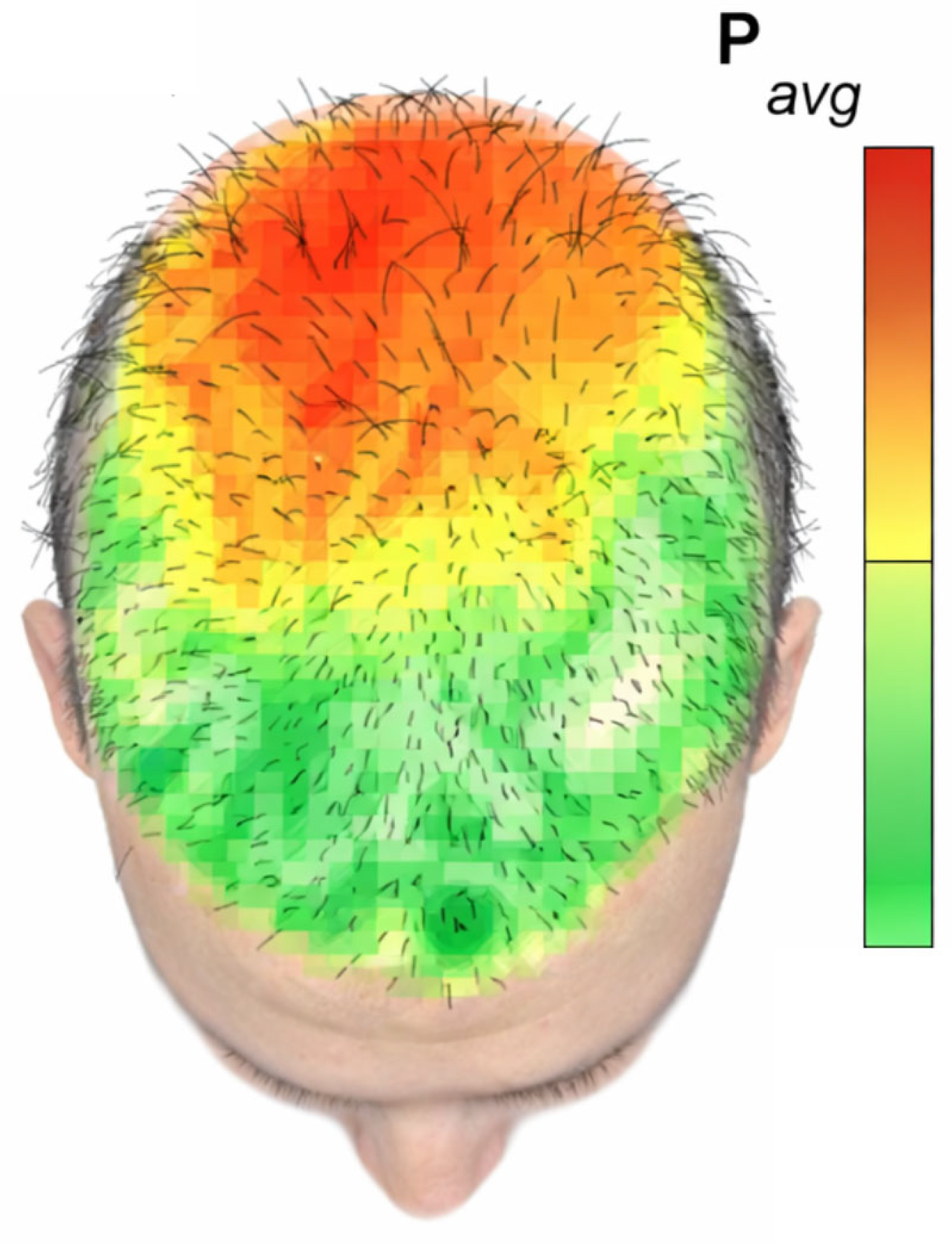
| 36286377 [40] | Hair Follicle Classification and Hair Loss Severity Estimation Using Mask R-CNN | Kim JH | J Imaging | 2022 | Deep learning model | Dermoscopic images | Healthy/normal/severe HF images | Mask R-CNN (ResNet backbone) | 92% accuracy HF classification; severity index Pavg via heatmap |
| 36768730 [82] | Hair Follicles as a Critical Model for Monitoring the Circadian Clock cyvigor | Liu LP | Int J Mol Sci | 2023 | Review | HFs monitor circadian rhythm; applications in aging/chronotherapy cyvigor | |||
| 33062040 [39] | Trichoscopy of Alopecia Areata: Hair Loss Feature Extraction and Computation Using Grid Line Selection and Eigenvalue pmc.ncbi.nlm.nih | Seo S | Comput Math Methods Med | 2020 | Algorithm development/evaluation | Dermoscopy scalp images | Alopecia areata scalp images (N = NR) | Scalp images with microscope/smartphone | Grid line selection + eigenvalue for HLF (hair count, follicle, thickness) |
| 15793281 [83] | Heparanase regulates murine hair growth | Goldshmidt O | American Journal of Pathology | 2005 | Experimental animal study | Laboratory | Adult mice with induced hair growth cycles | Genetic overexpression of heparanase enzyme | Heparanase overexpression accelerates hair growth by promoting anagen phase and enhancing follicle proliferation |
| 15520371 [84] | Identification of hair cycle-associated genes from time-course gene expression profile data by using replicate variance | Lin KK | Proceedings of the National Academy of Sciences of the USA | 2004 | Microarray gene expression analysis | Laboratory | Time-course samples from synchronized mouse hair growth cycles | Microarray profiling with replicate variance analysis to identify cycling genes | Identified 425 hair cycle-associated genes, including novel regulators of follicle morphogenesis and cycling |
| 10805917 [85] | Intercellular junctions between palisade nerve endings and outer root sheath cells of rat vellus hairs | Kaidoh T | Journal of Comparative Neurology | 2000 | Electron microscopy ultrastructural study | Laboratory | Palisade nerve endings (PNs) associated with vellus hair outer root sheath (ORS) cells | Transmission electron microscopy to examine junctional structures between PNs and ORS | PNs form close membrane appositions and adherens-like junctions with ORS cells, suggesting bidirectional signaling between nerve and follicle |
| 10966107 [86] | Involvement of follicular stem cells in forming not only the follicle but also the epidermis | Taylor G | Cell | 2000 | Experimental (labeling/tracing) | Mouse skin (newborn/adult) | Mice (unspecified N) | Normal/wounded mouse skin | Double-label technique for keratinocyte migration |
| 2364430 [87] | Label-retaining cells reside in the bulge area of pilosebaceous unit: implications for follicular stem cells, hair cycle, and skin carcinogenesis | Cotsarelis G | Cell | 1990 | BrdU label-retaining | Mouse epidermis | Basal keratinocytes | Continuous BrdU + TPA | Bulge LRCs = quiescent stem cells; activated by TPA |
| 38545843 [38] | Leveraging deep neural networks to uncover unprecedented levels of precision in the diagnosis of hair and scalp disorders | Chowdhury MS | Skin Res Technol | 2024 | Deep learning model | Dermoscopy dataset | Hair/scalp disorders | Xception CNN + attention | 92.5% accuracy, superior to dermatologists in classification |
| 10899998 [27] | Modeling the dynamics of human hair cycles by a follicular automaton | Halloy J | PNAS | 2000 | Computational model | Simulation (human scalp) | Alopecic/non-alopecic data | Stochastic automaton rules | Model reprudicing alopecia pattern |
| 15714560 [88] | Molecular principles of hair follicle induction and morphogenesis | Schmidt-Ullrich R | Bioessays | 2005 | Review | Activator-inhibitor gradients drive placode/condensate pmc.ncbi.nlm.nih | |||
| 11207364 [89] | Morphogenesis and renewal of hair follicles from adult multipotent stem cells | Oshima H | Cell | 2001 | Experimental transplantation | Laboratory (mouse) | Multipotent stem cells from upper ORS | Follicle transplantation assays | Adult stem cells regenerate complete follicle structures and epidermis |
| 25398054 [90] | Characterization of quiescent epithelial cells in mouse meibomian glands and hair follicle/sebaceous glands by immunofluorescence tomography | Geraint J Parfitt | J Invest Dermatol | 2015 | Experimental (immunofluorescence tomography) | Mouse eyelids (meibomian glands, hair follicle/sebaceous glands) | Mice (N not specified) | H2B-GFP label-retaining cells (LRCs) in glands | Immunofluorescence tomography with markers (Sox9, Blimp1, PPARγ) |
| 16001265 [91] | Multiunit arrector pili muscular structure as a variation observed by using computer-based three-dimensional reconstruction | Song WC | Cell and Tissue Research | 2005 | Experimental/laboratory (human tissue) | Laboratory | Human scalp skin containing hair follicles with attached arrector pili muscle | Computer-assisted image processing and three-dimensional reconstruction algorithm | Arrector pili muscle consists of one muscular unit inserting into all hair follicles within a follicular unit |
| 20798039 [31] | Noninvasive method for assessing the human circadian clock using hair follicle cells | Akashi M | Proceedings of the National Academy of Sciences of the USA | 2010 | Experimental/translational study | Single-center laboratory; volunteers | Healthy individuals with regular sleep–wake schedules providing serial hair samples | Noninvasive sampling of hair follicles followed by clock-gene expression analysis ex vivo | Circadian phase and period can be estimated from hair-follicle clock-gene rhythms, providing a practical tool to assess human circadian timing |
| 37509104 [32] | Overview of the Circadian Clock in the Hair Follicle Cycle | Niu Y | Biomolecules | 2023 | Review | Clock regulates HF cycle/metabolism/ROS | |||
| 33573119 [92] | Hair Histology and Glycosaminoglycans Distribution Probed by Infrared Spectral Imaging: Focus on Heparan Sulfate Proteoglycan and Glypican-1 during Hair Growth Cycle | Charlie Colin-Pierre | Biomolecules | 2021 | Experimental (IR spectral imaging, IHC, WB) | Human hair follicles | Human HF sections (32 anagen, 28 catagen, 31 telogen from 4 donors) | HFs at anagen/catagen/telogen phases | Infrared spectral imaging for sulfated GAGs/HSPGs; IHC/WB for glypican-1 |
| 12787113 [93] | Plasticity and cytokinetic dynamics of the hair follicle mesenchyme: implications for hair growth control | Tobin DJ | J Invest Dermatol | 2003 | Histological/cytometric | C57BL/6 mouse skin | Anagen VI back skin | Morphometry, BrdU, Ki67 labeling | Papilla cells migrate from/to CTS; size peaks during anagen stage then reduces |
| 7487740 [94] | Quantification of hair follicle parameters using computer image analysis: a comparison of androgenetic alopecia with normal scalp biopsies | Lee MS | Australas J Dermatol | 1995 | Quantitative histology/image analysis | Horizontal scalp biopsies | AGA patients (10) + controls (10) | Histologically confirmed AGA/normal scalp | AGA: ↓ follicle diameter (236 vs. 268 μm), ↓ T:V ratio (3:1 vs. 36:1), ↓ ORS area |
| 35726958 [34] | Quantitative characterization of 3D structure of vellus hair arrector pili muscles by micro CT | Ezure T | Skin Research and Technology | 2022 | Micro-CT imaging | Laboratory | Vellus arrector pili | 3D reconstruction | Detailed muscle geometry quantified |
| 25410793 [95] | Resting no more: re-defining telogen, the maintenance stage of the hair growth cycle | Geyfman M | Biol Rev Camb Philos Soc | 2015 | Review | Telogen = active maintenance; sub-stages refractory/competent | |||
| 21753860 [96] | Steady and temporary expressions of smooth muscle actin in hair, vibrissa, arrector pili muscle, and other hair appendages of developing rats | Morioka K | Acta Histochemica et Cytochemica | 2011 | Developmental IHC | Laboratory | Hair appendages | SMA immunostaining | Stage-specific expression patterns |
| 10441606 [97] | The Biology of Hair Follicles | Paus R | New England Journal of Medicine | 1999 | Review | Follicle biology | Dynamic mini-organ concept | ||
| 34535902 [98] | The circadian clock and diseases of the skin | Duan J | FEBS Lett | 2021 | Review | Circadian disruption linked to alopecia, psoriasis; clock genes in HF cycling | |||
| 20590819 [1] | The cycling hair follicle as an ideal systems biology research model | Al-Nuaimi Y | Exp Dermatol | 2010 | Review/model proposal | N/A (model discussion) | N/A (human/mouse HF) | Cycling mammalian HFs | HF as mini-organ model for systems biology/chronobiology; translational potential |
| 35962707 [36] | The Emergent Power of Human Cellular vs. Mouse Models of Hair Follicle Regeneration | Castro AR | Stem Cells Translational Medicine | 2022 | Narrative review | Not applicable (review) | Compares human vs. mouse hair biology and models for regeneration studies | Not applicable (review) | Human cellular models superior to mouse for translational hair loss research due to anatomical and cycling differences |
| 19183169 [99] | How not to get scar(r)ed: pointers to the correct diagnosis in patients with suspected primary cicatricial alopecia | Harries MJ | Br J Dermatol | 2009 | Review | Clinical (human patients) | Patients with suspected PCA | Clinical/histopath features of PCA | Primary cicatricial alopecias are rare (~3–7%) disorders causing irreversible hair loss, requiring early but challenging diagnosis |
| 19211055 [100] | The hair follicle as a dynamic miniorgan | Schneider MR | Curr Biol | 2009 | Review | Not applicable (review) | Reviews structure, cycling, and signaling pathways of the hair follicle as a mini-organ | Not applicable (review) | Summarizes key molecular and cellular mechanisms underlying hair follicle morphogenesis, cycling, and disorders |
| 28266743 [101] | The hair follicle enigma | Bernard BA | Experimental Dermatology | 2017 | Narrative review | Not applicable (review) | Review of hair follicle structure, cycling, and unsolved biological questions | Not applicable (review) | Highlights key enigmas in hair follicle biology including glycobiology, exosomes and translational gaps |
| 24952302 [102] | Three-dimensional reconstruction of light microscopy image sections: present and future | Wang Y | Frontiers in Medicine | 2014 | Review (3D methods) | Histological sections | Light microscopy sections | Serial sectioning + software alignment | 3D reconstruction reveals HF microstructures |
| 25822259 [103] | Thyroxine differentially modulates the peripheral clock: lessons from the human hair follicle | Vidali S | PLoS One | 2015 | Ex vivo organ culture | Human HF culture | Anagen scalp HFs from surgery | T4 (100 nM), light/dark cycle | T4 alters clock gene expression in HFs |
| 26476248 [104] | Selected Disorders of Skin Appendages—Acne, Alopecia, Hyperhidrosis | Vary JC Jr | Med Clin North Am | 2015 | Review | N/A | N/A | Acne, alopecia, hyperhidrosis cases | Selected Disorders of Skin Appendages—Acne, Alopecia, Hyperhidrosis |
| 12756226 [28] | Transient activation of beta-catenin signaling in cutaneous keratinocytes is sufficient to trigger the active growth phase of the hair cycle in mice | Van Mater D | Genes & Development | 2003 | Experimental transgenic | Laboratory | Adult telogen skin | Tamoxifen-induced beta-catenin activation | Induces anagen hair growth |
| 30951234 [105] | Understanding skin morphogenesis across developmental, regenerative, and evolutionary levels | Plikus MV | Exp Dermatol | 2019 | Editorial/review | Morphogenesis insights from evolution/regeneration for skin appendages | |||
| 9238319 [106] | Whole hair follicle culture | Philpott MP | Dermatol Clin | 1996 | Review/protocol | Ex vivo | Intact HFs for culture | Serum-free medium (William’s E) | HF culture protocol |
| 12015971 [107] | WNT signals are required for the initiation of hair follicle development | Andl T | Dev Cell | 2002 | In vivo transgenic | Mouse embryonic skin | Embryonic skin placodes | Dkk1 overexpression (Wnt inhibitor) | Wnt signaling essential for hair placode induction |
| Key studies were selected based on their central role within the pruned citation network, representing methodological hubs or thematic bridges across communities. Most studies were experimental or diagnostic in nature, with limited reporting of sample size and follow-up duration, reflecting the exploratory and technology-driven focus of the field. | |||||||||
References
- Al-Nuaimi, Y.; Baier, G.; Watson, R.E.B.; Chuong, C.-M.; Paus, R. The cycling hair follicle as an ideal systems biology research model. Exp. Dermatol. 2010, 19, 707–713. [Google Scholar] [CrossRef] [PubMed] [PubMed Central]
- Stenn, K.S.; Paus, R. Controls of Hair Follicle Cycling. Physiol. Rev. 2001, 81, 449–494. [Google Scholar] [CrossRef] [PubMed]
- Botchkarev, V.A. Stress and the Hair Follicle: Exploring the Connections. Am. J. Pathol. 2003, 162, 709–712. [Google Scholar] [CrossRef] [PubMed]
- Lolli, F.; Pallotti, F.; Rossi, A.; Fortuna, M.C.; Caro, G.; Lenzi, A.; Sansone, A.; Lombardo, F. Androgenetic alopecia: A review. Endocrine 2017, 57, 9–17. [Google Scholar] [CrossRef] [PubMed]
- Alessandrini, A.; Bruni, F.; Piraccini, B.M.; Starace, M. Common causes of hair loss—Clinical manifestations, trichoscopy and therapy. J. Eur. Acad. Dermatol. Venereol. 2021, 35, 629–640. [Google Scholar] [CrossRef] [PubMed]
- Gilhar, A.; Etzioni, A.; Paus, R. Alopecia areata. N. Engl. J. Med. 2012, 366, 1515–1525. [Google Scholar] [CrossRef] [PubMed]
- Piraccini, B.M.; Micali, G.; Aguzzi, G.; Starace, M.; Rossi, A. Standardizing the Management of Alopecia Areata: Results from a Delphi Panel of Italian Experts. Ski. Appendage Disord. 2025. [Google Scholar] [CrossRef] [PubMed] [PubMed Central]
- Starace, M.; Pampaloni, F.; Lazaridou, E.; Kyrmanidou, E.; Stratigos, A.; Lallas, A.; Katoulis, A.; Sgouros, D.; Quadrelli, F.; Rapparini, L.; et al. Current Diagnostic and Therapeutic Practices in Alopecia Areata in Two Mediterranean Countries: A Survey-Based Study. Dermatol. Ther. 2024, 14, 953–970. [Google Scholar] [CrossRef] [PubMed] [PubMed Central]
- Garcia Bartels, N.; Jahnke, I.; Patzelt, A.; Richter, H.; Lademann, J.; Blume-Peytavi, U. Hair shaft abnormalities in alopecia areata evaluated by optical coherence tomography. Ski. Res. Technol. 2011, 17, 201–205. [Google Scholar] [CrossRef] [PubMed]
- Rudnicka, L.; Arenbergerova, M.; Grimalt, R.; Ioannides, D.; Katoulis, A.C.; Lazaridou, E.; Olszewska, M.; Ovcharenko, Y.S.; Piraccini, B.M.; Prohic, A.; et al. European expert consensus statement on the systemic treatment of alopecia areata. J. Eur. Acad. Dermatol. Venereol. 2024, 38, 687–694. [Google Scholar] [CrossRef] [PubMed]
- Park, H.U.; Chung, K.B.; Kim, D.-Y. Quantitative measurement of hair diameter diversity as a diagnostic indicator of androgenetic alopecia in Korean males: A cross-sectional study. JAAD Int. 2024, 15, 121–126. [Google Scholar] [CrossRef] [PubMed] [PubMed Central]
- Martínez-Velasco, M.A.; Vázquez-Herrera, N.E.; Maddy, A.J.; Asz-Sigall, D.; Tosti, A. The Hair Shedding Visual Scale: A Quick Tool to Assess Hair Loss in Women. Dermatol. Ther. 2017, 7, 155–165. [Google Scholar] [CrossRef] [PubMed] [PubMed Central]
- Iritaş, S.Y.; Özcan, D. The Value of Trichoscopy in the Follow-up of Treatment Response in Patients with Androgenetic Alopecia. Dermatol. Pract. Concept. 2024, 14, e2024001. [Google Scholar] [CrossRef] [PubMed] [PubMed Central]
- Madanes, A.E.; Novotny, M. The vellus index: A new method of assessing hair growth. Fertil. Steril. 1987, 48, 1064–1066. [Google Scholar] [CrossRef] [PubMed]
- Karadag Köse, Ö.; Güleç, A.T. Evaluation of a Handheld Dermatoscope in Clinical Diagnosis of Primary Cicatricial Alopecias. Dermatol. Ther. 2019, 9, 525–535. [Google Scholar] [CrossRef] [PubMed] [PubMed Central]
- Vleut, R.E.; van Poppel, J.E.A.M.; Dercksen, M.W.; Peerbooms, M.; Houterman, S.; Breed, W.P.M. Hair mass index obtained by cross-section trichometry: An objective and clinically useful parameter to quantify hair in chemotherapy-induced alopecia. Support. Care Cancer 2013, 21, 1807–1814. [Google Scholar] [CrossRef] [PubMed]
- Silva, M.N.E.; Ramos, P.M.; Raposo, N.R.B. Comparison of the hair shafts count between a manual and a customized method. Ski. Res. Technol. 2020, 26, 949–950. [Google Scholar] [CrossRef] [PubMed]
- Price, V.H.; Menefee, E.; Strauss, P.C. Changes in hair weight and hair count in men with androgenetic alopecia, after application of 5% and 2% topical minoxidil, placebo, or no treatment. J. Am. Acad. Dermatol. 1999, 41, 717–721. [Google Scholar] [CrossRef] [PubMed]
- Sacha, J.P.; Caterino, T.L.; Fisher, B.K.; Carr, G.J.; Youngquist, R.S.; D’Alessandro, B.M.; Melione, A.; Canfield, D.; Bergfeld, W.F.; Piliang, M.P.; et al. Development and qualification of a machine learning algorithm for automated hair counting. Int. J. Cosmet. Sci. 2021, 43, S34–S41. [Google Scholar] [CrossRef] [PubMed]
- Maskan Bermudez, N.; Perez, S.; Nguyen, B.; Tosti, A. Teledermatology in alopecia: A systematic review. JAAD Int. 2023, 14, 64–68. [Google Scholar] [CrossRef] [PubMed] [PubMed Central]
- Boyack, K.W.; Klavans, R. Co-citation analysis, bibliographic coupling, and direct citation: Which citation approach represents the research front most accurately? J. Am. Soc. Inf. Sci. Technol. 2010, 61, 2389–2404. [Google Scholar] [CrossRef]
- Salton, G.; Buckley, C. Term-weighting approaches in automatic text retrieval. Inf. Process. Manag. 1988, 24, 513–523. [Google Scholar] [CrossRef]
- Joshi, A.K. Natural language processing. Science 1991, 253, 1242–1249. [Google Scholar] [CrossRef] [PubMed]
- Wang, Y.; Hilsman, J.; Li, C.; Morris, M.; Heider, P.M.; Fu, S.; Kwak, M.J.; Wen, A.; Applegate, J.R.; Wang, L.; et al. Development and Validation of Natural Language Processing Algorithms in the ENACT National Electronic Health Record Research Network. medRxiv 2025. [Google Scholar] [CrossRef] [PubMed] [PubMed Central]
- Blondel, V.D.; Guillaume, J.-L.; Lambiotte, R.; Lefebvre, E. Fast unfolding of communities in large networks. J. Stat. Mech. 2008, 2008, P10008. [Google Scholar] [CrossRef]
- Shao, L.; Zuo, H.; Zhang, J.; Xu, Z.; Yao, J.; Wang, Z.; Li, H. Filter Pruning via Measuring Feature Map Information. Sensors 2021, 21, 6601. [Google Scholar] [CrossRef] [PubMed] [PubMed Central]
- Halloy, J.; Bernard, B.A.; Loussouarn, G.; Goldbeter, A. Modeling the dynamics of human hair cycles by a follicular automaton. Proc. Natl. Acad. Sci. USA 2000, 97, 8328–8333. [Google Scholar] [CrossRef] [PubMed] [PubMed Central]
- Van Mater, D.; Kolligs, F.T.; Dlugosz, A.A.; Fearon, E.R. Transient activation of beta -catenin signaling in cutaneous keratinocytes is sufficient to trigger the active growth phase of the hair cycle in mice. Genes. Dev. 2003, 17, 1219–1224. [Google Scholar] [CrossRef] [PubMed] [PubMed Central]
- Tumbar, T.; Guasch, G.; Greco, V.; Blanpain, C.; Lowry, W.E.; Rendl, M.; Fuchs, E. Defining the epithelial stem cell niche in skin. Science 2004, 303, 359–363. [Google Scholar] [CrossRef] [PubMed] [PubMed Central]
- Choi, J.; Southworth, L.K.; Sarin, K.Y.; Venteicher, A.S.; Ma, W.; Chang, W.; Cheung, P.; Jun, S.; Artandi, M.K.; Shah, N.; et al. TERT promotes epithelial proliferation through transcriptional control of a Myc- and Wnt-related developmental program. PLoS Genet. 2008, 4, e10. [Google Scholar] [CrossRef] [PubMed] [PubMed Central]
- Akashi, M.; Soma, H.; Yamamoto, T.; Tsugitomi, A.; Yamashita, S.; Yamamoto, T.; Nishida, E.; Yasuda, A.; Liao, J.K.; Node, K. Noninvasive method for assessing the human circadian clock using hair follicle cells. Proc. Natl. Acad. Sci. USA 2010, 107, 15643–15648. [Google Scholar] [CrossRef] [PubMed] [PubMed Central]
- Niu, Y.; Wang, Y.; Chen, H.; Liu, X.; Liu, J. Overview of the Circadian Clock in the Hair Follicle Cycle. Biomolecules 2023, 13, 1068. [Google Scholar] [CrossRef] [PubMed] [PubMed Central]
- Song, W.-C.; Hwang, W.-J.; Shin, C.; Koh, K.-S. A new model for the morphology of the arrector pili muscle in the follicular unit based on three-dimensional reconstruction. J. Anat. 2006, 208, 643–648. [Google Scholar] [CrossRef] [PubMed] [PubMed Central]
- Ezure, T.; Amano, S.; Matsuzaki, K. Quantitative characterization of 3D structure of vellus hair arrector pili muscles by micro CT. Ski. Res. Technol. 2022, 28, 689–694. [Google Scholar] [CrossRef]
- Bodó, E.; Bíró, T.; Telek, A.; Czifra, G.; Griger, Z.; Tóth, B.I.; Mescalchin, A.; Ito, T.; Bettermann, A.; Kovács, L.; et al. A hot new twist to hair biology: Involvement of vanilloid receptor-1 (VR1/TRPV1) signaling in human hair growth control. Am. J. Pathol. 2005, 166, 985–998. [Google Scholar] [CrossRef] [PubMed] [PubMed Central]
- Castro, A.R.; Portinha, C.; Logarinho, E. The Emergent Power of Human Cellular vs. Mouse Models in Translational Hair Research. Stem Cells Transl. Med. 2022, 11, 1021–1028. [Google Scholar] [CrossRef]
- Kim, M.; Kang, S.; Lee, B.-D. Evaluation of Automated Measurement of Hair Density Using Deep Neural Networks. Sensors 2022, 22, 650. [Google Scholar] [CrossRef]
- Chowdhury, M.S.; Sultan, T.; Jahan, N.; Mridha, M.F.; Safran, M.; Alfarhood, S.; Che, D. Leveraging deep neural networks to uncover unprecedented levels of precision in the diagnosis of hair and scalp disorders. Ski. Res. Technol. 2024, 30, e13660. [Google Scholar] [CrossRef] [PubMed]
- Seo, S.; Park, J. Trichoscopy of Alopecia Areata: Hair Loss Feature Extraction and Computation Using Grid Line Selection and Eigenvalue. Comput. Math. Methods Med. 2020, 2020, 6908018. [Google Scholar] [CrossRef] [PubMed]
- Kim, J.-H.; Kwon, S.; Fu, J.; Park, J.-H. Hair Follicle Classification and Hair Loss Severity Estimation Using Mask R-CNN. J. Imaging 2022, 8, 283. [Google Scholar] [CrossRef]
- Gao, M.; Wang, Y.; Xu, H.; Xu, C.; Yang, X.; Nie, J.; Zhang, Z.; Li, Z.; Hou, W.; Jiang, Y. Deep Learning-based Trichoscopic Image Analysis and Quantitative Model for Predicting Basic and Specific Classification in Male Androgenetic Alopecia. Acta Derm. Venereol. 2022, 102, adv00635. [Google Scholar] [CrossRef] [PubMed] [PubMed Central]
- Di Fraia, M.; Tieghi, L.; Magri, F.; Caro, G.; Michelini, S.; Pellacani, G.; Rossi, A. A Machine Learning Algorithm Applied to Trichoscopy for Androgenic Alopecia Staging and Severity Assessment. Dermatol. Pract. Concept. 2023, 13, e2023136. [Google Scholar] [CrossRef] [PubMed] [PubMed Central]
- Suh, M.J.; Ahn, S.; Byun, J.Y. Automated early detection of androgenetic alopecia using deep learning on trichoscopic images from a Korean cohort: A retrospective model development and validation study. Ewha Med. J. 2025, 48, e44. [Google Scholar] [CrossRef] [PubMed] [PubMed Central]
- Majd, A.; AlJasser, M.; Mirzaalian, H.; Shapiro, J.; Hamarneh, G.; Lui, H.; Santos, L.D.N.; Chu, T.; Lee, T.K. A novel automated approach to rapid and precise in vivo measurement of hair morphometrics using a smartphone. Ski. Res. Technol. 2021, 27, 1128–1134. [Google Scholar] [CrossRef] [PubMed]
- Uwishema, O.; Ghezzawi, M.; Charbel, N.; Alawieh, S.; Roy, S.; Wojtara, M.; Hakayuwa, C.M.; Ja’afar, I.K.; Nkurunziza, G.; Prasad, M. Diagnostic performance of artificial intelligence for dermatological conditions: A systematic review focused on low- and middle-income countries to address resource constraints and improve access to specialist care. Int. J. Emerg. Med. 2025, 18, 172. [Google Scholar] [CrossRef] [PubMed] [PubMed Central]
- Alam, F.; Ullah, A.; Shah, D.; Ali, S.; Tahir, M. Artificial Intelligence in Melanoma Detection: A Review of Current Technologies and Future Directions. Int. J. Intell. Syst. 2025, 2025, 3164952. [Google Scholar] [CrossRef]
- Griffa, D.; Natale, A.; Merli, Y.; Starace, M.; Curti, N.; Mussi, M.; Castellani, G.; Melandri, D.; Piraccini, B.M.; Zengarini, C. Artificial Intelligence in Wound Care: A Narrative Review of the Currently Available Mobile Apps for Automatic Ulcer Segmentation. BioMedInformatics 2024, 4, 2321–2337. [Google Scholar] [CrossRef]
- Zengarini, C.; Giacometti, T.; Griffa, D.; Rapparini, L.; Fruci, M.; Castellani, G.; Remondini, D.; Pileri, A.; Starace, M.; La Placa, M.; et al. The best teaching ulcer? The one we cannot label-addressing data scarcity through synthetic imaging. J. Wound Care 2026, 35, 178–179. [Google Scholar] [CrossRef] [PubMed]
- Huang, K.; Wu, X.; Li, Y.; Lv, C.; Yan, Y.; Wu, Z.; Zhang, M.; Huang, W.; Jiang, Z.; Hu, K.; et al. Artificial Intelligence–Based Psoriasis Severity Assessment: Real-world Study and Application. J. Med. Internet Res. 2023, 25, e44932. [Google Scholar] [CrossRef] [PubMed] [PubMed Central]
- Lallas, K.; Tschandl, P.; Kittler, H.; Amaral, T.; Kyrgidis, A.; Gatsis, A.; Tseriotis, V.-S.; Vakirlis, E.; Flatz, L.; Leiter, U.; et al. Machine learning algorithms using dermatoscopy for the prediction of melanoma prognosis: A narrative review of the literature. EJC Ski. Cancer 2025, 3, 100766. [Google Scholar] [CrossRef]
- Kalidindi, S. The Role of Artificial Intelligence in the Diagnosis of Melanoma. Cureus 2024, 16, e69818. [Google Scholar] [CrossRef] [PubMed] [PubMed Central]
- Prithiviraj, A.; Aarthi, M.A.; Venkateswaramurthy, N. Insights into the Impact of Artificial Intelligence on Psoriasis Treatment Strategies: A Mini Review. Indian. Dermatol. Online J. 2025, 16, 894–901. [Google Scholar] [CrossRef] [PubMed] [PubMed Central]
- Tognetti, L.; Miracapillo, C.; Leonardelli, S.; Luschi, A.; Iadanza, E.; Cevenini, G.; Rubegni, P.; Cartocci, A. Deep Learning Techniques for the Dermoscopic Differential Diagnosis of Benign/Malignant Melanocytic Skin Lesions: From the Past to the Present. Bioengineering 2024, 11, 758. [Google Scholar] [CrossRef] [PubMed] [PubMed Central]
- Curti, N.; Merli, Y.; Zengarini, C.; Starace, M.; Rapparini, L.; Marcelli, E.; Carlini, G.; Buschi, D.; Castellani, G.C.; Piraccini, B.M.; et al. Automated Prediction of Photographic Wound Assessment Tool in Chronic Wound Images. J. Med. Syst. 2024, 48, 14. [Google Scholar] [CrossRef]
- Chairat, S.; Chaichulee, S.; Dissaneewate, T.; Wangkulangkul, P.; Kongpanichakul, L. AI-Assisted Assessment of Wound Tissue with Automatic Color and Measurement Calibration on Images Taken with a Smartphone. Healthcare 2023, 11, 273. [Google Scholar] [CrossRef] [PubMed] [PubMed Central]
- Heinlein, L.; Maron, R.C.; Hekler, A.; Haggenmüller, S.; Wies, C.; Utikal, J.S.; Meier, F.; Hobelsberger, S.; Gellrich, F.F.; Sergon, M.; et al. Prospective multicenter study using artificial intelligence to improve dermoscopic melanoma diagnosis in patient care. Commun. Med. 2024, 4, 177. [Google Scholar] [CrossRef] [PubMed]
- Ba, W.; Wu, H.; Chen, W.W.; Wang, S.H.; Zhang, Z.Y.; Wei, X.J.; Wang, W.J.; Yang, L.; Zhou, D.M.; Zhuang, Y.X.; et al. Convolutional neural network assistance significantly improves dermatologists’ diagnosis of cutaneous tumours using clinical images. Eur. J. Cancer 2022, 169, 156–165. [Google Scholar] [CrossRef]
- Wei, M.L.; Tada, M.; So, A.; Torres, R. Artificial intelligence and skin cancer. Front. Med. 2024, 11, 1331895. [Google Scholar] [CrossRef]
- Daneshjou, R.; Barata, C.; Betz-Stablein, B.; Celebi, M.E.; Codella, N.; Combalia, M.; Guitera, P.; Gutman, D.; Halpern, A.; Helba, B.; et al. CheckList for Evaluation of image-based AI Reports in Dermatology: CLEAR Derm Consensus Guidelines from the International Skin Imaging Collaboration Artificial Intelligence Working Group. JAMA Dermatol. 2022, 158, 90–96. [Google Scholar] [CrossRef] [PubMed] [PubMed Central]
- Martínez-Vargas, E.; Mora-Jiménez, J.; Arguedas-Chacón, S.; Hernández-López, J.; Zavaleta-Monestel, E. The Emerging Role of Artificial Intelligence in Dermatology: A Systematic Review of Its Clinical Applications. Dermato 2025, 5, 9. [Google Scholar] [CrossRef]
- Liu, Y.; Li, C.; Li, F.; Lin, R.; Zhang, D.; Lian, Y. Advances in computer vision and deep learning-facilitated early detection of melanoma. Brief. Funct. Genom. 2025, 24, elaf002. [Google Scholar] [CrossRef] [PubMed] [PubMed Central]
- Li, Z.; Koban, K.C.; Schenck, T.L.; Giunta, R.E.; Li, Q.; Sun, Y. Artificial Intelligence in Dermatology Image Analysis: Current Developments and Future Trends. J. Clin. Med. 2022, 11, 6826. [Google Scholar] [CrossRef] [PubMed] [PubMed Central]
- Curti, N.; Merli, Y.; Zengarini, C.; Giampieri, E.; Merlotti, A.; Dall’Olio, D.; Marcelli, E.; Bianchi, T.; Castellani, G. Effectiveness of Semi-Supervised Active Learning in Automated Wound Image Segmentation. Int. J. Mol. Sci. 2023, 24, 706. [Google Scholar] [CrossRef]
- Brancaccio, G.; Balato, A.; Malvehy, J.; Puig, S.; Argenziano, G.; Kittler, H. Artificial Intelligence in Skin Cancer Diagnosis: A Reality Check. J. Investig. Dermatol. 2024, 144, 492–499. [Google Scholar] [CrossRef] [PubMed]
- Zawodny, P.; Stój, E.; Kulig, P.; Skonieczna-Żydecka, K.; Sieńko, J. VISIA Skin Analysis System as a Tool to Evaluate the Reduction of Pigmented Skin and Vascular Lesions Using the 532 Nm Laser. Clin. Cosmet. Investig. Dermatol. 2022, 15, 2187–2195. [Google Scholar] [CrossRef] [PubMed] [PubMed Central]
- Müller-Röver, S.; Handjiski, B.; van der Veen, C.; Eichmüller, S.; Foitzik, K.; McKay, I.A.; Stenn, K.S.; Paus, R. A comprehensive guide for the accurate classification of murine hair follicles in distinct hair cycle stages. J. Investig. Dermatol. 2001, 117, 3–15. [Google Scholar] [CrossRef] [PubMed]
- Paus, R.; Müller-Röver, S.; Van Der Veen, C.; Maurer, M.; Eichmüller, S.; Ling, G.; Hofmann, U.; Foitzik, K.; Mecklenburg, L.; Handjiski, B. A comprehensive guide for the recognition and classification of distinct stages of hair follicle morphogenesis. J. Investig. Dermatol. 1999, 113, 523–532. [Google Scholar] [CrossRef]
- Al-Nuaimi, Y.; Hardman, J.A.; Bíró, T.; Haslam, I.S.; Philpott, M.P.; Tóth, B.I.; Farjo, N.; Farjo, B.; Baier, G.; Watson, R.E.B.; et al. A meeting of two chronobiological systems: Circadian proteins Period1 and BMAL1 modulate the human hair cycle clock. J. Investig. Dermatol. 2014, 134, 610–619. [Google Scholar] [CrossRef] [PubMed]
- Song, W.-C.; Hu, K.-S.; Kim, H.-J.; Koh, K.-S. A study of the secretion mechanism of the sebaceous gland using three-dimensional reconstruction to examine the morphological relationship between the sebaceous gland and the arrector pili muscle in the follicular unit. Br. J. Dermatol. 2007, 157, 325–330. [Google Scholar] [CrossRef] [PubMed]
- Gilhar, A.; Schrum, A.G.; Etzioni, A.; Waldmann, H.; Paus, R. Alopecia areata: Animal models illuminate autoimmune pathogenesis and novel immunotherapeutic strategies. Autoimmun. Rev. 2016, 15, 726–735. [Google Scholar] [CrossRef] [PubMed] [PubMed Central]
- Li, Y.; Dong, T.; Wan, S.; Xiong, R.; Jin, S.; Dai, Y.; Guan, C. Application of multi-omics techniques to androgenetic alopecia: Current status and perspectives. Comput. Struct. Biotechnol. J. 2024, 23, 2623–2636. [Google Scholar] [CrossRef] [PubMed] [PubMed Central]
- Fuchs, E.; Merrill, B.J.; Jamora, C.; DasGupta, R. At the roots of a never-ending cycle. Dev. Cell 2001, 1, 13–25. [Google Scholar] [CrossRef] [PubMed]
- Horsley, V.; O’Carroll, D.; Tooze, R.; Ohinata, Y.; Saitou, M.; Obukhanych, T.; Nussenzweig, M.; Tarakhovsky, A.; Fuchs, E. Blimp1 Defines a Progenitor Population that Governs Cellular Input to the Sebaceous Gland. Cell 2006, 126, 597–609. [Google Scholar] [CrossRef] [PubMed] [PubMed Central]
- Morris, R.J.; Liu, Y.; Marles, L.; Yang, Z.; Trempus, C.; Li, S.; Lin, J.S.; Sawicki, J.A.; Cotsarelis, G. Capturing and profiling adult hair follicle stem cells. Nat. Biotechnol. 2004, 22, 411–417. [Google Scholar] [CrossRef] [PubMed]
- Lin, K.K.; Kumar, V.; Geyfman, M.; Chudova, D.; Ihler, A.T.; Smyth, P.; Paus, R.; Takahashi, J.S.; Andersen, B. Circadian clock genes contribute to the regulation of hair follicle cycling. PLoS Genet. 2009, 5, e1000573. [Google Scholar] [CrossRef] [PubMed] [PubMed Central]
- Shakeel, C.S.; Khan, S.J.; Chaudhry, B.; Aijaz, S.F.; Hassan, U. Classification Framework for Healthy Hairs and Alopecia Areata: A Machine Learning (ML) Approach. Comput. Math. Methods Med. 2021, 2021, 1102083. [Google Scholar] [CrossRef] [PubMed] [PubMed Central]
- Panda, S.; Antoch, M.P.; Miller, B.H.; Su, A.I.; Schook, A.B.; Straume, M.; Schultz, P.G.; Kay, S.A.; Takahashi, J.S.; Hogenesch, J.B. Coordinated transcription of key pathways in the mouse by the circadian clock. Cell 2002, 109, 307–320. [Google Scholar] [CrossRef] [PubMed]
- Wang, X.; Shi, Y.; Zhou, Q.; Liu, X.; Xu, S.; Lei, T. Detailed histological structure of human hair follicle bulge region at different ages: A visible niche for nesting adult stem cells. J. Huazhong Univ. Sci. Technol. Med. Sci. 2012, 32, 648–656. [Google Scholar] [CrossRef] [PubMed]
- Jimenez, F.; Ruifernández, J.M. Distribution of human hair in follicular units. A mathematical model for estimating the donor size in follicular unit transplantation. Dermatol. Surg. 1999, 25, 294–298. [Google Scholar] [CrossRef] [PubMed]
- Trempus, C.S.; Morris, R.J.; Bortner, C.D.; Cotsarelis, G.; Faircloth, R.S.; Reece, J.M.; Tennant, R.W. Enrichment for living murine keratinocytes from the hair follicle bulge with the cell surface marker CD34. J. Investig. Dermatol. 2003, 120, 501–511. [Google Scholar] [CrossRef]
- Milner, Y.; Sudnik, J.; Filippi, M.; Kizoulis, M.; Kashgarian, M.; Stenn, K. Exogen, shedding phase of the hair growth cycle: Characterization of a mouse model. J. Investig. Dermatol. 2002, 119, 639–644. [Google Scholar] [CrossRef] [PubMed]
- Liu, L.-P.; Li, M.-H.; Zheng, Y.-W. Hair Follicles as a Critical Model for Monitoring the Circadian Clock. Int. J. Mol. Sci. 2023, 24, 2407. [Google Scholar] [CrossRef] [PubMed] [PubMed Central]
- Zcharia, E.; Philp, D.; Edovitsky, E.; Aingorn, H.; Metzger, S.; Kleinman, H.K.; Vlodavsky, I.; Elkin, M. Heparanase regulates murine hair growth. Am. J. Pathol. 2005, 166, 999–1008. [Google Scholar] [CrossRef] [PubMed] [PubMed Central]
- Lin, K.K.; Chudova, D.; Hatfield, G.W.; Smyth, P.; Andersen, B. Identification of hair cycle-associated genes from time-course gene expression profile data by using replicate variance. Proc. Natl. Acad. Sci. USA 2004, 101, 15955–15960. [Google Scholar] [CrossRef] [PubMed] [PubMed Central]
- Kaidoh, T.; Inoué, T. Intercellular junctions between palisade nerve endings and outer root sheath cells of rat vellus hairs. J. Comp. Neurol. 2000, 420, 419–427. [Google Scholar] [CrossRef] [PubMed]
- Taylor, G.; Lehrer, M.S.; Jensen, P.J.; Sun, T.T.; Lavker, R.M. Involvement of follicular stem cells in forming not only the follicle but also the epidermis. Cell 2000, 102, 451–461. [Google Scholar] [CrossRef] [PubMed]
- Cotsarelis, G.; Sun, T.T.; Lavker, R.M. Label-retaining cells reside in the bulge area of pilosebaceous unit: Implications for follicular stem cells, hair cycle, and skin carcinogenesis. Cell 1990, 61, 1329–1337. [Google Scholar] [CrossRef] [PubMed]
- Schmidt-Ullrich, R.; Paus, R. Molecular principles of hair follicle induction and morphogenesis. Bioessays 2005, 27, 247–261. [Google Scholar] [CrossRef] [PubMed]
- Oshima, H.; Rochat, A.; Kedzia, C.; Kobayashi, K.; Barrandon, Y. Morphogenesis and renewal of hair follicles from adult multipotent stem cells. Cell 2001, 104, 233–245. [Google Scholar] [CrossRef] [PubMed]
- Parfitt, G.J.; Geyfman, M.; Xie, Y.; Jester, J.V. Characterization of quiescent epithelial cells in mouse meibomian glands and hair follicle/sebaceous glands by immunofluorescence tomography. J. Investig. Dermatol. 2015, 135, 1175–1177. [Google Scholar] [CrossRef] [PubMed] [PubMed Central]
- Song, W.-C.; Hu, K.-S.; Koh, K.-S. Multiunit arrector pili muscular structure as a variation observed by using computer-based three-dimensional reconstruction. Cell Tissue Res. 2005, 322, 335–337. [Google Scholar] [CrossRef] [PubMed]
- Colin-Pierre, C.; Untereiner, V.; Sockalingum, G.D.; Berthélémy, N.; Danoux, L.; Bardey, V.; Mine, S.; Jeanmaire, C.; Ramont, L.; Brézillon, S. Hair Histology and Glycosaminoglycans Distribution Probed by Infrared Spectral Imaging: Focus on Heparan Sulfate Proteoglycan and Glypican-1 during Hair Growth Cycle. Biomolecules 2021, 11, 192. [Google Scholar] [CrossRef] [PubMed] [PubMed Central]
- Tobin, D.J.; Gunin, A.; Magerl, M.; Handijski, B.; Paus, R. Plasticity and cytokinetic dynamics of the hair follicle mesenchyme: Implications for hair growth control. J. Investig. Dermatol. 2003, 120, 895–904. [Google Scholar] [CrossRef] [PubMed]
- Lee, M.S.; Kossard, S.; Wilkinson, B.; Doyle, J.A. Quantification of hair follicle parameters using computer image analysis: A comparison of androgenetic alopecia with normal scalp biopsies. Australas. J. Dermatol. 1995, 36, 143–147. [Google Scholar] [CrossRef] [PubMed]
- Geyfman, M.; Plikus, M.V.; Treffeisen, E.; Andersen, B.; Paus, R. Resting no more: Re-defining telogen, the maintenance stage of the hair growth cycle. Biol. Rev. Camb. Philos. Soc. 2015, 90, 1179–1196. [Google Scholar] [CrossRef] [PubMed] [PubMed Central]
- Morioka, K.; Arai, M.; Ihara, S. Steady and temporary expressions of smooth muscle actin in hair, vibrissa, arrector pili muscle, and other hair appendages of developing rats. Acta Histochem. Cytochem. 2011, 44, 141–153. [Google Scholar] [CrossRef] [PubMed] [PubMed Central]
- Paus, R.; Cotsarelis, G. The biology of hair follicles. N. Engl. J. Med. 1999, 341, 491–497. [Google Scholar] [CrossRef] [PubMed]
- Duan, J.; Greenberg, E.N.; Karri, S.S.; Andersen, B. The circadian clock and diseases of the skin. FEBS Lett. 2021, 595, 2413–2436. [Google Scholar] [CrossRef] [PubMed] [PubMed Central]
- Harries, M.J.; Trueb, R.M.; Tosti, A.; Messenger, A.G.; Chaudhry, I.; Whiting, D.A.; Sinclair, R.; Griffiths, C.E.M.; Paus, R. How not to get scar(r)ed: Pointers to the correct diagnosis in patients with suspected primary cicatricial alopecia. Br. J. Dermatol. 2009, 160, 482–501. [Google Scholar] [CrossRef] [PubMed]
- Schneider, M.R.; Schmidt-Ullrich, R.; Paus, R. The hair follicle as a dynamic miniorgan. Curr. Biol. 2009, 19, R132–R142. [Google Scholar] [CrossRef] [PubMed]
- Bernard, B.A. The hair follicle enigma. Exp. Dermatol. 2017, 26, 472–477. [Google Scholar] [CrossRef] [PubMed]
- Wang, Y.; Xu, R.; Luo, G.; Wu, J. Three-dimensional reconstruction of light microscopy image sections: Present and future. Front. Med. 2015, 9, 30–45. [Google Scholar] [CrossRef] [PubMed]
- Hardman, J.A.; Haslam, I.S.; Farjo, N.; Farjo, B.; Paus, R. Thyroxine Differentially Modulates the Peripheral Clock: Lessons from the Human Hair Follicle. PLoS ONE 2015, 10, e0121878. [Google Scholar] [CrossRef]
- Vary, J.C. Selected Disorders of Skin Appendages—Acne, Alopecia, Hyperhidrosis. Med. Clin. N. Am. 2015, 99, 1195–1211. [Google Scholar] [CrossRef] [PubMed]
- Plikus, M.V.; Chuong, C.-M. Understanding skin morphogenesis across developmental, regenerative and evolutionary levels. Exp. Dermatol. 2019, 28, 327–331. [Google Scholar] [CrossRef] [PubMed] [PubMed Central]
- Philpott, M.P.; Sanders, D.A.; Kealey, T. Whole hair follicle culture. Dermatol. Clin. 1996, 14, 595–607. [Google Scholar] [CrossRef] [PubMed]
- Andl, T.; Reddy, S.T.; Gaddapara, T.; Millar, S.E. WNT signals are required for the initiation of hair follicle development. Dev. Cell 2002, 2, 643–653. [Google Scholar] [CrossRef] [PubMed]



| Study | Year | Type | Numerosity of DB | DB Source | Reported Outcomes | Comparative Data Available | Values |
|---|---|---|---|---|---|---|---|
| Kim M. et al.—Evaluation of Automated Measurement of Hair Density Using Deep Neural Networks (10.3390/s22020650) [37] | 2022 | Retrospective AI validation study | 4492 images; 817 patients | National Information Society Agency (Korea) dataset; restricted to Korean male cohort | Mean Average Precision (mAP) for follicle detection | Yes—comparison among YOLOv4, EfficientDet, DetectoRS | YOLOv4: 58.67% mAP (highest) |
| Seo S. and Park J.—Trichoscopy of Alopecia Areata: Hair Loss Feature Extraction and Computation Using Grid Line Selection and Eigenvalue (10.1155/2020/6908018) [39] | 2020 | Retrospective AI validation study | 100 | n-house scalp microscopy images captured with Galaxy Tab S4 + microscope (20×–800×; two microscope types) | Hair feature extraction (HLF): hair count, follicle count, hair thickness; accuracy reported | No | Mean accuracy: 96.51%; Table 1 (mean): hair truth 19.59 vs. pred 19.04 (diff 3.13); follicle truth 8.15 vs. pred 8.49 (diff 1.44); mean thickness pred 61.98; max error: hair 16, follicle 4. |
| Kim JH. et al.—Hair Follicle Classification and Hair Loss Severity Estimation Using Mask R-CNN (10.3390/jimaging8100283) [40] | 2022 | Retrospective AI development/validation study | 600 RGB images; 10 male subjects | Proprietary acquisition (microscopic scalp imaging) | Follicle instance segmentation + follicle status classification + severity heatmap | No head-to-head model comparison reported as primary aim | Train/test split reported (450/150); performance metrics reported in paper |
| Gao M. et al.—Deep Learning-based Trichoscopic Image Analysis and Quantitative Model for Predicting Basic and Specific Classification in Male Androgenetic Alopecia (10.2340/actadv.v101.564) [41] | 2022 | Retrospective AI framework + predictive model | 2910 trichoscopic images; 582 subjects (528 AGA + 54 controls) | Proprietary clinical dataset; no shaving | Automated hair density + diameter distribution extraction; BASP prediction model | Partially (internal model comparisons/variants) | Dataset split reported (2310 train/300 val/300 test; no participant overlap) |
| Di Fraia M. et al.—A Machine Learning Algorithm Applied to Trichoscopy for AGA Severity Assessment (10.5826/dpc.1303a136) [42] | 2023 | Retrospective ML study | N images: NR; 200 patients (100 M, 100 F) | Proprietary outpatient cohort; Trichoscale Pro®-based parameters | Mild vs. moderate–severe AGA classification + severity probability index | No | Accuracy: 94.3% (train), 90.0% (test); AUC: 0.99 (train), 0.95 (test) |
| Suh MJ. et al.—Automated Early Detection of Androgenetic Alopecia Using Deep Learning on Trichoscopic Images from a Korean Cohort (10.12771/emj.2025.00486) [43] | 2025 | Retrospective DL model development/validation | 318 trichoscopic scalp images; N patients: NR | Ewha Womans University Medical Center; dataset not shared (privacy) | Binary classification: BASP 0 vs. BASP 1–3 (early AGA) | No | Model: ResNet-18 (ImageNet pretrained), fine-tuned; class distribution 159 vs. 159 |
| Study (PMID) | System | DOI/Link | Year | Type | Developer/Manufacturer | Dataset/Sample Size | Ground Truth/Validation | Reported Outcomes | Data Available |
|---|---|---|---|---|---|---|---|---|---|
| A novel automated approach to rapid and precise in vivo measurement of hair morphometrics using a smartphone (34251055) [44] | NR | 10.1111/srt.13076 | 2021 | Portable Dermoscope + laptop + Matlab® | 50 patients | Manual expert counting | Automatic: 24 s, manual: 9.2 min; equivalent within 20% (density/diameter) on 50 scalps (p < 0.001 correlation) | Yes | |
| Development and qualification of a machine learning algorithm for automated hair counting (34426987) [19] | HairMetrix® | 10.1111/ics.12735 | 2021 | AI/ML phototrichogram analysis (deep CNN) | Procter & Gamble + Canfield Scientific (Fairfield, NJ, USA) | 288 manually annotated phototrichogram images (hair location/length) | Semi-manual Canfield HairMetrix; high reproducibility agreement | Automated count/length in seconds (vs. months manual); 100× cost/time reduction | Yes |
| Consumer app (no PMID) | Hair AI Scanner | https://apps.apple.com/it/app/hair-ai-hair-scanner-care/id6749930117 (accessed on 20 March 2026) | 2025 | Smartphone AI scanner | DO Mai Ly/AIany | NR (proprietary) | NR (no clinical validation) | Density/porosity/thickness/split ends/scalp health; personalized plans | No |
| Consumer app (No PMID) | HairLens AI | https://hairlensai.com/ (accessed on 20 March 2026) | 2025 | Smartphone AI multi-angle hair/scalp scanner | Usman Yousaf | 170,000+ clinical images from 12 international centers | No published clinical validation (claims 94% diagnostic accuracy, 95% expert correlation) | Regional density (170 hairs/cm2), growth phases (85% anagen), treatment matching (FUE 98%, PRP 85%), health scores | No |
| Medical Device (no PMID) | Trichoschale®/TrichoLAB®/skeen (FotoFinder Ecosystem;) | https://www.tricholab.com/ (accessed on 20 March 2026) | 2023–2024 | 3D imaging + cloud analytics | FotoFinder Systems (Warsaw, Poland) | Proprietary (commercial) | Manual + software metrics; internal QA | Hair density, shaft diameter, empty follicle detection | No |
| Medical Device (No PMID) | CASLite Nova | https://www.catseyetech.in/caslite.html (accessed on 20 March 2026) | 2016 | Cats Eye Systems & Solutions Pvt. Ltd. (Mumbai, India) | Claims: density, thickness, alopecia type | No |
Disclaimer/Publisher’s Note: The statements, opinions and data contained in all publications are solely those of the individual author(s) and contributor(s) and not of MDPI and/or the editor(s). MDPI and/or the editor(s) disclaim responsibility for any injury to people or property resulting from any ideas, methods, instructions or products referred to in the content. |
© 2026 by the authors. Licensee MDPI, Basel, Switzerland. This article is an open access article distributed under the terms and conditions of the Creative Commons Attribution (CC BY) license.
Share and Cite
Zengarini, C.; Curti, N.; Cedirian, S.; Rapparini, L.; Pampaloni, F.; Pileri, A.; Durazzi, F.; Mussi, M.; La Placa, M.; Piraccini, B.M.; et al. Trichoscopy and Computational Models for Hair and Scalp Disorders: Image Analysis, Quantification, and Clinical Integration. Appl. Sci. 2026, 16, 3199. https://doi.org/10.3390/app16073199
Zengarini C, Curti N, Cedirian S, Rapparini L, Pampaloni F, Pileri A, Durazzi F, Mussi M, La Placa M, Piraccini BM, et al. Trichoscopy and Computational Models for Hair and Scalp Disorders: Image Analysis, Quantification, and Clinical Integration. Applied Sciences. 2026; 16(7):3199. https://doi.org/10.3390/app16073199
Chicago/Turabian StyleZengarini, Corrado, Nico Curti, Stephano Cedirian, Luca Rapparini, Francesca Pampaloni, Alessandro Pileri, Francesco Durazzi, Martina Mussi, Michelangelo La Placa, Bianca Maria Piraccini, and et al. 2026. "Trichoscopy and Computational Models for Hair and Scalp Disorders: Image Analysis, Quantification, and Clinical Integration" Applied Sciences 16, no. 7: 3199. https://doi.org/10.3390/app16073199
APA StyleZengarini, C., Curti, N., Cedirian, S., Rapparini, L., Pampaloni, F., Pileri, A., Durazzi, F., Mussi, M., La Placa, M., Piraccini, B. M., & Starace, M. (2026). Trichoscopy and Computational Models for Hair and Scalp Disorders: Image Analysis, Quantification, and Clinical Integration. Applied Sciences, 16(7), 3199. https://doi.org/10.3390/app16073199