Article

Trend Analysis of Selected Low-Flow Indicators in Catchments of the Vistula River Basin

Faculty of Environmental Engineering and Geodesy, University of Agriculture in Krakow, Al. Mickiewicza 21, 31-120 Krakow, Poland
Appl. Sci. 2026, 16(7), 3160; https://doi.org/10.3390/app16073160 (registering DOI)
Submission received: 23 January 2026 / Revised: 19 March 2026 / Accepted: 23 March 2026 / Published: 25 March 2026
(This article belongs to the Special Issue Recent Advances in Hydraulic Engineering for Water Infrastructure)

Abstract

Climate change is altering the frequency, duration, and seasonality of low flows, which are critical for water availability, ecosystem functioning, and river management. Low-flow characteristics, defining the minimum, often seasonal, flow levels in rivers or streams primarily fed by groundwater, snow or glacier melt, or lake drainage, are essential for assessing hydrological droughts and water resource vulnerability. In the Upper Vistula River Basin, variable precipitation and rising air temperatures increase the risk of droughts, impacting both natural systems and human water use. This study analyzed long-term trends in annual low flows and associated parameters, including drought frequency, duration, and deficit volume, across 41 small- and medium-sized catchments. Two datasets were considered: 25 stations with 58-year daily discharge records (1961–2019) and 41 stations with 38-year records (1981–2019). Low flows were identified using the threshold level method (TLM) at 70% and 90% exceedance (FDC70 and FDC90). Trends were assessed with the Mann–Kendall test, and spatial drought patterns were mapped to evaluate regional variability. Deep and shallow low flows occurred at all analyzed cross-sections. For the period 1961–2019, deep low flows (FDC90) occurred almost annually in 18 of the 25 cross-sections since 2012. Statistically significant increasing trends in deep low-flow parameters were detected in five cross-sections for 1961–2019 and in seven cross-sections for 1981–2019. Shallow low flows (FDC70) occurred in all sections; four rivers exhibited annual shallow droughts during 1961–2019, whereas 12 rivers showed annual events in 1981–2019. Summer droughts predominated over winter events, reflecting enhanced evapotranspiration and higher seasonal water demand. These findings highlight the relevance of analyzing low-flow parameters for understanding hydrological droughts. Such information can support water resource management, planning, and ecosystem protection under variable climatic conditions.

1. Introduction

Water resources are among the most critical issues, not only for meeting the water demands of populations but also for maintaining and protecting the good ecological status of rivers. Therefore, from the perspective of water resource planning and management, it is essential to identify and assess changes that may occur in river flow time series [1]. River flows depend on numerous climatic factors, and climate change is expected to significantly alter the hydrological cycle [2]. Changes in precipitation and temperature directly affect river discharge and groundwater levels. It is projected that the global mean surface temperature will increase throughout the 21st century, which may lead to substantial changes in the hydrological cycle [3,4]. Climate refers to the average weather conditions over a long period, whereas climate change denotes long-term shifts in these conditions [5].
Climate change and related hydrological variables exhibit variability in both space and time. River flows vary depending on the geographical location of the watercourse as well as the temporal scale. For instance, they may occur as short-term events lasting only minutes, as in the case of flash floods, or as long-term changes spanning decades, which are relevant for water resource assessments [1,6]. Consequently, identifying trends in hydroclimatic variables—such as precipitation, air temperature, and river discharge—and analyzing their spatial and temporal patterns is of considerable scientific and practical importance [7,8]. Catchment size also plays a crucial role. In smaller catchments, the impact of anthropogenic activities is generally expected to be less pronounced than in larger ones [9]. However, to detect trends with sufficient reliability, long-term measurement series are required in order to account for the natural variability of the underlying processes.
In the context of water resource management and planning at the catchment scale, knowledge of low-flow characteristics is a key factor, as many human activities depend on surface water resources. This is particularly relevant for water abstraction, wastewater discharge, and the protection of water quality and aquatic ecosystems [2,10]. It is estimated that the economic cost of the drought that occurred in 2003 amounted to approximately 12 billion euros across Europe. The associated heat waves resulted in more than 30,000 deaths [11]. Therefore, in water resource forecasting and management, knowledge of trends in hydrological variables constitutes valuable and essential information [12].
Drought is a complex, gradually developing process whose effects cumulate and are visible after a long period of time. It is a natural phenomenon that cannot be controlled [13]. There are many definitions of drought in the literature [14,15,16,17] emphasizing its various aspects; therefore, they can be considered complementary [18]. Drought is often defined according to disciplinary perspectives. Four related types of drought are frequently identified: meteorological, agricultural, hydrological, and socio-economic, all of which are characterized by temporal and spatial variability [11,18,19,20,21,22].
According to the WMO [23], the commonly used definition of a drought is a prolonged lack or severe deficiency of precipitation, which can be characterized as a period of abnormally dry weather with a sufficiently prolonged lack of precipitation, causing a serious hydrological imbalance. It is a climatic phenomenon that can occur almost anywhere in the world [18].
In turn, refs. [21,24] define hydrological drought in terms of the impact of drought periods on surface or subsurface hydrology, without providing a meteorological explanation of this phenomenon. Van Loon [21] defines hydrological drought as a deficiency of water within the hydrological system. It manifests itself through extremely low river discharge, reduced lake levels, and declining groundwater levels. Often referred to as a “creeping disaster,” drought develops gradually, which makes its onset difficult to detect [21]. However, ref. [24] defines hydrological drought as “a period during which streamflows are insufficient to fulfill established requirements within a given water management system.”
To understand hydrological drought, its processes, and its impacts, it is necessary to identify its key characteristics, including the timing of occurrence, duration, severity (or intensity), and spatial extent [21]. These characteristics can be determined using drought indices. Drought indices can generally be divided into two groups: those based on standardized indices and those based on threshold levels. In this study, the threshold level method (TLM) is applied. According to this method, a drought event is defined as a period during which river discharge falls below a defined threshold value, allowing both its onset and termination to be clearly identified [25]. Using the TLM, it is possible to determine the characteristics of low-flow periods, such as their duration (expressed in days) and deficit volume [11,21,26]. Thresholds are commonly derived from percentiles of the flow duration curve, which represents the discharge exceeded for a given percentage of time [21,26]. Percentiles ranging from the 70th to the 95th are frequently applied. In this study, the 70th and 90th percentiles are used, corresponding to flows that equal or exceed 70% and 90% of the time, respectively. This approach ensures that the same number of days in the record is drought-affected, although the temporal distribution of drought events may vary [11]. The analysis of river flow trends has been the subject of numerous studies worldwide. In the Czech Republic, ref. [4] investigated the temporal evolution of annual and seasonal low-flow regimes. They analyzed 7-day annual, summer, and winter low flows; the number of days with discharge below two low-flow thresholds; and deficit volumes. Their results indicated a similar number of positive and negative trends in both mountain and lowland catchments, with most catchments exhibiting statistically insignificant trends. Birsan et al. [8,27] examined flow trends in Swiss and Romanian catchments. In Switzerland, they observed an increase in annual flows, with particularly great changes in winter [8]. In contrast, for catchments in Romania, an increasing trend was detected for winter flows and minimum spring streamflows, while a decreasing trend was observed for summer flows. These patterns were linked primarily to changes in air temperature. Meanwhile, the increasing trend in autumn flows was associated with increasing precipitation amounts [27].
Trends in river flows in eastern Slovakia were analyzed by Zelenakova et al. [28]. Hannaford and Marsh [29] investigated trends in runoff and low flows in the United Kingdom and reported no significant increasing trends in low-flow conditions. In Spain, Coch and Mediero [1] analyzed trends using two low-flow indicators: the 7-day annual minimum streamflow and the 10th percentile of the annual flow duration curve. Their results revealed a decreasing trend for both indicators in the northern part of the country.
The identification of possible trends for low-flow and hydrological droughts across Europe was the subject of analyses by [11,30,31], among others. However, this did not include basins located in Poland. In Poland, trends in various hydrological indicators, including annual minimum flow, annual minima of 7-day averaged daily flows, and the standardized precipitation–evapotranspiration index (SPEI), have been widely studied [9,32,33,34,35,36]. The dynamics of drought occurrence were analyzed by [26,37,38]. However, many of these studies focus on individual catchments or small regions, which limits the generalization of their findings. The Upper Vistula River Basin analyzed in this study accounts for 25% of the entire Vistula River Basin. It is important in terms of water resources, as it influences the water availability in the middle reaches of the Vistula River. Hydrological droughts observed in recent decades in Central and Eastern Europe, occurring as a result of climate change, have become more frequent and prolonged, thereby significantly affecting water resources. Although there have been studies on the upper Vistula River area, such as [37], studies on various types of base flows for long time series are limited. With this in mind, and recognizing the problem of increasing instability of water resources, a decision was made to fill this gap. This study hypothesizes that hydrological drought characteristics (number of drought events, their duration, and deficit volume) exhibit temporal variability across the analyzed periods. The aim of the study was to identify long-term trends in annual low flows and selected parameters of low-flow events, such as their number, duration, and volume, in 41 small- and medium-sized catchments located in the Upper Vistula River Basin. The study not only provides a statistical analysis of changes but also determines the spatial variability of droughts, thereby forming a basis for the development of local-scale climate change adaptation strategies.

2. Materials and Methods

The data used for the analysis consisted of daily streamflow records obtained from the Institute of Meteorology and Water Management—National Research Institute (IMGW-PIB). The primary selection criterion for study sites was that the streams are not subject to water abstractions for purposes such as hydropower generation. The second criterion was the availability of continuous discharge observations spanning at least 30 years.
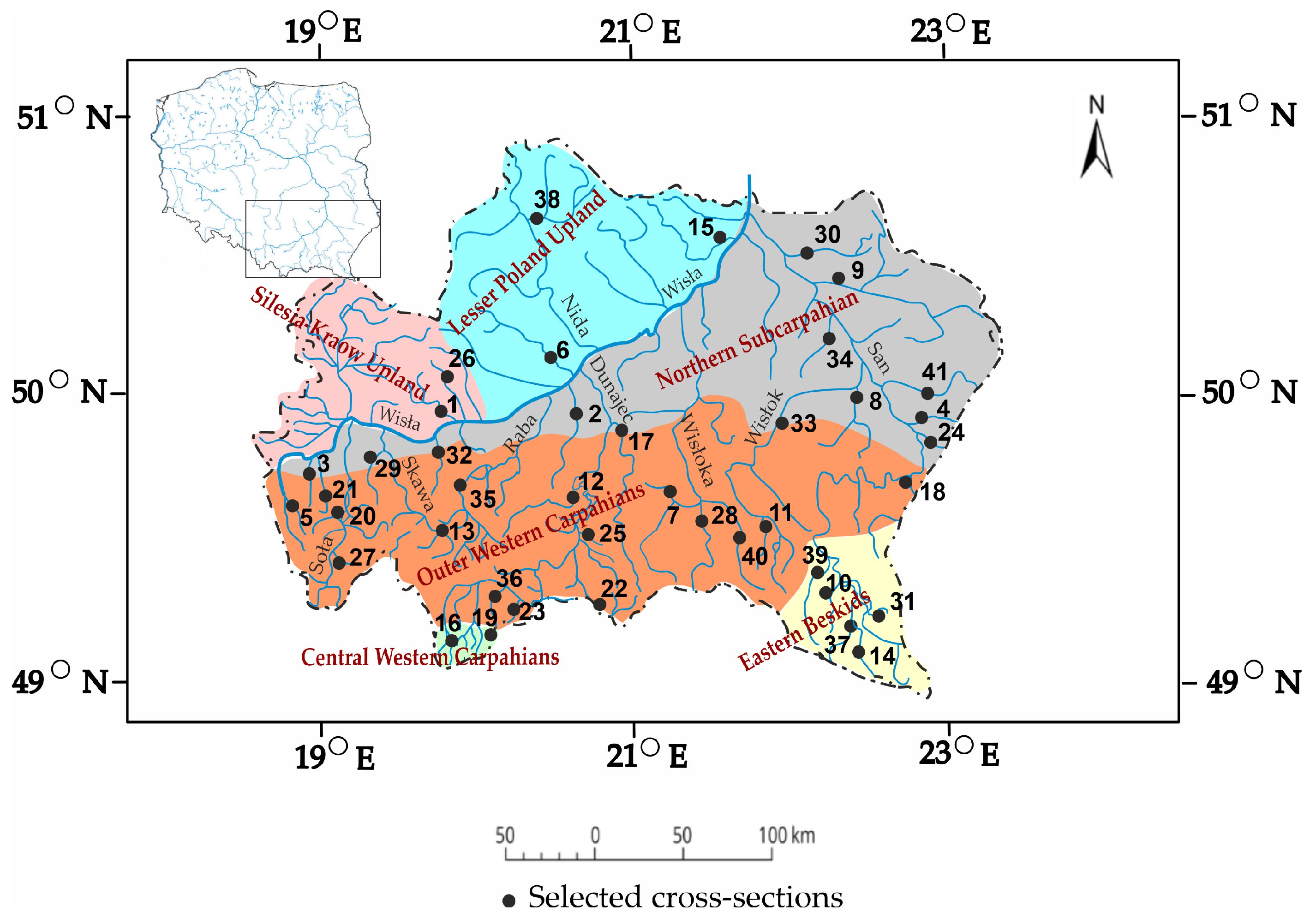
The analysis was conducted for 41 gauging stations representing small- and medium-sized catchments located within the Upper Vistula River Basin (Figure 1, Table 1). Catchments with an area exceeding 10,000 km2 were excluded from the analysis due to the potential influence of factors that may disturb the natural flow regime [9,39]. In addition, gauging stations with data gaps of one year or longer were not considered. Although it is difficult to completely exclude the influence of human activity on flow variability, the relative contribution of such disturbances must be considered [9].
According to [40], the analyzed cross-sections are located within the following physico-geographical regions: the Silesia–Krakow Upland, the Lesser Poland Upland, the Northern Subcarpathians, the Outer Western Carpathians, the Central Western Carpathians, and the Eastern Beskids (Figure 1, Table 1). The Silesia–Kraków Upland, the Lesser Poland Upland, the Outer Western Carpathians, the Central Western Carpathians, and the Eastern Beskids constitute the source areas of most tributaries of the Upper Vistula, whereas the Northern Subcarpathians form a transit zone for the Vistula and the estuary area for rivers and streams originating in the Subcarpathians and the Subcarpathian Upland. The basin area is also geologically diverse, which results in considerable soil variability. Four main types of relief can be distinguished in the study area: mountain, upland, foothill, and lowland [41].
The length of the dataset used in the analysis varies from one site to another. The minimum length of the daily flow series used in the analysis is 47 years, while the maximum length is 69 years (Table 1). The analysis of time series with different lengths and covering different periods may lead to biased or misleading interpretations [42]. Therefore, in addition to conducting the statistical analysis for the selected stations for the entire period of record, the stations were grouped into two groups. The decision to divide the data into two subsets represents a trade-off between longer time series available for fewer stations and shorter time series available for a larger number of stations. Group 1 was selected to obtain the longest possible measurement period. It included 25 river gauging stations with 58-year records (1961–2019). Group 2, in contrast, was selected to increase the number of gauging cross-sections. It comprised 41 river gauging stations with 38-year records (1981–2019) [9]. The choice of the 1981 cutoff for the shorter period was based solely on data availability, to include as many stations as possible while maintaining a sufficiently long record for trend analysis.
Next, annual minimum flows were extracted (Qmin). These values were computed over a hydrological year, i.e., from November 1 to October 31. Also, trend analysis was conducted for the number, duration, and deficit volumes of shallow and deep droughts identified using the threshold level method (TLM). For this purpose, the 90th (FDC90) and 70th (FDC70) percentiles of the annual flow duration curve were adopted as threshold levels. The use of both thresholds allows distinguishing between changes in the number of droughts and their severity, providing a more comprehensive assessment of drought dynamics under regional hydroclimatic variability. FDC70 captures moderate but more frequent low flows, reflecting early stages of drought development, while FDC90 is associated with the depletion of groundwater and overall water resources in the catchment. To exclude short-term events that could artificially influence low-flow characteristics—particularly their frequency—a minimum event duration of 7 days was assumed. Additionally, it was assumed that successive low-flow events separated by flows exceeding the threshold discharge and lasting no more than three days were combined into a single event. If a low-flow period begins in one hydrological year and ends in the next, it is not divided but attributed in its entirety to the year in which it is centered [37]. For both shallow and deep droughts, additional characteristics were determined, including: (i) drought frequency, defined as the ratio of the number of drought events to the number of years; (ii) drought-day frequency [days], defined as the ratio of the total number of drought days to the number of years; (iii) mean drought volume [m3], calculated as the ratio of the cumulative deficit volume to the number of drought events; and (iv) mean duration of a drought [days], defined as the ratio of the total number of drought days to the number of drought events.
The study also included a spatial analysis of drought variability characteristics, such as the number of events, mean drought duration (Tmean), and mean drought deficit (Vmean). The calculations were performed for the FDC90 and FDC70 thresholds for the period 1981–2019, during which a larger number of cross-sections were available. A separate map was developed for each analyzed parameter, allowing for the assessment of the spatial variability of hydrological drought characteristics and the identification of differences in drought risk levels within the study area. To assess the spatial variation in hydrological drought risk, a procedure similar to that proposed in [43] was applied, using characteristics describing low-flow events, i.e., the number of events (N), mean duration (Tmean), and mean deficit (Vmean). To ensure the comparability of the analyzed parameters, their value ranges were divided into four classes based on the quartiles of each parameter’s distribution (Table 2). It was assumed that the level of risk increases with increasing values of the analyzed indicators.
The World Meteorological Organization (WMO) recommends using the Mann–Kendall test to assess trends in low-flow characteristics. The Mann–Kendall test is a non-parametric, rank-based method widely used for detecting monotonic trends in time series [42]. Since hydrological data are often not normally distributed and may contain outliers or exhibit non-linear behavior, this test is considered particularly suitable for hydrological applications [1,4,9,44,45]. The Mann–Kendall test identifies monotonic increasing or decreasing trends by comparing successive observations in a time series [1]. The Mann–Kendall test was performed, accounting for autocorrelation in the time series, using the modified variance approach proposed by [46]. The analysis was conducted for low-flow deficits, which are the result of other low-flow characteristics, as well as for the FDC70 threshold, due to the lower occurrence of zero values. The correction was applied only to those time series in which statistically significant autocorrelation was detected. A positive value of the standardized test statistic Z indicates an upward trend, whereas a negative value indicates a downward trend [47]. In this study, a significance level of 0.05 was adopted. Accordingly, trends with p ≤ 0.05 were considered statistically significant.

3. Results

Low-flow events determined for the threshold level FDC90
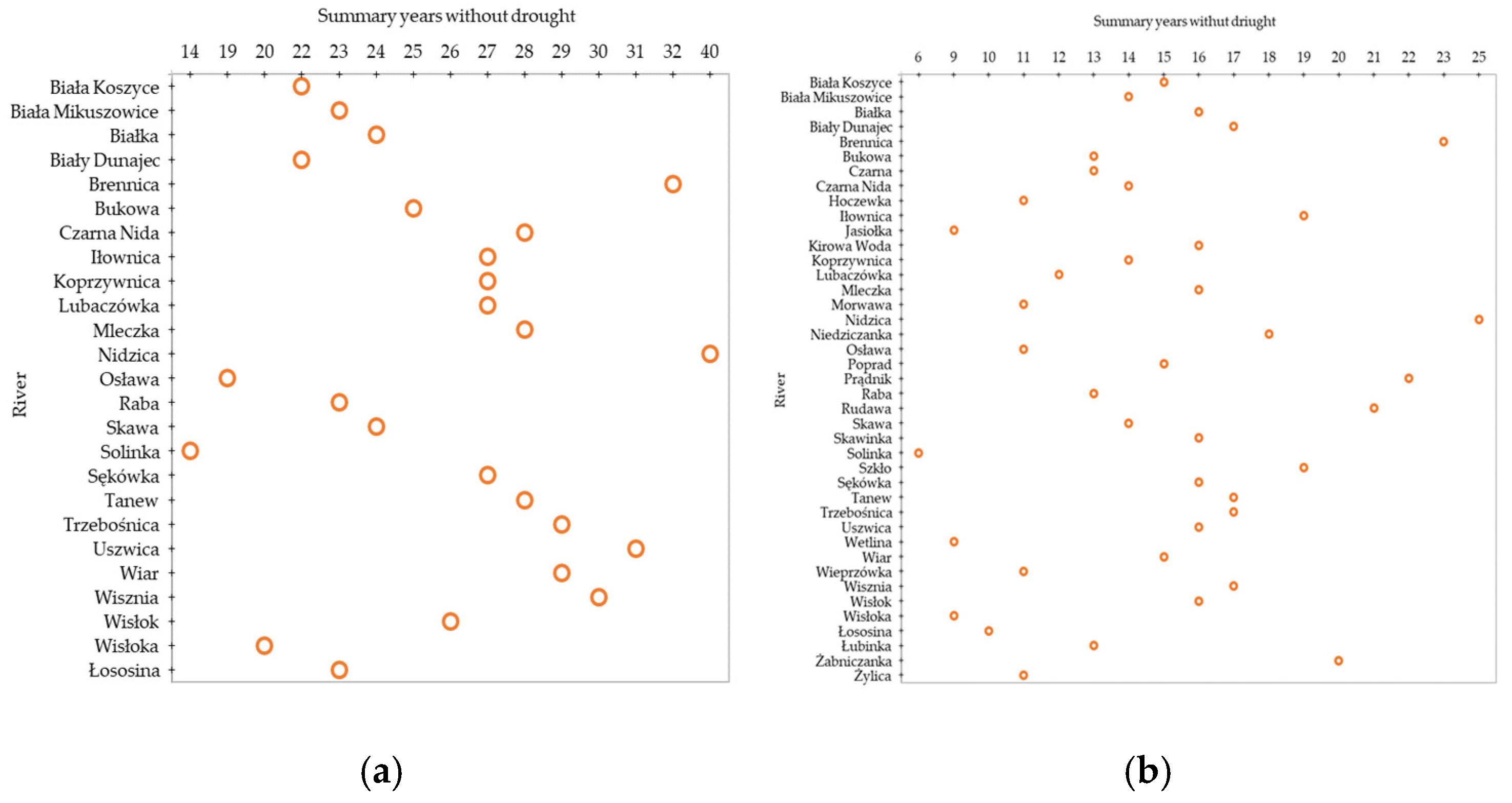
In the analyzed area, deep low flows occurred at all gauging stations during the period 1961–2019. For 18 of the 25 rivers in Group 1, deep drought events have been recorded almost annually since 2012. For deep low flows, the lowest number of years without an event was observed for the Solinka River, amounting to 14 years in the 1961–2019 period and 6 years in 1981–2019 (Figure 2). In contrast, the Niedzica River recorded the highest number of years without drought events (40 years in 1961–2019). In the shorter period (1981–2019), the Niedzica and Brennica Rivers each recorded more than 23 years without deep drought events.
The detailed characteristics of deep low flows (FDC90) are summarized in Table 3. For the period 1961–2019, the mean low-flow day frequency was approximately 27 days, while the mean low-flow duration was about 20 days. The Łysa Polana cross-section exhibited the highest values among the analyzed sections, with a mean low-flow duration of 38 days and a low-flow day frequency of 33 days. In contrast, the shortest mean low-flow duration was recorded for the Terka cross-section (approximately 17 days). For 20 out of 25 stations, the number of low-flow events exceeded one event on average.
In the 1981–2019 period, the mean low-flow day frequency increased slightly to approximately 29 days, while the mean low-flow duration was about 19 days. At 68% of the stations, the number of low-flow events exceeded 1.5 events.
Temporal and spatial variability of low-flow events for the threshold level FDC90
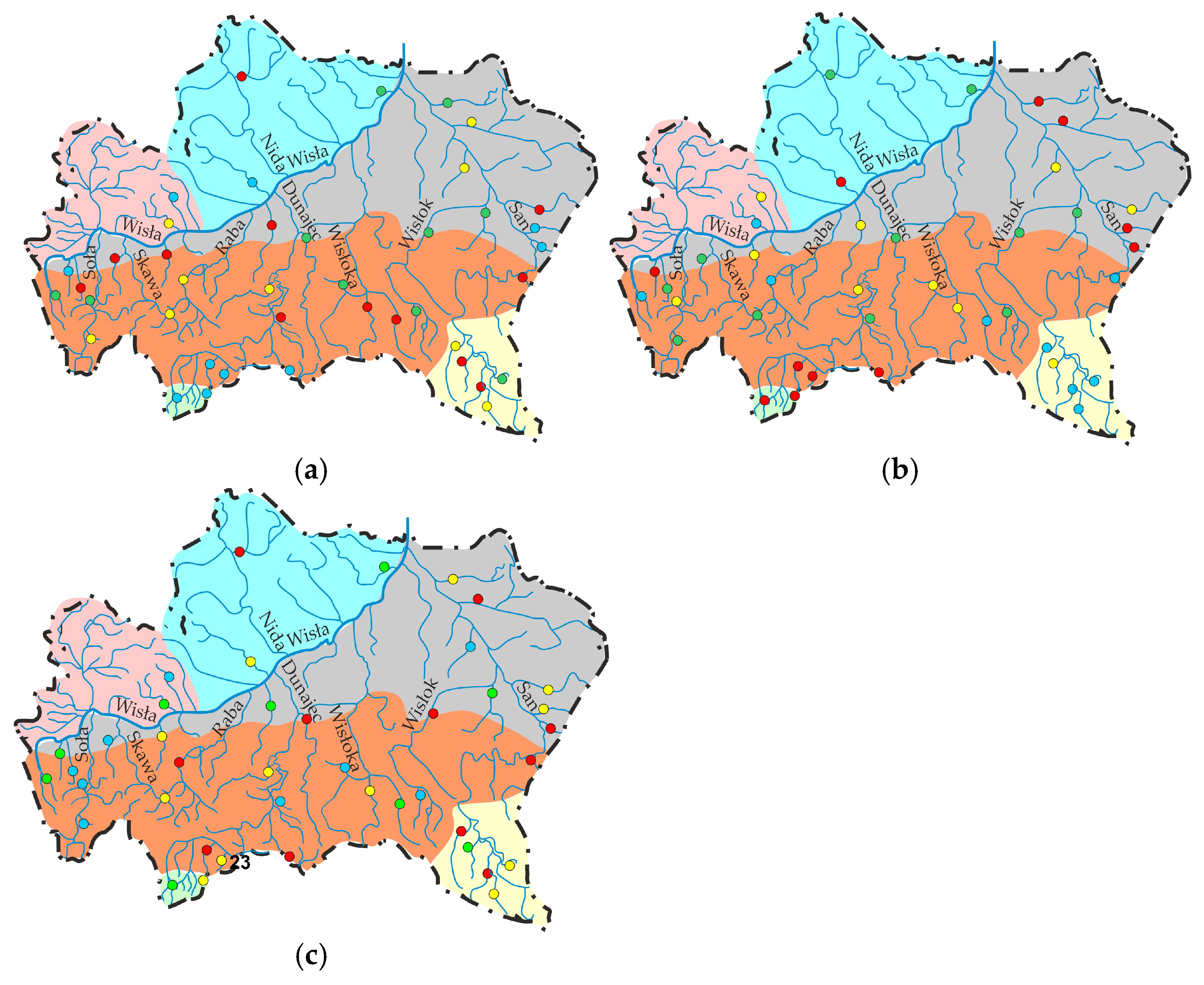
Spatial distributions of low flows for the FDC90 threshold level and for individual indicators—number of low flows, mean duration (Tmean), and mean volume (Vmean)—showed variability among the analyzed stations depending on the indicator. Some similarities between the maps were apparent, but there were also clear differences in the characteristics of low flows across different regions (Figure 3).
Stations located in the Silesia–Kraków Upland and Lesser Poland Upland exhibited moderate to high low-flow hazard, although the dominant parameter varied between locations. In the eastern and northeastern parts of the Northern Subcarpathians, the hazard was classified as very high due to event duration. In the Outer Western Carpathians, differences were also observed between individual stations. Based on the number of low-flow periods, the hazard ranged from low to very high. For stations in the southern part of the region, as well as in the Central Western Carpathians, low flows occurred rarely, but in terms of duration, the hazard was very high. Conversely, the central part of the Outer Western Carpathians was characterized by moderate to very high hazard in terms of the number of low flows, while duration and volume indicated low to moderate hazard. The Eastern Beskids showed a high number of low-flow events, with hazards ranging from moderate to high in terms of duration.
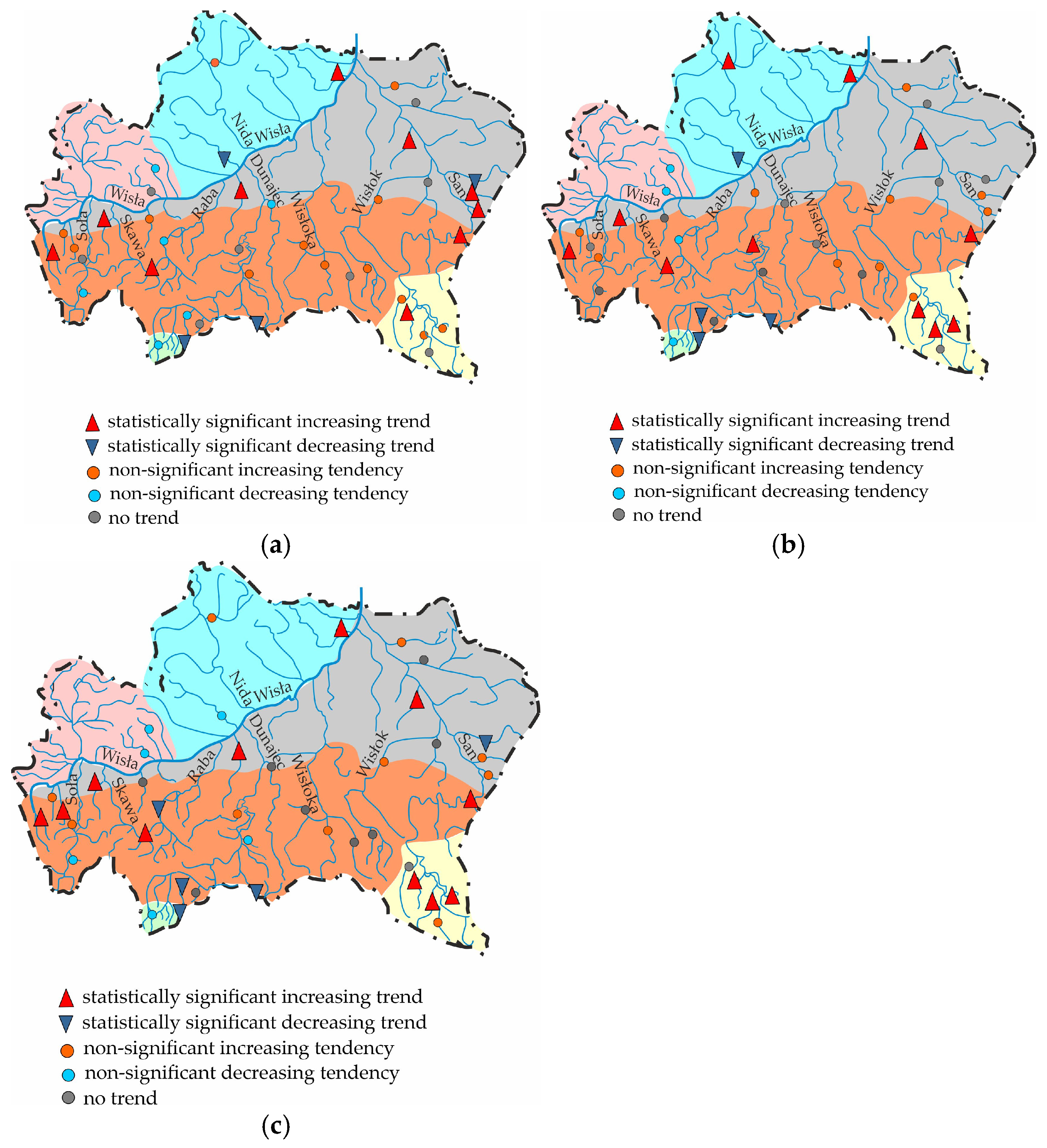
Trend analysis using the Mann–Kendall test revealed pronounced spatial differentiation in the evolution of hydrological low-flow characteristics across the studied regions. With regard to deep low flows (FDC90) and both multi-year periods, consistent spatial trends and tendencies in their occurrence were evident for all analyzed low-flow parameters (Table 4, Figure 4). During the period 1961–2019, most stations exhibited statistically significant increasing trends and non-significant tendencies. Statistically significant increasing trends were identified at five gauging stations, whereas at one station (Szaflary), a statistically significant decreasing trend was observed for all analyzed parameters (Table 4).
For the period 1981–2019, spatial analysis showed that, for stations located in the Northern Subcarpathians, Lesser Poland Upland, Eastern Beskids, and Outer Western Carpathians, upward trends and tendencies in the analyzed low-flow parameters prevailed. Statistically significant upward trends and tendencies were identified at seven stations (Czechowice, Hoczew, Jordanów, Koprzywnica, Krówniki, Rudze, and Sarzyna) for all analyzed parameters. In contrast, in Silesia–Krakow Upland and the Central Western Carpathians, only statistically significant decreasing trends and non-significant tendencies were visible. At two stations (Łysa Polana and Muszyna), statistically significant decreasing trends were observed for all low-flow parameters (Figure 4).
Low-flow events determined for the threshold level FDC70
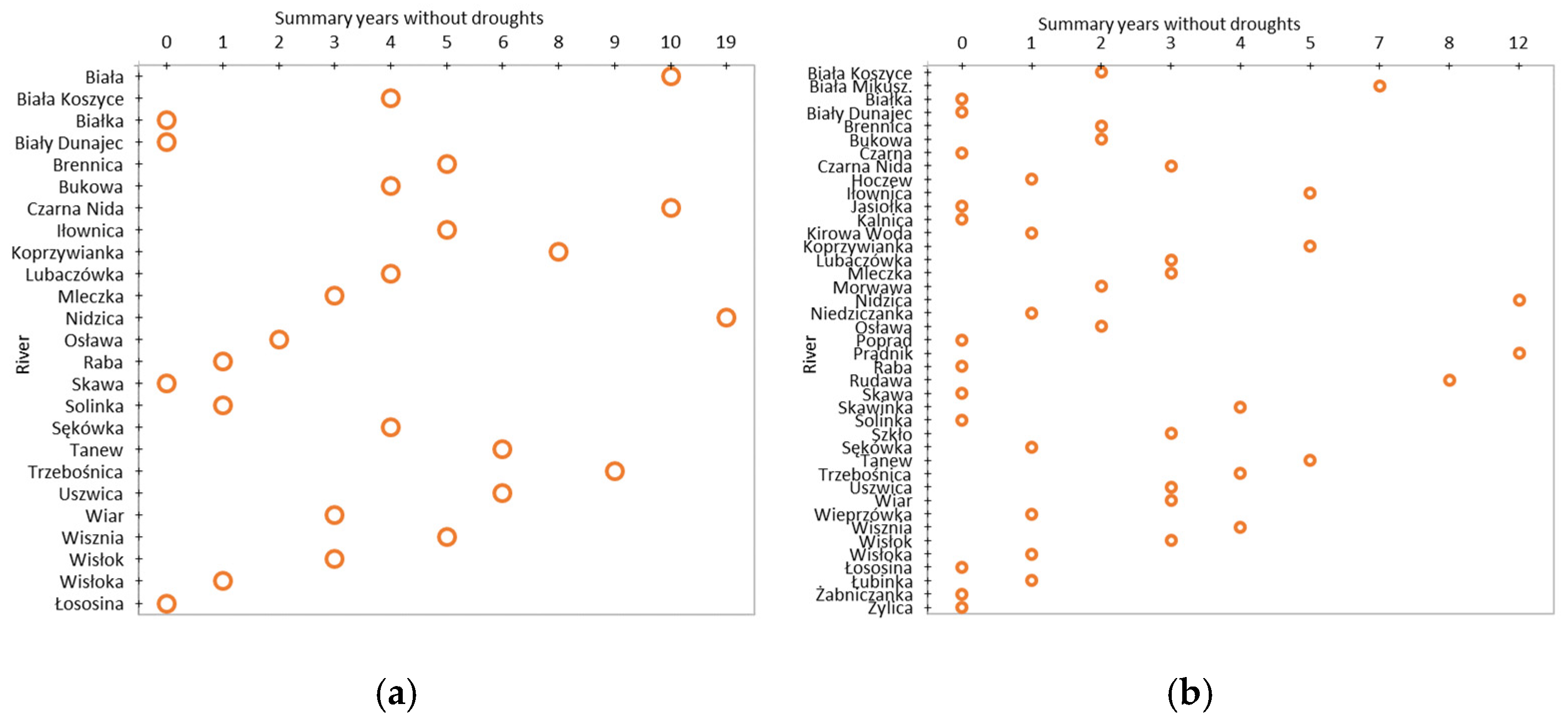
Shallow low-flow events occurred at all studied stations. During 1961–2019, four rivers (Łososina, Skawa, Białka, and Biały Dunajec) experienced shallow low flows annually. For the period 1981–2019, for which twice as many cross-sections were available, three times as many rivers (12) exhibited annual low-flow events (Figure 5). The largest number of years without shallow low flows during 1961–2019 was 19 years (Niedzica), and for 1981–2019 it was 12 years (Prądnik and Niedzica).
During 1961–2019, the mean low-flow day frequency was 89 days, while the mean low-flow duration was approximately 25 days. At the Jordanów cross-section, both the number of low-flow events and the low-flow day frequency were the highest among the analyzed rivers, amounting to about 6 events and 198 days, respectively. For the 1981–2019 period, low-flow day frequency and mean low-flow duration were approximately 98 days and 25 days, respectively (Table 5). At 38 of the 41 analyzed stations, the number of low-flow events exceeded 3 days. The highest low-flow day frequency, 203 days, was recorded for the Skawa River.
Temporal and spatial variability of low-flow events for the threshold level FDC70
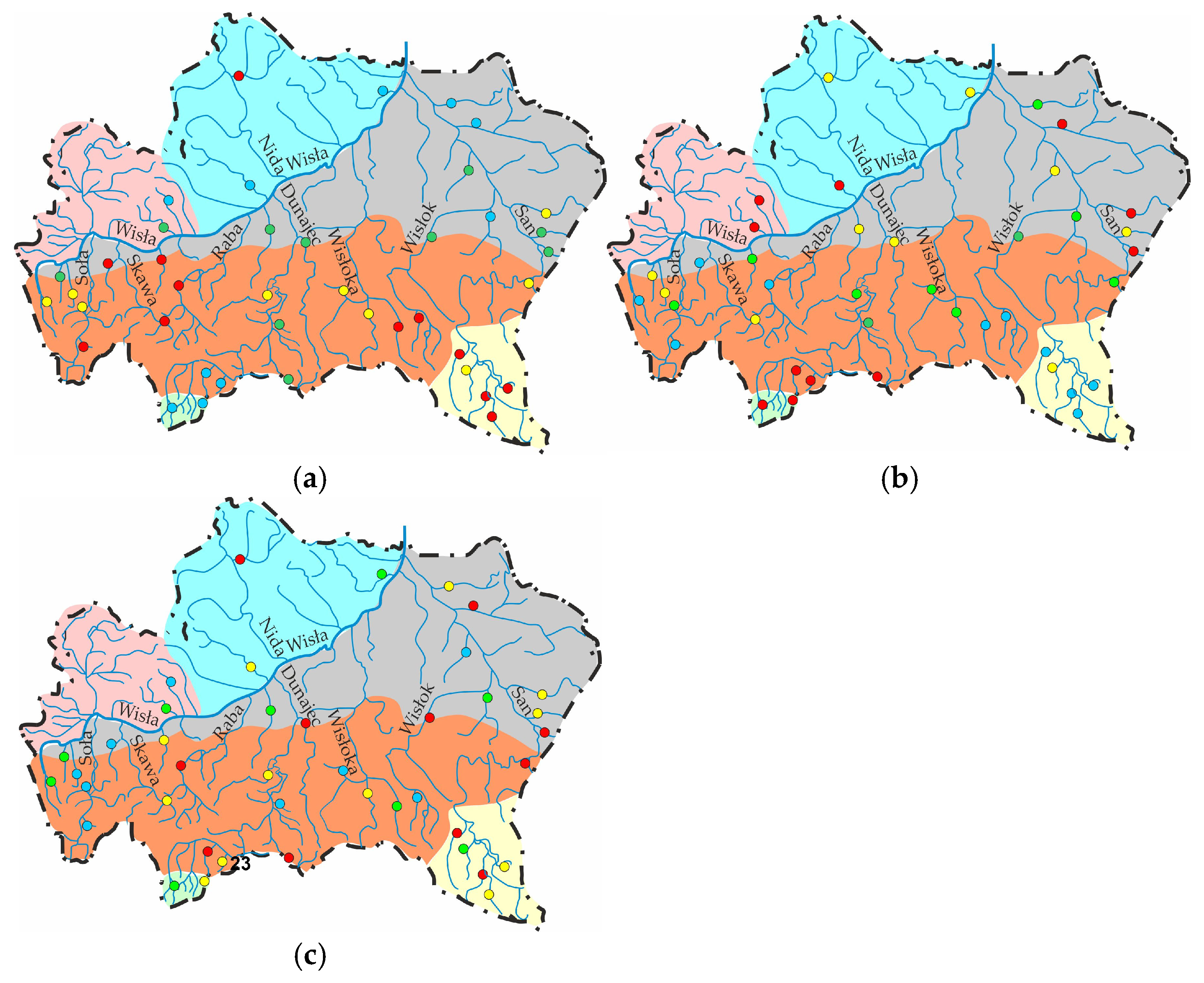
Similar to FDC90, the spatial distribution of shallow low-flow characteristics (FDC70) for the period 1981–2019 reveals clear differentiation among stations depending on the analyzed parameter (number of low flows, mean duration (Tmean), and mean deficit (Vmean)) (Figure 6). At stations located in the Silesia–Kraków Upland, hazard was classified as low to moderate based on the number and volume of low-flow events, while duration was classified as very high. Stations in the Lesser Poland Upland show variability across parameters; for example, at Tokarnia, hazard was very high for the number and volume of low-flow events but high for duration. In the eastern and northeastern parts of the Northern Subcarpathians, high and very high hazards were primarily associated with volume, while the number of low-flow events remained low to moderate. The Outer Western Carpathians displayed substantial internal variability, with low flows ranging from low to very high across the region. Southern stations, similar to those in the Central Western Carpathians, were characterized by low hazard but long-lasting low flows (duration classified as very high). In contrast, the central part of the Outer Western Carpathians exhibited a moderate to very high number of low-flow events, whereas duration and volume were generally classified as low to moderate. The Eastern Beskids were distinguished by a high number of shallow low-flow events; however, duration was predominantly classified as low across most stations.
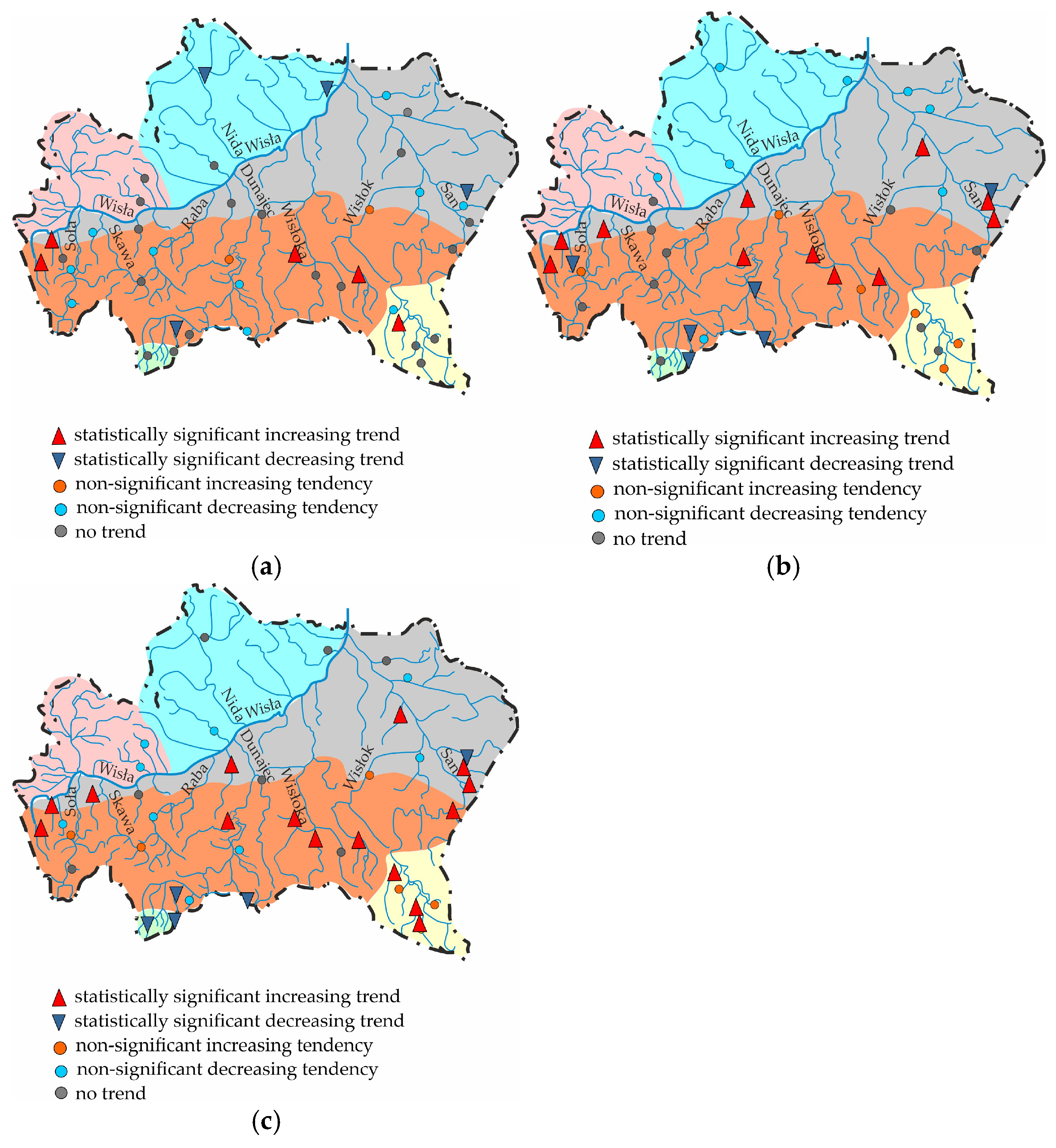
With regard to shallow low flows (FDC70) and both multi-year periods, similar trends and tendencies in occurrence were evident for all analyzed low-flow parameters (Table 6, Figure 7). During the period 1961–2019, most stations exhibited statistically significant increasing trends and tendencies. Statistically significant increasing trends and non-significant tendencies were observed at two cross-sections (Gorlice and Trzebośnica), whereas at Szaflary, a statistically significant decreasing trend and non-significant tendency were recorded for all analyzed parameters (Table 6).
For the years 1981–2019, at cross-sections located in the Eastern Beskids and Outer Western Carpathians, statistically significant increasing trends and non-significant tendencies in the analyzed low-flow parameters prevailed. Statistically significant increasing trends and tendencies were observed at four stations (Górki Wielkie, Czechowice, Gorlice, and Iskrzynia) for all analyzed parameters. In contrast, for the Lesser Poland Upland and Central Western Carpathians, statistically significant decreasing trends and non-significant tendencies were visible. At Szaflary and Zapałów, statistically significant decreasing trends and non-significant tendencies were recorded for low-flow events (Figure 7).
For the low-flow volume of the FDC70 and both analyzed multi-year periods, the autocorrelation coefficient was calculated, and the results are summarized in Table 7. The autocorrelation coefficient values for the analyzed series (1961–2019) ranged from −0.08 to 0.564. At 12 cross-sections, a significant positive first-order autocorrelation (r1 > 0.255) was observed. For the second analyzed multi-decade period (1981–2019), the autocorrelation coefficient ranged from −0.211 to 0.538. In most cross-sections (29), no statistically significant autocorrelation was detected (r1 > 0.315). However, the application of autocorrelation correction did not substantially affect the significance of the detected trends.
For low-flow parameters such as duration and volume, and for the periods 1961–2019 and 1981–2019, the mean magnitude of change was calculated. The calculations were performed for the 70% threshold level (FDC70), using Sen’s slope estimator for physiogeographical regions (Table 8). For the Central Western Carpathians, mean values of both duration and volume of low-flow events showed a decrease. The mean decadal change for 1961–2019 was about −6 days for duration and −530 000 m3 for volume (based on 25 catchments), while for 1981–2019 it was about −8 days and −700 000 m3 (41 catchments). In contrast, the Northern Subcarpathians and Eastern Beskids exhibited increases in both duration and volume. For 1961–2019, the mean decadal change ranged from +1.5 days for duration to +76 000 m3 (Northern Subcarpathians) and +260 000 m3 (Eastern Beskids) for volume. For 1981–2019, duration increased by about +1 day (Northern Subcarpathians) and +5 days (Eastern Beskids), with volume changes of +265 000 m3 and +424 000 m3, respectively.
Annual minimum flow trend
Trends in annual minimum flows (Qmin) were analyzed for two multi-year periods (1961–2019 and 1981–2019) using the Mann–Kendall test (Table 9). For 1961–2019, statistically significant trends were observed at six cross-sections. A statistically significant increasing trend was recorded at Górki Wielkie, whereas statistically significant decreasing trends were identified at Sarzyna, Szaflary, Nienowice, Jordanów, and Koprzywnica. During 1981–2019, statistically significant increasing trends were found at Łysa Polana, Szaflary, and Muszyna, while statistically significant decreasing trends were observed at Rzeszów, Nienowice, Czechowice, and Rudze.
Different trend directions were observed between the two periods for the Jakubkowice, Ruda Jastkowska, Gorliczyna, and Harasiuki cross-sections. For 1961–2019, the Jakubkowice, Ruda Jastkowska, and Gorliczyna cross-sections exhibited statistically significant increasing trends and non-significant tendencies in Qmin, whereas during 1981–2019, Qmin exhibited statistically significant decreasing trends and non-significant tendencies compared to the longer period. Conversely, the Harasiuki cross-section showed the opposite pattern, with Qmin increasing in the shorter period relative to 1961–2019.

4. Discussion

This section is organized to follow the key findings presented in the Section 3, addressing temporal and spatial variability, trends at different low-flow thresholds, multi-year period comparisons, and seasonal patterns.
Temporal and spatial variability of low flows
Building on the results for FDC90 low-flow events, this section examines their temporal and spatial variability across the study area. The results of this study indicate a clear intensification of hydrological low-flow characteristics in the Upper Vistula River Basin, particularly in terms of duration and volume. The Upper Vistula area analyzed in this study is considered moderately to highly vulnerable to hydrological drought [37]. Spatial differentiation of low-flow parameters suggests that susceptibility varies between physiographic regions and depends on the applied threshold level (FDC70 vs. FDC90). This is confirmed by the analyses conducted by [37] for the Upper Vistula River Basin. Shallow low-flow events (FDC70) occur almost annually in many catchments, whereas deep events (FDC90) are less frequent but more severe, with significant implications for water management. The average number of years with drought for FDC70 was 51 for the 1961–2019 period and 35 for the 1981–2019 period. Using the FDC90 threshold reduces the number of gauging stations with zero years without droughts. Similar relationships between the number, duration, and volume of low-flow events and the applied threshold level were reported in [38], which is consistent with our findings. However, some differences may arise due to variations in the study period (1999–2022 in [38]) and the smaller number of catchments analyzed. Similar average values for catchments in the Upper Vistula Basin were reported in [37], where they reached 29 years for FDC70 and 24 years for FDC90. The analysis indicates that the characteristics of low-flow events vary depending on the physical and geographical features of the catchment area, which is consistent with previous studies [26]. In the Central Western Carpathians, low flows occur relatively rarely but tend to persist longer, reflecting a regime characterized by a low frequency of prolonged drought episodes. Conversely, the Eastern Beskids exhibit relatively short, low flows despite a locally high number of low-flow events and relatively large volumes, indicating a more dynamic hydrological response with rapid depletion and recovery. Similar relationships between rare but long-lasting low flows in the Central Western Carpathians were reported in [43], which analyzed a comparable multi-year period (1975–2019) and 49 selected gauging stations located in the Upper Vistula Basin. However, in contrast to our study, ref. [43] included multiple stations along the same river, whereas this study considers only one gauging station per river. For the Eastern Beskids, similarly to our findings, low flows were also characterized by a large number but short durations in the study [43]. This is related to a more dynamic hydrological response with fast depletion and restoration of resources, which is largely due to local soil permeability, catchment retention capacity, and precipitation distribution. Low-permeability soils combined with intensive summer rainfall in the Eastern Beskids cause fast surface runoff, limiting permanent retention, while in the Central Western Carpathians, varied soil permeability and frequent orographic rainfall slow down the processes associated with prolonged low-flow conditions due to higher storage and delayed system response.
In the Northern Subcarpathian region, soils with average permeability and moderate precipitation cause rare but prolonged low-flow events of moderate volume, while in the Silesian-Krakow Upland, low flows in terms of volume are classified as low to moderate risk. These relationships are consistent with local hydrological, soil, and climatic conditions, and similar results were obtained by [37,43], showing that droughts in the Eastern Beskids and Outer Western Carpathians are short [43]. Overall, these comparisons confirm that the observed spatial variability of low-flow characteristics is consistent with previous studies, while the identified differences can be largely explained by variations in catchment selection and local hydrological conditions.
Comparison of shallow and deep low-flow trends
Following the analysis of temporal and spatial variability, trends between shallow (FDC90) and deep (FDC70) low-flow events were compared to identify differences across thresholds. The comparison reveals both similarities and regional contrasts between the two thresholds. In the Central Western Carpathians and the Eastern Beskids, consistent statistically significant trends are observed for both thresholds, indicating a strong control of the regional hydrological regime on low-flow dynamics. In the Central Western Carpathians, statistically significant decreasing trends and non-significant tendencies dominate, likely reflecting higher groundwater storage capacity and more persistent precipitation, which buffer the development of prolonged low-flow conditions. In contrast, the Eastern Beskids are characterized by predominantly statistically significant increasing trends for both thresholds, which may be associated with limited retention capacity, low-permeability soils, and intense but short-lived summer rainfall leading to rapid runoff and reduced effective recharge.
In the Northern Subcarpathians and the Outer Western Carpathians, trends differ between thresholds. For deep low flows (FDC90), statistically significant increasing trends prevail, whereas shallow low flows (FDC70) show a more heterogeneous pattern. This discrepancy suggests that deep low flows are more sensitive to long-term groundwater depletion and increasing evapotranspiration, while shallow low flows respond more dynamically to short-term precipitation variability.
Comparative analysis of multi-year periods
Next, trends over two multi-year periods (1961–2019 and 1981–2019) were compared to assess changes in low-flow characteristics. The comparison indicates that although the average number and duration of low-flow events remain similar, the frequency of low-flow days increases in the more recent period, particularly for FDC70. Substantial differences between the two periods and thresholds (FDC90 and FDC70) are particularly evident in statistically significant trends. The implications of this data-driven period selection for trend detection are noted, as the shorter period (1981–2019) may exclude some early historical variability while ensuring broader station coverage for a robust analysis of recent trends. A greater number of statistically significant trends was detected for 1981–2019. This may be partly explained by the higher number of gauging stations included in the shorter period. Taking into account only stations that are common to both periods, most low-flow events occurred in 1981–2019, accounting for 55% to 87% of all recorded events, depending on the station, compared to the years 1961–2019. This suggests a higher concentration of low-flow events in the more recent decades. The lower number of low-flow events in 1961–1980 likely attenuated the overall trend magnitude in the longer time series. These findings are consistent with observed regional warming, reflected in a statistically significant increase in mean annual air temperature over recent decades [48].
The impact of human influence cannot be entirely excluded. Although stations with a near-natural regime were selected, some uncertainty remains. Potential human influences, such as small reservoirs and local water abstractions, cannot be fully ruled out, even in small- and medium-sized catchments. Between 1961 and 2019, some catchment areas may have experienced changes in groundwater or surface water abstraction that were not fully captured in official records. The lack of detailed quantitative data limits the ability to completely distinguish anthropogenic influences. A comparative analysis of minimum annual flows for stations located in the Upper Vistula River Basin indicates spatial variation in this characteristic. For stations in the southern part of the area (Central Western Carpathians), increasing trends and tendencies were recorded, while for stations in the Western Beskids, decreasing trends and tendencies were observed. Similar relationships with regard to Q7_min in southern Poland were shown by [9].
Seasonal patterns of low flows
Finally, seasonal patterns of low-flow events were examined to highlight intra-annual variability and potential implications for water management. Seasonal analysis indicates a predominance of summer low flows, consistent with previous studies conducted in Poland [35,47]. Although such events occur in both summer and winter, the long-term analysis (1961–2019) shows a clear summer dominance. This pattern is primarily linked to increased evapotranspiration during the warm season, reduced effective rainfall, and longer dry spells. Despite high-intensity summer precipitation, its short duration limits groundwater recharge and enhances rapid runoff. Together with the observed rise in air temperature [48] and seasonal redistribution of precipitation [47], these factors increase the likelihood of soil moisture depletion and hydrological drought development during summer.

5. Conclusions

This article analyzes low-flow events, both shallow and deep, in rivers of the Upper Vistula River Basin. The analysis was conducted for two datasets: 25 gauging stations with 58-year-long daily discharge records (1961–2019) and 41 stations with 38-year-long records (1981–2019). Both shallow (FDC70) and deep (FDC90) low-flow events occurred at all analyzed cross-sections. Deep low-flow events have been observed almost every year across many cross-sections since 2012. The average duration of deep low-flow events was similar for both periods. Seasonal analysis revealed that summer low flows were more frequent and intense than winter low flows. Most rivers showed increasing trends in low-flow events, with several of these being statistically significant.
These findings highlight that analyzing low-flow characteristics in the Upper Vistula River Basin is crucial for predicting and mitigating the negative effects of low flows, planning water resources management, and preparing for potential water crises. This knowledge can help identify catchments particularly vulnerable to frequent or prolonged low flows and guide the implementation of water management strategies during low-flow periods, including measures to reduce impacts over short-term, seasonal, and long-term timescales.

Funding

This research received no external funding.

Institutional Review Board Statement

Not applicable.

Informed Consent Statement

Not applicable.

Data Availability Statement

Data are publicly available from the Institute of Meteorology and Water Management—National Research Institute (IMGW-PIB), Poland: https://danepubliczne.imgw.pl (accessed on 22 March 2026).

Conflicts of Interest

The author declares no conflicts of interest.

References

  1. Coch, A.; Mediero, L. Trends in low flows in Spain in the period 1949–2009. Hydrol. Sci. J. 2016, 61, 568–584. [Google Scholar] [CrossRef]
  2. Yaseen, M.; Khan, K.; Nabi, G.; Bhatti, H.A.; Afzal, M. Hydrological trends and variability in the Mangla watershed. Sci. Int. 2015, 27, 1327–1335. [Google Scholar]
  3. IPCC Climate Change 2007. The Physical Science Basis, Contribution of Working Group I to the Fourth Assessment Report of the Intergovernmental Panel on Climate Change (IPCC), Summary for Policymakers 2007. Available online: http://www.ipcc.ch (accessed on 22 March 2026).
  4. Fiala, T.; Ouarda, T.B.M.J.; Hladný, J. Evolution of low flows in the Czech Republic. J. Hydrol. 2010, 393, 206–218. [Google Scholar] [CrossRef]
  5. Durodola, O.S. The Impact of Climate Change Induced Extreme Events on Agriculture and Food Security: A Review on Nigeria. Agric. Sci. 2019, 10, 487–498. [Google Scholar] [CrossRef]
  6. Yaseen, M.; Latif, Y.; Waseem, M.; Leta, M.K.; Abbas, S.; Akram Bhatti, H. Contemporary Trends in High and Low River Flows in Upper Indus Basin, Pakistan. Water 2022, 14, 337. [Google Scholar] [CrossRef]
  7. Yennigün, K.; Gümüş, V.; Bulut, H. Trends in streamflow of the Euphrates basin, Turkey. Water Manag. 2008, 161, 189–198. [Google Scholar] [CrossRef]
  8. Birsan, M.V.; Zaharia, L.; Chendes, V.; Branescu, E. Seasonal trends in Romanian streams. Hydrol. Process. 2014, 28, 4496–4505. [Google Scholar] [CrossRef]
  9. Piniewski, M.; Marcinkowski, P.; Kundzewicz, Z.W. Trend detection in river flow indices in Poland. Acta Geophys. 2018, 66, 347–360. [Google Scholar] [CrossRef]
  10. Hasan, H.H.; Mohd Razali, S.F.; Muhammad, N.S.; Ahmad, A. Research Trends of Hydrological Drought: A Systematic Review. Water 2019, 11, 2252. [Google Scholar] [CrossRef]
  11. Stahl, K.; Hisdal, H.; Tallaksen, L.M.; van Lanen, H.A.J.; Hannaford, J.; Sauquet, E. Trends in Low Flows and Streamflow Droughts Across Europe; UNESCO: Paris, France, 2008. [Google Scholar]
  12. Istanbulluoglu, E.; Wang, T.; Wright, O.M.; Lenters, J.D. Interpretation of hydrologic trends from a water balance perspective: The role of groundwater storage in the Budyko hypothesis. Nat. Resour. 2012, 48, 607. [Google Scholar] [CrossRef]
  13. Baran-Gurgul, K.; Bodziony, M. The Social-Economic Drought and The Hydrological Drought in the Upper Vistula River Basin. J. Civ. Eng. Environ. Archit. 2015, XXXII, 19–36. (In Polish) [Google Scholar] [CrossRef]
  14. Mishra, A.K.; Desai, V.R. Drought forecasting using stochastic models. Stoch. Environ. Res. Risk Assess. 2005, 19, 326–339. [Google Scholar] [CrossRef]
  15. She, D.; Xia, J. The spatial and temporal analysis of dry spells in the Yellow River basin, China. Stoch. Environ. Res. Risk Assess. 2013, 27, 29–42. [Google Scholar] [CrossRef]
  16. Li, L.; She, D.; Zheng, H.; Lin, P.; Yang, Z.L. Elucidating diverse drought characteristics from two meteorological drought indices (SPI and SPEI) in China. J. Hydrometeorol. 2020, 21, 1513–1530. [Google Scholar] [CrossRef]
  17. Wilhite, D.A. Drought: A Global Assessment; Routledge Publishers: London, UK, 2000. [Google Scholar] [CrossRef]
  18. IDMP. Drought and Water Scarcity; WMO No 1284; Global Water Partnership: Stockholm, Sweden; World Meteorological Organization: Geneva, Switzerland, 2022. [Google Scholar]
  19. Hammond, J.C.; Simeone, C.; Hecht, J.S.; Hodgkins, G.A.; Lombard, M.; McCabe, G.; Wolock, D.; Wieczorek, M.; Olson, C.; Caldwell, T.; et al. Going beyond low flows: Streamflow drought deficit and duration illuminate distinct spatiotemporal drought patterns and trends in the U.S. during the last century. Water Resour. Res. 2022, 58, e2022WR031930. [Google Scholar] [CrossRef]
  20. Tallaksen, L.; van Lanen, H.A.J. Hydrological Drought. Processes and Estimation Methods for Streamflow and Groundwater; Elsevier: Amsterdam, The Netherlands, 2004; 579p. [Google Scholar]
  21. Van Loon, A.F. Hydrological drought explained. WIREs Water 2015, 2, 359–392. [Google Scholar] [CrossRef]
  22. Wilhite, D.A.; Glantz, M.H. Understanding the drought phenomenon: The role of definitions. Water Int. 1985, 10, 111–120. [Google Scholar] [CrossRef]
  23. WMO. International Meteorological Vocabulary; No. 182; World Meteorological Organization: Geneva, Switzerland, 1992. [Google Scholar]
  24. Linsley, R.K., Jr.; Kohler, M.A.; Paulhus, J.L.H. Hydrology for Engineers, 2nd ed.; McGraw-Hill, Kogukusha: Tokyo, Japan, 1975. [Google Scholar]
  25. Yevjevich, V. An objective approach to definition and investigations of continental hydrologic droughts. Hydrol. Pap. Colo. State Univ. 1967, 23, 1–18. [Google Scholar]
  26. Baran-Gurgul, K.; Raczyński, K. Dynamika występowania niżówek w rzekach górskich i wyżynnych na przykładzie Wisłoki i górnego Wieprza. Cz. 2. Zmienność wieloletnia. Woda-Sr.-Obsz. Wiej. 2017, 17, 5–17. (In Polish) [Google Scholar]
  27. Birsan, M.W.; Molnar, P.; Burlando, P.; Pfaundler, M. Steamflow trends in Switzerland. J. Hydrol. 2005, 314, 312–329. [Google Scholar] [CrossRef]
  28. Zelenakova, M.; Purcz, P.; Solakova, T.; Simonova, D.; Harbulakova, V.O. Trends in minimal stream flows at eastern Slovakia. In Proceedings of the 9th International Conference: Environmental Engineering, Vilinius, Lithuania, 22–23 May 2014. [Google Scholar]
  29. Hannaford, J.; Marsh, T. An assessment of trends in UK runoff and low flow using a network of undisturbed catchments. Int. J. Climatol. 2006, 26, 1237–1253. [Google Scholar] [CrossRef]
  30. Hisdal, H.; Stahl, K.; Tallaksen, L.M.; Demuth, S. Have streamflow droughts in Europe become more se-vere or frequent. Int. J. Climatol. 2001, 21, 317–333. [Google Scholar] [CrossRef]
  31. Hodgkins, G.A.; Renard, B.; Whitfield, P.H.; Laaha, G.; Stahl, K.; Hannaford, J.; Burn, D.H.; Westra, S.; Fleig, A.K.; Araújo Lopez, W.T.; et al. Climate driven trends in historical extreme low streamflows on four continents. Water Resour. Res. 2024, 60, e2022WR034326. [Google Scholar] [CrossRef]
  32. Pociask-Karteczka, J. River Runoff Response to Climate Changes in Poland (East-Central Europe); No. 344; IAHS Publication: Oxfordshire, UK, 2011; pp. 182–187. [Google Scholar]
  33. Banasik, K.; Hejduk, L.; Hejduk, A.; Kaznowska, E.; Banasik, J.; Byczkowski, A. Long-term variability of runoff from a small catchment in the region of the Kozienice Forest. Sylwan 2013, 158, 578–586. [Google Scholar]
  34. Ilnicki, P.; Farat, R.; Górecki, K.; Lewandowski, P. Impact of climatic change on river discharge in the driest region of Poland. Hydrol. Sci. J. 2014, 59, 1117–1134. [Google Scholar] [CrossRef]
  35. Somorowska, U. Climate-driven changes to streamflow patterns in a groundwater-dominated catchment. Acta Geophys. 2017, 65, 789–798. [Google Scholar] [CrossRef]
  36. Wrzesiński, D.; Sobkowiak, L. Detection of changes in flow regime of rivers in Poland. J. Hydrol. Hydromech. 2018, 66, 55–64. [Google Scholar] [CrossRef]
  37. Baran–Gurgul, K. Przestrzenno-Czasowa Analiza Ryzyka Wystąpienia Niżówek Maksymalnych w Prawobrzeżnej Części Zlewni Górnej Wisły; Zeszyt 44; Monografie Komitetu Gospodarki Wodnej Polskiej Akademii Nauk: Warszawa, Poland, 2021. (In Polish) [Google Scholar]
  38. Janicka-Kubiak, E. Hydrological drought trends and seasonality in selected Polish catchments between 1993 and 2022 using a threshold based approach. Sci. Rep. 2025, 15, 40454. [Google Scholar] [CrossRef]
  39. Leasure, D.R.; Magoulick, D.D.; Longing, S.D. Natural flow regimes of the Ozark-Ouachta interior highlands region. River Res. Appl. 2016, 32, 18–35. [Google Scholar] [CrossRef]
  40. Richling, A.; Solon, J.; Macias, A.; Balon, J.; Borzyszkowski, J.; Kistowski, M. Regionalna Geografia Fizyczna Polski; Bogucki Wyd. Naukowe: Poznań, Poland, 2021. [Google Scholar]
  41. Chełmicki, W. Location, division and features of the basin. In Upper Vistula Basin; Dynowska, I., Maciejewski, M., Eds.; PWN: Kraków, Poland, 1991. (In Polish) [Google Scholar]
  42. Douglas, E.M.; Vogel, R.M.; Kroll, C.N. Trends in Foods and low Flows in the United States: Impact of spatial correlation. J. Hydrol. 2000, 240, 90–105. [Google Scholar] [CrossRef]
  43. Baran-Gurgul, K. The spatial and temporal variability of hydrological drought in the Polish Carpathians. J. Hydrol. Hydromech. 2022, 70, 156–169. [Google Scholar] [CrossRef]
  44. Kundzewicz, Z.W.; Robson, A.J. Change detection in hydrological records—A review of the methodology. Hydrol. Sci. J. 2004, 49, 7–19. [Google Scholar] [CrossRef]
  45. Yue, S.; Kundzewicz, Z.W.; Linghui, W. Detection of changes. In Changes in Flood Risk in Europe; Kundzewicz, Z.W., Ed.; IAHS Press: Wallingford, UK, 2012. [Google Scholar]
  46. Yue, S.; Wang, C. The Mann-Kendall Test Modified by Effective Sample Size to Detect Trend in Serially Correlated Hydrological Series. Water Resour. Manag. 2004, 18, 201–218. [Google Scholar] [CrossRef]
  47. Markiewicz, I. Okresy Bez Opadu Oraz Z Opadem Bardzo Silnym W Półroczu Letnim W Dorzeczu Górnej Wisły. Przegląd Geofiz. 2021, LXVI, 187–208. [Google Scholar] [CrossRef]
  48. Klimat Polski 2023. IMGW PIB. Available online: https://www.imgw.pl/sites/default/files/2024-05/imgw-pib_klimat_polski_2023_raport.pdf (accessed on 20 January 2026).
Figure 1. Location of analyzed river basins in the area of the Upper Vistula Basin (numbers denote station identifiers; detailed information: river and cross-section is provided in Table 1).
Applsci 16 03160 g001
Figure 2. Number of years without a deep low flow for years: (a) 1961–2019; (b) 1981–2019.
Applsci 16 03160 g002
Figure 3. Spatial distribution of low flows for FDC90 during 1981–2019 for: (a) number of low-flow events; (b) mean duration (Tmean), (c) mean volume (Vmean); (Point colors correspond to the low-flow category; see Table 2).
Applsci 16 03160 g003
Figure 4. Statistically significant trends and non-significant tendencies for low-flow events for FDC90 during 1981–2019: (a) number of low flows; (b) duration of low-flow events; (c) volume of low-flow events.
Applsci 16 03160 g004
Figure 5. Number of years without a shallow drought for years: (a) 1961–2019; (b) 1981–2019.
Applsci 16 03160 g005
Figure 6. Spatial distribution of low-flow events for FDC70 during 1981–2019 for: (a) number of low-flow events; (b) mean duration (Tmean); (c) mean volume (Vmean); (Point colors correspond to the low-flow category; see Table 2).
Applsci 16 03160 g006
Figure 7. Statistically significant trends and non-significant tendencies for low-flow events for FDC70 during 1981–2019: (a) number of low flows; (b) duration of low-flow events; (c) volume of low-flow events.
Applsci 16 03160 g007
Table 1. Characteristics of the analyzed cross-sections.
NoRiverCross-Section LatitudeLongitudePeriod of
Record
Catchment Area [km2]Physico-Geographical Region
1RudawaBalice50.093019.80661971–2019283.09Silesia–Krakow Upland
2UszwicaBorzęcin50.065020.70551956–2020260.65Northern Subcarpathian
3BrennicaGórki Wielkie49.753618.87081956–202081.47Northern Subcarpathian
4SzkłoCharytany50.003322.93861971–2020754.63Northern Subcarpathian
5IłownicaCzechowice49.913618.98631951–2020201.34Northern Subcarpathian
6NidzicaDobiesławice50.304120.47411957–2020643.2Lesser Poland Upland
7SękówkaGorlice49.654721.17021961–2020122.21Outer Western Carpath.
8MleczkaGorliczyna50.085522.48721951–2020525.09Northern Subcarpathian
9TanewHarasiuki50.477522.47411951–20202029.55Northern Subcarpathian
10HoczewkaHoczew49.423822.32831971–2020169.06Eastern Beskids
11MorwawaIskrzynia49.677221.86441973–2020108.01Outer Western Carpath.
12ŁososinaJakubkowice49.739420.63001961–2020346.48Outer Western Carpath.
13SkawaJordanów49.636319.83001961–202096.6Outer Western Carpath.
14KalnicaWetlina49.188822.42911972–2020118.91Eastern Beskids
15KoprzywiankaKoprzywnica50.595821.57301951–2019500.15Lesser Poland Upland
16Kirowa WodaKościelisko49.275819.86801966–201934.72Central Western Carpath.
17BiałaKoszyce49.997220.94941951–2019954.41Northern Subcarpathian
18WiarKrówniki49.766922.82301951–2019785.92Outer Western Carpath.
19BiałkaŁysa Polana49.26320.11501961–202063.54Central Western Carpath.
20ŻylicaŁodygowice49.727219.13611972–202051.83Outer Western Carpath.
21BiałaMikuszowice49.779419.07411956–202032.83Outer Western Carpath.
22PopradMuszyna49.350020.88521971–20201698.94Outer Western Carpath.
23NiedziczankaNiedzica49.411320.30221971–2020135.88Outer Western Carpath.
24WiszniaNienowice49.937722.91691951–20201188.17Northern Subcarpathian
25ŁubinkaNowy Sącz49.635220.70471971–202066.37Outer Western Carpath.
26PrądnikOjców50.194719.83251971–202068.69Silesia–Krakow Upland
27ŻabniczankaŻabnica49.564719.18021971–202023.88Outer Western Carpath.
28WisłokaŻółków49.730021.45911952–2020582.93Outer Western Carpath.
29WieprzówkaRudze49.961619.44251961–2019152.38Northern Subcarpathian
30BukowaRuda Jastk.50.597522.13971961–2020648.99Northern Subcarpathian
31CzarnaPolana49.302522.57411972–202094.27Eastern Beskids
32SkawinkaRadziszów49.940019.80881971–2020317.68Northern Subcarpathian
33WisłokRzeszów50.039722.01551951–20202079.93Outer Western Carpath.
34TrzebośnicaSarzyna50.327222.34751961–2020249.72Northern Subcarpathian
35RabaStróża49.796919.92471956–2020643.79Outer Western Carpath.
36Biały DunajecSzaflary49.424120.02471961–2020209.75Outer Western Carpath.
37SolinkaTerka49.299722.42911961–2020308.93Eastern Beskids
38Czarna NidaTokarnia50.774120.45301951–20201212.01Lesser Poland Upland
39OsławaZagórz49.513322.26881951–2020502.8Eastern Beskids
40JasiołkaZboiska49.574421.69831973–2020263.98Outer Western Carpath.
41LubaczówkaZapałów50.1005522.89001961–2019857.52Northern Subcarpathian
Table 2. Low-flow category [43].
CategoryColor Assigned to CategoryLow-Flow HazardLow-Flow FrequencyMean Low-Flow Duration TmeanMean Low-Flow Volume Vmean
[Xmin, X25%] LowLowLowLow
[X25%, X50%] ModerateModerateModerateModerate
[X50%, X75%] HighHighHighHigh
[X75%, X100%] VeryVeryVeryVery
Table 3. Parameters of low flows for FDC90 for the two analyzed periods.
ParameterNumber of Low FlowsLow-Flow Day Frequency [Days]Mean Low-Flow Volume [m3] Mean Low-Flow Duration [Days]
FDC90_1961–2019
Min0.922.157,397.615.4
Mean1.427.2502,931.120.3
Max1.733.31,564,031.133.8
FDC90_1981–2019
Min0.812.043,550.114.2
Mean1.629.4433,677.319.5
Max2.141.31,238,781.233.7
Table 4. Mann–Kendall test results for FDC90 low flows and the 1961–2019 period (bold indicates statistically significant trend for p ≤ 0.05).
RiverCross-SectionNumber of Low FlowsLow-Flow DurationLow-Flow Volume
UszwicaBorzęcinincreasingincreasingincreasing
BrennicaGórki Wielkieno trendno trendno trend
IłownicaCzechowiceincreasingincreasingincreasing
NidzicaDobiesławicedecreasingdecreasingdecreasing
SękówkaGorliceincreasingincreasingno trend
MleczkaGorliczynaincreasingincreasingincreasing
TanewHarasiukiincreasingincreasingincreasing
ŁososinaJakubkowiceincreasingincreasingincreasing
SkawaJordanówincreasingincreasingincreasing
KoprzywiankaKoprzywnicaincreasingincreasingincreasing
BiałaKoszycedecreasingno trendno trend
WiarKrównikiincreasingincreasingincreasing
BiałkaŁysa Polanano trendno trendno trend
BiałaMikuszowiceincreasingincreasingincreasing
WiszniaNienowiceincreasingincreasingincreasing
WisłokaŻółkówincreasingincreasingincreasing
BukowaRuda Jastk.increasingincreasingincreasing
WisłokRzeszówno trendno trendno trend
TrzebośnicaSarzynaincreasingincreasingincreasing
RabaStróżano trendno trendno trend
Biały DunajecSzaflarydecreasingdecreasingdecreasing
SolinkaTerkaincreasingincreasingincreasing
Czarna NidaTokarniaincreasingincreasingincreasing
OsławaZagórzno trendno trendno trend
LubaczówkaZapałówno trendincreasingincreasing
Table 5. Parameters of low flows for FDC70 for the two analyzed periods.
ParameterNumber of Low FlowsLow-Flow Day Frequency [Days]Mean Low-Flow Volume [m3] Mean Low-Flow Duration [Days]
FDC70_1961–2019
Min1.422.5149,003.616.4
Mean3.789.21,561,801.324.8
Max8.0197.75,931,737.451.6
FDC70_1981–2019
Min1.628.3119,606.116.5
Mean4.197.61,307,975.124.5
Max8.1203.26,510,805.448.5
Table 6. Mann–Kendall test results for FDC70 low flows and the 1961–2019 period (bold indicates statistically significant trend for p ≤ 0.05).
RiverCross-SectionNumber of Low FlowsLow-Flow DurationLow-Flow Volume
UszwicaBorzęcinincreasingincreasingincreasing
BrennicaGórki Wielkieincreasingno trendno trend
IłownicaCzechowiceincreasingincreasingincreasing
NidzicaDobiesławiceno trendno trendno trend
SękówkaGorliceincreasingincreasingincreasing
MleczkaGorliczynadecreasingno trendno trend
TanewHarasiukidecreasingno trendno trend
ŁososinaJakubkowiceincreasingincreasingincreasing
SkawaJordanówincreasingincreasingincreasing
KoprzywiankaKoprzywnicano trendincreasingincreasing
BiałaKoszyceno trenddecreasingdecreasing
WiarKrównikiincreasingincreasingincreasing
BiałkaŁysa Polanaincreasingno trendno trend
BiałaMikuszowiceno trenddecreasingno trend
WiszniaNienowiceno trendno trendincreasing
WisłokaŻółkówno trendno trendno trend
BukowaRuda Jastk.decreasingincreasingincreasing
WisłokRzeszówno trendno trendno trend
TrzebośnicaSarzynaincreasingincreasingincreasing
RabaStróżano trendno trendno trend
Biały DunajecSzaflarydecreasingdecreasingdecreasing
SolinkaTerkano trendno trendincreasing
Czarna NidaTokarniano trendincreasingincreasing
OsławaZagórzno trendno trendno trend
LubaczówkaZapałówno trenddecreasingdecreasing
Table 7. Results of the autocorrelation coefficient analysis for FDC70 for the analyzed multi-year periods.
RiverCross-Section 1961–20191981–2019
Uszwica
Brennica
Iłownica
Nidzica
Sękówka
Mleczka
Tanew
Łososina
Skawa
Koprzywianka
Biała
Wiar
Białka
Biała
Wisznia
Wisłoka
Bukowa
Wisłok
Trzebośnica
Raba
Biały Dunajec
Solinka
Czarna Nida
Osława
Jasiołka
Lubaczówka
Rudawa
Szkło
Hoczew
Morwawa
Kalnica
Kirowa Woda
Żylica
Poprad
Niedziczanka
Łubinka
Prądnik
Żabniczanka
Wieprzówka
Czarna
Skawinka
Borzęcin
Górki Wielkie
Czechowice
Dobiesławice
Gorlice
Gorliczyna
Harasiuki
Jakubkowice
Jordanów
Koprzywnica
Koszyce
Krówniki
Łysa Polana
Mikuszowice
Nienowice
Żółków
Ruda Jastk.
Rzeszów
Sarzyna
Stróża
Szaflary
Terka
Tokarnia
Zagórz
Zboiska
Zapałów
Balice
Charytany
Hoczew
Iskrzynia
Wetlina
Kościelisko
Łodygowice
Muszyna
Niedzica
Nowy Sącz
Ojców
Żabnica
Rudze
Polana
Radziszów
0.231
0.099
0.462
0.564
0.139
0.291
0.383
0.188
0.081
0.425
0.247
0.481
−0.008
0.394
0.478
0.225
0.427
0.127
0.434
0.166
0.048
0.057
0.365
0.070
0.070
0.560
0.094
0.036
0.501
0.537
0.138
0.267
0.340
0.123
−0.106
0.466
0.145
0.361
0.063
0.409
0.298
0.044
0.347
0.215
0.395
0.019
0.044
−0.078
0.362
−0.211
−0.001
0.538
0.062
0.452
0.126
0.131
0.136
−0.042
−0.175
0.231
0.184
0.055
0.380
0.061
0.185
0.037
0.312
Table 8. Magnitude of change in low-flow event parameters.
Region1961–20191981–2019
Low-flow duration
Silesia–Krakow Uplandn/a0.0
Lesser Poland Upland6.1−10.2
Northern Subcarpathians1.30.9
Outer Western Subcarpathians2.73.0
Central Western Carpathians−5.5−7.6
Eastern Beskids1.34.9
Low-flow volume
Silesia–Krakow Uplandn/a−1502.6
Lesser Poland Upland361,832.7−23,029.6
Northern Subcarpathians75,977.5265,438.7
Outer Western Subcarpathians193,818.7−50,571.2
Central Western Carpathians−532,240.0−699,782.4
Eastern Beskids260,889.9423,960.8
n/a indicates that no data are available for the respective multi-year period due to the absence of the catchment.
Table 9. Summary of Mann–Kendall test results for annual minimum flows (Qmin) for the analyzed periods.
1961–2019 (25 Stations)1981–2019 (41 Stations)
Increase (%)Decrease (%)Increase (%)Decrease (%)
36645644
Disclaimer/Publisher’s Note: The statements, opinions and data contained in all publications are solely those of the individual author(s) and contributor(s) and not of MDPI and/or the editor(s). MDPI and/or the editor(s) disclaim responsibility for any injury to people or property resulting from any ideas, methods, instructions or products referred to in the content.