1. Introduction
Although computational models of visual saliency have historically focused on predicting where human observers direct their attention, modern research is increasingly shifting toward understanding the ’why’ behind these fixations [
1]. During the past two decades, the field has transitioned from architectures driven by early theory to high-performance deep learning models that achieve state-of-the-art results on natural images [
2]. However, these advances have come largely at the cost of transparency, as the ’black-box’ nature of such models offers limited insight into the underlying perceptual mechanisms they internalize [
3,
4]. As the field of Explainable Artificial Intelligence (XAI) matures, there is a growing recognition that predictive accuracy alone is insufficient for scientific discovery, especially in semantically open and data-scarce domains such as abstract art [
5]. In such contexts, where attention is guided by ambiguous visual structures rather than explicit objects, the development of interpretable and analytically tractable models is not merely a technical advantage but a methodological necessity to decode the principles of human visual perception [
6].
However, the assumptions underlying these approaches do not readily generalize to all forms of visual input. Abstract art, in particular, poses a fundamentally different challenge for saliency prediction. Unlike natural scenes, abstract paintings typically lack clearly defined objects, explicit semantic cues, or consistent viewing goals. Visual attention in such works is instead shaped by low- and mid-level perceptual factors, compositional structure, and subjective interpretation [
7]. Moreover, eye-tracking datasets for abstract art are scarce and limited in scale, making purely data-driven learning approaches difficult to apply and difficult to validate [
8].
In this setting, black-box saliency models face two critical limitations. First, their reliance on large annotated datasets constrains their applicability in data-scarce domains such as abstract art [
8]. Second, even when acceptable predictive performance is achieved, their internal representations remain opaque, offering little insight into why certain regions attract attention. As a result, such models provide limited scientific value when the goal goes beyond prediction to understanding the perceptual mechanisms that guide human attention [
9,
10].
This work adopts the position that, in abstract visual domains, explainability is not merely a desirable property, but a methodological requirement. The objective of saliency modeling in abstract art is not only to approximate human fixation distributions but also to reveal which perceptual principles influence attention in the absence of semantic structure. To this end, we propose a theory-driven, heuristic-based saliency modeling framework designed explicitly around interpretability. The model is constructed from a set of modular saliency heuristics, each corresponding to a well-established perceptual or art-theoretical principle, such as contrast, isolation, grouping, or symmetry. Each heuristic produces an individual saliency map that can be independently visualized and analyzed, and the final saliency prediction is obtained through a weighted combination of these components. This design ensures that every contribution to the predicted attention map can be traced directly back to an interpretable source.
Model optimization is performed using a genetic algorithm that adjusts heuristic weights to maximize alignment with human eye-tracking data. Importantly, this optimization process preserves interpretability: the learned parameters correspond to explicit heuristic weights rather than latent representations. Consequently, the optimization outcome itself becomes an object of analysis, enabling the identification of dominant perceptual cues, as well as heuristics that contribute little to attention prediction and can be pruned.
To allow the model to adapt to the wide stylistic and visual diversity of abstract artworks while maintaining transparency, we further introduce a context-aware modulation mechanism. This mechanism adjusts heuristic contributions based on a small set of interpretable visual features at the image-level, enabling controlled adaptivity without introducing hidden feature learning. In contrast to implicit adaptation in deep neural networks, the proposed modulation explicitly exposes how contextual properties influence saliency formation.
The study of abstract art offers a unique advantage for visual attention research—it serves as a natural ablation of semantics. By removing recognizable objects and narrative structures, abstract imagery provides a rare opportunity to isolate and study low-level perceptual mechanisms in their purest form. Consequently, in such semantically ambiguous domains, saliency modeling should be treated as an explanatory inquiry into perceptual strategies, rather than a mere prediction problem centered on benchmark accuracy.
The contributions of this work can be summarized as follows:
We introduce an explainable, theory-driven saliency modeling framework tailored to abstract art.
We employ a genetic optimization strategy that preserves interpretability and enables analysis of perceptual heuristic relevance.
We propose a context-aware modulation mechanism that allows adaptive behavior while maintaining explicit model transparency.
We demonstrate how the framework supports both quantitative evaluation and qualitative insight into human attention patterns.
2. Related Work
2.1. Saliency Modeling Approaches
Computational models of visual saliency have traditionally focused on predicting human attention in natural images and real-world scenes [
1,
11,
12,
13]. Early approaches emphasized bottom-up mechanisms, modeling attention as a function of local feature contrast in dimensions such as luminance, color, orientation, or motion [
14]. These classical models provided interpretable formulations of saliency and established foundational insights into pre-attentive visual processing.
More recent work has been dominated by deep learning–based saliency models trained on large-scale eye-tracking datasets [
2,
15,
16,
17]. Using convolutional neural networks and large annotated corpora, these approaches achieve high predictive performance on standard benchmarks involving natural scenes. However, their success is closely tied to the availability of extensive training data and to the presence of a consistent semantic structure within the visual input. As a result, their applicability to domains with limited data or reduced semantic content remains constrained.
Hybrid approaches have also been explored, combining classical saliency principles with learned components [
5,
18,
19,
20]. Although these methods aim to balance performance and interpretability, learned representations often remain difficult to analyze, particularly when optimization occurs over high-dimensional latent spaces. Consequently, saliency modeling continues to face a tension between predictive accuracy and analytical transparency, especially outside well-studied natural image domains.
2.2. Explainability in Saliency and Attention Models
Explainability has long been an implicit feature of classical saliency models, as their design directly reflects explicit assumptions about perceptual mechanisms. Feature maps, contrast operators, and spatial competition processes are typically human-interpretable, allowing predictions to be decomposed and examined [
21]. However, such models are often limited in their ability to adapt to diverse visual contexts or complex stimulus distributions.
In contrast, modern deep saliency models prioritize predictive performance, often at the cost of transparency. Although post hoc visualization techniques can provide partial insight into learned representations, they do not offer direct correspondence between model components and perceptual principles [
17]. As a result, understanding why a particular region is deemed salient remains challenging, particularly when models generalize poorly outside their training domain.
Recent research in XAI has highlighted the importance of transparency, controllability, and analytical accessibility in model design, especially in scientific or exploratory applications [
22]. Within saliency modeling, this has motivated renewed interest in interpretable architectures, modular designs, and optimization strategies that preserve the semantic meaning of model parameters [
23]. Such approaches aim to support not only prediction, but also reasoning about attention mechanisms and their dependence on visual structure.
2.3. Saliency and Attention in Art and Abstract Imagery
Visual attention in artworks has been studied from both empirical and computational perspectives, often emphasizing the role of composition, color usage, and structural balance [
6,
24]. Eye-tracking studies on paintings suggest that attention patterns differ from those observed in natural scenes, with reduced object-driven fixation behavior and increased sensitivity to perceptual and compositional cues [
25,
26].
Computational modeling of attention in artistic imagery remains relatively limited. Existing work has explored saliency prediction in representational art, but abstract art poses additional challenges due to its semantic openness and stylistic diversity. The lack of clearly defined objects and goals complicates both annotation and model evaluation, contributing to the scarcity of suitable datasets [
27,
28].
Prior approaches to modeling attention in abstract art have often focused on identifying salient visual elements or correlations between low-level features and fixation behavior [
29,
30,
31]. Although these studies provide valuable information, they typically do not offer unified, interpretable frameworks capable of both prediction and analysis. Consequently, modeling approaches that explicitly encode perceptual principles, adapt to visual context, and support systematic examination of attention mechanisms in abstract imagery remain a need.
3. Materials and Methods
3.1. Saliency Modeling Framework
Human visual attention is influenced by a combination of semantic understanding and pre-semantic perceptual mechanisms. Although semantic cues dominate attention allocation in natural scenes, numerous studies in visual perception and esthetics indicate that attention can also be guided by low- and mid-level visual properties in the absence of explicit object meaning [
1,
7,
32,
33]. Abstract art provides a particularly suitable context for examining such mechanisms, as it deliberately minimizes or removes semantic references, emphasizing form, color, structure, and compositional relationships instead.
A central principle underlying perceptual saliency is contrast relative to context. Visual elements that differ markedly from their surroundings in terms of luminance, color, texture, or orientation tend to attract attention because of their distinctiveness of information. In abstract compositions, where global semantic expectations are weak or absent, such deviations play a dominant role in guiding gaze behavior. Importantly, contrast-based saliency is inherently relational: it is not the absolute presence of a feature that matters but its deviation from the local or global visual context [
34].
Closely related to contrast is the notion of perceptual isolation. Elements that are spatially or visually isolated from surrounding structures often emerge as salient, as isolation reduces competition and increases perceptual prominence. In contrast, visual grouping mechanisms can also enhance saliency by forming coherent structures that stand out from the background. Grouping based on similarity, proximity, or continuity enables the visual system to link individual elements to larger perceptual units that may collectively attract attention even if their individual components are not highly salient in isolation [
35].
The compositional structure further influences attention allocation through regularities such as symmetry, balance, and repetition. Symmetrical arrangements are known to possess perceptual stability and esthetic salience, drawing attention even in the absence of explicit semantic content. In abstract art, symmetry and structured repetition often function as organizing principles that guide the eye of the observer through the image, creating perceptual anchors within otherwise ambiguous visual fields [
29,
33].
These perceptual principles—contrast, isolation, grouping, and symmetry, are not mutually exclusive; rather, they interact to shape attention in complex ways. Crucially, each principle can be operationalized as an explicit and interpretable computational heuristic that produces a human-readable saliency contribution. This correspondence between theoretical concepts and computational components forms the basis of the proposed modeling framework. By grounding each heuristic in a well-defined perceptual mechanism, the model ensures that saliency predictions remain explainable and analytically tractable, allowing attention behavior in abstract art to be examined not only quantitatively, but also conceptually.
3.1.1. Heuristic Saliency Construction
While ’features’ typically refer to raw image attributes (e.g., luminance or edge density), we term these components ’heuristics’ to emphasize their role as theory-driven rules-of-thumb. Based on perceptual psychology, these heuristics act as interpretable mechanisms that determine how specific visual features translate into saliency. For instance, whereas a color gradient is a feature, the ’contrast heuristic’ is the theoretical mechanism that assigns priority to that gradient based on its deviation from the surrounding context.
The proposed saliency model is constructed as a modular combination of independent heuristic components, each designed to capture a specific perceptual principle described in the previous section. Rather than learning implicit feature representations, the model explicitly computes individual heuristic saliency maps corresponding to interpretable visual mechanisms, such as contrast, isolation, grouping, or symmetry. This modular design constitutes a central aspect of the explainability of the framework, since each component can be independently visualized, analyzed, enabled, or disabled.
Each heuristic operates directly on the input image and produces a two-dimensional saliency map that represents the spatial distribution of its perceptual influence. Depending on the heuristic, this may involve measuring deviations in color or luminance, detecting structurally coherent regions, or identifying compositional regularities. The full set of heuristics used in the model spans four families corresponding to perceptual mechanisms identified in art theory:
contrast detectors including edge-based detectors, region-level color measures and texture responses (e.g., Gabor and LBP);
isolation metrics based on global and local feature deviations;
grouping mechanisms derived from color clustering and line structures;
symmetry-based structural comparisons of separable regions.
To give a concrete illustration: a contrast heuristic based on color edges applies a Sobel operator to the opponent color channels of the input image, producing a saliency map in which pixels with high local color gradient magnitude receive elevated scores. A symmetry heuristic, by comparison, computes the pixel-wise difference between an image region and its reflection about a candidate axis of symmetry, assigning high saliency to regions exhibiting high bilateral correspondence. Each heuristic thus implements a distinct and independently interpretable computational operation, grounded in a specific perceptual principle.
All heuristic outputs are normalized to a common scale, ensuring that no single component dominates the final prediction by construction. This normalization step allows heuristic contributions to be compared and combined in a meaningful way, strengthening interpretability at the model level.
The final saliency prediction is obtained through a weighted linear combination of the individual heuristic maps. The weight assigned to each heuristic represents its relative importance in guiding attention for a given dataset and optimization configuration. Because these weights are explicit scalar values, they can be directly interpreted as indicators of perceptual relevance rather than abstract learned parameters. As a result, changes in model behavior can be traced back to concrete adjustments in heuristic influence.
This construction enables several forms of analysis that are typically unavailable in black-box saliency models. First, the effect of each perceptual principle on the final saliency map can be isolated and examined independently. Second, heuristics whose contributions remain negligible after optimization can be identified and pruned without affecting the interpretability of the remaining model. Third, the combined saliency map can be decomposed into its constituent parts, allowing predictions to be explained in terms of additive perceptual influences rather than entangled latent features.
Finally, the modular nature of the framework supports extensibility without compromising explainability. New heuristics can be incorporated as additional components, provided that they correspond to identifiable perceptual principles and produce interpretable saliency maps. In contrast, existing heuristics can be modified or removed without disrupting the overall structure. This balance between flexibility and transparency distinguishes the proposed approach from monolithic learning-based models and forms a foundation for the optimization and modulation mechanisms introduced in the following sections.
3.1.2. Genetic Optimization of Heuristic Weights
The relative contributions of individual saliency heuristics are optimized using a genetic algorithm, which adjusts the heuristic weights to maximize agreement between predicted saliency maps and human fixation data. This optimization problem is well suited to evolutionary methods, as the search space is continuous, low-dimensional, and does not require differentiability. In addition, the fitness landscape induced by heuristic combinations may contain multiple local optima, making population-based exploration advantageous.
Each candidate solution is represented as a vector of heuristic weights corresponding directly to the components described in the previous section. This representation preserves a one-to-one correspondence between the optimization variables and the perceptual mechanisms, allowing changes in fitness to be directly associated with changes in heuristic influence. The fitness of each candidate is evaluated by combining the weighted heuristic saliency maps and comparing the resulting prediction with the saliency based on ground-truth fixation using established evaluation metrics.
The genetic algorithm proceeds through standard evolutionary operations, including selection, crossover, and mutation. Selection favors candidate solutions that better align with observed human attention patterns, while crossover enables the recombination of effective heuristic configurations. Mutation introduces controlled variability, allowing the population to explore alternative weight distributions and avoid premature convergence. The optimization process ends after a fixed number of generations, at which point the best-performing individual is selected as the final configuration of the model.
The choice of a genetic algorithm over more common gradient-based or Bayesian approaches is central to the interpretability of the model [
36,
37]. Unlike gradient-based methods, evolutionary optimization allows for the direct manipulation of interpretable parameters without introducing surrogate objective functions or complex regularization terms that often obscure perceptual meaning. The optimized weight vector does not encode latent or implicit representations, but instead reflects the relative importance of explicitly defined saliency heuristics. As a result, the optimization process supports post hoc examination of heuristic relevance, including the identification of dominant components as well as heuristics whose contributions converge toward zero and can be considered negligible. This ensures that the resulting heuristic weights remain transparent and biologically plausible throughout the optimization process.
In addition to improving predictive performance, the genetic optimization process thus serves an analytical role. By observing weight distributions across generations and across independent runs, it becomes possible to assess the stability and consistency of perceptual influences on attention. This enables the model to be evaluated not only in terms of output quality but also in terms of the structure and robustness of the underlying heuristic configuration.
3.2. Context-Aware Modulation
Abstract artworks exhibit substantial variability in visual structure, style, and compositional strategy. As a result, the relative importance of perceptual cues such as contrast, grouping, or symmetry may differ markedly between images. A fixed global weighting of saliency heuristics, while effective in aggregate, may therefore fail to capture image-specific attention dynamics. To address this variability, the proposed framework incorporates a context-aware modulation mechanism that allows heuristic contributions to adapt based on global visual characteristics of the input image.
The modulation mechanism operates by adjusting heuristic weights as a function of a compact set of image-level features that describe salient aspects of visual context. These features are computed directly from the input image and are chosen to reflect interpretable properties such as overall color, texture complexity, edge density, or spatial distribution of visual elements. Each feature is normalized to a consistent range, enabling stable and comparable modulation behavior across artworks. All discussed features are summarized in
Table 1.
For each heuristic group (contrast, isolation, grouping and symmetry), a set of modulation coefficients determines how strongly the corresponding heuristic weights respond to the extracted image features. The effective weight of a heuristic is computed as a combination of its base weight, learned through genetic optimization, and a modulation term derived from the image-specific feature vector. Formally, the final heuristic weight is defined as
where
denotes the base heuristic weight,
m is the modulation coefficient vector associated with the corresponding heuristic group, and
f represents the normalized image feature vector. The dot product
produces an activation value describing how relevant the heuristic group is for the given image context. Negative activation values are clipped to zero, effectively suppressing heuristics that are not supported by the current visual context.
The modulation mechanism preserves the structural transparency of the model. The base heuristic weights, modulation coefficients, and image features remain explicitly represented and separable. As a result, changes in saliency behavior can be traced to specific contextual factors, such as increased reliance on contrast in highly textured images or reduced emphasis on symmetry in visually sparse compositions. The modulation process therefore extends the expressiveness of the framework while maintaining analytical accessibility.
From a modeling perspective, modulation introduces a form of conditional behavior that bridges the gap between rigid heuristic weighting and fully learned representations. Rather than implicitly encoding context within latent features, the proposed approach exposes contextual influence through explicit, low-dimensional parameters. This design choice allows the effects of visual context to be examined directly, both at the level of individual images and across datasets.
In experimental analysis, modulation enables a more nuanced interpretation of heuristic relevance. By examining learned modulation coefficients and their interaction with image features, it becomes possible to identify which contextual properties most strongly influence attention and how different perceptual principles scale under varying visual conditions. This capability plays a central role in the analysis presented in subsequent sections, where modulated and non-modulated models are compared in terms of both performance and heuristic behavior.
Implementation of the Expanded-Activation Variant
The proposed model is referred to as (Lith. meno teorija, ‘art theory’), reflecting its foundation in perceptual psychology and art theory. In addition to the base configuration, an expanded-activation variant, , is evaluated. The variant applies a Gaussian-weighted saliency amplification procedure grounded in the peak-shift principle as a post-processing step to the base saliency map. The peak-shift principle suggests that perceptual systems respond most strongly to exaggerated or emphasized stimulus features rather than their average representation. In the context of visual attention, this implies that salient structures should be locally amplified once attention centers are detected.
Attention centers are therefore extracted at multiple spatial scales, reflecting the hierarchical organization of human visual processing, where attention may concentrate on fine details, intermediate structures, or broader scene regions. Attention centers are detected as local maxima in the saliency map using a multi-scale Gaussian filtering procedure that iteratively extracts the strongest responses while suppressing spatial overlap.
For each fixation center
, a Gaussian kernel with radius
r and depth parameter
d is generated. A multiplier map
is constructed as
where
is an amplification coefficient and
is a normalized Gaussian function centered at the fixation point. The final enhanced saliency map is computed as
where the scaling factor of 64 corresponds to one quarter of the map resolution. This formulation simultaneously reinforces existing salient regions and introduces a resolution-scaled activation component proportional to each fixation’s Gaussian weight. The resulting maps are spatially more concentrated than those produced by the base model. Gaussian amplification around fixation centers increases local correspondence with ground-truth peaks, while the more focused distributional profile reduces the information-theoretic gap between predicted and observed attention distributions.
3.3. Datasets and Experimental Setup
The proposed framework is evaluated using eye-tracking data collected for abstract and artistic images. Due to the scarcity of large-scale fixation datasets dedicated exclusively to abstract art, the evaluation set is constructed by selecting abstract paintings from multiple publicly available datasets commonly used in saliency research.
The evaluation set was constructed through a manual selection of abstract paintings from three public eye-tracking repositories: CAT2000 [
38], Painting-91 [
39], and the Pandora painting saliency dataset [
40]. From these datasets, a total of 40 images exhibiting characteristics of abstract art were selected. Selection was performed through systematic visual inspection of all candidate images within the painting-related subsets of these datasets. An image was included if it did not contain clearly identifiable semantic entities such as human figures, faces, animals, readable text, landscapes, architectural elements, or recognizable man-made objects. Images were excluded if any dominant object or scene structure could be unambiguously named by a typical observer. The selection was carried out by following the above operational definition of abstract art as non-representational visual content relying primarily on shapes, colors, textures, and compositional structure rather than semantic depiction. A complete list of selected images is provided below:
trainSet_CAT2000/Art/trainSet/Stimuli/Art: 031, 047, 071, 115, 119, 133, 137, 145, 151, 155, 173, 177, 197;
Paintings91_saliency/Saliency/SaliencyTestImages: 5, 6, 15, 16, 35, 36, 75, 76, 88, 89, 93, 160, 171, 172, 177, 178;
Pandora_saliency/Images: crystal-19211, from-collection-decors-et-couleurs-album-no-1-1930, Ion Tuculescu-Totem, Joan Miro by-11, lonely-tree-1917, nature-morte-aux-fleurs-jaunes-1956, nude-descending-a-staircase-no-2-1912, woman-sitting-in-an-armchair-1920.
All images are associated with fixation-based saliency maps derived from free-viewing eye-tracking experiments. The datasets provide precomputed continuous saliency maps; no additional fixation aggregation or spatial smoothing is applied. To mitigate dataset specific bias, regions corresponding to artist signatures commonly located near image borders are treated as non-representative of perceptual saliency. These regions are blurred in the stimulus images and masked in the corresponding ground-truth saliency maps, preventing a disproportionate concentration of fixation from skewing the evaluation.
Model optimization was performed using the entire 40-image dataset to identify the global weighting configuration of the heuristic saliency components. The genetic algorithm searched for an optimal combination of weights by maximizing the agreement with human fixation maps. The primary objective of this work is a white-box analysis of the relative contribution and interaction of perceptually motivated heuristics—rather than training a state-of-the-art predictive model. To account for stochastic variability inherent in evolutionary optimization, the GA was executed through multiple independent runs. The reported results correspond to the best solution identified by the optimization process, consistent with the study’s focus on interpreting heuristic structure and dominance patterns. The stability of the resulting heuristic structure across runs was further validated by analyzing the ranking consistency of the heuristic dominance.
Saliency predictions are evaluated using three widely adopted metrics in saliency research: Similarity (
), Correlation Coefficient (
), and Kullback-Leibler divergence (
) [
33]. These metrics quantify complementary aspects of alignment between predicted saliency maps and human fixation distributions. The composite objective function
F combines three standard saliency metrics to ensure a multi-faceted evaluation of the predicted maps:
By combining these without explicit normalization, the function prioritizes candidates that perform consistently well across all three dimensions, avoiding the ’over-optimization’ of a single metric, which can lead to visual artifacts. It is used exclusively as an optimization objective for the genetic algorithm and is not treated as an independent performance metric. This formulation assigns equal weight to each constituent metric, which is pragmatically justified by the comparable empirical magnitudes of , , and observed across the evaluation dataset. To verify that this aggregation does not induce over-optimization toward any single metric, individual metric trajectories were monitored across optimization runs. In all cases, the improvements in the composite objective corresponded to concurrent improvements in all three metrics individually, with no systematic trade-off observed.
4. Results
4.1. Quantitative Evaluation
Quantitative evaluation is conducted to contextualize the predictive behavior of the proposed framework relative to established saliency models. The comparison is not intended to demonstrate state-of-the-art performance but to verify that the model operates within a reasonable predictive regime while supporting the analytical investigations presented in subsequent sections.
The proposed art-theory–based model (
) and its expanded-activation variant (
) are compared with classical saliency models (Itti [
29], GBVS [
41]) and deep learning–based approaches (SAM [
42], SalGAN [
43]).
Table 2 reports the mean and standard deviation of evaluation metrics across the dataset.
and quantify the degree of spatial correspondence between predicted and ground-truth saliency maps, and are particularly sensitive to the precision and spatial sharpness of predictions. In these measures, the proposed models does not achieve the same level as deep learning approaches, which is expected given that such models are trained on large annotated datasets and implicitly optimize for spatially precise fixation patterns. The proposed framework, by contrast, operates without data-driven spatial refinement and is not designed to replicate this type of localized accuracy.
, which reflects the information-theoretic overlap between the predicted and observed saliency distributions, provides a complementary perspective. In this measure, the variant achieves a score of , matching the performance of SalGAN and offering a more favorable comparison than and alone would suggest. Although the model lacks the exact accuracy of deep learning methods, its results remain consistent with how humans distribute their attention.
Taken together, these results confirm that the proposed framework produces plausible and meaningful saliency predictions in a data-scarce domain, without relying on large-scale training. Although deep learning models achieve higher spatial precision, this advantage comes at the cost of analytical transparency, which is the primary concern of this work. The quantitative evaluation thus serves to establish predictive validity as a foundation for the interpretability-focused analyses that follow, where the internal structure and perceptual relevance of the model are examined in detail.
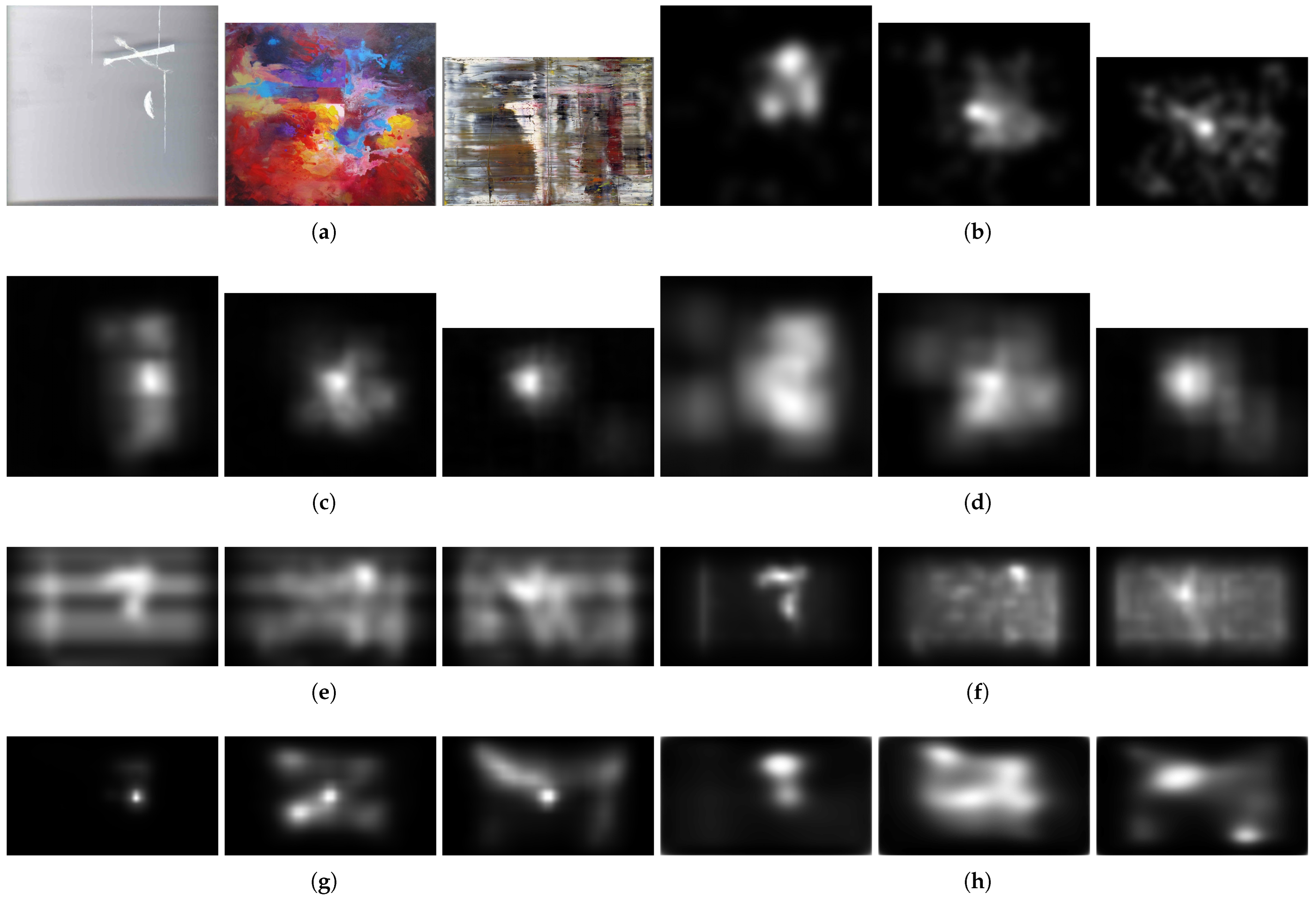
Figure 1 presents representative qualitative comparisons between the proposed framework and the baseline models, illustrating characteristic differences in the spatial concentration and structural organization of the predicted saliency maps. Classical saliency models tend to produce more diffuse predictions, while deep learning–based models achieve strong similarity and correlation scores through smoother, more centralized attention patterns.
Despite not being trained on large-scale datasets, the proposed framework demonstrates comparable predictive behavior on abstract artworks, supporting its validity in data-scarce and semantically ambiguous domains. The focus of the proposed approach lies on interpretability and analytical accessibility: establishing that the model produces meaningful predictions enables a deeper examination of heuristic selection, modulation effects, and context-dependent attention mechanisms, as explored in the following sections.
4.2. Heuristic Analysis
This section examines the internal structure of the optimized saliency model by analyzing the distribution of heuristic weights produced by the genetic algorithm. The analysis aims to identify which perceptual principles are empirically supported, which are suppressed, and how heuristic relevance is structured across perceptual categories.
4.2.1. Heuristic Dominance and Pruning
The optimized weight vector exhibits a sparse structure, with only a small subset of heuristics receiving high weights while a substantial portion is effectively eliminated. To assess the redundancy between the 35 theory-driven heuristics, we calculated a pairwise Pearson correlation matrix. Out of the unique heuristic pairings, only four pairs (approx. 0.67%) exhibited a high correlation coefficient exceeding , suggesting that the heuristic library is highly diverse and that each component contributes independent visual information to the final saliency map.
In the final generation, three heuristics attain dominant weights exceeding : a color-based edge contrast detector (contrast_edge_color_sobel, weight 1.0), a luminance-based edge contrast detector (contrast_edge_luminance_laplacian, weight 0.9425), and a texture-based isolation heuristic relying on multi-scale Gabor features (isolation_te x_gab_local_multi, weight 1.0). These heuristics correspond to perceptual mechanisms associated with strong local contrast and isolated textural structure.
At the opposite extreme, 16 of the 35 heuristics converge to near-zero weights (±0.01) and are effectively pruned from the model. The eliminated set includes the majority of the horizontal symmetry variants, as well as several local isolation- and texture entropy–based heuristics.
Across independent optimization runs, the dominance structure remains consistent. The same heuristics repeatedly appear among the top-ranked positions, indicating that the genetic algorithm reliably identifies similar dominant perceptual cues rather than converging to run-specific solutions. Stability analysis based on top-K and bottom-K ranking agreement further confirms that both the dominant and pruned heuristic sets remain largely unchanged across runs.
The systematic suppression of horizontal symmetry is consistent with established findings in perceptual psychology. Vertical symmetry is detected more efficiently and reliably than horizontal symmetry in visual tasks, and this advantage is rooted in visual experience rather than being modality-general [
44,
45,
46]. The pruning of horizontal symmetry heuristics thus aligns with this well-documented perceptual asymmetry, lending partial support to a perceptual interpretation of the optimization outcome. Notably, this pruning emerges without any explicit complexity penalty, indicating that heuristic selection is driven by data rather than imposed sparsity constraints.
4.2.2. Group-Level Contribution of Perceptual Principles
To abstract from individual heuristic implementations, weights are aggregated by perceptual category.
Table 3 summarizes the summed and mean weights for each heuristic group in the non-modulated configuration. When aggregated at the group level, contrast-based heuristics exhibit the highest average contribution, followed by grouping and isolation heuristics, while symmetry-based heuristics show consistently low influence. Notably, while multiple heuristic implementations exist within each category, the optimization converges at the level of perceptual principles rather than favoring specific operators. This suggests that attention guidance is governed by higher-level perceptual strategies, with implementation-level variation playing a comparatively minor role.
Taken together, these results demonstrate that the proposed framework performs an implicit selection of perceptual mechanisms, retaining heuristics that contribute meaningfully to attention prediction and suppressing those that do not. The resulting model is both compact and interpretable: dominant heuristics can be directly linked to perceptual phenomena, while eliminated heuristics provide insight into which visual cues are empirically unsupported in this domain. This behavior establishes a foundation for analyzing how heuristic relevance varies across images, which is explored further through context-aware modulation in the following section.
4.3. Modulation Analysis
To assess the effect of context-aware modulation on model behavior, the modulated and non-modulated configurations are compared with respect to heuristic selection, group-level weight distributions, and feature-dependent activation patterns. The analysis focuses on how modulation alters the internal structure of the model rather than on absolute performance gains.
4.3.1. Effect on Heuristic Pruning
Introducing modulation leads to a clear reduction in global heuristic elimination. In the non-modulated configuration, 16 out of 35 heuristics converge to near-zero weights and are effectively pruned from the model. Under context-aware modulation, the number of eliminated heuristics decreases to 11, indicating that modulation allows a larger subset of heuristics to remain conditionally active. Rather than enforcing a single global relevance hierarchy, modulation enables heuristics with limited average contribution to participate in saliency formation when image characteristics align with their underlying perceptual assumptions.
4.3.2. Group-Level Redistribution of Heuristic Relevance
To examine how modulation affects perceptual strategies at a higher level, heuristic weights are aggregated by perceptual group.
Table 4 summarizes the mean weights at the group level with and without modulation. Although contrast-based heuristics remain influential, their dominance is reduced under modulation. In comparison, symmetry- and grouping-based heuristics exhibit higher average contributions, resulting in a more balanced distribution across perceptual categories. This redistribution suggests that modulation does not simply reinforce contrast dominance but instead promotes a more balanced engagement of symmetry and other perceptual heuristics.
4.3.3. Feature-Dependent Modulation Patterns
The modulation mechanism operates through explicit image-level features that control the activation of heuristic groups.
Table 5 summarizes the learned modulation weights linking image features to perceptual categories. The observed patterns reveal structured and interpretable interactions: contrast-based heuristics are primarily modulated by edge density and intensity variation, grouping heuristics respond strongly to colorfulness and hue clustering, while symmetry-based heuristics are activated by a comparatively narrow and selective set of features.
These feature–group dependencies indicate that modulation does not introduce arbitrary variability but encodes systematic relationships between visual properties and perceptual strategies. As a result, contextual control transforms the genetic algorithm from a purely global optimization process into a conditional selection mechanism. Heuristics are no longer evaluated solely based on average utility across images, but are selectively amplified or suppressed depending on image-specific characteristics. This behavior enhances model interpretability by making explicit not only which perceptual principles contribute to saliency prediction, but also the visual conditions under which they become relevant.
5. Discussion
The results reveal several structured patterns in how perceptual heuristics contribute to attention prediction in abstract art. Rather than evenly distribute influence across all 35 components, optimization consistently converges on a sparse configuration dominated by heuristics from each perceptual group. This section interprets these patterns in the context of perceptual theory and discusses the implications of context-aware modulation for understanding attention in semantically ambiguous visual domains.
The results presented in this study highlight several aspects of saliency modeling that become particularly salient when attention is examined in abstract visual domains. Unlike natural scenes, where semantic objects and task-driven viewing strategies strongly constrain attention, abstract artworks rely primarily on perceptual organization and compositional structure. In this context, the proposed framework demonstrates that explicitly modeled perceptual heuristics can produce stable and meaningful saliency predictions while remaining open to analysis and interpretation.
One of the central observations is the emergence of sparse heuristic configurations through optimization. Across experiments, only a subset of heuristics consistently contributed to the final saliency maps, while others were effectively suppressed. This behavior suggests that not all perceptual principles are equally relevant across abstract artworks and that redundancy exists even among theoretically motivated cues. Rather than representing a limitation, this pruning behavior provides insight into which perceptual mechanisms are most influential under the examined viewing conditions.
The analysis further shows that heuristic dominance is not uniform across all images. Introducing context-aware modulation alters the internal dynamics of the model, reducing global pruning, and enabling heuristics to remain conditionally active. This indicates that perceptual relevance in abstract art is context-dependent: cues such as contrast, grouping, or symmetry may dominate attention in some compositions while playing a secondary role in others. Modulation thus allows the model to express multiple perceptual configurations without collapsing them into a single global hierarchy.
The modulation mechanism does not fundamentally change which heuristics matter, but rather how their influence scales with visual context. Dominant heuristics in the non-modulated configuration typically remain important, yet their relative contributions become more flexible. This suggests that attention in abstract art may be governed by a combination of persistent perceptual biases and adaptive sensitivity to image-specific structure. The framework makes this interaction explicit, enabling it to be examined directly rather than inferred indirectly from prediction performance alone.
From a methodological perspective, the results support the use of transparent optimization strategies in domains where interpretability is central. The genetic algorithm used in this work does not introduce latent representations or implicit feature learning; instead, it operates directly on interpretable parameters. As a result, the optimization process itself becomes a source of information, revealing stable patterns of heuristic relevance and highlighting where theoretical assumptions align—or fail to align—with observed attention behavior.
The quantitative evaluation situates the proposed framework within a reasonable predictive range relative to established saliency models. While deep learning models often excel at minimizing KL-divergence by capturing center-bias and complex textures, our heuristic model achieves a comparable score of 1.11. While the model is not designed to compete with data-intensive deep learning approaches on large-scale benchmarks, its performance demonstrates that the theory-driven approach effectively captures the probability distribution of human fixations without requiring millions of parameters even under data scarcity. This balance between predictive validity and analytical accessibility is particularly relevant for exploratory or scientific applications of saliency modeling.
Several limitations of the current study should be acknowledged. Although the optimization was conducted on the entire 40-image dataset, the risk of overfitting is inherently minimized by the framework’s architectural constraints. Unlike deep learning models that utilize millions of trainable parameters, our heuristic-based approach optimizes only 35 weights. This low-dimensional parameter space, combined with high-level, theory-driven features (e.g., Gestalt principles), implies that the model captures generalized human perceptual strategies rather than image-specific noise. The stability of the weights across multiple genetic algorithm runs further suggests that the framework has converged on a robust ’perceptual grammar’ for abstract art. While cross-validation is standard for high-capacity models, the primary objective here was a corpus-wide discovery of heuristic relevance. However, the relatively small size of the dataset and the free-viewing conditions under which the fixation data were collected may still restrict the absolute generality of the conclusions.
Beyond the dataset scale, the selected heuristics are grounded in perceptual theory, and they do not exhaust the entire space of attention-guiding factors. Higher-order symbolic associations, semantic meaning, and individual viewer differences remain outside the scope of the current framework and represent significant avenues for future research.
Furthermore, the formulation of the optimization objective itself presents a methodological consideration worth acknowledging. Although the linear combination proved empirically stable in this study, equal weighting of metrics with differing theoretical ranges is a simplifying assumption rather than a principled design choice. Future work should consider normalizing each metric to a consistent range prior to aggregation, applying adaptive or learned weighting schemes, or adopting multi-objective optimization strategies such as NSGA-II, which would allow the trade-off structure between metrics to be explored explicitly rather than collapsed into a scalar objective. Such refinements would strengthen the generalizability of the optimization framework, particularly as the evaluation datasets grow in scale and stylistic diversity.
Moreover, we acknowledge that despite a strict selection criterion, assessing semantic dominance in paintings remains inherently subjective. To improve the scalability and objectivity of this process in future research, automated object detection tools (such as YOLO or Mask R-CNN) could be employed as a preliminary filter. By ensuring that a candidate image contains zero high-confidence object detections, researchers could systematically pre-filter large-scale artistic databases to isolate truly abstract or non-representational works, thereby reducing the reliance on manual expert annotation and increasing inter-study consistency.
Despite these limitations, the proposed approach illustrates how saliency modeling can function as an investigative tool. By exposing the contributions of perceptual heuristics and their contextual modulation, the framework enables structured reasoning about attention in semantically ambiguous visual domains. This perspective complements black-box modeling approaches and suggests that explainable, theory-driven models may be particularly valuable when the goal is to understand why attention behaves as it does.
6. Conclusions
This work presented an explainable, theory-driven framework for visual saliency prediction in abstract art, addressing the transparency gap inherent in modern ‘black-box’ models. By operationalizing 35 modular heuristics grounded in perceptual psychology and art theory, the proposed approach provides a transparent bridge between computational prediction and human visual strategy. Our results demonstrate that prioritizing interpretability does not necessitate a sacrifice in predictive validity; the expanded-activation model () achieved a KL-divergence of on the 40 image test set, numerically matching SalGAN. However, deep models (e.g., SAM, SalGAN) continue to outperform our approach in and .
Through genetic optimization, the framework revealed stable patterns of heuristic relevance across perceptual categories. Although contrast-based heuristics remained influential, the introduction of context-aware modulation resulted in a more balanced redistribution of weights across heuristic groups. In the modulated variant, the grouping, symmetry and isolation mechanisms contribute more evenly along contrast, suggesting that multiple perceptual strategies participate in the guide of attention in abstract semantically ambiguous scenes. This redistribution indicates that modulation does not simply amplify dominant cues, but instead promotes a more context-sensitive allocation of perceptual relevance. From a modeling perspective, the near-parity of group-level contributions supports the theoretical grouping of heuristics derived from art theory, suggesting that these perceptual principles provide complementary rather than competing explanations of visual attention in abstract artworks.
Ultimately, the proposed framework demonstrates that theory-driven, interpretable models are not only viable in data-scarce domains, but offer analytical capabilities that purely predictive approaches cannot provide. By exposing the internal weighting of perceptual principles, the framework functions not only as a predictor, but as a robust investigative tool for the scientific study of human attention. While limited by current dataset scales, this ’white-box’ methodology offers a scalable and theoretically grounded alternative for modeling attention in data-scarce and semantically complex domains where transparency is a methodological requirement.