1. Introduction
As a dam type that incorporates features of both gravity dams and arch dams, the arch–gravity dam is employed in scenarios where geological conditions are not fully suitable for constructing an arch dam, yet higher safety requirements must be met [
1]. With its dam axis arranged in a curved alignment and transverse joints grouted to form an integral structure, arch action is developed [
2]. This results in significantly increased restraint from the bedrock against thermal deformation of the dam body. Moreover, since its concrete placement volume is comparable to that of a straight-axis gravity dam, hydration heat-induced temperature rise is pronounced [
3], while heat dissipation conditions are poor. These factors impose more stringent demands on temperature control and crack prevention. Only through scientific and comprehensive investigation into the variation patterns of temperature and stress fields can effective and rational basis and measures for temperature control be provided [
4].
Research on temperature control and crack prevention for mass concrete has evolved into a comprehensive system encompassing theoretical analysis, numerical simulation, material development, and engineering practice. Based on research focus and subjects, existing achievements can be broadly categorized into the following types. First, the establishment and validation of temperature control analysis methods: Researchers are committed to developing refined analytical methods to reveal the evolution patterns of thermal stress. For example, thermo-mechanical coupling simulations are used to study the influence of construction parameters (such as lift thickness, placement interval, cooling pipe layout, and monolith length) on thermal stress [
5,
6,
7,
8]; technologies like distributed optical fiber monitoring, combined with numerical simulation, are employed to reveal temperature gradients and stress concentration phenomena at specific locations [
9,
10,
11]; and the important impact of differences in environmental boundary conditions on the accuracy of temperature field calculations is explored [
12]. Second, the evaluation and optimization of specific temperature control and crack prevention measures: A significant number of studies focus on the effectiveness of various engineering measures. This includes evaluating the long-term effectiveness of surface insulation materials in reducing concrete temperature differences and preventing surface cracks [
13,
14,
15,
16]; analyzing the sensitivity of key parameters in water-pipe cooling systems [
17]; studying the economy and feasibility of layered placement for controlling early-age temperature rise in massive foundations [
18]; and exploring the potential of employing active temperature control systems during construction [
19]. Third, approaches to enhancing crack resistance based on material modification: Improving crack resistance starting from the material itself is another important direction. Studies have confirmed that using low-heat cement and incorporating mineral admixtures can effectively reduce hydration temperature rise [
20,
21], while adding expansion agents or temperature-rise inhibitors can play a role in compensating for shrinkage or reducing early-age temperature rise, although their dosage requires precise control to avoid adverse effects [
22,
23].
Building upon research on thermal stress in mass concrete and temperature control technologies, numerous scholars have conducted temperature control designs specifically for concrete dams. Wang et al. [
24] employed three-dimensional finite element analysis and proposed a temperature control optimization method involving the setting of longitudinal joints and synchronous cooling zones for concrete gravity dam construction in high-altitude regions. This approach effectively reduced the dam’s temperature gradient and inter-layer constraints, thereby mitigating thermal stress and preventing crack formation. Lv et al. [
25] systematically analyzed variations in the temperature and stress fields of a mass concrete gravity dam in cold regions during the construction period by combining numerical simulation with on-site monitoring. Their work validated the effectiveness of temperature control measures and explored the influence of cooling pipe layout on dam temperature and stress. Wang et al. [
26], utilizing a distributed optical fiber temperature measurement system along with numerical simulation, investigated the surface temperature drop effect in previously placed concrete blocks caused by low-temperature concreting during the construction of an extra-high arch dam. They revealed the adverse impact of this effect on surface crack resistance and proposed that regulating the temperature of surface flowing cooling water to 22–24 °C could effectively mitigate this risk. Wang et al. [
27], based on monitoring data and numerical simulation, studied the temperature rise phenomenon in arch dams after closure, finding that it primarily originates from the residual hydration heat of low-heat cement concrete, and verified the effectiveness of low-heat cement in controlling long-term temperature rise.
In recent years, increasing attention has been paid to the lifecycle performance and safety assessment of concrete structures. Biondini and Frangopol [
28] provided a comprehensive review of the lifecycle performance of deteriorating structural systems and proposed a reliability-based framework that accounts for structural deterioration and uncertainty. Tatangelo et al. [
29] further developed a reliability-based procedure for lifecycle management of structures, enabling time-dependent reliability assessment and supporting decision-making for structural maintenance and safety management. These studies indicate that the evaluation of the safety performance of concrete structures should fully consider the cumulative effects of time. In this context, stresses and cracking risks induced by temperature effects not only influence structural behavior during the construction stage but may also have potential implications for the long-term structural performance. Therefore, when assessing the stress safety performance of arch–gravity dams, it is necessary to consider the cumulative effects of spatiotemporal evolution rather than simply using a fixed tensile strength as the evaluation criterion.
Extensive research has been conducted on temperature control and crack prevention for conventional dam types, including gravity dams and arch dams. However, systematic research specifically targeting arch–gravity dams, a hybrid dam type combining arch action with large concrete volume, remains markedly insufficient. The unique structural characteristics of arch–gravity dams, including enhanced bedrock restraint due to arch action and poor heat dissipation conditions despite large concrete volume, impose distinct thermal stress development patterns that cannot be directly extrapolated from studies on either gravity dams or arch dams alone. Existing design methods typically follow a pattern of empirical formulation followed by finite element verification, resulting in low design efficiency. Furthermore, current control standards for stress safety fail to account for the gradual increase in concrete tensile strength with age. To address this gap, a Two-Parameter Decision Chart Method for predicting the allowable maximum placement temperature, an Analytical–Numerical Hybrid Estimation Method for rapidly estimating cooling durations, and the concept of the Comprehensive Cracking Risk Index (CCRI) which considers the lifecycle safety margin of concrete, are proposed. Based on these, a complete design methodology for temperature control schemes tailored to arch–gravity dams is formulated. Subsequently, taking a proposed project as a case study and comprehensively considering local climatic boundary conditions, concrete material properties, and construction schedule, simulation analyses are conducted using ABAQUS, a professional finite element software widely used for concrete temperature field analysis [
30,
31,
32]. Scenarios both without temperature control measures and with a systematic temperature control scheme incorporating maximum temperature control, cooling process management, and surface insulation are simulated and analyzed. The effectiveness of different temperature control measures in improving the thermal stress state in various zones of the arch–gravity dam is investigated, providing scientific basis and technical support for temperature control and crack prevention in this dam type.
3. Research Methodology for Temperature Control Schemes of Arch–Gravity Dams
3.1. Evolution Process and Control Methods of Concrete Temperature and Stress
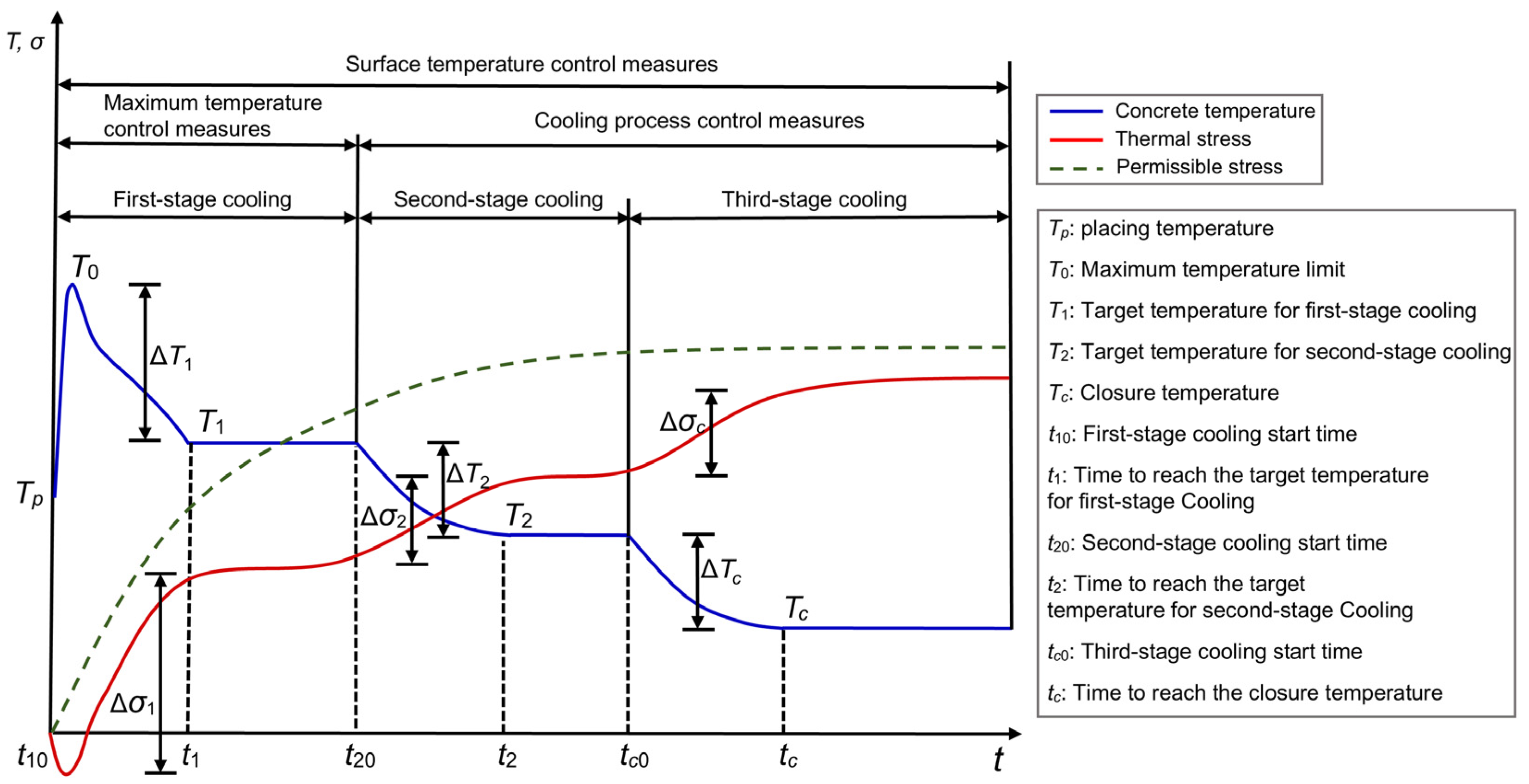
Figure 1 illustrates the entire process of concrete temperature and stress variation before dam joint grouting. For the temperature and thermal stress control of arch–gravity dams, according to their construction process, attention is primarily focused on three aspects: namely, the peak temperature during the initial placement stage, the final temperature before grouting, and the internal–external temperature difference throughout the entire construction process. First, the maximum concrete temperature
T0 =
Tp +
Tr (where
Tp is the concrete placement temperature and
Tr is the hydration temperature rise) is lowered, thereby reducing the total temperature difference Δ
T =
T0 −
Tc to mitigate thermal stress. Second, the concrete temperature is reduced to the target grouting temperature
Tc, typically the quasi-steady temperature of the dam, prior to joint grouting. Third, the internal–external temperature difference in the concrete is controlled to alleviate thermal stress induced by temperature gradients. To achieve the above objectives, a three-stage water cooling scheme is implemented. First-stage cooling is carried out immediately after concrete placement, aimed at reducing the initial peak temperature caused by hydration heat. Second-stage cooling is conducted following first-stage cooling to further lower and control the concrete temperature, with the goal of regulating the dam temperature before winter and maintaining the internal–external temperature difference within an appropriate range, thereby avoiding excessive thermal gradients during winter cooling. Third-stage cooling is implemented to further adjust the concrete temperature prior to dam closure grouting, preventing post-grouting cooling shrinkage and cracking.
Based on the concrete age and construction stages, a method for controlling the temperature and stress of arch–gravity dams during the construction period is proposed. For the peak control of concrete temperature, low-temperature placement is required to lower the initial temperature Tp, and first-stage cooling is adopted to reduce the hydration heat-induced temperature rise, thereby suppressing the maximum temperature T0. For the final value control of concrete temperature, which aims to achieve the target temperature Tc before dam joint closure while avoiding the need to forcibly lower the water temperature and increase the temperature difference ΔTc at later stages due to schedule constraints, the cooling process is optimized following first-stage cooling. Second- and third-stage cooling are conducted with small temperature steps, early initiation, and slow cooling to control the concrete temperature before winter T2 and the grouting temperature Tc. This approach takes full advantage of the low elastic modulus and high creep of early-age concrete to minimize thermal stress. For controlling the temperature difference between inside and outside, in addition to the effects of water cooling, surface insulation is strengthened to mitigate the impact of air temperature fluctuations on surface concrete, with particular attention paid to thermal stress during winter cooling periods.
In summary, the design of temperature control and crack prevention schemes for arch–gravity dams primarily focuses on optimizing the concrete placing temperature and the cooling process to ensure crack resistance safety throughout the entire lifecycle of the concrete. However, during the design phase, uncertainties in the dam placement schedule and scheme directly influence the ambient temperature and heat dissipation conditions, ultimately affecting the maximum concrete temperature and complicating the determination of the placing temperature. A Two-Parameter Decision Chart Method for predicting the allowable maximum placing temperature is proposed, enabling rapid prediction of the maximum temperature of each lift under any given ambient temperature and specified placing temperature. The optimization of the concrete cooling process primarily involves the design of second- and third-stage cooling schemes. Regarding the determination of cooling duration, analytical methods cannot fully capture the temperature field and yield only approximate results, while numerical simulation approaches that iteratively approximate the optimal solution require substantial computational resources. An Analytical–Numerical Hybrid Estimation Method is proposed for rapidly estimating cooling durations. Regarding the safety assessment of concrete tensile strength, traditional safety factor methods fail to reflect the safety status of concrete throughout its entire lifecycle. A new evaluation indicator, termed the Comprehensive Cracking Risk Index (CCRI), is proposed to represent the safety margin of concrete over its full lifecycle. The details of these methods are elaborated in the following sections.
3.2. Preliminary Design Method for Concrete Placement Temperature
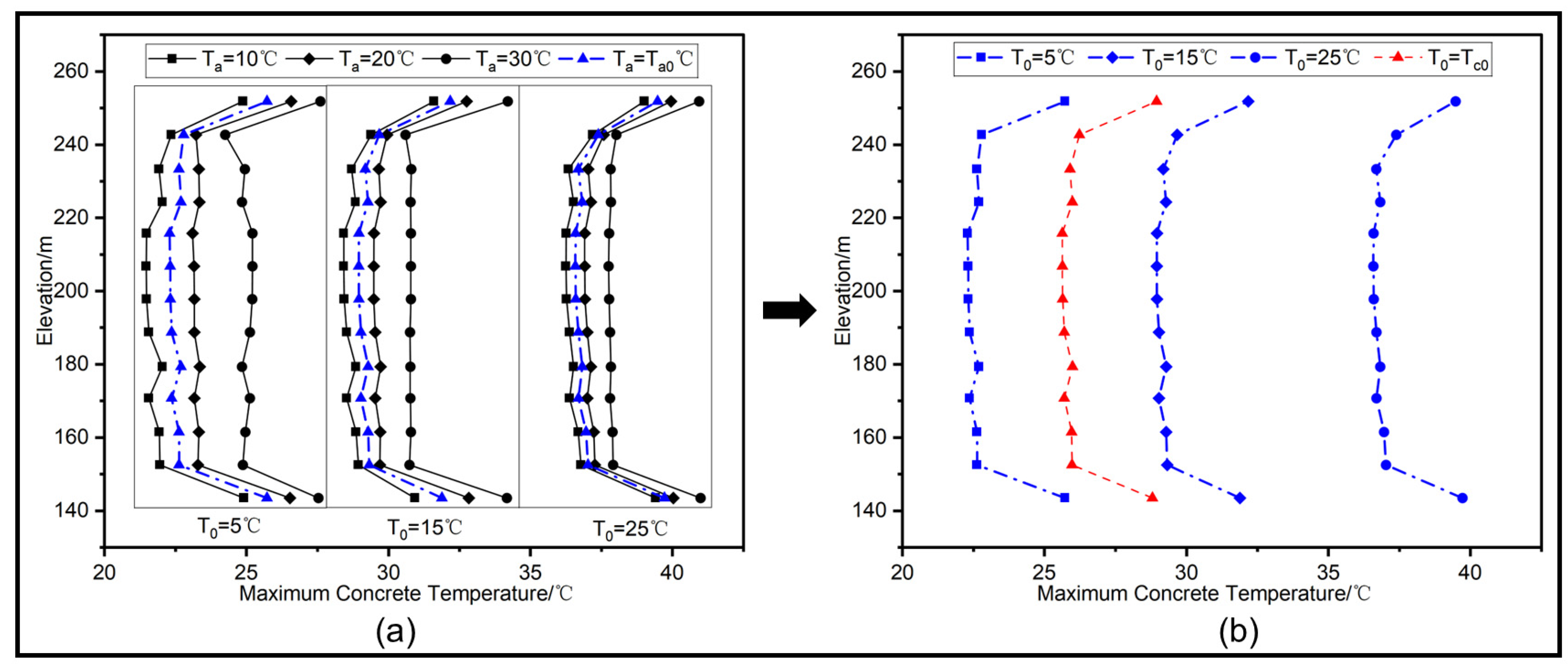
The Two-Parameter Decision Chart Method proposed in this paper is based on the two primary parameters influencing the maximum concrete temperature, ambient temperature and placement temperature. By designing parameter combinations and calculating temperature distribution curves along elevations, a decision chart is generated, which is used to rapidly determine the concrete placement temperature.
The specific procedure is as follows: the ambient temperature
Ta is set at 10 °C, 20 °C, and 30 °C, representing low-, moderate-, and high-temperature environments, respectively, assuming constant temperature conditions. The placement temperature
T0 is set at 5 °C, 15 °C, and 25 °C, with uniform values adopted for the entire dam to facilitate subsequent interpolation calculations. The dam temperature field under different parameter combinations is calculated to obtain the maximum concrete temperature at various elevations, with the highest water-retaining monolith serving as the control section, as shown in
Figure 2a. Based on this figure, the maximum concrete temperature at various elevations for a specific placement temperature can be interpolated under any given ambient temperature
Ta0. Furthermore, by plotting the aforementioned interpolation curves corresponding to different placement temperatures on the same graph, as shown in
Figure 2b, a family of curves representing different placement temperatures under the ambient temperature
Ta0 can be obtained. This plot can be used to predict the allowable maximum placement temperature for concrete at a specific elevation when placement occurs under the ambient air temperature
Ta0.
In this method, an approximately linear relationship is assumed between the input parameters (ambient temperature, placement temperature) and the output (maximum concrete temperature). Our preliminary analysis confirms that under this assumption, the difference in maximum concrete temperature caused by the deviation between the constant temperature assumption and actual air temperature conditions is approximately ±3 °C. This level of accuracy can provide a preliminary basis for subsequent detailed simulation of the dam temperature field and the design of temperature control schemes. The primary reason is that the rapid temperature rise in concrete due to hydration heat typically reaches its peak within 3–5 days after placement; therefore, the influence of air temperature variation during this short period remains within an acceptable range. It is evident that the more data points selected for each parameter—that is, the more parameter combinations considered—the more accurate the resulting interpolation curves will be. Furthermore, the parameter values selected in the current scheme are not fixed. As mentioned above, this is a general temperature assumption; engineers may adjust the values according to actual project conditions, ensuring that the upper and lower limits of the selected values adequately cover the construction scenarios of the project.
3.3. Preliminary Design Method for Second- and Third-Stage Cooling
Both second- and third-stage cooling schemes can be estimated using the Analytical–Numerical Hybrid Estimation Method, with second-stage cooling taken as an example for illustration. First, without implementing second-stage cooling, the concrete temperature distribution at the moment of lowest winter air temperature can be obtained based on temperature field calculation results. Then, the required cooling duration is roughly estimated using a theoretical method, specifically as follows [
36]:
where
Tw is the water temperature;
T0′ is the maximum temperature at the center of the concrete lift when winter begins without second-stage cooling;
τ is the time, in days (d);
a is the thermal diffusivity of concrete, in m
2/d;
λ is the thermal conductivity of concrete, in kJ/(m·d·°C);
ρw is the density of cooling water, in kg/m
3;
qw is the flow rate of cooling water, in m
3/d.
Utilizing the above equation, in conjunction with the standard for internal–external temperature difference of 20–25 °C [
37] (20 °C is tentatively adopted in this paper), and the minimum ambient temperature in winter,
Tamin, the required temperature after cooling is obtained as
By setting the secondary cooling duration as
tc2, as well as
tc2 − 7d and
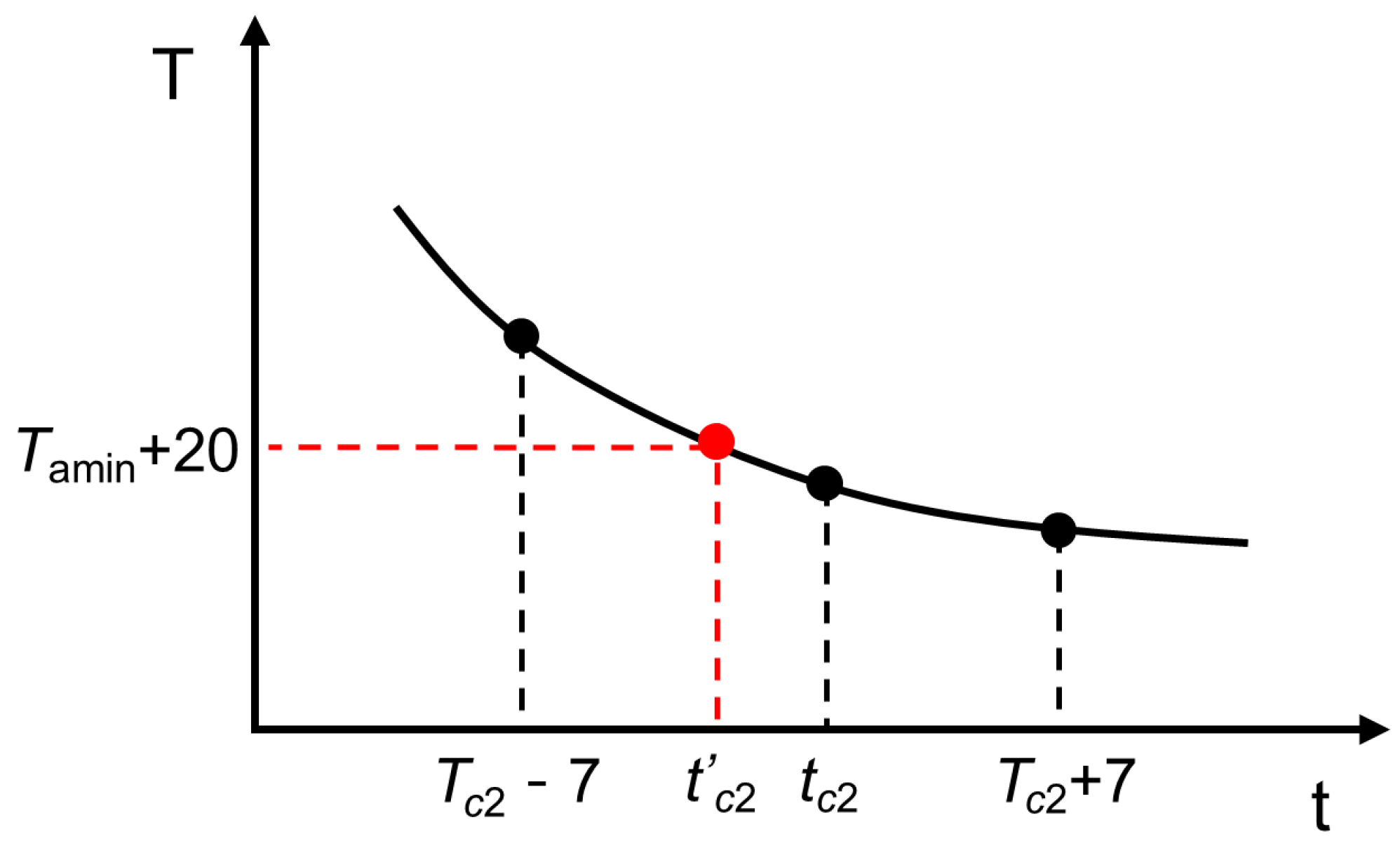
tc2 + 7d, and performing three sets of finite element temperature field calculations, the temperature of the concrete lift after second-stage cooling is obtained. This allows for the interpolation of a more accurate second-stage cooling duration. The schematic of this calculation process is shown in
Figure 3.
3.4. Cracking Safety Factor and Comprehensive Cracking Risk Index
The current control standard for thermal stress in concrete dams primarily adopts the safety factor method. It requires that the concrete thermal stress during the construction period satisfy the following condition [
38]:
where
σ is the maximum thermal stress of the concrete placement block in different zones or the maximum thermal stress of the surface concrete, in MPa;
ε is the ultimate tensile strain of concrete (i.e., the maximum strain before cracking), determined by standard axial tensile tests on concrete specimens at corresponding ages;
E is the elastic modulus of concrete, in MPa, determined by tests;
Kf is the comprehensive safety factor, which should preferably be in the range of 1.3 to 1.8 (this paper adopts 1.5).
It can be observed that the currently widely adopted control standard relies solely on the maximum thermal stress as the indicator. However, the tensile strength of concrete gradually increases with age, and early-age concrete cracking has been observed in engineering practice [
39,
40]. To reflect the stress safety status of concrete throughout its full lifecycle, the concept of the Comprehensive Cracking Risk Index (CCRI) is proposed based on the concrete cracking safety factor. It is defined as the ratio of the volume of concrete that fails to meet the cracking safety factor requirement over its entire lifecycle to the total concrete volume. A smaller CCRI value indicates a greater cracking safety reserve of the dam. A CCRI value of 0 signifies that the dam concrete meets the safety factor requirements throughout its entire lifecycle. It is specifically expressed as
where
Vdanger is the concrete volume, calculated throughout the entire thermal stress calculation process, where instances occur that do not meet the safety factor requirement;
Vtotal is the total concrete volume.
The CCRI is evaluated at each time increment of the finite element simulation using an adaptive time-stepping scheme (0.01–1 days). An element is classified as dangerous if the safety factor condition is violated at any time during the entire simulation period. The combination of small time steps and full-cycle assessment ensures that concrete safety during all critical periods is captured. Therefore, CCRI can be regarded as a lifecycle-based extension of the conventional cracking safety factor criterion, integrating both the temporal and spatial effects of thermal stresses.
3.5. Temperature Control Technical Approach
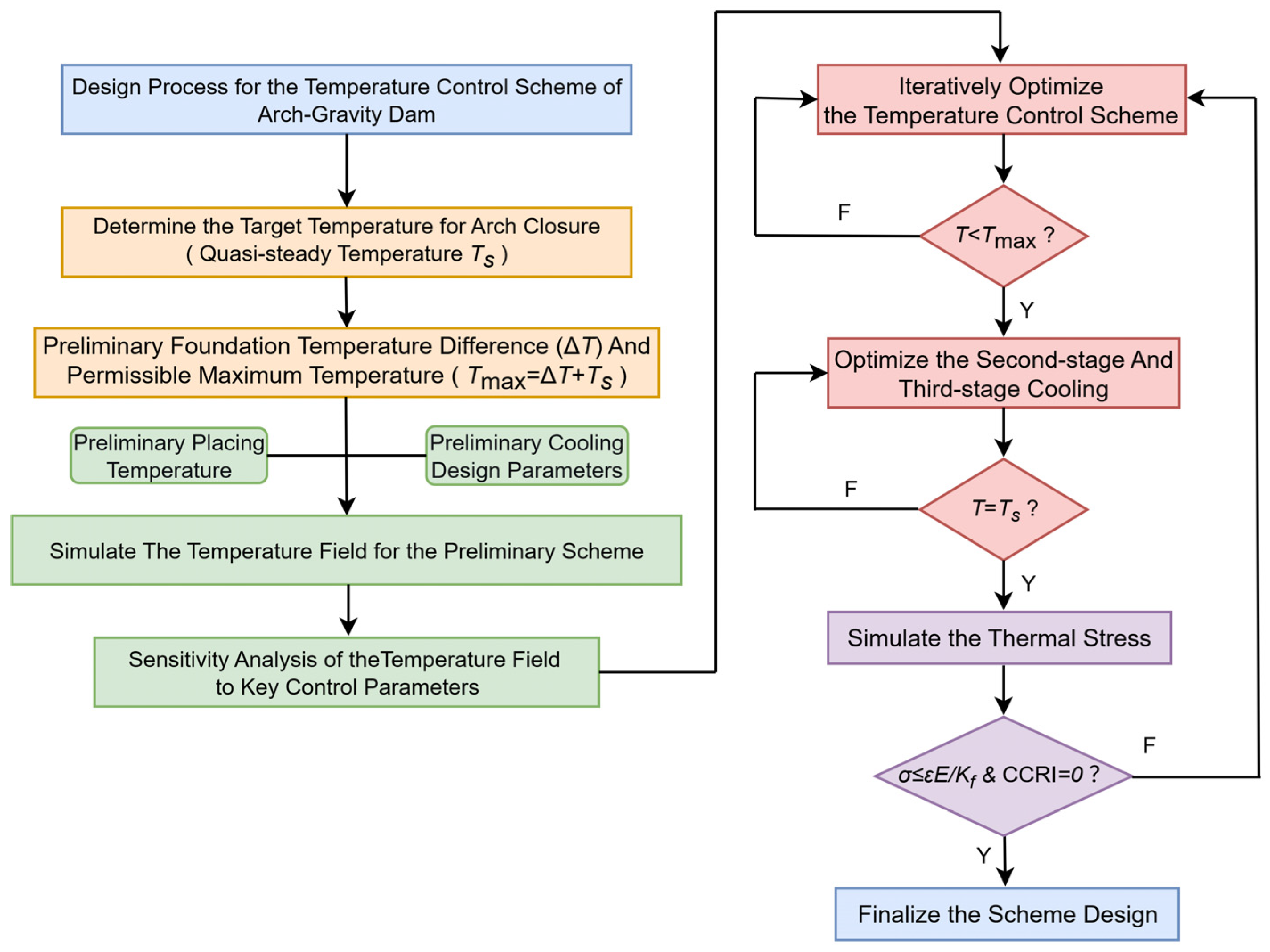
Based on the aforementioned research content, an integrated design framework for the temperature control and crack prevention scheme of arch–gravity dams is proposed, as shown in
Figure 4.
4. Calculation Model, Parameters, and Boundary Conditions
4.1. Project Overview
An arch–gravity dam project in Zhejiang Province, China, is selected as the research subject. The dam crest elevation is 255 m, and the minimum base elevation is 142 m, resulting in a maximum dam height of 113 m. The crest width is 10 m, of which 2 m is an upstream cantilever structure. The dam axis is arranged as a double-centered circular arc curve. The arc radius for the left bank monoliths (#1–#8) is 600 m with a central angle of 15.37°, while for the right bank monoliths (#9–#19), the radius is 400 m with a central angle of 30.22°. The total length of the dam axis is 372 m. The upstream face has a slope change point at elevation 174 m; the section above this point is vertical, while below it the slope ratio is 1:0.25. The downstream face has a slope change point at elevation 247.5 m; the section above is vertical, and below it the slope ratio is 1:0.75.
4.2. Calculation Model and Material Parameters
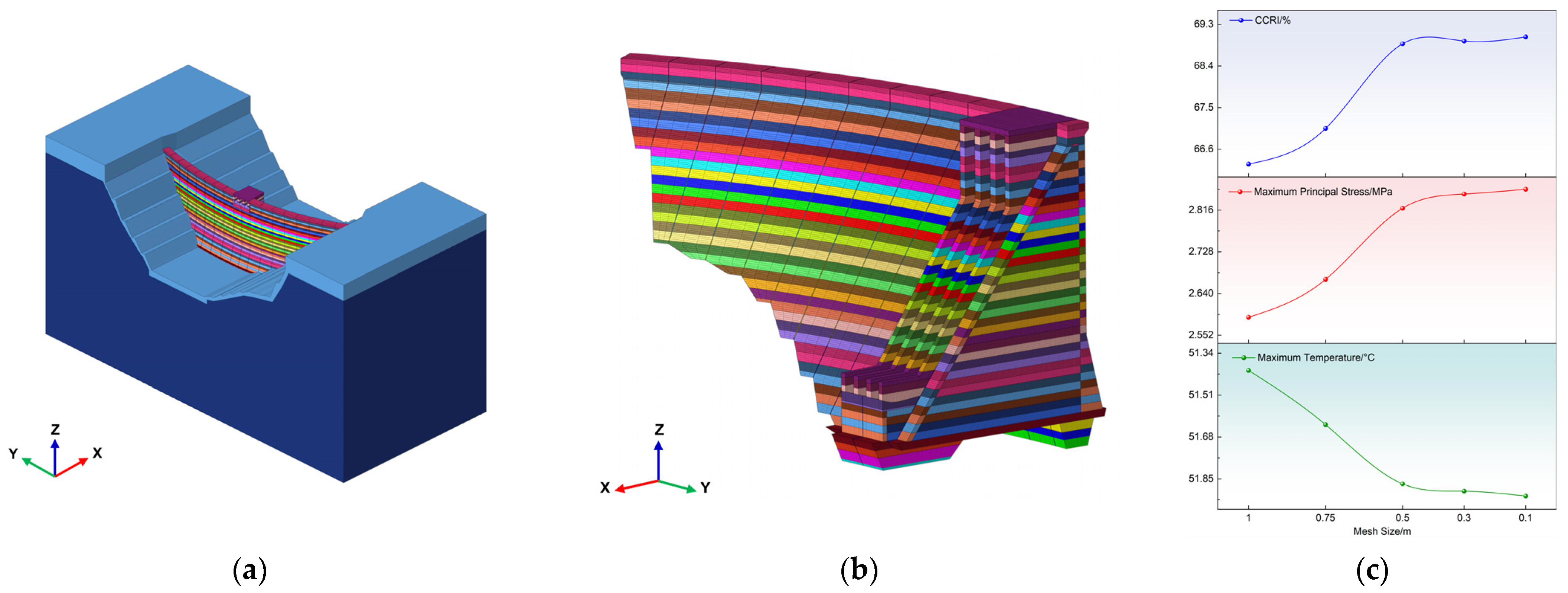
Due to the unique dam type and the presence of arch action within the structure, a three-dimensional finite element model encompassing the entire dam monoliths is developed in this paper to accurately simulate the dam’s thermal stress under complex constraint conditions. The computational model and mesh discretization are illustrated in
Figure 5. In the figure, the X-direction represents the streamwise direction, positive downstream; the Y-direction represents the cross-stream direction, positive towards the left bank; the Z-direction represents the vertical direction, positive upwards. To balance computational accuracy and efficiency, a mesh size of 0.5 m was ultimately selected for the dam model in this study. The dam and foundation are discretized into a total of 399,579 elements. Specifically, the dam body model comprises 254,523 elements and 279,089 nodes, while the foundation model comprises 145,056 elements and 173,789 nodes.
The accuracy and efficiency of concrete temperature and thermal stress simulations largely depend on the rationality of model parameters and mesh discretization. The degree of mesh refinement directly affects the accurate representation of temperature and stress distributions. According to the engineering design, the thickness of each dam placement lift is 3 m. Therefore, to adequately capture the vertical temperature gradient within the dam, the maximum mesh size should not exceed 1 m, ensuring that each lift contains at least three layers of elements. To obtain an optimal mesh size that balances computational accuracy and efficiency, a mesh sensitivity analysis was conducted by comparing calculation results under different mesh densities. Specifically, five models with dam mesh sizes of 1 m, 0.75 m, 0.5 m, 0.3 m, and 0.1 m were established, and the resulting dam temperature and thermal stress distributions were compared.
The calculations indicate that when the dam mesh size exceeds 0.5 m, the temperature and thermal stress distributions exhibit considerable fluctuations as the mesh size increases, failing to accurately capture local details. When the mesh size is reduced to 0.5 m or smaller, the temperature and thermal stress distributions tend to stabilize, and local features are adequately represented. Further refining the mesh to 0.1 m yields results similar to those obtained with the 0.5 m mesh, but leads to a significant increase in computational cost and time.
The results demonstrate that a mesh size of 1 m can only reflect the overall temperature distribution trend but lacks detail in gradient representation. A mesh size of 0.5 m provides relatively stable results and effectively captures local gradient details. Although a 0.1 m mesh can offer finer local information, it substantially reduces computational efficiency. Therefore, balancing accuracy and efficiency, a mesh size of 0.5 m was ultimately selected for the dam model to obtain reliable temperature and thermal stress distributions at a reasonable computational cost.
The model is divided according to different placement lifts and concrete materials. The thermal and mechanical parameters of the concrete were obtained from laboratory tests, following the procedures specified in SL/T 352-2020 (Test Code for Hydraulic Concrete) [
41]. The zoning of the dam concrete and its thermal and mechanical properties are presented in
Table 1. The creep parameters of concrete are presented in
Table 2.
4.3. Boundary Conditions
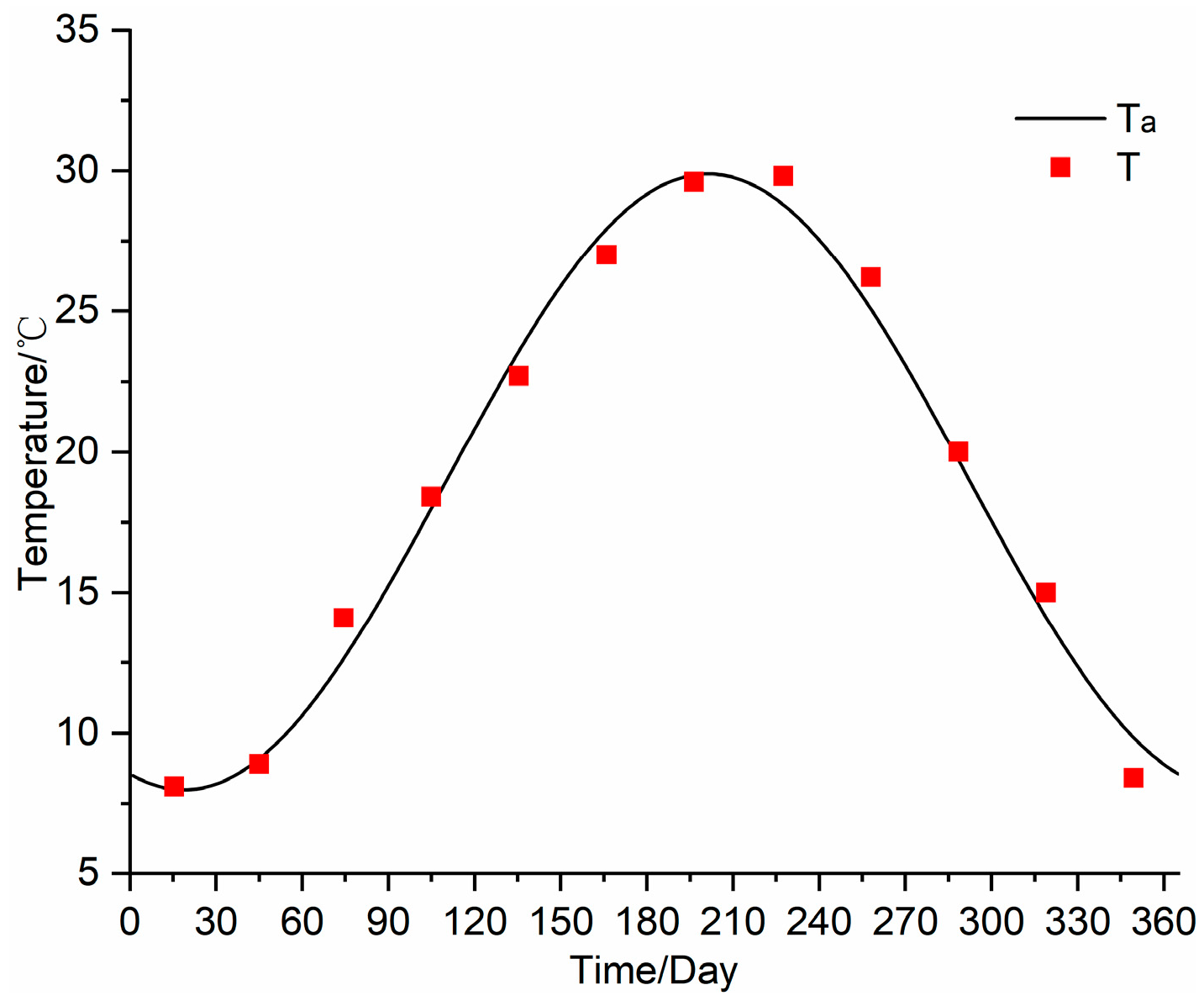
The mean annual air temperature at the dam site is 18.95 °C. For the calculations in this paper, the adopted air temperature
Ta is approximated based on the long-term mean monthly air temperature
T0 at the dam site, as shown in
Figure 6.
where
t is time in days (t = 0 corresponds to 1 January).
According to the research by Zhu [
36], when conducting temperature field studies for concrete dams, the upstream extension length, downstream extension length, and foundation depth can all be taken as 1–2 times the dam height. This computational range is far greater than the estimated thermal penetration depth during the calculation period, ensuring that the bottom and lateral boundaries of the foundation remain unaffected by surface thermal cycles. The lateral boundaries can be considered adiabatic. The bottom boundary, where temperature variation is negligible, can be treated with a Dirichlet (prescribed temperature) boundary condition, with the temperature set to the long-term mean temperature of the bedrock. In this case, the foundation depth and lateral extension length are 1.7 times and 1.3 times the dam height, respectively, both meeting the recommended range and thus suitable for conducting dam temperature field calculations. The surfaces of the bedrock and the dam exposed to air were modeled with Robin boundary conditions. For the stress field calculation, normal displacement restraints were applied to the sides and bottom of the bedrock, while all other surfaces were left free.
5. Study on Temperature Control and Crack Prevention Measures
5.1. Quasi-Steady Temperature Field of the Dam
To analyze the temperature field and thermal stress of the arch–gravity dam in this study, numerical simulations were performed using a user-developed ABAQUS secondary development subroutine. The reliability of the numerical program has been verified by comparison with analytical solutions and benchmark problems reported in the literature [
42].
According to the method proposed in
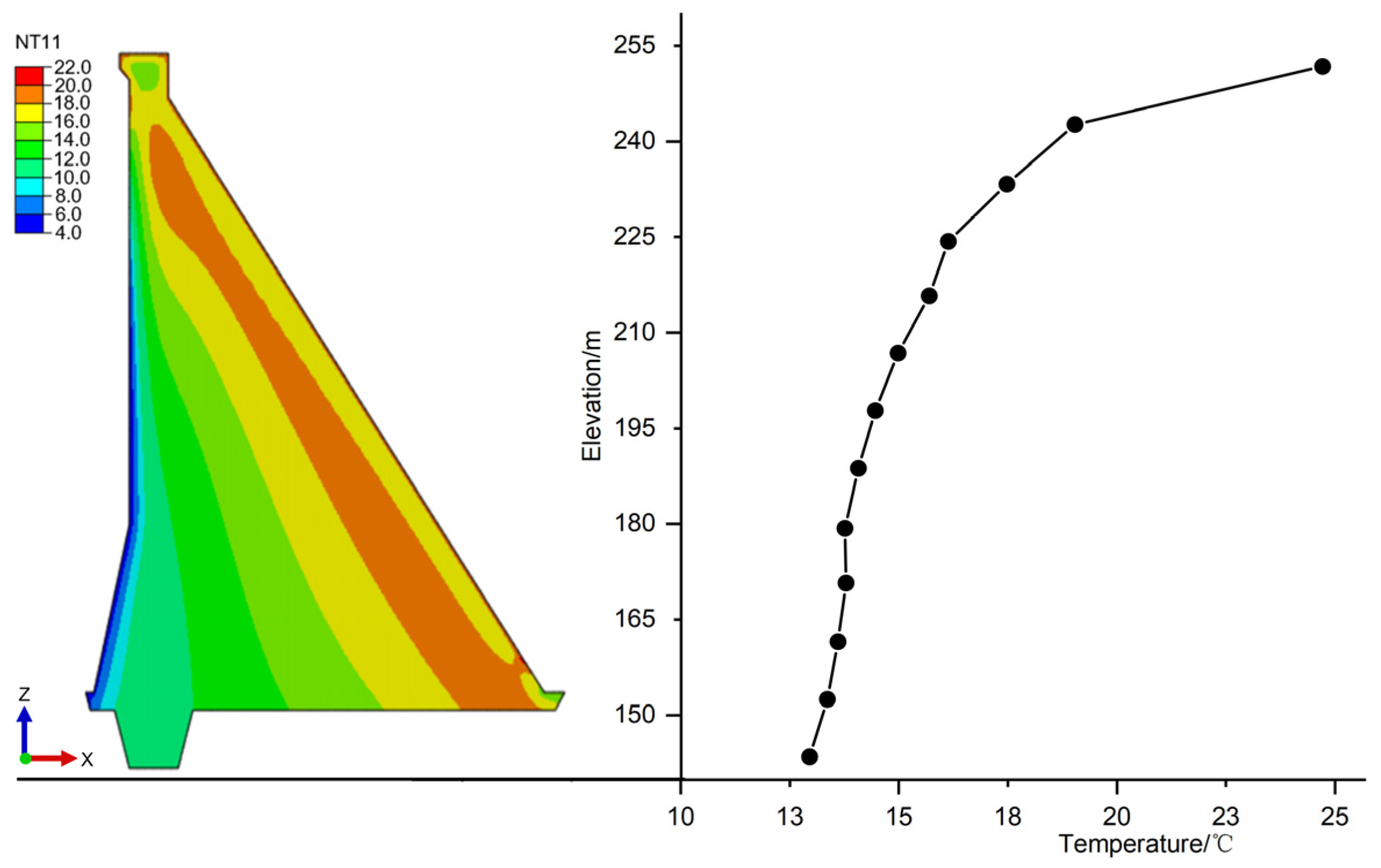
Section 3, for the thermal stress calculation of the arch–gravity dam, the quasi-steady temperature field of the dam must first be computed. This field serves as the dam’s closure temperature for formulating the temperature control scheme and for subsequent thermal stress calculations. Taking the highest water-retaining monolith as an example, the calculated temperature field contour plot of the dam near the mean annual air temperature and its quasi-steady temperature curve are shown in
Figure 7.
5.2. Without Temperature Control Measures
To scientifically evaluate the necessity of implementing temperature control measures in the project and accurately identify the critical locations requiring focused control, a numerical simulation of the temperature and stress fields in the dam concrete was first conducted under the assumption of no temperature control measures. This simulation was based on the material parameters and boundary conditions listed in
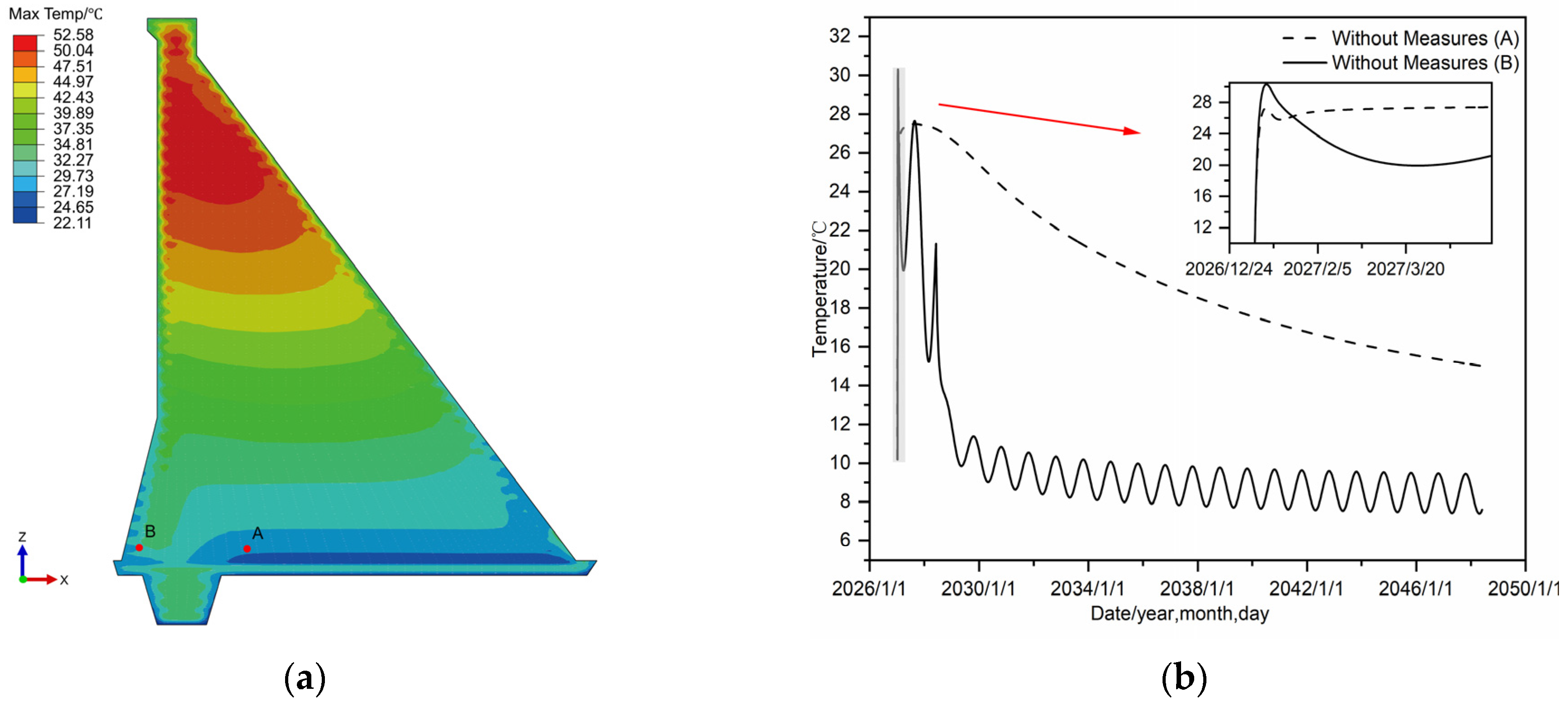
Section 4, aiming to quantitatively reveal the distribution characteristics of thermal stress and the potential cracking risk. According to the construction schedule, to effectively reduce the thermal stress in the foundation restraint area, concrete placement in this area was planned to occur as much as possible during the low-temperature season. Concrete placement commenced on November 15 of that year. For ease of description, the highest water-retaining monolith was selected as the control section (all subsequent analyses follow this selection), and its calculation results are presented in
Table 3.
The calculation results indicate that concrete placed during the high-temperature summer period experiences a significant internal temperature rise, reaching a maximum of 52.58 °C. According to the design code [
37], when concrete is placed in monolithic blocks, the length of the long side of the block is denoted as
l. For the foundation heavily restrained zone (height
h = 0–0.2
l above the foundation surface) and the foundation lightly restrained zone (
h = 0.2–0.4
l), the allowable maximum concrete temperature is controlled by the allowable foundation temperature difference. Specifically, the allowable maximum temperature is the sum of the allowable foundation temperature difference and the quasi-steady temperature. For the foundation heavily restrained zone, the allowable foundation temperature difference is 14–16 °C (14 °C is adopted), and for the foundation lightly restrained zone, it is 17–19 °C (17 °C is adopted). In this case, based on the calculated quasi-steady temperature field of the dam, the allowable maximum temperature is approximately 30 °C for the foundation heavily restrained zone and approximately 33 °C for the foundation lightly restrained zone. By comparing the envelope diagram of the maximum dam temperature without temperature control measures, it can be seen that the maximum temperatures in both the foundation heavily restrained zone and the foundation lightly restrained zone exceed the allowable limits to varying degrees. For concrete in the free zone, the allowable foundation temperature difference is not specified in Chinese codes. According to the compilation by Zhu [
36], the reference value given by the U.S. Bureau of Reclamation is 22.2 °C. Based on this, the allowable maximum temperature for the free zone concrete in this case is approximately 44 °C. Therefore, the current maximum temperature in the free zone is also excessively high.
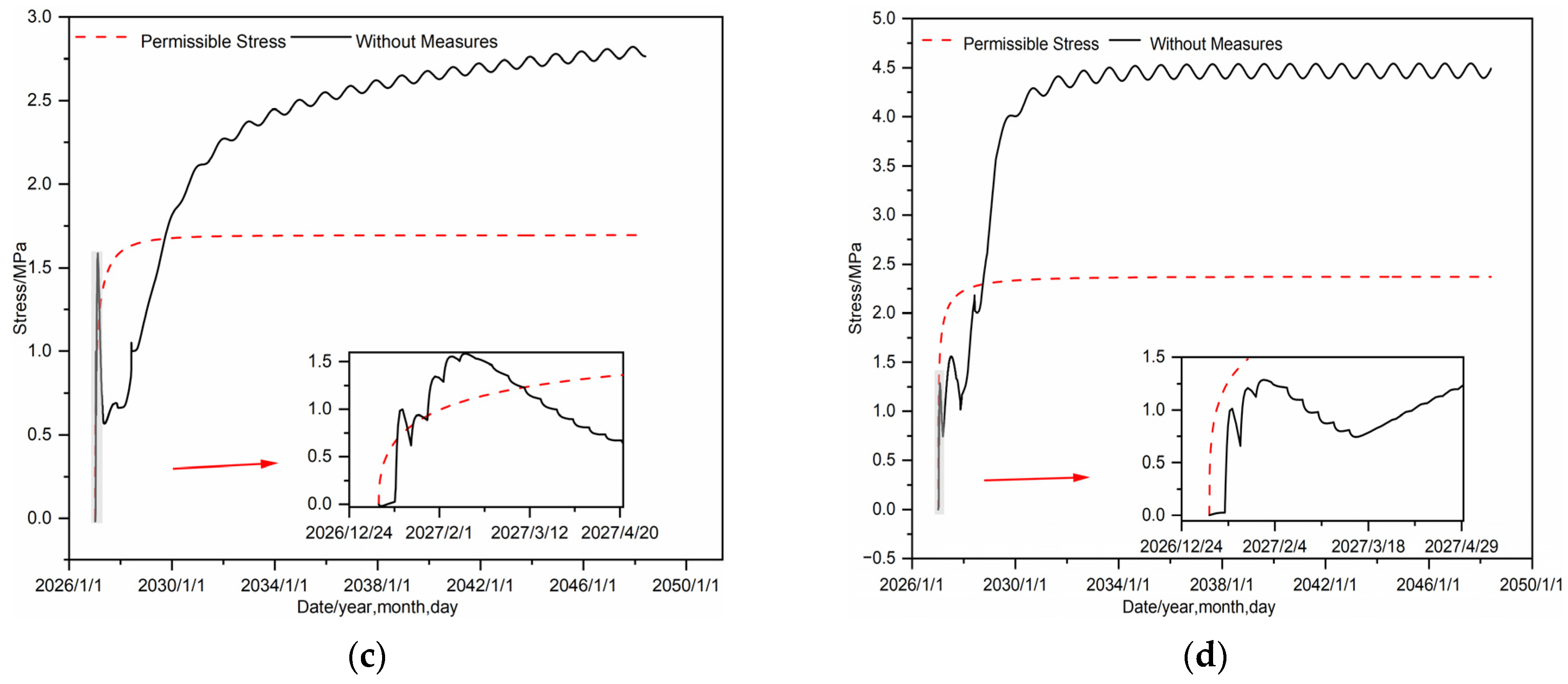
Most areas on the dam surface and within the interior exhibit insufficient safety factors during the simulation, with the maximum principal stress in some regions surpassing the tensile strength of the concrete. The maximum concrete temperature and stress time history curves without temperature control measures are shown in
Figure 8.
The primary reasons are that, in the absence of temperature control, the temperature rise in the concrete is excessively high, and the temperature difference in concrete above foundation severely exceeds the allowable limit, leading to thermal stresses during the cooling phase that exceed the limit. Furthermore, when external air temperatures drop sharply in winter, the temperature difference between inside and outside increases dramatically, causing a significant rise in tensile stress on the dam surface.
Therefore, to ensure structural safety and project quality, research on temperature control and crack prevention is required across all elevations of the dam, with an emphasis on controlling thermal stress by reducing the maximum temperature of concrete, optimizing the concrete cooling process, and enhancing surface insulation.
5.3. Maximum Temperature Control Measures
To control the maximum temperature of mass concrete, low-temperature placement and first-stage cooling can be adopted. Engineering practice indicates that the placing temperature, serving as the initial thermal condition for the concrete temperature field, directly influences the starting point of its temperature rise. First-stage cooling can rapidly reduce the peak hydration heat and plays a decisive role in suppressing the final temperature. Therefore, conducting optimization research on placing temperature and first-stage cooling will enhance the overall effectiveness of temperature control for mass concrete.
According to the construction schedule, the foundation restraint area is primarily constructed during winter, which is favorable for temperature control in this area, although the effect is relatively limited. The temperature rise caused by hydration heat results in a significant temperature difference in concrete above foundation, and under the strong restraint from the foundation, thermal stress in some areas exceeds the allowable limit. Concrete in the foundation lightly constrained area and the free area is placed during the hot season, leading to a substantial increase in the maximum temperature. As air temperatures drop in winter, tensile stresses gradually accumulate and exceed the limit.
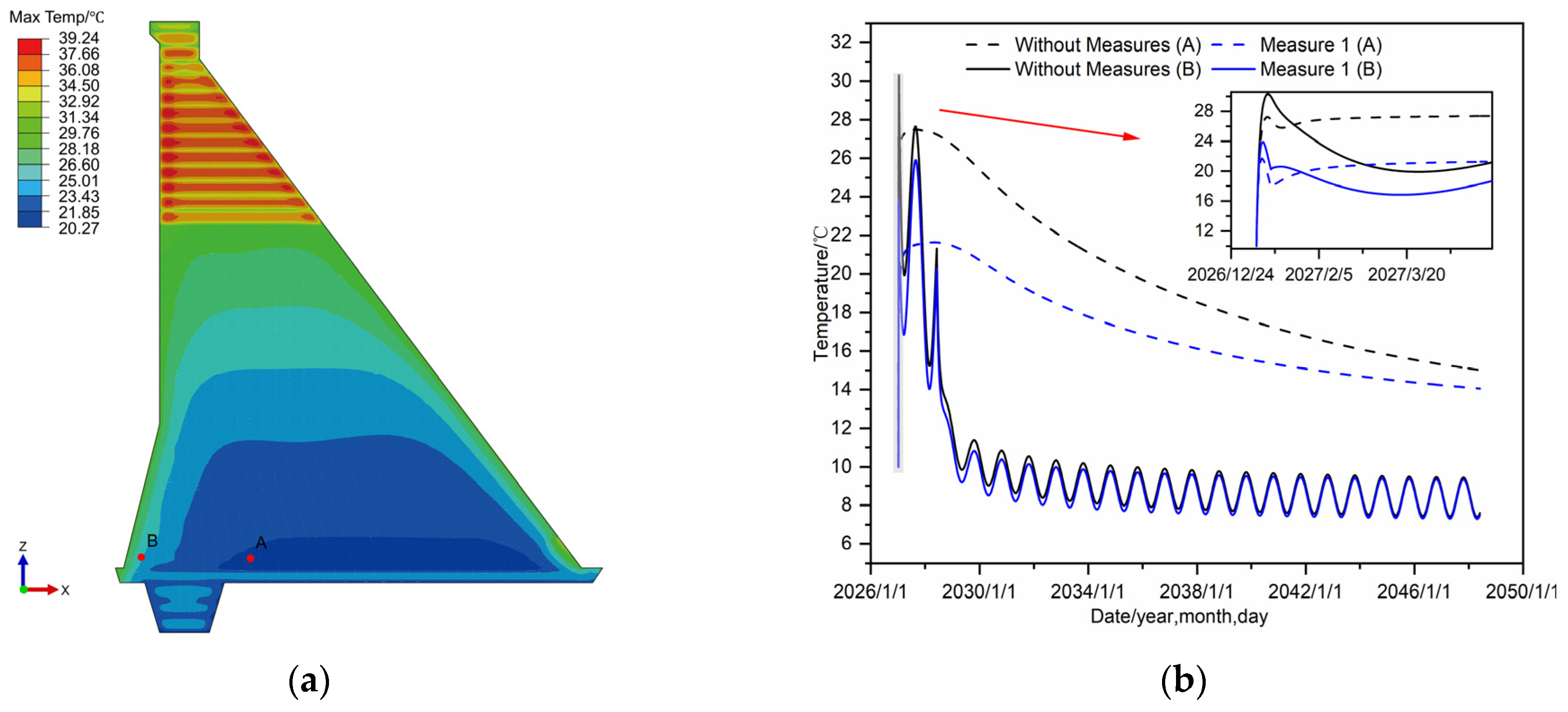
Therefore, for concrete in the foundation restraint areas, it is necessary to control the placing temperature and implement first-stage cooling to suppress the maximum temperature and reduce the temperature difference in concrete above foundation. For concrete in the free area, due to its relatively small thickness and greater susceptibility to ambient temperature, the effect of low-temperature placement on temperature control is limited, and the cost of pre-cooling during the hot season is high. Therefore, it can be controlled solely through first-stage cooling. Considering construction costs and on-site cooling capacity comprehensively, the concrete placement temperature in the foundation restraint area is controlled at 10 °C, and that in the foundation lightly restrained area at 15 °C. The placing temperature of concrete in the free area is not controlled for the time being. Additionally, first-stage cooling is implemented for each placement lift. The cooling pipes are spaced 1.5 m apart both horizontally and vertically. The cooling water temperature is controlled at 10 °C, and the flow rate is set at 30 L/min. For ease of reference, this is denoted as Measure 1. The calculation results are shown in
Table 4.
As shown in
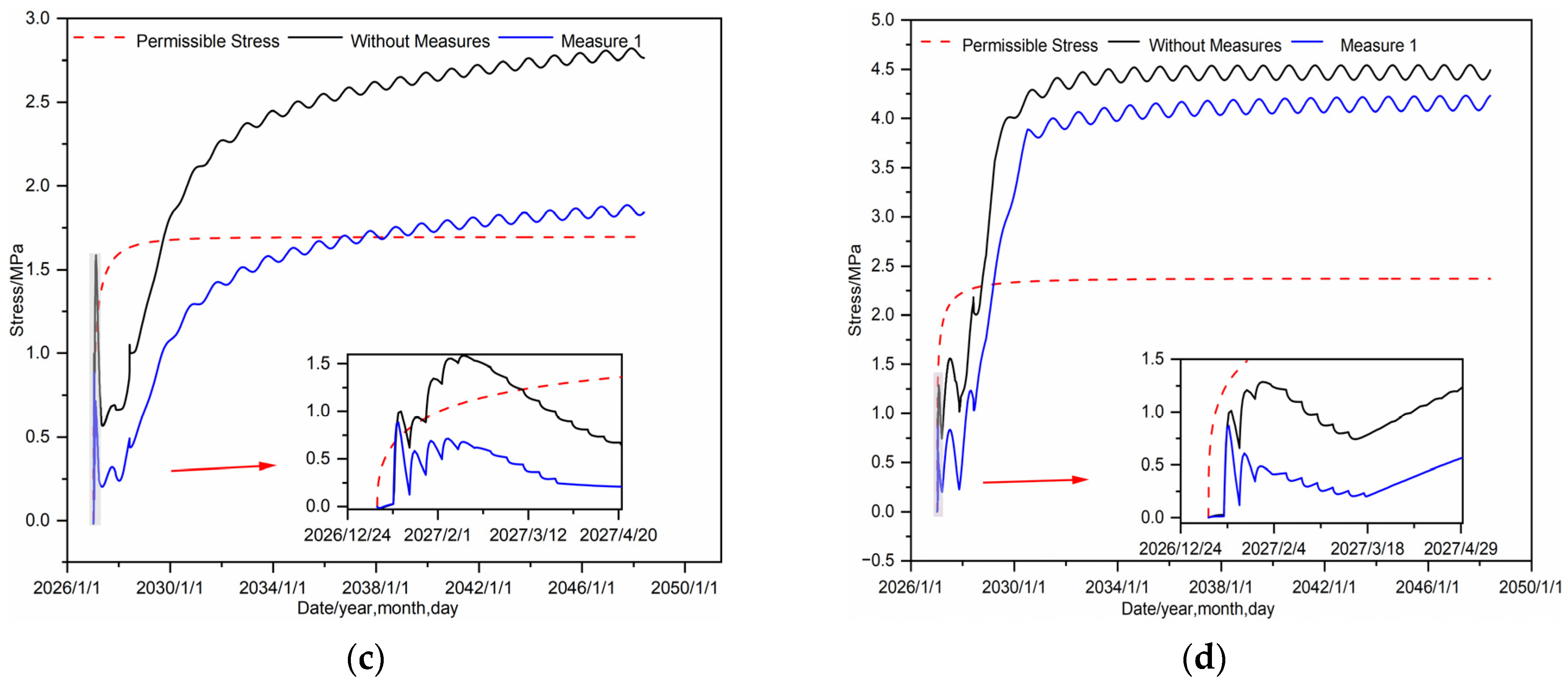
Figure 9, after implementing low-temperature placement and first-stage cooling, the maximum concrete temperature is reduced to 39.24 °C. The maximum principal stress in the interior concrete decreases to 1.88 MPa, the safety factor improves to 1.35, and the CCRI decreases to 6.38%. The maximum principal stress in the surface concrete decreases to 4.23 MPa, the safety factor improves to 0.84, and the CCRI decreases to 31.07%.
However, the safety factors for the dam concrete still remained insufficient. The primary reason is attributed to the poor heat transfer performance of concrete, which makes it difficult for internal heat to dissipate. During winter temperature drops and reservoir impoundment, the internal concrete temperature remains relatively high, while the surface concrete temperature decreases rapidly under the influence of low air and water temperatures. This leads to a sharp increase in thermal stress induced by the temperature difference between inside and outside. Therefore, the implementation of second- and third-stage cooling is proposed to further control the concrete cooling process, aiming to effectively enhance the crack resistance of the concrete.
5.4. Cooling Process Control Measures
Based on the implementation of low-temperature placement and first-stage cooling measures, and according to the research findings on the quasi-steady temperature field of the dam, second- and third-stage cooling measures are further adopted to control the concrete temperature to approximately 15 °C. The cooling water flow rate is set at 10 L/min, with river water used as the cooling medium. This is denoted as Measure 2. The calculation results are presented in
Table 5.
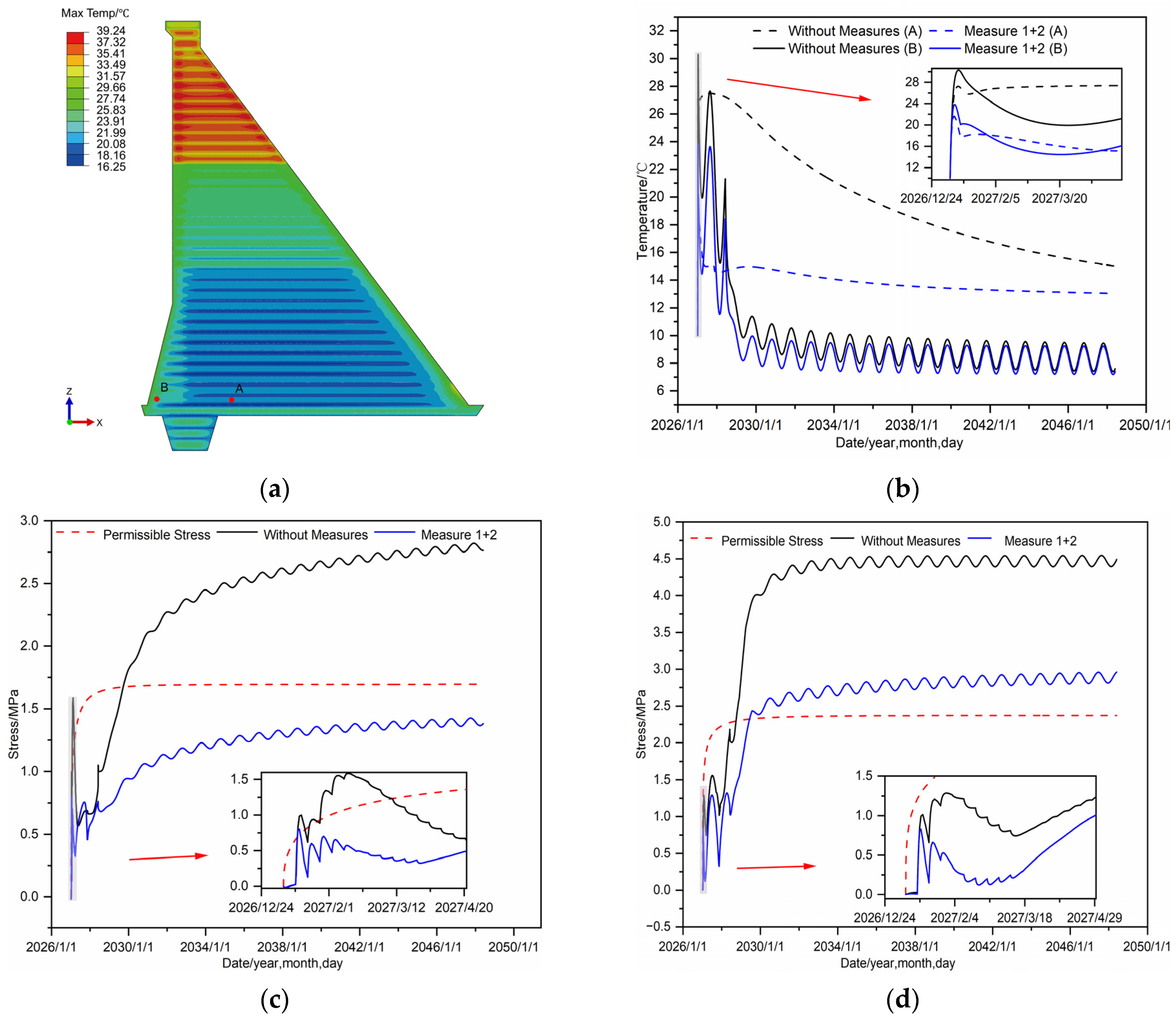
As shown in
Figure 10, the implementation of second- and third-stage cooling does not affect the maximum concrete temperature. However, by controlling the concrete cooling process and regulating its temperature before winter and impoundment, the temperature difference between inside and outside is reduced, and the thermal stress in the dam is effectively controlled. The maximum principal stress in the interior concrete decreases to 1.43 Mpa, the safety factor increases to 1.78, which meets the engineering code requirements, and the CCRI is 0.01%, indicating that a small portion of the concrete experienced conditions exceeding the safety factor requirement during the curing process. The maximum principal stress in the surface concrete decreases to 2.96 Mpa, the safety factor improves to 1.20, and the CCRI decreases to 3.39%.
Although second- and third-stage cooling effectively control the internal temperature of the concrete, the surface concrete remains significantly influenced by air and water temperatures. The residual temperature difference between inside and outside causes thermal stress in the dam surface and at the boundaries between concrete zones to exceed the allowable limits. Therefore, the implementation of surface insulation measures is considered to further mitigate the impact of temperature difference between inside and outside.
5.5. Surface Temperature Control Measures
The application of surface insulation measures suppresses the impact of air temperature fluctuations on concrete temperature by reducing the concrete surface heat transfer coefficient. The relationship between the concrete surface heat transfer coefficient
β and the thickness
h of the insulation layer can be expressed by the following equation:
where
h is the thickness of the insulation layer, in m;
λs is the thermal conductivity of the insulation material, in kJ/(m·h·°C);
β0 is the heat transfer coefficient between the outer surface of the insulation board and the air, in kJ/(m
2·h·°C).
In this paper, a polystyrene insulation board with a thickness of 5.0 cm is applied for surface insulation of the dam body. Its thermal conductivity is approximately 0.13 kJ/(m·h·°C). With this measure, the surface heat transfer coefficient of the concrete can be reduced to 56.7 kJ/(m
2·d·°C). This is designated as Measure 3, and the calculation results are shown in
Table 6.
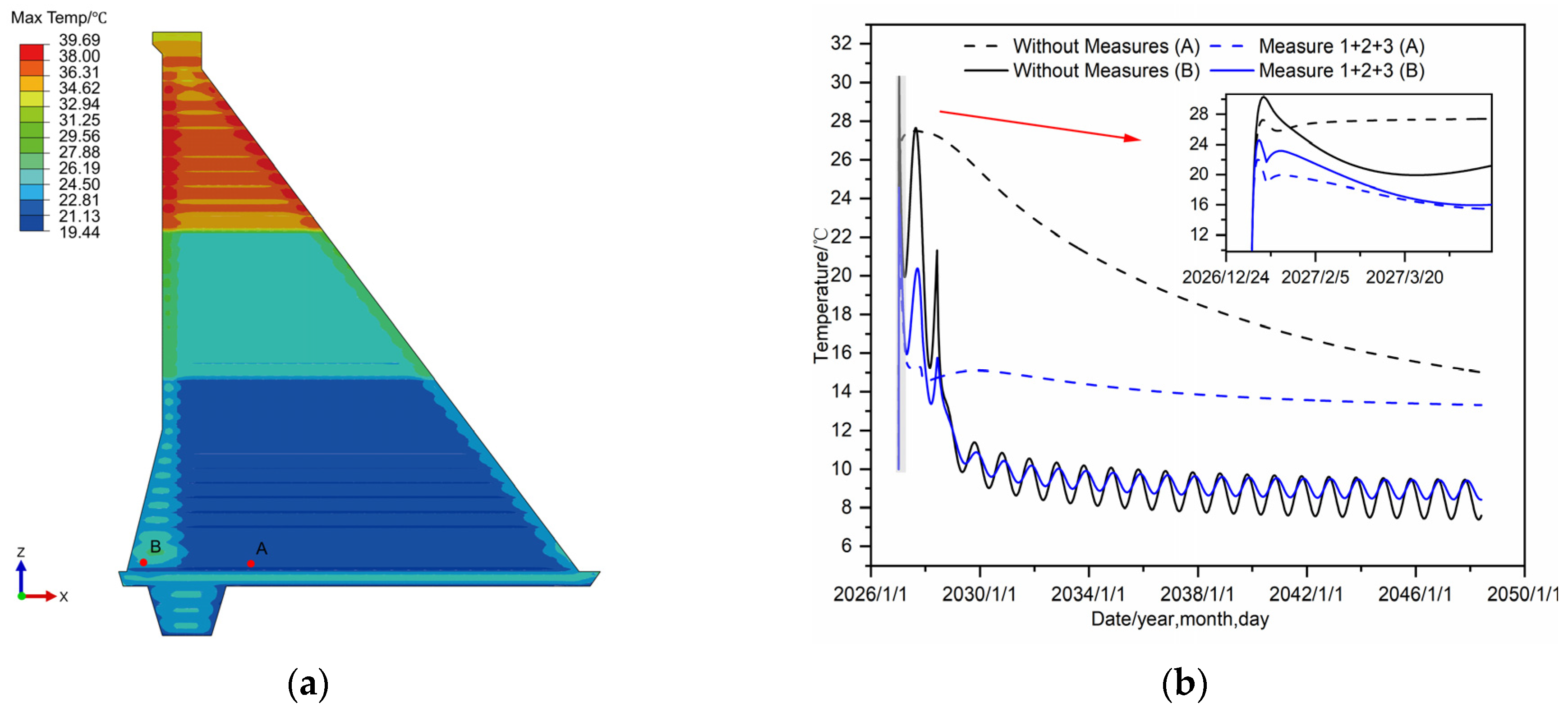
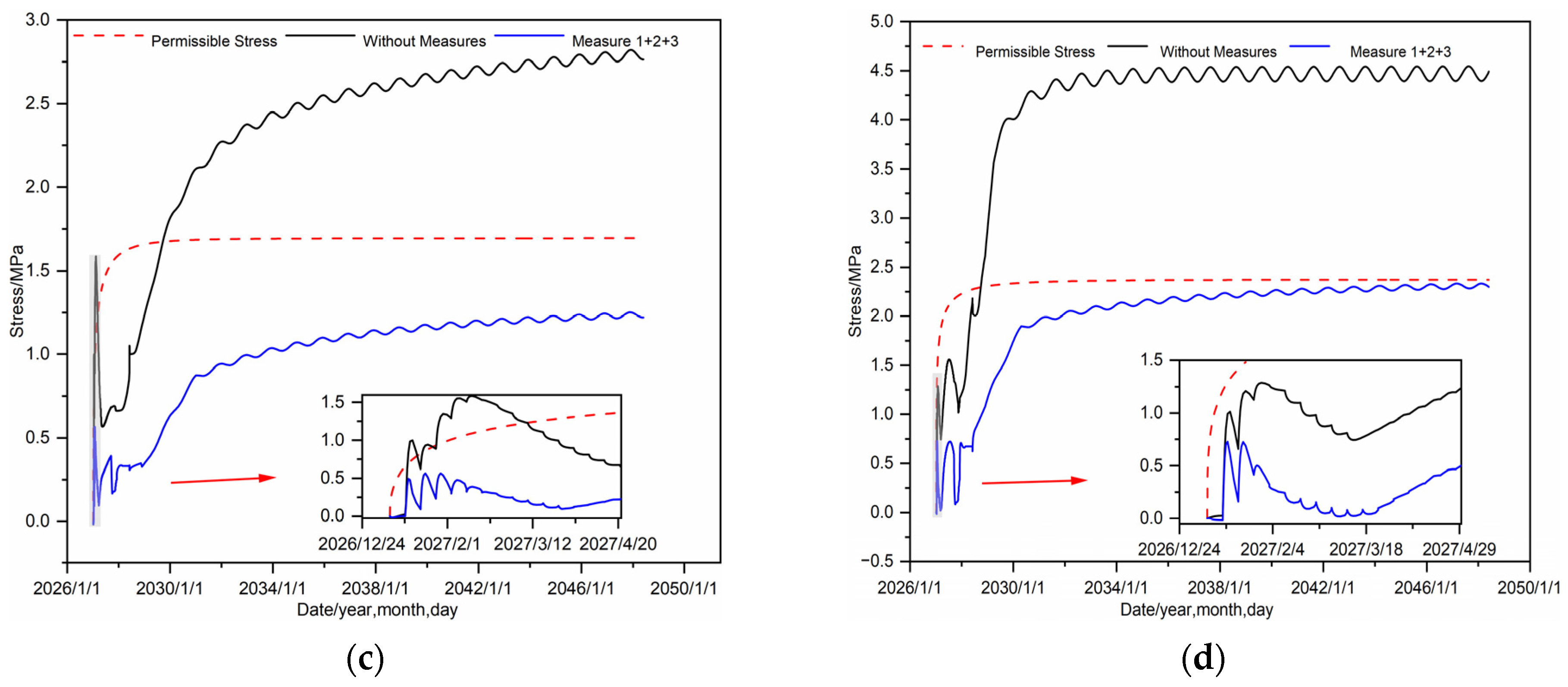
As shown in
Figure 11, after the implementation of surface insulation measures, the maximum concrete temperature has increased to 39.69 °C. The maximum dam temperature occurs in concrete placed during the hot summer season. For such concrete, surface insulation is necessary to prevent heat infiltration from the external environment, which results in a reduction in the surface heat transfer coefficient. During the early-age hydration period, when the concrete temperature rises rapidly due to exothermic reactions, a lower surface heat transfer coefficient means that more heat is retained within the concrete rather than being dissipated to the surroundings. This leads to a slight increase in the peak temperature (0.45 °C, 1.15%). However, the temperature difference between inside and outside is significantly reduced. The thermal stress on the concrete surface decreases to 2.33 MPa (decreases by 21.3%), and the safety factor increases to 1.53 (increases by 27.5%), meeting the safety factor requirements throughout the entire lifecycle. This enhances structural safety and concrete construction quality. A comprehensive analysis of the trade-off between the increase in maximum temperature and the reduction in thermal stress achieved by surface insulation reveals that this measure exchanges a minor temperature increase for a substantial, global, and long-term stress reduction, which is highly favorable for overall structural safety. Moreover, as thermal stress is the most direct control indicator, its importance naturally outweighs that of temperature. Therefore, adopting surface insulation is both advantageous and necessary.
While enhancing surface insulation is beneficial for reducing the internal–external temperature difference and mitigating surface thermal stress, the accompanying increase in maximum temperature should also be acknowledged. Therefore, appropriate insulation materials and thicknesses should be selected based on actual project conditions. Additionally, it is recommended that relevant tests be conducted in accordance with specific project circumstances to obtain reliable surface heat transfer coefficients, thereby accurately evaluating the actual insulation effectiveness on the concrete surface.
5.6. Analysis of Results
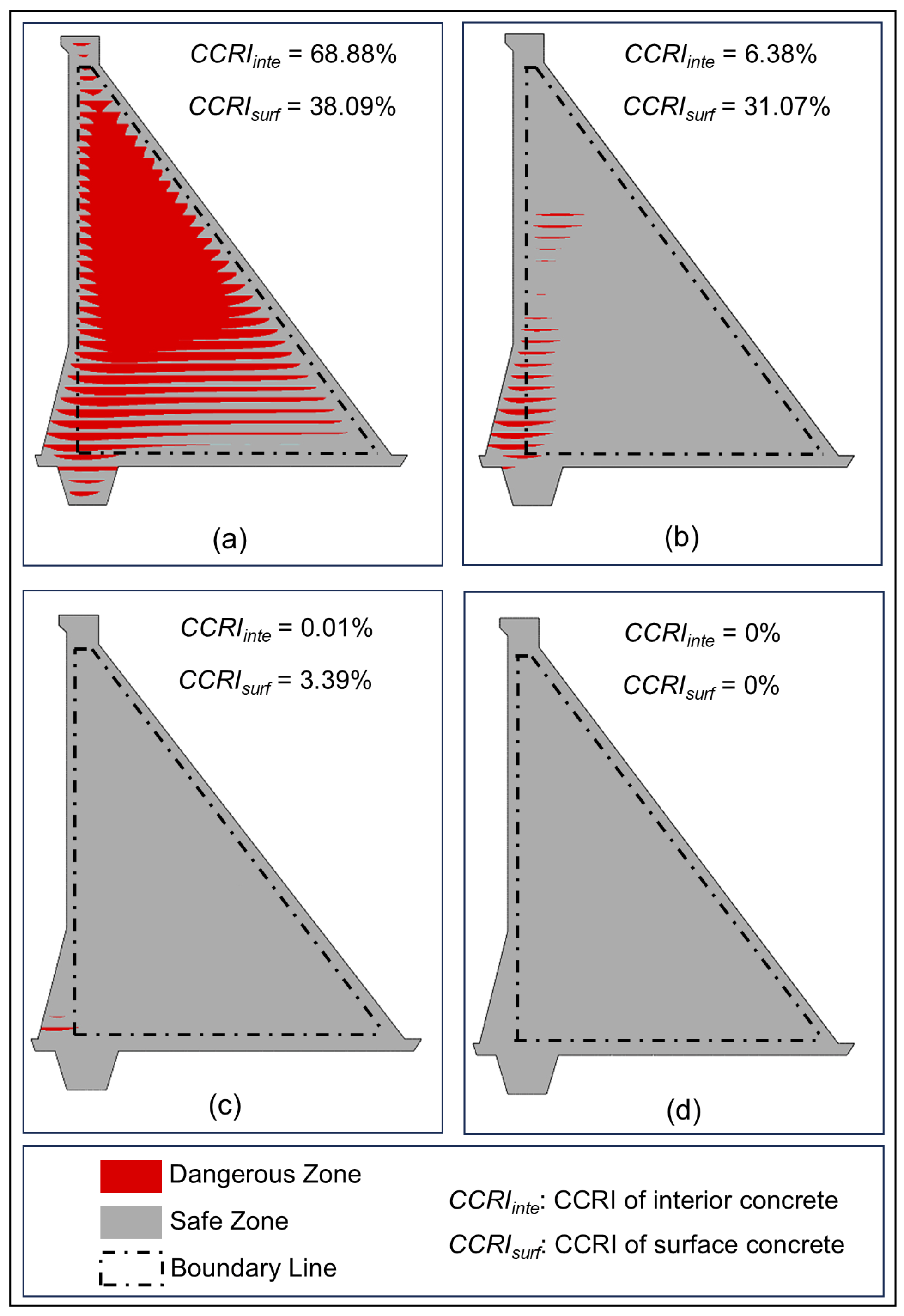
Finite element simulations were first conducted in this study for the scenario without temperature control measures. The results indicate that the maximum temperature of concrete placed during the high-temperature season seriously exceeded the allowable limits. Although concrete in the foundation restraint area was placed during the low-temperature season, its maximum temperature remained excessively high due to the influence of hydration heat. Subjected to strong foundation restraint, the thermal stress induced by the temperature difference in concrete above foundation was excessive. The safety factors for both interior and surface concrete were insufficient, with stresses in some areas even surpassing the tensile strength of the concrete. The CCRI reached 68.88% for the interior concrete and 38.09% for the surface concrete, indicating that temperature control measures must be implemented across the entire dam at all elevations.
To this end, the concrete thermal stress is progressively reduced in this study by addressing three aspects: controlling the maximum temperature, managing the cooling process, and regulating the surface temperature. First, low-temperature placement and first-stage cooling were implemented. The placing temperatures of concrete in the foundation restraint area and lightly restrained area were controlled at 10 °C and 15 °C, respectively. The use of 10 °C cooling water further reduced the hydration heat-induced temperature rise. Consequently, the safety factors for the interior and surface concrete increased to 1.35 and 0.84, respectively, while the CCRI decreased to 6.38% and 31.07%, respectively. Subsequently, based on the results of the dam’s quasi-steady temperature field, second- and third-stage cooling were applied to optimize the concrete cooling process. This significantly mitigated the impact of low winter air temperatures and low impoundment water temperatures. The safety factors for interior and surface concrete improved to 1.78 and 1.20, respectively, and the CCRI decreased to 0.01% and 3.39%, respectively. At this stage, the thermal stress in the interior concrete met code requirements, although a very small portion of concrete experienced stress levels not meeting the safety factor during the curing process. Furthermore, surface insulation of the dam was enhanced to suppress the influence of air temperature fluctuations on the surface concrete temperature. The safety factors for interior and surface concrete increased to 2.03 and 1.53, respectively, and both met the safety factor requirement throughout the entire lifecycle. The application of the combined measures described above significantly reduced the cracking risk of the dam concrete. The distribution of dangerous zones in the highest water-retaining monolith under different measures is shown in
Figure 12.
As shown in
Table 7, the effectiveness of the different temperature control measures adopted in this paper in reducing thermal stress and the CCRI varies significantly across different zones of the dam. Specifically, for the interior concrete, low-temperature placement combined with first-stage cooling is the most effective in reducing thermal stress and the CCRI, with contribution rates reaching 59.87% and 90.74%, respectively. Controlling second- and third-stage cooling is the next most effective, with contribution rates of 28.66% and 9.25%, respectively. Enhancing surface insulation has the weakest effect on reducing thermal stress and the CCRI for interior concrete, with contribution rates of 11.47% and 0.01%, respectively. For the surface concrete, second- and third-stage cooling demonstrate the most pronounced reduction effect, with contribution rates of 57.21% and 72.67% for thermal stress and the CCRI, respectively. The combined measure of low-temperature placement and first-stage cooling differs from the surface insulation measure in their effectiveness in controlling peak surface thermal stress and overall impact. The former is less effective than the latter in reducing the peak stress of the dam surface concrete but shows a certain advantage in improving the overall thermal stress state of the dam surface.
Specific measures for controlling the maximum temperature of concrete were investigated, indicating that low-temperature placement combined with first-stage cooling should be adopted to effectively limit the temperature rise. To regulate the subsequent cooling process of concrete, staged cooling strategies involving second-stage and third-stage cooling were further proposed. To mitigate excessive surface stress, a practical surface insulation scheme was also recommended. In addition, the influence of these temperature control measures on different zones of the dam was systematically evaluated. Based on the distinct thermal stress responses of interior and surface concrete, temperature control strategies with different emphases can be adopted during construction to achieve more effective crack prevention.
For the interior concrete of the dam, controlling the placing temperature and implementing first-stage cooling can effectively lower the maximum concrete temperature and improve the early-age stress state. Supplemented with second- and third-stage cooling to optimize the cooling process can significantly enhance crack resistance. For the dam surface concrete, the core focus should be on controlling the concrete cooling process. Building upon the control of the early-age maximum temperature, a staged and zoned slow cooling approach should be adopted to ensure the concrete reaches a suitable temperature before entering winter and impoundment. Simultaneously, strengthening surface insulation to suppress the effects of air temperature fluctuations can significantly reduce the cracking risk.
It should be noted that in engineering practice the selection of temperature control measures should be closely aligned with construction conditions and project requirements. Key factors such as construction season, concrete placing temperature, and cooling capacity must be comprehensively considered. In particular, under severe winter climatic conditions, properly controlling the placing temperature, implementing water cooling measures, and strengthening external insulation play an important role in improving the crack resistance of concrete. In addition, after optimizing the placing temperature, further reducing the spacing of cooling pipes or lowering the temperature of circulating cooling water could theoretically keep the thermal stress within the allowable range. However, such intensified cooling measures may increase the difficulty of pipe installation and affect the time required for concrete layer coverage. Moreover, excessive cooling may enlarge the temperature gradient between the circulating water and the surrounding concrete, thereby increasing the risk of cracking around the cooling pipes. Nevertheless, when engineering conditions permit, the combined strategy of further reducing the placing temperature and implementing water cooling can still be considered to meet the safety requirements of the project.
6. Conclusions
This paper proposes a comprehensive design methodology for temperature control schemes tailored to arch–gravity dams. Taking a proposed project as a case study and considering the actual climatic characteristics, material parameters, and construction schedule, three-dimensional finite element simulations of the temperature field and creep stress field for the entire dam were conducted. The main conclusions are as follows:
(1) The maximum temperature of concrete placed during the high-temperature season is generally excessively high without temperature control measures. During the winter cooling period, significant internal–external temperature differences and thermal stresses readily develop, leading to generally low safety factors. This effect remains pronounced for concrete in the foundation lightly constrained area and the free area. Even if concrete in the foundation constraint area is placed during the low-temperature season, the temperature rise induced by internal hydration heat, combined with the strong restraint from the foundation, will still cause the thermal stress in this area to exceed allowable limits. Under these conditions, the CCRI for the interior and surface concrete of the dam reach 68.88% and 38.09%, respectively. Therefore, targeted temperature control and crack prevention measures are necessary.
(2) The synergistic implementation of measures such as controlling the maximum temperature, optimizing the cooling process, and strengthening surface insulation can enhance the temperature control and crack prevention effectiveness of arch–gravity dams. Specifically, after adopting low-temperature placement and first-stage cooling to control the maximum temperature, the safety factors for the interior and surface concrete improve to 1.35 and 0.84, respectively, and the CCRIs decrease to 6.38% and 31.07%. Following the implementation of second- and third-stage cooling to optimize the cooling process, the safety factors for the interior and surface concrete increase to 1.78 and 1.20, respectively, and the CCRIs drop to 0.01% and 3.39%. Further applying surface insulation measures raises the safety factors for the interior and surface concrete to 2.03 and 1.53, respectively, and reduces the CCRI to 0, effectively enhancing the dam structure’s crack resistance safety performance.
(3) The effectiveness of different temperature control measures in reducing peak stress and optimizing the overall stress state varies across different zones of the dam. In terms of peak stress reduction, for interior concrete, the contribution rates are, in descending order, low-temperature placement and first-stage cooling (59.87%) > second- and third-stage cooling (28.66%) > surface insulation (11.46%). For surface concrete, the order is second- and third-stage cooling (57.21%) > surface insulation (28.38%) > low-temperature placement and first-stage cooling (14.41%). Regarding overall stress improvement, for interior concrete, the contribution rates are low-temperature placement and first-stage cooling (90.74%) > second- and third-stage cooling (9.25%) > surface insulation (0.01%). For surface concrete, the order is second and third-stage cooling (72.67%) > low-temperature placement and first-stage cooling (18.43%) > surface insulation (8.90%). Therefore, for temperature control and crack prevention in arch–gravity dams, the combined effects of various measures should be systematically considered. Building upon the control of the maximum temperature, second- and third-stage slow cooling should be properly implemented to ensure the dam cools to the target temperature before winter and reaches the grouting temperature prior to joint closure. Simultaneously, surface insulation should be strengthened to mitigate the impact of air temperature fluctuations, thereby enhancing the crack resistance of the dam concrete.
This study has certain limitations that warrant further investigation.
The proposed Comprehensive Cracking Risk Index (CCRI), while effective in quantifying the spatial distribution of cracking risk, does not account for the duration of stress exceedance or fracture behavior. Based on a binary classification (safe/unsafe) using strength criteria, the index cannot distinguish between brief stress excursions and sustained overstressing, nor does it incorporate fracture mechanics parameters such as fracture energy or fracture toughness. Therefore, the CCRI is best suited as a macro-level screening tool for comparing temperature control schemes and rapidly identifying high-risk zones during the preliminary design phase. For critical areas, a more detailed assessment combining stress time history curves with fracture mechanics analysis is recommended.
It should be noted that the numerical simulation presented in this study is based on a single planned engineering case. Although the modeling and analysis were conducted as closely as possible to the actual engineering conditions, certain simplifications in the simulation process are unavoidable. Nevertheless, by adjusting model parameters such as dam geometry, material properties, climatic conditions, and construction schedules, the analytical framework proposed in this study can also be applied to other arch–gravity dam projects, providing a methodological reference for the design of temperature control schemes. In future work, the research team will continue to track the construction process of the project. Through field monitoring data and parameter back-analysis, the model parameters will be further calibrated, which will help provide more reliable references for similar projects in the future.