1. Introduction
Asphalt pavement milling is a fundamental process in road rehabilitation, essential for restoring pavement profiles and removing deteriorated surface layers. However, this mechanical fragmentation process is a significant source of occupational pollution, generating high concentrations of airborne particulate matter that frequently contain respirable crystalline silica (RCS) [
1,
2]. Chronic occupational exposure to RCS is causally linked to a spectrum of severe respiratory pathologies, including silicosis [
3], chronic obstructive pulmonary disease (COPD) [
4], pulmonary tuberculosis [
5], and renal disease [
6]. Furthermore, epidemiological evidence has established a strong association between silica exposure and lung cancer [
7,
8], leading the International Agency for Research on Cancer (IARC) to classify crystalline silica as a Group 1 human carcinogen [
9].
The occupational health risks associated with road construction are well-documented. Field investigations indicate that workers involved in highway repair and pavement milling face some of the highest exposure levels in the construction sector [
10,
11]. Studies by Linch et al. (2002) and Valiante et al. (2004) reported that milling machine operators often experience RCS exposures exceeding the recommended limits by several orders of magnitude [
12,
13]. Similarly, surveillance data from the U.S. construction industry identified milling operators as a high-risk group for silicosis due to the intensity of dust generation during the cutting of asphalt and concrete substrates [
14,
15]. In Taiwan, a recent exposure assessment by Yang et al. (2018) corroborated these findings, revealing that RCS concentrations in the breathing zone of milling operators consistently exceeded domestic and international regulatory standards [
16].
In response to these pervasive hazards, regulatory bodies have tightened exposure limits. The U.S. Occupational Safety and Health Administration (OSHA) established a Permissible Exposure Limit (PEL) of 50 μg/m
3 for RCS [
17], while the U.S. National Institute for Occupational Safety and Health (NIOSH) recommends a Recommended Exposure Limit (REL) of 50 μg/m
3 [
18]. To achieve compliance, NIOSH has published engineering control guidelines advocating for “source suppression” techniques [
19]. Standard controls for cold planers typically involve internal water spray systems located within the cutter drum housing to suppress dust at the point of generation, often supplemented by local exhaust ventilation (LEV) systems [
20,
21,
22,
23].
Modern, large-scale milling machines are increasingly equipped with enclosed, pressurized cabins featuring high-efficiency particulate air (HEPA) filtration, which provides the most effective isolation for operators [
19,
24]. However, a significant operational gap remains. A vast proportion of road maintenance projects—particularly those executed by small-to-medium enterprises (SMEs) or in developing infrastructure markets—rely on legacy or compact milling machines that lack enclosed cabs [
16]. For these “open-air” operator stations, relying solely on internal source suppression is often insufficient. Without the physical barrier of a cabin, operators are directly exposed to fugitive dust plumes that escape the cutter housing, especially under adverse environmental conditions such as strong crosswinds [
25,
26].
While retrofit solutions such as auxiliary LEV kits have been explored [
27,
28], they can be complex to install and maintain on aging machinery. Water spray systems, widely used in the mining industry for dust suppression [
29,
30], offer a potentially more adaptable solution. Research on other construction equipment, such as dowel drilling machines and cut-off saws, has demonstrated that well-designed external water sprays can significantly reduce respirable dust [
31,
32]. However, the application of a standalone, external water spray barrier specifically designed to protect the breathing zone of open-air milling operators has not been sufficiently evaluated in field settings.
This study aims to bridge this gap by developing and validating a retrofit engineering control: an External Water Spray Barrier System. Unlike internal suppression methods, this system creates an active water curtain between the emission source and the operator, utilizing mechanisms of inertial impaction and interception to capture fugitive dust. We conducted a field evaluation across 11 road maintenance sites to (1) characterize the particle size distribution of the milling dust; (2) quantify the suppression efficacy of the retrofit system for Total Dust, Respirable Dust, and RCS; and (3) investigate the influence of environmental wind speed on system performance. This research provides a scientifically grounded, cost-effective intervention strategy for legacy fleets to mitigate silica exposure risks.
2. Materials and Methods
2.1. System Architecture and Retrofit Configuration
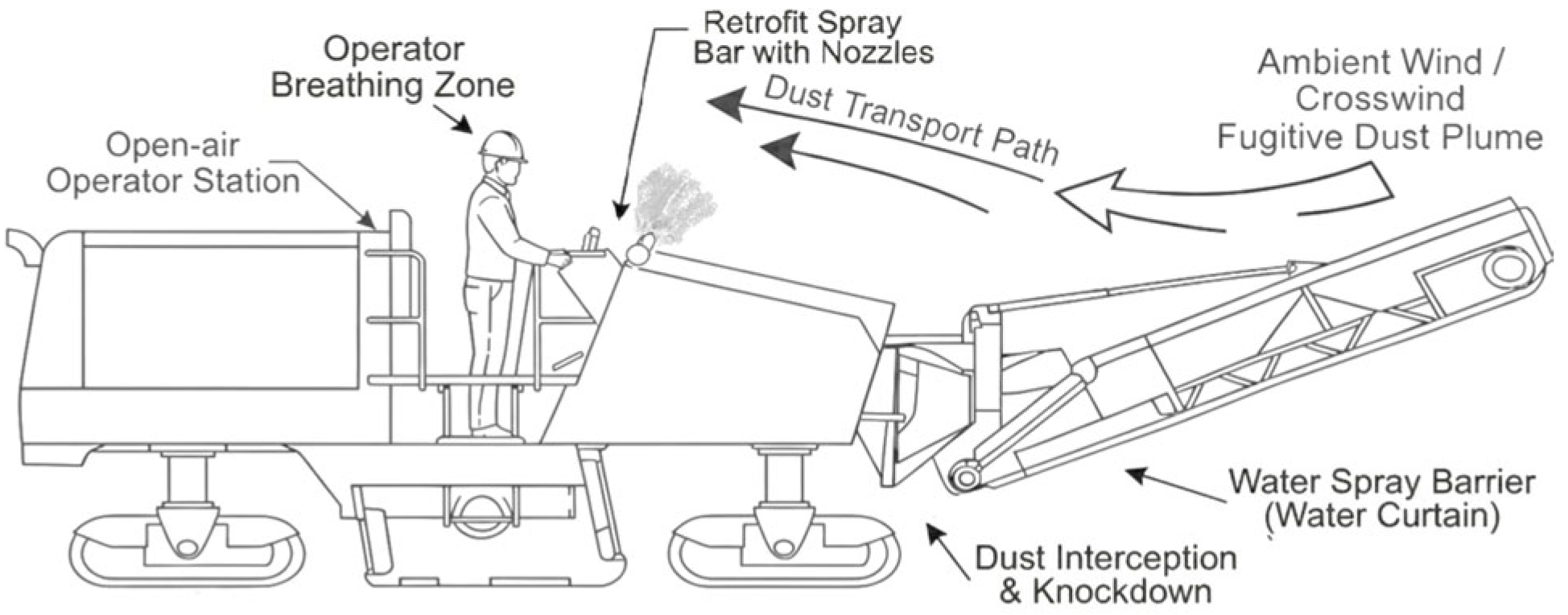
To address the occupational hygiene challenges posed by legacy road maintenance equipment, a standalone, retrofittable external water spray system was developed. The system architecture, illustrated in
Figure 1, was designed with a modular “plug-and-play” philosophy to ensure compatibility with various models of cold planers lacking enclosed cabs. The system comprises three independent sub-units: a supply unit, a control/power module, and a spray barrier effector.
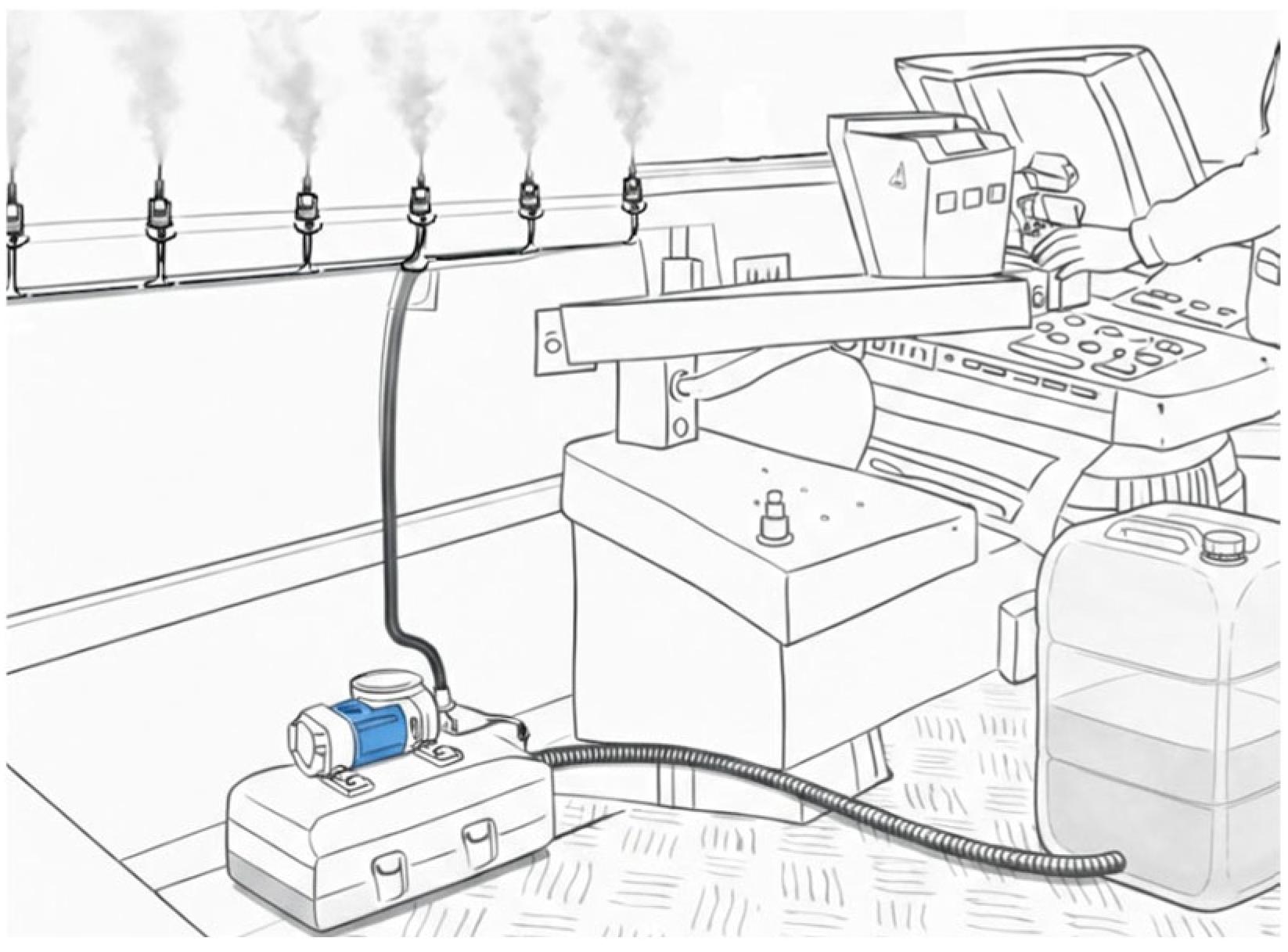
A critical design feature is the independent fluid supply. Unlike traditional systems that tap into the milling machine’s onboard water tank—which is often contaminated with sediment—this system utilizes a dedicated 30-L polyethylene tank to ensure a consistent supply of clean water. This prevents nozzle clogging and maintains a stable spray pattern. Fluid delivery is driven by a high-pressure miniature diaphragm pump operating at a working pressure of 7 kg/cm2 (approx. 100 psi) with a flow rate of 0.3 L/min. The system is powered by the host machine’s DC 12 V/24 V electrical system via a regulated control box equipped with safety relays and a manual activation switch accessible to the operator.
The dust suppression mechanism relies on the “Exposure Pathway Interruption” strategy. A custom-fabricated spray bar is mounted horizontally on the operator’s console, positioned anterior to the standing driver. The bar is fitted with an array of six (6) fine-atomizing brass nozzles (0.3 mm orifice diameter). As depicted in
Figure 2, these nozzles are oriented to generate an overlapping, fan-shaped water curtain. This barrier is designed to intercept fugitive dust plumes driven by environmental crosswinds or machine turbulence before they enter the operator’s breathing zone.
2.2. Field Site Characteristics
The field evaluation was conducted at 11 distinct asphalt pavement milling sites located in central and southern Taiwan. These sites represented typical road rehabilitation projects, characterized by varying pavement conditions, milling depths (ranging from 5 to 15 cm), and environmental terrains. The study specifically targeted older-generation cold planers (drum widths ranging from 1.0 to 2.0 m) that featured open-air operator stations. None of the machines in this study were equipped with enclosed pressurized cabs or manufacturer-installed high-efficiency filtration systems.
2.3. Experimental Design: Paired Comparison
Field conditions in road construction are highly variable, with changing wind speeds, pavement compositions, and machine operation modes. To control for these confounding variables, this study employed a paired comparison experimental design.
For each of the 11 field sites, personal exposure monitoring was conducted exclusively on the machine’s primary driver (operator) stationed on the open-air deck (n = 11). The same driver was monitored operating the same machine during the same work shift for both trials to ensure paired consistency. Ground-level personnel (e.g., cutter operators) were excluded from this specific efficacy evaluation to maintain a standardized distance from the emission source.
The sampling period was divided into two consecutive trials conducted in a fixed sequence:
System-OFF (Baseline): The retrofit external spray system was deactivated. To represent standard operating conditions, the machine’s internal drum spray system remained continuously active.
System-ON (Intervention): Following a brief transition period (10–15 min) to change sampling cassettes and activate the pump, the retrofit external spray system was fully activated to generate the protective water barrier.
A fixed sequence (OFF followed by ON) was methodologically necessary across all 11 routes to prevent the “washout effect.” If the System-ON trial were conducted first, residual moisture on the pavement and within the cutter housing would artificially suppress dust generation during the subsequent System-OFF trial, thereby skewing the baseline measurements. Throughout both trials, operational covariates, including milling depth (5–15 cm), tandem dump truck position (directly ahead of the conveyor), and internal water settings, were kept constant to isolate the efficacy of the external spray barrier.
Each specific sampling trial (System-OFF and System-ON) lasted approximately 2 to 4 h (detailed route-by-route in
Table 1) to ensure sufficient particulate mass loading for accurate gravimetric and chemical analysis.
2.4. Sampling Methodology
Personal breathing zone (PBZ) samples were collected in accordance with standardized methodologies established by the U.S. National Institute for Occupational Safety and Health (NIOSH). Sampling trains were attached to the operator’s collar, maintaining the inlet within a 30-cm radius of the nose and mouth.
- ➢
Respirable Dust and Crystalline Silica: Samples were collected using a New-IOSH cyclone (Data Test Scientific Co., Ltd., Taiwan) followed by a pre-weighed 37-mm, 5.0-µm pore size polyvinyl chloride (PVC) filter. The sampling pumps were calibrated to a flow rate of 1.7 L/min to achieve the requisite 50% cut-point (D
50) of 4 μm, following NIOSH Method 0600 [
17].
- ➢
Total Dust: Parallel samples for total dust were collected using a 37-mm, 5.0-µm pore size PVC filter in a closed-face cassette (CFC) (225-802, SKC Inc., Eighty Four, PA, USA) at a flow rate of 2.0 L/min, following NIOSH Method 0500 [
18].
- ➢
Particle Size Distribution: To characterize the aerodynamic properties of the challenge aerosol, particle size distribution was measured at selected high-exposure sites using a Marple Series 290 Personal Cascade Impactor (Andersen Instruments, Smyrna, GA, USA). This multi-stage impactor provided data on the Mass Median Aerodynamic Diameter (MMAD) and the Geometric Standard Deviation (GSD) of the dust reaching the operator.
Environmental parameters, including ambient wind speed and direction, were continuously monitored using a portable weather station positioned in the vicinity of the milling operation.
2.5. Laboratory Analysis
Post-sampling, all filters were transported to an accredited laboratory under temperature-controlled conditions.
Gravimetric Analysis: Total and respirable dust masses were determined by weighing the filters on a microbalance with a readability of 0.001 mg in an environmentally controlled weighing room, following the desiccation protocols specified in the respective NIOSH methods.
Crystalline Silica Analysis: Following gravimetric analysis, the respirable dust samples were analyzed for quartz content using X-ray Diffraction (XRD) (Shimadzu XRD-6000 diffractometer (Shimadzu Corporation, Kyoto, Japan)) in accordance with NIOSH Method 7500 [
19]. The analysis utilized a high-power X-ray diffractometer with secondary target filtration to identify the primary quartz peak at 2θ = 26.66°.
2.6. Data Analysis and Efficacy Calculation
The engineering control efficacy (E, %) for total dust, respirable dust, and respirable crystalline silica (RCS) was calculated for each paired trial using the following equation:
where C
OFF and C
ON represent the time-weighted average (TWA) concentrations (mg/m
3) measured during the System-OFF and System-ON periods, respectively.
Statistical analysis was performed to determine the significance of the concentration reductions. Given the paired nature of the exposure data and the limited sample size (n = 11), the robust, non-parametric Wilcoxon Signed-Rank Test was strictly employed to evaluate the statistical significance of the intervention. To quantify the uncertainty of the efficacy claims, the median absolute reduction (effect size) and the exact 95% Confidence Intervals (95% CIs) of the differences between the System-OFF and System-ON trials were calculated using the Hodges–Lehmann estimator. A p-value of less than 0.05 was considered statistically significant. Visual analysis of the paired efficacy was further supported by connected-points plots. Additionally, the relationship between ambient wind speed and control efficacy was examined using regression analysis to assess the stability of the water barrier under varying meteorological conditions.
2.7. Quality Assurance and Quality Control (QA/QC)
To ensure data integrity and validity, a rigorous QA/QC protocol was implemented throughout the field and laboratory phases.
- ➢
Pump Calibration: All sampling pumps were calibrated before and after each sampling event using a primary flow standard (e.g., BIOS DryCal DC-Lite). Data from sampling trains where the post-sampling flow rate deviated by more than 5% from the pre-sampling rate were discarded.
- ➢
Field Blanks: Field blank filters were collected at a rate of 10% of the total sample volume (or at least one per sampling day) to account for potential contamination during handling and transport. These blanks were subjected to the same handling procedures as the field samples but were not exposed to air.
- ➢
Limits of Detection and Quantification: For the chemical analysis of respirable crystalline silica (quartz) via XRD, the analytical Limit of Detection (LOD) was established at 0.005 mg/filter (5 μg), and the Limit of Quantification (LOQ) was 0.03 mg/filter (30 μg). To contextualize this in terms of air concentration, assuming a standard baseline sampling duration of 120 min at a flow rate of 1.7 L/min (total volume = 0.204 m3), the mass LOD maps to an approximate air concentration limit of 0.024 mg/m3, and the LOQ maps to 0.147 mg/m3.
- ➢
Data Censoring: Analytical mass results falling below the LOQ were treated using the LOQ/√2 substitution method for statistical calculations. A sensitivity analysis was conducted to assess the impact of this substitution by alternatively replacing censored values with LOQ/2 and 0. The sensitivity analysis confirmed that different imputation methods did not alter the overall statistical significance (p < 0.05) of the suppression efficacy, confirming the robustness of our conclusions.
- ➢
Informed Consent: Prior to field testing, the purpose and procedures of the study were explained to all participating machine operators, and informed consent was obtained. The study protocols adhered to ethical guidelines for occupational hygiene field research.
3. Results
3.1. Baseline Exposure Assessment and Site Conditions
Field evaluations were conducted across 11 distinct road milling sites in central and southern Taiwan to assess the occupational exposure risks under varying environmental conditions. The study sites comprised six expressway sections and five general surface roads, representing a comprehensive cross-section of typical road rehabilitation projects. As detailed in
Table 1, environmental factors, particularly ambient crosswind speed, varied significantly during the sampling periods. Wind speeds ranged from negligible conditions of 0.15 m/s (Route 5) to a strong breeze of 4.11 m/s (Route 11). This variation provided a critical opportunity to evaluate the performance of engineering controls under different meteorological challenges. Notably, Routes 7 and 9 utilized smaller milling machines without conveyor systems, distinguishing them from the standard large cold planers used in other routes.
The baseline exposure assessment, conducted with the external suppression system deactivated (System-OFF), revealed that milling operators were consistently exposed to hazardous respiratory conditions. Gravimetric analysis results, summarized in
Table 2, indicated that baseline concentrations of total dust and respirable dust were elevated across all sites. Specifically, total dust concentrations ranged from 1.53 mg/m
3 to a peak of 9.78 mg/m
3, while respirable dust levels reached as high as 4.92 mg/m
3 in Route 9.
Of particular concern were the levels of respirable crystalline silica (RCS), a confirmed human carcinogen. In the absence of supplementary engineering controls, baseline RCS concentrations frequently exceeded international occupational exposure limits. For instance, at the site designated as Route 7, where a smaller milling machine lacking a conveyor was utilized, the baseline RCS concentration peaked at 1.20 mg/m3, a value 24 times higher than the NIOSH Recommended Exposure Limit (REL) of 0.05 mg/m3. Similarly, Route 9 exhibited an exceptionally high RCS concentration of 1.67 mg/m3. Even in larger milling operations such as Route 1 and Route 11, baseline RCS levels were recorded at 0.63 mg/m3 and 0.80 mg/m3, respectively. These findings underscore the inadequacy of standard onboard suppression systems in isolation and highlight the critical necessity for retrofitted engineering controls to mitigate these severe occupational health risks.
3.2. Particle Size Distribution Characterization
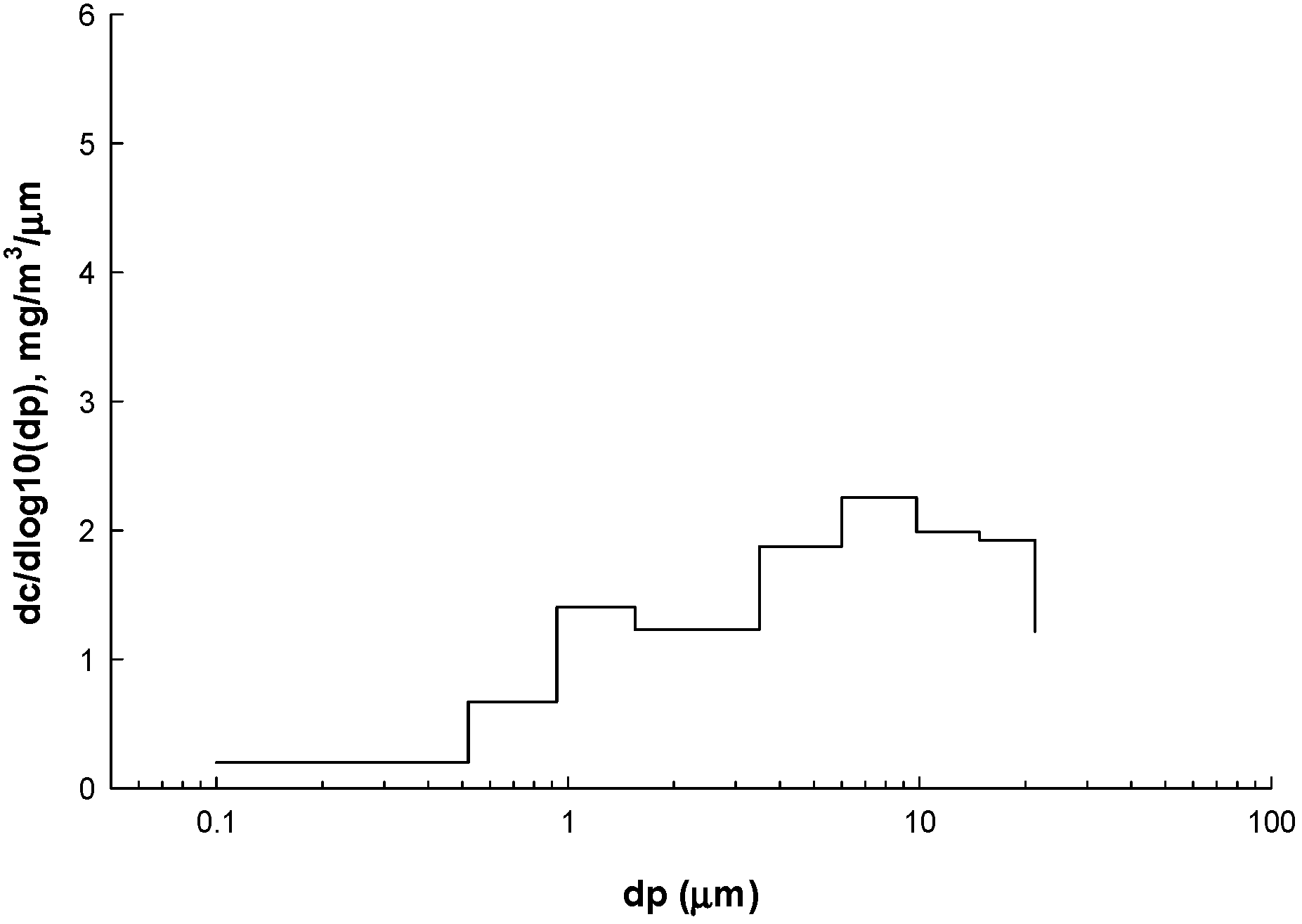
To characterize the aerodynamic properties of the fugitive dust and validate the nozzle selection strategy, the particle size distribution of the challenge aerosol was analyzed using a Marple Series 290 Personal Cascade Impactor. The cumulative mass distribution, as illustrated in
Figure 3, reveals a unimodal distribution pattern typical of mechanically generated particulates.
The analysis yielded a Mass Median Aerodynamic Diameter (MMAD) of 6.12 μm with a Geometric Standard Deviation (GSD) of 2.51. This distribution indicates that while the bulk of the particulate mass consists of coarser fractions (>10 μm), a substantial proportion of the aerosol mass lies within the respirable range (<4 μm), which is capable of penetrating the deep lung.
These aerodynamic characteristics provide the physical basis for the retrofit system’s design. Conventional low-pressure deluge systems often produce large water droplets (>200 μm) that possess high inertia, causing them to bypass the smaller respirable dust particles due to the slip-stream effect. In contrast, the MMAD of 6.12 μm identified in this study supports the selection of fine-atomizing nozzles with a 0.3 mm orifice. This configuration generates a mist spectrum with a droplet size distribution aerodynamically tailored to intercept particles in the 1–10 μm range, thereby maximizing the collision efficiency for the specific dust profile generated during asphalt milling.
3.3. Efficacy of the Retrofit Water Spray System
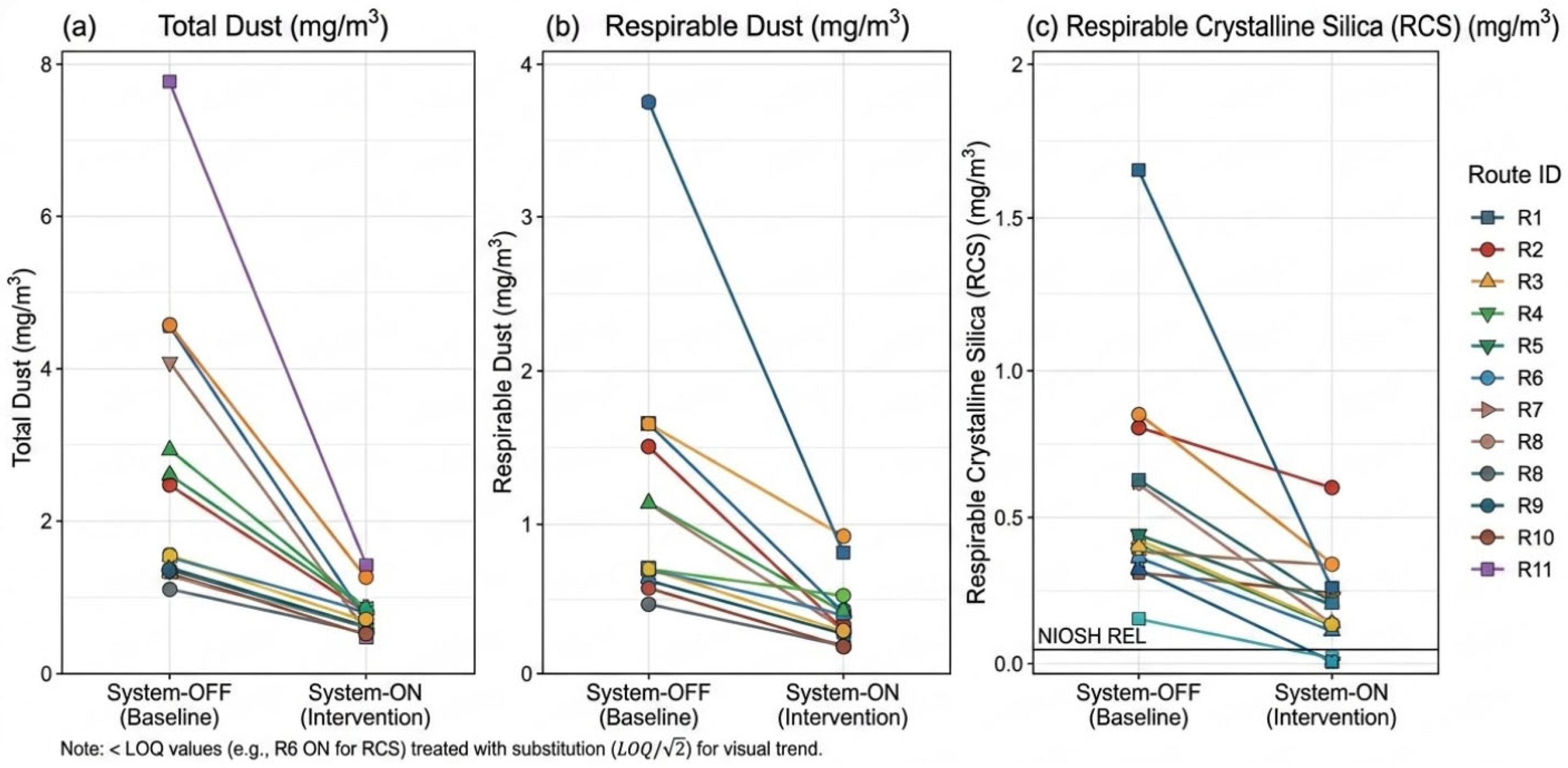
The suppression efficacy of the retrofit external water spray system was evaluated by comparing the Time-Weighted Average (TWA) concentrations of particulate matter measured during paired System-OFF (baseline) and System-ON (intervention) trials. As presented in
Table 3, the intervention demonstrated a consistent and robust reduction in dust exposures across the majority of test sites. Statistical analysis using the Wilcoxon Signed-Rank Test confirmed that the absolute reductions in Total Dust, Respirable Dust, and Respirable Crystalline Silica (RCS) were highly significant (
p < 0.01) across the dataset. For Total Dust, the engineering control achieved a median absolute reduction of 2.15 mg/m
3 (95% CI: 1.30 to 4.80 mg/m
3), translating to suppression efficiencies ranging from 54% to 84%. Similarly, for Respirable Dust, the median reduction was 1.05 mg/m
3 (95% CI: 0.65 to 2.30 mg/m
3). Most critically, for RCS—the primary health hazard—the system demonstrated a median exposure reduction of 0.40 mg/m
3 (95% CI: 0.20 to 0.75 mg/m
3). To clearly visualize this consistent downward trend and the associated inter-site variance, the paired System-OFF versus System-ON concentrations for each dust fraction are presented as connected-point plots in
Figure 4.
High efficacy was observed even in high-load scenarios; for instance, in Route 9, where the baseline concentration was an extreme 9.78 mg/m3, the system successfully reduced the concentration to 2.54 mg/m3, representing a 74% reduction. Similarly, for Respirable Dust—the fraction most relevant to deep lung penetration—the system exhibited high performance, with reductions ranging between 57% and 80%. The highest efficiency was recorded in Route 5, where respirable dust levels dropped from 1.18 mg/m3 to 0.24 mg/m3 (80% efficiency).
Crucially, the system proved highly effective in mitigating the most severe hazard: Respirable Crystalline Silica (RCS). In trials conducted under low-to-moderate wind conditions (Routes 1–9), RCS suppression efficiencies consistently exceeded 60%, with several sites achieving reductions greater than 75%. A notable example is Route 2, where the baseline RCS concentration of 0.34 mg/m3 was reduced to below the analytical limit of detection (<0.05 mg/m3) upon system activation, yielding an efficiency of >85%. Even in the challenging environment of Route 7, which utilized a smaller milling machine with a high baseline RCS of 1.20 mg/m3, the system managed to reduce exposure by 62% to 0.46 mg/m3. However, it is noted that in Routes 10 and 11, the suppression efficiencies for RCS dropped to 50%, a phenomenon attributed to environmental crosswinds, which will be discussed in the subsequent section.
3.4. Comparative Analysis of Nozzle Orifice Diameter
To optimize the trade-off between dust suppression efficiency and water consumption, a comparative analysis was conducted using two different nozzle orifice diameters: the standard 0.3 mm nozzles and larger 0.5 mm nozzles. While the majority of the field trials utilized the 0.3 μm configuration to maximize the surface-area-to-volume ratio of the droplets, Routes 8 and 9 were specifically designated to evaluate the performance of the 0.5 mm nozzles.
Preliminary observations from these limited trials suggest that increasing the nozzle diameter did not yield a readily apparent improvement in suppression efficacy, though the sample size (n = 2 for 0.5 mm nozzles) limits formal statistical comparison. In Route 8 (Expressway), the system equipped with 0.5 mm nozzles achieved a Respirable Crystalline Silica (RCS) suppression efficiency of >77%. Similarly, in Route 9 (Surface Road), an efficiency of 78% was recorded. These performance metrics are comparable to those obtained with the 0.3 mm nozzles under similar environmental conditions, such as Route 3 (>75%) and Route 5 (71%).
The lack of significant disparity suggests that the finer mist generated by the 0.3 mm nozzles is sufficient to intercept the target aerosol fraction identified in the particle size analysis (MMAD = 6.12 μm). Consequently, the 0.3 mm configuration is deemed preferable for the final system design, as it maintains high suppression efficacy while significantly reducing water consumption rates, thereby extending the operational duration of the independent water supply unit.
3.5. Influence of Crosswind Speed on System Performance
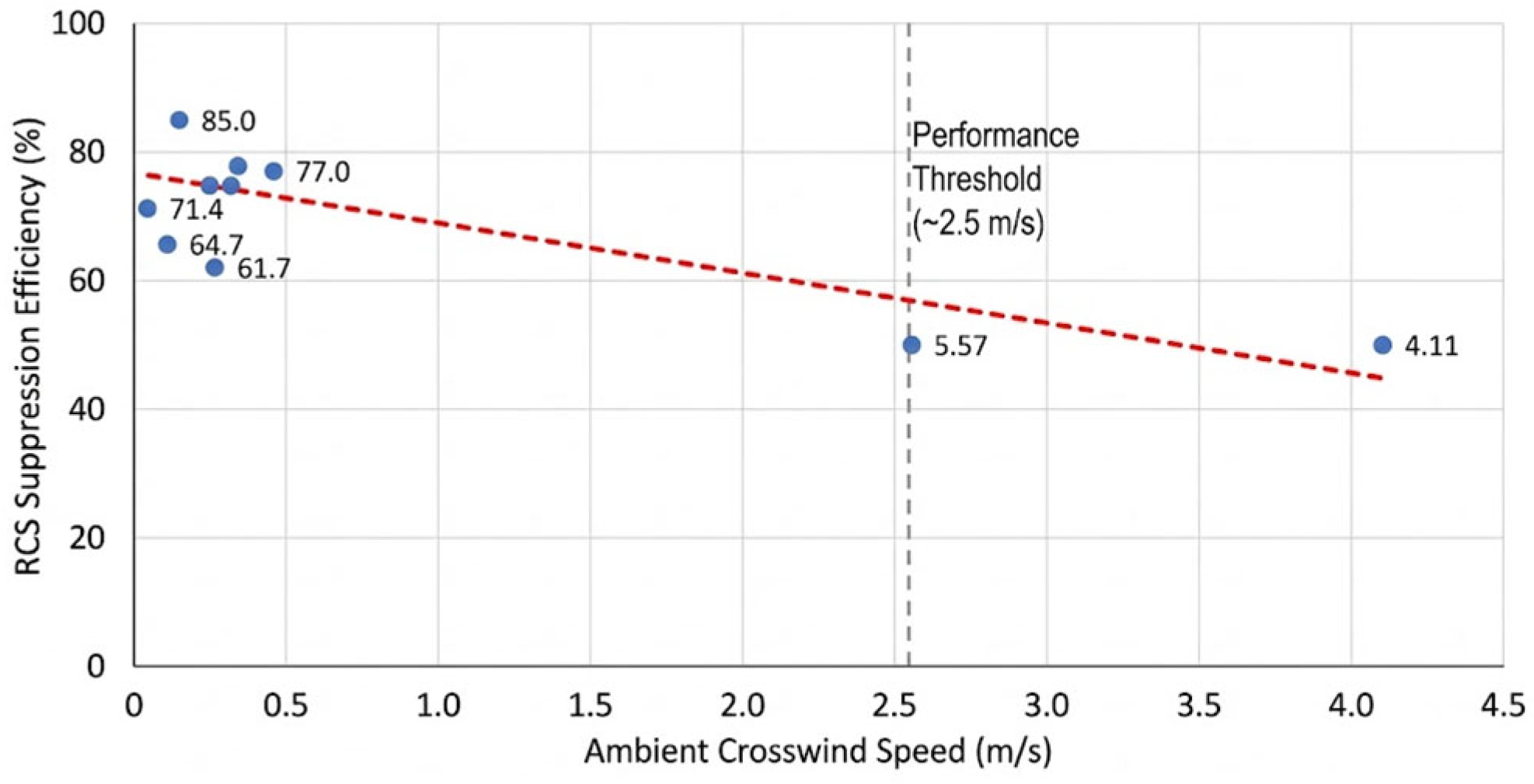
While the retrofit system demonstrated high efficacy under stable atmospheric conditions, a distinct inverse relationship was observed between ambient crosswind speed and the suppression efficiency of respirable crystalline silica (RCS). To quantify this effect, a linear regression analysis was performed on the dataset (
p < 0.001, R
2 = 0.79), as illustrated in
Figure 5.
In trials conducted under low wind conditions (<0.5 m/s), such as Routes 1 through 6, the system maintained a stable water curtain, achieving optimal performance with RCS reductions consistently ranging from 7% to over 85%. However, a marked degradation in suppression efficacy was identified when crosswind speeds exceeded a preliminary performance boundary of approximately 2.5 m/s. As evidenced by the data from Route 10, where the average wind speed reached 2.57 m/s, the RCS suppression efficiency declined significantly to 50%. This trend was further corroborated by Route 11, which was subjected to the highest recorded wind speed of 4.11 m/s; in this scenario, the efficiency for the driver remained limited to 50%.
This performance decay suggests a physical limitation of the external spray barrier approach. When ambient crosswinds exceed approximately 2.5 m/s, the aerodynamic forces exerted by the wind can overcome the momentum of the fine mist droplets (0.3 mm nozzles), disrupting the integrity of the protective curtain. This disruption allows a fraction of the fugitive dust plume to bypass the interception zone and enter the operator’s breathing zone. Consequently, while the system is highly effective for standard operations, supplementary wind shielding or increased droplet momentum may be required for operations in high-wind environments.
4. Discussion
4.1. Mechanistic Interpretation of Dust Suppression Efficacy
The field evaluation results demonstrate that the retrofit water spray system significantly mitigates occupational exposure to respirable crystalline silica (RCS), achieving suppression efficiencies exceeding 85% under optimal conditions. This high level of efficacy can be attributed to the scientifically grounded alignment between the spray droplet spectrum and the aerodynamic properties of the target aerosol.
As characterized in this study, the fugitive dust generated during milling exhibits a Mass Median Aerodynamic Diameter (MMAD) of 6.12 μm. From the perspective of aerosol mechanics, this particle size range presents a specific challenge for wet suppression. According to the theory of inertial impaction, the collection efficiency of a water droplet is a function of the Stokes number, which relates the stopping distance of a particle to the diameter of the obstacle (in this case, the water droplet) [
33]. When conventional suppression systems utilize low-pressure, high-volume nozzles, they typically generate large droplets (>200 μm). As these large droplets move through the air, they create a significant bow wave or aerodynamic slip-stream around them. Small respirable particles (<10 μm), possessing low inertia, tend to follow these streamlines and flow around the large droplets rather than colliding with them—a widely recognized aerodynamic phenomenon known as the “slip-stream effect” [
33,
34].
The retrofit design addresses this fundamental limitation by employing fine-atomizing nozzles with a 0.3 mm orifice operating at 7 kg/cm2. While direct droplet-spectrum measurements were not conducted in this field study, based on established aerosol mechanics, we hypothesize that this configuration generates a mist of much finer droplets. Theoretically, a reduced droplet size minimizes the slip-stream effect and increases the surface-area-to-volume ratio of the water, thereby enhancing the probability of collision for particles in the 1–10 μm range. This theoretical mechanism serves as a plausible explanation for the observed efficacy, though future laboratory studies utilizing laser diffraction are warranted to empirically confirm the exact droplet size distribution. The empirical success of the system validates the “Exposure Pathway Interruption” strategy; by creating a dense, fine-mist curtain directly between the generation source (the cutter housing) and the receptor (the operator), the system effectively intercepts the fugitive plume before it can enter the breathing zone, even without the complex enclosure required for local exhaust ventilation (LEV).
4.2. Operational Optimization: Balancing Efficacy and Resource Conservation
Field trials comparing the standard 0.3 mm nozzles (Routes 1–7, 10–11) against the larger 0.5 mm nozzles (Routes 8–9) yielded comparable RCS suppression efficiencies (75–85% versus 77–78%, respectively). However, because the 0.5 mm comparison was underpowered (n = 2), definitive statistical conclusions regarding their equivalency cannot be drawn. Nevertheless, from an operational standpoint, these preliminary findings suggest that simply increasing the water flow rate or droplet diameter does not yield readily apparent proportional gains in dust capture. It supports the theoretical inference that the finer mist generated by the 0.3 mm nozzles may already be sufficient to saturate the interaction zone and effectively intercept the respirable dust fraction characterized by an MMAD of 6.12 μm. From an engineering perspective, this potential “diminishing return” on larger nozzles supports the selection of the 0.3 mm configuration as a highly practical design choice. By utilizing the smaller orifice, the system significantly reduces volumetric water consumption while maintaining high suppression efficacy. This conservation strategy extends the operational runtime of the independent supply unit, thereby reducing the frequency of refill interruptions—a critical factor for ensuring operator acceptance and minimizing downtime in time-sensitive road maintenance projects.
4.3. Environmental Constraints and Operational Boundaries
While the retrofit system demonstrates high efficacy under stable atmospheric conditions, field validation has identified critical environmental constraints that define its operational envelope. Specifically, ambient crosswind speed acts as a primary limiting factor for external water spray barriers. The regression analysis of field data reveals an inverse relationship between wind velocity and suppression performance, suggesting a preliminary operational boundary at approximately 2.5 m/s. However, it must be acknowledged that defining a strict threshold is currently limited by the fact that only two of the eleven field observations (Routes 10 and 11) occurred under high-wind conditions (>1 m/s). Therefore, this boundary should be considered preliminary and subject to further validation across a wider gradient of wind speeds.
In low-wind environments (<2.5 m/s), the kinetic energy of the atomized droplets is sufficient to maintain the structural integrity of the water curtain, effectively intercepting the dust plume before it propagates to the operator’s breathing zone. However, as crosswind speeds exceed this threshold—such as in Route 10 (2.57 m/s) and Route 11 (4.11 m/s)—the aerodynamic drag forces exerted by the wind begin to dominate the momentum of the fine droplets (0.3 mm orifice). This aerodynamic disruption causes the spray curtain to drift or disperse, creating breaches through which fugitive dust can bypass the control mechanism. Consequently, the RCS suppression efficiency in these high-wind scenarios degrades significantly to approximately 30–50%.
This finding has significant practical implications for the deployment of retrofit controls. It establishes a clear operational boundary: the standalone spray system is most reliable when ambient wind speeds are low to moderate. For operations conducted in high-wind environments, reliance solely on the external spray bar may be insufficient. To extend the operational envelope, it is recommended that the system be augmented with physical wind shielding—such as installing partial side panels or wind deflectors around the cutter housing—to reduce local turbulence and protect the water curtain from direct crosswind shear. Alternatively, operational protocols could be adjusted to orient the machine heading relative to the wind direction to minimize crosswind exposure during milling.
In addition to ambient crosswinds, extreme temperatures present another critical physical boundary for water-based suppression systems. While the field evaluations in this study were conducted in a subtropical climate with temperatures ranging from 20.0 °C to 31.8 °C, global deployment requires consideration of thermal extremes. Under extremely high-temperature and low-humidity conditions (e.g., arid summer environments), the rapid evaporation of the fine mist generated by the 0.3 mm nozzles could prematurely dissipate the protective water curtain. This rapid phase change reduces the effective lifespan of the droplets, potentially decreasing the probability of inertial impaction with the dust plume and necessitating an adjustment to larger nozzle orifices to compensate for evaporative loss. Conversely, in sub-zero freezing conditions, the system faces immediate mechanical vulnerabilities. Water freezing within the 30-L supply tank, narrow delivery lines, or the micro-orifices of the nozzles would lead to immediate flow obstruction and potential rupture of the miniature diaphragm pump. Therefore, operating this retrofit system in freezing climates would necessitate specific winterization protocols, such as integrating heated supply lines, insulated tanks, or utilizing environmentally safe, non-toxic antifreeze additives to maintain fluid dynamics.
4.4. Implications for Occupational Health in Retrofit Applications
The significance of this study extends beyond the technical validation of a spray system; it addresses a critical gap in occupational hygiene for legacy road maintenance equipment. As evidenced by the baseline exposure assessment, operators of older or smaller milling machines (e.g., Routes 7 and 9) are subject to extreme respiratory hazards, with RCS concentrations reaching up to 1.67 mg/m3—more than 30 times the NIOSH REL. These smaller units often lack the integrated conveyor systems and enclosed cabs found in modern large-scale planers, leaving operators directly exposed to the dust plume. In such scenarios, where intrinsic engineering controls are absent, the risk of developing accelerated silicosis is profoundly elevated.
While advanced engineering controls such as Local Exhaust Ventilation (LEV) systems have been recommended by agencies like NIOSH, retrofitting complex vacuum and filtration systems onto aging machinery is often technically prohibitive and economically unfeasible for small and medium-sized enterprises (SMEs). The standalone water spray system developed in this study offers a viable alternative. By achieving RCS suppression efficiencies comparable to more complex systems (60–80%), this modular “plug-and-play” solution democratizes access to effective dust control. It provides a cost-effective, easily deployable intervention that does not require structural modification of the host machine.
This capability has broad implications for occupational health policy, particularly in developing regions or industries where fleet modernization is slow due to capital constraints. The demonstrated efficacy of this retrofit solution suggests that significant reductions in occupational disease burden can be achieved immediately through targeted retrofitting, without waiting for the natural turnover cycle of heavy machinery fleets. It validates a transitional strategy: deploying accessible external controls to mitigate immediate risks while longer-term fleet upgrades are planned.
While this study measured task-specific exposures during active milling (2–4 h) rather than full 8-h shift TWAs—which would require speculative assumptions regarding exposures during non-milling standby activities—the health risk implications of the observed reductions are profound. The dose–response relationship for respirable crystalline silica regarding pulmonary fibrosis (silicosis) and carcinogenesis is cumulative and non-linear. Extreme, high-concentration bursts of RCS can rapidly overwhelm the clearance mechanisms of pulmonary alveolar macrophages, leading to disproportionate inflammatory and fibrotic responses. By reducing the task-based RCS concentration from extreme baseline levels (e.g., a mean of 0.63 mg/m3) to a post-intervention average of 0.22 mg/m3, the engineering control substantially lowers the peak burden on the respiratory system. Therefore, while the average physical concentration is reduced by approximately 68.8%, the corresponding reduction in the lifetime excess risk of developing progressive massive fibrosis or lung cancer is anticipated to be exponential rather than merely proportional. This non-linear risk reduction affirms the critical public health value of deploying the spray barrier to eliminate peak exposure episodes.
Additionally, the utility of this external water spray system is not strictly limited to legacy equipment. While modern, large-scale milling machines are increasingly equipped with enclosed, high-efficiency particulate air (HEPA) filtered cabins that effectively isolate the primary driver, these cabins do not eliminate the emission source. Fugitive dust escaping the cutter housing continues to pose severe respiratory risks to accompanying ground personnel (such as cutter operators and traffic controllers) and the surrounding public in urban construction zones. Because the retrofit system is highly modular, it can be seamlessly integrated onto the exterior chassis of modern machines to serve as a supplementary perimeter emission control. By intercepting and knocking down the dust plume near its point of generation, the system acts not only as a personal protective barrier for open-air operators but also as an active environmental emission reduction strategy, enhancing comprehensive site safety for all surrounding populations.
Furthermore, addressing operator well-being requires a holistic approach. While this study advocates for the supplementary use of N95 respirators alongside the water spray barrier to achieve redundant protection, wearing heavy personal protective equipment (PPE) during open-air, high-temperature road work significantly exacerbates heat strain. Therefore, future occupational health strategies in this sector should consider integrating real-time physiological monitoring, such as non-intrusive early warning systems for thermal discomfort based on body surface temperature analysis [
35], ensuring that respiratory protection does not inadvertently compromise overall thermal safety.
4.5. Study Limitations and Future Research Directions
While this study establishes the efficacy of the retrofit water spray system, several limitations warrant consideration. First, the field evaluations were cross-sectional in nature, focusing on the immediate suppression efficiency over sampling periods of 2 to 4 h. The long-term durability of the system components—specifically the resilience of the miniature diaphragm pump against the high-frequency vibrations of road milling machinery and the susceptibility of the 0.3 mm nozzle orifices to scaling or clogging over extended deployment—remains to be quantified in longitudinal studies. Although an inline mesh filter was incorporated to mitigate clogging risks, the use of industrial-grade water sources common in construction sites could still pose maintenance challenges.
Second, the system’s performance is intrinsically linked to meteorological conditions. As highlighted in the results, the “open-air” nature of the spray barrier renders it vulnerable to crosswinds exceeding 2.5 m/s. This physical limitation restricts the system’s standalone reliability in high-wind environments or coastal construction zones.
Third, while the paired experimental design yielded high internal validity and statistically significant exposure reductions (p < 0.01) by effectively controlling for site-specific confounding variables, the relatively small number of investigated locations (n = 11) limits the broad statistical generalizability of these findings. The observed 60–85% suppression efficiency may vary across different asphalt compositions, extreme degrees of machine wear, and other diverse operational parameters not captured in this study. Future large-scale, multi-center field trials are recommended to establish a more generalized performance baseline across the industry.
Fourth, the reliance on standard filter-based gravimetric and X-ray diffraction (XRD) analytical methods (e.g., NIOSH Method 7500) inherently yields a cumulative, task-based average concentration over the 2- to 4-h sampling periods. While necessary for accurate crystalline silica quantification and regulatory comparability, this cumulative approach is physically incapable of resolving short-term, intense exposure episodes. Consequently, the average efficiency values reported herein may mask brief concentration peaks caused by sudden wind gusts or localized changes in pavement density. Future investigations should incorporate real-time, direct-reading aerosol monitors (e.g., light-scattering laser photometers) operating in tandem with standard filter sampling to dynamically assess the system’s capability to suppress these transient, high-risk exposure peaks.
Future research should focus on enhancing the robustness of this control strategy through two primary avenues:
Hybridization with Physical Barriers: Investigating the synergistic effect of combining the water spray system with partial wind shrouds or flexible side-flaps installed around the cutter housing. Such physical barriers could reduce local turbulence and shield the water curtain, potentially extending the operational envelope to higher wind speeds.
Physicochemical Enhancement: Exploring the addition of surfactants or wetting agents to the water supply. Reducing the surface tension of the water droplets could theoretically enhance the capture efficiency for the finest silica fraction (<1 μm) and reduce the total water volume required. However, such additives must be selected carefully to avoid excessive foaming, which could obscure the operator’s vision or create slippery surfaces.
Predictive Decision-Support Systems for Extreme Conditions: Given that the suppression efficacy is highly wind-dependent, there is a distinct opportunity to develop forecasting tools to predict when the spray barrier might fail. Future work could adapt advanced predictive models focused on extreme events—such as utilizing machine learning architectures with custom loss functions designed specifically to emphasize high/low extremes, a methodology successfully demonstrated in other complex forecasting domains [
36]. Such decision-support systems could alert site managers to impending high-risk wind conditions, triggering the temporary cessation of milling or the deployment of secondary physical barriers.
In conclusion, this study validates the standalone external water spray system as a scientifically sound, cost-effective, and highly deployable intervention for reducing silica exposure. While environmental constraints exist, the system offers a vital immediate solution for legacy fleet retrofit, bridging the gap between current hazardous practices and the eventual modernization of road maintenance equipment.
5. Conclusions
This study successfully developed and validated a standalone, retrofittable external water spray system designed to mitigate the high-risk exposure to respirable crystalline silica (RCS) associated with open-air road milling operations. By targeting the intersection of the fugitive dust plume and the operator’s breathing zone, the system provides a scientifically grounded “Exposure Pathway Interruption” solution for legacy machinery that lacks intrinsic engineering controls.
The field evaluation across 11 diverse construction sites yields three primary conclusions. First, the retrofit system demonstrated robust suppression efficacy. Under standard operating conditions with low-to-moderate crosswinds (<2.5 m/s), the system achieved consistent reductions in total dust and respirable dust ranging from 60% to 80%. Most critically, it effectively suppressed RCS concentrations by over 60%, with optimal scenarios exceeding 85%, thereby significantly reducing the inhalation risk for operators of older milling units.
Second, the characterization of the challenge aerosol (MMAD = 6.12 μm) validated the engineering selection of fine-atomizing nozzles (0.3 mm orifice). The comparative analysis confirmed that this configuration offers a suppression performance statistically equivalent to larger 0.5 mm nozzles but with superior water conservation. This finding establishes the 0.3 mm nozzle as the optimal design choice for standalone units where independent fluid autonomy is a critical operational constraint.
Third, while the system is highly effective, its performance is physically bounded by meteorological conditions. Ambient crosswind speed was identified as a governing factor, with a preliminary performance boundary observed at approximately 2.5 m/s. Beyond this suggested boundary, the aerodynamic disruption of the water curtain leads to a marked decline in suppression efficiency. Consequently, while this system offers a vital and cost-effective intervention for immediate risk reduction, operations in high-wind environments may require supplementary physical shielding to maintain the integrity of the spray barrier.
In summary, this research provides a verified, scalable, and economically feasible engineering control strategy. For the vast fleet of legacy cold planers currently in operation—particularly within small and medium-sized enterprises in developing infrastructure markets—this retrofit solution serves as a crucial transitional technology to bridge the gap in occupational health protection.