Article

Consequence-Based Assessment of Hydrogen Jet-Fire Hazards in a Port Hydrogen Refueling Station: Theory–CFD Coupling and Wind-Affected Thermal Impact Zoning


1
China Energy Engineering Group Guangxi Electric Power Design Institute Co., Ltd., Nanning 530007, China
2
State Key Laboratory of Maritime Technology and Safety, Wuhan University of Technology, Wuhan 430063, China
3
School of Transportation and Logistics Engineering, Wuhan University of Technology, Wuhan 430063, China
*
Author to whom correspondence should be addressed.
Appl. Sci. 2026, 16(6), 2859; https://doi.org/10.3390/app16062859
Submission received: 14 February 2026 / Revised: 13 March 2026 / Accepted: 13 March 2026 / Published: 16 March 2026

Abstract

Port-area hydrogen refueling stations face low-frequency but high-consequence events when high-pressure leaks ignite as jet fires in wind-exposed, constrained environments. This study develops a consequence-based framework coupling theoretical screening, CFD combustion analysis, and hazard zoning to support separation-distance setting and emergency planning. A jet-fire model estimates flame-impingement distances for multiple leak diameters, and a weighted multi-point radiation model predicts heat-flux fields, from which lethal and irreversible-injury zones are delineated using thresholds of 7 and 5 kW/m2, respectively. To move beyond wind-free screening, steady reacting-flow CFD is conducted for a representative release under four ambient conditions, with 4.34 m/s adopted as the representative wind speed for the windy cases based on Ningbo Port conditions. Validation against a visible-flame correlation defined by T ≥ 1573 K shows a deviation of 6.99%. Results show that radiation footprints expand markedly with diameter, with lethal and injury distances scaling approximately linearly within the studied range. Under wind, near-ground hot-plume extents defined by T ≥ 388 K and T ≥ 582 K depend strongly on wind direction and station geometry, whereas visible flame length is less sensitive. Additional sensitivity analyses indicate that the quasi-steady results are weakly affected by the selected ignition snapshot, while inclined releases modify projected plume/flame extents without altering the main engineering interpretation of the baseline case. The results support theory-based preliminary screening, but wind direction should be explicitly considered in exclusion-zone definition.

1. Introduction

Hydrogen refueling stations (HRSs) are becoming a key enabling infrastructure for hydrogen mobility and emerging port and industrial applications [1,2]. Recent work on the optimal operation of coupled hydrogen–electricity energy systems in ports using multi-time-scale scheduling further underscores the growing complexity of port-side hydrogen infrastructures and the consequent need for risk-informed safety design [3]. Similarly, recent research on rolling multi-objective ship operation under dynamic waterway conditions has shown that decarbonization-oriented maritime systems increasingly rely on data-driven and adaptive decision-support tools, further highlighting the need for coordinated planning of supporting low-carbon energy infrastructures across ship–port systems [4]. In parallel, ports are expanding the deployment of renewable generation assets such as photovoltaic arrays; corresponding advances in data-driven fault diagnosis under small-sample and class-imbalanced conditions reflect a broader shift toward digitalized operation and maintenance across port energy infrastructures [5]. However, the safety case for HRS deployment is strongly conditioned by post-leak ignition outcomes [6,7] because hydrogen–air mixtures are flammable over a wide concentration range [8]. Such mixtures can be ignited by very low ignition energies [9]. In high-pressure systems, minor defects at interfaces [10,11] (e.g., hoses, fittings, valves) can generate underexpanded releases with high jet momentum and rapid air entrainment, creating conditions under which ignition may lead to a turbulent, non-premixed jet fire [12]. The dominant harm mechanisms in such scenarios are flame impingement, thermal radiation, and the formation of high-temperature buoyant plumes [13,14], which directly determine exclusion zones, equipment vulnerability, and emergency response requirements. Therefore, beyond characterizing leakage dispersion as an initiating event, it is necessary to quantify combustion behavior following hydrogen leakage under station-relevant geometries and environmental conditions.
Brennan et al. [15] used large-eddy simulation (LES) to model high-pressure hydrogen jet fires, compared predicted flame features against large-scale experimental measurements, and concluded that LES can reproduce key jet-fire characteristics and provides a credible basis for consequence prediction under high-pressure release conditions. Cirrone et al. [16] investigated thermal hazards from an under-expanded hydrogen jet fire, used CFD with a volumetric-source implementation of the notional-nozzle concept and radiation modeling, and concluded that the approach can reproduce experimental flame length and radiative heat flux trends and is suitable for evaluating thermal hazard footprints from ignited high-pressure releases. Fu et al. [17] studied jet-flame accidents at an integrated hydrogen production and refueling station, used a three-dimensional CFD model coupled with a thermal-radiation damage assessment, and concluded that increasing the leakage port diameter substantially enlarges the range of fatal/critical thermal impacts. In contrast, appropriately designed firewalls can mitigate the overall hazard to surrounding equipment and personnel. Wang et al. [18] used GASFLOW-MPI to simulate deflagration scenarios in a full-scale hydrogen refueling station benchmark, considering both premixed H2-air clouds and high-pressure hydrogen jet releases, and concluded that CFD predictions can match measured overpressure trends while revealing how station layout and turbulent leakage flow conditions govern the severity of explosion consequences. Wen et al. [19] investigated large-scale hydrogen explosions in a refueling environment and a model storage room, conducted numerical explosion simulations, and concluded that the interaction among flame acceleration, confinement/obstacles, and geometry strongly controls the overpressure distribution and hazard extent in realistic refueling-like environments. Nakayama et al. [20] examined a domino-effect scenario in a hydrogen fueling station with on-site hydrogen production, used simulation-based scenario analysis to evaluate escalation pathways, and concluded that coupling consequence simulations with hazard identification supports targeted preventive measures against cascading events. Bragin and Molkov [21] investigated the physics of spontaneous ignition following sudden high-pressure hydrogen release and the transition to sustained jet fire. They used a physics-based analysis of ignition mechanisms to conclude that ignition assumptions for high-pressure releases require explicit consideration of release dynamics and mixing/chemistry interactions when interpreting jet-fire likelihood and persistence. Papanikolaou et al. [22] evaluated pseudo-diameter approaches for under-expanded hydrogen releases, used comparative assessment against experimental jet data to define CFD inlet conditions for downstream simulations, and concluded that source-term treatment materially affects predicted jet development and should be selected and validated carefully when performing station-scale combustion consequence simulations.
Although the above studies have substantially advanced hydrogen fire and explosion modeling, several limitations remain when the objective is to assess combustion consequences for HRS safety zoning.
On the one hand, while jet-fire and explosion simulations have been demonstrated in either controlled experiments or benchmark-like station rigs, fewer studies provide a unified, station-scale workflow that translates high-pressure release-source modeling into actionable combustion-consequence footprints for realistic layouts. This gap is particularly relevant to engineering decisions such as separation distances and barrier placement, which are governed by thermal radiation and high-temperature exposure rather than by dispersion extents alone [17].
On the other hand, environmental realism is often simplified in combustion simulations. Open, wind-exposed sites can experience wind-flame coupling that reshapes flame tilt, buoyant plume trajectories, and near-ground thermal exposure. Yet, many consequence analyses remain centered on quiescent or idealized boundary conditions. This limitation can lead to an underestimation of high-risk zones under representative winds [17].
To address the above gaps, this paper focuses on combustion behavior following hydrogen leakage at a station-relevant scale and reports hazard footprints using thermal metrics suited to safety zoning. The study adopts a hierarchical approach that characterizes the high-pressure release source using theory-based equivalent-source treatment appropriate for under-expanded jets, performs CFD simulations of jet-fire behavior under station geometry constraints and representative wind directions, and quantifies consequences using thermal radiation and temperature-based impact envelopes to delineate hazardous footprints relevant to personnel injury and equipment exposure.
Section 2 presents the methodology, including the modeling framework, station geometry, and leak scenario definition, governing equations, combustion and thermal radiation models, boundary/initial conditions, and the grid sensitivity and validation strategy. Section 3 reports and discusses the results, first presenting hazardous footprints and safety distances derived from a weighted multi-point (WMP) radiation framework, and then analyzing the temperature-field consequences of delayed ignition under varying wind directions. Section 4 concludes the paper with the main findings and implications for HRS safety zoning and modeling practice.

2. Methodology

2.1. Overview of the Modeling Framework

A hierarchical framework was adopted to enable consistent assessment of “release-dispersion-ignition-radiation consequences”. First, the Birch 1987 [23] pseudo-diameter model was used to simplify the underexpanded high-pressure jet and to provide an equivalent outlet diameter and mass release rate. The station-scale dispersion was then simulated over the entire 3D geometry by solving the compressible governing equations and species transport, with turbulence closure via the realizable k-ε model. For “immediate ignition” scenarios, a steady jet-fire simulation was performed using the Eddy Dissipation Model (EDM). Thermal radiation was quantified using a flame geometry/impingement representation and a WMP radiation model.

2.2. Geometry and Leakage Scenario Definition

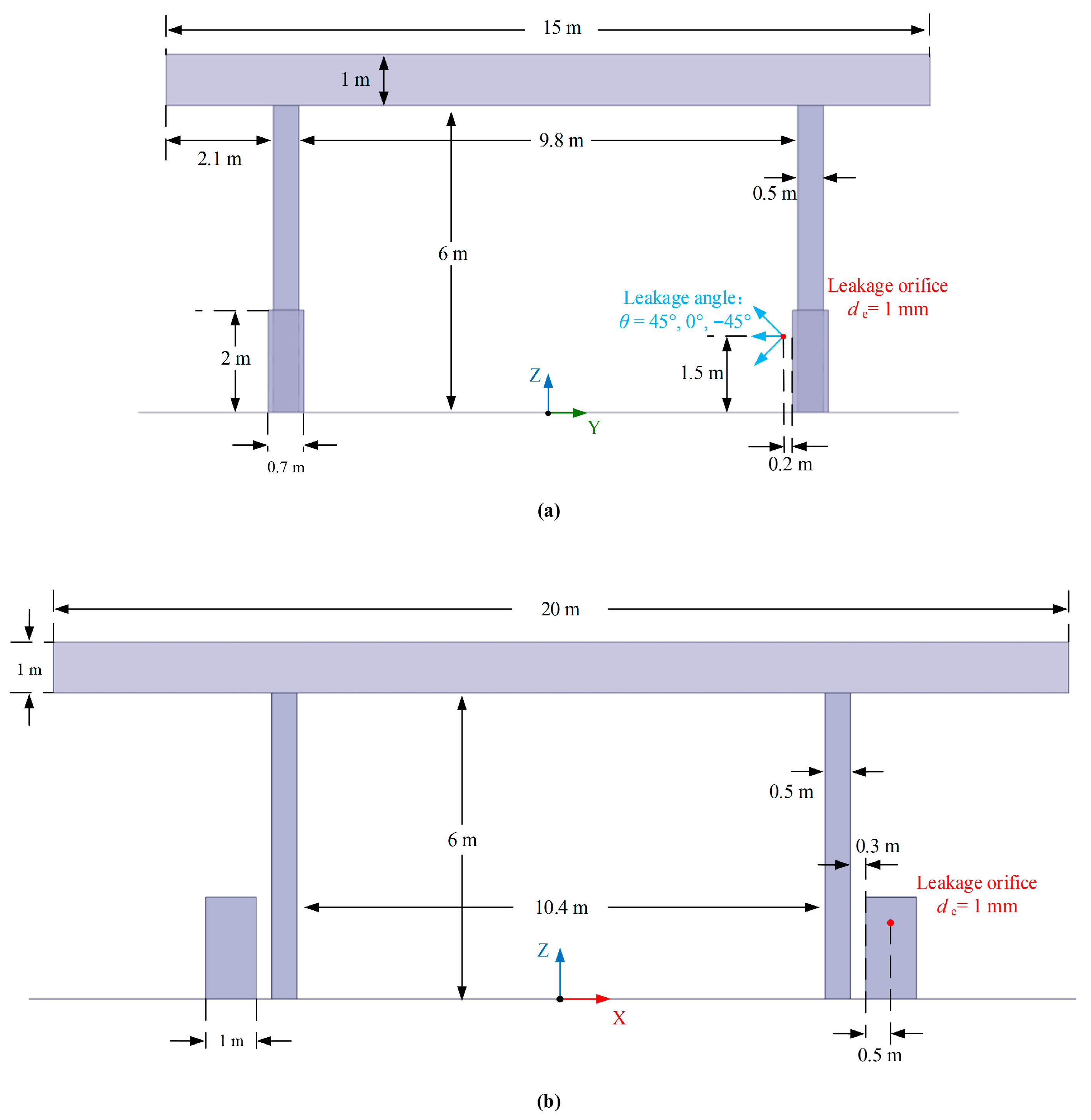
A full-scale station geometry was reconstructed in SolidWorks 2023 based on project planning materials, then imported into ANSYS Fluent 2023 R1 (meshing mode) for grid generation and finally solved in ANSYS Fluent 2023 R1 (solution mode). Given that the dispenser fueling hose is a movable component susceptible to wear and accidental damage during refueling operations, it was selected as the representative leak object. The leak was idealized as a circular micro-orifice with a physical diameter of 1 mm, and the release was assumed to be horizontal along the local hose axis to define a consistent baseline scenario for station-scale comparison. This simplified configuration is not intended to represent the full range of possible hose-damage locations or outlet orientations in practice. Instead, it serves as a representative reference case for comparing wind-direction effects under a fixed station layout, while the uncertainty in leak magnitude is addressed separately through the theoretical screening over a range of equivalent orifice diameters. Accordingly, the present CFD results should be interpreted as baseline consequence footprints for the selected leak position and outlet orientation. To reduce the uncertainty associated with the outlet-angle assumption, a limited sensitivity analysis was additionally performed for two inclined release directions under windless conditions, namely +45° and −45° relative to the horizontal baseline, while keeping the leak location, source condition, geometry, grid, and other modeling settings unchanged. These additional cases were introduced to examine the sensitivity of the predicted jet-fire consequences to the outlet-angle assumption. The corresponding results and discussion are presented in Section 3.2. The influence of alternative leak positions within the station layout remains beyond the scope of this work and should be examined in future site-specific risk assessments. The leak location and key dimensions are provided in Figure 1.

2.3. CFD Governing Equations and Submodels

2.3.1. Governing Equations and Turbulence Closure

The flow field is solved in a three-dimensional, compressible framework by coupling the conservation equations of mass, momentum, energy, and species for a multi-component hydrogen-air mixture. Turbulence is modeled using the realizable k-ε model, which provides the eddy viscosity for the turbulent transport of momentum and scalars.
To make station-scale computations tractable for under-expanded high-pressure releases, the near-field shock structure is not resolved explicitly. Instead, the Birch 1987 [23] pseudo-diameter formulation is adopted as an engineering equivalent-source treatment to convert the physical leak into effective outlet conditions for downstream dispersion and subsequent reacting-flow simulations. This treatment is intended for choked, under-expanded hydrogen releases, where the source pressure is far above ambient and the main objective is consequence assessment at the station scale rather than explicit resolution of the near-nozzle shock-cell structure. In our previous work, the equivalent-source framework was examined for representative high-pressure horizontal hydrogen releases within the pressure range relevant to the present study, including 20 and 40 MPa cases, by comparing predicted centerline hydrogen concentration decay against experimental measurements [24,25]. In the same comparative assessment, the Birch pseudo-diameter treatment was evaluated together with alternative formulations and provided a suitable balance between prediction accuracy and numerical robustness for station-scale CFD applications. Therefore, in the present work, the Birch 1987 [23] formulation is used as a practical source-term approximation for consequence-oriented simulations under the same high-pressure, choked-release regime, and its applicability should be understood as limited to equivalent far-field source specification rather than detailed near-field compressible jet-structure resolution.

2.3.2. Combustion Model

For “immediate ignition” leading to jet fire, combustion was simulated as a steady reacting flow using the Eddy Dissipation Model (EDM). The EDM originates from the eddy-break-up concept for turbulent combustion and assumes that, once a turbulent flame is established, the overall reaction rate is primarily controlled by turbulent mixing rather than detailed finite-rate chemistry [26].
R i , r = ν j , r M w , i A ρ ε k min R m R ν R , r M w , R
R i , r = ν j , r M w , i A B ρ ε k P m p j N ν j , r M w , j
where V j , r and V j , r are the stoichiometric coefficients of the reactants and products; MW,R is the molecular weight of substance R; A and B are Magnussen constants, A = 4.0, B = 0.5 [27]; mR is the mass fraction of reactant component R; mP is the mass fraction of product component P.
This closure is appropriate for the present station-scale, high-Reynolds-number hydrogen jet-fire problem, where rapid entrainment and intense turbulent mixing dominate the macroscopic flame structure and the resulting temperature field relevant to consequence zoning. Similar EDM-based treatments have been adopted in CFD studies of ignited high-pressure hydrogen releases in practical configurations and have been shown to provide reasonable predictions of key fire characteristics for engineering consequence assessments [28,29].
Nevertheless, the EDM does not explicitly resolve finite-rate chemistry, local extinction, or detailed turbulence–chemistry interactions, and may therefore overpredict the local reaction rate in regions where chemistry-limited effects become important. In this work, the EDM is used to capture the macroscopic flame-scale and temperature-envelope features required for hazard footprint delineation, rather than to reproduce detailed kinetic pathways.
More advanced combustion closures, such as EDC coupled with finite-rate chemistry or LES-based approaches, may improve the prediction of local extinction and turbulence–chemistry interaction effects, but would substantially increase computational cost for the present multi-scenario, station-scale screening study and are therefore beyond the scope of this work.

2.3.3. Jet Fire Model

A jet fire is a typical consequence of immediate ignition following high-pressure hydrogen leakage, characterized by high momentum, strong flame impingement, and intense thermal radiation. At hydrogen refueling stations, where personnel and vehicles are frequently present, and the surroundings are geometrically complex, a jet fire may pose severe direct thermal hazards. It can also trigger escalation due to flame impingement and high-temperature exposure. Therefore, establishing an engineering-oriented jet-fire geometric model is essential for consequence and risk assessment.
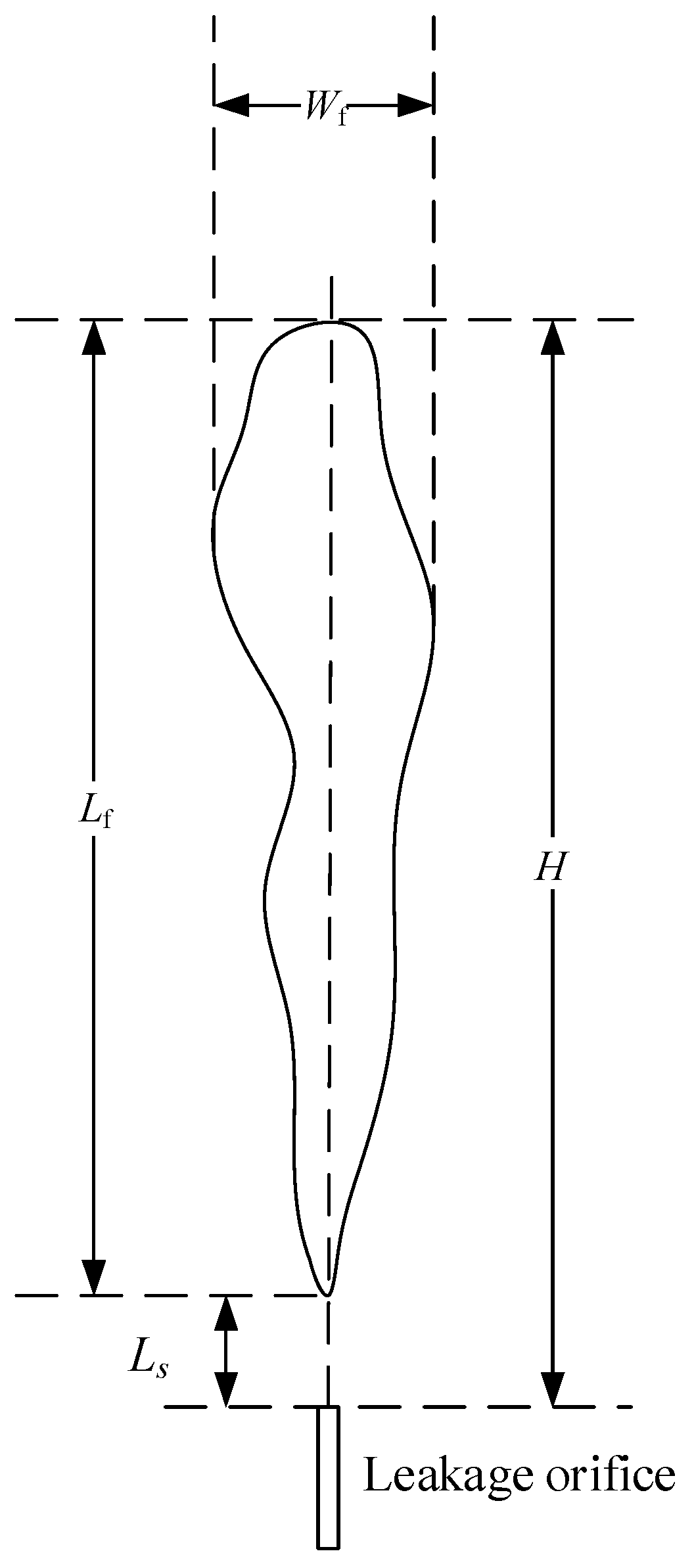
For a typical turbulent jet fire, the flame impingement distance is commonly decomposed into two components: the flame lift-off distance Ls and the visible flame height Lf, as illustrated in Figure 2. The lift-off distance represents the downstream separation of the flame base from the release orifice before a stabilized flame is established, whereas the visible flame height represents the length of the luminous burning region. For high-pressure releases satisfying p0 > 0.1 MPa, dimensionless correlations can be employed to estimate the jet-fire length and width to characterize the visible flame geometry, as follows:
L f d e = 530   p 0 0.43
W f d e = 95   p 0 0.43
where Lf is the visible flame length; Wf is the visible flame width.
These correlations were taken from the horizontal high-pressure hydrogen jet diffusion-flame experiments of Mogi and Horiguchi [30], who derived power-law relations between the dimensionless visible flame size and the release pressure for stabilized jet fires with p0 > 0.1 MPa using circular nozzles and video-based measurements of the luminous region. In that work, Lf was defined as the distance from the nozzle exit to the visible flame tip, consistent with the “visible flame height” definition adopted here. The same dataset also reports a proportionality between the maximum flame width and flame length (approximately Wf ≈ 0.18Lf), yielding Wf/de = 95 p 0 0.43 under the same pressure regime [30].

2.3.4. Thermal Radiation Model

The radiative heat flux quantifies the rate at which the thermal energy released by a flame is transported through space via radiation and received by surrounding targets. It is a primary metric for characterizing both the intensity and spatial extent of thermal fire effects. For hydrogen jet fires, thermal radiation governs human-exposure hazards and thermal damage to nearby materials and structures, and it provides a quantitative basis for defining safety distances and emergency-response strategies. Therefore, following the development of the jet-fire geometric model, a dedicated thermal radiation model is required to quantify consequences [31].
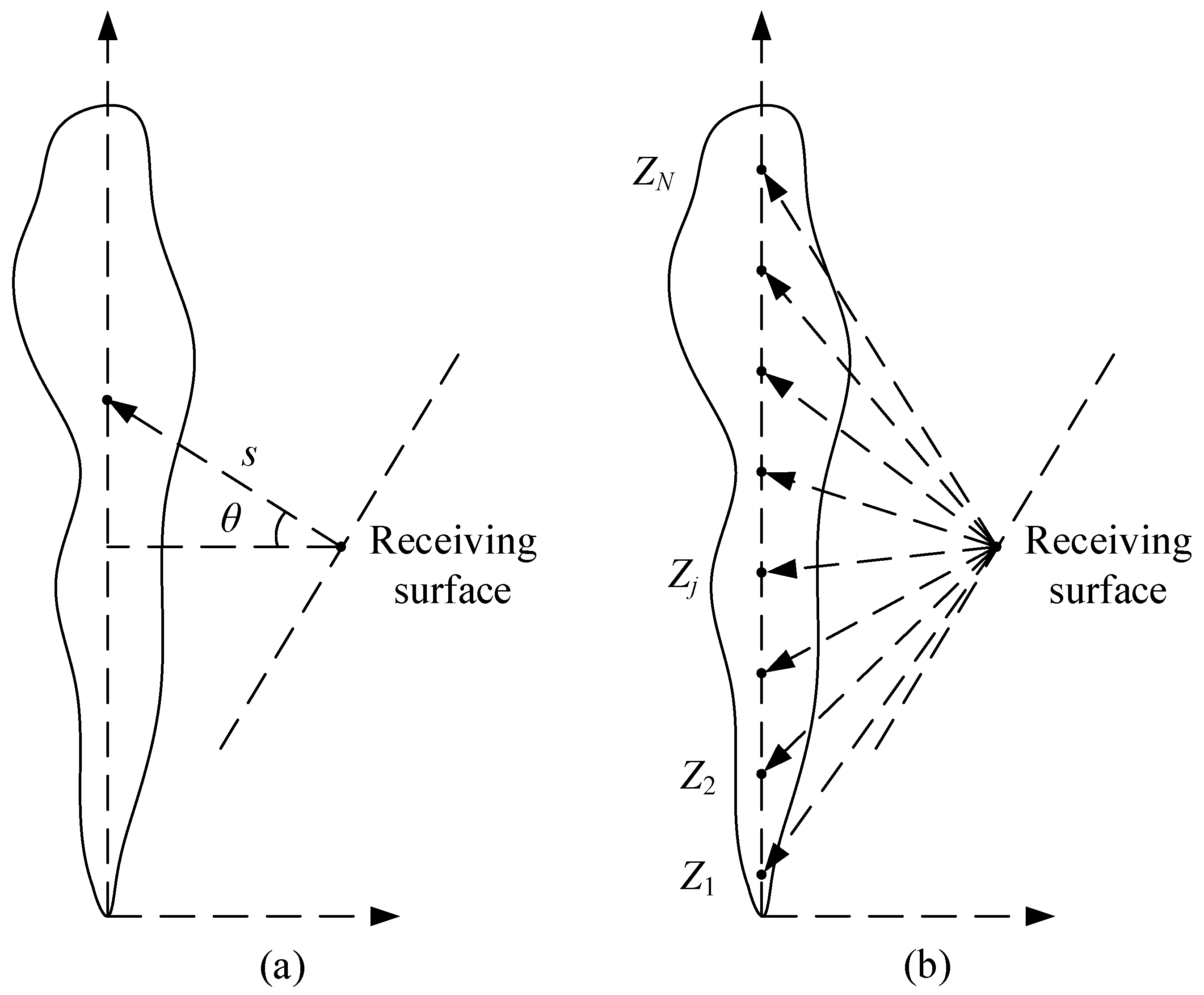
In engineering practice, point-source models are widely used to characterize hydrogen jet-fire radiation, including the Single Point Source (SPS) and Weighted Multi-Point models. The SPS model represents the entire flame as a single equivalent point source, as shown in Figure 3a, which is convenient for rapid estimation and preliminary analysis. Its fundamental assumption is that the flame can be treated as a concentrated radiating source, where the radiative intensity is related to flame properties (e.g., temperature, characteristic size, and emissive behavior) through standard radiation relations (e.g., Stefan-Boltzmann-type formulations). While computationally efficient, the SPS model typically neglects the non-uniform radiation distribution associated with the internal structure of turbulent jet flames.
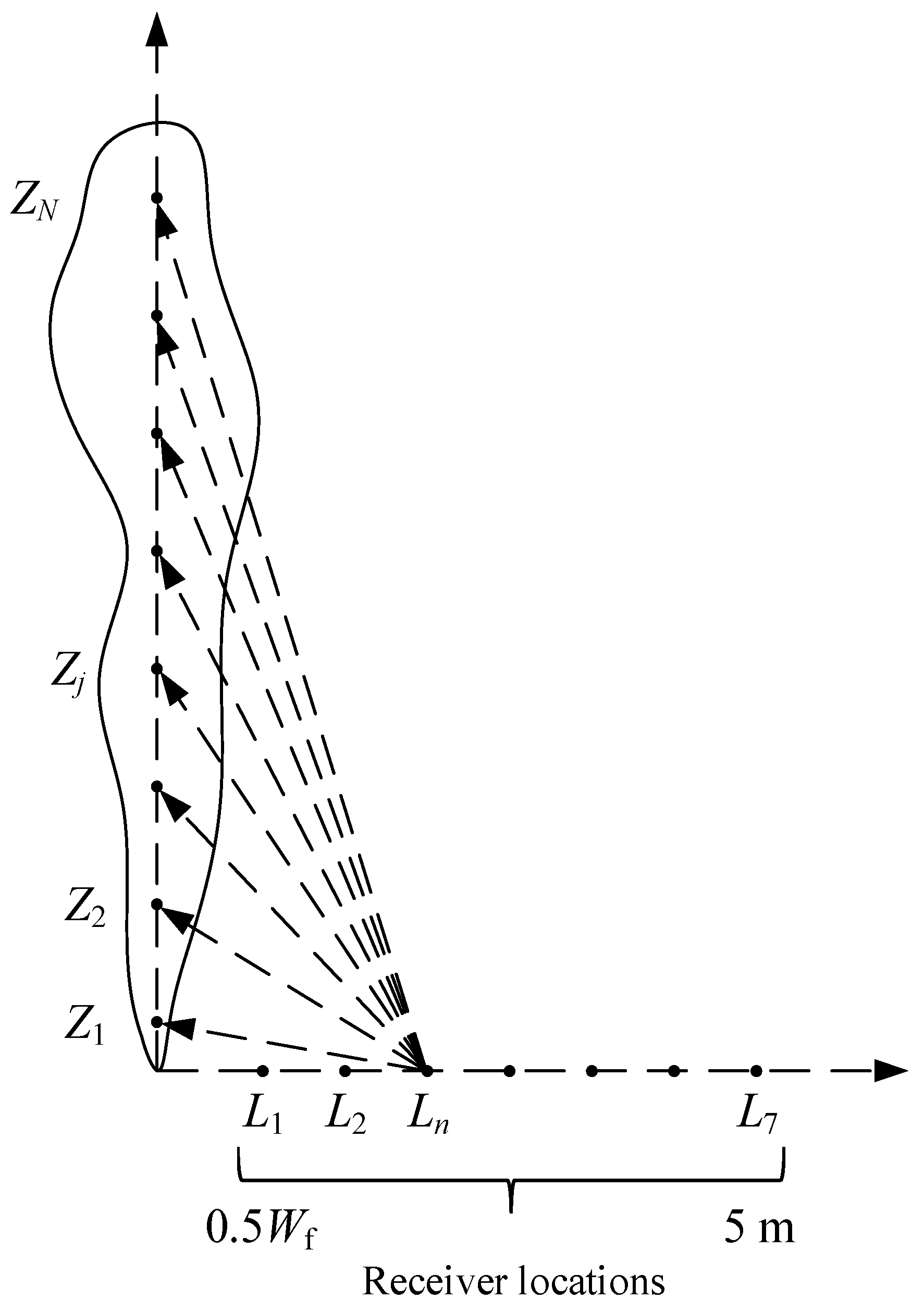
To better account for the axial non-uniformity of radiation in turbulent jet fires, the WMP model discretizes the flame into multiple point sources and assigns each source a weighting factor, as shown in Figure 3b. The point sources are uniformly distributed along the jet-fire centerline according to the prescribed spacing relation.
Δ Z S = L f N
Z 1 = Δ Z S 2
Z j = Z j + Δ Z S
where Z1 is the location of the first source; ΔZS is the distance between adjacent sources.
The radiative contribution of each source is weighted by wj, as follows:
w j = j w 1 j = 1 , , n w j = n n 1 N n + 1 j n + 1 w 1 j = n + 1 , , N j = 1 N w j = 1
The contribution of each source increases linearly from w1 to a maximum wn = nw1, and then decreases linearly downstream. Experiments indicate that the peak radiative intensity occurs at approximately 0.75 of the flame height, thus n = 0.75N is adopted [32].
The number of point sources N is also a key parameter. Based on inverse inference, theoretical analysis, and experimental comparisons, Miguel R. B et al. suggested an optimal value of N = 7, guiding practical model selection [33].
With the above discretization and weighting scheme, the total radiative heat flux at a receiver location is obtained by summing the contributions from all point sources, as follows:
q wmp = j = 1 N q j = j = 1 N w j X R Q H τ j 4 π s j 2 cos φ j
where qwmp is the radiative heat flux received at the target location; qj is the radiative heat flux at the receiver contributed by the j-th point source; wj is the weighting factor representing the relative radiant intensity of the j-th point source (1 ≤ jN); XR is the ratio of radiative heat release to the total heat release of the jet fire, taken as 0.1 based on the experimental data of Zhou K et al. [34]. However, XR is not strictly a universal constant and may vary with flame scale and optical thickness [35,36], as well as with buoyancy-induced flame deformation and related radiation modeling assumptions; nevertheless, adopting a constant XR provides a transparent engineering approximation for consequence-based hazard zoning in the present station-scale assessment [37,38]; Q is the hydrogen mass flow rate; H is the lower heating value (LHV), for hydrogen taken as 1.419 × 10⁸ J/kg; τj is the atmospheric transmissivity between the j-th point source and the receiver, taken as 1 according to the experiments of Hankinson and Lowesmith [32]; sj is the distance from the j-th point source to the receiving location (m); and φj is the angle between the line connecting the j-th point source to the receiver center and the normal vector of the receiver surface. In the calculations, the receiver plane is assumed to face all point sources directly, i.e., φj = 0.
Regarding model selection, the SPS model is suitable for quick prediction and simplified calculations. In contrast, the WMP model is preferable when improved accuracy is required to capture the radiation non-uniformity and decay along the flame [39]. Given that the present study involves a small leak orifice, a relatively short jet flame, and rapid temperature decay, the WMP approach is adopted to enhance the resolution and accuracy of thermal radiation assessment. Thermal radiation distributions are then evaluated for the horizontal release direction to quantify the radiative impact on surrounding targets.
Thermal radiation was evaluated in a one-way, post-processing manner using the WMP model; radiative heat transfer was not coupled back to the CFD energy equation (i.e., no two-way radiation–flow coupling was considered). Because Equation (9) is linear in XR and τ, the predicted incident heat flux scales approximately with XR·τ. Accordingly, for a fixed heat-flux criterion, the estimated hazard distance follows a first-order scaling of r ∝ (XR·τ)0.5 under point-source-type decay, implying that moderate uncertainties in XR or τ lead to smaller relative changes in the inferred distance (e.g., ±20% in XR corresponds to approximately ±10% in r). Therefore, the present WMP-based radiation results are intended for engineering screening and comparative zoning rather than for fully resolved radiative prediction. Compared with full CFD radiation solvers such as the Discrete Ordinates (DO) model, the present one-way WMP post-processing does not resolve participating-media radiative transfer, two-way coupling with the energy equation, or detailed shielding/reflection effects from complex surrounding structures; these effects may become important for site-specific refined assessment and are recommended for future work.

2.3.5. Boundary and Initial Conditions

The following modeling assumptions were applied: a circular leak orifice with a constant diameter and constant leak pressure; constant ambient conditions (wind, temperature, humidity); pure hydrogen release at ambient temperature.
Boundary and initial conditions were specified as follows. The ambient temperature and pressure were set to 300 K and 101 kPa. Gravity acted downward with an acceleration of 9.81 m·s−2, and buoyancy was enabled. The computational domain was treated as a fluid-only region with no-slip walls, and a compressible ideal-gas formulation was applied.
We selected p0 = 45 MPa and d = 1 mm as a representative baseline release for the CFD-based wind-direction comparison under a fixed station layout. The uncertainty in leak size was separately covered by the theoretical screening over a range of equivalent orifice diameters. For high-pressure gas leakage, a choked (sonic) release occurs when the ambient-to-source pressure ratio satisfies:
p p 0 2 γ + 1 γ γ 1
The empirical correlation for the mass flow rate under choked (supersonic) discharge is given by [40]:
Q 0 = A 1 C 0 p 0 M γ Z R gas T 1 2 γ + 1 γ + 1 γ 1
where Q0 is the leakage mass flow rate; A1 is the orifice area; C0 is the discharge coefficient and is taken as 1.0 for the circular leak considered in this study; p is the ambient pressure; p0 is the leakage source pressure; γ is the adiabatic index of the gas, for diatomic gases such as hydrogen, γ is taken as 1.4; Rgas is the gas constant and is taken as 4157 J/(kg·K); M is the molar mass and is taken as 0.002 kg/mol for hydrogen; T1 is the temperature at the leakage hole; Z is the gas compressibility factor and is taken as 1.
According to Equation (10), the present condition (p0 = 45 MPa) clearly satisfies the critical pressure-ratio requirement, indicating that the release is choked. Therefore, the leak opening was modeled as a mass-flow inlet boundary. Using the Birch 1987 [23] pseudo-diameter approach, this physical opening corresponds to an equivalent diameter of de = 12.776 mm for downstream equivalent-source specification. The resulting leakage rate is 21.711 g/s.
The upwind boundary was imposed as a velocity inlet to generate the approaching wind field, while all remaining outer boundaries were specified as pressure outlets. At the wind inlet, turbulence was specified by a turbulence intensity of 10% and a turbulent length scale of 1.4 m (equivalently, by k and ε under the realizable kε closure). These values were kept constant for all wind-direction cases to ensure consistent comparison. A pressure-based solution strategy was adopted: the wind field was first solved in steady mode using the Coupled solver, followed by transient dispersion using PISO with a time step of 0.005 s.
All simulations were performed using ANSYS FLUENT 2020b with parallel computation on a high-performance workstation equipped with two Intel Xeon Platinum 8180 processors (28 cores per CPU; 56 cores and 112 threads in total; Intel Corporation, Santa Clara, CA, USA) and 512 GB RAM (16 × 32 GB, 2666 MHz). Two cases were executed concurrently. In terms of computational cost, the transient leakage–dispersion simulation for t = 0–30 s required approximately 72 h of wall-clock time, and the subsequent steady reacting-flow (jet-fire) simulation required approximately 20 h of wall-clock time.

2.4. Grid Sensitivity and Model Validation

Refs. [24,25] assessed the equivalent-source treatment for underexpanded hydrogen releases together with the RANS dispersion framework over the pressure and orifice ranges relevant to the present study. The predicted centerline hydrogen concentration decay was compared against experimental measurements for representative horizontal releases, and the sensitivity to grid resolution was examined. Among the tested model combinations, the Birch pseudo-diameter coupled with the realizable k–ε closure provided a favorable balance between prediction accuracy and numerical robustness, and was therefore adopted as the baseline turbulence closure in this work to ensure consistent case-to-case comparison under different wind directions.
To support the reliability of the subsequent steady jet-fire simulations, a dedicated validation of the combustion modeling framework was conducted. Specifically, the transient leakage-dispersion solution at t = 30 s obtained in the preceding CFD analysis was mapped as the initial field (flow, species, and temperature) for the steady-state reacting simulation, thereby improving numerical stability and mitigating sensitivity to arbitrary initial conditions. In the delayed-ignition chain considered here, the post-ignition jet fire is treated as a quasi-steady established flame in order to extract sustained flame/plume envelopes for consequence zoning at the station scale. This steady reacting treatment does not resolve the transient ignition and flame-stabilization process, and therefore is intended to provide quasi-steady consequence footprints of an established jet fire rather than time-resolved post-ignition thermal histories. A steady jet-fire case was then simulated under no-wind conditions for the representative baseline release corresponding to a physical leak diameter of d = 1 mm. The visible flame length was selected as the primary validation metric, and the CFD prediction was compared against the corresponding theoretical estimate.
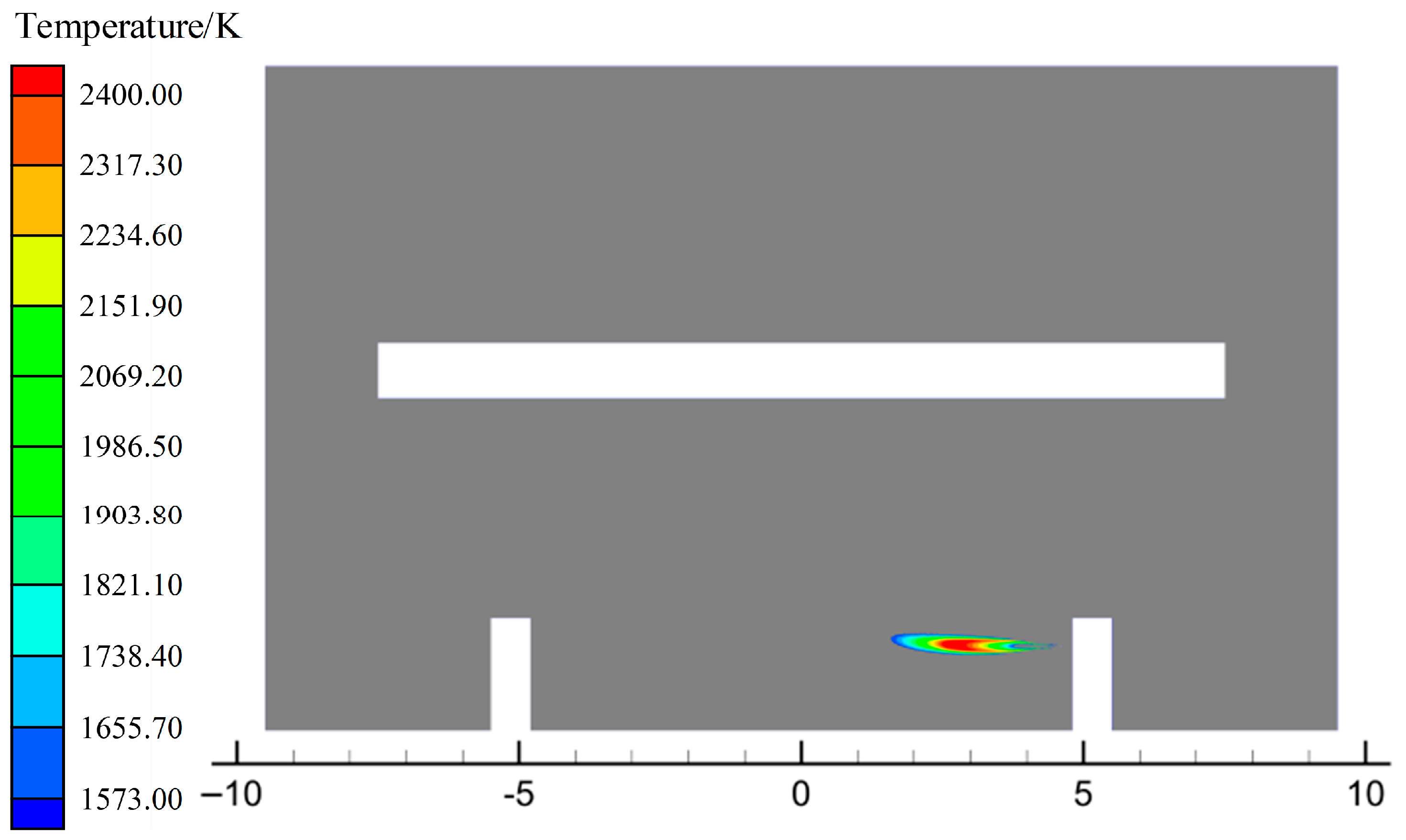
The visible flame was defined using the commonly adopted visibility criterion for hydrogen jet fires, i.e., the flame becomes visible once the temperature reaches 1573 K. The theoretical correlation for jet-fire flame length is provided in Section 2.3.3. The immediately ignited hydrogen jet fire under quiescent ambient conditions is illustrated in Figure 4, yielding a CFD-predicted visible flame length of approximately 2.91 m. For the same scenario, the theoretical model gives a jet-fire flame length of 2.72 m [30], corresponding to a relative deviation of 6.99%. This level of agreement indicates that the developed steady jet-fire simulation framework reproduces the characteristic flame-scale behavior with acceptable accuracy and is therefore suitable for subsequent steady combustion and thermal radiation assessments.
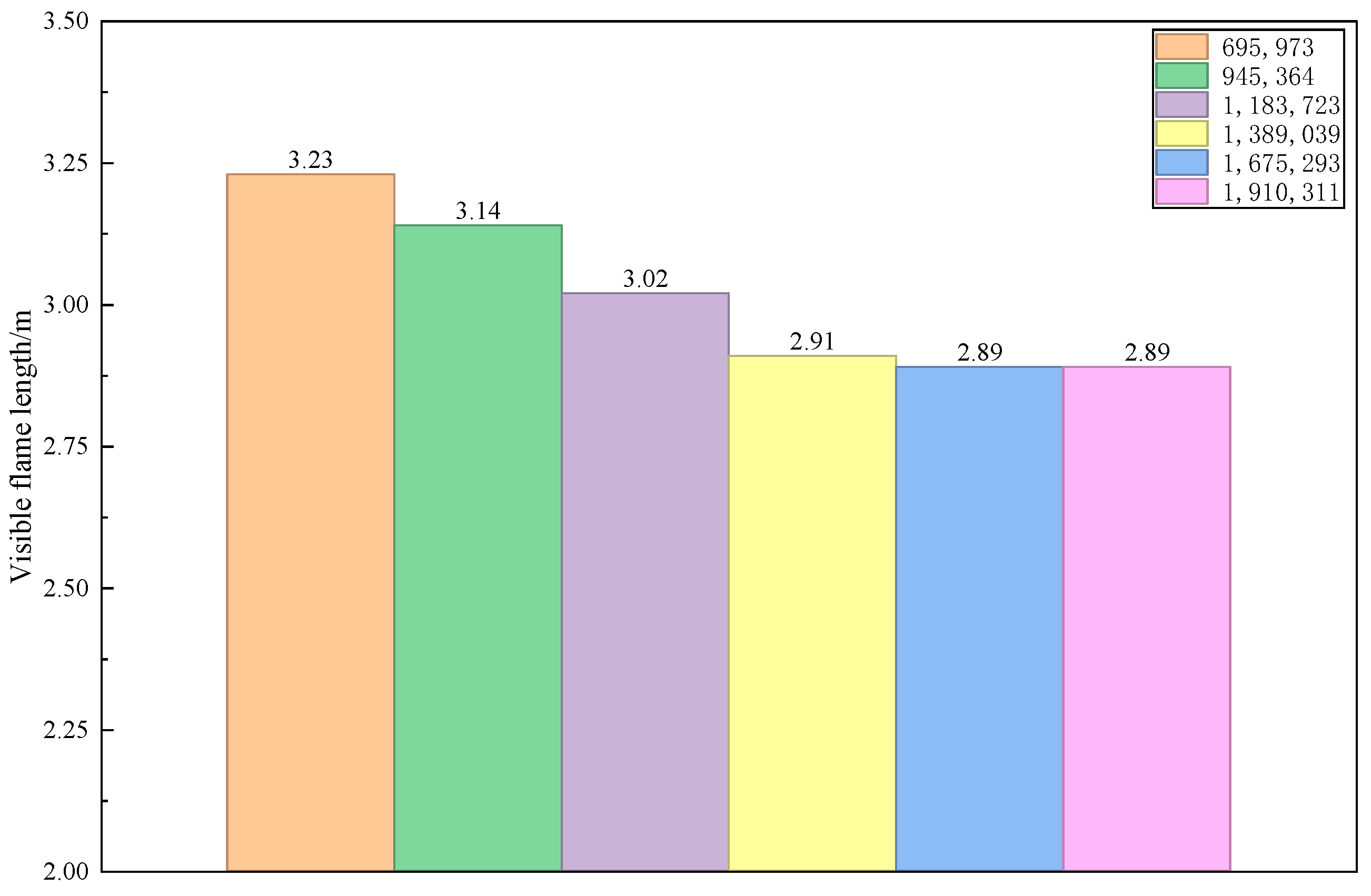
For the leakage–dispersion simulation, the grid-independence verification has been reported in our previous work [24] and is therefore not repeated here. For the steady jet-fire simulation, an additional grid-independence study was conducted for the representative no-wind case, as shown in Figure 5. The predicted visible flame length gradually converges with grid refinement, and the variation becomes negligible once the grid number reaches a sufficiently high level. Considering both computational efficiency and prediction accuracy, the grid with 1,389,039 cells was selected for the subsequent steady combustion simulations.

3. Results and Discussion

3.1. Safety Distance and Hazardous Footprint Based on WMP

To convert the consequences of immediate ignition following hydrogen release into actionable separation distances for layout and emergency planning, a consequence-oriented workflow is adopted. First, the potential accident type is identified. Then, theoretical models are used to calculate consequence parameters such as radiant heat flux. Finally, safety distances for personnel or equipment are determined based on injury thresholds specified in existing standards/regulations.
The jet-fire injury criteria adopted in this study follow commonly used thermal-radiation harm thresholds in major-accident consequence assessment and land-use planning practice. Specifically, a radiative heat flux exceeding 7 kW/m2 indicates the start of lethality risk, exceeding 5 kW/m2 corresponds to irreversible injury, and exceeding 3 kW/m2 corresponds to reversible injury [41]. Given the emphasis on severe consequence zoning, 7 kW/m2 and 5 kW/m2 are selected as the criteria for delineating the lethal and irreversible-injury zones, respectively, while 3 kW/m2 is reported for completeness. Notably, these criteria are applied here to delineate threshold-exceedance zones for consequence screening. No time integration of thermal exposure (i.e., thermal dose modeling) is performed; therefore, the resulting zones should not be interpreted as person-specific injury predictions for arbitrary exposure durations.
Thermal radiation from the jet fire is quantified using the WMP model. The flame is discretized into multiple point sources along the centerline, and the total radiative heat flux at a receiver is obtained via superposition, as formulated in Equation (9).
Point-source locations are determined by Equations (5)–(7), and the weighting distribution is given by Equation (8). Experimental evidence indicates that radiation peaks at approximately 0.75 times the flame height, and the number of point sources may be selected according to the recommended value N = 7.
To quantify radiative consequences for different orifice diameters, seven horizontal receivers (L1L7) uniformly distributed between 0.5 Wf and 5 m are defined, as shown in Figure 6. For different leakage orifices, the calculated horizontal receiving positions at 0.5 Wf–5 m are shown in Table 1. Receiver coordinates are substituted into Equation (9), with point-source locations and weights computed from Equations (5)–(8), yielding radiative heat fluxes summarized in Table 2.
It should be noted that the relatively high values of qwmp1 in Table 2 are physically reasonable. This is because qwmp1 corresponds to the nearest receiver, L1, which is defined at 0.5Wf from the jet centerline. As shown in Table 1, this places the receiver very close to the flame envelope, especially for small-orifice cases, where the horizontal standoff distance remains within the near-field range. In this region, the thermal radiation is expected to be strong and to decay rapidly with increasing distance; therefore, heat-flux values exceeding 2.0 × 10⁴ W/m2 at qwmp1 do not contradict the relatively small leak-orifice diameter. This trend is also consistent with the experimentally observed near-field thermal behavior of high-pressure horizontal hydrogen jet fires reported in the literature [30].
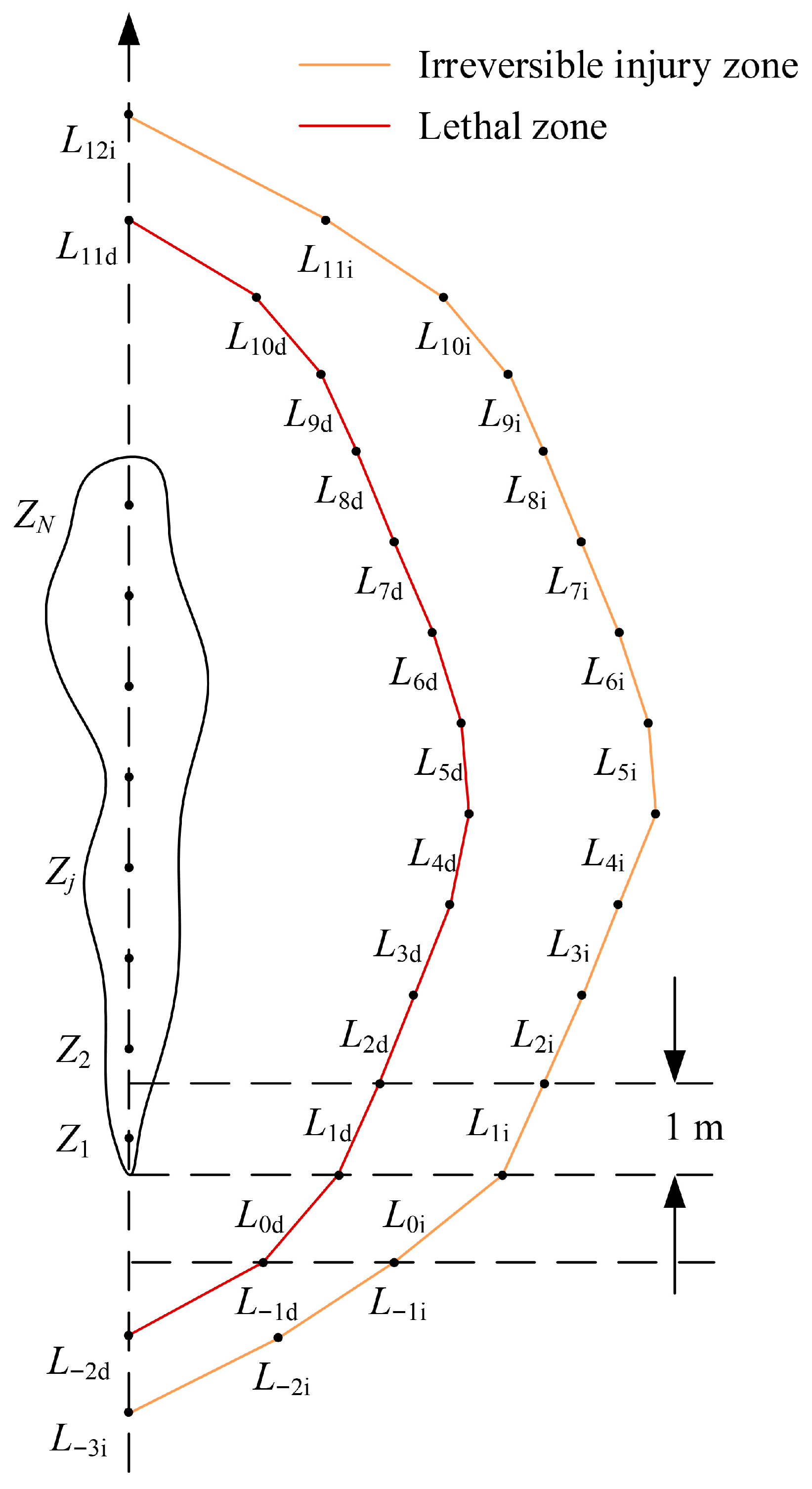
Subsequently, the lethal and irreversible injury criteria (7 kW/m2 and 5 kW/m2) are imposed in Equation (9) to invert for the corresponding safety distances, as schematically illustrated in Figure 7.
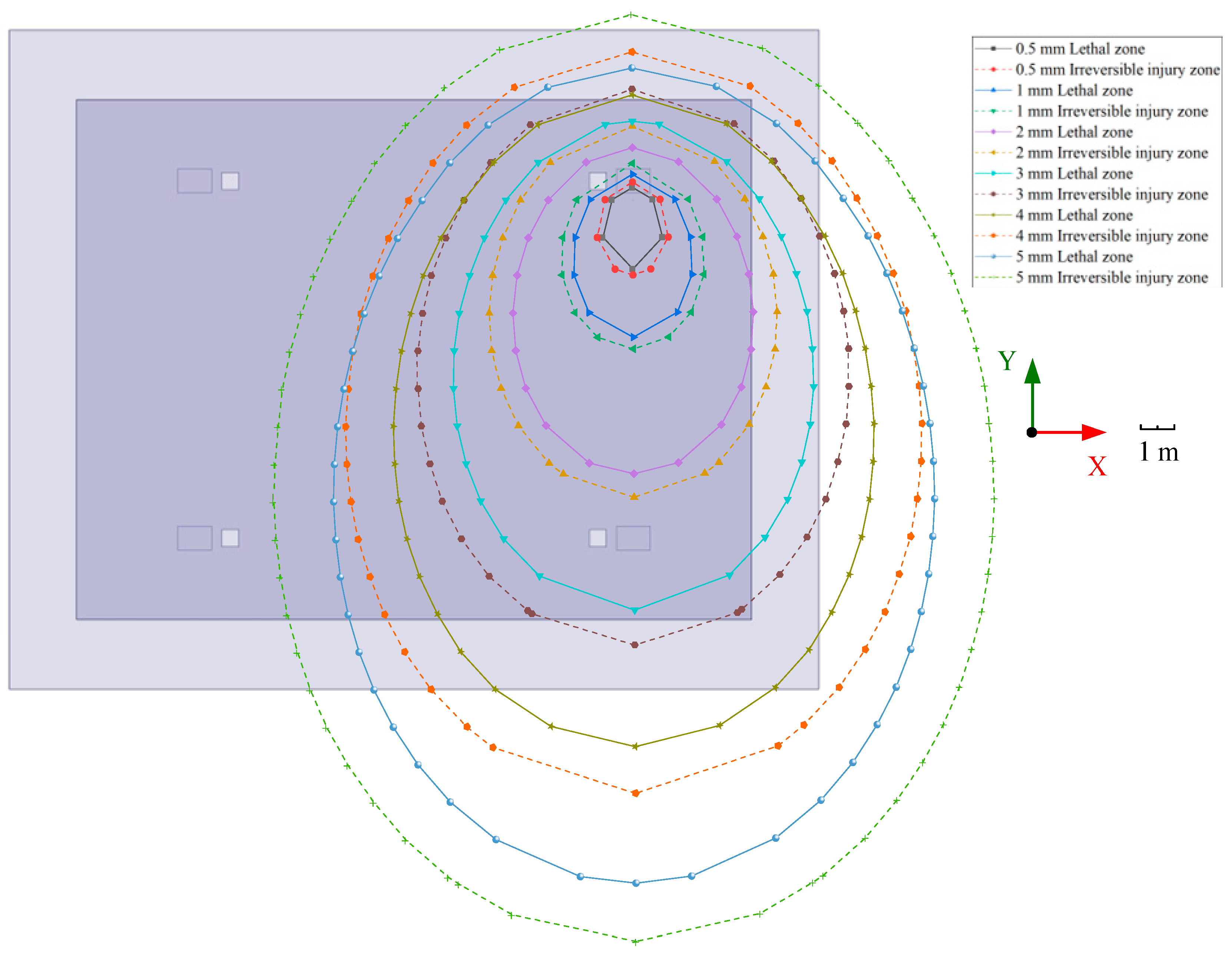
Because external disturbances such as wind are neglected in the theoretical analysis, the flame is approximated as axisymmetric. Under this assumption, the inverted safety distances are mirrored about the jet centerline and connected to form closed planar footprints that represent the lethal and irreversible-injury hazard zones, as shown in Figure 8.
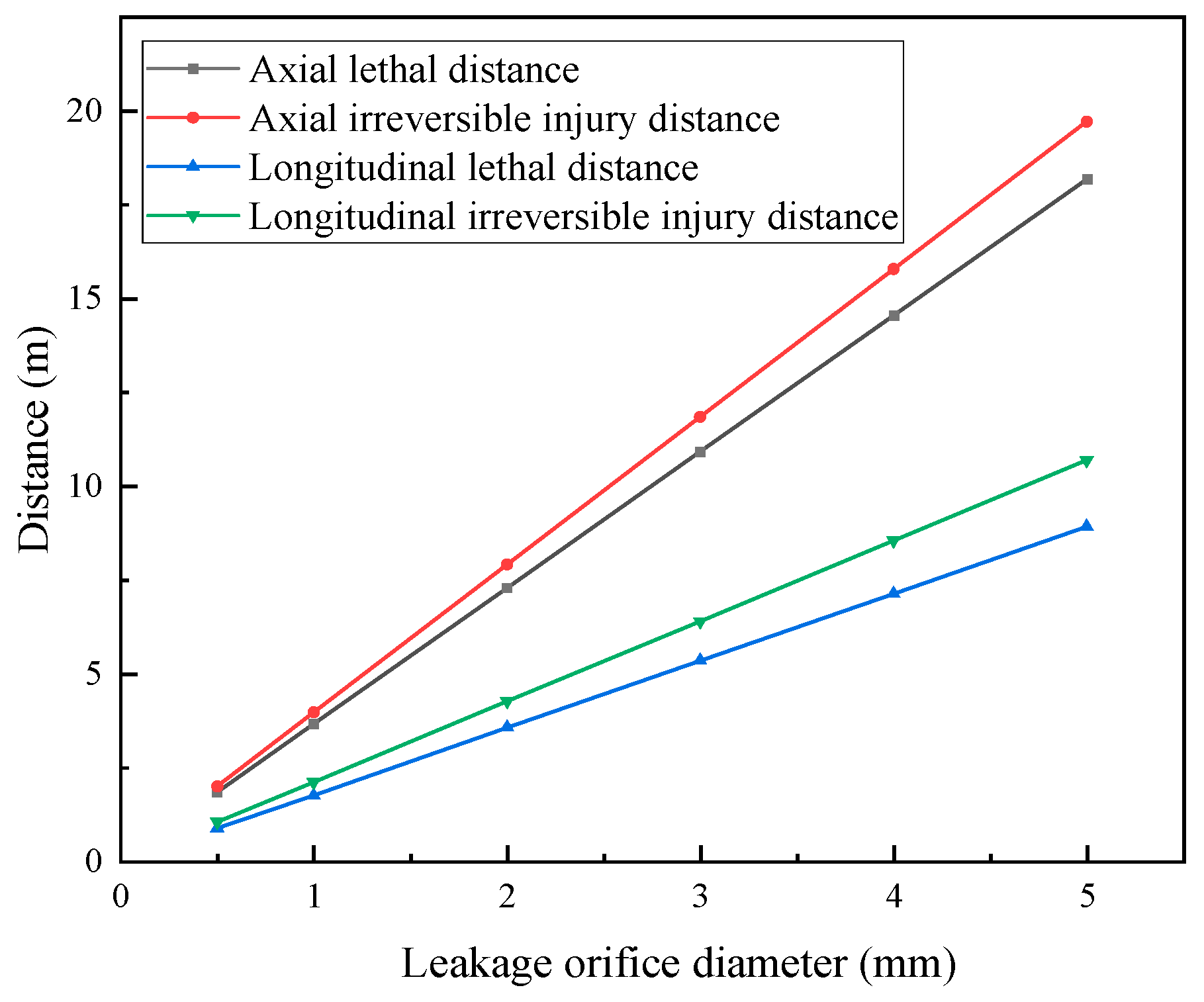
Figure 8 indicates that both hazard zones are approximately elliptical and expand monotonically with increasing orifice diameter. To quantify the orifice-size effect, the maximum longitudinal (positive X) and axial (negative Y) extents are extracted and compared, as shown in Figure 9. Both lethal and irreversible-injury distances exhibit a pronounced linear relationship with orifice diameter.
It should be noted that the above hazardous footprints are derived from a theoretical radiation model and do not account for obstacle-induced reflection or shielding. Consequently, the results are inherently coarse and are best interpreted as screening-level estimates for rapid preliminary assessment. This limitation motivates the subsequent steady combustion simulations under multiple wind directions, where wind–flame interaction and station environmental effects are explicitly resolved to refine the thermal-radiation impact range in an engineering-relevant manner.

3.2. Thermal Consequences of Delayed Ignition Under Wind

This section investigates a delayed-ignition accident chain (leak–dispersion–ignition). Based on the long-term annual mean wind conditions at Ningbo Port (10 m above ground), a representative wind speed of 4.34 m/s is adopted [42]. A height-dependent empirical wind-profile correlation is employed to reproduce a realistic wind field [43], following the modeling procedure established in our previous works [24,25]. Wind speed is a key driver of both the leakage-dispersion process and the subsequent combustion behavior [44], and therefore has a first-order influence on the resulting hazard footprints. Specifically, a steady wind-flow field is first computed and used as the initial condition for the subsequent transient leakage-dispersion simulation. The hydrogen distribution at t = 30 s is then extracted as the initial species field at the ignition instant, and steady reacting-flow simulations are performed under the same station layout and boundary wind settings to compare four wind directions: no wind, wind from the positive X direction, wind from the positive Y direction, and wind from the negative Y direction.
The hydrogen distribution at t = 30 s was adopted as the baseline ignition snapshot because it represents a developed cloud that has already interacted with the canopy and nearby obstacles, enabling a consistent comparison of wind-direction effects under the same station configuration. To examine the sensitivity of the present steady established-flame results to the selected ignition snapshot, additional calculations were carried out for the representative windless case by mapping dispersion fields obtained at t = 15 s, 30 s, and 45 s into the same steady reacting-flow setup. As shown in Table 3, the resulting high-temperature plume lengths were 6.71 m, 6.70 m, and 6.68 m, respectively, while the corresponding visible flame lengths were 2.91 m, 2.91 m, and 2.90 m. The variations are therefore very small, with the high-temperature plume length changing by less than 0.5% and the visible flame length by less than 0.4% across the tested ignition snapshots. This indicates that, within the present steady reacting-flow framework, the converged quasi-steady consequence metrics are weakly sensitive to the selected initialization snapshot under fixed release, geometry, and boundary conditions. Accordingly, t = 30 s is used here as a numerically robust and physically representative initialization state for the steady post-ignition calculation, rather than as a probabilistically justified ignition-delay value.
Accordingly, the reported thermal envelopes should be interpreted as quasi-steady consequence footprints of an established jet fire for comparative safety zoning. The present steady framework does not resolve the transient ignition and flame-stabilization process, and therefore is not intended to quantify short-time peak thermal loads or the full physical sensitivity of accident consequences to ignition timing in a time-resolved sense.
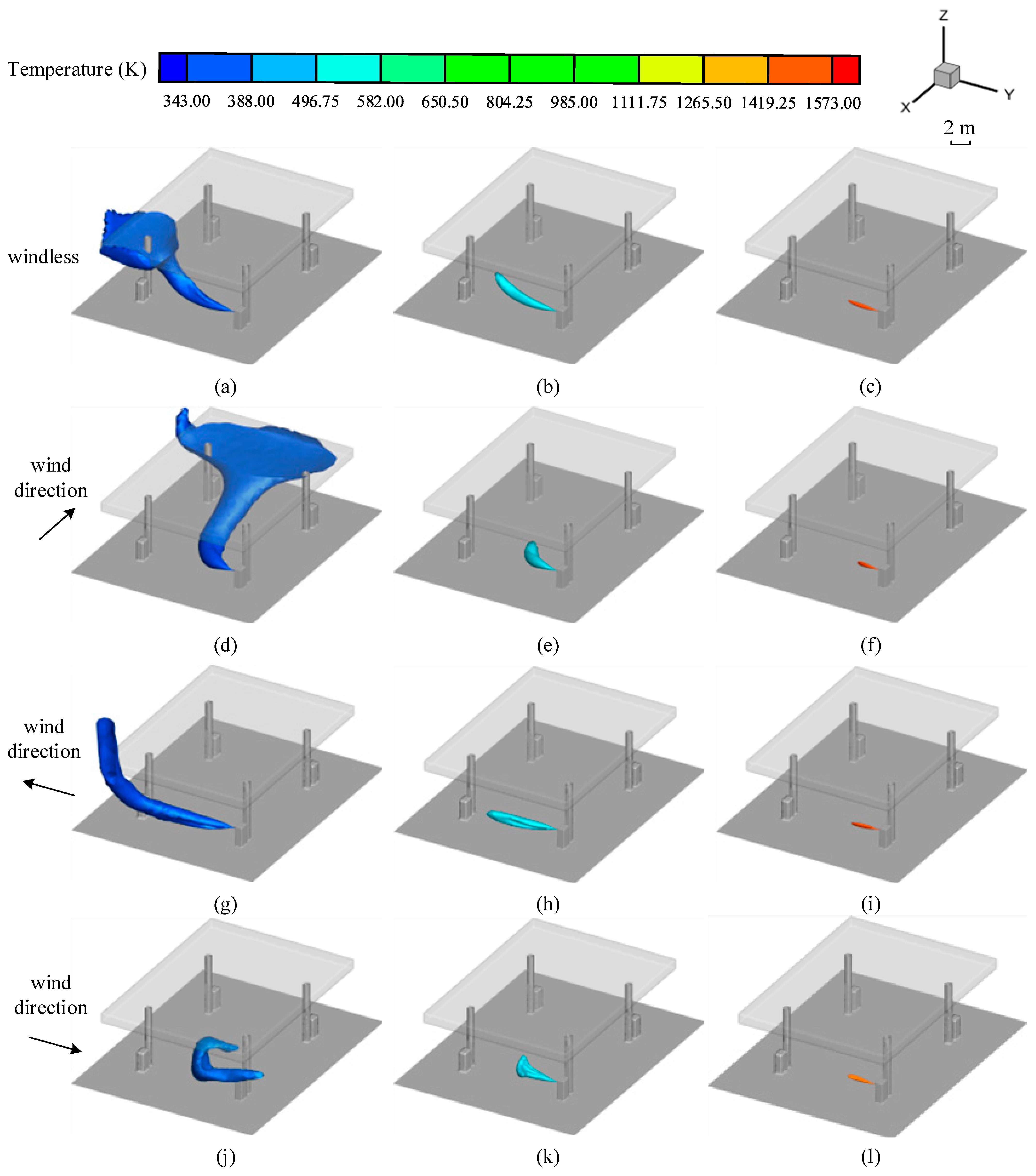
To translate the computed temperature field into quantifiable human-impact metrics, temperature-based injury criteria reported in Ref. [45] were adopted in the present assessment. As reported in Ref. [45], temperatures of 343 K, 388 K, and 582 K correspond, respectively, to no injury, the tolerable pain threshold for a 300 s exposure, and the threshold for third-degree burn for a 20 s exposure. On this basis, the corresponding temperature isosurfaces were extracted to evaluate the thermal impact of the jet fire. In addition, the T = 1573 K isosurface was used as a proxy for the visible flame boundary, consistent with the visible-flame criterion adopted in this study. The resulting temperature envelopes are presented in Figure 10. Here, the 388 K and 582 K envelopes indicate regions where the adopted pain-limit and third-degree-burn criteria may be exceeded if exposure persists, rather than time-resolved thermal dose predictions along evacuation paths.
Figure 10 shows that heat exchange between the flame and ambient air produces an extended hot-gas plume, and the wind field primarily governs the trajectory and near-ground exposure of this plume. For the T ≥ 388 K envelope, the windless case exhibits buoyant rise and roof-level accumulation once the plume reaches the canopy, which tends to elevate the heated gases and limits near-ground exposure. With wind from the positive X direction, the hot plume is strongly deflected and its buoyant rise is delayed; as a result, the plume contacts the canopy further downstream and accumulates more extensively beneath the roof. With wind from the positive Y direction (aligned with the leak direction), the plume becomes elongated and travels farther before rising, which reduces roof-level accumulation but keeps the plume at a relatively low elevation along its downstream path, increasing the potential thermal exposure for ground-level personnel and vehicles. Under wind from the negative Y direction (opposing the leak), aerodynamic blockage and recirculation cause an evident redirection of the hot plume, leading to a localized, irregular hot region near the dispenser/leak area.
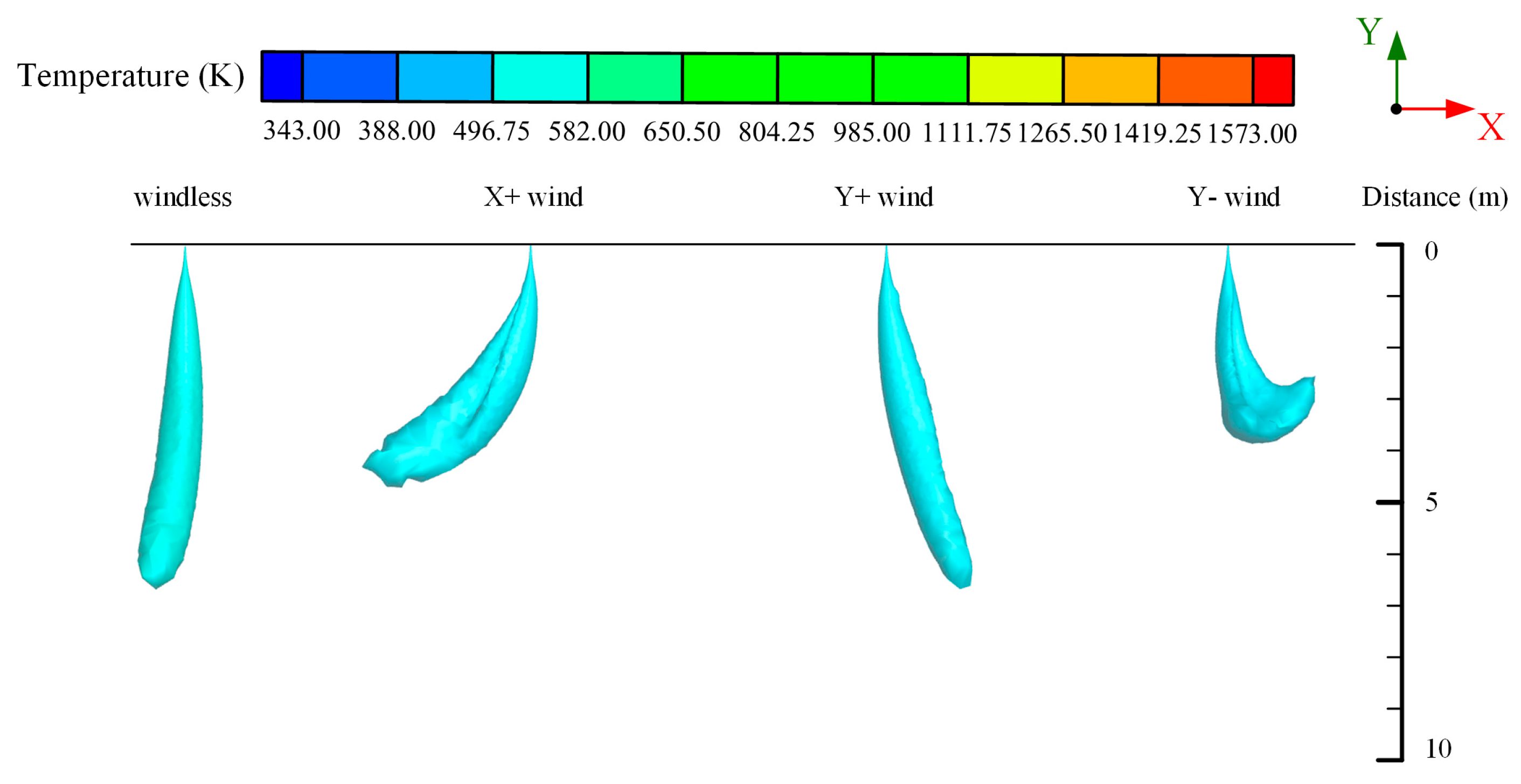
Raising the threshold to T ≥ 582 K yields a more compact “high-temperature” plume, while preserving the same wind-driven transport tendencies. As quantified in Figure 11 and Table 4, the high-temperature plume length decreases from 6.70 m in still air to 4.73 m under positive-X wind (−29.4%), remains comparable under positive-Y wind at 6.72 m (+0.3%), and is shortened to 3.89 m under negative-Y wind (−41.9%). These results indicate that the hot-gas plume is highly sensitive to wind direction because it is composed of relatively low-momentum, buoyancy-affected combustion products that are readily advected and reshaped by the ambient flow and station obstacles. Similar wind-driven plume bending and geometry-induced accumulation effects are commonly reported in station-scale consequence analyses and hydrogen fire safety studies, supporting the physical consistency of the present observations.
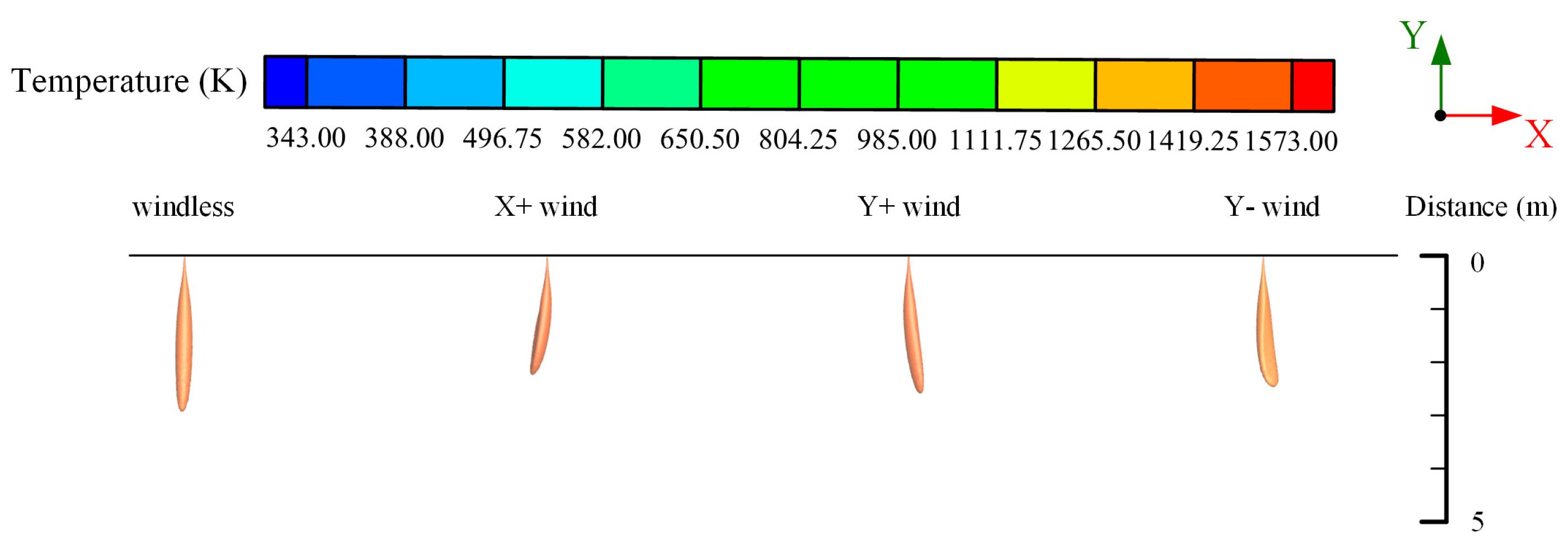
In contrast, the “visible flame” defined by T ≥ 1573 K is dominated by the high-velocity jet core, and its response to wind is comparatively weaker than that of the post-flame hot plume. However, the variation is not negligible and should be interpreted quantitatively. As shown in Figure 12 and Table 4, the visible flame length decreases from 2.91 m in still air to 2.21 m under positive-X wind (−24.1%), to 2.58 m under positive-Y wind (−11.3%), and to 2.68 m under negative-Y wind (−7.9%).
This trend is consistent with the expectation that crosswind enhances entrainment and mixing near the flame, which promotes faster dilution and heat loss of the luminous region and therefore shortens the visible flame, while the jet core momentum still limits the extent of overall deflection compared with the hot plume.
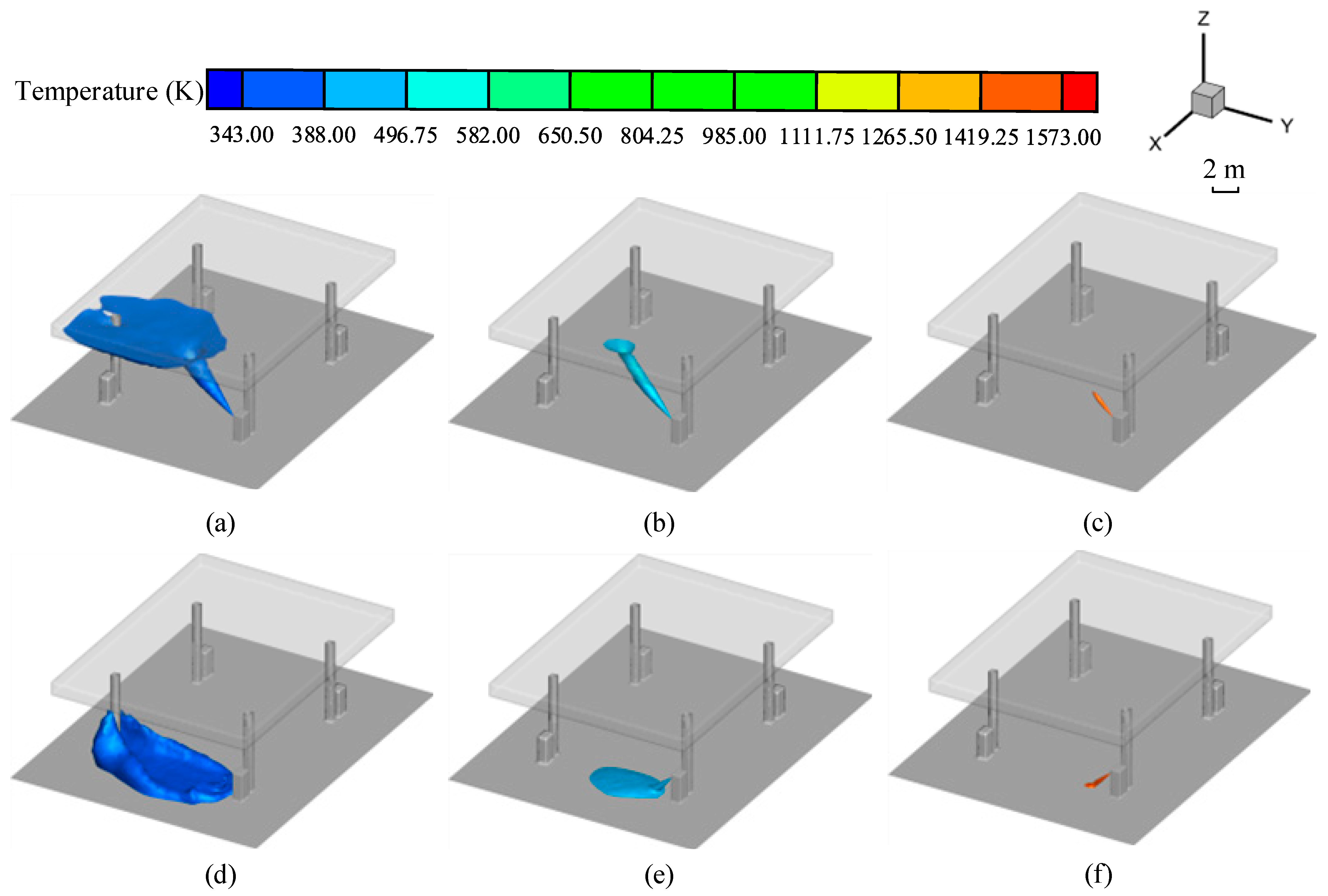
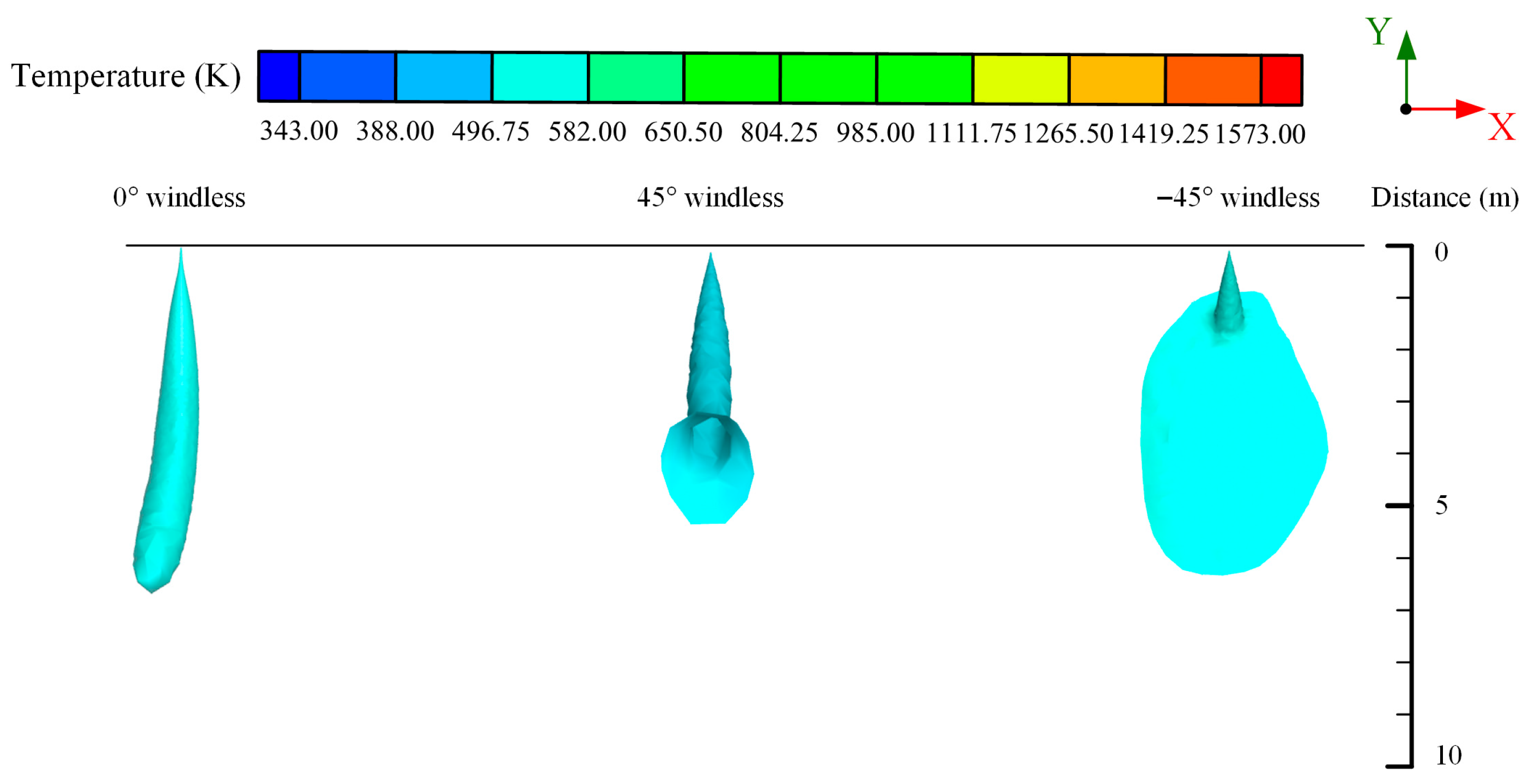
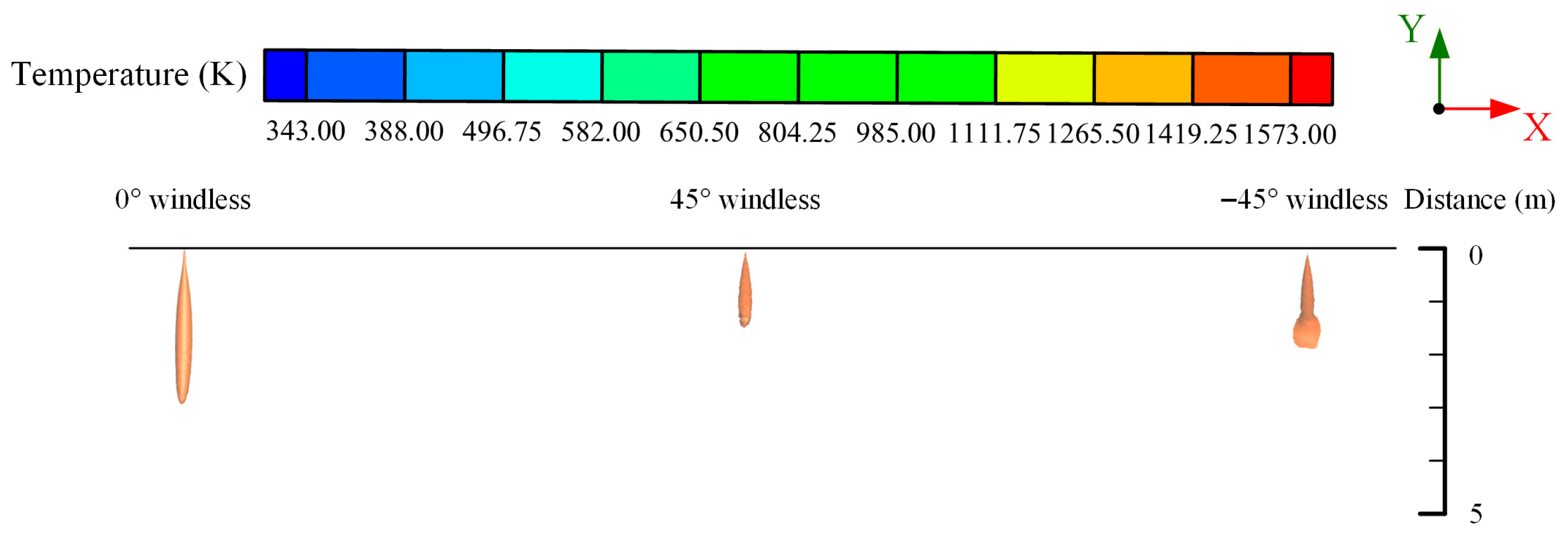
To further examine the sensitivity of the present baseline scenario to the assumed outlet angle, two additional windless cases with inclined releases of +45° and −45° relative to the horizontal baseline were simulated. The corresponding temperature envelopes are shown in Figure 13, and the characteristic high-temperature plume lengths and visible flame lengths are summarized in Figure 14 and Figure 15, and Table 5. Overall, the combustion-consequence pattern remains broadly similar to that of the 0° case, but the local flame/plume morphology and characteristic thermal-envelope extents are affected by the initial jet direction because of the combined effects of jet momentum, buoyancy, and interactions with the canopy or ground.
For the +45° case, the upward-directed jet reaches the canopy more rapidly under the combined influence of the leakage angle and buoyancy. As shown in Figure 13a–c, the overall plume-development pattern is still similar to that of the horizontal release, but the projected extents of the low-temperature hot-gas plume, the high-temperature plume, and the visible flame are all reduced. Quantitatively, the high-temperature plume length decreases from 6.70 m in the 0° case to 5.23 m, and the visible flame length decreases from 2.91 m to 1.61 m, as presented in Figure 14 and Figure 15, and Table 5.
For the −45° case, the initial downward momentum causes the low-temperature hot gases to spread along the ground in the near field before they gradually rise under buoyancy, whereas the high-temperature plume remains closer to the ground because of the stronger momentum effect, as illustrated in Figure 13d–f. In this case, the visible flame reaches the ground earlier and is deflected after impingement, so that the visible flame length becomes 1.95 m, which is greater than that of the +45° case but still shorter than that of the 0° baseline. The corresponding high-temperature plume length is 6.41 m, slightly lower than the 6.70 m of the horizontal case, as shown in Figure 14 and Figure 15, and Table 5. It should be noted that both inclined-release cases exhibit a clear reduction in apparent visible flame length relative to the 0° case, which is physically expected because the reported flame length is measured as the projection on the XY plane.
From an emergency-planning perspective, these results suggest that exclusion zones should not be treated as a single circular distance for delayed-ignition scenarios. Instead, wind-direction-dependent “hot-plume corridors” should be considered, particularly for winds aligned with or opposing the leak direction, where the T ≥ 388/582 K envelopes can remain near the ground and intersect typical access or vehicle paths. Under windless and crosswind cases, attention should also be paid to roof-level accumulation beneath the canopy, as hot gases can be trapped and concentrated in sheltered regions.
Finally, it should be emphasized that the wind-effect conclusions in this section are obtained for the representative CFD case (physical leak diameter d = 1 mm, p0 = 45 MPa, U10 = 4.34 m/s) used for wind-direction comparison, while the simplified diameter-scaling relationships reported in Section 3.1 are based on the investigated range of d = 0.5–5 mm. Therefore, the rapid zoning implication should be interpreted within this diameter range, and extrapolation beyond d > 5 mm (or substantially different source conditions) requires re-evaluation.

4. Conclusions

This study develops a theory–CFD workflow to assess hydrogen jet-fire consequences in a port hydrogen refueling station and to support separation-distance setting and emergency planning. For immediate ignition, a jet-fire geometric model and a weighted multi-point (WMP) radiation model were used to predict horizontal heat-flux fields, and lethal and irreversible-injury zones were delineated using 7 and 5 kW/m2 criteria, respectively. Within the investigated physical-orifice range (d = 0.5–5 mm), the hazard footprints expand monotonically and the characteristic lethal and injury distances scale approximately linearly with diameter, enabling rapid, screening-level layout checks.
For delayed ignition, steady reacting-flow CFD was performed under four wind directions using a representative annual-mean wind speed of 4.34 m/s at 10 m height, with the reacting simulation initialized from the transient dispersion field at t = 30 s to ensure a consistent, developed cloud state. A limited initialization-snapshot sensitivity check further showed that the resulting quasi-steady plume/flame metrics vary only slightly for t = 15–45 s under the representative windless condition. The combustion framework was validated by comparing the CFD visible flame length (T ≥ 1573 K) with the adopted correlation, giving a 6.99% deviation for the no-wind baseline case.
Under wind, the near-ground hot-plume envelopes (T ≥ 388/582 K) are controlled primarily by wind direction and station geometry (advection, buoyant rise, and canopy-induced accumulation), whereas the jet-core-dominated visible flame is less sensitive but shows non-negligible variations. Quantitatively, the high-temperature plume length varies from 6.70 m (windless) to 3.89 m (opposing wind), while the visible flame length varies from 2.91 m to 2.21 m across the tested winds.
A limited outlet-angle sensitivity analysis further indicates that inclined releases modify the projected plume/flame extents through canopy or ground interaction and momentum-buoyancy coupling, but do not alter the engineering interpretation of the baseline case as a representative reference scenario for comparative zoning.
Practically, we recommend a two-tier application: (i) use the correlation/WMP-based distances as conservative, screening-level separation distances during early design; and (ii) for delayed-ignition scenarios, incorporate dominant wind sectors by defining wind-direction-dependent exclusion corridors and considering canopy regions where hot gases may accumulate. The rapid-zoning implication should be interpreted within the studied diameter range and stated source/boundary conditions; extrapolation to larger leaks or substantially different environments requires re-evaluation.

Author Contributions

Conceptualization, L.Z. and M.Y.; methodology, W.C.; software, S.L.; validation, W.C., and L.T.; formal analysis, T.L.; investigation, L.Z.; resources, L.Z.; data curation, M.Y.; writing—original draft preparation, W.C.; writing—review and editing, L.T.; visualization, L.Z.; supervision, L.T.; project administration, M.Y.; funding acquisition, L.Z. and L.T. All authors have read and agreed to the published version of the manuscript.

Funding

This work was supported by the Technical Consultation Project for China Energy Engineering Group Guangxi Electric Power Design Institute Co., Ltd. (grant number EM-2025-RC003) and Natural Science Foundation of Hubei Province of China (grant number 2025AFB665).

Institutional Review Board Statement

Not applicable.

Informed Consent Statement

Not applicable.

Data Availability Statement

Data are available from the corresponding author upon reasonable request.

Conflicts of Interest

Authors Liying Zhong, Ming Yang, Shuang Liu and Ting Liu were employed by the company China Energy Engineering Group Guangxi Electric Power Design Institute Co., Ltd. The remaining authors declare that the research was conducted in the absence of any commercial or financial relationships that could be construed as a potential conflict of interest.

Abbreviations

The following abbreviations are used in this manuscript:
CFDComputational Fluid Dynamics
DODiscrete Ordinates
EDCEddy Dissipation Concept
EDMEddy Dissipation Model
HRSHydrogen refueling station
LESLarge-Eddy Simulation
LHVLower Heating Value
MAEMean Absolute Error
MSEMean Squared Error
PISO Pressure-Implicit with Splitting of Operators
RANSReynolds-Averaged Navier–Stokes
RMSERoot Mean Squared Error
SPSSingle Point Source
WMPWeighted Multi-Point

References

  1. Greene, D.L.; Ogden, J.M.; Lin, Z. Challenges in the designing, planning and deployment of hydrogen refueling infrastructure for fuel cell electric vehicles. eTransportation 2020, 6, 100086. [Google Scholar] [CrossRef]
  2. Rong, Y.; Yuan, W.; Peng, J.; Hou, J.; Gao, J.; Zhang, X.; Chen, J.; Chen, S. An review of research on liquid hydrogen leakage: Regarding China’s hydrogen refueling stations. Front. Energy Res. 2024, 12, 1408338. [Google Scholar] [CrossRef]
  3. Tang, D.; Ge, P.; Yuan, C.; Ren, H.; Zhong, X.; Dong, M.; Agundis-Tinajero, G.D.; Diaz-Londono, C.; Guerrero, J.M.; Zio, E. Optimal management of coupled hydrogen-electricity energy systems at ports by multi-time scale scheduling. Appl. Energy 2025, 391, 125885. [Google Scholar] [CrossRef]
  4. Yuan, Y.; Guo, X.; Xiong, Z.; Tang, D.; Tong, L.; Zhang, C.; Li, Z.; Kim, J.Y. A rolling multi-objective ship speed optimization strategy for energy efficiency and operating cost control in dynamic waterway conditions. Ocean Eng. 2026, 353, 124738. [Google Scholar] [CrossRef]
  5. Xiao, Z.; Tang, D.; Zhang, Q.; Arasteh, H.; Guerrero, J.M.; Zio, E. Fault diagnosis of photovoltaic arrays at ports under small-sample and imbalanced data conditions. Appl. Energy 2026, 408, 127401. [Google Scholar] [CrossRef]
  6. Najjar, Y.S.H. Hydrogen safety: The road toward green technology. Int. J. Hydrogen Energy 2013, 38, 10716–10728. [Google Scholar] [CrossRef]
  7. Buttner, W.J.; Post, M.B.; Burgess, R.; Rivkin, C. An overview of hydrogen safety sensors and requirements. Int. J. Hydrogen Energy 2011, 36, 2462–2470. [Google Scholar] [CrossRef]
  8. Pang, L.; Wang, C.; Han, M.; Xu, Z. A study on the characteristics of the deflagration of hydrogen-air mixture under the effect of a mesh aluminum alloy. J. Hazard. Mater. 2015, 299, 174–180. [Google Scholar] [CrossRef]
  9. Shen, X.; Wang, Q.; Xiao, H.; Sun, J. Experimental study on the characteristic stages of premixed hydrogen-air flame propagation in a horizontal rectangular closed duct. Int. J. Hydrogen Energy 2012, 37, 12028–12038. [Google Scholar] [CrossRef]
  10. Yang, F.; Wang, T.; Deng, X.; Dang, J.; Huang, Z.; Hu, S.; Li, Y.; Ouyang, M. Review on hydrogen safety issues: Incident statistics, hydrogen and detonation process. Int. J. Hydrogen Energy 2021, 46, 31467–31488. [Google Scholar] [CrossRef]
  11. Sakamoto, J.; Sato, R.; Nakayama, J.; Kasai, N.; Shibutani, T.; Miyake, A. Leakage-type-based analysis of accidents involving hydrogen fueling stations in Japan and USA. Int. J. Hydrogen Energy 2016, 41, 21564–21570. [Google Scholar] [CrossRef]
  12. Zhou, K.; Wang, X.; Liu, M.; Liu, J. A theoretical framework for calculating full-scale jet fires induced by high-pressure hydrogen/natural gas transient leakage. Int. J. Hydrogen Energy 2018, 43, 22765–22775. [Google Scholar] [CrossRef]
  13. Gu, X.; Zhang, J.; Pan, Y.; Ni, Y.; Ma, C.; Zhou, W.; Wang, Y. Hazard analysis on tunnel hydrogen jet fire based on CFD simulation of temperature field and concentration field. Saf. Sci. 2020, 122, 104532. [Google Scholar] [CrossRef]
  14. Xie, Y.; Lv, N.; Wang, X.; Wu, D.; Wang, S. Thermal and fire characteristics of hydrogen jet flames in the tunnel at longitudinal ventilation strategies. Fuel 2021, 306, 121659. [Google Scholar] [CrossRef]
  15. Brennan, S.L.; Makarov, D.V.; Molkov, V. LES of high pressure hydrogen jet fire. J. Loss Prev. Process Ind. 2009, 22, 353–359. [Google Scholar] [CrossRef]
  16. Cirrone, D.M.C.; Makarov, D.; Molkov, V. Simulation of thermal hazards from hydrogen under-expanded jet fire. Int. J. Hydrogen Energy 2019, 44, 8886–8892. [Google Scholar] [CrossRef]
  17. Fu, X.; Yan, X.; Chen, S.; Song, C.; Xiao, Z.; Luo, H.; Wan, J.; Yang, T.; Xu, N.; Xiao, J. Hydrogen Jet Flame Simulation and Thermal Radiation Damage Estimation for Leakage Accidents in a Hydrogen Refueling Station. Fire 2024, 7, 210. [Google Scholar] [CrossRef]
  18. Wang, F.; Xiao, J.; Jordan, T. GASFLOW-MPI analysis on deflagration in full-scale hydrogen refueling station experiments: H2-air premixed cloud and high-pressure H2 jet. Int. J. Hydrogen Energy 2022, 47, 14725–14739. [Google Scholar] [CrossRef]
  19. Wen, J.X.; Rao, V.C.M.; Tam, V.H.Y. Numerical study of hydrogen explosions in a refuelling environment and in a model storage room. Int. J. Hydrogen Energy 2010, 35, 385–394. [Google Scholar] [CrossRef]
  20. Nakayama, J.; Misono, H.; Sakamoto, J.; Kasai, N.; Shibutani, T.; Miyake, A. Simulation-based safety investigation of a hydrogen fueling station with an on-site hydrogen production system involving methylcyclohexane. Int. J. Hydrogen Energy 2017, 42, 10636–10644. [Google Scholar] [CrossRef]
  21. Bragin, M.V.; Molkov, V.V. Physics of spontaneous ignition of high-pressure hydrogen release and transition to jet fire. Int. J. Hydrogen Energy 2011, 36, 2589–2596. [Google Scholar] [CrossRef]
  22. Papanikolaou, E.; Baraldi, D.; Kuznetsov, M.; Venetsanos, A. Evaluation of notional nozzle approaches for CFD simulations of free-shear under-expanded hydrogen jets. Int. J. Hydrogen Energy 2012, 37, 18563–18574. [Google Scholar] [CrossRef]
  23. Birch, A.; Hughes, D.; Swaffield, F. Velocity decay of high pressure jets. Combust. Sci. Technol. 1987, 52, 161–171. [Google Scholar] [CrossRef]
  24. Cui, W.; Yuan, Y.; Tong, L.; Shen, B. Numerical simulation of hydrogen leakage diffusion in seaport hydrogen refueling station. Int. J. Hydrogen Energy 2023, 48, 24521–24535. [Google Scholar] [CrossRef]
  25. Yuan, Y.; Cui, W.; Tong, L. Prediction and sensitivity analysis of hydrogen leak diffusion using CFD and data-driven modeling under variable leak and wind conditions. Int. J. Hydrogen Energy 2026, 202, 153056. [Google Scholar] [CrossRef]
  26. Spalding, D.B. Development of the eddy-break-up model of turbulent combustion. Symp. (Int.) Combust. 1977, 16, 1657–1663. [Google Scholar] [CrossRef]
  27. ANSYS Inc. ANSYS FLUENT 12.0/12.1 Documentation. 2009. Available online: https://www.afs.enea.it/project/neptunius/docs/fluent/index.htm (accessed on 27 February 2026).
  28. Li, Z.; Makarov, D.; Keenan, J.J.; Molkov, V.V. CFD study of the unignited and ignited hydrogen releases from trpd under a fuel cell car. In Proceedings of the 6th International Conference on Hydrogen Safety, Yokohama, Japan, 19–21 October 2015. [Google Scholar]
  29. Halouane, Y.; Dehbi, A. CFD simulations of premixed hydrogen combustion using the Eddy Dissipation and the Turbulent Flame Closure models. Int. J. Hydrogen Energy 2017, 42, 21990–22004. [Google Scholar] [CrossRef]
  30. Mogi, T.; Horiguchi, S. Experimental study on the hazards of high-pressure hydrogen jet diffusion flames. J. Loss Prev. Process Ind. 2009, 22, 45–51. [Google Scholar] [CrossRef]
  31. He, Q.; Gu, M.; Tang, F.; Sun, X.; Wang, Y. Ceiling radiation heat flux and downward received radiation heat flux of methane jet fire with hydrogen addition. Int. J. Hydrogen Energy 2024, 51, 741–753. [Google Scholar] [CrossRef]
  32. Hankinson, G.; Lowesmith, B.J. A consideration of methods of determining the radiative characteristics of jet fires. Combust. Flame 2011, 159, 1165–1177. [Google Scholar] [CrossRef]
  33. Miguel, R.B.; Machado, I.M.; Pereira, F.M. Application of inverse analysis to correlate the parameters of the weighted-multi-point-source model to compute radiation from flames. Int. J. Heat Mass Transf. 2016, 102, 816–825. [Google Scholar] [CrossRef]
  34. Zhou, K.; Qin, X.; Wang, Z.; Pan, X.; Jiang, J. Generalization of the radiative fraction correlation for hydrogen and hydrocarbon jet fires in subsonic and chocked flow regimes. Int. J. Hydrogen Energy 2018, 43, 9870–9876. [Google Scholar] [CrossRef]
  35. Schefer, R.W.; Houf, W.G.; Williams, T.C.; Bourne, B.; Colton, J. Characterization of high-pressure, underexpanded hydrogen-jet flames. Int. J. Hydrogen Energy 2007, 32, 2081–2093. [Google Scholar] [CrossRef]
  36. Molina, A.; Schefer, R.W.; Houf, W.G. Radiative fraction and optical thickness in large-scale hydrogen-jet fires. Proc. Combust. Inst. 2007, 31, 2565–2572. [Google Scholar] [CrossRef]
  37. Ekoto, I.W.; Ruggles, A.J.; Creitz, L.W.; Li, J. Updated jet flame radiation modeling with buoyancy corrections. Int. J. Hydrogen Energy 2014, 39, 20570–20577. [Google Scholar] [CrossRef]
  38. Molkov, V.; Saffers, J.B. Hydrogen jet flames. Int. J. Hydrogen Energy 2013, 38, 8141–8158. [Google Scholar] [CrossRef]
  39. Zhang, H.; Cao, X.; Yuan, X.; Wu, F.; Wang, J.; Zhang, Y.; Li, Q.; Liu, H.; Huang, Z. Study on Thermal Radiation Characteristics and the Multi-Point Source Model of Hydrogen Jet Fire. Appl. Sci. 2024, 14, 7098. [Google Scholar] [CrossRef]
  40. Crowl, D.A.; Louvar, J.F. Chemical Process Safety: Fundamentals with Applications; Pearson Education: London, UK, 2001. [Google Scholar]
  41. Radovici, A.; Ștefănie, H.; Ajtai, I.; Mereuță, A.; Botezan, C.; Ozunu, A.; Ajtai, N. Is the analysis of territorial compatibility in the vicinity of road hazmat transport routes a necessity for developing countries? A case study of Romania. Heliyon 2023, 9, e19948. [Google Scholar] [CrossRef]
  42. WeatherSpark. Average Weather in Ningbo, China. WeatherSpark. Available online: https://zh.weatherspark.com/y/137289/%E4%B8%AD%E5%9B%BD%E3%80%81%E5%AE%81%E6%B3%A2%E7%9A%84%E5%85%A8%E5%B9%B4%E5%B9%B3%E5%9D%87%E5%A4%A9%E6%B0%94 (accessed on 27 February 2026).
  43. Tennekes, H. The logarithmic wind profile. J. Atmos. Sci. 1973, 30, 234–238. [Google Scholar] [CrossRef]
  44. Ro, K.S.; Hunt, P.G. Characteristic wind speed distributions and reliability of the logarithmic wind profile. J. Environ. Eng. 2007, 133, 313–318. [Google Scholar] [CrossRef]
  45. Hussein, H.; Brennan, S.; Molkov, V. Hydrogen jet fire from a thermally activated pressure relief device (TPRD) from onboard storage in a naturally ventilated covered car park. Hydrogen 2021, 2, 343–361. [Google Scholar] [CrossRef]
Figure 1. Hydrogen refueling station cross-section, with the location of the leakage orifice (a) YZ section of hydrogen filling station; (b) XZ section of hydrogen filling station.
Applsci 16 02859 g001
Figure 2. Diagram of a jet flame.
Applsci 16 02859 g002
Figure 3. Schematic diagram of the jet flame thermal radiation model (a) Single point source model; (b) Weighted multi-point model.
Applsci 16 02859 g003
Figure 4. Visible flame length of the jet fire under windless conditions.
Applsci 16 02859 g004
Figure 5. Grid sensitivity test.
Applsci 16 02859 g005
Figure 6. Schematic of the horizontal receiver locations at 0.5Wf–5 m.
Applsci 16 02859 g006
Figure 7. Schematic of the lethal and irreversible injury zones.
Applsci 16 02859 g007
Figure 8. Lethal and irreversible injury zones for different leak-orifice diameters.
Applsci 16 02859 g008
Figure 9. Trend of lethal and irreversible injury distances versus leakage orifice diameter.
Applsci 16 02859 g009
Figure 10. Jet-fire temperature field distribution under different wind directions (a) windless, 388 K; (b) windless, 582 K; (c) windless, 1573 K; (d) X+ wind, 388 K; (e) X+ wind, 582 K; (f) X+ wind, 1573 K; (g) Y+ wind, 388 K; (h) Y+ wind, 582 K; (i) Y+ wind, 1573 K; (j) Y− wind, 388 K; (k) Y− wind, 582 K; (l) Y− wind, 1573 K.
Applsci 16 02859 g010
Figure 11. Comparison of plume lengths with temperature > 582 K under different wind directions.
Applsci 16 02859 g011
Figure 12. Comparison of visible flame lengths under different wind directions.
Applsci 16 02859 g012
Figure 13. Jet-fire temperature field distribution under different leakage angles (a) 45°, windless, 388 K; (b) 45°, windless, 582 K; (c) 45°, windless, 1573 K; (d) −45°, windless, 388 K; (e) −45°, windless, 582 K; (f) −45°, windless, 1573 K.
Applsci 16 02859 g013
Figure 14. Comparison of plume lengths with temperature >582 K under different leakage angles.
Applsci 16 02859 g014
Figure 15. Comparison of visible flame lengths under different leakage angles.
Applsci 16 02859 g015
Table 1. Horizontal receiver locations for different leak-orifice diameters.
Leakage Orifices/mm0.512345
L10.120.240.490.730.981.22
L20.941.041.241.441.651.85
L31.751.831.992.162.322.48
L42.562.622.742.872.993.11
L53.373.423.503.583.663.74
L64.194.214.254.294.334.37
L7 *5.005.005.005.005.005.00
* L7 is fixed at 5.0 m for all cases by definition (upper bound of receiver range).
Table 2. Radiative heat flux at different monitoring locations.
Leakage Orifices/mm0.512345
qwmp123,774.6825,348.7226,185.4626,472.0626,616.8226,704.15
qwmp24207.758409.8913,494.6916,552.8918,649.2520,188.67
qwmp31650.764394.928862.9312,013.2014,385.2116,268.04
qwmp4846.582636.196309.619271.6411,645.1113,610.80
qwmp5507.651727.904698.307398.419688.5111,650.88
qwmp6336.341208.343611.896035.758206.4610,126.37
qwmp7238.56887.532847.785006.527042.268898.87
Table 3. Sensitivity of quasi-steady jet-fire consequence metrics to ignition snapshot time under windless conditions.
Ignition snapshot time (s)153045
High-temperature plume length (m)6.716.706.68
Visible flame length (m)2.912.912.90
Table 4. High-temperature plume length and visible flame length under different wind directions.
Ambient ConditionWindlessX+ WindY+ WindY− Wind
High-temperature plume length (m)6.704.736.723.89
Visible flame length (m)2.912.212.582.68
Table 5. High-temperature plume length and visible flame length under different leakage angles.
Leakage angles45°−45°
High-temperature plume length (m)6.705.236.41
Visible flame length (m)2.911.611.95
Disclaimer/Publisher’s Note: The statements, opinions and data contained in all publications are solely those of the individual author(s) and contributor(s) and not of MDPI and/or the editor(s). MDPI and/or the editor(s) disclaim responsibility for any injury to people or property resulting from any ideas, methods, instructions or products referred to in the content.