Implementation of an Industrial Robot in the Automation and Digitalization of Bricklaying: A Case Study


Abstract
1. Introduction
1.1. Global Market of Construction Robot
1.2. Survey Studies of Construction Robotization
1.3. Review of Construction Robotics
- Improved efficiency and productivity: Construction robots can perform tasks more accurately than manual human work, producing higher-quality results with fewer mistakes. This increased efficiency can lead to reduced waste and more sustainable resource use.
- Waste reduction: Robotics can contribute to waste reduction in construction investments.
- Optimization and simulation: Robotics and other digital technologies enable better optimization, simulation, and decision-making in construction technologies, which can lead to sustainable outcomes.
- Real-time monitoring and control: Robotic and digital technologies have the potential to revolutionize the sustainability of construction through real-time monitoring, optimization, and green design.
- Enhanced safety: Robotics can be used to identify hazards and safe work procedures, potentially reducing accidents and improving overall site safety.
1.4. Review of Bricklaying Robots
2. Materials and Methods
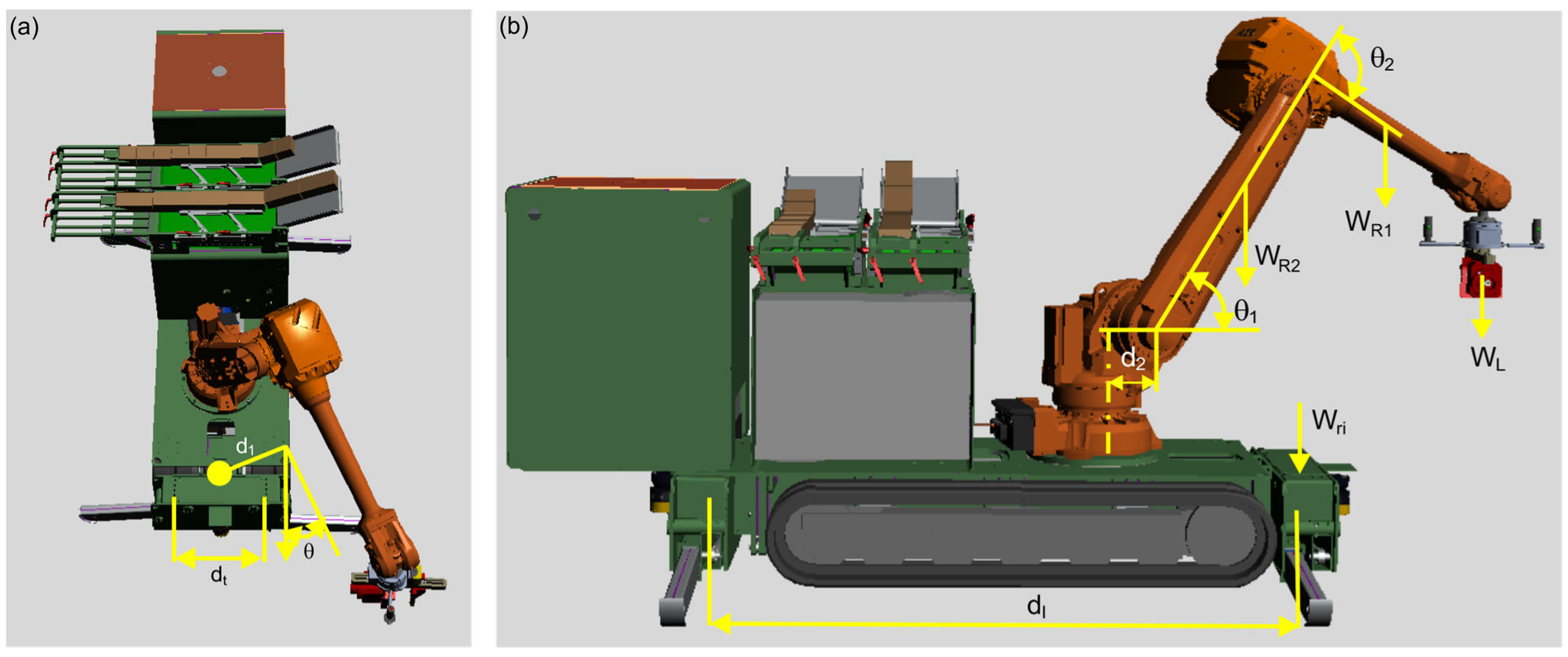
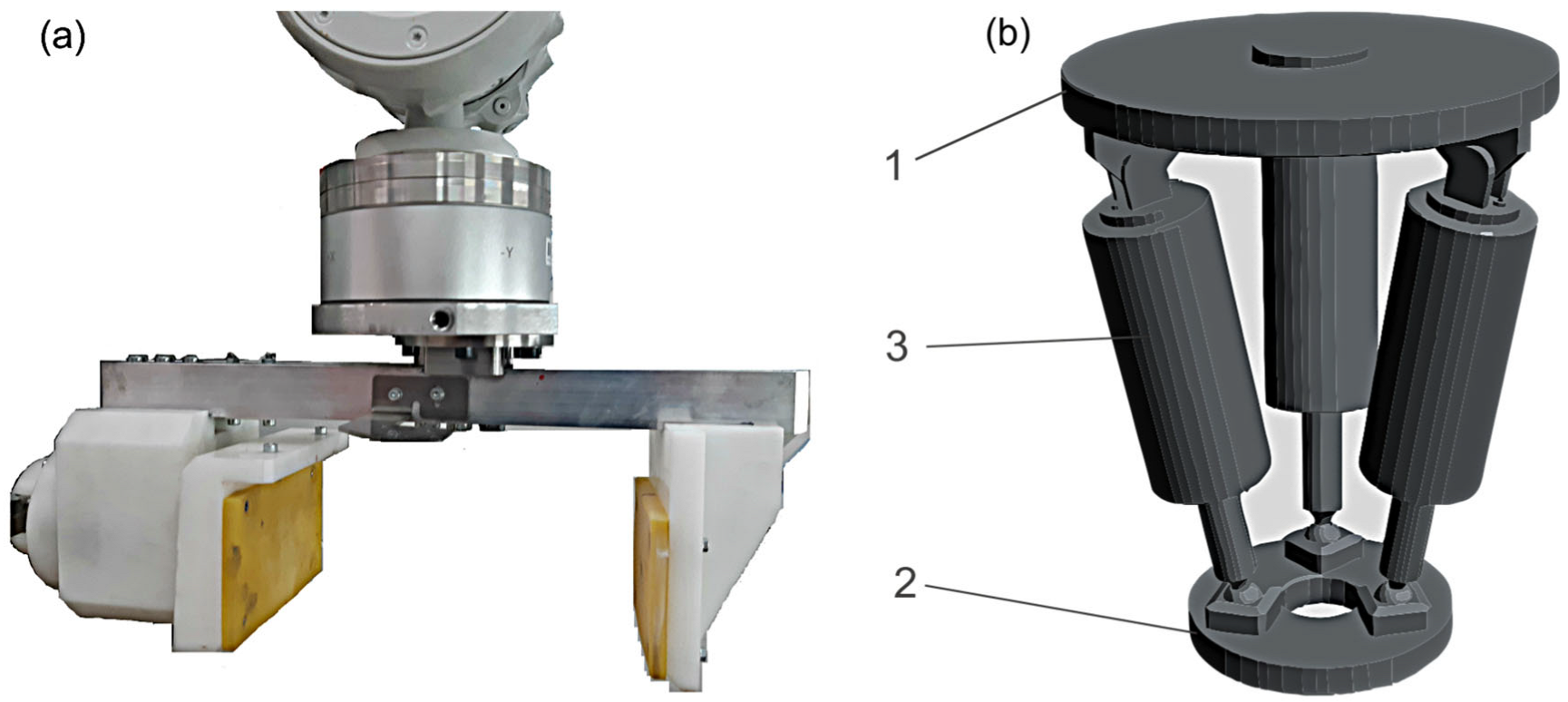
2.1. RBS Design Solutions
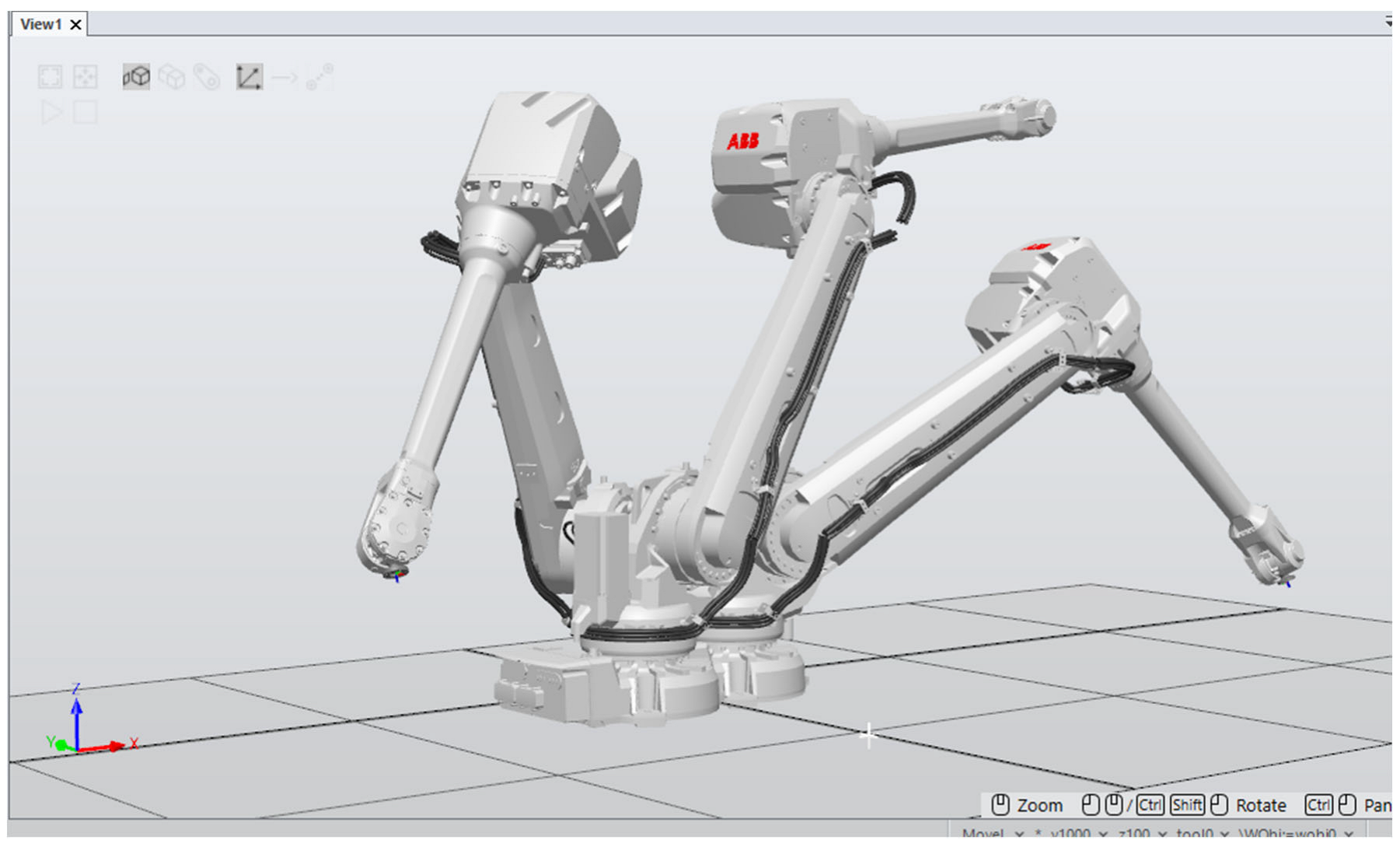
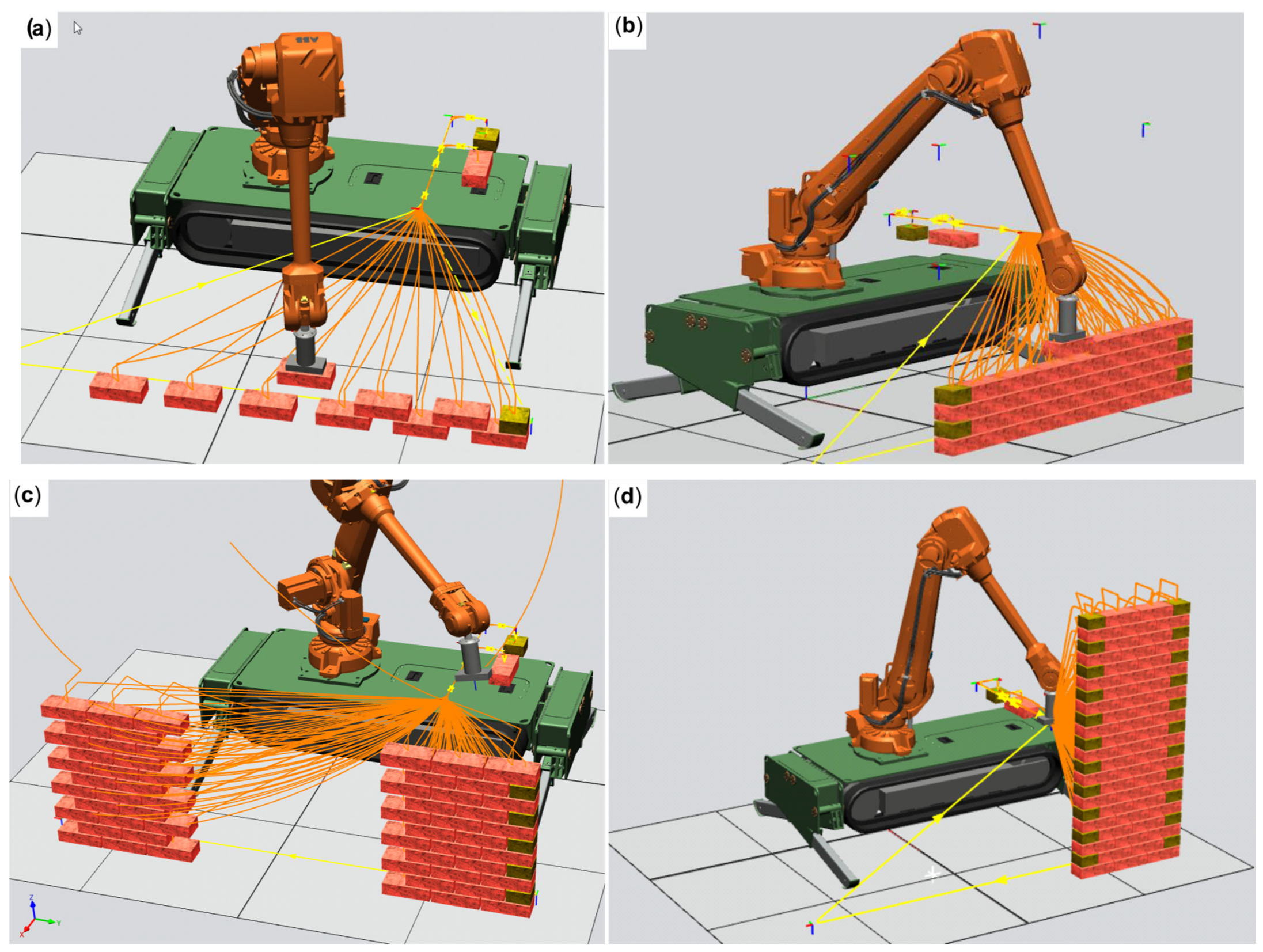
2.2. Simulated Robotic Bricklaying
2.3. Digital Environment for Robotic Bricklaying
2.4. Digital Plan of Robotic Bricklaying
3. Programming of the RBS
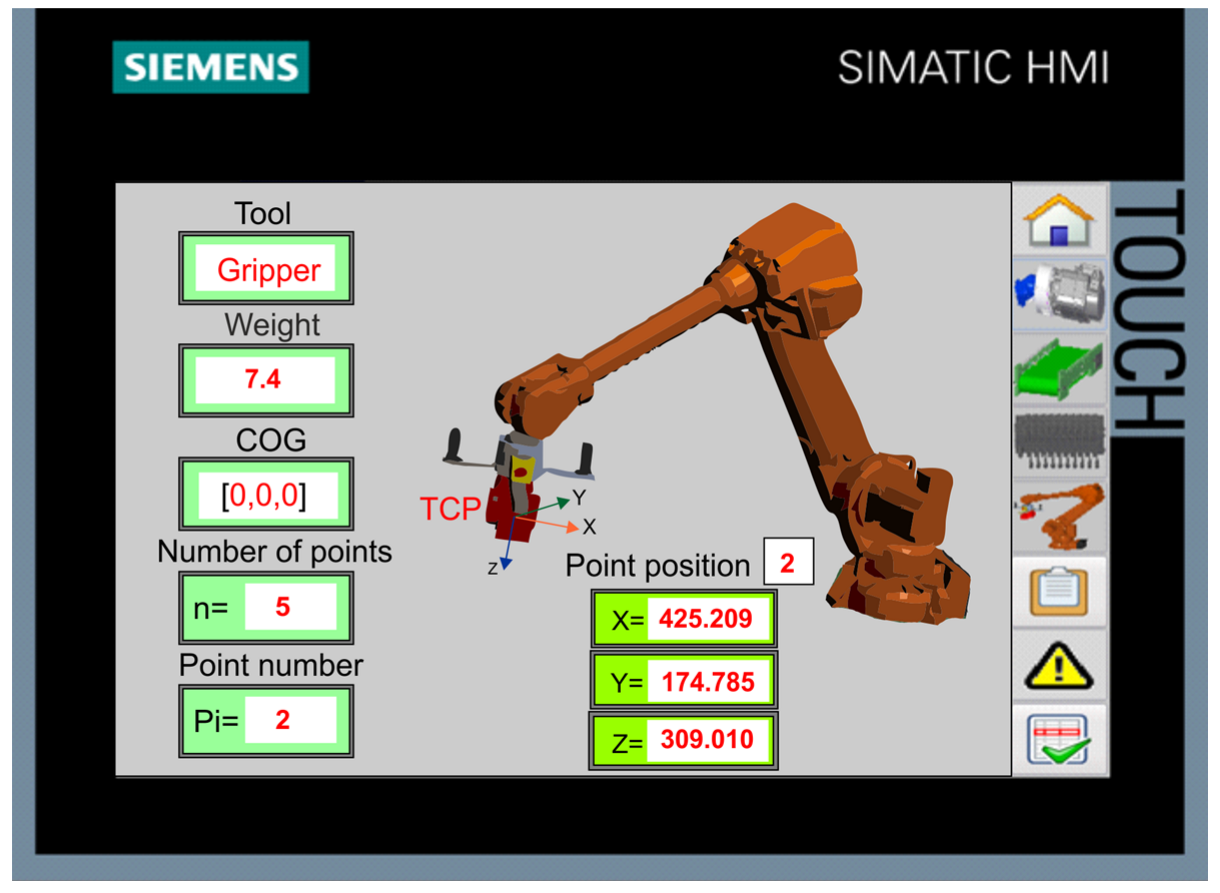
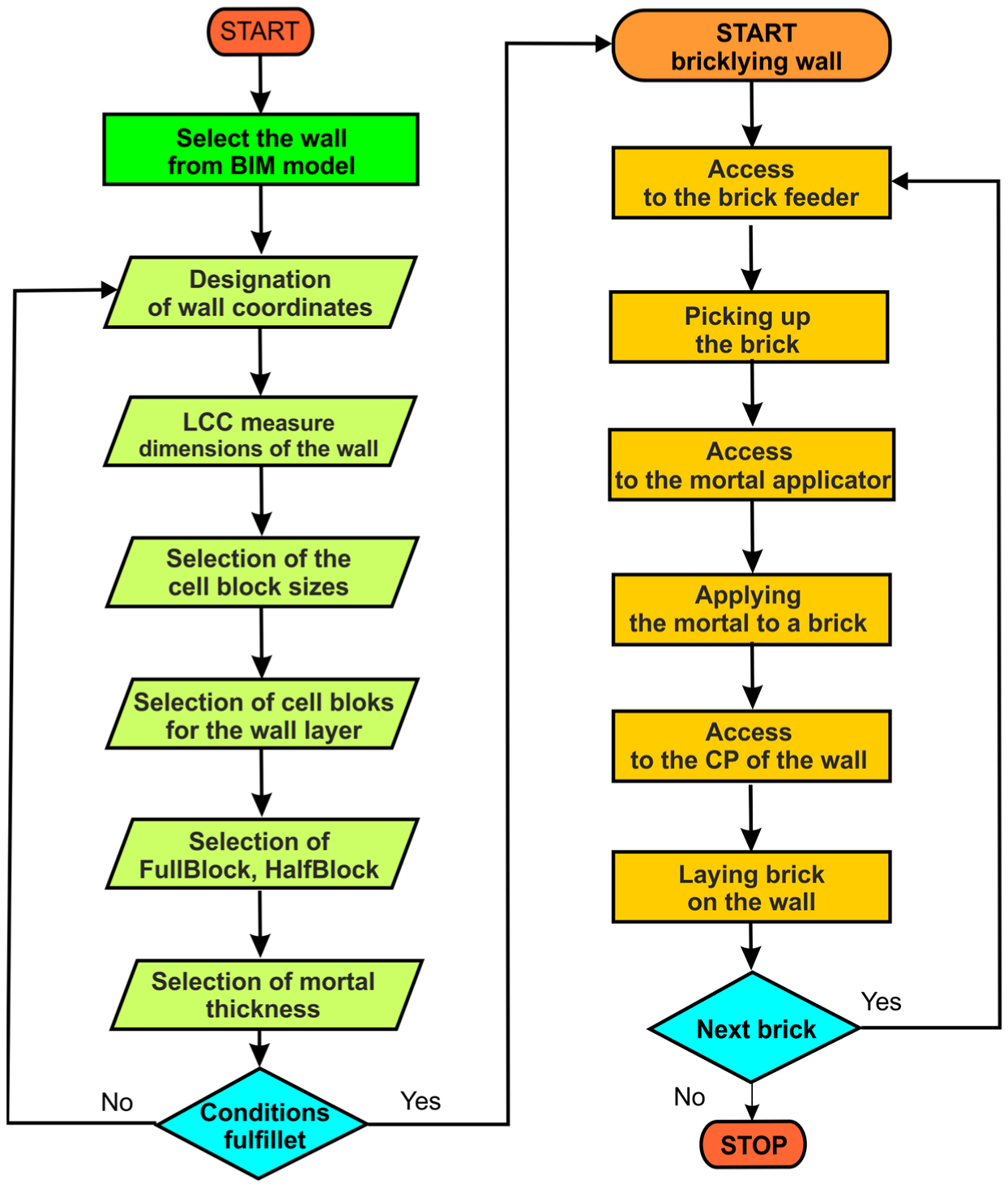
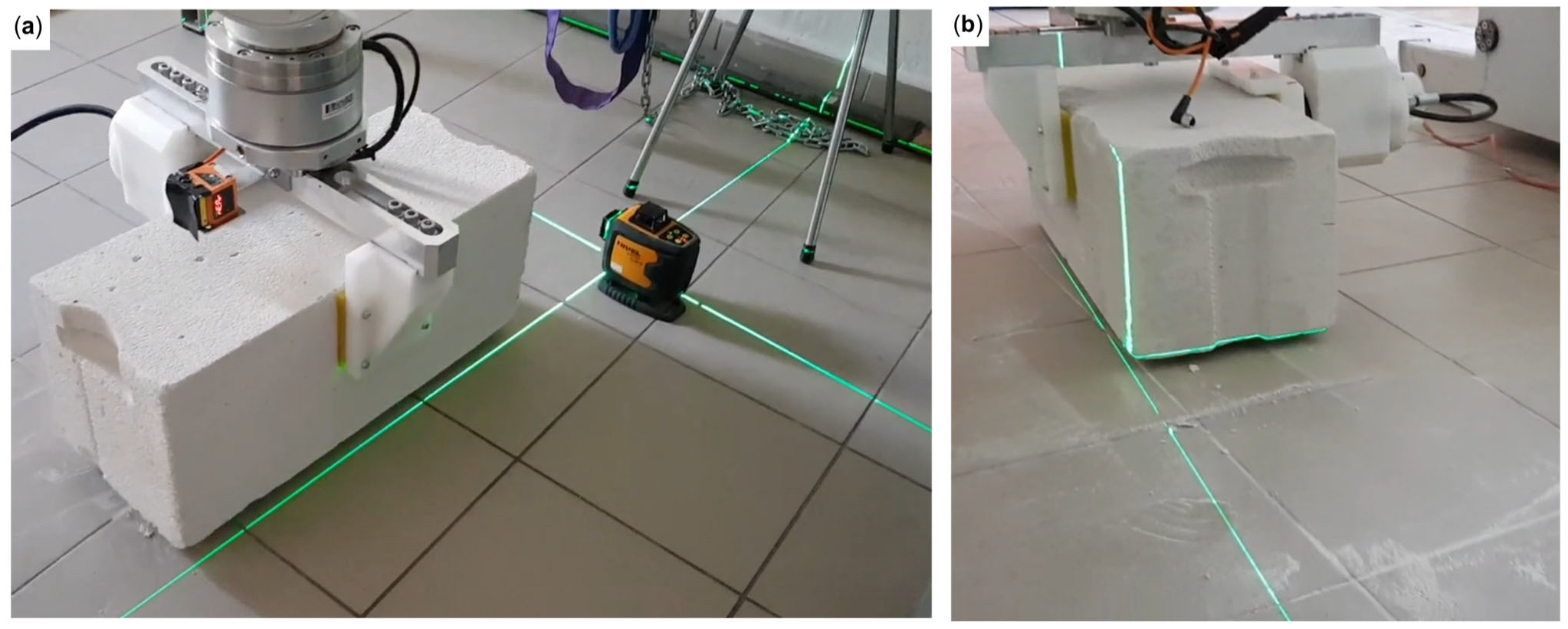
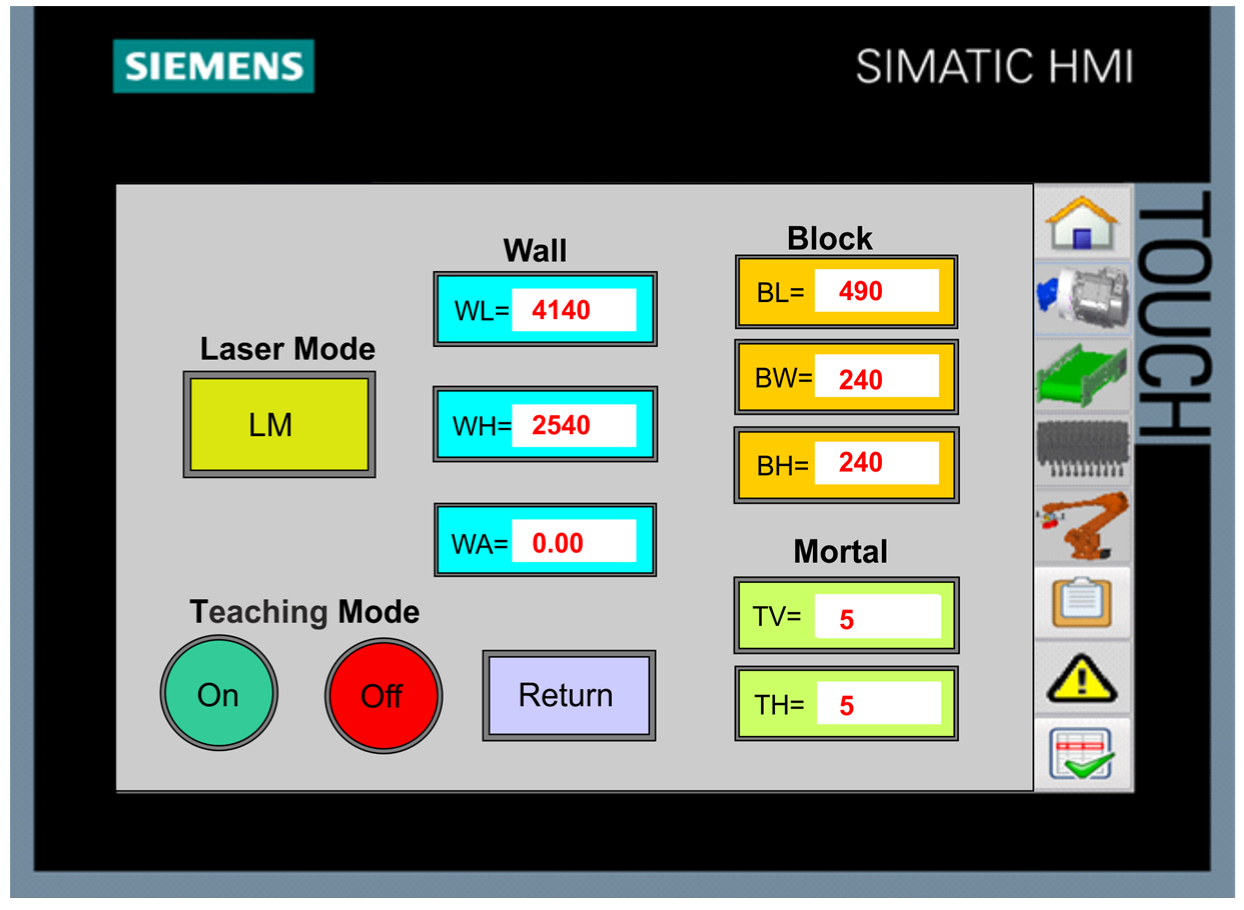
- Setting and reference: RBS positioning, TCP/COG teaching, Pi-point recording, starting CLL, measuring WL/WH/WA, determining CP, and introducing BL/BW/BH/TH/TV to HMI.
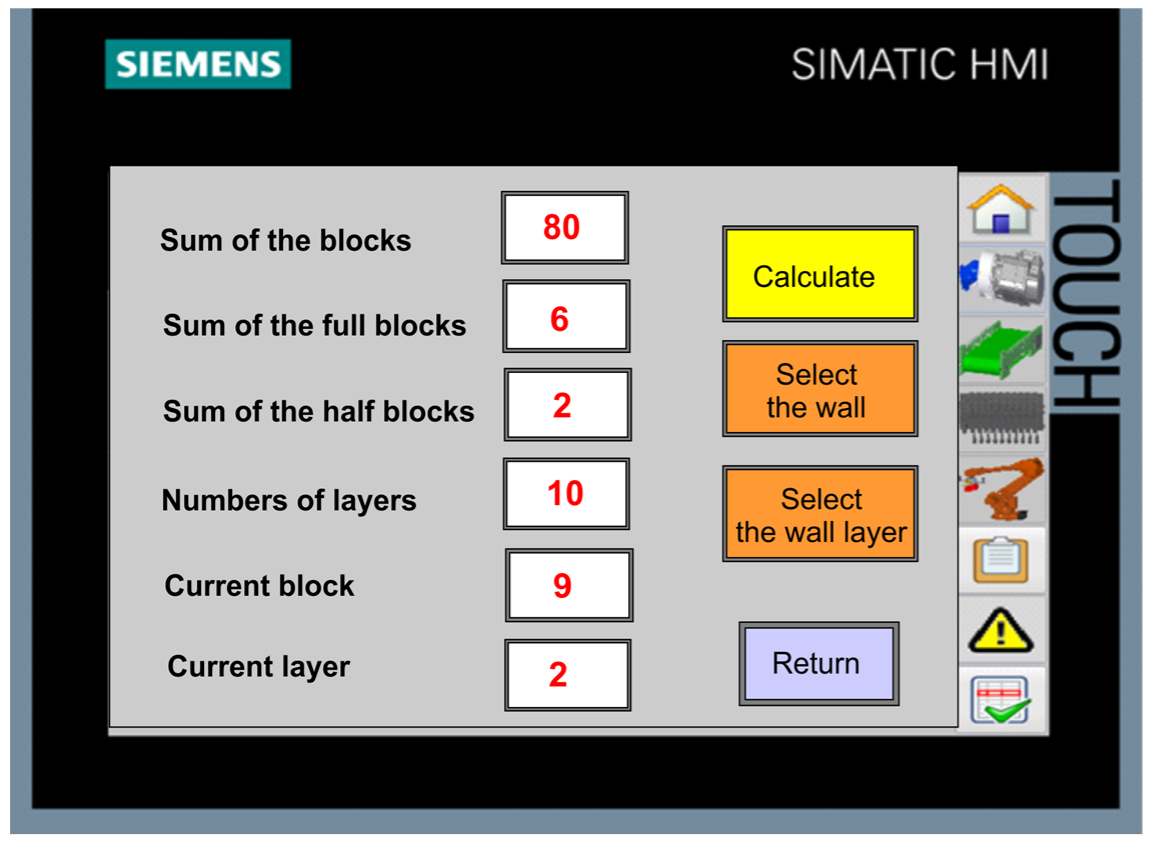
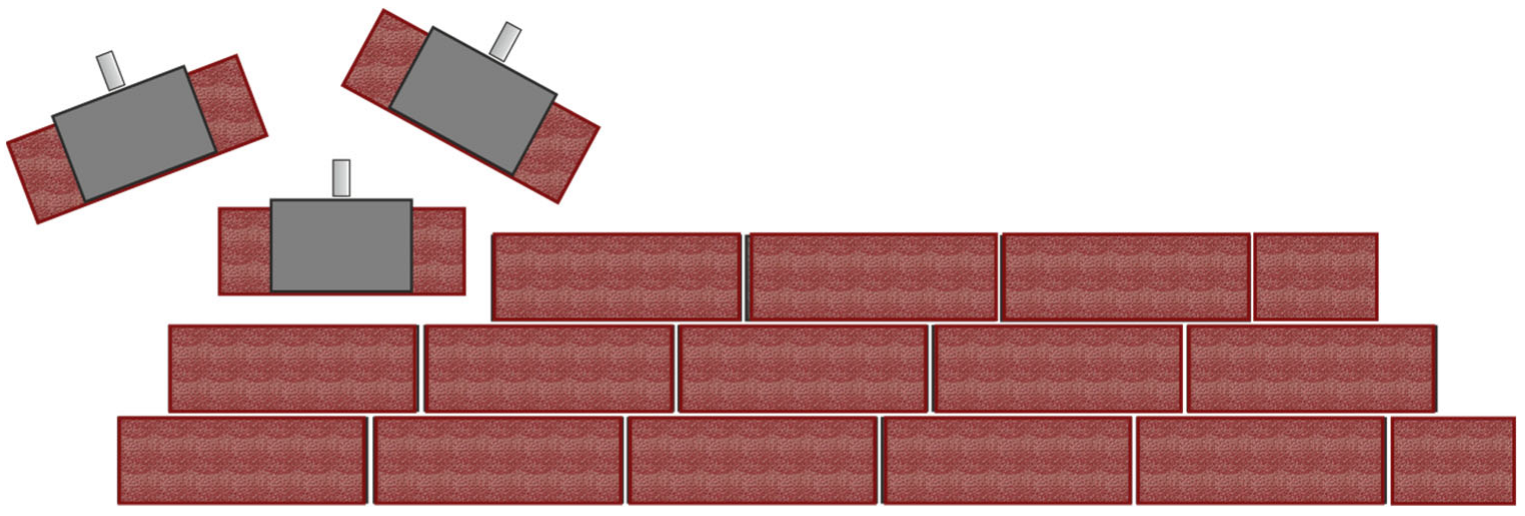
- Layout planning: determining the number of layers and FULL/HALF distribution; selecting the placement strategy relative to the CP (if the target point is above, place sideways; if below, from above).
- Layer loop k: For each element n, perform a pick-up (FULL/HALF), apply the mortar, and transfer it to the CP.
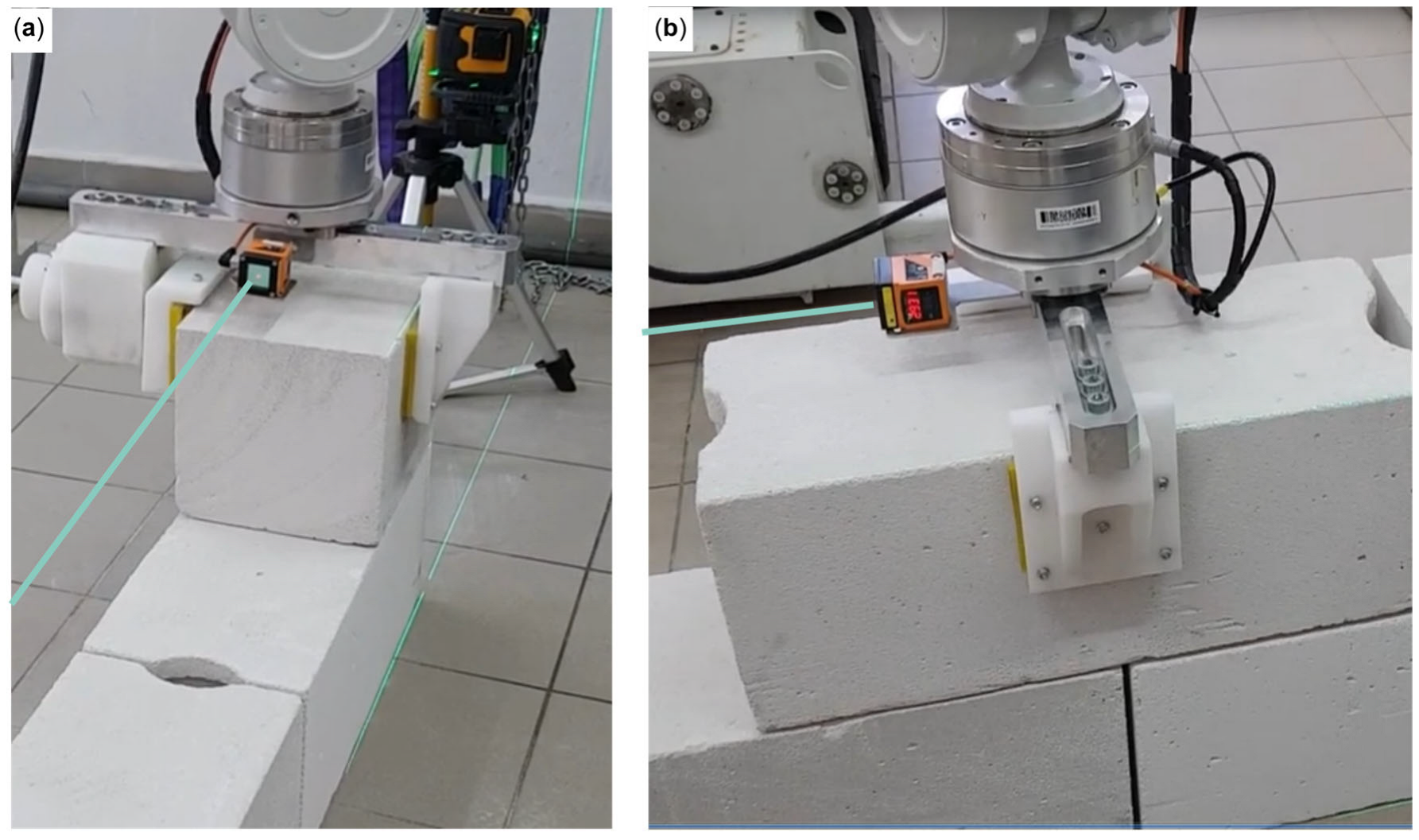
- LRF auto-calibration: Measure the distance to the end of the wall and the rotation angle around the Z axis; correct the TCP/holder pose.
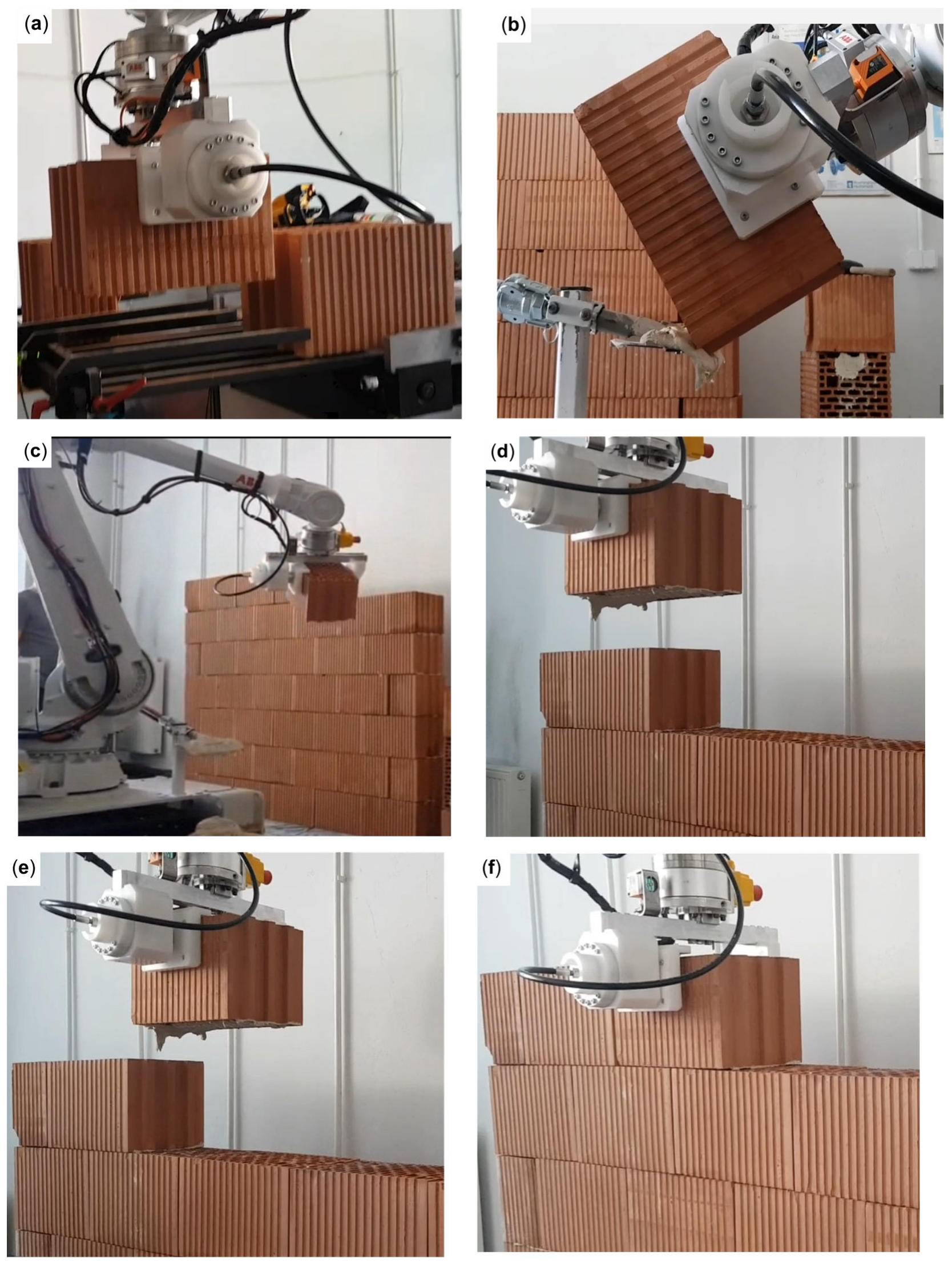
- Placement and clamping: Use the appropriate procedure (SetFirstFullBrick, LayFirstHalfBrick, LayAnBrick, and LayLastHalfBrick).
- Online quality control: After placing the element, check the LRF deviation; if > tolerance, micro-correction or STOP and re-measure; otherwise, proceed to the next element.
- Layer closing: The reference level (CLL) and TH offsets are updated. If there are subsequent layers, repeat the process; otherwise, generate an HMI report.
| INIT: |
| TeachTCP(); SavePiPoints(); |
| CP, WL, WH, WA ← MeasureWithCLL(); |
| BL, BW, BH, TH, TV ← InputBrickAndMortar(); |
| plan ← PlanLayersAndCuts(WL, WH, BL, BH, TH, TV); |
| mode ← SelectPlacementMode(CP, WA); |
| FOR k in plan.layers: |
| FOR each slot n in plan[k]: |
| brickType ← plan[k][n] |
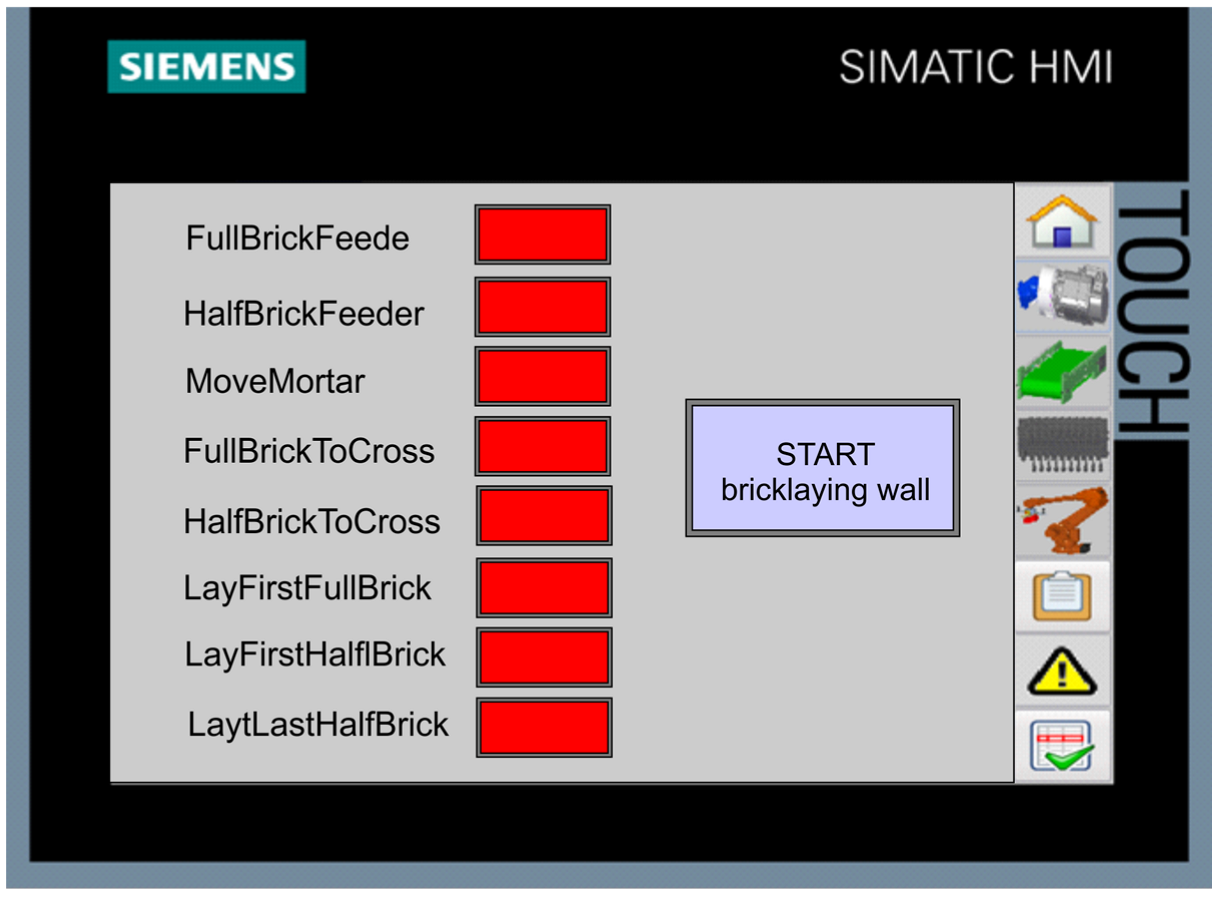
| CALL (brickType == FULL ? FullBrickFeeder: HalfBrickFeeder) |
| CALL MoveMortar(TH, TV) |
| CALL (brickType == FULL? FullBrickToCross: HalfBrickToCross) |
| dist, zAngle ← LRF_MeasureToWallEnd() |
| pose ← ComputePoseFromCP(dist, zAngle, Pi, mode) |
| AdjustTCP(pose) |
| if n == 1 and brickType == FULL: CALL SetFirstFullBrick(pose) |
| else if n == 1 and brickType == HALF: CALL LayFirstHalfBrick(pose) |
| else if IsLastHalf(n): CALL LayLastHalfBrick(pose) |
| else: CALL LayAnBrick(pose) |
| err ← LRF_CheckAccumulatedError() |
| if err > tolerance: |
| pose’ ← Compensate(err) |
| MicroAdjust(pose’) |
| END |
| END |
| REPORT ← Summarize(HMI, stats = {counts, cycleTime, maxDev}) |
4. Testing the RBS
5. Discussion
- Purchasing and integrating a bricklaying robot (hardware, software, training, and logistics) represents a significant expense, particularly for small- and medium-sized companies. In the construction industry, high investment costs are a key factor that restricts innovation.
- Bricklaying robots require adapting the workstation to existing execution processes and properly preparing the construction site, which is not ready for integration with robotics and digital technology.
- BIM, CDE, and data management platforms require investments in cybersecurity, organizational changes, and IT infrastructure updates, which are additional barriers, particularly for smaller companies.
- The construction site is an environment characterized by high variability in the topography and location of the building, which is susceptible to change and logistically limited, hindering the effective operation of bricklaying robots, especially compared to factory prefabrication, where conditions are stable and predictable.
- There is a shortage of robotics-specialized workers who can supervise the automated processes. There is already a significant shortage of construction professionals in Poland (approximately 150,000 people), indicating even greater difficulty in finding technical specialists in the field of robotics.
- Construction work is often perceived as a threat to the reluctance to work, leading to the need for additional training and adaptation measures. Skeptical attitudes toward innovative robotic technologies have been observed among engineers, construction workers, management staff, stakeholders, and clients.
- Robotization in the Polish construction industry is still in the early stages of development; there are no standardized implementation procedures, a broad service network, or practical experience from a large number of investments. The complexity of the supply chains for construction materials is unsuitable for robotic bricklaying. There is a diversity of regional construction markets, labor and material costs, and legal regulations in the country that must be considered.
- S—Strengths
- S.1. High efficiency, quality, and precision of the robotic bricklaying.
- S.2. Robots relieve workers of physical burdens and improve work ergonomics.
- S.3. Robots solve the problem of the shortage of skilled bricklayers, and robotization can reduce the dependence of investments on labor availability.
- S.4. Robots can operate continuously and predictably, thereby reducing unexpected interruptions during bricklaying.
- W—Weaknesses
- W.1. High capital costs are required to purchase, implement, and integrate these robots.
- W.2. Integration difficulties and the need for digital infrastructure are both challenges.
- W.3. Limited adaptation of robots to irregular building architectures is observed.
- W.4. Lack of specialists to operate and service robots
- O—Opportunities
- O.1. The growing need to shorten investment lead times
- O.2. Dynamic development of artificial intelligence (AI) and robotics technologies
- O.3. Government and EU support for digitalization and automation related to Industry 4.0/5.0 and energy and environmental transformation.
- O.4. Possibility of using robots in difficult and hazardous environments
- O.5. There is growing investor interest in ensuring stable bricklaying quality and minimizing construction risks.
- T—Threats
- T.1. Employee resistance and fear of job losses
- T.2. High variability of construction site conditions
- T.3. High technological, technical, and service risks.
- T.4. Competition for the robotic bricklaying market from prefabrication, 3D printing, and other innovative construction technologies.
- Development costs include the total costs associated with the labor, resources, and infrastructure used to research, experiment, and evaluate various robotic system solutions.
- Investment costs include components such as depreciation over time and interest paid on the investment.
- Costs of configuring IT and technical systems to meet the requirements for the installation of robots and construction equipment at construction sites.
- Maintenance and repair costs of robots and construction equipment.
- Operating costs include materials, energy, wages, and other components related to the operation of robots and construction equipment.
- Indirect costs include overhead and management costs associated with the implementation of robotic technology.
- Limited ability to handle irregular or free-form geometries. Most bricklaying robots excel in repetitive and regular patterns, such as straight walls, level courses, and consistent joints. Bricklaying robots struggle with non-uniform bricks, salvaged materials, and inconsistent surfaces that require complex sensing and adjustment. Unconventional curves and freeform geometries, which require real-time recalculation and detection capabilities, are challenging for current robotic bricklaying systems to handle. Large-scale irregular architectural designs, where a limited robot workspace or reach becomes insufficient without rails or multirobot coordination, are challenging.
- Constraints of the workspace and kinematics of the robots. Industrial robots have fixed reach and optimal operating zones, which restrict their DoF. Industrial robots are limited in their workspace and can only lay bricks in one position, which limits the size and shape of the brick walls. Repositioning robots to follow complex wall geometries is time-consuming and inefficient. The use of robots in flexible architectures with large or multifaceted structures is limited to a few applications.
- Difficulty with intricate and custom bricklaying. Industrial robots are not well-suited for bespoke brick detailing, sculptural forms, or variable bond patterns that require artistic judgment. Renovations or buildings with unique architectural requirements often rely on skilled humans because robots lack adaptive decision-making and tactile feedback capability.
- The constraints of environmental and site conditions are as follows: industrial robots face uneven terrain, cluttered sites, and vibration problems that disrupt their precise placement. Robotic bricklaying is not weather-resistant, particularly when fine tolerances or wet mortar are required. Atmospheric conditions, such as wind, temperature, and humidity, limit the operation of robots at construction sites.
- Materials and mortar constraints. Architectural designs that depend on specific materials or bonding methods may not be compatible with robotic operations. Robots often require uniform blocks to maintain consistent grip and placement accuracies. Some bricklaying systems rely on special blocks or adhesives, limiting their architectural integration with traditional masonry practices and local material standards. Gripping and manipulating irregular bricklaying materials remain technical challenges in robot bricklaying.
6. Conclusions
Funding
Institutional Review Board Statement
Informed Consent Statement
Data Availability Statement
Conflicts of Interest
References
- Dindorf, R.; Wos, P. Challenges of robotic technology in sustainable construction practice. Sustainability 2024, 16, 5500. [Google Scholar] [CrossRef]
- Xu, L.; Zhang, Y.; Liu, M.; Li, Y.; Li, Y.; Yu, Y.; Tang, Q.; Weng, S.; Sang, K.; Lin, G. Robotics in the construction industry: A bibliometric review of recent trends and technological evolution. Appl. Sci. 2025, 15, 6277. [Google Scholar] [CrossRef]
- Keles, C.; Cruz Rios, F.; Hoque, S. Digital technologies and circular economy in the construction sector: A Review of lifecycle applications, integrations, potential, and limitations. Buildings 2025, 15, 553. [Google Scholar] [CrossRef]
- Preidel, C.; Borrmann, A.; Mattern, H.; König, M.; Schapke, S.E. Common Data Environment. In Building Information Modeling; Borrmann, A., König, M., Koch, C., Beetz, J., Eds.; Springer: Cham, Switzerland, 2018. [Google Scholar]
- Radl, J.; Kaiser, J. Benefits of implementation of common data environment (CDE) into construction projects. IOP Conf. Ser. Mater. Sci. Eng. 2019, 471, 022021. [Google Scholar] [CrossRef]
- Jaskula, K.; Kifokeris, D.; Papadonikolaki, E.; Rovas, D. Common data environments in construction: State-of-the-art and challenges for practical implementation. Constr. Innov. 2025, 25, 1522–1541. [Google Scholar] [CrossRef]
- Chen, Z.; Wang, H.; Chen, K.; Song, C.; Zhang, X.; Wang, B.; Cheng, J.C.P. Improved coverage path planning for indoor robots based on BIM and robotic configurations. Autom. Constr. 2024, 158, 105160. [Google Scholar] [CrossRef]
- Zhang, J.; Luo, H.; Xu, J. Towards fully BIM-enabled building automation and robotics: A perspective of lifecycle information flow. Comput. Ind. 2022, 135, 103570. [Google Scholar] [CrossRef]
- Anane, W.; Iordanova, I.; Ouellet-Plamondon, C. Building information modeling (BIM) and robotic manufacturing technological interoperability in construction—A cyclic systematic literature review. Digit. Manuf. Technol. 2023, 3, 1–90. [Google Scholar] [CrossRef]
- Francis, S.; Divyamol, M.V.; Manuel, S.K. Three Dimensions of sustainable development: A holistic approach to a better future. Int. J. Multi. Res. 2025, 7, 1–11. [Google Scholar] [CrossRef]
- Delgado, J.M.D.; Oyedele, L.; Demian, P.; Beach, T. A research agenda for augmented and virtual reality in architecture, engineering and construction. Adv. Eng. Inf. 2020, 45, 101122. [Google Scholar] [CrossRef]
- Construction Robot Market. Available online: https://www.databridgemarketresearch.com/reports/global-construction-robot-market (accessed on 1 March 2026).
- Annual Review of the BRE Trust, 2019–2020; BRE Trust: Watford Hertfordshire, UK, 2020.
- Introduction to LEED for Design and Construction; U.S. Green Building Council: Atlanta, GA, USA, 2024.
- Building Materials and Sustainability Report; DGNB GmbH: Stuttgard, Germany, 2022.
- HQE (High Environmental Quality) Certification, The French Green Certification; HQE-GBC Alliance: Paris, France, 2024.
- WELL Certification Guidebook; International Well Building Institute: New York, NY, USA, 2022.
- Global Bricklaying Robot Market Size, Share, and Trends Analysis Report—Industry Overview and Forecast to 2032. Available online: https://www.databridgemarketresearch.com/reports/global-bricklaying-robot-market (accessed on 1 May 2024).
- Bricklaying Robot Market. Available online: https://www.marketresearchfuture.com/reports/bricklaying-robot-market-35843 (accessed on 1 May 2024).
- ABB Robotics Advances Construction Industry Automation to Enable Safer and Sustainable Building. Available online: https://new.abb.com/news/detail/78359/abb-robotics-advances-construction-industry-automation-to-enable-safer-and-sustainable-building (accessed on 20 May 2021).
- ETH Zurich Robots Use a New Digital Construction Technique to Build Timber Structures. Available online: https://www.dezeen.com/2018/04/16/robotic-construction-architecture-technology-eth-zurich-switzerland-spatial-timber-assemblies (accessed on 16 April 2018).
- Petersen, K.H.; Napp, N.; Stuart-Smith, R.; Rus, D.; Kovac, M. A review of collective robotic construction. Sci. Robot. 2019, 4, eaau8479. [Google Scholar] [CrossRef] [PubMed]
- Leder, S.; Achim Menges, A. Architectural design in collective robotic construction. Auto. Constr. 2023, 156, 105082. [Google Scholar] [CrossRef]
- Liu, Y.; Alias, A.H.; Haron, N.A.; Bakar, N.A.; Wang, H. Robotics in the construction sector: Trends, advances, and challenges. J. Intell. Robot. Syst. 2024, 110, 72. [Google Scholar] [CrossRef]
- Pan, M.; Linner, T.; Pan, W.; Cheng, H.; Bock, T. A framework of indicators for assessing construction automation and robotics in the sustainability context. J. Clean Prod. 2018, 182, 82–95. [Google Scholar] [CrossRef]
- Garcés, G. Advances in human-robot collaboration (HRC) in Construction 5.0 for building construction: A bibliometric and systematic literature review. J. Inf. Technol. Constr. 2025, 30, 1244–1276. [Google Scholar] [CrossRef]
- Marinelli, M. From Industry 4.0 to Construction 5.0: Exploring the Path towards Human–Robot Collaboration in Construction. Systems 2023, 11, 152. [Google Scholar] [CrossRef]
- Pan, W. Methodological Development for Exploring the Potential to Implement On-Site Robotics and Automation in the Context of Public Housing Construction in Hong Kong. Ph.D. Thesis, Lehrstuhl für Baurealisierung und Baurobotik, Technische Universität München, München, Germany, 2020. [Google Scholar]
- Yahya, M.Y.B.; Yin, L.H.; Yassin, A.B.M.; Omar, R.; Robin, R.O.; Kasim, N. The challenges of the implementation of construction robotics technologies in the construction. MATEC Web Conf. 2019, 266, 05012. [Google Scholar] [CrossRef]
- Harinarain, N.; Caluza, S.; Dondolo, S. Bricklaying robots in the South African construction industry: The contractors perspective. In Proceedings of the 37th Annual ARCOM Conference, Leeds, UK, 6–7 September 2021; Scott, L., Neilson, C.J., Eds.; Association of Researchers in Construction Management: Glasgow, UK, 2021; pp. 36–45. [Google Scholar]
- Selvam, V. Advancing sustainable construction in India: Exploring standardization, challenges, and opportunities in 3D printing, robotics, and automation integration for large-scale projects. J. Con. Buil. Mat. Eng. 2025, 11, 59–80. [Google Scholar]
- Mosly, I. Construction Cost-Influencing Factors: Insights from a Survey of Engineers in Saudi Arabia. Buildings 2024, 14, 3399. [Google Scholar] [CrossRef]
- Carra, G.; Argiolas, A.; Bellissima, A.; Niccolini, M.; Ragaglia, M. Robotics in the construction industry: State of the art and future opportunities. In Proceedings of the 35th International Symposium on Automation and Robotics in Construction, Berlin, Germany, 20–25 July 2018; The International Association for Automation and Robotics in Construction (IAARC): Oulu, Finland, 2018; pp. 866–873. [Google Scholar]
- Xiao, B.; Chen, C.; Yin, X. Recent advances of robotics in construction. Autom. Constr. 2022, 144, 104591. [Google Scholar] [CrossRef]
- Arabi, K. Construction Robots in 2024: A Comprehensive Guide. 11 June 2023. Available online: https://neuroject.com/construction-robots (accessed on 11 June 2023).
- Bock, T.; Linner, T. Site Automation. In Automated/Robotic On-Site Factories; Cambridge University Press: New York, NY, USA, 2016. [Google Scholar]
- Parascho, S. Construction robotics: From automation to collaboration. Annu. Rev. Control Robot. Auton. Syst. 2023, 6, 183–204. [Google Scholar] [CrossRef]
- Melenbrink, N.; Werfel, J.; Menges, A. On-site autonomous construction robots: Towards unsupervised building. Auto. Cons. 2020, 119, 103312. [Google Scholar] [CrossRef]
- Craig, M. Robots in Construction: Bricklaying. Available online: https://www.azorobotics.com/Article.aspx?ArticleID=654 (accessed on 12 December 2023).
- Mitterberger, D.; Jenny, S.E.; Vasey, L.; Lloret-Fritschi, E.; Aejmelaeus-Lindström, P.; Gramazio, F.; Kohler, M. Interactive robotic plastering: Augmented interactive design and fabrication for on-site robotic plastering. In Proceedings of the 2022 CHI Conference on Human Factors in Computing Systems, New Orleans, LA, USA, 29 April 2022–5 May 2022; Association for Computing Machinery: New York, NY, USA, 2022; Volume 174, pp. 1–18. [Google Scholar]
- French Startup Develops a Painting Robot. Available online: https://www.paintsquare.com/news/view/?25927 (accessed on 6 January 2023).
- Pham, T.H.; Lim, J.H.; Pham, Q.-C. Robotic 3D-Printing for building and construction. In Proceedings of the 2nd International Conference on Progress in Additive Manufacturing (Pro-AM 2016), Singapore, 16–19 May 2016; Research Publishing: Singapore, 2016; pp. 300–305. [Google Scholar]
- Demolition Robots. Available online: https://www.raseq.com/demolition-robots (accessed on 1 January 2024).
- Robotics: Who Are the Leaders in Welding Robots for the Construction Industry? Available online: https://www.worldconstructionnetwork.com/data-insights/innovators-robotics-welding-robots-construction/?cf-view (accessed on 1 December 2023).
- Skibniewski, M.J.; Wooldridge, S.C. Robotic materials handling for automated building construction technology. Auto. Constr. 1992, 1, 251–266. [Google Scholar] [CrossRef]
- Coxworth, B. Robotic Excavator Builds a Giant Stone Wall with No Human Assistance. Available online: https://newatlas.com/robotics/heap-autonomous-robotic-excavator-stone-wall (accessed on 22 November 2023).
- Uborevich-Borovskaya, A. From Design to Automated Assembly: Applying Industrial Robots to Large-Scale Digital Discrete Design; The Bartlett School of Architecture, University College London: London, UK, 2017. [Google Scholar]
- Bidgoli, A. Toward an Integrated Design-Making Approach in Architectural Robotics. Master’s Thesis, The Graduate School College of Arts and Architecture, The Pennsylvania State University, University Park, PA, USA, 2016. [Google Scholar]
- Nguyen, M.N. Drivers of innovation towards sustainable construction: A study in a developing country. J. Build. Eng. 2023, 80, 107970. [Google Scholar] [CrossRef]
- Maqbool, R.; Arul, T.; Saleha Ashfaq, S. A mixed-methods study of sustainable construction practices in the UK. J. Clean. Prod. 2023, 430, 139087. [Google Scholar] [CrossRef]
- Araújo, A.G.; Carneiro, A.M.P.; Palha, R.P. Sustainable construction management: A systematic review of the literature with meta-analysis. J. Clean. Prod. 2020, 256, 120350. [Google Scholar] [CrossRef]
- Dörfler, K.; Sandy, T.; Giftthaler, M.; Gramazio, F.; Kohler, M.; Buchli, J. Mobile robotic brickwork. In Robotic Fabrication in Architecture, Art and Design; Reinhardt, D., Saunders, R., Burry, J., Eds.; Springer: Cham, Switzerland, 2016. [Google Scholar]
- Buchli, J.; Giftthaler, M.; Kumar, N.; Lussi, M.; Sandy, T.; Dörfler, K.; Hack, N. Digital in situ fabrication. Challenges and opportunities for robotic in situ fabrication in architecture, construction, and beyond. Cem. Conc. Res. 2018, 112, 66–75. [Google Scholar] [CrossRef]
- Helm, V. In-Situ-Fabrikation. Ph.D. Thesis, Academy of Media Arts Cologne, Köln, Germany, 2014. [Google Scholar]
- Chea, C.P.; Bai, Y.; Pan, X.; Arashpour, M.; Xie, Y. An integrated review of automation and robotic technologies for structural prefabrication and construction. Transp. Saf. Environ. 2020, 2, 81–96. [Google Scholar] [CrossRef]
- Zhao, J.; Wei, S.; Sun, X.; Ji, J. Kinematics and trajectory planning of the masonry robot. J. Auton. Veh. Sys. 2022, 2, 031005. [Google Scholar] [CrossRef]
- Usmanov, V.; Illetsko, J.; Sulc, R. Digital plan of brickwork layout for robotic bricklaying technology. Sustainability 2021, 13, 3905. [Google Scholar] [CrossRef]
- Dakhli, Z.; Lafhaj, Z. Robotic mechanical design for brick-laying automation. Cogent Eng. 2017, 4, 1361600. [Google Scholar] [CrossRef]
- Masri, A.A.; da Costa, B.B.F.; Vasco, D.; Boer, D.; Haddad, A.N.; Najjar, M.K. Roles of robotics in architectural and engineering construction industries: Review and future trends. J. Build. Des. Env. 2024, 2, 28029. [Google Scholar]
- Vidovszky, I.; Pem, A. Analyses of automated bricklaying workflow regarding time and arrangement. IOP Conf. Ser. Mater. Sci. Eng. 2022, 1218, 012004. [Google Scholar] [CrossRef]
- Bricklaying Robot for the First Time in the Czech Republic and for the Construction by GEMO. Available online: https://www.gemo.cz/en/aktuality/bricklaying-robot-for-the-first-time-in-the-czech-republic-and-on-the-construction-by-gemo (accessed on 11 December 2023).
- Liszka, A. Pierwszy Budynek w Polsce Murowany Przez Robota. Available online: https://www.propertydesign.pl/architektura/104/pierwszy_budynek_w_polsce_murowany_przez_robota,52560.html (accessed on 8 November 2025).
- Bricklaying Robot Is the Future of Masonry. Available online: https://www.ballast-nedam.com/news/2024/the-bricklaying-robot-is-the-future-of-masonry (accessed on 8 November 2025).
- Construction Automation’s Brick Laying Robot Builds House. Available online: https://www.yorkpress.co.uk/news/18773907.construction-automations-brick-laying-robot-builds-house (accessed on 7 October 2020).
- Semi-Automated Robot—Sam100. Available online: https://www.planswift.com/blog/semi-automated-robot-sam100 (accessed on 23 January 2019).
- Robotic Construction Is Here. Available online: https://www.fbr.com.au/view/hadrian-x (accessed on 10 December 2023).
- Monumental’s Bricklaying Robot Fits Through Doors, Automates Construction. Available online: https://3dprint.com/307360/monumentals-bricklaying-robot-fits-through-doors-automates-construction (accessed on 26 February 2024).
- ABB and Cosmic Use AI-Powered Robots to Rebuild Homes in Los Angeles Area. Available online: https://www.automate.org/robotics/news/abb-and-cosmic-use-ai-powered-robots-to-rebuild-homes-in-los-angeles-area (accessed on 8 June 2025).
- ABB and ETH Extend Partnership to Advance Research into the Future of Robotics. Available online: https://new.abb.com/news/detail/75886/abb-and-eth-extend-partnership-to-advance-research-into-the-future-of-robotics (accessed on 22 March 2022).
- Usmanov, V.; Bruzl, M.; Svoboda, P.; Sulc, R. Modelling of industrial robotic brick system. In Proceedings of the 34th International Symposium on Automation and Robotics in Construction (ISARC2017), Taipei, Taiwan, 28 June–1 July 2017; The International Association for Automation and Robotics in Construction (IAARC): Oulu, Finland, 2017; pp. 1013–1020. [Google Scholar]
- Víctor, B.C.D.; Andree, D.A.P.; Sandra, R.D.; Lisette, L.P.K. Design of an assembly concrete brick that facilitates the laying of bricks with the KUKA robot in the absence of an automated system in the construction of masonry walls. In Proceedings of the 2023 Congreso Internacional de Innovación y Tendencias en Ingeniería (CONIITI), Bogotá, Colombia, 4–6 October 2023; IEEE: New York, NY, USA, 2023; pp. 1–6. [Google Scholar]
- Ruttico, P.; Pacini, M.; Beltracchi, C. BRIX: An autonomous system for brick wall construction. Constr. Robot. 2024, 8, 10. [Google Scholar] [CrossRef]
- Green Brick Robot with Japanese Fanuc Controller Automatic Brick Stack. Available online: https://www.bricmaker.com/Green-Brick-Robot-with-Japanese-Fanuc-Controller-Automatic-Brick-Stack-p.html (accessed on 22 December 2025).
- Motoman Robots in the Construction Industry. Available online: https://www.yaskawa.pl/use-cases/industries/industry/budownictwo_i11036 (accessed on 20 January 2026).
- Dindorf, R. Development and Demonstration of a Robotic Bricklaying and Plastering System for Use in the Construction Industry; Research Project; Number POIR.04.01.02-00-0045/18-00 of the National Centre for Research and Development; Kielce University of Technology: Kielce, Poland, 2018. [Google Scholar]
- Dindorf, R.; Wos, P. Innovative solution of mobile robotic unit for bricklaying automation. J. Civil Eng. Trans 2022, 4, 21–32. [Google Scholar] [CrossRef]
- Product Specification ABB IRB 4600; ABB AB Robotics Products: Västerås, Sweden, 2019.
- Application Manual of FlexPendant SDK; ABB AB Robotics Products: Västerås, Sweden, 2012.
- Dindorf, R.; Takosoglu, J.; Woś, P.; Chlopek, L. Hydraulic modules of the mobile robotic bricklaying system. In International Scientific-Technical Conference on Hydraulic and Pneumatic Drives and Control NSHP 2023: Advances in Hydraulic and Pneumatic Drives and Control 2023; Stryczek, J., Wawrzynska, U., Eds.; Lecture Notes in Mechanical Engineering; Springer: Cham, Switzerland, 2024; pp. 174–183. [Google Scholar]
- Dindorf, R.; Takosoglu, J.; Wos, P.; Chlopek, L. Industrial Design Wp.30256. Tracked Transporter; Kielce University of Technology: Kielce, Poland, 2022. [Google Scholar]
- Dindorf, R.; Takosoglu, J.; Wos, P.; Chlopek, L. Industrial Design Wp.30764. Tracked Transporter Housing; Kielce University of Technology: Kielce, Poland, 2022. [Google Scholar]
- Dindorf, R. Functional safety of the hydraulic drive control system of a tracked undercarriage. Archi. Auto. Eng. 2024, 103, 21–31. [Google Scholar] [CrossRef]
- Safety of Machinery. Safety-Related Parts of Control Systems Part 1: General Principles for Design. ISO 13849-1:2023; ISO: Geneva, Switzerland, 2023. Available online: https://www.iso.org/standard/73481.html (accessed on 10 April 2023).
- Hauke, M.; Schaefer, M.; Apfeld, R.; Boemer, T.; Huelke, M.; Borowski, T.; Büllesbach, K.-H.; Dorra, M.; Foermer-Schaefer, H.-G.; Grigulewitsch, W.; et al. Functional Safety of Machine Controls: Application of EN ISO 13849; BGIA Report 2/2008e; German Social Accident Insurance (DGUV): Berlin, Germany, 2009. [Google Scholar]
- Dindorf, R.; Wos, P. Energy efficiency of the pressure shock damper in the hydraulic lifting and leveling module. Energies 2022, 15, 4097. [Google Scholar] [CrossRef]
- Dindorf, R.; Takosoglu, J.; Wos, P. Review of hydro-pneumatic accumulator models for the study of the energy efficiency of hydraulic systems. Energies 2023, 16, 6472. [Google Scholar] [CrossRef]
- Dindorf, R.; Takosoglu, J.; Wos, P. A Flexible Mechanism for Compensating Impact Loads on the Brick Gripper of an Industrial Bricklaying Robot; Patent Application P.442477; Kielce University of Technology: Kielce, Poland, 2023. [Google Scholar]
- RobotStudio Operating Manual; ABB AB Robotics Products: Västerås, Sweden, 2010.
- RAPID Technical Reference Manual Overview; ABB AB Robotics Products: Västerås, Sweden, 2024.
- Neto, P. A Guide for ABB RobotStudio; University of Coimbra: Coimbra, Portugal, 2014. [Google Scholar]
- Dindorf, R.; Takosoglu, J.; Wos, P.; Chłopek, L. Robotic Bricklaying System; Research Reports; Kielce University of Technology: Kielce, Poland, 2022. (In Polish) [Google Scholar]
- Follini, C.; Magnago, V.; Freitag, K.; Terzer, M.; Marcher, C.; Riedl, M.; Giusti, A.; Matt, D.T. BIM-Integrated collaborative robotics for application in building construction and maintenance. Robotics 2021, 10, 2. [Google Scholar] [CrossRef]
- Gomes, A.M.; Azevedo, G.; Sampaio, A.Z.; Lite, A.S. BIM in Structural Project: Interoperability Analyses and Data Management. Appl. Sci. 2022, 12, 8814. [Google Scholar] [CrossRef]
- Kynn, V. AutoDesk Revit 2025 for Beginners; Tektime: Montefranco, Italy, 2025. [Google Scholar]
- Experience the Power of the World’s Best BIM Viewer. Available online: https://www.dalux.com/en-gb/ (accessed on 29 January 2026).
- Wos, P. Robotic Bricklaying System; User Manual; Kielce University of Technology: Kielce, Poland, 2022. (In Polish) [Google Scholar]
- Wos, P.; Dindorf, R. Develop and implement a masonry algorithm control in a bricklaying robot. AIP Conf. Proc. 2023, 2949, 020027. [Google Scholar] [CrossRef]
- Dindorf, R.; Chlopek, L. Impedance modeling pressure shock absorber in a hydraulic lifting system. AIP Conf. Proc. 2026, 3364, 020009. [Google Scholar]
- Gajownik, R.; Sieczkowski, J. Konstrukcje Murowe; Instytut Techniki Budowlanej: Warszawa, Poland, 2023. [Google Scholar]
- PN-B-10110:2024-11; Tynki Gipsowe Wykonywane Mechanicznie—Zasady Wykonywania i Wymagania Techniczne. PKN: Warszawa, Poland, 2024.
- Catalogue TZKNBK IV, Masonry Works; KOPRINET Sp.z o.o.: Koszalin, Poland, 2023.
- ISO 10218-1:2025; Robots for Industrial Environments—Safety Requirements—Part 1: Robots. ISO: Geneva, Switzerland, 2025. Available online: https://www.iso.org/standard/73933.html (accessed on 18 June 2025).
- ISO 10218-2:2025; Robots for Industrial Environments—Safety Requirements—Part 2: Robot Systems and System Integration. ISO: Geneva, Switzerland, 2025. Available online: https://www.iso.org/standard/73934.html (accessed on 18 June 2025).
- Nnaji, C.; Gambatese, J.; Okpala, I. Protocol for Assessing Human Robot Interaction Safety Risks; The University of Alabama: Tuscaloosa, AL, USA; Oregon State University: Oregon, AL, USA, 2021. [Google Scholar]
- Roadmap for the Implementation of the BIM Methodology in Public Procurement. In Brochure: Digitalisation of the Construction Planning in Poland; Final report; PwC: Warszawa, Poland, 2020.
- Borkowski, A.S.; Buniewicz, G. A critical review of the implementation of building information modelling (BIM) in construction processes in Poland: Deep insights. Acta Sci. Pol. Arch. 2025, 24, 70–91. [Google Scholar]
- Tawfik, R.; Ucmaz, E.E. Cost efficiency: A comparison between labors and robotics in bricklaying masonry wall construction. In Construction & Robotics, Research Driven Project; Brell-Cokcan, S., Adams, T., Eds.; RTWH: Aachen, Germany, 2024. [Google Scholar]








| Factor | Impact |
|---|---|
| Speed | Faster execution, continuous operation, and direct BIM-to-robot workflows are possible. BIM-to-robot workflows streamline the translation of architectural plans into robotic tasks, improving overall construction speed. |
| Precision and quality | BIM provides detailed geometric and material data that robots can follow with millimeter precision. BIM supports improved visualization and conflict control, preventing errors, and reducing the need for rework. Robotic systems use BIM as a reference model, whereas measurement systems (laser, vision) check each brick placement. Continuous evaluation of brick alignment, mortar thickness, and structural integrity results in superior uniformity and fewer inconsistencies. |
| Cost | Robot bricklaying integrated with BIM reduces waste, lowers labor costs, and improves planning accuracy. Reduced rework and waste because robots integrated with BIM place bricks with greater accuracy. Construction projects experience fewer errors, yielding lower material waste and reduced corrective labor requirements. BIM reduces costs by cutting waste, preventing errors, improving planning accuracy, and minimizing reliance on manual labor. |
| Accuracy and productivity | BIM increases robotic bricklaying productivity by enabling precise automated planning and efficient uninterrupted execution. |
| Adaptability | Real-time data integration between BIM and robotic systems enables immediate on-site adjustments (e.g., uneven surfaces and shifting tolerances). Robotic bricklaying systems linked to BIM can enable real-time adaptive construction, which accelerates project progress. |
| Predictability | Robots and BIM integration support predictive modeling and better decision-making in the early stages, reducing cost overruns and errors. High-speed, high-precision robotic masonry improves predictability and reduces overall operational costs. Predictability enables robots to better handle irregular materials for the detection and handling of non-uniform bricks or complex geometries. |
| Measurement Category | Size n | Mean | Median | STD | Min | Max | Range |
|---|---|---|---|---|---|---|---|
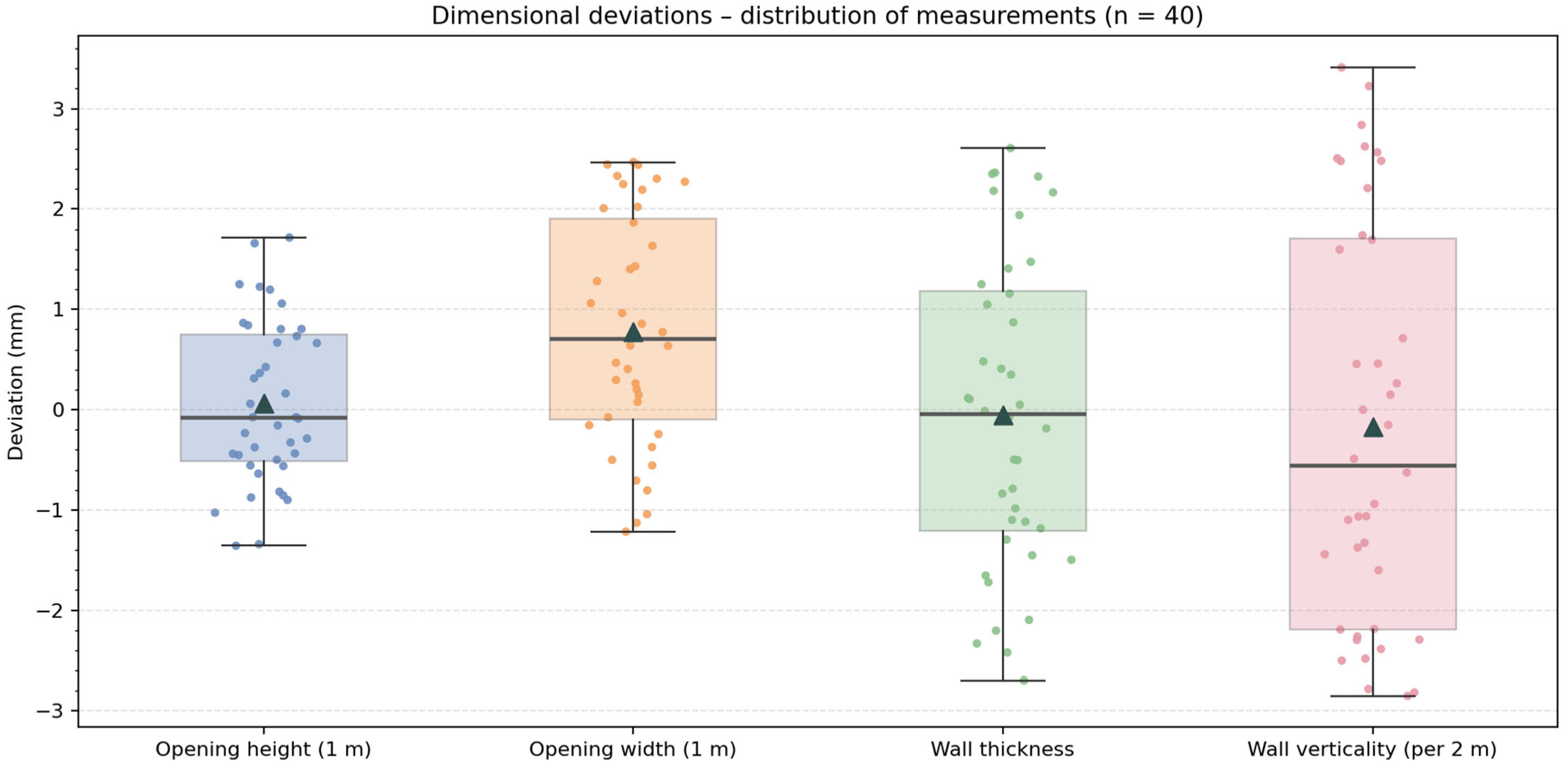
| Wall verticality (per 2 m) in mm | 40 | 0.1 | −0.18 | 1.61 | −2.86 | 3.48 | 6.34 |
| Wall thickness in mm | 40 | 0.17 | 0.07 | 1.63 | −2.72 | 2.82 | 5.54 |
| Opening width (1 m) in mm | 40 | 0.62 | 0.62 | 1.08 | −1.25 | 2.63 | 3.88 |
| Opening height (1 m) in mm | 40 | −0.08 | −0.27 | 1.01 | −1.43 | 1.76 | 3.19 |
| Metrics | Manual | Robotic |
|---|---|---|
| Total blocks (incl. waste) | 6,180,000 | 6,120,000 |
| Daily output (blocks/day) | 1400 | 3360 |
| Project duration (days) | 4414 | 1821 |
| Direct labor cost in EU | 4,414,286 | 1,092,857 |
| Overhead/supervision cost in EU | 882,857 | 728,571 |
| Materials/consumables cost in EU | 618,000 | 734,400 |
| Ownership and maintenance cost in EU | 0 | 25,000 |
| Mobilization cost in EU | 0 | 25,000 |
| Total project cost in EU | 5,915,143 | 2,580,829 |
| Net ROI in EU | 3,334,314 |
Disclaimer/Publisher’s Note: The statements, opinions and data contained in all publications are solely those of the individual author(s) and contributor(s) and not of MDPI and/or the editor(s). MDPI and/or the editor(s) disclaim responsibility for any injury to people or property resulting from any ideas, methods, instructions or products referred to in the content. |
© 2026 by the author. Licensee MDPI, Basel, Switzerland. This article is an open access article distributed under the terms and conditions of the Creative Commons Attribution (CC BY) license.
Share and Cite
Dindorf, R. Implementation of an Industrial Robot in the Automation and Digitalization of Bricklaying: A Case Study. Appl. Sci. 2026, 16, 2821. https://doi.org/10.3390/app16062821
Dindorf R. Implementation of an Industrial Robot in the Automation and Digitalization of Bricklaying: A Case Study. Applied Sciences. 2026; 16(6):2821. https://doi.org/10.3390/app16062821
Chicago/Turabian StyleDindorf, Ryszard. 2026. "Implementation of an Industrial Robot in the Automation and Digitalization of Bricklaying: A Case Study" Applied Sciences 16, no. 6: 2821. https://doi.org/10.3390/app16062821
APA StyleDindorf, R. (2026). Implementation of an Industrial Robot in the Automation and Digitalization of Bricklaying: A Case Study. Applied Sciences, 16(6), 2821. https://doi.org/10.3390/app16062821