

Article

Model Testing of Piston Ring–Cylinder Liner Contacts at Constant Relative Velocity—An Expansion to Linear Tribometers

Chair of Mechanical Engineering, Montanuniversität Leoben, 8700 Leoben, Austria
*
Author to whom correspondence should be addressed.
Appl. Sci. 2026, 16(6), 2641; https://doi.org/10.3390/app16062641
Submission received: 19 December 2025 / Revised: 12 February 2026 / Accepted: 24 February 2026 / Published: 10 March 2026

Abstract

Reducing friction in the piston ring–cylinder liner contact is a key area for improving the efficiency of internal combustion engines. While tribological studies commonly focus on the top dead centre region using linear tribometers, the mid-stroke regime—with its higher sliding velocities—remains experimentally inaccessible to most conventional test methods. This study presents a rotating ring-on-liner tribometer that enables investigations at constant relative speed by transitioning the motion from oscillating to rotating. A cylindrical substitution geometry for the piston ring specimen is derived through a coupled elastohydrodynamic and asperity contact simulation approach to reproduce realistic load-sharing behaviour. Experimental results from starved lubrication tests demonstrate stable contact conditions with a low coefficient of variation in wear, confirming good reproducibility. Stepwise performed Stribeck tests at 40 °C and 100 °C reveal characteristic friction–velocity behaviour, including the transition from mixed to hydrodynamic lubrication. Although the test rig’s maximum sliding speed and steady-state thermal conditions differ from fired engine environments, the methodology closes an important gap between low-speed linear tribometers and complex floating-liner systems. The presented approach provides a flexible and robust platform for controlled parametric studies of ring-on-liner contacts under application-relevant lubrication regimes.

1. Introduction

Although internal combustion engines (ICEs) have been the focus of research for decades, their full potential is yet to be exploited. One possible option to increase the efficiency of ICEs is to reduce friction in their systems. These engine friction losses come up to 17% of the total fuel energy [1]. As the piston assembly accounts for around 30% of this total friction loss, there is room for improvement [1]. The tribological situation for the piston ring package varies significantly over the entire stroke due to the fundamental design principles of ICEs. In the literature the top dead centre region (TDC) is strongly under investigation. Due to the high load resulting from combustion pressure and the low relative velocity, linear tribometers are the preferred method for investigating this area [2,3,4]. However, research in the mid-stroke regime of the engine is less pronounced. The load in this section is lower, the relative velocity on the other hand is higher with values up to 15 m/s, depending on the specific engine [5,6,7]. For this elevated velocity standard linear tribometers are typically not realisable. Although the maximum relative velocity can be increased by long-stroke tribometers, their maximum is still not reaching realistic mid-stroke velocity [8,9]. An alternative methodology is the use of a floating-liner test rig [10,11,12]. The cylinder liner is fixed using a load cell, and the resulting friction force in the ring package is measured. This approach allows the entire stroke movement to be analysed but not at constant speeds. Macian et al. used a floating-liner test rig to analyse the differences in friction conditions between starved and flooded lubrication [12]. A test methodology where the ring-on-liner (RoL) contact is investigated at a constant speed was presented by Biberger et al. in ref. [13]. Their presented approach enables the RoL contact to be analysed under various parameters at a constant speed by changing the motion from an oscillation to a rotation. A similar approach is used in this publication but with key adaptions. The resulting test methodology is called rotating ring-on-liner, for short: RoLR. Unlike Biberger et al., in this research the inner part (the piston rings with the corresponding sample holders) rotates, rather than the outer part (the liner sample). This is due to the larger bore diameter used in this research and the potential problems associated with the significant mass and dynamic imbalance of these large-bore liners.
Simulation models can be used to support the development and the findings of experimental approaches. One such approach is the Reynolds equation [14,15]. It is often used alongside flow factors [16,17] or in combination with contact models [18]. Examples of such approaches can be found in [19,20,21]. Rahmani et al. expanded on such a model and investigated the elastohydrodynamic lubrication of rough, new and worn piston compression rings.

2. Materials and Methods

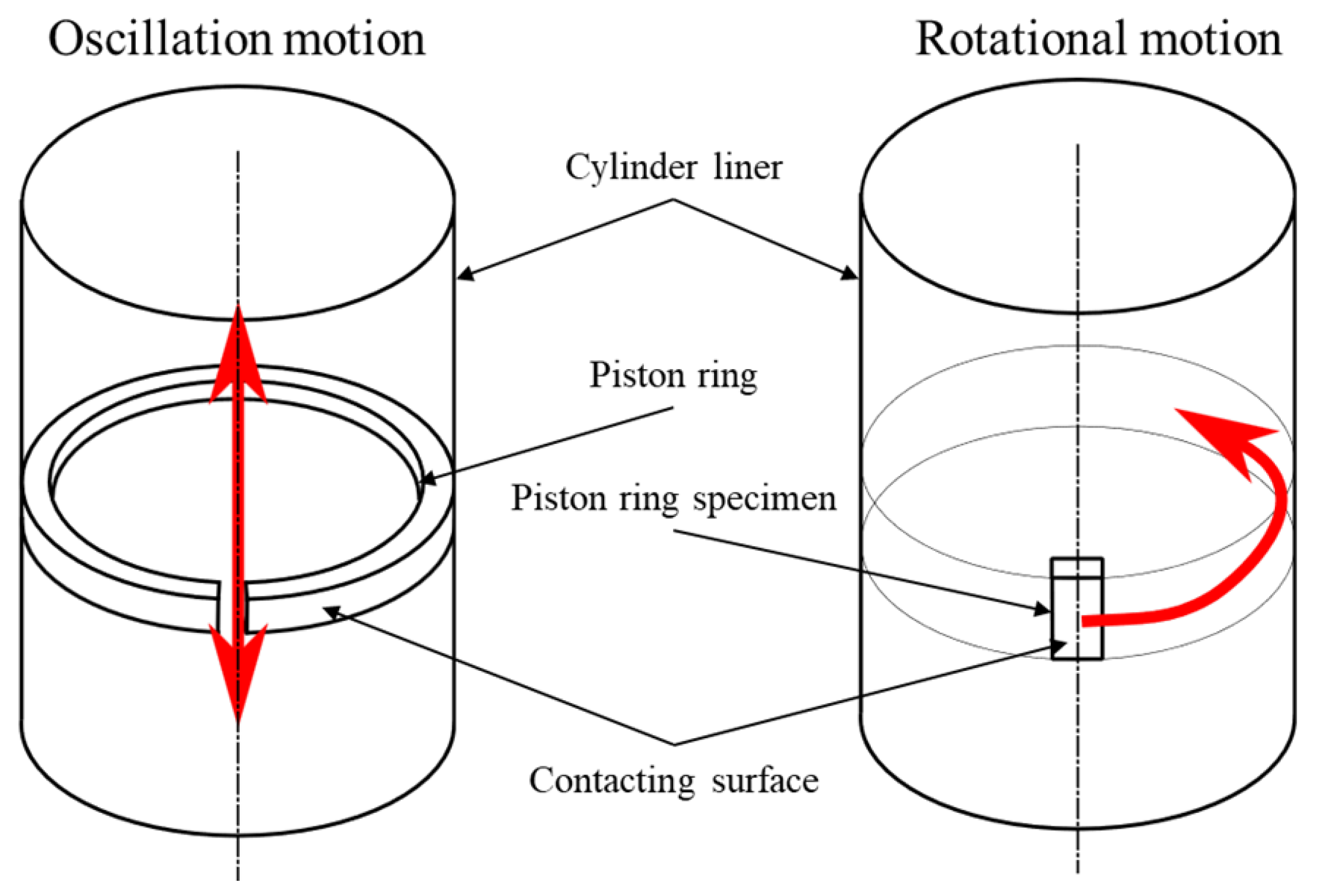
In order to investigate the RoL contact at a constant velocity, a piston ring specimen is rotated in a cylinder liner instead of oscillated. Figure 1 depicts the basic motion transition from oscillation to rotation. Thereby, a conventional cylinder liner can be used for this modification, but the piston ring must be adapted to replicate the actual contact situation.
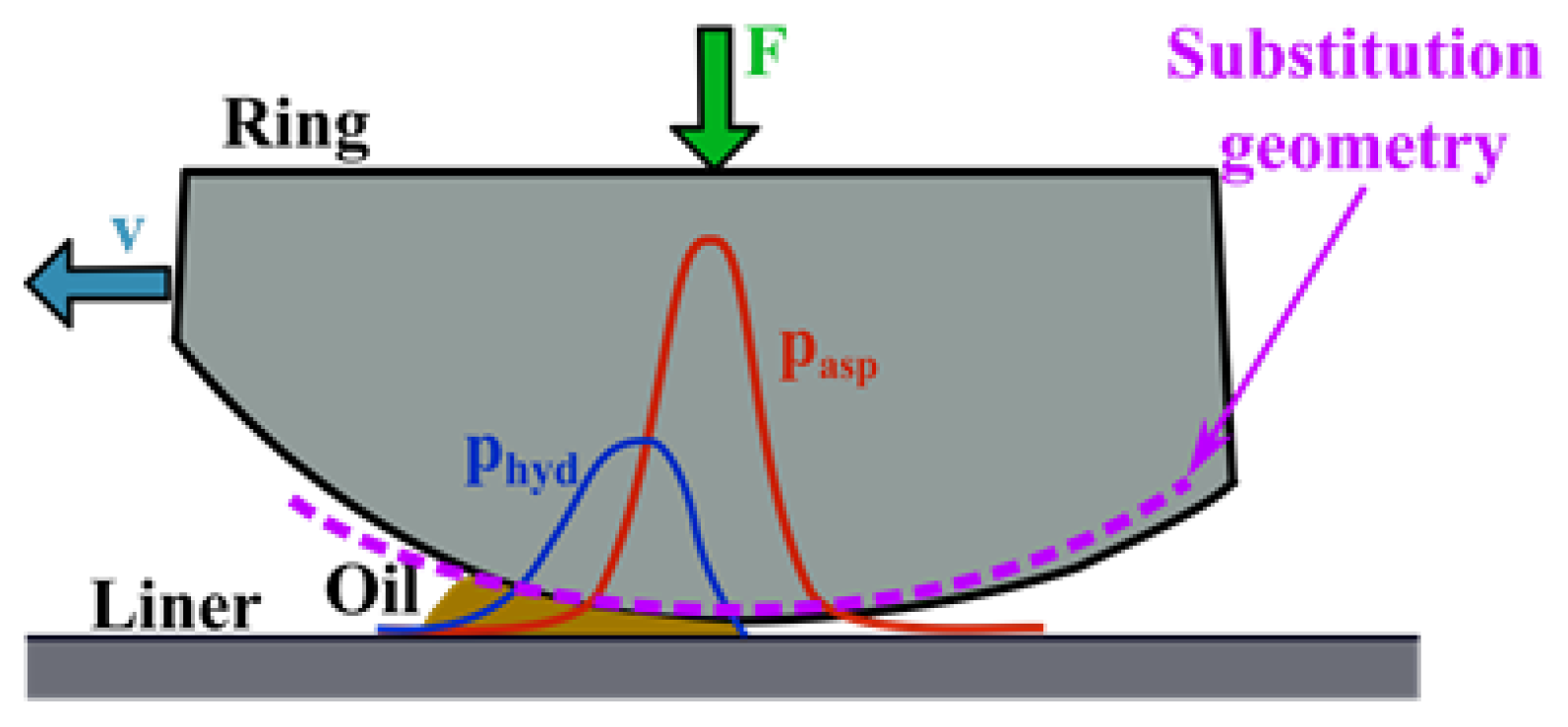
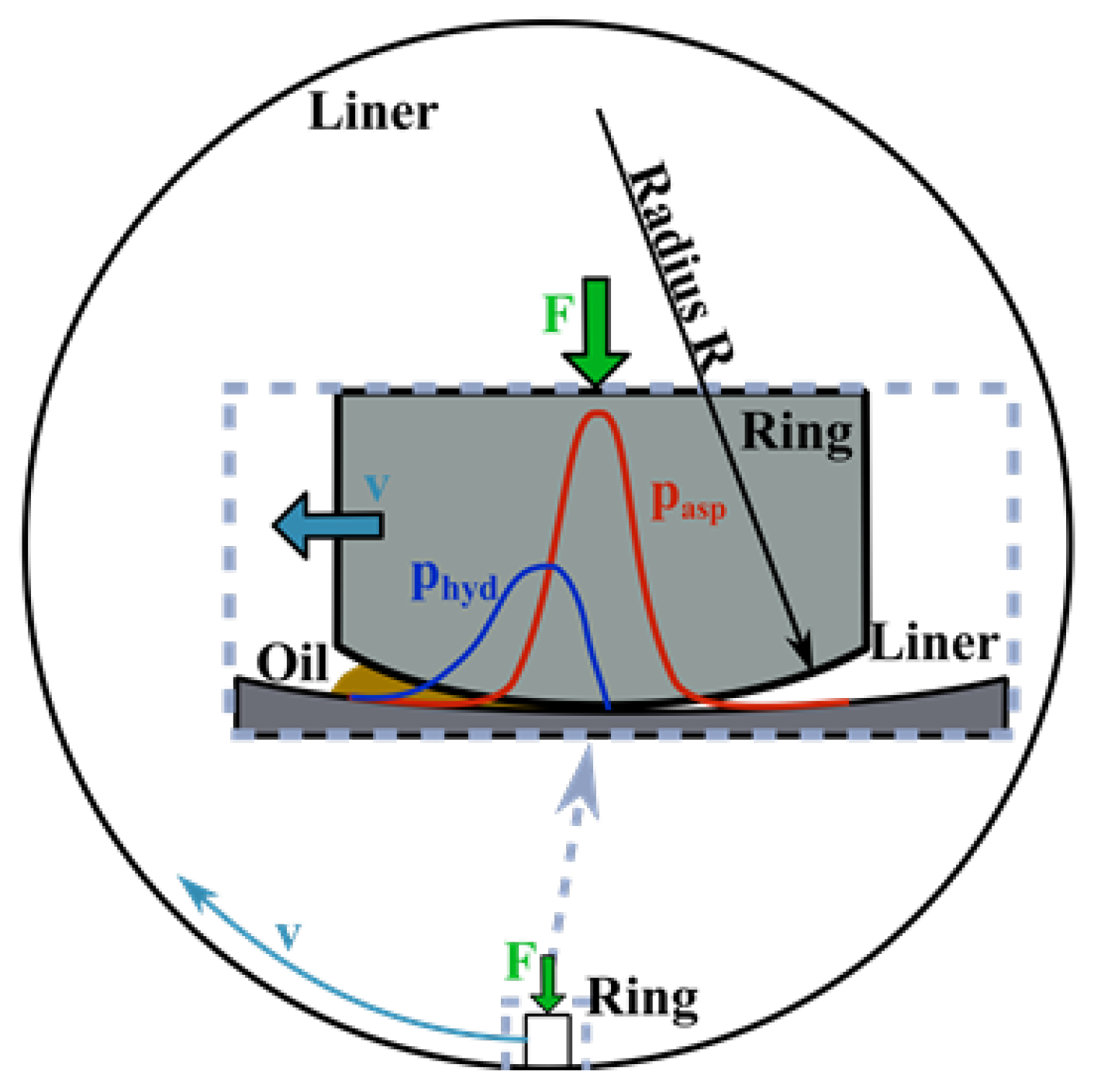
Since it is not possible to simply take pieces from an original piston ring, a replacement specimen geometry must be used to replicate the contact situation. Figure 2 illustrates the contact situation in an ICE during an upstroke.
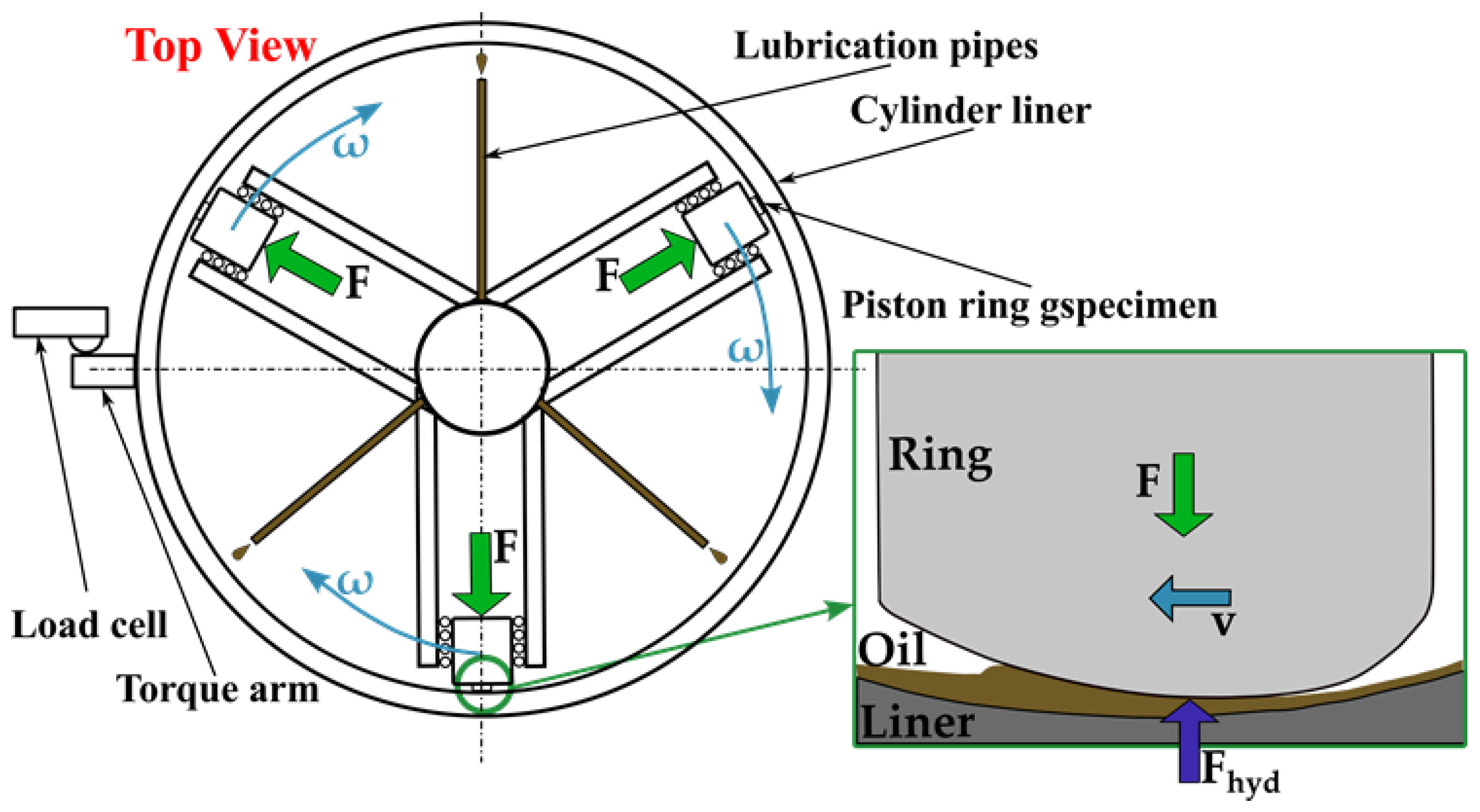
Thereby, the piston ring is pressed against the cylinder liner with the force F. This results in the asperity contact pressure pasp and the hydrodynamic pressure phyd. Due to the change in movement in the test setup, the piston ring specimen must be straight, rather than round like a piston ring. Specimens must be produced accordingly to replicate the contact situation. However, special grinding processes would be necessary to produce a realistic piston ring crowning on a straight specimen. Therefore, a substitution specimen with a cylindrical profile is used instead. Such specimens can be used with the test setup shown in Figure 3 to simulate the contact situation of the piston ring in an ICE, if the resulting asperity contact pressure pasp and the hydrodynamic pressure phyd are comparable to real piston rings.
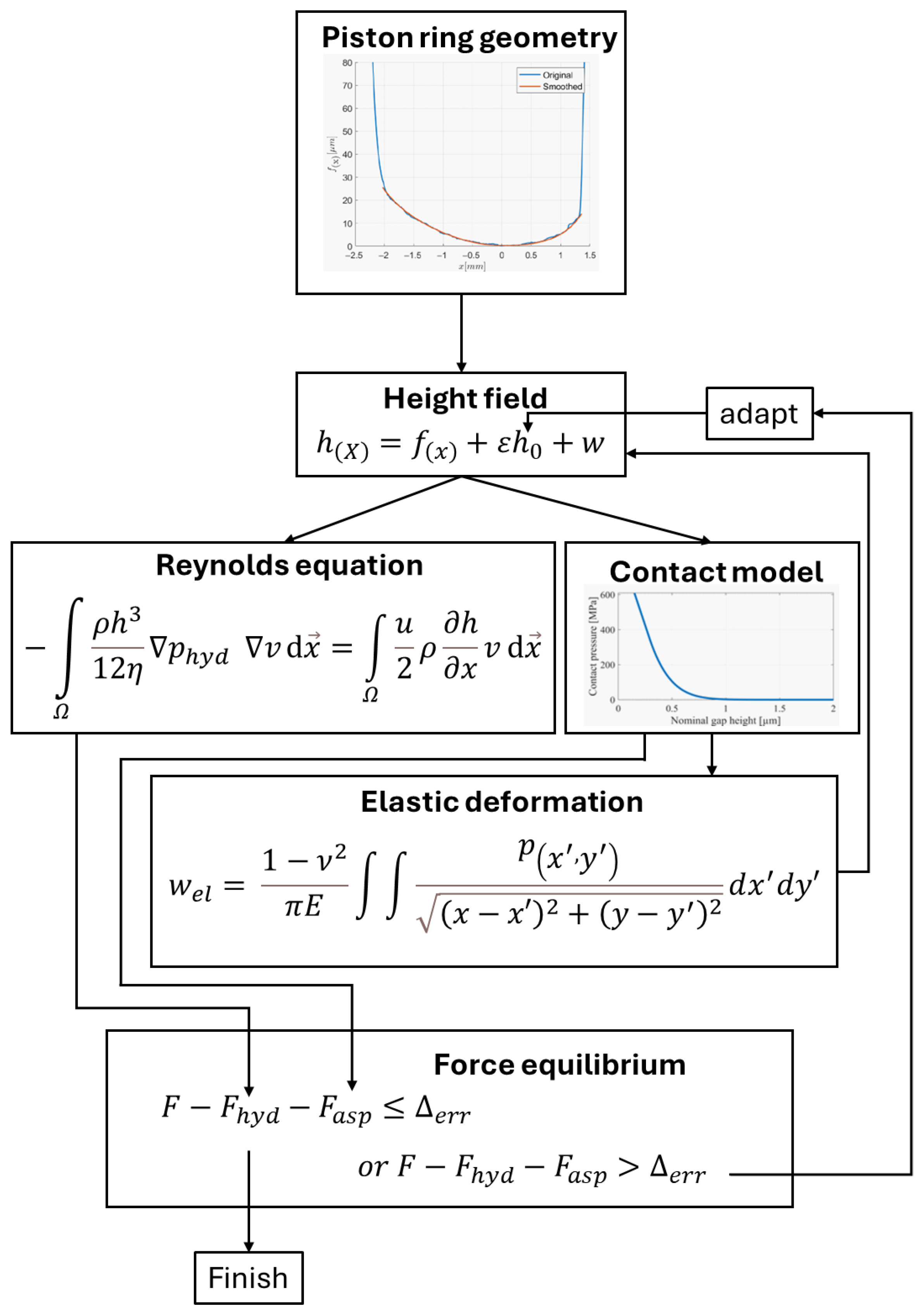
To find the right radius for the cylindrical substitution geometry, a simulation model is used based on previous work of the authors [22,23]. In the following, the simulation model is only briefly described; for further details, please refer to [22,23]. Figure 4 depicts the simplified flowchart of the simulation methodology. The ring crowning profile of a piston ring was measured with a Mahr© VD140 (Mahr GmbH, Göttingen, Germany). The ring height profile, denoted by f(x), is derived from the ring profile through the process of extruding the latter by a width of 10 mm, which corresponds to the length of the ring specimen. Negligible deviation of the profile across the hole ring width substantiates this approach. h ( X ) = f ( x ) + ε h 0 + w is used for the calculation of the height field. Thereby, w is the elastic deformation induced by hydrodynamics; the minimum lubrication gap height is h 0 , and ε is the iteration-determined scaling factor. The height field h ( X ) is then used to derive p a s p , the asperity contact pressure field, and p h y d , the hydrodynamic pressure field. p h y d is calculated using the weak formulation of the Reynolds equation (Equation (1)), whereas p a s p is calculated using a contact model in accordance with the methodology proposed by Greenwood and Tripp [18].
Ω ρ h 3 12 η p h y d   v d x = Ω u 2 ρ h x v d x
In accordance with the research conducted by Bergmann et al. [24], this model was adapted to 3D scans of the surfaces of piston rings and cylinder liners. For the purpose of this study, a 3D Alicona© Infinite Focus scan (Bruker Austria GmbH, Raaba/Graz, Austria) was conducted on sections of ring and liner specimens, with a magnification of 100. The resulting contact pressure curve was then determined and is illustrated in Figure 4. To replicate the contact scenario following run-in, the surface specimens after running-in for 6.8 h were scanned. These specimens were run-in in a TE77 using the test strategy described in [4]. Equation (2) was used to calculate the hydrodynamic force occurring, where n is the normal vector in the z direction.
F h y d = A p h y d x   n z x d A
Similarly, the asperity force occurring was calculated using Equation (3).
F a s p = A p a s p x     n z x   d A
The iteration was performed until F z F h y d F a s p < e r r is fulfilled. The mass-conserving cavitation model of Jakobsson, Floberg and Olsson [25] was utilised to consider the effect of cavitation in Equation (4). The gap filling factor is θ = 1 if p > p c a v , whereas it is 0 < θ < 1 in the cavitation area.
τ x = u θ η h + h 2 p x
Equation (5) describes the calculation of the occurring friction.
C O F = C O F h y d + C O F a s p = F R h y d F z + F R a s p F z C O F s o l i d
Consequently, the two pressure fields are utilised to determine the proportion of the hydrodynamic contact force and the asperity contact force, with the contemporary height field forming the foundation for this calculation. The external applied force F is an input parameter in the calculation of force equilibrium F F h y d F a s p < e r r . As demonstrated in the flow chart, this algorithm is repeated iteratively until force equilibrium is achieved. The scaling factor, designated as ε, is determined by means of the Illinois method [26].
The simulation also incorporates a pressure, temperature and shear rate-dependent viscosity, as presented in the works of Vogel [27] (Equation (8)), Barus [28] (Equations (9) and (11)), and Cross [29] (Equation (10)), in addition to a temperature-dependent density function, as depicted in Equations (8)–(11). All parameters, depending on the lubrication oil used, are determined experimentally for a fully formulated engine oil. The hydrodynamic-induced elastic deformation, w e l , is calculated based on the potential equation of Boussinesq [30], Equation (6), and the relationship between material parameters based on Bartel [27] in Equation (7). The temperature-dependent density of the oil is incorporated into Equation (12) [27]. Further simulation parameters can be found in Table 1. Figure 4 depicts the results of the simulation: the hydrodynamic and asperity contact pressure fields.
w e l = 1 ν 2 π E p ( x , y ) ( x x ) 2 + ( y y ) 2 d x d y
w e l , 1 w e l , 2 = E 2 ( 1 ν 1 2 ) E 1 ( 1 ν 2 2 )
A = 9.35 × 10 5   P a s η ( T ) = A   e B ( T C )     B = 934.2   [ K ] C = 162.1   [ K ]  
η ( p , T ) = η ( T ) e ( α T p )
r T = A e T B γ c T = C e T D η p , T , γ ˙ = η p , T r ( T ) + 1 r ( T ) 1 + γ γ c ( T ) m     A = 2.51 × 10 3   [ - ] B = 5.537 × 10 3   [ - ] C = 5.82 × 10 5   [ 1 / s ] D = 2.947 × 10 2   [ 1 / s ]
A = 1.207 × 10 10   [ 1 / P a ] α ( T ) = A e T B + α 0     B = 72.32   [ K ] α 0 = 1.148 × 10 8   [ 1 / P a ]
ρ ( T ) = ρ 20   ° C 1 α v T 20     α v = 3.676 × 10 4   [ - ]
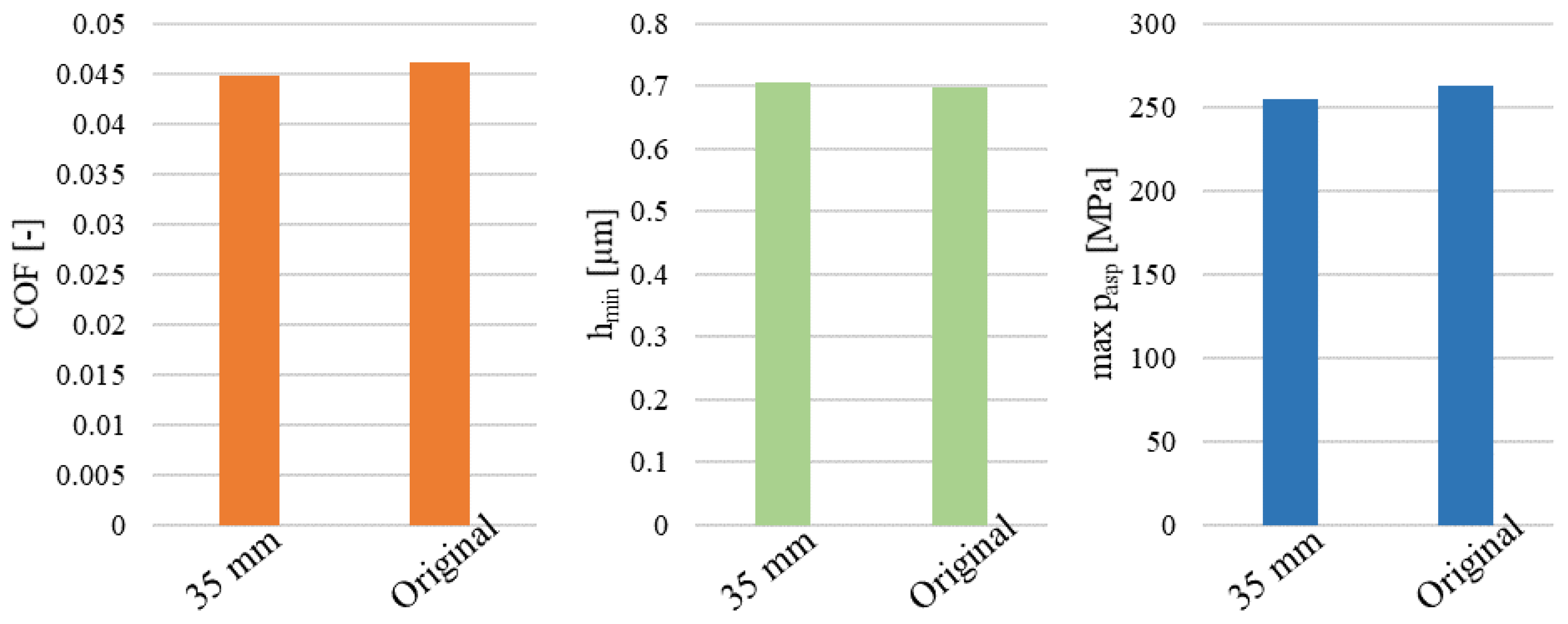
Several possible cylinder diameters were simulated, with the result that a radius of 35 mm comes closest to a real piston ring from a heavy-duty diesel engine. Figure 5 shows the simulated COF, the simulated minimum lubricating film height h m i n , and the maximum asperity contact pressure p a s p .
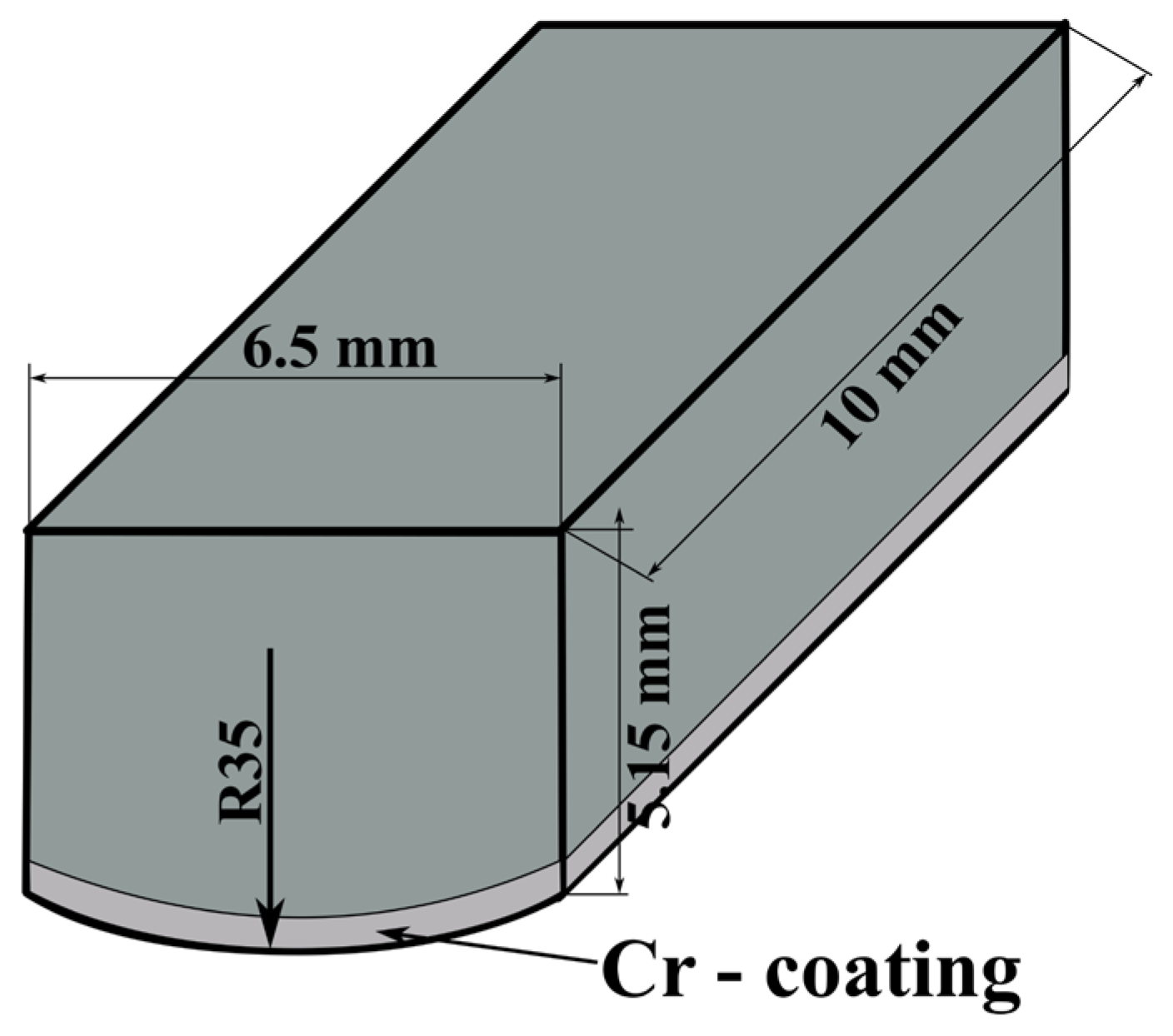
Figure 6 depicts the derived geometry for the piston ring specimen. Hard chromium-coated steel rods served as a basis for the manufactured specimens to mimic the common Cr-based coatings of piston rings. Cylinder liners from ICEs are used to recreate the honing structure and the GJL material in the test rig. However, due to the change in the motion from oscillation to rotating, the angel of the honing structure is rotated by 90°. The cylinder liner has a diameter of 190 mm. Table 2 lists parameters regarding the used specimens.
Figure 7 depicts the schematic illustration of the used test setup. Three piston ring specimens are mounted on the inner rotating part with 120° between each specimen. All three specimens are pressed against the still-standing liner and rotated. The lubrication oil is applied with centrifugal force. Between the three piston ring specimens, three 3D-printed pipes are mounted. Oil is supplied to the pipes with a hose pump and continuously sprayed against the cylinder liner wall by the centrifugal force. This allows oil to be applied directly to the cylinder in front of the rotating piston ring specimens.
To measure the occurring friction force in the RoL, the entire stationary part, including the cylinder liner, is mounted so that it can rotate. This setup, in combination with a torque arm and a load cell, enables us to measure the total occurring friction force in all three contacts.
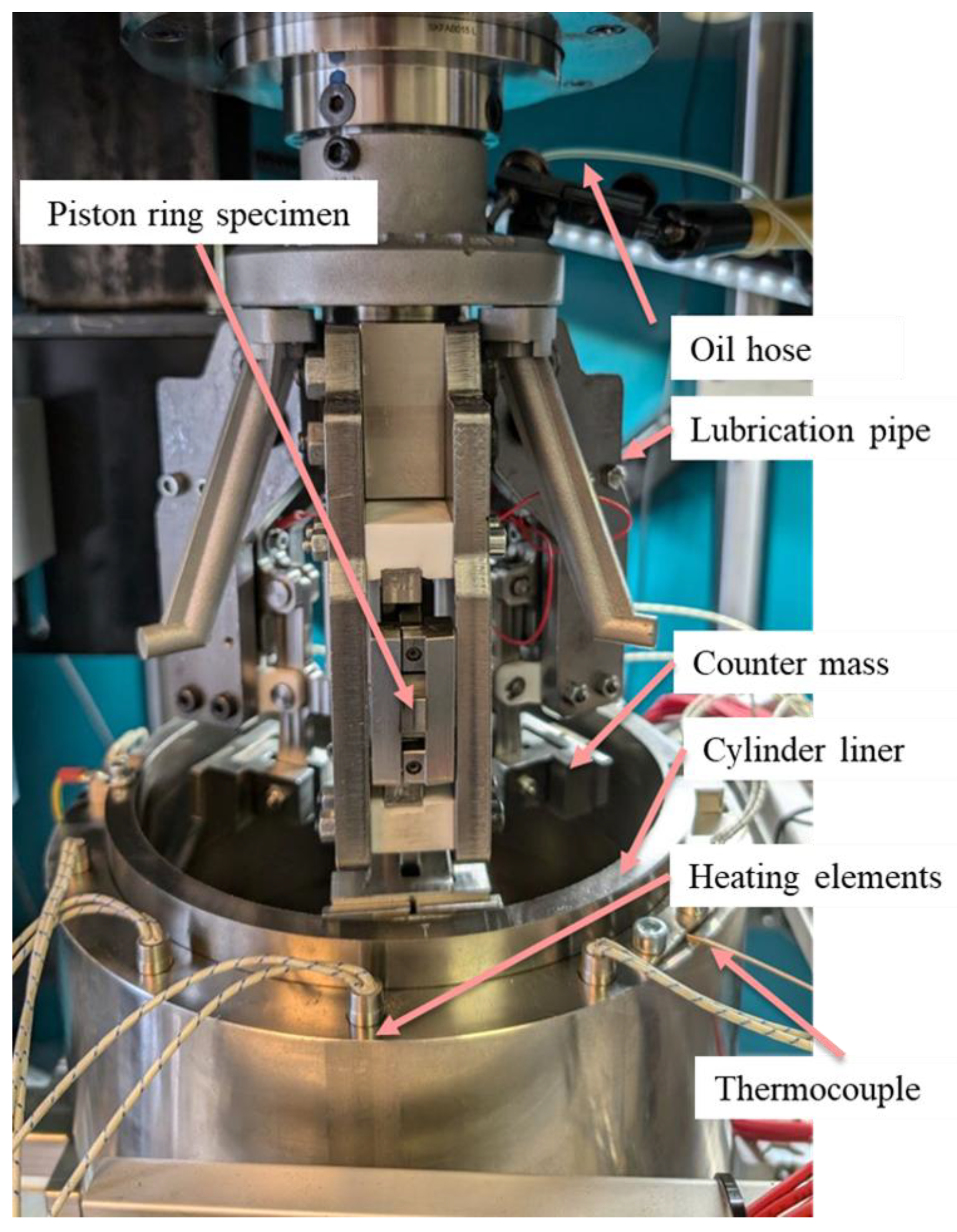
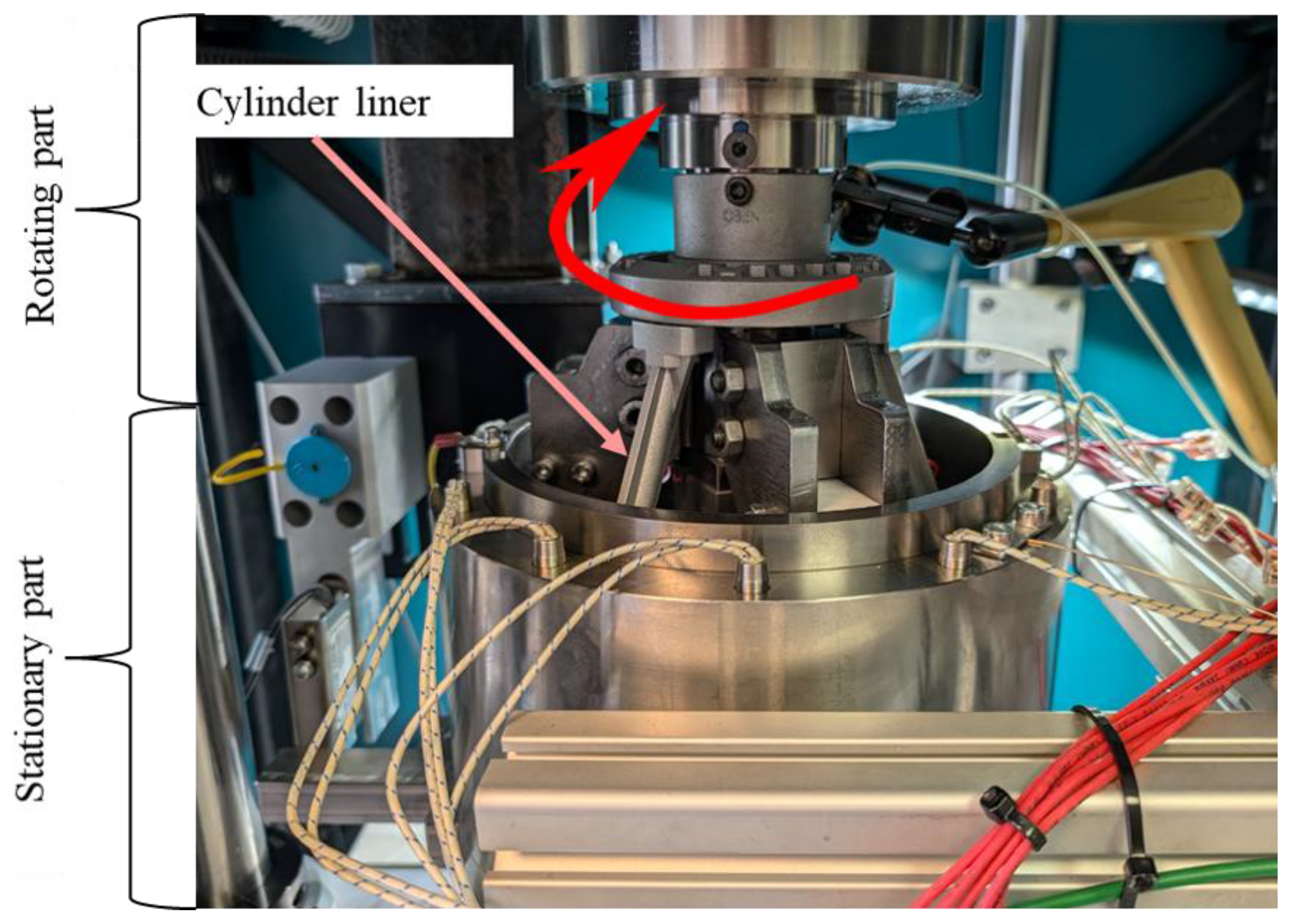
The test rig is depicted in assembly position in Figure 8. In this position, the stationary assembly is lowered to enable the specimens to be changed. Both the cylinder liner and the piston ring specimens can be replaced in this position. Figure 9 illustrates the testing position with the lower part lifted. Here, the rotating part is located in the cylinder liner. The stationary part is supported by the load cell, as illustrated in Figure 7, and is thus fixed in place. Also, the heating elements and the thermocouple are depicted beside the oil hose in Figure 8. The cylinder liner holder is equipped with 10 heating elements spread around the circumference. This allows a uniform temperature distribution to be set in the cylinder, which is regulated by the thermocouple shown.
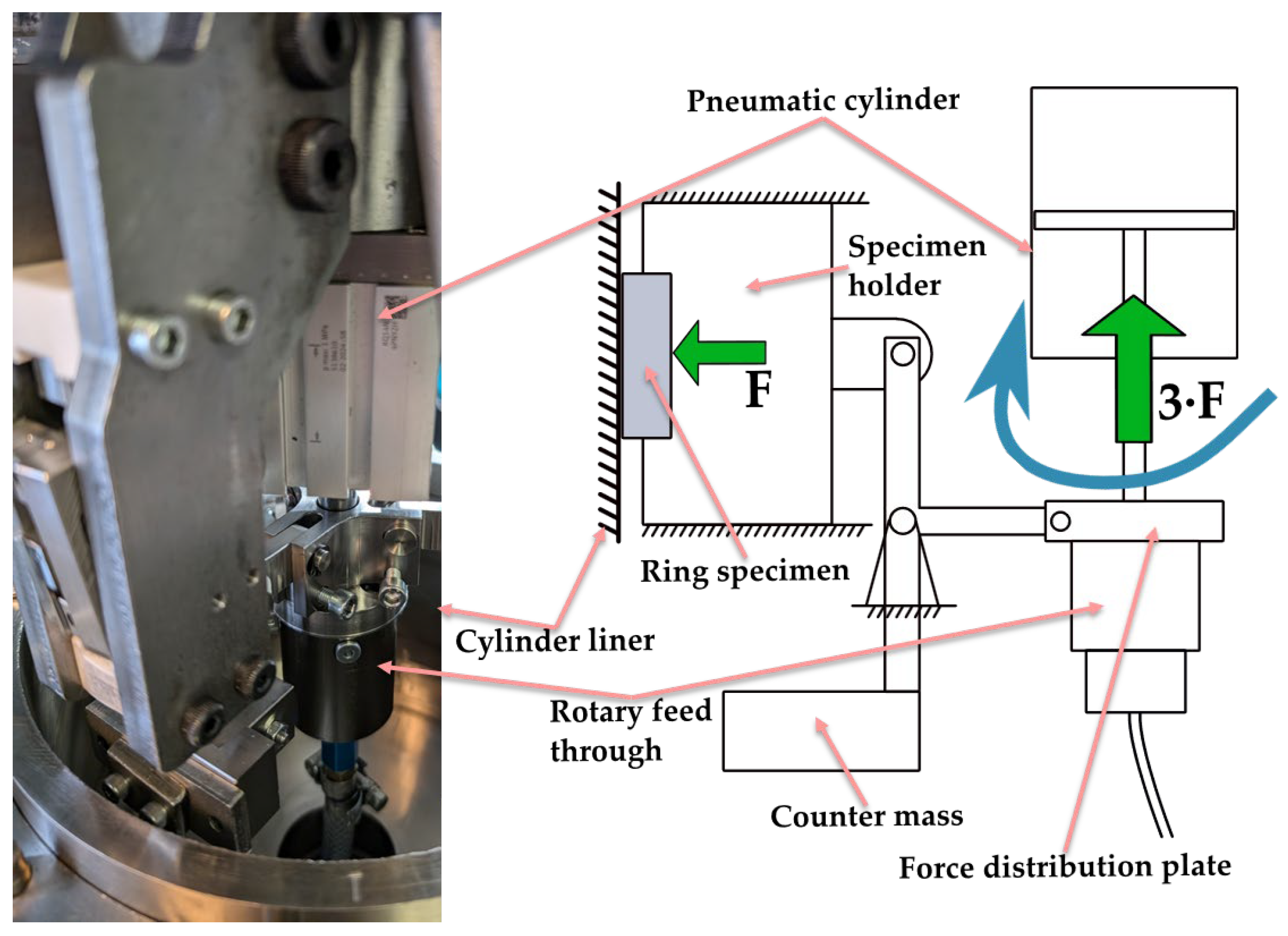
A pneumatic cylinder is used for the load application. This cylinder is mounted centrally on the rotating part on the axis of rotation, as shown in Figure 10. A GF-1/8-M5 rotary feedthrough from Festo (Esslingen am Neckar, Germany) is used to supply the rotating cylinder with compressed air. The lower part is held in position by a torque support, and the upper part rotates with the test setup. When the air pressure on the compression side of the cylinder is increased, it pulls a force distribution plate upwards, causing the piston ring specimens to be pressed against the stationary cylinder wall by a lever. Counter masses are used to compensate for the centrifugal force. These prevent any speed-related changes in the contact pressure of the ring specimens.
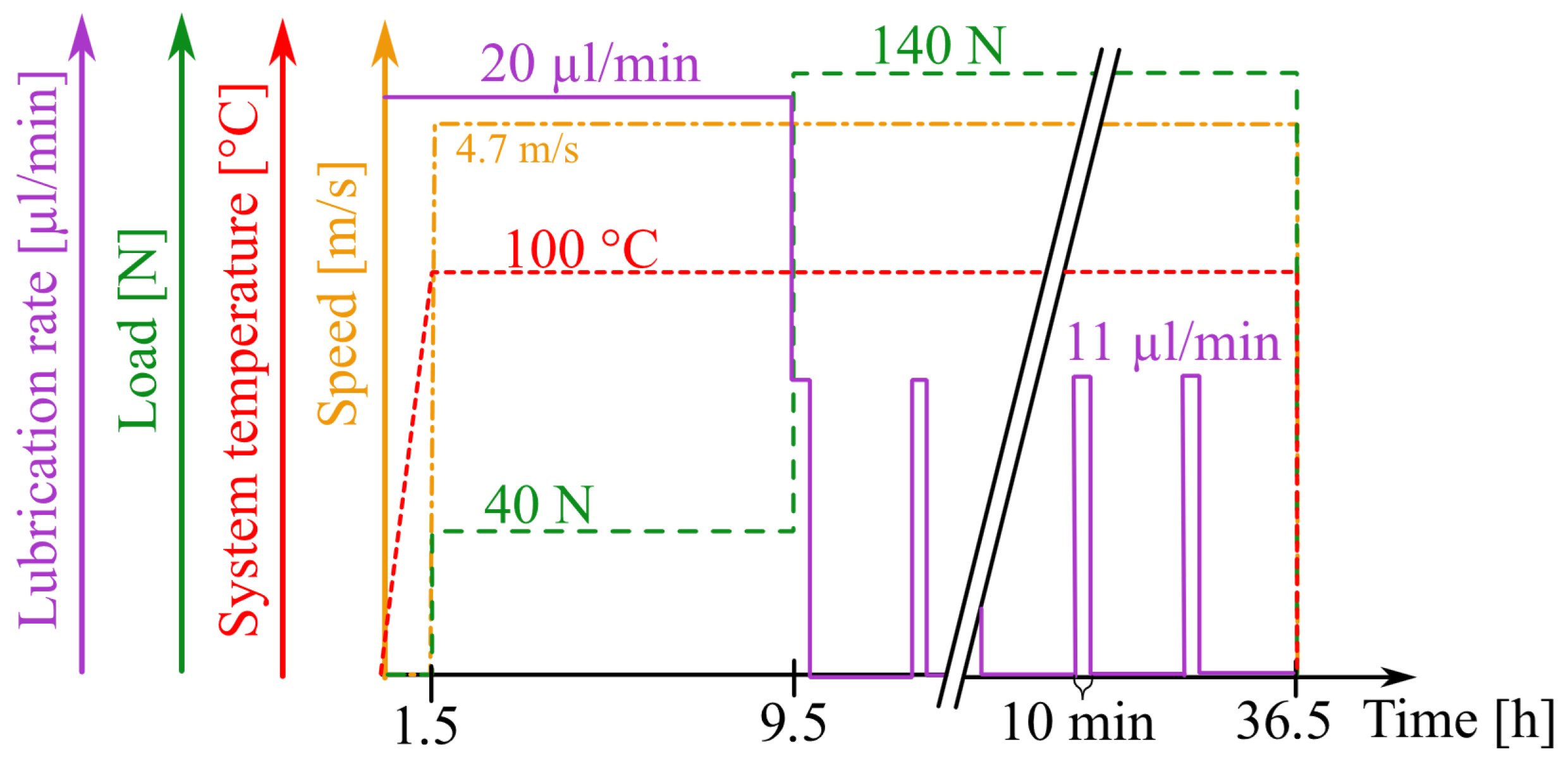
Figure 11 illustrates a test strategy developed to investigate wear on the piston ring specimens. Following a heating period of 1.5 h, the speed will increase to 4.7 m/s and the load to 40 N. This will be followed by an eight-hour run-in period of the system, using a lubrication rate of 20 µL/min. Following a 9.5 h test period, the load is increased to 140 N and the lubrication rate is decreased to 11 µL/min. For the remainder of the test, the lubrication rate is set to 0 µL/min for 2.5 h, followed by a 10 min lubrication step at 11 µL/min. This method of lubrication should challenge the tribosystem and investigate emergency running characteristics. The test is scheduled to end after 36.5 h.
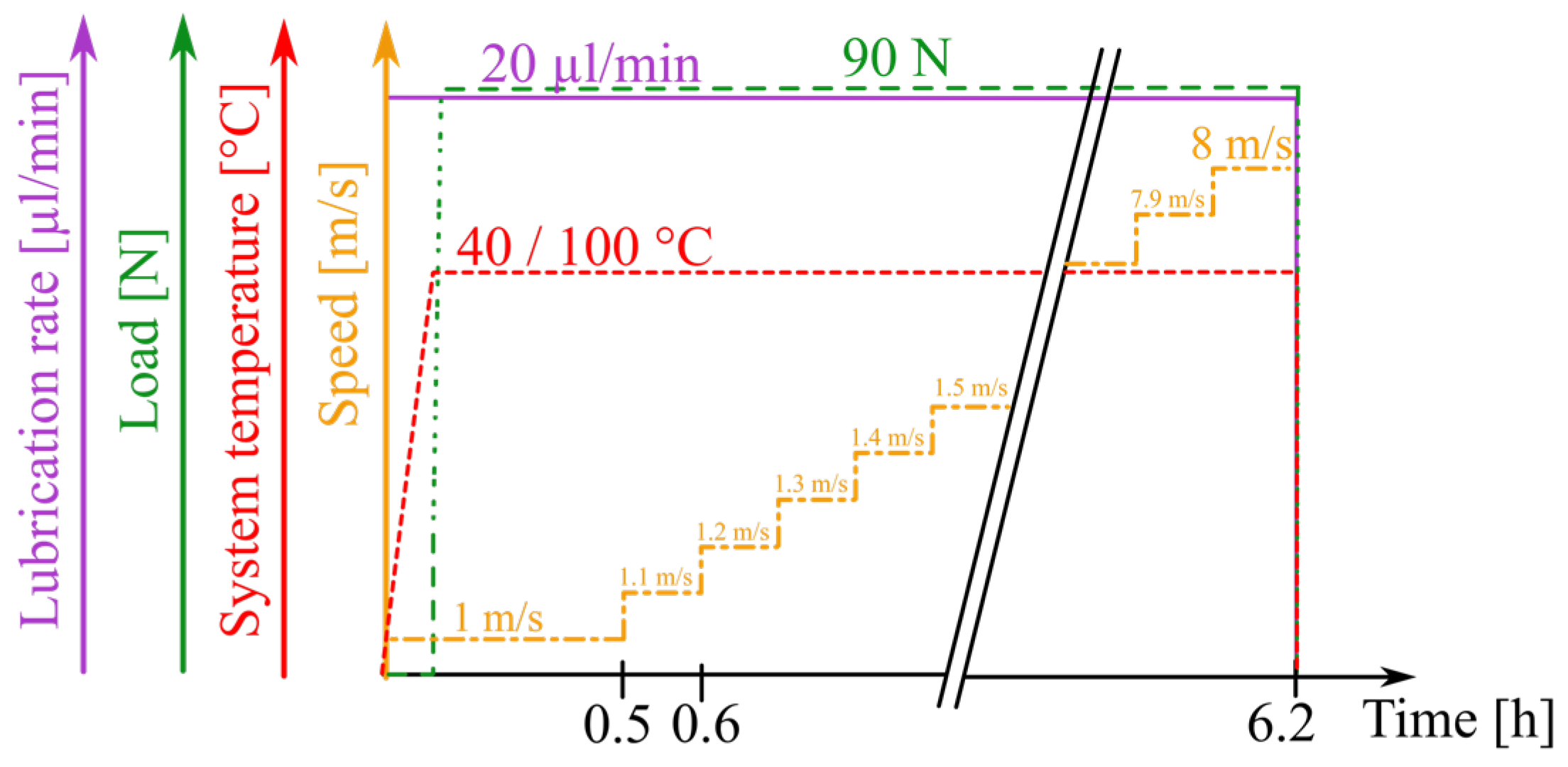
Figure 12 illustrates a step-Stribeck curve test, which is used to investigate the hydrodynamic behaviour of the RoL system. In this test, the velocity is increased after a 30 min heating period in steps of 0.1 m/s. The lubrication rate is set to 20 µL/min. To ensure sufficient lubrication, the load is constant at 90 N, while the system temperature is maintained at either 40 or 100 °C. The velocity is increased up to 8 m/s. In post processing, the COF values are averaged for each velocity step. This allows individual speed steps to be analysed more effectively and the evaluated Stribeck curve is less sensitive to the system’s eigen frequencies.
Table 3 lists the test rig limitations.

3. Results

This chapter describes the results for the two test strategies shown in the illustrated test rig. In the first section the starved lubrication test strategy is used, whereas the second chapter addresses the step-Stribeck test strategy.

3.1. Wear Reproducibility on Piston Ring Specimens

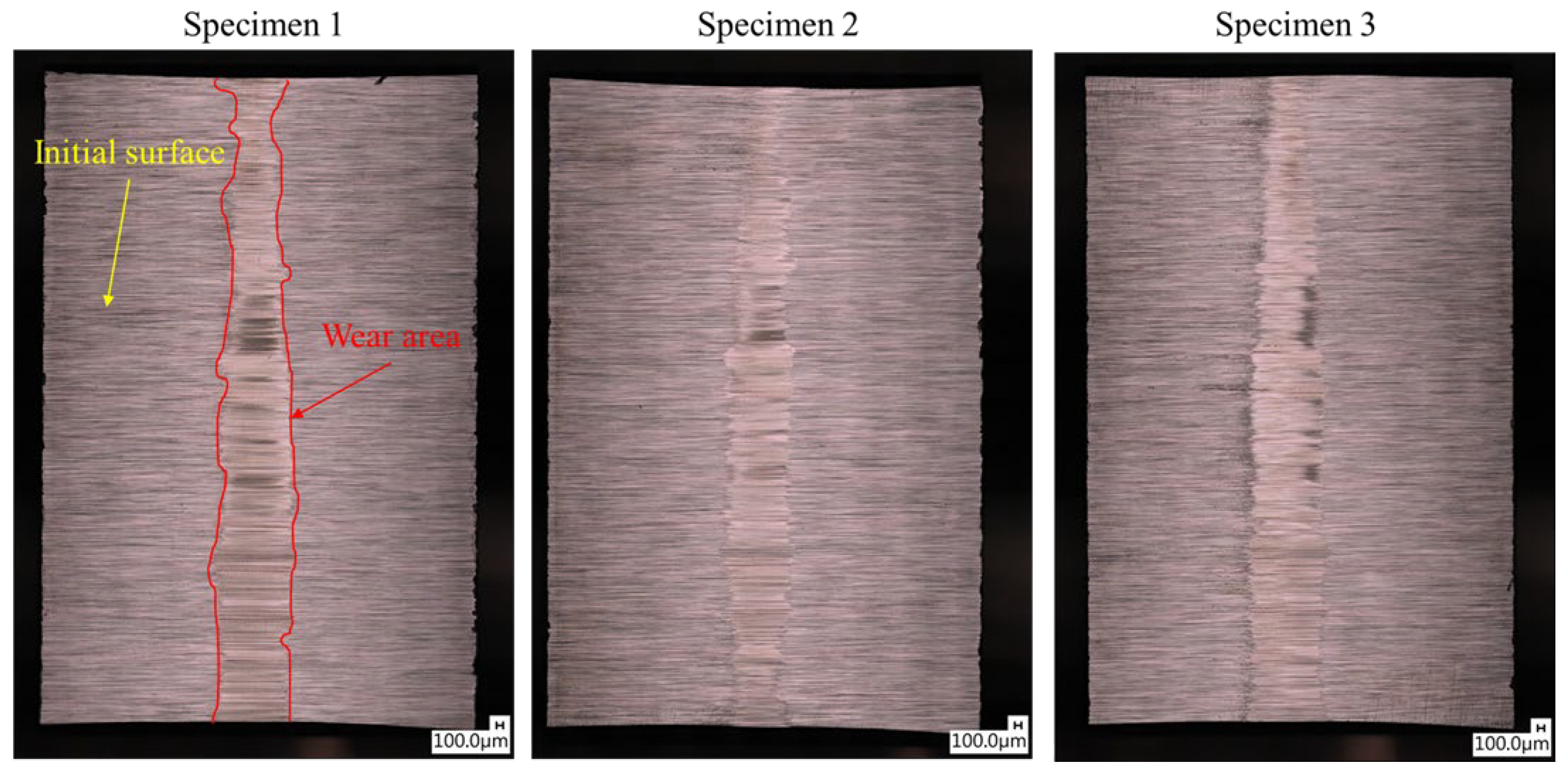
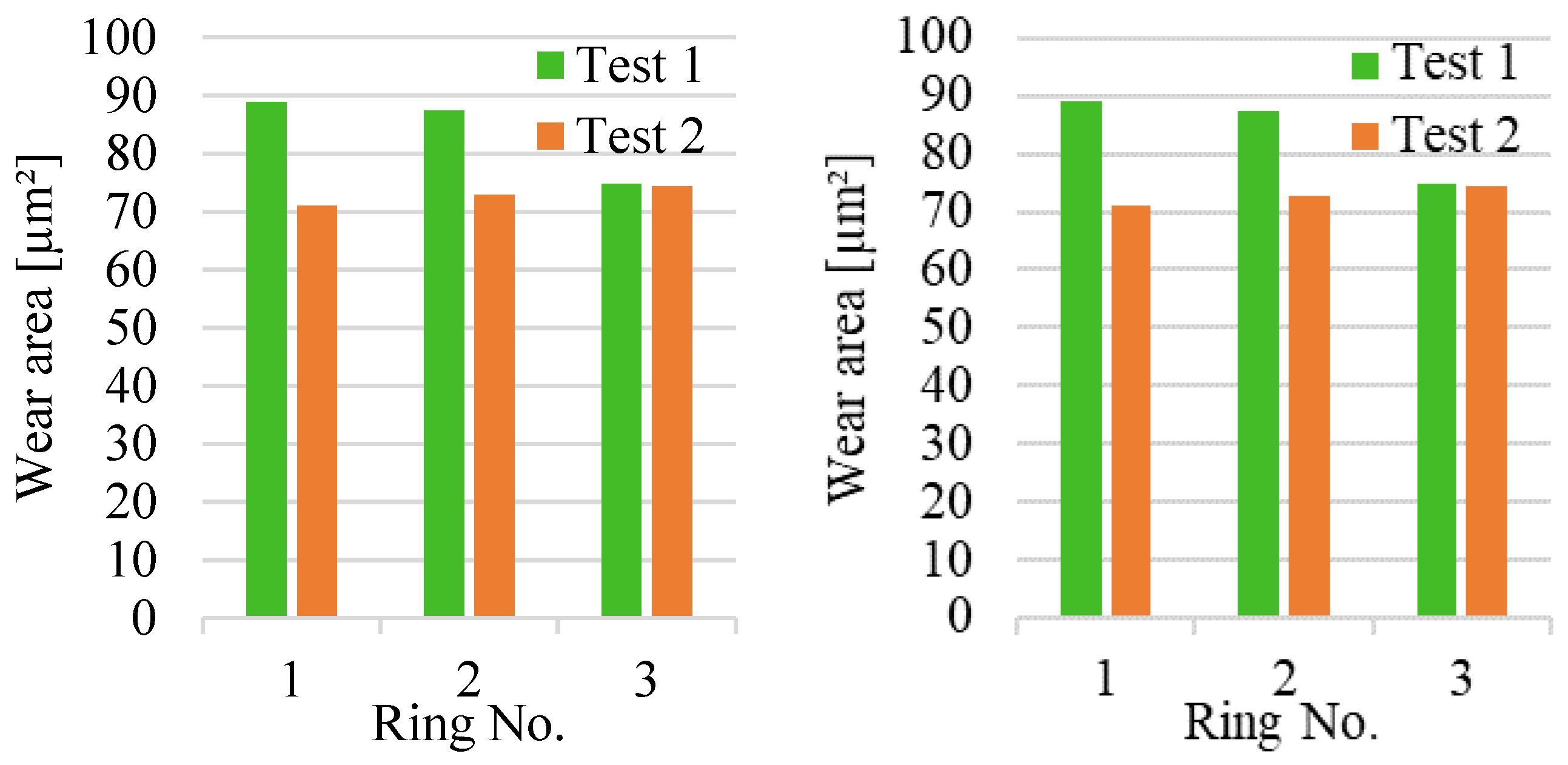
Due to the increased mixed friction in the test strategy with starved lubrication, the piston rings are revealing elevated wear rates. However, the surface analysation indicates an even wear pattern on all three piston ring specimens, as can be seen in Figure 13. The worn area is marked at specimen 1. This area is measured with a VHX-5000 from Keyence International (Mechelen, Belgium) for all three piston ring specimens. Figure 14 shows the measured wear areas of the piston ring specimens in Figure 13 and from a second test. These two tests yielded a total of six ring samples. The mean value of the measured wear is 72.8 µm2 with a standard deviation of 7.83 µm2.

3.2. Stribeck-like Tests of Piston Rings

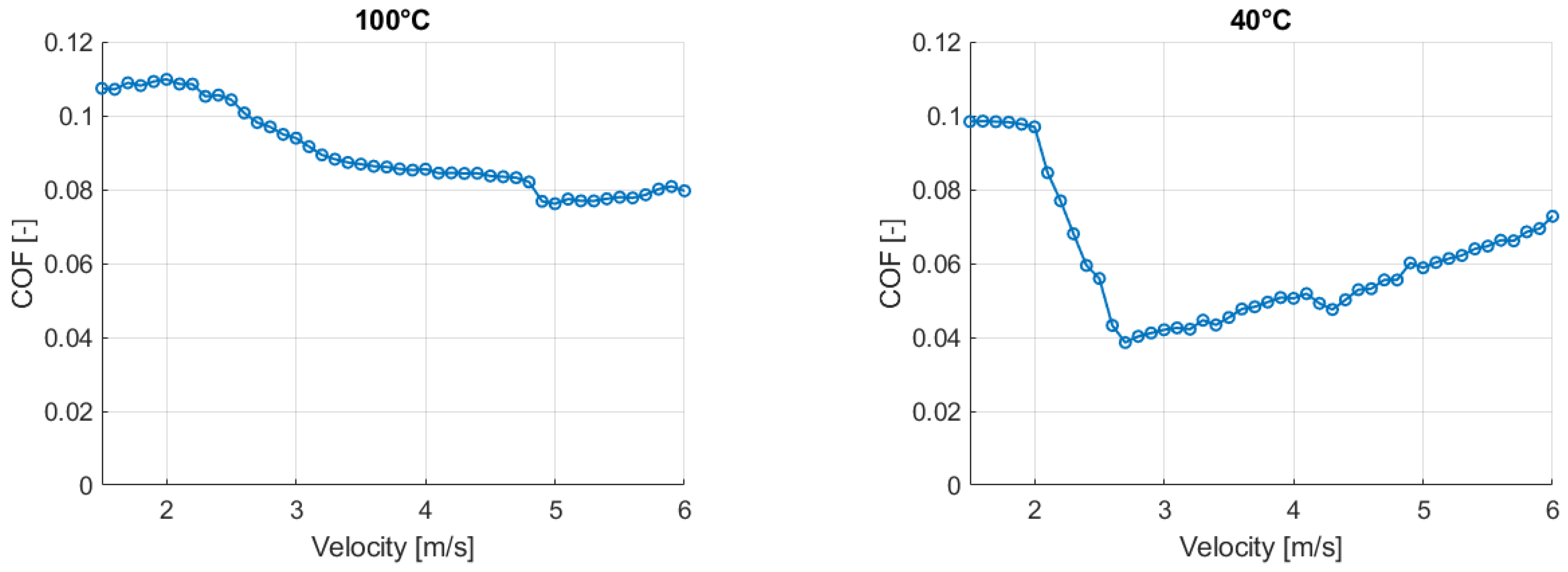
As illustrated in Figure 15, the COF for two step-Stribeck tests, one at 100 °C and the other at 40 °C, is presented. As is evident, both tests commence at a COF of approximately 0.1, which is a common value for such a system and parameter combination. With the increasing velocity, the COF steadily decreases for the test at 100 °C until a value of approximately 0.08 is reached. The decrease in the COF is much faster and erratic for the test performed at 40 °C. At a velocity of 2 m/s a sudden drop is detectable down to a COF of 0.04. This drop can be attributed to the increased viscosity at 40 °C compared to 100 °C. Due to the higher viscosity, the system shifts from mixing friction to hydrodynamic friction at a lower relative velocity. This state is not achieved at 100 °C due to the lower viscosity. After this minimum is reached, the COF increases again steadily. This is a typical course for the COF over velocity known as the Stribeck-curve.

4. Discussion

The presented results demonstrate that the transition from oscillating to rotating motion enables a realistic representation of a RoL contact at a constant relative speed—a regime that conventional linear tribometers cannot achieve due to velocity limitations [4,8,9]. However, the presented test method can be seen as an addition to linear tribometers or equipped engine tests, with both limitations and benefits to these other test methods.
Although the maximum sliding speed of the rig remains below maximal mid-stroke engine conditions (typically maximum of 10–15 m/s [5,6,7]), the observed friction trends correspond well with classical Stribeck behaviour that has been documented for other RoL contacts [15,31]. This restriction on the maximum relative speed results from the dynamic imbalance of the large bore liner, which is 190 mm. However, this large diameter, in combination with the stationary cylinder liner, offers two advantages over [13]. Firstly, this solution provides space inside for various measuring equipment, and, secondly, the rotating part is located inside the cylinder. This results in an additional safety aspect during the test process. Also, the effect of the temperature on the occurring friction is typical for such tribological contacts [31,32].
Wear reproducibility is a critical requirement for tribological test methods. The low coefficient of variation suggests that the cylindrical substitution geometry—derived through a combined hydrodynamic and asperity contact simulation approach—leads to a good reproducibility of the generated wear in the test rig. Similar geometry-based approximations have been successfully implemented in other RoL tribometers and simulations, particularly when replicating load-sharing mechanisms rather than exact geometrical conformity [13,33].
The substitute geometry cannot fully reproduce the exact alignment and coating properties of real piston rings, as highlighted in previous studies by the authors on RoL interactions in hydrodynamic and mixed lubrication [22,23]. However, such a simple substitute geometry can provide a sufficiently accurate approximation of the actual contact, especially with a focus on avoiding complex grinding processes to produce actual crowning geometries on the ring specimens. Also, manufacturing the coatings to be similar to the engine piston rings is possible but needs the know-how of a piston ring manufacturer.
Thermal conditions in the test rig are steady-state, lacking the transient gradient characteristic of fired engines [34].
But these “steady-state conditions” can also be seen as beneficial. Beside the temperature and the velocity, the normal forces are steady. This enables a researcher to look at particular points on a piston stroke by mimicking the relative velocity, the gas force, and the temperature of this particular point. These data can be more easily obtained from an engine test, than, for example, friction values. Therefore, the presented test method places itself as a corresponding link between oscillating linear tribometers for the dead centre regions and cost and time intense engine tests.

5. Conclusions

The developed rotating ring-on-liner test rig enables constant-speed investigations of piston ring contacts, addressing a capability gap between classical linear tribometers and floating-liner systems.
The substitution geometry derived from hydrodynamic and asperity contact simulations reproduces realistic load-sharing behaviour within the limitations of a cylindrical specimen.
The starved lubrication test demonstrated good wear reproducibility with a low coefficient of variation (7.6%), highlighting the stability of the mechanical and lubrication conditions.
Step-Stribeck tests showed characteristic friction–velocity behaviour, confirming that hydrodynamic and mixed lubrication regimes can be reproduced despite lower speeds than in real engines.
Overall, the methodology provides a robust and flexible platform for controlled tribological studies of RoL contacts, particularly for the parametric variation in load, relative velocity, and temperature.

Author Contributions

Conceptualisation, T.M. and J.G.; Methodology: R.B. and J.G.; Validation, J.G.; Supervision: M.P. and F.G.; Writing—original draft: J.G.; Writing—review and editing: M.P. and F.G. All authors have read and agreed to the published version of the manuscript.

Funding

This research received no external funding.

Institutional Review Board Statement

Not applicable.

Informed Consent Statement

Not applicable.

Data Availability Statement

The data are not publicly available due to privacy restrictions.

Conflicts of Interest

The authors declare no conflicts of interest.

Abbreviations

The following abbreviations are used in this manuscript:
ICEInternal Combustion Engine
RoLRing on Liner
CVCoefficient of Variation
TDCTop Dead Centre
RoLRRotating ring-on-liner

References

  1. Holmberg, K.; Andersson, P.; Erdemir, A. Global energy consumption due to friction in passenger cars. Tribol. Int. 2012, 47, 221–234. [Google Scholar] [CrossRef]
  2. Walker, J.C.; Jones, H.G.; Kamps, T.J. Dynamic pressure scuffing initiation of a grade 250 flake graphite cast iron. Wear 2023, 523, 204864. [Google Scholar] [CrossRef]
  3. Markut, T.; Summer, F.; Pusterhofer, M.; Grün, F. Emergence of Coated Piston Ring Scuffing Behavior on an Application-Oriented Tribological Model Test System. Lubricants 2024, 12, 218. [Google Scholar] [CrossRef]
  4. Gussmagg, J.; Pusterhofer, M.; Summer, F.; Grün, F. Experimental visualization of the wear and scuffing evolution of a flake graphite cast iron cylinder liner. Wear 2023, 526–527, 204948. [Google Scholar] [CrossRef]
  5. Rasoul, S.; Anna, S. Cylinder Pressure Data from a Heavy Duty Diesel Engine; University of Michigan Library: Ann Arbor, MI, USA, 2015. [Google Scholar]
  6. Van Basshuysen, R.; Schäfer, F. Internal Combustion Engine Handbook; SAE International: Warrendale, PA, USA, 2016. [Google Scholar]
  7. Andersson, P.; Tamminen, J.; Sandström, C.-E. Piston Ring Tribology: A Literature Survey; VTT Tiedotteita—Research Notes; Helsinki University of Technology: Otaniemi, Finland, 2002. [Google Scholar]
  8. Michelberger, B.; Jaitner, D.; Hagel, A.; Striemann, P.; Kröger, B.; Wetzel, F.-J.; Leson, A.; Lasagni, A.F. Friction Response of Piston Rings for Application-like Starvation and Benefit of Amorphous Carbon Coatings. Coatings 2022, 12, 738. [Google Scholar] [CrossRef]
  9. Michelberger, B.; Jaitner, D.; Hagel, A.; Striemann, P.; Kröger, B.; Leson, A.; Lasagni, A.F. Combined measurement and simulation of piston ring cylinder liner contacts with a reciprocating long-stroke tribometer. Tribol. Int. 2021, 163, 107146. [Google Scholar] [CrossRef]
  10. Youssef, A.M.; Calderbank, G.; Sherrington, I.; Smith, E.H.; Rahnejat, H. A Critical Review of Approaches to the Design of Floating-Liner Apparatus for Instantaneous Piston Assembly Friction Measurement. Lubricants 2021, 9, 10. [Google Scholar] [CrossRef]
  11. Gore, M.; Theaker, M.; Howell-Smith, S.; Rahnejat, H.; King, P.D. Direct measurement of piston friction of internal-combustion engines using the floating-liner principle. Proc. Inst. Mech. Eng. Part D J. Automob. Eng. 2014, 228, 344–354. [Google Scholar] [CrossRef]
  12. Macián, V.; Tormos, B.; Bermúdez, V.; Bastidas, S. Development of a floating liner test rig and lubrication model for the study of the piston compression ring friction force under fully flooded and starved lubrication. Tribol. Int. 2021, 160, 107034. [Google Scholar] [CrossRef]
  13. Biberger, J.; Füßer, H.-J.-J. Development of a test method for a realistic, single parameter-dependent analysis of piston ring versus cylinder liner contacts with a rotational tribometer. Tribol. Int. 2017, 113, 111–124. [Google Scholar] [CrossRef]
  14. Dahdah, S.; Biboulet, N.; Lubrecht, A.; Charles, P. Scuffing initiation caused by local starvation in a piston ring cylinder liner contact. Tribol. Int. 2022, 172, 107616. [Google Scholar] [CrossRef]
  15. Söderfjäll, M.; Herbst, H.M.; Larsson, R.; Almqvist, A. Influence on friction from piston ring design, cylinder liner roughness and lubricant properties. Tribol. Int. 2017, 116, 272–284. [Google Scholar] [CrossRef]
  16. Patir, N.; Cheng, H.S. Application of Average Flow Model to Lubrication Between Rough Sliding Surfaces. J. Lubr. Technol. 1979, 101, 220–229. [Google Scholar] [CrossRef]
  17. Patir, N.; Cheng, H.S. An Average Flow Model for Determining Effects of Three-Dimensional Roughness on Partial Hydrodynamic Lubrication. J. Lubr. Technol. 1978, 100, 12–17. [Google Scholar] [CrossRef]
  18. Greenwood, J.A.; Tripp, J.H. The contact of two nominally flat rough surfaces. Proc. Inst. Mech. Eng. 1970, 185, 625–633. [Google Scholar] [CrossRef]
  19. Maier, M.; Pusterhofer, M.; Grün, F. Wear simulation in lubricated contacts considering wear-dependent surface topography changes. Mater. Today Proc. 2023, 93, 563–570. [Google Scholar] [CrossRef]
  20. Rajput, H.; Atulkar, A.; Porwal, R. Optimization of the surface texture on piston ring in four-stroke IC engine. Mater. Today Proc. 2021, 44, 428–433. [Google Scholar] [CrossRef]
  21. Shahmohamadi, H.; Rahmani, R.; Rahnejat, H.; Garner, C.P.; King, P.D. Thermo-Mixed Hydrodynamics of Piston Compression Ring Conjunction. Tribol. Lett. 2013, 51, 323–340. [Google Scholar] [CrossRef]
  22. Gussmagg, J.; Maier, M.; Pusterhofer, M.; Grün, F. EHD simulation study on the influence of measured ICE compression piston ring profiles on the lubrication film formation. Tribol. Int. 2024, 199, 110015. [Google Scholar] [CrossRef]
  23. Gussmagg, J.; Pusterhofer, M.; Maier, M.; Scharf, R.; Grün, F. Development of a simulation assisted experimental ring-on-liner scuffing test methodology. Tribol. Int. 2025, 211, 110819. [Google Scholar] [CrossRef]
  24. Bergmann, P.; Grün, F.; Gódor, I.; Stadler, G.; Maier-Kiener, V. On the modelling of mixed lubrication of conformal contacts. Tribol. Int. 2018, 125, 220–236. [Google Scholar] [CrossRef]
  25. Jakobsson, B.; Floberg, L. The finite journal bearing, considering vaporization. Wear 1958, 2, 158. [Google Scholar] [CrossRef]
  26. Dowell, M.; Jarratt, P. A modified regula falsi method for computing the root of an equation. BIT Numer. Math. 1971, 11, 168–174. [Google Scholar] [CrossRef]
  27. Bartel, D. Simulation von Tribosystemen: Grundlagen und Anwendungen; Springer Nature: Berlin/Heidelberg, Germany, 2010. [Google Scholar] [CrossRef]
  28. Barus, C. Isothermals, isopiestics and isometrics relative to viscosity. Am. J. Sci. 1893, s3-45, 87–96. [Google Scholar] [CrossRef]
  29. Malcom, C.M. Rheology of non-Newtonian fluids: A new flow equation for pseudoplastic systems. J. Colloid Sci. 1965, 20, 417–437. [Google Scholar] [CrossRef]
  30. Boussinesq, J. Application des Potentiels à L’étude de L’équilibre et du Mouvement des Solides Élastiques, Principalement au Calcul des Déformations et des Pressions que Produisent, dans ces Solides, des Efforts Quelconques Exercés sur une Petite Partie de Leur Surface ou de Leur Intérieur: Mémoire Suivi de Notes Étendues sur Divers Points de Physique Mathématique et D’analyse; Gauthier-Villars, Imprimeur-Libraire: Paris, France, 1885. [Google Scholar]
  31. Vlădescu, S.-C.; Medina, S.; Olver, A.V.; Pegg, I.G.; Reddyhoff, T. Lubricant film thickness and friction force measurements in a laser surface textured reciprocating line contact simulating the piston ring–liner pairing. Tribol. Int. 2016, 98, 317–329. [Google Scholar] [CrossRef]
  32. Rahmani, R.; Rahnejat, H.; Fitzsimons, B.; Dowson, D. The effect of cylinder liner operating temperature on frictional loss and engine emissions in piston ring conjunction. Appl. Energy 2017, 191, 568–581. [Google Scholar] [CrossRef]
  33. Duarte Forero, J.; Valencia Ochoa, G.; Piero Rojas, J. Effect of the Geometric Profile of Top Ring on the Tribological Characteristics of a Low-Displacement Diesel Engine. Lubricants 2020, 8, 83. [Google Scholar] [CrossRef]
  34. Lyu, X.; Hu, J.; Wang, Y.; Sheng, J.; Ma, X.; Li, T.; Ge, C.; Lu, X. Effect of temperature on tribofilm growth and the lubrication of the piston ring-cylinder liner system in two-stroke marine engines. Friction 2024, 12, 1858–1881. [Google Scholar] [CrossRef]
Figure 1. Change in the motion in the presented test methodology.
Applsci 16 02641 g001
Figure 2. Contact situation in an ICE.
Applsci 16 02641 g002
Figure 3. Contact situation in the test rig.
Applsci 16 02641 g003
Figure 4. Simplified flowchart of the simulation methodology.
Applsci 16 02641 g004
Figure 5. Comparison of simulated parameters for original and substitution ring geometry.
Applsci 16 02641 g005
Figure 6. Ring specimen.
Applsci 16 02641 g006
Figure 7. Schematic overview of the test rig.
Applsci 16 02641 g007
Figure 8. Test rig in assembly position.
Applsci 16 02641 g008
Figure 9. Test ring in testing position.
Applsci 16 02641 g009
Figure 10. Load application on the rotating part.
Applsci 16 02641 g010
Figure 11. Test strategy with starved lubrication.
Applsci 16 02641 g011
Figure 12. Test strategy for the step-Stribeck test.
Applsci 16 02641 g012
Figure 13. Wear pattern of the three piston ring specimens used in a starved lubrication test.
Applsci 16 02641 g013
Figure 14. Comparison of the measured wear areas of the piston rings.
Applsci 16 02641 g014
Figure 15. COF over velocity for a system temperature of 100 °C and 40 °C.
Applsci 16 02641 g015
Table 1. Simulation parameters.
ParameterValue
Oil density ρ 20   ° C k g m 3 852.3
Young’s-Modul Liner (GJL) E1 [GPa]140
Young’s-Modul Ring (Cr) E2 [GPa]289
ν 1 Liner [-]0.25
ν 2 Ring [-]0.21
Convergence criterion e r r [N] 10 9
Mesh size [mm]0.05
Table 2. Specimen parameters.
ParameterValue
Rk Liner [µm]0.52
Rpk Liner [µm]0.12
Rvk Liner [µm]2.06
Coating thickness [µm]25
Honing angle liner [°]60
Table 3. Test rig limitations.
ParameterValue
Relative speed<8.46 m/s @ 190 mm diameter
Rotational speed<850 rpm
Load<140 N on each specimen
Mimicked combustion pressure<2.15 MPa
Lubrication rate2–300 µL/min
System temperature<100 °C
Disclaimer/Publisher’s Note: The statements, opinions and data contained in all publications are solely those of the individual author(s) and contributor(s) and not of MDPI and/or the editor(s). MDPI and/or the editor(s) disclaim responsibility for any injury to people or property resulting from any ideas, methods, instructions or products referred to in the content.